Some nights, dinner sneaks up on you like a bill you forgot to pay. You get home later than planned, the fridge looks sparse, and the takeout budget is already stretched thin. That’s not a failure of meal planning — that’s just Tuesday.
The good news? A genuinely satisfying home-cooked dinner doesn’t require a grocery run, a complicated recipe, or anything more than what’s already sitting in your fridge, freezer, and pantry. The best last-minute cooks aren’t the ones with fully stocked kitchens — they’re the ones who know how to read what they have and turn it into something worth eating.
What follows are eight dinners built for exactly that situation. Each one works with pantry staples, freezer staples, or common fridge items you probably already own. They’re fast, they’re filling, and more importantly, they actually taste like dinner and not like you were scraping the barrel.
A quick note before you dive in: these aren’t rigid recipes demanding specific ingredients. They’re frameworks — flexible, forgiving formulas you can adapt based on what you’ve got. Swap proteins, swap vegetables, use what’s there. That flexibility is the whole point.
Table of Contents
- 1. Garlic Butter Pasta with Whatever You’ve Got
- The Pasta Water Secret
- What to Grab From Your Kitchen
- 2. One-Pan Fried Rice Using Leftover Cooked Grains
- The Egg Trick That Makes It Feel Complete
- Variations Worth Knowing
- 3. Foil-Packet Chicken with Pesto, Tomatoes, and Mozzarella
- Why the Foil Method Actually Works
- Customizing Your Packets
- 4. Three-Ingredient Black Bean Soup
- Toppings That Lift the Whole Bowl
- Expanding the Recipe
- 5. Pita Pizzas Customized for Every Person at the Table
- The Topping Inventory Check
- Getting Kids Involved
- 6. Pasta Carbonara with Deli Ham
- The Critical Temperature Step
- 7. Shakshuka — Eggs Poached Directly in Spiced Tomato Sauce
- Adding the Eggs Correctly
- The Pantry Version
- 8. Sausage, Broccoli, and Pasta — One Pan, 30 Minutes
- The One-Pan Finish
- The Pantry That Makes All of This Possible
- Time-Saving Habits That Cut 10 Minutes Off Any Dinner
- When to Use the Microwave Strategically
- What to Do When You Literally Have Nothing
- How to Read Your Fridge Like a Menu
- Final Thoughts
1. Garlic Butter Pasta with Whatever You’ve Got
There’s a reason garlic butter pasta is a staple in practically every country that grows wheat. It’s fast, it’s deeply satisfying, and it works as a base for nearly anything you want to throw at it.
Start by boiling salted pasta — any shape works, though something with ridges or curves like penne, rotini, or rigatoni will hold the sauce better than spaghetti. While the pasta cooks, melt 3 tablespoons of butter in a wide skillet over medium heat. Add 4 to 5 thinly sliced garlic cloves and let them cook slowly until they turn pale gold and fragrant — about 3 to 4 minutes. Don’t rush this step with high heat. Burnt garlic will ruin the dish; golden garlic makes it.
Now look in your fridge and grab whatever protein or vegetable makes sense. Canned tuna, deli ham cut into strips, leftover rotisserie chicken, frozen shrimp (thawed under cold running water in about 5 minutes), a handful of cherry tomatoes, frozen peas, raw spinach — all of these work. Add your chosen ingredient to the garlic butter and cook until warmed through.
The Pasta Water Secret
Before you drain the pasta, scoop out about half a cup of the starchy cooking water. This cloudy, salty water is what ties the whole dish together. Add the drained pasta directly to the skillet, pour in a splash of pasta water, and toss everything over medium heat. The starch in the water emulsifies the butter into a glossy, clingy sauce that coats every piece of pasta.
Finish with a generous handful of grated parmesan (or whatever hard cheese you have), a crack of black pepper, and a drizzle of olive oil if you want extra richness. Add red pepper flakes if you want heat.
What to Grab From Your Kitchen
- Protein options: canned tuna, deli meat, frozen shrimp, leftover chicken, a couple of cracked eggs
- Vegetable options: frozen peas, fresh spinach, cherry tomatoes, a zucchini cut into half-moons, roasted peppers from a jar
- Pantry boosters: capers, sun-dried tomatoes, olives, lemon juice, anchovy paste (adds depth without tasting fishy)
Total time: 20 minutes, start to finish. The most dangerous part is eating half of it straight from the pan before it even makes it to the bowl.
2. One-Pan Fried Rice Using Leftover Cooked Grains
Fried rice is one of those dishes that’s categorically better with day-old or leftover rice than with freshly cooked rice. Fresh rice is too moist — it steams in the pan instead of crisping up. Cold rice, straight from the fridge, fries beautifully.
If you have leftover rice from a takeout order, last night’s dinner, or a microwave packet, you’re already halfway there.
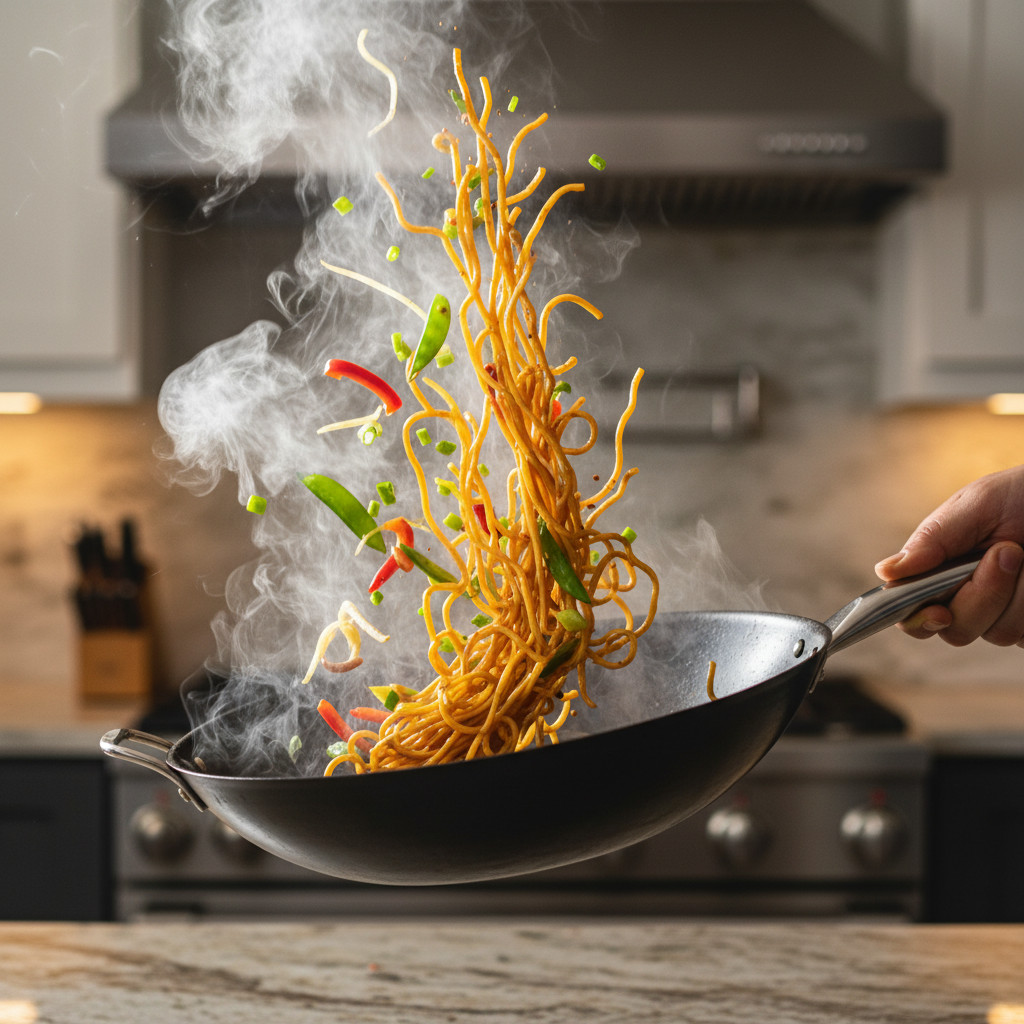
Heat a generous pour of neutral oil (vegetable, canola, or sesame) in a large skillet or wok over high heat. The pan needs to be genuinely hot — when a drop of water evaporates immediately on contact, it’s ready. Add the cold rice and don’t stir it right away. Let it sit for 60 to 90 seconds so the bottom layer crisps up. Then break it up with a spatula and keep tossing.
The Egg Trick That Makes It Feel Complete
Push the rice to one side of the pan, drop in two or three beaten eggs on the empty side, and scramble them quickly. Before they fully set, fold the rice over them and toss everything together. The soft egg bits get distributed throughout the rice, adding protein and that characteristic richness.
Season with soy sauce, a drizzle of sesame oil, and black pepper. Add any diced deli ham, frozen peas or corn, leftover vegetables, or sliced green onions you have. This dish comes together in about 15 minutes and uses zero wasted food.
Variations Worth Knowing
- Don’t have rice? Quinoa, cauliflower rice, or even leftover orzo all work as the base
- Diced ham is the most pantry-friendly protein, but frozen shrimp, crumbled leftover ground beef, or even diced firm tofu all work well
- A spoonful of chili garlic sauce or sriracha in the final toss adds a completely different dimension
Fried rice is arguably the best use-what-you-have dinner that exists. The rice absorbs every flavor it’s cooked with, so even a fairly bare version with just egg, soy sauce, and sesame oil is satisfying.
3. Foil-Packet Chicken with Pesto, Tomatoes, and Mozzarella
If you haven’t made a foil-packet dinner yet, this is the one that will convert you. The concept is simple: wrap a protein and some toppings in a sealed foil pouch, bake it in its own steam, and end up with something that tastes like it took actual effort.
Preheat your oven to 400°F (200°C). Cut four squares of heavy-duty aluminum foil, roughly 12 inches each. Place one boneless chicken breast (or two bone-in thighs) in the center of each piece. Spoon a tablespoon of pesto over the top — jarred pesto is absolutely fine here. Lay two or three slices of fresh or drained canned tomatoes on top, then add a slice of mozzarella or a handful of shredded cheese.
Fold the foil up around the chicken and crimp the edges tightly so steam can’t escape. Place the packets on a baking sheet and bake for 25 to 30 minutes for chicken breasts, 35 minutes for bone-in thighs. Let the packets rest for 2 to 3 minutes before opening — the steam inside is extremely hot.
Why the Foil Method Actually Works
The sealed packet traps moisture and heat together, which means the chicken essentially braises in its own juices alongside the pesto and tomatoes. The result is chicken that’s genuinely tender rather than dry. And cleanup is a single baking sheet wiped with a paper towel.
Customizing Your Packets
No pesto? Use a drizzle of olive oil with Italian seasoning, or smear on some store-bought tapenade, salsa, or even a spoonful of cream cheese with herbs. The technique stays the same regardless of what you put inside.
You can also add sliced vegetables directly to the packet — thin-sliced zucchini, bell pepper strips, or halved cherry tomatoes all cook through nicely in the same time as the chicken. This makes the packet a complete one-person meal.
4. Three-Ingredient Black Bean Soup
If you keep canned black beans in your pantry (and you should — they’re one of the most useful canned goods you can own), this dinner is three ingredients and about 20 minutes away.
Open two cans of black beans and drain only one of them. The liquid from the other can is starchy and adds body to the finished soup. Pour both cans into a medium saucepan along with one cup of chicken or vegetable broth and one can of diced tomatoes with their juice. If you have a chipotle pepper in adobo, add half of one — it gives the soup a deeply smoky, slightly spicy complexity that’s hard to replicate with anything else.
Bring the mixture to a simmer over medium heat and cook for about 10 minutes, stirring occasionally. Then use an immersion blender to blend half the soup directly in the pot (or transfer half to a blender, blend, and return it). This partial blending creates a thick, creamy base while leaving whole beans for texture.
Toppings That Lift the Whole Bowl
The soup itself is minimal — the toppings are where you make it feel like a real dinner. Whatever you have on hand works:
- A spoonful of sour cream or plain Greek yogurt
- Shredded cheddar or crumbled cotija cheese
- Tortilla chips or strips of toasted bread
- Sliced avocado or a squeeze of lime
- Pickled jalapeños if you’ve got a jar in the fridge
Season with salt, cumin, and a shot of hot sauce. The finished soup is earthy, filling, and genuinely good — not a consolation prize dinner.
Expanding the Recipe
If you have an onion and a few garlic cloves, sauté them in the pot first before adding the beans. That extra step adds more depth. But the three-ingredient version stands on its own perfectly well for a night when time is truly short.
5. Pita Pizzas Customized for Every Person at the Table
Pita pizzas solve two problems at once: they’re fast, and they let everyone at the table build exactly what they want. This makes them an especially smart choice for households with picky eaters or people with different dietary preferences.
Preheat your oven to 425°F (220°C) or your broiler on high. Lay pocketless pita rounds on a baking sheet. Spread on your sauce — jarred marinara, pesto, olive oil with garlic, hummus, or even leftover salsa all work. Add cheese (shredded mozzarella, provolone, cheddar, crumbled feta — use whatever you have), then whatever toppings make sense.
Bake for 8 to 10 minutes until the cheese is melted and bubbling and the edges of the pita are crisp. Under the broiler, this takes about 4 to 5 minutes — watch it closely, because the difference between perfectly golden and completely burnt is about 60 seconds under a hot broiler.
The Topping Inventory Check
This is exactly the kind of dinner that clears out the fridge before a grocery run. Good topping candidates include:
- Deli meats: sliced turkey, ham, pepperoni, salami
- Vegetables: cherry tomatoes halved, thinly sliced bell pepper, mushrooms, red onion, olives, artichoke hearts from a jar
- Leftover cooked meat: shredded rotisserie chicken, ground beef seasoned with garlic, pulled pork
- Cheese combinations: whatever you can mix and match
Getting Kids Involved
Pita pizzas are one of the few genuinely hands-on dinners that kids can help make without creating a disaster. Set out bowls of toppings, give each person their own pita, and let them assemble. The investment in involvement usually pays off with fewer complaints at the table — because they built it themselves.
6. Pasta Carbonara with Deli Ham
Traditional carbonara calls for guanciale (cured pork cheek) or pancetta, and honestly, few people have either of those sitting in the fridge on a random weeknight. Deli ham — specifically a thick-cut variety — steps in beautifully. The flavor is different from the original, but the technique and the silky, egg-thickened sauce are exactly the same.
Cook spaghetti or rigatoni in well-salted boiling water until just al dente. While the pasta cooks, cut deli ham into small cubes or thin strips and sauté them in a lightly oiled skillet over medium heat until they start to brown at the edges and smell irresistible. Remove the pan from the heat.
In a bowl, whisk together 2 large eggs, 1 additional egg yolk, and a generous handful of finely grated parmesan (or pecorino romano). Crack in plenty of black pepper — more than you think you need. Carbonara is famous for its black pepper, and under-seasoning it here is the most common mistake.
The Critical Temperature Step
This is where carbonara either works or doesn’t. When the pasta is done, reserve a full cup of pasta water before draining. Add the hot drained pasta directly to the ham in the pan, off the heat entirely. Pour in the egg and cheese mixture and toss constantly and vigorously, adding pasta water a splash at a time. The residual heat from the pasta cooks the eggs slowly into a creamy sauce without scrambling them.
If the sauce looks too thick, add more pasta water. If it looks too loose, keep tossing — it will come together in about 60 to 90 seconds of active tossing.
The finished dish should be glossy, coating every strand of pasta, with visible black pepper throughout. Serve immediately, because carbonara doesn’t wait.
7. Shakshuka — Eggs Poached Directly in Spiced Tomato Sauce
Shakshuka is one of the most satisfying things you can cook with a can of tomatoes and a few eggs. It’s eaten for breakfast in much of the Middle East and North Africa, but it makes a deeply comforting, protein-rich dinner that comes together in under 25 minutes.
Heat 2 tablespoons of olive oil in a wide, deep skillet over medium heat. Add half a diced onion and 3 cloves of minced garlic and cook until softened, about 5 minutes. Add 1 teaspoon each of cumin and smoked paprika, half a teaspoon of coriander, and a pinch of cayenne if you want heat. Stir the spices in for 30 seconds — blooming them in oil like this makes a significant difference to the depth of flavor.
Pour in one 28-ounce can of crushed or diced tomatoes. Add salt, a pinch of sugar to balance the acidity, and stir everything together. Let the sauce simmer for about 8 minutes until it thickens slightly.
Adding the Eggs Correctly
Use a spoon to make wells in the sauce — one well per egg. Crack an egg into each well carefully, trying to keep the yolk intact. Cover the pan with a lid and cook on medium-low until the whites are fully set but the yolks are still soft and runny, about 5 to 7 minutes. Check frequently — overcooked yolks are the most common shakshuka disappointment.
Finish with crumbled feta (if you have it), a handful of fresh or dried herbs, and a drizzle of olive oil. Serve directly from the pan with crusty bread, pita, or even toast for scooping.
The Pantry Version
No onions or garlic in the house? You can make a stripped-down version with just canned tomatoes, olive oil, salt, and spices. The layering of aromatics adds a lot, but even the bare minimum version is infinitely more satisfying than scrambled eggs on toast.
8. Sausage, Broccoli, and Pasta — One Pan, 30 Minutes
This one earns its place on the list because it’s the rare dinner that requires almost zero thought, covers all the nutritional bases (protein, carbs, vegetables), and satisfies even people who claim they’re not hungry.
Boil salted water for pasta. While the water heats, slice Italian sausage (fresh or fully cooked from the fridge or freezer, any variety) into coins and brown them in a large, oven-safe skillet over medium-high heat. You want real color on the sausage — that browned, slightly crispy surface is where the flavor lives. Once browned, remove the sausage to a plate.
In the same pan, sauté 3 to 4 minced garlic cloves in the leftover sausage fat. Add broccoli florets (fresh or frozen — both work perfectly) and cook until the edges start to brown and the stems are tender, about 5 minutes.
The One-Pan Finish
Cook the pasta until just underdone — about 2 minutes short of al dente. Reserve pasta water, drain, and add the pasta directly to the broccoli pan with a splash of pasta water and a drizzle of olive oil. Return the sausage to the pan, toss everything together over medium heat, and cook for 2 more minutes so the pasta absorbs the sausage drippings and garlicky oil.
Finish with parmesan, red pepper flakes, and a squeeze of lemon if you have one. The lemon isn’t optional — it cuts through the richness of the sausage fat and pulls the whole dish together.
No sausage? Ground turkey or beef seasoned with Italian seasoning works the same way. No broccoli? Frozen peas, fresh spinach, or even halved cherry tomatoes tossed in at the end are solid substitutes.
This is weeknight cooking at its most honest: one pan, one pot, 30 minutes, genuine flavor.
The Pantry That Makes All of This Possible
None of these eight dinners work if the pantry is completely bare. But stocking for last-minute meals doesn’t mean buying a month’s worth of specialty ingredients — it means keeping about 15 to 20 reliable items on hand that work across dozens of different dinners.
The canned goods section of your pantry is your first line of defense. Canned crushed tomatoes, diced tomatoes, and black beans show up across multiple dinners on this list. A few cans of each mean you’re never more than 20 minutes from soup, shakshuka, or a pasta sauce. Canned tuna and canned chickpeas round out the protein options when the fridge is empty.
Dried pasta is one of the best value foods you can stock. A pound of pasta costs almost nothing, keeps indefinitely, and forms the base of at least three of the dinners above. Keep at least two or three shapes on hand — something long (spaghetti), something tube-shaped (penne or rigatoni), and a small shape (orzo or elbows) that cooks fast.
The freezer is equally important. Frozen shrimp thaws in five minutes under cold water, which makes it faster to use than any other frozen protein. Frozen peas, corn, and broccoli cook straight from frozen with no prep. Keeping a pound of Italian sausage and a bag of frozen shrimp in the freezer gives you protein options for at least six of the eight dinners above.
Time-Saving Habits That Cut 10 Minutes Off Any Dinner
Beyond stocking the pantry, a few cooking habits consistently shorten the time it takes to get food on the table — not by cutting corners, but by working smarter with what you’re already doing.
Salt the pasta water while you’re still figuring out what to make. Getting a large pot of water to a boil takes 8 to 12 minutes depending on your stove. Starting it immediately — even before you know exactly what you’re cooking — means you’re not waiting for water when you’re already hungry. Pasta water is the common thread through at least four of the dinners above.
Prep as you cook, not before. Professional kitchens do full mise en place before service because they’re making the same dish 40 times in a row. Home kitchens don’t need that level of organization. Mince the garlic while the oil heats. Slice the sausage while the pasta boils. Dice the onion while the pan warms up. Working in parallel rather than sequentially can save 8 to 10 minutes on most weeknight dinners.
Keep a sharp knife on the counter, not the drawer. A dull knife is the single most time-consuming tool in a kitchen. A sharp knife cuts vegetables in half the time and with far less frustration. Honing it on a rod takes 15 seconds and should happen before every cooking session.
When to Use the Microwave Strategically
The microwave gets dismissed as a lesser cooking tool, but it genuinely earns its place on last-minute dinner nights. Microwaved rice in pouches takes 90 seconds. Frozen vegetables steam in 3 minutes with a splash of water. Thawing frozen broth or stock takes 4 minutes on the defrost setting. These aren’t compromises — they’re practical tools that compress prep time without affecting the quality of what you’re making.
What to Do When You Literally Have Nothing
There will be nights when the fridge is genuinely empty, the pantry is scraped clean, and the only thing you can find are eggs, butter, and whatever condiments have accumulated in the door. That’s a different kind of problem — but still solvable.
Eggs are the single most versatile protein in any kitchen. A proper French omelet takes 2 minutes to cook and four eggs, butter, salt, and pepper. Nothing else required. Add whatever cheese or herbs you find and serve it with toast. A properly made omelet — one that’s still slightly soft in the center, barely golden on the outside, folded cleanly — is legitimately a satisfying dinner, not a compromise.
Alternatively, eggs on top of anything warm feels more like dinner than breakfast. A bowl of ramen noodles from a packet (upgraded with a soft-boiled egg, a drizzle of sesame oil, and whatever vegetables you have) costs very little and takes about 5 minutes.
The fundamental principle here is that a warm, properly seasoned meal from four or five ingredients beats a bag of chips every time. You usually have more to work with than you think once you do a proper sweep of every shelf.
How to Read Your Fridge Like a Menu
One of the most useful skills in home cooking is the ability to look at a collection of random ingredients and see a dinner rather than a jumble of unrelated food. It’s a skill that develops over time, but there are a few mental shortcuts that help.
Start by identifying your protein. Whatever protein you have — eggs, canned fish, deli meat, frozen shrimp, leftover chicken, sausage — that becomes the anchor of the meal. Everything else is built around it.
Then look for an acid, a fat, and a carb. An acid (lemon juice, vinegar, canned tomatoes, white wine) brightens and balances. A fat (butter, olive oil, sesame oil, cheese) adds richness. A carb (pasta, bread, rice, pita, tortillas) makes the meal filling. Find one from each category and you have the structure of dinner.
Everything else — the vegetables, herbs, spices, and condiments — is seasoning and character. A jar of capers transforms pasta. A spoonful of miso paste deepens a broth. Smoked paprika turns simple scrambled eggs into something interesting. These accents don’t require much, but they make a noticeable difference.
Final Thoughts
The eight dinners above aren’t just fast — they’re genuinely worth making. Garlic butter pasta, foil-packet chicken, and shakshuka would be good choices even when time isn’t an issue. The speed is a bonus; the flavor is the reason.
The deeper point is that last-minute cooking isn’t about lowering expectations for dinner. It’s about having enough kitchen fluency to make good decisions quickly. Knowing that pasta water thickens sauce, that cold rice fries better than fresh rice, and that eggs poach beautifully in canned tomatoes — these aren’t advanced cooking skills. They’re the kind of practical knowledge that makes a real difference on a Thursday night when dinner still needs to happen.
Stock the basics, keep a few things in the freezer, and trust the process. A home-cooked dinner made from whatever you’ve got is almost always better than you expect it to be — and almost always faster than ordering in.