Low-carb eating has a reputation problem. Ask anyone who’s tried it before, and you’ll hear the same story: grilled chicken, steamed broccoli, a sad bowl of lettuce, and a growling stomach by 8 PM. The assumption that cutting carbs means cutting satisfaction has driven more people off this way of eating than almost anything else.
But here’s what that stereotype gets completely wrong: satiety has nothing to do with carbohydrates. What keeps you full is protein, fat, and fiber — and a well-built low-carb dinner delivers all three in abundance. The issue isn’t the approach. It’s the recipes.
The 12 dinners on this list were chosen specifically because they don’t feel like a compromise. There’s no sad grilled chicken. No dry turkey patties on lettuce leaves while everyone else eats pizza. These are meals built around bold flavors, satisfying textures, and enough protein and fat to carry you comfortably through to the next morning. Some take under 30 minutes. A few reward patience with deep, slow-cooked richness. All of them pass the most important test: you finish dinner actually full.
Whether you’re following a strict keto plan, loosely watching carbs, or just trying to make dinner feel a little lighter without feeling deprived, these are the recipes worth keeping in your rotation.
Table of Contents
- 1. Garlic Butter Steak Bites with Roasted Mushrooms
- Why This One Fills You Up
- What to Know Before You Cook
- 2. Chicken Cacciatore Without the Pasta
- Why Braised Dishes Beat the Hunger Game
- What Makes It Work
- 3. Shrimp Cauliflower Fried Rice
- Building Flavor in the Wok
- Nutrition at a Glance
- 4. Philly Cheesesteak Stuffed Peppers
- The Filling Is Everything
- Cheese and Assembly Notes
- 5. Slow Cooker Beef Stroganoff over Cauliflower Mash
- Why the Sauce Works Without Flour
- Cauliflower Mash That Doesn’t Disappoint
- 6. Blackened Pork Chops with Garlic Green Beans
- Pairing the Protein Right
- Key Timing Notes
- 7. Greek Flank Steak Salad with Olives and Feta
- Marinating and Grilling for Maximum Flavor
- Building the Bowl
- 8. Cheesy Ground Beef Taco Skillet
- Getting the Seasoning Right
- Topping Strategy
- 9. Creamy Lemon Garlic Chicken with Spinach
- Building the Pan Sauce
- Wilting Spinach Correctly
- 10. Cauliflower Rice Bowls with Grilled Chicken and Tzatziki
- Making Tzatziki Worth Eating
- Assembly Order for Maximum Flavor
- 11. Sausage and Peppers with Cabbage Noodles
- The Right Sausage Makes the Difference
- Cooking the Cabbage Correctly
- 12. Sheet Pan Salmon with Roasted Asparagus and Lemon Herb Butter
- The Herb Butter That Ties It Together
- Asparagus Timing Notes
- Final Thoughts
1. Garlic Butter Steak Bites with Roasted Mushrooms
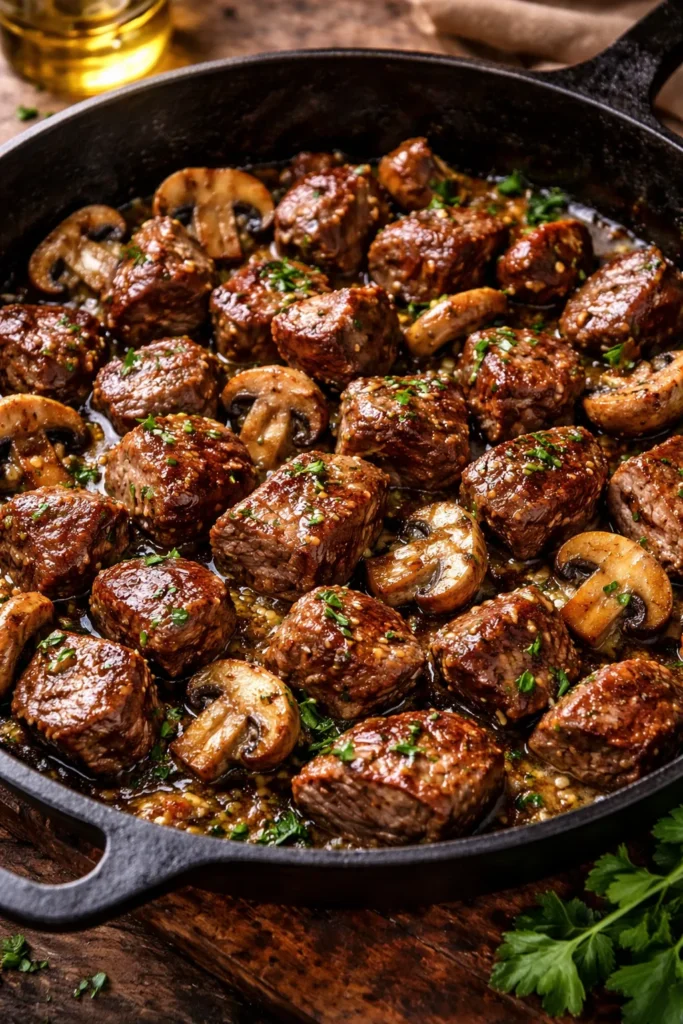
Few combinations hit harder than seared beef and garlic butter, and steak bites make this indulgence weeknight-friendly. Instead of waiting for a special occasion to fire up a whole ribeye, you cut sirloin or tenderloin into bite-sized pieces and cook them fast and hot in a cast iron skillet. The result? A caramelized crust on every single piece, not just one edge of a steak.
The key here is not overcrowding the pan. If you pile all the beef in at once, the temperature drops and the meat steams instead of sears. Work in batches — two minutes per side over screaming-hot heat — and you’ll get that restaurant-quality browning that makes the whole dish worth making.
Why This One Fills You Up
Sirloin carries roughly 26 grams of protein per 100-gram serving. Paired with a generous knob of butter and earthy roasted mushrooms, you’ve got a plate loaded with both protein and fat — the two macronutrients most responsible for triggering fullness hormones like peptide YY and cholecystokinin. This isn’t “eating and hoping for the best.” There’s actual physiology behind why steak keeps hunger quiet for hours.
What to Know Before You Cook
- Use a cast iron skillet — it holds heat better than a nonstick pan, which is what creates the sear
- Pat the beef completely dry before seasoning; any surface moisture kills the crust
- Add the garlic and butter only in the last 90 seconds, then baste constantly — garlic burns fast on high heat
- Cremini or baby bella mushrooms roasted with olive oil and thyme make the perfect side; they’re ready in about 20 minutes at 400°F
Worth knowing: Let the cooked steak bites rest for 3 minutes before serving. Even bite-sized pieces lose their juices quickly if you cut into them straight off the heat.
2. Chicken Cacciatore Without the Pasta
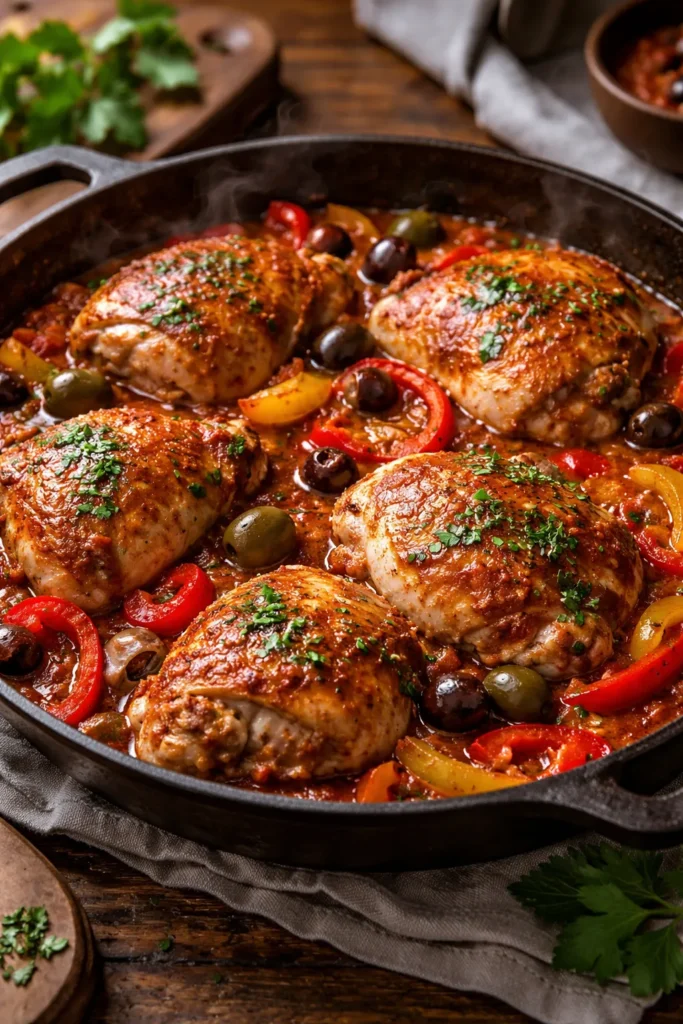
Classic Italian chicken cacciatore — braised in tomatoes, white wine, olives, and fresh herbs — is one of those dishes that tastes like it took all day but realistically comes together in under an hour. And it’s naturally low-carb without any modification needed. No ingredient swaps, no sacrifices, no pretending.
The difference between a mediocre cacciatore and a genuinely good one comes down to browning the chicken properly before it goes into the sauce. Skin-on, bone-in thighs are the right choice here — they stay moist through the braise and release gelatin into the sauce, giving it that silky, restaurant-quality body you can’t fake with chicken breast.
Why Braised Dishes Beat the Hunger Game
Long-braised proteins like chicken thighs don’t just taste better — they’re more filling. The collagen breakdown during cooking creates a thicker, more satisfying sauce, and bone-in chicken carries more fat than breast meat, which slows digestion naturally. Add a heap of bell peppers, olives, and canned tomatoes, and you’ve built a fiber-and-protein plate that holds.
What Makes It Work
- Brown the chicken in batches in olive oil over medium-high heat — 4 to 5 minutes per side — before adding any liquid
- Kalamata olives add a briny depth that no other ingredient replicates; don’t skip them
- A splash of dry white wine deglazes the pan and lifts all the browned bits, which is where a huge amount of flavor lives
- Serve over cauliflower rice or simply eat it straight from the pot — the sauce is too good to need anything under it
3. Shrimp Cauliflower Fried Rice
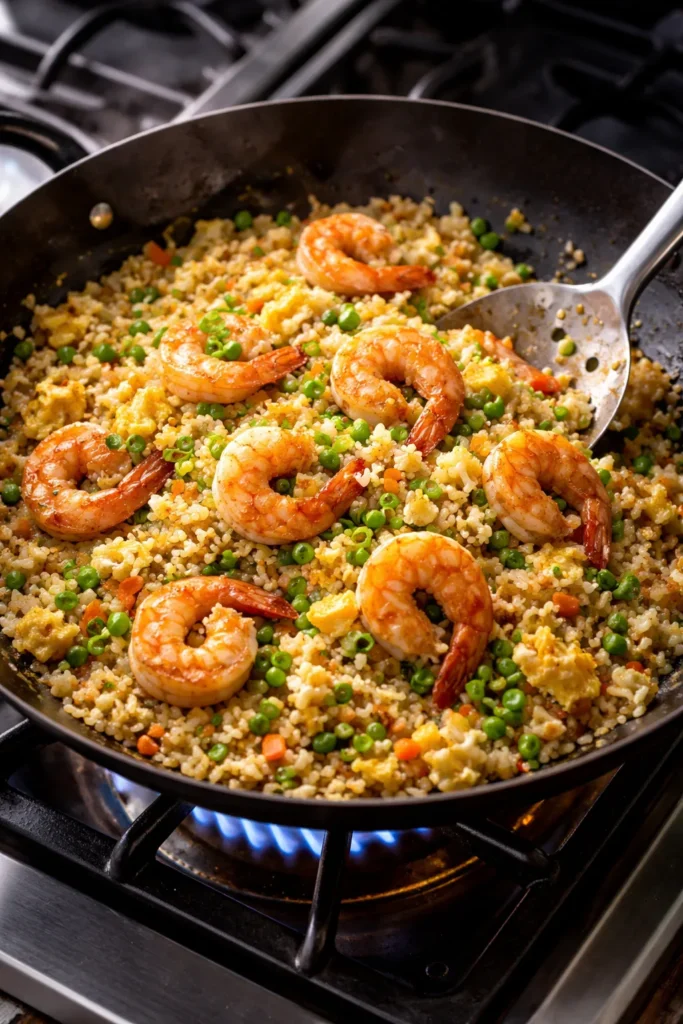
If you haven’t made the switch from white rice to riced cauliflower, this dish is the one that will convert you. Not because the two taste identical — they don’t — but because cauliflower rice prepared correctly has enough textural similarity and neutral flavor that a bold stir-fry sauce makes it virtually indistinguishable in practice.
The method matters more than anything here. You need high heat and a DRY pan. Riced cauliflower holds moisture, and if you don’t cook it off quickly, you end up with mush. Spread it in a single layer in a very hot wok or large skillet, leave it alone for 2 minutes, then stir. That short contact time lets the surface dry out and develop just enough color to mimic the slight chew of cooked rice.
Building Flavor in the Wok
Traditional fried rice flavor comes from a combination of sesame oil, soy sauce (or tamari for a gluten-free version), garlic, ginger, and a high-heat char. Shrimp cooks in about 2 minutes per side, so it goes in last to avoid rubber-band texture. Scrambled eggs stirred through at the end add protein and a creamy richness that ties everything together.
Nutrition at a Glance
- Shrimp: approximately 20 grams of protein per 100 grams, almost zero fat
- Cauliflower rice: roughly 25 calories per cup versus 200+ for white rice
- One generous serving clocks in at around 8 to 10 grams of net carbs
- Add broccoli florets, snap peas, or bell peppers to stretch the volume and fiber
Pro tip: Make the cauliflower rice the day before and store it uncovered in the fridge overnight. The surface dries out completely, and the next-day stir-fry browns far more like actual fried rice.
4. Philly Cheesesteak Stuffed Peppers
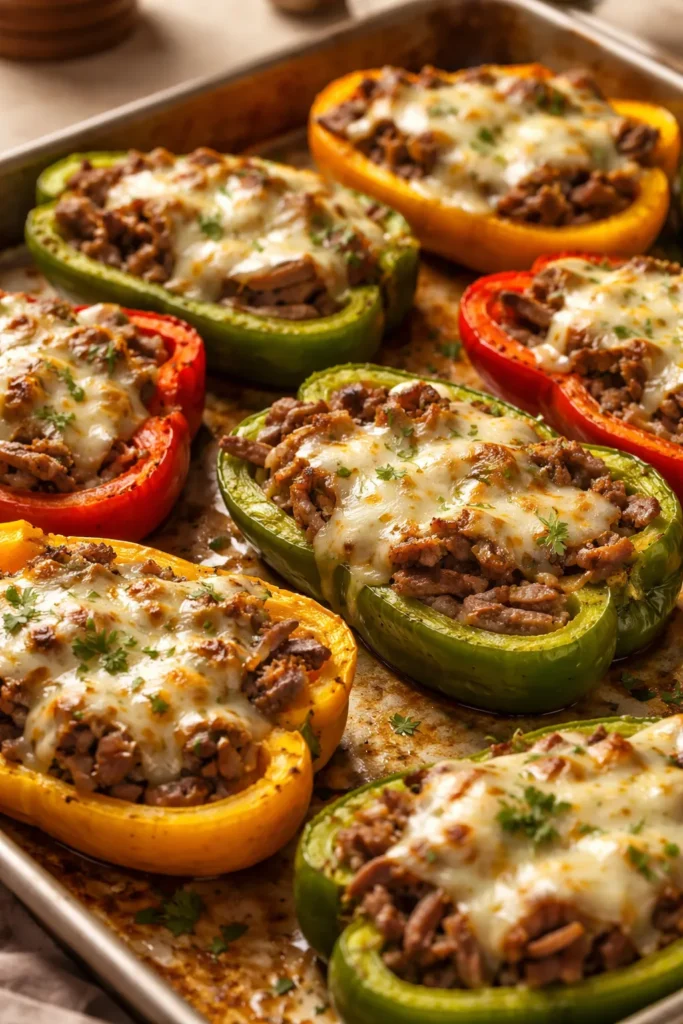
The Philly cheesesteak — thinly sliced beef, sautéed onions and peppers, provolone or American cheese — is already 90% of the way to being low-carb on its own. The only thing keeping it from the list is the hoagie roll. Pull that out of the equation, and stuff the whole filling into a halved bell pepper, and you’ve turned a guilty pleasure into a dinner that has no business being as good as it is.
Bell peppers are an underrated vehicle for stuffed fillings. They’re sturdy enough to hold up in the oven without collapsing, they add a natural sweetness that complements the savory beef filling, and a whole pepper half carries only about 6 grams of net carbs.
The Filling Is Everything
Use shaved ribeye or thinly sliced sirloin — the kind you’d find at a butcher counter or in the freezer section labeled “cheesesteak beef.” If you can only find regular sirloin, freeze it for 30 minutes, then slice it as thin as possible against the grain. Sauté the onions until they’re soft and slightly caramelized — at least 8 to 10 minutes over medium heat — before adding the beef. Rushing the onions costs you the signature sweetness of the dish.
Cheese and Assembly Notes
- Provolone melts beautifully and has the mildest flavor of the traditional options
- American cheese melts more smoothly and creates a creamier texture in the filling — both work
- Fill the pepper halves generously, top with cheese, and broil for the last 3 minutes to get a bubbly, golden top
- Leftovers reheat well in a covered skillet over low heat
5. Slow Cooker Beef Stroganoff over Cauliflower Mash
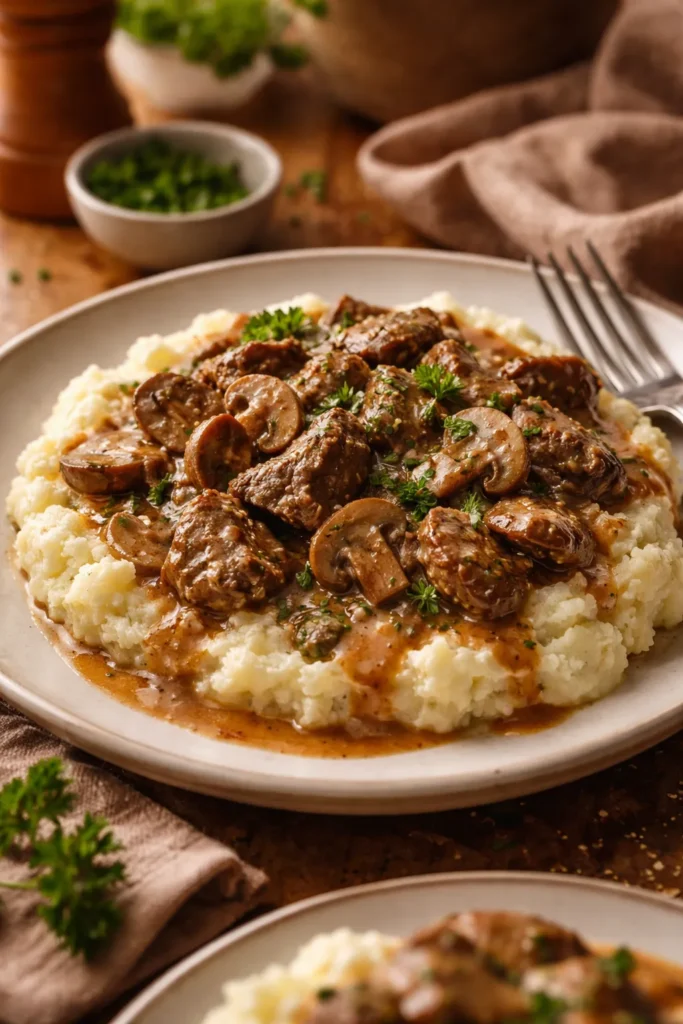
Traditional beef stroganoff gets its richness from a sour cream-based sauce and its bulk from egg noodles. Swap the noodles for cauliflower mash, and you have a dish that’s somehow even more comforting than the original — because the creamy, buttery mash does a better job of soaking up that mushroom-and-beef sauce than pasta ever could.
The slow cooker is your best friend here. Chuck roast or stew beef breaks down over 6 to 8 hours into fork-tender pieces that pull apart in the sauce. The mushrooms soften and almost dissolve into the broth, thickening it without any flour or cornstarch needed.
Why the Sauce Works Without Flour
Sour cream and cream cheese both act as natural thickeners, and they add richness that a flour-based roux can’t match. Stir them in during the last 30 minutes of cooking — never at the beginning, or they’ll curdle. A splash of Worcestershire sauce and a teaspoon of Dijon mustard add depth that makes the sauce taste like it’s been developing for hours (which, if you use the slow cooker, it has).
Cauliflower Mash That Doesn’t Disappoint
- Steam or boil cauliflower until completely tender — any resistance means the mash will be grainy
- Drain thoroughly and let it steam dry for 2 minutes before processing
- Add 2 tablespoons of butter, 2 tablespoons of cream cheese, salt, and white pepper; blend until smooth
- The result should be silky and thick — if it’s too loose, cook it in a dry pan over low heat for 3 minutes, stirring constantly
6. Blackened Pork Chops with Garlic Green Beans
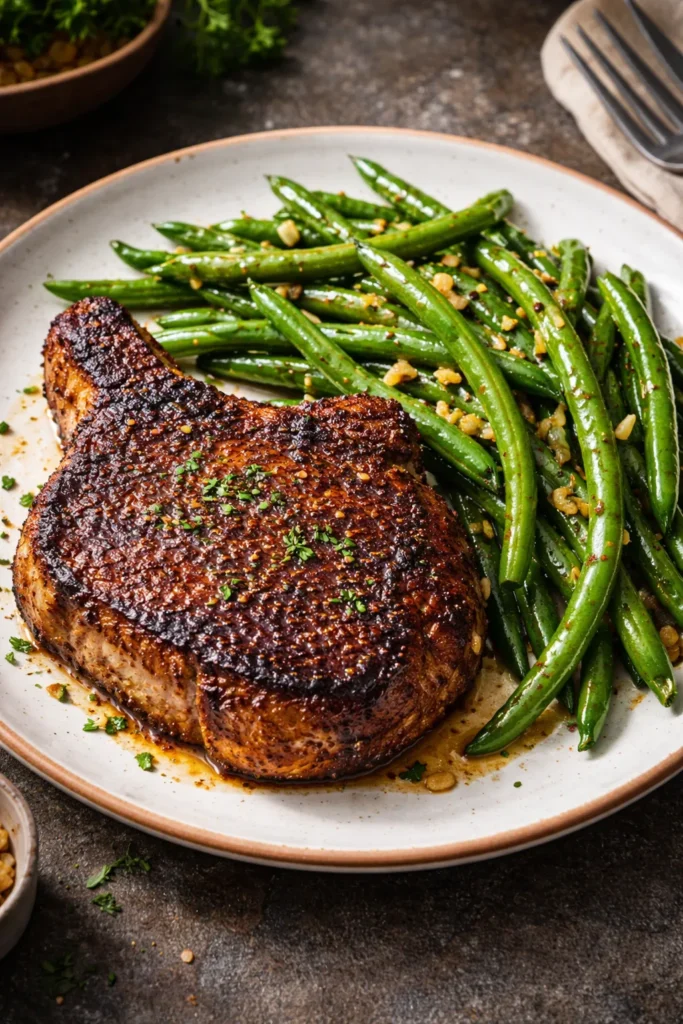
Cast iron cooking transforms an ordinary pork chop into something with a charred, spice-crusted exterior that’s genuinely hard to stop eating. Blackening is a technique — not just a spice blend — that requires an extremely hot skillet, a thin coating of oil directly on the protein, and no touching for at least 3 to 4 minutes per side. The result is a dark, nearly black crust with a smoky, spicy depth that no oven-baked chop can replicate.
The spice blend is the heart of it: smoked paprika, garlic powder, onion powder, cayenne, dried thyme, and black pepper. Press it firmly into both sides of the chop so it adheres. Bone-in chops hold up better than boneless during the high-heat sear.
Pairing the Protein Right
Green beans sautéed with garlic and a knob of butter are the obvious partner here — they cook in about 8 minutes in the same pan after the chops come out, picking up all the spiced drippings left behind. That’s not just a flavor bonus; it’s efficiency. One pan, one cleanup, dinner on the table in under 25 minutes.
Key Timing Notes
- Bring pork chops to room temperature for 15 minutes before cooking — cold pork from the fridge cooks unevenly
- Bone-in chops at 1 inch thick need about 4 minutes per side for a safe internal temperature of 145°F
- Rest the chops for 5 minutes under loosely tented foil before cutting — this keeps the juices inside where they belong
- A squeeze of fresh lemon at the end cuts through the richness and brightens the whole plate
7. Greek Flank Steak Salad with Olives and Feta
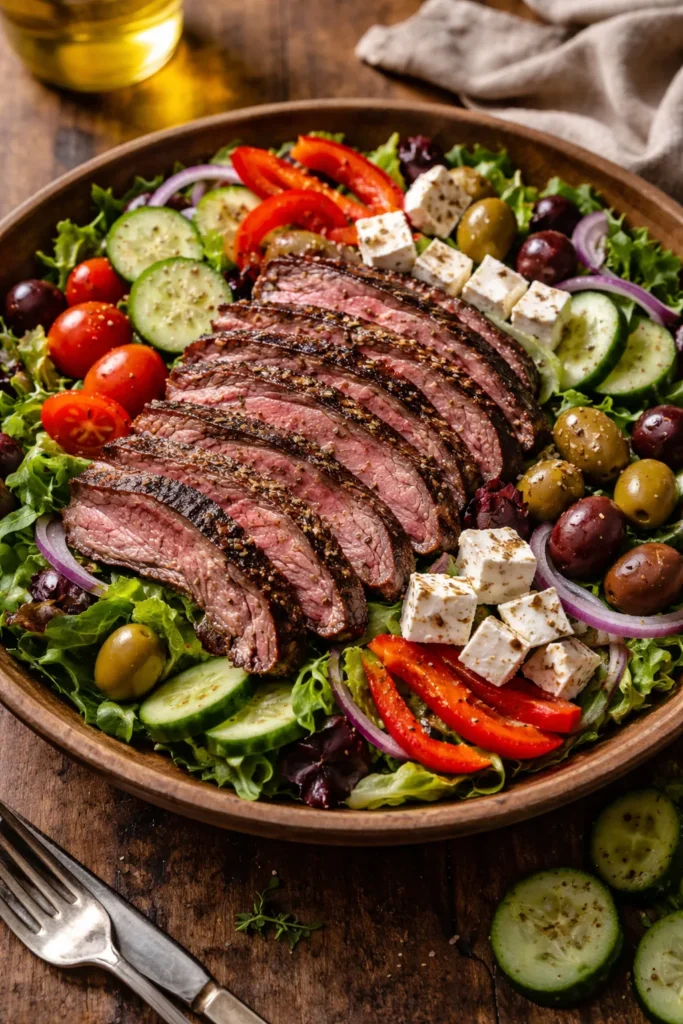
Salad as a low-carb dinner has a deservedly bad reputation, mostly because most salads aren’t built to satisfy. This one is. A properly marinated and grilled flank steak, sliced thin against the grain, turns a bowl of greens into a genuinely filling meal — one with enough protein, fat from feta and olives, and crunch from cucumbers and peppers to leave you satisfied for hours.
Flank steak responds beautifully to an acidic marinade. Lemon juice, olive oil, garlic, dried oregano, and red wine vinegar tenderize the tough muscle fibers and infuse the meat with a Mediterranean brightness that pairs perfectly with the salty punch of feta and olives.
Marinating and Grilling for Maximum Flavor
Marinate the steak for at least 2 hours — overnight is better. On the grill, flank steak needs high direct heat and minimal cooking time: 4 to 5 minutes per side for medium-rare, which is the ideal doneness for this cut. Anything past medium makes flank steak tough and dry.
The slicing technique makes or breaks the texture. Cut perpendicular to the direction of the muscle fibers (across the grain), and angle your knife at about 45 degrees. Thin, bias-cut slices are tender and easy to eat. Thick slices cut with the grain are chewy and frustrating.
Building the Bowl
- Romaine or arugula holds up better under warm steak than softer greens
- Kalamata olives, cherry tomatoes, cucumber, and red onion form the base
- Crumbled feta adds saltiness and fat — about 75 calories and 6 grams of fat per ounce
- Dress with a simple lemon-olive oil vinaigrette rather than a creamy dressing to keep the flavors clean
8. Cheesy Ground Beef Taco Skillet
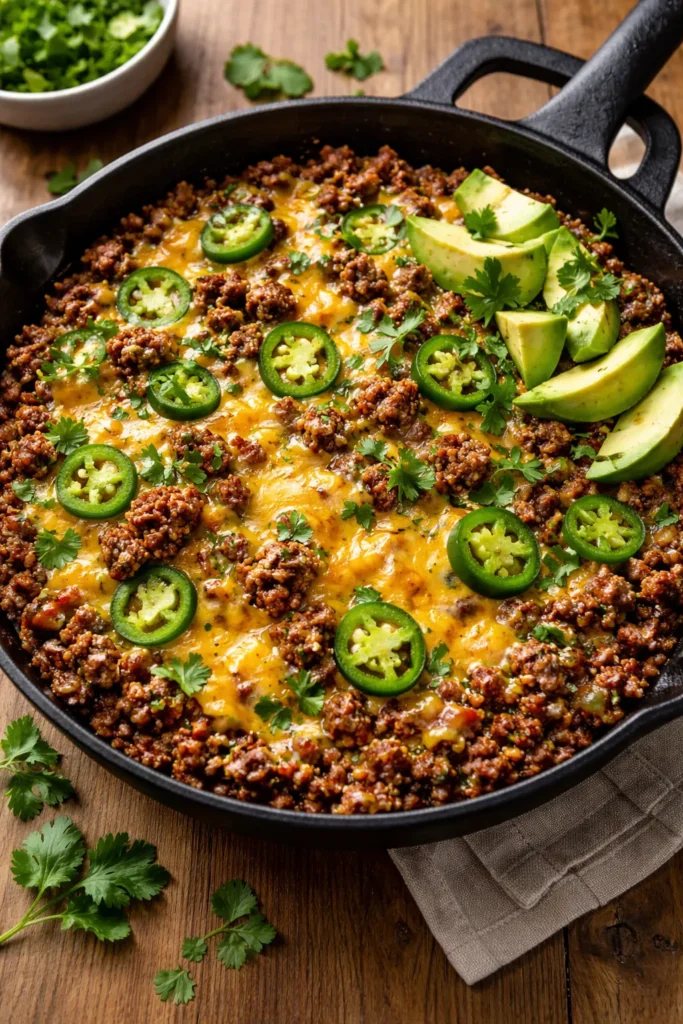
All the satisfaction of taco night — seasoned ground beef, melted cheese, jalapeño, sour cream, fresh cilantro — without a single tortilla shell in sight. The taco skillet is one-pan cooking at its most honest: nothing complicated, no special technique required, and a dinner that lands on the table in under 20 minutes.
What you give up in the shell, you more than compensate for in ease and portion size. A skillet full of well-seasoned beef with real taco-night toppings is more satisfying than two tacos with the same filling stuffed into a carb-heavy corn shell.
Getting the Seasoning Right
Commercial taco seasoning packets work, but making your own from pantry spices gives you control over the salt level and lets you dial up the heat. A base blend of cumin, chili powder, smoked paprika, garlic powder, onion powder, salt, and a pinch of cayenne hits every note. Use about 1.5 tablespoons per pound of beef, add a splash of water to hydrate the spices and help them coat the meat evenly.
Topping Strategy
- Melt shredded cheddar or pepper jack directly over the skillet under a lid for 2 minutes
- Add sour cream, diced avocado, sliced jalapeños, and fresh cilantro after the heat is off
- Diced tomatoes or pico de gallo add freshness and a tiny burst of natural sweetness
- Serve with a side of shredded cabbage tossed in lime juice — it adds crunch and plays the role of the tortilla in texture terms
9. Creamy Lemon Garlic Chicken with Spinach
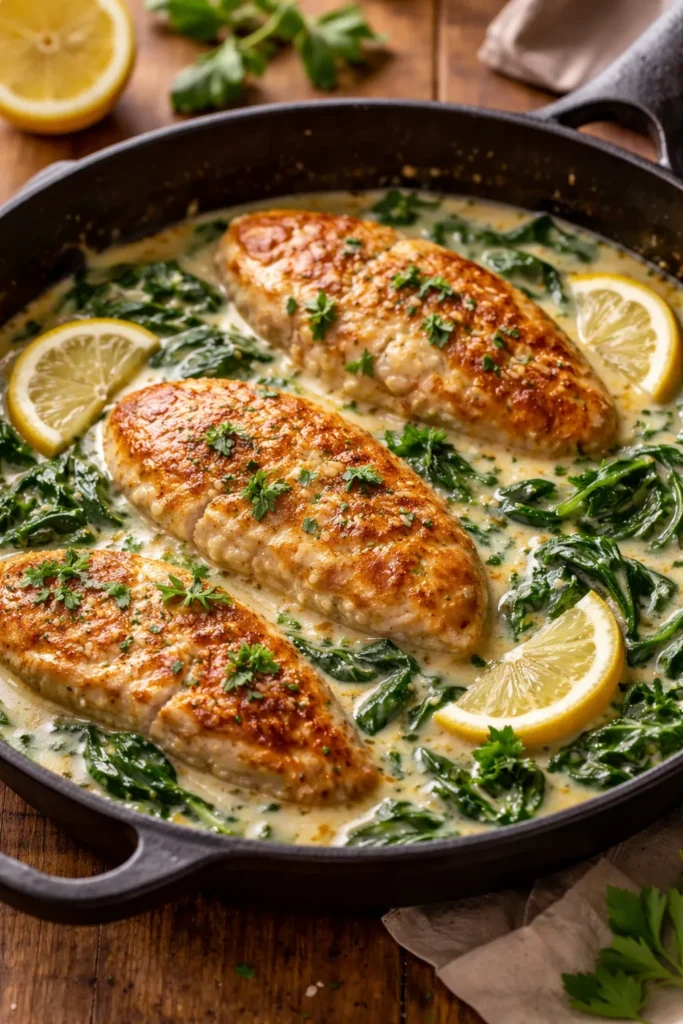
This is a weeknight workhorse — the kind of dish that looks and tastes like you spent real effort on it, when the honest reality is that it comes together in about 25 minutes with ingredients that live in most kitchens year-round. Pan-seared chicken breasts in a creamy pan sauce with garlic, lemon, and wilted spinach is a combination that somehow never gets old.
The technique that makes it: dredge the chicken in a thin coating of almond flour before searing. It creates a lightly golden crust that holds up in the sauce and adds a subtle nuttiness without any significant carb load. The crust also protects the chicken from drying out during the 4-minute rest it needs before slicing.
Building the Pan Sauce
After the chicken comes out of the pan, pour off all but one tablespoon of the cooking fat. Add minced garlic and let it soften for 60 seconds, then deglaze with chicken broth. Scrape the browned bits off the bottom of the pan — those browned bits are flavor, and they dissolve completely into the sauce. Add heavy cream, lemon juice, and lemon zest, then reduce over medium heat for about 3 minutes until the sauce coats the back of a spoon.
Wilting Spinach Correctly
- Add 3 to 4 cups of fresh baby spinach to the sauce and stir gently for 60 to 90 seconds
- Spinach reduces dramatically — what looks like too much becomes the perfect amount
- Return the chicken to the pan, spoon sauce over the top, and serve immediately
- Freshly grated Parmesan stirred into the sauce at the end adds a salty, nutty layer that ties everything together
10. Cauliflower Rice Bowls with Grilled Chicken and Tzatziki
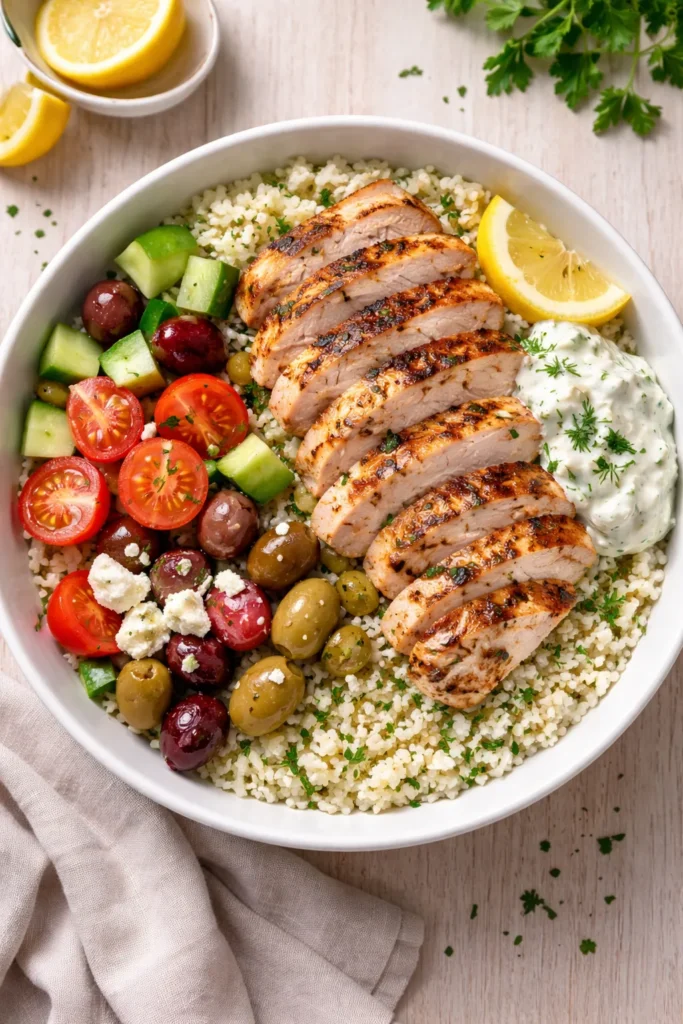
The grain bowl format — a base, a protein, a sauce, toppings — is one of the most satisfying meal structures there is. It hits every texture and every flavor note in a single bowl. Swapping white rice for herbed cauliflower rice cuts the carbs by about 85% without touching the satisfaction, especially when the protein and sauce are built out properly.
Greek-inspired bowls work particularly well in this format because the flavor profile is strong and bright. Grilled chicken thighs marinated in lemon, garlic, and oregano, served over warm cauliflower rice with tzatziki, cucumber, tomato, olives, and crumbled feta — this is a bowl that genuinely makes you forget it’s “healthy.”
Making Tzatziki Worth Eating
Store-bought tzatziki exists and it’s fine. Homemade tzatziki is in a completely different league. Grate 1 small cucumber, squeeze out every drop of moisture with a clean kitchen towel, and fold it into full-fat Greek yogurt with 2 cloves of minced garlic, a tablespoon of fresh dill, a tablespoon of lemon juice, and salt. Rest it in the fridge for at least 30 minutes before serving — the garlic mellows and the flavors come together.
Assembly Order for Maximum Flavor
- Start with warm, herbed cauliflower rice as the base
- Add sliced grilled chicken thighs, still slightly warm
- Arrange cucumber slices, halved cherry tomatoes, and olives around the protein
- Spoon tzatziki generously over the top and crumble feta over everything
- A drizzle of good olive oil and a sprinkle of dried oregano finishes it cleanly
11. Sausage and Peppers with Cabbage Noodles
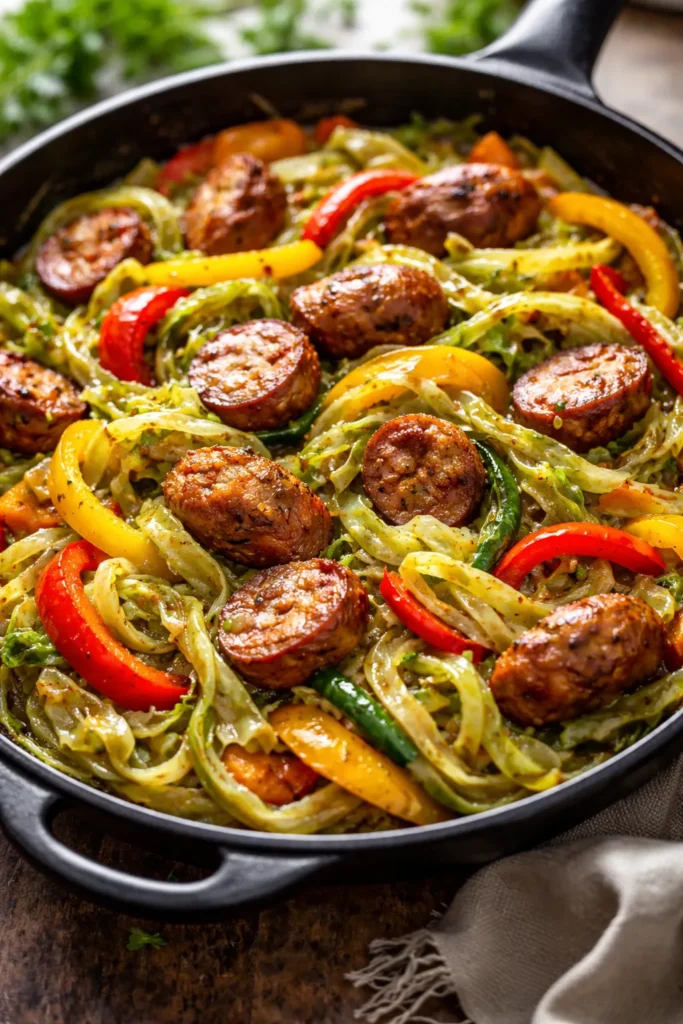
Italian sausage and bell peppers is already one of the most flavor-rich, naturally satisfying low-carb combinations that exists. The sausage brings fat and spice; the peppers bring sweetness and color. The problem is it traditionally gets served on a hoagie roll. Swap that for ribbons of sautéed cabbage — cooked until just softened but still with a little bite — and you’ve got a one-pan dinner that’s hearty enough to eat with a fork and feel genuinely full afterward.
Cabbage noodles work here because the dish is bold enough to carry them. The sausage and pepper sauce soaks into the cabbage, flavoring every strand. You won’t be sitting there missing pasta. You’ll be too busy eating.
The Right Sausage Makes the Difference
Sweet Italian sausage and hot Italian sausage mixed in equal proportions gives you the best of both — enough heat to keep things interesting, enough sweetness to balance the acidity of the peppers. Brown the sausage links whole first, then slice them into rounds. This approach seals the juices inside and gives you a caramelized cut face on each piece.
Cooking the Cabbage Correctly
- Slice a small head of green cabbage into thin ribbons, roughly ¼-inch wide
- Cook in the same pan as the sausage after it’s removed, in 2 tablespoons of olive oil over medium-high heat
- Season with salt and let it cook undisturbed for 3 minutes before stirring — this develops a little char that adds flavor
- The cabbage should be tender but still have some structure — 7 to 8 minutes total cooking time
12. Sheet Pan Salmon with Roasted Asparagus and Lemon Herb Butter
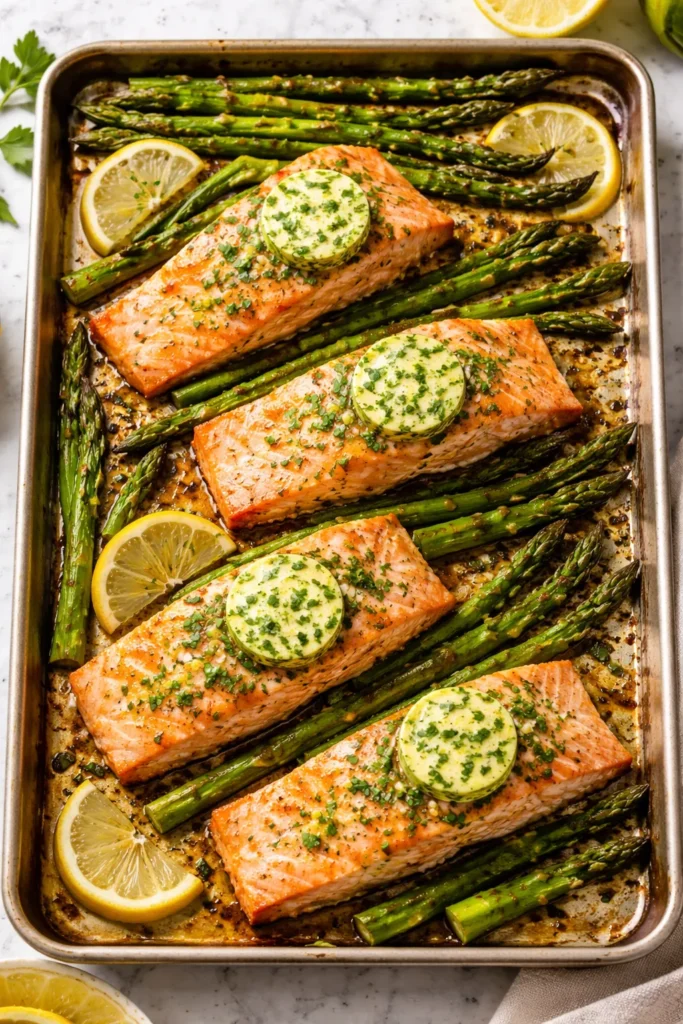
Salmon is arguably the single most efficient low-carb dinner protein available: rich in omega-3 fatty acids, high in protein (approximately 22 grams per 100-gram serving), and genuinely filling in a way that leaner proteins like chicken breast can struggle to match. Sheet pan salmon — where the fish and vegetables roast together on one tray — respects both the food and the cook’s time.
The trick most people miss is oven temperature. Salmon roasted at 275°F for 25 minutes comes out silky and barely set in the center — a completely different texture from the same fish cooked at 425°F for 12 minutes. Both are valid, but the low-and-slow version produces a result that tastes closer to what you’d expect from a serious restaurant.
The Herb Butter That Ties It Together
A compound butter made with softened unsalted butter, minced fresh dill, lemon zest, minced garlic, and a little flaky salt takes about 3 minutes to mix together. Slice it into rounds and lay one directly on top of each piece of salmon for the last 5 minutes of roasting. As it melts, it bastes the fish and runs down onto the asparagus below, turning the whole tray into something far more than the sum of its parts.
Asparagus Timing Notes
- Thicker asparagus spears roast more evenly than the thin ones in this application
- Toss with olive oil, salt, and black pepper before arranging on the sheet pan
- Lay the seasoned salmon on top of the asparagus — the fish juices baste the vegetables from above
- Total time at 400°F: asparagus goes in for 5 minutes first, then add the salmon for another 12 to 14 minutes
Pro tip: Pull the salmon from the oven when it still looks slightly underdone in the very center. Carryover heat continues cooking it for another 2 to 3 minutes once the tray comes out, and the difference between just-done and overdone salmon is about 90 seconds.
Final Thoughts
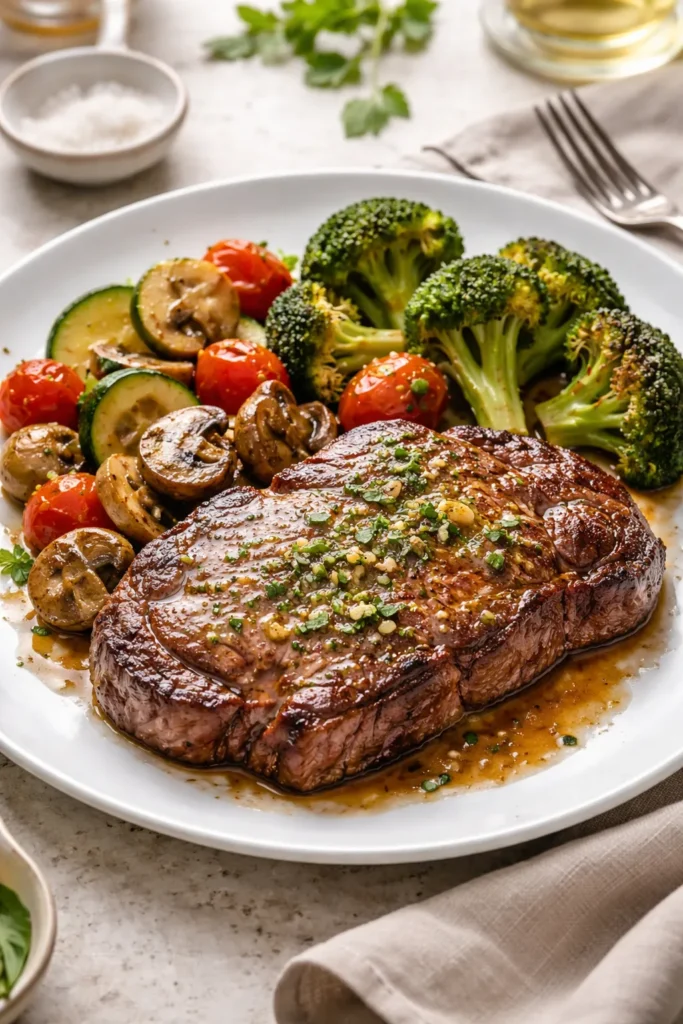
The common thread running through all 12 of these dinners is the same: protein and fat do the work that carbs often get credit for. When you build a plate around a good protein source — whether that’s steak, chicken thighs, salmon, or Italian sausage — and support it with fat-forward sauces and fiber-rich vegetables, you don’t need pasta, bread, or rice to feel like you ate a real meal.
The other thing worth noting is that low-carb cooking doesn’t have to be complicated. Sheet pans, cast iron skillets, slow cookers, and one-pan skillet meals dominate this list for a reason. The goal is food that’s genuinely worth eating — not culinary projects that take three hours on a Tuesday night.
Pick one or two of these dinners to try this week, cook them with the care the technique deserves, and pay attention to how you feel two hours after eating. The usual late-night hunger that follows a carb-heavy dinner tends to be quiet. That’s the point. That’s what “actually filling” means in practice — not a stuffed, bloated feeling, but a calm, lasting satisfaction that carries you comfortably through to the next morning.