There’s a version of clean eating that looks like misery — plain chicken, sad salads, and a fridge full of ingredients you don’t actually know how to use. That version isn’t what this is about. Eating clean, at its best, means choosing whole, unprocessed foods that make you feel genuinely good — and doing it in a way that’s actually enjoyable to cook and eat.
The real challenge isn’t knowing what to eat. Most people have a rough idea. The challenge is having a rotation of recipes that are flavorful enough to look forward to, simple enough to pull off on a Tuesday night, and varied enough that you’re not staring at the same grain bowl four days in a row.
These 10 recipes are built to cover your whole week — breakfasts, lunches, and dinners — with whole foods at the center of every single one. Each dish is built around vegetables, lean proteins, whole grains, legumes, and healthy fats. Nothing requires exotic ingredients or hours in the kitchen. What they do require is good technique, quality produce, and a little bit of planning — which is where this guide earns its keep.
Table of Contents
- What Clean Eating Actually Looks Like in Practice
- Building a Clean Eating Week That Actually Works
- 1. Sesame-Ginger Baked Salmon in Parchment
- Why Salmon Earns Its Place Here
- How to Make It
- 2. Smashed Chickpea and Avocado Sandwich
- The Protein Case for Chickpeas
- How to Make It
- 3. Sweet Potato and Egg Breakfast Hash
- Making the Hash Work on Busy Mornings
- How to Make It
- 4. Cauliflower Chili with Black Beans
- Why Cauliflower Works Where Other Vegetables Don’t
- How to Make It
- 5. Quinoa Breakfast Bowl with Berries and Almond Butter
- The Nutritional Edge Quinoa Has Over Oats
- How to Make It
- 6. Roasted Squash and Farro Salad with Avocado Dressing
- Building the Avocado Dressing
- How to Make It
- 7. Sheet Pan Chicken and Roasted Vegetables
- Why Thighs Are the Right Choice
- How to Make It
- 8. Lemon-Tahini Salad with Lentils, Roasted Beets, and Carrots
- Building the Tahini Dressing
- How to Make It
- 9. Buddha Bowl with Kale, Avocado, Orange, and Wild Rice
- The Orange and Avocado Combination
- How to Make It
- 10. Triple Berry Smoothie Bowl
- Toppings That Actually Add Nutrition
- How to Make It
- Making These Recipes Work Together Across the Week
- Final Thoughts
What Clean Eating Actually Looks Like in Practice
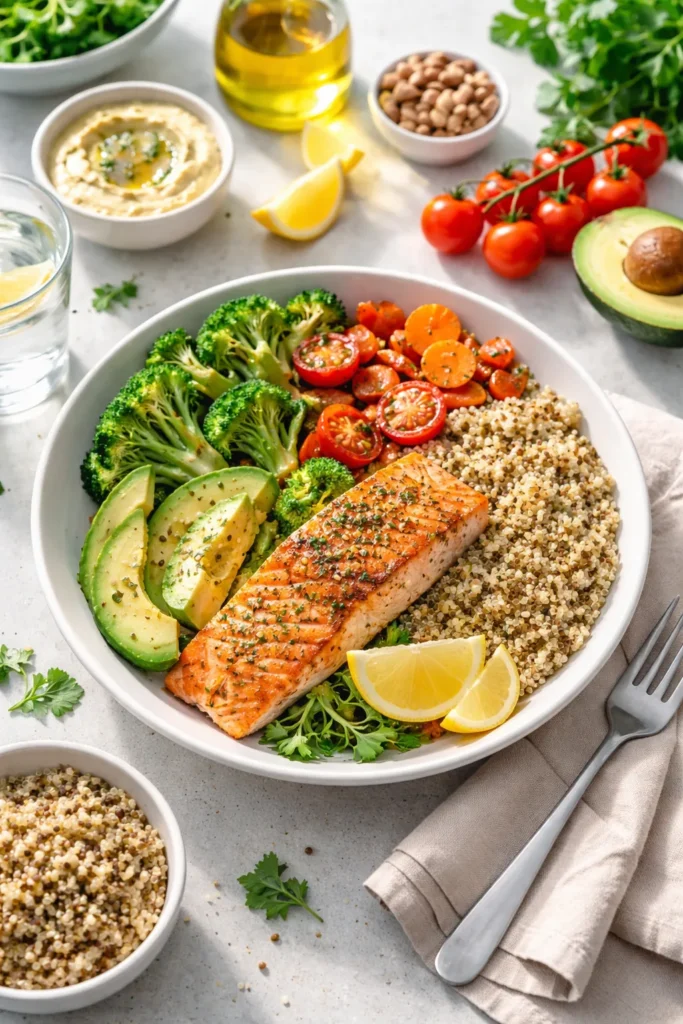
Before getting into the recipes, it’s worth being specific about what “clean eating” means in a practical, non-dogmatic sense. Registered dietitian and culinary nutrition expert Jane Leverich puts it well: clean eating is about choosing naturally nutrient-dense foods — vegetables, fruits, whole grains, nuts, seeds, and unprocessed proteins — as often as possible. It’s plant-forward by default, but it’s not strictly plant-based unless that’s your goal.
What it’s not is a rigid rulebook. You’re not swearing off all grains, avoiding fat, or eating only raw food. The goal is minimizing processed ingredients — the ones with long ingredient lists, added sugars, refined flours, and artificial anything — and replacing them with real food that your body recognizes and actually uses well.
One useful mental framework: if an ingredient has one word on its label (salmon, sweet potato, lentil, avocado, oats), you’re on solid ground. The further you get from that — the longer the ingredient list, the more unrecognizable the components — the further you are from clean.
Practically, clean eating is closest in spirit to the Mediterranean diet. It leans on olive oil, fish, legumes, colorful vegetables, and whole grains. It allows for meat and dairy in reasonable quantities. And it leaves room for a satisfying, delicious meal at the end of every single day.
Building a Clean Eating Week That Actually Works
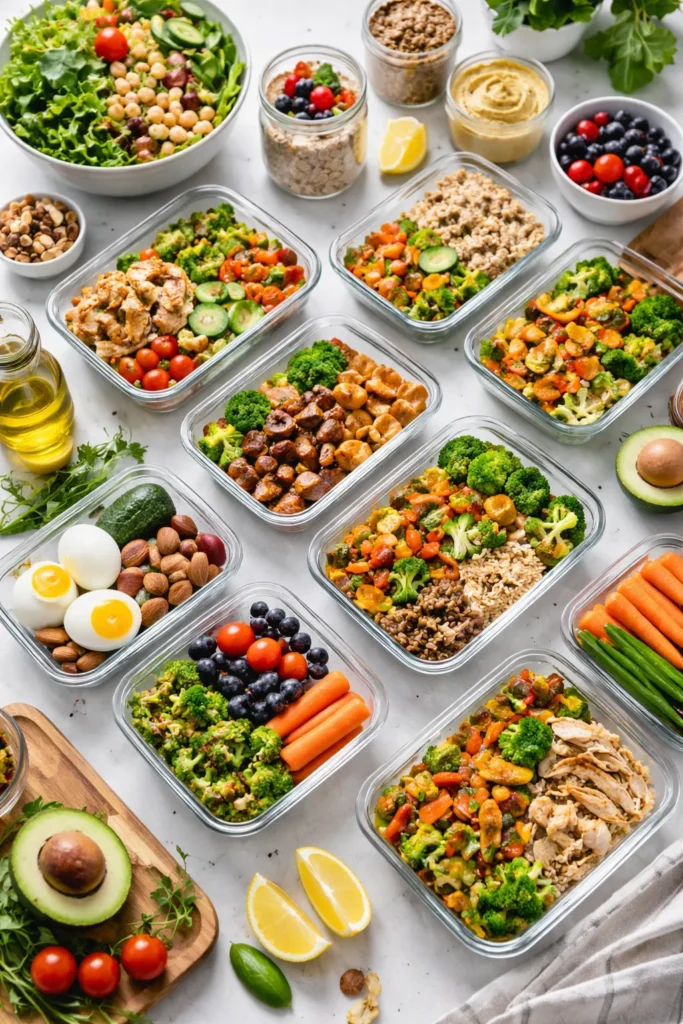
Pulling off a full week of clean eating without burning out or resorting to takeout on Thursday night comes down to a few habits.
Batch-prep two or three components at the start of the week. Cook a large pot of whole grains — quinoa, farro, or wild rice — and they’ll anchor three or four different meals. Roast a sheet pan of vegetables and use them in bowls, wraps, and salads throughout the week. Hard-boil a few eggs for quick breakfasts and snack additions. These are the building blocks that make clean eating efficient rather than exhausting.
Stock your pantry strategically. Canned chickpeas, lentils, and black beans. A good tahini. Extra-virgin olive oil. Tamari or coconut aminos. Miso paste. Dried spices you’ll actually use: smoked paprika, cumin, turmeric, coriander. These staples are what allow you to build a meal from whatever vegetables you have on hand without it tasting generic.
Think in protein rotations. If Monday is salmon, Tuesday is eggs or legumes, Wednesday is chicken — you’re automatically getting protein variety without planning every meal from scratch. This approach also keeps your grocery bill manageable because you’re shopping seasonally and strategically rather than impulsively.
The 10 recipes below are designed to slot into this kind of week. Mix and match them based on your schedule — some take 20 minutes, some take closer to an hour — and use the batch-prep suggestions built into each one.
1. Sesame-Ginger Baked Salmon in Parchment
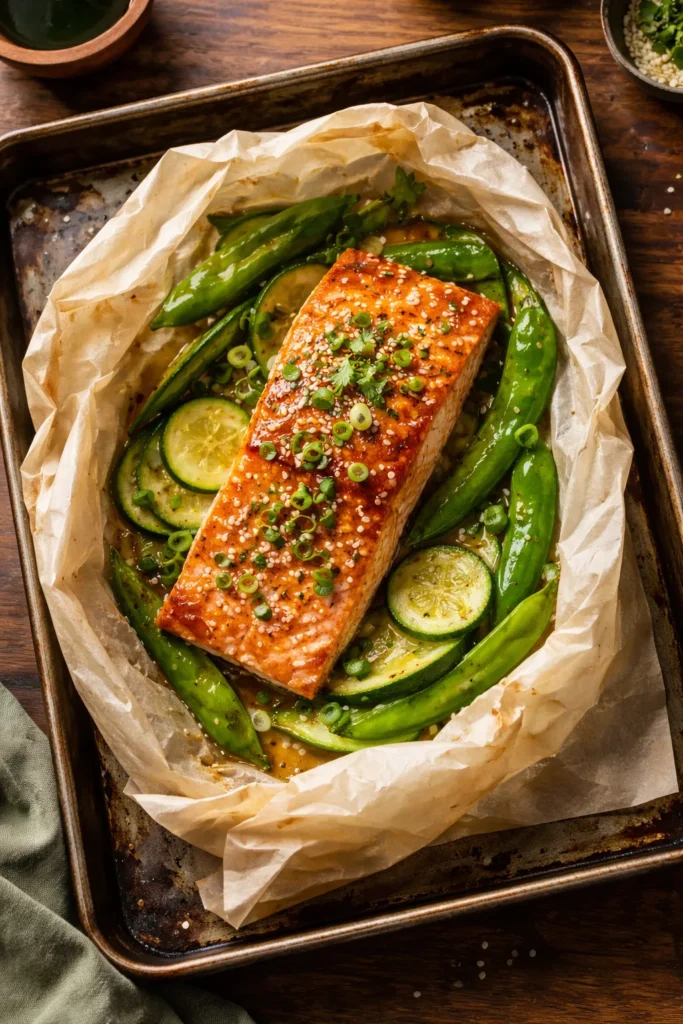
Few weeknight dinners are as low-effort and high-reward as a parchment-baked salmon fillet. The technique — folding fish and aromatics into a sealed packet before baking — steams everything gently together, keeping the salmon moist and the vegetables tender without any risk of overcooking or a pan full of stuck-on residue.
This version uses sesame oil, fresh ginger, tamari, and a touch of rice vinegar to create a simple marinade that punches well above its ingredient count. Add sliced zucchini, scallions, and a handful of snap peas to the packet, and you’ve got a complete meal that practically builds itself.
Why Salmon Earns Its Place Here
Salmon is one of the most nutrient-dense proteins you can eat. A single fillet provides roughly 25 grams of protein alongside a generous hit of omega-3 fatty acids — specifically EPA and DHA, the anti-inflammatory fats that support heart and brain health. It’s also one of the few dietary sources of vitamin D, which is harder to get from food than most people realize.
The ginger in this recipe does more than add flavor. Gingerol, the primary bioactive compound in fresh ginger, has documented anti-inflammatory and digestive properties. Combined with the sesame oil’s healthy fat profile, this dish works as hard nutritionally as it does in the flavor department.
How to Make It
- Yield: 2 servings | Total Time: 30 minutes
- Whisk together 2 tablespoons tamari, 1 tablespoon sesame oil, 1 teaspoon freshly grated ginger, and 1 teaspoon rice vinegar.
- Place a salmon fillet (about 6 oz) on a large sheet of parchment paper, scatter sliced zucchini and snap peas around it, spoon the marinade over everything, and fold the parchment into a sealed packet.
- Bake at 400°F (200°C) for 15–18 minutes, until the salmon flakes easily.
Pro tip: Don’t skip the resting time. Let the packet sit sealed for 2 minutes after it comes out of the oven — the carryover steam finishes the cooking and keeps everything tender.
2. Smashed Chickpea and Avocado Sandwich
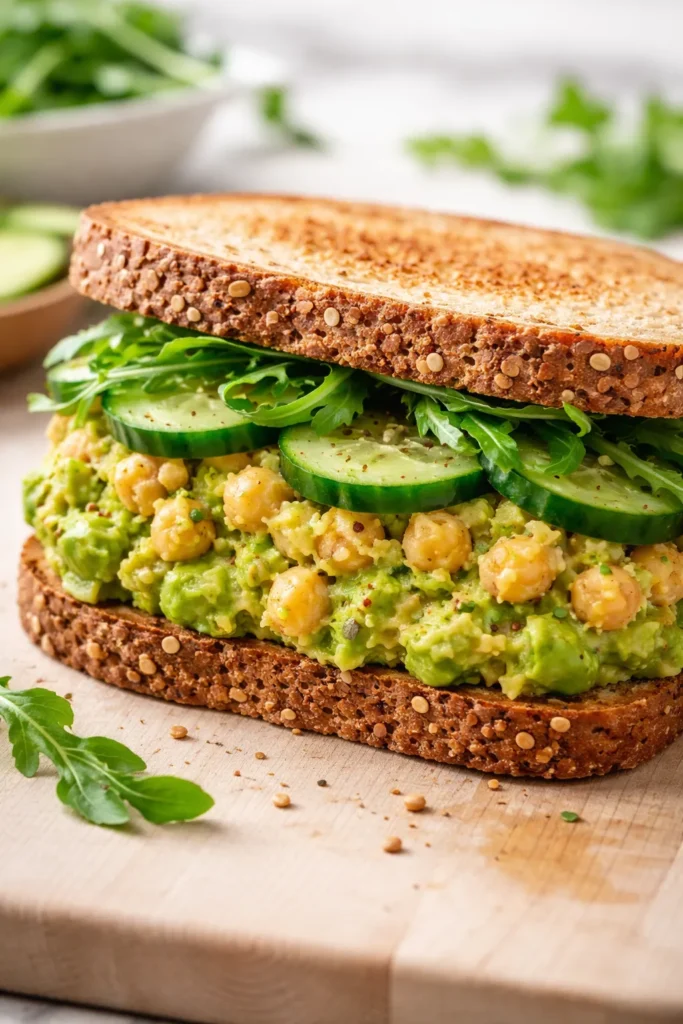
This is the lunch that converts skeptics. If you’ve ever looked at a plant-based sandwich and thought it wouldn’t fill you up, this one will change your mind. Smashing chickpeas — coarsely, not pureed — gives them a satisfying, almost meaty texture that pairs perfectly with buttery avocado and a hit of brightness from lemon juice and dried cranberries.
What makes this work is the contrast of textures: chunky chickpeas, creamy avocado, crisp cucumber, and a handful of peppery arugula layered on whole-grain bread. It comes together in under 10 minutes and holds reasonably well if you’re packing it for lunch — just keep the avocado mixture separate from the bread until you’re ready to eat.
The Protein Case for Chickpeas
A half-cup of chickpeas contains about 7 grams of plant-based protein and 6 grams of fiber — a combination that slows digestion and keeps blood sugar stable for hours. Their mild, slightly nutty flavor absorbs whatever you season them with, which makes them endlessly flexible. Here, a squeeze of fresh lemon and a pinch of red pepper flakes do the heavy lifting.
How to Make It
- Yield: 2 servings | Total Time: 10 minutes
- Drain and rinse one 15-oz can of chickpeas. Add to a bowl with half a ripe avocado, 1 tablespoon fresh lemon juice, salt, and black pepper.
- Smash with a fork until chunky — you want texture, not hummus.
- Stir in 2 tablespoons dried cranberries and a pinch of red pepper flakes.
- Spread on toasted whole-grain bread and top with arugula and thinly sliced cucumber.
Worth knowing: Swap the cranberries for diced apple during autumn months or sliced grapes in warmer weather — both work beautifully against the savory chickpea base.
3. Sweet Potato and Egg Breakfast Hash
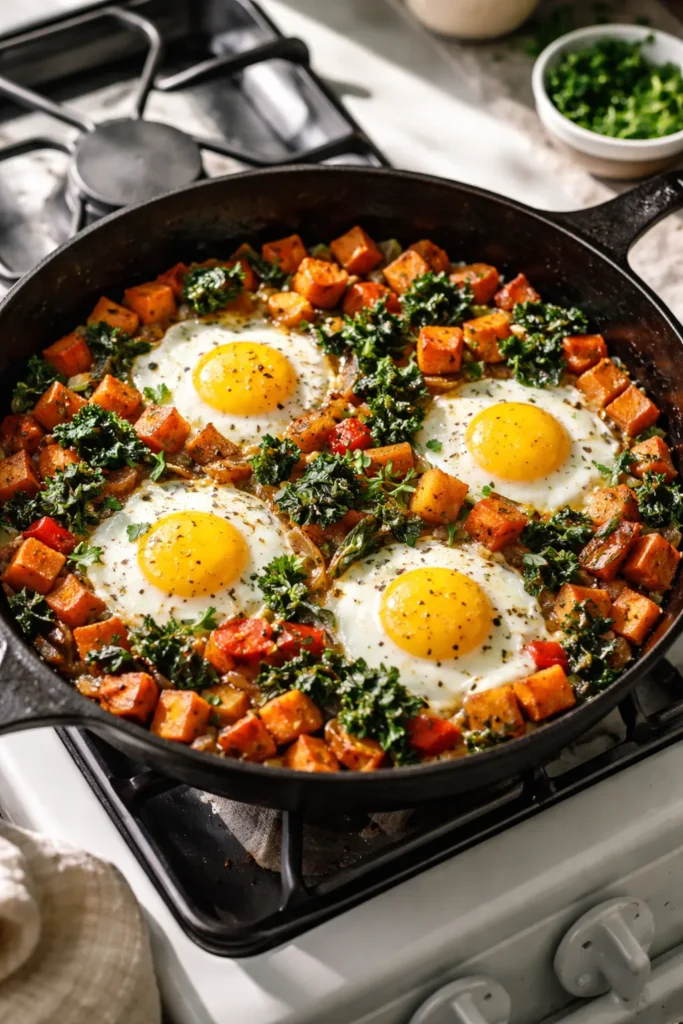
A breakfast hash is one of the most forgiving, most customizable clean eating meals in existence. This version is built around sweet potato — cubed small so it crisps at the edges — combined with caramelized onion, bell pepper, and wilted kale, finished with eggs cooked directly in the pan.
It’s hearty enough to fuel a full morning without the post-breakfast energy crash that comes from sugary cereals or refined carb-heavy breakfasts. The sweet potato provides slow-releasing carbohydrate energy, while the eggs deliver protein and fat to round out the meal and keep hunger away until midday.
Making the Hash Work on Busy Mornings
The trick to a great hash is patience during the sweet potato stage. Dice the sweet potato into small, uniform cubes (about ½ inch), get the pan properly hot before adding oil, and then leave the potatoes alone for 4–5 minutes before stirring. This is what creates those crispy, caramelized edges — moving them too soon steams them instead of searing them.
If you want to speed up weekday mornings, pre-cook the sweet potato cubes on the weekend and store them in the fridge. The hash then comes together in under 10 minutes.
How to Make It
- Yield: 3–4 servings | Total Time: 30 minutes
- Heat 1 tablespoon olive oil in a large cast iron or stainless steel pan over medium-high heat.
- Add 2 cups diced sweet potato in a single layer. Cook undisturbed for 4–5 minutes.
- Add ½ diced red onion and 1 diced bell pepper. Cook for another 4 minutes, stirring occasionally.
- Stir in 2 cups chopped kale and cook until wilted, about 2 minutes. Season with smoked paprika, salt, and black pepper.
- Create wells in the hash and crack in 3–4 eggs. Cover and cook until whites are set, 3–4 minutes for runny yolks.
4. Cauliflower Chili with Black Beans
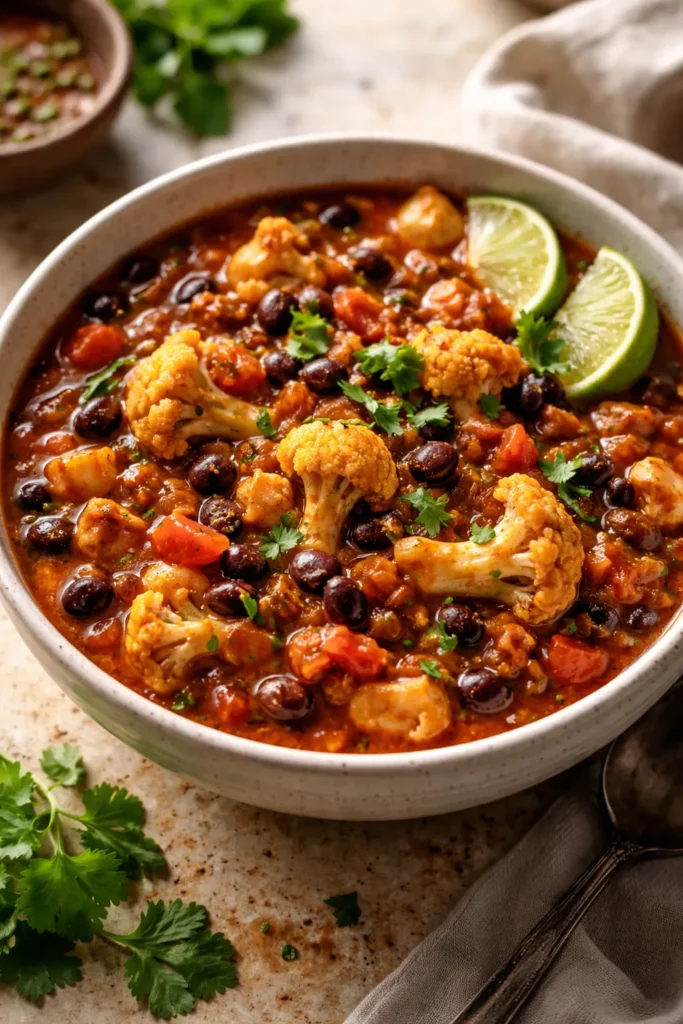
This chili earns its place on any clean eating week for one reason above all others: it actually tastes like chili. Not like a compromise or a health-food impersonation of chili — like the real thing. Cauliflower, broken into small florets, absorbs the chili spices deeply as it cooks, taking on a meaty, tender texture that makes you genuinely forget you’re eating a vegetable-forward dish.
Combined with two types of beans, fire-roasted tomatoes, chipotle pepper, and a proper spice blend — cumin, smoked paprika, ancho chili powder, garlic — this is comfort food that doesn’t require a nutritional apology.
Why Cauliflower Works Where Other Vegetables Don’t
Cauliflower’s cellular structure is dense enough to hold up to long cooking without turning mushy, and its neutral flavor is an ideal canvas for bold spices. It also absorbs liquid differently than most vegetables — drawing in the broth and spice mixture as it cooks, rather than diluting it. The result is florets that taste like they’ve been seasoned all the way through.
One batch of this chili feeds six and freezes perfectly, making it one of the best meal-prep investments in this entire list.
How to Make It
- Yield: 6 servings | Total Time: 35–40 minutes
- Sauté diced onion and 4 garlic cloves in olive oil until soft.
- Add 1 head of cauliflower (cut into small florets), 1 tablespoon cumin, 2 teaspoons smoked paprika, 1 teaspoon ancho chili powder, and 1 minced chipotle pepper in adobo. Stir to coat.
- Add 2 cans of black beans (drained), 1 can of fire-roasted diced tomatoes, and 1 cup vegetable broth.
- Simmer uncovered for 20–25 minutes until cauliflower is very tender and chili has thickened.
- Serve topped with sliced avocado, Greek yogurt (or coconut yogurt), and fresh cilantro.
5. Quinoa Breakfast Bowl with Berries and Almond Butter
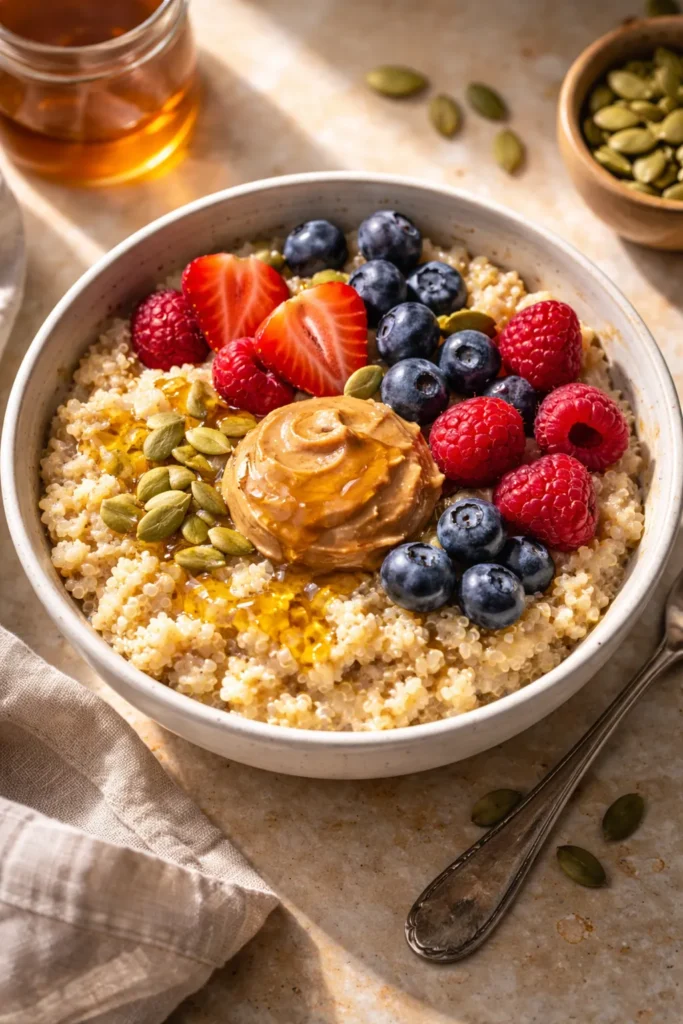
Quinoa at breakfast feels like an unusual choice until you actually try it — and then it becomes the kind of thing you make three mornings a week without thinking. Cooked in almond milk with a pinch of cinnamon and a touch of maple syrup, quinoa transforms into a warm, creamy porridge with noticeably more staying power than oatmeal, thanks to its complete amino acid profile (one of the only plant foods that qualifies as a complete protein on its own).
Top it with fresh berries, a spoonful of almond butter, a handful of toasted pumpkin seeds, and a drizzle of honey, and you’ve got a breakfast that covers carbohydrates, protein, fat, and micronutrients in a single bowl.
The Nutritional Edge Quinoa Has Over Oats
Quinoa contains all nine essential amino acids, which is unusual for a grain (technically a seed). Per half-cup dry serving, it delivers about 8 grams of protein alongside 5 grams of fiber and meaningful amounts of magnesium, iron, and phosphorus. The fiber profile includes both soluble and insoluble types, which together slow digestion and support gut health.
How to Make It
- Yield: 2 servings | Total Time: 20 minutes
- Rinse ¾ cup quinoa thoroughly. Combine with 1½ cups unsweetened almond milk, a pinch of cinnamon, and a pinch of salt in a small saucepan.
- Bring to a boil, reduce to low, cover, and cook for 15 minutes until liquid is absorbed.
- Stir in 1 teaspoon maple syrup.
- Divide into bowls and top with fresh blueberries, sliced strawberries, 1 tablespoon almond butter per bowl, and a sprinkle of pumpkin seeds.
Pro tip: Make a double batch and store the plain cooked quinoa in the fridge. Reheat with a splash of almond milk and add toppings fresh each morning — it’s a 3-minute breakfast on any day that follows.
6. Roasted Squash and Farro Salad with Avocado Dressing
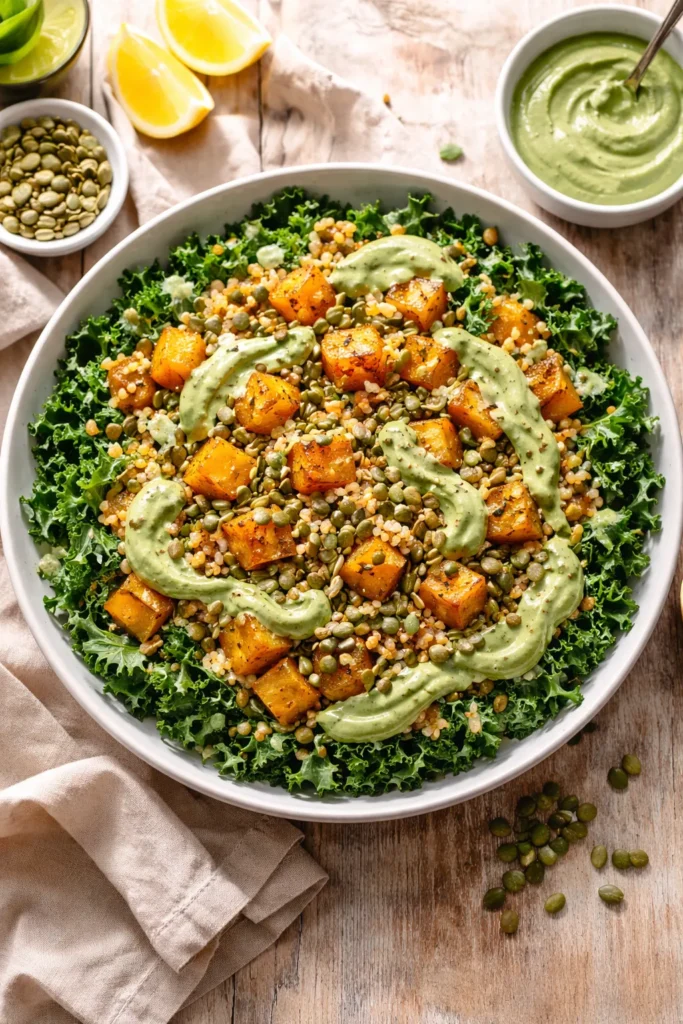
This is the kind of salad that makes you stop thinking of salad as a side dish. A base of hearty kale — massaged until tender — gets layered with warm, caramelized butternut squash, chewy farro, toasted pepitas, and a creamy avocado dressing that brings the whole bowl together in a way that’s rich without being heavy.
Farro is a whole ancient grain with a nutty, slightly chewy texture that holds up well to roasted vegetables and bold dressings. It cooks in about 25 minutes and keeps in the fridge for up to 5 days, making it one of the best grains to batch-cook at the start of the week.
Building the Avocado Dressing
The dressing here is the star, and it couldn’t be simpler. Blend one ripe avocado with the juice of one lime, 2 tablespoons of extra-virgin olive oil, a small handful of cilantro or fresh herbs, a pinch of salt, and enough water to bring it to a pourable consistency (roughly 3–4 tablespoons). The result is a dressing with the creaminess of a ranch or Caesar but made entirely from whole-food ingredients.
It takes 3 minutes to make and keeps in a sealed jar in the fridge for up to 3 days.
How to Make It
- Yield: 4 servings | Total Time: 45 minutes
- Toss 3 cups cubed butternut squash with olive oil, salt, and smoked paprika. Roast at 425°F (220°C) for 25–30 minutes until caramelized.
- Meanwhile, cook 1 cup farro according to package directions. Drain and set aside.
- Massage 4 cups shredded kale with a drizzle of olive oil and a pinch of salt for 1–2 minutes until the leaves soften and darken.
- Blend avocado dressing and assemble bowls with kale base, farro, roasted squash, and a generous drizzle of dressing.
7. Sheet Pan Chicken and Roasted Vegetables
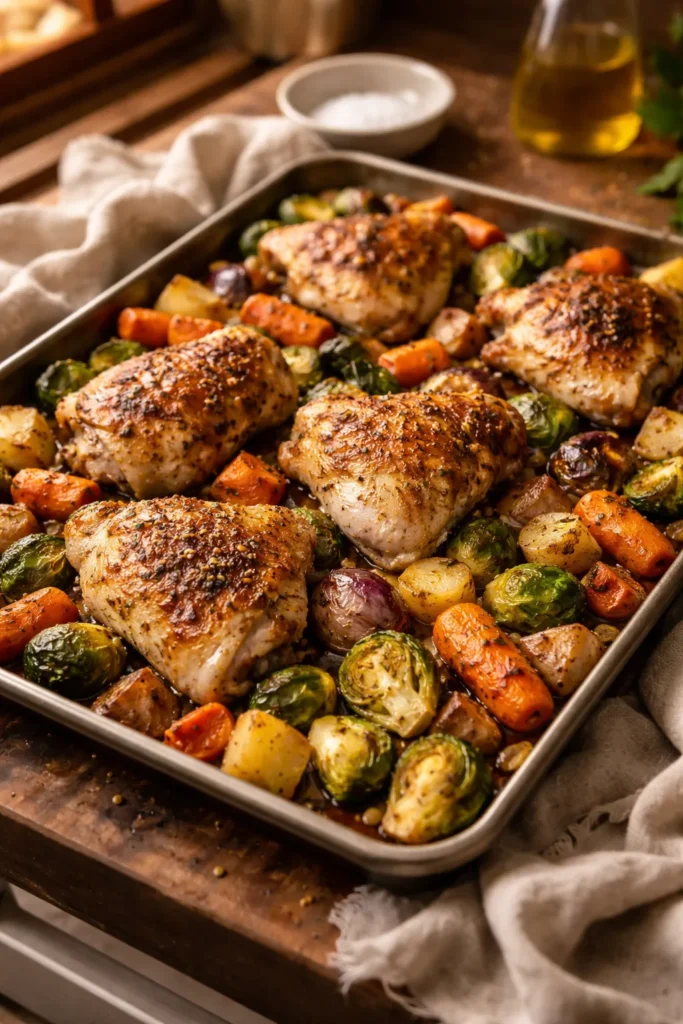
Sheet pan dinners have earned their reputation as weeknight workhorses because they genuinely deliver: one pan, 60 minutes (most of it hands-off), and a complete meal for the whole family. This version uses bone-in, skin-on chicken thighs — the most forgiving cut of chicken for roasting — alongside root vegetables and Brussels sprouts.
The key to great sheet pan chicken is starting with a hot oven (425°F/220°C minimum) and not overcrowding the pan. Crowding causes steam to build up instead of allowing the vegetables to roast and caramelize. Use two sheet pans if you’re cooking for four or more people.
Why Thighs Are the Right Choice
Chicken thighs contain slightly more fat than breasts, which is exactly what makes them so reliable for roasting. That fat bastes the meat as it cooks, keeping the interior juicy even if the timing isn’t perfect. The skin crisps to a golden-brown that’s satisfying in a way that boneless, skinless chicken rarely achieves.
From a nutritional standpoint, thighs provide roughly 22 grams of protein per serving alongside zinc, iron, and B vitamins — particularly B12 and niacin, which support energy metabolism.
How to Make It
- Yield: 4 servings | Total Time: 55–60 minutes
- Toss 4 bone-in chicken thighs with olive oil, 3 minced garlic cloves, fresh rosemary, dried thyme, salt, and black pepper.
- Arrange on a sheet pan alongside cubed sweet potato, halved Brussels sprouts, and sliced carrots — all tossed lightly in olive oil and salt.
- Roast at 425°F (220°C) for 45–50 minutes, until chicken skin is deeply golden and an instant-read thermometer reads 165°F (74°C) at the thickest point.
- Rest for 5 minutes before serving.
8. Lemon-Tahini Salad with Lentils, Roasted Beets, and Carrots
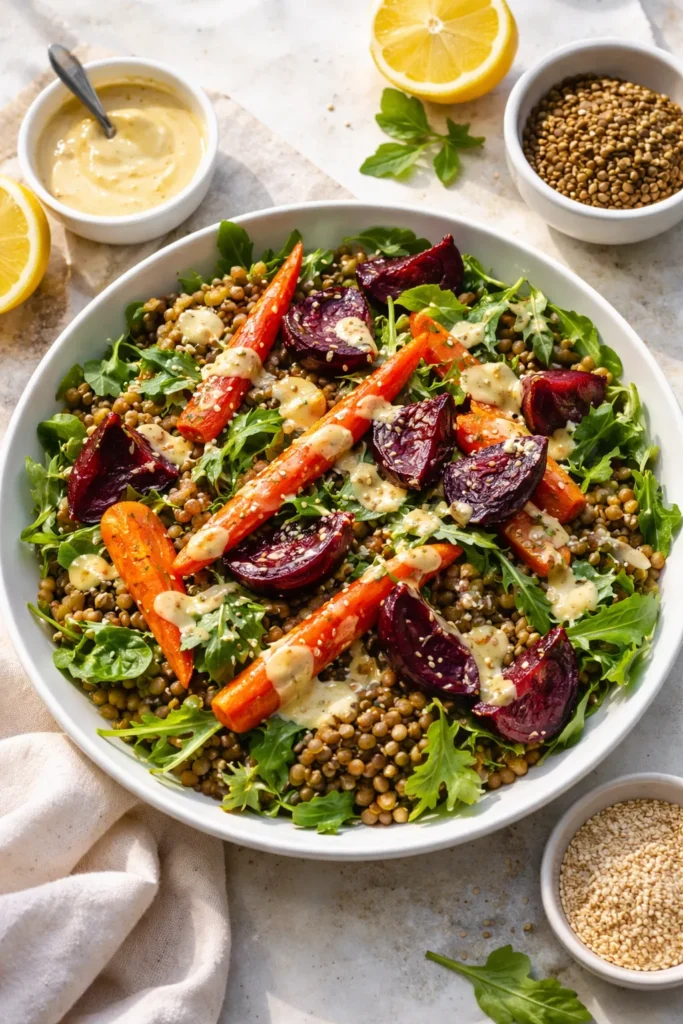
This salad is as visually striking as it is nutritious — the deep crimson of roasted beets against bright orange carrots and green kale, all pulled together by a golden tahini dressing with lemon and garlic. It’s the kind of dish that makes clean eating feel like a genuine pleasure rather than a discipline.
Lentils are the protein foundation here, providing about 9 grams of protein and 8 grams of fiber per half-cup cooked serving. Unlike beans, they don’t require soaking and cook in 20–25 minutes — or you can use pre-cooked lentils from a pouch if you want this on the table faster. Vacuum-packed cooked beets from most grocery stores also work brilliantly, eliminating the roasting step entirely when time is short.
Building the Tahini Dressing
Good tahini makes or breaks this dressing. Look for a tahini where sesame is the only ingredient and the texture is smooth and pourable rather than thick and dry. Combine 3 tablespoons of tahini with the juice of one lemon, 1 small garlic clove (minced or grated), 1 tablespoon olive oil, and 3–4 tablespoons of water. Whisk until smooth — the dressing will seize first and then loosen into a creamy, pourable consistency.
How to Make It
- Yield: 2–3 servings | Total Time: 45 minutes (or 20 minutes with pre-cooked lentils and beets)
- Roast beets (wrapped individually in foil) and whole carrots at 400°F (200°C) for 35–40 minutes. Alternatively, use pre-cooked vacuum-packed beets.
- Cook ¾ cup green or brown lentils in salted water until just tender, about 20 minutes. Drain.
- Build the salad on a base of massaged kale. Add lentils, sliced roasted beets, and carrots.
- Drizzle generously with tahini dressing and top with toasted pumpkin seeds and fresh parsley.
9. Buddha Bowl with Kale, Avocado, Orange, and Wild Rice
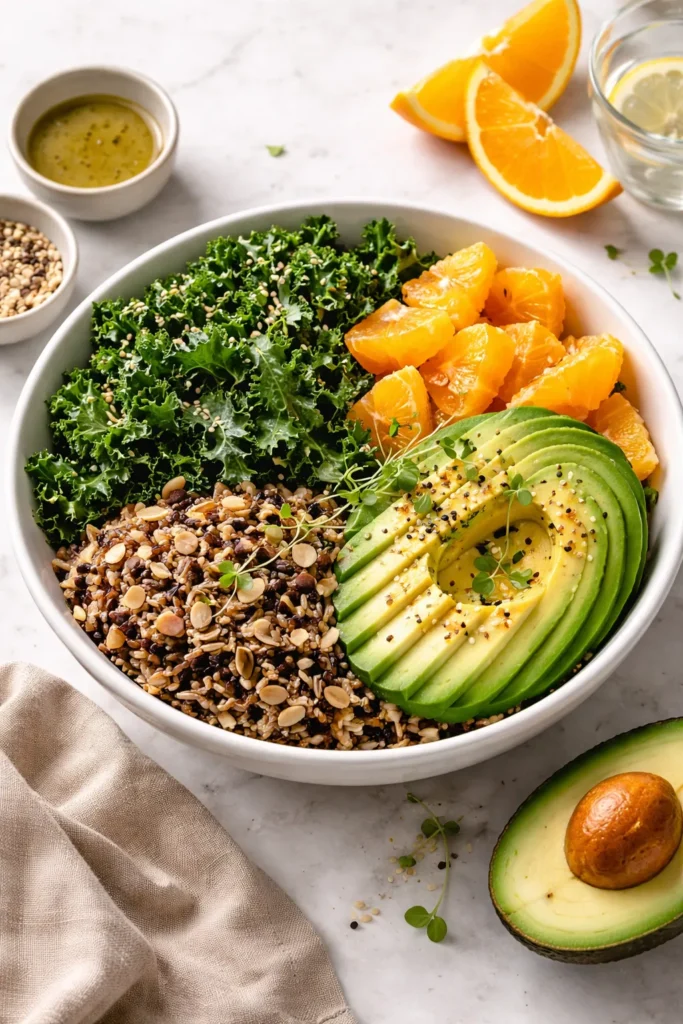
The Buddha bowl format is one of clean eating’s most enduring formats — and for good reason. It’s inherently balanced: a whole grain base, a leafy green, a protein, healthy fat, and a bright, flavorful dressing, all arranged in a bowl that looks as good as it tastes.
This version uses wild rice, which has a distinctly nutty, slightly earthy flavor and a chewier texture than white or brown rice. It takes longer to cook (about 45 minutes), but the flavor payoff is significant — and a large batch keeps in the fridge for the entire week, ready to anchor bowls, stir-fries, and side dishes alike.
The Orange and Avocado Combination
The pairing of citrus and avocado here is more than aesthetic. Avocado’s monounsaturated fats help your body absorb the fat-soluble vitamins in the surrounding vegetables — particularly vitamins A, K, and E from the kale. The orange segments add vitamin C, which enhances the absorption of the non-heme (plant-based) iron found in both the kale and wild rice.
It’s the kind of nutritional synergy that happens naturally when you build meals around whole foods rather than trying to engineer it deliberately.
How to Make It
- Yield: 2–3 servings | Total Time: 30 minutes (using pre-cooked wild rice)
- Massage 3 cups of shredded kale with a drizzle of olive oil and a pinch of salt.
- Divide cooked wild rice between bowls. Add kale, sliced avocado, segmented orange or mandarin, shredded carrots, and sliced cucumber.
- Whisk together the dressing: 2 tablespoons olive oil, 1 tablespoon lemon juice, 1 teaspoon Dijon mustard, 1 teaspoon maple syrup, salt, and pepper.
- Drizzle over bowls and top with hemp seeds or toasted sesame seeds.
Pro tip: Add grilled chicken, seared tofu, or a soft-boiled egg for extra protein if this is your main meal.
10. Triple Berry Smoothie Bowl
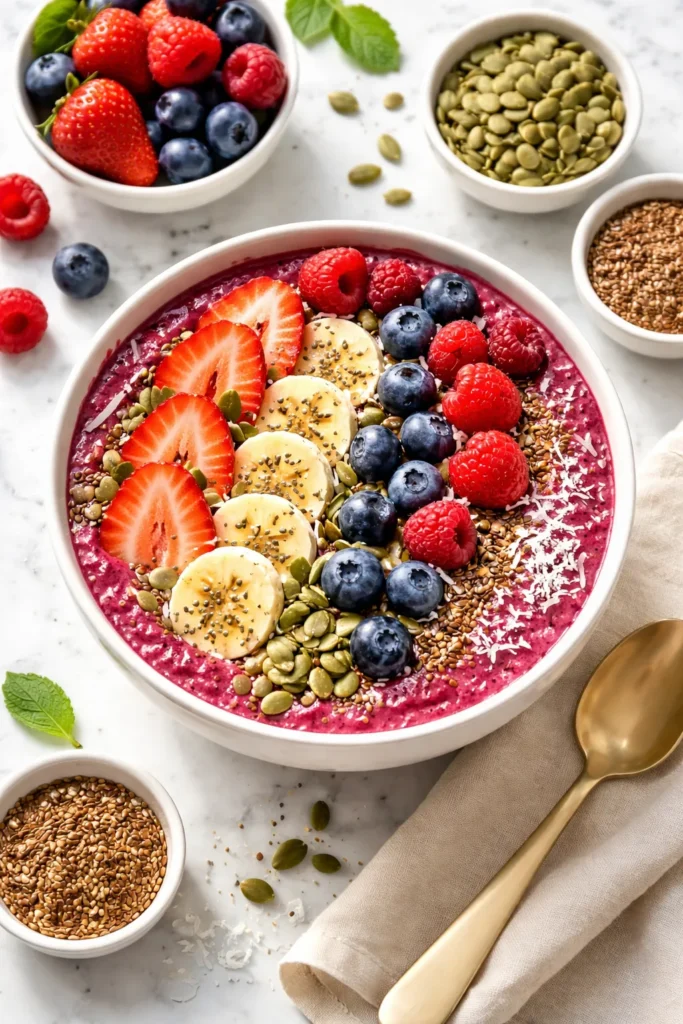
If breakfast needs to happen in under 5 minutes, the smoothie bowl is your answer — and this version is far more nutritionally complete than it looks. The base is thick-blended frozen mixed berries (strawberries, blueberries, raspberries) with frozen banana for creaminess, a scoop of almond butter for fat and protein, and a splash of almond milk to get the blender moving.
The key difference between a smoothie bowl and a regular smoothie is texture. You want it thick enough to eat with a spoon, not thin enough to drink through a straw. Use more frozen fruit than liquid, and blend only until just smooth — a high-powered blender on a low setting works better here than going full speed.
Toppings That Actually Add Nutrition
The toppings aren’t just decoration. Each one is doing nutritional work. Pumpkin seeds provide zinc, magnesium, and omega-3 fats. Flaxseeds deliver lignans and additional omega-3s. Fresh fruit adds vitamin C and natural sweetness. A small scoop of granola (choose one where oats are the first ingredient and sugar is minimal) adds satisfying crunch and slow-release carbohydrate.
Pumpkin seeds and flaxseeds together turn this from a simple fruit bowl into a breakfast with meaningful fat and micronutrient content.
How to Make It
- Yield: 2 servings | Total Time: 5 minutes
- Blend 2 cups frozen mixed berries, 1 frozen banana, 1 tablespoon almond butter, and 3–4 tablespoons unsweetened almond milk until thick and creamy. Do not over-blend.
- Divide into two bowls.
- Top with fresh blueberries and sliced strawberries, 1 tablespoon each of pumpkin seeds and ground flaxseeds, a small handful of low-sugar granola, and a drizzle of honey if desired.
Worth knowing: Add a handful of frozen cauliflower florets or frozen zucchini to the blender — you won’t taste them at all, but they add body, nutrients, and extra volume without changing the flavor.
Making These Recipes Work Together Across the Week
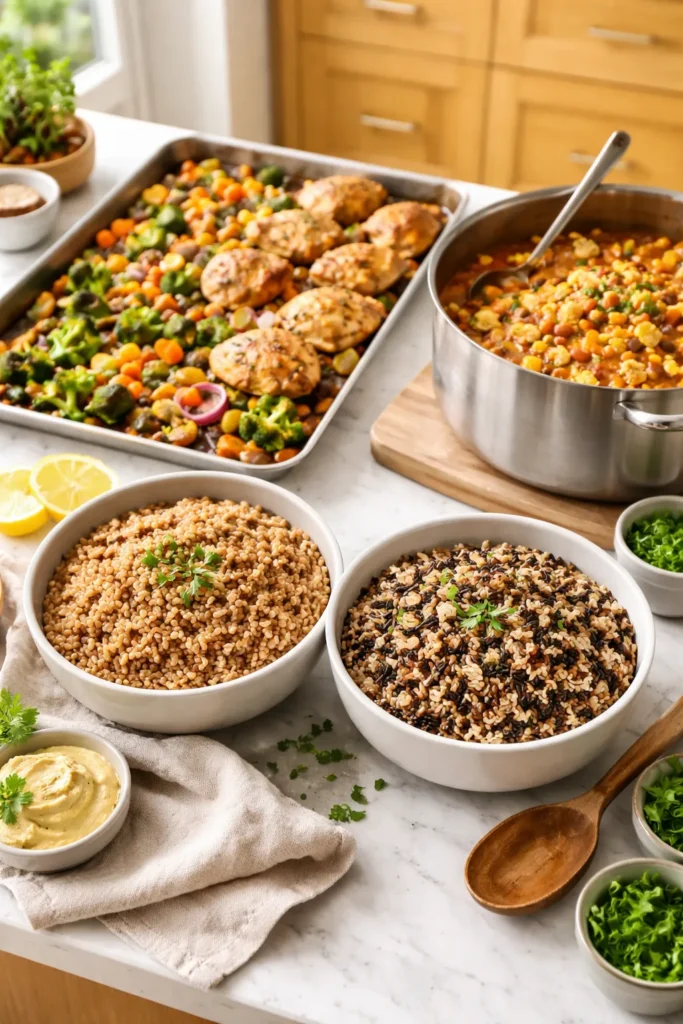
The real power of these 10 recipes isn’t any single dish — it’s how they work as a system. Cook the wild rice (Recipe 9) and farro (Recipe 6) on the same day and you’ve got two grains ready to anchor multiple meals. Roast a double batch of vegetables for the sheet pan chicken (Recipe 7) and use the leftovers in the Buddha bowl (Recipe 9). Make a full pot of cauliflower chili (Recipe 4) and eat it twice.
A few practical notes on shopping and prep:
- Proteins to buy: salmon fillets, bone-in chicken thighs, eggs
- Grains to cook in advance: farro, wild rice, quinoa
- Vegetables to roast ahead: sweet potato, butternut squash, beets and carrots
- Pantry anchors: canned chickpeas, lentils, black beans; tahini; tamari; olive oil; smoked paprika, cumin, turmeric
This approach keeps clean eating manageable without requiring you to cook every single day. A 2-hour Sunday session — grains, roasted vegetables, one or two proteins — sets you up for a week where pulling a meal together takes 15–20 minutes rather than an hour from scratch.
Eating well throughout the week doesn’t require perfection. It requires having good food ready to go when you’re hungry and short on energy.
Final Thoughts
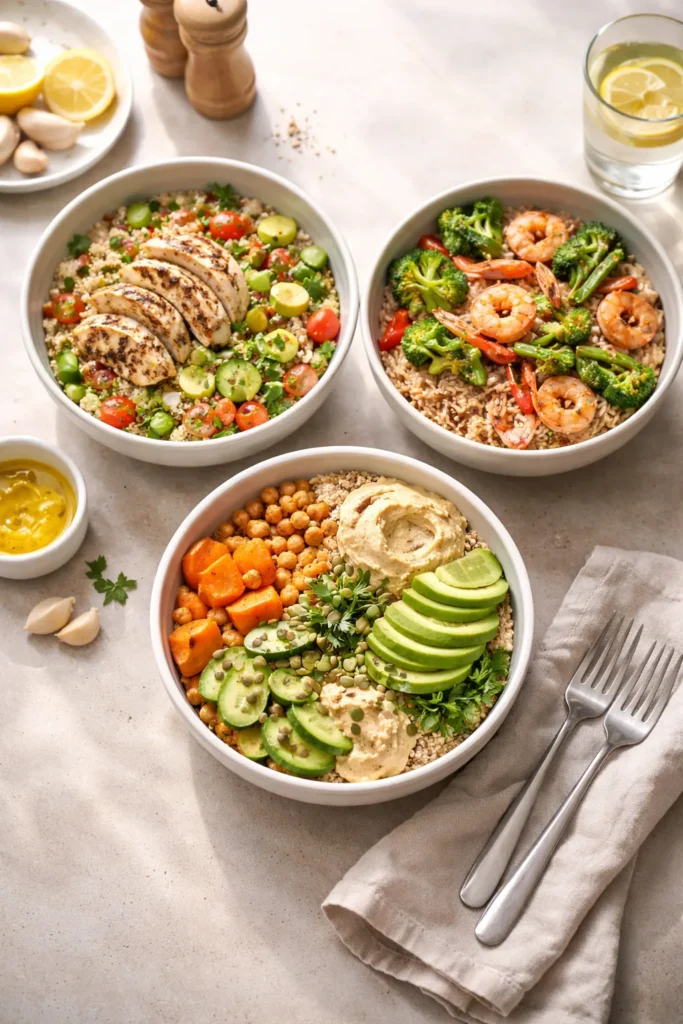
Clean eating doesn’t need to be aspirational or complicated. At its core, it’s just choosing food that’s closer to its original form — whole grains instead of refined, fresh vegetables instead of processed, home-cooked proteins instead of packaged. These 10 recipes demonstrate that the gap between “healthy” and “delicious” is much smaller than the diet industry would have you believe.
Start with two or three of these recipes this week. The smashed chickpea sandwich if you need a fast lunch. The sheet pan chicken if you want something effortless on a busy night. The smoothie bowl if mornings are chaos. Build from there.
What tends to stick long-term isn’t a strict meal plan or a dietary rulebook — it’s a handful of recipes you actually like making and eating, repeated with confidence. These 10 are a solid place to start.