Grocery bills have a way of sneaking up on you. One week you’re buying sensible ingredients, the next you’re staring at a receipt that somehow totaled $180 for what felt like nothing special. Feeding a family well — without spending a fortune — is one of those daily challenges that doesn’t get nearly enough credit for how genuinely hard it is.
Here’s what most budget cooking content gets wrong: it assumes “cheap” means boring. It doesn’t. The dinners that stretch your dollar the furthest are often the ones your family asks for by name. Taco soup. Spaghetti. Pulled pork piled onto a bun. These aren’t consolation prizes for a tight budget — they’re crowd-pleasers that happen to cost almost nothing per serving.
The meals below all share a few things: they use pantry staples and affordable proteins, they scale up without much effort, and they genuinely get eaten. No negotiating at the table, no “I don’t like that” from the back corner. These are the dinners that disappear fast and leave people asking what’s for dessert.
Table of Contents
- 1. Taco Soup
- Why This Works on a Tight Budget
- Ways to Make It Your Own
- 2. Chicken Fried Rice
- The Day-Old Rice Rule
- Fast Fried Rice Formula
- 3. Slow Cooker Pulled Pork Sandwiches
- What to Serve It On
- Slow Cooker Tips
- 4. Spaghetti with Meat Sauce
- Making the Sauce Taste Like It Cooked All Day
- Stretch It Further
- 5. Sheet-Pan Sausage with Potatoes and Vegetables
- The Roasting Technique That Matters
- Variations Worth Trying
- 6. Enchilada Casserole
- Building the Casserole
- Make It Your Own
- 7. Hamburger Soup
- Why Ground Beef Works So Well Here
- Storage and Reheating
- 8. Broccoli Cheddar Rice Skillet
- One-Pan Technique Breakdown
- 9. Baked Ziti or Baked Spaghetti
- Ricotta vs. No Ricotta
- Make-Ahead Notes
- 10. Black Bean and Rice Bowls
- Seasoning Makes or Breaks This Dish
- Variations That Keep It From Feeling Repetitive
- Final Thoughts
1. Taco Soup
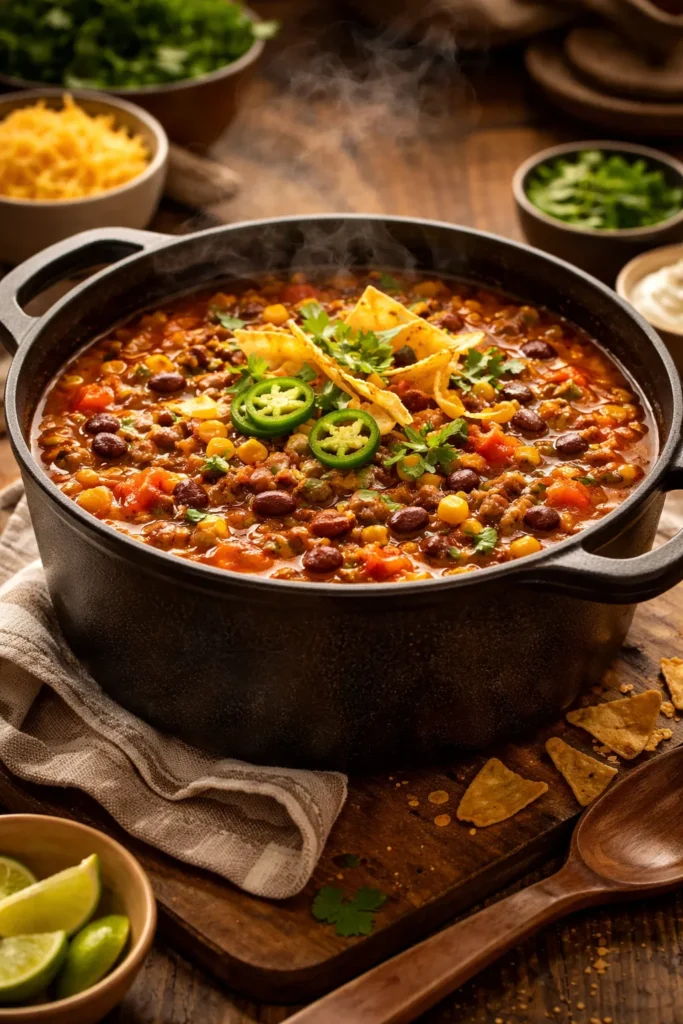
If there’s one dinner that earns its place on every budget-conscious family’s rotation, it’s taco soup. It’s the kind of meal you can throw together on a Tuesday with virtually zero planning — and it tastes like you put in way more effort than you did.
The base is simple: canned beans, canned diced tomatoes, corn, and canned chili. Add a packet of taco seasoning and a packet of ranch seasoning, pour in some broth, and simmer everything together. That’s it. Parents in the BuzzFeed Community rave about this one specifically because it requires almost no chopping, no browning, and very little cleanup.
What makes taco soup so family-friendly is the topping situation. Set out bowls of shredded cheese, sour cream, tortilla chips, sliced jalapeños, and lime wedges, and suddenly everyone gets to build their own bowl exactly how they like it. The kid who hates spice? They skip the jalapeños. The teenager who wants extra cheese? Let them pile it on.
Why This Works on a Tight Budget
A full pot of taco soup — enough for six to eight servings — can come together for under $10 when you shop the canned goods aisle strategically. Canned beans average around $1 a can, and a two-pack of taco seasoning costs less than $2. A pound of ground beef or turkey added in brings the protein up without blowing the budget, and frozen corn is cheaper than fresh with no flavor difference.
Ways to Make It Your Own
- Add a can of green chiles for extra smokiness without added cost
- Stir in leftover shredded chicken instead of ground beef
- Use ranch seasoning sparingly if you’re watching sodium — a half packet works fine
- Freeze leftovers flat in zip-lock bags; taco soup reheats flawlessly
Worth knowing: The soup thickens considerably overnight in the fridge. Add a splash of broth when reheating and it comes back to the perfect consistency.
2. Chicken Fried Rice
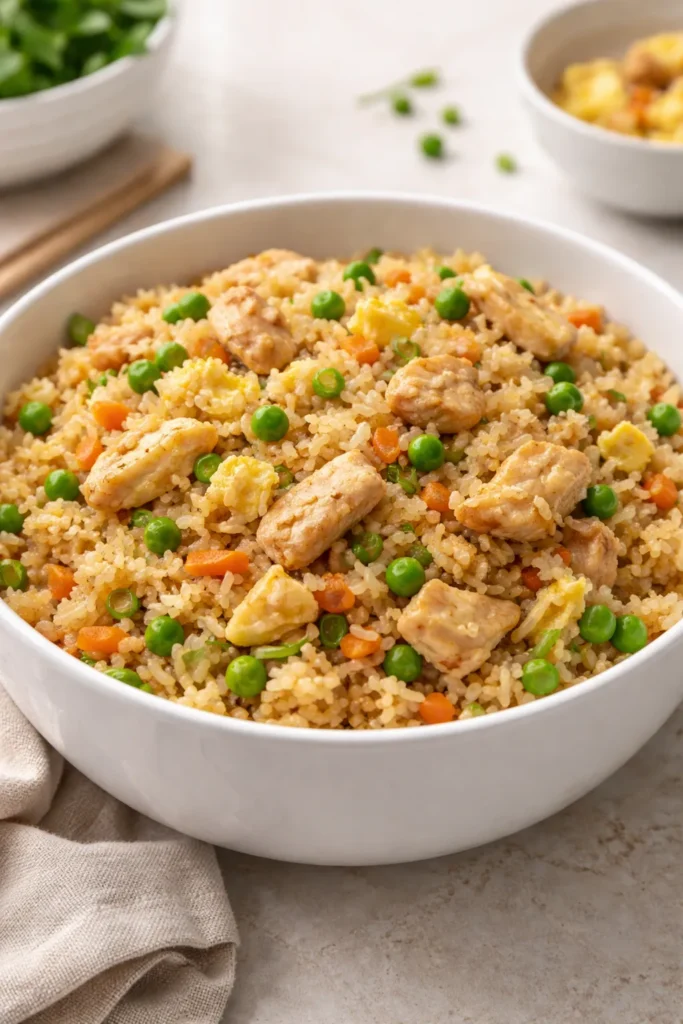
Fried rice is the dinner that makes you look like you planned something clever when, in reality, you just used up whatever was sitting in the fridge. Day-old rice (which fries better than fresh, by the way — something most people don’t know until they’ve made this a dozen times), a couple of eggs, soy sauce, and whatever protein or vegetables you have on hand.
Kay Chun’s tofu and broccoli fried rice from NYT Cooking makes the case for keeping this dish vegetarian, using seasoned chunks of firm tofu, broccoli florets, and scrambled eggs. But honestly, this is one of those recipes where the protein slot is entirely interchangeable — leftover rotisserie chicken, frozen shrimp that you thaw in five minutes, ground pork, or even just extra eggs all work beautifully.
The cost per serving on a vegetable-heavy fried rice hovers around $1.50. Even with chicken or shrimp added in, you’re rarely breaking $3 per person. For a family of four, that’s a full dinner under $12 — with leftovers for tomorrow’s lunch.
The Day-Old Rice Rule
Freshly cooked rice is too moist to fry well — it clumps and steams in the pan instead of crisping up. Day-old rice that’s been refrigerated overnight is the single biggest quality upgrade you can make to fried rice at home. The fridge dries out the individual grains just enough to let them fry separately in the hot oil, giving you that slightly crispy, restaurant-style texture. If you’re planning fried rice for Wednesday, cook a big batch of rice on Tuesday night.
Fast Fried Rice Formula
- 3 cups day-old cooked rice
- 2 tablespoons neutral oil (vegetable or sesame)
- 2-3 eggs, lightly beaten
- 1-2 cups protein or vegetables of your choice
- 3 tablespoons soy sauce
- 1 teaspoon sesame oil to finish
Pro tip: Get the pan (or wok) genuinely hot before adding anything. Medium heat won’t cut it here — you need high heat for proper frying, not steaming.
3. Slow Cooker Pulled Pork Sandwiches
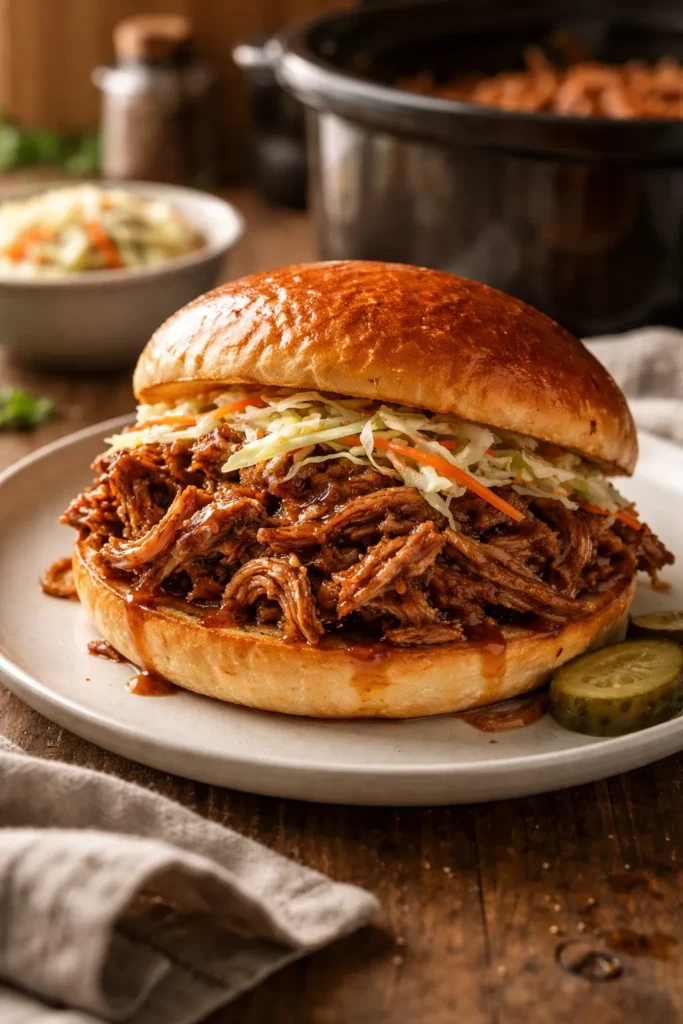
Few things in budget cooking offer the value-to-reward ratio of a pork shoulder in a slow cooker. You put it in before work. You come home to a house that smells incredible. You pull the meat apart with two forks, pile it onto buns, and call it dinner. It costs roughly $1.50 to $2 per serving and produces enough food to cover dinner plus next-day lunches.
Ali Slagle’s five-ingredient jalapeño pulled pork from NYT Cooking captures exactly what makes slow-cooker pulled pork so appealing: minimal prep, maximum payoff. A pork shoulder, some jalapeños, a handful of pantry seasonings, and low heat for eight hours. The meat essentially shreds itself by the time it’s done.
Boneless pork shoulder (also labeled pork butt, confusingly) is one of the most affordable cuts at the grocery store. A three-to-four pound piece typically costs $8 to $12 and feeds six to eight people generously. Compare that to any other protein at that serving count, and it’s hard to argue with the math.
What to Serve It On
Hamburger buns are the obvious choice, but pulled pork is genuinely flexible. Serve it over white rice with coleslaw on the side for a different take, or tuck it into flour tortillas with pickled onions for a quick taco situation. Leftover pulled pork also turns into a fast weeknight pasta if you stir it into marinara with some red pepper flakes.
Slow Cooker Tips
- A splash of apple cider vinegar keeps the pork bright and cuts through richness — add 2 tablespoons at the start
- Don’t skip the resting period after cooking; 10 minutes before shredding lets the juices redistribute
- Freeze pulled pork in 1-cup portions for lightning-fast future meals
4. Spaghetti with Meat Sauce
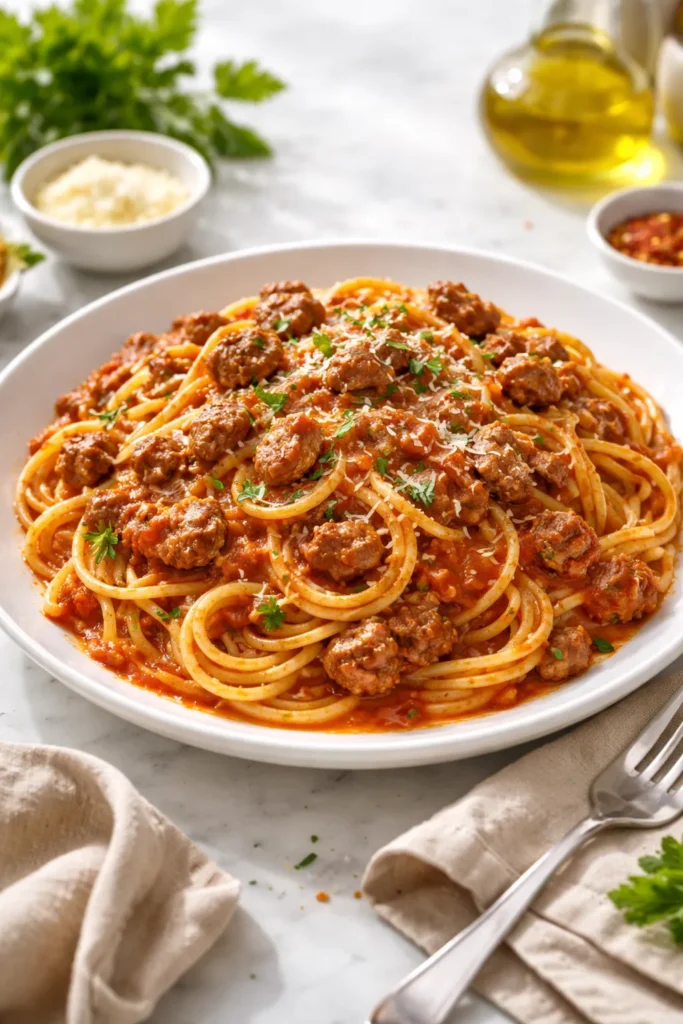
Spaghetti is the dinner equivalent of a reliable friend — it’s always there, it never lets you down, and everyone likes it. There’s nothing trendy about it, which might actually be the point. When you have a house full of different preferences and a limited budget, a big pot of spaghetti with meat sauce is the rare dinner that checks every box without requiring culinary gymnastics.
The real cost of spaghetti night is shockingly low. A pound of dry spaghetti runs about $1.50. A pound of ground beef or Italian sausage averages $4 to $6. A jar of good marinara is $3 to $5. Total cost for a meal that feeds five to six people: roughly $10. The trick is in layering flavor — browning the meat deeply before adding sauce, adding a parmesan rind to the pot while it simmers (if you happen to have one), and seasoning aggressively with salt at every stage.
Making the Sauce Taste Like It Cooked All Day
You don’t need hours of simmering to get a deep, rich tomato sauce. Three key moves make a 30-minute meat sauce taste like it’s been on the stove since morning. First, let the meat brown properly — don’t stir it constantly, let it sit against the hot pan until it develops a dark crust. Second, add a pinch of sugar to balance the acidity of canned tomatoes. Third, finish with a tablespoon of butter stirred in off the heat; it rounds out the sauce and adds a glossy richness that makes a real difference.
Stretch It Further
- Add finely diced carrots and celery to the meat sauce — they disappear but add body and nutrition
- Use half ground beef and half Italian sausage for more flavor without more cost
- Reserve a cup of pasta water before draining; add it to the sauce to make it coat the noodles better
Worth knowing: Spaghetti aglio e olio — pasta, olive oil, garlic, red pepper flakes, and parsley — is even cheaper and takes under 15 minutes when you don’t have meat on hand. Several BuzzFeed Community members named it their go-to fallback meal.
5. Sheet-Pan Sausage with Potatoes and Vegetables
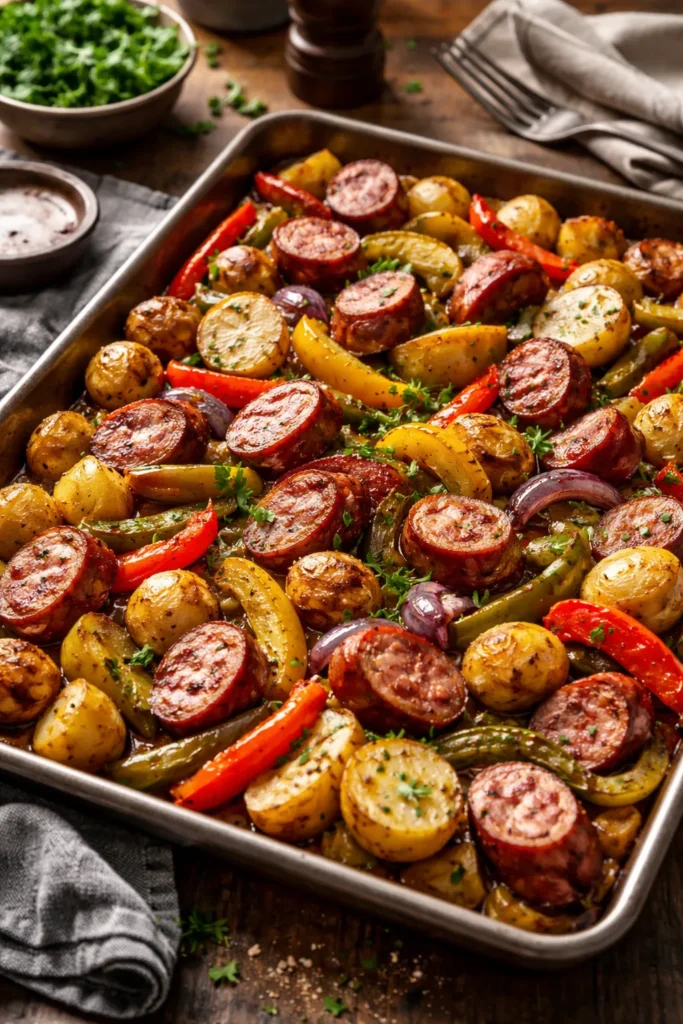
Sheet-pan dinners occupy a specific and underappreciated niche in weeknight cooking: they require almost no active effort, they produce almost no dishes, and they can be composed entirely from cheap, shelf-stable or freezer-stable ingredients. Kielbasa or smoked sausage, diced potatoes, and whatever vegetables need to be used up — all roasted together at high heat until everything caramelizes at the edges.
Kay Chun’s version from NYT Cooking uses spring onions and a swipe of mustard across the sausages before roasting, which is worth borrowing. Propping the sausages up on the bed of potatoes and onions (rather than laying them flat) lets the casing crisp instead of steam — a small detail that makes a meaningful difference in texture.
Smoked kielbasa is one of the great budget proteins: it’s pre-cooked, it’s deeply flavored, it holds up to high oven heat, and it costs around $4 to $5 for a full ring that generously serves four. Potatoes are similarly hard to beat at roughly $3 to $4 for a five-pound bag. Combined with a couple of peppers or whatever vegetables are looking tired in the produce drawer, the whole sheet pan comes in under $12.
The Roasting Technique That Matters
Oven temperature makes or breaks sheet-pan dinners. Roast at 425°F (220°C) minimum — lower temperatures produce steamed, limp vegetables instead of caramelized, slightly crispy ones. Cut potatoes into roughly 3/4-inch pieces so they cook through in the same time as the sausage (about 25 to 30 minutes). Don’t crowd the pan; use two sheet pans if necessary. Crowding traps steam and prevents browning.
Variations Worth Trying
- Swap kielbasa for chicken thighs (bone-in, skin-on — they’re cheap and stay juicy)
- Add broccoli florets in the last 15 minutes so they roast without burning
- Drizzle with a honey-mustard mix (equal parts honey and Dijon) before the last 5 minutes for a glaze
6. Enchilada Casserole
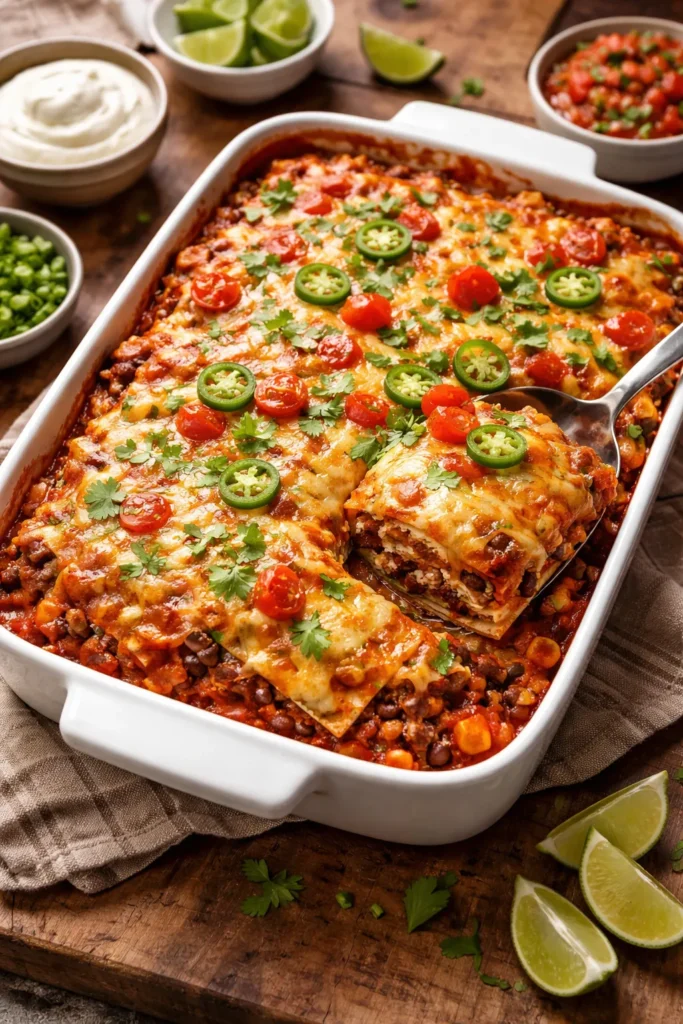
Enchilada casserole takes everything worth loving about traditional enchiladas — the smoky sauce, the melted cheese, the satisfying heft of beans and meat — and skips the fussy rolling step that most people find annoying. Everything goes into a baking dish in layers and comes out bubbling and golden. It’s one of those recipes that’s genuinely easier than it looks and tastes way more impressive than its ingredient list suggests.
The version that gets rave reviews at Taste of Home layers ground beef, black beans, diced tomatoes, green chiles, tortillas, enchilada sauce, and cheddar cheese in a 9×13 baking dish. One cup of the filling combination per serving, a generous lid of melted cheese on top, and 35 minutes in a 350°F oven. Serves eight — which means leftovers, which means tomorrow’s lunch is already handled.
The per-serving cost here sits around $1.25 to $1.75 depending on where you shop. Ground beef is the most expensive ingredient, and even that gets stretched across eight portions. Using half the amount of meat and doubling the black beans gets you to roughly $1 per serving without sacrificing satisfaction.
Building the Casserole
The layering order matters. Start with a thin layer of enchilada sauce on the bottom of the dish (this prevents sticking and adds moisture). Add tortillas (cut to fit), then the beef-bean-tomato mixture, then another layer of sauce, then cheese. Repeat once more and finish with a generous cap of shredded cheese. The bottom layer of sauce is the step most home cooks skip — don’t.
Make It Your Own
- Swap ground beef for shredded rotisserie chicken for a lighter, quicker version
- Add corn kernels to the filling for sweetness and texture
- Use pepper jack cheese instead of cheddar for more heat
- Serve with sour cream, sliced avocado, and pickled jalapeños on the side
7. Hamburger Soup
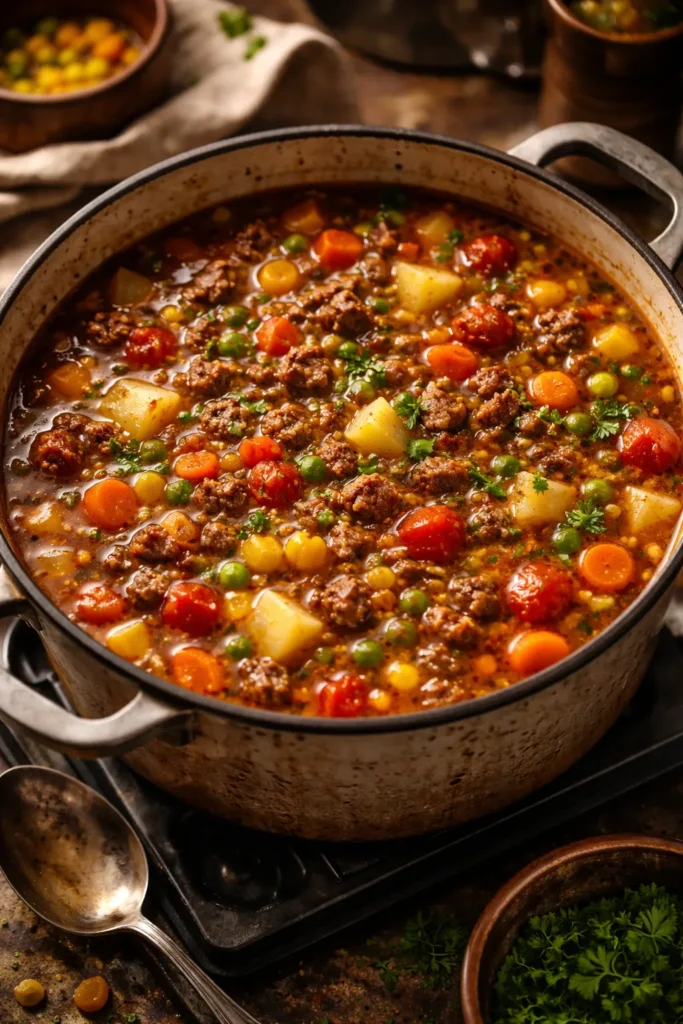
“Hamburger” — in the Midwest, at least — is just another name for ground beef, and hamburger soup is what you make when you want something deeply satisfying, completely fuss-free, and cheap enough to make twice a week without thinking twice about it.
Melissa Knific’s version from NYT Cooking is the blueprint: ground beef browned in a pot, diced onions, canned tomatoes (the brick-red base that makes everything taste rich), and whatever frozen vegetables are living in the back of your freezer. Mixed vegetables, peas, corn, green beans — all of them work. Everything simmers together for 20 to 25 minutes until the flavors settle into something that tastes like it’s been going all afternoon.
This is a fantastic “clean out the freezer” meal because it accommodates almost anything. No frozen vegetables? Use canned. Have some leftover potatoes? Dice them in. A handful of barley or small pasta stirred in during the last 10 minutes of simmering turns it into something even more substantial.
Why Ground Beef Works So Well Here
Ground beef — especially 80/20, which is cheaper than leaner blends — adds incredible flavor to soups because the fat renders into the broth and carries flavor throughout the pot. Brown the beef in batches and don’t rush it. A good hard sear on the meat, with some color on the outside, contributes depth to the final soup that gently cooked beef simply can’t replicate. Drain off excess fat after browning, then build the soup from there.
Storage and Reheating
Hamburger soup keeps well in the fridge for up to four days and freezes excellently for up to three months. Freeze in individual portions for fast weeknight reheating. The only thing worth noting: if you’ve added pasta to the soup, it will absorb broth as it sits. Add a cup of water or broth when reheating pasta-containing soup.
8. Broccoli Cheddar Rice Skillet

There’s a recipe from Ali Slagle (again — she seems to have a gift for the budget-friendly one-pot format) that one NYT Cooking reader described as “the best thing my kids have ever eaten.” That’s a bold endorsement, but after you make this skillet once, it tracks. Broccoli, rice, cheddar cheese, and broth all cook together in a single pan until the rice is tender and the cheese melts into everything in the most satisfying way possible.
The genius of this dish is the technique: the rice cooks directly in seasoned broth in the same skillet where you’ve sautéed the broccoli, absorbing all that flavor as it simmers. Once the liquid is gone, you add shredded cheddar, stir it in, and let it melt into a cohesive, creamy mass. The broccoli softens but holds its shape. The cheese pulls. It’s the kind of vegetable-forward dish that kids eat without realizing they’re eating vegetables.
Cost per serving with four portions: roughly $2 to $2.50. Broccoli is inexpensive (especially frozen, which works just as well here), long-grain rice is one of the cheapest pantry staples available, and cheddar is a grocery staple that most households already have. Pair it with a simple green salad or some roasted chicken thighs for a complete meal.
One-Pan Technique Breakdown
- Start by sautéing broccoli florets in oil until lightly golden at the edges (about 4 minutes over medium-high heat)
- Add dry rice to the pan and stir for 1 minute to coat in the remaining oil
- Pour in broth (about 2 cups for 1 cup of rice), bring to a boil, then reduce to a simmer and cover
- Cook until liquid is absorbed, about 18 minutes
- Remove from heat before adding cheese — residual heat melts it perfectly without making it grainy
9. Baked Ziti or Baked Spaghetti
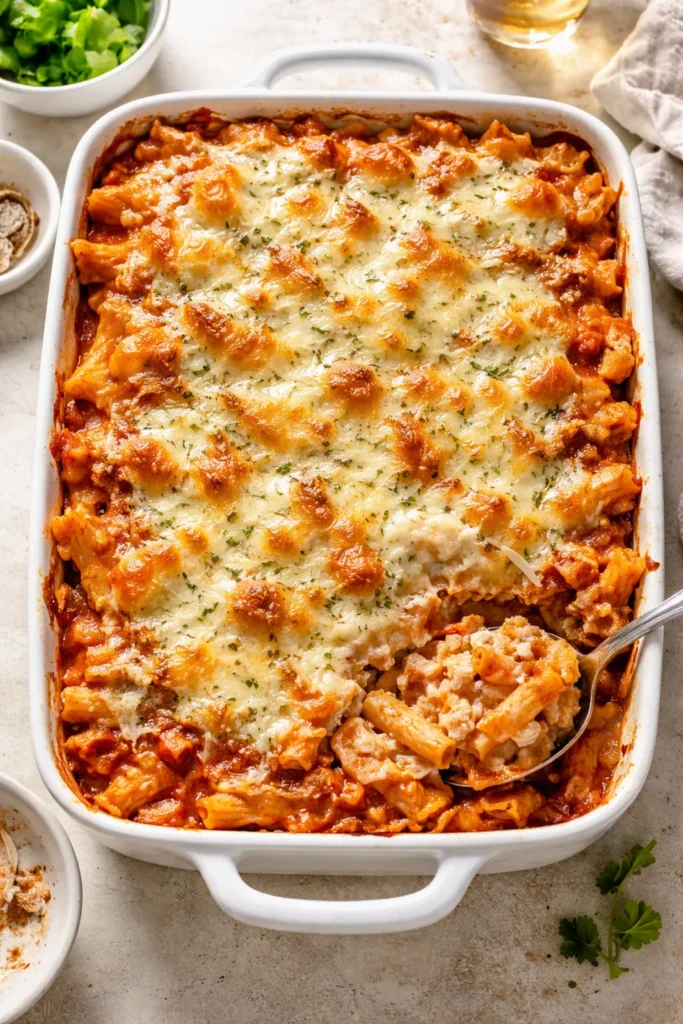
Baked pasta is the dinner that practically cooks itself, feeds a crowd, and somehow tastes better as leftovers than it does on the first night. Whether you make it as a true baked ziti (with ricotta and mozzarella layered through the pasta) or a simpler baked spaghetti casserole with meat sauce and cheese on top, the formula is forgiving and the result is always worth it.
The Taste of Home version of baked spaghetti — called “Favorite Baked Spaghetti” with nearly 300 reviews — uses a pound of spaghetti, meat sauce, cream cheese, and a thick blanket of mozzarella baked at 350°F until the cheese is golden and bubbling. It serves 10 people. Ten. At a cost that typically works out to $1.50 to $2 per serving. Few dinners can make that claim.
Baked pasta’s real advantage over stovetop versions is that it holds. You can make it on Sunday, refrigerate it fully assembled and unbaked, and slide it into the oven Wednesday night without any additional work. The pasta absorbs some of the sauce while it sits, which concentrates the flavors. Make it on the weekend; eat it better during the week.
Ricotta vs. No Ricotta
Baked ziti with ricotta is creamier and richer — each forkful has that distinctive, slightly grainy but luscious texture that pulls the whole dish together. Baked spaghetti without ricotta is simpler and bolder, more like a cohesive casserole. Both work. The choice really comes down to whether you have ricotta on hand and whether your family runs toward creamy or saucy. Either version produces a pan that people go back for twice.
Make-Ahead Notes
- Assemble the full casserole up to 24 hours ahead; refrigerate covered with foil
- Add 10 extra minutes to baking time if going straight from the fridge to the oven
- Freeze individual portions in airtight containers for up to 2 months
10. Black Bean and Rice Bowls
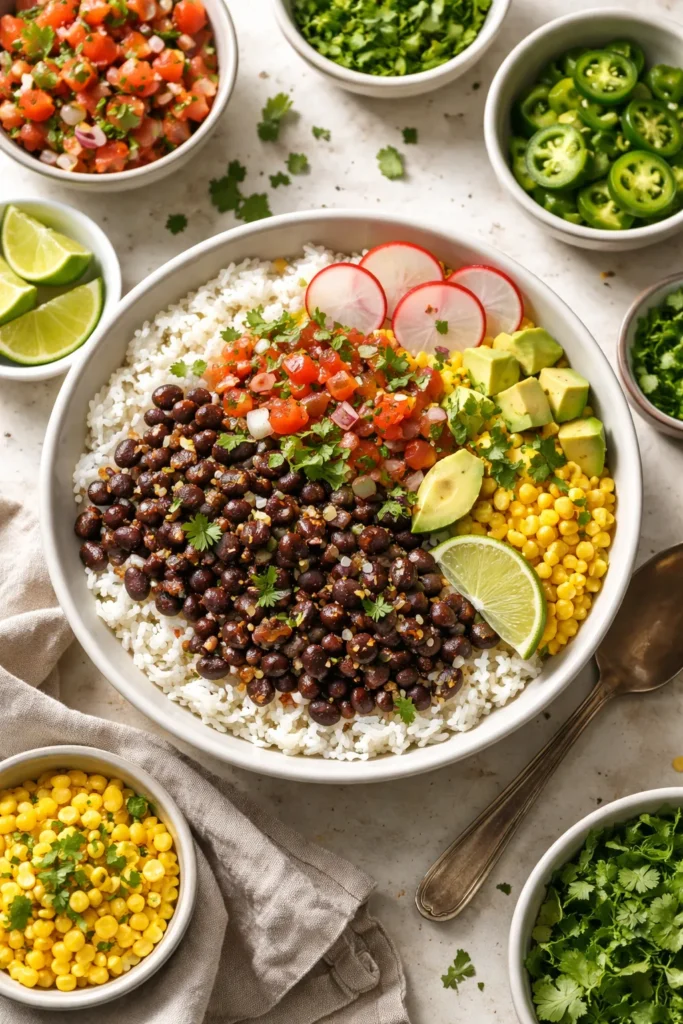
This is the dinner that budget cooking skeptics often dismiss until they actually make it — and then it becomes a weekly fixture. Black beans and rice is not a compromise meal. It’s protein-rich, filling, genuinely flavorful when seasoned properly, and costs almost nothing to put together.
The Allrecipes version is simple: black beans (from canned, drained and rinsed) simmered with garlic, cumin, and a splash of lime juice, then served over white or brown rice. But the bowl format is where this dinner gets interesting for families with varying preferences. Rice goes in the bowl. Black beans go over. From there, everyone builds their own: shredded chicken, avocado, corn, salsa, sour cream, shredded cheese, hot sauce, pickled onions, or sliced jalapeños.
A can of black beans costs roughly $1. A cup of dry rice makes three to four servings and costs under $0.50. The toppings are where you can spend more or less depending on the week. Even with avocado, cheese, and sour cream, you’re feeding four people for around $8 total.
Seasoning Makes or Breaks This Dish
Plain black beans on plain rice is underwhelming. Seasoned black beans on well-salted rice is a completely different meal. The beans need cumin (at least half a teaspoon), garlic (fresh or powder), salt, and something acidic — lime juice or a splash of red wine vinegar — to come alive. Let the beans simmer with a diced jalapeño and a small piece of smoked sausage if you want depth without spending much more.
Variations That Keep It From Feeling Repetitive
- Spice the beans differently each week: one week cumin and lime, the next smoked paprika and chipotle
- Swap white rice for brown rice, quinoa, or cauliflower rice for a different texture
- Top with a fried egg for an easy protein upgrade
- Turn leftovers into burritos the next day with whatever toppings remain
Pro tip: Cook a large batch of rice on Sunday and refrigerate it. It reheats perfectly and is ready to use at a moment’s notice all week — which also means you’re always one step away from fried rice (Dinner #2 on this list).
Final Thoughts
Feeding a family well on a budget isn’t about cutting corners — it’s about knowing which meals deliver real satisfaction without requiring expensive ingredients or long cooking times. The ten dinners above do exactly that. They’re built on pantry staples, flexible proteins, and techniques that forgive imprecision. They work for picky eaters because they’re built with customization in mind.
The smartest thing you can take from this list isn’t any single recipe — it’s the pattern. Canned beans, cheap cuts of meat, rice, pasta, and vegetables are the backbone of every meal here. Stock these consistently and you’ll always have what you need for dinner without a dedicated shopping trip.
Leftovers deserve more credit than they get. Every dinner on this list tastes at least as good — and in many cases better — on day two. Taco soup deepens overnight. Baked ziti firms up into slices you can actually lift cleanly. Pulled pork is more flavorful after a night in its own juices. Making a big batch once and eating it twice is one of the most effective budget strategies available, and it happens naturally with every recipe here.
Start with whichever one sounds most like what your family already loves. Make it once, see how far it stretches, and notice how little it actually costs. That’s where budget cooking confidence starts — not with an overhaul of your shopping habits, but with one dinner that works.