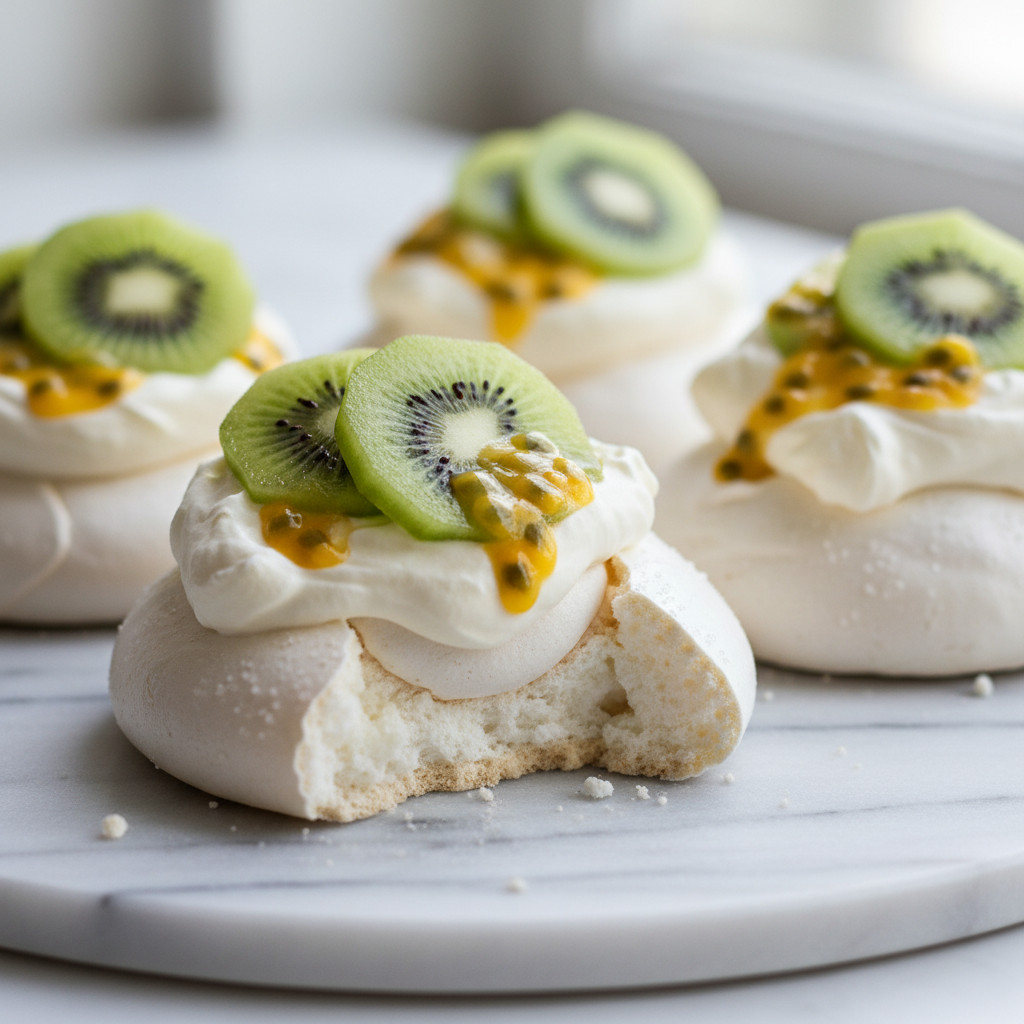
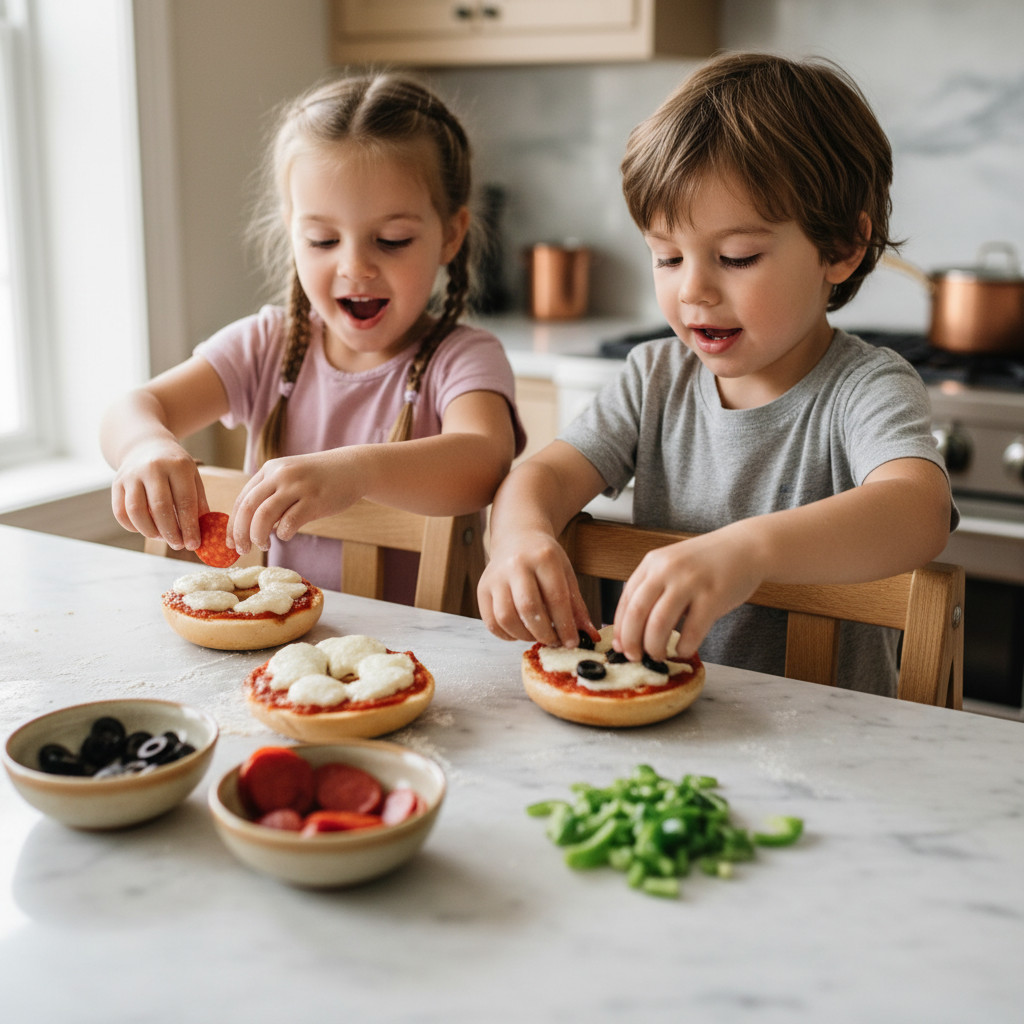
Wedding food is, without question, one of the biggest line items in any reception budget — and one of the hardest to talk about. Couples spend months agonizing over florals and photography, then arrive at the catering conversation and realize that feeding 80 guests a traditional plated dinner can cost more than everything else combined. The average catering bill at a formal wedding reception runs somewhere between $85 and $150 per person when you factor in servers, rentals, and service charges. For a 100-person wedding, that’s a staggering number before you’ve even picked a menu.
Here’s the thing though: the most memorable wedding food moments rarely come from a plated filet mignon. Ask wedding guests years later what they remember about a reception, and they’ll tell you about the taco bar where everyone crowded around the guacamole, or the grazing table that stretched across an entire wall, or the late-night donut station that appeared like magic after hours of dancing. The food people remember is food that felt abundant, personal, and fun — not food that felt expensive.
The good news is that creative, crowd-pleasing, genuinely delicious reception menus exist at a fraction of the cost of traditional catering. The key is choosing the right format for your vibe, your guest count, and your venue — and building a menu around ingredients that are naturally affordable rather than trying to reproduce a formal dining experience on a shoestring.
What follows are eight of the best budget-friendly wedding reception food ideas available to couples today, along with practical guidance on making each one work beautifully.
Table of Contents
- 1. Taco Bar or Build-Your-Own Mexican Station
- Why Taco Bars Work So Well for Large Groups
- How to Execute It at a Wedding
- What to Add to Round Out the Spread
- 2. Giant Grazing Table or Charcuterie Spread
- The Real Cost Advantage
- Building a Grazing Table That Looks Expensive (Without Being Expensive)
- Practical Setup Tips
- 3. Pasta Station
- Why Pasta Works Better as a Station Than as a Plated Course
- Choosing Your Pasta Shapes
- Toppings That Elevate the Station
- 4. Pizza Bar
- Why Pizza Is One of the Most Cost-Effective Reception Foods
- How to Present Pizza So It Feels Reception-Worthy
- Varieties to Offer
- 5. Slider Station
- The Slider Advantage Over Full-Size Burgers
- Topping Bar Setup
- Protein Variety Without Breaking the Budget
- 6. Brunch or Breakfast-for-Dinner Reception
- Why Timing Is a Budget Superpower
- What a Brunch Reception Spread Looks Like
- The Aesthetic Advantage
- 7. BBQ Buffet
- Choosing Your Proteins Wisely
- The Side Dishes That Make a BBQ Reception Memorable
- Setting the Scene
- 8. Dessert-Forward Spread or Dessert Station
- When a Dessert Reception Makes Sense
- What to Include in a Dessert Spread
- The S’mores Station Addition
- How Buffet and Station Formats Save You More Than You Realize
- Smart Ways to Cut Catering Costs Without Sacrificing Quality
- Getting the Quantities Right Without Over-Purchasing
- Final Thoughts
1. Taco Bar or Build-Your-Own Mexican Station
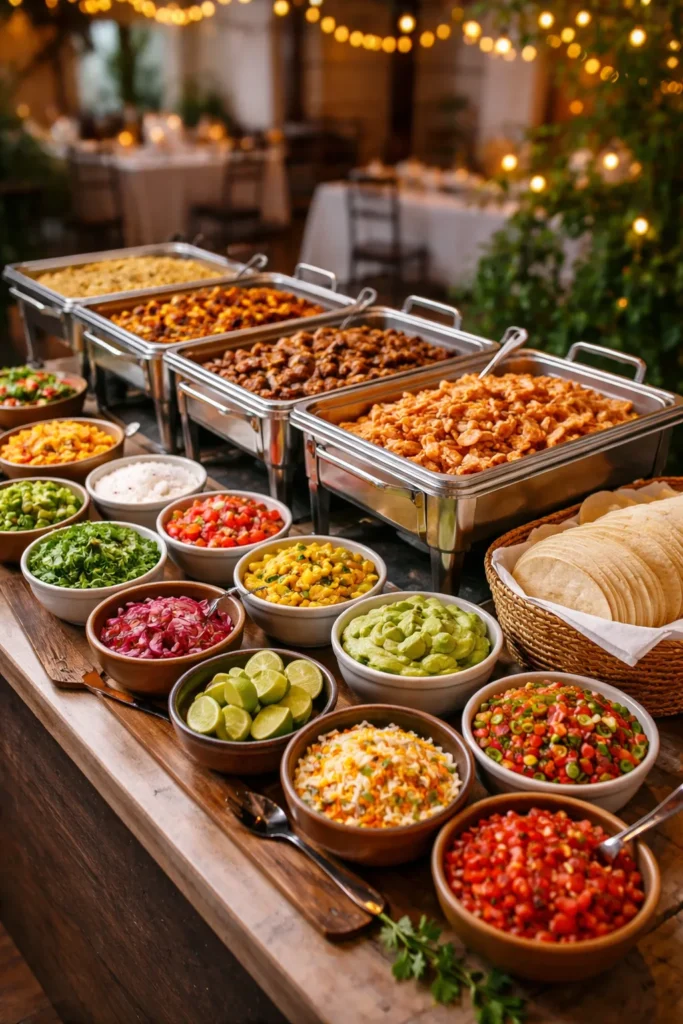
Few wedding food formats punch above their weight class the way a taco bar does. It’s interactive, endlessly customizable, visually vibrant, and — most importantly — genuinely delicious food that guests of all ages, dietary preferences, and appetites actually want to eat. A well-executed taco bar doesn’t feel like a budget decision. It feels like a deliberate, fun choice that reflects a couple’s personality.
Why Taco Bars Work So Well for Large Groups
The economics of a taco bar are almost perfectly suited to wedding catering. Proteins like seasoned ground beef, pulled pork, and shredded chicken are among the most affordable options available in bulk. Toppings — shredded cabbage, diced onion, fresh cilantro, jalapeño, shredded cheese, sour cream, salsa — cost very little per person and stretch across a large guest count without running out. You’re feeding people with ingredients that cost a fraction of what a plated entrée requires, while still giving them a satisfying, complete meal.
The build-your-own format also dramatically reduces labor costs. Instead of servers plating individual dishes and running food to tables, guests serve themselves. That means fewer staff hours, which translates directly to savings.
How to Execute It at a Wedding
The secret to an elevated taco bar is presentation and variety. Use proper chafing dishes or heated trays to keep proteins warm throughout the reception. Offer at least two protein options — a meat-based choice and a vegetarian one (black beans or grilled peppers and onions work perfectly). Arrange toppings in clear bowls with small tongs or spoons so everything stays neat and accessible.
Don’t forget the vessels. Offer both soft corn tortillas, flour tortillas, and crispy shells so guests with gluten sensitivities have an option and adventurous eaters have choices. A taco bar also transitions beautifully into a taco salad for guests who’d rather skip the shell entirely.
What to Add to Round Out the Spread
- Mexican rice and refried or black beans as hearty, filling sides
- Chips, salsa, and fresh guacamole as a pre-dinner grazing option during cocktail hour
- Agua frescas or a simple margarita station to tie the theme together
- Warm queso for an added indulgence that costs very little to make in bulk
Worth knowing: Booking a local taqueria or Mexican restaurant for catering rather than a traditional wedding caterer can cut costs by 30 to 50 percent per head while actually improving authenticity and flavor.
2. Giant Grazing Table or Charcuterie Spread
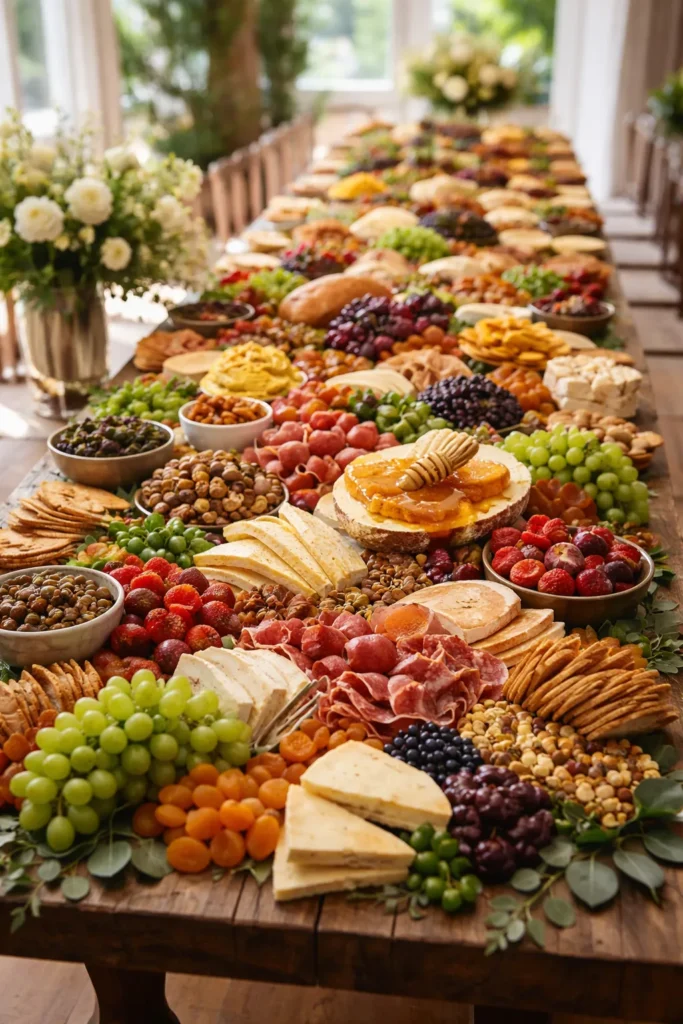
The grazing table has become one of the defining food trends in modern weddings — and for good reason. A long table covered with cheeses, cured meats, seasonal fruits, crackers, dips, nuts, olives, and honeycomb looks breathtaking in photos, keeps guests happy for hours, and requires almost no service staff to maintain. Guests graze at their own pace, conversations flow naturally around the table, and the whole setup doubles as one of the most striking visual elements in the room.
The Real Cost Advantage
Here’s what makes the grazing table so smart from a budget perspective: you’re serving guests smaller quantities of higher-quality items rather than large portions of a single protein. A small amount of a premium aged cheese, a thin slice of prosciutto, a beautiful seasonal fig — none of these are expensive in the quantities needed for a grazing table. The visual abundance comes from arrangement and variety, not from sheer volume of expensive ingredients.
For a guest count under 80, a well-stocked grazing table can serve as the centerpiece of the food spread with minimal additional food needed. For larger crowds, pair it with a pasta station or slider bar to ensure everyone leaves full.
Building a Grazing Table That Looks Expensive (Without Being Expensive)
Start with three or four cheese varieties at different price points — a crowd-pleasing cheddar, a soft brie, a crumbly aged parmesan, and maybe a flavored gouda. Supplement with deli-sliced meats rather than hand-sliced imported charcuterie; the difference in cost is significant and most guests won’t notice.
Seasonal fruits do more visual work per dollar than almost anything else on a grazing table. Grapes, strawberries, and sliced pears make everything look lush and colorful. Fill gaps with inexpensive but high-impact items: olives, cornichons, roasted nuts, honeycomb, and a simple fig jam.
Practical Setup Tips
- Line a long table in parchment paper or linen before arranging food for a clean, cohesive look
- Use boards and platters of different heights and textures to create visual dimension
- Place signage (small handwritten cards) near each item so guests know what they’re eating
- Refresh the table every 45-60 minutes throughout the reception to keep it looking abundant
A grazing table is one of the most DIY-friendly wedding food formats available. With a Costco membership and a free afternoon, a couple can assemble a stunning spread for a fraction of what a caterer would charge.
3. Pasta Station
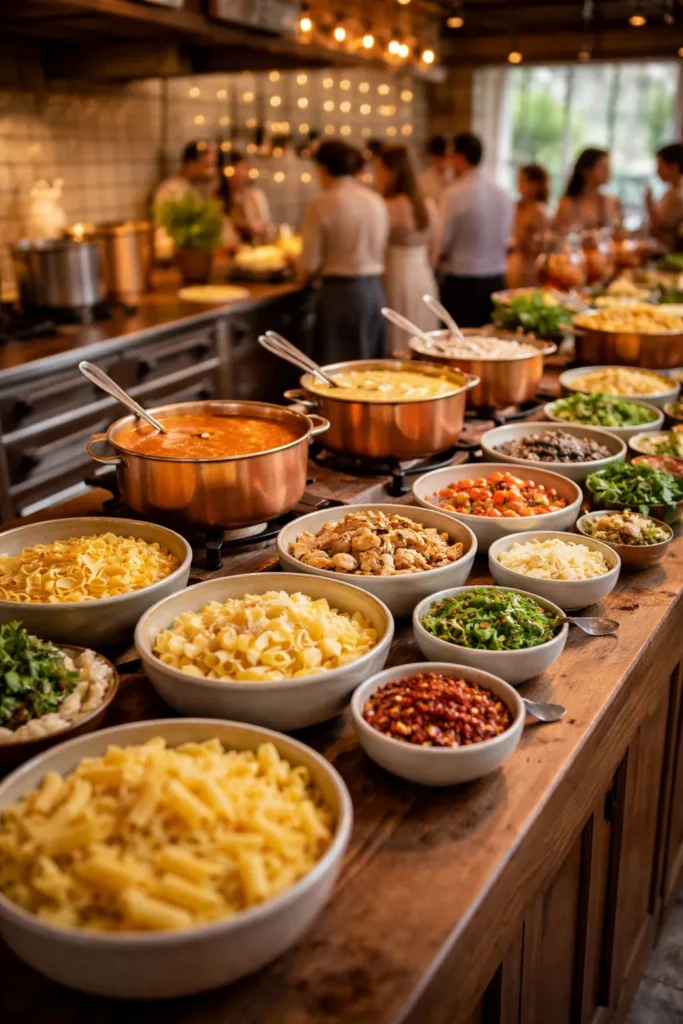
Pasta is one of the most naturally budget-friendly foods on the planet, and a pasta station transforms that affordability into something that feels celebratory and generous. There’s a reason pasta consistently tops the list of crowd-pleasing dinner options — it’s filling, familiar, endlessly versatile, and genuinely loved by nearly every guest at the table regardless of age or dietary preference.
Why Pasta Works Better as a Station Than as a Plated Course
A plated pasta course at a formal wedding requires timing coordination, individual portioning, and service staff — all of which add cost. A pasta station flips that model entirely. Guests approach the station, choose their pasta shape, select their sauce, and add their preferred toppings. The casual format requires one or two staff members at most, keeps the food hot throughout the evening, and creates a fun, interactive experience.
The station format also lets you offer variety without the cost of preparing multiple distinct plated courses. Two sauces — say, a rich marinara and a creamy alfredo or pesto — feel like plenty of options when guests can also choose between shapes, proteins, and toppings.
Choosing Your Pasta Shapes
Avoid long pasta like spaghetti at a wedding station. It’s messy to serve, difficult to eat in formal attire, and creates a chaotic serving line. Instead, go with shapes that hold sauce well and are easy to scoop and portion:
- Penne — the most practical, holds both thin and thick sauces
- Rigatoni — slightly more impressive-looking than penne, similar functionality
- Farfalle (bow ties) — elegant-looking, a great choice for a more formal aesthetic
- Orecchiette — cups sauce beautifully and photographs well on a plate
Toppings That Elevate the Station
The toppings are where you can make a pasta station feel genuinely impressive without spending much. Set out freshly grated parmesan, crumbled feta, red pepper flakes, fresh basil, a drizzle of quality olive oil, and roasted vegetables like cherry tomatoes, zucchini, and mushrooms. Add a simple protein option — grilled chicken is the most cost-effective and crowd-pleasing — alongside a meatball option for heartier appetites.
Pro tip: Pre-boil pasta in large batches and toss with olive oil to prevent sticking. Keep it warm in hotel pans with chafing fuel. This is one of the easiest wedding foods to DIY or semi-DIY with a small team of helpers.
4. Pizza Bar
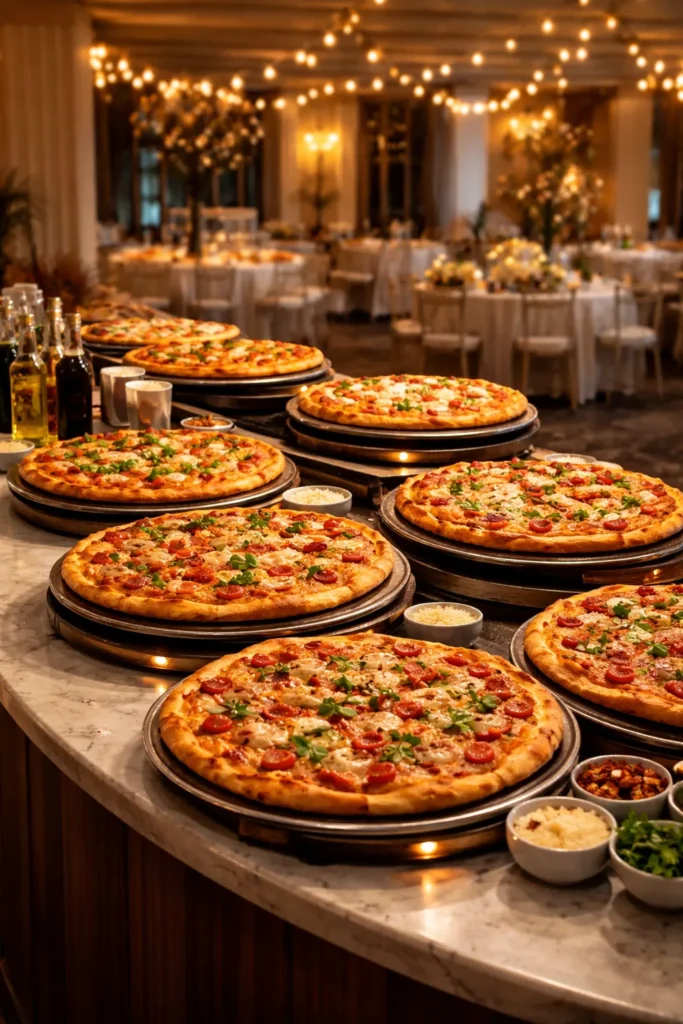
Pizza has a near-universal appeal that almost no other food matches. Kids love it, adults love it, dietary restrictions can usually be accommodated, and it scales beautifully from 20 guests to 200. As a wedding reception food option, pizza works brilliantly in both casual outdoor settings and more dressed-up venues — as long as the presentation is thoughtful.
Why Pizza Is One of the Most Cost-Effective Reception Foods
On a per-serving basis, pizza is extraordinarily affordable. A large pizza typically yields 8 slices, and most adults eat 2-3 slices as part of a meal. At a wedding, that’s roughly $2-4 per person in food cost, depending on your market and the toppings you choose. Even with delivery fees or a catering markup, pizza remains one of the lowest food-cost options for large groups.
The key is sourcing strategically. Contact local pizzerias about large-order discounts — many will offer 10 to 20 percent off for orders above a certain quantity. Some local restaurants that specialize in pizza catering can deliver directly to your venue, handle all the setup, and dramatically simplify your logistics on the day of the wedding.
How to Present Pizza So It Feels Reception-Worthy
The gap between “pizza party” and “wedding pizza spread” is almost entirely a presentation gap. Serve pizza on wooden boards or elegant platters rather than cardboard boxes. Use small chalkboard signs to label each variety. Arrange slices in a fan pattern rather than stacking them. Add fresh basil, a drizzle of honey on the cheese pizzas, or red pepper flakes in small bowls as an accompaniment.
For a truly elevated experience, consider hiring a wood-fired pizza truck. These mobile vendors have become a popular wedding option precisely because they combine spectacular visual impact (guests watch their pizza cooked fresh) with genuine quality and a fun, interactive element.
Varieties to Offer
Don’t overthink the menu. Stick to 3-5 varieties that cover the major taste preferences:
- A classic margherita for simplicity
- A meat option (pepperoni, sausage, or both)
- A veggie-forward option (roasted vegetables, arugula and prosciutto, or a white pizza with spinach and ricotta)
- A gluten-free crust option for guests who need it
5. Slider Station
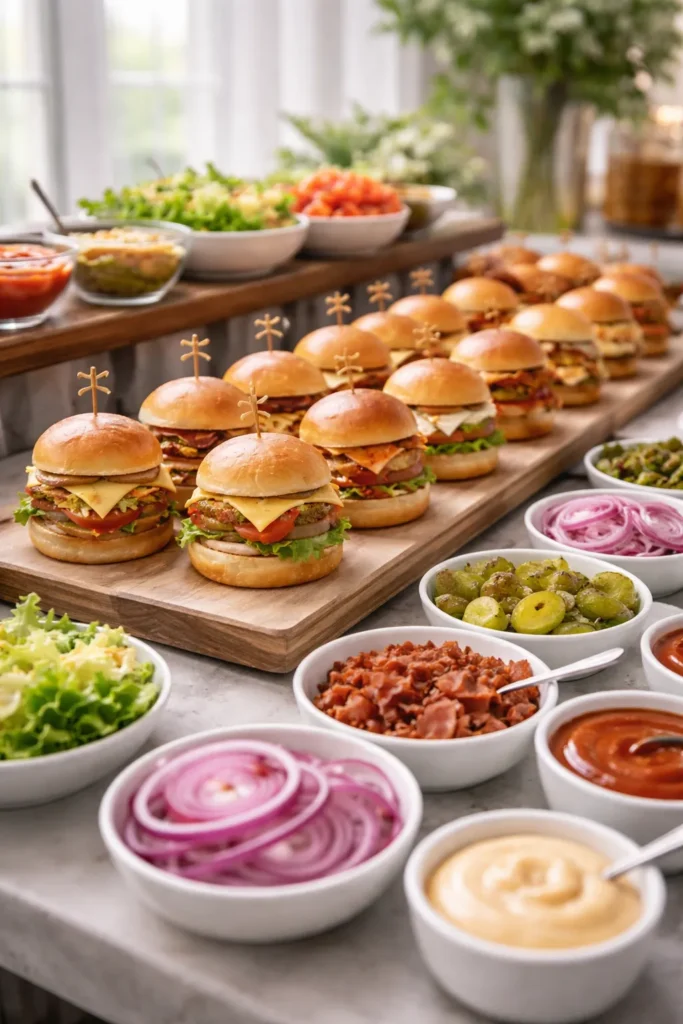
Sliders occupy a perfect middle ground between casual and elegant. They’re handheld but not messy. They’re filling but not heavy. They’re universally loved but flexible enough to accommodate different tastes. And at a wedding reception, a well-set-up slider station creates exactly the kind of interactive, social eating experience that makes guests feel relaxed and happy.
The Slider Advantage Over Full-Size Burgers
Full-size burgers at a wedding are logistically complicated — they’re messy to eat in nice clothes, difficult to keep at safe temperatures for extended periods, and hard to serve efficiently. Sliders solve all of those problems. Their smaller size means quicker cooking times, easier handling, and significantly less mess. They also allow guests to try multiple varieties without committing to a full-size portion of one thing.
From a cost perspective, slider buns and ground beef (or chicken, or pulled pork) are among the most affordable proteins available. Preparing sliders in large batches is straightforward, and the toppings bar requires minimal investment to set up impressively.
Topping Bar Setup
The topping station is what takes sliders from fast food to reception-worthy. Offer a thoughtful selection:
- Classic condiments: ketchup, mustard, mayo, special sauce
- Cheeses: American, pepper jack, and Swiss at minimum
- Fresh toppings: sliced tomato, shredded lettuce, caramelized onions, pickles
- Elevated touches: sriracha aioli, crispy fried onions, bacon jam
Set everything out in small bowls with serving spoons and clear labels. The visual effect of a well-organized topping bar is impressive and requires very little money to achieve.
Protein Variety Without Breaking the Budget
Offering two slider varieties — a beef option and either a pulled pork or crispy chicken option — gives guests meaningful choice without doubling your food cost dramatically. Pulled pork is particularly cost-effective for large groups because pork shoulder is one of the most affordable proteins available, and a slow-cooked batch yields an enormous volume of finished meat.
Worth knowing: Sliders work equally well as a late-night snack option after dinner. Many couples serve a lighter dinner spread and then bring out a slider station around 9 or 10 pm when the dancing has been going for a while and guests need fuel to keep going.
6. Brunch or Breakfast-for-Dinner Reception
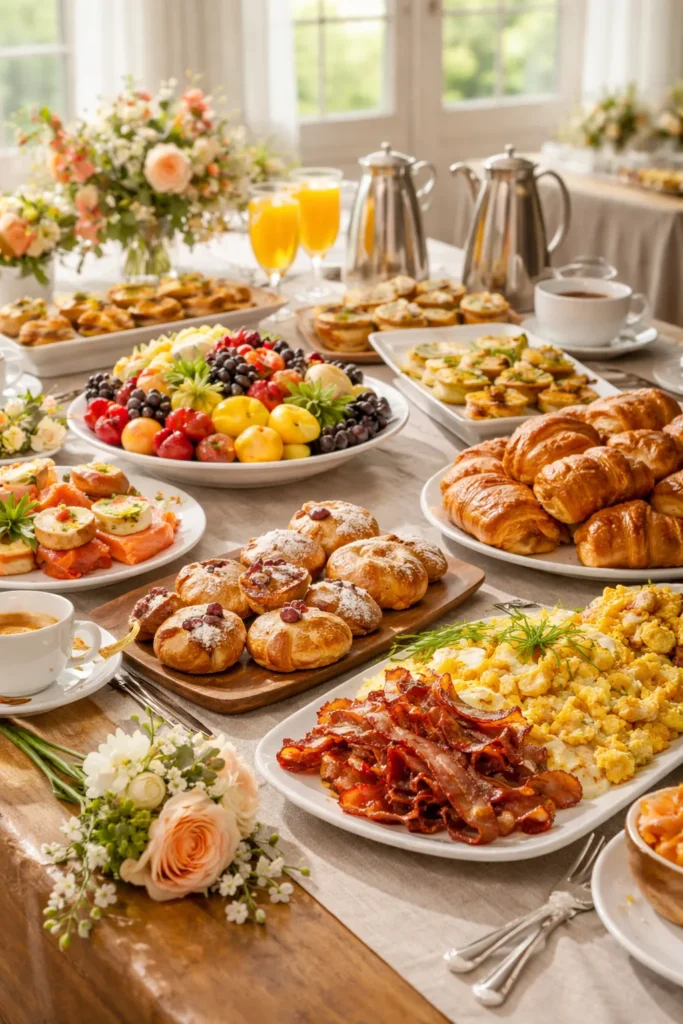
This is the most underutilized budget strategy in wedding planning. Hosting a reception at a brunch or late-morning time slot saves money in ways that compound on top of each other: venue rates drop, caterer pricing drops, guests expect less food volume, and brunch ingredients are inherently less expensive than dinner proteins.
Why Timing Is a Budget Superpower
Caterers and venues price their services based on demand, and dinner on a Saturday is peak demand. A Sunday brunch or a late-morning reception on any day of the week occupies a far lower-demand slot, and vendors price accordingly. Some couples report saving 20 to 40 percent on catering costs simply by shifting their reception to a brunch format — without sacrificing quality, atmosphere, or the fun factor.
Guests also eat less at brunch. The portion expectations at a mid-morning or noon reception are naturally lighter than a full evening dinner. You don’t need to feed people 12 ounces of protein each; a well-stocked brunch spread keeps everyone satisfied at a fraction of the per-head cost.
What a Brunch Reception Spread Looks Like
A well-executed wedding brunch hits multiple stations to create variety and visual impact:
- Egg station: scrambled eggs, a make-your-own omelette bar, or individual frittatas
- Waffle or pancake station: batter kept warm with sweet and savory toppings available
- Charcuterie-adjacent spread: smoked salmon, cream cheese, bagels, capers, red onion
- Fruit and yogurt parfait bar: granola, berries, honey, and assorted yogurts in glass jars
- Pastry display: croissants, danishes, muffins, and cinnamon rolls from a local bakery
- Coffee and drink station: a proper espresso setup or carafes of fresh coffee alongside mimosas and fresh juices
The Aesthetic Advantage
Brunch has a naturally relaxed, warm aesthetic that photographs beautifully. Soft morning light, pastel food colors, flowers in bud vases on each table — a brunch wedding has a distinctive charm that a Saturday evening dinner simply can’t replicate. Many couples find that the brunch format actually fits their personality better than a formal evening reception, and the budget savings are a bonus rather than the driving factor.
7. BBQ Buffet
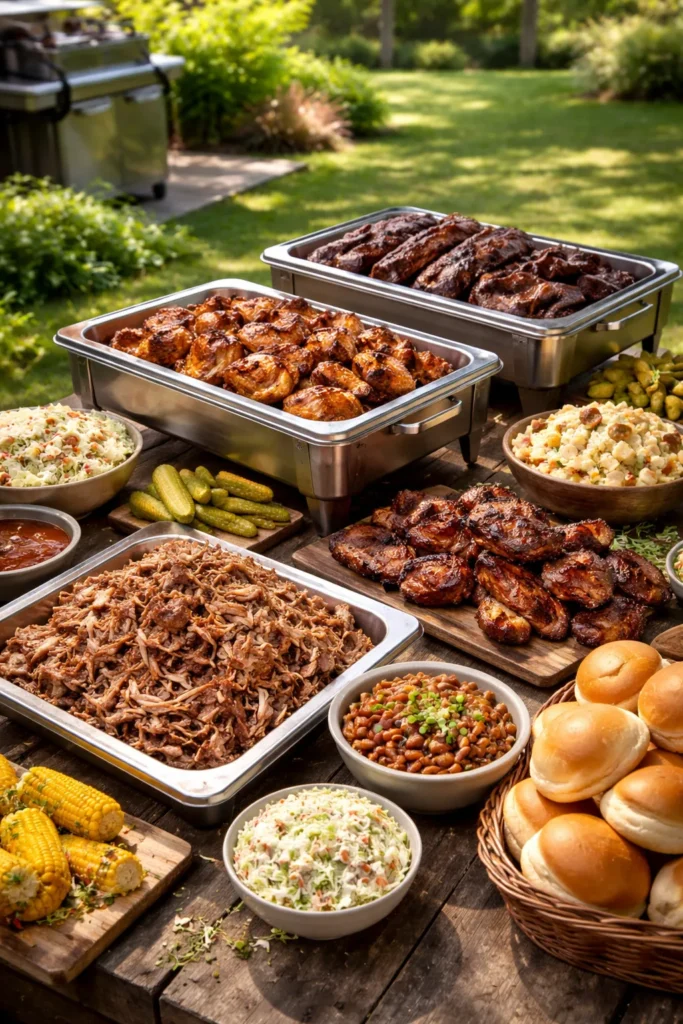
An outdoor BBQ buffet is one of those reception formats that manages to feel both laid-back and genuinely abundant. When it’s done right — with proper smoky proteins, generous sides, and a relaxed communal atmosphere — guests leave talking about how great the food was. When it’s done carelessly, it reads as a backyard cookout that accidentally got wedding decorations. The difference is entirely in the execution.
Choosing Your Proteins Wisely
The protein choices you make at a BBQ buffet have the single biggest impact on your food cost. Chicken thighs and drumsticks are the most budget-friendly BBQ protein — they’re forgiving to cook, stay moist even when held at temperature for extended periods, and have enormous crowd appeal. Pulled pork shoulder comes in a close second for value; a slow-smoked pork shoulder yields a remarkable volume of finished meat and is genuinely hard to beat for flavor.
Beef — brisket, ribs, and burgers — is where BBQ costs escalate quickly. If your budget is tight, limit beef to one option rather than two, or skip it entirely and lean into a spectacular chicken-and-pork spread that would be hard to complain about.
The Side Dishes That Make a BBQ Reception Memorable
BBQ side dishes are where a couple can add real personality and quality without significant cost. Homemade coleslaw, baked mac and cheese, corn on the cob, potato salad, and baked beans are all inexpensive in large batches and pair perfectly with smoked meats. Adding one slightly unexpected side — a watermelon and feta salad, a Mexican street corn salad, or a jalapeño cornbread — elevates the whole spread without inflating the budget.
Setting the Scene
The aesthetic of a BBQ reception does a lot of heavy lifting. Checkered tablecloths, mason jar centerpieces, wooden serving boards, string lights overhead — these elements are inexpensive but create a cohesive, charming atmosphere that makes the food feel intentional and special. Don’t underestimate the power of presentation in making budget food feel like a curated experience.
Provide wet wipes at each table. It sounds like a small thing, but guests genuinely appreciate it when they’re eating BBQ in nice clothes, and it signals thoughtfulness on the couple’s part.
8. Dessert-Forward Spread or Dessert Station
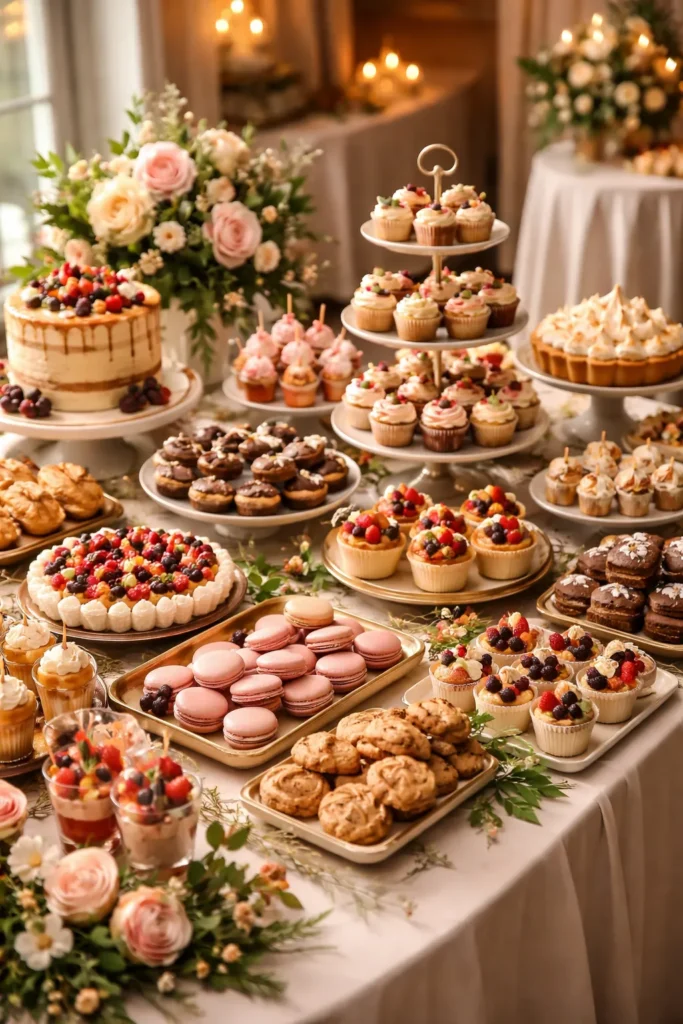
A dessert-focused reception isn’t appropriate for every situation — but for couples hosting afternoon events, cocktail-style gatherings, or second celebrations after an elopement, a spectacular dessert spread is not only sufficient, it’s genuinely exciting. And on a per-serving basis, desserts are some of the most affordable food options available.
When a Dessert Reception Makes Sense
Dessert receptions work when the timing is right. If your reception falls between meal times — say, starting at 3 or 4 pm — guests arrive already having eaten lunch and won’t be expecting a full dinner. A lavish dessert spread in this window is not only acceptable, it’s a genuinely memorable format that stands out from every traditional reception guests have attended.
If your reception is in the evening, a dessert spread alone won’t cut it — guests will arrive hungry and leave hungry, which is the one cardinal sin of wedding hospitality. In that case, pair a dessert station with one substantial food option (a slider station or pasta bar) to ensure everyone’s genuinely fed.
What to Include in a Dessert Spread
The goal is visual abundance and variety. Don’t serve just one type of dessert — offer five to eight options in generous quantities so the table looks extravagant:
- Donut wall or donut tower: glazed, chocolate-dipped, and sprinkled varieties stacked on a pegboard or tiered stand
- Cookie bar: classic chocolate chip, snickerdoodle, and double chocolate cookies in large jars or on wooden boards
- Brownie bites and blondie bars: cut small so guests can sample without committing to a full portion
- Cheesecake bites: plain, strawberry-topped, and chocolate varieties in mini cupcake liners
- Chocolate-covered strawberries: simple, elegant, and always the first thing to disappear
- A small cake for the couple to cut (the ceremonial moment) alongside sheet cake portions for guests
The S’mores Station Addition
For outdoor receptions, a s’mores station is one of the most cost-effective dessert additions available. Three ingredients — graham crackers, marshmallows, and chocolate bars — create an experience that guests genuinely love, particularly because of the interactive, nostalgic element of toasting their own marshmallows. Set up a small tabletop fire pit or heat source, lay out the ingredients attractively, and add a card with suggested flavor combinations (dark chocolate with sea salt, peanut butter cup marshmallows, Nutella spread on the cracker).
How Buffet and Station Formats Save You More Than You Realize
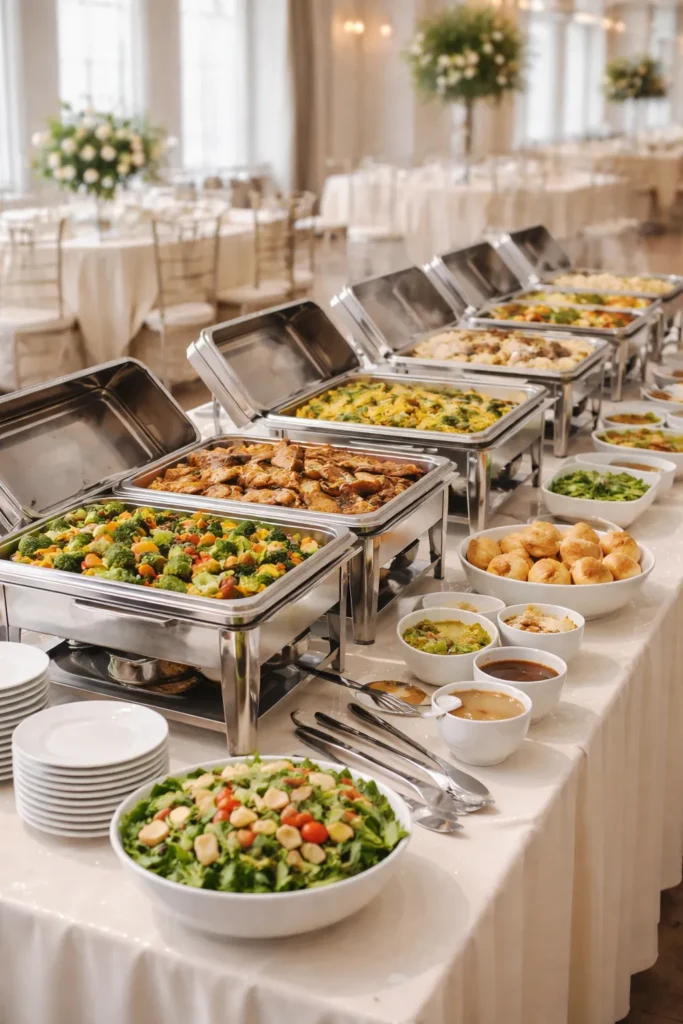
One of the most consistent pieces of advice from wedding catering professionals is to choose buffet or station-style service over plated meals whenever budget is a concern. The savings are substantial and come from multiple directions simultaneously.
Plated service requires one server for every 10-15 guests, coordinated kitchen timing, individual portioning, and often china and linen rental. A well-run buffet or station setup might require one server per 25-30 guests, with far less back-of-house labor and no individual portioning requirements. The math adds up quickly across a guest count of 80 or 100 people.
Stations also reduce food waste because guests self-portion based on their actual appetite. With plated dinners, you’re committing to a fixed portion size for every guest regardless of how hungry they are. At a buffet, a guest who isn’t very hungry takes a small plate and moves on, while a hungrier guest can return for seconds — and you haven’t over-purchased food to accommodate the maximum appetite of every single person in the room.
Smart Ways to Cut Catering Costs Without Sacrificing Quality
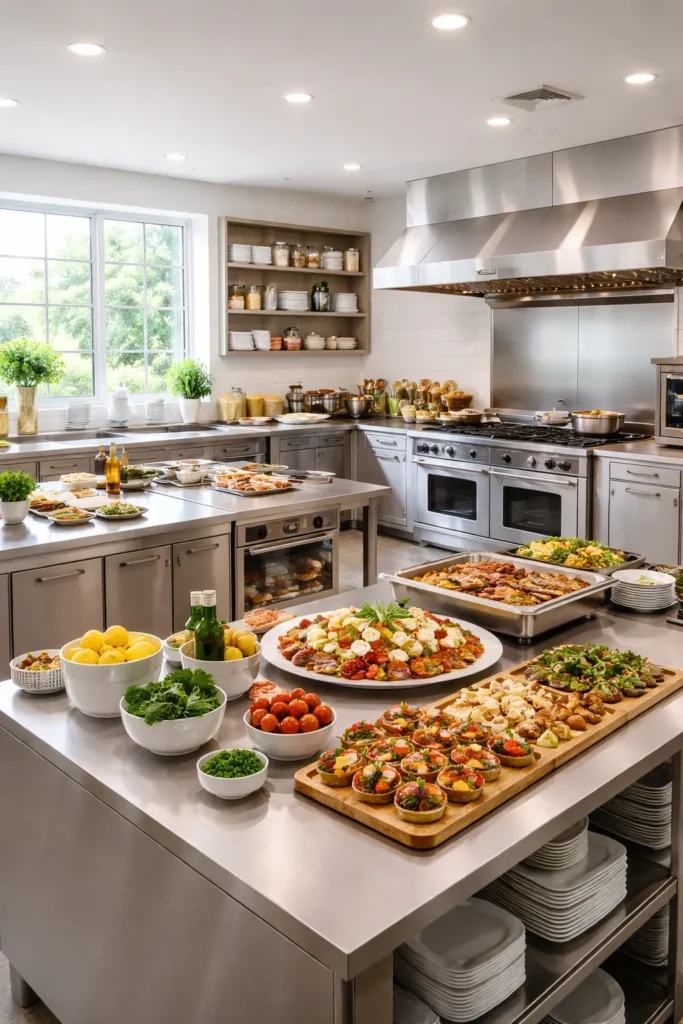
Beyond choosing the right food format, there are structural decisions that significantly impact the total catering bill without touching the food itself.
Venue with an existing kitchen is one of the most valuable things to look for when budget is a priority. When a caterer has to bring their own kitchen setup — generators, equipment, temporary refrigeration — those costs pass directly to you. A venue with a built-in commercial kitchen can reduce catering costs meaningfully.
Day and time selection matters more than most couples realize. Friday and Sunday weddings consistently cost less than Saturday events because vendor demand drops. A morning or early afternoon ceremony with a brunch or lunch reception can save 20 to 35 percent on catering compared to an equivalent Saturday evening event.
Limit your protein choices to two options maximum. The per-person cost of a catered wedding meal climbs with every entrée option added to the menu, because the caterer has to prepare sufficient quantities of each one to ensure no guest goes without their first choice. Two proteins, executed well, are always better than four proteins executed mediocrely.
Source your own drinks where venue policies allow it. Alcohol markups at catered events are substantial. If your venue permits a bring-your-own-alcohol arrangement (sometimes with a corkage fee), purchasing wine, beer, and spirits yourself at a warehouse retailer like Costco can cut your beverage cost in half.
Work honestly with your caterer about your budget constraints. The best catering professionals can suggest menu substitutions, service modifications, and format adjustments that maintain quality while hitting your price target — but only if you’re transparent about what you’re working with.
Getting the Quantities Right Without Over-Purchasing
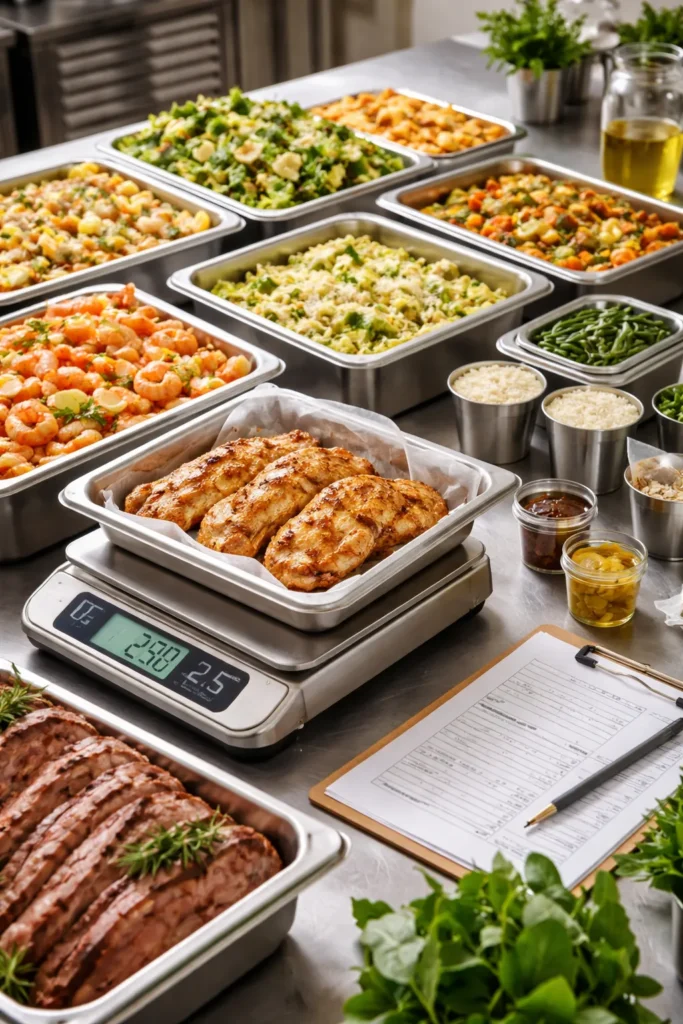
Over-purchasing food is one of the most common ways wedding couples waste money on catering. It comes from a genuine, hospitable instinct — nobody wants guests to go hungry — but it often results in massive amounts of food going to waste at the end of the evening.
A practical planning framework for buffet and station quantities:
- Appetizers during cocktail hour: plan for 4-6 pieces per person per hour
- Main course buffet: estimate 6-8 ounces of protein per person, plus 4-5 ounces of each side dish
- Pasta station: roughly 3-4 ounces of dry pasta per person, plus sauce
- Dessert table: one dessert item per person, but offer 4-5 varieties so there’s visual abundance without massive overstock
Talk to your caterer or venue coordinator about their recommended quantities based on your guest list. An experienced catering professional has served hundreds of events and can give you specific guidance based on your event’s timing, guest demographics, and food format.
Final Thoughts
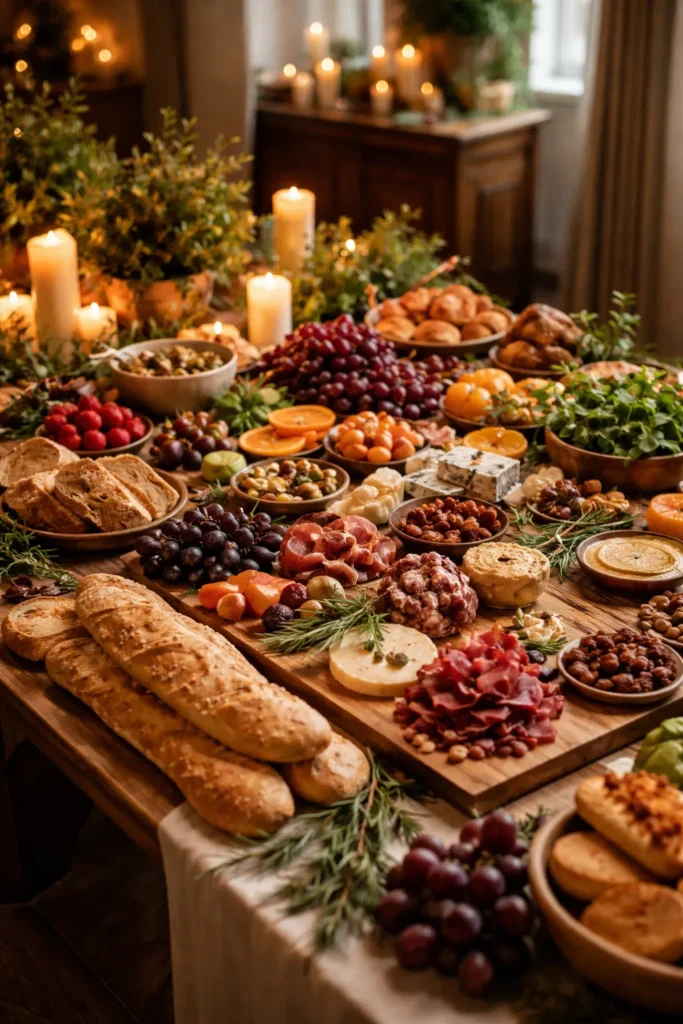
The most important shift in thinking about wedding reception food on a budget is moving away from the idea that cheaper food is lesser food. A taco bar with quality proteins, fresh toppings, and warm tortillas is a better dining experience than a mediocre plated chicken entrée at twice the cost. A grazing table built with seasonal produce and carefully selected cheeses creates more joy and more conversation than a formal three-course meal that nobody remembers by the following weekend.
Spend your food budget where guests will actually notice: in the quality of the proteins you choose, the freshness of the produce, and the warmth of the experience. Skip the expensive service formats, the elaborate plating, and the imported ingredients that add cost without adding flavor.
And don’t be afraid to build your own version of the reception you want. The couples whose weddings people talk about for years aren’t the ones who spent the most — they’re the ones who thought creatively, chose food that reflected who they actually are, and made sure their guests felt genuinely taken care of.