Cutting back on sugar doesn’t mean cutting back on joy. Anyone who’s tried a ketogenic diet knows the moment the cravings hit — usually around 8 PM, when the house is quiet and something sweet feels like the only reasonable solution to a long day. The good news? Keto-friendly desserts have come a long way from the days of gummy, overly sweet substitutes that tasted like a chemistry experiment.
The eight desserts in this article contain zero added sugar. Not “low sugar.” Not “reduced sugar.” None. They’re sweetened exclusively with natural, low-carb alternatives like monk fruit, allulose, and stevia — sweeteners that don’t spike blood glucose or knock you out of ketosis. Each one satisfies a different craving, whether that’s rich chocolate, tangy citrus, creamy cheesecake, or that irresistible cookie-dough pull.
What makes these desserts worth making isn’t just the macros. It’s that they genuinely taste like something you’d want to eat. Many keto bakes hide behind the idea that “good enough for low carb” is the standard to hit. These recipes aim higher than that.
Table of Contents
- Why Keto Desserts Can Taste Just As Good Without Sugar
- The Sweetener Question: What to Use Instead of Sugar
- Monk Fruit
- Allulose
- Stevia
- What to Avoid
- 1. Keto Chocolate Avocado Mousse
- What Makes It Work
- Ingredients
- Quick Facts
- 2. No-Bake Keto Cheesecake Bites
- The Filling
- The Chocolate Shell
- Quick Facts
- 3. Almond Flour Brownies
- Why Blanched Almond Flour Matters
- Common Mistake to Avoid
- Key Ingredients
- Quick Facts
- 4. Keto Chocolate Truffles With Espresso
- The Ganache Base
- Coating Options
- Quick Facts
- 5. Keto Chia Seed Pudding
- Texture Tips
- Flavor Variations
- Quick Facts
- 6. Keto Blondies With Chocolate Chips
- One-Bowl Method
- Make It Your Own
- Quick Facts
- 7. Keto Lemon Bars
- Getting the Lemon Filling Right
- Crust and Filling Timing
- Quick Facts
- 8. Coconut Flour Peanut Butter Cookies
- The Peanut Butter Factor
- Baking Notes
- Quick Facts
- Tips for Keeping Keto Desserts Truly Sugar-Free
- Final Thoughts
Why Keto Desserts Can Taste Just As Good Without Sugar
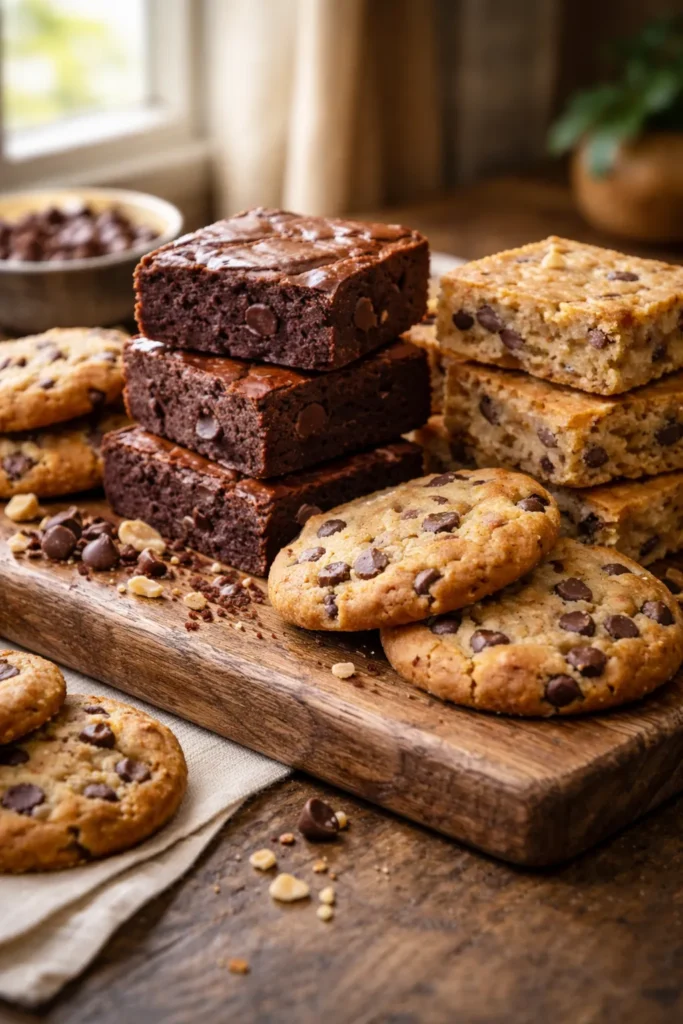
Sugar does two things in baking: it adds sweetness, and it affects texture, moisture, and browning. When you remove it, you need to think about replacing both functions — not just the sweetness. This is why some keto desserts fail. The baker swaps in a sweetener but doesn’t account for what else sugar was doing in the recipe.
Almond flour and coconut flour are the foundational replacements for wheat flour in keto baking. Almond flour works at a 1:1 ratio when replacing white flour, making it the most versatile option. It produces a slightly denser, moister crumb — which works brilliantly in brownies, blondies, and cookies. Coconut flour, on the other hand, absorbs more liquid than almost any other flour, so recipes using it typically need extra eggs or fat to compensate.
Healthy fats like butter, cream cheese, coconut oil, and heavy cream replace the structure and richness that sugar would normally contribute. They also keep you satiated far longer than a traditional sugary dessert would.
The key to getting keto desserts right is understanding that these aren’t just stripped-down versions of the originals. They’re different recipes built around different ingredients — and when done well, they stand completely on their own.
The Sweetener Question: What to Use Instead of Sugar
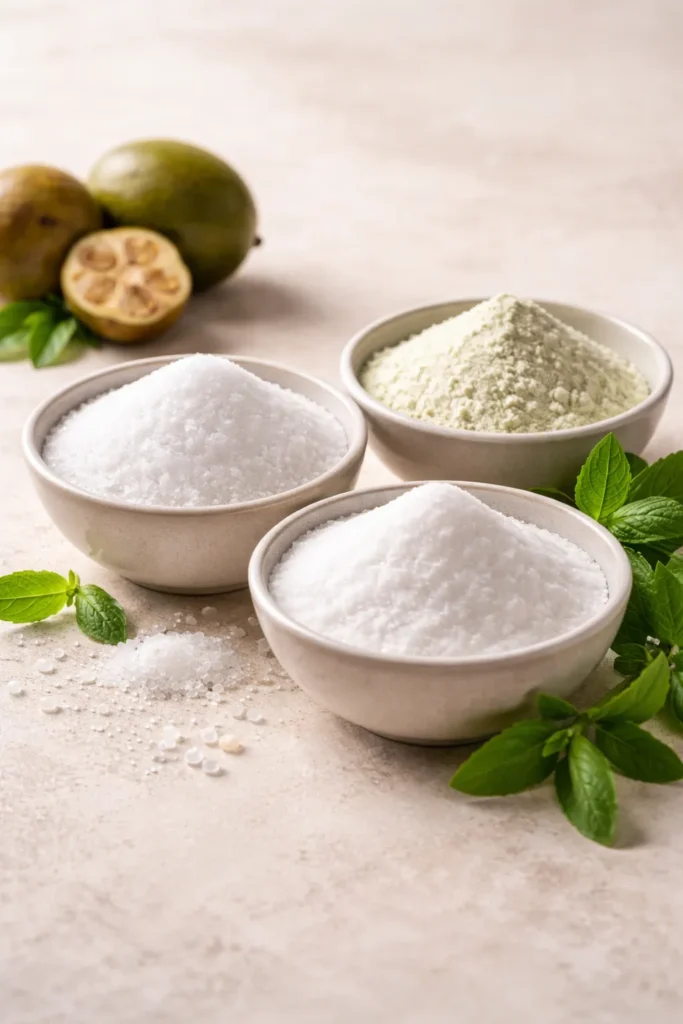
Before diving into the actual recipes, it’s worth understanding the sweetener landscape. Not all sugar substitutes are equal, and choosing the wrong one is one of the most common reasons keto desserts disappoint.
Monk Fruit
Monk fruit extract is roughly 200 times sweeter than table sugar, meaning you use far less of it. It has no calories, no glycemic impact, and leaves no harsh aftertaste in most applications. The FDA has recognized it as generally safe. It blends particularly well in cheesecakes, mousses, and no-bake recipes where a clean, sweet flavor is the goal.
Allulose
Allulose is about 70% as sweet as sugar and behaves more like it in baking — it caramelizes, it helps with browning, and it doesn’t have the cooling sensation that erythritol sometimes produces. For recipes like lemon bars or blondies where you want that slightly fudgy, chewy texture, allulose is often the top choice. Cleveland Clinic notes that it has minimal metabolic impact, though high amounts may cause minor digestive discomfort in some people.
Stevia
Stevia is 200 to 300 times sweeter than sugar and works well in small quantities. The main consideration is that it can carry a slightly bitter aftertaste if over-used, particularly in baked goods. It shines in puddings, mousses, and chia seed recipes where only a small amount is needed to hit the right sweetness level.
What to Avoid
Erythritol has come under growing scrutiny, with peer-reviewed research from Nature Medicine linking high consumption to increased cardiovascular risk markers. While it remains widely used in keto products, the recipes here focus on monk fruit, allulose, and stevia blends instead. Artificial sweeteners like sucralose and aspartame are skipped entirely, as ongoing research suggests potential concerns around gut microbiome balance and glycemic control over time.
1. Keto Chocolate Avocado Mousse
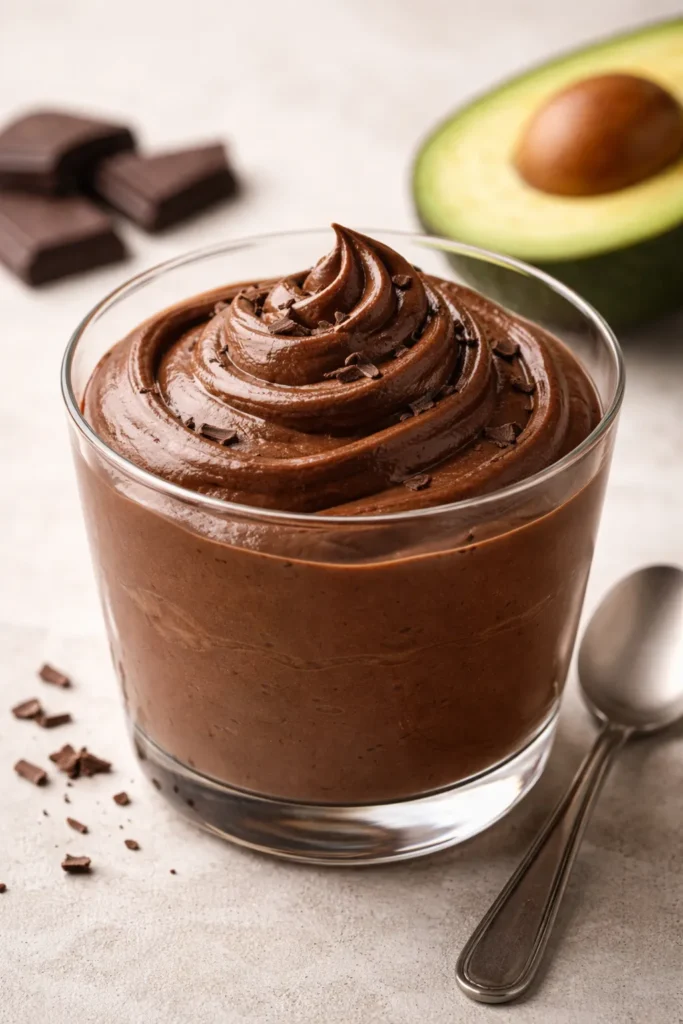
Avocado is the last ingredient most people think of when they want chocolate mousse. That’s precisely what makes this recipe so disarming — the avocado is completely undetectable in the final product. What you taste instead is a rich, creamy, deeply chocolatey mousse that melts on your tongue with a texture closer to ganache than foam.
The fat in the avocado is what makes this work. Combined with unsweetened cocoa powder and a small amount of coconut cream, it creates a silky consistency without any dairy or gelatin. This recipe comes in at roughly 4 grams of net carbs per serving — a number that would make most traditional mousse recipes blush.
What Makes It Work
The trick with avocado mousse is using avocados that are fully ripe. Not just “ready to eat” ripe — press-and-yield soft. An underripe avocado will leave fibrous strings and a slightly grassy flavor that cocoa can’t entirely mask.
Blending everything together in a food processor rather than a blender gives you better control over the texture. Pulse to combine, then blend until smooth. Over-blending can thin it out; you want it thick enough to hold a spoon trail.
Ingredients
- 2 large ripe avocados, flesh only
- ½ cup unsweetened cocoa powder
- ½ cup full-fat coconut cream
- ½ cup powdered monk fruit sweetener or allulose
- ½ teaspoon pure vanilla extract
- 1 teaspoon ground cinnamon
- Pinch of nutmeg
- Pinch of fine sea salt
Quick Facts
- Serves 6
- 4g net carbs per serving
- Best served chilled — refrigerate for at least 30 minutes before serving
- Keeps in the fridge, covered, for up to 2 days
Worth knowing: A small pinch of cayenne pepper added with the cinnamon creates a subtle warmth that amplifies the chocolate flavor without reading as “spicy.” It’s a small move with a noticeable payoff.
2. No-Bake Keto Cheesecake Bites
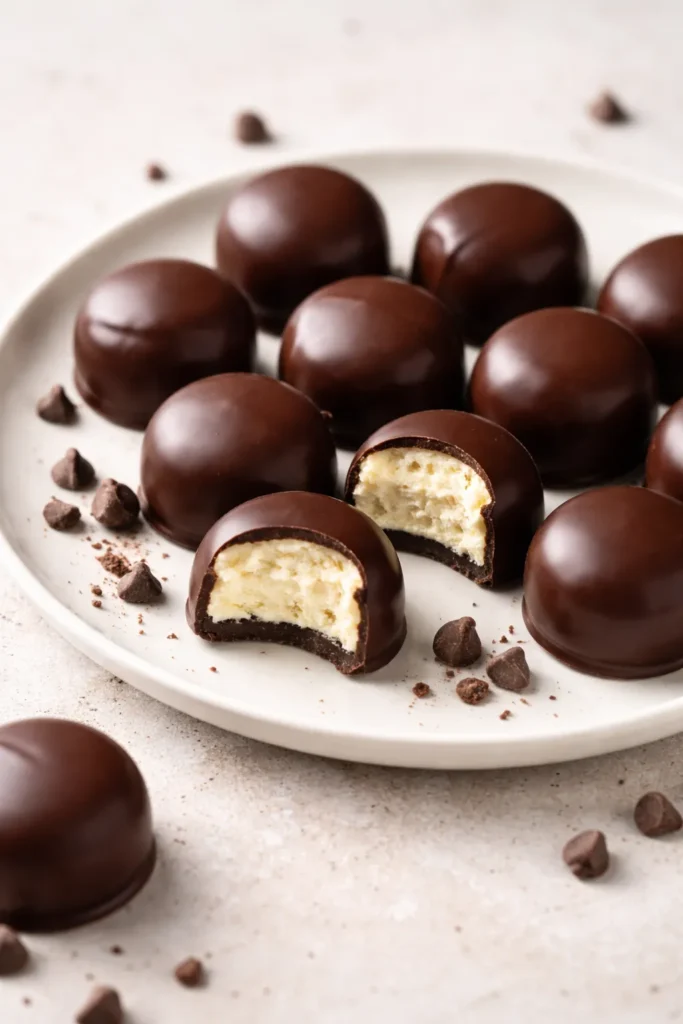
No-bake desserts are arguably the highest-value category in keto baking. No oven, no timing anxiety, no cracks to worry about — just mix, chill, and eat. These cheesecake bites deliver the dense, tangy, cream cheese richness of a full cheesecake in a two-bite format.
The magic here is the chocolate shell. A thin coating of sugar-free dark chocolate — made with monk fruit-sweetened chips and a small amount of cocoa butter — sets hard when chilled and shatters satisfyingly on the bite. Inside: creamy, vanilla-forward cheesecake filling. Under 3g net carbs per serving.
The Filling
The filling is four ingredients: full-fat cream cheese, powdered sweetener, vanilla extract, and a tablespoon of sour cream for extra tang. The sour cream is optional, but it adds that subtle sharpness that distinguishes a real cheesecake from something that just tastes sweet and creamy.
Chill the filling for at least 45 minutes before rolling. Warm cream cheese doesn’t hold its shape, and you’ll end up with misshapen blobs that are harder to dip neatly.
The Chocolate Shell
Melt sugar-free chocolate chips with a half-ounce of cocoa butter in a heatproof bowl over barely simmering water. Cocoa butter thins the chocolate to a proper dipping consistency and helps it set with a glossy finish. Without it, the chocolate can turn thick and clumpy during dipping.
Quick Facts
- Makes approximately 16 to 18 bites
- 2.9g net carbs per serving (2 bites)
- Can be frozen for up to 3 months
- Store in the fridge between a sheet of parchment paper so the bites don’t stick together
Pro tip: Freeze the filled balls for 30 minutes before dipping in chocolate. The cold filling makes dipping far cleaner and prevents them from falling apart in the warm chocolate.
3. Almond Flour Brownies
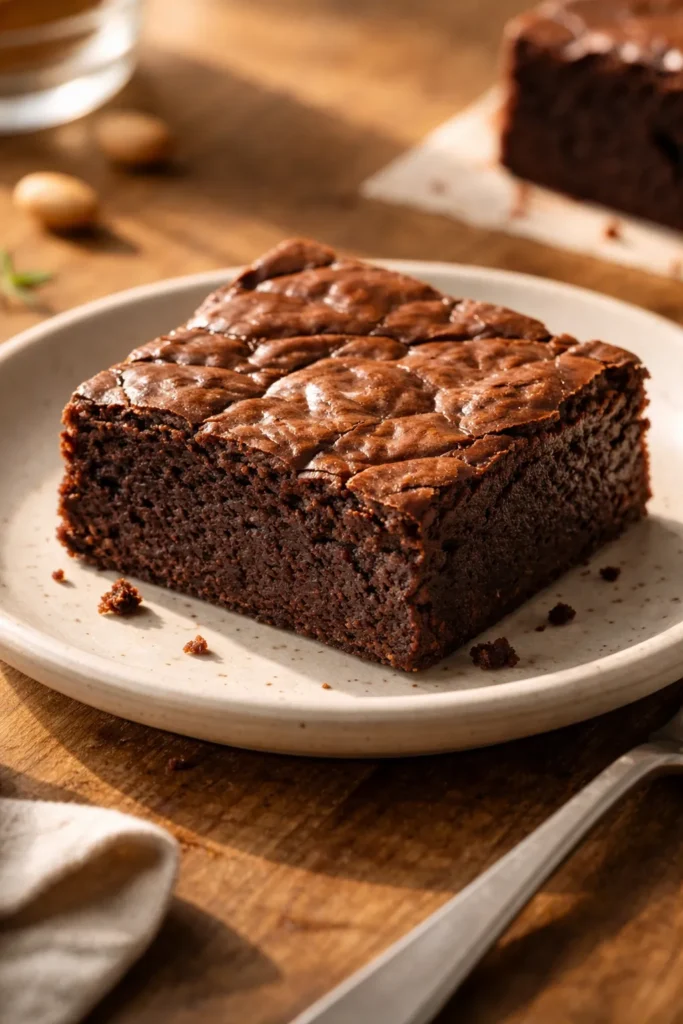
Almond flour brownies are the recipe that converts the most skeptics. Hand one to someone who “doesn’t do keto stuff” and watch what happens. Done right, they’re fudgy and dense, with a crinkly top and that characteristic pull when you lift a square from the pan.
The key difference from traditional brownies is that almond flour can’t develop gluten, which means these brownies will never achieve the chewy structure wheat flour provides. Instead, they’re more like a cross between a brownie and a truffle bar — deeply chocolatey, rich, and moist throughout.
Why Blanched Almond Flour Matters
Blanched almond flour — not almond meal, which still has the skin on — is what gives these brownies their lighter color and fine crumb. Almond meal produces a grittier, darker result that can veer into strange territory texturally. The extra cost of blanched flour is worth every cent here.
Common Mistake to Avoid
Overbaking is the single biggest mistake with almond flour brownies. Pull them from the oven when the center still looks just set — it should have a slight wobble. They firm up significantly as they cool. If a skewer comes out completely clean, you’ve probably gone too far.
Key Ingredients
- 1½ cups blanched almond flour
- ¾ cup unsweetened cocoa powder
- 1¾ cups monk fruit sweetener or allulose
- 1 teaspoon baking powder
- ½ teaspoon fine sea salt
- 5 tablespoons unsalted butter, softened
- 3 large eggs, room temperature
- 1 teaspoon pure vanilla extract
Quick Facts
- Serves 12
- 3g net carbs per serving
- Bake at 325°F (160°C) for 22 to 25 minutes
- Store in the fridge for up to one week, or freeze for up to 6 months
4. Keto Chocolate Truffles With Espresso
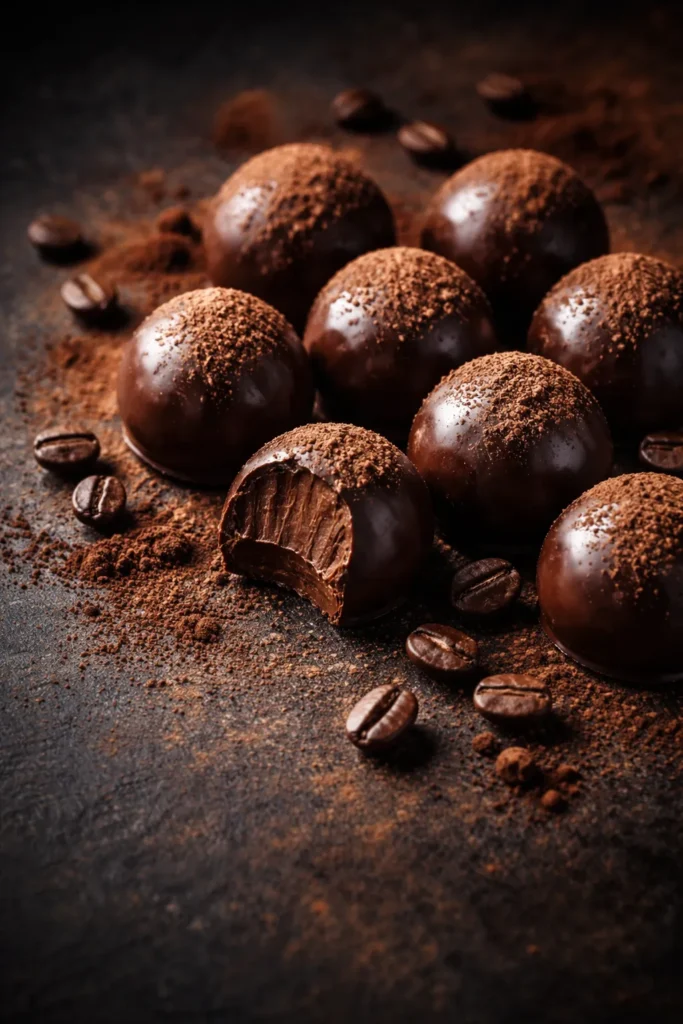
Truffles are a statement dessert. They look like they took far more effort than they actually require, which makes them excellent for entertaining. These particular truffles are built on a ganache base of unsweetened chocolate, heavy cream, and espresso powder — and every element earns its place.
The espresso doesn’t make these taste like coffee. It deepens the chocolate flavor in a way that nothing else quite replicates. Add two teaspoons to the cream before heating and you’ll notice the difference immediately — darker, more complex, with a longer finish.
The Ganache Base
Bring heavy cream and espresso powder to a bare simmer, remove from heat, then add chopped unsweetened chocolate and let it sit undisturbed for 5 minutes before whisking. This resting period lets the chocolate melt evenly without seizing. Rushing it by stirring immediately can cause the fat to separate.
Add powdered sweetener and butter after the chocolate has melted, whisking until completely smooth. Refrigerate the ganache for at least an hour before rolling — it should be firm enough to hold a ball shape but soft enough to roll without crumbling.
Coating Options
Dip the frozen truffle balls into melted sugar-free dark chocolate thinned with cocoa butter for a clean, snappy shell. A drizzle of melted sugar-free white chocolate on top (piped from a small zip-lock bag with the corner snipped) adds visual contrast. Press a single espresso bean into each truffle while the chocolate is still warm.
Quick Facts
- Makes 24 truffles (serving size: 2 truffles)
- 3.6g net carbs per serving
- Freeze uncoated truffle balls for up to 2 months
- Dipped truffles keep in the fridge for up to 10 days
Pro tip: Use a small cookie scoop to portion the chilled ganache. It makes for perfectly uniform truffles and keeps your hands cleaner during rolling.
5. Keto Chia Seed Pudding
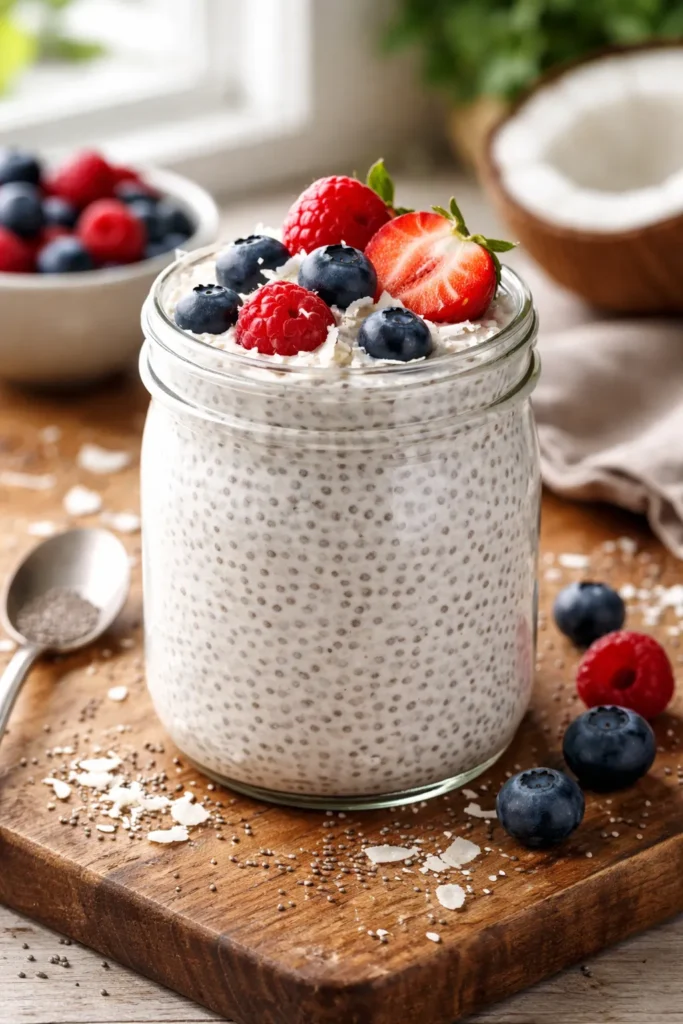
Chia pudding is the most forgiving recipe on this list. There’s nothing to mess up. Stir the ingredients together, refrigerate overnight, and you have a dessert that’s also secretly a solid breakfast. It’s one of the rare keto sweets with a legitimate nutritional profile — chia seeds deliver fiber, omega-3 fatty acids, and protein in meaningful quantities.
The base is simple: full-fat unsweetened coconut milk, chia seeds, and stevia or monk fruit drops. The magic is in the toppings and flavorings you add. Plain chia pudding is fine. Chocolate chia pudding — made by whisking two tablespoons of unsweetened cocoa powder into the base — is considerably more exciting.
Texture Tips
The ratio that works consistently is 2 tablespoons of chia seeds per 1 cup of liquid. This gives a pudding-like consistency — thick enough to hold on a spoon, soft enough to eat without effort. If it comes out too thick, stir in a tablespoon of additional coconut milk.
Always stir the pudding once after 15 minutes of refrigeration. Chia seeds naturally sink and clump if left undisturbed, creating an uneven texture. That one extra stir makes the difference between a perfectly uniform pudding and something that looks like it separated.
Flavor Variations
- Vanilla bean: scrape half a pod into the base before chilling
- Matcha: whisk 1 teaspoon of ceremonial grade matcha with the liquid before adding seeds
- Chocolate raspberry: use the cocoa base, top with 5 or 6 fresh raspberries before serving
- Tropical: swap coconut milk for a mix of coconut milk and unsweetened coconut cream, top with a few thin slices of kiwi
Quick Facts
- Serves 1 (scale up easily)
- 1 to 2g net carbs per serving
- Keeps refrigerated for up to 4 days
- Prep time: 3 minutes, plus overnight chilling
6. Keto Blondies With Chocolate Chips
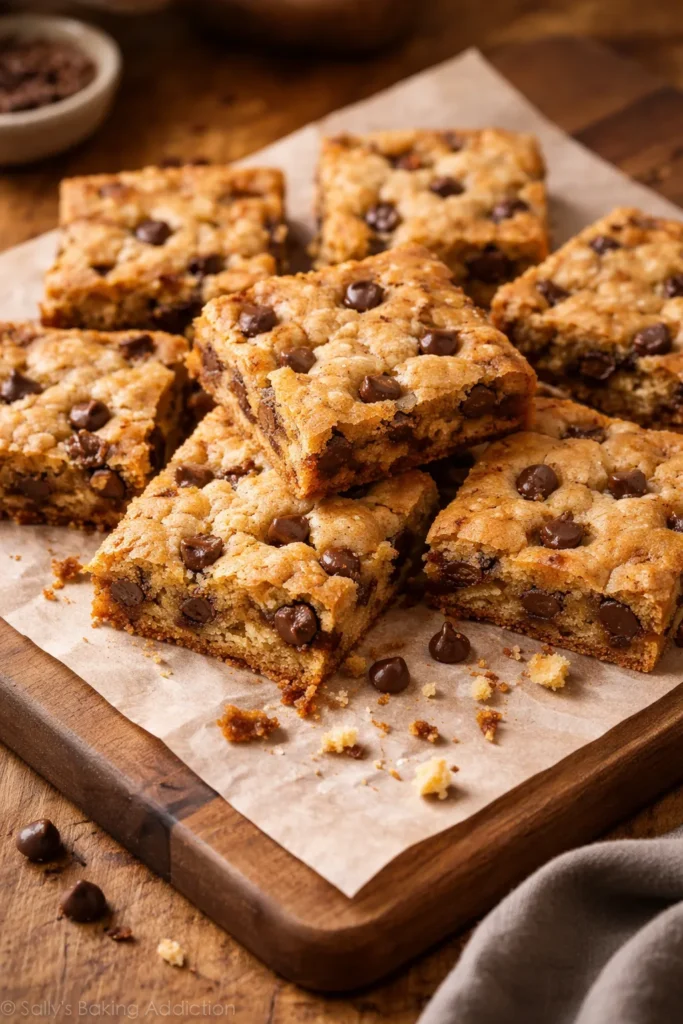
A blondie is a brownie without the cocoa — and that simple description undersells just how good this recipe is. Think: golden, slightly caramelized edges, a soft and chewy center, pockets of melted sugar-free chocolate throughout, and that warm vanilla sweetness that makes it nearly impossible to stop at one square.
Golden monk fruit sweetener is the ingredient that makes these work so well. It mimics the flavor and texture of brown sugar, giving the blondies their characteristic depth. Standard white monk fruit sweetener will produce a blondie that tastes good but lacks that subtle caramel note. The golden variety changes everything.
One-Bowl Method
Everything comes together in two bowls — one for dry ingredients, one for wet — then combined. Overmixing the batter after combining will affect the texture and make it harder to achieve the crinkly top that makes blondies look so appealing. Mix until just combined, fold in the chocolate chips, and spread into the pan.
Bake at 350°F (180°C) for 20 to 22 minutes. Remove when a skewer comes out just clean. These continue cooking in the pan for several minutes after coming out of the oven, so slightly underbaking is always the better mistake to make.
Make It Your Own
The half-cup of mix-ins is completely customizable. Chopped pecans, macadamia nuts, unsweetened shredded coconut, or even a swirl of almond butter pressed into the top before baking all work beautifully. A pinch of flaky sea salt scattered over the top right before going into the oven adds a sweet-salty contrast that is worth the extra ten seconds it takes.
Quick Facts
- Serves 12 bars
- 3g net carbs per bar
- Prep time: 5 minutes | Cook time: 20 minutes
- Store in the fridge for up to one week, or freeze individually wrapped for up to 6 months
7. Keto Lemon Bars
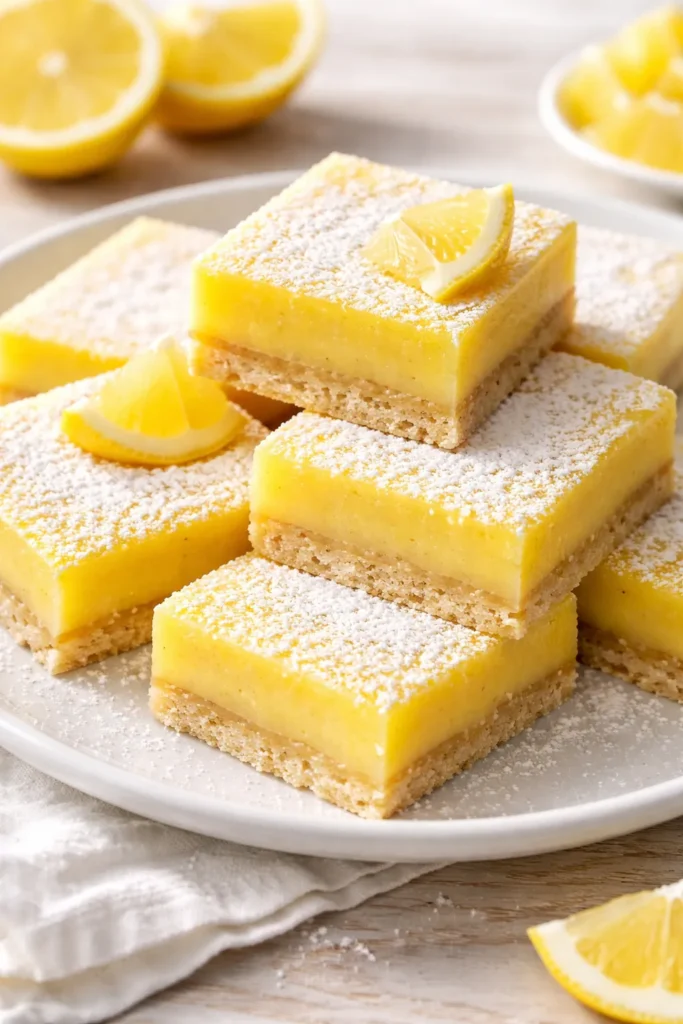
Lemon bars represent a category of keto desserts that doesn’t get nearly enough attention: the tart, bright, fruit-forward treats that balance sweetness with acid. After the parade of chocolate options, a good lemon bar is a genuine palate reset.
The crust here is a shortbread-style almond flour base — pressed into a pan, pre-baked for 10 minutes, then topped with a lemon curd filling and returned to the oven. The filling sets to a smooth, slightly wobbly consistency that firms as it cools. The result is tangy, sweet, and rich all at once, with that characteristic powdered-sweetener dusting on top.
Getting the Lemon Filling Right
The filling is egg-forward — typically 6 large eggs for a standard 9×9 pan, combined with fresh lemon juice, lemon zest, and a generous amount of powdered allulose. Allulose is the right sweetener here. It doesn’t crystallize the way erythritol does, which means the filling stays smooth and soft rather than grainy.
Fresh lemon juice is non-negotiable. The bottled version is flat and lacks the fragrance that makes lemon bars taste genuinely bright. The zest from one large lemon adds extra aromatics — don’t skip it.
Crust and Filling Timing
Pre-bake the crust for 10 minutes at 325°F before adding the filling. This ensures it’s set enough to hold the liquid filling without collapsing or becoming soggy. Pour the filling over the warm crust, return to the oven, and bake for another 15 to 20 minutes until the center barely jiggles.
Cool completely at room temperature, then refrigerate for at least 2 hours before slicing. Cutting warm lemon bars is how you end up with a mess.
Quick Facts
- Serves 12
- 5g net carbs per bar
- Total time: approximately 50 minutes active plus 2 hours chilling
- Dust with powdered allulose or powdered monk fruit just before serving — not before, as it can absorb into the filling
8. Coconut Flour Peanut Butter Cookies
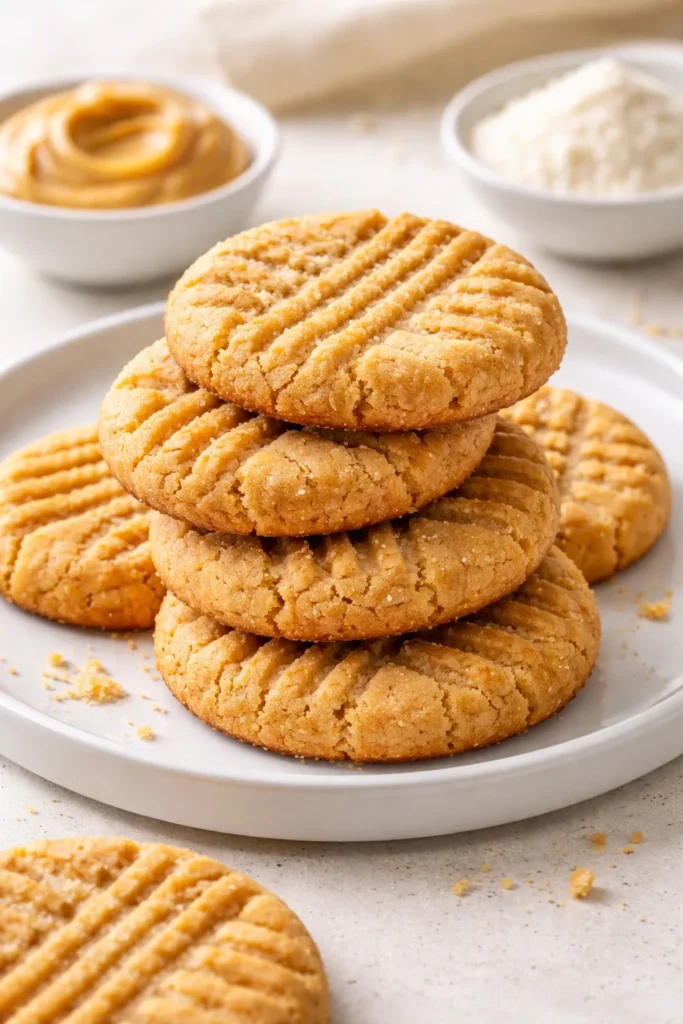
Three-ingredient cookies sound like a compromise. These aren’t. Coconut flour, peanut butter, eggs, and a touch of monk fruit sweetener come together to create a cookie that’s slightly crisp at the edge, soft in the center, and just dense enough to feel substantial. At roughly 1 gram of net carbs per cookie, you can have two without any mathematical stress.
Coconut flour absorbs liquid aggressively — more than almost any other low-carb flour. This means the dough comes together differently than an almond flour recipe. It will look dry at first. Keep mixing and it will come together into a thick, scoopable dough within about 30 seconds.
The Peanut Butter Factor
Natural peanut butter (just peanuts and salt, nothing added) works best. Commercial peanut butters often contain added sugar or palm oil that affects the texture and adds carbs you don’t need. If the natural peanut butter has separated, stir it thoroughly before measuring — you want a consistent texture throughout the dough.
For a peanut-free version, sunflower seed butter works well as a direct swap. The cookie will have a slightly different flavor but the same texture and a comparable macronutrient profile.
Baking Notes
Roll the dough into balls roughly the size of a large marble, press each one flat with a fork in a crosshatch pattern (the classic peanut butter cookie move), and bake at 350°F (175°C) for 10 to 12 minutes. They’ll look underdone when you pull them — that’s correct. They firm significantly as they cool.
Quick Facts
- Makes 16 cookies
- 1g net carbs per cookie
- Prep time: 8 minutes | Bake time: 10 to 12 minutes
- Cool completely on the pan before moving — these are fragile when warm
Worth knowing: Press a single sugar-free chocolate chip or a pinch of flaky salt into the center of each cookie right after it comes out of the oven. It takes the presentation from “homemade” to “intentional” with zero extra effort.
Tips for Keeping Keto Desserts Truly Sugar-Free
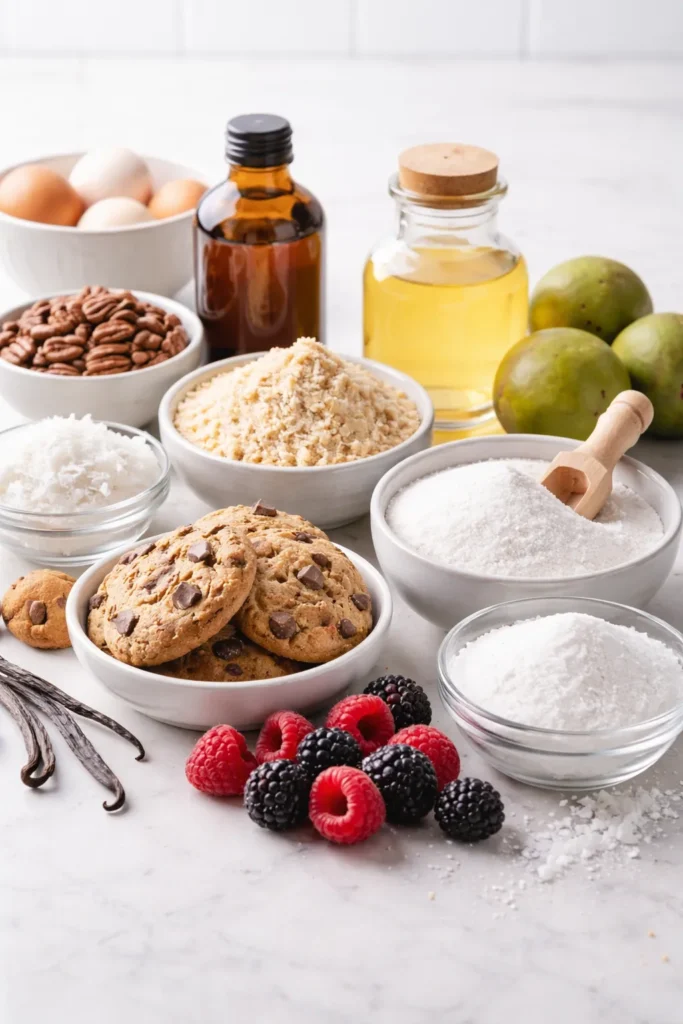
Reading labels on keto dessert products and ingredients is one of the most valuable habits to develop. “Sugar-free” labeling doesn’t always mean zero carbohydrates — maltitol, a sugar alcohol found in many commercial sugar-free chocolates, has a glycemic index of 35 and can raise blood sugar more than you’d expect from something labeled “keto-friendly.”
When buying chocolate for baking or coating, look specifically for products sweetened with monk fruit or allulose and free from maltitol and sucralose. ChocZero is one brand that uses exclusively monk fruit extract. Lily’s is another widely available option. Both produce consistent results in coating, melting, and drizzling applications.
The net carb calculation is what matters most in keto baking: total carbohydrates minus dietary fiber equals net carbs. For most natural low-carb sweeteners (monk fruit, allulose, stevia), the carb contribution is negligible or zero. Fiber counts from almond flour and coconut flour reduce the net carbs further, which is why keto baked goods can look higher in total carbs on a label while remaining low in the numbers that actually matter.
Batch cooking is your best strategy for staying consistent. Most of the recipes here freeze well — particularly the brownies, blondies, truffles, and cheesecake bites. Spend one afternoon making two or three of them, portion them out, freeze what you won’t eat within a few days, and you’ll have a two-month supply of no-added-sugar desserts ready when cravings hit.
One more thing worth knowing: sweetener tolerance varies from person to person. Some people find monk fruit slightly more bitter at higher concentrations; others are sensitive to the digestive effects of high doses of allulose. Start with the lower end of the recommended sweetener range in any recipe, taste as you go, and adjust accordingly. Keto baking rewards experimentation more than most cooking styles — small tweaks in sweetener type and amount can dramatically change the final result.
Final Thoughts
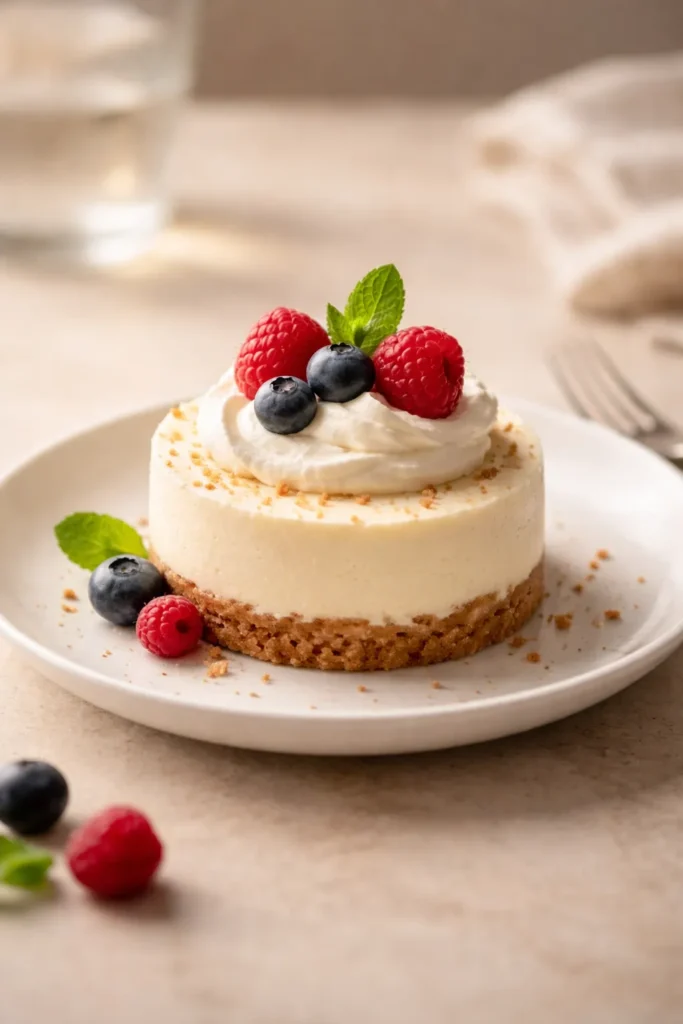
The shift from sugar to natural low-carb sweeteners doesn’t happen overnight. The palate adjusts, expectations recalibrate, and then something clicks — you bite into a well-made keto brownie or a piece of chocolate avocado mousse and realize the absence of sugar isn’t a sacrifice. It’s just a different way of doing the same thing.
What these eight desserts have in common isn’t just the absence of added sugar. They all rely on whole, real ingredients — good fats, quality cocoa, fresh citrus, ripe avocados — and they taste like it. The difference between a keto dessert made with blanched almond flour, fresh lemon juice, and monk fruit versus one made with substandard substitutes and artificial fillers is significant.
If you’re new to keto baking, start with the chia pudding or the peanut butter cookies. Both are nearly impossible to get wrong and take under 15 minutes. Once you’ve built some confidence, tackle the brownies or lemon bars. The truffles are worth saving for a weekend project — they take more time but produce results impressive enough to serve to guests who have no idea they’re eating something with zero added sugar.
Dessert doesn’t need sugar to be worth eating. These recipes make that case one bite at a time.