There’s a moment — you bite into a fast food burger, hoping for satisfaction, and get… fine. Just fine. A flat, gray patty, rubbery cheese that slid sideways, a soggy bun that couldn’t hold it together. You finish it more out of obligation than joy.
Here’s the thing: the gap between that and a truly great burger isn’t as wide as you’d think. You don’t need a commercial flat-top, a professional kitchen, or a line cook’s speed. What you need is good meat, a few smart techniques, and a recipe worth your time. The burgers ahead deliver exactly that — layered with real flavor, built with intention, and designed to make you wonder why you ever pulled through a drive-through in the first place.
These aren’t just patties with toppings. Each one is built around a distinct flavor concept, from deeply savory umami bombs to bright, herbaceous showstoppers. Some are indulgent on purpose. Some are surprisingly simple. All of them are better — measurably, memorably better — than anything wrapped in paper at a counter.
Pull out your cast iron. Let’s build something worth eating.
Table of Contents
- The Foundation of a Great Gourmet Burger
- Why Freshly Ground Beef Wins Every Time
- The Seasoning Rule You Should Never Break
- Cast Iron vs. Grill: Knowing When to Use Which
- Choosing Your Bun, Cheese, and Condiments
- Matching Cheese to Your Burger Concept
- Building a Sauce That Actually Does Something
- 1. The Classic Smash Burger with Special Sauce
- What Makes This One Special
- The Special Sauce Formula
- Building the Burger
- 2. Truffle Mushroom Swiss Burger
- The Mushroom Gravy Is the Star
- The Truffle Aioli
- Assembly and Cooking Notes
- 3. Jalapeño Popper Stuffed Burger (Juicy Lucy Style)
- The Filling
- Forming the Stuffed Patty
- Cooking With Care
- 4. Caramelized Onion and Bacon Jam Burger
- Making Proper Caramelized Onions
- The Bacon Jam
- Putting It Together
- 5. Lamb Burger with Tzatziki and Feta
- Building the Lamb Patty
- Tzatziki from Scratch
- Cooking and Assembly
- 6. Hawaiian Teriyaki Burger with Grilled Pineapple
- The Teriyaki Glaze
- Grilling the Pineapple
- Building the Burger
- 7. Philly Cheesesteak Smash Burger
- The Pepper and Onion Base
- The Garlic Parmesan Aioli
- Smashing and Melting
- 8. Caprese Burger with Basil Aioli and Fresh Mozzarella
- Basil Aioli
- The Mozzarella Situation
- Tomato Matters More Than You’d Think
- Building the Final Burger
- Burger Building Tips That Make All the Difference
- Sauce Placement Matters
- Lettuce as an Insulator
- The Resting Rule
- Common Burger Mistakes That Flatten the Experience
- Pressing Down on the Patty While It Cooks
- Starting With a Cold Pan
- Skipping the Thermometer
- Scaling Up for a Crowd Without Losing Quality
- Final Thoughts
The Foundation of a Great Gourmet Burger
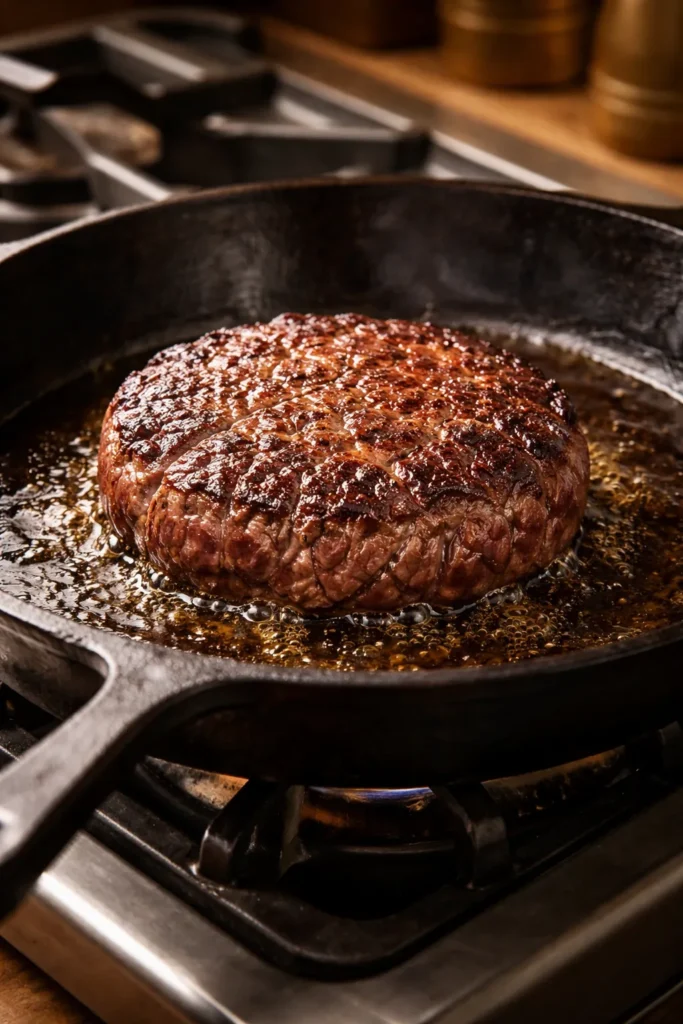
Before any toppings, before any sauce, the patty is where everything starts — and where most home burgers quietly fail.
Fat content is non-negotiable. An 80/20 ground beef blend (80% lean meat, 20% fat) is the standard for a reason. Fat carries flavor, keeps the patty moist through high heat, and is responsible for those deeply satisfying drippings that pool at the edges of a cast iron pan. Drop below that — say, 85/15 or leaner — and you’re making a hockey puck, no matter what you put on top.
Why Freshly Ground Beef Wins Every Time
Pre-packaged ground beef that’s been compressed into a log or mound has already been worked. The proteins have been pressed together tightly, which means the patty will cook up dense and springy — more meatloaf than burger. Freshly ground beef from a butcher, or even ground beef that’s been handled minimally at home, has a loose, open texture that translates directly into a tender, juicy bite.
Ask your butcher for a brisket-chuck blend, or chuck-ribeye blend. The brisket adds beefy depth. The ribeye brings fat and richness. The chuck provides structure. It’s the combination that serious burger spots use, and it’s worth seeking out.
The Seasoning Rule You Should Never Break
Salt belongs on the outside of the patty, not mixed in. This comes down to protein chemistry: salt draws out moisture and begins to break down protein strands. Mixed into raw ground beef, it creates a dense, bouncy, sausage-like texture. Seasoned only on the surface — and only right before the patty hits the heat — it forms a gorgeous, savory crust while the interior stays soft and juicy.
Season generously with coarse kosher salt and freshly cracked black pepper. That’s all a great patty really needs.
Cast Iron vs. Grill: Knowing When to Use Which
Grills are iconic, but cast iron is often the smarter choice at home. A cast iron skillet or griddle runs screaming hot, provides direct contact with the meat (no hot spots, no gaps), and traps all those rendered drippings. That fat becomes flavor — use it to toast your buns in the pan after the patties come off. You’ll never go back to dry-toasting a bun again.
For thick, tavern-style burgers cooked to a rosy medium-rare, moderate grill heat works beautifully. For smash burgers, you need a ripping hot, flat surface — cast iron every time.
Choosing Your Bun, Cheese, and Condiments
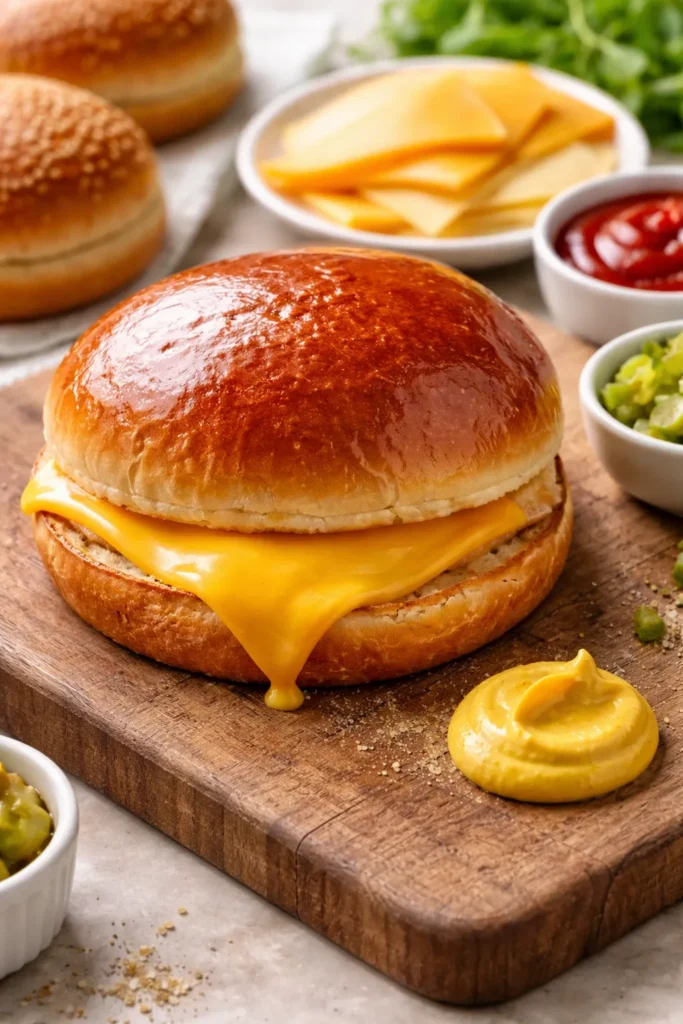
The bun is structural and textural — it needs to hold up to juice, fat, and sauce without falling apart in your hands, but it also shouldn’t overpower the patty.
Brioche buns are the most popular choice for a reason. Buttery, slightly sweet, with a soft crumb that absorbs flavors without going mushy. They toast beautifully in burger drippings. For thicker, pub-style burgers, a pretzel bun adds a firm, chewy contrast. For smash burgers, a potato roll — soft, slightly sweet, and squishy in the best way — is the classic choice.
Matching Cheese to Your Burger Concept
Not all cheese melts the same, and the wrong one can ruin a great patty.
- American cheese melts like silk, coating every craggy edge of a smash burger — it’s the gold standard for classic double-stacked burgers and Juicy Lucys
- Swiss cheese melts cleanly with a mild, nutty flavor that pairs with mushrooms and caramelized onions without competing
- Sharp cheddar brings a tangy edge that cuts through fatty patties and rich sauces
- Smoked Gouda adds a deep, wood-fired complexity that pairs beautifully with bacon and BBQ
- Fresh mozzarella melts with that signature pull — built for caprese-style burgers with fresh tomato and basil
- Feta and blue cheese don’t melt the same way, but they crumble beautifully and bring briny, bold contrast to lamb and beef alike
Building a Sauce That Actually Does Something
Fast food sauces are afterthoughts. Gourmet sauces are functional — they balance richness, add acid, and tie every component together. Keep a few formulas in your back pocket: a special sauce built from mayo, ketchup, pickle brine, and a touch of Worcestershire; a truffle aioli from mayo, minced garlic, lemon juice, and truffle oil; a chipotle crema from sour cream, canned chipotle in adobo, lime juice, and salt. Ten minutes of work, maximum payoff.
1. The Classic Smash Burger with Special Sauce
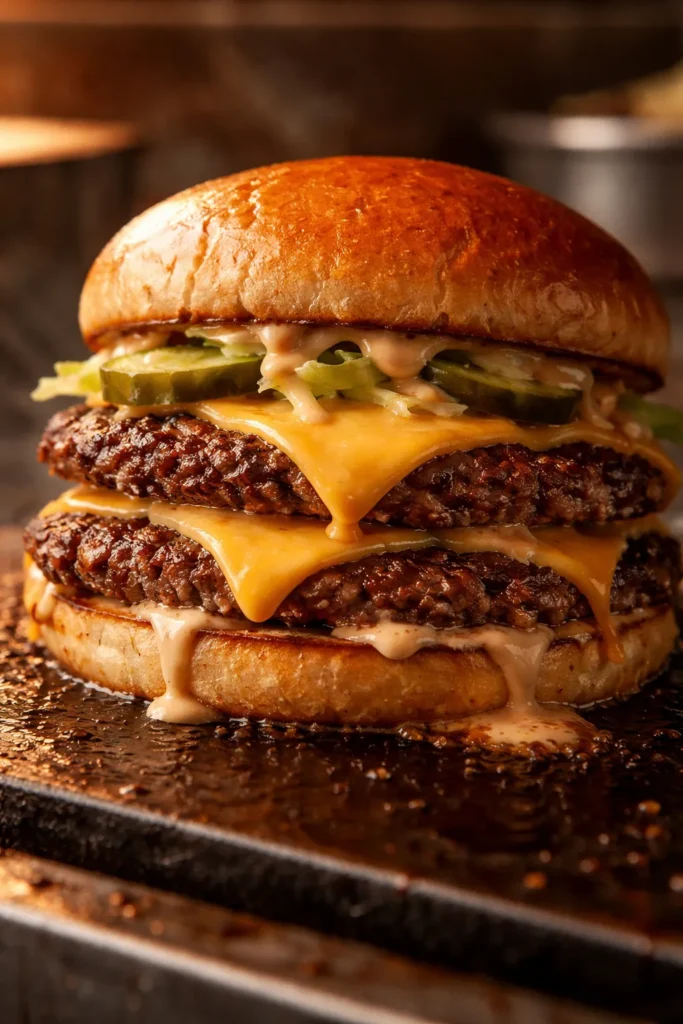
The smash burger is the one that converted a generation of grill-only cooks to cast iron devotees — and for good reason. When a loosely packed ball of 80/20 beef hits a smoking hot flat surface and gets smashed down hard with a spatula, something extraordinary happens. The meat spreads thin, the edges turn lacy and deeply caramelized, and the Maillard reaction goes into overdrive. You get more crust, more flavor, and a patty that holds cheese like it was born for it.
What Makes This One Special
The double-stack is the move here. Two thin patties, each around 2.5 to 3 oz, cooked separately and layered with a slice of American cheese melted between them. That middle layer of cheese goes fully gooey while the outer edges stay crisp. The contrast between the crunchy perimeter and the soft, cheesy center is what separates a good smash burger from a great one.
The Special Sauce Formula
- 3 tablespoons mayonnaise
- 1 tablespoon ketchup
- 1 tablespoon finely chopped dill pickles
- 1 teaspoon pickle brine (straight from the jar)
- 1 teaspoon Worcestershire sauce
- ½ teaspoon garlic powder
- ½ teaspoon smoked paprika
- Salt and pepper to taste
Mix it together and let it sit for at least 15 minutes before using. The flavors meld into something that tastes deeply familiar but far better than anything in a red and yellow wrapper.
Building the Burger
Form two 2.5 oz balls of cold 80/20 ground beef — don’t compact them. Season both sides generously with salt and pepper right before cooking. Heat a cast iron skillet or griddle over high heat until it’s smoking. Place each ball in the pan and immediately smash flat with a wide, firm spatula, pressing hard for 10 full seconds. Cook for 90 seconds until the edges are deeply browned and crispy. Flip, add American cheese immediately, and cook for another 45 seconds. Stack the two patties, cheese side in, and transfer to a toasted potato roll slathered with special sauce, topped with shredded iceberg, white onion, and pickles.
Pro tip: Don’t smash twice. The second smash pushes out the juices you just trapped. One hard press, then leave it alone.
2. Truffle Mushroom Swiss Burger
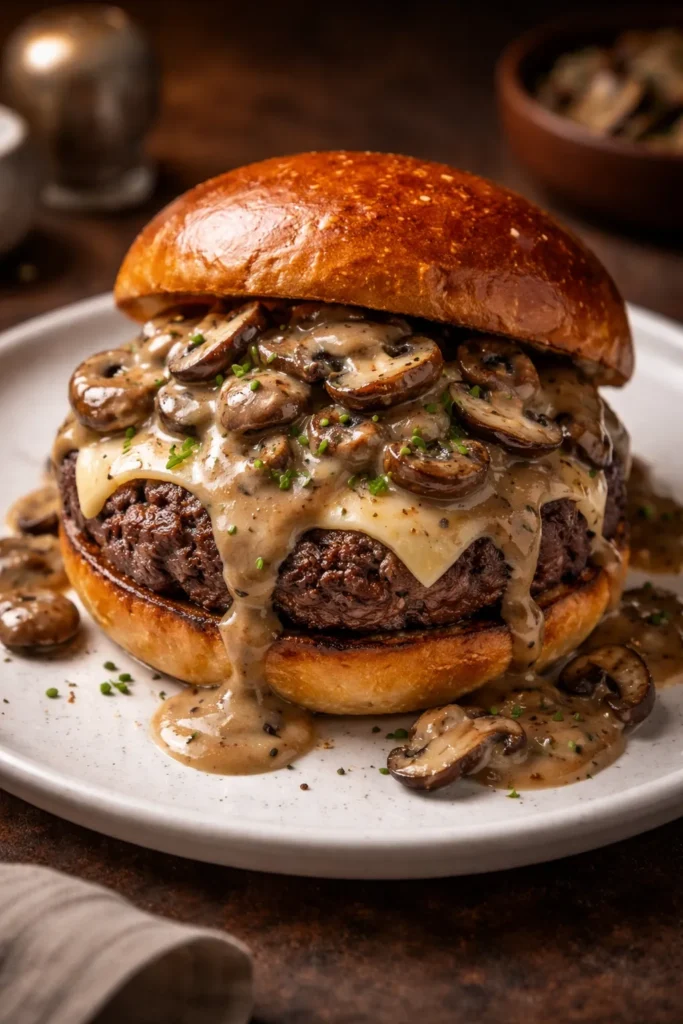
This is the one that takes a weeknight dinner and makes it feel like a deliberate indulgence. A rich, deeply savory mushroom gravy ladled over a thick beef patty, blanketed with Swiss cheese, and finished with a swipe of truffle aioli — it’s got steakhouse energy without the steakhouse bill.
The Mushroom Gravy Is the Star
Skip the plain sautéed mushrooms. Instead, build a proper pan sauce: cook 8 oz of cremini mushrooms (sliced) in butter over medium-high heat until they’ve released all their liquid and started to caramelize at the edges. Add two minced garlic cloves, cook for 30 seconds, then splash in ¼ cup of dry white wine or beef broth. Scrape up any browned bits from the pan. Stir in 1 tablespoon of Worcestershire sauce, a teaspoon of Dijon mustard, and 2 tablespoons of heavy cream. Simmer until the sauce is thick enough to coat the back of a spoon — about 3 to 4 minutes. Season with salt and pepper. That’s your gravy, and it’s worth every step.
The Truffle Aioli
Combine ½ cup mayonnaise, 1 minced small garlic clove, 1 teaspoon fresh lemon juice, 1 teaspoon truffle oil, and a pinch of salt. Taste and adjust — truffle oil is potent, so start conservatively and add more only if needed.
Assembly and Cooking Notes
Form a 6 oz patty about ¾ inch thick from 80/20 ground beef. Press a shallow dimple in the center with your thumb — this prevents the patty from puffing up and cooking unevenly. Cook on a cast iron grill pan over medium-high heat for 4 minutes per side for medium, or until your preferred doneness. Add Swiss cheese for the last 90 seconds and cover with a lid or dome to encourage melting.
Build on a toasted brioche bun: truffle aioli on both sides, the cheesy patty, a generous ladle of mushroom gravy, and a small handful of arugula for a peppery, fresh contrast.
Worth knowing: Cremini mushrooms have more concentrated flavor than white button mushrooms. If you can find wild mushrooms — shiitake, oyster, or maitake — they add an even deeper, earthier dimension to the gravy.
3. Jalapeño Popper Stuffed Burger (Juicy Lucy Style)
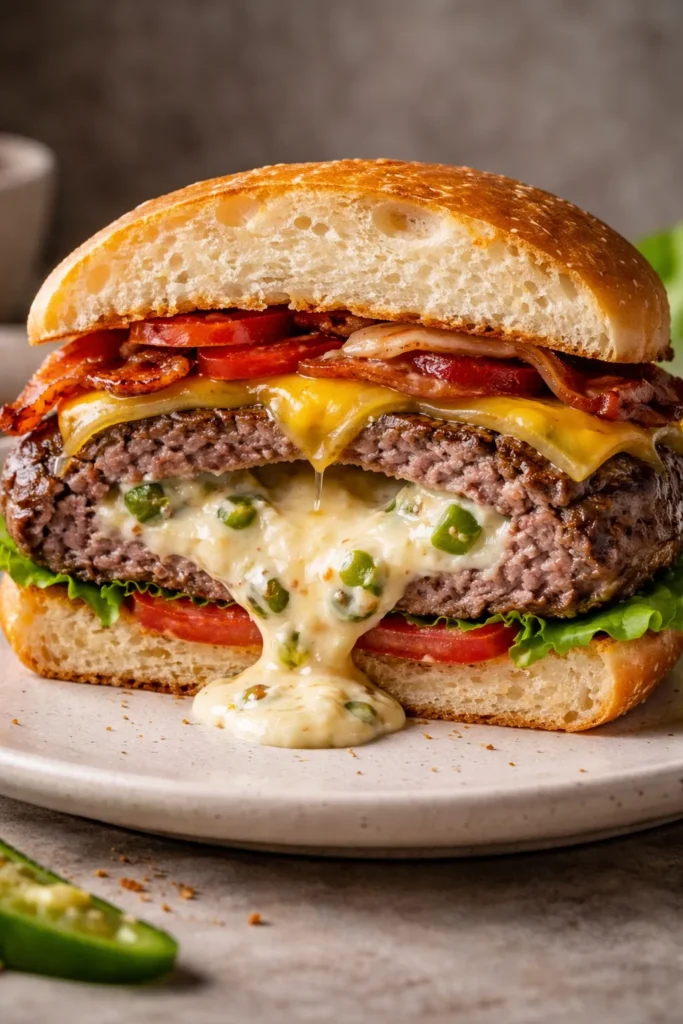
The Juicy Lucy originated at Matt’s Bar in Minneapolis, where some inspired cook decided to put the cheese inside the patty instead of on top. The result is a burger with a molten cheese core that erupts when you bite in — dramatic, delicious, and now a permanent fixture in any serious home cook’s repertoire.
This version takes that concept and runs further with it, filling the core with a jalapeño cream cheese mixture that behaves exactly like a jalapeño popper: creamy, slightly spicy, and surrounded by crispy, savory beef.
The Filling
Mix together 3 oz of softened cream cheese, 2 finely diced fresh jalapeños (seeds removed for moderate heat, seeds in for serious heat), 2 tablespoons of shredded sharp cheddar, and ½ teaspoon of garlic powder. Stir until fully combined. Roll into a flat disk about 1.5 inches across and freeze for 15 minutes — this makes it much easier to encase in the patty without the filling squeezing out during assembly.
Forming the Stuffed Patty
Divide 6 oz of 80/20 ground beef into two equal portions. Flatten each into a thin disk. Place the frozen cream cheese disk in the center of one beef disk, then lay the second disk on top and pinch the edges firmly shut, sealing all the way around. Smooth the edges with your hands until the seam disappears. Season the exterior well with salt and pepper.
Cooking With Care
This patty needs moderate heat, not high heat. A smoking hot pan will char the outside before the interior gets warm enough to melt the filling. Cook over medium to medium-high heat for 5 to 6 minutes per side without pressing — pressing forces the filling out through any weak spot in the seam. Rest for 2 full minutes before cutting; the filling continues to heat through during that rest.
Serve on a toasted brioche bun with sliced pickled jalapeños, crispy bacon, and a swipe of chipotle mayo. The heat from the pickled jalapeños cuts through the richness of the cream cheese perfectly.
4. Caramelized Onion and Bacon Jam Burger
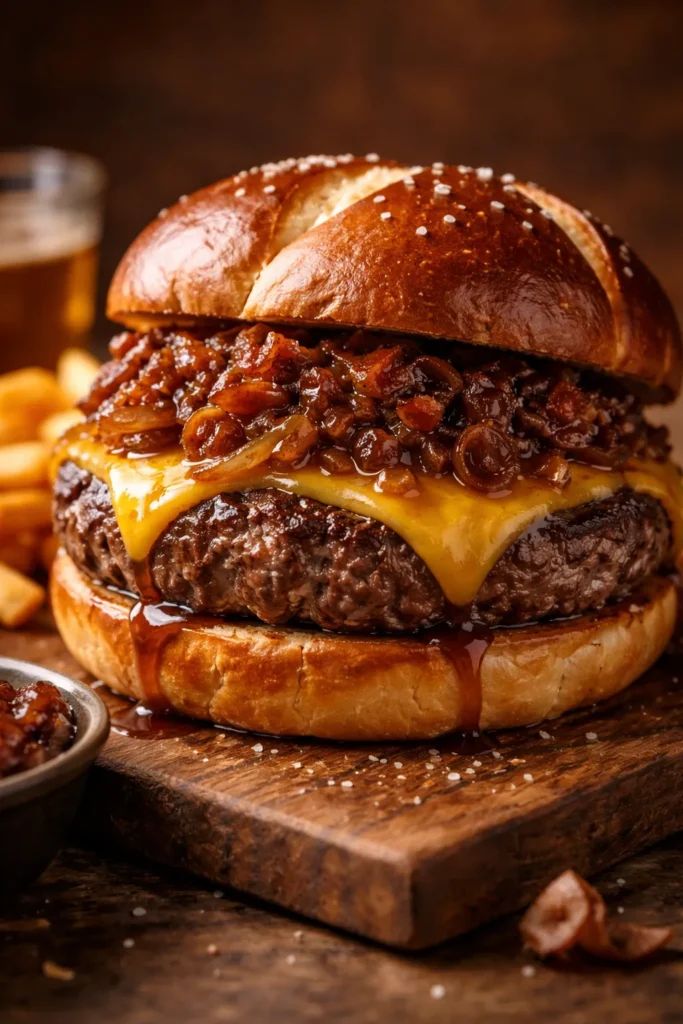
Caramelized onions alone will make a burger dramatically better than most restaurant versions. Bacon jam takes that same idea and makes it genuinely unforgettable. This is a pub burger at its absolute best: a thick, juicy patty topped with sweet, sticky, deeply savory layers and finished with sharp cheddar on a pretzel bun.
Making Proper Caramelized Onions
There’s no shortcut here that doesn’t result in something inferior. Slice 3 large sweet onions thin. Melt 3 tablespoons of butter in a wide, heavy pan over medium-low heat. Add the onions and a pinch of salt. Cook, stirring occasionally, for 40 to 50 minutes. Yes, that long. The onions will first soften, then turn translucent, then begin to deepen in color as their natural sugars concentrate. After about 30 minutes, add a splash of balsamic vinegar or a tablespoon of whiskey and stir to incorporate. The final product should be dark amber, silky, and intensely sweet.
The Bacon Jam
Cook 6 strips of thick-cut bacon until crispy, then chop roughly. In the same pan, sauté one small diced onion in the bacon fat until soft. Add 2 tablespoons of brown sugar, 1 tablespoon of apple cider vinegar, 1 teaspoon of Dijon mustard, and a pinch of cayenne. Stir in the chopped bacon and simmer over low heat until the mixture becomes thick and jammy — about 15 minutes. Let it cool slightly. It will continue to thicken as it cools.
Putting It Together
A 6 to 7 oz patty of 80/20 ground beef, cooked to medium on a cast iron grill pan. Sharp cheddar added in the final 90 seconds of cooking. A pretzel bun toasted in the burger drippings. A generous smear of bacon jam on the bottom bun, the patty, a spoonful of caramelized onions, and a handful of crispy watercress or arugula on top for something fresh and peppery to cut through all that richness.
Pro tip: Both the bacon jam and the caramelized onions can be made up to 4 days ahead and stored in the refrigerator. When you’re ready to cook, rewarm them gently in a small pan while the burgers cook.
5. Lamb Burger with Tzatziki and Feta
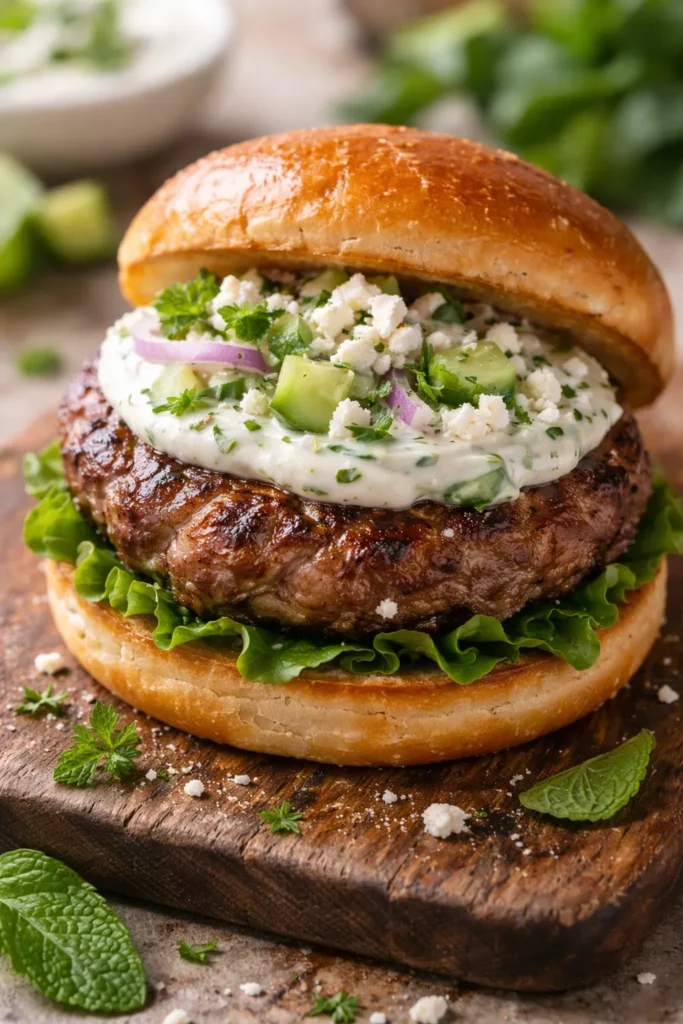
Ground lamb makes one of the most flavorful burger patties you’ll ever taste — more complex than beef, with a subtle gaminess that pairs brilliantly with Mediterranean flavors. Lemon, garlic, fresh herbs, briny feta, and cool tzatziki turn an already great patty into something that feels completely distinct from anything in the standard burger repertoire.
Building the Lamb Patty
Combine 1 pound of ground lamb with 2 minced garlic cloves, the zest of one lemon, 2 tablespoons of finely chopped fresh mint, 1 tablespoon of finely chopped fresh parsley, 1 teaspoon of ground cumin, ½ teaspoon of ground coriander, and generous salt and pepper. Mix gently until just combined — overworking the meat makes a tough patty. Form into 4 patties, about 4 oz each, and refrigerate for 20 minutes before cooking.
Tzatziki from Scratch
Grate one small cucumber on the coarse side of a box grater. Wrap in a clean kitchen towel and squeeze out as much liquid as possible — this step is non-negotiable, or your tzatziki will be watery. Combine the squeezed cucumber with 1 cup of full-fat Greek yogurt, 1 minced small garlic clove, 1 tablespoon of fresh lemon juice, 1 tablespoon of finely chopped fresh dill or mint, and a pinch of salt. Refrigerate for at least 20 minutes before serving to let the flavors come together.
Cooking and Assembly
Lamb patties cook quickly. On a medium-high cast iron grill pan or outdoor grill, cook for 3 to 4 minutes per side for medium — lamb is best served with a little pink still in the center. The fat renders fast, and going beyond medium makes the patty dry.
Build on a toasted brioche or sesame bun: a generous spread of tzatziki, the lamb patty, a handful of crumbled feta, thinly sliced red onion, and a few leaves of butter lettuce. A drizzle of good olive oil over the top is optional but not really optional.
6. Hawaiian Teriyaki Burger with Grilled Pineapple
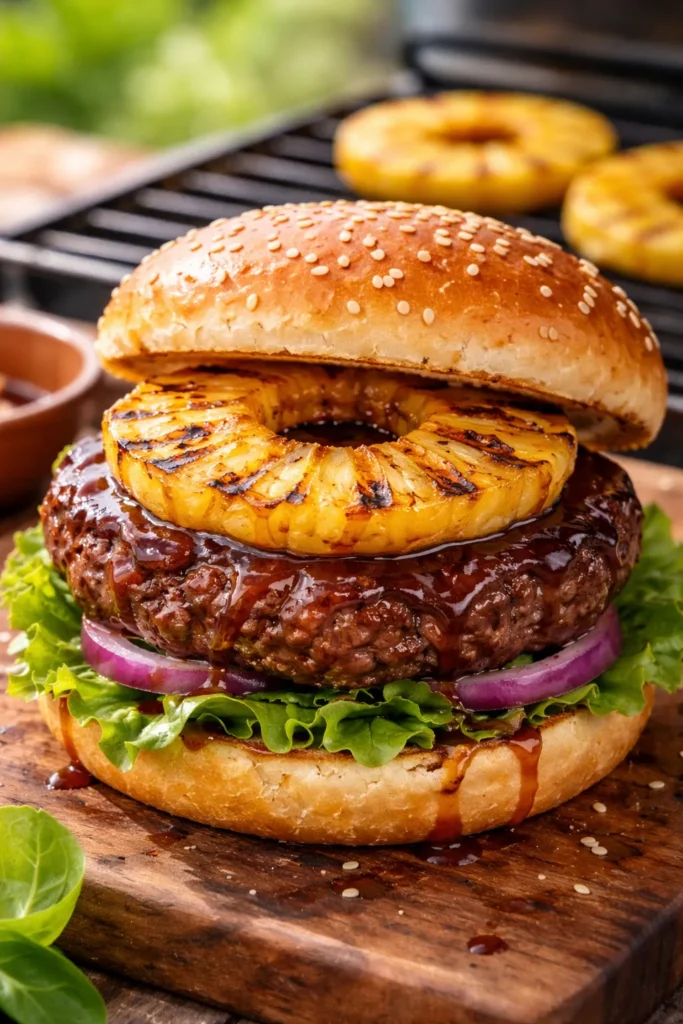
Sweet, savory, slightly charred, with a tropical brightness that cuts right through a rich beef patty — the teriyaki pineapple burger is polarizing only among people who haven’t made it well. When the pineapple is grilled until caramelized at the edges and the teriyaki glaze is applied in the last minute of cooking, the result is genuinely addictive.
The Teriyaki Glaze
In a small saucepan, combine ¼ cup soy sauce, 2 tablespoons honey, 1 tablespoon rice vinegar, 1 teaspoon sesame oil, 1 minced garlic clove, and ½ teaspoon freshly grated ginger. Bring to a simmer over medium heat and cook, stirring occasionally, until the sauce reduces by about a third and coats the back of a spoon — roughly 6 to 8 minutes. Set aside.
Grilling the Pineapple
Slice fresh pineapple into rounds about ½ inch thick. Brush lightly with a neutral oil and grill over high heat for 2 to 3 minutes per side until char marks appear and the natural sugars caramelize. Canned pineapple rings work in a pinch, but fresh pineapple grills significantly better and has a cleaner, brighter flavor.
Building the Burger
Use 80/20 ground beef and season simply — the teriyaki will do the heavy lifting here. Cook patties on a cast iron grill pan or grill over medium-high heat. In the last 90 seconds, brush the top of each patty generously with the teriyaki glaze and add a slice of Swiss or pepper jack cheese. Cover to melt.
Bottom bun gets a swipe of sriracha mayo (2 tablespoons mayo + 1 teaspoon sriracha + ½ teaspoon sesame seeds). Add the glazed patty, a ring of grilled pineapple, a few thin slices of red onion, and crisp butter lettuce. The sweet-savory-spicy combination plays on every register.
7. Philly Cheesesteak Smash Burger
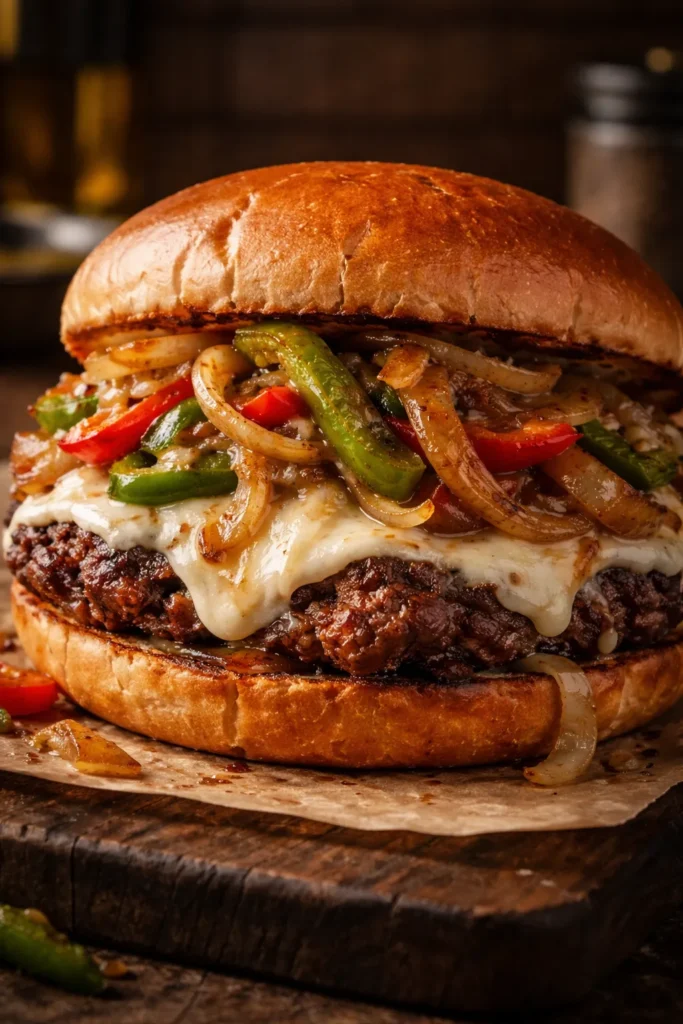
Two iconic American food traditions collided and produced something better than either one alone. The smash burger brings craggy, caramelized beef. The Philly cheesesteak brings sautéed peppers and onions, provolone or Whiz depending on your loyalties, and a deeply savory, umami-forward flavor profile. Together, they make a burger that’s hard to stop thinking about.
The Pepper and Onion Base
Slice one green bell pepper, one red bell pepper, and one large yellow onion into thin strips. Cook in 2 tablespoons of butter over medium-high heat, stirring occasionally, until soft and slightly caramelized — about 12 to 15 minutes. Season with salt, pepper, and a splash of Worcestershire sauce in the final minute. Keep warm while you cook the patties.
The Garlic Parmesan Aioli
Blend ½ cup mayonnaise with 2 minced garlic cloves, 2 tablespoons grated Parmesan, 1 teaspoon fresh lemon juice, and a pinch of salt. This plays the role of the garlic bread you’d want alongside a cheesesteak, but built directly into the burger’s sauce layer.
Smashing and Melting
Form 3 oz balls of 80/20 ground beef. Smash hard on a smoking hot cast iron surface, season immediately with salt and pepper, and cook for 90 seconds per side. For the full Philly experience, use provolone slices — they melt with a mild, slightly sharp flavor that doesn’t overwhelm. Layer two thin patties for each burger with provolone between them.
Build on a hoagie-style roll or a sturdy brioche bun: garlic parmesan aioli on both sides, the double-stacked patty, a generous pile of the sautéed peppers and onions, and optionally, thinly sliced pickled hot peppers for a kick. This is a two-handed burger — plan accordingly.
8. Caprese Burger with Basil Aioli and Fresh Mozzarella
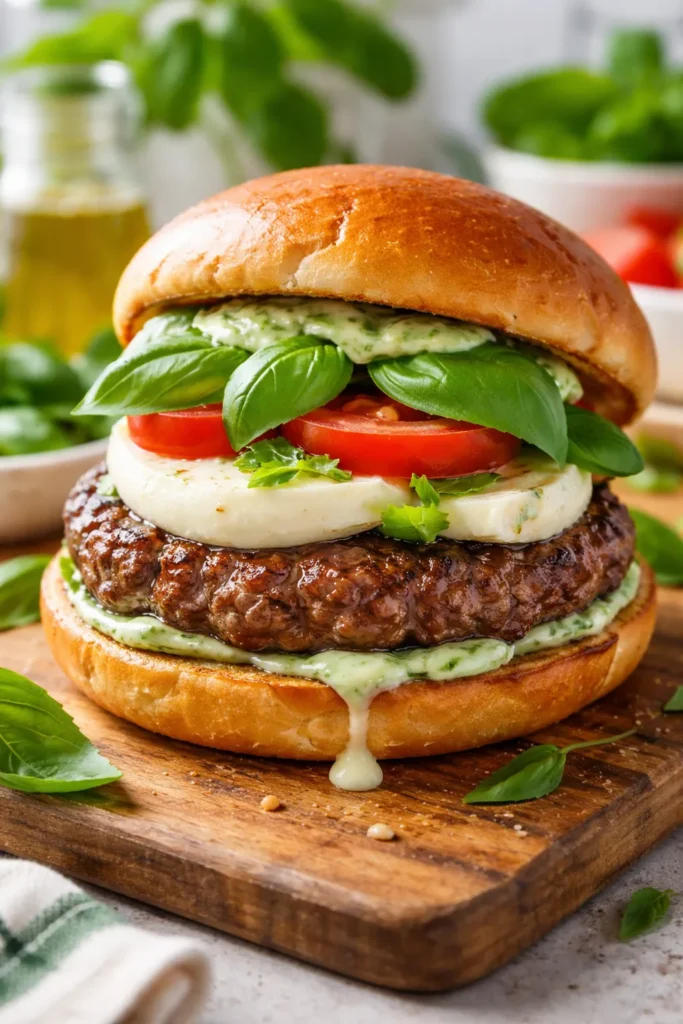
The caprese salad is one of those combinations — tomato, mozzarella, basil — that doesn’t need improvement. But it does need to be on a burger. A thick, well-seasoned beef patty topped with fresh mozzarella (not the shredded block kind, the soft ball kind), ripe tomato, fresh basil leaves, and a basil aioli that makes the whole thing taste like summer in the Italian countryside.
Basil Aioli
Blend ½ cup of fresh basil leaves with ½ cup of mayonnaise, 1 small garlic clove, 1 tablespoon of good olive oil, and 1 teaspoon of fresh lemon juice in a small food processor or blender until smooth. Season with salt. The aioli turns a vibrant green and smells incredible. Use it liberally on both sides of the bun.
The Mozzarella Situation
Fresh mozzarella needs help melting on a burger. Slice it about ¼ inch thick, pat it dry with paper towels to remove surface moisture, and add it to the patty in the final 2 minutes of cooking. Cover the pan with a lid or a dome to trap steam and encourage melting. The result is a creamy, stretchy layer that’s categorically different from pre-shredded or low-moisture mozzarella.
Tomato Matters More Than You’d Think
A flavorless, pale tomato will ruin this burger. Use a ripe, in-season beefsteak or heirloom tomato, sliced thick. If you can’t find great fresh tomatoes, roast cherry tomatoes in olive oil at 375°F for 20 minutes until they burst and caramelize — intensely sweet, slightly jammy, and even better than a fresh slice.
Building the Final Burger
Form a 6 oz patty from 80/20 ground beef and season simply — this burger’s character comes from the toppings, not the patty seasoning. Cook over medium-high heat, 4 minutes per side. Add fresh mozzarella at the end and cover to melt.
Toast a ciabatta bun or brioche roll in olive oil instead of butter. Spread basil aioli on both sides. Add the cheesy patty, two thick tomato slices, 5 or 6 fresh basil leaves, and a drizzle of aged balsamic glaze over the top. Finish with a crack of black pepper and a small pinch of flaky salt directly on the tomato.
Burger Building Tips That Make All the Difference
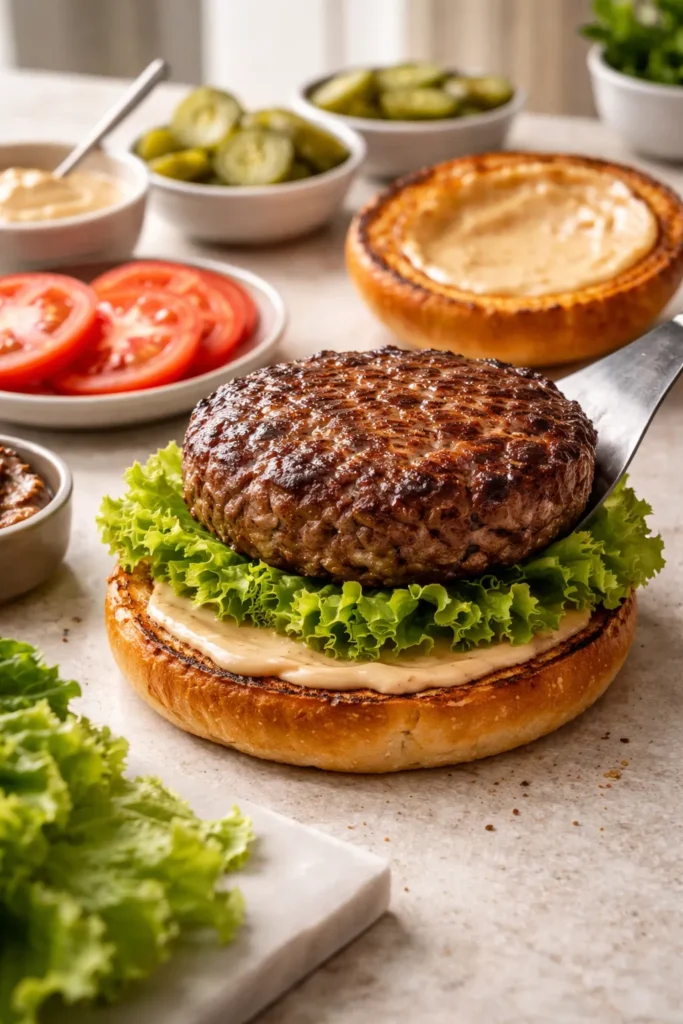
Getting the patty right is half the battle. The other half is the assembly — and most people rush it.
Always toast the bun. A raw, untoasted bun turns soggy within 90 seconds of contact with a juicy patty. The toasted surface creates a moisture barrier, adds a slight crunch, and contributes a nutty, caramelized flavor that you’d miss immediately if it wasn’t there. Toast cut-side down in the burger drippings in your cast iron pan for 60 to 90 seconds until golden.
Sauce Placement Matters
Sauce on both sides of the bun, not just one. The bottom bun sauce seeps into the bread and flavors every bite from below. The top bun sauce drips down the sides of the patty as you eat. One-sided saucing creates dry bites near the top — a small thing that makes a real difference.
Lettuce as an Insulator
Place lettuce directly on the bottom bun, below the patty, to create an additional moisture barrier between the bun and the meat juices. Shredded iceberg works beautifully here — it’s crisp, neutral in flavor, and holds up well. Butter lettuce is softer and more flavorful but wilts faster under heat. The choice depends on how long the burger will sit before eating.
The Resting Rule
Give beef patties — especially thick ones — 2 minutes to rest after coming off the heat. The same principle that applies to steaks applies here: the internal juices redistribute as the patty cools slightly, and the first bite won’t release a waterfall of juice that takes everything else with it.
Common Burger Mistakes That Flatten the Experience
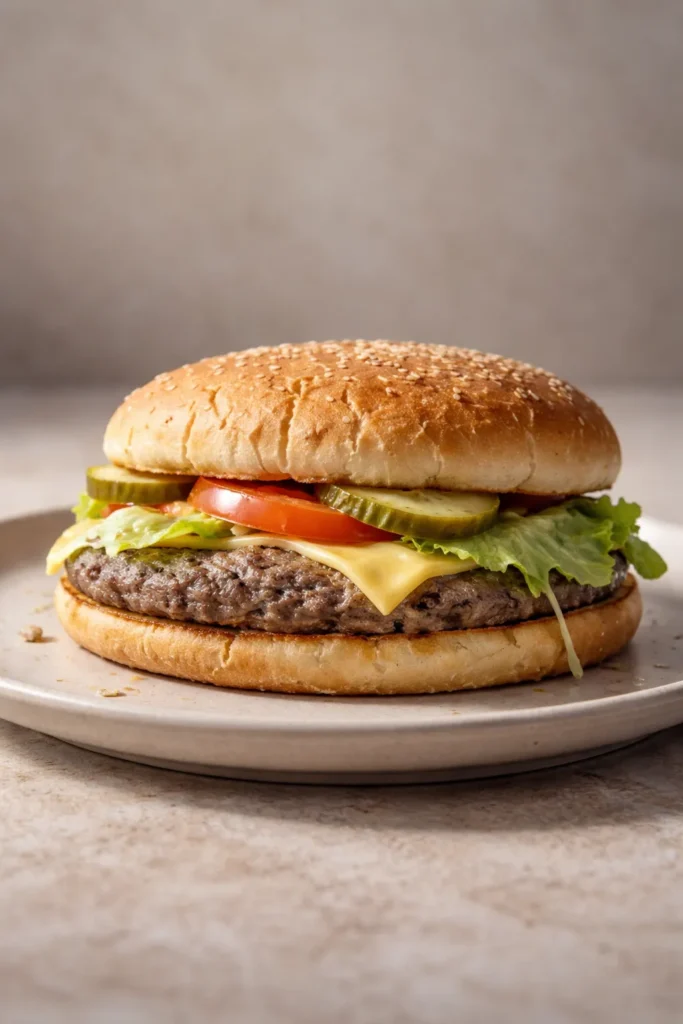
A few habits quietly ruin burgers that could have been great.
Overworking the meat. Mix the patty seasoning in briefly and form with a gentle hand. Think of it like biscuit dough — the more you work it, the tougher it becomes. The goal is barely-combined, loosely formed, handled as little as possible.
Pressing Down on the Patty While It Cooks
This is the single most common mistake. Pressing down on a patty mid-cook squeezes rendered fat and juice directly out of the meat and onto the heat source, causing flare-ups on the grill and a dry, flavorless patty on your plate. The only time pressing is correct is the initial smash on a smash burger — and even then, you press once, hard, and immediately stop.
Starting With a Cold Pan
A burger placed on a warm (not hot) pan will steam rather than sear. The pan needs to be preheated over medium-high to high heat for at least 2 to 3 minutes before the patty goes in. Test it by flicking a drop of water into the pan — it should evaporate instantly with a sharp sizzle. Only then is the pan ready.
Skipping the Thermometer
For thick patties, guessing doneness by time alone is risky. A reliable instant-read thermometer removes all guesswork:
- 125°F — rare
- 135°F — medium-rare
- 145°F — medium
- 160°F — well-done (USDA recommendation for ground beef)
Insert the thermometer into the thickest part of the patty from the side, not the top, for the most accurate reading.
Scaling Up for a Crowd Without Losing Quality
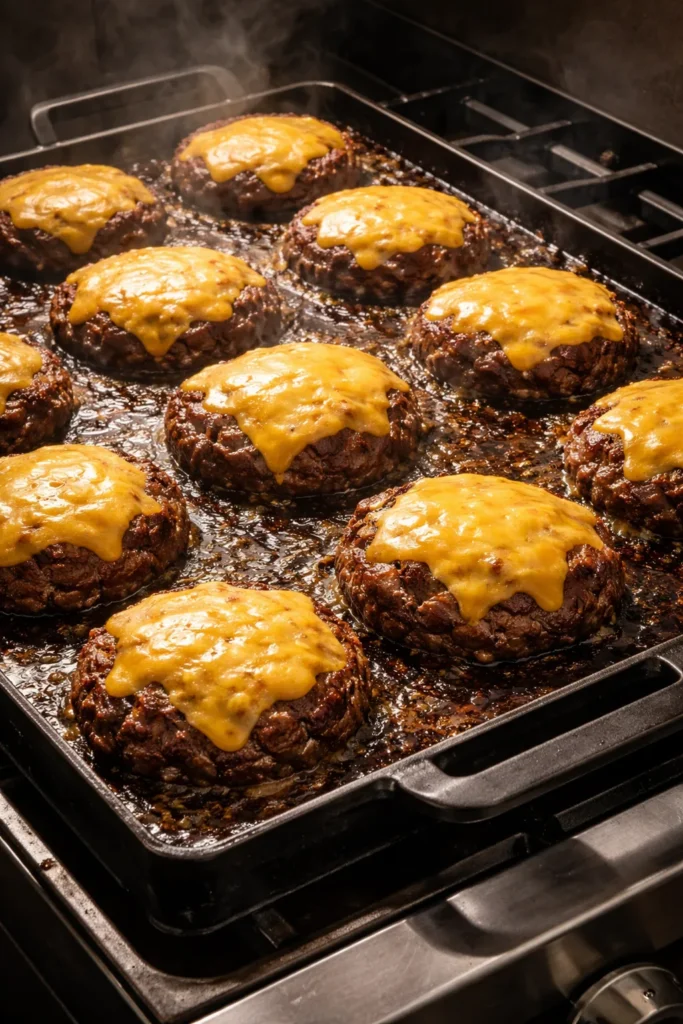
Cooking great burgers for 8 or 10 people is where home cooks often cut corners — and where the quality drops most visibly.
Form and season all patties before anyone arrives. Stack them between sheets of parchment paper and refrigerate. Cold patties hold their shape better on the grill, cook more evenly, and don’t fall apart during handling. Prepare all sauces, toppings, and condiments in advance and set them out so the build is fast.
For smash burgers at scale, a large electric griddle or a wide cast iron griddle that spans two burners handles multiple patties at once without requiring the precision of a single skillet. Keep the temperature consistent and rotate batches quickly — the thin patties cook in under 4 minutes total.
If you’re doing stuffed burgers like the Juicy Lucy variation, form and fill all patties the day before and refrigerate overnight. The filling sets firmer, the patties hold together better, and you save yourself the fiddly step during an already busy cooking session.
Final Thoughts
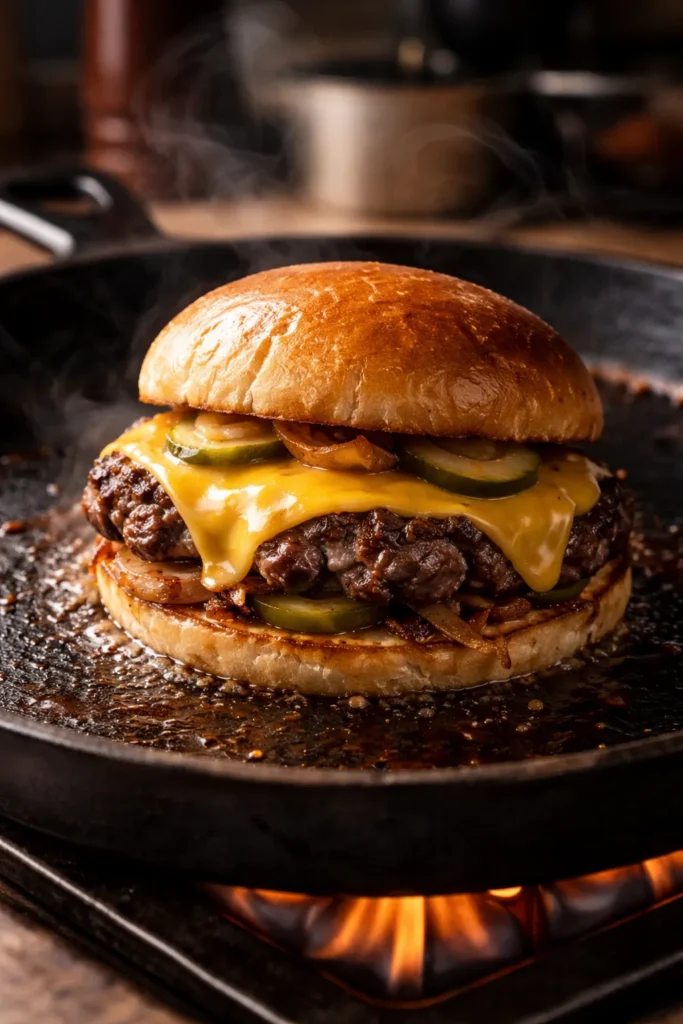
Every burger on this list has something the drive-through never will: intention. Someone decided exactly what flavors belong together, how the fat should render, where the acid comes from, and what texture the bun contributes. That deliberateness is what separates a memorable meal from a forgettable one.
Start with the smash burger if you’re new to cast iron cooking — it’s the fastest, most forgiving, and delivers the biggest return on effort. Work your way toward the stuffed Juicy Lucy or the caramelized onion and bacon jam burger when you have a Saturday afternoon and the patience those recipes deserve.
The ingredient list for any of these is shorter than you’d expect. The technique is learnable in a single cook. And the result — that first bite where everything is hot, melty, properly seasoned, and structurally sound — is something that no paper bag through a window has ever delivered.
Cook once, eat well, and you’ll be back in that cast iron before the week is out.