There’s a particular kind of magic that happens when the right meal meets the right moment. The oven is warm, the smell of something slow-cooked and savory fills the kitchen, and for a little while, whatever was weighing on you loses its grip. That’s not an accident — comfort food works on a level that goes beyond simple hunger. It taps into memory, warmth, and the deeply human need to feel nourished in more ways than one.
What counts as comfort food varies from person to person. For some, it’s a bowl of pasta so rich and saucy it practically demands a nap afterward. For others, it’s a pot of something bubbling gently on the stove for hours, the kind of dish that makes a house smell like home. What these foods share, though, is a certain generosity — they give you more than fuel. They give you something to look forward to.
The eight recipes collected here aren’t fussy. They don’t require a culinary degree or a pantry full of specialty ingredients. What they do require is a little time, a little attention, and an appetite for food that actually satisfies. Whether you’re cooking for a crowd or just yourself on a quiet evening, each one delivers the kind of warmth you can’t get from a drive-through window.
Table of Contents
- What Makes Comfort Food So Deeply Satisfying
- ## 1. Classic Layered Lasagna
- Building the Meat Sauce Right
- The Béchamel Layer Most People Skip
- How to Get Clean Slices
- 2. Chicken and Dumplings
- The Broth Is Everything
- Drop vs. Rolled Dumplings
- 3. Beef Stroganoff Over Egg Noodles
- Choosing the Right Cut of Beef
- The Mushroom Foundation
- 4. Four-Cheese Macaroni and Cheese
- Getting the Béchamel Right
- The Breadcrumb Topping
- Make-Ahead Tips
- 5. Classic Chicken Pot Pie
- Homemade vs. Store-Bought Crust
- Single Crust or Double?
- 6. Dutch Oven Beef Stew
- The Sear Is Not Optional
- Building the Broth
- Thickening Without Cornstarch
- 7. Classic Banana Bread
- The Roasting Trick
- Brown Butter vs. Melted Butter
- Add-Ins That Actually Work
- 8. French Onion Soup with Gruyère Croutons
- The Liquid Base
- The Gruyère Topping
- Tips for Making Any Comfort Food Night Work
- The Role of Leftovers in Comfort Food Culture
- Final Thoughts
What Makes Comfort Food So Deeply Satisfying
Before jumping into the recipes, it’s worth understanding why certain foods feel so fundamentally comforting — because once you know the mechanics, you can cook with that intention in mind.
Richness and texture play the biggest role. Comfort food tends to be high in fat, carbohydrates, and protein — three macronutrients that trigger the brain’s reward pathways. Dishes like macaroni and cheese or beef stroganoff deliver concentrated doses of flavor through rendered fat, caramelization, and slow-built sauces. The brain registers that density as satisfying, which is why a bowl of chicken noodle soup from scratch hits differently than a bowl of plain broth.
There’s also the warmth factor. Warm foods are processed differently than cold ones — the heat helps aromas travel faster to your olfactory receptors, making the eating experience more immersive. It’s why a pot roast fresh from the oven smells so much more inviting than it does cold from the fridge.
Familiarity is the third piece. Most comfort foods work because they’re connected to positive memories — a grandmother’s kitchen, a specific winter, a meal that showed up when you needed it most. Cooking a classic lasagna from scratch doesn’t just feed you. It reconnects you, briefly, to something that felt safe and good.
The recipes below are built on all three of those principles.
## 1. Classic Layered Lasagna
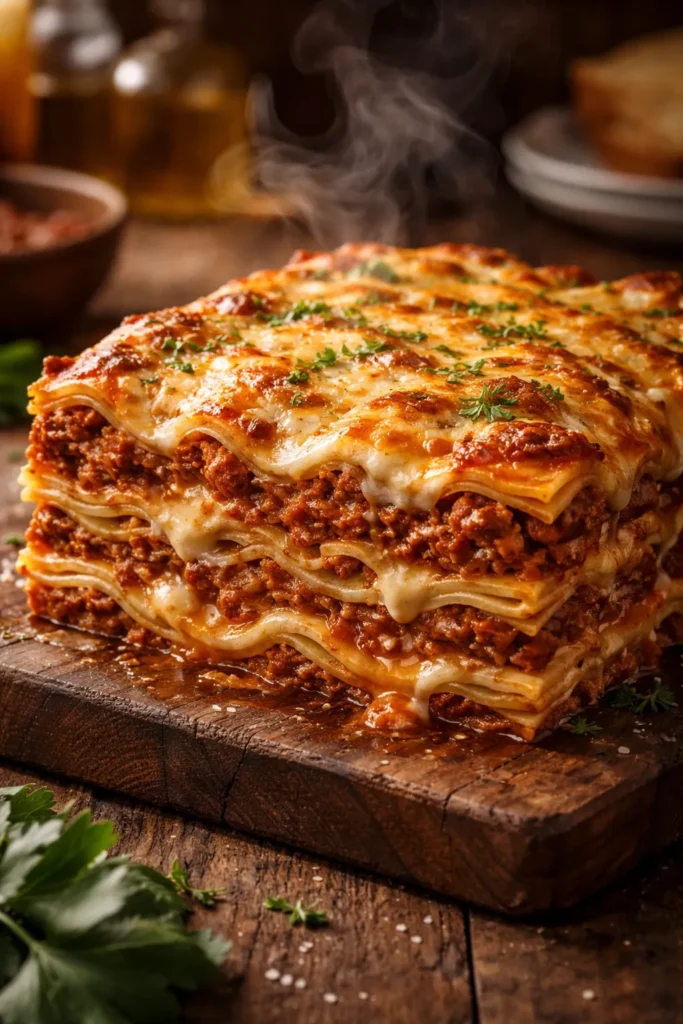
Few dishes carry the same kind of emotional weight as a properly made lasagna. It’s the centerpiece of celebrations and the first thing someone brings when a friend is going through a hard time, and that dual role makes complete sense — lasagna is simultaneously impressive and deeply comforting, the kind of dish that says “I put effort into this because you’re worth it.”
The secret to a standout lasagna isn’t any single ingredient — it’s the layering philosophy. Every component needs to be seasoned and developed on its own before the dish ever goes into the oven. That means a meat sauce with real depth (browned beef and Italian sausage together, crushed fennel seeds, a splash of red wine reduced down), a béchamel that’s garlicky and silky enough to hold the layers together without making them heavy, and ricotta that’s been seasoned properly instead of ladled in bland.
Building the Meat Sauce Right
The biggest mistake people make with lasagna sauce is rushing it. A proper ragù needs at least 45 minutes of simmering after the tomatoes go in, preferably longer. The fat will separate slightly and rise to the top — skim most of it, but leave a little, because that fat carries flavor. Add a pinch of sugar if your tomatoes are acidic, and don’t skip the fresh basil stirred in at the very end.
The Béchamel Layer Most People Skip
Many home cooks skip béchamel entirely and double up on ricotta instead. That’s not wrong, but it does produce a drier, denser result. A thin layer of béchamel between the pasta sheets keeps everything moist and gives the finished lasagna that slightly saucy pull when you slice into it. You need just three things: butter, flour, and whole milk, cooked together until thick, then seasoned with salt, white pepper, and freshly grated nutmeg.
How to Get Clean Slices
Let the lasagna rest for at least 20 minutes after it comes out of the oven. This is non-negotiable. Cutting into a hot lasagna immediately means the layers slide and collapse because the cheese hasn’t had time to set. Cover it loosely with foil and walk away — the payoff is perfectly structured slices that hold their shape on the plate.
Worth knowing: Lasagna almost always tastes better the next day. The layers meld overnight in the fridge, and reheating individual portions in a covered dish with a splash of water added keeps the edges from drying out.
2. Chicken and Dumplings
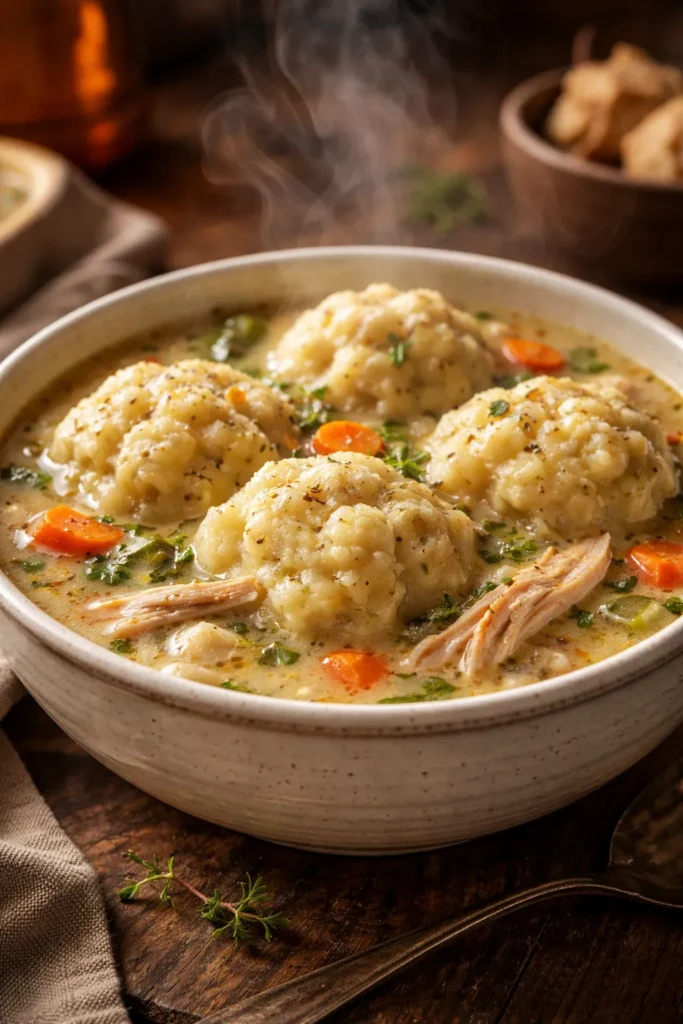
Chicken and dumplings is the kind of dish that exists in the intersection of soup and stew — too thick to be the former, too brothy to be the latter, and entirely its own thing. It’s the meal people reach for when they’re under the weather, emotionally depleted, or simply cold. And for good reason: it’s warm, it’s filling, and it takes almost no effort to eat.
The key tension in this dish is between the dumplings and the broth. Too much flour in the dumplings and they turn dense and gluey. Not enough and they fall apart. The ideal dumpling is pillowy on the inside, slightly firmer on the outside where it contacts the simmering liquid, and seasoned enough to contribute flavor rather than just bulk. A touch of baking powder gives lift; buttermilk adds a subtle tang that cuts through the richness of the chicken broth.
The Broth Is Everything
Start with a roasted chicken if you can, or at minimum use bone-in chicken thighs rather than boneless breasts. The collagen in the bones dissolves into the broth during simmering and gives it that slightly thick, glossy quality that makes the final dish feel substantial without needing a cornstarch slurry. Pull the cooked chicken into generous shreds — not too small, because you want real bites of meat in every spoonful.
Drop vs. Rolled Dumplings
There are two schools of thought here. Drop dumplings are spooned directly into the simmering broth from a wet batter — they’re rustic and faster. Rolled dumplings are cut from a firmer dough and tend to have a slightly chewier texture. Neither is wrong, but drop dumplings are more forgiving for home cooks because they don’t require a perfect dough consistency.
Pro tip: Don’t lift the lid while the dumplings steam. The steam trapped inside the pot is what cooks the tops of the dumplings through. Peeking too early lets it escape and leaves you with gummy, undercooked centers.
3. Beef Stroganoff Over Egg Noodles
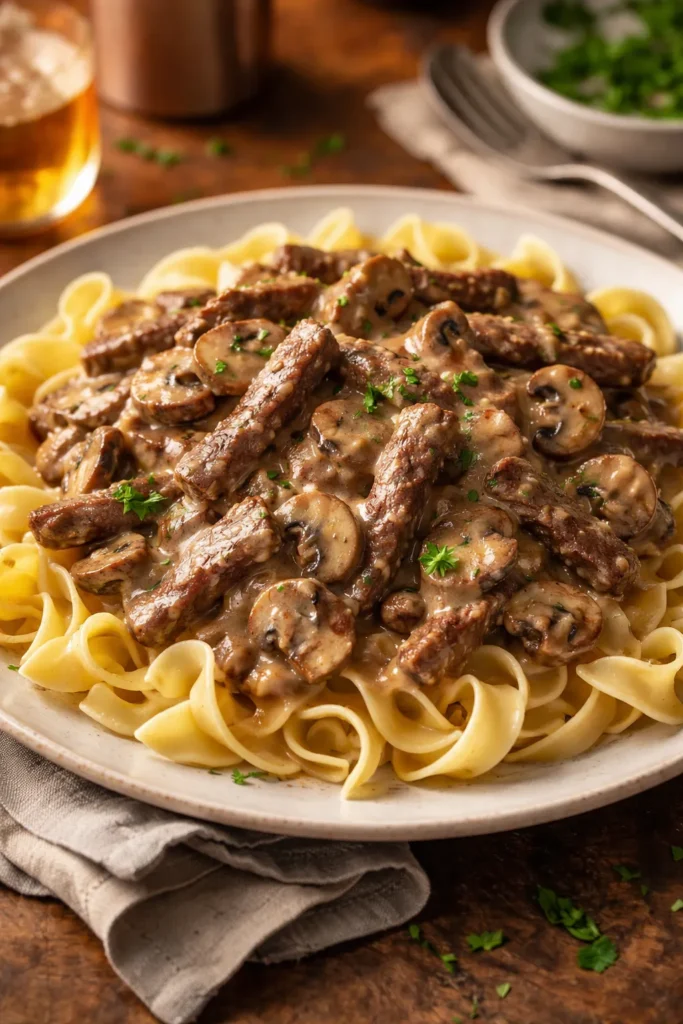
Beef stroganoff has everything going for it as a weeknight comfort meal: it comes together in about 30 minutes, it uses relatively affordable cuts of beef, and the combination of sour cream, earthy mushrooms, and tender beef over wide egg noodles is one of those flavor combinations that just works every single time.
The dish originated in 19th-century Russia and has been adapted into hundreds of variations across the globe. The classic version keeps it clean: beef, mushrooms, onion, beef broth, a little Dijon mustard, and sour cream stirred in off the heat at the very end. That last part matters — if you let the sour cream boil, it breaks and turns grainy. Pull the pan off the burner first, then stir it in slowly.
Choosing the Right Cut of Beef
Sirloin is the traditional choice because it’s tender enough to cook quickly without drying out. Cut it into thin strips against the grain, about a quarter inch thick, and sear it in batches in a very hot pan. Overcrowding the pan causes steaming rather than searing, and you lose the browned crust that adds depth to the whole dish. Each batch should take no more than 90 seconds per side.
The Mushroom Foundation
Don’t underestimate the mushrooms. They provide a meaty, earthy base that anchors the sauce and adds umami. Cremini mushrooms work better than white button mushrooms because they have more developed flavor. Cook them until all their moisture has evaporated and they’re golden brown at the edges — that’s when they’re contributing maximum flavor rather than just watering down the sauce.
The noodles matter too. Wide egg noodles are traditional because their broad, flat shape catches and holds the sauce in every bite. Drain them al dente and toss with a small amount of butter immediately so they don’t stick while you finish the sauce.
4. Four-Cheese Macaroni and Cheese

Macaroni and cheese might be the most universally beloved comfort food on the planet. It transcends age, culture, and occasion — equally at home on a holiday table and a Tuesday night when dinner needs to happen fast. The version worth making at home is a baked mac and cheese built on a proper béchamel base, because it produces a sauce that stays creamy even after the dish comes out of the oven.
The cheese choice is where home cooks have the most opportunity to customize. A four-cheese blend — say, sharp cheddar, gruyère, fontina, and a small amount of parmesan — gives you sharpness, nuttiness, meltability, and depth all in one sauce. The single most important tip: always grate your cheese from the block. Pre-shredded cheese is coated in potato starch or cellulose to prevent clumping in the bag, and that coating interferes with melting. Freshly grated cheese melts into the sauce smoothly, without any of the grainy texture that plagues many homemade versions.
Getting the Béchamel Right
Cook the butter and flour together for a full two minutes before adding the milk — this cooks out the raw flour taste. Add the milk gradually, whisking constantly, and let the sauce come to a gentle simmer and thicken before adding the cheese. Take the pan off the heat before stirring in the cheese so it melts without separating.
The Breadcrumb Topping
A crunchy topping transforms baked mac and cheese from good to exceptional. Panko breadcrumbs toasted with butter and a pinch of smoked paprika give the top a satisfying crunch that contrasts with the creamy pasta underneath. Some cooks add a little parmesan to the breadcrumb mixture for extra browning and savory flavor.
Make-Ahead Tips
Assemble the dish completely, cover tightly with foil, and refrigerate overnight. Add 10 extra minutes to the baking time and keep it covered for the first half of baking so the center heats through before you go in for the final browning of the top.
5. Classic Chicken Pot Pie
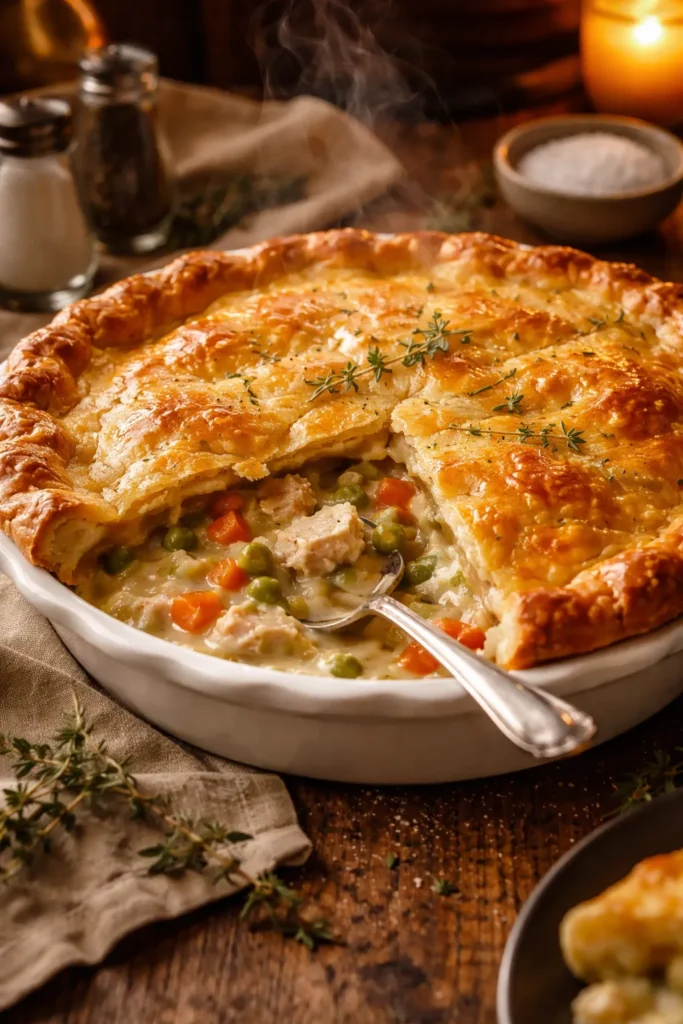
Chicken pot pie is a dish that requires commitment, and it rewards that commitment generously. The finished product — a golden, flaky crust shattering over a creamy, vegetable-studded filling — is one of the most satisfying things you can pull from an oven. It’s hearty without being heavy, and it has a built-in drama to it: you break through the crust at the table and steam billows out, carrying the smell of thyme, butter, and chicken into the room.
The filling is a simple velouté: a roux-thickened sauce made with chicken stock and a splash of heavy cream, packed with chunks of cooked chicken, peas, carrots, celery, and onion. Season it aggressively — the crust is neutral, so the filling needs to carry all the flavor. Fresh thyme and a small amount of Dijon mustard are the two ingredients that elevate a basic pot pie filling into something that tastes genuinely considered.
Homemade vs. Store-Bought Crust
A homemade all-butter pie crust is worth the effort here, because the crust is literally half the dish. That said, a good-quality store-bought puff pastry produces a remarkably flaky, beautiful topping with almost no work. If you’re going the puff pastry route, keep it cold until the moment it goes on the dish — warm puff pastry loses its layers and doesn’t puff properly.
Single Crust or Double?
A bottom crust soaks up the filling and can turn soggy during baking. Many cooks skip the bottom crust entirely and just use a top crust, which keeps the filling saucy and ensures the crust stays crisp. If you want a bottom crust, blind-bake it for 15 minutes before adding the filling.
Pro tip: Brush the top crust with an egg wash (one egg beaten with a tablespoon of water) and cut a few small slits for steam to escape. The egg wash gives you that deep, glossy golden color that makes pot pie look as good as it tastes.
6. Dutch Oven Beef Stew
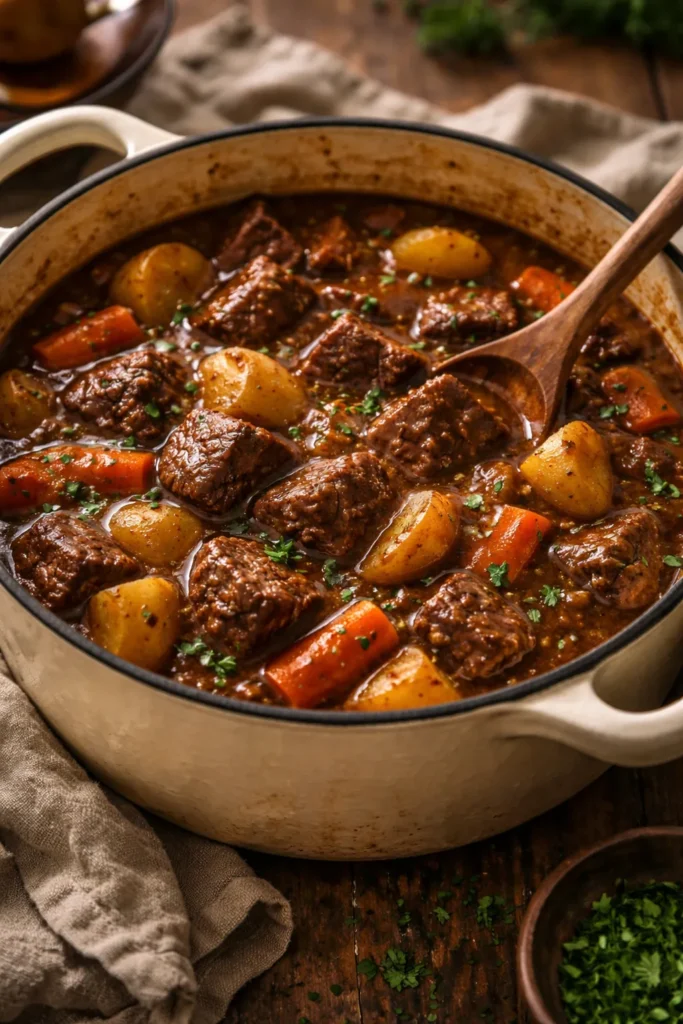
A good beef stew is the culinary equivalent of a slow, deep breath. It doesn’t rush anywhere. It takes time — two to three hours of low, gentle heat — and in exchange, it turns tough, inexpensive cuts of beef into something fork-tender and richly flavored, surrounded by soft vegetables in a sauce that coats the back of a spoon.
Chuck roast is the correct cut for stew, full stop. It has enough intramuscular fat and connective tissue to stay moist and become tender under the long braise. Leaner cuts like round or sirloin dry out and turn stringy before the collagen has time to do its work. Cut the chuck into 1.5-inch cubes — not smaller, because they’ll shrink during cooking and you want real, substantial pieces of beef in every bowl.
The Sear Is Not Optional
Pat the beef completely dry with paper towels before it goes into the pot. Moisture on the surface of the meat prevents browning — it steams instead of searing. Work in small batches, don’t touch the meat for the first 2 minutes, and wait until it releases naturally before flipping. The fond (the browned bits stuck to the bottom of the pot) is pure concentrated flavor — deglaze with red wine or beef broth to incorporate it into the stew.
Building the Broth
Tomato paste cooked briefly in the fat before the liquid is added adds depth and a slight acidity that balances the richness of the beef. Bay leaves, fresh thyme, and a small piece of parmesan rind (if you have one) all contribute quietly to the background flavor. Add the root vegetables — potatoes, carrots, parsnips — during the last 45 minutes so they don’t turn to mush.
Thickening Without Cornstarch
The stew will thicken naturally as it reduces and as the starch from the potatoes dissolves into the broth. If you want a thicker consistency, mash a few of the potato pieces against the side of the pot and stir them in — this thickens the broth without adding any floury taste.
7. Classic Banana Bread
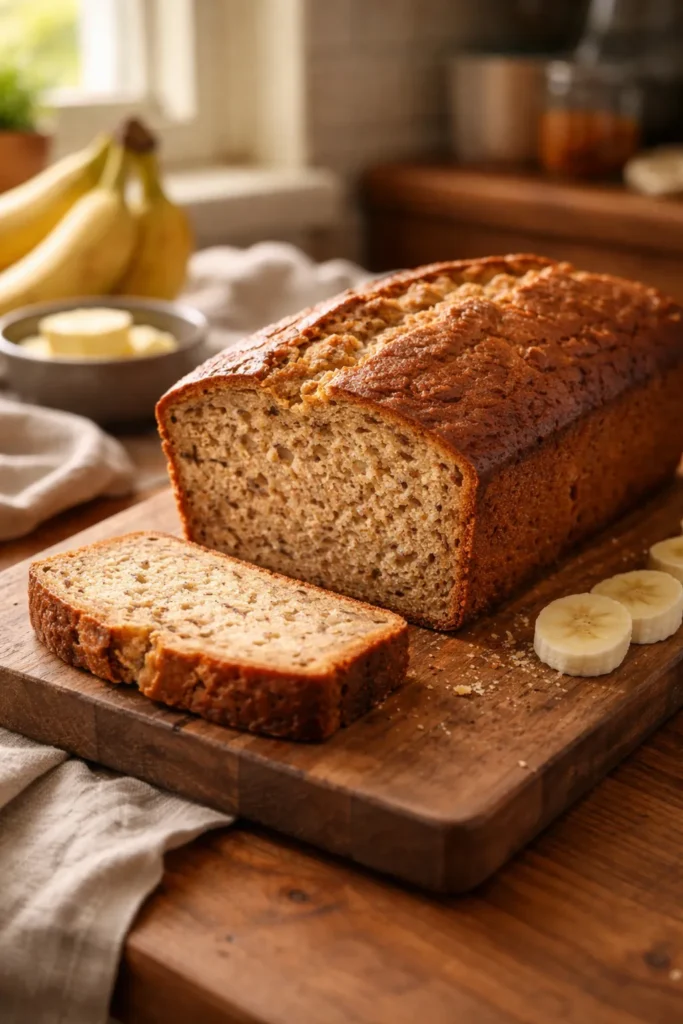
Banana bread occupies a unique category in the comfort food universe — it’s both breakfast and dessert, equally appropriate at 8 AM and 10 PM, and it fills the kitchen with a warmth and sweetness that feels almost specifically designed to lift the mood. The best versions have a moist, dense crumb that’s tender rather than gummy, a crust that has some crunch to it, and enough banana flavor that you can actually taste what the bread is made of.
The key to that intense banana flavor is ripeness. Bananas that are just yellow haven’t developed their full sugar content yet — the starches haven’t converted. You want bananas that are heavily spotted or even fully brown. If yours are ripe but you’re not ready to bake, freeze them whole in their skins. Thawed and drained of their liquid, frozen bananas are even more concentrated in flavor than fresh ones.
The Roasting Trick
One technique that makes a significant difference: roast the bananas before mashing them. Place unpeeled bananas on a baking sheet in a 300°F oven for 15 to 20 minutes, until the skins are completely black and the flesh is soft and caramelized inside. The natural sugars concentrate and deepen during roasting, producing a more complex, almost butterscotch-like banana flavor in the finished bread.
Brown Butter vs. Melted Butter
Most banana bread recipes call for melted butter, which is perfectly fine. But browning the butter first — cooking it in a light-colored pan until the milk solids turn golden and nutty-smelling — adds a toasty layer of flavor that pairs beautifully with ripe banana. It takes three extra minutes and makes a noticeable difference.
Add-Ins That Actually Work
- Toasted walnuts or pecans add crunch and a slightly bitter note that balances the sweetness
- Dark chocolate chips create pockets of richness throughout the loaf
- A streusel topping (brown sugar, flour, butter, and a pinch of salt) gives the crust a sweet, crunchy finish
- A swirl of peanut butter folded in just before baking adds protein and a savory counterpoint
Don’t overmix the batter once the flour goes in. Fold just until no dry streaks remain — overworking develops gluten and makes the bread tough and dense instead of tender.
8. French Onion Soup with Gruyère Croutons
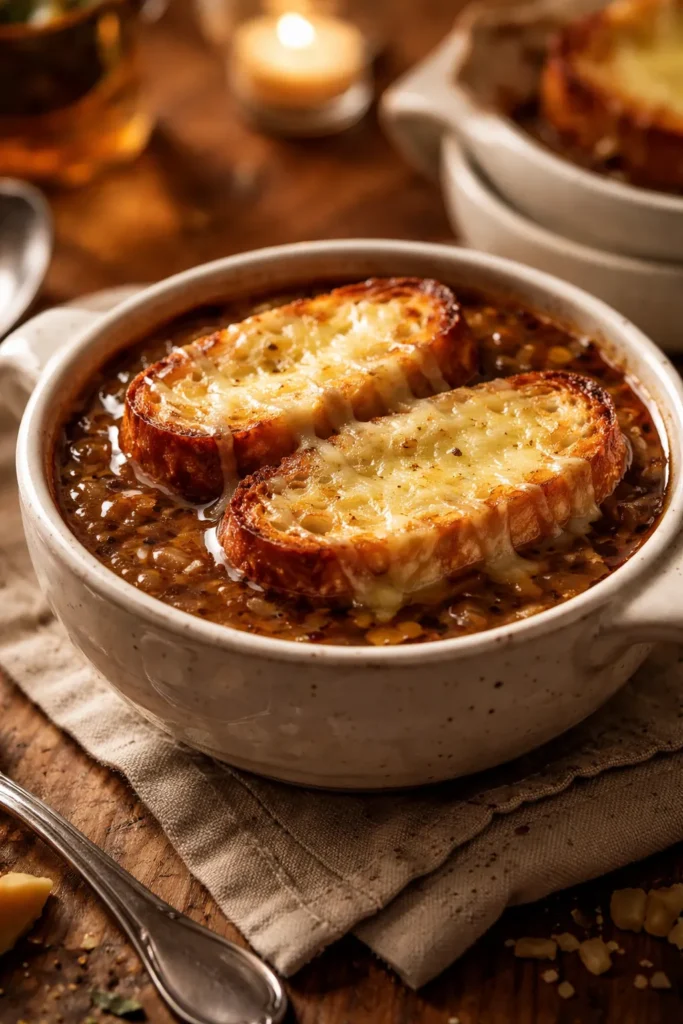
French onion soup is the dish that proves patience is an actual cooking technique. The entire flavor of this soup depends on one thing: properly caramelized onions. Not softened onions. Not golden onions. Caramelized — meaning cooked over low heat for 45 minutes to an hour, stirring occasionally, until they’ve collapsed completely and turned a deep amber-brown color with an almost jammy consistency. That long, slow transformation converts the onions’ sharp, pungent flavor into something sweet, savory, and profoundly rich.
Use a combination of yellow onions and shallots if you can — yellow onions provide the base bulk and sweetness, while shallots add a slightly more complex, wine-like flavor. About four to five large onions for four servings seems like a lot, but they reduce dramatically during cooking.
The Liquid Base
A good French onion soup requires a strong, well-seasoned beef broth. Homemade is better here than in almost any other dish, because the soup has no other major flavors to hide behind. If you’re using store-bought, simmer it for 20 minutes with a bay leaf, fresh thyme, and a splash of dry sherry or cognac before adding it to the onions. That brief enrichment makes a meaningful difference.
Deglaze the caramelized onions with dry white wine or dry sherry before adding the broth — the wine lifts the browned bits from the pan and adds a layer of acidity that the soup needs to feel balanced rather than one-dimensionally sweet.
The Gruyère Topping
This is the moment that makes French onion soup French onion soup. Ladle the finished soup into oven-safe crocks or ramekins, float a thick slice of day-old bread on top (day-old because fresh bread gets too soggy), and cover with a generous, slightly overlapping mound of grated gruyère. Run it under the broiler until the cheese is bubbling, golden, and has formed a slightly crispy crust at the edges — about 3 to 4 minutes.
The bowls will be extremely hot. Use a kitchen towel or oven mitts and warn anyone you’re serving. The cheese will bubble for a minute after it comes out of the oven — that’s the ideal moment to carry it to the table.
Tips for Making Any Comfort Food Night Work
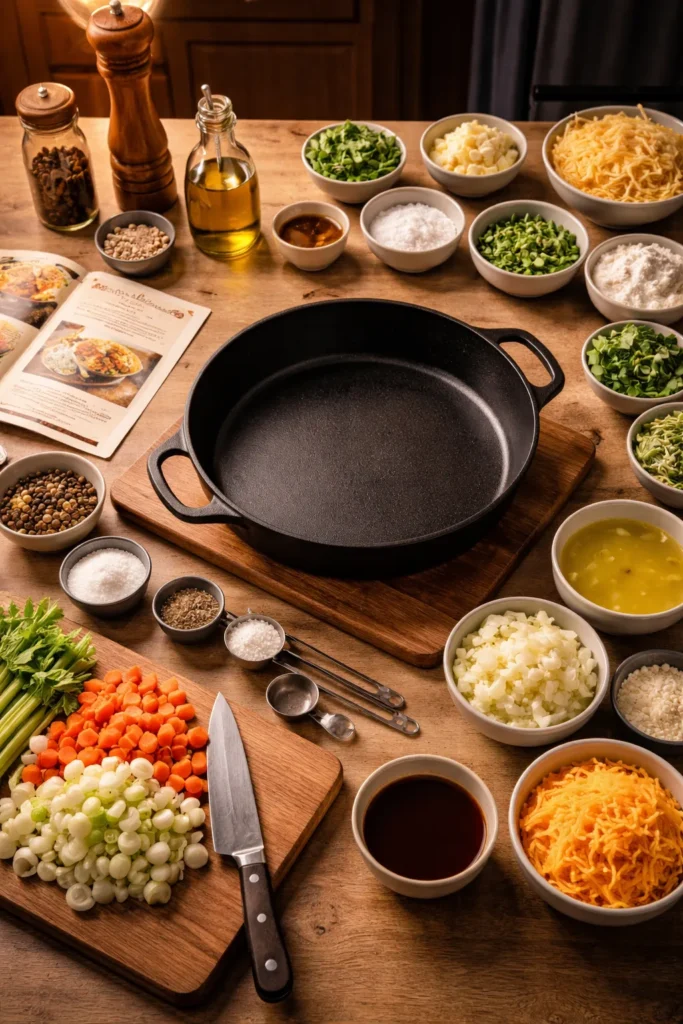
The actual cooking is only part of what makes a comfort food night feel right. A few practical habits will consistently make the experience better, regardless of what’s on the menu.
Read the entire recipe before you start. This sounds obvious, but skipping this step is responsible for most kitchen mishaps. Knowing that the lasagna needs to rest for 20 minutes, or that the dumplings cook with the lid on, changes how you plan your timing.
Mise en place — having everything prepped and measured before the heat goes on — matters more in comfort food cooking than in almost any other style. Many of these dishes move fast at the stove (stroganoff, for example, goes from raw beef to finished dish in under 30 minutes), and stopping to chop an onion mid-sauce is how things burn.
Salt in layers, not all at once. Season the meat before searing, season the vegetables as they cook, taste the sauce before it thickens, and taste again before serving. This approach builds depth that you can’t replicate by adding a large amount of salt at the end.
Finally, don’t underestimate the power of the right pan. A heavy-bottomed Dutch oven distributes heat evenly and holds temperature steadily — it’s the ideal vessel for stews, braised dishes, soups, and anything that needs long, consistent heat. If there’s one piece of equipment worth investing in for comfort food cooking, it’s this one.
The Role of Leftovers in Comfort Food Culture
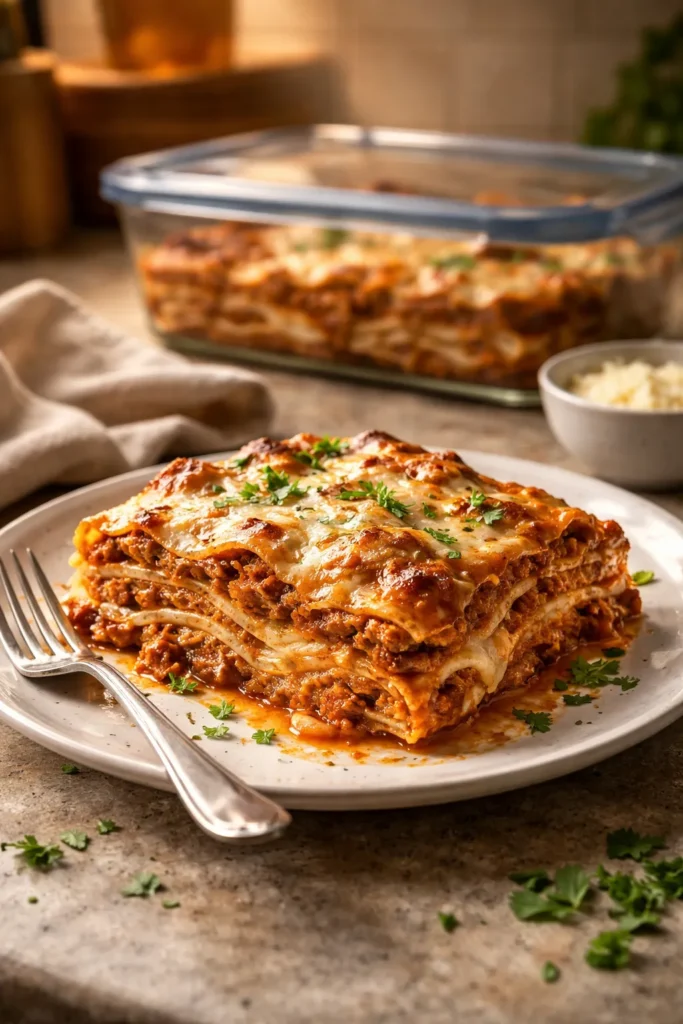
One of the underappreciated truths about comfort food is that most of it tastes better the next day. Lasagna is the canonical example — the flavors meld overnight, the sauce absorbs further into the pasta, and the layers set into something sliceable and even more satisfying than they were fresh.
Beef stew develops a deeper, richer flavor after a night in the fridge as the collagen and rendered fat continue to emulsify into the broth. Chicken pot pie filling reheated in a small saucepan over medium-low heat, then poured over a freshly baked biscuit, becomes an entirely new meal. Banana bread, kept wrapped tightly at room temperature, is often more moist and flavorful on day two than day one.
Plan for leftovers deliberately. Make a full batch of lasagna even if you’re only feeding two people, and portion the remainder into individual containers for the freezer. Most of these dishes freeze well for up to three months, which means one cooking session can produce multiple comfort food nights with almost zero additional effort.
The freezer is genuinely one of the most useful tools in a comfort food cook’s arsenal. A quart of frozen beef stew, thawed overnight in the fridge and reheated gently on the stovetop, is indistinguishable from fresh-made in terms of flavor — and on a night when you don’t have the time or energy to cook from scratch, it’s exactly the kind of thing that makes coming home feel like an occasion.
Final Thoughts
Comfort food, at its core, is an act of care — for yourself, or for whoever you’re cooking for. The eight recipes here cover a wide range of techniques, flavor profiles, and time commitments, but they all share the same underlying goal: to produce a meal that genuinely satisfies.
Start with whichever one pulls at you most right now. If you’re short on time, stroganoff or mac and cheese comes together in under 40 minutes. If you have a slow weekend afternoon and want something that fills the house with good smells for hours, beef stew or lasagna is worth every minute. Banana bread is the move when the kitchen needs to feel warm and the day has been long.
The more you make these dishes, the more confident you’ll get with the techniques — and the more you’ll start to make them your own. A handful of chile flakes in the béchamel. A splash of bourbon in the banana bread. A scattering of fresh herbs over the beef stew just before serving. Comfort food has always been personal. Make it yours.