If you’re cutting back on sugar but refusing to give up dessert entirely, you’re in good company—and you’re making a smart choice. The challenge isn’t finding sugar-free treats; it’s finding ones that don’t taste like they’re missing something crucial. The good news? It’s absolutely possible to create desserts that are rich, satisfying, and genuinely delicious without refined sugar. The secret lies in understanding which sweeteners work best, which flavor combinations mask any aftertaste, and which techniques create that indulgent texture people actually crave.
Over the years, as more people have embraced lower-sugar lifestyles for health reasons, dessert innovation has skyrocketed. Food creators and home bakers have figured out exactly what makes a sugar-free treat sing—and it’s not settling for less. It’s about choosing the right sweeteners, layering flavors strategically, and using wholesome ingredients that contribute actual taste and texture, not just bulk. This article covers the sugar-free treats that have genuinely impressed people, earned rave reviews, and proven that you absolutely don’t have to miss out on dessert when you’re watching your sugar intake.
Table of Contents
- 1. No-Bake Chocolate Peanut Butter Cups
- Why They’re a Game-Changer
- How to Make Them
- 2. Keto Crème Brûlée
- What Makes It Impressive
- The Secret Technique
- 3. Flourless Chocolate Brownies with Black Beans
- Why This Works So Well
- The Baking Science
- 4. Vanilla Chia Seed Pudding
- The Texture Transformation
- Flavor and Make-Ahead Magic
- 5. Peanut Butter Mousse
- Why the Texture Matters
- Assembly and Flavor Depth
- 6. Strawberry Pretzel Salad (Sugar-Free Version)
- Why the Layers Work
- Adaptation Tips
- 7. Almond Flour Shortbread Cookies
- The Almond Flour Advantage
- Flavor Variations
- 8. Chocolate Avocado Mousse
- The Secret to Success
- Flavor Depth and Toppings
- 9. Sugar-Free Chocolate Fudge
- Why Fudge Is Foolproof
- Flavor Customization
- 10. Keto Lemon Bars
- The Lemon-Sugar Dynamic
- Baking and Texture
- 11. No-Bake Cheesecake Bites
- Why Individual Portions Work
- Flavor Possibilities
- 12. Salted Dark Chocolate Caramel Bars
- The Art of Sugar-Free Caramel
- Layering for Success
- 13. Pumpkin Spice Latte (Homemade)
- The Flavor Profile
- Making It At Home
- 14. Chocolate Coconut Macaroons
- The Coconut-Chocolate Connection
- Customization and Storage
- 15. Frozen Banana Nice Cream
- The Science of Frozen Banana
- Flavor Variations
- Final Thoughts
1. No-Bake Chocolate Peanut Butter Cups
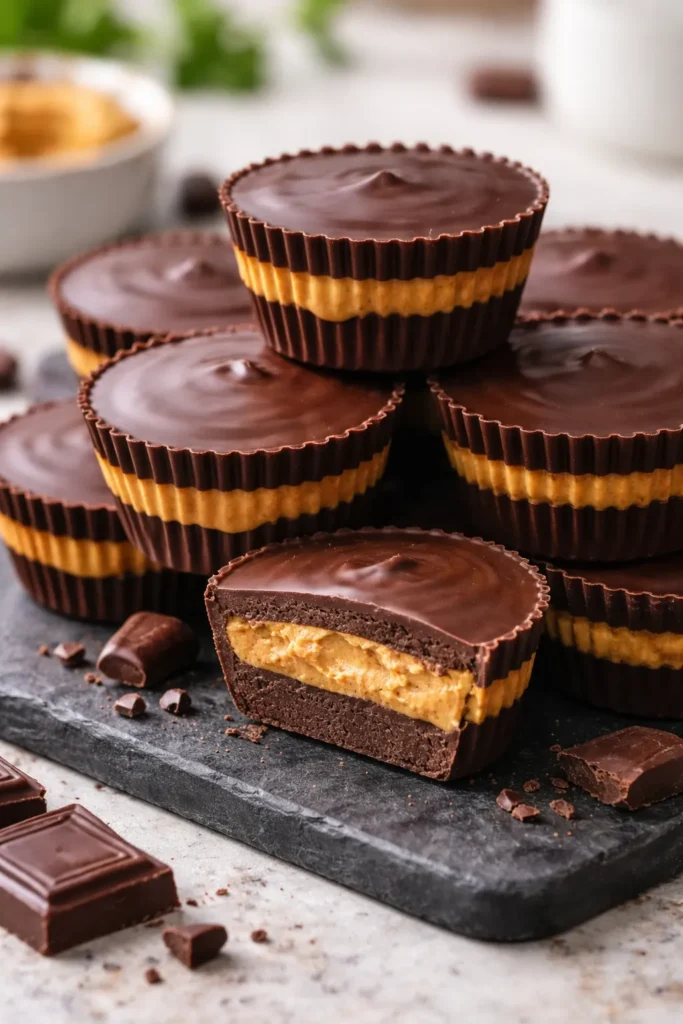
These miniature indulgences prove that peanut butter cups don’t need refined sugar to taste phenomenal. The magic happens when you layer creamy natural peanut butter with rich dark chocolate—a combination that’s already naturally satisfying and doesn’t require additional sweetness to feel complete. What makes these different from the store-bought sugar-free versions is that they taste like the real thing because they’re made with real chocolate and real peanut butter, sweetened strategically with monk fruit or erythritol rather than artificial-tasting alternatives.
Why They’re a Game-Changer
The beauty of no-bake chocolate peanut butter cups is their simplicity and the fact that the flavors genuinely sing without sugar. Dark chocolate brings deep cocoa notes and natural richness, while peanut butter adds protein and satisfying fat that makes each bite feel indulgent. The combination of these two powerhouse flavors is so compelling that the absence of sugar barely registers—in fact, many people find traditional peanut butter cups overly sweet once they’ve tried the reduced-sugar version.
How to Make Them
Ingredients you’ll need:
- Quality dark chocolate (at least 70% cacao)
- Natural peanut butter with no added sugar
- Powdered monk fruit sweetener or allulose
- Coconut oil (optional, for thinning the chocolate)
Simply melt your dark chocolate with a touch of coconut oil, pour a thin layer into silicone molds or cupcake liners, freeze until set, then fill with a mixture of peanut butter and sweetener. Top with another layer of chocolate, freeze again, and you’re done. The entire process takes less than 15 minutes of active time. Many people make a full batch and freeze individual cups for grab-and-go satisfaction throughout the month.
2. Keto Crème Brûlée
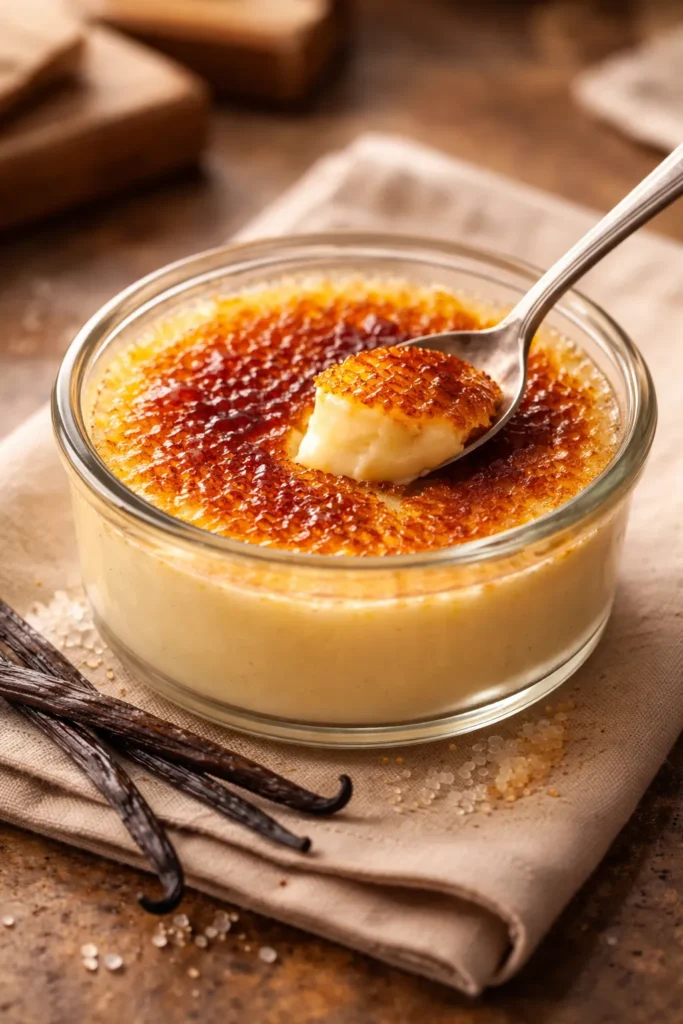
This elegant dessert is pure proof that sugar-free doesn’t mean boring. Crème brûlée has always been about three things: silky custard, rich cream, and that satisfying crack of a caramelized sugar shell. The sugar-free version delivers on all three fronts, using monk fruit or allulose to sweeten the custard and a kitchen torch to caramelize the sweetener on top until it forms a genuine crust—thin, snappy, and absolutely luxurious.
What Makes It Impressive
Crème brûlée intimidates most home cooks, which is exactly why nailing a sugar-free version feels like a genuine accomplishment. The intimidation factor usually stems from temperature control and the water bath, not from the sugar itself. Once you understand that your sweetener will caramelize just like sugar does under a torch, you’ve already conquered the hardest part. The custard itself—cream, egg yolks, and vanilla—needs no modification at all to taste phenomenal.
The Secret Technique
The real trick is choosing a sweetener that actually caramelizes rather than just melting. Allulose, specifically, performs beautifully here because it browns and develops that characteristic bitter-sweet caramelized flavor, whereas some other sweeteners simply melt without creating the visual drama or texture contrast that makes crème brûlée crème brûlée. A standard recipe calls for four ingredients (cream, egg yolks, vanilla, sweetener), making this accessible even for less experienced bakers. Baking at 325°F in a water bath for 30-40 minutes yields silky results every single time.
3. Flourless Chocolate Brownies with Black Beans
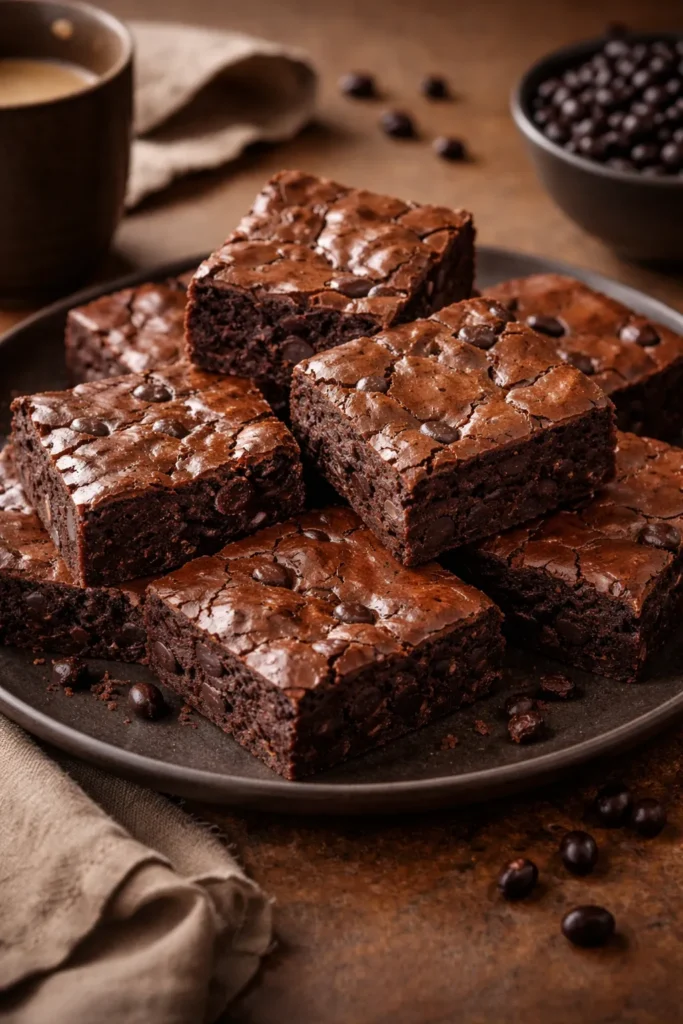
Yes, really—black beans. When blended into chocolate batter, they’re completely undetectable, and what you get instead is an impossibly fudgy brownie with the texture of a traditional brownie but significantly more fiber and protein. The beans contribute moisture and richness while allowing you to reduce the sugar dramatically, and when combined with dark chocolate and applesauce, they create a dessert that’s genuinely good for you while tasting genuinely decadent.
Why This Works So Well
Black beans are neutral in flavor, rich in fiber, and when pureed, they create an incredibly smooth, moist crumb structure. They’re doing the same job that flour, sugar, and excess fat would traditionally do—binding, moistening, and contributing to that satisfying chewiness—except they’re bringing nutritional density to the table instead. A single serving delivers a surprising amount of fiber and plant-based protein, making this feel like less of a guilty indulgence and more like a genuinely nourishing treat.
The Baking Science
The combination of unsweetened cocoa powder, dark chocolate, applesauce (for natural sweetness and moisture), and pureed black beans creates a batter that bakes up tender and fudgy without any grittiness. The cocoa provides the chocolate depth, the applesauce and beans provide moisture and sweetness, and often just a small amount of added sweetener is needed because the chocolate and fruit flavors carry the taste. Baking at 350°F for 20-25 minutes yields brownies that cool to perfect fudginess—dense enough to feel indulgent, but not so heavy they feel like eating wet flour.
4. Vanilla Chia Seed Pudding
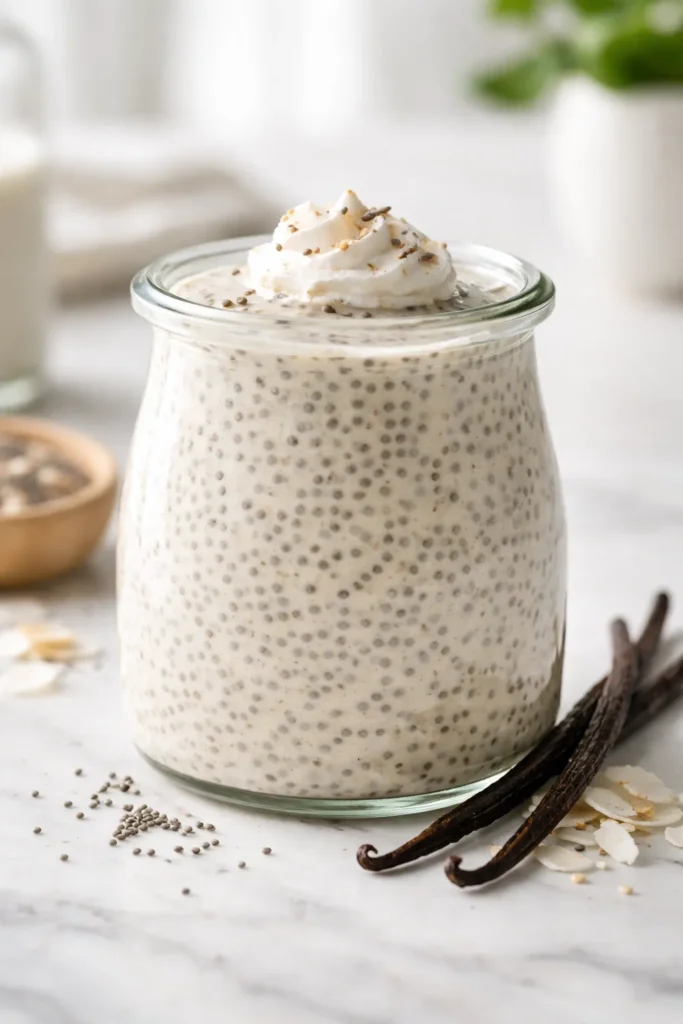
This make-ahead dessert might sound health-conscious and boring, but when executed properly—with quality vanilla, full-fat coconut milk or heavy cream, and the right sweetener—it’s creamy, subtly sweet, and genuinely satisfying. Chia seeds develop a tapioca-like texture as they absorb liquid, creating a pudding that’s naturally thick without any artificial gums or stabilizers.
The Texture Transformation
Chia seeds contain soluble fiber that swells and absorbs liquid, creating that signature pudding texture within hours. What makes this relevant to sugar-free cooking is that you can sweeten the milk base thoroughly before combining it with the seeds, and the flavor stays consistent as the pudding sets. Unlike some textures that fall apart when you substitute sweeteners, chia pudding is remarkably forgiving because the seeds themselves provide the structural element.
Flavor and Make-Ahead Magic
A quality vanilla pudding base needs just a few ingredients: full-fat coconut milk or heavy cream, milk of choice, vanilla extract, and powdered monk fruit or allulose. Whisk these together, stir in chia seeds, and refrigerate overnight. In the morning, you have a grab-and-go dessert or breakfast with a naturally thick, satisfying texture. Many people batch-prepare these in mason jars for the entire week, making it foolproof—no daily dessert decisions required.
5. Peanut Butter Mousse
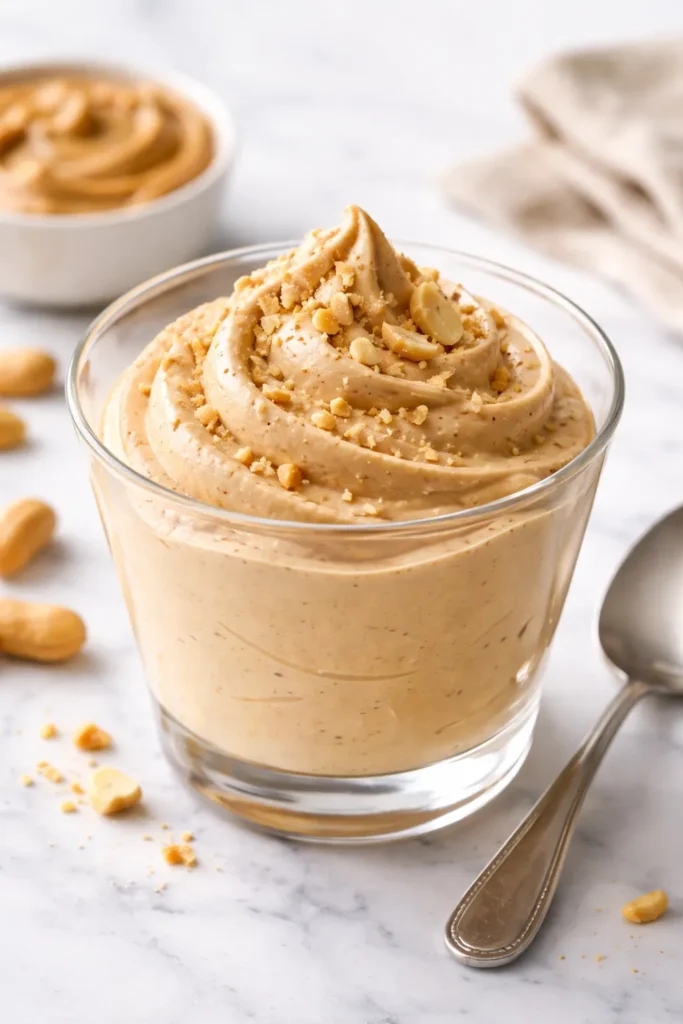
Light, airy, and packed with the genuine flavor of natural peanut butter, this mousse proves that whipped textures can be just as satisfying as dense cakes. Made by folding whipped cream into a sweetened peanut butter base, it’s effortless to prepare and utterly impressive when plated. The mousse-like texture means it feels luxurious even though it’s made with just a handful of ingredients.
Why the Texture Matters
A mousse is all about contrast—it should be light enough to feel like air, but substantial enough to satisfy. When you fold whipped cream into a peanut butter base, you’re creating tiny pockets of air suspended throughout, which means every spoonful feels creamy and indulgent despite being mostly air and fat (healthy fats, at that). The peanut butter provides structure and flavor, while the whipped cream provides the delicate texture that makes mousse feel like a special occasion dessert.
Assembly and Flavor Depth
Combine natural peanut butter with powdered monk fruit sweetener, a splash of vanilla, and a pinch of salt. Separately, whip heavy cream to stiff peaks. Fold the two together gently to maintain airiness, and you’ve got a dessert that feels restaurant-quality. Some versions add a touch of cocoa powder on top or swirl in a small amount of dark chocolate sauce for depth. The entire creation takes fewer than 10 minutes and requires no oven, making it perfect for when you want something special without the fuss.
6. Strawberry Pretzel Salad (Sugar-Free Version)
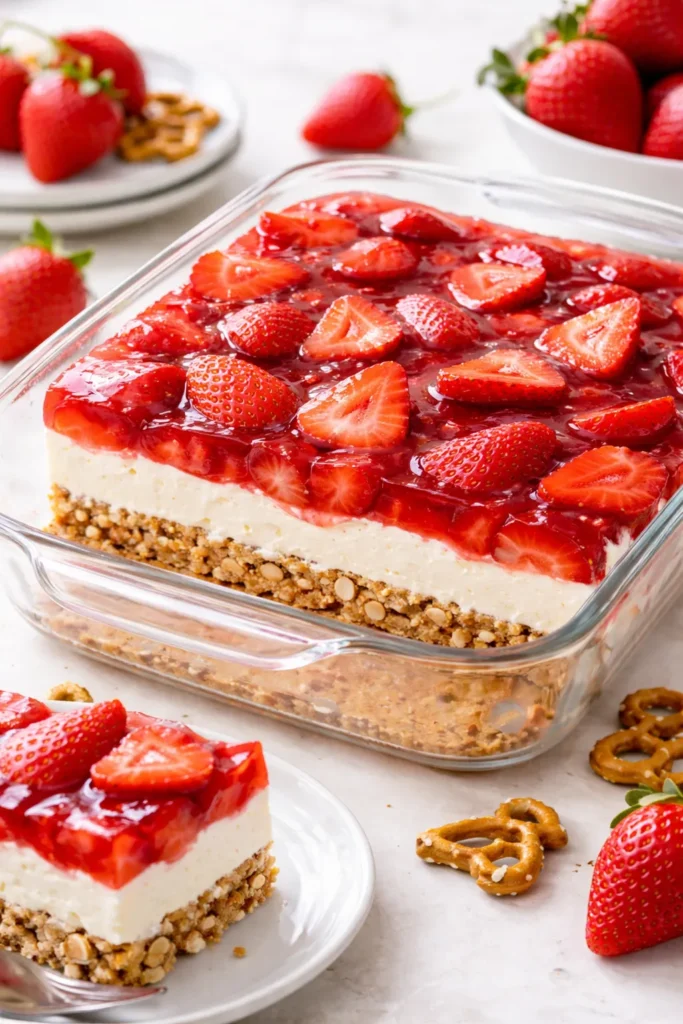
This beloved three-layer dessert—crunchy pretzel crust, creamy vanilla layer, and fruity jello topping—is deceptively easy to convert to sugar-free without losing any of its appeal. The contrast between salty, crunchy, creamy, and fruity is what makes this dessert sing, and none of those elements depend on refined sugar. What you need is full-fat cream cheese, sugar-free vanilla pudding or a homemade sweetened cream base, and sugar-free jello with real strawberry flavor.
Why the Layers Work
Each layer serves a specific textural and flavor purpose. The pretzel crust provides saltiness and crunch—flavors that feel indulgent precisely because they’re unexpected in a dessert. The cream layer underneath provides richness and a contrast in texture. The fruit layer on top provides freshness and slight tartness. When you combine these elements, the result is a dessert that feels complete and sophisticated, not like you’re missing something.
Adaptation Tips
The traditional version uses sugar in the crust to help bind the pretzels and butter. For a sugar-free version, you can skip added sweetener entirely in the crust or add just a touch of monk fruit—the pretzels are already slightly sweet, so the crust doesn’t need much. For the pudding layer, use full-fat cream cheese beaten smooth with heavy cream, a bit of milk, and your choice of sweetener. The jello layer can be made with sugar-free jello powder and fresh or frozen strawberries for added fruit flavor without relying on sugar’s sweetness.
7. Almond Flour Shortbread Cookies
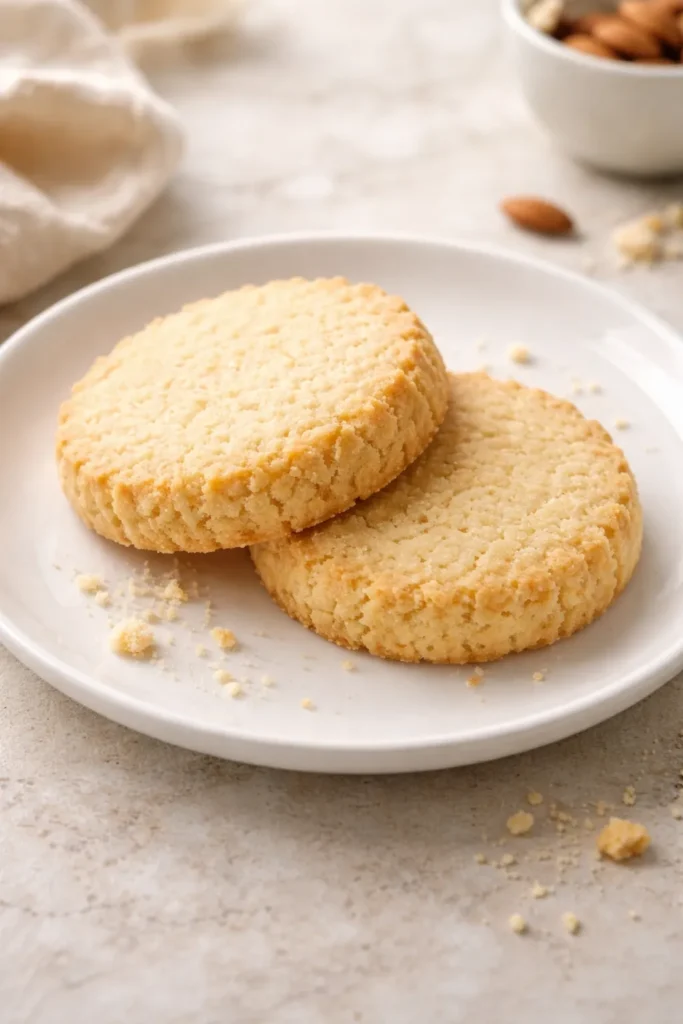
These tender, buttery cookies prove that you don’t need wheat flour or sugar to create a legitimate shortbread experience. Almond flour creates a cookie with excellent texture—slightly crumbly, buttery, and delicate—while the natural oils in almonds contribute genuine richness that makes added fat less necessary. They’re elegant enough for a dessert spread but simple enough to whip up on a Tuesday.
The Almond Flour Advantage
Almond flour is finely ground almonds that contain natural oils, making it inherently rich and flavorful. When combined with butter and sweetener, it creates a dough that binds without gluten and bakes to a tender texture that’s genuinely superior to some wheat-based shortbreads. The cookies have a slightly sandy, crumbly texture—exactly what you want in shortbread—without any grittiness or aftertaste from the sweetener.
Flavor Variations
A basic almond shortbread requires just butter, almond flour, powdered sweetener, vanilla, and salt. You can keep it simple or add flavor dimensions: cinnamon for warmth, lemon zest for brightness, dark chocolate chunks for richness, or even a touch of cardamom for sophistication. Because the base is quite buttery and rich, it pairs beautifully with decorative toppings like a dark chocolate drizzle or candied lemon peel. Baking at 325°F for 12-15 minutes yields cookies that are firm enough to hold their shape but tender throughout.
8. Chocolate Avocado Mousse
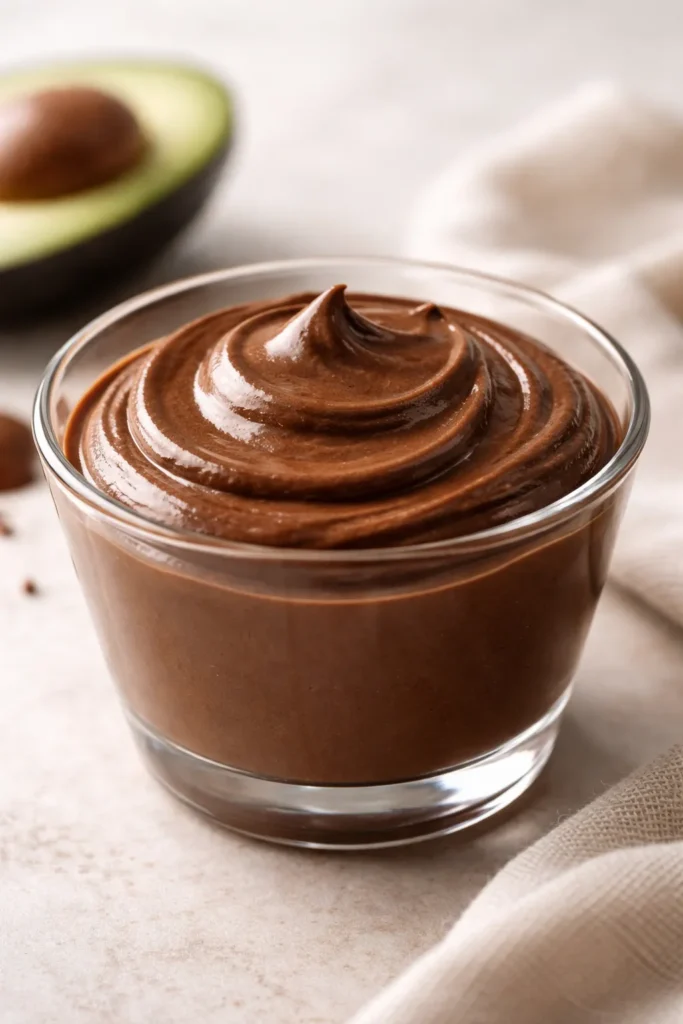
This might sound like an unusual combination, but avocado adds the richest, creamiest texture imaginable to chocolate mousse—without any dairy if you prefer. The healthy fats in avocado replace heavy cream, creating a mousse that’s naturally thick, silky, and so indulgent you’d never guess it contains vegetables. A spoonful tastes like pure chocolate decadence.
The Secret to Success
Ripe avocado is essential—you want fruit that’s yielding but not brown inside. Blend it with unsweetened cocoa powder, your choice of sweetener, vanilla extract, and a pinch of salt, and you’ve got mousse. Some recipes add a tiny splash of milk or almond milk to achieve the perfect texture, but honestly, ripe avocados are usually creamy enough on their own. The resulting mousse is so silky that it feels luxurious despite being made with minimal ingredients.
Flavor Depth and Toppings
For richer chocolate flavor, use a combination of cocoa powder and melted dark chocolate rather than cocoa powder alone. Add a pinch of cinnamon or cayenne pepper if you want subtle depth, or top with raspberries for tartness that contrasts beautifully with the rich chocolate. Whipped cream or a dollop of Greek yogurt on top adds indulgence and helps mask any slight avocado taste for people who are sensitive to it (though honestly, most people don’t taste it once the chocolate flavor takes over).
9. Sugar-Free Chocolate Fudge
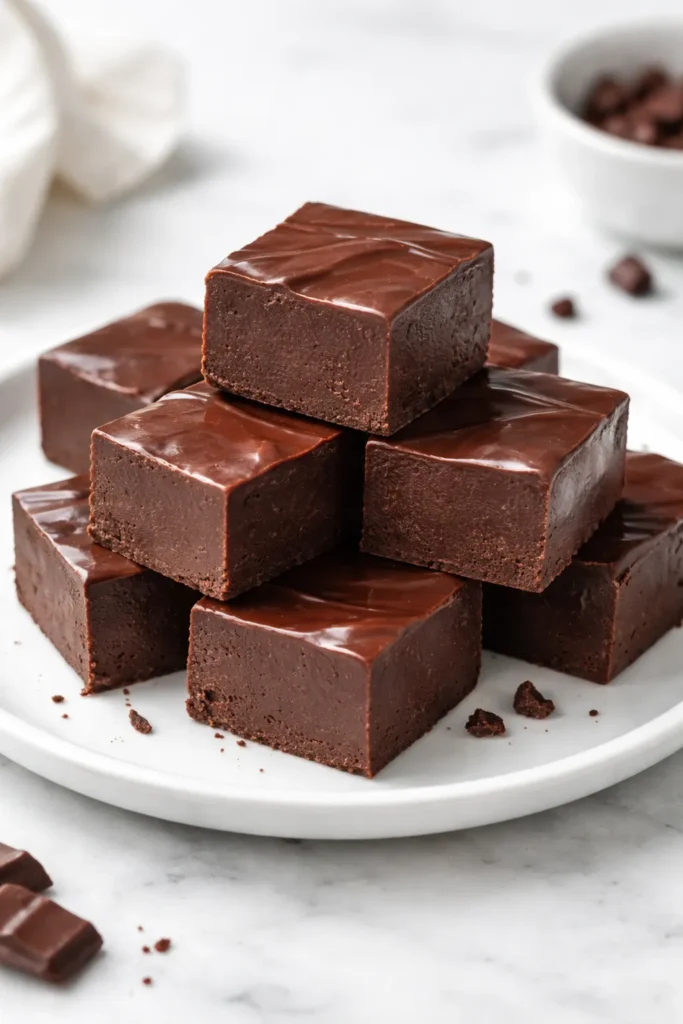
This is the ultimate no-fuss dessert—literally requires mixing a few ingredients, spreading them in a pan, and chilling. Chocolate fudge is naturally a vehicle for richness, and when made with quality dark chocolate, cream cheese, butter, and a good sweetener, it tastes indistinguishable from traditional fudge but without the sugar crash afterward. Many people make a full batch and freeze individual pieces for grab-and-go satisfaction.
Why Fudge Is Foolproof
Fudge doesn’t require baking, precise temperatures, or any real technique. It’s fundamentally chocolate, fat, and sweetener, mixed and chilled until firm. Because the texture is naturally dense and rich, it feels indulgent despite being simple. A small piece is genuinely satisfying because the flavor is so concentrated. It’s the kind of treat that works equally well as a post-dinner sweet or a midday pick-me-up that requires no preparation.
Flavor Customization
A basic fudge uses unsweetened chocolate or cocoa powder, butter, cream cheese, and monk fruit sweetener. From there, you can add anything: sea salt for contrast, espresso powder for depth, peanut butter for richness, or even a touch of cinnamon. The cream cheese is crucial because it adds tanginess that balances the sweetness and contributes to a texture that’s set but still slightly creamy rather than rock-hard. Store these in an airtight container in the fridge or freezer—they’ll last weeks either way.
10. Keto Lemon Bars
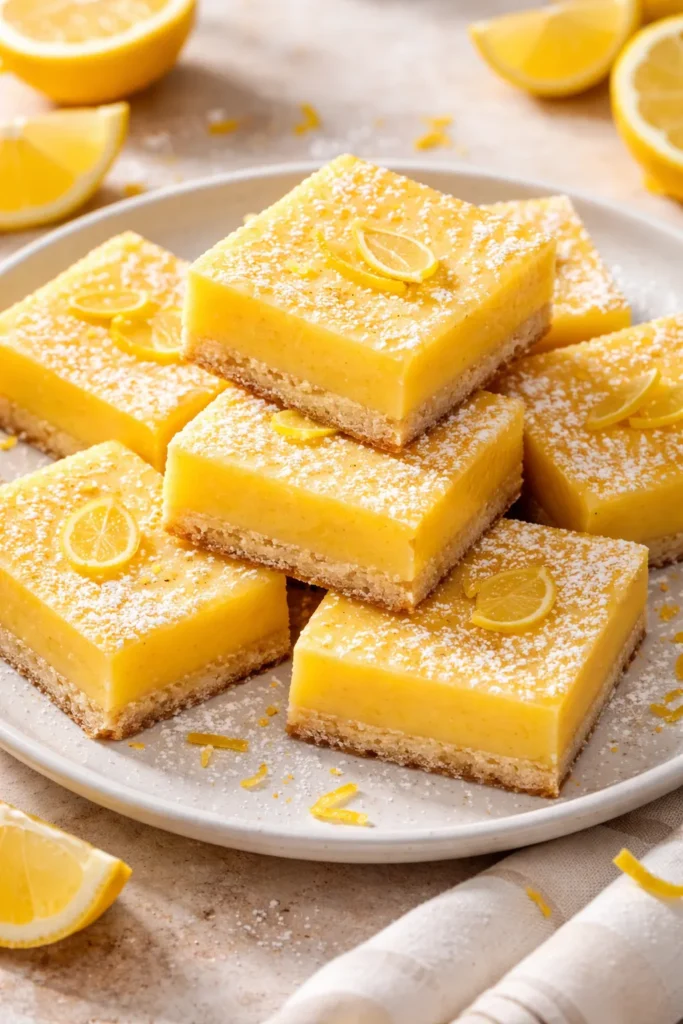
These bright, tangy bars deliver that signature sweet-tart lemon flavor without relying on sugar’s sweetness to balance the tartness. An almond flour crust provides buttery richness, while a custard-like filling made with eggs, lemon juice, and sweetener creates the signature curd texture. Dusted with powdered monk fruit sweetener on top, they look and taste like the real thing.
The Lemon-Sugar Dynamic
Traditional lemon bars use sugar both for sweetness and to balance the tartness of lemon juice. When you remove sugar, you might think the bars would taste too tart, but here’s the thing: when made correctly with adequate sweetener, the lemon flavor actually becomes more prominent and delicious. It’s not masked by sweetness, so the bright citrus notes shine through. What you lose in sweetness, you gain in lemon intensity.
Baking and Texture
The crust is basically almond flour shortbread—butter, almond flour, sweetener, salt, baked until golden. For the filling, whisk together eggs, lemon juice, lemon zest, and sweetener, then pour it over the warm crust and bake at 350°F until set but still slightly jiggly in the center, about 15-20 minutes. The filling will continue to set as it cools. Once completely cooled and chilled, dust generously with powdered sweetener and slice into squares. The contrast between the buttery crust and the tangy, custardy filling is genuinely perfect.
11. No-Bake Cheesecake Bites
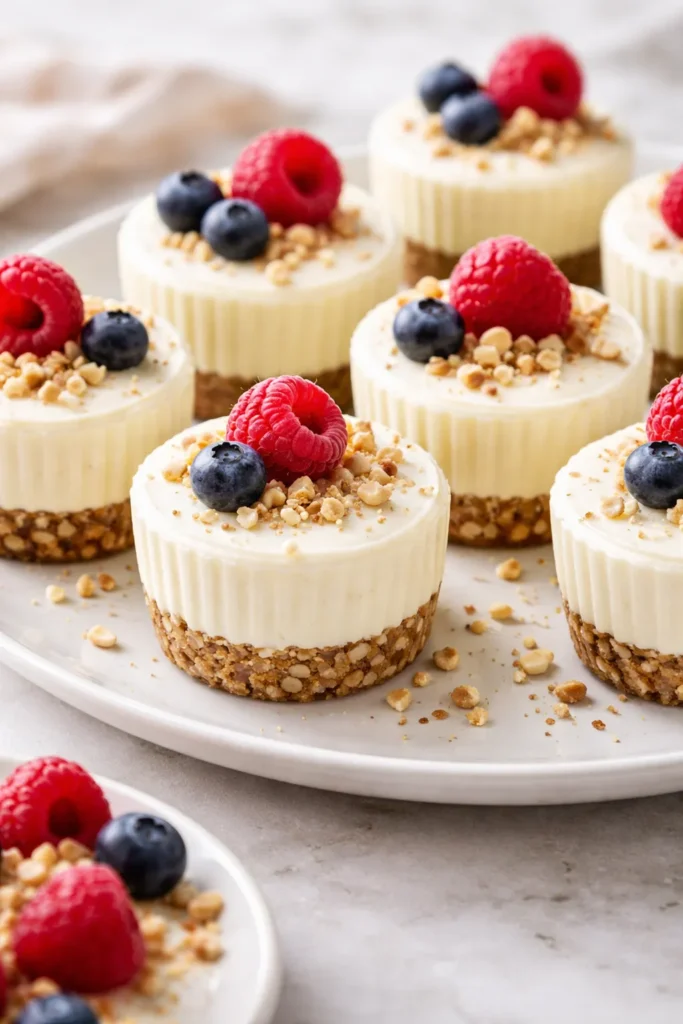
These tiny, individual cheesecakes require zero oven time and deliver all the richness of a full cheesecake in a single bite-sized portion. Made with a pecan or almond flour crust, a sweetened cream cheese filling, and sometimes topped with a fruit layer, they’re elegant enough for a dinner party but easy enough to whip up on a weeknight. They freeze beautifully, making them perfect for meal prep.
Why Individual Portions Work
Portion control is built in with these bites, which is both a practical advantage and a psychological one. You get to eat an entire dessert—crust and all—rather than taking a slice of something larger. They’re also easier to customize than a full cheesecake; you can make several different flavor variations in one batch. And because they’re small enough to eat in two or three bites, they feel like a legitimate treat rather than a commitment.
Flavor Possibilities
A basic cheesecake bite has a nutty crust, a filling made from cream cheese sweetened with monk fruit, and usually a topping of some kind. Fresh berries work beautifully, as does a thin layer of fruit curd or even a dark chocolate ganache. Lemon, lime, strawberry, and plain vanilla are all excellent flavors. Make them in lined muffin tins or in silicone molds, freeze for at least a few hours, then unmold and store in the freezer. They thaw to perfect texture within 10-15 minutes at room temperature.
12. Salted Dark Chocolate Caramel Bars
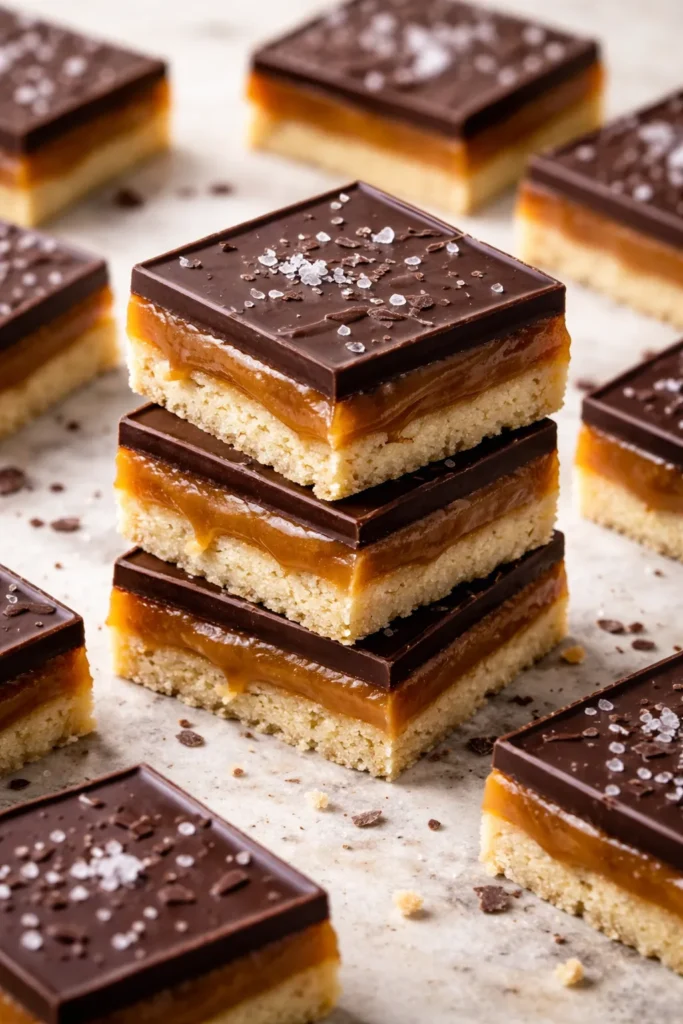
These layers of buttery almond flour crust, gooey caramel, and dark chocolate (topped with fleur de sel) are proof that you can create sophisticated, restaurant-quality candy at home without refined sugar. The magic happens when you layer three components: a shortbread-like base, a caramel made from coconut oil or butter with sweetener, and a chocolate topping with a pinch of salt to amplify everything.
The Art of Sugar-Free Caramel
Traditional caramel requires cooking sugar until it reaches a specific temperature and color. Sugar-free caramel is trickier because not all sweeteners caramelize the same way—but allulose, specifically, browns beautifully and develops actual caramel flavor rather than just tasting sweet. The trick is cooking it long enough to develop color and that characteristic bitter-sweet caramel taste, while being careful not to burn it.
Layering for Success
A thick almond flour crust baked until golden provides the foundation. While it cools, make your caramel by heating butter or coconut oil with allulose, vanilla, and a generous pinch of salt until it turns a deep amber color and smells like actual caramel—this takes 5-10 minutes over medium heat. Pour this over the cooled crust and refrigerate until firm. Meanwhile, melt your dark chocolate and spread it over the caramel layer, then sprinkle with fleur de sel and refrigerate until set. Cut into squares and store in the fridge.
13. Pumpkin Spice Latte (Homemade)
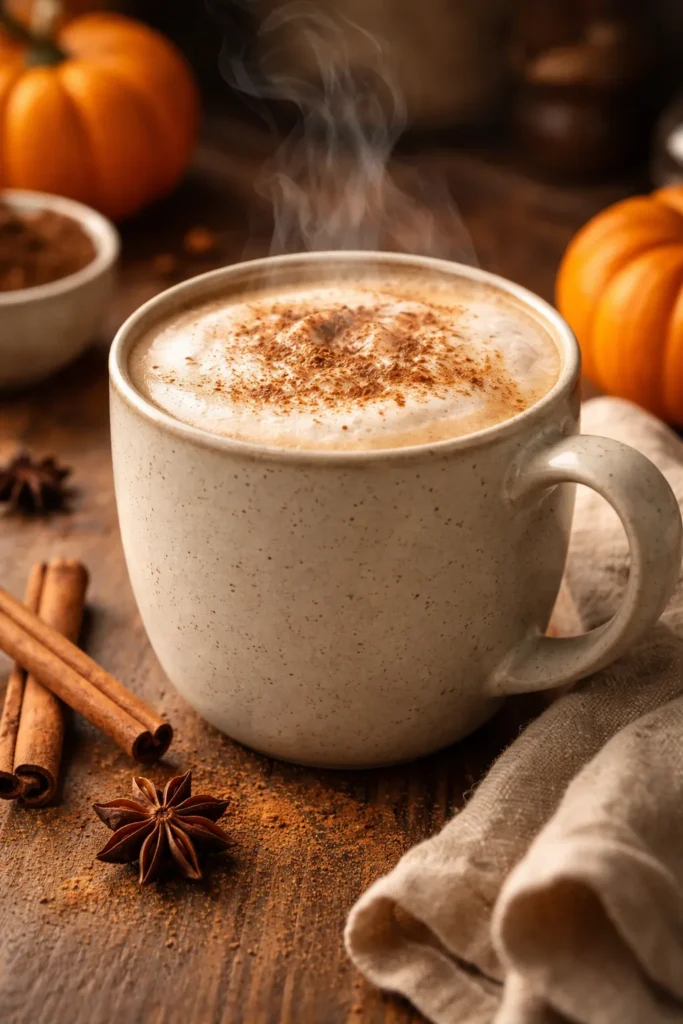
Yes, lattes can be desserts—especially when made at home with real spices, full-fat milk, and just a touch of sweetener. A homemade pumpkin spice latte tastes infinitely better than bottled versions, costs a fraction of the price, and can be made without any added sugar whatsoever. The spices—cinnamon, nutmeg, cloves, and ginger—provide all the flavor depth you need, while full-fat milk or cream creates richness without requiring sweetness to feel indulgent.
The Flavor Profile
What makes a truly good pumpkin spice drink is proper spice balance. Too much clove and it tastes medicinal; too much cinnamon and it becomes one-dimensional. The ideal ratio uses cinnamon as the dominant flavor with nutmeg, cloves, and ginger providing depth and warmth. When you add actual pumpkin puree or pumpkin pie spice blend, you get legitimate pumpkin flavor instead of just spiced warmth. A touch of vanilla extract ties everything together.
Making It At Home
Simmer pumpkin puree with your choice of milk (full-fat dairy, coconut milk, or almond milk all work), a pinch of spice blend, vanilla, and your choice of sweetener. Add brewed coffee if you want a true latte, or keep it without coffee for a hot spiced drink. Whip some cream on top, add a sprinkle of cinnamon, and you’ve created something that rivals any café version. Make a big batch and portion it into mason jars for easy reheating throughout the season.
14. Chocolate Coconut Macaroons
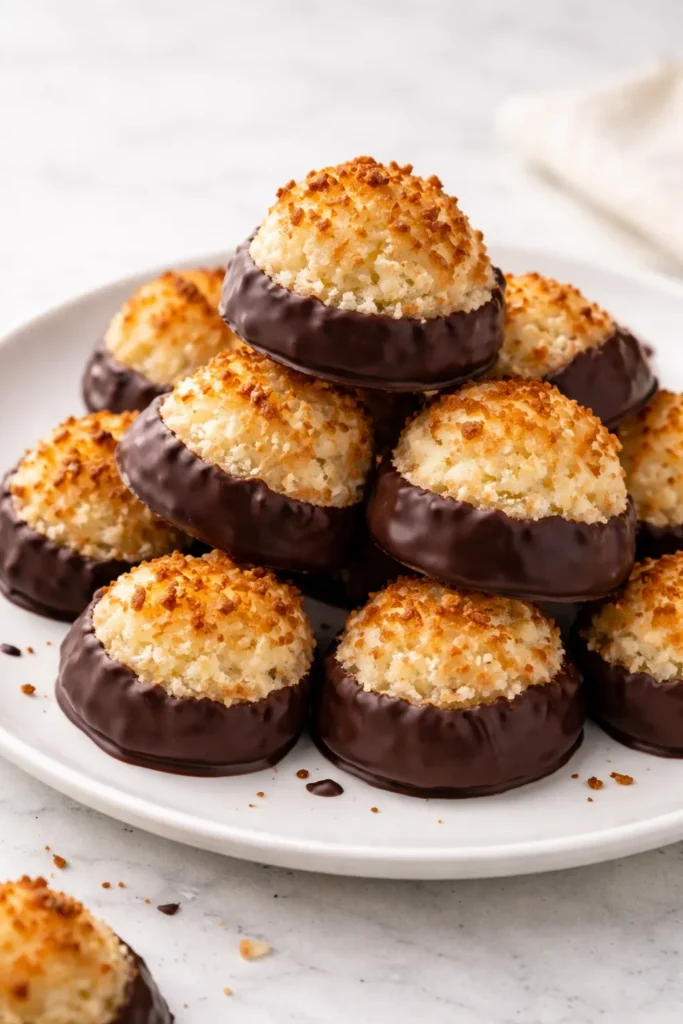
These chewy, dense cookies made from shredded coconut are naturally low in carbs and require no flour whatsoever. When combined with dark chocolate and sweetened with monk fruit, they’re absolutely delicious—crispy on the outside, chewy on the inside, with genuine chocolate flavor that comes through clearly. They’re also one of the easiest cookies you can possibly make.
The Coconut-Chocolate Connection
Shredded coconut has natural sweetness and richness, making it ideal for reduced-sugar baking. When mixed with just a touch of additional sweetener, egg whites for binding, and dark chocolate for flavor, it creates a cookie that’s genuinely good without tasting like it’s compensating for missing sugar. The texture is naturally chewy because coconut contains fat and moisture.
Customization and Storage
Basic macaroons are coconut, egg white, sweetener, and vanilla. Dip them in melted dark chocolate, and you’ve got chocolate macaroons. Some people add a touch of almond extract for depth, or sprinkle sea salt on top while the chocolate is still wet. They bake at 325°F for about 20 minutes until golden. Store them in an airtight container at room temperature—they last surprisingly well for several days and are naturally shelf-stable due to the low moisture content.
15. Frozen Banana Nice Cream
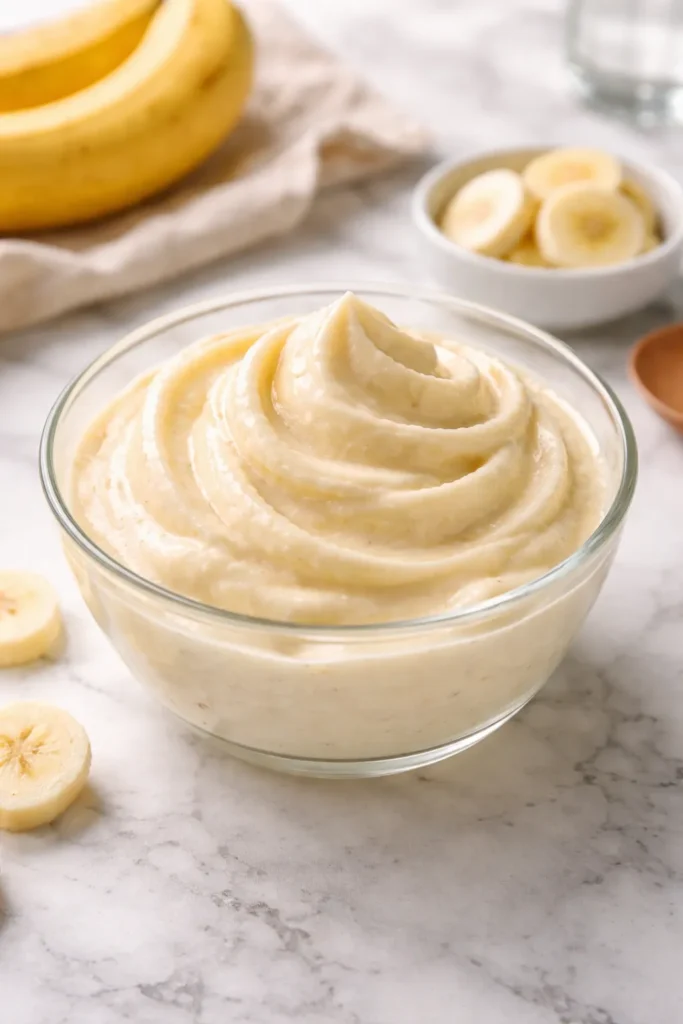
This is perhaps the simplest dessert on this list, but also one of the most satisfying. Frozen bananas, blended until creamy, create a texture virtually identical to soft-serve ice cream—naturally sweet from the fruit’s fructose, with a creamy texture that feels indulgent. With just the banana as your base, you can add vanilla, cocoa powder, peanut butter, or berries to create endless flavor variations.
The Science of Frozen Banana
When bananas freeze, their cell structure changes, and when you blend the frozen fruit, the ice crystals create a creamy suspension rather than a slushy texture. The natural pectin in bananas contributes to a smooth texture. The result tastes like ice cream, has the texture of ice cream, but is made from a single whole fruit ingredient with no added sugar or cream. It’s genuinely one of the easiest ways to satisfy an ice cream craving without any real effort.
Flavor Variations
Plain banana nice cream is delicious on its own, but you can layer flavors: blend in cocoa powder and peanut butter for a chocolate peanut butter version; add vanilla and cinnamon for warmth; blend in berries for tartness and color. Some people swirl in a bit of dark chocolate sauce or almond butter for richness. Make a big batch of frozen banana slices in advance, then blend them fresh whenever you want ice cream—this takes just a few minutes and feels like a treat even though it’s fundamentally a piece of fruit.
Final Thoughts
The misconception that sugar-free means flavorless or unsatisfying has been thoroughly debunked. What these 15 treats prove is that the absence of refined sugar doesn’t limit your dessert options—it just changes your approach. Instead of relying on sweetness alone to make something taste good, you lean on flavor (chocolate, vanilla, citrus, spices), texture (creamy, crunchy, chewy), and the natural richness of quality ingredients like nuts, coconut, and dark chocolate.
The best part? Most of these treats are easier to make than traditional desserts. No complicated temperature control, no fussy techniques, no waiting for sugar to reach the soft-ball stage. A crème brûlée takes 40 minutes, a cheesecake bite takes 15 minutes of prep, chocolate fudge takes 5. The hardest part is usually just deciding which one to make first—and that’s a genuinely pleasant problem to have.