Table of Contents
- Best Fruit Trees to Plant in Southern California: 20+ Top Picks for Your Garden
- Why Southern California’s Climate Creates Fruit Tree Paradise
- Understanding Chill Hours and Low-Chill Varieties
- Top Citrus Trees for Southern California Gardens
- Lemon Trees
- Orange Trees
- Lime and Grapefruit Trees
- Mandarin and Tangerine Trees
- Stone Fruits That Excel in Southern California
- Peach and Nectarine Trees
- Plum and Pluot Trees
- Cherry Trees
- Mediterranean Favorites: Fig, Pomegranate, and Persimmon
- Fig Trees
- Pomegranate Trees
- Persimmon Trees
- Tropical and Subtropical Treasures
- Avocado Trees
- Guava and Loquat Trees
- Low-Maintenance Options for Busy Gardeners
- Jujube Trees
- Low-Chill Apple Trees
- Essential Care Tips for Thriving Fruit Trees
- Watering Guidelines
- Pruning Best Practices
- Pest and Disease Management
- Planning Your Year-Round Harvest
- Frequently Asked Questions
- Final Thoughts: Start Your SoCal Orchard Today
Best Fruit Trees to Plant in Southern California: 20+ Top Picks for Your Garden
Imagine stepping into your backyard and plucking a perfectly ripe orange, still warm from the California sunshine. Picture your children reaching up to grab sweet figs or juicy peaches straight from your own trees. This dream isn’t just possible in Southern California—it’s practically inevitable when you choose the right fruit trees for your garden. With California accounting for roughly 75% of the nation’s total fruit output, your SoCal yard shares the same favorable climate, fertile soil, and extended growing season that makes this region an agricultural powerhouse. Whether you’re a seasoned gardener looking to expand your home orchard or a complete beginner eager to taste truly vine-ripened fruit for the first time, selecting the appropriate fruit trees can transform your outdoor space into a productive paradise that feeds your family year-round.
The beauty of growing fruit trees in Southern California lies not only in the incredible variety available but also in the numerous benefits that extend far beyond your plate. Homegrown fruits contain higher levels of vitamins and antioxidants because they don’t travel thousands of miles to reach you, and you maintain complete control over pesticides and fertilizers. The cost savings are substantial—organic fruits at grocery stores often cost double the price of conventionally grown options, and they still can’t match the sweetness and flavor of fruit picked at peak ripeness from your own tree. Beyond nutrition and economics, tending fruit trees provides mental and emotional well-being through reduced stress, physical activity, and the deep satisfaction of watching your trees mature and bear delicious fruit season after season.
Why Southern California’s Climate Creates Fruit Tree Paradise
Southern California’s Mediterranean climate makes it one of the most versatile fruit-growing regions in the entire world, offering gardeners an almost unlimited selection of trees to cultivate.
The region delivers several key advantages for fruit tree cultivation:
-
Extended Growing Season: Warm temperatures persist throughout most of the year, allowing many fruit trees to produce multiple harvests or extended fruiting periods that would be impossible in cooler climates.
-
Mild Winters: While some areas receive adequate chill hours for deciduous fruits, the overall mild winter temperatures protect cold-sensitive citrus and tropical varieties from devastating freezes.
-
Abundant Sunshine: Most locations receive 6-8 hours of direct sunlight daily, which fruit trees require for optimal photosynthesis and fruit production.
-
Diverse Microclimates: From coastal fog belts to hot inland valleys and cooler foothill regions, SoCal offers specific conditions suited to virtually every type of fruit tree imaginable.
Understanding your specific microclimate helps you select trees that will truly thrive rather than merely survive. Coastal areas within a mile of the beach experience cooler summers and milder winters, making them ideal for citrus but potentially challenging for stone fruits that require more heat to develop maximum sweetness. Inland valleys like San Bernardino, Riverside, and the San Gabriel Valley experience hotter summers and cooler winters, providing the chill hours that apples, peaches, and cherries need while still supporting heat-loving varieties. The key to success lies in matching your tree selections to your particular location’s temperature patterns, sun exposure, and soil conditions.
Understanding Chill Hours and Low-Chill Varieties
One of the most critical factors for growing deciduous fruit trees in Southern California involves understanding “chill hours”—the cumulative time when temperatures dip below 45°F during winter dormancy.
Many traditional apple, peach, and cherry varieties developed in colder climates require 800-1,500 chill hours to properly break dormancy and produce fruit. Most Southern California locations receive only 100-500 chill hours annually, which means selecting low-chill varieties becomes essential for successful harvests. The good news is that plant breeders have developed numerous delicious varieties specifically adapted to mild-winter climates, allowing SoCal gardeners to enjoy apples, peaches, plums, and even cherries despite the warm winters.
When selecting deciduous fruit trees, look for varieties requiring:
-
Under 300 chill hours for most coastal and warm inland areas—these varieties perform reliably even during exceptionally mild winters and include options like Anna apples, May Pride peaches, and Santa Rosa plums.
-
300-500 chill hours for cooler inland valleys and foothill locations—these areas can support a broader range of varieties while still benefiting from low-chill selections during warm winter years.
-
Self-pollinating varieties when space is limited—many fruit trees require cross-pollination from another variety, but self-fertile options eliminate this requirement for single-tree plantings.
Citrus and other evergreen fruit trees don’t require chill hours at all, which explains why they perform so spectacularly throughout Southern California. Instead, these trees need protection from frost and sufficient heat during summer to ripen their fruit properly, conditions that most SoCal locations readily provide.
Top Citrus Trees for Southern California Gardens
Citrus trees represent the quintessential Southern California fruit tree, offering year-round beauty with their glossy evergreen foliage, fragrant blossoms, and colorful fruit that can hang on trees for months.
Lemon Trees
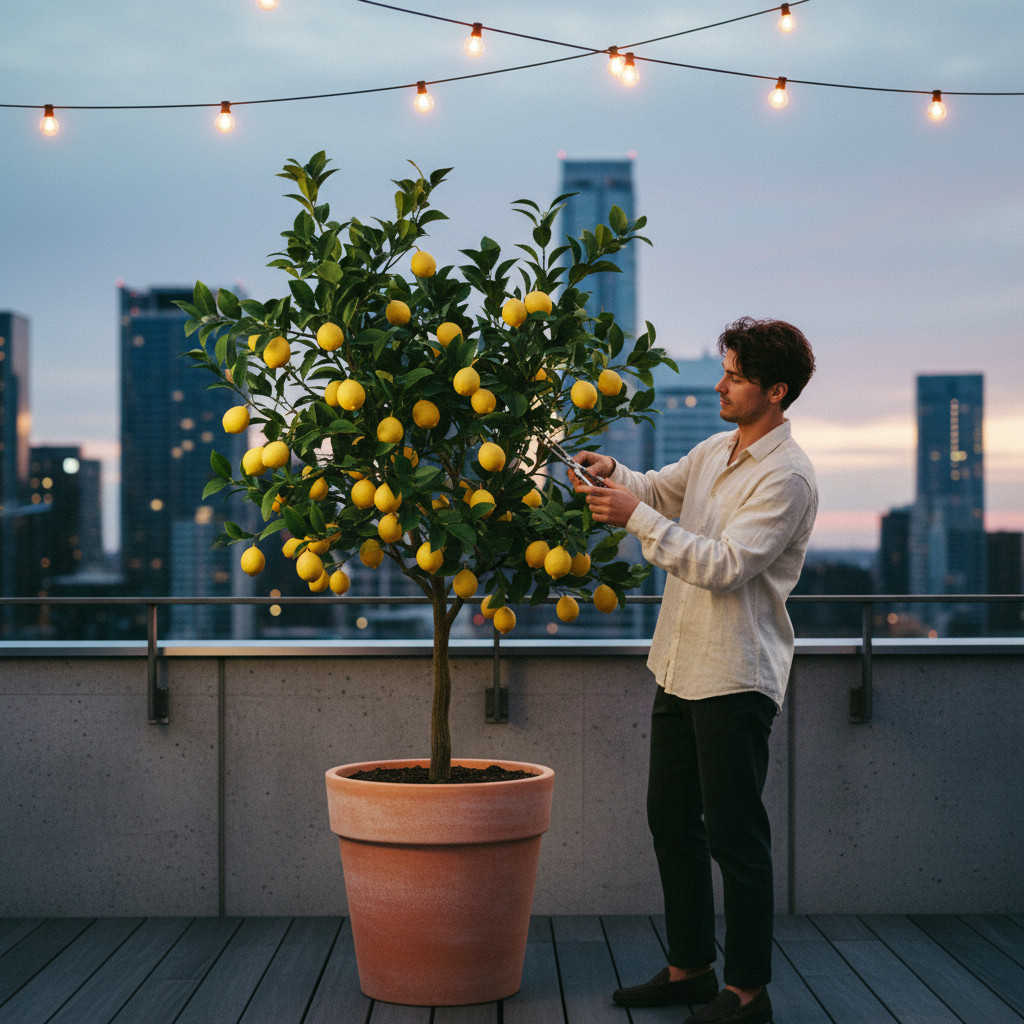
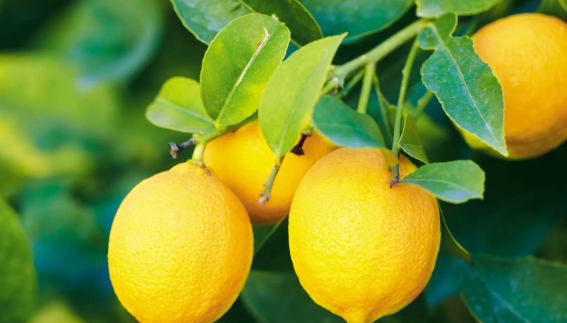
Home-grown lemons possess a hint of sweetness you’ll never find in store-bought varieties, making them the perfect starting point for any SoCal orchard. Meyer lemons have become particularly popular for their sweeter flavor and cold tolerance, while Eureka lemons produce fruit year-round with minimal care requirements. Lemon trees thrive in full sun with 6-8 hours of daily exposure, require well-draining soil with a pH between 5.5-6.5, and grow 10-20 feet tall for standard varieties or just 3-4 feet for dwarf types perfect for containers.
Essential lemon tree care includes:
- Deep but infrequent watering to encourage strong root development
- Citrus-specific fertilizer applied 3-4 times annually
- Minimal pruning focused on shaping and maintaining airflow
- Protection from temperatures below 32°F for extended periods
Orange Trees
California produces over 72% of the national orange harvest, and your backyard can contribute to this tradition with trees that bear fruit from winter through early spring. Navel oranges provide seedless eating oranges during winter months, while Valencia oranges ripen in summer and deliver exceptional juice quality. For those near the coast, Valencia and Gold Nugget varieties develop better sweetness due to their later ripening period that captures more summer heat.
Lime and Grapefruit Trees
Key limes and Bearss limes (Persian limes) both flourish in Southern California, providing the essential ingredient for everything from guacamole to margaritas. These Southeast Asian natives prefer temperatures between 50-100°F and need protection when temperatures drop below 32°F. Grapefruit trees offer a refreshing balance of sweet and bitter flavors, with the Marsh seedless variety proving especially well-suited to coastal areas. Both tree types reach 15-30 feet at maturity for standard varieties, with dwarf options available for smaller spaces.
Mandarin and Tangerine Trees
For families with children, mandarin and tangerine trees often become the most beloved additions to the garden. Kishu mandarins produce small, seedless fruits that peel effortlessly—perfect for little hands and lunchboxes. Gold Nugget mandarins ripen in late winter through spring, while Satsuma mandarins (Miho Wase variety) provide fruit as early as December. These trees typically grow 10-15 feet tall with an 8-10 foot spread, making them manageable for most suburban yards.
Stone Fruits That Excel in Southern California
Stone fruits—including peaches, nectarines, plums, apricots, and cherries—bring the sweet flavors of summer to your garden, though successful cultivation requires careful variety selection.
Peach and Nectarine Trees
California grows the overwhelming bulk of peaches in the USA, and Southern California’s mild climate closely mimics the peach’s native environment in China. The key to success lies in selecting low-chill varieties that require fewer than 500 hours of winter cold. Excellent choices include:
- May Pride Peach: Ultra-low chill requirement (150-200 hours), ripens in May
- Mid Pride Peach: Reliable mid-season variety (250 hours), exceptional flavor
- Snow Queen Nectarine: Beautiful white-fleshed fruit, low chill requirement
- Double Delight Nectarine: Self-fertile with excellent production
These trees reach 15-25 feet at standard size or 6-8 feet as dwarf varieties, prefer full sun, and require annual pruning during winter dormancy to maintain size and encourage fruiting wood production. Plan to thin excess fruit toward branch tips to prevent branch breakage and ensure larger, sweeter fruits.
Plum and Pluot Trees
Plum trees originated over 2,000 years ago and have been cultivated extensively in California. The ‘Santa Rosa’ plum remains particularly well-suited to Southern California, offering delicious fruit and ornamental beauty with its spring blossoms. For something truly special, consider pluots—a plum-apricot hybrid that produces incredibly sweet fruit. Flavor King and Dapple Dandy pluots have become family favorites throughout the region, though note that most pluots require a pollenizer tree nearby for fruit production.
Cherry Trees
While Southern California’s warm winters challenge traditional cherry cultivation, low-chill varieties make homegrown cherries possible. Royal Lee and Minnie Royal cherries were specifically bred for mild-winter climates and perform best when planted together for cross-pollination. Expect these trees to reach 5-35 feet depending on rootstock, with fruit ripening in late spring to early summer.
Mediterranean Favorites: Fig, Pomegranate, and Persimmon
These ancient fruit trees have thrived in Mediterranean climates for thousands of years, making them naturally suited to Southern California’s similar conditions.
Fig Trees
Figs rank among the earliest domesticated crops in human history, dating back 9,000 years to the Mediterranean region. These drought-tolerant, highly productive trees require minimal care once established and produce fruit mid-summer through early fall—with some varieties offering two crops annually. Excellent varieties for Southern California include:
- Brown Turkey: Reliable producer, sweet fruit, tolerates some shade
- Black Mission: Classic variety, intensely sweet when fully ripe
- Kadota: Light-colored flesh, excellent for drying or fresh eating
- White Genoa: Performs well in coastal areas with less summer heat
Fig trees grow 10-30 feet tall and can spread even wider, so plan accordingly. They prefer full sun, tolerate various soil types, and need less water once established. Annual pruning during winter dormancy helps maintain size and shape while encouraging fruit production. Note that figs can be invasive in wildlands, so if you live near mountains or parkland, consider alternative options.
Pomegranate Trees
Pomegranates hail from modern-day Iran and northern India, where cultivation dates back 4,000 to 5,000 years. These trees are drought-tolerant and highly resilient, making them perfect for Southern California’s increasingly arid conditions. They produce stunning orange-red flowers followed by large, ornamental fruits filled with antioxidant-rich seeds called arils.
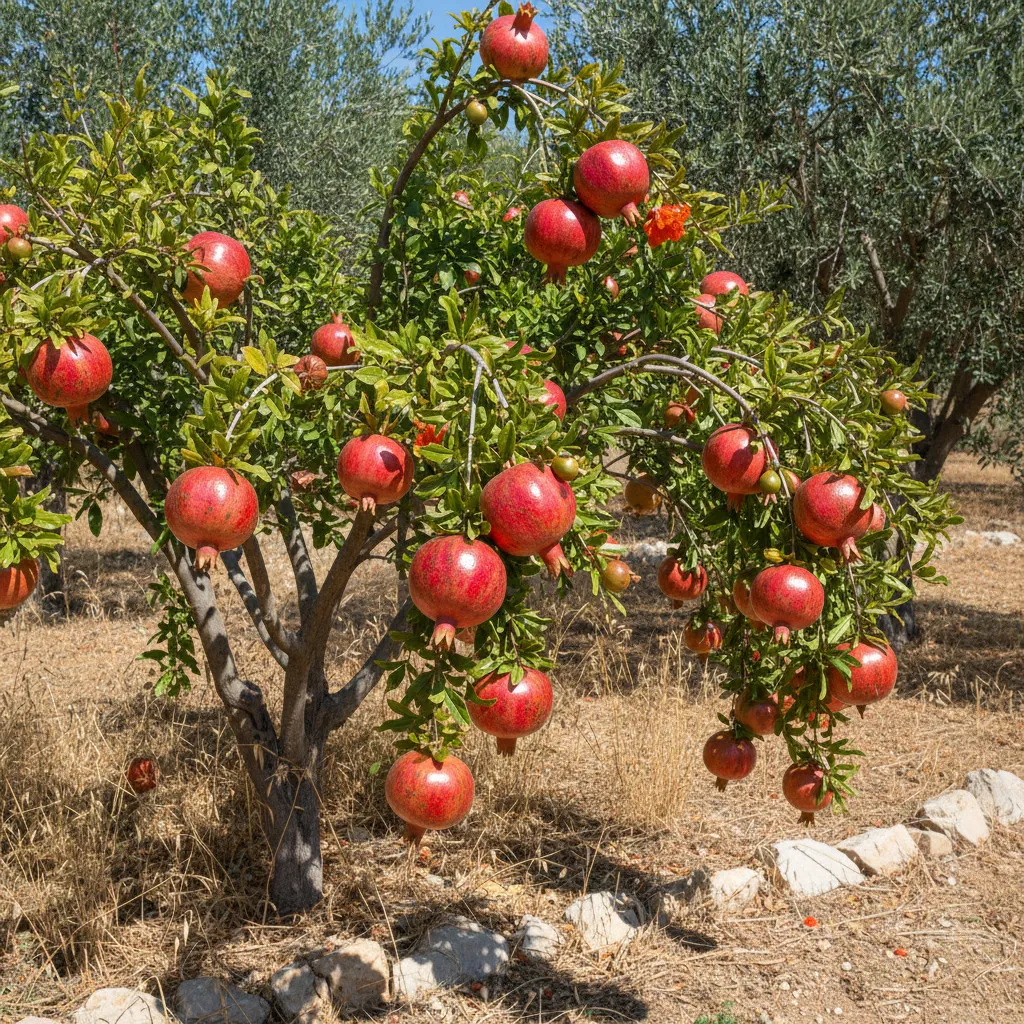
Pomegranate trees typically grow as multi-trunked shrubs reaching 6-20 feet tall. They thrive in full sun, tolerate poor soil conditions, and resist most pests and diseases. The ‘Wonderful’ variety remains the commercial standard, but ‘Eversweet’ produces softer seeds that are easier to eat. Expect fruit from late summer through fall, with peak harvest between September and November.
Persimmon Trees
Persimmon trees create beautiful landscape displays when their bright orange fruit hangs against bare autumn branches after leaf drop. Two main types exist: astringent varieties like ‘Hachiya’ that must become soft and mushy before eating, and non-astringent varieties like ‘Fuyu’ that can be enjoyed crisp like an apple.
These easy-to-grow trees reach approximately 25 feet tall and wide, prefer full sun to partial shade, and tolerate various soil conditions with pH between 6.0-7.5. They require minimal pruning, resist most pests and diseases, and can withstand temperatures as low as 0°F once established. Fruit ripens in fall between September and November, providing fresh eating options when summer fruits have finished.
Tropical and Subtropical Treasures
Southern California’s mild climate supports several tropical and subtropical fruit trees that can’t survive in most of the continental United States.
Avocado Trees
The avocado has become synonymous with Southern California living, and for good reason—these Central American natives thrive in our Mediterranean climate. However, avocados demand more attention than many other fruit trees, requiring rich soil, excellent drainage, and consistent moisture without waterlogging.
Critical avocado growing tips include:
-
Plant on a mound if your soil drains slowly, elevating the root crown above grade to prevent crown rot—the leading cause of avocado tree death.
-
Apply thick mulch (4-6 inches) over the root zone, leaving a few inches clear around the trunk, and allow fallen leaves to remain rather than raking them away.
-
Water deeply but infrequently, allowing soil to dry slightly between irrigations while never letting trees become drought-stressed during fruit development.
-
Plant multiple varieties if you want optimal production—Type A varieties (like Hass) and Type B varieties (like Fuerte) cross-pollinate to increase fruit set significantly.
Popular varieties include Hass (the commercial standard), Fuerte (excellent flavor, sometimes inconsistent bearing), Reed (large round fruit, summer harvest), and Lamb Hass (similar to Hass with larger fruit). Standard trees reach 30-40 feet, but dwarf varieties and careful pruning can maintain trees at 6-10 feet.
Guava and Loquat Trees
Guava trees produce rich, fragrant fruits bearing only a faint resemblance to their waxy commercial counterparts. These compact trees (10-30 feet standard, 3-5 feet dwarf) are suitable for smaller yards and produce fruit from late summer to early fall. They prefer temperatures between 65-90°F and need frost protection in colder inland areas.
Loquat trees offer easy cultivation with relatively few pests, growing 10-20 feet high with fragrant white flowers and sweet spring fruit. They handle drought well once established and tolerate partial shade, though fruit production improves in full sun. Both orange-fleshed and white-fleshed varieties perform well throughout Southern California.
Low-Maintenance Options for Busy Gardeners
Not everyone has hours to dedicate to fruit tree care. These selections thrive with minimal intervention.
Jujube Trees
Jujube trees (also called Chinese dates) remain underappreciated in American gardens despite being extremely well-adapted to Southern California conditions. These 15-30 foot trees tolerate poor soil, require no fertilizer, resist pests, and handle both heat and drought exceptionally well. The fruit tastes like a cross between a crispy apple and sweet date when fresh, or can be dried to concentrate its sweetness.
Low-Chill Apple Trees
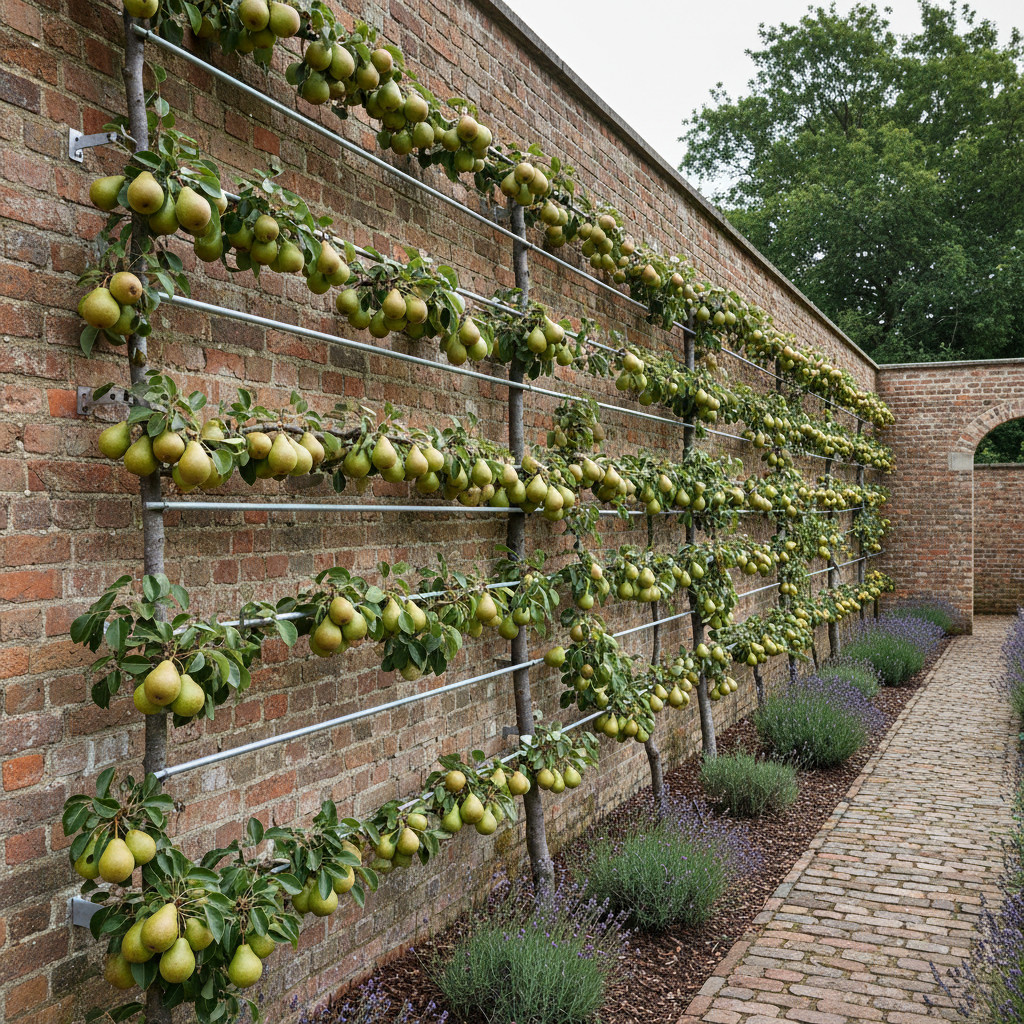
Several apple varieties grow exceptionally well in Southern California when you select appropriately. Anna, Dorsett Golden, Beverly Hills, Fuji, and Gala all have low chill requirements and produce reliable crops. Apple trees can be grown in containers, trained along fences (espalier), or planted closely in small spaces—making them versatile options for any garden size.
Essential Care Tips for Thriving Fruit Trees
Success with fruit trees depends on proper ongoing care tailored to Southern California’s unique conditions.
Watering Guidelines
Newly planted trees require more frequent irrigation than established specimens—typically weekly during the first year, with water applied directly near the trunk. As trees mature, shift to deep, infrequent watering that encourages roots to grow downward. Most fruit trees prefer soil that dries slightly between irrigations rather than staying constantly moist.
Mulching with wood chips dramatically reduces watering needs while suppressing weeds and building soil health. Apply 3-6 inches around trees, keeping mulch away from direct trunk contact. This single practice can reduce water usage by 25-50% while improving tree health significantly.
Pruning Best Practices
Different fruit trees require different pruning approaches:
- Citrus trees need minimal pruning—just remove suckers, dead wood, and branches blocking airflow through the center
- Stone fruits require annual winter pruning to encourage new fruiting wood and maintain manageable size
- Figs and pomegranates benefit from dormant pruning to control size and improve fruit quality
Always remove rootstock suckers immediately—these shoots emerging below the graft union will eventually overtake your desired variety if left unchecked.
Pest and Disease Management
Southern California’s dry climate naturally suppresses many fungal diseases that plague fruit trees in humid regions. Focus on prevention rather than treatment:
- Apply dormant oil spray during winter to smother overwintering insect eggs
- Remove fallen fruit and leaves that can harbor pests and diseases
- Encourage beneficial insects by planting diverse flowering plants nearby
- Avoid broad-spectrum pesticides that harm natural predators
Planning Your Year-Round Harvest
With thoughtful variety selection, you can harvest fresh fruit from your garden every month of the year.
Seasonal Harvest Calendar:
| Season | Fruit Trees |
|---|---|
| Winter (Dec-Feb) | Citrus (oranges, mandarins, grapefruit, lemons) |
| Spring (Mar-May) | Loquats, late citrus, early apricots |
| Summer (Jun-Aug) | Peaches, nectarines, plums, pluots, figs, apricots |
| Fall (Sep-Nov) | Apples, pears, persimmons, pomegranates, late figs |
Most fruit trees require approximately three years before providing substantial harvests when planted from nursery containers. Bare-root trees may take slightly longer to establish. Patience during the early years—including removing fruit during the first two years to encourage root development—pays dividends in long-term tree health and productivity.
Frequently Asked Questions
Can I grow fruit trees in containers? Yes! Dwarf citrus, figs, and many other fruit trees adapt well to large containers (half wine barrels work excellently). Use well-draining potting mix, water more frequently than in-ground trees, and fertilize regularly since nutrients leach from containers with each watering.
How much space do I need between fruit trees? Standard-sized trees typically need 20×20 feet of space, though close planting (8-14 feet) and regular pruning can maintain smaller sizes. Dwarf varieties require only 8-10 feet of spacing, and multi-grafted trees eliminate spacing concerns entirely.
When is the best time to plant fruit trees in Southern California? Late winter through early spring is ideal for most fruit trees, allowing root establishment before summer heat arrives. Container-grown trees can be planted year-round with proper care, though avoid planting during extreme heat.
Do fruit trees need fertilizers? Established fruit trees in good soil often need minimal fertilization. Watch for signs of nutrient deficiency (yellowing leaves, poor growth) before adding fertilizers, and use balanced organic options when needed. Citrus trees benefit from citrus-specific fertilizers applied several times during the growing season.
Final Thoughts: Start Your SoCal Orchard Today
Growing fruit trees in Southern California offers rewards that extend far beyond the exceptional taste of home-grown produce. You’ll gain the satisfaction of nurturing living things, the health benefits of pesticide-free fruit, the cost savings of abundant harvests, and the joy of sharing your bounty with family and neighbors. Whether you have a sprawling property or a modest suburban yard, there’s a perfect combination of fruit trees waiting to transform your outdoor space.
Start with two or three trees that appeal most to your family’s tastes, focusing on varieties proven in your specific area. Visit local nurseries, connect with your UC Master Gardener program for personalized advice, and don’t hesitate to ask neighbors with thriving trees about their variety selections. As your experience grows, expand your collection to include trees that fill different harvest windows until fresh, home-grown fruit becomes a year-round reality.
The best time to plant a fruit tree was twenty years ago. The second-best time is today. Your future self—and your taste buds—will thank you for taking that first step toward your own productive SoCal paradise.
![How Long Does An Apple Tree Take To Bear Fruit? [ANSWERED]](https://fruitonix.com/wp-content/uploads/2023/06/Screenshot-2023-06-02-12.52.12-AM.png)