When you step into your garden or check on your houseplants and notice brownish, fuzzy growth spreading across the soil surface, it’s natural to feel concerned. Brown soil fungus is more common than many gardeners realize, affecting everything from vegetable gardens to indoor potted plants and even well-maintained lawns. While the sight of mold or fungus on soil can be alarming, understanding what you’re dealing with is the first step toward restoring your soil’s health and protecting your plants.
Soil fungus doesn’t automatically spell disaster for your garden. In fact, some fungi play beneficial roles in breaking down organic matter and supporting plant growth. However, when fungal growth becomes visible—particularly when it appears as brown, fuzzy patches or powdery substances—it often signals an imbalance in your soil’s ecosystem or growing conditions. This comprehensive guide will help you identify different types of brown soil fungus, understand what causes these organisms to proliferate, and most importantly, equip you with proven strategies to prevent and treat fungal problems before they compromise your plants’ health. Whether you’re dealing with brown patch disease in your lawn, brown mold in your houseplant containers, or mysterious fungal growth in your garden beds, you’ll find practical solutions tailored to your specific situation.
Table of Contents
- Understanding Brown Soil Fungus and Its Various Forms
- Common Types of Brown Fungal Growth in Soil
- How to Properly Identify Brown Soil Fungus
- Root Causes: What Triggers Brown Fungus in Soil
- Effective Natural Remedies for Brown Soil Fungus
- Chemical Fungicide Options for Severe Infections
- Comprehensive Prevention Strategies
- Soil Health and Long-Term Management
- When to Call a Professional
- Special Considerations for Different Growing Environments
- Wrapping Up: Your Action Plan for Brown Soil Fungus
Understanding Brown Soil Fungus and Its Various Forms
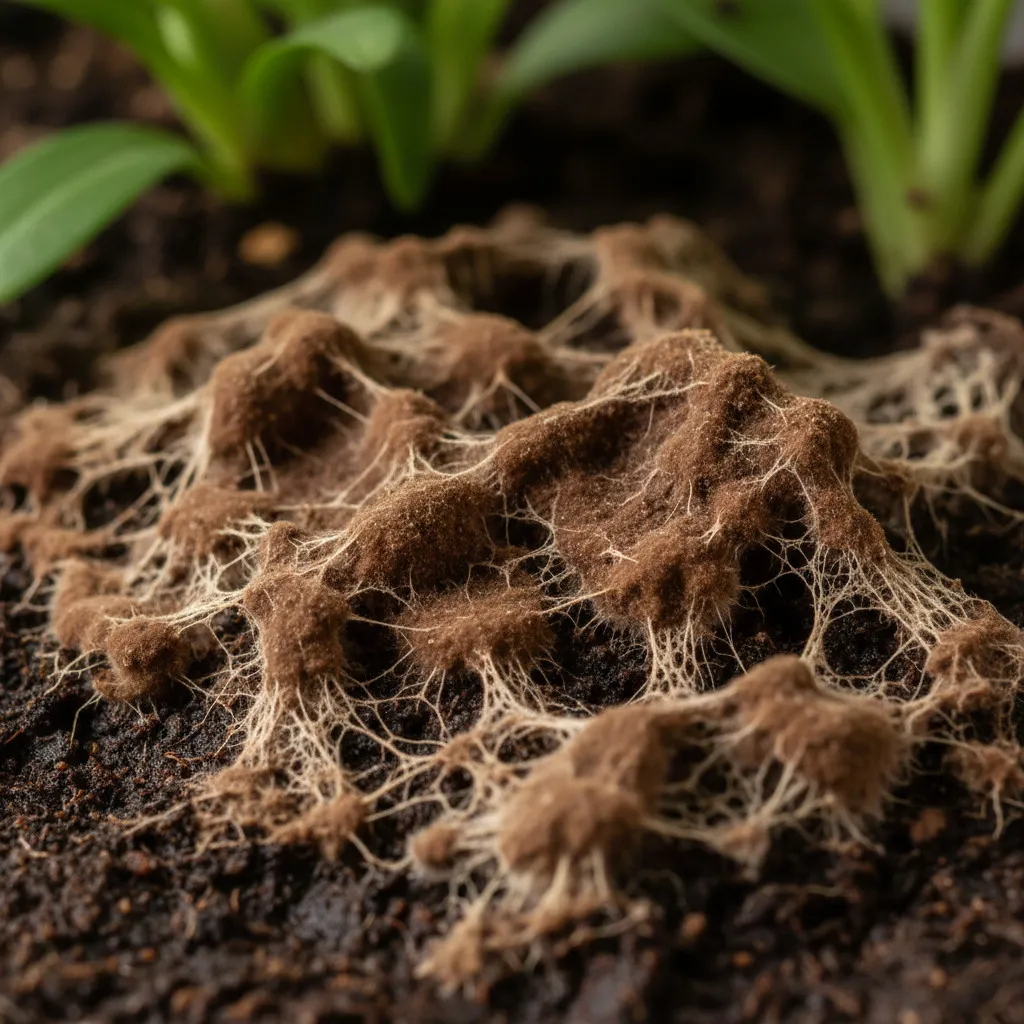
Brown soil fungus encompasses several different organisms that can appear in various shades ranging from tan to dark brown, often with fuzzy, powdery, or slimy textures. This section helps you understand the fundamental nature of these fungi and why they appear in soil environments.
Not all brown-colored growths in soil are created equal, and proper identification is crucial for effective treatment. Brown soil fungus typically refers to saprophytic fungi that feed on decaying organic matter in the soil. These organisms thrive in specific environmental conditions and become visible when their population explodes beyond normal levels. Unlike beneficial mycorrhizal fungi that form white, thread-like networks supporting plant roots, harmful brown fungi often indicate environmental imbalances or plant stress.
Key characteristics of brown soil fungus include:
-
Appearance variations: Brown soil fungus can manifest as small brown spots, large fuzzy patches, powdery coatings, or slimy layers on the soil surface. Some types appear as dusty brown spores that can be easily disturbed, while others form more substantial, web-like structures.
-
Growth patterns: These fungi typically start in localized areas where conditions are most favorable—often in spots with poor drainage, excessive moisture, or high concentrations of decomposing organic matter. From these initial sites, they can spread rapidly if environmental conditions remain conducive to their growth.
-
Habitat preferences: Brown soil fungi generally prefer warm, humid environments with limited air circulation. They thrive in compacted soils with poor drainage and are particularly common in potting mixes containing uncomposted organic materials or in garden beds with excessive mulch or leaf litter.
The presence of brown fungus doesn’t necessarily mean your soil is “bad” or that your plants are doomed. Fungi are natural components of healthy soil ecosystems, helping to decompose organic matter and recycle nutrients. Problems arise when fungal populations become imbalanced, outcompeting beneficial microorganisms or directly attacking plant tissues. Understanding this distinction helps gardeners respond appropriately—sometimes simply adjusting environmental conditions is sufficient, while other situations require more aggressive intervention.
Brown soil fungus can affect both outdoor gardens and indoor container plants, though the specific types and treatment approaches may differ. Outdoor garden soils typically harbor a more diverse microbial community that can help keep fungal populations in check, whereas indoor potting soils in containers often lack this biological diversity, making them more susceptible to fungal outbreaks. The confined environment of containers also tends to retain moisture longer, creating ideal conditions for fungal proliferation.
Common Types of Brown Fungal Growth in Soil
Identifying the specific type of brown fungus affecting your soil is essential for choosing the most effective treatment approach. This section explores the most common types of brownish fungal growths you might encounter in garden and container soils.
Brown Powdery Mold
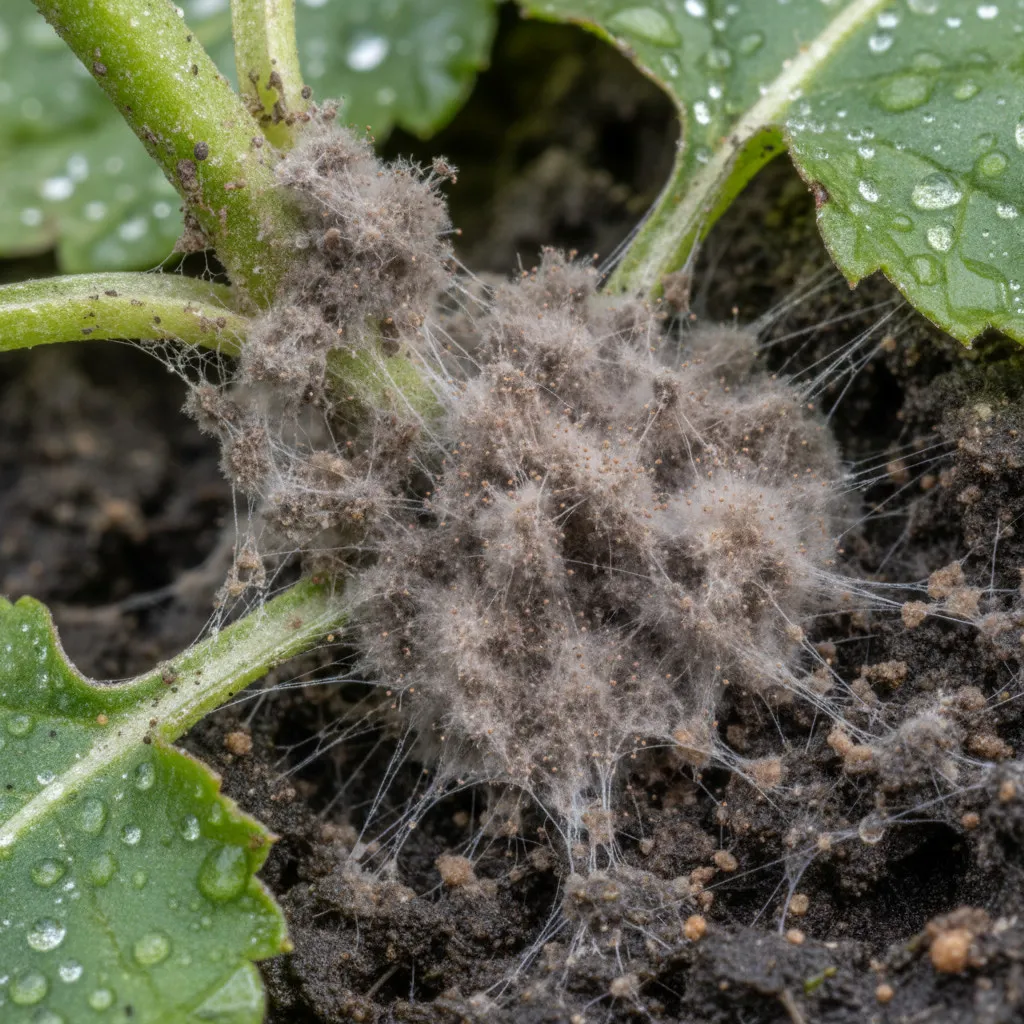
Brown powdery mold appears as a fine, dusty coating on the soil surface and sometimes on plant leaves. This type of fungus produces brown spores that can be easily disturbed and become airborne. It’s particularly problematic for indoor plants and tends to appear when humidity levels are high and air circulation is poor. Brown powdery mold can spread to plant foliage, where it interferes with photosynthesis and weakens the plant. Young, succulent leaves are especially vulnerable to infection, and affected leaves often curl and eventually drop from the plant.
This fungus prefers to feed on young, tender plant tissues and can be transmitted through water, insects, and wind. While it primarily affects the leaves rather than roots, its presence on soil indicates environmental conditions that favor fungal growth. Gardeners often notice brown powdery mold after periods of high humidity combined with warm temperatures, especially in poorly ventilated growing areas. Indoor plants placed in corners or against walls where air doesn’t circulate freely are particularly susceptible.
Brown Patch Disease (Rhizoctonia Solani)
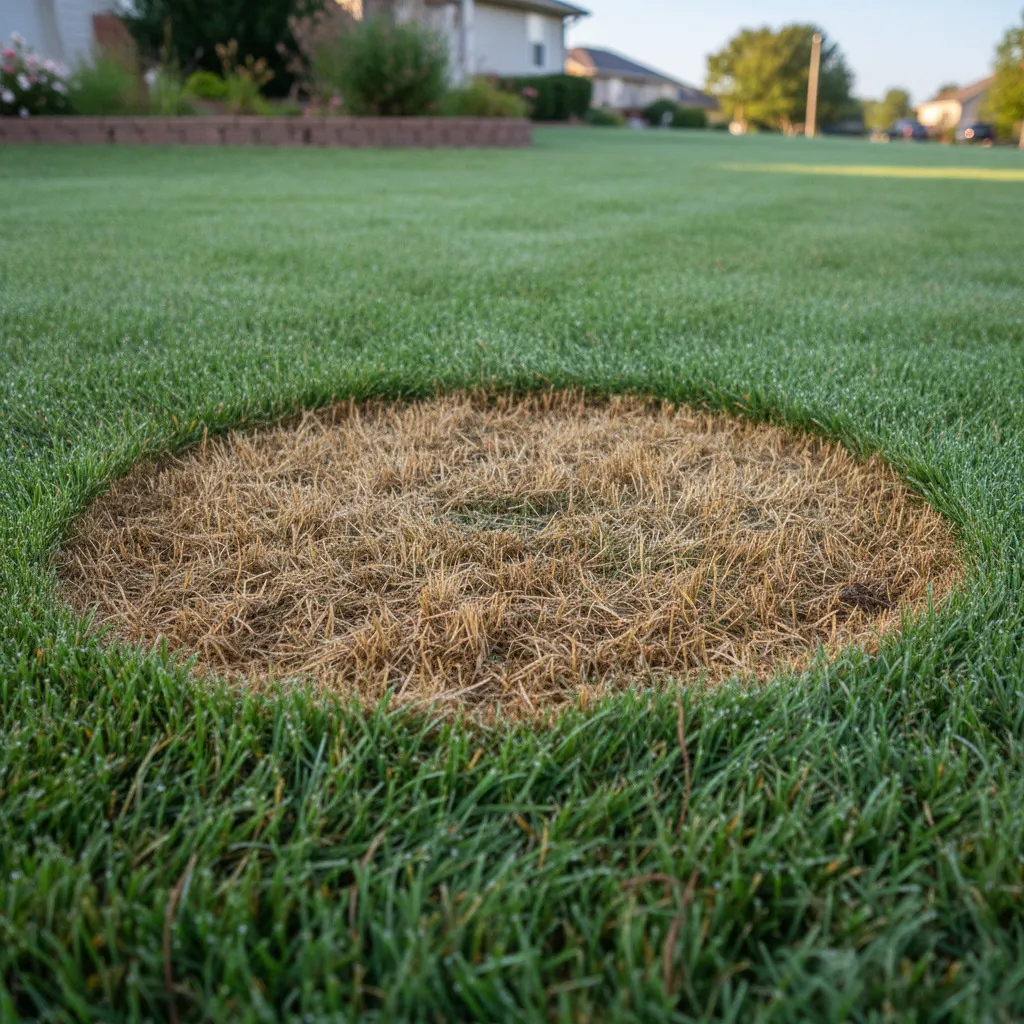
Brown patch disease is one of the most common and destructive lawn fungal diseases, caused by the fungus Rhizoctonia solani. This pathogen creates circular patches of brown, dying grass that can range from a few inches to several feet in diameter. The disease thrives during hot, humid weather, typically appearing in mid to late summer when nighttime temperatures remain above 65°F and daytime temperatures exceed 80°F.
The fungus attacks the grass blades at the soil level, creating lesions that eventually kill the affected turf. In the early morning when dew is present, you might notice a dark, grayish ring around the edge of affected patches—this is the active fungal growth zone where the disease is actively spreading. Brown patch affects many cool-season grasses including tall fescue and perennial ryegrass, though it can also impact warm-season grasses like St. Augustine grass and zoysia grass under the right conditions.
Unlike surface molds, brown patch disease can survive in the soil and thatch layer for extended periods, making it capable of recurring year after year if conditions remain favorable. The fungus doesn’t just discolor grass—it actually kills the plant tissue, requiring reseeding or resodding to restore severely affected areas. This makes prevention and early intervention particularly important for maintaining healthy lawns.
Botrytis (Gray-Brown Mold)
Botrytis, commonly called gray mold, often appears with brownish tones and represents one of the more serious fungal threats to plants. This parasitic fungus attacks weakened plants, typically entering through damaged stems, leaves, or flowers. It produces a fuzzy, grayish-brown growth that eventually develops into a dusty layer of brown spores.
Botrytis thrives in cool, humid conditions and is particularly problematic for plants with dense foliage or those growing in crowded conditions with poor air circulation. The fungus can quickly spread from soil to plant tissues, causing affected areas to turn brown, become water-soaked, and eventually collapse. Fruits and young seedlings are especially vulnerable to Botrytis infection. In severe cases, entire plants can be lost within days.
What makes Botrytis particularly challenging is its ability to produce massive quantities of spores that remain viable for long periods and can easily spread to nearby plants through air currents, water splash, or contaminated tools. The presence of Botrytis on soil surfaces often indicates the presence of decaying plant material that’s serving as a food source for the fungus.
Saprophytic Brown Mold
Saprophytic brown molds are generally harmless fungi that feed on decaying organic matter in the soil rather than living plant tissues. These fungi appear as brown, fuzzy or cobweb-like growths on the soil surface and are commonly seen in potting mixes containing wood chips, peat moss, or other organic materials. While they don’t directly harm plants, their visible presence indicates conditions that might not be optimal for plant health.
These molds are part of the natural decomposition process, breaking down organic materials in the soil and releasing nutrients that plants can use. However, when they become visibly abundant, it usually signals overwatering, poor drainage, or insufficient light. Although not pathogenic to plants, heavy saprophytic mold growth can compete with plants for nutrients and may create an environment conducive to more harmful fungal species.
How to Properly Identify Brown Soil Fungus
Accurate identification of brown soil fungus requires careful observation of both the fungus itself and the surrounding environment. This section provides a systematic approach to determining what type of fungal growth you’re dealing with.
Begin your identification by examining the physical characteristics of the fungal growth. Look closely at the color, texture, and pattern of the growth. Brown soil fungus can range from light tan to dark chocolate brown, and its texture might be powdery, fuzzy, slimy, or crusty. Take note of whether the growth appears as small spots, large patches, or a continuous coating across the soil surface. Use a magnifying glass if available to observe finer details like individual spore structures or thread-like hyphae.
Essential observation points include:
-
Location and spread pattern: Document where the fungus first appeared and how it’s spreading. Fungal growth that starts in a specific area and expands outward in rings often indicates different species than fungus that appears simultaneously across multiple locations. Brown patch disease, for example, typically creates circular patterns, while saprophytic molds may appear more randomly wherever organic matter is decomposing.
-
Associated plant symptoms: Examine nearby plants for signs of distress that might be related to the fungal growth. Look for wilting leaves, yellowing foliage, stunted growth, brown spots on leaves, or root discoloration. Plants affected by harmful fungi will show signs of distress such as wilting even when soil moisture is adequate, yellowing that starts on lower leaves and progresses upward, or leaves that develop irregular brown patches with yellow halos. If plants are thriving despite the presence of fungus on the soil surface, you’re likely dealing with harmless saprophytic fungi.
-
Environmental conditions assessment: Evaluate the growing conditions where the fungus appeared. Check soil moisture by inserting your finger two inches deep into the soil—if it’s consistently soggy, overwatering is likely contributing to the problem. Assess air circulation by noting whether the affected area is in a corner, against a wall, or surrounded by dense vegetation. Measure light levels, as fungi thrive in dimly lit areas. Also consider recent weather patterns, as prolonged humidity and warm temperatures create ideal conditions for many fungal species.
-
Soil examination: Carefully dig up a small section of affected soil to examine what’s happening beneath the surface. Look for signs of root rot (black, mushy roots), excessive thatch buildup in lawns, or concentrations of decomposing organic matter. The presence of a white, thread-like network around roots typically indicates beneficial mycorrhizal fungi, while brown, slimy material suggests harmful fungal activity. Check the soil’s drainage by digging a small hole and filling it with water—if it takes more than a few hours to drain, poor drainage is contributing to fungal problems.
For indoor plants, remove the plant from its container if possible to inspect the root system and soil throughout the pot. Brown, mushy roots indicate root rot, while healthy roots should be white or light-colored and firm. If you notice a musty or foul odor coming from the soil, this strongly suggests fungal or bacterial problems related to anaerobic conditions.
When identification remains uncertain after visual inspection, consider taking a soil sample to your local cooperative extension office or a garden center that offers plant diagnostic services. Professional identification can be particularly valuable when dealing with persistent problems or when plants are declining despite your treatment efforts. Soil testing can also reveal underlying issues like nutrient imbalances or pH problems that may be making plants more susceptible to fungal infections.
Root Causes: What Triggers Brown Fungus in Soil
Understanding the underlying factors that promote brown soil fungus is crucial for effective prevention and treatment. This section examines the primary causes that create favorable conditions for fungal proliferation.
Excessive Moisture and Overwatering
The single most common cause of brown soil fungus is excessive moisture. Fungi require water to germinate and grow, and consistently wet soil creates an ideal breeding ground for fungal spores. Overwatering is the primary culprit behind most soil fungus problems, whether in garden beds, lawns, or container plants. When soil remains waterlogged, air pockets fill with water, creating anaerobic conditions where beneficial aerobic bacteria cannot survive but harmful fungi thrive.
Many gardeners unknowingly overwater their plants, operating under the misconception that more water is better. In reality, most plants prefer soil that cycles between moist and slightly dry conditions. Constant wetness not only promotes fungal growth but also weakens plant roots, making them more susceptible to fungal attack. Evening watering is particularly problematic because it leaves foliage and soil wet overnight—exactly when many fungal species are most active. Research shows that grass and plant surfaces need to remain wet for 10-12 hours for many fungi to successfully establish and grow, which is why morning watering that allows plants to dry during the day is strongly recommended.
Poor drainage compounds the overwatering problem. Heavy clay soils, compacted ground, or containers without adequate drainage holes trap water around roots and at the soil surface. This creates localized pockets of constant moisture where fungi can flourish. In lawns, low spots where water naturally pools become hotspots for brown patch disease and other fungal problems. For container plants, pots without drainage holes or those sitting in water-filled saucers essentially create miniature swamps where fungal spores thrive.
Poor Air Circulation and Inadequate Ventilation
Stagnant air contributes significantly to fungal problems by maintaining high humidity levels around plants and soil surfaces. When air doesn’t move freely, moisture from the soil and plant transpiration accumulates in the immediate environment, creating the humid microclimate that fungi love. This is why fungal problems are more common in crowded garden beds, densely planted areas, and indoor plants placed in corners or against walls.
For outdoor gardens, lack of air circulation often results from overcrowded plantings, tall weeds, or overhanging tree branches that block air movement. In lawns, excessive thatch buildup creates a dense mat that prevents air from reaching the soil surface. Indoor plants face air circulation challenges because typical home environments have relatively still air compared to outdoor settings where natural breezes provide constant air movement.
Improving ventilation addresses multiple factors simultaneously—it helps soil surfaces dry more quickly after watering, reduces the humidity around plants, and makes it harder for fungal spores to settle and germinate. Even a gentle, constant air movement can significantly reduce fungal problems without requiring any changes to watering practices or soil conditions.
Insufficient Sunlight and Light Deficiency
Light plays a crucial role in preventing fungal growth, both directly and indirectly. Ultraviolet light from the sun naturally kills many fungal spores and inhibits fungal growth, which is why fungal problems are more common in shaded areas. Plants grown in adequate light are also healthier and better able to resist fungal infections through their natural defense mechanisms.
When plants don’t receive enough light, their overall vigor declines, making them more susceptible to all types of diseases including fungal infections. Weak, light-starved plants often develop soft, succulent growth that’s particularly vulnerable to fungal attack. Additionally, soil in shaded areas stays moist longer after watering or rainfall, extending the wet period during which fungi can germinate and grow.
Indoor plants face particular challenges with light levels. Even a bright room to human eyes may provide insufficient light for many plants, and areas several feet away from windows often have significantly reduced light levels. Insufficient indoor lighting not only weakens plants but also slows soil drying, creating a double vulnerability to fungal problems.
Soil Imbalances and Poor Soil Health
Healthy soil contains a diverse community of bacteria, fungi, and other microorganisms that maintain a natural balance. When this microbial ecosystem becomes unbalanced, pathogenic fungi can dominate. Several factors can disrupt soil health and promote harmful fungal growth.
Compacted soil lacks the air spaces necessary for healthy root growth and beneficial aerobic microorganisms. This compaction creates anaerobic pockets where harmful fungi thrive while beneficial organisms struggle. Regular tilling can temporarily address compaction but may actually worsen the problem long-term by destroying soil structure and beneficial fungal networks.
Using contaminated or poor-quality potting soil introduces fungal spores and potentially harmful pathogens directly to your plants. Even reputable potting mixes can harbor fungal spores, especially if they’ve been stored in warm, humid conditions. Reusing old potting soil from previous seasons carries even greater risk, as it may contain spores from past infections.
Excessive fertilization, particularly with nitrogen-rich fertilizers, can create conditions favorable to fungal growth. High nitrogen levels produce lush, soft plant growth that’s more susceptible to fungal infection. This is particularly problematic when heavy fertilization occurs before or during hot, humid weather—exactly when many fungal diseases are most active.
Effective Natural Remedies for Brown Soil Fungus
For gardeners preferring organic approaches or dealing with mild fungal infections, several natural treatments can effectively control brown soil fungus without resorting to synthetic chemicals. This section explores proven natural remedies and their proper application.
Baking Soda Solutions
Baking soda (sodium bicarbonate) has long been used as a natural fungicide because it creates an alkaline environment that disrupts fungal cell membranes and inhibits spore germination. When properly diluted, baking soda can effectively treat mild to moderate fungal problems on both soil surfaces and plant foliage without harming beneficial organisms or leaving toxic residues.
To create an effective baking soda treatment, mix one teaspoon of baking soda with one gallon of water. Add a few drops of vegetable oil and a small amount of mild liquid soap (without detergent) to help the solution spread evenly and adhere to surfaces. The soap acts as a surfactant, breaking the surface tension of water and allowing better coverage. Apply this solution using a spray bottle, thoroughly coating affected soil areas and any impacted plant foliage.
However, baking soda must be used judiciously because it’s a salt, and excessive application can harm plants and soil health. Monitor treated areas carefully, and if you notice yellowing leaves or stunted growth, discontinue use immediately. These symptoms indicate that baking soda has raised the soil pH too high or has accumulated to toxic levels. For soil applications, sprinkle dry baking soda lightly over affected areas rather than drenching the soil with solution—approximately one teaspoon per square foot is sufficient for surface treatment.
Baking soda works best as a preventative measure or for early-stage infections. Apply it at the first signs of fungal growth and reapply every 5-7 days until the problem resolves. For persistent infections, baking soda alone may be insufficient, and stronger treatments may be necessary.
Cinnamon as a Natural Fungicide
Cinnamon contains cinnamaldehyde, a naturally occurring compound with powerful antifungal properties. This common kitchen spice can prevent fungal spore germination and suppress existing fungal growth without the risks associated with chemical fungicides. Cinnamon is particularly effective for soil surface applications and for treating fungal problems on indoor container plants.
For soil treatment, simply sprinkle ground cinnamon powder directly onto the affected soil surface, creating a thin, even layer. Use approximately two tablespoons per square foot for outdoor applications or about one teaspoon per six-inch pot for container plants. The cinnamon creates a hostile environment for fungal spores while allowing beneficial bacteria to thrive. Unlike many treatments, cinnamon poses no risk to plants, pets, or beneficial soil organisms.
Cinnamon works best for surface fungi and as a preventative measure. When repotting plants or starting seeds, dust the fresh potting mix with cinnamon to prevent fungal growth from the start. For existing infections, remove visible fungal growth with a spoon, then apply cinnamon to the exposed soil surface. Cinnamon can also be mixed into potting soil before planting at a rate of one tablespoon per quart of soil.
The effectiveness of cinnamon lasts several weeks, after which it breaks down and actually contributes beneficial compounds to the soil. Reapply after heavy watering or if you notice fungal growth returning. Cinnamon is especially valuable for treating damping-off disease in seedlings and for managing surface molds in houseplant containers.
Neem Oil and Horticultural Oils
Neem oil, derived from the seeds of the neem tree, functions as both a fungicide and an insecticide, making it a versatile organic treatment option. The active compounds in neem oil disrupt fungal cell membranes and interfere with fungal reproduction, while also controlling pests that might spread fungal spores or create entry points for infection.
To use neem oil for soil fungus, create a solution by mixing two tablespoons of neem oil with one gallon of water, adding a small amount of mild liquid soap to help emulsify the oil. Thoroughly spray affected soil areas and plant foliage, ensuring complete coverage. Apply neem oil in the early morning or evening to avoid potential leaf burn, and never apply when temperatures exceed 90°F, as high heat can cause the oil to damage plant tissues.
Neem oil requires multiple applications to be effective, typically every 7-14 days until the fungal problem resolves. It works both as a contact fungicide (killing fungi it touches) and as a preventative (creating an environment less favorable for fungal growth). After applying neem oil, monitor plants carefully for any signs of stress, though properly diluted neem oil is generally safe for most plants.
Other horticultural oils like dormant oil or summer oil can also suppress fungal growth through similar mechanisms. These oils coat fungal spores and hyphae, suffocating them and preventing germination. Always test any oil treatment on a small area first before treating your entire garden or plant collection.
Hydrogen Peroxide Treatment
Hydrogen peroxide (H₂O₂) is an effective, environmentally friendly fungicide that kills fungal spores through oxidation while simultaneously increasing soil oxygen levels. When hydrogen peroxide contacts organic material, it breaks down into water and oxygen, leaving no harmful residues. This makes it particularly valuable for treating root zone fungal problems without harming beneficial soil organisms long-term.
For soil fungus treatment, use 3% hydrogen peroxide (the concentration typically sold for first aid) diluted with water at a ratio of 1:4 (one part hydrogen peroxide to four parts water). Apply this solution directly to affected soil, saturating the top few inches. The solution will bubble and fizz as it breaks down, which is normal and indicates it’s actively killing fungal spores and anaerobic organisms while releasing oxygen into the soil.
Hydrogen peroxide is especially effective for treating root rot and fungal problems associated with waterlogged soil. The oxygen released as the peroxide breaks down helps restore aerobic conditions in the soil, allowing beneficial bacteria to re-establish while suppressing anaerobic fungi and bacteria. For potted plants with severe fungal problems, you can water with a more dilute solution (1 part 3% hydrogen peroxide to 10 parts water) to gradually improve soil conditions without shocking the plant.
Apply hydrogen peroxide treatments once every 3-5 days for moderate infections, or weekly as a preventative measure. Because hydrogen peroxide breaks down rapidly into water and oxygen, it won’t accumulate in soil or cause long-term problems. However, very frequent applications may temporarily disrupt the soil microbiome, so use it judiciously and give soil time to recover between treatments.
Chemical Fungicide Options for Severe Infections
When natural remedies prove insufficient or fungal infections are severe and spreading rapidly, chemical fungicides offer more powerful control options. This section examines effective fungicide products and their proper application for brown soil fungus.
Understanding Fungicide Categories
Chemical fungicides fall into two primary categories: contact fungicides and systemic fungicides. Contact fungicides work by killing fungal spores and mycelia on surfaces they touch, providing immediate but relatively short-lived protection. These products must be applied thoroughly to cover all affected surfaces and typically require reapplication every 7-14 days. Common contact fungicides include copper-based products, sulfur, and chlorothalonil.
Systemic fungicides are absorbed by plant tissues and move throughout the plant, providing longer-lasting protection and the ability to treat infections that have already penetrated plant tissues. These products are particularly valuable for treating diseases like brown patch that attack grass crowns and roots. Common systemic fungicides include azoxystrobin, propiconazole, and triticonazole. Many professional-grade products combine both contact and systemic ingredients for comprehensive protection.
For soil fungus specifically, fungicides containing active ingredients like azoxystrobin, propiconazole, or pyraclostrobin with triticonazole provide excellent control. Products such as Pillar SC Fungicide offer broad-spectrum control of up to 26 turf diseases and can cover large areas efficiently—one application rate can treat up to 43,500 square feet, making it economical for lawn applications.
Granular Versus Liquid Fungicides
Fungicides come in both granular and liquid formulations, each with specific advantages. Granular fungicides like Headway G combine azoxystrobin and propiconazole in a slow-release format that’s easy to apply using a broadcast spreader. These products work well for preventative applications and treating large lawn areas, with a typical 30-pound bag covering 8,500 to 15,000 square feet depending on application rate.
The primary advantage of granular fungicides is ease of application and extended residual activity. Once applied, they must be watered into the soil within 48 hours with approximately ¼ inch of irrigation or rainfall. This watering moves the active ingredients into the soil profile where they can protect roots and lower crown tissues. Granular products work well when applied before disease symptoms appear or at the very first signs of infection.
Liquid fungicides offer faster action and more precise application control. Products like Pillar SC provide quick disease knockdown and can be applied exactly where needed without waste. Liquid formulations work well for spot-treating affected areas and for situations requiring immediate intervention. They also allow for better coverage of plant foliage when fungi are affecting above-ground plant parts.
For homeowners with pets, liquid fungicides are often preferable because they’re less likely to be ingested. Once dried, liquid fungicides are generally safe for people and pets to walk on, whereas granular products remain visible on the soil surface longer. However, liquid applications require specialized spraying equipment (preferably with a large droplet nozzle) and more careful mixing and application.
Proper Application Techniques and Timing
Fungicide effectiveness depends heavily on proper timing and application technique. For maximum effectiveness, apply fungicides at the first sign of disease or preventatively when conditions favor fungal development. For brown patch disease in lawns, this typically means applying fungicides in late spring before nighttime temperatures consistently exceed 65°F and again in late summer when disease pressure peaks.
When applying any fungicide, carefully follow all label directions regarding mixing ratios, application rates, and safety precautions. Wear appropriate protective equipment including gloves, long sleeves, pants, and eye protection. Apply fungicides during calm weather to prevent drift, and avoid application when rain is forecast within 24 hours, as rainfall can wash away contact fungicides before they’ve had time to work.
For soil applications, ensure the fungicide reaches the soil surface where fungal growth is occurring. In lawns, mow before application if grass is tall, but wait at least 24 hours after mowing before applying fungicides to avoid stressing the grass further. After application, water the treated area as directed—some products require immediate irrigation to move the active ingredient into the soil profile, while others should be left on the surface to dry.
Most fungal problems require multiple applications spaced 14-28 days apart depending on the product and disease pressure. Pillar SC Fungicide, for example, provides up to 28 days of control and should be applied every 14-21 days when disease is active. Combination products like Caravan G, which contains both fungicide and insecticide, should not be reapplied sooner than recommended to avoid unnecessary insecticide application—switch to a fungicide-only product for subsequent treatments.
Resistance Management
Fungal pathogens can develop resistance to fungicides when the same active ingredient is used repeatedly. To prevent resistance, rotate between different fungicide classes rather than using the same product continuously. For example, alternate between azoxystrobin-based products (strobilurin class) and propiconazole-based products (triazole class).
Professional lawn care services typically implement resistance management programs that systematically rotate fungicide classes throughout the growing season. Homeowners should adopt similar practices, especially when dealing with persistent fungal problems that require multiple applications. Check fungicide labels for the FRAC (Fungicide Resistance Action Committee) code, which identifies the mode of action—rotating between different FRAC codes helps prevent resistance development.
When using fungicides, always combine chemical treatments with cultural practices that reduce disease pressure. Fungicides are most effective when used as part of an integrated disease management program that addresses underlying environmental factors promoting fungal growth.
Comprehensive Prevention Strategies
Preventing brown soil fungus is far more effective and economical than treating established infections. This section provides a complete prevention framework that addresses all the factors contributing to fungal growth.
Optimizing Watering Practices
Proper watering is the single most important factor in preventing soil fungus. Water deeply but infrequently, allowing the soil surface to dry between irrigation events. For lawns, this typically means providing 1-1.5 inches of water per week (including rainfall) in a single deep watering rather than frequent shallow waterings. Deep watering encourages deep root growth while allowing the soil surface to dry, which inhibits fungal spore germination.
Always water in the early morning, ideally between 4 AM and 10 AM. This timing allows foliage and soil surfaces to dry during the day, minimizing the extended wet periods that fungi require. Evening watering is particularly problematic because it leaves plants wet overnight—exactly when many fungal species are most active and when dew provides additional moisture. Research clearly shows that grass and plant surfaces must remain wet for 10-12 hours for many fungi to successfully establish, making morning watering a critical preventative measure.
For container plants, check soil moisture before watering by inserting your finger two inches deep into the soil. Only water when the soil feels dry at this depth. Err on the side of slightly too dry rather than too wet, as most plants recover quickly from mild drought stress but struggle to recover from root rot caused by overwatering. Ensure all pots have adequate drainage holes, and never allow pots to sit in water-filled saucers, which creates constantly waterlogged conditions in the bottom of the container.
Use drip irrigation or soaker hoses rather than overhead sprinklers whenever possible. These irrigation methods deliver water directly to the soil while keeping foliage dry, reducing both foliar fungal diseases and soil surface fungus. If you must use overhead irrigation, water early in the morning so plants dry quickly, and adjust sprinkler patterns to avoid creating puddles or areas of standing water.
Improving Soil Drainage and Structure
Well-drained soil that allows excess water to percolate away from roots is essential for preventing fungal problems. Heavy clay soils and compacted ground trap water, creating anaerobic conditions where harmful fungi thrive. Improving soil drainage addresses this fundamental problem.
For garden beds, incorporate organic matter like well-aged compost into heavy soils to improve drainage and soil structure. Add amendments like perlite, coarse sand, or pine bark fines to increase porosity in container mixes. When creating new garden beds, consider building raised beds with quality soil to ensure good drainage from the start. For existing beds with persistent drainage issues, install French drains or create gentle slopes that direct water away from planting areas.
Lawn compaction is a major contributor to brown patch disease and other turf fungal problems. Core aeration removes small plugs of soil, creating channels for air and water movement while relieving compaction. Aerate lawns annually or bi-annually depending on soil type and traffic levels—spring and fall are ideal timing for cool-season grasses. Aeration should penetrate 2-3 inches deep and remove cores spaced 2-4 inches apart for maximum benefit. Following aeration, consider topdressing with compost to further improve soil structure.
For severely compacted areas or heavy clay soils, deep-tine aeration or vertical mowing may be necessary to adequately address the problem. These more aggressive treatments create deeper channels and remove more material, providing greater relief from compaction. Always follow aeration with appropriate watering and possibly overseeding to help the lawn recover and fill in any temporarily damaged areas.
In container plants, always use pots with multiple drainage holes rather than single-hole or no-drainage containers. Line the bottom of pots with a layer of gravel or broken pottery shards to ensure water can freely exit. Use well-draining potting mixes specifically formulated for container growing—these typically contain perlite, vermiculite, or coarse sand to maintain porosity even when wet.
Enhancing Air Circulation and Reducing Humidity
Good air movement around plants and across soil surfaces helps prevent fungal problems by reducing humidity and accelerating drying after watering or rainfall. For outdoor gardens, proper plant spacing is crucial—follow spacing recommendations on plant labels rather than crowding plants together. Densely planted areas with touching foliage create humid microclimates where fungi flourish.
Regularly prune overgrown trees and shrubs to open up the canopy and allow air movement at ground level. Remove low-hanging branches that block air circulation around susceptible plants. Keep garden beds free of weeds, which compete for space and further reduce air movement. In vegetable gardens, stake or trellis vining plants to keep them off the ground and improve air circulation around their stems and foliage.
For lawns, remove excessive thatch buildup through dethatching or power raking. Thatch layers thicker than ½ inch create a dense mat that blocks air movement to the soil surface while retaining moisture—the perfect environment for fungal growth. Dethatch cool-season lawns in early fall or early spring when grass can recover quickly. Combine dethatching with aeration for maximum benefit to soil health and air circulation.
Indoor plants face particular air circulation challenges because indoor environments typically have minimal air movement compared to outdoor settings. Use small fans to create gentle air circulation around houseplants, but avoid strong direct airflow that can desiccate foliage. Simply placing a small oscillating fan in the room where plants are growing can significantly reduce fungal problems. Avoid placing plants in corners, against walls, or in bathrooms where humidity naturally accumulates and air circulation is minimal.
Maintain appropriate humidity levels for your specific plants—most common houseplants prefer 40-60% relative humidity, which is comfortable for humans and doesn’t promote excessive fungal growth. Use a hygrometer to monitor indoor humidity, and employ a dehumidifier if levels consistently exceed 70%, as these conditions strongly favor fungal development.
Providing Adequate Sunlight
Sunlight serves multiple functions in preventing soil fungus. Ultraviolet light naturally kills fungal spores and inhibits fungal growth, which is why fungal problems are consistently more common in shaded areas. Additionally, sunlight helps soil surfaces dry quickly after watering or rain, reducing the extended wet periods that fungi need to germinate and grow.
For outdoor gardens, site plants according to their light requirements, and avoid planting sun-loving species in shade where they’ll be stressed and more susceptible to disease. If shade is unavoidable, thin tree canopies to allow filtered light to reach the ground, and choose shade-tolerant plants that are naturally adapted to lower-light conditions and the associated higher fungal pressure.
Indoor plants often suffer from inadequate light even in locations that seem bright to human eyes. Most common houseplants need bright, indirect light, which typically means placement within 3-5 feet of a south or west-facing window (in the Northern Hemisphere). Signs of insufficient light include leggy growth, pale leaves, and slow growth—all indicators of a stressed plant more susceptible to fungal infections.
When natural light is insufficient, supplement with grow lights. Full-spectrum LED grow lights are energy-efficient and produce minimal heat while providing the light spectrum plants need. Position grow lights 6-12 inches above foliage for low-light plants or 12-24 inches above for high-light species. Run lights for 12-16 hours daily to compensate for weak natural light. Quality grow lights can make the difference between struggling, fungus-prone plants and thriving specimens with strong immune systems.
For lawns suffering from shade-related fungal problems, evaluate whether turf is the best ground cover choice. Heavily shaded areas under dense tree canopies may be better suited to shade-tolerant ground covers, mulch beds, or hardscaping rather than grass. If maintaining turf in partial shade, choose shade-tolerant grass varieties and adjust care practices—raise mowing height by ½ to 1 inch, reduce fertilization rates, and water less frequently than sunny areas.
Soil Health and Long-Term Management
Beyond addressing immediate fungal problems, building and maintaining healthy soil creates lasting resistance to fungal diseases. This section focuses on developing soil ecosystems that naturally suppress harmful fungi.
Healthy soil teems with beneficial microorganisms—bacteria, fungi, protozoa, and nematodes—that compete with harmful fungi for resources and directly suppress pathogenic species through antagonistic relationships. This biological diversity acts as a natural defense system against fungal diseases. Unfortunately, many common gardening practices unintentionally harm soil biology and promote pathogenic fungi.
Building Beneficial Microbial Communities
Introduce beneficial microorganisms to your soil through regular applications of quality compost and compost tea. Well-made compost contains billions of beneficial bacteria and fungi that, when applied to soil or as a foliar spray, colonize plant surfaces and soil spaces, outcompeting harmful fungi. Apply ¼ to ½ inch of finished compost as a topdressing around plants annually, or brew actively aerated compost tea and spray it on plant foliage and soil surfaces every 2-4 weeks during the growing season.
Products containing beneficial bacteria like Bacillus amyloliquefaciens strain D747 provide targeted biological fungal control. These bacteria colonize plant roots and soil spaces, producing antifungal compounds that suppress soilborne pathogens while promoting plant growth. Many such products are OMRI-certified for organic production and offer an environmentally sound alternative to chemical fungicides. Apply biological fungicides preventatively or at the first signs of disease according to product label directions.
Mycorrhizal fungi form symbiotic relationships with most plant roots, dramatically improving nutrient and water uptake while providing disease resistance. These beneficial fungi create extensive underground networks that essentially extend plant root systems. Establish mycorrhizal relationships by using mycorrhizal inoculants when transplanting or seeding, and avoid practices that harm these beneficial fungi, such as over-tilling, overuse of fungicides, or heavy fertilization with phosphorus (which can suppress mycorrhizal colonization).
Avoiding Practices That Harm Soil Biology
Minimize or eliminate tilling, which destroys beneficial fungal networks, damages soil structure, and brings dormant fungal spores to the surface. No-till or reduced-till approaches preserve soil structure, protect beneficial organisms, and typically result in healthier plants with better disease resistance. For new garden beds, use sheet mulching or broad forking to prepare soil without the destruction caused by rototilling.
Use fungicides judiciously, recognizing that most fungicides—even organic options like copper and sulfur—kill both harmful and beneficial fungi. When fungicide use is necessary, focus applications only on affected areas rather than broadcasting across your entire garden. Follow fungicide treatments with applications of compost tea or beneficial microbe products to help re-establish healthy soil biology.
Reduce or eliminate synthetic fertilizers, particularly high-nitrogen formulas applied in excess. While plants need adequate nutrition, overfertilization promotes lush, soft growth that’s more susceptible to fungal attack and can actually suppress beneficial soil microorganisms. Switch to slow-release organic fertilizers or rely primarily on compost to provide plant nutrition. These organic nutrient sources feed soil organisms as they decompose, supporting healthy soil food webs rather than bypassing them as synthetic fertilizers do.
Managing Organic Matter Properly
Organic matter in soil serves as food for beneficial microorganisms, but improperly managed organic materials can become breeding grounds for harmful fungi. Use only fully composted organic materials as soil amendments—fresh or partially decomposed materials can harbor fungal pathogens and tie up soil nitrogen as they decompose.
Maintain appropriate mulch depth around plants—2-3 inches is ideal for most situations. Mulch layers that are too thin provide insufficient benefits, while excessive mulch (more than 4 inches) creates constantly moist conditions at the soil surface where fungi thrive. Keep mulch pulled back 2-3 inches from plant stems and tree trunks to prevent moisture accumulation and fungal infection at these vulnerable points.
Remove plant debris promptly, especially materials showing signs of disease. Dead leaves, fallen fruit, and plant trimmings provide food sources for saprophytic fungi, and diseased plant material can harbor spores that re-infect plants. Bag and dispose of diseased plant material rather than composting it, as home compost piles rarely reach temperatures high enough to reliably kill all fungal spores.
For lawns, practice grasscycling by leaving clippings on the lawn after mowing (unless grass is extremely long or wet). Short clippings decompose quickly, returning nutrients to the soil without creating a thatch problem. However, remove clippings if you’re mowing diseased grass to prevent spreading fungal spores to unaffected areas. Bag and dispose of the first few mowings after fungicide treatments to remove as many dead fungal spores as possible.
Testing and Amending Soil pH
Soil pH affects both plant health and microbial communities, with implications for fungal disease pressure. Most plants and beneficial soil organisms prefer slightly acidic to neutral pH (6.0-7.0), while some fungal pathogens prefer more acidic conditions. Test your soil pH every 2-3 years using a reliable soil test kit or through your local cooperative extension service.
For excessively acidic soils (below 6.0), add lime to raise pH gradually toward neutral. For brown patch disease specifically, research indicates that raising soil pH to 7.0 in acidic soils can help control or reduce disease incidence. However, make pH adjustments gradually over time rather than making drastic changes that can shock plants and soil microorganisms.
Alkaline soils (above 7.5) may benefit from sulfur applications to lower pH, though this should be done carefully based on soil test recommendations. Excessively high pH reduces the availability of many nutrients and can stress plants, making them more susceptible to all diseases.
When to Call a Professional
Despite best efforts, some fungal problems prove too severe or persistent for DIY treatment. Knowing when to seek professional help can save your plants and prevent more extensive damage.
Consider contacting a professional when fungal infections continue spreading despite multiple treatment attempts. If you’ve tried both natural and chemical fungicides following label directions, adjusted environmental conditions, and improved cultural practices but the problem persists or worsens, professional expertise becomes necessary. Certified professionals have access to more powerful fungicides not available to homeowners and possess the experience to accurately diagnose and treat stubborn fungal problems.
Extensive infections affecting large lawn areas or valuable landscape plants warrant professional intervention. Brown patch disease can quickly spread across entire lawns during favorable weather conditions, and the cost of professional treatment may be less than the expense of replacing dead turf. Similarly, when fungal problems threaten specimen trees, mature shrubs, or other high-value plants, professional treatment ensures the best chance of saving these irreplaceable landscape elements.
If you’re unable to accurately identify the specific fungus affecting your plants, professional diagnosis provides critical information for selecting appropriate treatments. Cooperative extension services often provide diagnostic services for a nominal fee, while professional lawn care companies and plant pathology labs can identify specific fungal species and recommend targeted treatments.
Health concerns also warrant professional intervention. Some soil fungi can cause respiratory problems, allergic reactions, or other health issues, particularly for individuals with compromised immune systems, asthma, or fungal allergies. If you or family members experience respiratory symptoms, skin irritation, or allergic reactions when working around affected soil or plants, immediately stop DIY treatments and contact both a medical professional and a professional remediation service.
Professionals provide comprehensive disease management programs rather than one-time treatments. These programs include multiple strategically timed fungicide applications, monitoring for disease activity, recommendations for cultural practice improvements, and often guarantees for their work. For homeowners dealing with recurring fungal problems year after year, professional disease management programs often prove more cost-effective and successful than repeated DIY attempts.
Special Considerations for Different Growing Environments
Fungal prevention and treatment strategies must be adapted to specific growing situations. This section addresses the unique challenges of different environments.
Container Plants and Houseplants
Potted plants face unique challenges that make them particularly susceptible to soil fungus. The confined environment of containers lacks the biological diversity of ground soil, meaning fewer beneficial organisms exist to compete with harmful fungi. Container soil also tends to remain moist longer than garden soil, especially in pots without drainage holes or in cool, low-light locations.
Prevent fungal problems in containers by using high-quality, well-draining potting mixes rather than garden soil, which compacts in containers and drains poorly. Commercial potting mixes typically contain peat moss or coir fiber, perlite or vermiculite, and often bark or compost—ingredients that maintain porosity even when wet. For plants prone to fungal problems or for use in terrariums and other enclosed growing situations, add extra perlite or coarse sand to improve drainage further.
Always use clean pots with adequate drainage holes. When repotting plants, sterilize used pots by washing with hot soapy water followed by a dilute bleach solution (1 part bleach to 9 parts water). Rinse thoroughly after sterilization. This simple practice eliminates fungal spores and other pathogens that may have colonized the pot’s interior surfaces.
Space houseplants appropriately rather than crowding them together on windowsills or plant stands. Adequate spacing allows air circulation around each plant, helping foliage and soil surfaces dry properly. Rotate plants periodically so all sides receive equal light exposure, promoting balanced growth and preventing the development of weak, fungus-prone growth on shaded sides.
Lawns and Turf Areas
Lawns present unique fungal challenges due to their monoculture nature—large areas planted with a single grass species or just a few varieties. This lack of diversity means that when conditions favor a particular fungal disease, it can spread rapidly across the entire lawn.
Choose disease-resistant grass varieties when establishing or renovating lawns. Many modern turf cultivars have been bred specifically for disease resistance, and planting resistant varieties is one of the most effective long-term strategies for reducing fungal problems. For example, many newer tall fescue and perennial ryegrass cultivars show improved brown patch resistance compared to older varieties.
Maintain proper mowing height for your specific grass type. Cutting grass too short stresses plants and makes them more susceptible to all diseases, including brown patch. Cool-season grasses like tall fescue, Kentucky bluegrass, and perennial ryegrass should generally be maintained at 2.5-4 inches, while warm-season grasses like Bermuda grass and zoysia are typically mowed at 1-2.5 inches. Raise mowing height by ½ inch during stress periods (extreme heat, drought, or disease pressure) to help grass maintain enough leaf surface for photosynthesis.
Never remove more than one-third of the grass blade height in a single mowing. Removing more than this “one-third rule” severely stresses grass and creates entry points for fungal infection. If grass has grown excessively tall, mow multiple times over several days, gradually bringing it to the desired height rather than scalping it in one mowing.
Manage thatch buildup through regular aeration and by avoiding practices that promote thatch accumulation (over-fertilization, over-watering, and overuse of pesticides that kill earthworms and beneficial microorganisms). Thatch layers thicker than ½ inch should be reduced through power raking or vertical mowing, followed by overseeding to fill in temporarily disturbed areas.
Raised Beds and Vegetable Gardens
Vegetable gardens face higher fungal disease pressure than many ornamental plantings because vegetables are often grown intensively in relatively small spaces with high plant density. Additionally, many vegetables are susceptible to multiple fungal diseases that can dramatically reduce yields.
Practice crop rotation to reduce soilborne fungal pathogens. Many fungi have specific host plants they infect, and rotating crops to different bed locations each season prevents these pathogens from building up in the soil. Use a minimum 3-year rotation—for example, don’t plant tomatoes in the same bed more often than every third year. Keep records of what was planted where to maintain effective rotation schedules.
Choose disease-resistant vegetable varieties whenever possible. Seed catalogs and plant labels typically indicate disease resistance with abbreviations like “F” (Fusarium wilt resistance), “V” (Verticillium wilt resistance), or “PS” (powdery mildew resistance). While resistant varieties aren’t immune to disease, they tolerate fungal pressure much better than susceptible varieties and often produce harvestable crops even when infection occurs.
Use vertical growing techniques like trellising, staking, and caging to keep plants off the ground. This improves air circulation around stems and foliage while preventing soil contact that can lead to fungal infection. Vegetables like tomatoes, cucumbers, beans, and vining squash all benefit dramatically from vertical growing in terms of both disease reduction and space efficiency.
Apply mulch around vegetable plants to prevent soil splash, which carries fungal spores from soil onto lower leaves. Organic mulches like straw, shredded leaves, or newspaper work well, while landscape fabric or plastic mulch provide even better moisture management and disease prevention. Maintain a 2-3 inch mulch layer and keep mulch pulled back slightly from plant stems.
Wrapping Up: Your Action Plan for Brown Soil Fungus
Successfully managing brown soil fungus requires a multifaceted approach that addresses both immediate problems and underlying conditions. Start by accurately identifying the type of fungus affecting your soil through careful observation of color, texture, pattern, and associated plant symptoms. Understanding what you’re dealing with allows you to choose the most effective treatment strategy and avoid wasting time and resources on inappropriate interventions.
For mild to moderate fungal problems, natural remedies like baking soda solutions, cinnamon, neem oil, or hydrogen peroxide offer effective control without the risks associated with synthetic chemicals. These treatments work best when applied at the first signs of fungal growth and combined with environmental modifications. Don’t wait for fungal problems to become severe before taking action—early intervention dramatically improves success rates.
When natural treatments prove insufficient or infections are severe and rapidly spreading, chemical fungicides provide more powerful control. Choose products appropriate for your specific situation, follow all label directions precisely, and implement resistance management strategies by rotating between different fungicide classes. Remember that fungicides treat symptoms but don’t address underlying causes—you must still modify environmental conditions to prevent recurrence.
Prevention always surpasses treatment in effectiveness and economy. Focus your long-term efforts on the fundamental factors that promote plant health and suppress fungal diseases: proper watering practices (deep, infrequent watering in early morning), excellent drainage, good air circulation, adequate sunlight, and building healthy soil biology. These cultural practices create growing conditions where plants thrive and harmful fungi struggle to establish, providing sustainable disease management without ongoing chemical inputs.
Maintain realistic expectations about soil fungi. These organisms exist everywhere in nature, and completely eliminating them isn’t possible or even desirable, as many fungi play beneficial roles in soil ecosystems. Your goal should be maintaining balance where beneficial organisms dominate and harmful fungi remain at sub-clinical levels that don’t affect plant health. With proper care, attention to environmental conditions, and prompt intervention when problems arise, you can enjoy healthy plants and beautiful gardens despite the universal presence of fungal spores in soil.