Ground pork is one of those proteins that most home cooks walk right past at the grocery store. They grab the ground beef, toss it in the cart, and head home to make the same three dinners they’ve been making for years. What a shame, because ground pork is richer, more flavorful, and often cheaper than its beefy counterpart — and it works in dishes that ground beef simply can’t pull off with the same depth.
The thing is, ground pork has been a staple across Asian, European, and Latin American kitchens for a long time. It’s the backbone of Chinese dumplings, Vietnamese meatballs, French meat pies, and so much more. If your experience with it starts and ends at breakfast sausage patties, you’re leaving a lot of delicious territory unexplored.
These 12 recipes range from weeknight dinners you can pull off in under 30 minutes to weekend projects worth every minute of effort. Some are inspired by street food traditions from across the world. Others are clever twists on dishes you already love. All of them are genuinely worth making — and genuinely unlike anything you’re probably cooking right now.
Table of Contents
- 1. Mapo Tofu with Ground Pork
- What Makes It Special
- How to Make It
- Key Details
- 2. Pork Soup Dumplings (Xiao Long Bao)
- The Broth Trick You Need to Know
- How to Make It
- Quick Facts
- 3. Lion’s Head Meatballs in Savory Broth
- What Sets These Apart from Regular Meatballs
- How to Make It
- Key Details
- 4. Ground Pork Banh Mi Rice Bowls
- Why the Bowl Format Works
- How to Make It
- Quick Facts
- 5. Crispy Stuffed Lotus Root with Ground Pork
- What Lotus Root Tastes Like
- How to Make It
- Key Details
- 6. Pork Crepinettes with Dried Fruit
- Why These Beat Regular Sausage Patties
- How to Make It
- Quick Facts
- 7. Spicy Pork and Sesame Noodles
- Building the Sauce
- How to Make It
- Key Details
- 8. Ground Pork Shepherd’s Pie
- What Changes with Pork
- How to Make It
- Quick Facts
- 9. Pork and Cabbage Pan-Fried Dumplings
- The Filling That Makes It Work
- How to Make It
- Key Details
- 10. Pork Dirty Rice
- Why This Is Worth Making
- How to Make It
- Quick Facts
- 11. Vietnamese-Style Ground Pork Lettuce Cups
- What Goes Into the Filling
- How to Make It
- Key Details
- 12. Ground Pork and Butternut Squash Lasagna
- Why This Combination Works
- How to Make It
- Quick Facts
- Final Thoughts
1. Mapo Tofu with Ground Pork
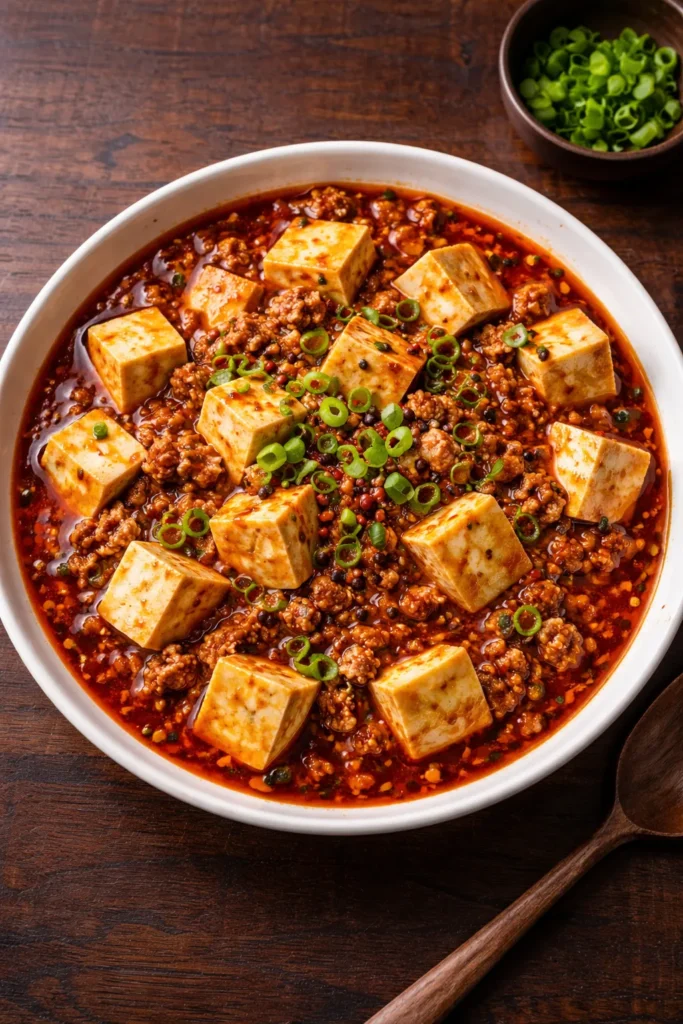
This is the dish that converts tofu skeptics. Mapo tofu is a Sichuan classic built around silken tofu and ground pork simmered together in a sauce that’s simultaneously spicy, savory, numbing, and a little sweet. It’s bold in a way that most home-cooked meals simply aren’t.
What Makes It Special
The magic comes from fermented black bean paste (doubanjiang) and a hit of gochujang for heat, balanced by sesame oil and a touch of brown sugar. The ground pork doesn’t just add protein — it melts into the sauce, creating a depth that makes the whole dish taste like it’s been cooking for hours. Fresh ginger rounds everything out with a brightness that keeps the richness in check.
How to Make It
Brown about 6 oz of ground pork in a hot wok until it’s slightly crispy in spots. Add 2 tablespoons of doubanjiang, 1 tablespoon of gochujang, 2 teaspoons of soy sauce, 1 teaspoon of sesame oil, and 1 teaspoon of brown sugar. Stir everything together until fragrant — about 90 seconds. Add ½ cup of chicken broth and gently fold in 14 oz of silken tofu cut into ¾-inch cubes. Simmer on low for 5 minutes without stirring too aggressively or the tofu will fall apart. Finish with 2 sliced green onions and a pinch of ground Sichuan peppercorn if you have it.
Key Details
- Serve over steamed white rice — the sauce is too good to waste
- Silken tofu is non-negotiable here; firm tofu won’t absorb the sauce the same way
- The Sichuan peppercorn adds a mild numbing sensation that’s completely unique and worth seeking out
Pro tip: If doubanjiang is hard to find locally, most Asian grocery stores carry it, and it keeps in the fridge for months. One jar will last you through many batches of this dish.
2. Pork Soup Dumplings (Xiao Long Bao)
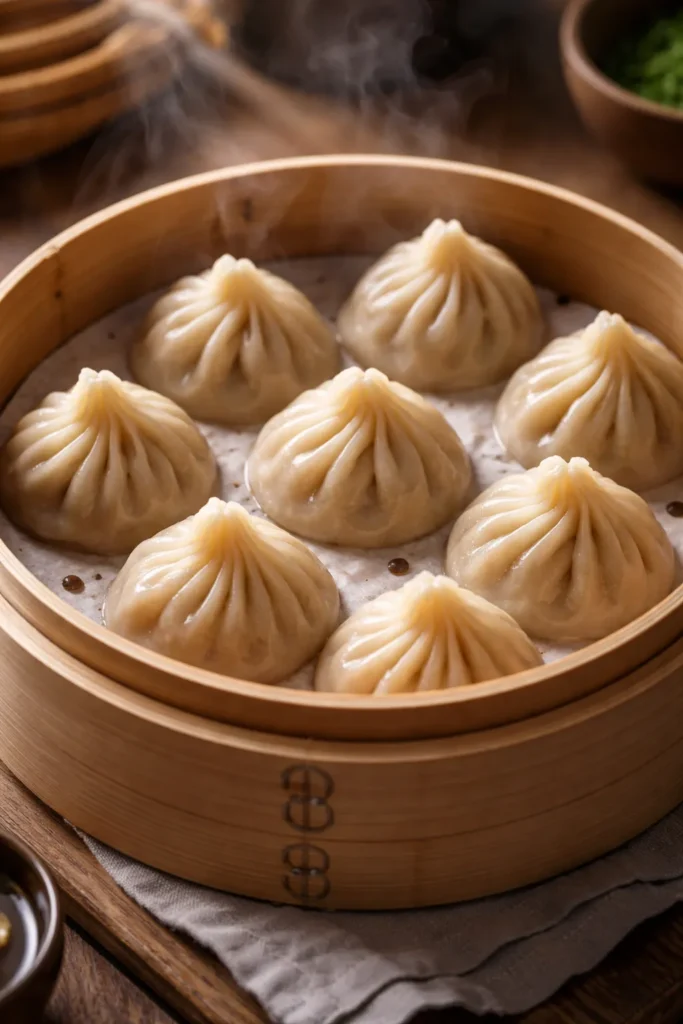
Soup dumplings look intimidating. They’re not. The technique just requires a bit of planning, and the payoff is completely worth it — you bite into a thin wrapper and get a rush of hot, savory broth alongside seasoned ground pork filling. It’s one of the most satisfying single bites in all of food.
The Broth Trick You Need to Know
The “soup” inside each dumpling isn’t added as liquid — it starts as a gelatinized broth that you stir into the filling. Simmer chicken stock with a packet of unflavored gelatin, pour it into a flat dish, and refrigerate until firm. Once solid, chop it into small pieces and mix it into your pork filling. When the dumplings steam, the gelatin melts into liquid broth right inside the wrapper.
How to Make It
For the filling, combine 8 oz of ground pork with 1 tablespoon of soy sauce, 1 teaspoon of sesame oil, 1 teaspoon of fresh grated ginger, 1 clove of minced garlic, and ½ teaspoon of white pepper. Fold in ½ cup of the chopped gelatin broth. Use store-bought dumpling wrappers to save time — place a teaspoon of filling in the center, gather the edges, and pleat them closed. Steam in a bamboo steamer lined with parchment for 8-10 minutes.
Quick Facts
- The soup gelatin should be cut into pieces no larger than a pea
- Let the dumplings rest for 30 seconds after steaming before moving them — the bottoms firm up and they’re less likely to tear
- Serve with a dipping sauce of equal parts soy sauce and rice vinegar, plus a few threads of fresh ginger
3. Lion’s Head Meatballs in Savory Broth
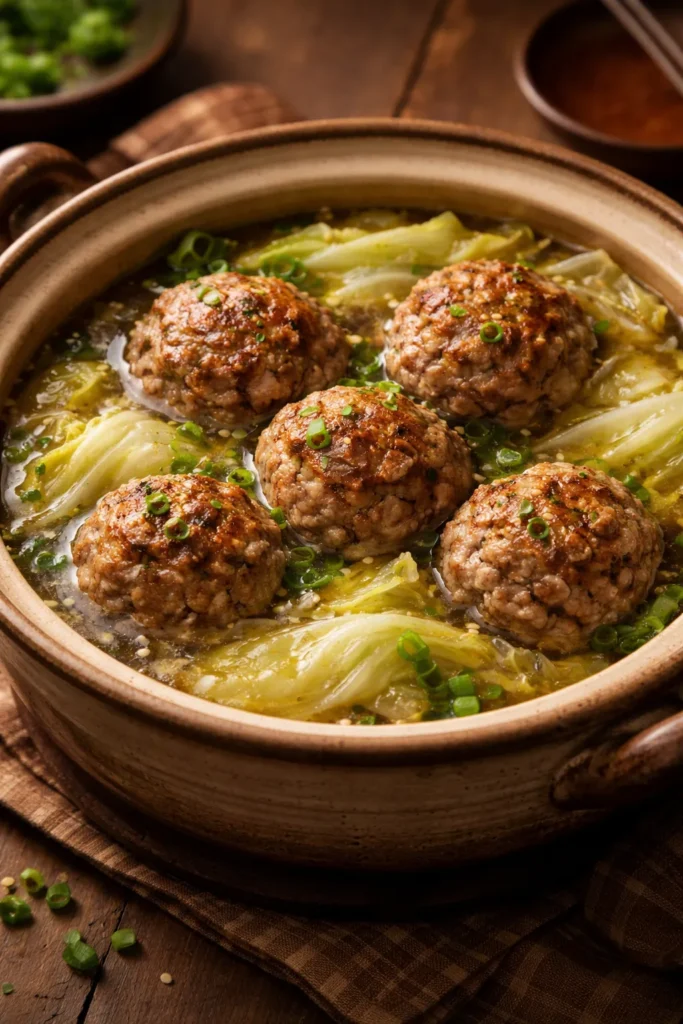
The name is dramatic, but the dish is cozy and deeply comforting. Lion’s Head meatballs are a Chinese braised dish where large, tender ground pork meatballs are nestled in napa cabbage and simmered in a simple, fragrant broth. The cabbage leaves fan out around the meatballs, which is supposedly how the dish got its name — the crinkled leaves resemble a lion’s mane.
What Sets These Apart from Regular Meatballs
These are nothing like Italian-style meatballs. They’re softer, almost silky in texture, because the meat mixture is worked in one direction until it becomes almost paste-like before shaping. That technique, combined with a bit of water chestnut chopped into the mix, gives them a uniquely tender bite with small pockets of crunch throughout.
How to Make It
Combine 1 lb of ground pork with 2 tablespoons of soy sauce, 1 tablespoon of Shaoxing wine (or dry sherry), 1 teaspoon of sesame oil, 1 teaspoon of fresh ginger, ½ cup of finely chopped water chestnuts, and 2 tablespoons of cornstarch. Stir the mixture in one direction for about 3 minutes until it becomes sticky and cohesive. Form into 4 large balls. Brown them in a Dutch oven with a little oil, then add 2 cups of chicken broth and a head of napa cabbage cut into large pieces. Cover and braise on low heat for 45 minutes.
Key Details
- Stirring in one direction develops the protein structure and creates that signature silky texture
- Water chestnuts are the secret ingredient — don’t skip them
- This dish reheats beautifully, and the broth gets even better the next day
4. Ground Pork Banh Mi Rice Bowls
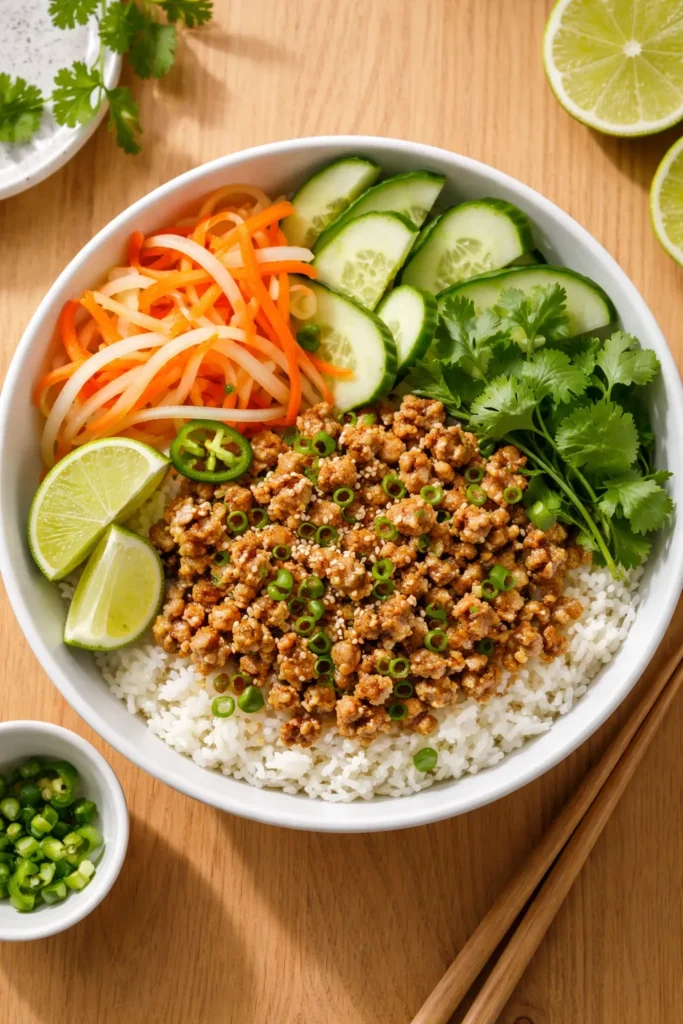
Traditional banh mi is a Vietnamese sandwich with layers of seasoned meat, pickled vegetables, cilantro, and a slick of mayo on a crusty baguette. This bowl version skips the bread and keeps everything else — the contrasts of tangy, savory, fresh, and rich that make banh mi such a brilliant combination.
Why the Bowl Format Works
Bowls are more forgiving than sandwiches. You can pile on more pickled veg, more herbs, more pork, without anything falling apart. And the seasoned ground pork works even better in this format because every forkful picks up rice, pickles, and meat together in one bite.
How to Make It
For the pork, cook 1 lb of ground pork in a hot skillet with 2 tablespoons of fish sauce, 1 tablespoon of soy sauce, 1 teaspoon of brown sugar, 2 cloves of garlic, and a pinch of black pepper. Cook until browned and slightly caramelized at the edges.
For quick pickled vegetables, combine ½ cup of julienned carrots and ½ cup of thinly sliced daikon in a bowl with 3 tablespoons of rice vinegar, 1 tablespoon of sugar, and 1 teaspoon of salt. Let sit for at least 20 minutes. Serve the pork over jasmine rice, top with pickled vegetables, sliced cucumber, fresh cilantro, and a drizzle of sriracha mayo (2 tablespoons mayo + 1 teaspoon sriracha).
Quick Facts
- The pickled vegetables can be made days ahead and kept in the fridge
- Fish sauce is the key flavor note here — it smells strong but tastes incredible cooked into the pork
- Add a soft-boiled egg on top to make this an even more complete meal
5. Crispy Stuffed Lotus Root with Ground Pork
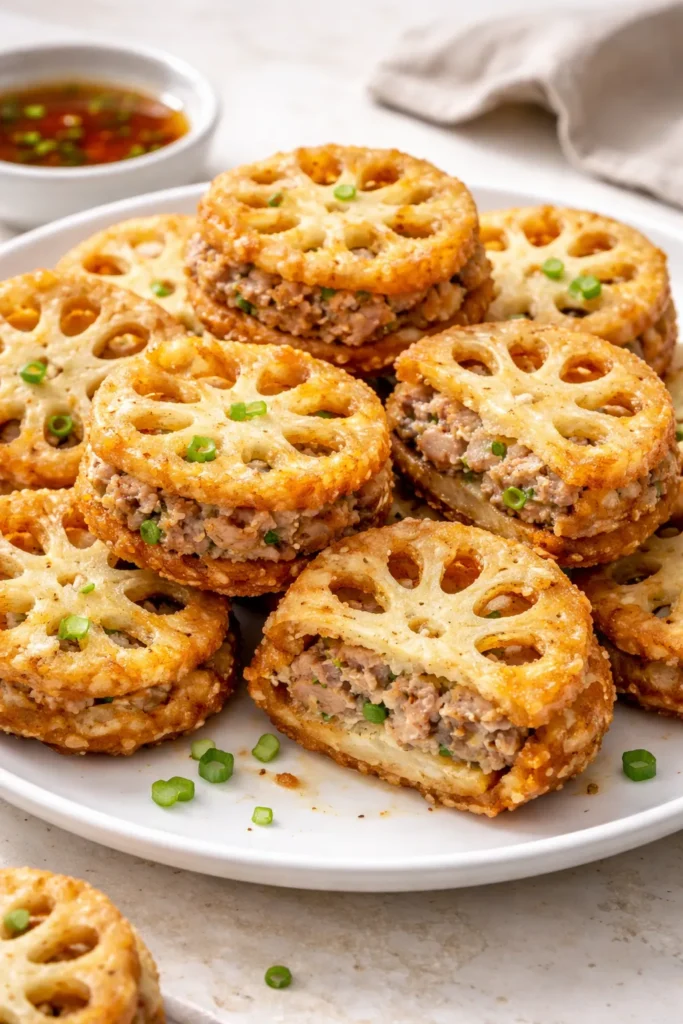
This is a dish that stops people mid-conversation. Stuffed lotus root — slices of the crunchy, hole-filled vegetable sandwiched around a layer of seasoned ground pork, dipped in a light batter, and pan-fried until golden — is a classic Chinese preparation that’s almost never made at home outside of Chinese households.
What Lotus Root Tastes Like
If you’ve never cooked with lotus root, it has a mild, slightly starchy flavor with a satisfying crunch even after cooking. It looks like a thick wheel with hollow channels running through it. The contrast between the crunchy lotus and the juicy pork filling is genuinely unlike anything else.
How to Make It
Slice a section of fresh lotus root into ¼-inch thick rounds. For the filling, mix 8 oz of ground pork with 1 tablespoon of soy sauce, 1 teaspoon of sesame oil, 1 teaspoon of grated ginger, 1 clove of minced garlic, and 1 green onion finely chopped. Spread a thin layer of pork onto one lotus round and press another on top, creating a sandwich. For the batter, whisk ½ cup of flour with ¼ cup of cornstarch, 1 egg, and enough cold water to make a thin, pancake-like consistency. Dip each stuffed lotus round in the batter and pan-fry in ½ inch of neutral oil for 3-4 minutes per side until golden. Drain on a wire rack and serve with soy sauce mixed with a splash of rice vinegar.
Key Details
- Fresh lotus root is available at most Asian grocery stores, often vacuum-sealed or in the produce section
- Keep the batter cold — it creates a crisper coating
- Don’t crowd the pan; cook in batches so everything gets genuinely golden
6. Pork Crepinettes with Dried Fruit
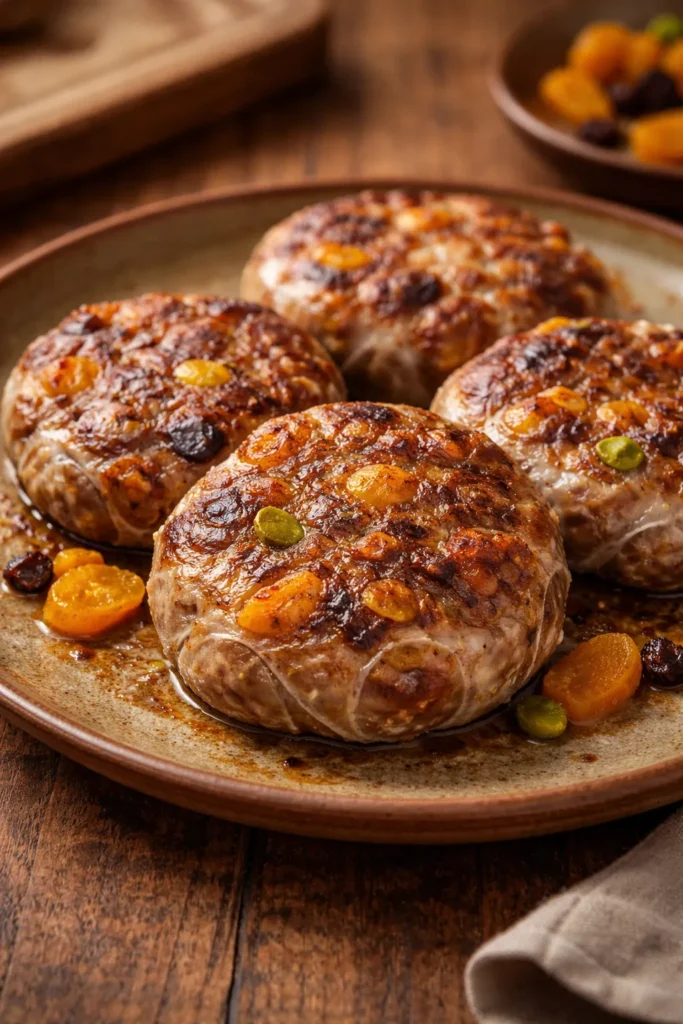
Crepinettes are French sausage patties that most people have never heard of, let alone made. They’re essentially seasoned ground pork shaped into flat patties and wrapped in caul fat — a lacy membrane from the pig’s stomach — then pan-fried until the fat crisps up into something extraordinary. If caul fat sounds too adventurous, these work beautifully without it, but the version with it is on another level.
Why These Beat Regular Sausage Patties
The fat-to-meat ratio in crepinettes, combined with the aromatics and dried fruit, creates a flavor that’s simultaneously rich and bright. Dried apricots chopped finely into the mix add a subtle sweetness that pairs with the savory pork in a way that feels upscale without requiring any skill.
How to Make It
Combine 1 lb of ground pork with ¼ cup of finely chopped dried apricots, ¼ cup of chopped pistachios, 1 tablespoon of fresh thyme leaves, 1 teaspoon of kosher salt, ½ teaspoon of black pepper, and 1 clove of minced garlic. Mix gently and form into 4 flat patties about ¾ inch thick. If using caul fat, wrap each patty so the fat covers most of the surface. Pan-fry in a dry skillet over medium heat for 5-6 minutes per side. The caul fat will render and crisp up on its own. Without caul fat, add a small knob of butter to the pan.
Quick Facts
- These are excellent served alongside roasted potatoes and a simple green salad
- Dried figs or cranberries work in place of apricots for a different flavor profile
- The patties can be formed up to a day ahead and kept refrigerated, covered
7. Spicy Pork and Sesame Noodles
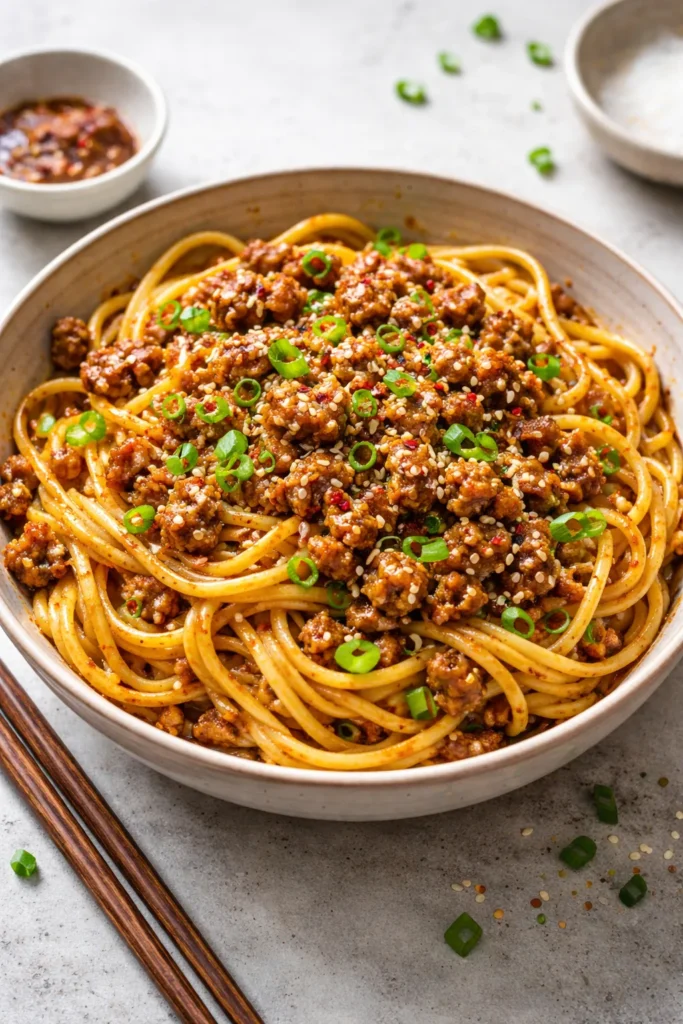
These noodles hit all the flavor notes at once — savory, nutty, spicy, and bright — and they come together in about 20 minutes. It’s the kind of dish that tastes like it came from a restaurant, but costs a fraction of the price and uses ingredients you can keep stocked at all times.
Building the Sauce
The sauce is the heart of this dish. Tahini or Chinese sesame paste, soy sauce, rice vinegar, chili oil, a touch of honey, and a clove of raw garlic blended together create something that coats noodles perfectly. It’s thick enough to cling but not so heavy that it feels like paste. The ground pork gets cooked with just garlic and a splash of soy sauce, then the sauce goes over the top.
How to Make It
Cook 8 oz of any noodle — soba, ramen, or even spaghetti works — according to package directions. In a small bowl, whisk together 3 tablespoons of tahini, 2 tablespoons of soy sauce, 1 tablespoon of rice vinegar, 1 tablespoon of chili crisp oil, 1 teaspoon of honey, and 2 tablespoons of warm water to loosen. Cook ¾ lb of ground pork in a hot skillet with 2 cloves of minced garlic and 1 tablespoon of soy sauce until browned and slightly crispy at the edges. Toss drained noodles with pork and pour sauce over everything. Garnish with sliced cucumber, chopped peanuts, green onions, and a drizzle of extra chili oil.
Key Details
- Reserve ¼ cup of pasta water before draining — it helps loosen the sauce if needed
- Chili crisp (the oil with crispy bits) adds more complexity than plain chili oil alone
- This dish is excellent served cold the next day, making it a strong meal-prep option
8. Ground Pork Shepherd’s Pie
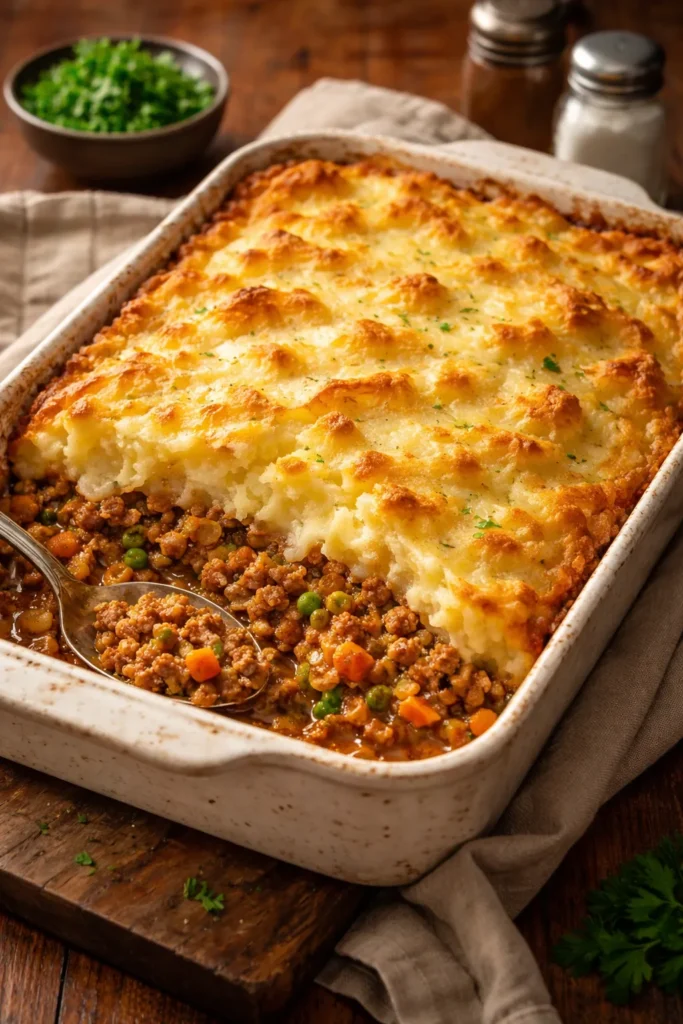
Shepherd’s pie made with lamb is traditional. The beef version is technically a “cottage pie.” A pork version? That’s the one almost nobody makes — and it’s genuinely worth exploring. Ground pork’s natural richness works beautifully under a blanket of creamy mashed potato, and the flavor is more nuanced than the beef version most people grew up with.
What Changes with Pork
Pork has a slightly sweeter base note compared to beef, which means the aromatic components — onion, carrots, celery, garlic — stand out more clearly. The filling also stays juicier during baking, which means you don’t end up with a dry, dense base under the potato topping.
How to Make It
Cook 1 lb of ground pork in a large oven-safe skillet over medium-high heat until browned. Add 1 diced onion, 2 diced carrots, 2 stalks of diced celery, and 3 cloves of minced garlic. Cook for 5 minutes. Stir in 2 tablespoons of tomato paste, 1 cup of chicken or pork stock, 1 teaspoon of Worcestershire sauce, 1 teaspoon of fresh thyme, and ½ cup of frozen peas. Simmer for 10 minutes until the liquid reduces by half. Top with 3 cups of mashed potatoes, spread evenly to the edges. Bake at 400°F (205°C) for 20-25 minutes until the potato top is golden in spots.
Quick Facts
- A sprinkle of cheddar cheese over the potato layer adds a great crust
- The filling can be made the night before and refrigerated; just add the potato topping before baking
- Don’t skip the Worcestershire — it adds the dark, savory undertone the dish needs
9. Pork and Cabbage Pan-Fried Dumplings
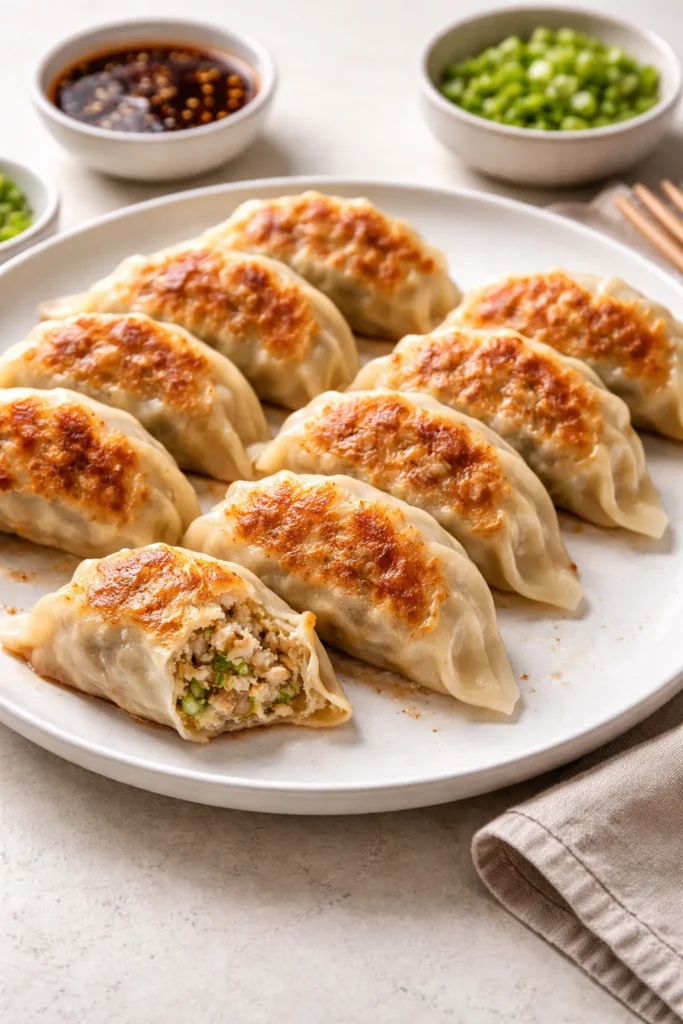
Forget the frozen bags from the grocery store. Homemade pan-fried dumplings with a ground pork and napa cabbage filling are in a completely different league, and they’re far more achievable than most people assume. The filling takes 10 minutes to throw together, and store-bought dumpling wrappers mean you skip the hardest part of the process entirely.
The Filling That Makes It Work
Napa cabbage, once salted and squeezed dry, releases its moisture and becomes almost silky in the filling. Combined with ground pork, ginger, garlic, soy sauce, sesame oil, and a hit of five-spice powder, this filling is complex and deeply savory. The five-spice is the detail that elevates it above basic dumpling filling.
How to Make It
Finely chop 2 cups of napa cabbage, toss with 1 teaspoon of salt, and let sit for 10 minutes. Squeeze out as much liquid as possible with your hands. Combine the cabbage with 10 oz of ground pork, 2 cloves of minced garlic, 1 tablespoon of grated fresh ginger, 2 tablespoons of soy sauce, 1 tablespoon of sesame oil, and ¼ teaspoon of Chinese five-spice powder. Place a heaping teaspoon of filling in the center of a wrapper, dampen the edges with water, fold in half, and press to seal with small pleats.
To cook, heat 2 tablespoons of oil in a nonstick skillet over medium-high heat. Add dumplings flat-side down and cook until the bottoms are golden, about 2-3 minutes. Add ¼ cup of water, cover immediately, and steam for 5-6 minutes until cooked through. Remove the lid and let any remaining water evaporate for another minute.
Key Details
- Squeezing every drop of moisture from the cabbage is essential — a wet filling steams instead of sears
- Dip in soy sauce mixed with rice vinegar and a few drops of chili oil
- These freeze perfectly before cooking — freeze on a parchment-lined tray, then transfer to a bag
10. Pork Dirty Rice
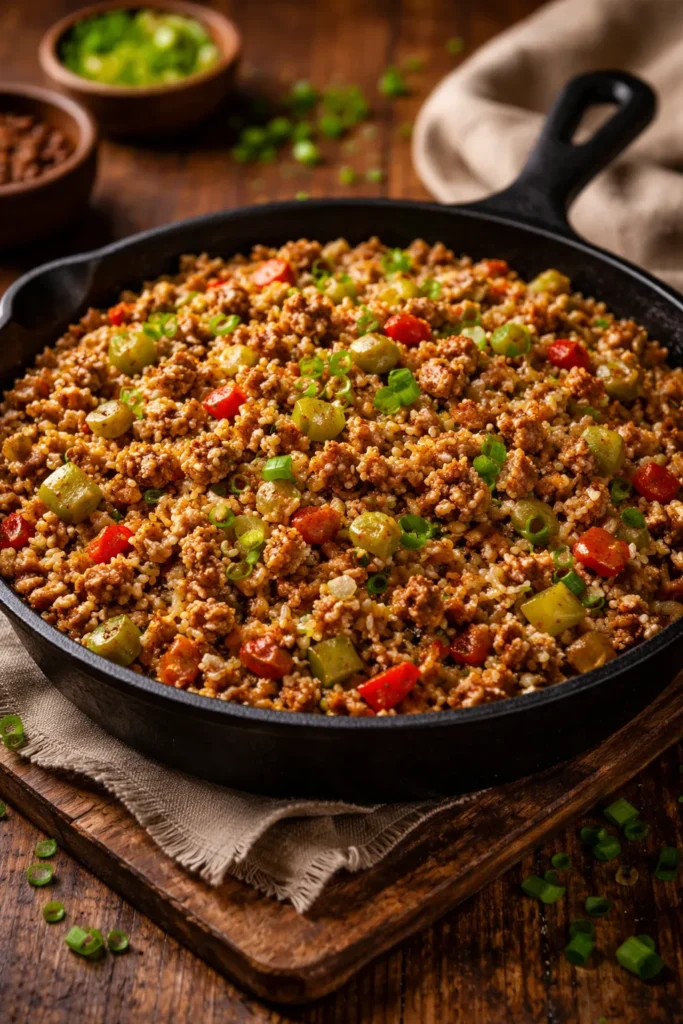
Dirty rice is a Louisiana staple that gets its name from the way ground meat “dirties” the white rice with dark, savory bits as everything cooks together. The traditional version uses chicken livers and ground beef, but ground pork works just as well and adds a richness that stands up to the bold Creole seasoning.
Why This Is Worth Making
It’s a one-pan dish that feeds four people for very little money, takes about 30 minutes, and has a flavor that punches far above its humble ingredients. The trick is building the seasoning in layers — garlic and onion first, then the pork, then the spices before anything else goes in.
How to Make It
Cook 1 lb of ground pork in a large skillet over medium-high heat until browned. Remove and set aside. In the same pan, cook 1 diced onion, 1 diced green bell pepper, and 2 stalks of diced celery until soft, about 5 minutes. Add 4 cloves of minced garlic, 1 teaspoon of smoked paprika, 1 teaspoon of dried oregano, ½ teaspoon of cayenne, and ½ teaspoon of black pepper. Stir for 60 seconds. Return the pork to the pan and add 1½ cups of long-grain white rice, stirring to coat. Pour in 2½ cups of chicken stock and bring to a boil. Cover, reduce to low, and cook for 18 minutes. Remove from heat, let steam for 5 minutes, then fluff with a fork. Finish with 2 tablespoons of Worcestershire sauce, a sliced bunch of green onions, and a handful of fresh parsley.
Quick Facts
- The fond (browned bits) left from the pork adds huge flavor to the rice — don’t wash the pan
- This reheats well with a splash of water stirred in before microwaving
- For more heat, add a sliced fresh jalapeño with the aromatics
11. Vietnamese-Style Ground Pork Lettuce Cups
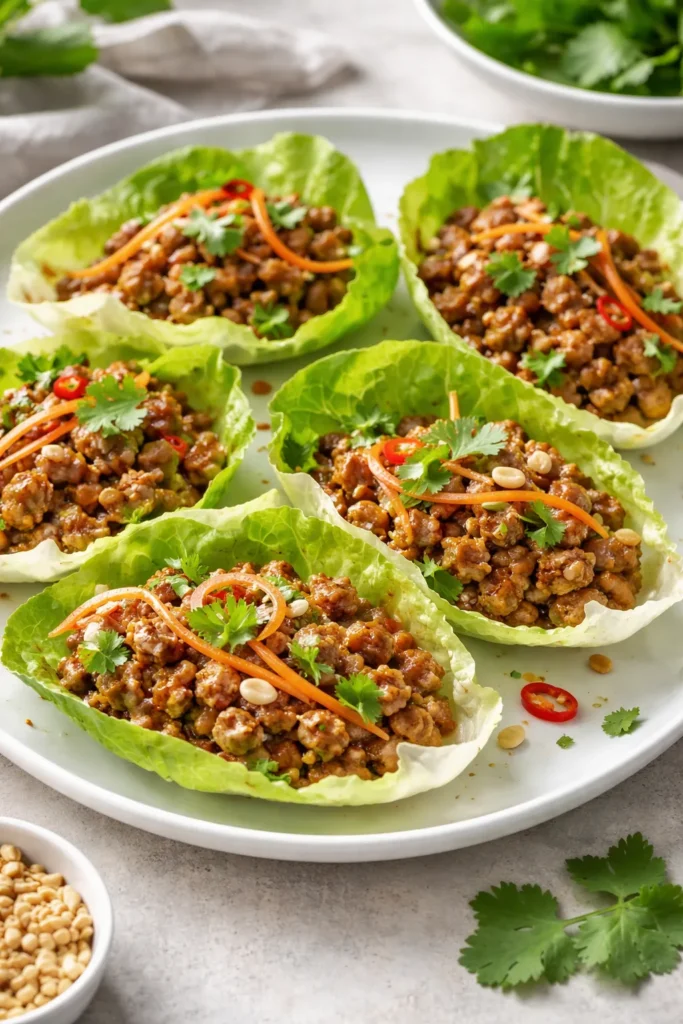
These are the lighter alternative to dumplings and noodle dishes — ground pork lettuce cups built on fresh aromatics, a slightly sweet and tangy sauce, and crunchy toppings that make every bite feel alive. The filling is inspired by Vietnamese bun cha, with fish sauce doing most of the heavy flavor lifting.
What Goes Into the Filling
Fish sauce is the ingredient most home cooks hesitate over, but it’s the difference between good and extraordinary here. It adds a savory depth that soy sauce alone can’t replicate. Paired with garlic, fresh ginger, brown sugar, rice vinegar, and a touch of chili, the sauce caramelizes slightly around the pork as it cooks, creating edges that are almost lacquered.
How to Make It
Cook 1 lb of ground pork in a hot skillet with 1 tablespoon of oil until browned, breaking it into small crumbles. Add 3 cloves of minced garlic and 1 tablespoon of grated ginger, cooking for 60 seconds. Stir in 2 tablespoons of fish sauce, 1 tablespoon of soy sauce, 1 tablespoon of brown sugar, and 1 tablespoon of rice vinegar. Cook for another 2 minutes until the liquid reduces and coats the meat. Fold in ½ cup of finely chopped water chestnuts for crunch.
Serve in butter lettuce leaves topped with julienned carrots, fresh mint leaves, sliced cucumber, a handful of crushed peanuts, and a drizzle of chili sauce.
Key Details
- Butter lettuce is the best choice — it forms a natural cup and doesn’t overpower the filling
- Make the pork filling up to 3 days ahead and assemble right before serving
- A squeeze of fresh lime over the top just before eating brightens everything up
12. Ground Pork and Butternut Squash Lasagna
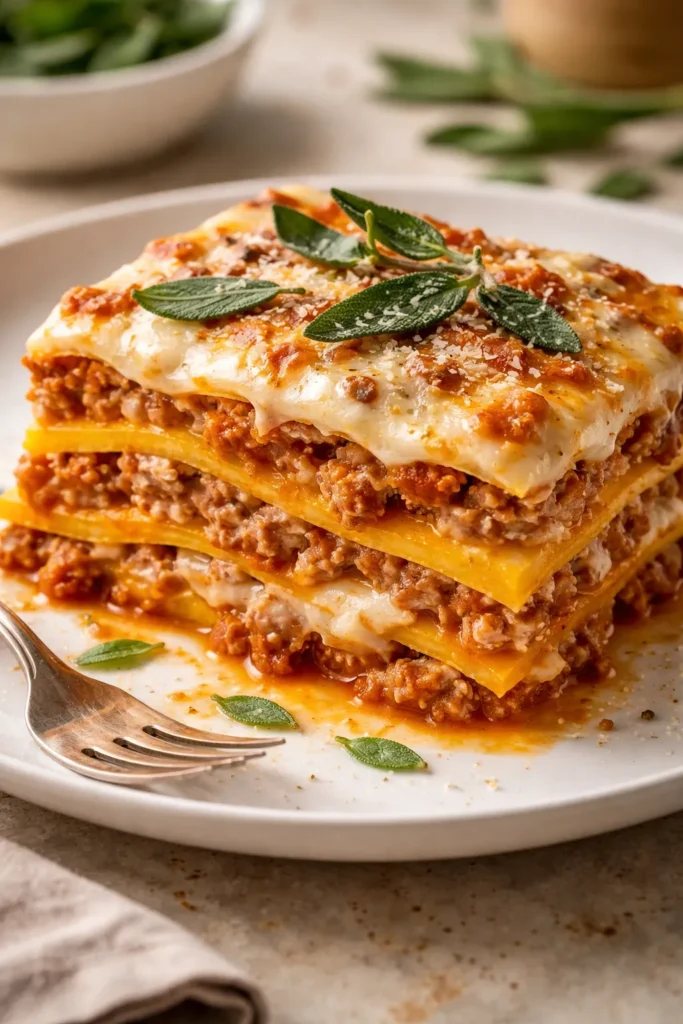
This is probably the most unexpected recipe on this list. Replacing pasta sheets with thin slices of roasted butternut squash creates a naturally gluten-free lasagna that’s visually stunning, deeply satisfying, and somehow more interesting than the traditional version. Ground pork, rather than beef, adds a lighter richness that lets the sweet squash layers actually come through.
Why This Combination Works
Butternut squash has an earthiness that pairs with the savory-sweet nature of ground pork in an unexpectedly harmonious way. Layer in a simple béchamel and a scattering of sage leaves crisped in butter, and you have something that feels genuinely elevated without being complicated.
How to Make It
Peel a large butternut squash and slice it lengthwise into thin ¼-inch planks using a mandoline or careful knife work. Toss with olive oil, salt, and pepper, and roast on parchment at 400°F (205°C) for 15 minutes until just tender.
For the meat layer, cook 1 lb of ground pork with 1 diced onion, 3 cloves of garlic, 1 teaspoon of fennel seeds, and ½ teaspoon of red pepper flakes. Add one 14 oz can of crushed tomatoes and simmer for 15 minutes.
For the béchamel, melt 3 tablespoons of butter, whisk in 3 tablespoons of flour, then gradually add 2 cups of whole milk. Season with salt, white pepper, and a pinch of nutmeg.
Layer squash, meat sauce, and béchamel in a 9×13 baking dish, repeating twice. Top with ½ cup of grated Parmesan and bake at 375°F (190°C) for 35 minutes until bubbling and golden. Fry fresh sage leaves in a small pan with butter for 2 minutes until crispy and scatter over the top before serving.
Quick Facts
- Let the lasagna rest for 15 minutes before cutting — it holds together far better
- The roasted squash planks must be dry before layering or the dish will be watery
- This dish freezes well before the final bake; wrap tightly and freeze for up to 3 months
Final Thoughts
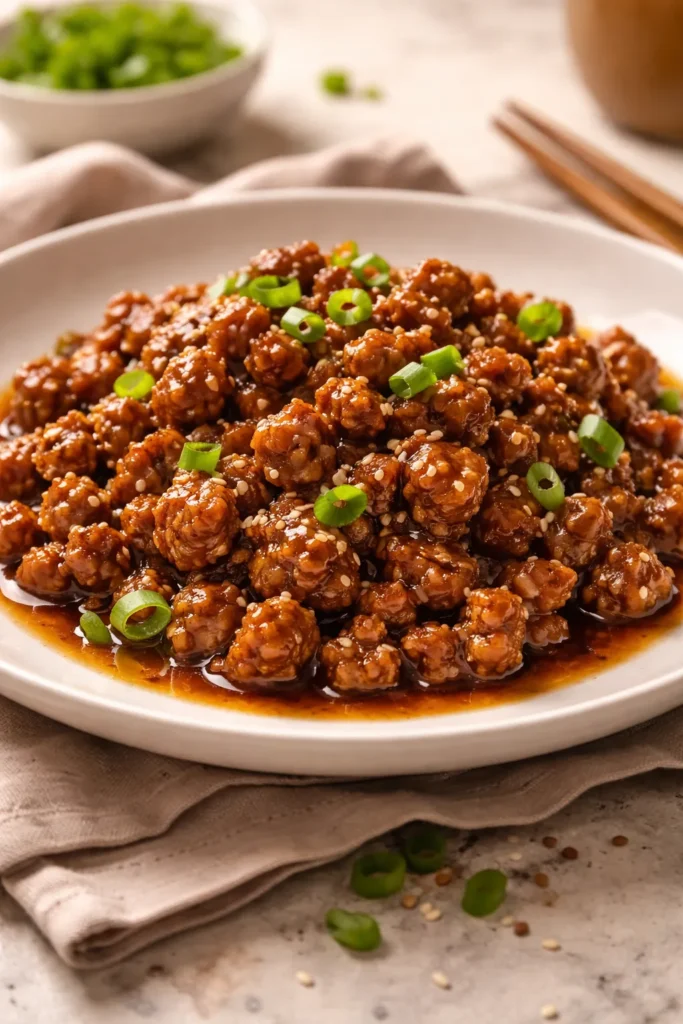
Ground pork earns its place at the top of the weekly shopping list. It’s affordable in a way that doesn’t feel like a compromise, and it carries bold flavors — from Sichuan chilies to French dried fruit to Vietnamese fish sauce — without getting lost under them the way leaner proteins sometimes do.
Start with whatever sounds most appealing to you. The mapo tofu and the lettuce cups are the fastest entries into this world, with the stuffed lotus root and the crepinettes being the most rewarding weekend projects. Once you see how naturally ground pork fits into dishes across different cuisines, you’ll wonder why it ever sat in the shadow of ground beef.
The real benefit of cooking with ground pork isn’t just variety — it’s the way it makes cooking feel interesting again. Pick one recipe, follow it through from start to finish, and see what happens. That’s all it takes to make any of these a regular part of the rotation.