Few dishes pull off the trick of feeling both weeknight-easy and dinner-party-worthy quite like shrimp scampi. There’s something almost magical about the way butter, garlic, white wine, and lemon juice come together in one hot pan — and then manage to coat every shrimp in a glossy, fragrant sauce that makes you want to lick the plate clean.
The thing is, “shrimp scampi” isn’t a single dish. It’s more like a flavor philosophy — built on that garlic-butter-acid base — that has spawned dozens of delicious variations. Some take under 10 minutes. Some involve pasta. Some go low-carb, some go bold with heat, and at least one version uses a French wine technique that’ll make your sauce taste like it came out of a restaurant kitchen.
Whether you’ve got frozen shrimp in the freezer and 15 minutes before dinner, or you’re planning a proper date night meal, one of these 10 versions is going to hit exactly right.
Table of Contents
- 1. Classic 10-Minute Garlic Butter Shrimp Scampi
- How to Make It
- The Key Details
- 2. Shrimp Scampi with Linguine
- The Full Pasta Version
- What Makes It Special
- 3. Shrimp Scampi with Angel Hair Pasta
- Ingredient Adjustments for Angel Hair
- Quick Facts
- 4. Baked Shrimp Scampi with Herbed Breadcrumbs
- How the Baked Version Works
- Why It Works
- 5. Low-Carb Shrimp Scampi with Zucchini Noodles
- Making It Work Without the Mush
- Quick Facts
- 6. Elevated Shrimp Scampi with Dry Vermouth
- The Baking Soda Trick
- The Emulsified Butter Sauce
- 7. Shrimp Scampi Without Wine (Chicken Broth Version)
- How to Substitute
- What Else Changes
- Quick Facts
- 8. Spicy Shrimp Scampi with Jalapeño and Fish Sauce
- Flavor-Building Steps
- Quick Facts
- 9. Marinated Shrimp Scampi with a 20-Minute Flavor Soak
- Why the Marinade Matters
- The Cooking Process
- Quick Facts
- 10. Shrimp Scampi over Creamy Polenta or Rice
- Building the Polenta Base
- Quick Facts
- Final Thoughts
1. Classic 10-Minute Garlic Butter Shrimp Scampi
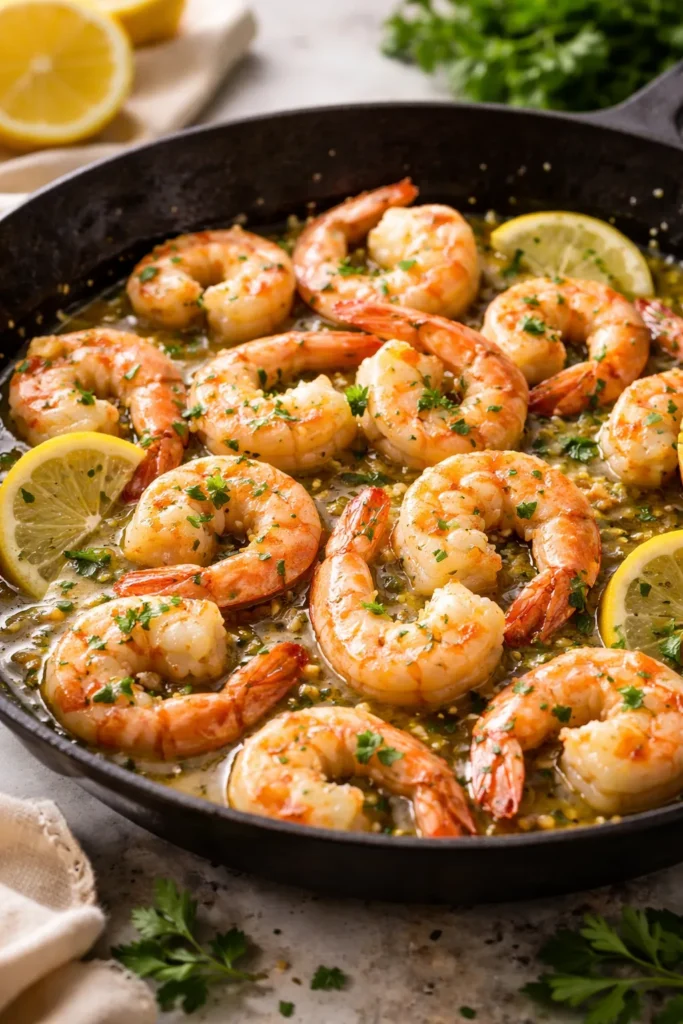
This is the one. The version you come back to on a Tuesday night when you want something that tastes like effort but requires almost none. Jumbo shrimp, butter, olive oil, lots of garlic, a splash of dry white wine, lemon juice, and fresh parsley — that’s the whole list.
The most important thing to understand about this recipe is the speed. Have every ingredient measured and sitting beside the stove before you turn on the heat. This isn’t a dish where you can wander off to grab a lemon from the fridge while the shrimp are in the pan. Everything happens in about 5 minutes of actual cooking time.
How to Make It
Heat 2 tablespoons of olive oil and 2 tablespoons of butter in a large skillet over medium-high heat. Add 4 to 5 minced garlic cloves and sauté for about 30 seconds — just until fragrant, not browned. Add 1¼ pounds of large shrimp (peeled and deveined), season with salt and pepper, and cook for 1 to 2 minutes per side.
Pour in ¼ cup of dry white wine — a Sauvignon Blanc or Pinot Grigio works perfectly — along with a pinch of red pepper flakes if you want a gentle kick. Let it simmer and reduce by half, which takes about 1 to 2 minutes. Take the pan off the heat and stir in 2 more tablespoons of butter, 2 tablespoons of lemon juice, and a generous handful of chopped parsley.
The Key Details
- Don’t overcook the shrimp. Rubbery shrimp happens fast. The moment they curl into a C-shape and turn opaque pink, they’re done.
- Cook shrimp in a butter and olive oil combination — the oil raises the smoke point and keeps the butter from burning before the shrimp are cooked through.
- Serve immediately over rice, pasta, or with crusty bread to soak up every drop of sauce.
Pro tip: Wild-caught shrimp have noticeably better flavor and color than farmed. If you can find them, use them.
2. Shrimp Scampi with Linguine
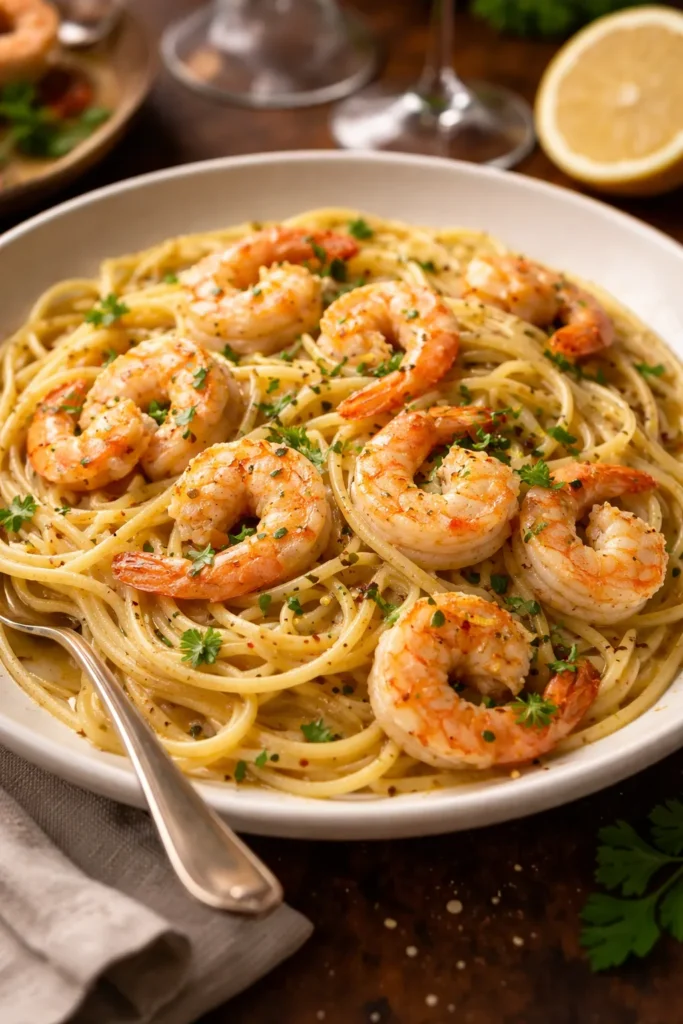
This is the dinner party version — the one that looks like you spent an hour in the kitchen even though you really didn’t. Linguine is the classic pasta partner for scampi because its flat, sturdy shape holds the buttery sauce without getting limp or sliding off the fork.
The trick to making this work is timing. Get your pasta water boiling before you start cooking the shrimp, and cook the linguine until it’s just barely al dente — it’ll finish cooking when you toss it in the sauce. Drain it, but save at least one cup of the pasta water before you pour it down the sink. That starchy liquid is what ties the sauce and pasta together into something cohesive rather than greasy.
The Full Pasta Version
For 4 to 6 servings, cook 1 pound of linguine. While the pasta cooks, melt 2 tablespoons of butter with 2 tablespoons of olive oil in a large skillet over medium-high heat. Sauté 2 finely diced shallots and 2 minced garlic cloves with a pinch of red pepper flakes until the shallots go translucent — about 3 to 4 minutes. Season 1 pound of peeled, deveined shrimp with salt and pepper, add them to the pan, and cook until pink, about 2 to 3 minutes. Pull the shrimp out.
Deglaze with ½ cup of dry white wine and the juice of one lemon, scraping up any browned bits from the bottom of the pan. That’s flavor. Add 2 more tablespoons each of butter and olive oil and let it simmer into a sauce. Toss in the shrimp, the drained pasta, and ¼ cup of chopped parsley. Splash in pasta water, a little at a time, until you reach a consistency that coats everything in a silky sauce.
What Makes It Special
- Shallots instead of just garlic add a gentle sweetness that rounds out the sharp garlic bite
- Scraping the browned bits when deglazing with wine adds incredible depth
- A drizzle of good olive oil right before serving pulls everything together
Finish with a few lemon wedges on the plate and a chunk of garlic bread alongside. It’s a proper dinner.
3. Shrimp Scampi with Angel Hair Pasta
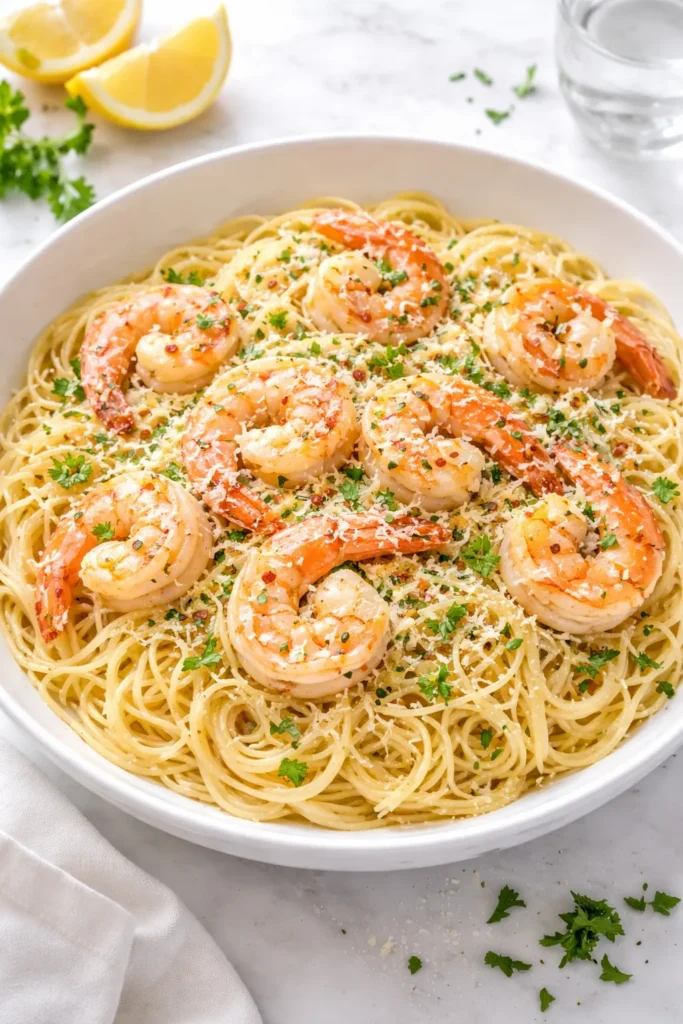
Angel hair scampi is a different experience from linguine entirely — lighter, more delicate, and honestly better for people who want the shrimp to be the clear star of the dish rather than splitting attention with thick, hearty noodles.
Because angel hair cooks in just 4 to 5 minutes and absorbs sauce aggressively, the timing here matters more than in the linguine version. Pull the pasta out just before it’s fully cooked — it’ll keep going from residual heat — and toss it into the sauce immediately so it soaks everything up rather than sitting and clumping.
Ingredient Adjustments for Angel Hair
The base sauce stays the same: butter, olive oil, garlic, white wine, lemon, parsley. The one addition worth making here is grated Parmesan cheese. About ¾ cup stirred in right at the end adds a salty, nutty dimension that clings to the thin pasta strands in a way that genuinely elevates the dish. Use real Parmigiano-Reggiano, not the powdered stuff.
Quick Facts
- 8 ounces of angel hair pasta is enough for 4 people alongside a generous amount of shrimp and sauce
- Toss the pasta with a small drizzle of olive oil right after draining to prevent clumping while you finish the sauce
- Add the cheese off the heat — stirring it in while the pan’s still screaming hot will make it seize rather than melt
Fun fact: The thinner the pasta, the faster it goes cold on the plate, so serve angel hair scampi immediately — don’t let it sit for even a few minutes.
4. Baked Shrimp Scampi with Herbed Breadcrumbs
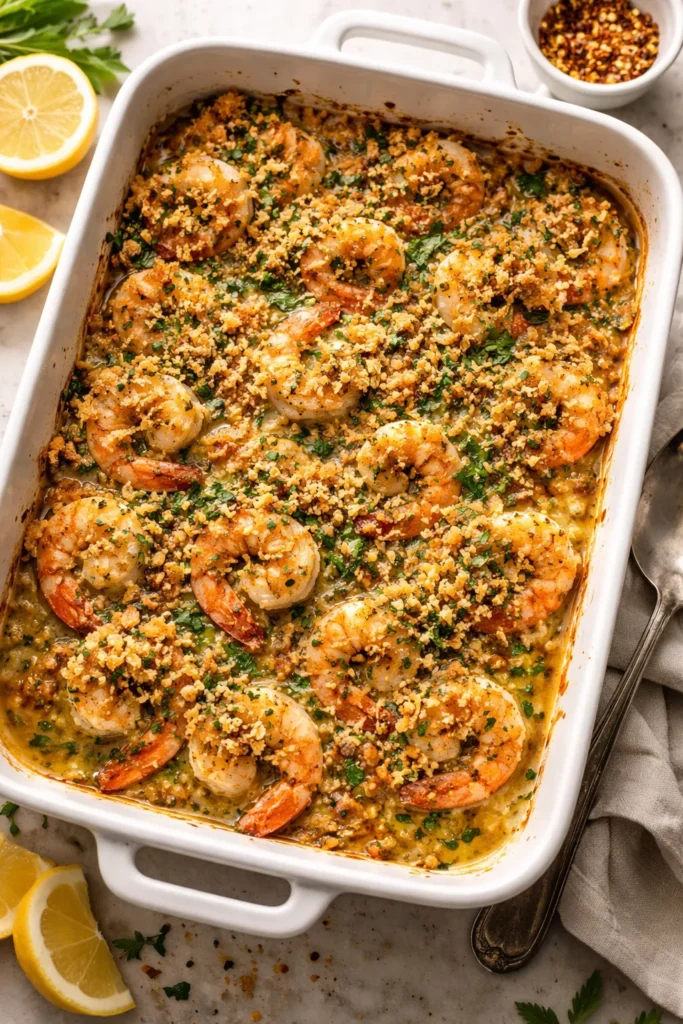
If you’ve only ever made scampi on the stovetop, the baked version is going to feel like a revelation. The oven method is more forgiving (no risk of accidentally overcooking shrimp the second your attention drifts), and the breadcrumb topping adds a golden, crispy layer that soaks up the garlic butter underneath while staying crunchy on top.
This version works beautifully as a party appetizer because the whole dish goes into the oven at once and comes out looking spectacular. It also holds a little better than stovetop scampi, which needs to be served the moment it’s done.
How the Baked Version Works
Toss 1½ pounds of large shrimp with salt, pepper, olive oil, and minced garlic, then arrange them in a single layer in a baking dish. Pour melted butter, white wine, and lemon juice over everything. Mix together plain breadcrumbs with more melted butter, garlic, parsley, and a generous amount of Parmesan, then spread the mixture evenly over the shrimp.
Bake at 425°F (220°C) for about 12 to 14 minutes, until the shrimp are pink and cooked through and the breadcrumb topping is golden brown and crispy. The butter and wine bubble up around the shrimp during baking, essentially braising the bottom while the top toasts.
Why It Works
- The shrimp cook more evenly in the oven than on the stovetop because the heat surrounds them from all sides
- The breadcrumb crust protects the shrimp from drying out while adding serious textural contrast
- You can assemble the whole dish an hour before guests arrive and pop it in the oven when you’re ready
Serve straight from the baking dish with slices of sourdough or ciabatta pressed directly into the buttery sauce pooling at the bottom. People will make embarrassing sounds.
5. Low-Carb Shrimp Scampi with Zucchini Noodles
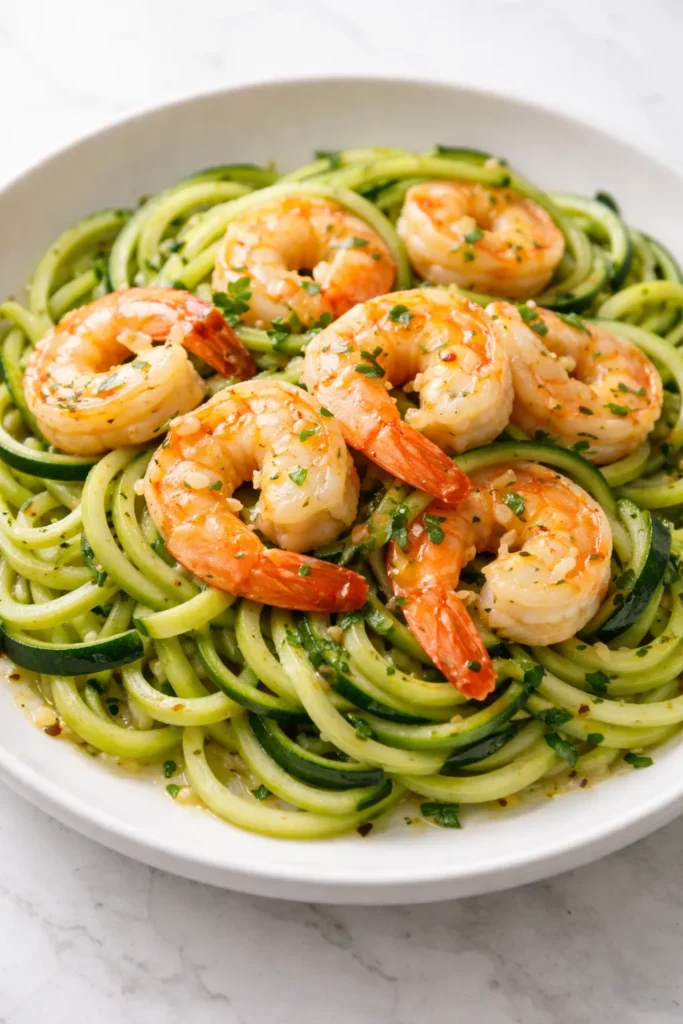
Zucchini noodles, or “zoodles,” get a bad reputation from people who treat them like pasta substitutes that are just… worse. They’re not pasta. They’re a different thing entirely — and when you stop expecting them to behave like linguine and start appreciating them for what they are (a light, fresh, slightly crunchy vehicle for glossy garlic butter sauce), they’re excellent.
The scampi sauce here is identical to the classic version. What changes is simply what you serve it over. The zoodles cook fast — dangerously fast — so they go in at the very end of the process, just long enough to warm through without turning into a watery, soggy pile.
Making It Work Without the Mush
The single biggest mistake with zucchini noodles is overcooking them. Zucchini is about 95% water, and heat drives that water right out. Soggy zoodles pooling in liquid are unpleasant. Here’s how to avoid it:
- Salt the zoodles lightly and let them sit in a colander for 10 minutes before cooking, then pat them dry with paper towels
- Cook them in the residual heat of the sauce — toss them in right after turning off the heat, and the carry-over warmth is enough
- Serve immediately; zoodles do not wait well
Quick Facts
- A spiralizer gives you the best noodle shape, but a vegetable peeler makes acceptable wide ribbons
- Two medium zucchini yields roughly 4 portions of noodles
- The carb count for this version drops from around 60g per serving (with pasta) to about 5g
This version is genuinely satisfying — not a consolation prize, but a genuinely good dinner that happens to be light.
6. Elevated Shrimp Scampi with Dry Vermouth
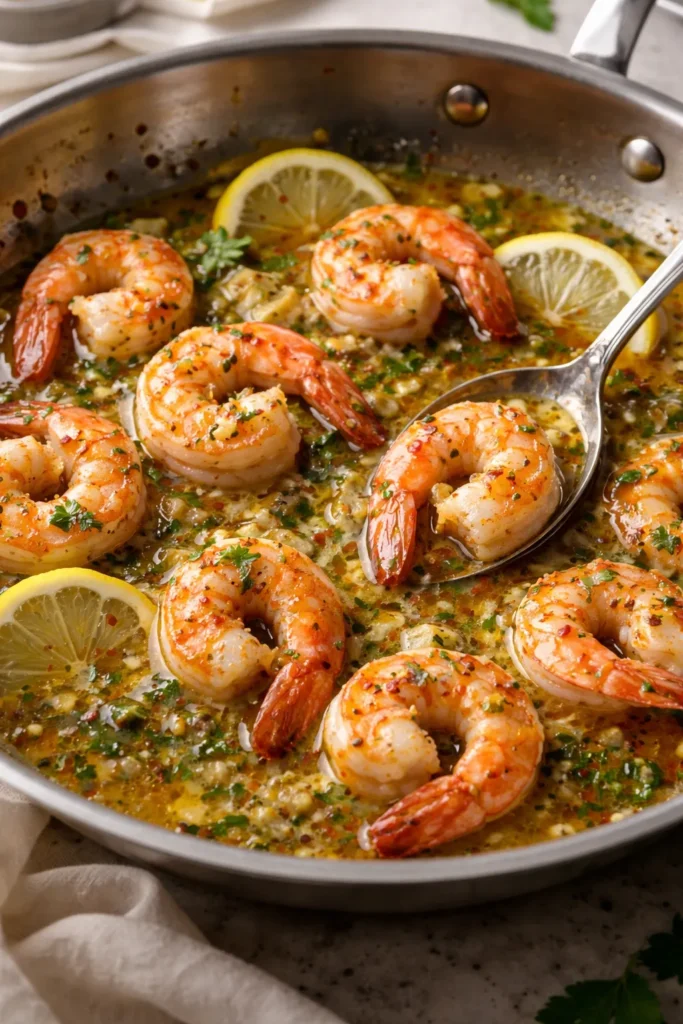
Here’s the version for people who want to understand why scampi tastes the way it does and then make it taste even better. The change is small — swapping dry white wine for dry vermouth — but the effect on the sauce is significant.
Vermouth is a fortified wine with pleasant aromatic, herbal, and slightly oxidized flavors that add more complexity to a pan sauce than a straightforward Pinot Grigio. Because it’s already more concentrated in flavor than regular wine, you can use less of it, which means the sauce reduces faster and stays balanced rather than turning sharp and too acidic.
The Baking Soda Trick
This version also borrows a technique from Chinese cooking that makes a meaningful difference: toss the shrimp with ¼ teaspoon of baking soda and some kosher salt and let them sit for 10 to 60 minutes before cooking. The baking soda raises the surface pH of the shrimp, which affects how the proteins behave under heat — the result is shrimp that come out plumper, more tender, and juicier even when cooked over high heat.
The Emulsified Butter Sauce
The other upgrade here is the sauce technique. Instead of just melting butter into the pan, you swirl and stir cold butter pieces into the reduced vermouth over medium heat, coaxing them to emulsify into a smooth, creamy sauce rather than a greasy butter pool. If it breaks (it can happen), add a teaspoon of cold water and stir vigorously to bring it back.
- Finish with lemon juice, lemon zest, and a mix of fresh herbs — parsley, tarragon, and chives together create a far more aromatic garnish than parsley alone
- Hand-mince the garlic rather than using a Microplane — finely grated garlic releases too much liquid and can produce harsh, acrid fumes in a hot pan
- Use ½ cup of dry vermouth in place of the usual white wine
The result is a silkier, more refined sauce that still hits every classic scampi note — just louder and cleaner.
7. Shrimp Scampi Without Wine (Chicken Broth Version)
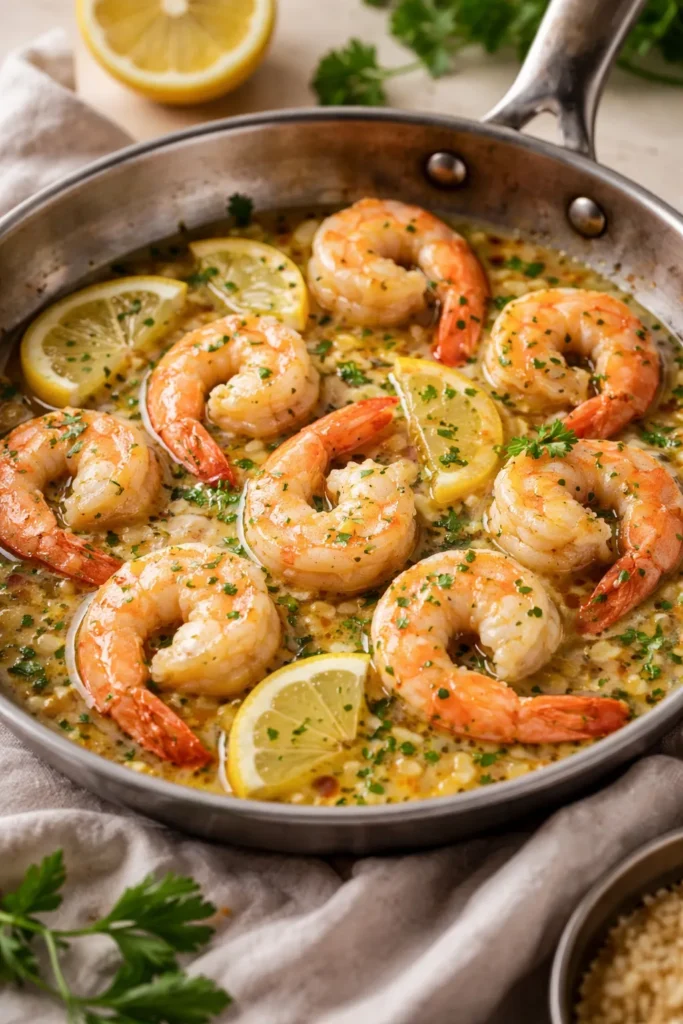
Not everyone cooks with wine, and the good news is that scampi doesn’t strictly need it. The wine’s main job in the sauce is to add liquid for the reduction, contribute some acidity and aromatic depth, and deglaze any browned bits from the pan. A good chicken broth can do most of that work.
The flavor profile shifts slightly — less sharp and fruity, a touch more savory and mellow — but with a little extra lemon juice to compensate for the missing acidity, you still end up with a deeply satisfying scampi sauce.
How to Substitute
Replace the ¼ to ½ cup of white wine with an equal amount of low-sodium chicken broth, then add an extra teaspoon of fresh lemon juice at the end to brighten the sauce. Homemade chicken broth gives the best results, but a good-quality store-bought option works fine. Avoid vegetable broth — its flavor can compete awkwardly with the garlic butter base.
What Else Changes
Not much, honestly. Every other element of the dish stays the same: the butter, olive oil, garlic, red pepper flakes, shrimp, lemon, and parsley. You cook it the same way, in the same order, at the same temperatures.
Quick Facts
- Some cooks use half chicken broth and half water for a lighter result
- Add a small pinch of dried Italian herbs (oregano, basil) to the broth version to add herbal notes the wine would have provided
- This version also works well for families with young children who want to avoid alcohol entirely
Worth knowing: If you have homemade fish stock on hand, that works beautifully too — it reinforces the seafood flavor in a way chicken broth can’t quite match.
8. Spicy Shrimp Scampi with Jalapeño and Fish Sauce
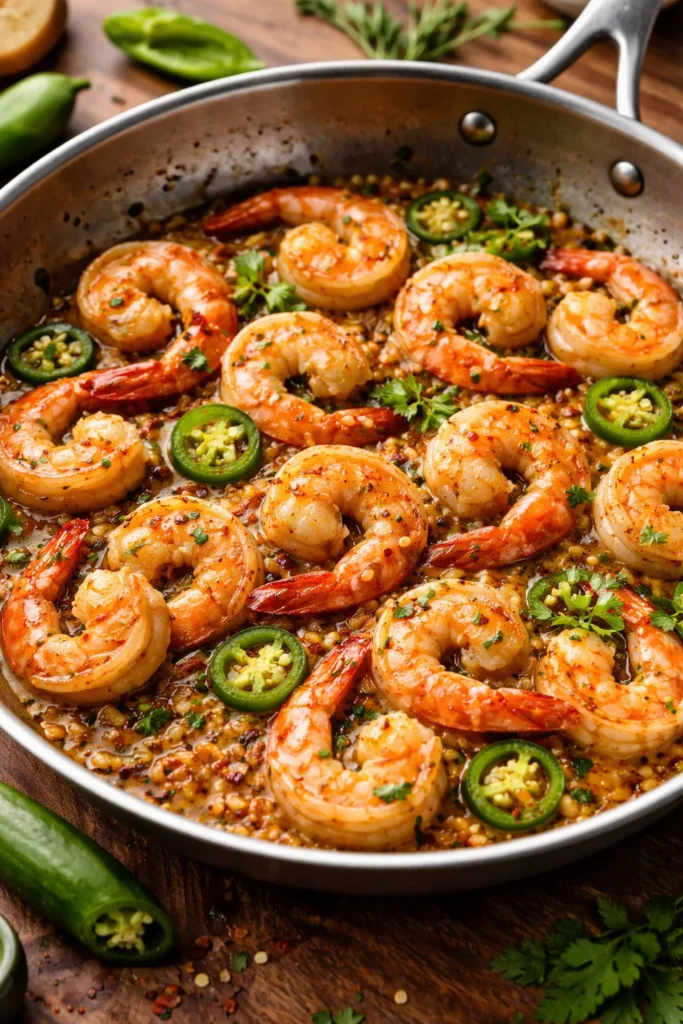
This is the scampi for people who find the classic version a little too polite. Adding fresh jalapeño instead of (or alongside) dried red pepper flakes brings a brighter, more vegetal heat that’s different from the background warmth of chili flakes. Thinly sliced and cooked with the garlic and shallots, the jalapeño softens just enough to mellow without losing its punch.
The real wildcard here is fish sauce — just one teaspoon added to the butter sauce. Fish sauce is pure umami, a concentrated hit of fermented seafood flavor that deepens the sauce in a way that’s impossible to pinpoint but impossible to ignore. It doesn’t make the dish taste fishy. It makes it taste more.
Flavor-Building Steps
Sauté finely chopped red onion and thinly sliced garlic cloves in butter and olive oil until the onion softens and the edges start to turn golden — this takes 4 to 6 minutes and is worth every one of them. Add crushed red pepper flakes or thinly sliced jalapeño, depending on how bold you’re going. Then proceed with the white wine, lemon, and shrimp as usual.
Stir in 1 teaspoon of fish sauce with the butter at the end. Taste the sauce before adding more salt — fish sauce brings its own salinity.
Quick Facts
- For medium heat: 1 jalapeño, seeds and membranes removed
- For real heat: leave the seeds in, or add a serrano pepper instead
- The fish sauce recommendation comes from Alison Roman’s version of the dish, and it genuinely transforms the sauce
Serve this one over rice rather than pasta — the boldness of the sauce pairs better with the neutral backdrop of steamed white rice, where every element of the sauce comes through clearly.
9. Marinated Shrimp Scampi with a 20-Minute Flavor Soak
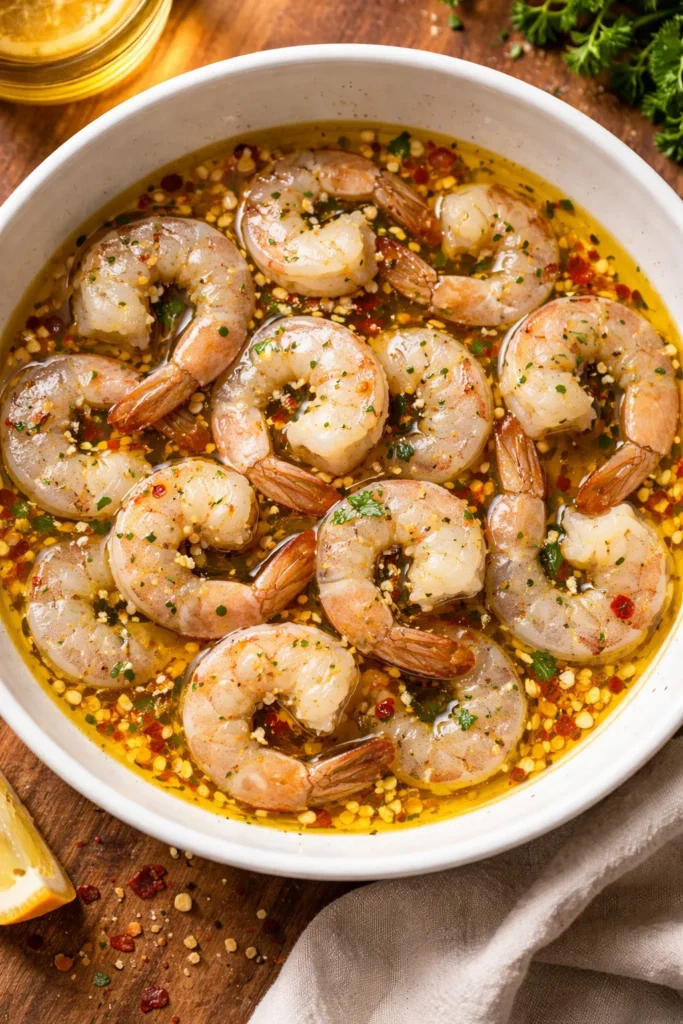
Most scampi recipes are built entirely on speed — shrimp hit the pan, cook for a few minutes, done. This version takes a slightly different approach by marinating the shrimp for 20 minutes before they ever touch heat. The result is shrimp that are more deeply seasoned all the way through rather than just on the surface.
The marinade is simple: olive oil, pressed garlic, kosher salt, and red pepper flakes. Toss the peeled, deveined shrimp in this mixture and let them sit at room temperature for 20 minutes. The oil carries the garlic flavor into the shrimp, and the salt begins to season them throughout rather than just coating the outside.
Why the Marinade Matters
One important note: don’t add lemon juice to the marinade. Acids like lemon juice and vinegar begin to “cook” the surface of the shrimp through a chemical process similar to what happens in ceviche. Left in an acid marinade for even 20 minutes, the shrimp can become mealy and oddly textured before they ever reach the pan. Keep the lemon juice for the sauce, where it does its best work anyway.
The Cooking Process
Cook the marinated shrimp — garlic and all — in a skillet with warm olive oil over medium heat. Give them 1 to 1½ minutes per side, then transfer to a plate. Make the scampi sauce in the same pan using additional butter, remaining garlic, white wine, and lemon juice. Whisk cold butter into the warm sauce to emulsify it, then return the shrimp and finish.
Quick Facts
- Pat shrimp dry before marinating so the marinade actually coats them rather than sliding off wet shrimp
- If any garlic bits turn too dark in the pan while cooking the shrimp, remove them — dark garlic turns bitter and will affect the entire sauce
- This version works with 1 pound of wild-caught large shrimp (21/25 count is a good size)
The 20-minute wait is the only thing that separates this from a standard scampi — and it’s worth every minute.
10. Shrimp Scampi over Creamy Polenta or Rice
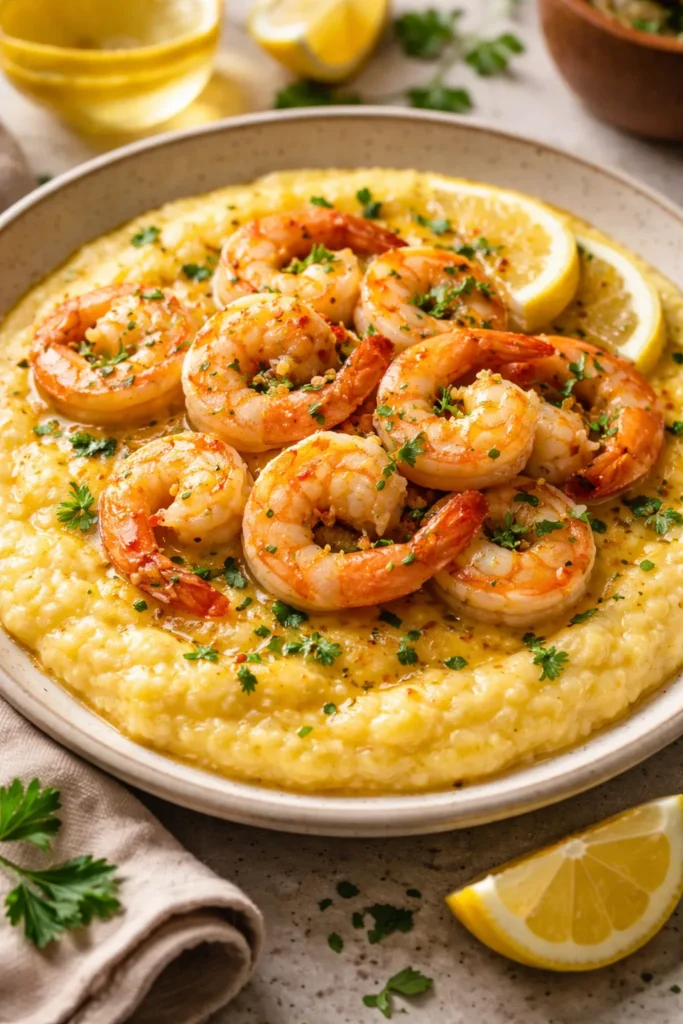
Taking the classic scampi sauce and serving it over something other than pasta opens up a whole new dimension of the dish. Creamy polenta is the most luxurious option — the soft, buttery corn porridge absorbs the garlic-butter sauce from the shrimp in a way that’s almost indecent. Every bite combines that velvety base with the glossy, lemony sauce and the tender shrimp on top.
Plain steamed white rice is the more weeknight-practical version. The neutral flavor of the rice lets every element of the scampi sauce come through without competition, and it’s genuinely one of the most satisfying bowls of food you can make in under 20 minutes.
Building the Polenta Base
For a quick polenta, whisk 1 cup of coarse cornmeal into 4 cups of simmering salted water or chicken broth. Cook over medium-low heat, stirring frequently, for about 20 to 25 minutes until thick and creamy. Finish with 2 tablespoons of butter and a handful of grated Parmesan, then season generously with salt and pepper. Spoon the polenta into wide shallow bowls and ladle the scampi — shrimp and all that buttery sauce — directly over the top.
Quick Facts
- Instant polenta cuts the time to about 5 minutes and works fine as a base for scampi
- Rice should be cooked and ready before you start the shrimp — scampi waits for no one
- Other strong options for serving: mashed cauliflower for low-carb, creamy risotto for a full Italian feel, or quinoa for extra protein
The scampi sauce itself needs no adjustments when you change the base — same butter, garlic, wine, lemon, and parsley every time. The base just changes the mood of the meal.
Final Thoughts
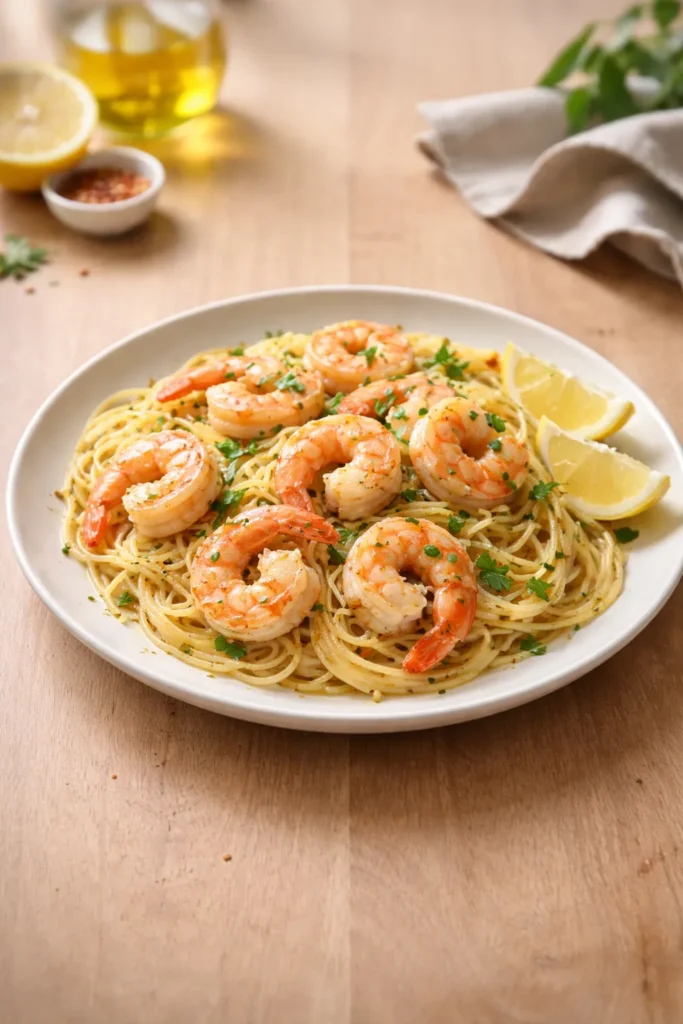
Shrimp scampi might be one of the most forgiving recipes in a home cook’s rotation — it adapts to what you have, how much time you’ve got, and exactly what you’re hungry for. The 10-minute classic on a Tuesday. The linguine version for company. The baked one when you want something hands-off. The zucchini noodle version when you want to eat light but don’t want to sacrifice flavor.
A few things stay constant no matter which version you make: pat the shrimp dry before cooking, don’t walk away from the pan, and pull the shrimp off the heat the moment they’re opaque. Rubbery shrimp is the only real failure mode here, and it’s entirely avoidable.
Pick one version tonight. Then try a different one next week. They’re all worth making.