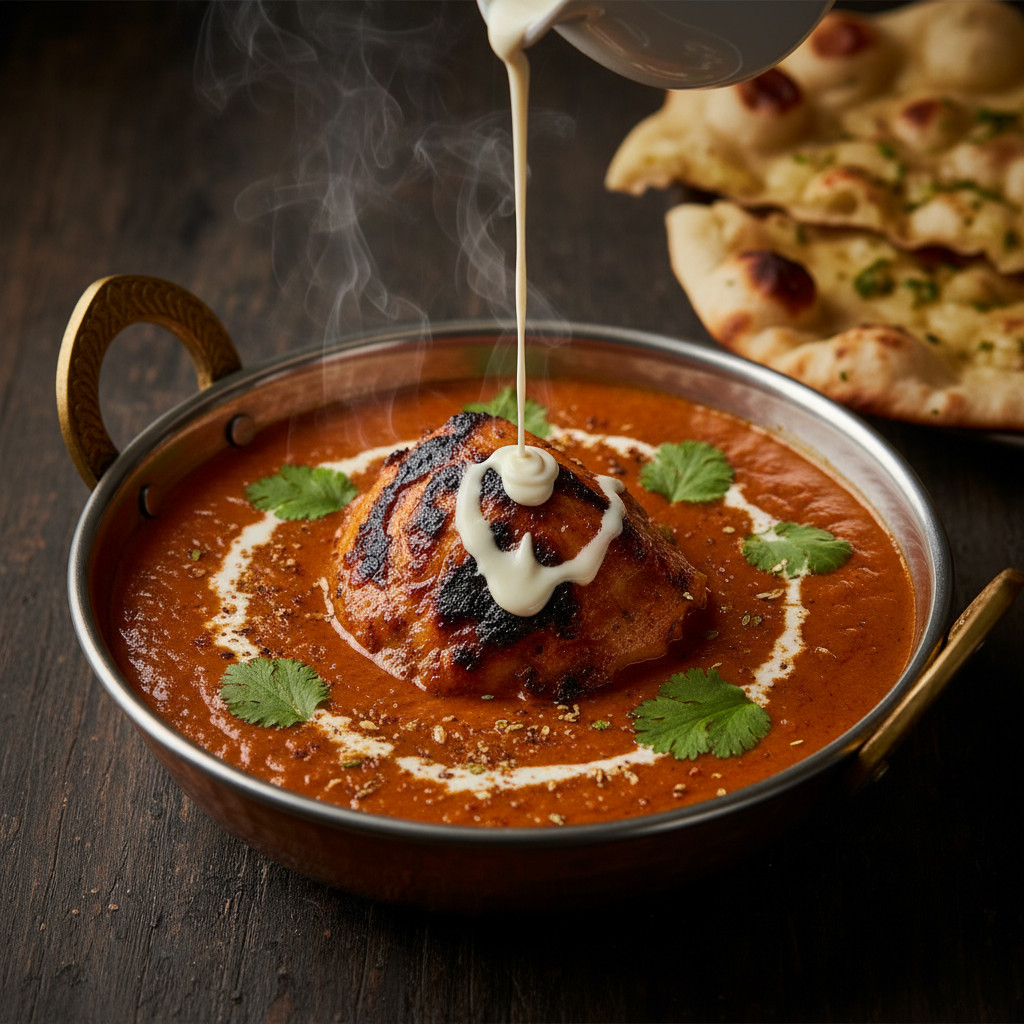
Salmon is one of those rare ingredients that checks every box at once — it’s fast enough for a Tuesday night, impressive enough for a dinner party, and nutritious enough to make a dietitian nod in approval. A single 6-ounce fillet delivers around 34 grams of protein, a full dose of omega-3 fatty acids linked to heart and brain health, and enough B vitamins to make your body genuinely happy. And baking it? That’s where everything clicks into place.
Baking salmon in the oven is the most forgiving cooking method the fish has going for it. Unlike pan-searing, there’s no oil splatter across your stovetop. Unlike grilling, there’s no stress about the fish sticking or falling apart. The oven does most of the work — you just need to know what temperature to use, how long to leave it in, and which flavors to pile on top. That last part is where things get fun.
The ten recipes below cover the full spectrum of baked salmon possibilities. Some are built around pantry staples you already own. Others introduce one or two unexpected ingredients — a spoonful of harissa, a handful of fresh pesto, a hit of sesame and ponzu — that completely transform the fish without adding much work. Whether you cook salmon every week or you’re attempting it for the first time, there’s a recipe here that fits your mood, your schedule, and whatever’s already in your fridge.
Before diving into the recipes themselves, a few things are worth knowing upfront: how to pick a good fillet, what temperature actually produces moist results, and how to tell when the fish is done. Those three pieces of knowledge will make every single recipe on this list work better.
Table of Contents
- How to Choose the Right Salmon at the Store
- What to Look For in the Fish Case
- Frozen Salmon Is Often the Better Option
- The Right Oven Temperature for Baked Salmon
- How to Tell When Baked Salmon Is Done
- 1. Classic Lemon Garlic Baked Salmon
- Key Ingredients
- Why It Works
- 2. Honey Dijon Glazed Baked Salmon
- Key Ingredients
- How to Get the Best Results
- 3. Brown Sugar Paprika Baked Salmon
- Key Ingredients
- The Right Way to Apply a Dry Rub
- 4. Baked Salmon in Foil with Herbs and Garlic
- Key Ingredients
- Building the Foil Packet
- 5. Lemon Garlic Salmon Tray Bake with Asparagus and Cherry Tomatoes
- Key Ingredients
- Timing and Temperature
- 6. Pesto Baked Salmon with Cannellini Beans and Tomatoes
- Key Ingredients
- Building the Dish
- 7. Honey Cilantro Lime Baked Salmon in Foil
- Key Ingredients
- The Lime Swap
- 8. Teriyaki Baked Salmon with Sesame and Scallions
- Key Ingredients
- Avoiding the Saltiness Trap
- 9. Harissa Baked Salmon with Cherry Tomatoes and Shallots
- Key Ingredients
- Heat Level Control
- 10. Garlic Butter Baked Salmon with Lemon and Dill
- Key Ingredients
- The Technique That Makes It Exceptional
- Essential Tips for Perfectly Baked Salmon Every Time
- What to Serve with Baked Salmon
- Storing and Reheating Leftover Baked Salmon
- Final Thoughts
How to Choose the Right Salmon at the Store
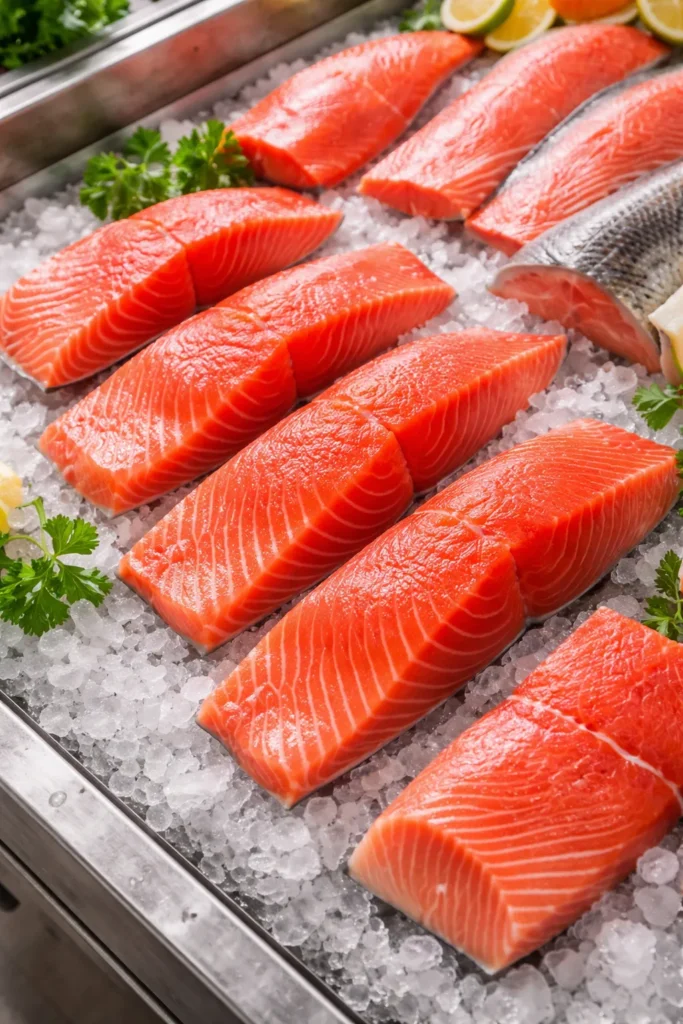
The best baked salmon starts with a good piece of fish — and knowing what to look for saves you from a disappointing dinner before the oven even turns on.
Wild-caught salmon is worth seeking out whenever it’s available. Sockeye, coho, and king (Chinook) are the three varieties you’ll encounter most often at a well-stocked seafood counter. Sockeye has the boldest, meatiest flavor and a gorgeous deep red color. Coho is milder and a bit more forgiving to cook — a great middle-ground choice. King salmon is rich, buttery, and often the most expensive of the three, but when you find it on sale, it’s worth every penny.
Pink salmon and chum salmon round out the Pacific five, but they’re less commonly sold as fresh fillets. Pink is usually what goes into canned salmon. Chum is primarily sold for its roe.
What to Look For in the Fish Case
Fresh salmon should look vibrant, not dull. The flesh should be deeply colored with no gray patches, brown spots, or dried-out edges. If you’re close enough to smell it, fresh salmon should have almost no smell at all — a clean, light ocean scent at most. A strong fishy odor is a clear sign the fish is past its prime.
Skin, if present, should be shiny and tight against the flesh. Avoid any fillet where the skin looks papery, shrunken, or peeling away on its own.
Frozen Salmon Is Often the Better Option
Here’s something worth knowing: a large portion of the “fresh” salmon you see in the fish case was actually frozen at sea immediately after being caught, then thawed at the market. That’s not a bad thing — flash-freezing at peak freshness locks in quality. Buying it frozen yourself and thawing it at home can actually give you a fresher result than fish that’s been sitting thawed in the case for an unknown number of days.
If you go the frozen route, check the ingredient list. It should say one thing: salmon. Avoid any package with additives, color enhancers, or sodium tripolyphosphate, which is used to retain water weight.
Thaw frozen salmon overnight in the refrigerator, or place the sealed package in a bowl of cold water for 30 to 45 minutes. Never thaw at room temperature.
The Right Oven Temperature for Baked Salmon
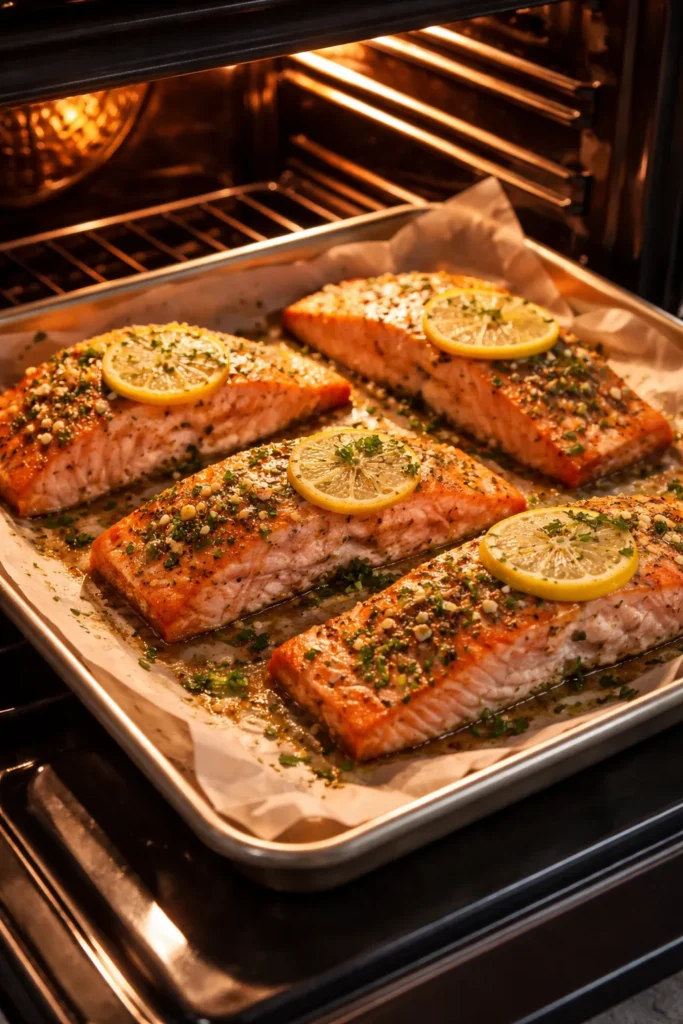
Temperature is the single most common point of confusion in baked salmon recipes — and the reason so many people end up with dry, chalky fish.
For individual fillets (around 6 ounces each): 400°F (200°C) is the sweet spot. At this temperature, a standard fillet is done in 12 to 15 minutes, with enough surface heat to develop light color without overcooking the center.
For a large side of salmon (around 2 pounds): Drop to 375°F (190°C). A higher temperature will cook the outside faster than the thick center can keep up with, leading to that dreaded dry, stringy texture on the edges. At 375°F, the heat penetrates more evenly.
For a broiled or tray-bake finish: Some recipes (like the lemon garlic tray bake below) use a high broil — up to 280°C/525°F — for a short, intense burst that caramelizes the surface and cooks the fish in under 12 minutes. This works beautifully when the salmon is at room temperature before it goes under the heat source.
Letting the fish sit at room temperature for 10 to 15 minutes before baking isn’t fussy kitchen theater — it genuinely helps the fillet cook more evenly from edge to center.
How to Tell When Baked Salmon Is Done
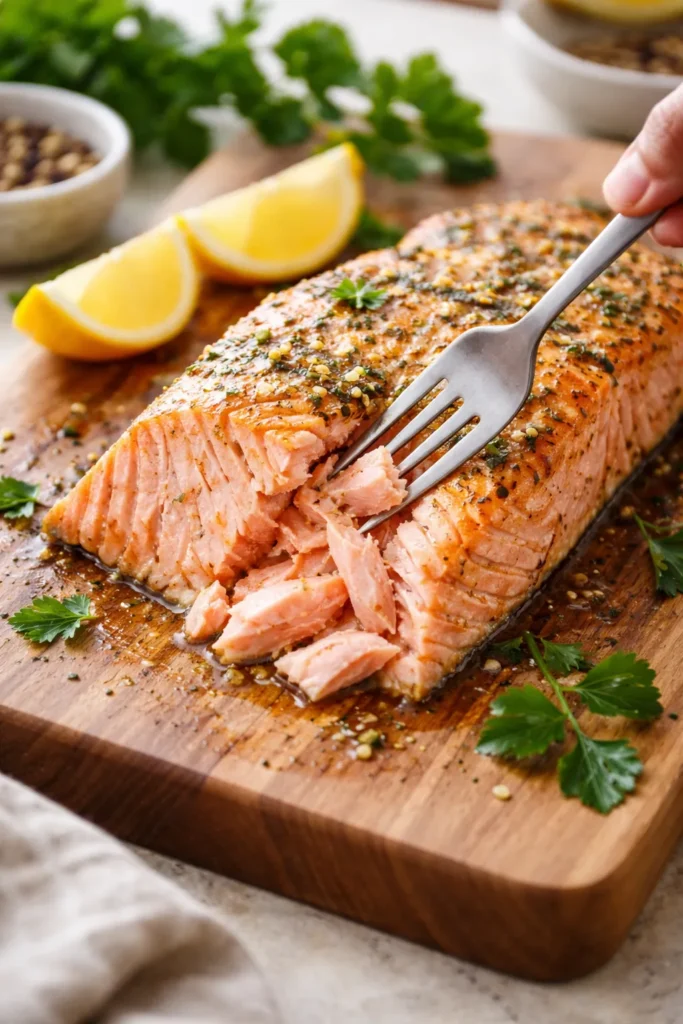
Overcooked salmon is dry, pale, and unpleasant. Undercooked salmon is translucent and soft in a way that bothers most people. The window of perfectly cooked salmon is narrower than most proteins, which is why knowing exactly how to check matters.
The thermometer method (most reliable): Insert an instant-read thermometer into the thickest part of the fillet. Pull it from the oven at 125°F–130°F (52°C–54°C) for medium-rare — deeply moist and silky. Pull at 135°F–140°F (57°C–60°C) for medium, which is fully opaque but still tender. The FDA recommends 145°F (63°C), which produces a fully cooked fillet — a bit firmer, but safe for everyone including pregnant women and young children. The fish will continue to rise a few degrees as it rests, so always pull it slightly early.
The fork test: Press a fork gently into the thickest part and twist lightly. If the flesh separates into clean, distinct flakes, it’s done. If it resists and stays in one piece, give it another 2 to 3 minutes. If it falls apart and looks dry, it’s gone too far.
The visual cue: Raw salmon is translucent and deeply colored. As it cooks, it turns opaque and lightens in color from the outside in. When the opaque color reaches about 3/4 of the way through the thickest part, it’s at or near perfect doneness.
1. Classic Lemon Garlic Baked Salmon
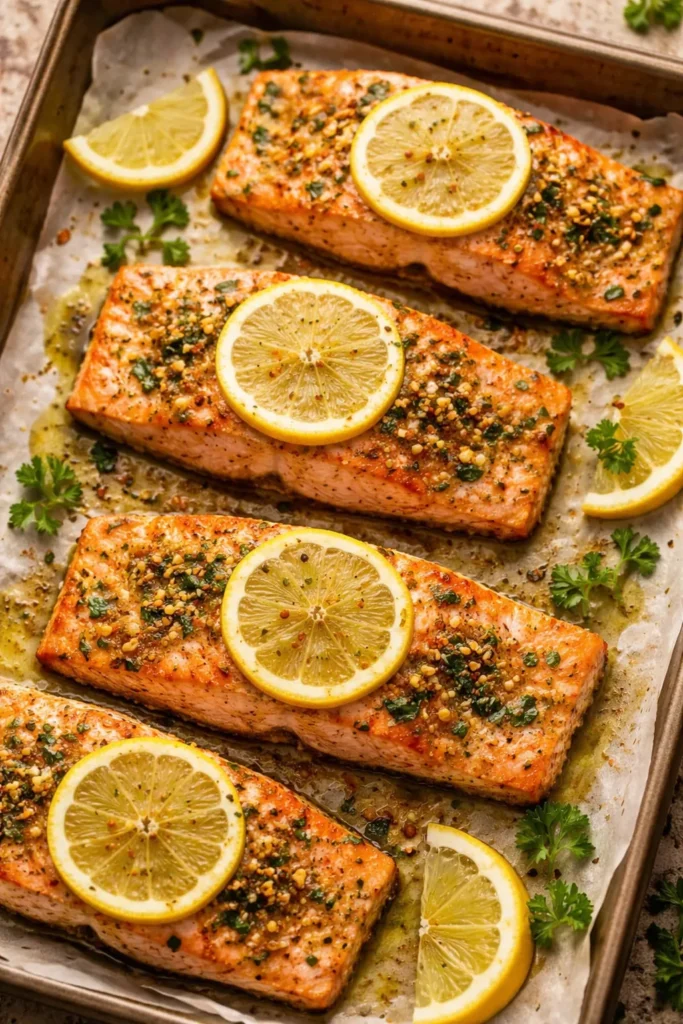
This is the recipe that belongs in every home cook’s rotation — no tricks, no unusual ingredients, just salmon at its most honest. A mix of olive oil, minced garlic, Italian herb seasoning, and fresh lemon juice gets spooned over the fillets before they go into a 400°F oven for 12 to 15 minutes. A thin lemon slice on top of each piece perfumes the fish as it bakes.
What makes this version work so well is the technique of rubbing the olive oil mixture over the sides of each fillet, not just the top. Dry spots on baked salmon are the enemy — they turn chalky and papery while the coated parts stay silky. Take an extra 30 seconds to coat every exposed surface and it pays off completely in the finished plate.
Key Ingredients
- 4 salmon fillets (about 6 oz each)
- 2 tablespoons extra-virgin olive oil
- 2 teaspoons minced garlic
- 1 teaspoon Italian herb seasoning blend (or ¼ tsp each dried thyme, parsley, oregano, basil)
- Juice of ½ lemon, plus thin slices from the remaining half
- Salt and cracked black pepper to taste
Why It Works
The acidity from the lemon cuts through the natural richness of the salmon fat, and the garlic blooms in the oven heat to infuse every bite. Italian herb blends bring aromatic depth without requiring you to buy five separate bottles. At 400°F for 12 to 15 minutes, the exterior develops light color while the interior stays tender and barely set.
Pro tip: Add a 1- to 2-minute blast under the broiler at the end for lightly golden edges — it makes a noticeable difference in flavor depth without any extra work.
2. Honey Dijon Glazed Baked Salmon
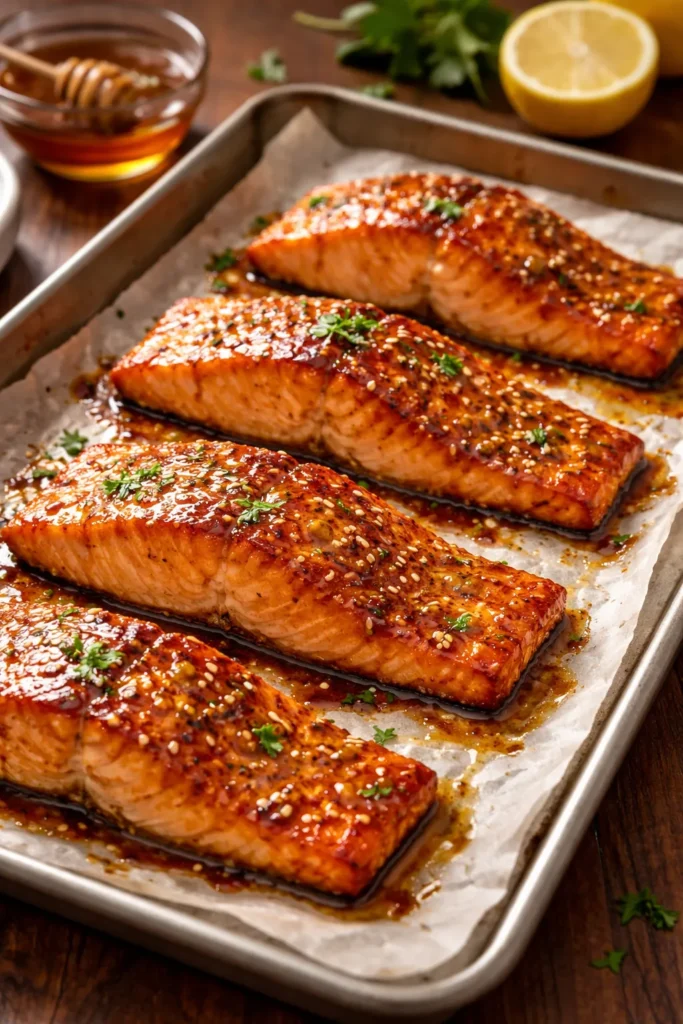
A glaze transforms baked salmon in a way that dry seasoning simply can’t. This version uses a combination of honey, Dijon mustard, soy sauce, olive oil, and minced garlic — brushed on the salmon in two stages. Half goes on before baking, and the other half is brushed on about 12 minutes in, giving the sugars just enough time to caramelize without burning.
The Dijon is the unsung hero here. It acts as an emulsifier that keeps the glaze thick enough to cling to the flesh instead of running off into a puddle at the bottom of the pan. You won’t actually taste mustard in the finished dish — it just adds a rounded, subtle tang that balances the sweetness of the honey.
Key Ingredients
- 4 salmon fillets (6 oz each, skin on)
- 1½ tablespoons low-sodium soy sauce
- 1 tablespoon olive oil
- 1 tablespoon honey
- 1½ teaspoons Dijon mustard
- 2 cloves garlic, minced
How to Get the Best Results
Bake at 400°F, skin side down, on a parchment-lined dish. Start checking at 12 minutes — thicker fillets may need up to 20 minutes total. The glaze should look shiny and slightly sticky when done, not wet and runny.
One common mistake with glazed salmon is using too much sauce. When excess glaze pools in the pan, it scorches and turns bitter. Use just enough to coat each fillet — the amount listed here is calibrated for four 6-ounce pieces.
Worth knowing: Swap the honey for pure maple syrup if you prefer a less sweet, more complex flavor. The ratio stays the same.
3. Brown Sugar Paprika Baked Salmon
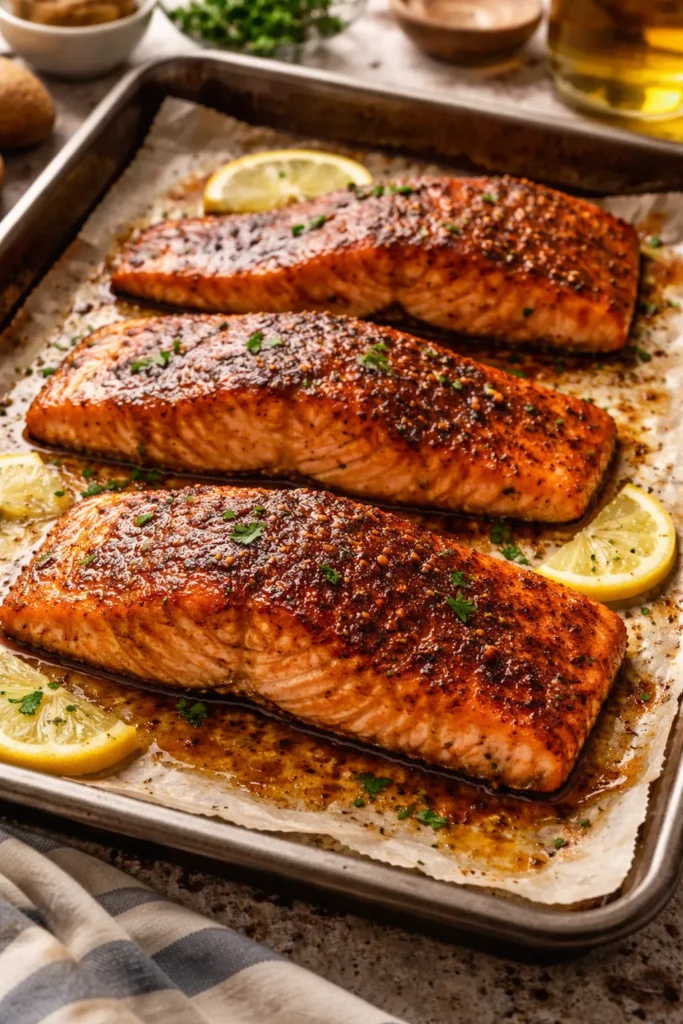
This dry rub recipe proves that salmon doesn’t need a wet marinade to be packed with flavor. A simple blend of brown sugar, kosher salt, sweet paprika, garlic powder, and cracked black pepper — rubbed onto the fish after a brush of olive oil — creates a beautifully seasoned crust at 375°F in about 12 to 15 minutes.
The brown sugar does something interesting here: it doesn’t make the salmon taste sweet in any obvious way. Instead, it draws out moisture from the surface during baking, which speeds up caramelization and gives the fish a deeper, more savory color than a plain dry rub would. A little sweetness also softens the intensity of the paprika and makes the whole combination more kid-friendly.
Key Ingredients
- 1 (2-pound) salmon fillet, skin side down
- 1 tablespoon extra-virgin olive oil
- 1 tablespoon brown sugar
- 1½ teaspoons kosher salt
- 1½ teaspoons sweet paprika (not smoked)
- 1½ teaspoons garlic powder
- ½ teaspoon freshly cracked black pepper
The Right Way to Apply a Dry Rub
Brush the olive oil onto the salmon first — this helps the dry spices adhere evenly instead of falling off in clumps. Use your fingers or the back of a spoon to press the rub gently into the flesh. Go all the way to the edges.
This rub works equally well on individual fillets or a large side piece. For the large format, extend the baking time to 15 to 20 minutes at 375°F.
Pro tip: Mix a double batch of the rub and keep it in a jar. It works on chicken thighs, shrimp, and roasted cauliflower with zero modifications.
4. Baked Salmon in Foil with Herbs and Garlic
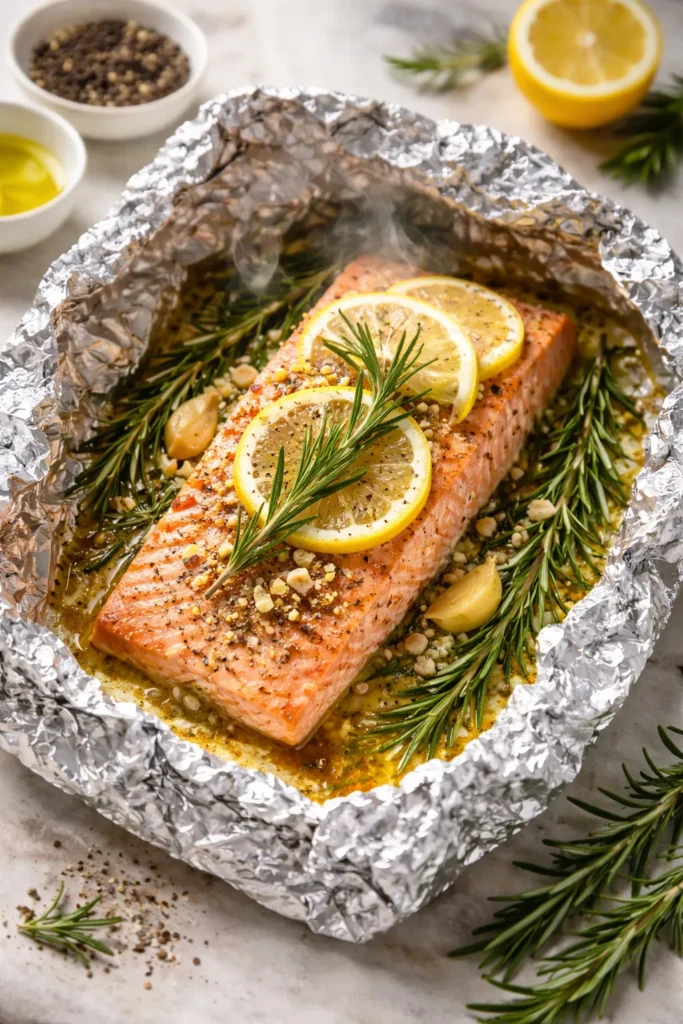
Wrapping salmon in foil before it goes into the oven is essentially foolproof cooking. The sealed packet traps steam, creating a moist environment that makes it almost impossible to dry out the fish — even if you leave it in a minute or two longer than planned. It’s the method to reach for when you’re cooking for company and want to eliminate all variables.
This version layers rosemary sprigs and lemon slices under the fish before sealing the packet, so the aromatics infuse the flesh from below as well as above. Garlic cloves scattered over the top mellow and soften in the steam, turning sweet and spreadable by the time the packet opens.
Key Ingredients
- 1 (2-pound) side of salmon, wild-caught, skin on or off
- 5 sprigs fresh rosemary (or dill, thyme, or parsley)
- 2 small lemons, divided
- 2 tablespoons extra-virgin olive oil
- 4 cloves garlic, roughly chopped
- 1 teaspoon kosher salt
- ¼ teaspoon black pepper
Building the Foil Packet
Leave the salmon out for 10 minutes before assembling. Line a baking sheet with a large piece of foil, lightly spray it, and arrange 2 rosemary sprigs and half the lemon slices down the center. Lay the salmon on top, drizzle with olive oil, season with salt and pepper, scatter the garlic over the surface, then lay the remaining herbs and lemon slices on top. Juice the second lemon over everything. Fold the foil up and over to form a sealed packet with a little room for air circulation inside.
Bake at 375°F for 15 to 20 minutes, then open the foil and broil for 3 minutes to lightly brown the top. Watch the garlic closely under the broiler — it goes from golden to burnt quickly.
Pro tip: If the salmon looks almost but not quite done when you open the foil, fold the foil back over and let it rest at room temperature for 5 minutes. Residual heat will finish the job without drying it out.
5. Lemon Garlic Salmon Tray Bake with Asparagus and Cherry Tomatoes
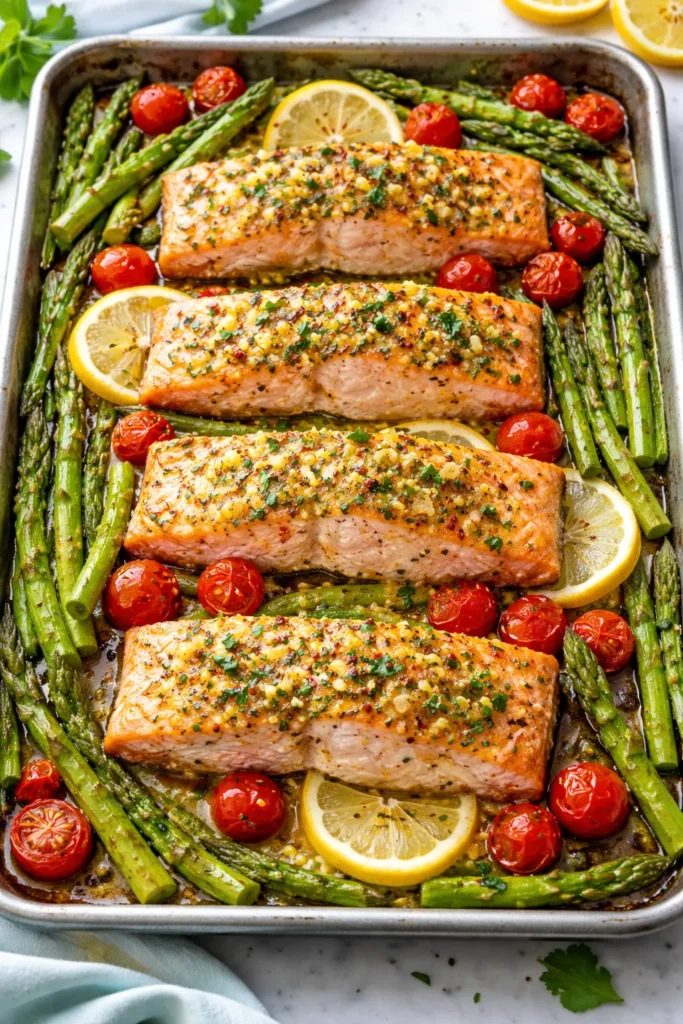
This is the sheet pan dinner that makes weeknights look effortless. Salmon fillets get coated in a thick lemon-garlic paste — olive oil, lemon zest and juice, Dijon mustard, grated garlic, salt, and pepper — and placed on a tray alongside asparagus and cherry tomatoes, which roast in the same time as the fish. A shower of finely grated parmesan over the vegetables at the end is the finishing touch that turns a simple dinner into something genuinely craveable.
The Dijon mustard in the paste does the same job it does in the honey glaze recipe above: it thickens the marinade so it clings to the fish surface instead of sliding off. Grating the garlic rather than mincing it makes a real difference here — grated garlic dissolves into the paste smoothly, preventing the small burnt bits of garlic you’d otherwise get on the surface of the fish.
Key Ingredients
- 4 salmon fillets (6 oz each, skin on or off)
- 1 tsp lemon zest + 1 tbsp lemon juice
- 2 tbsp extra-virgin olive oil
- 1 tsp Dijon mustard
- 2 garlic cloves, grated on a microplane
- Salt and pepper
- 3 bunches asparagus, woody ends snapped off
- 200g (7 oz) cherry tomatoes
- Parmesan for grating, lemon wedges for serving
Timing and Temperature
This recipe uses a high broil (as hot as your oven goes, approximately 525°F/280°C) with the rack positioned about 8 inches from the heat source. At that heat, everything cooks in about 11 minutes. The asparagus softens and picks up slight char at the tips. The cherry tomatoes blister and burst, releasing sweet juices that pool on the tray. The salmon surface takes on color without the interior overcooking.
Pull the fish at an internal temperature of 122°F (50°C) — it will rise to around 127°F (53°C) after 3 minutes of resting, landing at a beautifully moist medium-rare. For medium doneness, pull at 140°F.
Pro tip: If you only have thin asparagus, add them to the tray halfway through cooking. Thin spears at high heat for the full 11 minutes will turn floppy and sad.
6. Pesto Baked Salmon with Cannellini Beans and Tomatoes
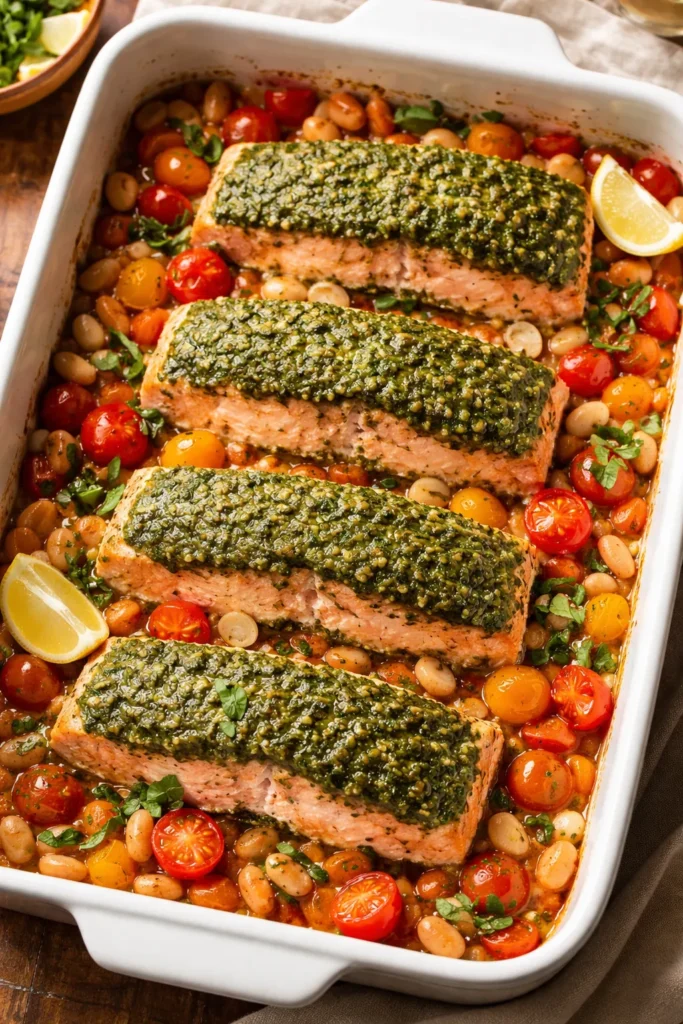
This is the kind of recipe that looks like it took planning but comes together in about 30 minutes with almost zero active work. Salmon fillets are smothered with a thick layer of pesto — jarred works fine, homemade is exceptional — and baked on a bed of canned cannellini beans and cherry tomatoes. The beans absorb the pesto and salmon juices as everything cooks, turning creamy and savory in a way that makes them entirely irresistible.
The flavor combination is distinctly Mediterranean: bright basil, sweet tomato, creamy beans, and rich salmon fat all working together. It’s five ingredients and one pan, and it tastes like something from a proper Italian kitchen.
Key Ingredients
- 4 salmon fillets (6 oz each)
- ½ cup prepared pesto (store-bought or homemade)
- 1 can (15 oz) cannellini beans, drained and rinsed
- 1 cup cherry tomatoes, halved
- Salt, pepper, and olive oil
- Optional: a handful of baby spinach or arugula to serve underneath
Building the Dish
Spread the beans and tomatoes in a single layer in a baking dish, season with salt and a drizzle of oil, and nestle the salmon fillets on top. Spread 2 tablespoons of pesto generously over the top of each fillet. Bake at 400°F for 12 to 15 minutes until the salmon flakes easily and the pesto has deepened in color to a rich, fragrant green-brown.
Serve directly from the pan with crusty bread to mop up the herb-scented juices that collect around the beans.
Worth knowing: If you want extra vegetables without adding another pan, stir a handful of baby spinach into the beans before the dish goes in the oven. It wilts into the beans and adds color without adding any work.
7. Honey Cilantro Lime Baked Salmon in Foil
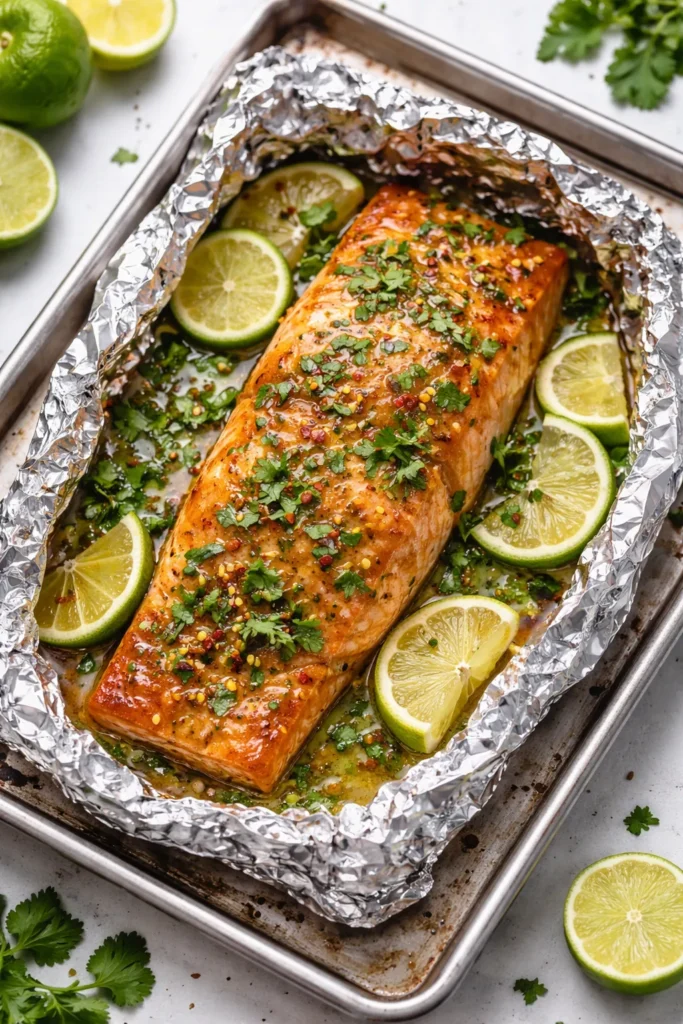
Lime and honey bring a brightness to baked salmon that lemon can’t quite replicate — slightly more floral, a little sharper, with a tropical edge that feels light and fresh. Adding fresh cilantro to the mix turns this into a flavor profile that works beautifully over white rice or alongside mango salsa.
The foil-packet method used here keeps the fish deeply moist while the honey caramelizes gently against the heat. Fold the foil up into a loose tent, not a tight seal — the air circulation inside prevents the fish from steaming into a pale, soft texture and helps the top develop some color.
Key Ingredients
- 4 salmon fillets (6 oz each)
- 2 tablespoons honey
- 1½ tablespoons fresh lime juice
- 1 tablespoon olive oil
- 2 garlic cloves, minced
- ¼ cup fresh cilantro, roughly chopped
- Salt and pepper
- Lime slices for topping
The Lime Swap
This recipe is a direct riff on the classic lemon-garlic baked salmon. Swap lemon for lime, swap parsley for cilantro, add honey, and the fish transforms completely. It’s the same 12 to 15 minutes at 400°F, same technique, but an entirely different dinner experience.
Serve over steamed jasmine rice with a spoonful of the pan juices spooned over the top. The honey-lime liquid that collects in the foil is too good to waste.
Pro tip: A small pinch of red pepper flakes in the honey-lime mixture adds a subtle heat that balances the sweetness without turning spicy.
8. Teriyaki Baked Salmon with Sesame and Scallions
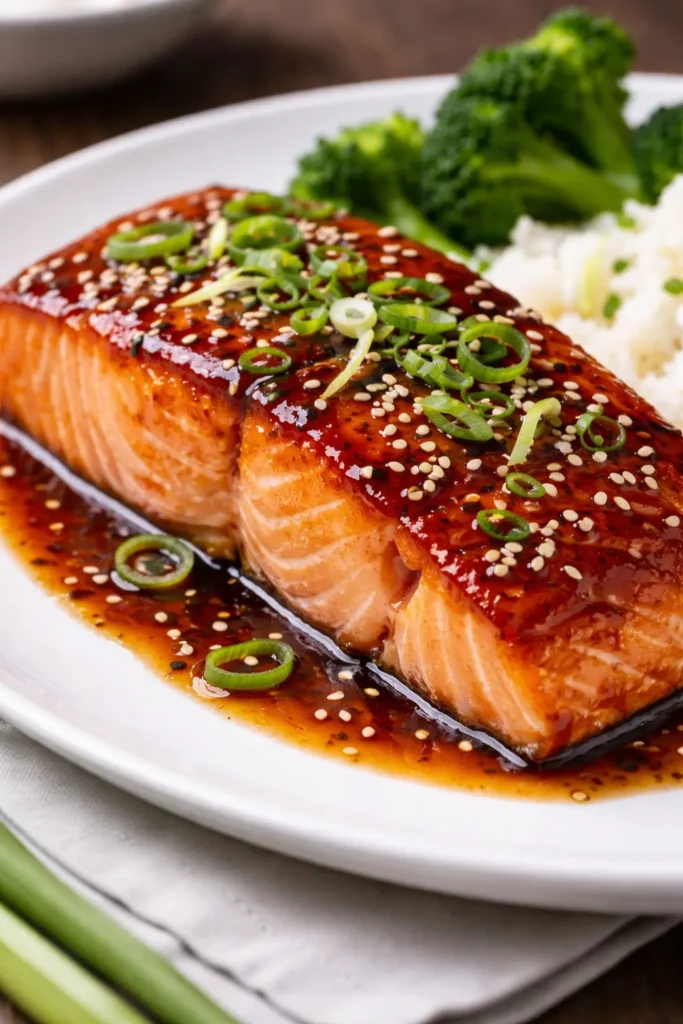
Teriyaki glaze and salmon are a pairing that makes complete sense — the sweet-salty-savory umami of soy sauce and mirin complements the fatty richness of the fish in a way that feels almost designed. This baked version uses a straightforward teriyaki marinade: soy sauce, mirin or honey, rice vinegar, garlic, and ginger. The salmon marinates for 15 to 30 minutes (longer if you have time), then bakes at 400°F for 12 to 15 minutes.
Reserve a few tablespoons of the marinade before adding the fish, simmer it in a small saucepan for 2 to 3 minutes until slightly thickened, and drizzle it over the finished salmon. That step is optional but adds a glossy, restaurant-quality finish that takes 4 minutes.
Key Ingredients
- 4 salmon fillets (6 oz each)
- 3 tablespoons low-sodium soy sauce
- 2 tablespoons honey or mirin
- 1 tablespoon rice vinegar
- 1 teaspoon sesame oil
- 2 garlic cloves, grated
- 1 teaspoon fresh ginger, grated
- Sesame seeds and sliced scallions for garnish
Avoiding the Saltiness Trap
Teriyaki can run salty if you’re not careful. Low-sodium soy sauce is worth using here — it gives you the umami and color without the sodium overload. If you’re using regular soy sauce, cut the amount to 2 tablespoons and add 1 tablespoon of water.
Serve over short-grain white rice or brown rice, with steamed broccoli or edamame on the side. The scallion-sesame garnish isn’t decoration — the raw scallion adds a sharp, fresh bite that cuts through the sweet glaze and keeps each forkful balanced.
9. Harissa Baked Salmon with Cherry Tomatoes and Shallots
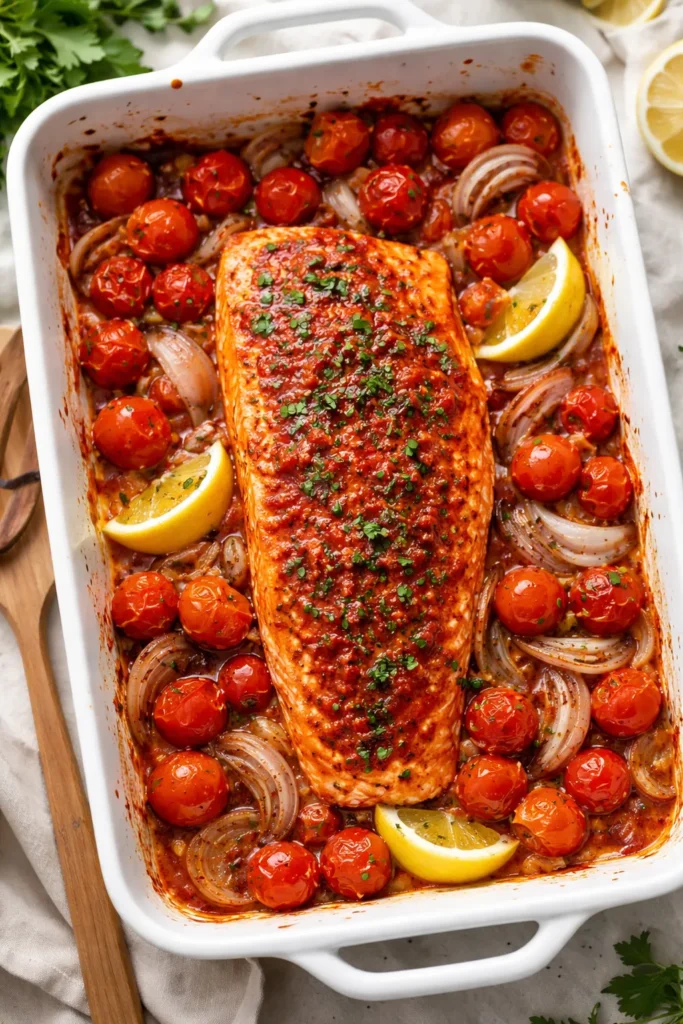
Harissa is a North African chile paste made from roasted red peppers, hot chiles, garlic, cumin, and olive oil — and it’s one of the most efficient flavor boosters in the pantry. A tablespoon or two stirred into a baking dish with cherry tomatoes and shallots creates a warmly spiced, lightly smoky sauce that the salmon bakes right on top of.
The combination of harissa, soy sauce, lemon juice, tomato paste, cumin, coriander, and paprika sounds like a long list, but it takes 3 minutes to whisk together and produces a marinade that genuinely earns the description “bold.” The cherry tomatoes break down as they roast, adding sweetness that balances the chile heat.
Key Ingredients
- 4 salmon fillets (6 oz each)
- 2 tablespoons harissa paste
- 1 tablespoon tomato paste
- 1 tablespoon soy sauce
- 1 tablespoon fresh lemon juice
- ½ teaspoon cumin
- ½ teaspoon coriander
- ½ teaspoon paprika
- 1 cup cherry tomatoes
- 2 shallots, thinly sliced
- Olive oil, salt, and pepper
Heat Level Control
Different brands of harissa vary wildly in heat. Rose harissa (made with rose petals) is fragrant and mild. Standard Tunisian-style harissa hits harder. Start with 1 tablespoon if you’re unsure, taste the marinade before adding more, and adjust from there.
Serve this over steamed basmati rice so every drop of the tomato-harissa sauce gets caught. A quick side of sautéed spinach turns it into a full, satisfying dinner.
Pro tip: Marinate the salmon in the harissa mixture for up to 1 hour before baking. The fish absorbs the spices more deeply, and the result is noticeably more flavorful than a no-marinate version.
10. Garlic Butter Baked Salmon with Lemon and Dill
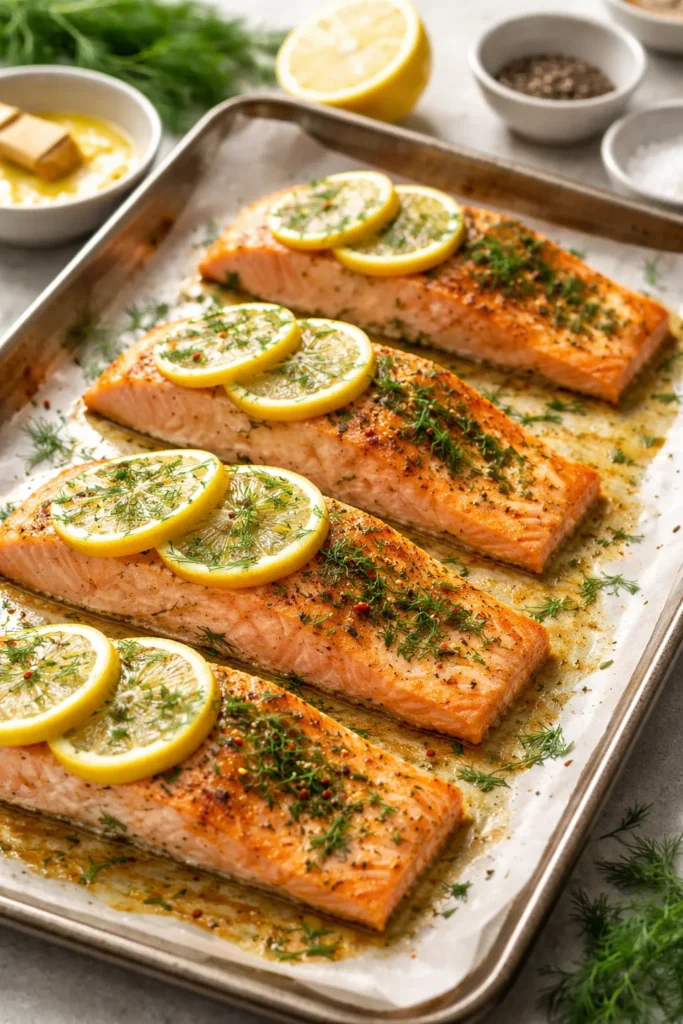
Butter and salmon together is one of those pairings that feels indulgent but genuinely isn’t — two tablespoons of melted butter across four fillets adds richness without tipping the nutritional balance in any significant direction. This recipe uses a half-olive-oil, half-butter approach: the olive oil handles the heat, the butter carries the flavor.
Fresh dill is the herb that belongs with this recipe and no other. Dill and salmon have a natural affinity — the herb’s grassy, slightly anise-like flavor cuts through the fat in a way that makes each bite taste clean and bright. Dried dill can technically substitute, but the flavor is a shadow of the fresh version. If you can get fresh dill, get fresh dill.
Key Ingredients
- 4 salmon fillets (6 oz each)
- 1 tablespoon unsalted butter, melted
- 1 tablespoon extra-virgin olive oil
- 3 garlic cloves, minced
- 2 tablespoons fresh dill, chopped
- 1 lemon, thinly sliced
- Salt and pepper
- Extra lemon juice for serving
The Technique That Makes It Exceptional
Combine the melted butter, olive oil, and garlic, then spoon the mixture over the salmon. Layer fresh dill on top, followed by the lemon slices. Bake at 400°F for 12 to 15 minutes. The garlic softens and sweetens in the butter, the dill perfumes the flesh, and the lemon slices caramelize lightly on top.
This is the recipe to make when you want baked salmon to feel special without any real extra effort. Serve it with garlic mashed potatoes and roasted green beans, and it genuinely holds up as a dinner party centerpiece.
Worth knowing: This recipe works beautifully with trout as a direct substitute. The cooking time is the same, and the flavor combination is just as good — sometimes even better, depending on what your fishmonger has that’s fresh.
Essential Tips for Perfectly Baked Salmon Every Time
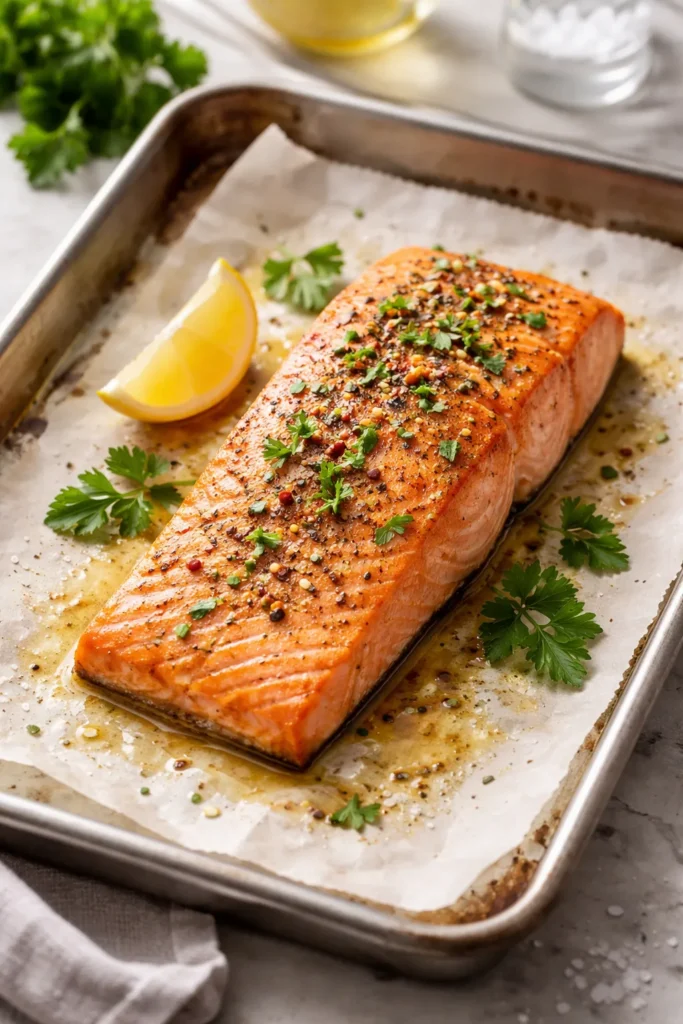
Across all ten of the recipes above, a few techniques show up again and again — and for good reason. Getting these fundamentals right is what separates a consistently good result from an occasional one.
Let the salmon come to room temperature before baking. Ten to fifteen minutes out of the fridge is enough. Cold fish straight from the refrigerator cooks unevenly — the outside is done before the center has caught up.
Line your baking pan. Parchment paper is ideal. Foil works too. Unlined pans with glazed or sauced salmon are a cleaning nightmare, and anyone who’s tried to scrape caramelized teriyaki glaze off bare metal knows the pain.
Don’t overcook. This is the single most important rule. Salmon goes from perfect to overdone in a matter of minutes. Start checking early, use a thermometer if you have one, and remember that residual heat continues cooking the fish for a few minutes after it leaves the oven.
Season generously. Salmon has enough natural fat to carry bold seasoning without it feeling overpowering. Under-seasoned salmon tastes flat and one-dimensional. Salt the fillet before adding any marinade or rub, not just through it.
What to Serve with Baked Salmon
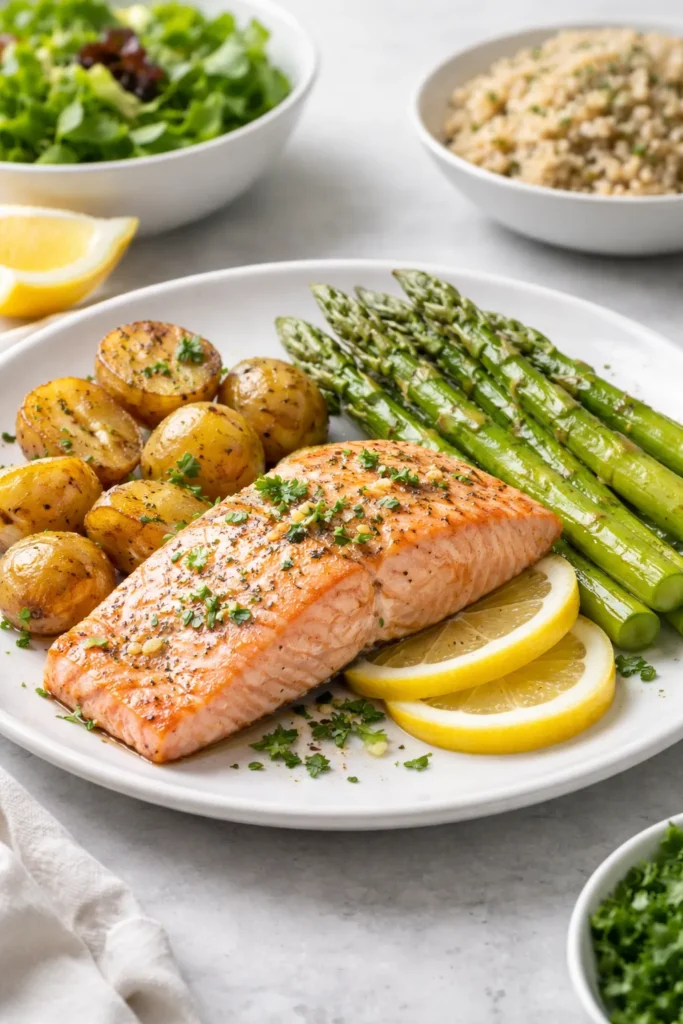
Salmon is versatile enough that it pairs well with a wide range of sides. Here are the combinations that work particularly well across the ten recipes above:
- Roasted potatoes or garlic mashed potatoes — starchy, comforting, and ideal for soaking up any sauce or glaze
- Steamed white or brown rice — the neutral backdrop that lets the salmon’s seasoning take center stage; particularly good under teriyaki and harissa versions
- Asparagus, green beans, or broccolini — all roast at the same temperature as salmon and can go on the same sheet pan
- A simple green salad — dressed with lemon vinaigrette, this keeps the meal feeling light and balanced after a rich glaze
- Crusty bread or sourdough toast — excellent alongside the pesto-and-white-bean version for mopping up the herby pan juices
- Farro, couscous, or quinoa — heartier grain bases that add fiber and make leftover salmon work beautifully as a lunch bowl the next day
Storing and Reheating Leftover Baked Salmon
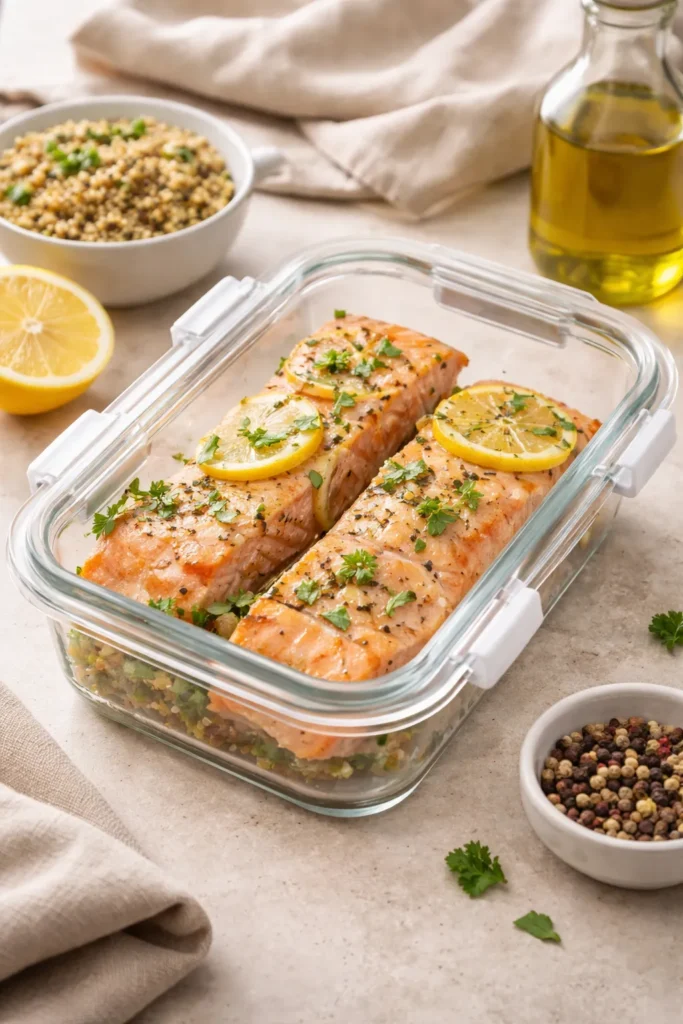
Cooked salmon keeps in an airtight container in the refrigerator for 3 to 4 days. That’s long enough to use leftovers in two or three different ways throughout the week.
The honest truth about reheating salmon is that cold is often better than hot. Leftover baked salmon flaked over a grain bowl or green salad, eaten at room temperature, avoids the reheating problem entirely and is genuinely delicious. The texture is different from freshly baked — softer, less silky — but it works well in that context.
If you need to reheat it warm, do it gently. In a skillet with a splash of water, covered, over medium heat for 2 to 4 minutes is the most reliable method. In the microwave, use 50% power in 30-second intervals until just warmed through. High-power microwave reheating dries salmon out and tends to amplify any fishy smell.
Leftover baked salmon also works well flaked into pasta with a simple lemon-cream sauce, scrambled with eggs for breakfast, tucked into a pita with cucumber and tzatziki, or stirred into a simple fried rice. Freezing cooked salmon is technically possible but affects texture noticeably — the flesh becomes softer and the flavor intensifies in a way that’s less pleasant for eating on its own. Freeze only if you plan to use it in a cooked application like fish cakes or salmon patties.
Final Thoughts
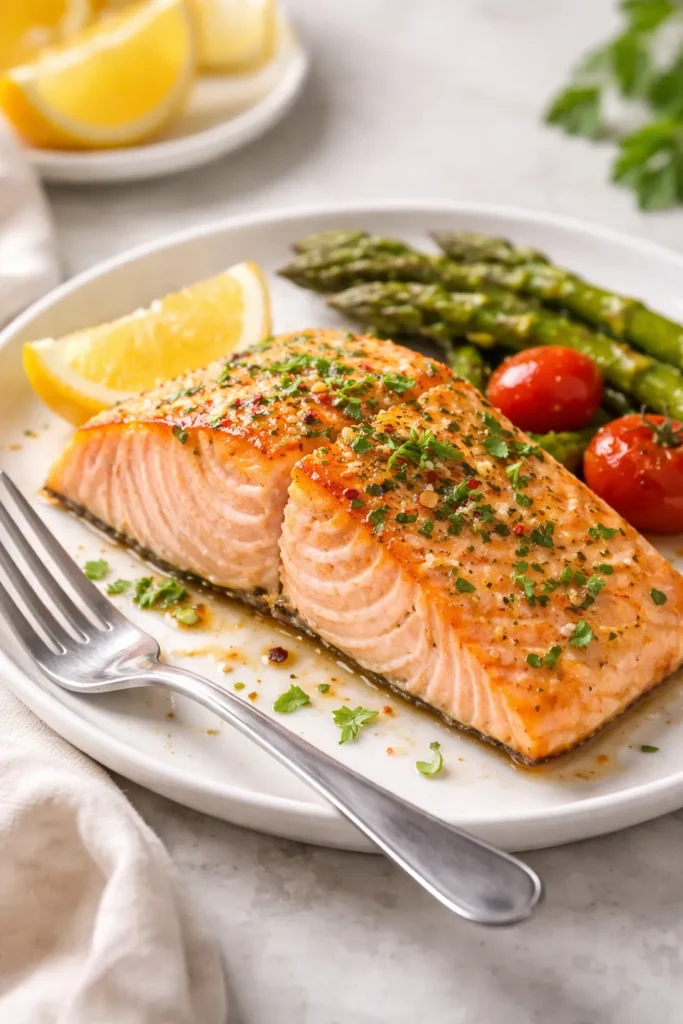
Baked salmon is one of the most rewarding things to cook regularly — it’s fast, nutritious, and endlessly adaptable to whatever flavors you’re in the mood for. The ten recipes above span the full range from five-ingredient pantry basics to boldly spiced international-inspired dinners, but they all share the same underlying logic: good fish + a thoughtful coating + the right oven temperature = an outstanding meal.
A few principles stay constant regardless of which recipe you choose. Start with the freshest fillet you can find, don’t skip the room-temperature rest before baking, line your pan, and pull the salmon off the heat before it looks completely done. Those four habits alone will improve your results across every recipe here.
If you’re new to cooking salmon, start with the classic lemon garlic version or the brown sugar paprika dry rub — both are fast, forgiving, and deeply satisfying. Once those feel comfortable, work your way toward the pesto-and-white-bean dish or the harissa version, which reward slightly more adventurous palates. Any of them, served with rice and a handful of roasted vegetables, is a dinner worth making again.