Winter may seem like a quiet time in the orchard, but beneath the bare branches and leafless canopy, your apple trees are undergoing one of the most critical phases of their annual life cycle. Understanding apple tree dormancy isn’t just helpful—it’s essential for anyone who wants to grow healthy, productive trees that yield bountiful harvests year after year. Whether you’re a first-time fruit grower wondering why your apple tree looks lifeless or an experienced orchardist looking to optimize your winter care routine, mastering the dormant period can make the difference between mediocre results and exceptional fruit production.
Dormancy represents far more than a tree simply “sleeping” through winter. This remarkable biological process allows apple trees to survive harsh temperatures, conserve precious energy resources, and prepare their internal systems for the explosive growth and fruit production that spring brings. During this time, the tree may appear dead to the untrained eye, but inside, complex hormonal changes are occurring that will determine everything from flower development to disease resistance in the coming growing season.
This comprehensive guide will walk you through every aspect of caring for dormant apple trees, from understanding the science behind dormancy and chill hours to mastering winter pruning techniques and applying dormant sprays effectively. You’ll discover the optimal timing for planting bare root trees, learn how to protect your trees from winter damage, and understand exactly what to expect when your trees wake up in spring. By the end, you’ll have all the knowledge needed to transform winter from a period of uncertainty into an opportunity for setting your apple trees up for their most productive year yet.
Table of Contents
- Understanding Apple Tree Dormancy and Why It Matters
- How Dormancy Works in Apple Trees
- Why Dormancy Is Crucial for Tree Health
- The Critical Role of Chill Hours in Apple Tree Dormancy
- What Are Chill Hours and Why They Matter
- Calculating Chill Hours for Your Region
- Recognizing the Signs of Dormancy in Apple Trees
- Visual Indicators of Healthy Dormancy
- How to Tell If Your Apple Tree Is Dormant or Dead
- Caring for Dormant Apple Trees During Winter
- Watering Requirements During Dormancy
- Mulching for Root Protection
- Frost and Freeze Protection
- Winter Pruning for Dormant Apple Trees
- Why Prune During Dormancy
- Step-by-Step Dormant Pruning Guide
- Dormant Spraying for Pest and Disease Control
- Types of Dormant Sprays
- When and How to Apply Dormant Sprays
- Planting Bare Root Apple Trees During Dormancy
- Benefits of Planting Dormant Bare Root Trees
- Step-by-Step Planting Guide for Bare Root Apple Trees
- Spring Awakening: What to Expect When Dormancy Breaks
- Signs of Bud Break and Early Spring Growth
- Transitioning to Active Care
- Common Problems During and After Dormancy
- Late Frost Damage
- Failure to Break Dormancy
- Inadequate Chill Hours
- Final Words
Understanding Apple Tree Dormancy and Why It Matters
Dormancy is a natural survival mechanism that allows apple trees to withstand winter conditions while preparing for vigorous spring growth and fruit production.
Apple tree dormancy functions similarly to hibernation in animals—it’s a period of reduced metabolic activity that helps the tree survive conditions that would otherwise be fatal. As days shorten and temperatures drop in fall, apple trees receive environmental signals that trigger this protective state. The tree essentially hits pause on its growth processes, conserves its energy reserves, and redirects its resources toward protecting vital tissues from cold damage.
How Dormancy Works in Apple Trees
The dormancy process begins when apple trees sense changes in their environment through two primary mechanisms: photoperiod (day length) and temperature. As autumn approaches, shorter days and cooler nights signal to the tree that winter is coming. In response, the tree initiates a cascade of hormonal changes that gradually slow growth and prepare tissues for cold weather.
During this transition, several important changes occur within the tree:
- Leaves drop as the tree stops producing chlorophyll and forms abscission layers at the base of each leaf stem
- Growth hormones decrease while growth-inhibiting hormones increase, preventing any new shoot development
- Water content in cells decreases, reducing the risk of ice crystal formation that could damage cell walls
- Sugars and proteins concentrate in remaining tissues, acting as natural antifreeze compounds
- Bark thickens slightly to provide additional insulation for the cambium layer beneath
From the outside, a dormant apple tree looks completely lifeless—just bare branches reaching toward gray winter skies. However, this appearance is deceiving. The root system remains alive and capable of limited activity when soil temperatures permit, and the buds contain all the genetic information needed to produce next year’s leaves, flowers, and fruit.

Why Dormancy Is Crucial for Tree Health
Without a proper dormancy period, apple trees cannot complete their annual growth cycle, leading to poor fruit production, weakened immunity, and potentially shortened lifespan.
Dormancy serves several essential functions that directly impact your tree’s productivity:
- Energy Conservation – By stopping growth processes, trees can store carbohydrates produced during the previous growing season, which fuel spring growth
- Cold Protection – The biochemical changes during dormancy allow trees to survive temperatures that would kill actively growing tissue
- Pest and Disease Reduction – Many insects and pathogens become inactive during winter, giving trees a respite from constant attack
- Growth Synchronization – Dormancy helps trees time their flowering to coincide with pollinator activity and favorable weather conditions
- Fruit Quality – Research consistently shows that trees with adequate dormancy periods produce higher-quality fruit with better flavor and storage characteristics
Understanding that dormancy is a feature—not a problem—helps gardeners appreciate why this “quiet” period deserves careful attention and proper management.
The Critical Role of Chill Hours in Apple Tree Dormancy
Chill hours represent the accumulated cold temperatures apple trees need during winter to properly complete dormancy and trigger healthy spring growth.
Perhaps no concept is more important to successful apple growing than understanding chill hours. This measurement directly determines whether your trees will flower properly, set fruit abundantly, and grow vigorously—or struggle with delayed, uneven growth and poor production.
What Are Chill Hours and Why They Matter
Chill hours are defined as the number of hours during winter when temperatures fall between 32°F and 45°F (0°C to 7°C).
Every apple variety has a specific chilling requirement—a minimum number of chill hours it must experience before it can safely break dormancy. This requirement developed over thousands of years of evolution and represents an adaptation that prevents trees from waking up too early during winter warm spells, only to be killed by subsequent freezes.
Here’s how the chilling process works:
- During chilling, growth-inhibiting hormones gradually break down
- Once requirements are met, trees become capable of responding to warm temperatures
- After warming occurs, trees break dormancy and begin active growth
- If requirements aren’t met, trees may fail to leaf out properly, flower poorly, or produce deformed fruit
Different apple varieties have vastly different chill hour requirements:
| Chill Hour Category | Hours Required | Example Varieties |
|---|---|---|
| Low Chill | 300-500 hours | ‘Anna,’ ‘Dorsett Golden,’ ‘Ein Shemer’ |
| Medium Chill | 500-700 hours | ‘Gala,’ ‘Fuji,’ ‘Golden Delicious’ |
| High Chill | 800-1,000+ hours | ‘Honeycrisp,’ ‘McIntosh,’ ‘Granny Smith’ |
Calculating Chill Hours for Your Region
Matching your apple variety selection to your local chill hours is one of the most important decisions you’ll make when establishing an orchard.
To determine your area’s typical chill hour accumulation:
- Contact your local Cooperative Extension Service – They often maintain chill hour records and can provide specific data for your location
- Use online chill hour calculators – Resources like the Midwestern Regional Climate Center at Purdue University offer interactive maps showing accumulated chill hours
- Track temperatures yourself – Set up a simple recording thermometer or digital weather station to monitor winter temperatures
- Consider microclimates – Urban areas typically accumulate fewer chill hours than rural locations due to heat island effects
Pro tip: If you’re unsure about your chill hours, err on the side of choosing varieties with requirements below your estimated accumulation. A tree that receives more chill hours than needed will perform fine, but one that doesn’t get enough will struggle indefinitely.
When purchasing apple trees, reputable nurseries select varieties appropriate for their customer base’s general climate. However, always verify the chill hour requirement on the tree’s tag or by asking nursery staff, especially if you live in a region with mild winters or significant temperature fluctuation.
Recognizing the Signs of Dormancy in Apple Trees
Knowing how to identify dormancy—and distinguish it from tree death—gives gardeners confidence during the winter months and helps them recognize when problems may be developing.
For new apple tree growers, the appearance of a dormant tree can be alarming. Those bare branches and gray bark look remarkably similar to a dead tree, leading many gardeners to worry unnecessarily. Understanding the visual and physical signs of healthy dormancy will put your mind at ease.
Visual Indicators of Healthy Dormancy
A properly dormant apple tree displays several characteristic features:
- Complete leaf drop – All leaves should have fallen by late autumn, leaving bare branches
- Tight, dormant buds – Buds appear compact and closed, protected by overlapping scales
- Flexible branches – Healthy dormant wood bends without snapping
- Intact bark – The bark should be firmly attached without cracks, holes, or loose sections
- No new growth – You should see no green shoots, opening buds, or any signs of active growth
The timing of dormancy varies based on your location and local weather patterns. Generally, apple trees in most temperate zones enter dormancy in late October through November and remain dormant until late February through April, depending on accumulated chill hours and warming temperatures.
How to Tell If Your Apple Tree Is Dormant or Dead
The scratch test is the most reliable method for determining whether an apparently lifeless tree is actually alive and dormant.
Here’s how to perform this simple diagnostic:
- Select a small area on a branch, preferably a younger branch toward the outer canopy
- Use your fingernail or a sharp knife to carefully scratch away a tiny section of outer bark
- Examine the tissue beneath – you’re looking at the cambium layer
- Interpret your results:
- Green and moist tissue = Healthy, dormant tree
- Brown and dry tissue = Dead or dying branch
- Tan or white and moist = Tree is alive but may be stressed
If one branch tests as dead, test several others before drawing conclusions about the entire tree. Sometimes individual branches die while the rest of the tree remains healthy. If multiple branches across the tree test as dead, particularly on the main trunk, the tree may have suffered fatal damage.
Additional signs of a living dormant tree include:
- Buds that feel slightly pliable when gently squeezed (dead buds are typically brittle)
- Root collar area that shows no signs of rot, girdling, or severe damage
- Trunk that sounds solid when tapped (hollow sounds may indicate internal decay)
Caring for Dormant Apple Trees During Winter
Winter care for dormant apple trees focuses on protection and maintenance rather than active growing support, setting the stage for healthy spring emergence.
While dormant trees require less attention than actively growing ones, neglecting winter care can lead to problems that affect the entire growing season. The key areas to address include watering, mulching, and protection from extreme weather and pests.
Watering Requirements During Dormancy
Dormant apple trees still need moisture to keep their root systems healthy, but their water requirements decrease dramatically compared to the growing season.
Many gardeners make the mistake of completely ignoring irrigation once trees go dormant. While it’s true that water needs drop significantly, completely dry soil can damage roots and stress trees, particularly in regions with dry winters or windy conditions that increase soil moisture evaporation.
Guidelines for winter watering:
- Monitor soil moisture at a depth of 6-8 inches below the surface
- Water when soil is nearly dry but before it becomes completely desiccated
- Apply water deeply but infrequently – once every 2-4 weeks is typically sufficient in dry conditions
- Water on mild days when temperatures are above freezing and water can absorb before nightfall
- Avoid waterlogging – dormant roots are susceptible to rot in saturated soil
Young trees with less-established root systems require more careful attention to winter moisture than mature trees, which have deeper, more extensive roots capable of accessing moisture from larger soil volumes.
Mulching for Root Protection
A proper mulch layer insulates roots from temperature extremes and helps maintain consistent soil moisture throughout winter.
Mulching is one of the most valuable yet straightforward winter care practices for apple trees. The benefits include:
- Temperature moderation – Mulch buffers soil against rapid freeze-thaw cycles that can heave young trees or damage shallow roots
- Moisture retention – Organic mulch reduces evaporation and keeps soil from drying out
- Weed suppression – Even during winter, mulch prevents early-germinating weeds from establishing
- Soil improvement – As mulch decomposes, it adds organic matter to the soil
Best practices for winter mulching:
- Apply a 2-4 inch layer of organic mulch around the tree’s drip line
- Keep mulch several inches away from the trunk – piling mulch against bark invites rodent damage and fungal problems
- Use appropriate materials such as wood chips, shredded bark, leaf litter, or straw
- Refresh mulch as needed if it compresses or decomposes significantly
- In extremely cold regions, consider doubling the mulch layer or adding straw for extra insulation
Frost and Freeze Protection
Protecting apple trees from extreme winter conditions prevents bark splitting, tissue damage, and other cold-related injuries that can weaken or kill trees.
While properly dormant apple trees are remarkably cold-hardy, certain conditions can still cause damage:
Sunscald prevention:
- Paint trunks with diluted white latex paint (50% paint, 50% water) to reflect winter sun
- This prevents bark from warming during sunny days then freezing rapidly at night
- Most critical on the south and southwest sides of trunks
Rodent protection:
- Install hardware cloth or commercial tree guards around the base of young trees
- Guards should extend at least 18 inches above the anticipated snow line
- Bury guards 1-2 inches into soil to prevent burrowing access
Deer and wildlife deterrents:
- Use fencing around young trees that deer could browse
- Hang soap bars or commercial repellents from branches
- Consider tree wraps for additional trunk protection
Winter Pruning for Dormant Apple Trees
Dormant season pruning is the most important pruning of the year, shaping tree structure, promoting fruit production, and preventing disease problems.
Winter pruning, performed while trees are dormant, offers significant advantages over pruning at other times. The absence of leaves allows clear visibility of branch structure, disease organisms are inactive, and trees heal pruning wounds quickly once spring growth begins.
Why Prune During Dormancy
Pruning dormant apple trees in late winter minimizes stress while maximizing the benefits of your cuts.
The ideal pruning window is late winter to early spring—after the worst cold has passed but before buds begin swelling. In most regions, this means late January through early March, though timing varies by location. Avoid pruning during precipitation, as moisture can spread disease organisms into fresh cuts.
Key benefits of dormant pruning include:
- Clear visibility of the tree’s architecture without leaf obstruction
- Reduced disease transmission since most pathogens are inactive during cold weather
- Faster wound healing as spring growth begins shortly after pruning
- Less stress on the tree compared to pruning during active growth periods
- Better identification of dead, diseased, or damaged wood
Step-by-Step Dormant Pruning Guide
Effective pruning follows a systematic approach that prioritizes tree health while shaping the canopy for optimal fruit production.

Essential tools:
- Sharp bypass hand pruners for branches under 1 inch
- Loppers for branches 1-2 inches
- Pruning saw for larger limbs
- 70% isopropyl alcohol for disinfecting between cuts
Step 1: Remove the “Four Ds” Begin by eliminating any branches that are:
- Dead – completely brown and dry inside
- Diseased – showing cankers, discoloration, or other disease symptoms
- Damaged – broken, cracked, or mechanically injured
- Deformed – crossing, rubbing, or growing at problematic angles
Always make cuts just outside the branch collar—the slightly swollen area where the branch meets the trunk or larger limb. Never leave stubs, which invite decay.
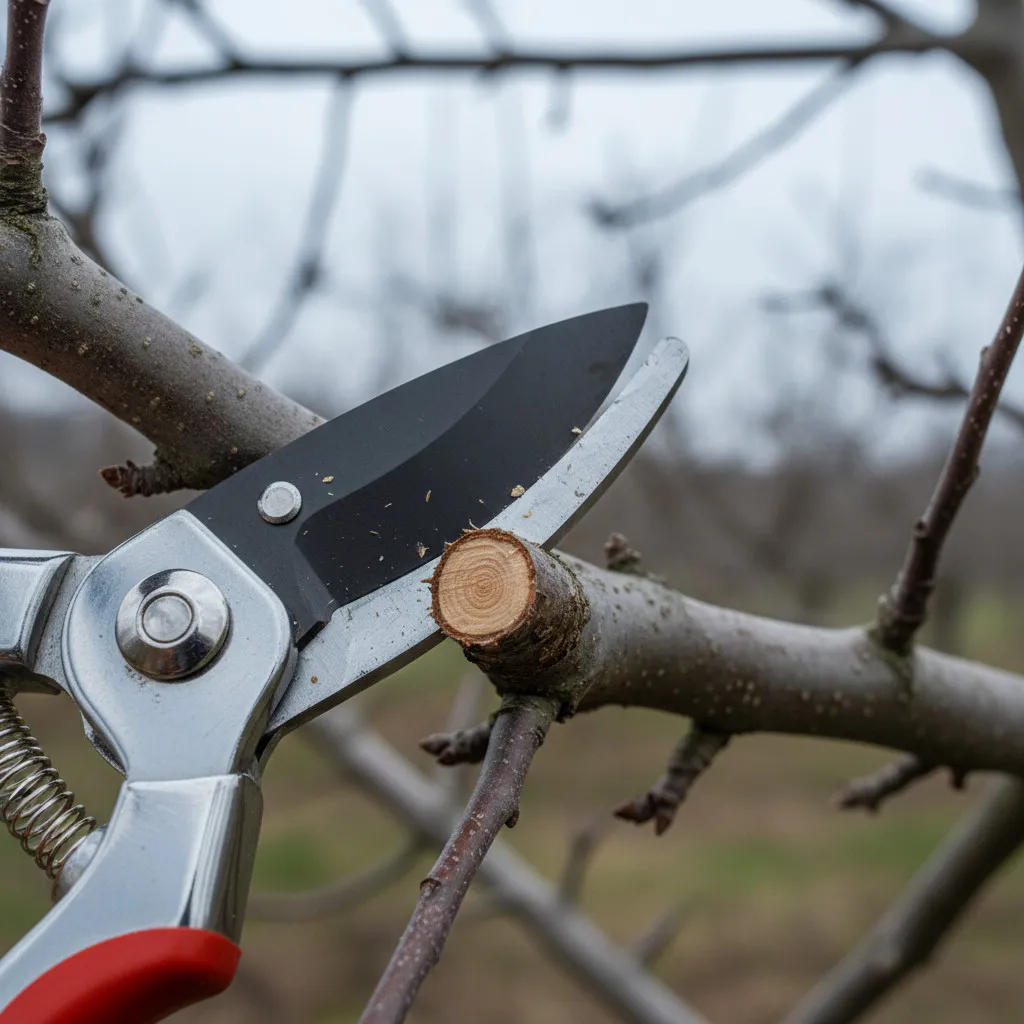
Step 2: Remove Water Sprouts and Suckers Water sprouts are vigorous vertical shoots that grow straight up from horizontal branches. They rarely produce fruit and steal energy from productive wood. Remove them flush with the branch they’re growing from.
Suckers emerge from below the soil line from the rootstock. Cut these at their point of origin by digging down slightly if necessary.
Step 3: Thin the Canopy Remove enough interior branches to allow light penetration and air circulation throughout the canopy. A commonly cited guideline suggests you should be able to “throw a cat through the tree”—meaning there should be visible open space within the branch structure.
Step 4: Shape and Balance Address any structural issues:
- Remove one branch from any tight V-shaped crotches
- Reduce branches that droop toward the ground
- Cut back overly tall branches to maintain manageable height
- Ensure even distribution of scaffold branches around the trunk
Step 5: Heading Cuts (When Appropriate) Shorten selected branches by cutting to an outward-facing bud to encourage outward growth and prevent the canopy from becoming too dense.
Critical pruning reminders:
- Never remove more than one-third of the tree’s total growth in a single season
- Make clean cuts – avoid tearing bark or leaving ragged edges
- Disinfect tools between cuts on diseased wood and between trees
- Save significant pruning for multiple years if a tree is severely overgrown
Dormant Spraying for Pest and Disease Control
Dormant sprays applied during winter provide critical protection against overwintering pests and disease organisms, reducing problems throughout the growing season.
The dormant season offers a unique opportunity to combat apple tree pests and diseases. With no leaves on the tree and most beneficial insects inactive, you can apply thorough coverage without harming pollinators or damaging foliage.
Types of Dormant Sprays
Two main categories of dormant sprays address different problems: horticultural oils for insects and copper-based fungicides for diseases.
Horticultural Oils: These highly refined petroleum or plant-based oils work by coating and suffocating overwintering insects and their eggs. They’re effective against:
- Aphid eggs
- Spider mite eggs
- Scale insects (all life stages)
- Some overwintering moth eggs
Horticultural oils are considered among the safest pesticides available, breaking down quickly and posing minimal environmental risk when used correctly.
Copper-Based Fungicides: Copper sprays control fungal and bacterial diseases by creating a protective barrier on bark and bud surfaces. They help prevent:
- Apple scab
- Fire blight
- Powdery mildew
- Cedar apple rust
- Various canker diseases
Copper products are approved for organic production but should be used according to label directions, as excessive copper can accumulate in soil over time.
When and How to Apply Dormant Sprays
Timing is critical for dormant spray effectiveness—apply during the right weather window for maximum benefit.
General timing guidelines:
| Spray Type | First Application | Second Application |
|---|---|---|
| Horticultural Oil | Late winter, temperatures above 40°F | Not typically needed |
| Copper Fungicide | Fall, just before leaf drop | Late winter, when bud tips show green |
Application best practices:
- Check weather conditions – Apply when temperatures will remain above 33°F for at least 48 hours and no rain is expected for 24 hours
- Never combine horticultural oil and sulfur-based products—the combination can severely damage trees
- Achieve thorough coverage – Spray all bark surfaces, including branch crotches and around bud clusters
- Use appropriate equipment – A backpack sprayer works well for small orchards; larger operations may need motorized sprayers
- Follow label directions exactly for mixing ratios and safety precautions
- Wear protective equipment including long sleeves, closed-toe shoes, safety glasses, and a face mask
Important timing note: Stop copper applications once buds begin opening, as copper can damage tender new tissue. Oil sprays should also be avoided once green tissue is visible.
Planting Bare Root Apple Trees During Dormancy
The dormant season is the optimal time to plant bare root apple trees, allowing root establishment before the demands of spring growth begin.
Bare root trees—those shipped without soil around their roots—are available only during the dormant season, typically from late fall through early spring. This timing isn’t just convenient for nurseries; it’s biologically ideal for the trees.
Benefits of Planting Dormant Bare Root Trees
Planting during dormancy gives apple trees significant advantages that translate to better long-term performance.
Key benefits include:
- Lower cost – Bare root trees are typically less expensive than container-grown specimens
- Better root development – You can spread roots naturally without the circling that often occurs in containers
- Easier handling – Without heavy soil, trees are lighter and easier to position correctly
- Faster establishment – Roots begin growing as soon as soil temperatures permit, giving trees a head start
- Wider selection – Many varieties are available only in bare root form
Step-by-Step Planting Guide for Bare Root Apple Trees
Proper planting technique ensures your dormant apple tree establishes quickly and grows vigorously for years to come.
Before planting day:
- Test and amend soil if needed—aim for pH between 6.0 and 7.0
- Select your site ensuring full sun (6-8 hours daily) and excellent drainage
- Prepare the planting area by removing grass in a 4-foot diameter circle
- Have supplies ready including compost, mulch, stakes, and ties if needed
Planting process:
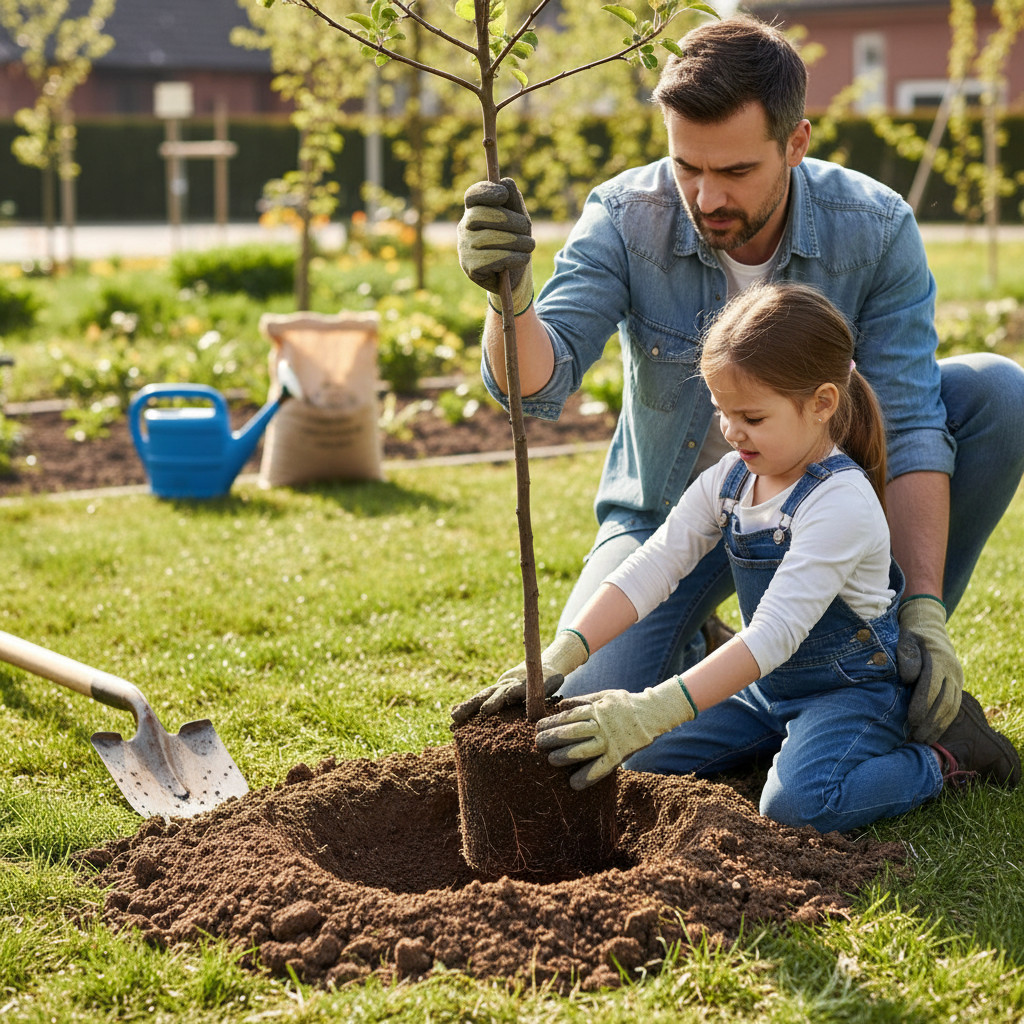
Step 1: Prepare the roots Upon receiving your bare root tree, remove packaging and soak roots in water for 1-2 hours (but no more than 6 hours) before planting. Never allow roots to dry out at any point.
Step 2: Dig the hole Create a hole twice as wide and slightly deeper than the spread of the roots. Loosen soil on the walls of the hole to help roots penetrate easily.
Step 3: Create a mound Build a small mound of soil in the center of the hole. This supports the trunk while allowing roots to spread downward and outward naturally.
Step 4: Position the tree Place the tree on the mound with roots spread evenly in all directions. The graft union (the swollen area where the fruiting variety meets the rootstock) must be positioned 2-4 inches above the soil line for dwarf and semi-dwarf trees. Standard trees can be planted with the graft slightly below soil level.
Step 5: Backfill carefully Replace soil gradually, firming it gently around roots to eliminate air pockets. Work in well-rotted compost or aged manure with the native soil, but do not add fertilizer at planting time—it can burn tender roots.
Step 6: Water thoroughly Give the newly planted tree a deep soaking—approximately one gallon of water. If soil settles, add more to bring the level back to grade.
Step 7: Mulch and stake Apply 2-3 inches of mulch, keeping it away from the trunk. Stake the tree loosely if necessary to prevent wind damage while roots establish.
Post-planting care:
- Water sparingly until growth begins—overwatering dormant trees causes root rot
- Begin regular watering once leaves emerge
- Delay fertilization until after the first bud break
Spring Awakening: What to Expect When Dormancy Breaks
Understanding the signs of dormancy breaking helps gardeners time spring care activities correctly and identify potential problems early.
After months of apparent lifelessness, dormant apple trees begin showing signs of awakening as accumulated chill hours are satisfied and temperatures warm consistently. This transition period requires careful observation and timely action.
Signs of Bud Break and Early Spring Growth
The transformation from dormancy to active growth follows a predictable sequence that signals each stage of spring development.
Watch for these progressive changes:
- Bud swelling – Buds begin to enlarge as internal tissues hydrate and cells start dividing
- Color changes – Bud tips transition from brown to green as scales begin separating
- “Silver tip” stage – Fuzzy gray-green tissue becomes visible as buds open slightly
- Green tip – Leaves begin emerging, showing bright green color
- Pink bud – Flower buds show color but haven’t opened
- Bloom – Flowers fully open for pollination
- Petal fall – Pollination complete, fruit development begins
This entire sequence typically spans 4-6 weeks, though timing varies significantly by variety and local conditions.
Transitioning to Active Care
As trees break dormancy, care shifts from winter protection to supporting vigorous growth and fruit development.
Early spring tasks:
- Remove winter protection gradually as temperatures moderate—don’t rush to take off tree guards or trunk wraps until rodent pressure decreases
- Begin monitoring for pest and disease activity
- Apply spring fertilizer if soil tests indicate need—typically after bud break but before significant growth
- Ensure adequate moisture as root activity increases dramatically
- Protect blossoms from late frosts with covers or overhead irrigation if temperatures drop unexpectedly
Critical timing consideration: If your trees didn’t receive adequate chill hours, you may notice delayed, uneven bud break or reduced flowering. Unfortunately, there’s no way to “make up” insufficient chilling—the effects will impact that season’s growth and production. This underscores the importance of selecting varieties appropriate for your climate.
Common Problems During and After Dormancy
Recognizing and addressing common dormancy-related issues early prevents minor problems from becoming major setbacks.
Even with excellent care, apple trees sometimes experience problems during or after the dormant period. Understanding these issues helps you respond appropriately.
Late Frost Damage
Late spring frosts represent the most common cause of crop loss in apple orchards, damaging flowers and young fruit.
Prevention and response strategies:
- Monitor weather forecasts closely during bloom
- Cover small trees with breathable fabric on nights when frost threatens
- Use overhead irrigation to coat buds with ice—counterintuitively, this protects tissue from colder air temperatures
- Select late-blooming varieties for frost-prone locations
- Accept some years will have reduced crops despite best efforts
If frost damage occurs, wait several days before assessing impact. Partially damaged flowers may still produce fruit, though it may be smaller or misshapen.
Failure to Break Dormancy
When trees fail to leaf out properly in spring, the cause is usually environmental stress or damage rather than variety unsuitability.
Potential causes include:
- Root damage from flooding, drought, or rodents
- Severe winter injury from temperatures beyond the variety’s tolerance
- Girdling by rodents, string trimmers, or circling roots
- Disease such as fire blight or crown rot
- Herbicide damage from drift or root uptake
Perform scratch tests on multiple branches to assess tree viability. If the trunk shows green cambium but branches don’t, wait patiently—the tree may push new growth from the trunk. If both trunk and branches test as dead, the tree has unfortunately been lost.
Inadequate Chill Hours
Trees that don’t receive sufficient chilling show characteristic symptoms that persist through the entire growing season.
Signs of insufficient chilling:
- Delayed and prolonged bud break spanning weeks instead of days
- Poor, sparse flowering
- Reduced fruit set even when pollinators are present
- Weak vegetative growth
- Increased susceptibility to stress and disease
Unfortunately, you cannot force trees to wake up before their chilling requirement is satisfied. If your climate consistently fails to provide adequate chill hours, consider replacing problem varieties with low-chill alternatives better suited to your region.
Final Words
Apple tree dormancy represents far more than a winter pause—it’s a critical biological process that directly influences your trees’ health, productivity, and longevity. By understanding what happens during dormancy and providing appropriate care throughout this period, you position your apple trees for success that continues season after season.
Key takeaways from this guide:
- Dormancy is essential, not optional—apple trees require this rest period to function properly
- Chill hours matter immensely—always match variety selection to your local climate
- Winter care continues even when trees appear lifeless—maintain appropriate moisture and protection
- Dormant season pruning offers the best opportunity to shape trees and address structural issues
- Dormant sprays provide effective pest and disease prevention when applied correctly
- Bare root planting during dormancy gives trees the strongest possible start
- Spring transition requires careful observation and timely response to emerging needs
The dormant season may lack the visual excitement of spring blossoms or autumn harvest, but the work you do during these quiet months establishes the foundation for everything that follows. Proper winter care prevents problems that would otherwise plague your trees throughout the growing season, while dormant pruning shapes the structure that will support decades of fruit production.
Whether you’re planting your first apple tree this winter or managing a mature orchard, embrace the dormant period as an opportunity rather than merely a time to wait. Your trees will reward your attention with vigorous spring growth, abundant blossoms, and the ultimate prize—crisp, flavorful apples picked fresh from your own backyard orchard.