Growing your own apple trees is one of the most rewarding experiences for any home gardener, offering not only beautiful spring blossoms but also the incomparable satisfaction of biting into a crisp, homegrown apple straight from your backyard. However, many aspiring orchardists quickly discover that successful apple production depends on understanding one crucial biological process: pollination. Without proper pollination, your apple trees may flower beautifully each spring yet fail to produce the bountiful harvest you’ve been dreaming about. The good news is that with proper planning, the right variety selection, and basic knowledge of how pollination works, you can set up your apple trees for years of productive, fruit-bearing success.
Apple trees have been cultivated by humans for thousands of years, with over 7,000 varieties grown worldwide for purposes ranging from fresh eating to cider making. These versatile fruit trees became particularly popular in 17th-century America after early settlers imported them, and they’ve remained a staple of home orchards ever since. This comprehensive guide will walk you through everything you need to know about apple tree pollination, from understanding the science behind it to selecting compatible varieties, planting and caring for your trees, and troubleshooting common challenges that may arise along the way.
Table of Contents
- Understanding How Apple Tree Pollination Works
- Apple Pollination Groups and Flowering Times
- Bloom Period Categories
- Factors Affecting Pollination Compatibility
- Types of Apple Trees and Their Pollination Needs
- Self-Fertile Apple Trees
- Partially Self-Fertile Apple Trees
- Cross-Pollinating Varieties
- Triploid Apple Trees
- Choosing the Right Pollination Partners
- Popular Compatible Apple Pairings
- Crabapples as Universal Pollinators
- Distance Requirements for Effective Pollination
- Planting Apple Trees for Successful Pollination
- Site Selection Essentials
- Proper Planting Technique
- Spacing Guidelines for Pollination and Tree Health
- Container Growing and Small Space Solutions
- Dwarf and Semi-Dwarf Varieties
- Combo or Family Trees
- Container Growing Tips
- Essential Apple Tree Care and Maintenance
- Watering Requirements
- Fertilization Practices
- Pruning Techniques
- Common Pollination Challenges and Solutions
- Weather-Related Problems
- Inadequate Pollinator Presence
- Dealing with Sterile Pollen Varieties
- Hand Pollination Methods
- Attracting and Supporting Pollinators
- Creating Pollinator Habitat
- Bee Management for Apple Pollination
- Pesticide Best Practices
- Managing Pests and Diseases in Apple Trees
- Common Apple Diseases
- Common Apple Pests
- Disease-Resistant Varieties
- Harvesting and Storing Your Apple Crop
- Determining Harvest Readiness
- Proper Harvesting Technique
- Storage Methods
- Final Thoughts: Growing Apple Trees Successfully
Understanding How Apple Tree Pollination Works
Pollination is the essential biological process that transforms apple blossoms into the delicious fruit we harvest each fall, and understanding its mechanics is the foundation of successful apple growing.
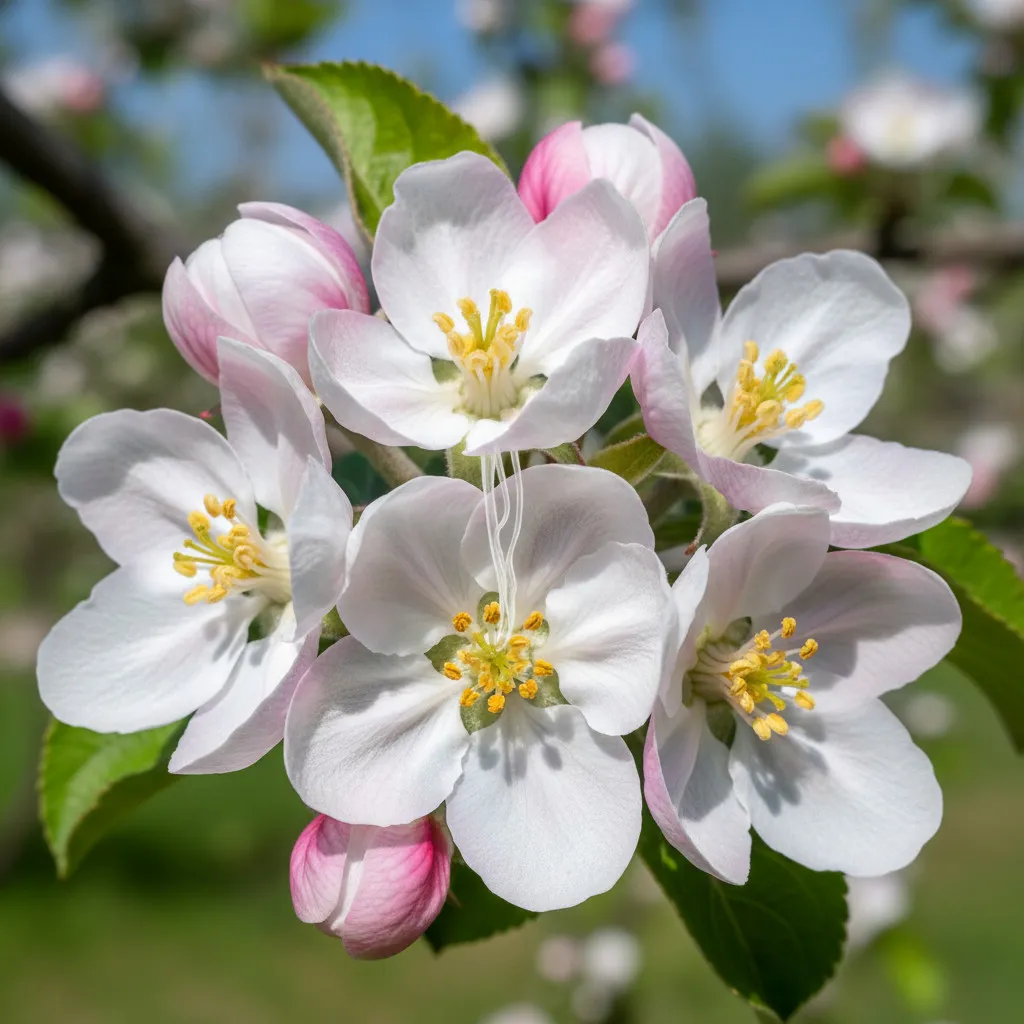
Pollination occurs when pollen moves from the anthers (male part) of one flower to the stigma (female part) of another, with the help of wind, birds, and most importantly, beneficial insects like bees. When a bee visits an apple blossom to collect nectar, pollen sticks to its fuzzy body and is transferred to the next flower it visits. This seemingly simple process is actually the critical first step in fruit development—without it, your apple trees simply cannot produce apples.
Once pollen lands on a receptive stigma, it germinates and produces a tube that grows down through the style to unite with the female cell in the ovary. This union, called fertilization, triggers seed development, which in turn causes the fruit to enlarge and mature. Apple ovaries are typically divided into five chambers, each containing two ovules available for pollination. A fully pollinated apple will contain 10 seeds, though a minimum of 6 to 7 seeds per apple will result in good fruit development.
Key aspects of the pollination process include:
-
Insect Pollinators: Honeybees are the most significant pollinators for apple trees, though bumblebees, mason bees, solitary bees, and even flies, beetles, butterflies, and wasps contribute to the process. A single honeybee may visit 5,000 flowers in a day, making them invaluable partners in apple production.
-
Weather Conditions: Bees work most effectively when temperatures are above 65°F (18°C). Cool weather, rain, or strong winds can keep pollinators inside their hives, significantly reducing pollination success during the critical bloom period.
-
Bloom Duration: The average blossoming period for apples when pollination can take place is approximately 9 days. Cool weather during bloom will extend this period, while warmer weather shortens it, affecting how much time pollinators have to complete their work.
-
Cross-Pollination Requirement: Unlike some fruit trees that can pollinate themselves, most apple trees are self-unfruitful and require pollen from a different apple variety to produce fruit successfully. This fundamental characteristic of apple trees makes variety selection one of the most important decisions you’ll make when planning your orchard.

Understanding that cross-pollination is essential for most apple trees helps explain why solitary apple trees often fail to produce fruit, even when they flower prolifically each spring. The solution lies in strategic planning—ensuring that compatible pollination partners are planted nearby to provide the genetic diversity needed for successful fruit set.
Apple Pollination Groups and Flowering Times
Matching apple varieties by their bloom times is one of the most reliable ways to ensure successful cross-pollination and maximize your fruit harvest.
Apple varieties are categorized into pollination groups, also called flowering groups, based on when they bloom during spring. For effective cross-pollination, the bloom times of different varieties must overlap—if one tree’s blossoms have already fallen before another tree’s flowers open, there’s simply no opportunity for pollen transfer. This is why understanding pollination groups is so critical for anyone planning to grow apple trees.
The flowering groups are typically organized from earliest to latest, though different sources may use letters (A through E) or numbers (1 through 6) to designate them. Regardless of the naming convention, the principle remains the same: varieties in the same flowering group will have full bloom overlap, while those in adjacent groups will partially overlap—usually enough for successful pollination.
Bloom Period Categories
1. Early Season Bloomers (Group 1 or A)
Early-season apple varieties like ‘Anna,’ ‘Ein-Shemer,’ and ‘Dorsett Golden’ are among the first to flower in spring. These varieties are best paired with other early bloomers or early-mid season varieties for cross-pollination. Gardeners in regions with late spring frosts should be aware that early bloomers may be more vulnerable to frost damage, which can significantly reduce fruit set if blossoms are killed before pollination occurs.

2. Early-Mid Season Bloomers (Group 2 or B)
Varieties in this category begin blooming shortly after the earliest cultivars. Examples include ‘McIntosh,’ ‘Liberty,’ and ‘Egremont Russet.’ These varieties can successfully cross-pollinate with early bloomers as well as mid-season varieties, giving gardeners considerable flexibility in choosing pollination partners.
3. Mid-Season Bloomers (Group 3 or C)
This is one of the largest pollination groups, containing many popular varieties including ‘Cox’s Orange Pippin,’ ‘Discovery,’ ‘James Grieve,’ ‘Katy,’ ‘Lord Lambourne,’ ‘Falstaff,’ ‘Red Windsor,’ and ‘Worcester Pearmain.’ Mid-season bloomers have excellent overlap potential with both early-mid and late-mid season varieties.
4. Late-Mid Season Bloomers (Group 4 or D)
Varieties like ‘Fuji,’ ‘Freedom,’ ‘Arkansas Black,’ ‘Cortland,’ ‘Wolf River,’ ‘Granny Smith,’ ‘Ashmead’s Kernel,’ ‘Blenheim Orange,’ ‘Golden Delicious,’ ‘Jonagold,’ ‘Laxton’s Superb,’ and ‘Pitmaston Pineapple’ fall into this category. They require other late-mid or mid-season bloomers for effective cross-pollination.
5. Late Season Bloomers (Group 5 or E)
‘Enterprise,’ ‘Gala,’ ‘Honeycrisp,’ ‘Sansa,’ ‘Stayman Winesap,’ and ‘Braeburn’ are examples of late-season bloomers. These varieties are among the last to flower and need other late-blooming varieties for successful pollination.
Understanding how bloom times work for pollination:
| Bloom Time | Compatible Pollination Partners |
|---|---|
| Early | Early to Early-Mid Varieties |
| Early-Mid | Early, Early-Mid, and Mid Varieties |
| Mid | Early-Mid, Mid, and Mid-Late Varieties |
| Mid-Late | Mid and Late Varieties |
| Late | Mid-Late and Late Varieties |
Climate plays a significant role in determining actual bloom times in your specific location. Varieties suited to your region’s climate will bloom more predictably, and rootstock choice can also influence bloom periods—some rootstocks induce earlier or later blooming in the grafted variety. In exceptionally warm springs, many apple varieties may bloom closer together than usual, while cool springs can extend the bloom period for individual varieties.
Factors Affecting Pollination Compatibility
Beyond bloom time, several other factors influence whether two apple varieties will successfully cross-pollinate each other, and understanding these nuances can mean the difference between a bumper crop and disappointing yields.
While matching flowering groups is the foundation of successful apple pollination, it’s not the only consideration. Several biological and environmental factors affect whether pollen transfer will result in successful fruit development.
Bloom Overlap Requirements
For pollination to occur, flowers from different varieties must be open simultaneously. Varieties in the same flowering group will have complete overlap, providing the maximum window for cross-pollination. Varieties in adjacent groups typically have 50-75% overlap, which is usually sufficient for good fruit set. However, varieties two or more groups apart may have little to no overlap, making them poor pollination partners regardless of other compatibility factors.
Pollen Viability Considerations
Some apple varieties produce sterile or poor-quality pollen that cannot effectively pollinate other trees. The most common examples are triploid varieties, which have three sets of chromosomes instead of the normal two (diploid). This genetic characteristic makes their pollen largely ineffective for pollinating other apple trees, and they cannot be pollinated by their own pollen. Triploid varieties include ‘Gravenstein,’ ‘Jonagold,’ ‘Mutsu,’ ‘Ashmead’s Kernel,’ ‘Bramley’s Seedling,’ ‘Baldwin,’ ‘Stayman Winesap,’ ‘Arkansas Black,’ and ‘Spigold.’
Genetic Compatibility Issues
Apple trees are often incompatible with their direct relatives, meaning cross-pollination between closely related varieties or parent-offspring pairs is generally unsuccessful. For example, ‘Golden Delicious’—which is typically an excellent pollinator due to its abundant, long-lasting blooms—will not effectively pollinate ‘Jonagold’ or ‘Crispin’ because these varieties are closely related to it. When selecting varieties for cross-pollination, choosing trees that are not genetically related maximizes the chances of successful fruit set.
Environmental and Pollinator Factors
-
Pollinator Population: A healthy population of bees and other pollinating insects is essential. Their activity is influenced by weather conditions, flower attractiveness, and pesticide use in and around your orchard.
-
Temperature Effects: Pollen germination in apples works best at temperatures between 60°F and 70°F (15°C-20°C). In areas with cooler spring temperatures, you may need more pollinator activity or varieties that can germinate pollen at lower temperatures.
-
Pesticide Impact: Many pesticides are toxic to bees and should never be applied during bloom. Orchard management practices like pesticide applications or mowing during the morning hours (when bees are most active) can significantly impact pollination success.
Types of Apple Trees and Their Pollination Needs
Not all apple trees have the same pollination requirements—understanding whether a variety is self-fertile, partially self-fertile, or requires cross-pollination helps you plan an orchard that will produce reliably year after year.
Apple trees fall into several categories based on their ability to produce fruit with or without pollen from other varieties. Knowing which category your chosen varieties belong to is essential for planning your planting strategy.
Self-Fertile Apple Trees
Self-pollinating or self-fertile apple trees are capable of producing fruit using their own pollen, which makes them beneficial for smaller spaces or gardens where only one tree can be accommodated. Examples include ‘Golden Delicious,’ ‘Granny Smith,’ and some regional varieties that may demonstrate self-fertility in specific climates.
Important considerations for self-fertile varieties:
- Even self-pollinating varieties benefit significantly from cross-pollination, resulting in improved fruit set, larger yields, and better fruit quality
- Self-fertile apples can sometimes be prone to bitter pit (a fruit disorder causing unsightly spots) when not cross-pollinated, likely related to fewer or smaller seeds
- What’s considered self-fertile in one region may not be in another due to climate differences
- If you have space for more than one tree, planting a pollination partner is always recommended
Partially Self-Fertile Apple Trees
These varieties sit between fully self-fertile and self-unfruitful. They can produce some fruit on their own but yield significantly better with cross-pollination. Examples include ‘Cortland,’ ‘Fuji,’ ‘Gala,’ ‘Jonathan,’ and ‘Liberty.’
Partially self-fertile varieties tend to be fully self-fertile when spring weather is good during bloom but may act as completely self-sterile if spring weather is poor. If you generally experience cold, wet spring weather, treat partially self-fertile varieties as if they require pollination partners.
Cross-Pollinating Varieties
The majority of apple trees fall into this category—they require pollen from a different apple variety to produce fruit. These self-unfruitful trees will flower beautifully but produce little to no fruit unless compatible pollinators are nearby. This is why single apple trees in isolated locations often disappoint their owners with empty branches at harvest time.
Effective cross-pollination requires:
- Compatible varieties that bloom at the same time
- Trees planted close enough for bees to travel between them
- Adequate pollinator activity during the bloom period
Triploid Apple Trees
Triploid varieties present unique pollination challenges because they have sterile pollen and cannot pollinate other trees, nor can they pollinate themselves. Despite these limitations, many triploid varieties are highly valued for their exceptional fruit quality—’Gravenstein’ is beloved for its complex flavor, ‘Jonagold’ for its excellent eating qualities, and ‘Bramley’s Seedling’ is considered the premier cooking apple in Britain.
If you want to grow a triploid variety, plan for these requirements:
- You’ll need two other non-triploid apple varieties nearby for pollination
- Both companion varieties must bloom at the same time as the triploid
- The two companion varieties must be able to pollinate each other as well
- Triploid trees require more careful orchard planning but reward growers with outstanding fruit
Choosing the Right Pollination Partners
Selecting compatible pollination partners is one of the most important decisions you’ll make when planning your apple orchard, and fortunately, there are excellent tools and proven combinations to guide your choices.
A well-designed apple pollination chart becomes an invaluable tool when selecting varieties, detailing which cultivars are compatible based on flowering groups, pollen viability, and genetic relationships. Many reputable nurseries provide these charts, and using them consistently ensures you choose partners that will work well together.
Popular Compatible Apple Pairings
Based on proven success in home orchards and commercial operations, here are some reliable pollination partnerships:
- Granny Smith + Gala: Both produce excellent quality fruit and have compatible bloom times
- Fuji + Gravenstein: Fuji works well with early bloomers like Gravenstein (though remember Gravenstein is triploid and needs a third variety)
- Golden Delicious + Honeycrisp: Golden Delicious is one of the best universal pollinators and pairs excellently with the popular Honeycrisp
- Honeycrisp + Red Delicious: A classic combination of two beloved eating apples
- McIntosh + Liberty: Compatible bloom times and excellent disease resistance in Liberty
Crabapples as Universal Pollinators
When in doubt about pollination partners, plant a crabapple tree. Crabapples have become popular pollen donors because they offer several significant advantages:
- Extended Bloom Period: Most crabapples bloom for a longer period than standard apples, increasing the window for pollination
- Abundant Pollen: They produce prolific amounts of viable pollen
- Wide Compatibility: Almost all crabapples pair well with common apple varieties
- Additional Benefits: Beautiful ornamental flowers, wildlife value, and some produce fruit suitable for jelly or cider
Recommended crabapple pollinizers include:
- Manchurian Crabapple: Blooms early to midseason (excellent for early-blooming varieties)
- Snowdrift Crabapple: Blooms midseason to late (ideal for later-blooming apples)
- Dolgo Crabapple: Also produces excellent fruit for preserves
- Wickson Crabapple: A highly effective pollinator with good disease resistance
Even professional apple growers plant crabapples systematically throughout their orchards to ensure pollination coverage across all their main varieties.
Distance Requirements for Effective Pollination
Apple trees should ideally be planted within 50 to 100 feet of each other for effective cross-pollination. This distance ensures that bees and other pollinators can easily transfer pollen between trees. Research indicates:
- Trees within 50 feet have optimal pollination potential
- Trees up to 100 feet apart still achieve good pollination
- Beyond 100 feet, pollination success decreases significantly
- In urban or suburban settings, compatible trees within a mile may provide some cross-pollination, though results are less reliable
For limited spaces, consider these alternatives:
- Growing compatible dwarf or semi-dwarf varieties closer together
- Grafting different varieties onto a single tree (called “combo” or “family” trees)
- Hanging branches of open blossoms from another variety in buckets of water within your tree during bloom
Planting Apple Trees for Successful Pollination
Proper planting establishes the foundation for your apple trees’ long-term health and productivity, and thoughtful site selection ensures optimal conditions for both tree growth and pollination success.
The best time to plant apple trees depends on your location and the type of tree you’re purchasing. Bare-root apple trees should be planted in early spring as soon as the soil can be worked. Container-grown trees can be planted throughout the growing season as long as they receive adequate water. Fall planting can also succeed in areas with mild autumn and winter weather.
Site Selection Essentials
Sunlight Requirements: Apple trees produce best when grown in full sun, requiring at least 6 to 8 hours of direct summer sunlight daily. Sufficient sun exposure triggers the initiation of new flower buds for the next growing season—without adequate sunlight, trees may not flower prolifically enough for good pollination.
Soil Conditions: Apple trees need well-draining soil while still retaining adequate moisture. Light- to medium-textured soils work best. Poorly draining soil leads to root rot and other problems. The ideal soil pH ranges from 6.0 to 6.5, though apple trees tolerate pH between 5.5 and 7.0.
Air Circulation: Plant in locations with good air circulation so leaves dry quickly after rain or irrigation, reducing the risk of fungal diseases that can damage blossoms and affect fruit development.
Frost Considerations: Avoid planting in “frost pockets” where cold air settles in low-lying areas. Choose higher sites with a gentle slope when possible so cold air flows away from the trees, protecting early spring blossoms from late frost damage.
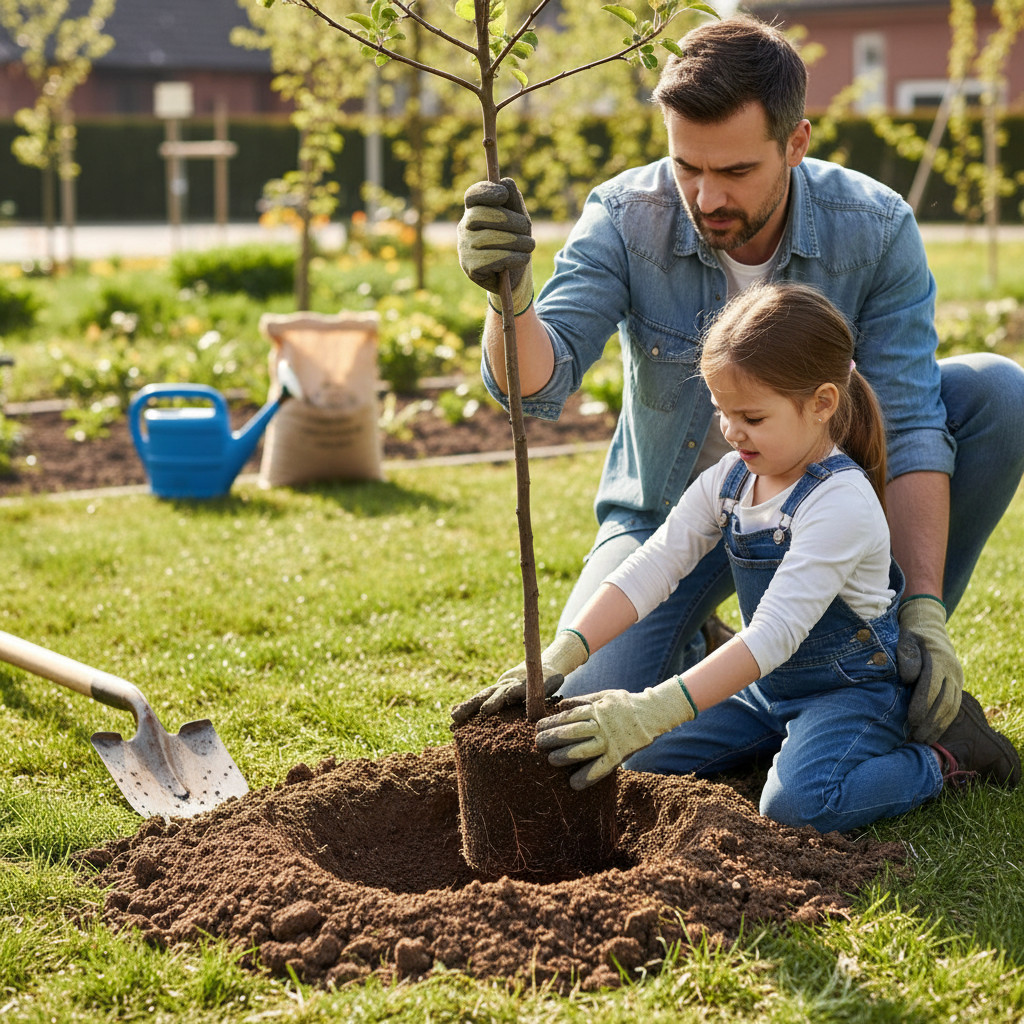
Proper Planting Technique
-
Prepare the Site: Remove all weeds and grass in a 4-foot diameter circle around the planting location. Improve soil by mixing 1-2 inches of composted organic matter into the planting area.
-
Dig the Hole: Create a hole approximately twice the diameter of the root system and about 2 feet deep. Loosen the soil on the walls of the hole to help roots penetrate easily.
-
Position the Tree: Spread roots over loose soil, ensuring they’re not twisted or crowded. The graft union (the visible swelling where the scion meets the rootstock) should remain at least 4 inches above the soil line.
-
Backfill Carefully: Replace soil around roots, firming gently to eliminate air pockets. Do not add fertilizer at planting time, as this can burn roots.
-
Water and Mulch: Water thoroughly after planting. Apply a 2-4 inch layer of mulch (straw, leaves, or wood chips), keeping it several inches away from the trunk to prevent rot.

Spacing Guidelines for Pollination and Tree Health
Tree spacing varies based on rootstock type, soil fertility, and pruning plans:
| Tree Type | Spacing Between Trees | Notes |
|---|---|---|
| Standard/Full-size | 15-18 feet | Traditional orchard spacing |
| Semi-dwarf | 10-14 feet | Most common for home orchards |
| Dwarf | 4-8 feet | Ideal for intensive planting |
Commercial orchard design tips that home gardeners can adapt:
- In larger plantings, consider planting pollinizer trees in a pattern (such as every fifth tree) rather than in separate rows
- Offset pollinizers in adjacent rows to achieve even coverage across the orchard
- For single trees, keep blossom branches from another variety in water hung from the tree during bloom
Container Growing and Small Space Solutions
Even gardeners with limited space can grow productive apple trees using dwarf varieties, container culture, and innovative multi-grafted trees.
Don’t let small garden size discourage you from growing apples. Modern dwarfing rootstocks and creative growing techniques make apple cultivation possible in surprisingly limited spaces.
Dwarf and Semi-Dwarf Varieties
Dwarf apple trees, grafted onto size-controlling rootstocks, grow 6-10 feet tall and can produce fruit within 2-4 years of planting. These compact trees are perfect for small gardens, urban settings, and intensive planting systems. Semi-dwarf varieties reach 10-15 feet and offer a good compromise between size and productivity.
Benefits of smaller trees include:
- Easier harvest without ladders
- Simpler pruning and pest management
- Faster fruit production
- More varieties can fit in limited space
Combo or Family Trees
For the ultimate space-saving solution, consider combo apple trees (also called family trees or multi-grafted trees). These ingenious trees feature two or more compatible varieties grafted onto a single rootstock, providing internal cross-pollination on one tree.
Combo trees solve the pollination puzzle for gardeners who can only accommodate a single tree. Reputable nurseries carefully select varieties with similar vigor and compatible bloom times to ensure all grafted portions thrive and pollinate each other effectively.
Container Growing Tips
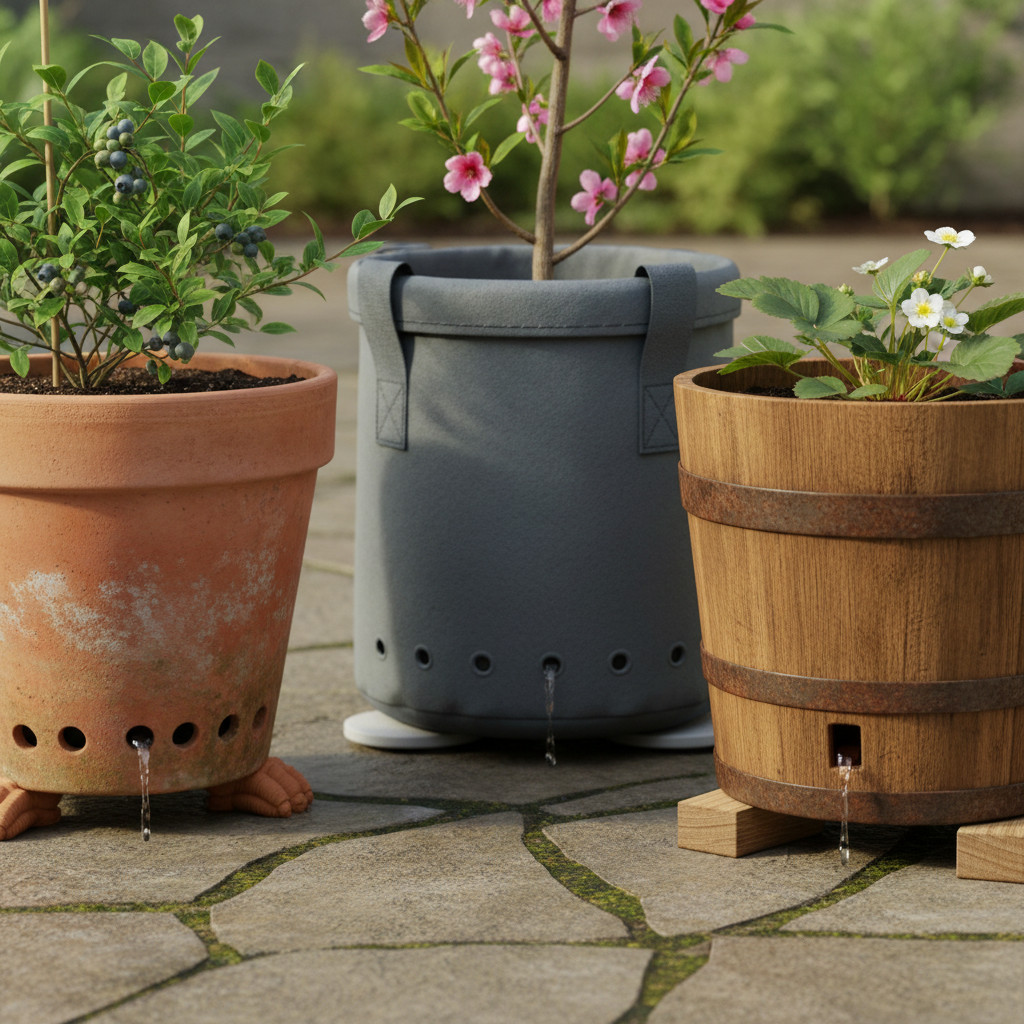
Columnar apple trees and mini-dwarf varieties are the best candidates for container culture. Growing in containers allows cultivation in locations where in-ground planting isn’t possible—patios, balconies, or areas with poor soil.
Container growing requirements:
- Use a container of at least 25 gallons for mature trees
- Select quality potting mix (not garden soil) with good drainage
- Expect more frequent watering and fertilization than ground-planted trees
- Monitor soil moisture carefully—containers dry out faster than garden beds
- Provide winter protection in cold climates, as container roots are more vulnerable to freezing
Essential Apple Tree Care and Maintenance
Consistent, proper care throughout the growing season keeps your apple trees healthy, productive, and capable of supporting the pollination and fruit development processes that lead to abundant harvests.
Watering Requirements
Proper watering is perhaps the most important—and most challenging—aspect of apple tree care. Young trees require regular watering to establish strong root systems, while mature trees need consistent moisture during fruit development.
General watering guidelines:
- Provide approximately one inch of water per week over the root zone
- Water deeply rather than frequently to encourage deep root growth
- Allow soil to dry slightly between waterings to prevent root rot
- Increase watering during hot, dry periods and when fruit is developing
- Reduce watering in fall to help trees prepare for dormancy
A 2-4 inch layer of organic mulch around trees (kept away from the trunk) helps retain soil moisture, regulate soil temperature, suppress weeds, and gradually improve soil health.
Fertilization Practices
Apple trees require adequate mineral nutrients for strong growth, healthy blooms, and productive fruit set. However, fertilization should be approached thoughtfully—excessive fertilizer can promote soft growth vulnerable to disease and winter damage.
Best practices for fertilizing:
- Use balanced, organic fruit tree fertilizer in late winter through early summer
- Avoid fertilizing after early summer, which encourages late-season growth susceptible to frost damage
- Apply compost as a gentle, slow-release nutrient source
- If trees produce about one foot of new growth annually with healthy foliage, they may need little additional fertilizer
- Always perform a soil test before establishing a fertilization program
Pruning Techniques
Pruning shapes trees for optimal light penetration and air circulation, removes diseased or damaged wood, and maintains manageable size for harvest and care. Proper pruning also improves flower and fruit production.
Key pruning principles:
- Prune during dormancy (late winter) once trees are established and bearing fruit
- Young trees need minimal pruning beyond removing misplaced, broken, or dead branches
- Remove overly vigorous upright shoots (water sprouts), especially high in the tree
- Thin weak, crossing, or downward-growing branches
- After about 10 years, thin overcrowded fruiting spurs to maintain productivity
- Summer pruning can help control excessive vegetative growth
Thinning Fruit for Better Quality
Though it seems counterintuitive, removing excess fruit improves the quality of remaining apples and prevents branches from breaking under heavy loads. Thin fruits 4-6 weeks after bloom to one apple per cluster, or approximately 6-8 inches between fruits.
Common Pollination Challenges and Solutions
Even with careful planning, various factors can interfere with successful pollination—recognizing these challenges and knowing how to address them helps ensure consistent fruit production year after year.
Weather-Related Problems
Cold weather during bloom is one of the most common causes of poor fruit set. Apple trees need temperatures above 55°F for blossom development, and flowers can be killed by late frosts. Additionally, bees don’t fly in temperatures below about 55°F, reducing pollination during cool spells.
Solutions:
- Select varieties with bloom times appropriate to your local frost risk
- Consider later-blooming varieties if you frequently experience late spring frosts
- Protect trees during frost warnings with horticultural fleece or other covers
- Remember that you only need 1-2 fine, warm days during bloom for successful pollination
Rain and wind during bloom can also prevent bees from working effectively and may physically damage delicate blossoms. While you can’t control weather, selecting disease-resistant varieties and maintaining healthy trees helps them recover from weather-related stress.
Inadequate Pollinator Presence
Without sufficient bees and other pollinators visiting your blooming trees, cross-pollination cannot occur effectively. Pollinator populations may be limited due to pesticide use in the surrounding area, lack of nesting habitat, or absence of diverse flowering plants.
Strategies to attract and support pollinators:
- Plant native flowering plants and herbs near your orchard to provide additional food sources and attract pollinators
- Create nesting habitats such as well-drained soil areas, brush piles, or mason bee houses
- Avoid pesticide use during bloom, and choose products with lower toxicity to bees when treatment is necessary
- Apply pesticides at dusk or night when bees are least active, allowing spray to dry before morning
Dealing with Sterile Pollen Varieties
If you’ve planted triploid varieties like ‘Gravenstein,’ ‘Jonagold,’ or ‘Bramley’s Seedling,’ remember they cannot pollinate other trees and need two additional varieties nearby.
Planning for triploids:
- Plant at least two other diploid varieties that bloom simultaneously with the triploid
- Ensure these companion varieties can also pollinate each other
- Consider adding a crabapple as one pollinator option for maximum flexibility
- Be aware of family relationships—don’t pair closely related varieties
Hand Pollination Methods
In situations where natural pollinators are scarce or weather conditions are unfavorable, hand pollination provides a viable alternative.
Technique using a paintbrush or cotton swab:
- Wait until flowers are fully open, typically mid-morning on a dry, sunny day
- Gently collect pollen from the anthers of one variety
- Transfer pollen to the stigma of flowers on another variety
- Work methodically through the tree to pollinate as many flowers as possible
Using blossom branches for solitary trees:
- Obtain branches with fresh blossoms from a compatible variety
- Place branches in buckets or jars of water
- Hang containers from branches throughout your tree
- Replace branches regularly during the bloom period to maintain fresh pollen supply
Attracting and Supporting Pollinators
Creating a pollinator-friendly environment around your apple trees is one of the most effective ways to ensure successful pollination and abundant fruit production.
The health and activity of pollinating insects directly impacts your apple harvest. Taking steps to encourage diverse pollinator populations benefits not only your fruit trees but contributes to broader ecosystem health.
Creating Pollinator Habitat
Food Sources: Plant a variety of flowering plants that bloom at different times throughout the growing season. Good choices include lavender, borage, clover, wildflowers, yarrow, and dill. These plants provide nectar and pollen when apple blossoms aren’t available, keeping pollinator populations strong in your area.
Nesting Sites: Many native bees nest in the ground or in plant stems. Provide suitable habitat by:
- Leaving some areas of bare, well-drained soil undisturbed
- Allowing some dead stems and brush to remain for stem-nesting bees
- Installing mason bee houses or bee hotels
- Protecting existing nesting areas from tillage and disturbance
Water Sources: Bees need water, especially during hot weather. Provide shallow water sources with landing spots (pebbles or floating cork) where bees can drink safely.
Bee Management for Apple Pollination
While wild bees often provide adequate pollination for home orchards, understanding managed pollinator options helps if you experience pollination problems.
Honeybees are the most commonly used managed pollinators. In commercial orchards, one medium-strength hive (15,000-20,000 bees) typically covers one acre of semi-dwarf trees. Home gardeners usually don’t need managed hives if natural pollinator populations are healthy.
Mason bees are excellent orchard pollinators that can be encouraged by providing appropriate nesting tubes. The blue orchard mason bee (Osmia lignaria) is the most common native species managed for orchard pollination.
Bumblebees work in cooler temperatures than honeybees, making them valuable pollinators during chilly spring weather when apple trees bloom.
Pesticide Best Practices
Protecting pollinators from pesticide exposure is essential:
- Never spray insecticides during bloom—this is the most critical rule
- Time applications for when bees are least active (dusk or after dark)
- Choose products with lower toxicity to bees when possible
- Allow adequate time for spray to dry before bees become active
- Prevent drift onto flowering plants in adjacent areas
- Consider Integrated Pest Management (IPM) strategies to reduce overall pesticide need
Managing Pests and Diseases in Apple Trees
Healthy, vigorous trees are better able to withstand pest and disease pressure while supporting successful pollination and fruit development.
Apples are susceptible to various insects and diseases, and some level of pest management is usually necessary for a quality crop. Understanding common problems helps you identify issues early and take appropriate action.
Common Apple Diseases
Apple Scab: This fungal disease causes blackish-brown blotches on leaves and scabby lesions on fruit. Prevention includes planting resistant varieties (‘Liberty,’ ‘Freedom,’ ‘Jonafree’), applying appropriate fungicides during wet spring weather, and cleaning up fallen leaves in autumn.
Powdery Mildew: Recognized by white powdery fungus on leaves and shoots, this disease thrives in warm, dry conditions. Improve air circulation through proper pruning, and treat with sulfur-based fungicides if needed.
Fire Blight: This bacterial disease causes shoots to wilt and blacken, resembling a shepherd’s crook. Remove infected branches immediately, cutting at least 12 inches below visible infection and disinfecting tools between cuts. Apply copper spray in fall and early spring for prevention.
Cedar-Apple Rust: Common in eastern North America, this disease causes orange lesions on leaves and fruit. If possible, remove nearby juniper species (the alternate host) and apply fungicides preventatively.
Common Apple Pests
Codling Moth: The larvae tunnel into fruit, leaving dark frass in the seed cavity. Control through careful timing of organic insecticides about two weeks after full bloom, pheromone traps for monitoring, and prompt removal of fallen fruit.
Apple Maggot: These flies lay eggs under the skin, and larvae tunnel throughout the fruit. Sticky red sphere traps and apple maggot barriers (bags placed over developing fruit) provide organic control.
Aphids: These small insects cluster on shoots and leaves, causing curling and distortion. Natural predators often control populations; insecticidal soap can be used for severe infestations.
Disease-Resistant Varieties
Choosing disease-resistant varieties significantly reduces the need for chemical treatments and makes organic apple growing more feasible. Excellent disease-resistant options include:
- ‘Liberty’: Resistant to scab, cedar-apple rust, and fire blight; partially self-fertile
- ‘Freedom’: Excellent disease resistance; good fresh eating apple
- ‘Enterprise’: Resistant to scab, fire blight, and cedar-apple rust; stores well
- ‘William’s Pride’: Very disease resistant; early-ripening with excellent flavor
Harvesting and Storing Your Apple Crop
After successful pollination and a season of careful care, the reward comes at harvest time—knowing when and how to pick your apples ensures you enjoy them at peak quality.
Different apple varieties ripen from August through October depending on variety and location. Understanding your specific varieties’ harvest timing and storage characteristics helps you enjoy homegrown apples for months.
Determining Harvest Readiness
Visual Cues: The background color of the apple skin (the color under the red blush) changes from green to yellowish as apples ripen. Seeds inside mature apples turn from white to brown.
Physical Tests: Ripe apples separate easily from the branch when cupped in your hand and given a slight twist and upward lift—don’t yank or pull straight down. The flesh should be crisp, not mealy, and the fruit should have developed its characteristic aroma.
Taste Test: When in doubt, taste an apple! Flavors develop as sugars increase and acids balance during ripening.
Proper Harvesting Technique
Handle apples gently to prevent bruising, which leads to rapid deterioration in storage. Pick with the stem attached when possible. Place harvested apples carefully into containers rather than dropping them.
If apples are overripe and soft on the tree, they’re still excellent for cooking, baking, sauces, and cider—they just won’t store well.
Storage Methods
Only store mid-season and late-season varieties; early-season apples don’t keep well and should be eaten soon after picking. For successful storage:
- Select perfect fruit: Only store apples without bruises, cuts, or signs of disease
- Wrap individually: Wrap each apple in newspaper or tissue paper to prevent rot from spreading
- Maintain proper conditions: Store at 30-35°F with high humidity in a dark location
- Check regularly: Remove any apples showing signs of decay before they affect others
- Keep varieties separate: Different varieties store for different lengths of time
Late-season apples like ‘Fuji,’ ‘Braeburn,’ and ‘Enterprise’ can store for five months or more under proper conditions, while mid-season varieties typically keep for several weeks to a few months.
Final Thoughts: Growing Apple Trees Successfully
Understanding apple tree pollination is the foundation of successful apple growing, but it’s just one piece of the rewarding puzzle of home fruit production. By selecting compatible varieties that bloom together, planting them within effective pollination distance, supporting healthy pollinator populations, and providing consistent care throughout the growing season, you set the stage for years of abundant harvests.
Remember these essential principles as you plan and maintain your apple orchard:
- Most apples require cross-pollination—plan for at least two compatible varieties unless you choose a truly self-fertile option
- Match bloom times—use pollination charts to ensure your chosen varieties flower together
- Understand triploids—these outstanding varieties need two other pollinators to produce fruit
- Support your pollinators—create habitat, avoid pesticides during bloom, and encourage diverse bee populations
- Practice consistent care—proper watering, fertilization, and pruning keep trees healthy and productive
- Choose disease-resistant varieties when possible—they simplify management and reduce reliance on chemical treatments
The journey of growing apple trees connects us to thousands of years of agricultural tradition while contributing to biodiversity, supporting pollinators, and providing incomparable fresh fruit for our families. Whether you’re planting a single dwarf tree on a patio or establishing a diverse orchard with multiple varieties, the knowledge you’ve gained about pollination requirements and tree care will serve you well for decades of fruitful harvests.
Your next steps:
- Research varieties suited to your USDA hardiness zone and chill hour requirements
- Select at least two compatible varieties from the same or adjacent pollination groups
- Prepare your planting site with proper soil amendments and spacing
- Plant at the appropriate time for your region
- Establish a consistent care routine for watering, fertilizing, and monitoring
- Enjoy watching your trees grow, bloom, and eventually reward your efforts with bushels of delicious homegrown apples