Table of Contents
- How Far Apart to Plant Swiss Chard for Maximum Harvest Success
- Understanding Swiss Chard Growth Habits Before Determining Spacing
- Recommended Spacing for Full-Size Swiss Chard Plants
- Spacing for Baby Leaf and Cut-and-Come-Again Harvests
- Critical Factors That Influence Optimal Swiss Chard Spacing
- How to Properly Thin Swiss Chard Seedlings
- Succession Planting and Spacing Strategies for Continuous Harvests
- Companion Planting Spacing Considerations
- Special Spacing Considerations for Growing Swiss Chard for Seed
- Troubleshooting Common Spacing-Related Problems
- Maximizing Your Swiss Chard Harvest Through Proper Spacing and Care
- Final Thoughts: Finding Your Perfect Swiss Chard Spacing
How Far Apart to Plant Swiss Chard for Maximum Harvest Success
Picture this: You’re standing in your garden, seeds in hand, ready to plant one of the most versatile and visually stunning vegetables available—Swiss chard. Those vibrant stems in ruby red, sunshine yellow, and hot pink promise both nutrition and beauty. But before you start dropping seeds into the soil, there’s one critical question you need to answer: How far apart should you plant Swiss chard? Get this spacing right, and you’ll enjoy abundant harvests of tender, flavorful leaves all season long. Get it wrong, and you might end up with stunted plants competing for resources or a sparse garden that underutilizes your precious growing space.
Swiss chard (Beta vulgaris var. cicla) is a remarkably forgiving plant that tolerates both cool and warm weather, making it a garden MVP from early spring through late fall. Unlike its temperamental cousin spinach, which bolts at the first sign of heat, Swiss chard maintains steady production throughout the growing season. This biennial plant, grown as an annual in most gardens, belongs to the same species as beets but has been cultivated for its abundant, nutritious leaves rather than storage roots. Whether you’re growing the classic white-stemmed varieties like ‘Fordhook Giant’ or the rainbow-hued ‘Bright Lights’, proper spacing is fundamental to your success.
Understanding why spacing matters is just as important as knowing the measurements themselves. Swiss chard plants need adequate room for their extensive root systems, which can extend about 8 inches deep into the soil. They also require sufficient air circulation between leaves to prevent fungal diseases, especially in humid climates. When plants are crowded, they compete for sunlight, water, and nutrients, resulting in smaller leaves and increased susceptibility to pests and diseases. Conversely, spacing plants too far apart wastes valuable garden real estate and allows weeds to establish between your chard plants. The sweet spot exists somewhere in between, and that’s exactly what we’ll explore in this comprehensive guide.
Understanding Swiss Chard Growth Habits Before Determining Spacing
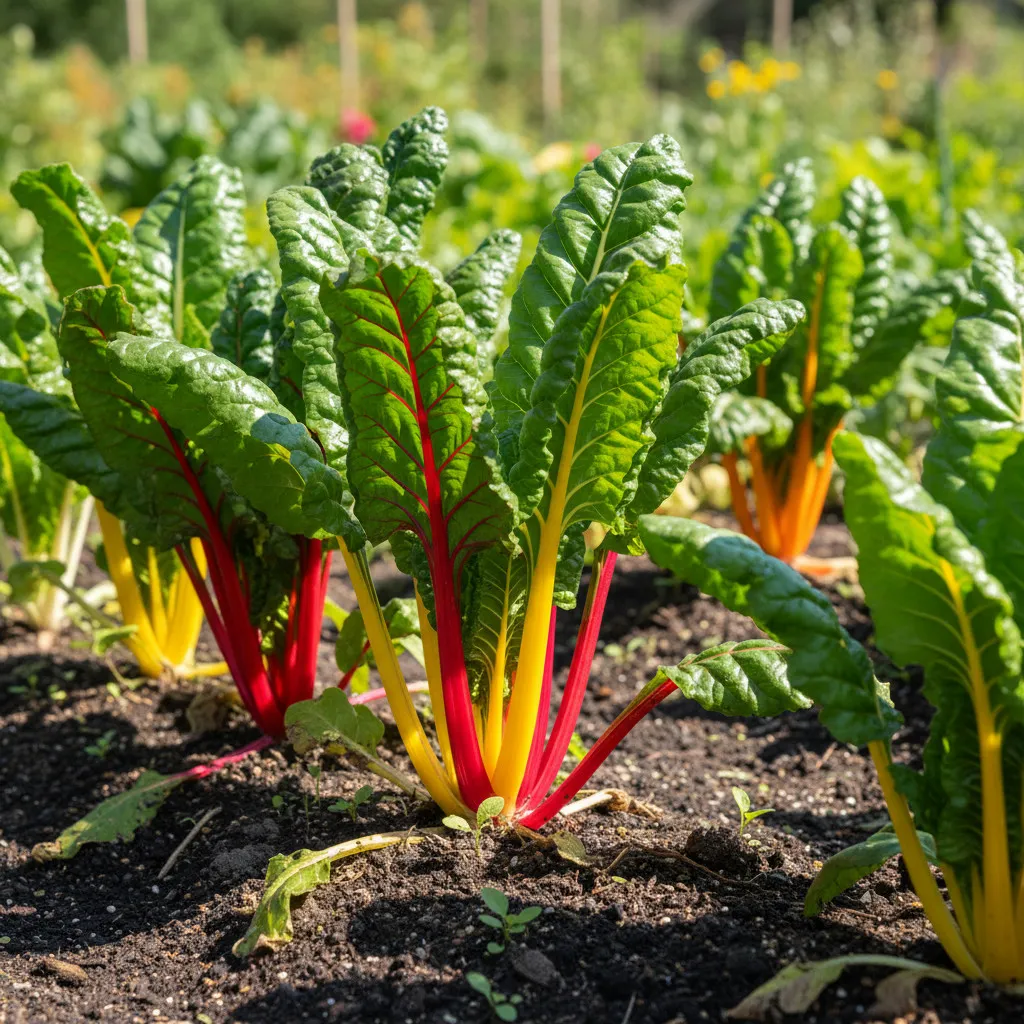
Before we dive into specific spacing recommendations, it’s essential to understand how Swiss chard grows and what it needs to thrive throughout the season. This leafy green is considerably larger than many gardeners initially expect, especially compared to smaller greens like spinach or arugula.
Swiss chard plants develop from a central crown at soil level, sending out large, crinkly leaves on thick, succulent stems. Depending on the variety and growing conditions, mature plants can reach heights of 16 to 24 inches tall, with leaves that fan outward in a rosette pattern. The ‘Fordhook Giant’ variety, true to its name, can produce enormous leaves that span well over a foot in width when fully mature. Even compact varieties like ‘Silverado’ still develop into substantial plants that require adequate space to reach their productive potential.
The root system of Swiss chard consists of a large, woody taproot that anchors the plant and stores nutrients, along with numerous fibrous feeder roots that spread outward to gather water and minerals from the surrounding soil. These roots need room to establish themselves without competing with neighboring plants. When roots become too crowded, plants experience stress that manifests as slower growth, smaller leaves, and in some cases, premature bolting (though Swiss chard is generally bolt-resistant compared to other greens).
Another critical factor affecting spacing decisions is your intended harvest method. If you plan to harvest individual outer leaves continuously throughout the season using the cut-and-come-again method, you’ll want plants spaced to encourage ongoing production. If instead you prefer to harvest baby greens for salads or plan to cut entire plants at once, tighter spacing becomes not only acceptable but actually advantageous. Your spacing strategy should align with your culinary goals and how you plan to use this nutritious vegetable in your kitchen.
Recommended Spacing for Full-Size Swiss Chard Plants
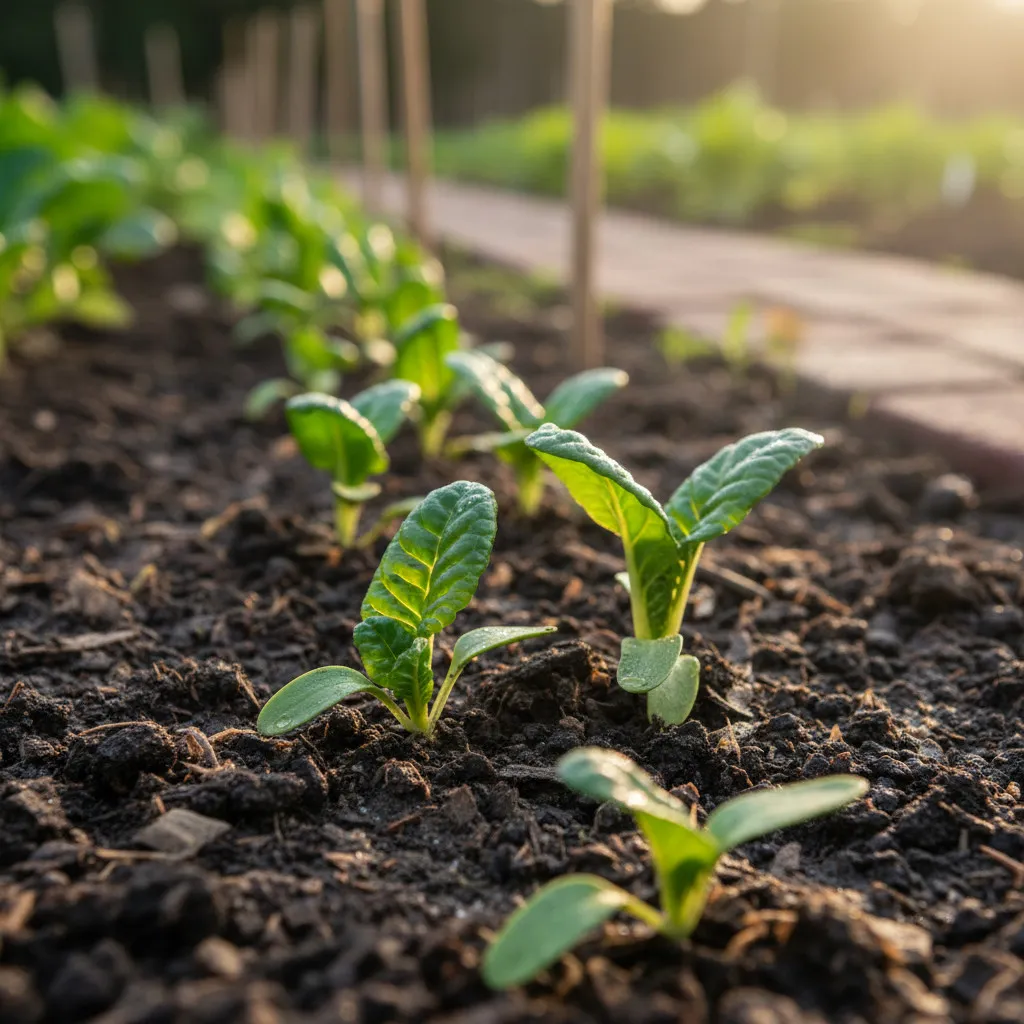
For gardeners who want to grow Swiss chard to its full mature size and harvest large, tender leaves throughout the growing season, proper spacing is absolutely essential for success. This section details the optimal distances for producing those restaurant-quality leaves you’ll be proud to serve.
1. In-Ground Garden Spacing for Maximum Production
When direct seeding Swiss chard in traditional garden rows, aim to initially sow seeds about 2 to 4 inches apart, planting them approximately one-half inch deep. Because Swiss chard seeds are actually multigerm seed clusters containing multiple embryos, you’ll likely see several seedlings emerge from each “seed” you plant. This is completely normal and expected. Once your seedlings reach about 2 to 3 inches in height with their first true leaves visible, it’s time to thin them to their final spacing.
For full-size plants that you’ll harvest continuously throughout the season, thin seedlings to stand 4 to 6 inches apart for moderate-sized plants, or up to 8 to 12 inches apart if you want to grow truly massive specimens with extra-large leaves. Research from university extension programs, including the University of Minnesota and Utah State University, consistently recommends this spacing range as optimal for healthy plant development. The wider 8 to 12-inch spacing is particularly recommended for varieties known for their large size, such as ‘Fordhook Giant’, ‘Lucullus’, or when growing in exceptionally fertile soil that will support vigorous growth.
Space your rows 12 to 18 inches apart to allow comfortable access for weeding, watering, and harvesting. Some gardeners prefer wider row spacing of up to 24 to 30 inches, especially if they plan to use wheeled cultivators for weed control or if they’re interplanting Swiss chard with other vegetables. The wider row spacing also improves air circulation, which can be beneficial in humid climates where fungal diseases like Cercospora leaf spot might be problematic. However, in small garden spaces where every square inch counts, the closer 12 to 18-inch row spacing works perfectly well and actually helps shade out competing weeds once the chard leaves expand.
2. Square Foot Gardening Spacing Considerations
Square foot gardening has become increasingly popular because it maximizes production in small spaces while minimizing weeding and maintenance. For Swiss chard in a square foot garden setup, spacing recommendations vary depending on your harvest intentions and the specific variety you’re growing.
Most square foot gardening practitioners recommend planting 1 to 4 Swiss chard plants per square foot. For substantial, continuously producing plants, place one plant in the center of each square or position four plants equidistant from each other within the square (essentially one in each quadrant). According to discussions among experienced square foot gardeners, planting 2 to 3 plants per square foot represents a practical middle ground that provides good yields without excessive crowding. If you choose to plant four per square, you’ll need to harvest more frequently and aggressively to prevent overcrowding as plants mature.
One advantage of slightly tighter spacing in square foot gardens is that the plants’ large leaves will eventually create a living mulch effect, shading the soil surface and suppressing weed growth. However, this benefit must be balanced against the increased risk of fungal diseases in humid climates when air circulation becomes restricted. If you live in an area with high humidity or have previously experienced disease issues with leafy greens, err on the side of less dense planting—perhaps just two plants per square foot instead of four.
3. Container and Raised Bed Spacing Requirements
Swiss chard adapts beautifully to container culture, making it an excellent choice for balcony gardens, patios, and small urban spaces. The key to success in containers is matching your spacing to the container size and ensuring adequate soil volume for root development.
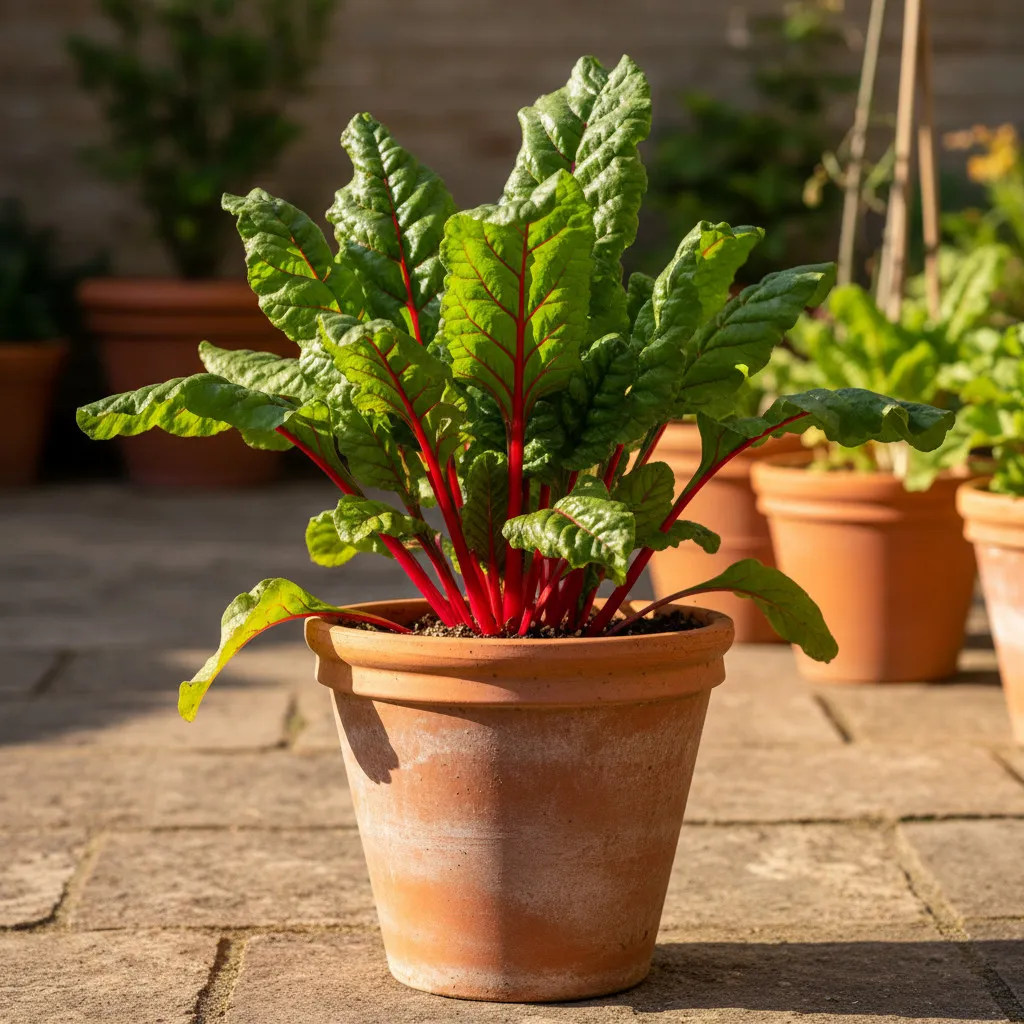
For individual containers, choose pots that are at least 8 inches in diameter and 12 inches deep, though 18-inch deep containers produce even better results. Plant 2 to 3 Swiss chard plants in a standard 12 to 14-inch diameter container, or just one plant in an 8-inch pot. Larger containers, such as half-barrels or rectangular planters, can accommodate more plants using the same 6 to 8-inch spacing you’d use in the ground. Remember that container-grown plants depend entirely on you for water and nutrients, so they may require more frequent watering and feeding than their in-ground counterparts.
In raised beds, Swiss chard can be planted using either row spacing or intensive spacing patterns. Many raised bed gardeners prefer to plant in wide rows or blocks rather than traditional single-file rows. In this case, space plants 6 to 8 inches apart in all directions, creating a grid pattern or offsetting rows in a triangular pattern to maximize the number of plants while still providing adequate room. The rich, loose soil typical of well-maintained raised beds supports this slightly closer spacing beautifully, often producing better results than traditional row spacing in compacted native soil.
Spacing for Baby Leaf and Cut-and-Come-Again Harvests
Not every gardener wants to grow giant Swiss chard plants. If your preference leans toward tender baby greens for salads or you want to practice intensive harvesting techniques, your spacing strategy will differ significantly from the recommendations for full-size plants.
Baby Leaf Production Spacing
For baby leaf Swiss chard production, where you’ll harvest young, tender leaves at just 3 to 6 inches tall, much denser planting is not only acceptable but actually desirable. Seed companies like Johnny’s Selected Seeds recommend sowing seeds for baby leaf production at a rate of 2 to 4 seeds per inch in rows that are spaced just 2 to 4 inches apart. This creates a dense stand of young plants that you’ll cut when they reach the desired size.
When planting this densely, it’s crucial not to overcrowd beyond these recommendations, as excessively tight spacing can lead to stunted growth, poor air circulation, and increased disease pressure. One useful guideline is that when planting more seeds per inch (toward the 4 seeds per inch rate), you should compensate by spacing rows farther apart to maintain adequate overall spacing. This prevents the solid mat of leaves from creating a humid microenvironment that promotes fungal growth.
Baby leaf Swiss chard can be harvested multiple times using the cut-and-come-again method. Make your cuts about 1 inch above the soil surface, being careful to cut above the basal plate (the growing point at the crown of the plant). This allows the plant to regenerate new leaves for subsequent harvests, typically ready in 5 to 14 days depending on growing conditions and variety. After two or three cuttings, the vigor typically declines, at which point many gardeners choose to pull the plants and resow for a fresh crop of tender greens.
Mesclun Mix and Salad Green Spacing
Swiss chard makes an excellent addition to mesclun mixes and salad green plantings, where it’s grown alongside lettuce, arugula, mustards, and other tender greens. For these mixed plantings, broadcast seeds or sow in wide bands, aiming for a final density of roughly 15 to 20 plants per square foot. This sounds extremely dense, but remember that you’ll be harvesting these greens when they’re quite small—just a few inches tall—before they have a chance to crowd each other significantly.
The advantage of including Swiss chard in mesclun mixes is that it adds color, nutrition, and a mild flavor that complements spicier greens like mustard or arugula. The baby Swiss chard leaves are sweet and tender, lacking the earthier flavor that develops as leaves mature. However, keep in mind that Swiss chard seeds germinate more slowly than many other salad greens (typically taking 7 to 14 days versus 3 to 5 days for lettuce), so you may want to pre-sprout Swiss chard seeds or give them a head start before adding faster-germinating greens to the mix.
Critical Factors That Influence Optimal Swiss Chard Spacing
While the spacing recommendations provided above serve as excellent general guidelines, several variables can influence the ideal spacing for your specific garden situation. Understanding these factors allows you to fine-tune your planting strategy for optimal results.
1. Variety Selection and Expected Mature Size
Swiss chard varieties differ considerably in their ultimate size and growth habit. Compact varieties like ‘Silverado’ grow to just 14 to 16 inches tall and naturally require less space than giants like ‘Fordhook Giant’, which can easily reach 24 to 28 inches in height with leaves that span over a foot wide. Before finalizing your spacing plan, check your seed packet or catalog description for information about the expected mature size of your chosen variety.
Rainbow chard varieties like ‘Bright Lights’ and ‘Five Color Silverbeet’ typically fall somewhere in the middle of the size range, producing moderately large plants that perform well with 6 to 8-inch spacing. Single-color varieties, particularly those with white stems like ‘Lucullus’ or ‘White King’, often grow quite large and benefit from the wider 8 to 12-inch spacing. Red-stemmed varieties such as ‘Rhubarb’ and ‘Ruby Red’ can also develop into substantial plants, especially when given rich soil and consistent moisture.
2. Soil Fertility and Amendment Status
The fertility level of your soil directly impacts how large your Swiss chard plants will grow and, consequently, how much space they need. In exceptionally rich soil that’s been heavily amended with compost and provides abundant nitrogen, plants will grow larger and more vigorously than in marginal soil. If you’ve built your beds with a highly fertile mix—such as the classic Mel’s Mix used in square foot gardening (equal parts compost, peat moss or coconut coir, and vermiculite)—your plants may outgrow typical spacing faster than expected.
Before planting Swiss chard, consider having your soil tested through your local extension office to determine its pH and nutrient levels. Swiss chard prefers a slightly acidic to neutral pH between 6.0 and 7.0, with some sources indicating it tolerates up to pH 8.0. If your soil test reveals deficiencies in phosphorus or potassium, amend accordingly before planting. Incorporating 2 to 3 inches of well-aged compost or composted manure into the planting area provides both nutrients and organic matter that improves soil structure and water retention.
In less fertile soils, you might successfully grow Swiss chard at closer spacing without the plants competing severely for nutrients. However, this isn’t an ideal strategy—it’s far better to improve your soil and space plants properly than to compensate for poor soil with tight planting. Swiss chard is classified as a heavy feeder with high nutrient requirements, so starting with rich soil sets you up for success from the beginning.
3. Climate, Season, and Growing Conditions
Your local climate and the time of year when you’re growing Swiss chard can influence optimal spacing decisions in several ways. In hot summer climates, slightly wider spacing improves air circulation and helps keep plants cooler, reducing heat stress. In cooler climates or during spring and fall growing seasons, plants may not reach their full potential size, allowing for somewhat closer spacing without negative consequences.
Water availability is another critical consideration. If you garden in an arid climate or experience frequent droughts, wider spacing reduces competition for soil moisture. Conversely, if you have an irrigation system that provides consistent moisture, you can maintain closer spacing more successfully. Remember that Swiss chard requires consistent soil moisture to produce tender, mild-flavored leaves—allowing the soil to dry out repeatedly results in tough, bitter leaves regardless of spacing.
Light availability also matters. Swiss chard tolerates partial shade better than many vegetables, continuing to produce edible leaves with as little as 4 hours of direct sunlight daily, though 6 to 8 hours is optimal. In partially shaded locations, plants grow more slowly and remain more compact, which might allow for tighter spacing. In full sun with ideal conditions, plants reach their maximum size quickly and need adequate room to avoid overcrowding.
How to Properly Thin Swiss Chard Seedlings
Even with careful seed placement, thinning is almost always necessary when growing Swiss chard because of the multigerm nature of the seeds. Each seed cluster typically contains 2 to 6 individual embryos, meaning multiple plants will emerge from what appears to be a single seed. Learning to thin properly prevents overcrowding and gives your remaining plants the space they need to flourish.
When to Thin Your Swiss Chard
The optimal time to thin Swiss chard seedlings is when they’ve developed their first set of true leaves and stand approximately 2 to 3 inches tall. At this stage, they’re large enough to handle easily but haven’t yet developed extensive root systems that would disturb neighboring plants when removed. If you wait too long to thin, the roots of adjacent plants become intertwined, making it difficult to remove one without damaging others.
Watch your newly planted Swiss chard bed carefully after the first seedlings emerge (typically 5 to 10 days after planting, depending on soil temperature). Once you can clearly distinguish individual plants and they’ve grown beyond the seed leaf (cotyledon) stage to show their characteristic crinkled true leaves, it’s time to thin. Don’t put this task off—overcrowded seedlings compete for light and nutrients immediately, resulting in weak, leggy plants even if you thin later.
Thinning Techniques That Minimize Root Disturbance
When thinning Swiss chard, resist the urge to pull unwanted seedlings from the soil, as this often disturbs the roots of neighboring plants you want to keep. Instead, use clean, sharp scissors or garden snips to cut unwanted seedlings at soil level. This method leaves the roots of removed plants in the ground where they’ll decompose and add organic matter to the soil while completely avoiding root disturbance to your keeper plants.
As you thin, evaluate each seedling’s health and vigor, keeping the strongest, most robust plants at your desired final spacing. Remove any seedlings that appear weak, discolored, or deformed. If you have several equally vigorous seedlings clustered together, keep the one that’s best positioned according to your spacing plan and remove the others. For example, if you’re spacing plants every 6 inches along a row, keep the seedling closest to each 6-inch mark and remove all others nearby.
Making Use of Your Thinnings
One delightful aspect of thinning Swiss chard is that those removed seedlings are perfectly edible and delicious. Rather than consigning them to the compost pile, rinse your thinnings and add them to salads, sandwiches, or smoothies. These tender baby greens offer the same nutritional benefits as mature chard—vitamins A, C, and K, along with minerals like magnesium, potassium, and iron—in a milder, more delicate package.
If you have more thinnings than you can immediately use in the kitchen, consider transplanting some to fill gaps elsewhere in your garden. While Swiss chard doesn’t love root disturbance, young seedlings often transplant successfully if you’re gentle and keep as much soil around the roots as possible. Water transplanted seedlings thoroughly and provide shade for the first day or two as they recover from transplant shock. This approach lets you maximize your planting while maintaining proper spacing in your main chard bed.
Succession Planting and Spacing Strategies for Continuous Harvests
One of Swiss chard’s greatest virtues is its ability to produce continuously over a long season, but you can extend that productivity even further through succession planting—sowing new seeds every few weeks to ensure a constant supply of tender young leaves.
Planning Your Succession Planting Schedule
For a continuous harvest from spring through fall, plan to sow Swiss chard seeds every 2 to 3 weeks from early spring (about 2 to 3 weeks before your last frost date) through midsummer. In most climates, you can continue planting until about 60 to 70 days before your first expected fall frost, giving the final planting time to mature before winter arrives. In mild-winter areas, you can plant even later and potentially harvest Swiss chard year-round with minimal protection.
Each succession planting can occupy its own dedicated space, or you can interplant new sowings among maturing plants. For example, when your first planting reaches harvest size, sow seeds between the established plants. By the time you’ve exhausted the first planting through repeated harvests, the new seedlings will be sized up and ready to begin producing. This technique maximizes garden space efficiency and ensures you never experience a gap in chard availability.
Adjusting Spacing for Succession Plantings
When succession planting Swiss chard, you might adjust your spacing strategy based on when you’re planting. Early spring plantings that will mature in cool weather can tolerate slightly closer spacing because plants grow more slowly in cool conditions. Plantings made in late spring that will mature during summer heat may benefit from wider spacing to improve air circulation and reduce heat stress.
Late summer and early fall plantings intended for fall and winter harvests can return to closer spacing, as the cooling temperatures slow growth and reduce disease pressure. If you plan to protect fall plantings with row covers, cold frames, or low tunnels to extend the harvest into winter, factor in the physical space required for these structures when determining your row spacing. You may need to leave extra room between rows to accommodate the supports for season extension materials.
Companion Planting Spacing Considerations
Swiss chard plays well with many other vegetables in the garden, making it an excellent candidate for companion planting schemes that maximize space and create mutually beneficial plant communities. However, companion planting introduces additional spacing considerations.
Compatible Companion Plants and Spacing Requirements
Swiss chard is particularly compatible with alliums (onions, garlic, leeks, and chives), brassicas (cabbage, broccoli, cauliflower), and beans. These plants don’t compete directly with chard for resources because they occupy different soil zones or have different nutrient needs. When interplanting Swiss chard with companions, maintain adequate spacing for both crops.
For example, when planting Swiss chard alongside onions, you might alternate rows: a row of onions spaced 4 inches apart, then 12 inches of space, then a row of Swiss chard spaced 6 inches apart, then another 12-inch gap before the next onion row. This arrangement gives each crop adequate room while maximizing garden productivity. The aromatic compounds in alliums may help confuse or repel some pests attracted to Swiss chard, such as aphids.
Bush beans make excellent Swiss chard companions because beans fix nitrogen in the soil, potentially benefiting the nitrogen-hungry chard plants. When companion planting these two crops, space them generously enough that you can easily harvest bean pods without damaging chard leaves. A practical arrangement places a row of Swiss chard down the center of a bed with rows of bush beans on either side, maintaining at least 12 inches between the chard and bean rows.
Plants to Avoid Growing Too Close to Swiss Chard
While Swiss chard is generally a good neighbor, certain plants are better kept at a distance. Some gardeners report reduced growth when planting Swiss chard very close to corn, though they can certainly coexist in the same garden with adequate spacing. Potatoes and Swiss chard aren’t ideal companions and should be planted in separate areas of the garden.
Perhaps most importantly, maintain good spacing between Swiss chard and other members of the Beta genus, particularly table beets. While this is primarily a concern if you’re growing chard for seed production (since they can cross-pollinate), even in regular cultivation, they can share pest and disease issues. If aphids or leaf miners discover your beet crop, they’ll readily move to nearby Swiss chard. Spacing these crops in different areas of your garden or maintaining at least several feet of separation helps prevent pest populations from easily moving between them.
Special Spacing Considerations for Growing Swiss Chard for Seed
While most gardeners grow Swiss chard as an annual vegetable, it’s actually a biennial that won’t produce seeds until its second year of growth. If you’re interested in saving seeds from your Swiss chard to plant future crops—perhaps to maintain an heirloom variety or simply for self-sufficiency—spacing requirements change dramatically.
Increased Spacing Requirements for Seed Production
Swiss chard plants grown for seed production need significantly more space than those grown simply for leaf harvest. According to seed-saving organizations and university extension guides, increase spacing to 18 to 24 inches between plants in rows that are 36 inches apart. This generous spacing accommodates the large flowering and fruiting branches that develop during the plant’s reproductive phase in its second year.
When Swiss chard bolts and sends up flower stalks, it transforms from a compact rosette of leaves into a branching structure that can reach 3 to 4 feet tall and spread 2 feet wide. The flowering stalks are laden with seed clusters that need good air circulation to develop properly and dry down for harvest. Crowded seed plants are prone to disease problems and often produce lower-quality seeds with reduced germination rates.
Isolation Distance Considerations
If you’re growing Swiss chard for seed, you must also consider isolation distances from other flowering Beta vulgaris plants to prevent cross-pollination. Swiss chard and table beets are the same species and will readily cross-pollinate if flowering simultaneously within pollination distance. For home seed saving where absolute purity isn’t critical, maintain at least 800 feet between flowering Swiss chard and any flowering beets or other chard varieties. For preservation of rare varieties or more stringent genetic purity, increase this isolation distance to a full mile.
Timing can help manage isolation requirements. Since both Swiss chard and beets are biennials requiring vernalization (exposure to cold temperatures) to trigger flowering, you have control over when plants bolt. In mild climates where plants can survive winter in the ground, they’ll naturally flower in their second spring. In cold climates, you can overwinter roots indoors and replant them in spring, staggering the timing of different varieties to prevent overlap in flowering periods.
Troubleshooting Common Spacing-Related Problems
Even experienced gardeners sometimes encounter issues related to plant spacing. Recognizing these problems and knowing how to address them can save your Swiss chard crop and improve results in future plantings.
Problem: Plants Are Overcrowded and Producing Small Leaves
If your Swiss chard bed has become overcrowded—perhaps because you didn’t thin adequately or succession plantings grew more vigorously than expected—the plants will compete for light, water, and nutrients, resulting in stunted growth and small leaves. You may also notice that the leaves develop bitter or off flavors when plants are stressed by overcrowding.
The solution is remedial thinning, even though it feels wasteful to remove established plants. Evaluate your chard bed and remove every other plant (or every third plant if they’re extremely crowded) to bring spacing closer to the recommended distances. Use the harvested plants in the kitchen—even somewhat smaller, stressed plants are perfectly edible. The remaining plants will respond quickly to the increased space, producing larger, more tender leaves within a week or two. Increase watering and consider applying a nitrogen-rich fertilizer to help the remaining plants recover and grow vigorously.
Problem: Plants Are Too Widely Spaced and Weeds Are Taking Over
On the opposite end of the spectrum, spacing Swiss chard too far apart creates opportunities for weeds to establish between plants. While the eventual leaf canopy will shade out many weeds, the early part of the growing season sees a lot of bare soil that weeds eagerly colonize. Excessive spacing also means you’re growing fewer plants than your garden space could support, reducing overall productivity.
Address this problem through mulching and interplanting. Apply a 2 to 3-inch layer of organic mulch such as straw, grass clippings, or shredded leaves between your Swiss chard plants to suppress weed growth. Alternatively, interplant the spaces between chard with quick-maturing crops like radishes or lettuce that will occupy the space until the chard leaves expand. For future plantings, reduce your spacing to make more efficient use of your garden area while still providing adequate room for healthy plant development.
Problem: Poor Air Circulation Is Causing Disease Issues
In humid climates or during wet seasons, Swiss chard plants spaced too closely may develop fungal diseases like Cercospora leaf spot, which creates reddish-purple spots on leaves that eventually turn ash-gray. Downy mildew, which causes a mildew-like growth on foliage, can also become problematic when air circulation is poor.
If you notice disease symptoms developing, immediately improve air circulation by removing some plants to increase spacing. Remove and dispose of any leaves showing disease symptoms (don’t compost them, as this can spread pathogens). Consider applying an organic fungicide if the problem is severe, and adjust your watering practices to avoid wetting foliage—water at the base of plants early in the day so leaves have time to dry before evening. For future plantings in humid climates, err on the side of wider spacing and orient rows to align with prevailing winds to maximize air movement through the planting.
Maximizing Your Swiss Chard Harvest Through Proper Spacing and Care
Proper spacing is just one element—albeit a critical one—in producing abundant Swiss chard harvests. When combined with appropriate care practices, optimal spacing helps your plants reach their full productive potential throughout the growing season.
Harvesting Techniques That Work With Your Spacing Plan
The cut-and-come-again harvesting method works beautifully with properly spaced Swiss chard. Begin harvesting when leaves reach a usable size—typically when outer leaves are 6 to 8 inches long, though baby leaves can be taken earlier. Using clean, sharp scissors or a harvesting knife, cut outer leaves at the base where they meet the crown, taking 2 to 3 leaves from each plant at a time. This technique allows the central growing point to continue producing new leaves for subsequent harvests.
If you’ve spaced plants generously at 8 to 12 inches apart, you can allow them to grow quite large before beginning harvest, potentially waiting until leaves reach 10 to 12 inches for a dramatic, restaurant-quality presentation. More closely spaced plants at 4 to 6 inches should be harvested more frequently, taking leaves when they’re younger and smaller to prevent overcrowding as plants continue growing. Harvest regularly—at least once per week during peak growing season—to encourage continuous production and prevent leaves from becoming tough or bitter.
Fertility Management Based on Plant Density
The number of Swiss chard plants you’re growing in a given space directly impacts nutrient demands on your soil. A densely planted bed with plants every 4 to 6 inches will deplete soil nutrients faster than a more sparsely planted area. Adjust your fertilization program accordingly.
For closely spaced plantings, plan to side-dress with additional compost or apply a nitrogen-rich organic fertilizer every 3 to 4 weeks throughout the growing season. A top-dressing of compost pushed up around the base of plants (a technique called hilling) provides both nutrients and support. Alternatively, apply a balanced organic fertilizer like blood meal, feather meal, or a complete vegetable fertilizer according to package directions. Water-soluble fertilizers can also be applied every 2 weeks for a quick nutrient boost that’s especially helpful when growing in containers or very sandy soils.
More widely spaced plants in rich soil may need minimal additional fertilization beyond the initial soil preparation. Watch your plants for signs of nutrient deficiency—yellowing older leaves often indicate nitrogen deficiency, while purple-tinged leaves may suggest phosphorus deficiency. Address deficiencies promptly with appropriate amendments to keep plants producing abundantly.
Final Thoughts: Finding Your Perfect Swiss Chard Spacing
After exploring all the factors that influence Swiss chard spacing—from variety selection and soil fertility to climate conditions and harvest methods—you might feel overwhelmed by all the variables. The good news is that Swiss chard is remarkably forgiving, and you can adjust your approach as you gain experience with how it grows in your specific garden conditions.
Start with the basic recommendations as your foundation: 4 to 6 inches between plants for moderate-sized chard, 8 to 12 inches for giant specimens, or 2 to 4 seeds per inch for baby leaf production. Space rows 12 to 18 inches apart in most situations, increasing to 24 to 30 inches if you need room for equipment or prefer extra working space. In square foot gardens, plant 2 to 4 plants per square depending on your variety and harvest plans. These guidelines work well for the vast majority of gardeners.
As you grow Swiss chard season after season, pay attention to how plants perform with your chosen spacing. Take notes about which varieties grow largest, how your soil fertility affects plant size, and which spacing produces the quality and quantity of leaves you prefer. Over time, you’ll develop an intuitive sense of the perfect spacing for your unique garden situation, allowing you to maximize both productivity and the visual appeal that makes Swiss chard such a spectacular addition to any vegetable garden.
Whether you’re growing classic white-stemmed varieties or those stunning rainbow chards with jewel-toned stems, proper spacing gives your plants the foundation they need to thrive. Those vibrant leaves and nutritious harvests you envisioned when you first picked up those seeds become reality when you give each plant the room it needs to reach its full potential—not too crowded, not too sparse, but just right.