There’s something magical about the combination of warm blueberry muffin bread and a hot cup of coffee. The soft, tender crumb bursts with juicy berries, the buttery flavor unfolds on your tongue, and suddenly your morning—or your afternoon break—transforms into something worth savoring. Unlike traditional muffins that require individual baking and cleanup, blueberry muffin bread delivers that same bakery-style experience in one simple loaf. It’s the perfect bridge between a quick bread and a cherished breakfast treat, and once you master making it, you’ll understand why so many home bakers return to this recipe again and again.
The beauty of blueberry muffin bread lies in its simplicity paired with its impressive results. You’re not juggling multiple bowls or executing complicated techniques. Instead, you’re combining humble pantry staples—butter, sugar, flour, eggs, and milk—with fresh blueberries to create something that tastes far more special than the effort required. The key to achieving that coveted moist crumb and even distribution of berries throughout the loaf involves understanding a few critical techniques and ingredient interactions. This guide walks you through everything you need to know to bake blueberry muffin bread that rivals any coffee shop version.
Table of Contents
- What Makes This Blueberry Muffin Bread Different
- Why Fresh Blueberries Matter for Coffee Time
- The Secret to Keeping It Perfectly Moist
- Ingredient Selection for the Best Results
- The Mixing Method That Works Every Time
- Preventing Blueberries from Sinking
- The Perfect Bake Time and Temperature
- Testing for Doneness Without Overbaking
- Cooling and Storing Your Bread
- Simple Variations to Try
- Serving Suggestions and Pairings
- Troubleshooting Common Problems
- Make-Ahead Tips
- Final Thoughts
- Making the Most of Every Slice
What Makes This Blueberry Muffin Bread Different
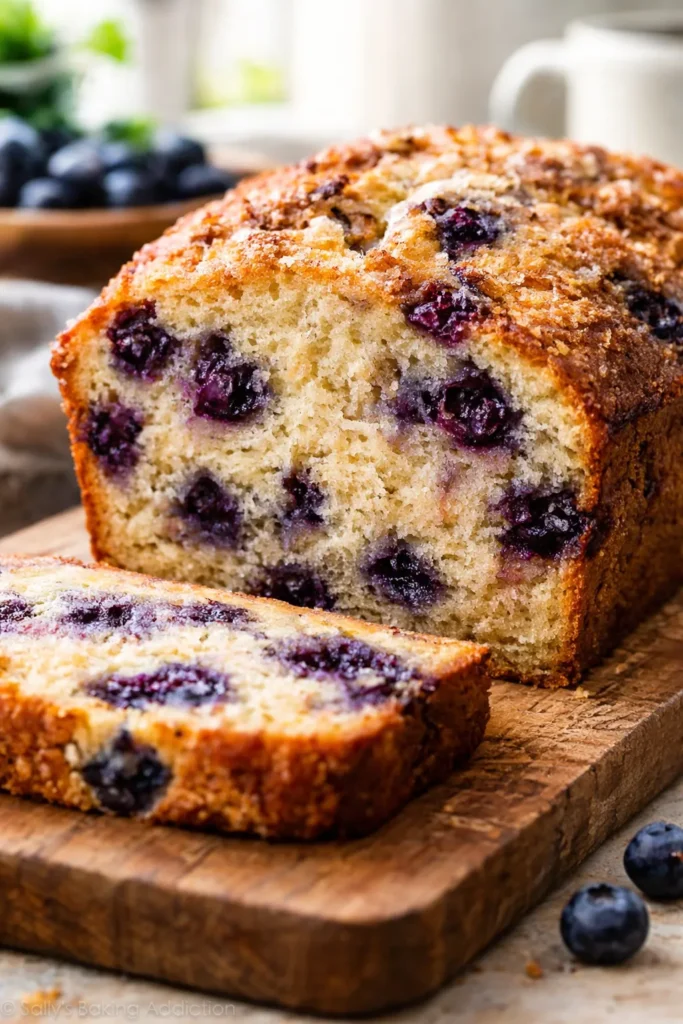
Blueberry muffin bread occupies a unique space in the quick bread world. It’s not quite as dense as traditional banana bread or zucchini bread, yet it delivers more substance and moisture than a standard muffin. The distinction matters because the batter is engineered specifically for one large loaf rather than individual portions, which requires slightly different proportions and baking times than a muffin recipe.
The loaf format offers practical advantages that extend beyond just convenience. When you bake blueberry muffins individually, you’re monitoring 12 separate cups of batter and managing varied bake times across the pan. With blueberry muffin bread, you pour everything into a single loaf pan, set a timer, and walk away. The uniform shape and size also mean more even heat distribution and a more consistent final product every time you bake it.
What truly sets this bread apart is how beautifully it improves with time. Unlike some quick breads that begin drying out after a day or two, blueberry muffin bread actually becomes more moist and tender on days two and three as the moisture from the berries redistributes throughout the crumb. This makes it an excellent choice for baking on weekends and enjoying throughout the following week, or for preparing ahead when you know you’ll want something special on hand.
The combination of ingredients—particularly the balance of fat, acid, and moisture—creates a tender crumb that feels luxurious without being overly dense or heavy. This isn’t a bread you eat out of obligation; it’s one you look forward to, slice after slice.
Why Fresh Blueberries Matter for Coffee Time

Fresh blueberries are the heart of this recipe, and their quality directly impacts the final loaf. Fresh berries offer a bright, authentic flavor and ideal texture that frozen blueberries, while convenient, simply cannot fully replicate. When you bite into a slice of blueberry muffin bread made with fresh berries, you taste clean, sweet berry flavor with subtle tartness that plays beautifully against the buttery cake crumb.
Fresh blueberries also contribute the right amount of moisture to the batter. Their high water content means the berries release juices during baking that keep the surrounding crumb tender and prevent drying. When you taste the bread alongside your morning coffee, that subtle berry juice creates little pockets of intensified flavor throughout each slice—the reason coffee time feels special with this pairing.
The texture contrast matters too. Fresh blueberries maintain a firmer structure during baking compared to frozen ones, which tend to break down and bleed into the batter. When whole berries remain mostly intact, you get delightful pops of flavor rather than a uniform berry-tinted crumb. This textural difference is what separates this loaf from versions made with alternatives.
That said, frozen blueberries do work in this recipe when fresh ones aren’t available. Use them directly from the freezer without thawing, toss them lightly with a tablespoon of flour before folding into the batter, and plan for an extra five to ten minutes of baking time. The result won’t be identical to the fresh berry version, but it will still be delicious.
The Secret to Keeping It Perfectly Moist
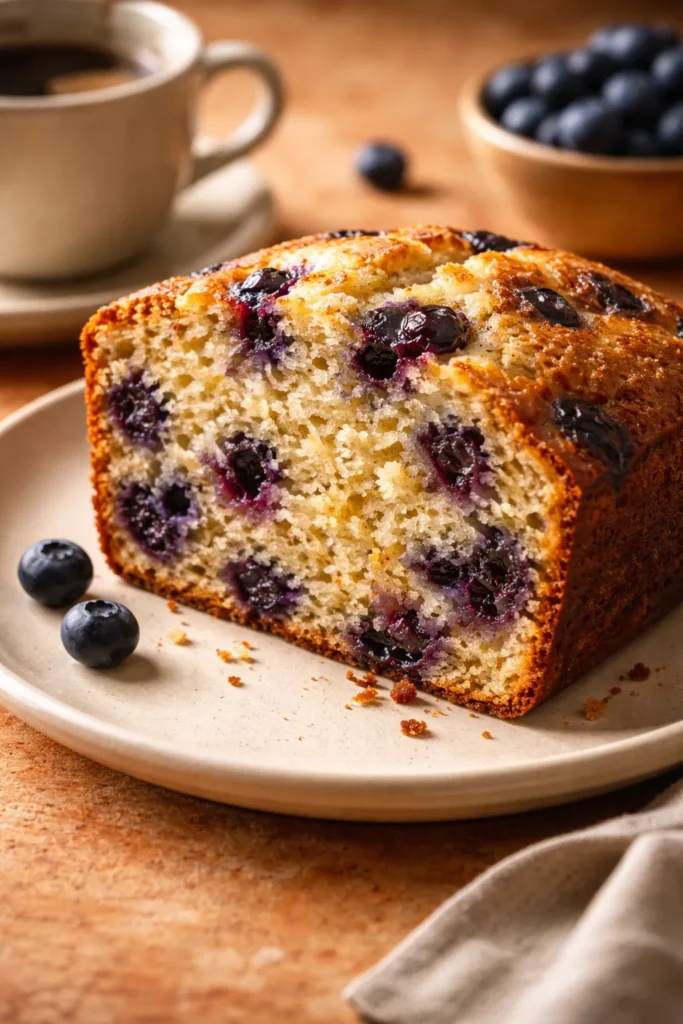
Moisture is everything in blueberry muffin bread. A dry loaf tastes disappointing no matter how perfect the flavor, but a truly moist loaf feels indulgent and bakery-quality. Several factors work together to achieve and maintain that ideal moisture level.
The first factor is ingredient selection and temperature. Room-temperature ingredients mix more evenly, distributing moisture uniformly throughout the batter. When eggs, butter, and milk are cold, the batter doesn’t emulsify properly, creating pockets where the moisture doesn’t bind well with the dry ingredients. This leads to an uneven crumb texture and drier finished loaf. Remove eggs and milk from the refrigerator at least thirty minutes before baking, and let butter sit on the counter until it yields slightly to finger pressure.
The second factor is the type of dairy you use. Recipes using sour cream, Greek yogurt, or buttermilk produce noticeably moister bread than those using only milk. The lactic acid in these ingredients tenderizes the crumb while the fat content creates a velvety texture. Even if a recipe doesn’t specifically call for sour cream, substituting a quarter cup of it for a quarter cup of the milk enhances moisture without changing the recipe’s overall balance.
Avoiding overmixing is the third critical factor. Overmixing develops gluten, which tightens the crumb and makes it more prone to drying out. Mix the dry and wet ingredients just until they’re combined with no visible flour streaks remaining. A few small lumps in the batter are fine—they’ll smooth out during baking. This gentle approach creates a tender, moist loaf every single time.
Finally, cool the bread completely before wrapping and storing. Wrapping warm bread traps steam, which condenses back into the loaf as it cools, creating moisture. However, wrapping still-hot bread causes excess condensation that can make it soggy. Wait until the loaf reaches room temperature, then wrap it tightly in plastic wrap or store it in an airtight container.
Ingredient Selection for the Best Results
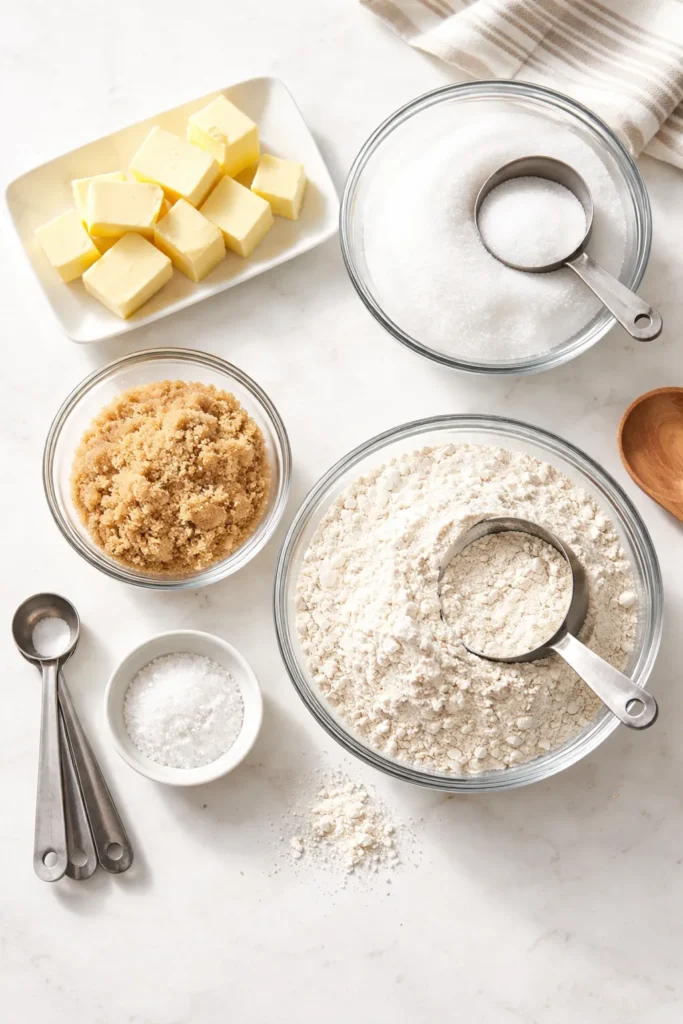
Every ingredient in blueberry muffin bread serves a specific purpose, and choosing quality options makes a meaningful difference in the final loaf.
Butter forms the flavor base and creates the tender crumb structure. Unsalted butter gives you complete control over salt content, allowing you to balance flavors precisely. Room-temperature butter creams with sugar more efficiently, incorporating air that helps the bread rise and creating a lighter texture. If you only have salted butter on hand, reduce the added salt by half a teaspoon.
Sugar provides sweetness while also contributing to moisture and structure. Granulated sugar keeps the crumb light and fine, while brown sugar adds moisture and slight molasses depth. Using a mix of both—about three-quarters cup granulated and one-quarter cup brown—gives you the best of both: excellent texture with subtle richness. If you reduce the granulated sugar below three-quarters cup, the bread becomes less sweet and may not rise as well.
All-purpose flour is the workhorse. Measure it carefully by spooning it into your measuring cup and leveling off the top with a knife, rather than scooping directly from the bag, which compacts the flour and makes your bread dense. If you prefer to weigh flour (which eliminates variables), 2 cups equals approximately 250 grams.
Baking powder and baking soda provide lift. Both are necessary in most blueberry muffin bread recipes. Baking powder creates lift throughout baking, while baking soda reacts with the acidic ingredients (milk, sour cream, or yogurt) to create additional rise early in baking. Together, they ensure the bread rises properly and bakes through evenly.
Milk adds moisture and helps create a tender crumb. Whole milk produces the richest result, but two-percent milk works fine. At minimum, avoid skim milk, which lacks the fat that contributes to texture and flavor. Room-temperature milk mixes more smoothly into the batter.
Eggs provide structure, moisture, and richness. Room-temperature eggs incorporate more smoothly into the butter-sugar mixture and distribute evenly throughout the batter. Large eggs are standard; don’t substitute smaller or larger sizes without adjusting quantities.
Vanilla extract amplifies flavor without adding distinct vanilla taste. Pure vanilla extract produces superior results compared to imitation, though both work in a pinch.
Blueberries should be fresh if possible, rinsed gently and dried thoroughly on paper towels before using. Dry berries coat more evenly with flour and don’t add excess moisture to the batter.
The Mixing Method That Works Every Time
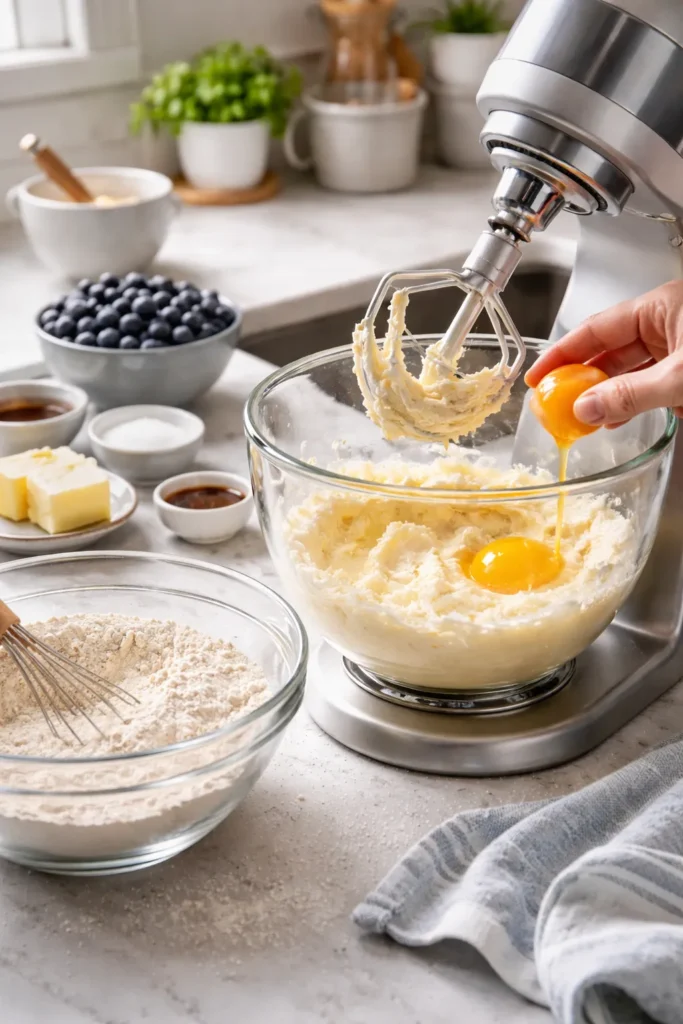
The mixing method for blueberry muffin bread is straightforward and nearly foolproof, but the order and technique matter.
Step one: Cream the butter and sugar. Using an electric mixer (handheld or stand), beat softened butter and sugar together on medium speed for two to three minutes until the mixture is pale, noticeably fluffy, and increased in volume. This process incorporates air into the butter, which helps the bread rise and creates a tender crumb. Stop the mixer and scrape down the sides of the bowl with a rubber spatula to ensure all butter is fully incorporated.
Step two: Add the eggs. Add eggs one at a time, beating well after each addition and scraping down the bowl as needed. This process fully emulsifies the eggs with the butter-sugar mixture, creating a uniform, light batter base. After all eggs are added, the mixture should look pale yellow and noticeably fluffier than the butter-sugar stage.
Step three: Combine dry ingredients. In a separate bowl, whisk together flour, baking powder, baking soda, and salt. This ensures the leavening agents distribute evenly throughout the flour, preventing any pockets of dense cake. Whisking also aerates the flour slightly, contributing to lift in the final bread.
Step four: Alternate dry and wet ingredients. Reduce the mixer to low speed. Add the dry mixture in three additions, alternating with milk in two additions. This technique—flour, then milk, then flour, then milk, then flour—ensures even distribution while minimizing overmixing. Mix only until each addition just disappears into the batter. Stop the mixer and scrape down the sides after each addition.
Step five: Fold in the blueberries. Remove the mixer bowl and use a rubber spatula to gently fold in the floured blueberries. Folding rather than mixing prevents crushing the berries and keeps the batter tender. Fold only until the berries are evenly distributed with no visible dry flour remaining. The batter should look thick but pourable.
This method ensures an even, well-incorporated batter while keeping the crumb light and tender.
Preventing Blueberries from Sinking
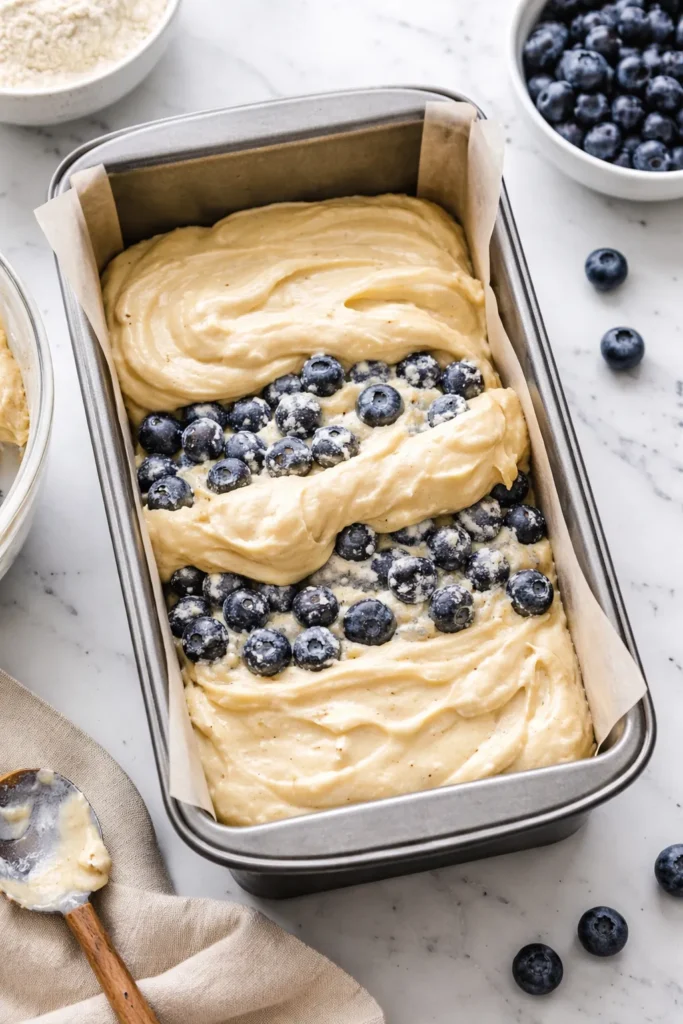
One of the most common complaints about blueberry quick breads is that all the berries end up in the bottom of the loaf, leaving the top slices berry-free. Understanding the physics behind this problem makes the solution obvious.
Blueberries sink because gravity pulls them downward through the batter during baking. The berry itself is denser than the surrounding cake batter, so without intervention, berries migrate to the bottom of the loaf. Tossing the berries in a small amount of flour helps, but only to a degree. The flour coating works best when you use just enough flour to create a light dusting—about one tablespoon per one and a half to two cups of berries.
A more effective approach is the layering method. Pour approximately one-third of the plain batter into the prepared loaf pan. Gently fold the floured blueberries into the remaining two-thirds of batter, then pour that berry-filled batter on top of the plain batter layer. This technique keeps the blueberries suspended in the thicker batter while the plain batter base provides structure underneath. The berries are distributed more evenly throughout the loaf, and you’ll actually get blueberries in every slice.
For extra visual appeal, press a few reserved blueberries gently into the top of the batter before baking. These surface berries create an attractive presentation and promise the baker what’s inside. They won’t sink because they’re on the surface, and they bake into a slightly jammy texture that adds visual interest.
Avoid using excessive flour with the berries, as this thickens the batter too much and can result in a dense, dry loaf. The goal is minimal coating, just enough to slightly reduce sinking while preserving the batter’s light texture.
The Perfect Bake Time and Temperature
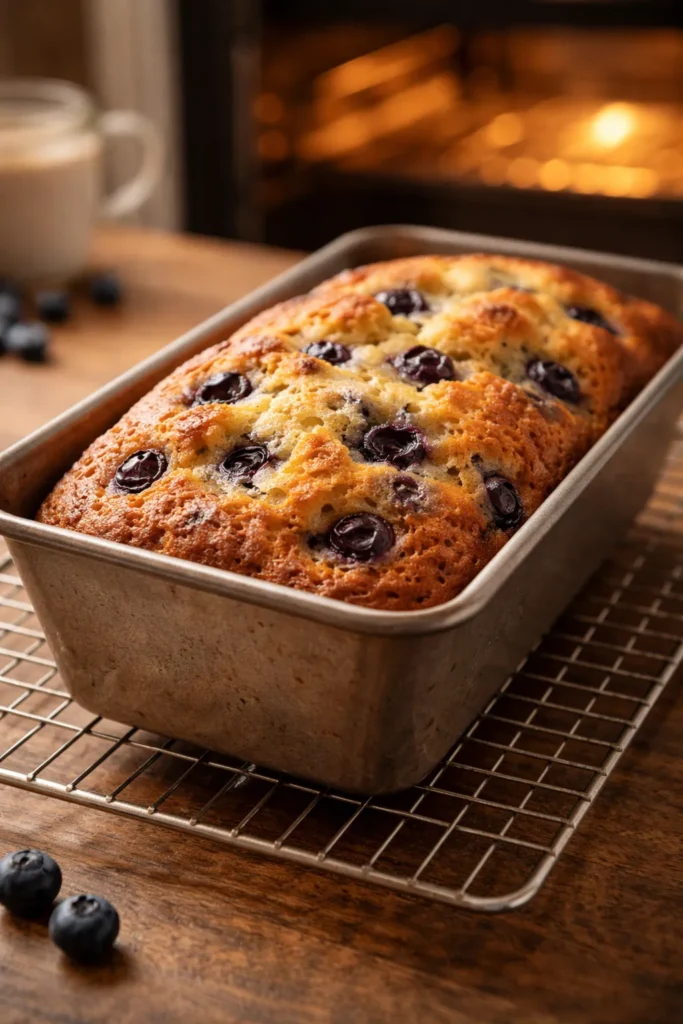
Bake blueberry muffin bread at 350°F (175°C), positioning the oven rack in the lower third of the oven. This moderate temperature allows the bread to bake through evenly without the top browning too quickly. The lower rack position exposes the bottom of the loaf to slightly more direct heat, promoting even baking from bottom to top.
Most loaves require between 60 and 75 minutes of baking time, though this varies based on your specific oven, the exact size and shape of your loaf pan, and the temperature of ingredients when you started. A standard 9-by-5-inch loaf pan typically bakes in the lower end of that range, while a slightly larger pan may need the full 75 minutes.
Watch the top of the bread starting around the 30-minute mark. If it’s browning too quickly, tent it loosely with aluminum foil to slow surface browning while the interior continues baking. Remove the foil for the last 10-15 minutes of baking if the top is still pale, allowing it to develop a light golden color. Never skip the foil step if needed—rushing to finish baking with an already-brown top results in undercooked interior.
Oven temperatures vary more than people realize, so use the suggested time as a guideline rather than gospel. Check doneness starting around 60 minutes using a toothpick or cake tester inserted into the very center of the loaf. The toothpick should come out clean or with just a few moist crumbs clinging to it. A few crumbs indicate perfect doneness; a wet batter means it needs more time. If the exterior is browning too quickly but the interior isn’t set, the oven temperature is likely running hot. Try baking future loaves at 340°F and extending the time slightly.
Testing for Doneness Without Overbaking
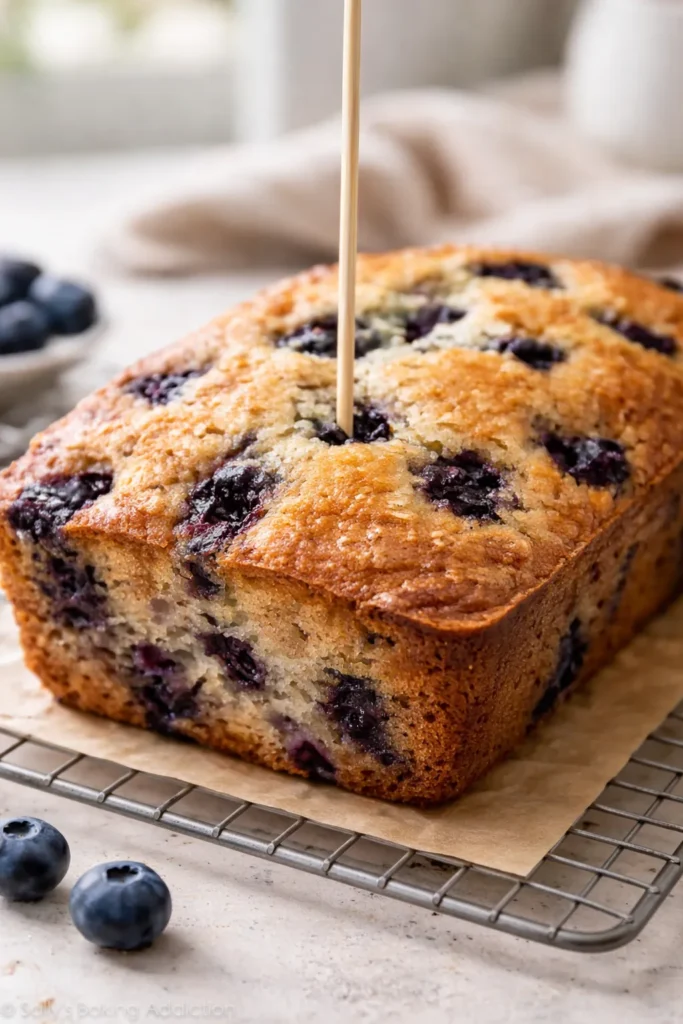
Getting the timing right requires understanding what doneness actually looks like and feels like in blueberry muffin bread.
The visual test: Look at the edges and top of the loaf. The edges should have pulled away very slightly from the sides of the pan, and the top should be golden brown with maybe a few darker spots from berry juice or caramelization.
The toothpick test: Insert a wooden toothpick or thin cake tester into the very center of the loaf, at the deepest point. Withdraw it carefully. Clean crumbs clinging to the toothpick indicate doneness; wet batter streaming from the toothpick means it needs more time. A few moist crumbs are actually preferable because the bread continues cooking slightly as it cools, and a few crumbs ensure you won’t overbake and dry out the loaf.
The bounce-back test: Gently press the top of the loaf with a fingertip. If it springs back immediately with no fingerprint remaining, it’s done. If your fingerprint stays visible, the bread needs a few more minutes. This test works best for less-done loaves and shouldn’t be your only test.
The toothpick test in the berry zones: If you want extra assurance, insert your toothpick in a spot where you can see berries. The batter around berries is slightly wetter due to juice, so it takes a few extra minutes to set. If the toothpick in a berry zone comes out clean, you’re definitely done.
Resist the urge to constantly open the oven and check the bread. Every time you open the door, the temperature drops slightly, which can cause the structure to collapse before it’s fully set. Check once around 60 minutes, then if needed, every five minutes after that.
Cooling and Storing Your Bread
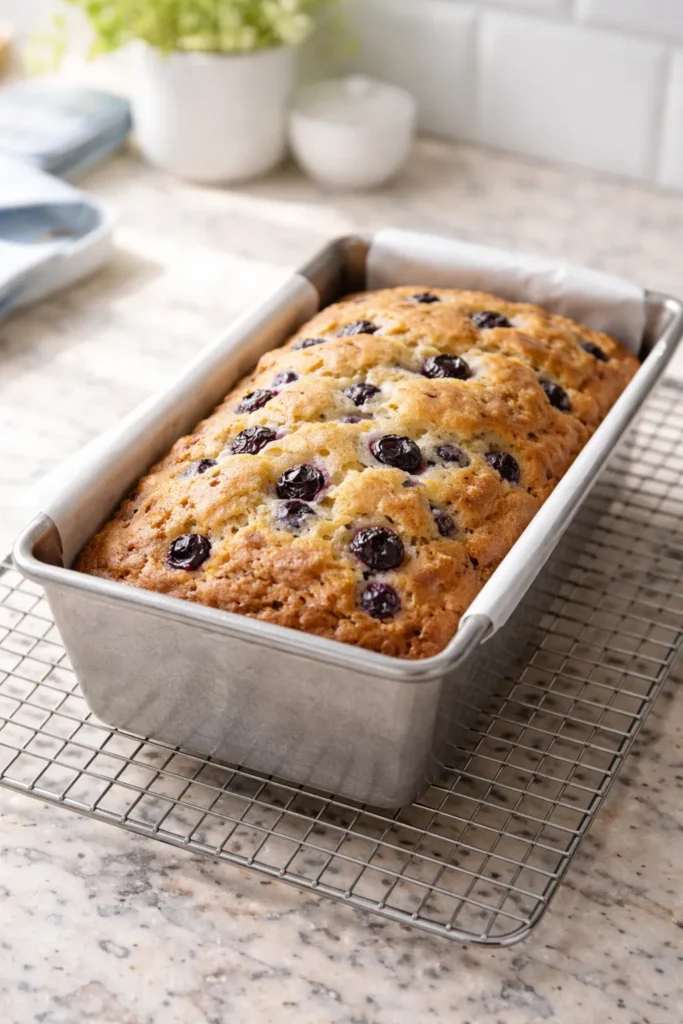
What happens after you remove the bread from the oven is just as important as the baking process itself. Allow the bread to cool in the pan for at least 20 to 30 minutes on a wire rack. During this time, the crumb continues to set and firm up, making the loaf easier to handle and less likely to crumble when you remove it from the pan.
Resist the temptation to slice the bread while it’s still warm. Warm bread is delicate because the crumb hasn’t fully set. Slicing releases steam and causes the knife to drag through the soft crumb, creating uneven slices and tearing. Let the bread cool completely—at least one to two hours—before slicing. This patience pays off with clean, attractive slices.
Once cooled completely, wrap the loaf tightly in plastic wrap or store it in an airtight container. Proper storage preserves moisture and keeps the bread fresh. At room temperature, covered blueberry muffin bread stays fresh for two to three days. In the refrigerator, wrapped securely, it lasts up to one week. The bread actually becomes moister on days two and three, making delayed enjoyment advantageous.
For longer storage, wrap the cooled loaf in two layers of plastic wrap, then place it in a freezer-safe bag or airtight container. Freeze for up to three months. Thaw at room temperature, still wrapped, to prevent excess moisture loss. If you’ve sliced the bread before freezing, wrap individual slices separately so you can thaw only what you need. A frozen slice toasted lightly with a pat of butter becomes almost as delicious as a fresh slice.
Simple Variations to Try
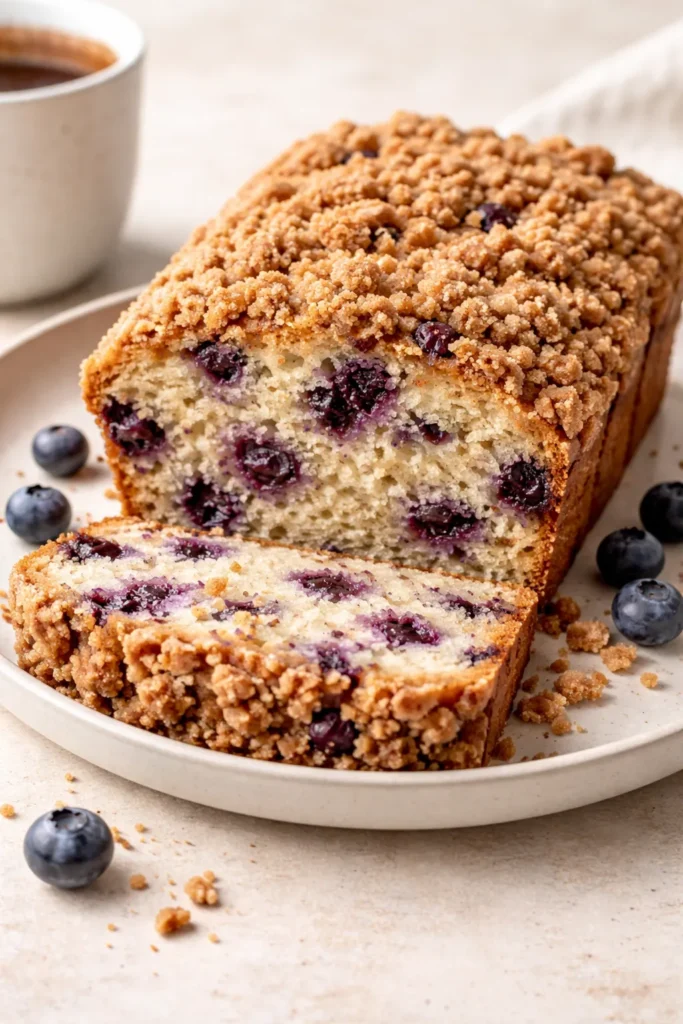
Once you master the basic blueberry muffin bread recipe, endless variations await. These tweaks allow you to adapt the bread to seasonal ingredients, personal preferences, and creative impulses.
Lemon blueberry: Add the zest of one large lemon to the batter along with a teaspoon of lemon juice. This bright citrus twist complements blueberry flavor beautifully without making the bread taste citrusy-first. Some bakers also drizzle a simple lemon glaze (powdered sugar mixed with lemon juice) over the cooled loaf.
Crumble topping: Before baking, sprinkle a buttery cinnamon-sugar crumble over the batter. Mix one-quarter cup flour, two tablespoons brown sugar, one-quarter teaspoon cinnamon, and two tablespoons melted butter with a fork until crumbly. This adds a delightful crunch and caramelized flavor to the top.
Mixed berry: Swap half the blueberries for blackberries, raspberries, or a combination. Each berry brings different flavor notes, and the mix-ins create a more complex taste. Be gentle when folding delicate raspberries to avoid crushing them.
Cinnamon spice: Add one-half to three-quarter teaspoon of ground cinnamon to the dry ingredients for warmth that plays beautifully with blueberry. Some bakers also add a pinch of nutmeg for subtle complexity.
Walnut or pecan: Fold in one-third cup of chopped toasted nuts along with the berries. Nuts add crunch and subtle earthiness that complements the bread’s sweetness. Toast nuts briefly in a dry skillet first to enhance their flavor.
Cream cheese swirl: Spread a thin layer of softened cream cheese mixed with a bit of sugar on top of the batter before baking. It creates a rich, tangy swirl throughout.
Make it dairy-free: Substitute the milk with unsweetened almond or oat milk, and replace sour cream (if using) with dairy-free yogurt. The bread will be slightly less rich but still moist and delicious.
Serving Suggestions and Pairings
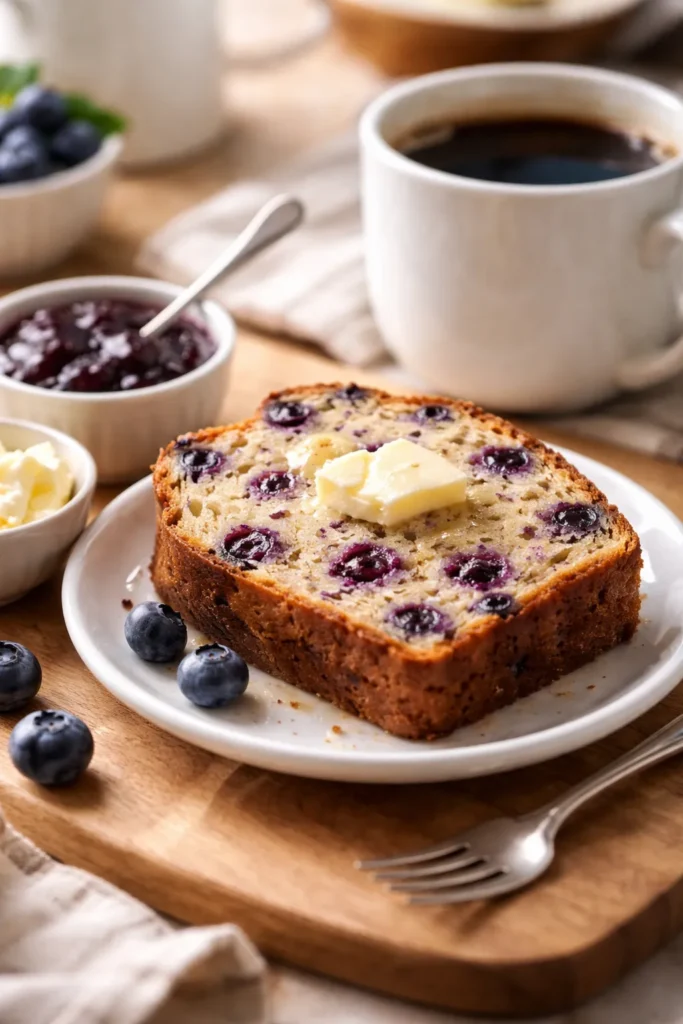
Blueberry muffin bread truly shines when paired thoughtfully with complementary flavors and beverages.
Coffee is the obvious choice, and for good reason. The subtle bitterness and warmth of coffee balance the bread’s sweetness perfectly. Black coffee, cappuccino, latte, or even a lighter brew all pair well. The warmth of the beverage enhances the bread’s flavors while the slight chill of a cold brew on a warm day creates pleasant contrast.
Tea pairings work equally well. Black tea like English Breakfast or Assam offers enough body to stand up to the bread’s richness. Lighter herbal teas like chamomile or mint provide a more delicate contrast. A mug of hot tea and a slice of blueberry muffin bread transforms an ordinary afternoon into something worth savoring.
Spreading butter on a warm slice is simple elegance. The butter melts into the warm crumb, enriching it further. For extra indulgence, try compound butters like honey butter, cinnamon butter, or even a savory herb butter if you’re feeling adventurous.
A dollop of whipped cream or mascarpone on a slice adds luxurious richness. The cool, tangy dairy plays beautifully against the warm bread.
Blueberry jam or compote spread on a slice doubles down on berry flavor. Fresh blueberry preserves create a summery combination, while more sophisticated preserves add complexity.
Yogurt served alongside adds brightness and creaminess. Greek yogurt in particular provides satisfying protein and creates a lighter snack than bread alone.
For breakfast or brunch, serve slices with soft scrambled eggs and fresh fruit on the side. The bread plays supporting role rather than star, but its flavor rounds out the meal beautifully. For an afternoon or dessert application, pair it with nothing more than excellent coffee and conversation.
Troubleshooting Common Problems
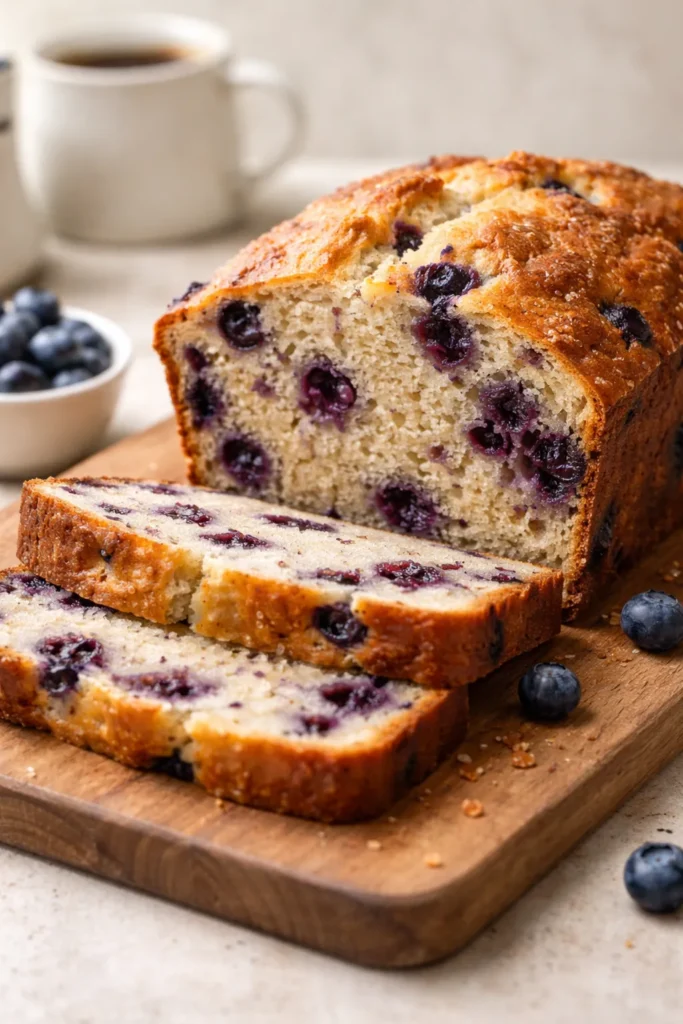
Even with careful attention to technique, issues sometimes arise. Here’s how to diagnose and prevent common problems.
Dense or heavy crumb: This usually results from overmixing (which develops gluten), using cold ingredients that don’t emulsify properly, or measuring flour incorrectly by scooping directly from the bag. To prevent: measure flour by spooning and leveling, use room-temperature ingredients, and mix just until combined. If this happens, the bread is still edible but less pleasant. Note the change for your next bake.
Dry crumb: This typically indicates overbaking or storing the bread uncovered. Check doneness earlier than expected, and ensure you wrap the cooled bread tightly. If the bread turns out dry, try eating it toasted with butter or dunking it in coffee for a few seconds before eating.
Berries all sank to the bottom: Toss berries in more flour next time (up to two tablespoons), or use the layering method described earlier. Ensure you’re using the amount of flour specified in the recipe when tossing berries; too little flour provides minimal help.
Top browns too quickly while interior is underdone: Your oven is running hot. Lower the temperature slightly (try 340°F), extend baking time, or tent the top with foil earlier in baking. All three adjustments together usually solve this issue.
Bread looks green or grayish: This happens when using frozen blueberries, as the anthocyanins (blue pigments) in the berries blend with the tan batter, creating a greenish hue. It’s purely cosmetic and doesn’t affect taste. Use fresh berries if appearance is important, or don’t worry about it—the taste is what matters.
Uneven rise or lopsided loaf: Check that your oven rack is level and your oven runs at the correct temperature. Uneven racks or hot spots cause uneven baking. If this persists, have your oven temperature calibrated.
Bread sticks to the pan: Grease the pan more thoroughly next time, or line it with parchment paper with a slight overhang on the long sides, making removal effortless. Run a thin knife around the edges before attempting to remove the loaf.
Make-Ahead Tips
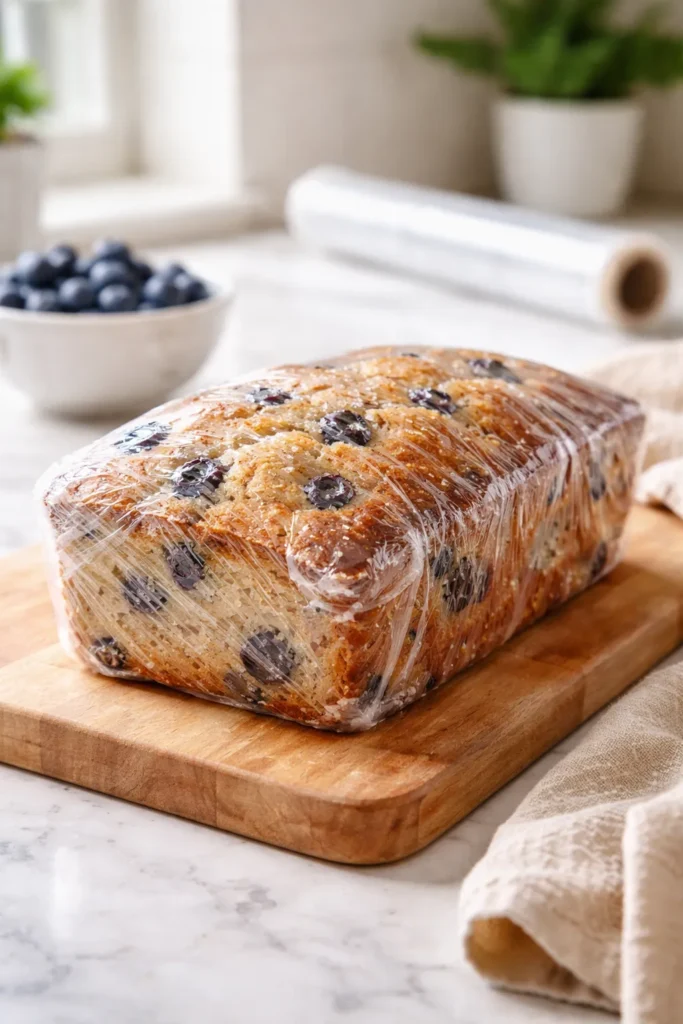
Blueberry muffin bread is wonderfully cooperative for advance preparation, making it ideal for busy schedules.
The day before: Bake the bread completely, cool it, wrap it tightly, and store it at room temperature overnight. The bread will actually be slightly moister and more tender the next day as moisture redistributes. Slice and serve with fresh coffee.
Three days ahead: Bake the bread, cool completely, wrap tightly, and refrigerate. The bread stays fresh for up to one week in the refrigerator, so baking three days ahead is perfectly safe. When you’re ready to serve, let slices come to room temperature or warm them gently in a toaster oven.
One month ahead: Bake and cool the bread completely, wrap it in plastic wrap (two layers), place it in a freezer bag, and freeze. Thaw at room temperature while still wrapped, which takes three to four hours. The thawed bread is indistinguishable from freshly baked.
Freeze individual slices: Cool the loaf completely, slice it, and wrap individual slices in plastic wrap. Flash-freeze on a baking sheet, then transfer to a freezer bag. This allows you to thaw just one or two slices at a time, perfect for when you want fresh-baked flavor without baking an entire loaf. A single slice thawed at room temperature is ready in 30 minutes, or toasted in two to three minutes.
Prepare batter ahead: You can mix the batter and freeze it in an unbaked loaf pan, covered tightly. Bake it directly from frozen, adding 10-15 minutes to the bake time. However, the berries may sink more during the extended bake, so this method is less ideal than freezing the baked bread.
Final Thoughts
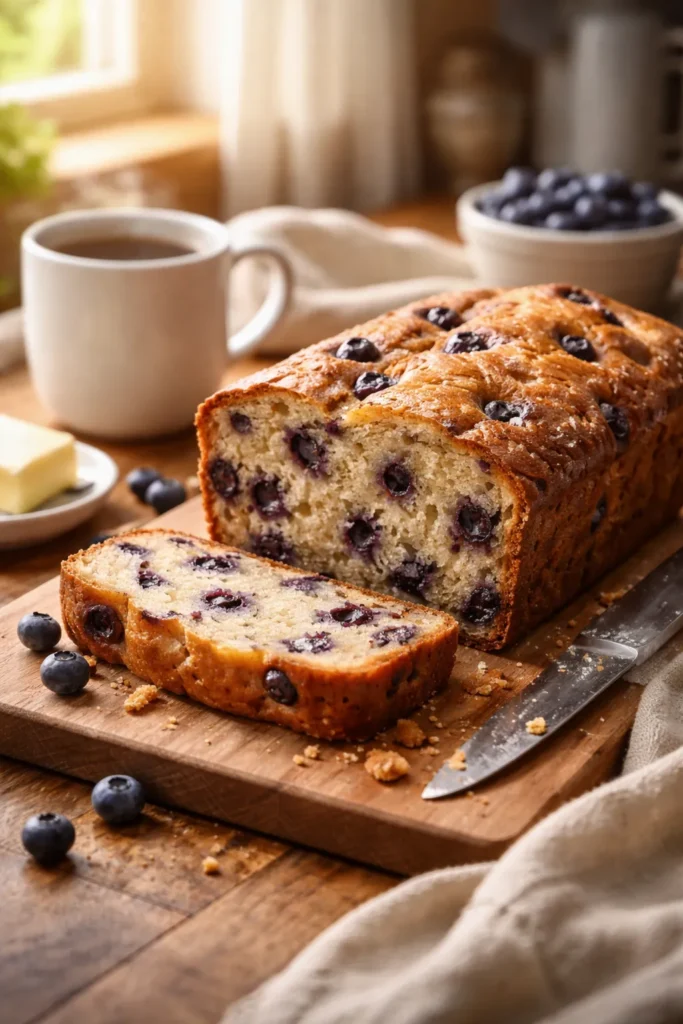
Blueberry muffin bread represents comfort, simplicity, and the pleasure of slowing down for a proper coffee break. It’s the kind of recipe that becomes a regular part of your baking routine—not because it’s trendy or complicated, but because it consistently delivers something worth eating and sharing.
The magic of this bread lies not in special techniques or expensive ingredients, but in understanding how basic components interact and how a few simple precautions—room-temperature ingredients, proper mixing, preventing sinkage, accurate doneness testing—transform ordinary ingredients into something extraordinary. Once you’ve baked it a few times, the recipe becomes almost meditative, something your hands remember and your kitchen fills with the aroma of blueberries and butter.
This is bread worth making regularly. Whether you serve it at a weekend breakfast, enjoy it as an afternoon snack, or bring it to share with friends, blueberry muffin bread delivers consistent deliciousness that justifies the minimal effort required. Master this recipe, and you’ve unlocked something valuable: the ability to create bakery-quality bread in your own kitchen, anytime the craving strikes.
Yield: Makes 1 loaf (about 10-12 slices)
Prep Time: 20 minutes
Cook Time: 65 minutes
Total Time: 1 hour 25 minutes active, plus 1-2 hours cooling
Difficulty: Beginner — No special equipment beyond a basic mixer or mixing bowl, and the steps are straightforward enough for first-time bakers to succeed with confidence.
For the Bread:
- 1/2 cup (8 tablespoons; 113g) unsalted butter, softened to room temperature
- 3/4 cup (150g) granulated sugar
- 1/4 cup (50g) packed light brown sugar
- 2 large eggs, at room temperature
- 1/2 cup (120g) sour cream or plain Greek yogurt, at room temperature
- 1 1/2 teaspoons pure vanilla extract
- 1/3 cup (80ml) whole milk, at room temperature
- 2 cups (250g) all-purpose flour, spooned and leveled
- 1 teaspoon baking soda
- 1 teaspoon baking powder
- 1/2 teaspoon fine sea salt
- 1 1/2 cups (210g) fresh blueberries, rinsed and patted completely dry
- 1 tablespoon all-purpose flour (for coating blueberries)
Optional Crumble Topping:
- 1/4 cup (31g) all-purpose flour
- 2 tablespoons packed brown sugar
- 1/4 teaspoon ground cinnamon
- 2 tablespoons unsalted butter, melted
- 2 tablespoons coarse sugar (turbinado or sparkling sugar)
Prepare the Pan and Preheat:
- Preheat the oven to 350°F (175°C) and position the rack in the lower third of the oven. Grease a 9-by-5-inch loaf pan lightly with softened butter or nonstick spray, then line the bottom and sides with parchment paper, leaving a slight overhang on the two long sides for easy removal.
Make the Batter:
-
In a large mixing bowl or the bowl of a stand mixer fitted with the paddle attachment, combine the softened butter, granulated sugar, and brown sugar. Using an electric mixer on medium speed, beat for 2 to 3 minutes until the mixture is pale, noticeably fluffy, and increased in volume. Stop and scrape down the sides and bottom of the bowl with a rubber spatula, ensuring all butter is fully incorporated.
-
Add the eggs one at a time, beating well for 30 to 45 seconds after each addition. After the second egg, scrape down the bowl. The mixture should look light yellow and significantly fluffier than when you started.
-
Add the sour cream and vanilla extract. Mix on medium speed until fully combined, about 45 seconds. The batter may look slightly curdled at this stage—this is completely normal and will resolve in the next steps.
-
In a separate small bowl, whisk together the flour, baking soda, baking powder, and salt until evenly combined.
-
Reduce the mixer to low speed. Add the dry ingredients in three additions, alternating with the milk in two additions (dry, milk, dry, milk, dry). After each addition, mix just until the flour or milk disappears into the batter with no visible white streaks remaining. Do not overmix—overmixing develops gluten and produces a dense, tough crumb. Scrape down the sides of the bowl after adding each ingredient.
Prepare and Fold in Blueberries:
-
Pour the fresh blueberries into a small bowl. Sprinkle the 1 tablespoon of all-purpose flour over the berries and toss gently with a fork until each berry is lightly coated. This flour coating helps suspend the berries throughout the bread rather than allowing them to sink to the bottom during baking.
-
Remove the mixer bowl and use a rubber spatula to gently fold the floured blueberries into the batter, along with any residual flour remaining in the bowl. Fold just until the berries are evenly distributed and no white flour streaks remain. Avoid crushing the berries—fold gently and stop as soon as everything is combined.
Prepare for Baking:
-
Pour the batter into the prepared loaf pan and spread it into an even layer using an offset spatula or the back of a spoon. Press the batter gently into the corners and smooth the surface.
-
If making the optional crumble topping: In a small bowl, combine the flour, brown sugar, and cinnamon. Pour in the melted butter and stir with a fork until soft crumbles form that resemble wet sand. Sprinkle the crumble mixture evenly over the top of the batter. If not using crumble, simply sprinkle coarse sugar over the top for a light, sparkly finish.
Bake the Bread:
-
Place the loaf pan in the preheated oven on the lower rack. Bake for 30 minutes. At the 30-minute mark, check the color of the top and sides. If they’re browning nicely with light golden-brown color, continue baking. If the top is already dark brown, tent the loaf loosely with aluminum foil to slow the browning while the interior finishes baking.
-
Bake for an additional 30 to 35 minutes (60 to 65 minutes total), until the top is golden brown and a wooden toothpick inserted into the very center of the loaf comes out clean or with just a few moist crumbs clinging to it. A few moist crumbs are ideal—this indicates perfect doneness without overbaking. If the toothpick comes out with wet batter, the bread needs more time.
Cool the Bread:
-
Remove the loaf from the oven and place the pan on a wire cooling rack. Allow the bread to cool in the pan for 20 to 30 minutes. During this time, the crumb continues to set and the bread becomes easier to handle without crumbling.
-
After 20 to 30 minutes, run a thin knife around the edges of the pan to loosen the bread from the sides. Lift the bread out of the pan using the parchment paper overhang and transfer it to a wire cooling rack. Remove the parchment paper carefully.
-
Let the bread cool completely on the rack—at least one to two hours total. Do not slice until completely cooled. Warm bread is delicate and will crumble when sliced. Cooled bread slices cleanly and beautifully.
Store and Serve:
- Once completely cooled, wrap the loaf tightly in plastic wrap or place it in an airtight container. Store covered at room temperature for up to 2 to 3 days. For longer storage, wrap in an additional layer of plastic wrap and refrigerate for up to 1 week, or freeze for up to 3 months. The bread actually becomes moister on days 2 and 3 as moisture redistributes throughout the crumb.
Making the Most of Every Slice
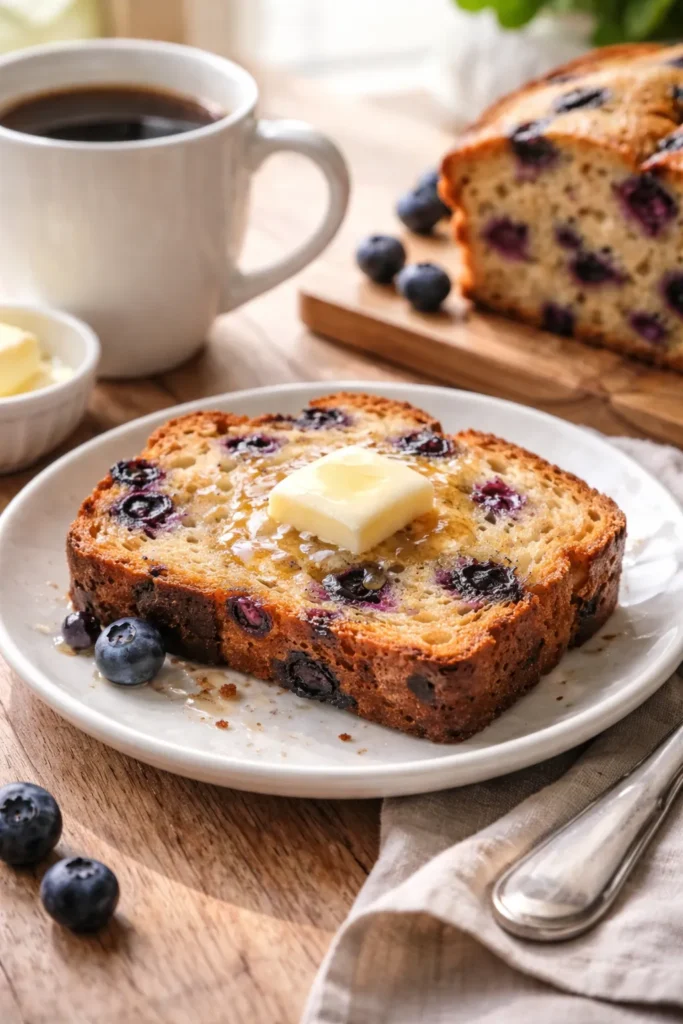
Your first slice should come alongside your favorite coffee, black or with cream, in a quiet moment. Take time to notice the crumb—soft, tender, and studded with blueberry pockets. Notice how the berries burst with juice and the butter melts into the warm (or room-temperature) crumb. This is what you’ve baked for: this specific moment of pleasure.
On day two or three, when the bread has become noticeably moister, slice a piece and toast it lightly, then spread softened butter over the warm surface and watch it melt into crevices. The toasting concentrates flavors and the butter adds richness. This version is equally worthy of a coffee break.
If you freeze individual slices, you’ve created a gift to your future self—the ability to enjoy bakery-quality blueberry muffin bread whenever the craving strikes, without advance planning. Thaw a slice at room temperature while your coffee brews, and by the time the coffee is ready, so is your breakfast.
Once you’ve baked blueberry muffin bread once, you’ll understand why it appears on tables from casual weekday breakfasts to special weekend brunches. It’s humble enough for everyday enjoyment and elegant enough to impress guests. Most importantly, it’s absolutely delicious—moist, tender, loaded with berries, and worthy of your time and kitchen space. Bake it often, enjoy it slowly, and share it generously. That’s the real secret to perfect blueberry muffin bread.