There’s a moment most home cooks know well — you’re staring at your phone, about to place an order for the third time this week, telling yourself it’s just this once. But here’s the thing: the majority of your favorite Asian takeout dishes are not restaurant secrets guarded by chefs who spent decades training. They’re built on a handful of accessible ingredients, a hot pan, and techniques that anyone with thirty minutes and a decent skillet can pull off on a Tuesday night.
What makes cooking Asian food at home so rewarding is how dramatically the results can outperform what arrives in a cardboard container. You control the sodium, the sweetness, the heat level. You use fresh aromatics — real garlic, real ginger — instead of shelf-stable concentrates. And the food hits your plate the moment it leaves the pan, not after sitting in a bag for twenty minutes on the back seat of a delivery driver’s car.
The ten recipes below aren’t watered-down approximations of the real thing. Each one is built with the kind of depth and layering that makes you lean over the pan and inhale before you’ve even tasted it. From a sticky, glossy Mongolian beef that clings to every grain of rice, to a peanut-sauced lo mein that tastes like street food from a Bangkok night market, these are the dishes that’ll make you delete the app.
Table of Contents
- Building Your Asian Pantry Before You Start Cooking
- The Aromatics That Do the Heavy Lifting
- Sauces and Sweeteners Worth Keeping
- 1. Mongolian Beef
- Why It Works So Well at Home
- What You Need to Know
- 2. Honey Sesame Chicken
- The Two-Step Approach That Makes It Crispy
- Building the Sauce
- Quick Facts
- 3. Beef and Broccoli Stir-Fry
- How to Velvet the Beef
- Getting the Broccoli Right
- What to Know
- 4. Shrimp Fried Rice
- The Rule About Day-Old Rice
- Building the Flavor
- Key Details
- 5. Thai Basil Ground Turkey (Pad Kra Pao)
- Why Ground Meat Works So Well Here
- How to Serve It
- Quick Facts
- 6. Chicken Teriyaki Rice Bowls
- Cooking the Chicken
- Bowl Assembly
- 7. Kung Pao Chicken
- The Sauce Breakdown
- Technique Notes
- What to Know
- 8. Cashew Chicken
- Choosing and Prepping the Chicken
- Building the Dish in the Right Order
- Quick Facts
- 9. Salmon with Soy-Ginger Glaze
- Pan-Sear vs. Oven — Which Is Better?
- Serving Suggestions
- What to Know
- 10. Vegetable Lo Mein
- The Sauce Architecture
- Vegetable Selection and Timing
- Quick Facts
- How to Make These Dishes Even Better Than Takeout
- The Mise en Place Advantage
- Seasoning at Every Stage
- Swapping Ingredients Without Ruining the Dish
- Final Thoughts
Building Your Asian Pantry Before You Start Cooking
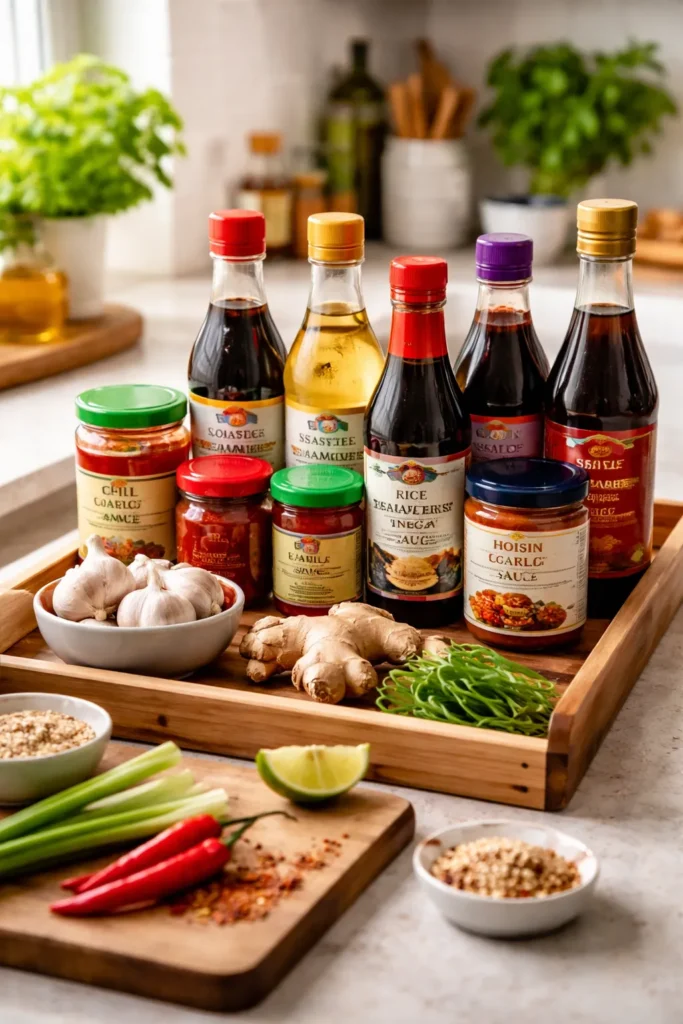
Before you cook any of the recipes below, a well-stocked pantry is what separates a flat, one-dimensional result from something that genuinely tastes restaurant-worthy. You don’t need fifty specialty items — you need the right ten.
Soy sauce is the backbone of most of these dishes. Keep both regular and low-sodium on hand so you can control salt levels without sacrificing depth. Sesame oil is a finishing ingredient, not a cooking oil — a teaspoon drizzled at the end of a stir-fry adds a rich, nutty dimension that nothing else replicates. Rice vinegar brings brightness and cuts through rich sauces without the sharpness of white vinegar.
The Aromatics That Do the Heavy Lifting
Fresh garlic and fresh ginger are non-negotiable. Pre-minced jarred versions exist, but they lack the sharp, volatile compounds that bloom beautifully in hot oil and form the aromatic base of virtually every recipe on this list. Keep a knob of ginger in your freezer — it grates straight from frozen with almost no effort.
Oyster sauce, hoisin sauce, and chili paste (sambal oelek or doubanjiang) round out your flavor toolkit. These three alone can take a plain chicken stir-fry from bland to something genuinely bold and complex.
Sauces and Sweeteners Worth Keeping
Honey, brown sugar, and Chinese rice wine (Shaoxing wine) are the sweeteners and deglazing agents that give sauces their signature caramelized, sticky quality. If Shaoxing wine is hard to find, dry sherry is a solid substitute. Cornstarch deserves a spot in this list too — it’s the secret behind velvety, restaurant-style sauces that coat rather than pool.
1. Mongolian Beef
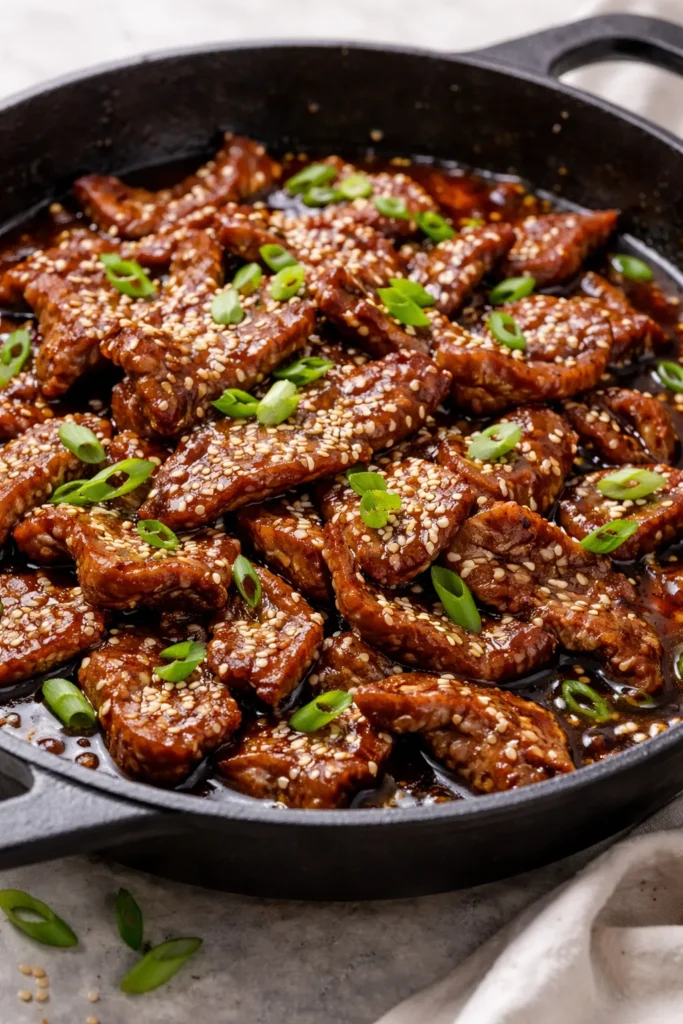
Mongolian beef might be one of the most satisfying things you can put on a plate of steamed rice. Thin slices of flank steak get coated in cornstarch, seared in a blazing-hot pan until the edges crisp and caramelize, then tossed in a deeply savory sauce built from soy sauce, brown sugar, garlic, and ginger. The result is tender beef with a slight crunch at the edges, glossy sauce, and a flavor that hits sweet, salty, and umami all at once.
Why It Works So Well at Home
The key to authentic-tasting Mongolian beef is the cornstarch dredge. Tossing the beef in cornstarch before it hits the pan creates a thin, crackly crust that holds the sauce without turning soggy. In restaurant kitchens, they often deep-fry the beef briefly before stir-frying — at home, you can achieve nearly the same effect by using a very hot pan with just enough oil and cooking in small batches so the meat sears rather than steams.
Flank steak cut against the grain into thin slices — about 3mm thick — is the right cut here. It’s affordable, has enough fat to stay tender, and slices cleanly when partially frozen for 20 minutes.
What You Need to Know
- Sear the beef in two or three separate batches, never all at once — crowding the pan drops the temperature and you’ll get grey, steamed meat instead of seared beef
- The sauce ratio is roughly 3 tablespoons soy sauce : 3 tablespoons brown sugar : ½ cup water, adjusted to taste
- Fresh green onions added at the very end add freshness and color that balance the richness of the sauce
- Total time from fridge to plate: under 25 minutes
Pro tip: Let the sauce reduce by about one-third before adding the beef back in. A thicker sauce clings to the meat instead of running off onto the plate.
2. Honey Sesame Chicken
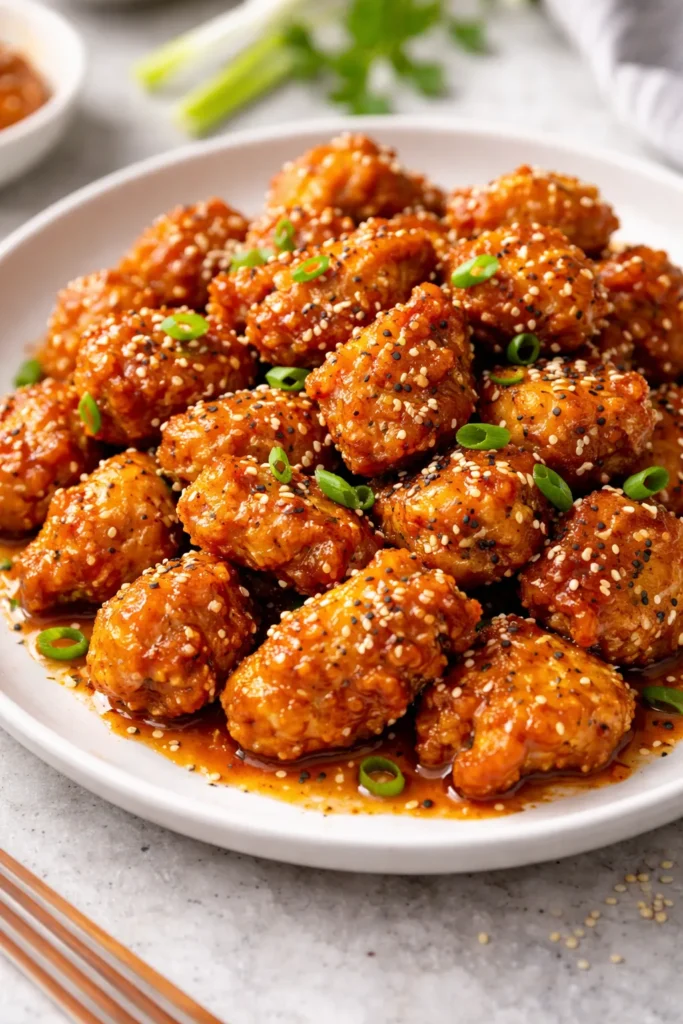
This is the dish that converts people who claim they can cook takeout at home but secretly doubt it. Honey sesame chicken — crispy pieces of chicken breast tossed in a glossy, slightly sticky sauce with toasted sesame seeds and a subtle heat from chili flakes — is the kind of dinner that disappears before you’ve even sat down properly.
The Two-Step Approach That Makes It Crispy
The chicken gets two coatings: a quick marinade in soy sauce, garlic, and a touch of sesame oil for flavor, then a dredge in seasoned cornstarch that creates a light, shatteringly crispy crust when pan-fried. You don’t need a deep fryer. A heavy-bottomed skillet with about an inch of oil at 375°F (190°C) does the job perfectly. Fry in batches, drain on a rack rather than paper towels (the rack prevents steaming), then toss in the sauce immediately before serving.
Building the Sauce
The sesame honey sauce is fast: honey, soy sauce, rice vinegar, a little ketchup (this is not a typo — ketchup adds body, color, and a mild tartness that makes the sauce taste more complex), and a slurry of cornstarch dissolved in cold water to thicken it. Bring it to a simmer in a small saucepan for two minutes and you’re done.
Quick Facts
- Works beautifully with chicken thighs if you want more flavor and juiciness than breast meat
- Toasted sesame seeds should go on after tossing, not before — they burn in the pan
- Serve immediately; the coating softens after about 10 minutes of sitting in sauce
- Pairs with steamed jasmine rice and a simple cucumber salad
Worth knowing: A teaspoon of rice vinegar in the sauce is what prevents it from being cloying. Don’t skip it.
3. Beef and Broccoli Stir-Fry
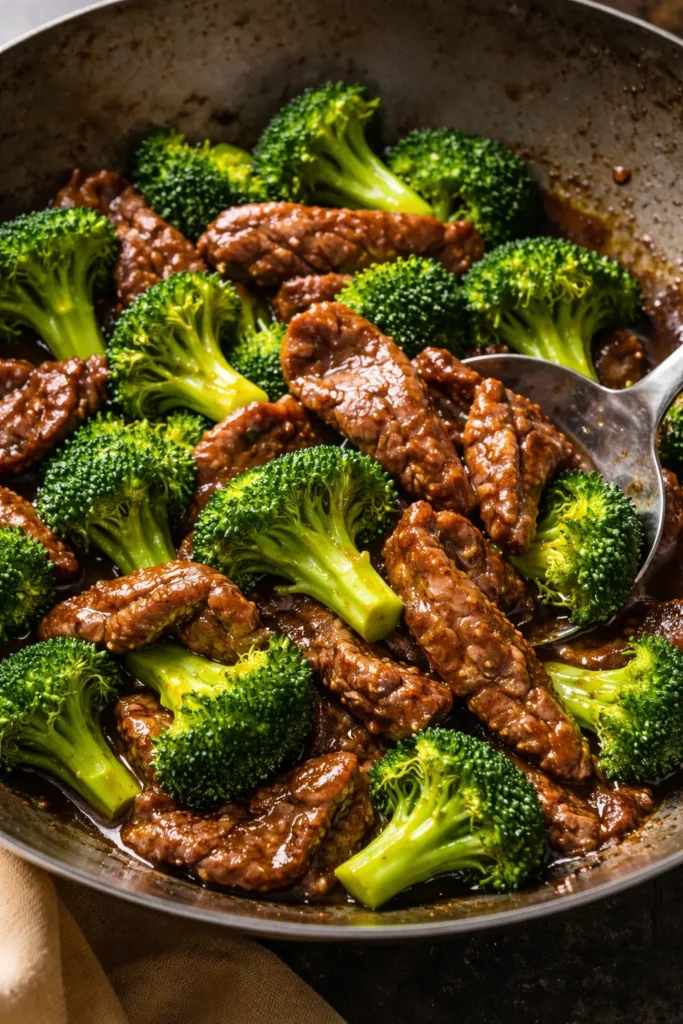
Ask any food writer which takeout dish is most consistently disappointing when ordered from a random restaurant, and beef and broccoli comes up more often than it should. The beef arrives either leathery or pre-cooked to nothing, the broccoli is waterlogged, and the sauce tastes more of cornstarch than anything else. Made at home, this dish is a completely different thing.
How to Velvet the Beef
The technique that makes restaurant beef stir-fry silky and tender is called velveting — marinating sliced beef in a mixture of baking soda, soy sauce, and a touch of oil for at least 20 minutes before cooking. The baking soda raises the pH of the meat’s surface, which prevents proteins from seizing up over high heat. The result is beef that stays genuinely tender even when cooked in a screaming hot wok.
Use sirloin or flank steak, sliced thinly across the grain. After the baking soda marinade, rinse the beef briefly and pat dry before cooking.
Getting the Broccoli Right
Broccoli should go into the pan after blanching in boiling water for exactly 90 seconds, then shocking in cold water to stop cooking. This guarantees vibrant green color and a crisp-tender texture — not raw, not mushy. When you add it to the wok with the beef, it only needs 60 seconds of tossing in the sauce.
What to Know
- Sauce formula: 3 tbsp oyster sauce, 2 tbsp soy sauce, 1 tbsp Shaoxing wine, 1 tsp sesame oil, 1 tsp cornstarch
- This dish is ready in about 20 minutes once the beef has marinated
- Fresh garlic and ginger added to hot oil first — about 30 seconds — build the aromatic base
- Thin-sliced beef cooks in under 2 minutes; don’t overcook it
The baking soda velvet is the single most impactful technique you can bring from restaurant Asian cooking into your home kitchen. Try it once and you’ll use it forever.
4. Shrimp Fried Rice
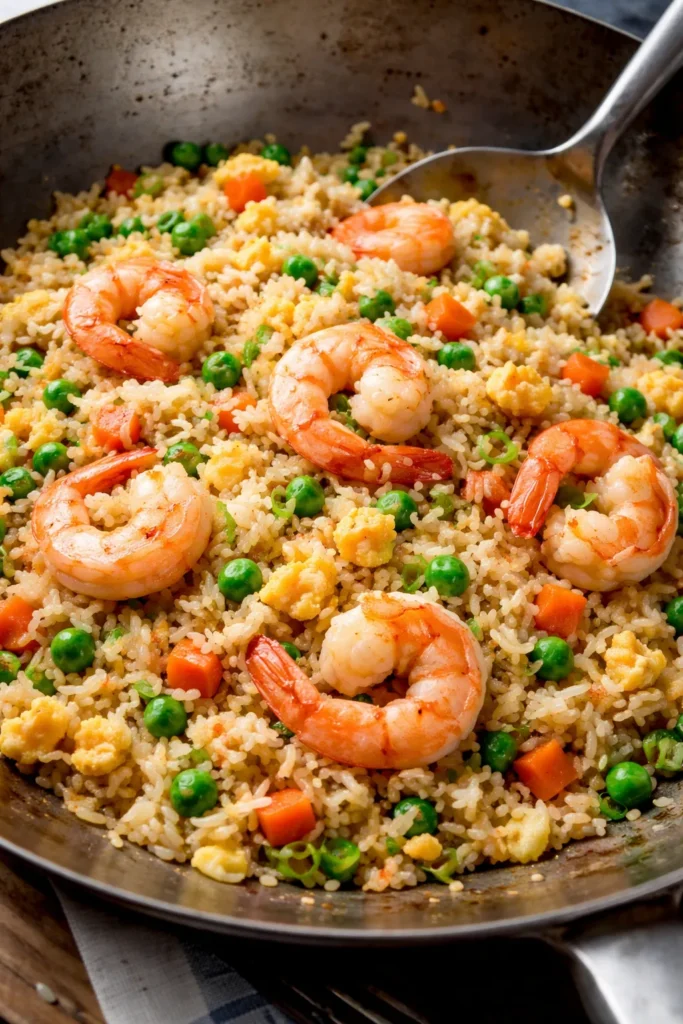
Fried rice has a reputation for being simple, and it is — but it’s also easy to get wrong in ways that nobody talks about. Mushy, wet, grey-toned fried rice made from freshly cooked rice is the most common mistake, and it’s entirely avoidable.
The Rule About Day-Old Rice
Cold, day-old rice is mandatory. Freshly steamed rice contains too much surface moisture — when it hits the hot pan, it steams itself into a clumped, sticky mess. Rice that’s been refrigerated overnight has dried out enough that each grain separates cleanly, toasts beautifully in the oil, and picks up that characteristic slightly smoky wok flavor called wok hei.
If you haven’t planned ahead, spread freshly cooked rice onto a sheet pan and refrigerate it uncovered for at least 2 hours. Not ideal, but it works.
Building the Flavor
Shrimp fried rice comes together fast — the whole cook is about 10 minutes once your mise en place is ready. Start with scrambled eggs in one corner of the pan, push them aside while still slightly underdone, then cook the shrimp separately before adding rice, vegetables (frozen peas and diced carrots work well here), and sauce.
Key Details
- Sauce per 3 cups of cooked rice: 3 tbsp soy sauce, 1 tbsp oyster sauce, 1 tsp sesame oil, white pepper to taste
- Add soy sauce around the edges of the pan, not directly on the rice — it hits hot metal first and gets a flash of caramelization
- Green onions go in at the very end, off the heat
- Large shrimp, peeled and deveined, need about 90 seconds per side and no longer
Pro tip: A tiny splash of fish sauce in the sauce mixture adds an extra layer of savory depth that most people can’t identify but immediately notice is missing when it’s not there.
5. Thai Basil Ground Turkey (Pad Kra Pao)
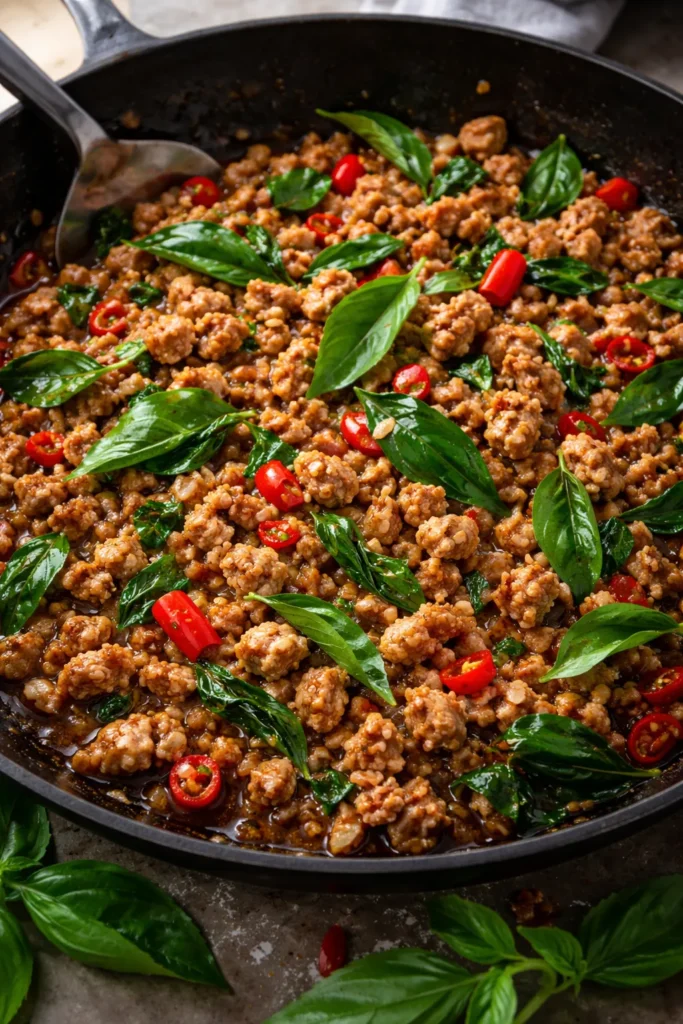
This is the dish that Thai home cooks eat when they want something fast and deeply satisfying — and it’s become a staple for good reason. Pad Kra Pao is traditionally made with pork or chicken, but ground turkey works beautifully and brings the dish in slightly leaner while keeping every bit of the flavor.
The sauce is built from oyster sauce, fish sauce, a splash of soy sauce, and a pinch of sugar — simple on paper, but when those four hit a hot pan with garlic and fresh Thai chilies, they caramelize into something complex and layered. Thai holy basil is the traditional herb, but Italian basil (added very last minute and barely wilted) delivers a fresher, slightly different but equally delicious result.
Why Ground Meat Works So Well Here
Ground turkey absorbs the sauce more completely than sliced protein, and when cooked over high heat, it develops browned, slightly crispy bits at the edges that add texture. Break the meat apart thoroughly in the pan — you want varied sizes, from fine crumble to slightly larger chunks, for the best texture.
How to Serve It
Pad Kra Pao is always served over jasmine rice with a fried egg on top. The egg is not optional — it’s structural to the dish. The yolk breaks over the rice and becomes part of the sauce. Fry the egg in a generous amount of hot oil so the white blisters and crisps at the edges while the yolk stays runny.
Quick Facts
- Total cook time: under 15 minutes
- Adjust heat with the number of chilies: 2 for mild, 5+ for genuinely spicy
- Fish sauce is the key seasoning — don’t substitute with soy sauce alone
- Leftovers reheat well in a pan with a splash of water
6. Chicken Teriyaki Rice Bowls
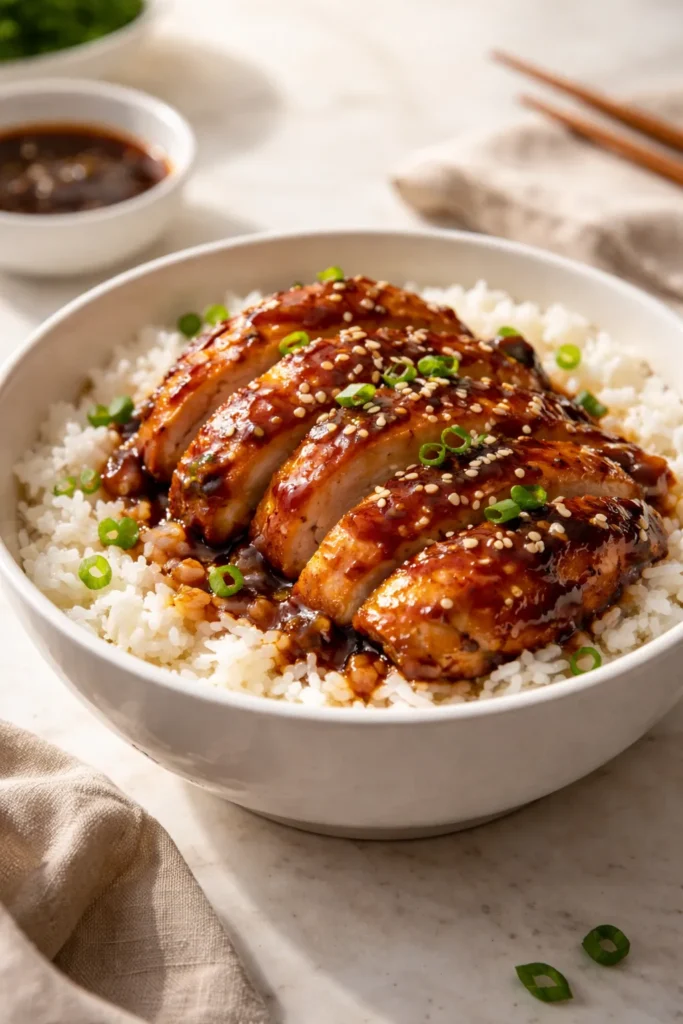
Of all the dishes in this list, teriyaki chicken may be the one with the widest gap between the restaurant version and what most people make at home. Restaurant teriyaki sauce is glossy, deeply caramelized, and clings to the chicken in a thin, lacquer-like coat. Bottled teriyaki from the grocery store is sweet syrup that burns before it caramelizes.
Homemade teriyaki sauce takes three minutes and four ingredients: equal parts soy sauce and mirin, half that amount of sake (or dry sherry), and a little sugar. Reduce it in a small saucepan until it coats a spoon, and you have something that makes every store-bought version taste like an apology.
Cooking the Chicken
Chicken thighs, boneless and skin-on, are the right choice here. The skin crisps beautifully and keeps the meat moist through cooking. Pat the chicken dry, season with salt, and sear skin-side down in a cold pan — yes, cold — that you bring up to medium heat gradually. This renders the fat and crisps the skin without burning. Flip, add the sauce, and let it reduce over the chicken until it becomes glossy and sticky.
Bowl Assembly
The bowl format is what makes this a complete dinner rather than just a protein.
- Base: steamed jasmine or short-grain rice (about 1 cup cooked per serving)
- Protein: sliced teriyaki chicken placed over the rice
- Vegetables: steamed broccoli or edamame on the side
- Garnish: sesame seeds, thinly sliced green onion, and a drizzle of remaining pan sauce
A properly made teriyaki bowl needs no extra condiments. If you’re reaching for extra soy sauce, your sauce didn’t reduce enough.
7. Kung Pao Chicken
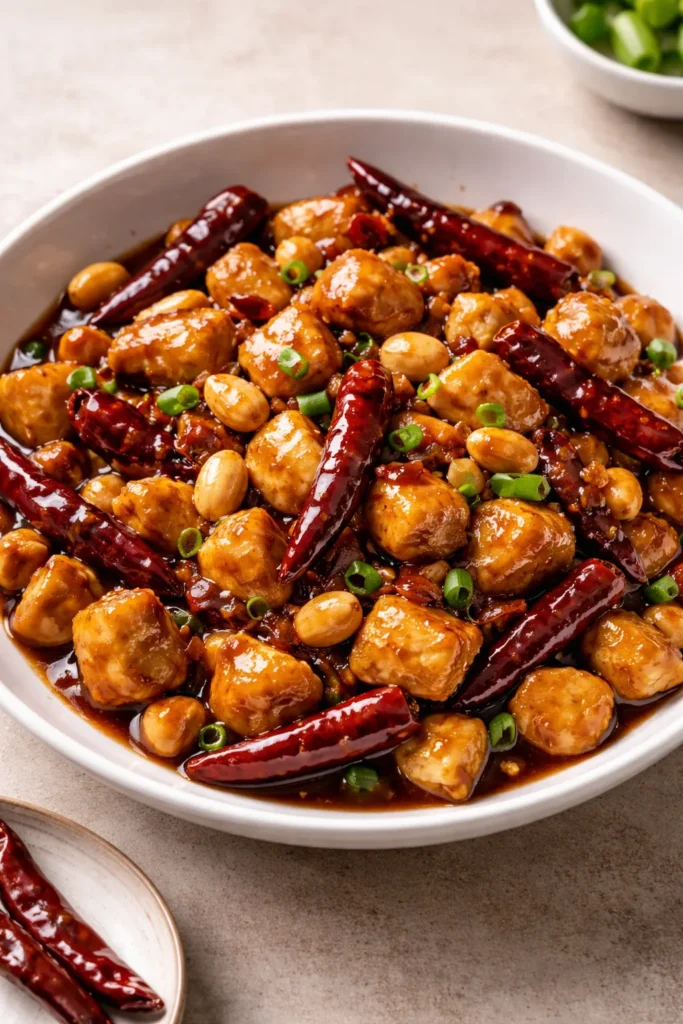
Kung Pao chicken is a Sichuan dish, not the Americanized deep-fried version most people associate with the name. The authentic version features diced chicken (not battered), whole dried red chilies, roasted peanuts, and a sauce that balances heat, sour, sweet, and salt in a way that’s almost addictively complex. The Sichuan peppercorn — which creates a mild numbing sensation on the tongue — is what makes this dish genuinely different from any other stir-fry.
You don’t need to find Sichuan peppercorns to make a great version at home, but if you can, toast them in a dry pan for 30 seconds and crush them coarsely before adding to the wok. Even a small amount changes the character of the dish completely.
The Sauce Breakdown
Kung Pao sauce is built from: 2 tbsp soy sauce, 1 tbsp dark soy sauce (for color), 1 tbsp rice vinegar, 2 tsp sugar, 1 tsp cornstarch, and a splash of Shaoxing wine. Mix it all in a bowl before you start cooking — stir-frying moves too fast to measure ingredients mid-cook.
Technique Notes
- Dice chicken thighs into roughly 2cm pieces and marinate briefly in soy sauce, cornstarch, and sesame oil
- Whole dried red chilies go into hot oil first — 30 seconds until they darken and the oil smells fragrant
- Peanuts go in at the very end to preserve their crunch
- Don’t overcrowd; this dish cooks in 5-6 minutes total over very high heat
What to Know
- Serves 2-3 as a main with rice
- The numbing heat from Sichuan peppercorns builds gradually — start small if unfamiliar
- Dark soy sauce is what gives authentic Kung Pao its deep mahogany color
- This dish is not as spicy as it looks; the chilies are more aromatic than fiery when left whole
8. Cashew Chicken
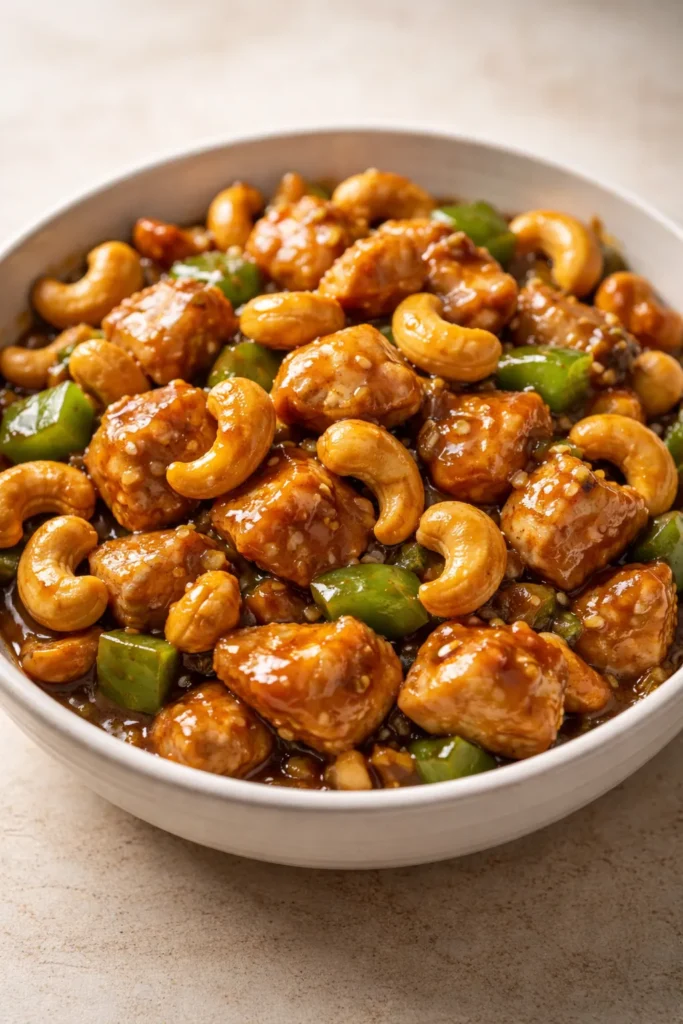
Cashew chicken sits at the intersection of deeply savory and satisfying without leaning too hard into sweetness or heat — which makes it approachable for almost everyone at the table, including kids. The sauce is built on a base of oyster sauce and soy sauce, lightened with a little chicken broth, and the cashews add a richness and satisfying crunch that makes every bite interesting.
The version served at most takeout restaurants tends to be over-sauced and under-seasoned, with cashews that have softened from sitting in liquid. At home, you add the cashews right before serving so they stay genuinely crunchy.
Choosing and Prepping the Chicken
Boneless chicken thighs cut into bite-sized pieces hold up better in a stir-fry than breast meat, which can turn chalky if overcooked by even 30 seconds. Cut pieces uniformly so they cook evenly. A quick marinade of soy sauce, cornstarch, and white pepper for 10-15 minutes while you prep the vegetables makes a noticeable difference in tenderness and flavor.
Building the Dish in the Right Order
- Sear chicken pieces in batches, set aside
- Stir-fry aromatics (garlic, ginger) for 30 seconds
- Add vegetables (bell pepper, zucchini, snap peas work well)
- Return chicken, add sauce, toss until everything is coated and glossy
- Add cashews, toss once, and serve immediately
Quick Facts
- Use raw, unsalted cashews toasted in a dry pan — they’re more flavorful than pre-roasted
- Total cook time from prepped ingredients: 12 minutes
- The sauce doubles easily if you want extra for drizzling over rice
- Excellent for meal prep — store components separately to preserve cashew crunch
Pro tip: A teaspoon of hoisin sauce stirred into the main sauce adds a smoky, slightly sweet depth that takes this dish from good to genuinely memorable.
9. Salmon with Soy-Ginger Glaze
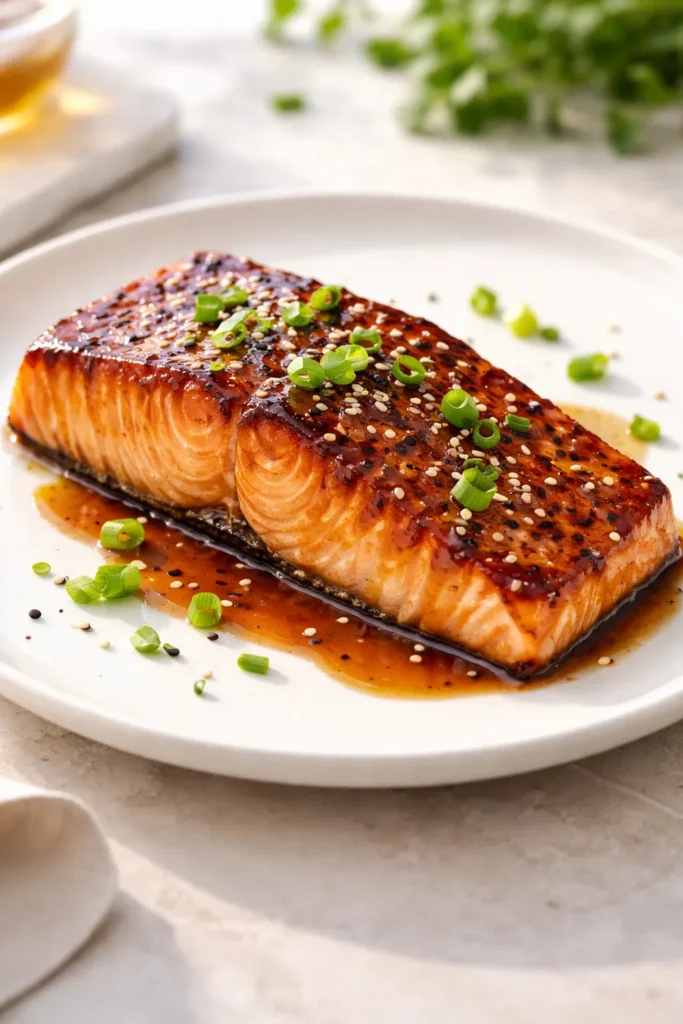
Not every Asian dinner needs to be a stir-fry. Glazed salmon represents a completely different cooking approach — oven-roasted or pan-seared, with a simple marinade that doubles as a finishing glaze — and it comes together with almost no active effort. The marinade of soy sauce, fresh ginger, garlic, honey, and a drop of sesame oil works on the fish in as little as 15 minutes, though 30 minutes gives noticeably deeper flavor.
The glaze caramelizes against the heat of the oven or pan, creating a lacquered crust that’s slightly sticky and deeply savory, with the salmon staying moist and flaky underneath.
Pan-Sear vs. Oven — Which Is Better?
Both methods work, but they produce different results. Pan-searing gives you a crispier crust and deeper caramelization on the skin, which adds texture. Oven-roasting at 400°F (200°C) is more forgiving and better for thicker fillets — the heat is more even and there’s less risk of burning the sugars in the marinade before the center cooks through.
For the crispiest result without burning, sear skin-side down in an oven-safe pan for 3 minutes on the stovetop, then transfer to the oven for 6-8 minutes to finish.
Serving Suggestions
- Serve over steamed jasmine rice with a side of sautéed bok choy in garlic
- Drizzle any remaining glaze over the rice as a light sauce
- A sprinkle of toasted sesame seeds and sliced scallions brings color and texture contrast
- Pickled cucumber (thinly sliced, tossed with rice vinegar and a pinch of sugar) cuts through the richness of the fish
What to Know
- Salmon fillets of 150-180g per person with the skin on give the best result
- Don’t marinate longer than 45 minutes — the acid and salt in soy sauce will begin to cure the surface of the fish
- Fish sauce can replace 1 teaspoon of soy sauce in the marinade for added depth
- This dish is ready in about 25 minutes total, making it one of the fastest on the list
10. Vegetable Lo Mein
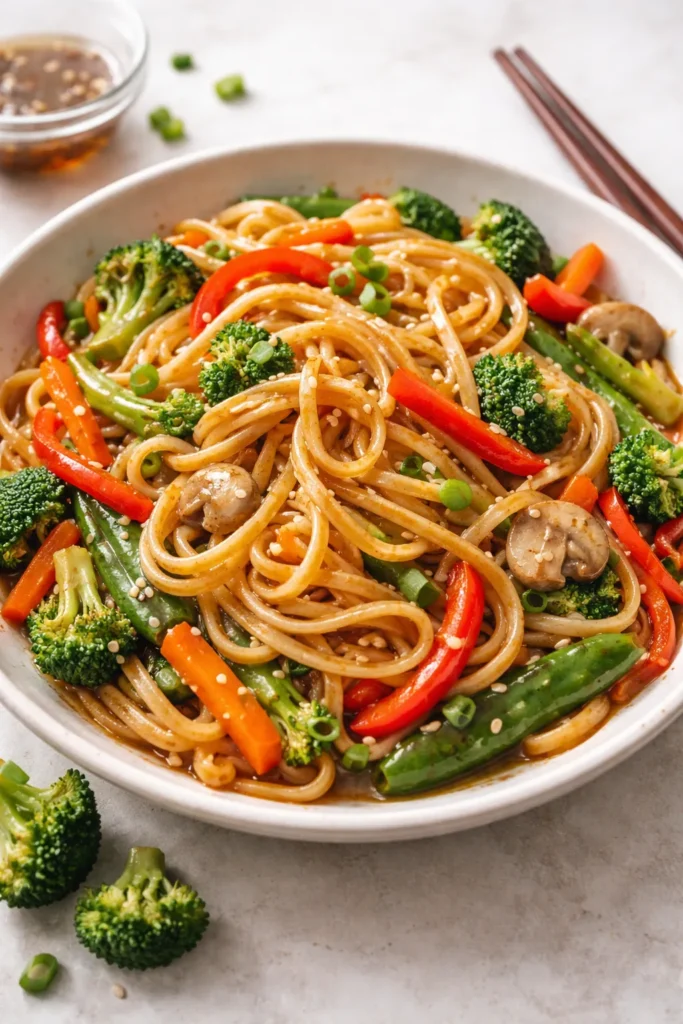
Lo mein is one of those dishes that most people assume requires a restaurant wok and professional technique. It doesn’t. Vegetable lo mein at home is a 20-minute dinner that’s more flavorful than most takeout versions because you can build the sauce from scratch rather than using a premade packet that tastes primarily of sodium and MSG.
The noodles matter here. Lo mein uses fresh Chinese egg noodles (found in the refrigerated section of Asian grocery stores) or, as a substitute, spaghetti cooked to just under al dente. The noodles should be slightly underdone when they go into the wok — they’ll finish cooking in the sauce.
The Sauce Architecture
A great lo mein sauce has four flavor pillars:
- Savory: soy sauce and oyster sauce
- Sweet: a small amount of brown sugar or hoisin sauce
- Aromatic: sesame oil (added off the heat)
- Liquid: a splash of water or chicken broth to prevent the sauce from seizing
Mix the sauce in advance and keep it next to the stove — noodle dishes cook fast and you won’t have time to measure mid-cook.
Vegetable Selection and Timing
Different vegetables need different cook times, so add them in the right sequence:
- Firm vegetables first: carrots, bell peppers, broccoli stems — 2-3 minutes
- Medium vegetables second: mushrooms, snap peas, zucchini — 1-2 minutes
- Quick vegetables last: baby spinach, bean sprouts, bok choy leaves — 30-60 seconds
- Aromatics throughout: garlic and ginger go in at the beginning in hot oil
Quick Facts
- Use a very hot pan — lo mein needs high heat to develop flavor rather than steam
- Toss noodles frequently and keep them moving to prevent sticking
- This is an excellent vehicle for any vegetables you want to use up — the sauce works with almost any combination
- Add a fried egg or sliced tofu to turn this side dish into a full protein-rich meal
Worth knowing: A teaspoon of dark soy sauce mixed with regular soy sauce gives lo mein its characteristic deep brown color — pale noodles are usually a sign the sauce is under-seasoned.
How to Make These Dishes Even Better Than Takeout
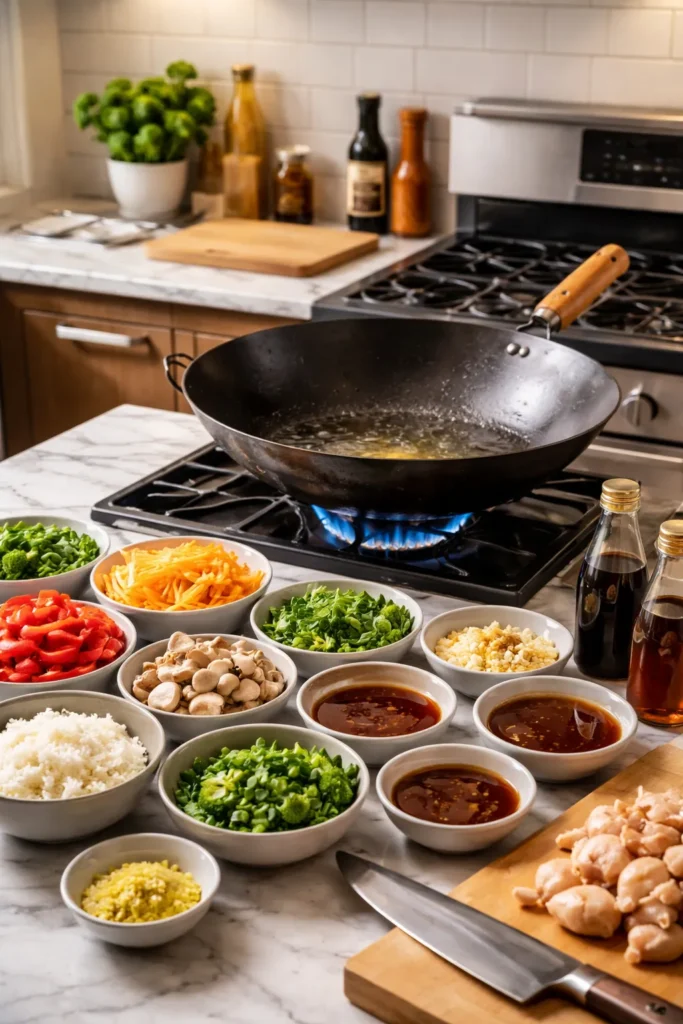
There’s a common thread running through every recipe above, and it comes down to a handful of principles that separate genuinely good home cooking from a pale imitation of restaurant food.
Heat is everything in stir-frying. Most home stoves can’t match the BTU output of a professional wok burner, but you can compensate by using a carbon steel wok or a heavy cast-iron skillet that retains and distributes heat well, preheating it until it’s almost smoking before any ingredient touches the surface, and cooking in smaller batches than you think you need to.
The Mise en Place Advantage
Every recipe above involves multiple components cooked in rapid succession. If you’re reaching for a measuring spoon mid-cook, you’ve already lost control of the pan. Prep everything before you light the burner — sauce mixed, vegetables cut, meat sliced and marinated, garnishes ready at the side of the stove. This is how restaurant line cooks operate, and it’s what makes a 12-minute stir-fry actually take 12 minutes instead of 30.
Seasoning at Every Stage
Takeout dishes taste flat when the seasoning is added only at the end. The aromatics (garlic, ginger, shallots) that go in first need a pinch of salt. The protein benefits from a marinade. The sauce should be tasted and adjusted before it hits the pan. And the finished dish should receive a final taste — a drop more soy sauce, a splash of rice vinegar, a drizzle of sesame oil — to sharpen the flavors before it reaches the table.
Swapping Ingredients Without Ruining the Dish
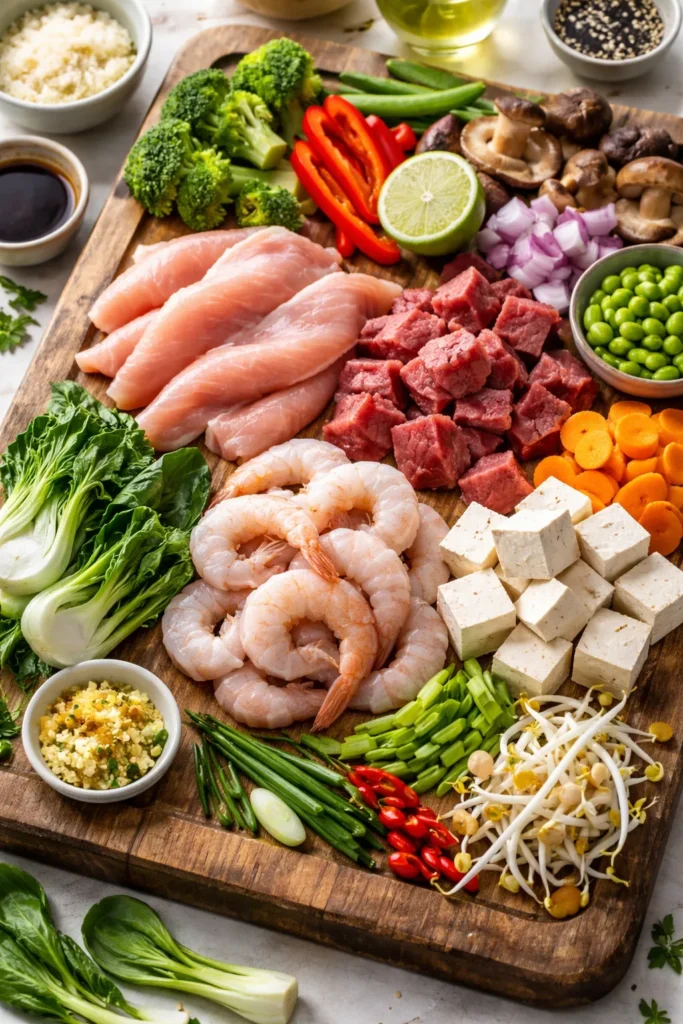
One of the genuine advantages of cooking at home is adaptability. These recipes aren’t rigid formulas — they’re templates that work with whatever protein or vegetable you have on hand.
Protein swaps that work across almost every recipe:
- Chicken thighs and beef can usually trade places in stir-fries with a small adjustment to cook time
- Firm tofu, pressed and cubed, works in any sauce-based dish and absorbs flavor particularly well when marinated
- Shrimp is interchangeable with chicken in teriyaki and honey sesame preparations — it just cooks in a fraction of the time (no more than 2 minutes total)
Vegetable flexibility:
- Any leafy green (bok choy, gai lan, spinach, napa cabbage) can substitute for another in most of these recipes
- Frozen edamame, added in the last minute of cooking, is an underrated addition that adds protein and color to fried rice and stir-fries
- Broccoli, snap peas, and snow peas are largely interchangeable in terms of cook time and texture
Gluten-free adjustments:
Use tamari in place of regular soy sauce in a 1:1 ratio. Replace oyster sauce with a gluten-free version (widely available) or a combination of hoisin-style sauce made from tamari and a small amount of molasses. Rice noodles or vermicelli replace egg noodles in lo mein without any other changes required.
Final Thoughts
The gap between what comes in a delivery bag and what you can put on your own table is smaller than most people think — and in many cases, your version will be better. You’re working with fresher ingredients, a hotter pan of your choosing, and a sauce that you’ve tasted and adjusted before it leaves the stove.
Start with one recipe from this list — Mongolian beef or shrimp fried rice are the lowest barriers to entry — and cook it twice before moving on to the next one. The second time you make any of these dishes, you’ll move faster, understand where the critical moments are, and produce something noticeably better than the first attempt.
The pantry staples are a one-time investment that pays off across every recipe above and dozens more. Soy sauce, sesame oil, oyster sauce, rice vinegar, and a jar each of hoisin and chili paste cover about 80% of what you’ll ever need for Asian cooking at home.
Keep your wok hot, your mise en place ready, and your takeout app buried somewhere you have to scroll to find it.