The holiday table is a place where memories get made — where someone always sneaks a second scoop of mashed potatoes before the main course even lands, and where the green bean dish that’s been on the family table for thirty years still causes a quiet fight over the last serving. The truth is, as much as everyone loves a dramatic centerpiece roast or a beautifully glazed ham, it’s the side dishes that people talk about on the drive home.
The challenge? Most holiday side dish recipes demand time you don’t have, skills you haven’t practiced, or ingredients that require three specialty store trips. That’s a problem worth solving. The ten dishes collected here are specifically chosen because they deliver bold, crowd-pleasing flavor without requiring professional kitchen experience — or a full day of prep. Several can be made ahead by hours or even days, which is arguably the greatest gift of all when you’re managing a full holiday spread.
What makes a holiday side truly easy isn’t just a short ingredient list. It’s forgiving techniques, flexible timing, make-ahead potential, and flavors that pair naturally with whatever main dish you’ve chosen. Every recipe here clears all four of those bars. Whether your table leans traditional or you’re always looking for something a little unexpected, there’s something here that’ll earn its permanent spot on your holiday menu.
Table of Contents
- 1. Creamy Garlic Mashed Potatoes
- Why This Dish Works for the Holidays
- How to Nail the Texture Every Time
- 2. Honey-Glazed Roasted Carrots
- The Science Behind the Caramelization
- Variations That Elevate the Basic Recipe
- 3. Green Bean Casserole Made from Scratch
- Building the Mushroom Sauce
- Getting the Green Beans Right
- Assembly and Topping Tips
- 4. Balsamic Brussels Sprouts with Honey and Pecans
- Why Roasting Changes Everything
- The Technique That Makes the Difference
- 5. Creamed Spinach with Nutmeg and Parmesan
- Fresh vs. Frozen Spinach
- Building the Cream Sauce
- Tips for the Best Texture
- 6. Sweet Potato Casserole with Brown Sugar Walnut Topping
- Getting the Sweet Potato Base Right
- Crafting the Streusel Topping
- Make-Ahead Notes
- 7. Scalloped Potatoes in a Creamy Cheese Sauce
- Slicing the Potatoes
- The Cream Sauce
- Cheese Options and Finishing
- 8. Shaved Brussels Sprout Salad with Lemon and Parmesan
- Why This Salad Works at the Holiday Table
- Building the Salad
- Why Make-Ahead Is a Win Here
- 9. Mac and Cheese Baked in the Oven
- The Cheese Makes the Dish
- Building the Sauce
- Assembly and Baking
- 10. Roasted Root Vegetables with Apple Cider Vinegar Dressing
- Choosing and Prepping Your Vegetables
- The Apple Cider Vinegar Dressing
- What Pairs Well as a Garnish
- Making the Most of Your Holiday Side Dish Game
- Final Thoughts
1. Creamy Garlic Mashed Potatoes
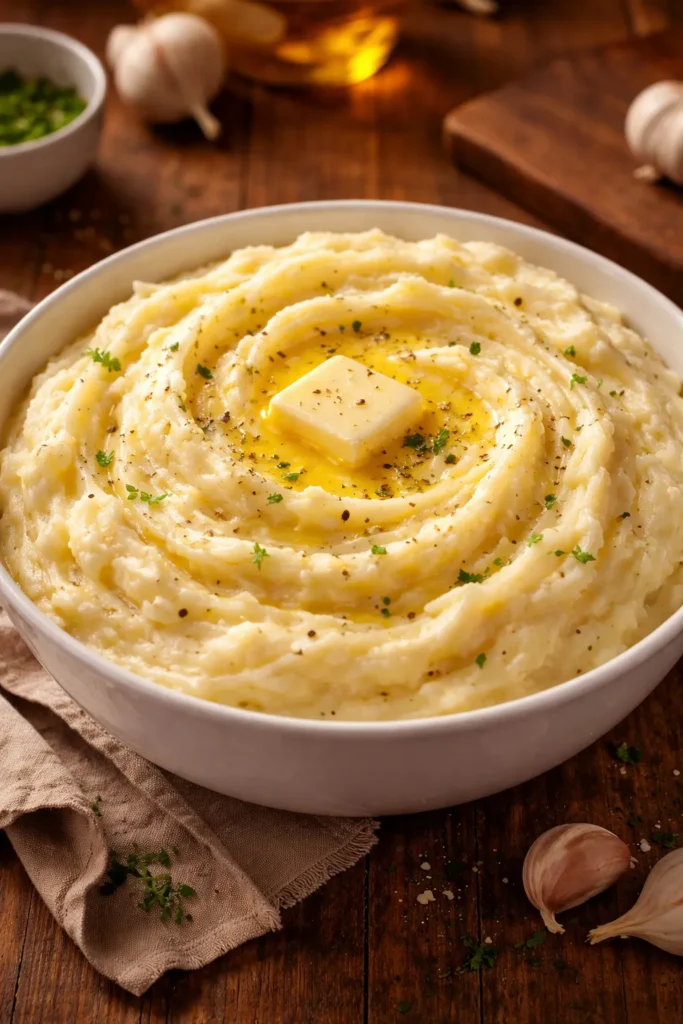
Few things on a holiday table hit as universally as a bowl of properly made mashed potatoes. Not the watery, gluey kind — the kind that’s billowy, rich, and carries just enough garlic flavor to make them interesting without overwhelming the plate. When you get this dish right, it disappears faster than anything else on the table.
Why This Dish Works for the Holidays
The reason mashed potatoes belong on every holiday spread isn’t just tradition — it’s function. They’re the dish that ties everything else together. A spoonful of gravy, a bit of roast, a forkful of green beans: mashed potatoes make every combination on the plate taste more cohesive. They’re also one of the rare sides that reheat beautifully, which means you can make them a day ahead, refrigerate them covered, and warm them gently in the oven or on the stovetop with a splash of warm cream.
How to Nail the Texture Every Time
- Use Yukon Gold potatoes for a naturally buttery flavor and a smoother mash — russets work too but can turn gluey if overmixed
- Warm your butter and cream before adding them to the potatoes; cold dairy cools the mash and creates a dense texture
- Mash by hand or use a ricer — a stand mixer will overwork the starch and give you paste
- For garlic, roasting a whole head first and squeezing the softened cloves into the potatoes adds a mellow sweetness instead of a raw bite
- Season generously with salt at every stage: in the cooking water, in the mash, and as a final taste before serving
Pro tip: A small spoonful of cream cheese or a few tablespoons of sour cream stirred in at the end adds a subtle tang that makes the flavor more complex without being identifiable.
2. Honey-Glazed Roasted Carrots
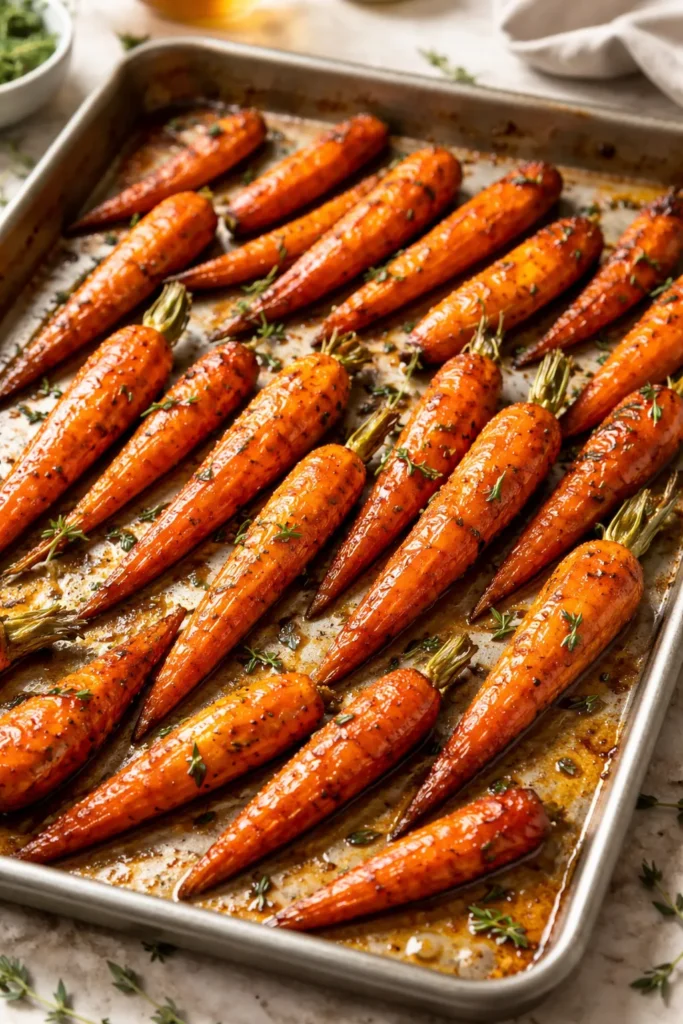
Roasted carrots are one of those holiday sides that looks and tastes far more impressive than the effort involved. Twenty minutes in a hot oven transforms a humble bag of carrots into something deeply caramelized, tender in the center, and golden at the edges — with a natural sweetness that intensifies as they roast. A drizzle of honey and a scatter of fresh thyme or parsley is all they need to feel genuinely festive.
The Science Behind the Caramelization
The key to great roasted carrots is high heat — 425°F or higher. At that temperature, the natural sugars in the carrots begin to brown rather than steam, which is what creates that concentrated, almost candy-like flavor that makes people go back for thirds. Crowding the pan prevents this from happening; if the carrots are overlapping, they’ll steam instead of roast. Use a large rimmed baking sheet and spread them in a single layer with space between each piece.
Variations That Elevate the Basic Recipe
- Maple-balsamic: Swap the honey for maple syrup and add a splash of balsamic vinegar for a sweet-tart glaze that caramelizes beautifully
- Hot honey and feta: Drizzle with hot honey after roasting and crumble salty feta over the top — the contrast is addictive
- Cumin and orange: Toss the carrots in cumin, olive oil, and orange zest before roasting for a warm, citrus-forward flavor that pairs especially well with lamb or pork
- Parmesan-crusted: Toss shredded Parmesan over the carrots in the last 5 minutes of roasting for a salty, crispy coating
This is one of the most make-ahead-friendly sides on this list. Roast them, let them cool, refrigerate, and reheat in a 375°F oven for 8-10 minutes before serving. They hold their texture well.
3. Green Bean Casserole Made from Scratch
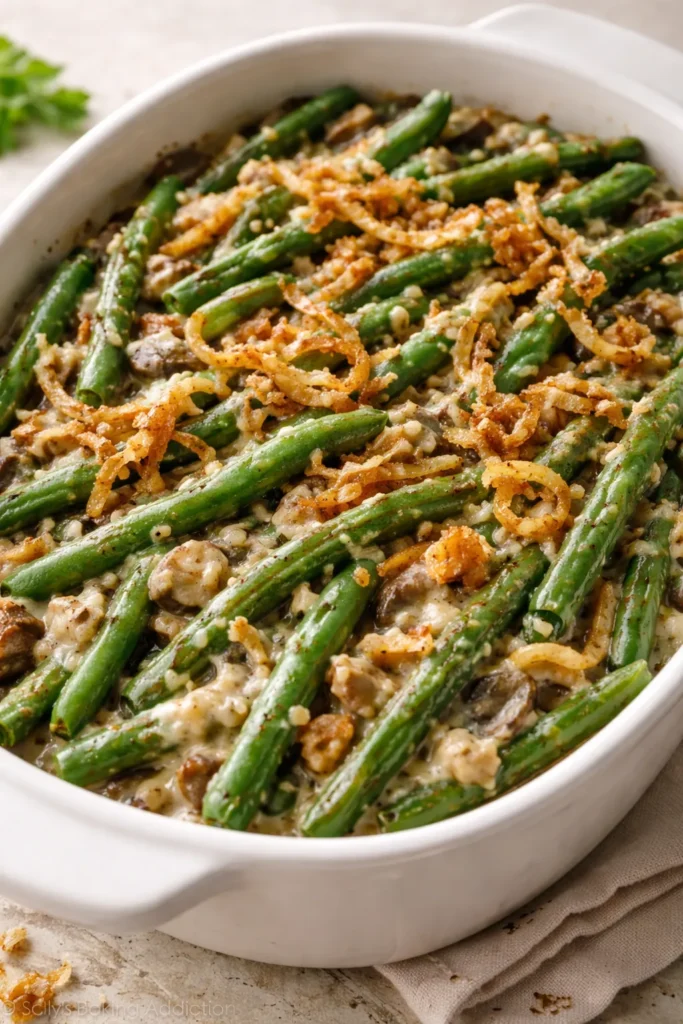
The canned-soup version of green bean casserole has its defenders, and that’s fine — but once you try a from-scratch version with a real creamy mushroom sauce and fresh green beans, going back is genuinely difficult. The flavors are deeper, the texture is better, and the dish holds up longer without getting watery.
Building the Mushroom Sauce
The sauce is the heart of this dish. Sauté sliced cremini or button mushrooms in butter over medium-high heat until they release their moisture and begin to brown — this takes about 8 minutes, and the browning is non-negotiable for flavor. Add minced garlic and cook for another minute. Whisk in flour to create a roux, then pour in chicken or vegetable broth followed by heavy cream. Season with salt, pepper, and a pinch of nutmeg. Cook until the sauce thickens enough to coat a spoon. That’s it.
Getting the Green Beans Right
Fresh green beans, trimmed and blanched in salted boiling water for 3-4 minutes, then shocked in ice water, give you the best color and texture. If you’re working under time pressure, frozen whole green beans work better here than most people expect — just thaw and pat them dry before combining with the sauce.
Assembly and Topping Tips
- Crispy fried onions are the non-negotiable topping — store-bought French’s works perfectly, but you can also quickly fry thinly sliced shallots in a neutral oil for a homemade version
- Add half the onion topping into the casserole mixture and reserve the rest for the final 5 minutes of baking so they stay crisp
- The assembled casserole can be refrigerated unbaked for up to 24 hours — add the topping just before it goes in the oven
Worth knowing: A splash of soy sauce or Worcestershire added to the mushroom sauce deepens the umami in a way that’s almost invisible but makes the whole dish taste richer.
4. Balsamic Brussels Sprouts with Honey and Pecans
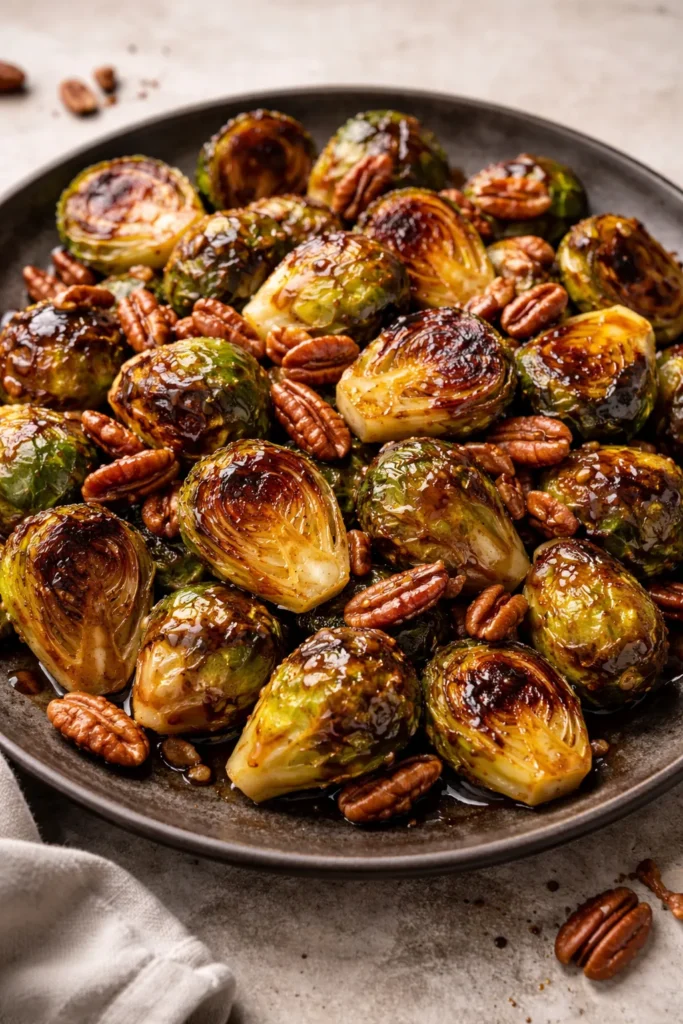
Brussels sprouts have earned their place at the holiday table, and the key is roasting them at high heat until the outer leaves turn dark and crispy while the interiors become tender and slightly sweet. A balsamic-honey glaze adds a sticky, caramel-like coating that turns even committed Brussels sprout skeptics into converts.
Why Roasting Changes Everything
Steamed Brussels sprouts can be bitter and soft in an unpleasant way. Roasting drives out moisture, concentrates the flavor, and creates charred edges that add a slight bitterness that’s actually pleasant — more like dark chocolate bitter than medicinal bitter. The Maillard reaction happening at the cut surfaces is the same process that makes a good sear on a steak so compelling.
The Technique That Makes the Difference
-
Cut sprouts in half through the stem end to maximize the flat surface area that will brown against the pan
-
Toss with olive oil, salt, and pepper, then place them cut-side down on the baking sheet — this is the most important step
-
Roast at 425°F for 20-25 minutes without disturbing them, then drizzle with balsamic and honey and return to the oven for 3-4 more minutes until the glaze is sticky
-
Scatter toasted pecans and fresh pomegranate seeds over the top right before serving — the crunch and the bright burst of pomegranate juice against the rich, caramelized sprouts is genuinely stunning
-
Make-ahead option: Roast the sprouts up to 4 hours ahead and hold at room temperature. Add the glaze and return to a 400°F oven for 5 minutes to rewarm and finish the dish.
5. Creamed Spinach with Nutmeg and Parmesan
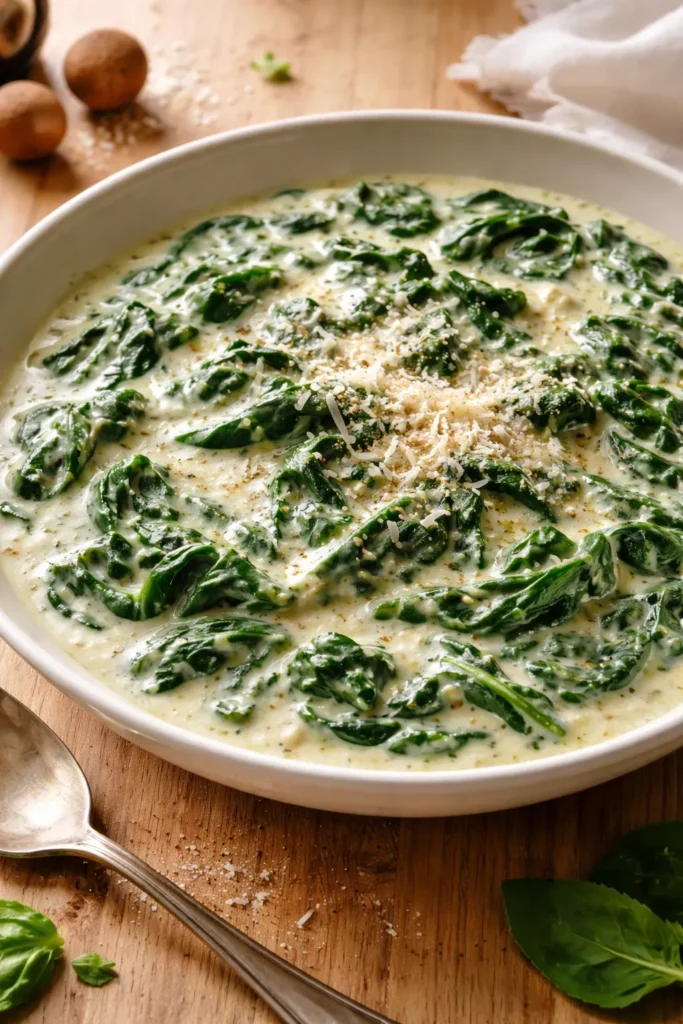
This is the dish that shows up at steakhouses for a reason. Properly made creamed spinach is silky, deeply savory, and rich in a way that feels indulgent without being heavy. It also serves as a beautiful counterpoint to the other sides on the plate — a spoonful of creamed spinach next to scalloped potatoes or roast is a combination that works on every level.
Fresh vs. Frozen Spinach
Fresh spinach delivers the most vibrant color and a slightly more delicate flavor, but it requires wilting down a substantial amount — a pound of fresh spinach cooks down to about a cup. For a crowd, that can mean working with 2-3 pounds of fresh spinach. Frozen spinach is a legitimate shortcut here: thaw it completely and squeeze out every drop of moisture using a clean kitchen towel or your hands. The flavor difference is smaller than you’d expect once the cream sauce comes together.
Building the Cream Sauce
Start with a classic béchamel: melt butter, whisk in flour, cook for 60 seconds, then add warmed whole milk or a combination of milk and heavy cream. Season with salt, white pepper, and a proper grating of fresh nutmeg — pre-ground nutmeg doesn’t have the same impact. Stir grated Parmesan into the finished sauce for extra depth and a slight sharpness that cuts through the richness.
Tips for the Best Texture
- Don’t skip squeezing the spinach dry — excess moisture will break the sauce and make it watery
- Keep the heat on medium-low once the spinach is added; high heat can cause the cream sauce to separate
- A small spoonful of Dijon mustard stirred into the finished dish adds a subtle, savory complexity that most people won’t be able to pinpoint but will notice
6. Sweet Potato Casserole with Brown Sugar Walnut Topping
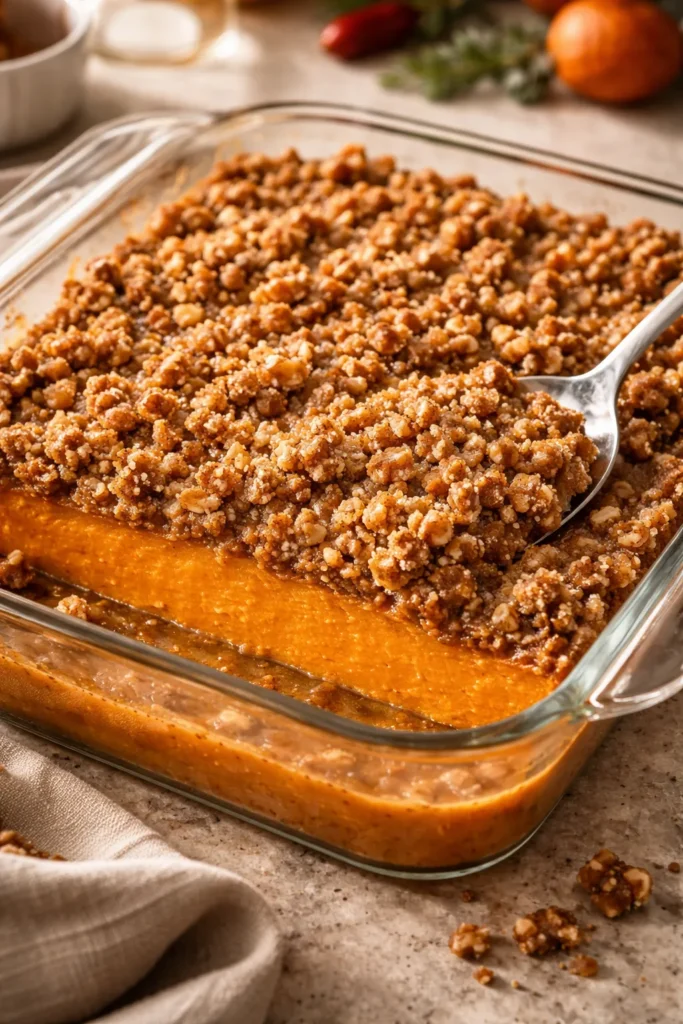
Sweet potato casserole might be the most beloved and most debated holiday side on any American table. The sweet-potato-with-marshmallows camp and the brown-sugar-streusel camp have coexisted for generations, and the only real answer is to pick the version your family loves and make it properly. For those who want something a little more sophisticated without losing the comfort-food quality, a brown sugar and walnut topping hits every note.
Getting the Sweet Potato Base Right
The base should be smooth, lightly sweetened, and just barely spiced — not a dessert, but not a plain vegetable side either. Roast whole sweet potatoes at 400°F until completely tender (about 45-50 minutes), then scoop the flesh into a bowl. Roasting instead of boiling removes excess moisture and intensifies the natural sweetness. Mash with butter, a splash of vanilla, a pinch of cinnamon, and just enough maple syrup or brown sugar to enhance the sweetness without making it cloying. Two eggs stirred in help the casserole set into a sliceable texture.
Crafting the Streusel Topping
Mix brown sugar, chopped walnuts or pecans, flour, softened butter, and a pinch of cinnamon until it resembles coarse crumbles. Scatter generously over the sweet potato base and bake at 350°F for 25-30 minutes until the topping is golden and the casserole is set.
Make-Ahead Notes
- The sweet potato base can be made and refrigerated up to 2 days ahead
- Add the streusel topping just before baking — if it sits on the base too long, it absorbs moisture and loses its crunch
- Let the finished casserole rest for 10 minutes before serving so it slices cleanly
Pro tip: A tablespoon of bourbon stirred into the sweet potato base adds a warm, rounded depth that pairs beautifully with the brown sugar and nuts.
7. Scalloped Potatoes in a Creamy Cheese Sauce
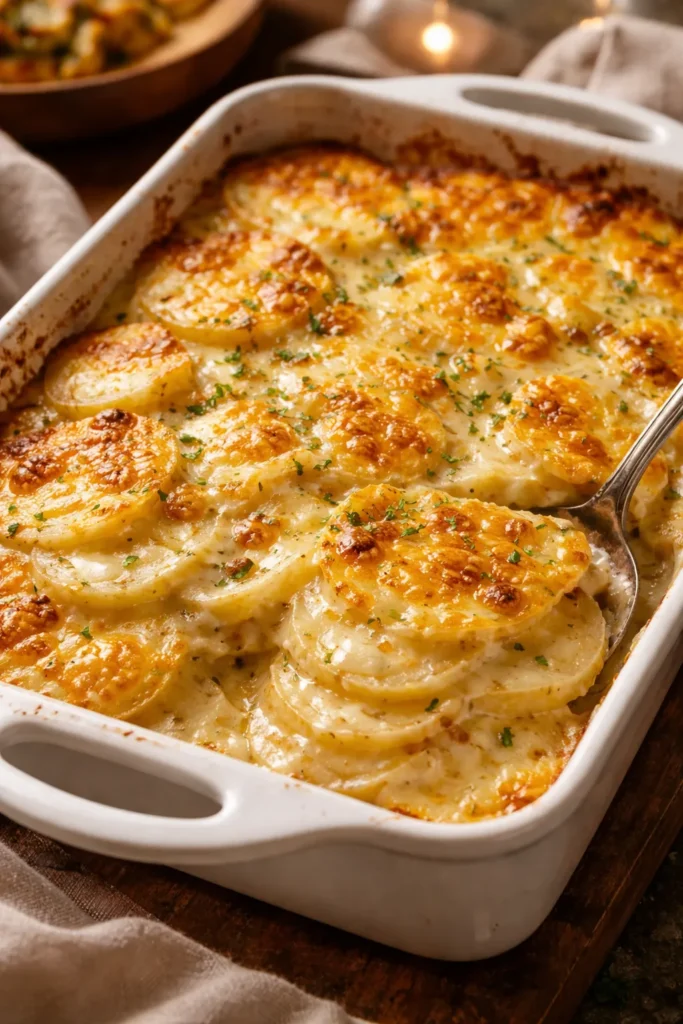
Scalloped potatoes — also called potatoes au gratin when cheese is involved, though the terms are used interchangeably by most home cooks — are one of the most impressive-looking side dishes you can set on a holiday table, and they’re more forgiving to make than they appear. Thin slices of potato baked in a cream sauce until tender and bubbling, with a golden, slightly crisp cheese crust on top — it’s pure comfort on a level that’s hard to argue with.
Slicing the Potatoes
Uniform thickness is the single most important technical element of this dish. If some slices are thick and some are thin, they’ll cook at different rates and you’ll end up with a mix of undercooked and overcooked layers. A mandoline set to 1/8-inch is the most reliable tool, but a sharp knife and a careful hand gets you there too. Yukon Gold potatoes are the best choice here — they hold their shape during the long bake and have a natural creaminess that Russets lack.
The Cream Sauce
A simple combination of heavy cream, garlic (sliced or minced), salt, pepper, and a small amount of thyme or bay leaf, heated together until just steaming and then poured over the potatoes, is all you need. Some cooks prefer to make a béchamel first; others pour straight cream. Both work — the straight cream version is faster and produces a slightly richer result.
Cheese Options and Finishing
- Gruyère is the classic choice — it melts cleanly and has a nutty, complex flavor that doesn’t get greasy
- Sharp cheddar is more accessible and equally delicious, especially with a bit of Dijon mustard stirred into the sauce
- Gouda, Fontina, and Comté all melt well and add different flavor profiles worth exploring
- Cover with foil for the first 45 minutes of baking to let the potatoes cook through, then remove the foil and let the top brown for the final 15-20 minutes
8. Shaved Brussels Sprout Salad with Lemon and Parmesan
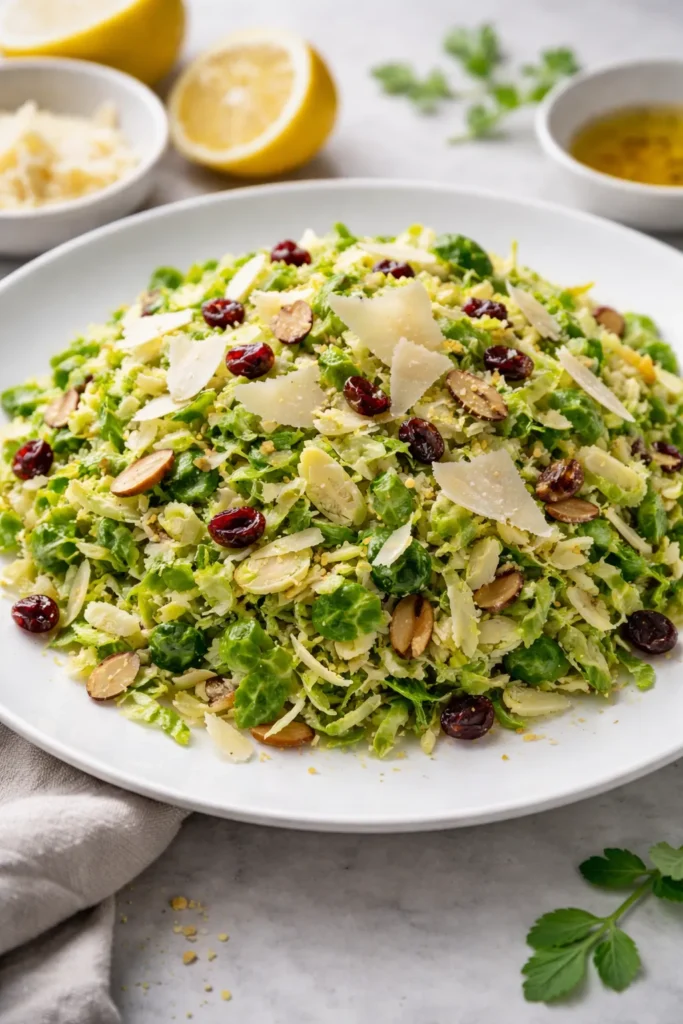
Not every holiday side needs to be warm and rich. A bright, crisp salad in the middle of a heavy spread does something nothing else on the table can — it cuts through the richness, refreshes the palate, and gives people a reason to reach across the table repeatedly. This shaved Brussels sprout salad has become a genuine modern holiday classic, and for good reason.
Why This Salad Works at the Holiday Table
Raw Brussels sprouts, finely shaved, have a completely different character than their roasted counterparts. The texture is more like a hearty slaw — pleasantly crunchy, not tough — and the flavor is nuttier and milder than you’d expect. The lemon dressing brightens the whole dish and keeps it from feeling heavy alongside richer sides.
Building the Salad
- Shave Brussels sprouts using the slicing disc of a food processor, a mandoline, or a sharp knife — the thinner the better
- Dress with fresh lemon juice, good olive oil, a small amount of Dijon mustard, salt, and pepper — toss well and let sit for 5 minutes so the sprouts begin to soften slightly in the acid
- Add thinly shaved Parmesan, toasted sliced almonds or hazelnuts, and dried cranberries or pomegranate seeds for color and sweetness
- Optional additions that take it up: crispy pancetta or bacon, shaved fennel, or thin slices of apple
Why Make-Ahead Is a Win Here
Unlike most leafy salads, this one holds up beautifully in the refrigerator for several hours after dressing. The Brussels sprouts actually improve as they sit, becoming more tender and absorbing the lemon dressing. Prepare it up to 4 hours ahead, store covered in the fridge, and add the nuts and toppings just before serving.
9. Mac and Cheese Baked in the Oven
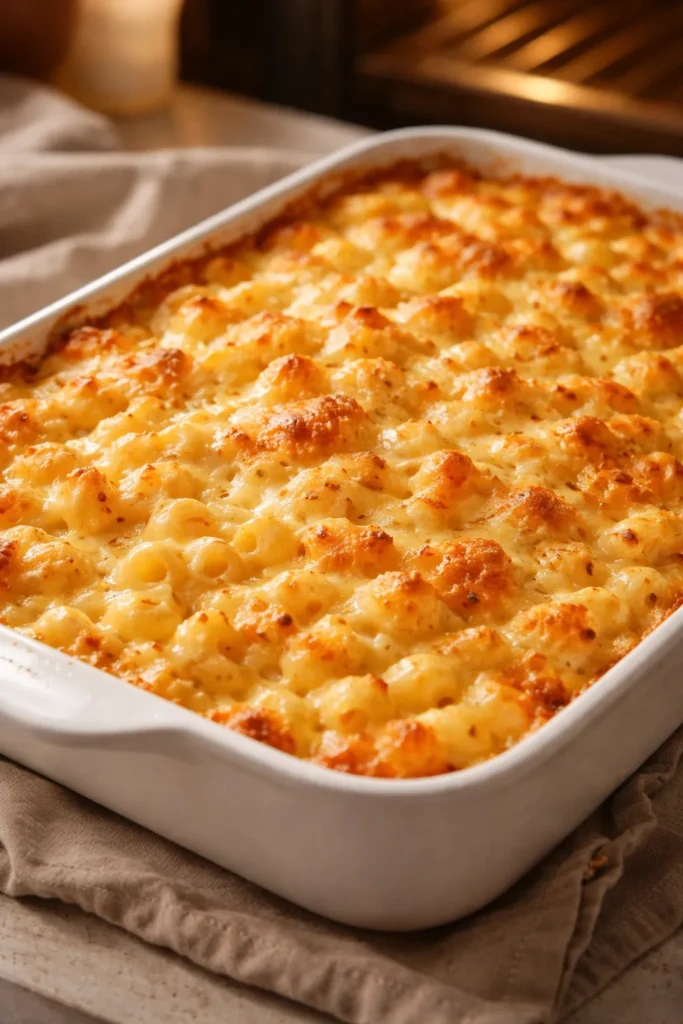
Mac and cheese at a holiday dinner table might seem casual, but there’s something genuinely wonderful about a properly made, baked mac and cheese that pulls cheese strings with every serving spoon — particularly when you’re feeding a mixed crowd with kids and adults. It’s the side that gets scraped to the bottom of the pan every single time without exception.
The Cheese Makes the Dish
The most important decision in baked mac and cheese is the cheese selection. Pre-shredded cheese contains anti-caking agents that prevent smooth melting — always grate your own from a block. A combination of cheeses creates more complex flavor and better texture: sharp cheddar for flavor, Gruyère or Fontina for smooth melting, and a small amount of cream cheese stirred into the sauce for extra creaminess and body.
Building the Sauce
Start with a classic béchamel: melt butter, whisk in flour, cook briefly, then add warmed whole milk gradually while whisking to prevent lumps. Once the sauce coats a spoon, remove from heat before adding the cheese — adding cheese to a sauce that’s too hot can cause it to break and turn grainy. Season with salt, white pepper, dry mustard powder, and a pinch of cayenne.
Assembly and Baking
- Cook pasta to just under al dente — it finishes cooking in the oven and will turn mushy if fully cooked before baking
- Combine pasta and cheese sauce, pour into a buttered baking dish, top with more shredded cheese and buttered breadcrumbs
- Bake at 375°F for 25-30 minutes until bubbling and golden on top
- Let it rest for 5 minutes before serving — it sets up slightly and is much easier to serve cleanly
Worth knowing: This dish can be assembled fully, refrigerated overnight, and baked straight from the fridge the next day — just add 10 extra minutes to the bake time.
10. Roasted Root Vegetables with Apple Cider Vinegar Dressing
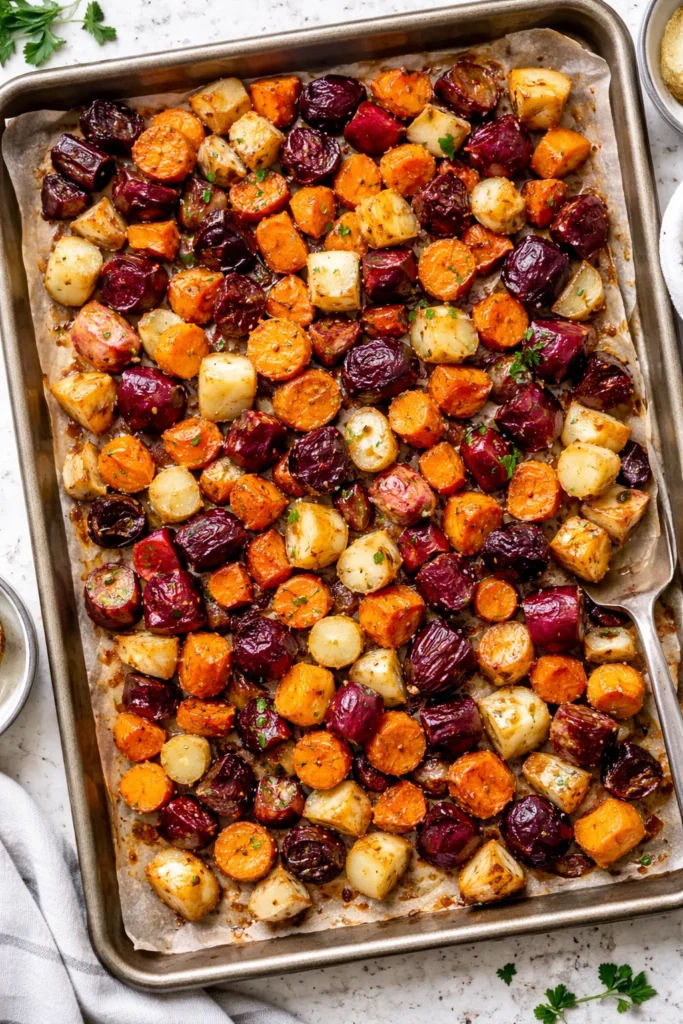
There’s an underrated elegance to a well-executed tray of roasted root vegetables. Parsnips, carrots, beets, turnips, and sweet potatoes tumbled together on a baking sheet, roasted until deeply caramelized, and finished with a bright, tangy dressing — this side brings color, earthy sweetness, and a vegetable-forward lightness that balances out the heavier dishes on any holiday spread.
Choosing and Prepping Your Vegetables
The best approach is to use a mix of at least three to four different root vegetables for visual interest and variety of flavor. Cut everything into roughly equal-sized pieces — about 1-inch chunks — so they cook at the same rate. Denser vegetables like beets and turnips can be cut slightly smaller than softer ones like sweet potatoes.
Toss everything with olive oil, salt, pepper, and dried or fresh thyme. Spread in a single layer across two large baking sheets — don’t crowd them. Roast at 425°F for 30-40 minutes, turning once halfway through, until the edges are browning and the centers are completely tender when pierced with a knife.
The Apple Cider Vinegar Dressing
This is what elevates the dish from simple roasted vegetables to something that genuinely earns its place beside the main course. Whisk together:
- 3 tablespoons apple cider vinegar
- 2 tablespoons olive oil
- 1 teaspoon Dijon mustard
- 1 teaspoon honey
- Salt and black pepper to taste
Drizzle over the vegetables while they’re still hot — the acid soaks into the tender edges and the contrast against the sweet, caramelized vegetables is the whole point.
What Pairs Well as a Garnish
- Fresh flat-leaf parsley adds color and a clean, herbal note
- Crumbled goat cheese or feta gives the dish a creamy, salty finish
- Toasted pumpkin seeds or walnuts add crunch
- A handful of arugula wilted gently by the heat of the vegetables adds a peppery, fresh element that ties everything together beautifully
Make-ahead note: Roast the vegetables, hold at room temperature for up to 2 hours, and then return to a 400°F oven for 8 minutes before dressing and serving.
Making the Most of Your Holiday Side Dish Game
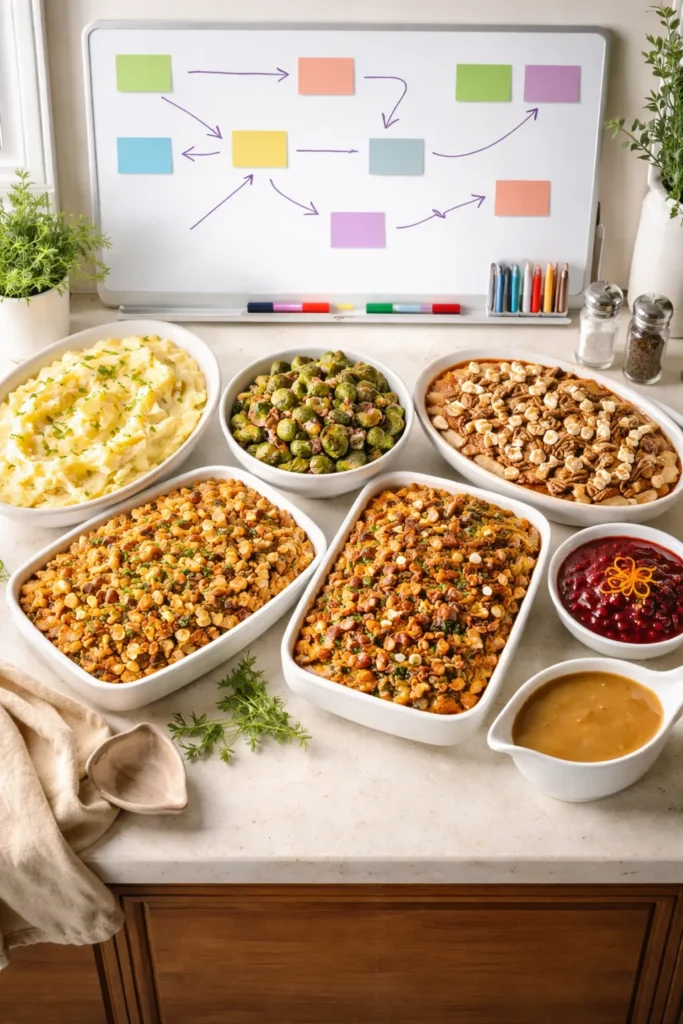
Before you finalize your menu, a few practical notes that apply across all ten of these dishes.
Timing is the hidden skill of holiday cooking. The actual cooking is usually the easy part — the hard part is having everything hot and ready at the same time. Make a written timeline working backward from the time you plan to eat, assigning each dish to a prep window. Identify which dishes can hold in a warm oven, which benefit from resting, and which need to be served immediately.
The make-ahead potential of several dishes here — the Brussels sprout salad, the sweet potato casserole base, the assembled mac and cheese, the mashed potatoes — is worth planning around deliberately. Spreading the work over two days rather than compressing it into a single morning makes the experience of hosting significantly less stressful.
Don’t underestimate the role of contrast in building a compelling holiday spread. A table full of warm, rich, creamy dishes benefits enormously from something bright and acidic (the Brussels sprout salad, the roasted root vegetables with vinegar dressing) to reset the palate between bites. The best holiday menus have intentional variety in temperature, texture, and flavor — not just a collection of ten equally heavy dishes.
Final Thoughts
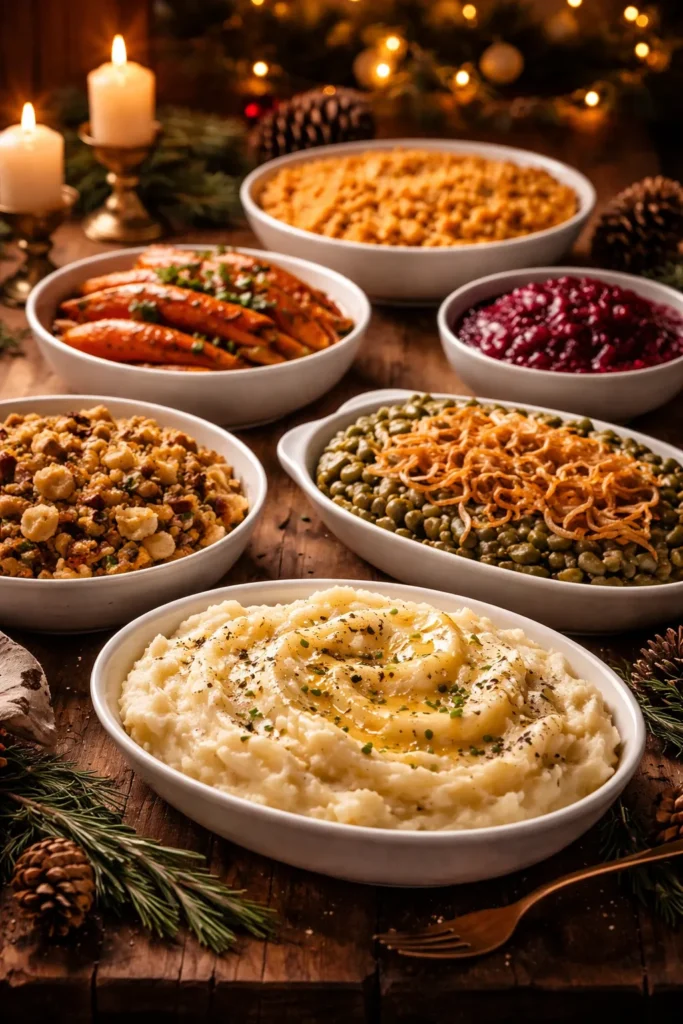
The ten dishes here represent the full range of what a great holiday spread can be — from the crowd-pleasing comfort of garlic mashed potatoes and baked mac and cheese, to the unexpected brightness of a shaved Brussels sprout salad and tangy roasted root vegetables. Each one is genuinely approachable, each one makes the people around the table happy, and none of them demand skills or equipment that goes beyond a standard home kitchen.
Pick the three or four that speak most to your crowd — or your personal cooking energy — and make them well rather than trying to execute all ten at once. A smaller number of dishes made with real attention and care will always outperform an overwhelming spread where nothing quite hits the mark.
The goal of holiday cooking is generous, delicious food shared with people you care about. Every dish on this list earns its place on that table.