Few things bring a family together quite like the smell of something magnificent roasting in the oven on Christmas Day. That specific combination of wood-scented candles, holiday music in the background, and the unmistakable aroma of a centerpiece dish doing its slow, patient work in the kitchen — it creates a memory that outlasts the wrapping paper and the gifts by decades.
The challenge, of course, is deciding what to make. With so many directions a Christmas dinner can go — prime rib or ham, roast chicken or braised short ribs, a classic Italian pasta or a crowd-pleasing casserole — the options can feel almost paralyzing. And that’s before you even factor in dietary preferences, kitchen confidence levels, and how many people are actually pulling up to the table this year.
What follows is a carefully chosen collection of 12 Christmas dinner recipes that genuinely deliver. These aren’t vague suggestions — they’re fully realized dishes with proven techniques, smart make-ahead strategies, and the kind of flavor payoff that makes everyone at the table go quiet for a moment before the compliments start flying. Whether you’re cooking for four or feeding fourteen, there’s something here that’ll feel tailor-made for your family’s table.
Table of Contents
- How to Pick the Right Christmas Dinner Recipe for Your Family
- Think About Cook Time and Stress Level
- Factor In Your Serving Setup
- 1. Classic Prime Rib Roast
- The High-Heat Reverse Sear Method
- What to Serve Alongside It
- 2. Honey-Glazed Spiral Ham
- Building a Great Honey Ham Glaze
- Ham Tips That Actually Make a Difference
- 3. Herb-Crusted Beef Tenderloin
- Searing: The Non-Negotiable Step
- Serving Tenderloin Like a Pro
- 4. Roast Turkey with Pan Gravy
- Roasting Temperature Strategy
- Making the Pan Gravy
- 5. Slow Cooker Beef Short Ribs
- Building the Braising Liquid
- Short Rib Serving Suggestions
- 6. Crown Roast of Pork
- Seasoning and Stuffing the Crown
- 7. Garlic and Herb Spatchcock Chicken
- The Herb Butter Under the Skin
- 8. Salmon en Croûte (Salmon Wellington)
- Working with Puff Pastry
- 9. Pork Tenderloin with Apple Cider Glaze
- Making the Apple Cider Glaze
- 10. Red Chili Pork Tamales
- Building the Pork Filling
- Assembly and Steaming
- 11. Slow Cooker Beef Bourguignon
- The Wine Question
- 12. Italian Sausage and Cheese Tortellini Soup
- Building the Broth
- Make-Ahead Notes for Soup
- Planning Your Christmas Dinner Timeline
- What to Prepare in Advance
- Temperature Management and Resting
- Final Thoughts
How to Pick the Right Christmas Dinner Recipe for Your Family
Before diving into the recipes themselves, it’s worth spending a moment thinking about what “the right Christmas dinner” actually means for your specific household. Not every family wants the same thing — and that’s a feature, not a bug.
A household with young kids might need something forgiving and familiar, like a cheesy pasta bake or slow-cooked ham that even picky eaters will attack. A table full of seasoned food lovers, on the other hand, might want something with a little more drama — a beef tenderloin with a herb crust or a salmon en croûte that earns a genuine gasp when you set it down.
Think About Cook Time and Stress Level
The most underrated factor in choosing a Christmas dinner recipe is your experience of cooking it. A stress-free cook produces a better meal. If you’re hosting alone, recipes that spend most of their time in the oven or slow cooker — unsupervised — are worth their weight in gold. If you have helpers in the kitchen, more hands-on dishes like tamales or a stuffed roast become genuinely fun.
Factor In Your Serving Setup
How you’re serving matters as much as what you’re serving. A standing rib roast carved tableside creates theater and excitement. A bubbling casserole pulled straight from the oven and set in the center of the table feels warm and communal. Think about what kind of moment you want to create, and let that guide your choice.
1. Classic Prime Rib Roast
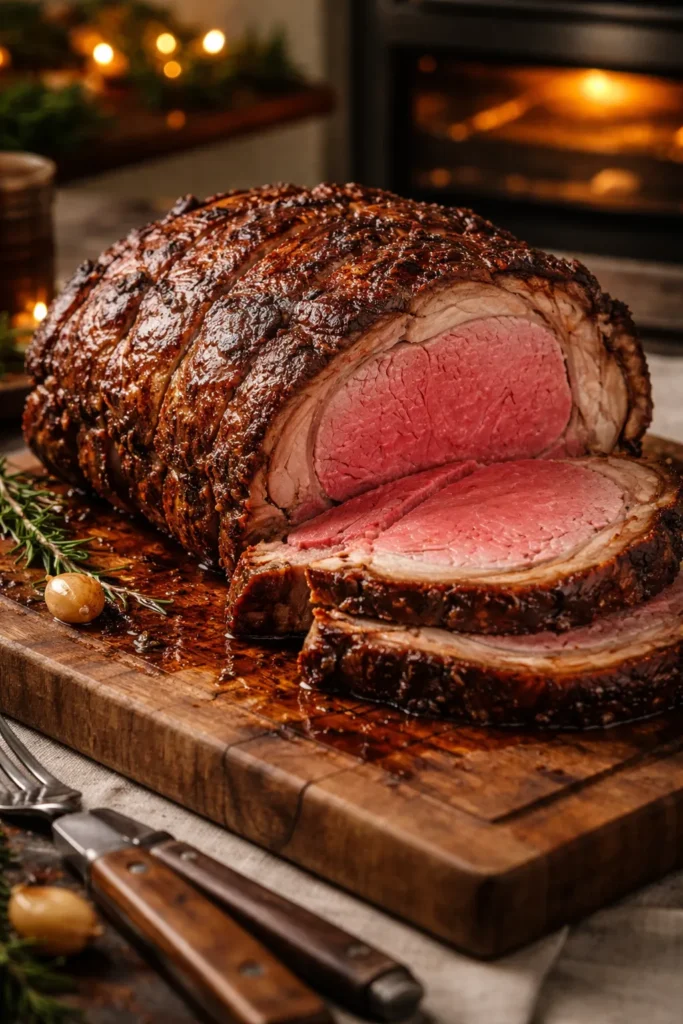
Ask a hundred people what the most iconic Christmas dinner centerpiece is, and a solid majority will say prime rib without hesitation. And they’re not wrong. A properly cooked standing rib roast — with its deep mahogany crust, rosy-pink interior, and a pool of rich pan drippings — is about as dramatic and satisfying as a home-cooked meal gets.
The secret that experienced rib roast cooks know is dry-brining at least 24 hours in advance. Coating the roast generously with kosher salt and leaving it uncovered in the refrigerator overnight draws moisture to the surface, then allows that moisture to reabsorb into the meat. The result is noticeably more seasoned, more tender, and more evenly cooked than a roast that goes straight from the store to the oven.
The High-Heat Reverse Sear Method
Start the roast low and slow at around 250°F (120°C) until the internal temperature hits 120°F for medium-rare. Then blast it at 500°F for the last 10–15 minutes. This approach gives you an edge-to-edge blush of pink meat beneath a shatteringly crisp crust — the textbook definition of the technique chefs call reverse searing.
What to Serve Alongside It
- Yorkshire pudding — the traditional British accompaniment, baked in the hot pan drippings for a puffed, golden shell with a custardy center
- Creamed horseradish sauce — just sour cream, prepared horseradish, lemon juice, and a pinch of salt; it cuts through the richness perfectly
- Roasted garlic mashed potatoes — the obvious choice, but no less correct for being obvious
- Roasted Brussels sprouts with balsamic — their slight bitterness is a smart foil to the fatty, rich beef
Worth knowing: Ask your butcher to remove the bones and then tie them back on with kitchen twine. The bones add flavor and moisture while roasting, and removing them first makes carving dramatically easier.
2. Honey-Glazed Spiral Ham
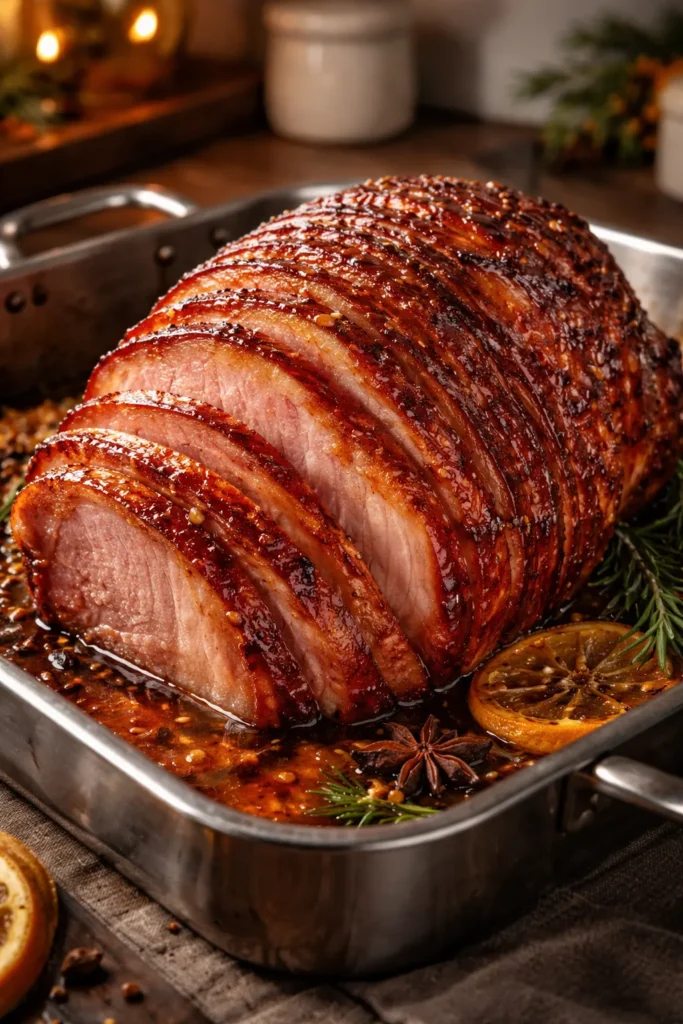
A glazed ham is the quintessential crowd-pleaser — it’s forgiving, feeds a crowd without much hands-on effort, and tastes like the holidays in every slice. A spiral-cut ham already comes fully cooked, which means your only real job is building a glaze that caramelizes into something extraordinary during the last 30 minutes in the oven.
The key distinction between a forgettable ham and an exceptional one is layering the glaze. Apply it in two or three thin coats rather than one thick pour, brushing generously every 10 minutes during the final phase of cooking. Each coat caramelizes before the next one goes on, creating a lacquered, multi-dimensional crust instead of a sticky, one-note exterior.
Building a Great Honey Ham Glaze
A classic honey glaze needs four elements: something sweet (honey and brown sugar), something acidic (Dijon mustard or apple cider vinegar), something aromatic (ground cloves, cinnamon, or ginger), and something savory to keep it from being cloying. Combine ½ cup honey, 3 tablespoons Dijon mustard, 2 tablespoons brown sugar, and ½ teaspoon ground cloves. Simmer for 3 minutes until it thickens slightly before applying.
Ham Tips That Actually Make a Difference
- Tent loosely with foil for most of the cooking time to retain moisture, only removing it for the glazing phase
- Set the ham cut-side-down in the roasting pan so the flat side acts as a heat shield and prevents drying
- Add ½ cup of water or orange juice to the bottom of the pan — the steam keeps the outer slices from becoming leathery
- Pull the ham from the oven at 140°F internal temperature; carryover heat brings it to 145°F during the rest
A 7-pound bone-in spiral ham feeds 10–12 people comfortably, making it one of the most economical showstoppers on this list.
3. Herb-Crusted Beef Tenderloin
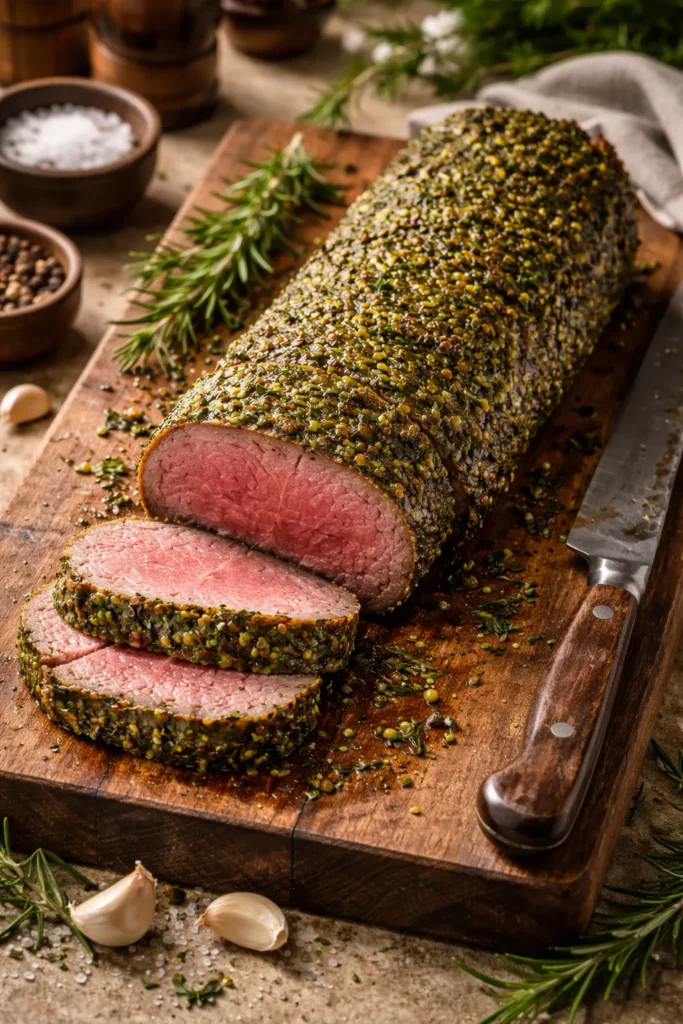
Beef tenderloin is the cut you pull out when you really want to impress. It’s the most tender muscle on the entire animal — a long, cylindrical roast with almost no connective tissue — which means even a brief time in the oven produces meltingly soft slices that barely need a knife. It’s also one of the fastest-cooking large roasts, spending only 25–35 minutes in a hot oven depending on your preferred doneness.
The herb crust is where the flavor lives. Blend fresh rosemary, thyme, flat-leaf parsley, minced garlic, Dijon mustard, and enough olive oil to make a thick paste. Press it firmly all over the tenderloin after searing — not before, because the moisture in the herbs would prevent a proper crust from forming on the outside.
Searing: The Non-Negotiable Step
Before the herb crust goes on, the tenderloin needs a hard sear in a screaming-hot cast iron skillet with a neutral oil. Two to three minutes per side, rotating to cover all surfaces. This isn’t just about color — it develops a layer of complex, roasted flavor through the Maillard reaction that no amount of seasoning can replicate.
Serving Tenderloin Like a Pro
- Slice into ½-inch medallions after a 10-minute rest, never before
- Serve with red wine pan sauce made from the drippings, shallots, beef stock, and a knob of cold butter stirred in at the end
- A compound butter — herb and blue cheese, or roasted garlic and parsley — melted over each slice adds both richness and visual appeal
- This cut is especially suited to smaller gatherings of 6–8 people, where the per-person cost becomes reasonable
4. Roast Turkey with Pan Gravy
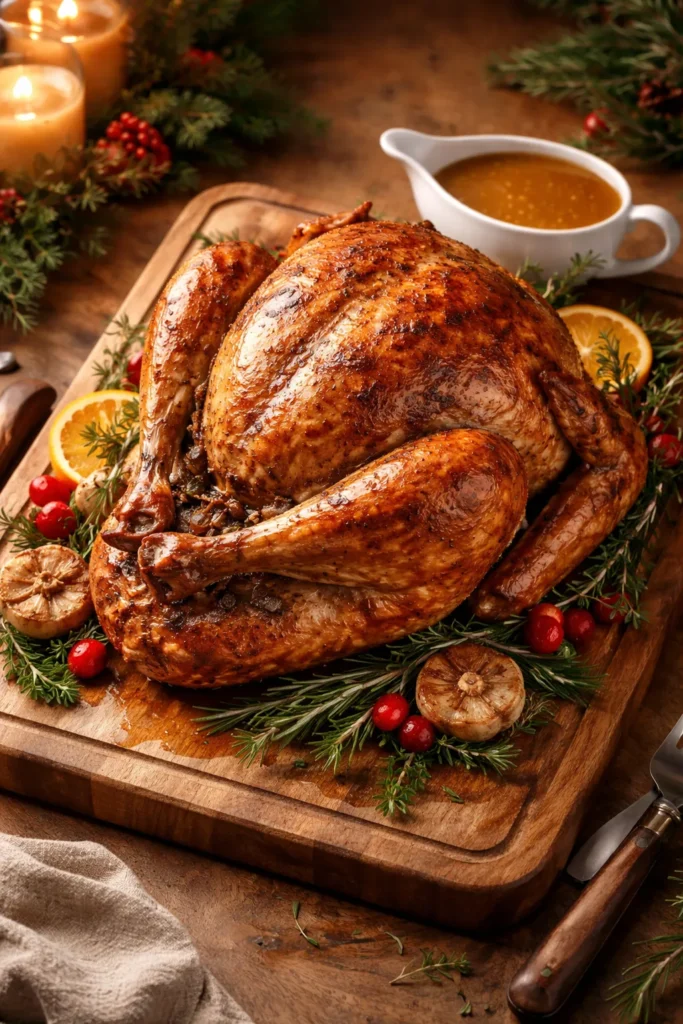
Turkey doesn’t have to be only a Thanksgiving centerpiece. On a Christmas dinner table, a beautifully roasted turkey signals generosity — there’s always enough for everyone, and the leftovers the next day are their own kind of gift. The difference between a dry, disappointing bird and a genuinely juicy roast comes down almost entirely to one technique: dry brining the turkey two days before roasting.
Salt the turkey inside and out, tuck the seasoned bird uncovered into the refrigerator, and let the salt work slowly over 48 hours. It pulls moisture to the surface, dissolves the salt, and then drives that seasoned liquid back into the meat. The skin simultaneously dries out completely, which gives you crackingly crisp skin without basting.
Roasting Temperature Strategy
Start at 425°F for the first 30 minutes to set the skin and develop color, then reduce to 325°F for the remainder. Insert an instant-read thermometer into the thickest part of the thigh — the turkey is done at 165°F, but pulling it at 160°F and tenting with foil lets carryover heat do the final work without overshooting.
Making the Pan Gravy
Don’t pour those drippings away. After roasting, you’re holding one of the most flavorful cooking liquids imaginable.
- Strain the drippings into a fat separator and pour off the fat
- Cook 2 tablespoons of flour in 2 tablespoons of butter to make a roux
- Whisk in the defatted drippings plus enough chicken stock to reach the consistency you want
- Simmer for 5 minutes, season with salt and black pepper, and finish with a splash of white wine
A 14-pound turkey feeds 12–14 people with leftovers to spare, making it arguably the best value-per-serving main on this list.
5. Slow Cooker Beef Short Ribs
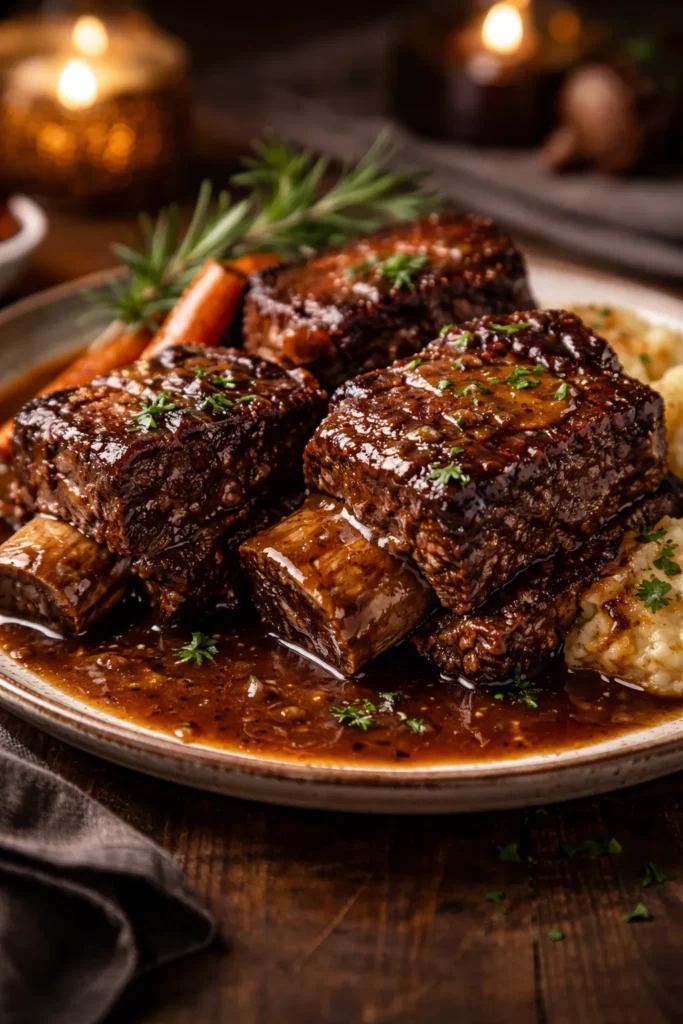
Short ribs are one of those cuts that reward patience with extraordinary results. After six to eight hours in a slow cooker, the thick ribbons of collagen in the meat dissolve into gelatin, the fat renders into the braising liquid, and you’re left with meat that falls off the bone — but not in the sloppy, overcooked way. These ribs hold their shape while being tender enough to cut with the side of a spoon.
A good braise starts with a proper sear. Before the ribs go anywhere near the slow cooker, brown them in batches in a heavy skillet over high heat. A deep mahogany crust on all four sides adds flavor that the braising liquid alone cannot create. This step takes 15 minutes but pays dividends across the entire dish.
Building the Braising Liquid
The liquid should be deeply savory with some sweetness and acidity to balance the fat in the ribs. A solid combination:
- 1 cup dry red wine (Cabernet Sauvignon or Merlot work well)
- 1 cup beef stock
- 2 tablespoons tomato paste
- 1 tablespoon Worcestershire sauce
- Fresh thyme, rosemary, bay leaves, and smashed garlic cloves
Short Rib Serving Suggestions
- Creamy polenta is the ideal base — its mild sweetness and smooth texture absorb the braising liquid without competing with the beef
- Boursin or mascarpone mashed potatoes work beautifully for the same reason
- Reduce the braising liquid after cooking by simmering it on the stovetop until it coats the back of a spoon — this concentrated sauce is the finishing touch that pulls everything together
- Short ribs reheat exceptionally well, making them a brilliant make-ahead main dish for a stress-free Christmas dinner
6. Crown Roast of Pork
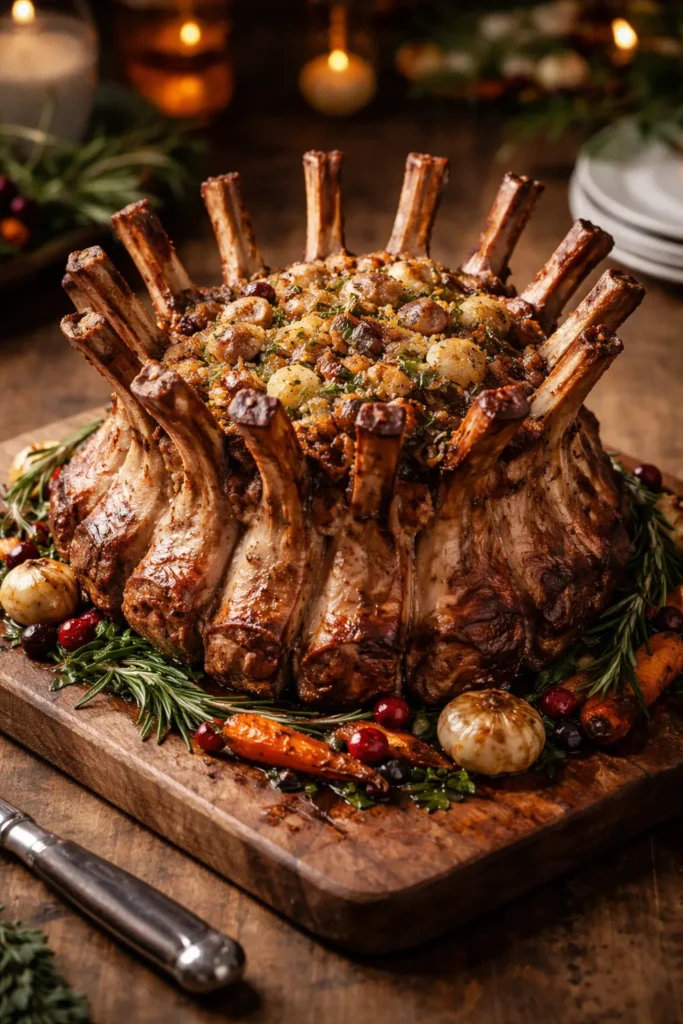
If there’s a single Christmas dinner centerpiece that generates the most conversation before the first bite is even taken, it’s the crown roast of pork. The frenched rib bones arc upward around a hollow center — typically filled with a savory stuffing — and the finished dish looks as theatrical as anything you’d see in a restaurant. Yet the actual cooking technique is straightforward enough for any home cook willing to plan ahead.
Have your butcher French and form the crown for you — this is not the kind of prep you want to tackle yourself unless you’re experienced with meat fabrication. The butcher ties the two racks into a circle and caps the exposed bones with foil to prevent burning. Your job is the seasoning and the roasting.
Seasoning and Stuffing the Crown
Season aggressively with a paste of minced garlic, fresh rosemary, fennel seed, black pepper, and olive oil rubbed into every surface 24 hours in advance. For the stuffing, consider apple and Italian sausage — the sweetness of the apple cuts through the richness of the pork, while the sausage keeps the filling savory and substantial.
- Roast at 375°F until the internal temperature of the pork reaches 145°F
- A 4-pound crown roast (8 bones) serves 6–8 people
- Rest for 15 minutes before filling the crown with the cooked stuffing and removing the foil caps from the bones
- Garnish the exposed bones with paper frills or decorative picks for the most impressive presentation possible
7. Garlic and Herb Spatchcock Chicken
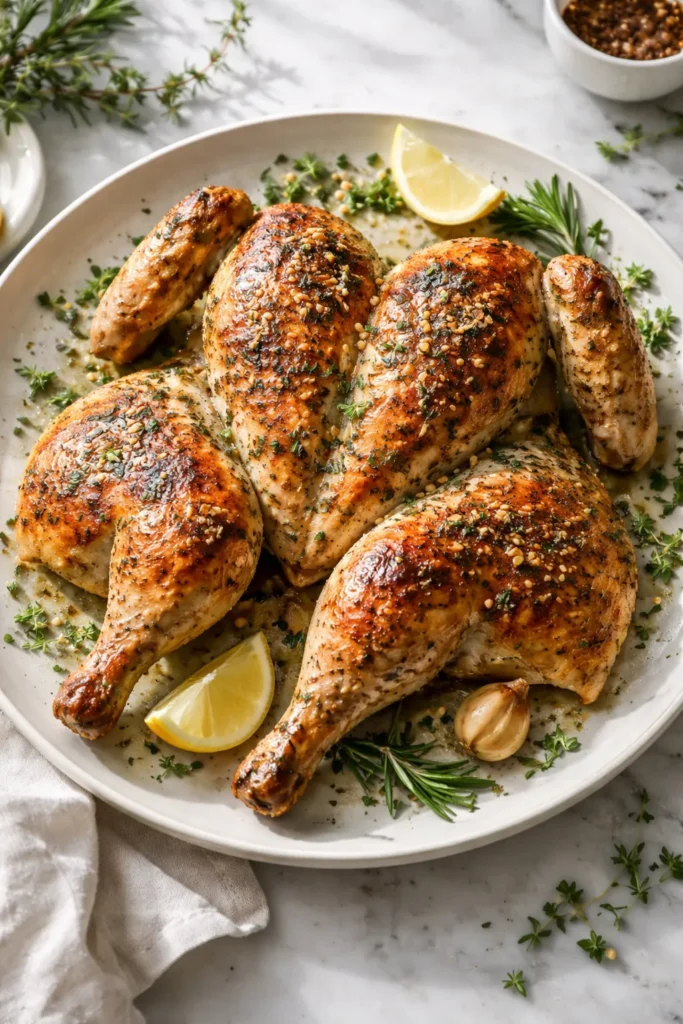
Not every Christmas dinner needs to be a showstopper production, and that’s perfectly fine. A spatchcocked roast chicken — butterflied flat so it cooks in 45 minutes with incredibly crispy skin across every surface — is the kind of dish that feels both casual and special at the same time. It’s the right call for smaller gatherings of four to six people who want a proper roast without the drama of a larger beast.
Spatchcocking means removing the backbone with kitchen shears and pressing the bird flat. The legs and breast cook at the same rate when the bird lies flat, eliminating the single biggest challenge of roasting whole poultry: the breast and thigh finishing at drastically different times.
The Herb Butter Under the Skin
This is the technique that transforms a good roast chicken into a great one. Work your fingers gently under the skin of the breast and thighs to separate it from the flesh, then push softened compound butter — loaded with garlic, thyme, lemon zest, and parsley — directly under the skin and onto the meat. As the chicken roasts, that butter bastes the meat from the inside out.
- Roast at 425°F on a bed of sliced onions, lemon, and garlic — these aromatics flavor the drippings beautifully
- The chicken is done when the thigh registers 165°F and the juices run clear
- Rest for 10 minutes before carving — whole birds carry over more than individual pieces
- The pan drippings left behind are almost too good to waste — deglaze the pan with white wine and chicken stock for an instant jus
8. Salmon en Croûte (Salmon Wellington)
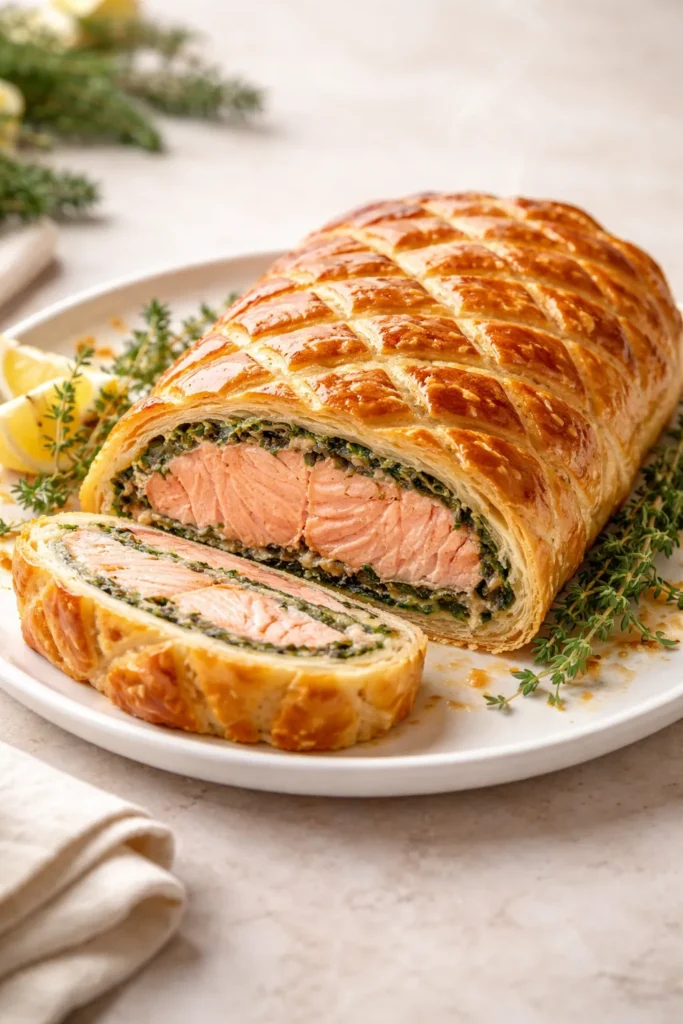
A golden, pastry-wrapped salmon fillet — sometimes called salmon Wellington or coulibiac in its more elaborate Russian-inspired form — is one of the cleverest Christmas dinner recipes for a household that wants something genuinely impressive without spending five hours in the kitchen. A whole salmon fillet gets layered with a savory filling, wrapped tightly in puff pastry, and baked until the pastry turns a deep golden brown and the fish inside steams perfectly in its own moisture.
The filling is where you can really express yourself. A classic combination uses softened cream cheese mixed with sautéed spinach, lemon zest, dill, and capers. Spread this evenly over the salmon before wrapping, and it acts both as a flavor layer and a moisture barrier that prevents the pastry from going soggy on the underside.
Working with Puff Pastry
Store-bought all-butter puff pastry is exactly as good as homemade for this application, and there’s no reason to feel apologetic about using it.
- Thaw the pastry overnight in the refrigerator — never on the counter, which makes it sticky and difficult to handle
- Roll slightly thinner than it comes from the package for a crisper, less doughy result
- Brush with egg wash twice — once before baking and once halfway through — for the deepest golden color
- Score the top of the pastry in a decorative pattern (crosshatch or diagonal lines) to help steam escape and create a beautiful surface
A 2-pound salmon fillet en croûte feeds 6–8 people and makes a spectacular table entrance.
9. Pork Tenderloin with Apple Cider Glaze
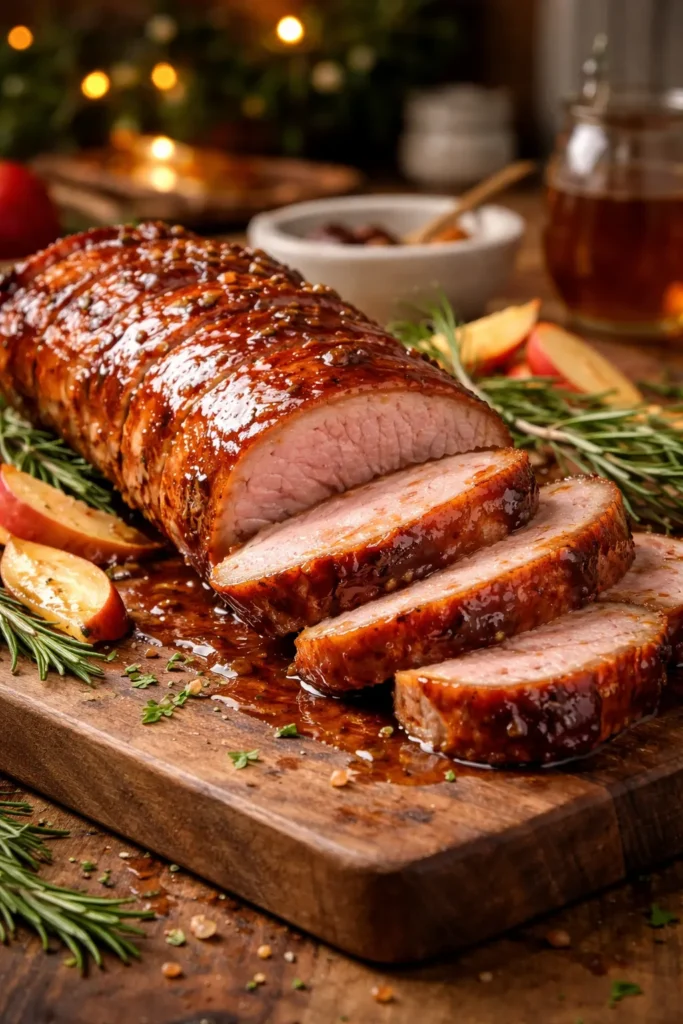
Pork tenderloin is one of the most underutilized Christmas dinner options, and it’s a genuine shame. At under 2 pounds and cooking in 25 minutes, it’s the leanest, most quickly prepared centerpiece on this entire list — and when paired with a glossy apple cider glaze, it tastes unmistakably like the holiday season.
The critical rule with pork tenderloin is understanding the roasting temperature. Do not cook pork tenderloin past 145°F internal temperature. Modern food safety guidelines confirm that slightly blush-pink pork at this temperature is completely safe and infinitely juicier than the grey, dried-out results that a higher temperature produces. This single piece of knowledge is the difference between a forgettable meal and a revelatory one.
Making the Apple Cider Glaze
The glaze comes together in the same skillet you use to sear the tenderloin, which means you’re also capturing all those browned bits from the pan.
- After searing the pork, remove it and reduce 1 cup of apple cider with 2 tablespoons of brown sugar, 1 tablespoon of Dijon mustard, and a few sprigs of fresh thyme until the mixture coats a spoon
- Brush this glaze over the tenderloin during the last 10 minutes of oven cooking
- Finish with a squeeze of fresh lemon juice to lift the sweetness
- Because a single tenderloin feeds only 3–4 people, cook two at once if you’re hosting a larger group — they fit side by side on a sheet pan and cook in exactly the same time
10. Red Chili Pork Tamales
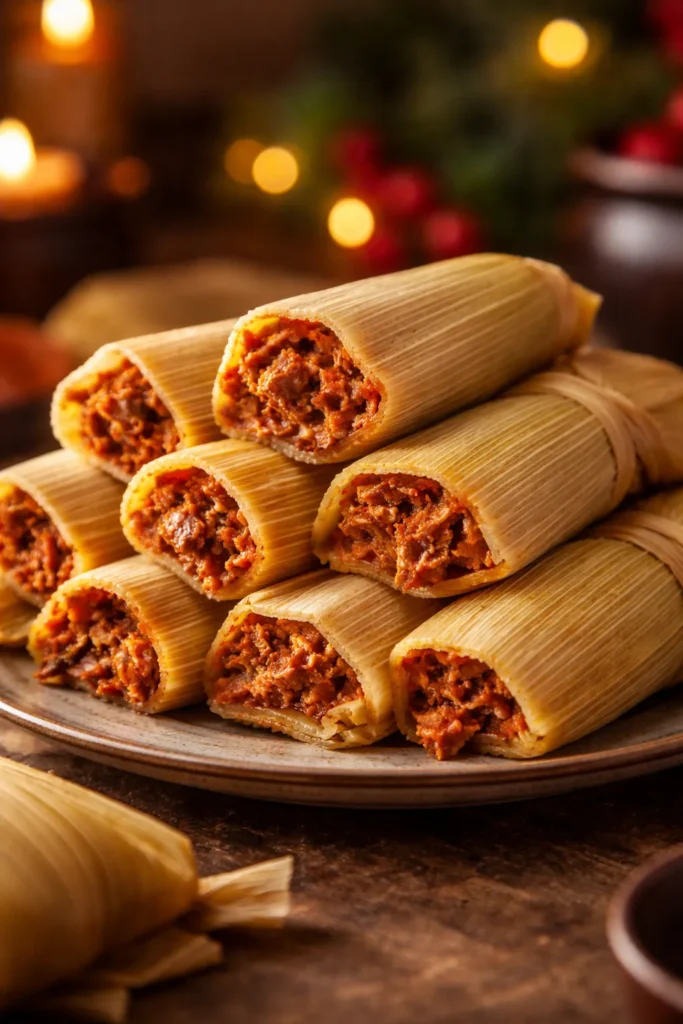
For families with Mexican or Latin American roots, tamales are Christmas dinner. Full stop. And for families who’ve never experienced the tradition, Christmas tamales offer something genuinely exciting: a communal cooking project that turns the day’s preparation into a party. Traditionally, family members gather to assemble tamales together — a process called a tamalada — and the labor of love involved makes eating them feel earned.
The masa dough is the foundation. Masa harina (dried corn flour treated with lime water) gets beaten with lard or shortening, warm broth, and a pinch of baking powder until it’s light and spreadable — the float test tells you when it’s ready: a small ball of masa should float in a glass of water.
Building the Pork Filling
- Cook a 3-pound pork shoulder low and slow with dried chiles (ancho and guajillo work particularly well), cumin, garlic, and oregano until the meat shreds easily
- Toast and rehydrate the dried chiles before blending them into the cooking liquid — this creates the deep, earthy, complex sauce that defines the filling
- The shredded pork should be moist but not soupy; excess liquid makes the tamale filling spill out during assembly
Assembly and Steaming
Soak dried corn husks in warm water for at least 30 minutes until pliable. Spread a thin layer of masa, add a spoonful of filling, fold and seal. Steam upright, open-end-up, for 60–75 minutes. They’re done when the masa pulls cleanly away from the husk without sticking.
11. Slow Cooker Beef Bourguignon
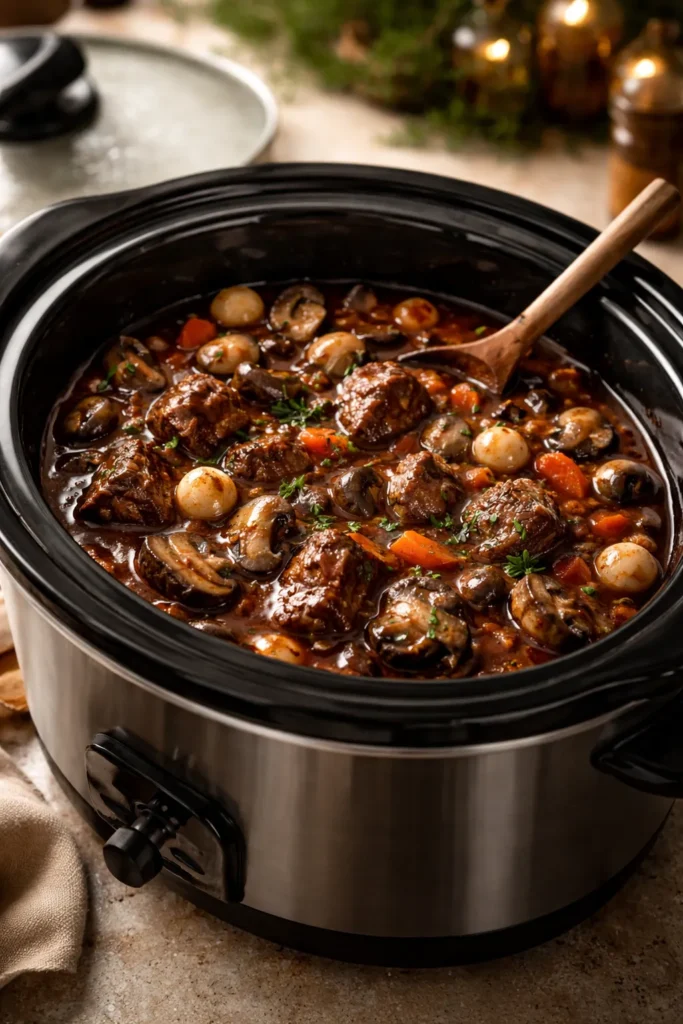
The French bistro classic gets a brilliant slow cooker adaptation that lets you build a deeply flavored, wine-braised beef stew with virtually no hands-on time once the initial prep is done. The slow cooker’s gentle, even heat is actually ideal for this dish — the long braise allows the beef chuck to become meltingly tender while the wine, mushrooms, pearl onions, and herbs meld into a sauce of extraordinary depth.
Browning the beef and vegetables before they go into the slow cooker is the step that separates a proper Beef Bourguignon from a generic beef stew. Those browned surfaces create hundreds of distinct flavor compounds that don’t form in a slow cooker’s moist environment. Don’t skip it.
The Wine Question
Use wine you’d actually drink with dinner. The recipe concentrates the wine’s flavor over hours of cooking, which means cheap, acidic wine produces a sharp, unpleasant sauce, while a decent bottle produces something genuinely rich and complex. A bottle of Pinot Noir or Burgundy between $12 and $18 hits the sweet spot for this dish.
- Add mushrooms during the last 90 minutes of cooking rather than the beginning — they become rubbery and lose their flavor if cooked for the full duration
- The pearl onions can be frozen (not fresh) without any quality penalty, saving significant prep time
- Finish the sauce with a teaspoon of tomato paste and a tablespoon of butter stirred in just before serving
- This dish improves dramatically the next day, making it the ultimate make-ahead Christmas dinner — prepare it the day before and simply reheat
12. Italian Sausage and Cheese Tortellini Soup
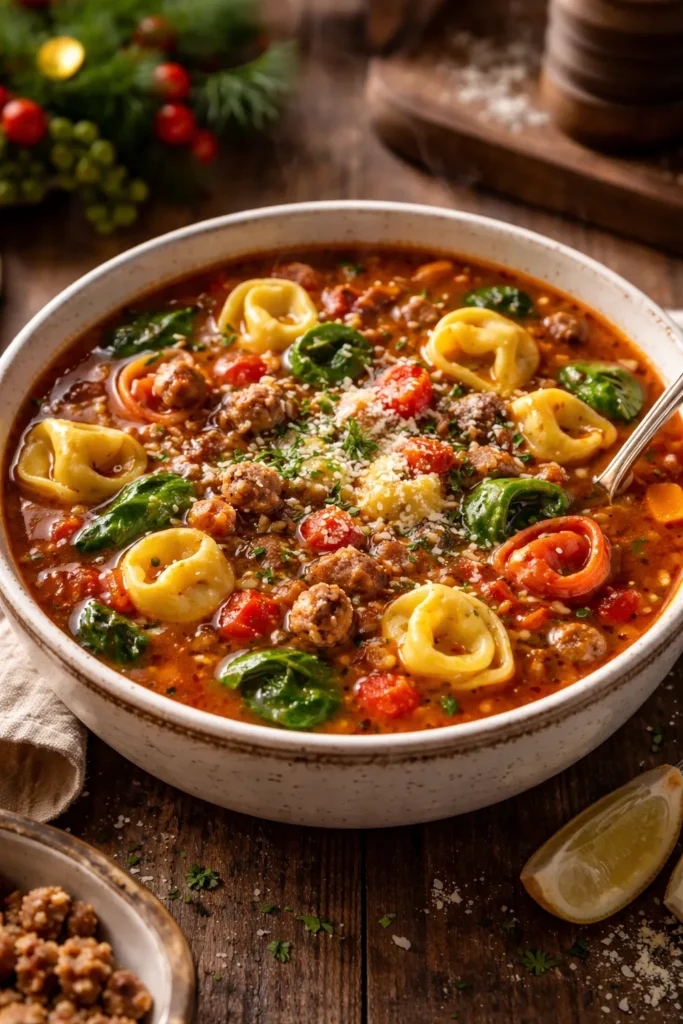
Christmas Eve dinner across many Italian-American families looks completely different from Christmas Day — and that’s where this soup earns its place on the table. It’s warm, deeply satisfying, festive enough to feel special, and feeds a crowd from a single pot with almost no effort. For households that want a Christmas Eve tradition that feels relaxed and joyful rather than elaborate and stressful, this is it.
The combination of spicy Italian sausage, cheese-filled tortellini, and a rich tomato broth studded with vegetables creates a soup that manages to feel both hearty and bright. Using multi-colored tortellini adds a genuinely festive appearance — the red, green, and white pasta floating in a deep amber broth looks like Christmas without trying.
Building the Broth
- Brown the Italian sausage (removed from its casing) first, breaking it into crumbles — leave some larger pieces for texture and meatiness
- Sauté diced onion, carrot, and celery in the sausage fat until softened
- Add canned crushed tomatoes, chicken or beef broth, garlic, Italian seasoning, and red pepper flakes
- Simmer for 20 minutes before adding the tortellini in the last 5–7 minutes of cooking
Make-Ahead Notes for Soup
If you’re making this ahead, cook the tortellini separately and add it to bowls when serving rather than letting it sit in the soup — tortellini absorbs liquid and becomes bloated and mushy if stored in broth for more than an hour. Store the soup and pasta separately, then combine when reheating.
Top with a shower of freshly grated Parmesan, a drizzle of good olive oil, and torn fresh basil for a finishing touch that takes this from weeknight dinner to proper holiday meal.
Planning Your Christmas Dinner Timeline
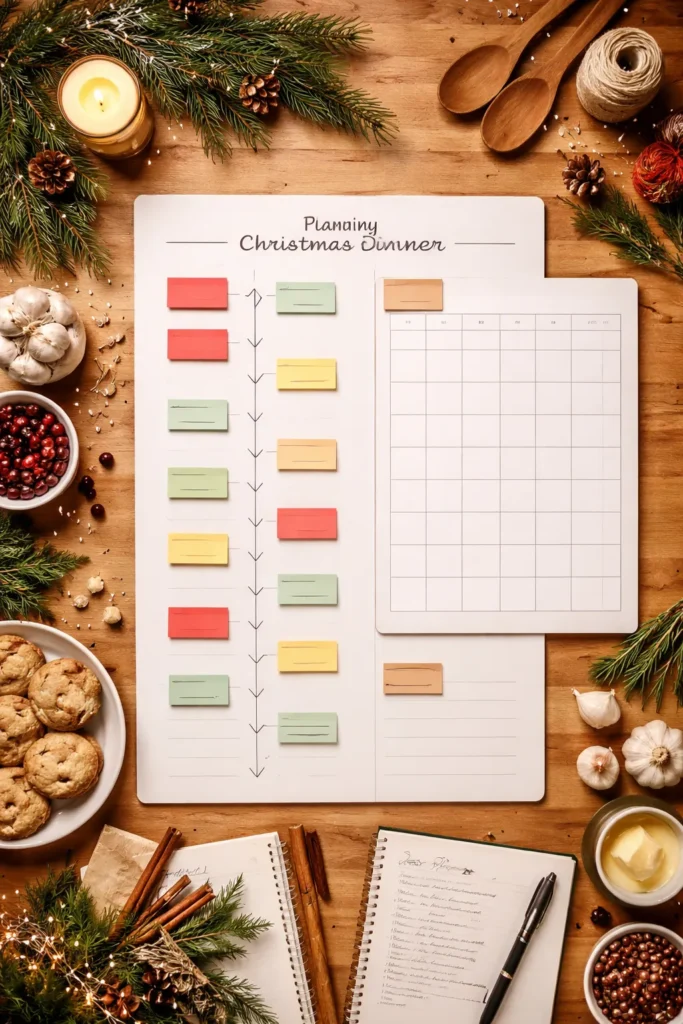
The single biggest mistake home cooks make with Christmas dinner isn’t in the recipes themselves — it’s in the planning. Everything collides at once: dishes need the oven at the same temperature, sides need to rest while proteins need to be carved, and someone inevitably discovers they forgot to start the gravy.
A written timeline, prepared at least three days in advance, changes everything.
What to Prepare in Advance
- 2–3 days before: Dry-brine turkey or prime rib, marinate short ribs, make cranberry sauce, prepare any pastry dough
- Day before: Make soups or braises (they reheat better anyway), prep stuffings, make compound butters, set out serving dishes
- Morning of: Make desserts, prep vegetables, set the table, thaw anything frozen
- 2 hours before serving: Begin cooking the centerpiece protein; start sides in order of longest to shortest cook time
Temperature Management and Resting
Here’s a truth that trips up even experienced cooks: resting is not optional. A prime rib needs 20–30 minutes of rest before carving. A turkey needs at least 15–20 minutes. Short ribs need 10 minutes. During this resting time, the proteins relax and the juices redistribute evenly through the meat. Cut into a roast before it’s rested and those juices run straight onto the cutting board instead of staying in the meat where they belong.
Use the resting time to finish your gravy, warm your sides, and plate garnishes. It’s actually one of the most useful windows in the entire cooking process.
Final Thoughts

Christmas dinner doesn’t need to be the most technically challenging meal you’ve ever cooked. What it needs to be is meaningful — a meal that your family talks about at the table next year and the year after that, one that becomes the reference point for what the holiday tastes like to them.
Whether you go with the showstopping drama of a crown roast of pork or the cozy, communal warmth of a pot of tortellini soup, the recipes on this list share one quality: they reward the effort you put in. The hard truth about impressive cooking is that most of it is just planning, patience, and paying attention to temperature — not professional-level technique.
Pick one main dish that genuinely excites you. Build a menu around it that you can actually manage without fraying. And then spend Christmas Day doing what it’s actually for — being with the people you’re cooking for. The dinner will taste better for it.