There’s something quietly satisfying about a Tuesday night with nowhere to be, your favorite show queued up, and a proper meal waiting in the pan — one that’s actually made for you, not scaled down from a recipe that feeds six. Cooking for one gets a bad reputation, as if the only options are sad salads or cereal eaten over the sink. But that’s a myth worth putting to rest immediately.
Single-serving dinners, done right, are one of the most freeing cooking formats there is. You answer to nobody. You can lean all the way into your love of garlic. You can eat shakshuka at 8 PM without apology. And because you’re buying and cooking in smaller amounts, this is actually the perfect moment to splurge on a beautiful piece of salmon or a quality steak — costs that would feel steep for four people are completely reasonable for one.
The challenge most people run into isn’t motivation. It’s a lack of reliable, properly portioned recipes that don’t leave a mountain of leftovers or call for three-quarters of a can of coconut milk with no plan for the rest. Every dinner below is built specifically for a single serving — or can be pulled back to one without any awkward fraction math. Each one is fast enough for a weeknight, satisfying enough to feel like a real meal, and interesting enough that you’ll actually look forward to making it.
Whether you’re newly solo, regularly eating alone a few nights a week, or just claiming the kitchen for yourself tonight, these eight recipes cover the full emotional spectrum of solo dining — from cozy and comforting to fresh and energizing.
Table of Contents
- Why Single-Serving Cooking Deserves More Respect
- The Pantry Staples That Make Solo Cooking Effortless
- The Freezer Is Your Best Friend
- Ingredient Overlap Is the Secret to Zero Waste
- 1. Garlic Butter Shrimp with Lemon and Angel Hair Pasta
- Why This One Works So Well for One
- What to Watch When Cooking Shrimp
- Quick Ingredient List for One
- 2. One-Pan Shakshuka with Feta and Herb Oil
- The Flavor Build That Makes It Special
- Serving It Right
- Variations Worth Trying
- 3. Honey-Glazed Salmon with Roasted Asparagus
- The Sheet Pan Advantage
- Building the Glaze
- Tips for Perfect Solo Salmon
- 4. One-Pot Sausage and Tomato Rigatoni
- Why This Is the Ideal Solo Pasta
- The Technique That Makes the Sauce Cling
- Add-Ins and Variations
- 5. Cashew Chicken Stir-Fry for One
- The Sauce Formula
- Building It Step by Step
- The Cashew Details
- 6. Turkey Chili for One
- Why Turkey Works Beautifully Here
- The Spice Blend
- Toppings Make the Bowl
- 7. Stuffed Bell Pepper with Quinoa, Black Beans, and Cheese
- Choosing and Prepping the Pepper
- Building the Filling
- Variations and Flexibility
- 8. Garlic Herb Steak with Pan Sauce and Roasted Baby Potatoes
- Choosing the Right Cut for One
- The Pan Sauce That Takes It Over the Top
- Resting Is Non-Negotiable
- Tips for Getting Solo Dinners on the Table Faster
- Building a Solo Dinner Rotation
- Final Thoughts
Why Single-Serving Cooking Deserves More Respect
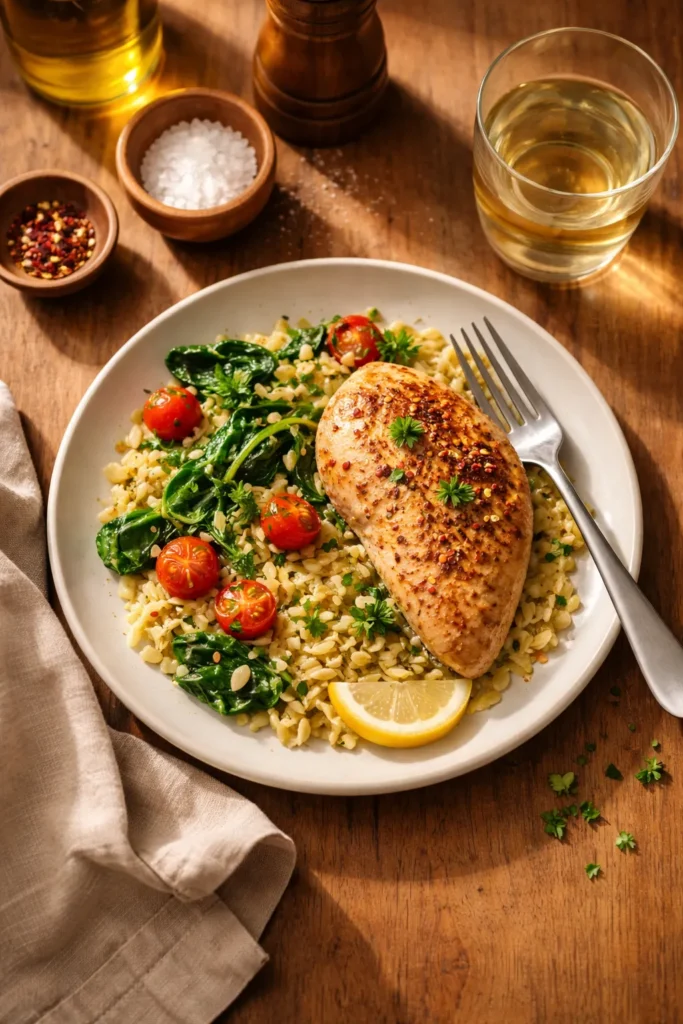
Cooking for one isn’t a consolation prize. It’s a skill, and it comes with advantages that cooking for a crowd simply doesn’t offer.
When you’re the only one at the table, you make 100% of the flavor decisions. You can go heavier on the chili flakes. You can skip the side dish and double the main. Nobody is going to complain that you put olives in the pasta or that dinner is shakshuka for the third time this week. That creative freedom is genuinely underrated.
There’s also a real financial case for it. A 6-ounce salmon fillet bought from a fish counter costs a fraction of what you’d spend feeding a family the same meal. A single bone-in chicken thigh, a handful of shrimp, one zucchini — these are tiny grocery runs that keep your fridge from turning into a science experiment. Buying exactly what you need means almost nothing goes to waste, which is both environmentally and financially satisfying.
The psychological side matters, too. Research into eating habits consistently shows that people who cook their own meals, even simple ones, report higher satisfaction with what they eat compared to people who graze on convenience food or skip cooking entirely when alone. The act of preparing something for yourself sends a signal that the meal — and you — are worth the effort.
The single biggest shift for most solo cooks is learning to treat yourself the same way you’d treat a dinner guest.
The Pantry Staples That Make Solo Cooking Effortless
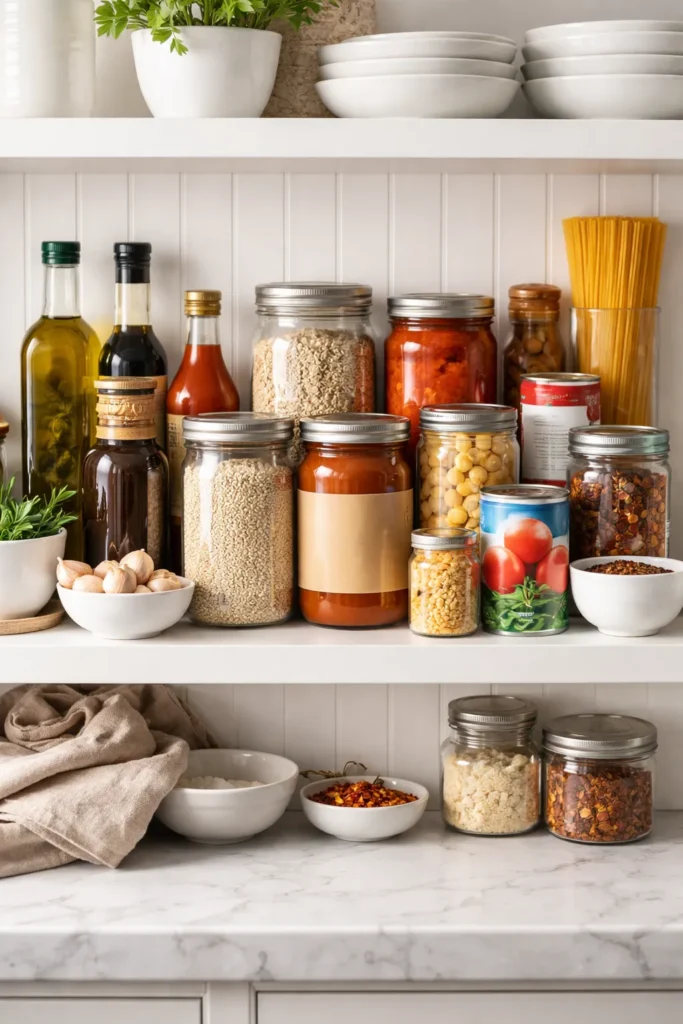
Before the recipes, a word on setup. The difference between a solo dinner that feels exciting and one that feels like a chore usually comes down to what’s already in your kitchen.
Keep a reliable stock of dried pasta (rigatoni and spaghetti cover a lot of ground), canned whole tomatoes, good olive oil, soy sauce, chicken or vegetable stock, and a jar of good-quality salsa or tomato passata. These are the foundations that turn a single chicken breast or a handful of shrimp into an actual meal.
For proteins, frozen shrimp thaw in under 15 minutes under cold running water — they’re one of the most convenient solo proteins available. Ground turkey and ground beef freeze well in individual portions; wrap a quarter pound in plastic wrap before freezing, and you’ve got exactly one serving waiting whenever you need it. Eggs are the most underappreciated solo dinner ingredient, full stop. They’re cheap, fast, high in protein, and genuinely delicious in dozens of formats.
A few key tools also make a difference: a well-seasoned 8-inch or 10-inch skillet, a small baking sheet, and one good chef’s knife. You don’t need a solo cooking arsenal — just the right basics used well.
The Freezer Is Your Best Friend
Freeze individual portions of anything you make in bulk. A batch of chili, a pot of soup, a portion of cooked rice — they all freeze well and become future meals on nights when even five minutes of cooking feels like too much. Portion into small containers before freezing so you’re always pulling out exactly one serving.
Ingredient Overlap Is the Secret to Zero Waste
When planning your solo dinners for the week, look for meals that share ingredients. If you’re buying fresh herbs for one dish, plan a second recipe that uses them. If you open a can of coconut milk, find two recipes that need it. This overlap approach keeps grocery spending low and waste even lower.
1. Garlic Butter Shrimp with Lemon and Angel Hair Pasta
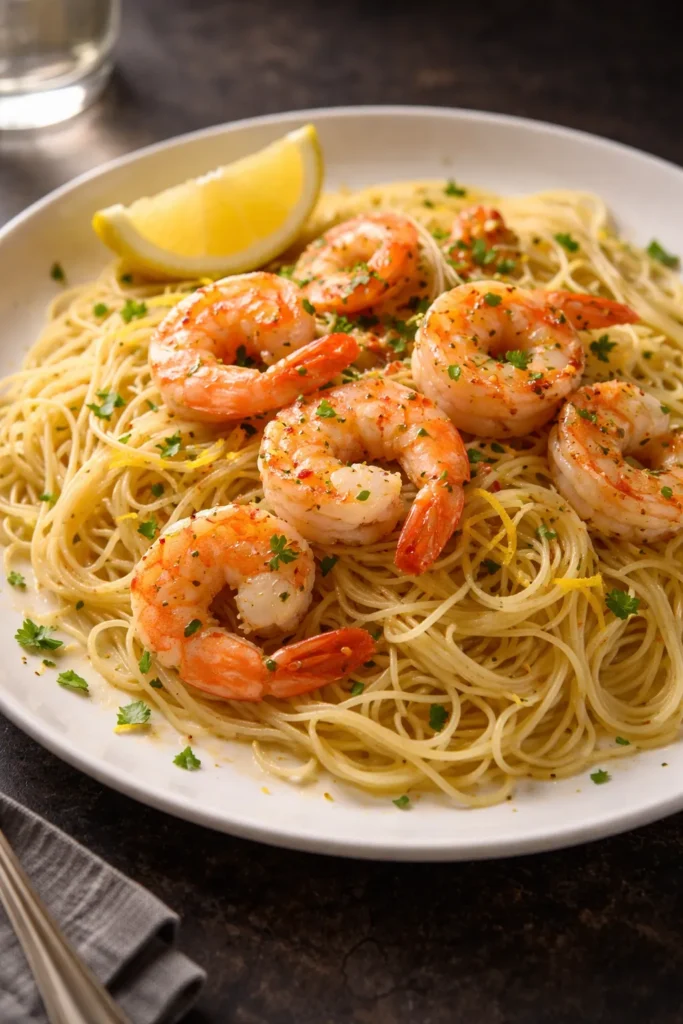
Shrimp is one of the great gifts to solo cooks — it thaws fast, cooks in under four minutes, and soaks up flavor like nothing else. This dish is weeknight fast but tastes like something you’d order at a good Italian-American restaurant.
Why This One Works So Well for One
Shrimp is sold in quantities that scale beautifully down to a single serving. A quarter pound (roughly 8 to 10 medium shrimp) is the perfect amount for one plate of pasta. The garlic butter sauce is made directly in the pan in the same time it takes the pasta to cook, which means total dinner time sits around 20 minutes.
The lemon does critical work here — it cuts through the butter’s richness and brightens the entire dish so it doesn’t feel heavy. Don’t skip the zest; it adds a layer of citrus that juice alone can’t provide.
What to Watch When Cooking Shrimp
- Shrimp are done the moment they turn pink and curl into a loose “C” shape — an overcooked shrimp curls tightly into an “O” and turns rubbery
- Pat shrimp completely dry before they hit the pan; wet shrimp steam instead of sear, and you lose all that golden-brown flavor
- The whole dish comes together in the pan, so have your pasta cooked and drained before the shrimp go in
- Use reserved pasta water (about 3 tablespoons) to bring the sauce together into something silky
Quick Ingredient List for One
- 4 oz angel hair pasta
- ¼ lb medium shrimp, thawed and peeled
- 2 tablespoons unsalted butter
- 3 garlic cloves, minced
- Zest and juice of half a lemon
- Pinch of red chili flakes
- Salt, black pepper, fresh parsley to finish
Worth knowing: Angel hair pasta overcooks in seconds — pull it out 60 seconds before the package suggests and let it finish in the pan with the sauce.
2. One-Pan Shakshuka with Feta and Herb Oil
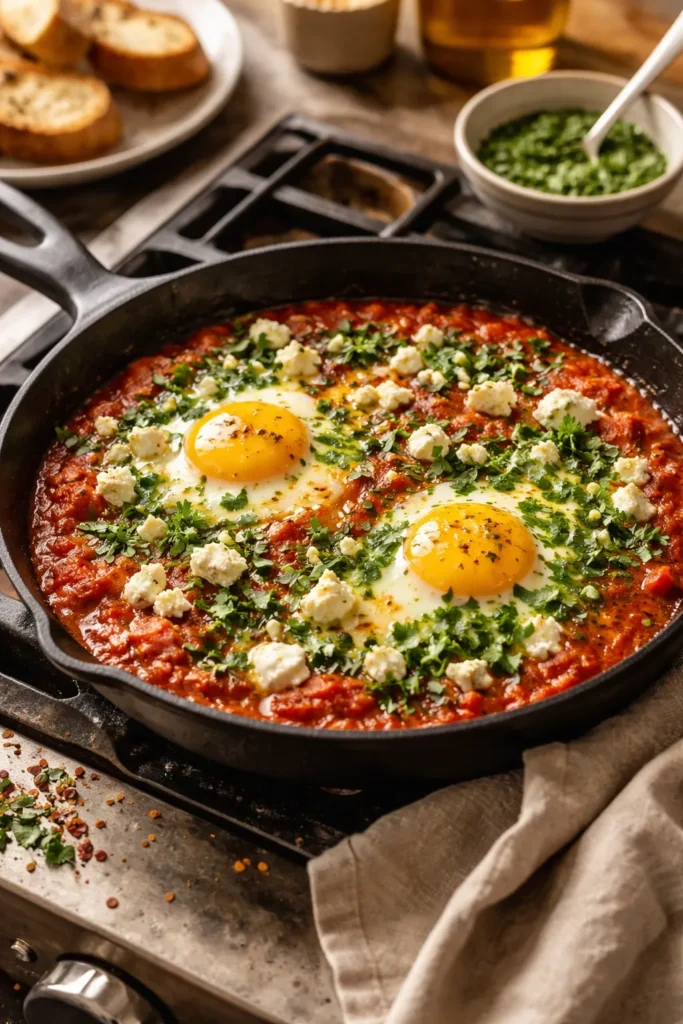
Shakshuka — poached eggs in a spiced tomato sauce — is the ultimate solo dinner. It takes one pan, costs almost nothing, comes together in about 25 minutes, and is equally at home on a Tuesday night as it is for a lazy weekend breakfast-for-dinner situation.
The Flavor Build That Makes It Special
The difference between a great shakshuka and a mediocre one is the spice base. Cumin, smoked paprika, and a pinch of cayenne bloomed in olive oil before the tomatoes go in creates a depth that’s hard to place but impossible to miss. The tomatoes need at least 10 minutes of simmering to break down and concentrate — rushing this step gives you watery sauce with whole tomato pieces floating in it.
Make two wells in the sauce and crack an egg into each one. Cover the pan and let the eggs cook until the whites are set but the yolks are still soft and runny — this takes about 4 to 5 minutes over medium-low heat.
Serving It Right
- Crumble 1 oz of feta directly over the top before serving — it melts slightly into the hot sauce and adds a salty, creamy contrast
- A drizzle of good olive oil and a few torn fresh herbs (cilantro, basil, or flat-leaf parsley) finish it
- Serve with torn crusty bread, pita, or even sliced sourdough toasted in the oven — the bread is non-negotiable because you’ll want to mop up every drop of sauce
- Add a handful of baby spinach or chopped kale to the sauce before the eggs for extra vegetables
Variations Worth Trying
Crumble half a cooked chorizo link into the base before the tomatoes for a smokier, meatier version. A spoonful of harissa paste stirred in with the canned tomatoes takes it in a North African direction that’s deeply satisfying. Both variations work within the same 25-minute window.
3. Honey-Glazed Salmon with Roasted Asparagus
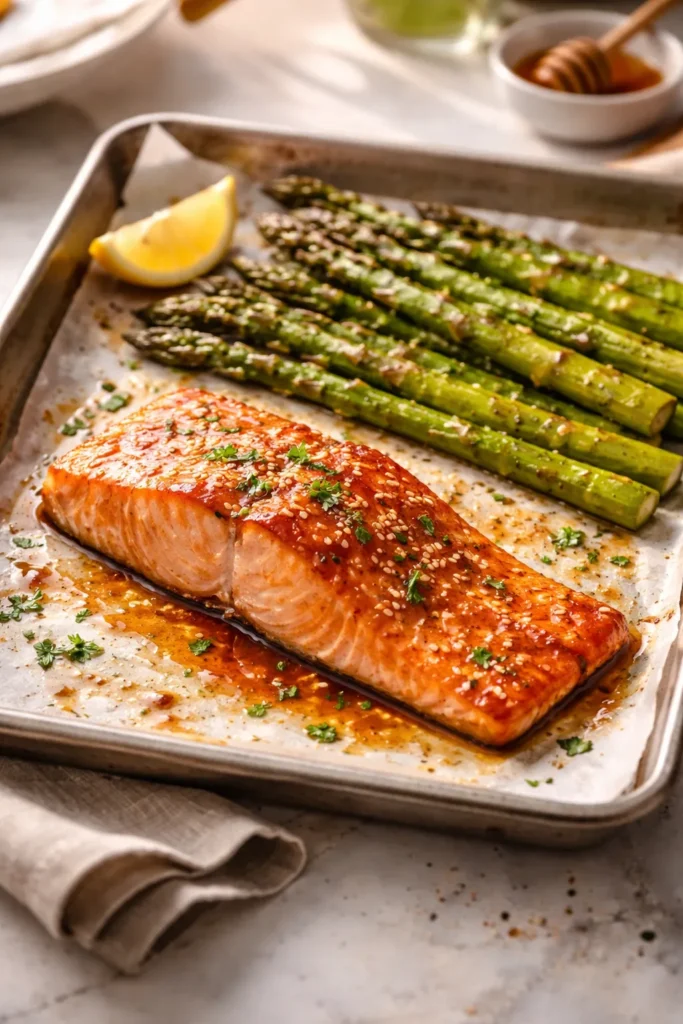
This is the solo dinner that makes you feel like you’re actually taking care of yourself. A single salmon fillet with a sticky honey-soy glaze, roasted alongside a small bundle of asparagus on the same sheet pan, is genuinely elegant with almost no effort involved.
The Sheet Pan Advantage
Sheet pan dinners are the most underused tool in the solo cook’s arsenal. You can roast a single portion of protein alongside one vegetable, and everything finishes at approximately the same time with virtually no cleanup. The key is knowing your oven runs hot and adjusting accordingly — most ovens roast salmon well at 400°F (200°C) for 10 to 12 minutes depending on thickness.
The honey-soy glaze does double duty: it bastes the salmon as it roasts, creating a caramelized crust, and it drips onto the asparagus, giving the spears a sweet-savory coating that’s far better than plain roasted vegetables.
Building the Glaze
Mix 1 tablespoon honey, 1 tablespoon soy sauce, 1 teaspoon sesame oil, and one minced garlic clove. Brush half over the salmon before it goes into the oven, and brush the second half on during the last 3 minutes of cooking. This two-coat approach builds more flavor than a single application.
Tips for Perfect Solo Salmon
- Buy salmon from the counter and ask for a single 6-ounce fillet — this is much cheaper and fresher than a pre-packaged multi-serving piece you’ll only partially use
- Bring the fillet to room temperature for 10 minutes before roasting; cold fish cooks unevenly
- The salmon is done when it flakes gently at the thickest point with a fork — the center can still be slightly translucent for the best texture
- Serve over steamed jasmine rice or with a wedge of lemon and a spoonful of plain Greek yogurt mixed with dill
4. One-Pot Sausage and Tomato Rigatoni
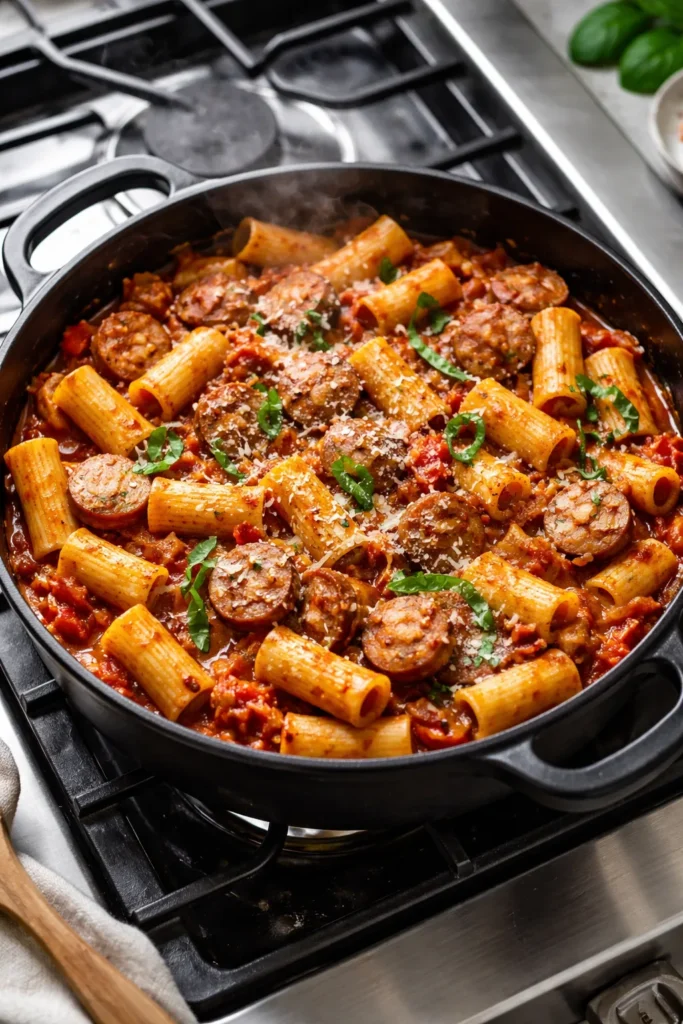
On the nights when the couch is calling and the motivation level is hovering around a four out of ten, this pasta delivers maximum comfort with minimum steps. One pot, one cutting board, 30 minutes.
Why This Is the Ideal Solo Pasta
Most pasta recipes make enough for four people, which means either eating it three nights in a row or letting it dry out in the fridge. This recipe is calibrated for one generous portion, and rigatoni’s wide tubes hold the chunky tomato and sausage sauce in a way that more delicate pasta shapes can’t.
Use one link of Italian chicken sausage or pork sausage — most grocery stores sell them individually or in packs of four that freeze well. Remove the casing, crumble the meat directly into a hot skillet, and break it apart as it browns. The sausage provides enough fat to sauté the garlic and deglaze the pan, which means you’re building flavor without adding extra oil.
The Technique That Makes the Sauce Cling
After the pasta is cooked and drained, reserve a full half cup of the starchy pasta water. Add the drained pasta to the sauce, then pour in the pasta water a couple tablespoons at a time, tossing constantly over medium heat. The starch emulsifies with the tomatoes and any fat in the pan, creating a sauce that coats every piece of rigatoni rather than pooling at the bottom of the bowl.
Add-Ins and Variations
- Stir in 2 cups of baby spinach with the tomatoes — it wilts down to almost nothing but adds nutrition
- A pinch of fennel seeds toasted in the pan before the sausage goes in gives the whole dish a depth that tastes like it took hours
- For a vegetarian version, skip the sausage and use a tablespoon of tomato paste cooked in olive oil as the flavor base, with 1/2 cup of canned white beans added for protein
- Finish with freshly grated Parmesan and a crack of black pepper directly in the bowl
5. Cashew Chicken Stir-Fry for One
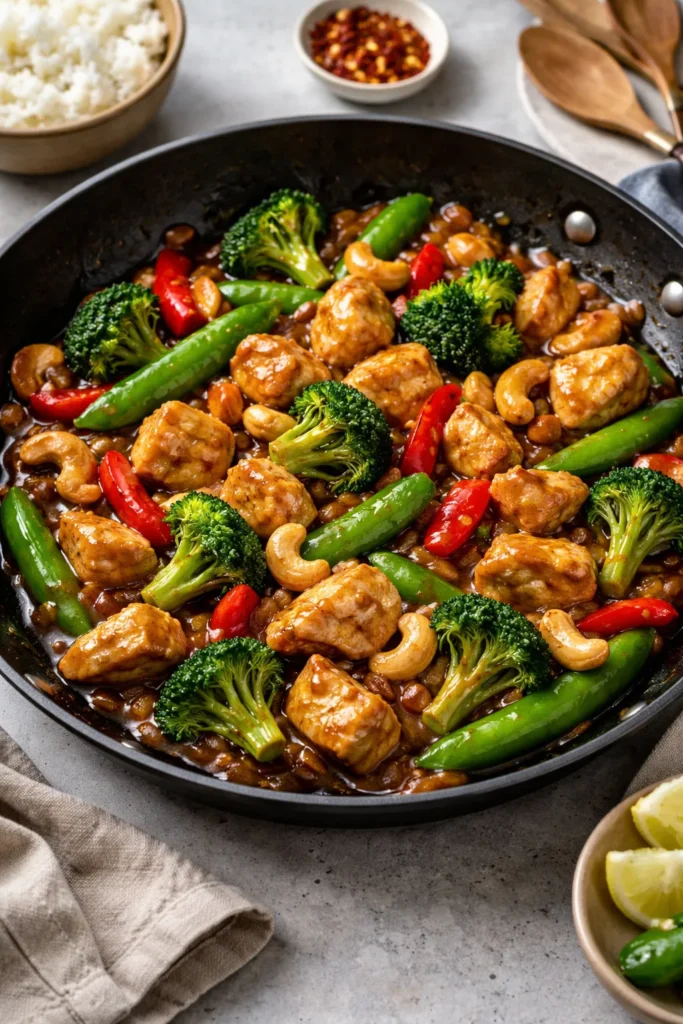
A proper stir-fry for one is faster than ordering delivery and significantly more satisfying. The key most home cooks miss: high heat the entire time. A crowded pan at medium heat steams the vegetables into a soggy mess. A hot pan with just enough food for one person gives you seared chicken, crisp-tender vegetables, and a glossy sauce in under 15 minutes.
The Sauce Formula
Mix the sauce before anything hits the pan: 1.5 tablespoons soy sauce, 1 tablespoon oyster sauce, 1 teaspoon sesame oil, 1 teaspoon rice vinegar, 1 teaspoon honey or brown sugar, and a pinch of cornstarch. Having the sauce ready means you can add it the moment the chicken and vegetables are cooked, without the risk of overcooking while you scramble to measure things.
Building It Step by Step
Start with the chicken — one boneless thigh cut into bite-sized pieces works better than breast here because it stays juicier at high heat. Sear it undisturbed for 90 seconds per side until golden, then transfer to a plate. Add your vegetables to the same hot pan (broccoli florets, sliced bell pepper, and snap peas are a classic combination), stir constantly for 2 minutes, return the chicken, pour over the sauce, and toss until everything is glossy and coated.
The Cashew Details
Add a handful of unsalted roasted cashews in the final 30 seconds — just long enough to warm them through without making them soft. Cashews added too early turn chewy rather than retaining that satisfying crunch that contrasts with the tender chicken and vegetables.
- Serve over steamed jasmine rice or noodles
- Top with sliced scallions and a drizzle of extra sesame oil
- Store any leftover sauce concentrate in the fridge for up to a week — it works on everything
6. Turkey Chili for One
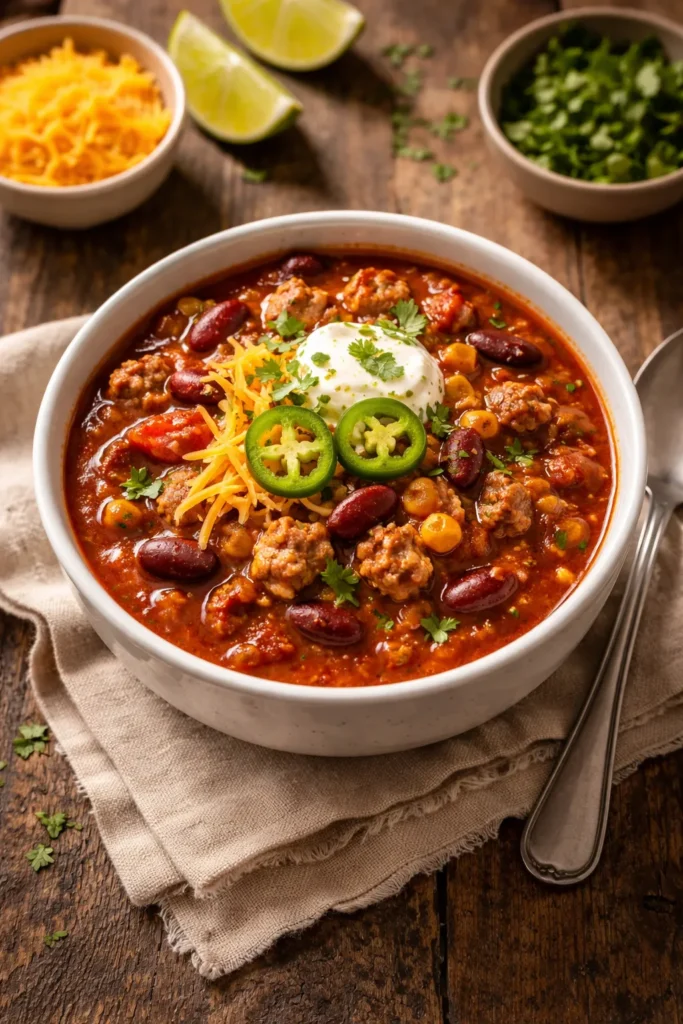
Chili has a reputation for being a big-batch project, but it doesn’t have to be. A single-serving turkey chili made with a quarter pound of ground turkey, half a can of kidney beans, and a handful of pantry spices takes about 30 minutes and delivers the same deep, warming flavor as a pot that simmers all afternoon.
Why Turkey Works Beautifully Here
Ground turkey is lean enough that the chili doesn’t feel heavy, but it absorbs spices and sauce so well that the result is deeply flavorful rather than bland. The trick is to get a good sear on the turkey before any liquid goes in — press it against the pan and let it brown for a full minute before breaking it apart. That browned crust adds a layer of savory depth that makes the whole bowl taste richer.
The Spice Blend
For one serving, use: 1 teaspoon chili powder, ½ teaspoon cumin, ¼ teaspoon smoked paprika, ¼ teaspoon garlic powder, and a pinch of cayenne. Toast these spices in the pan for 30 seconds before adding the turkey — this quick bloom activates the fat-soluble flavor compounds in the spices in a way that just stirring them in later doesn’t achieve.
Toppings Make the Bowl
Chili toppings aren’t decorative — they’re structural. A spoonful of sour cream cools the heat and adds creaminess. Shredded sharp cheddar melts into the hot chili in 30 seconds. Sliced scallions add freshness. Crushed tortilla chips or a piece of cornbread on the side turns this into a full, satisfying meal rather than just a bowl of chili.
- Leftovers (if you make a slightly larger batch) keep well in the fridge for 3 days and taste even better the second day
- Use over a baked sweet potato instead of in a bowl for a completely different and delicious variation
- This freezes perfectly — portion into a small container and pull it out on any night when cooking feels impossible
7. Stuffed Bell Pepper with Quinoa, Black Beans, and Cheese
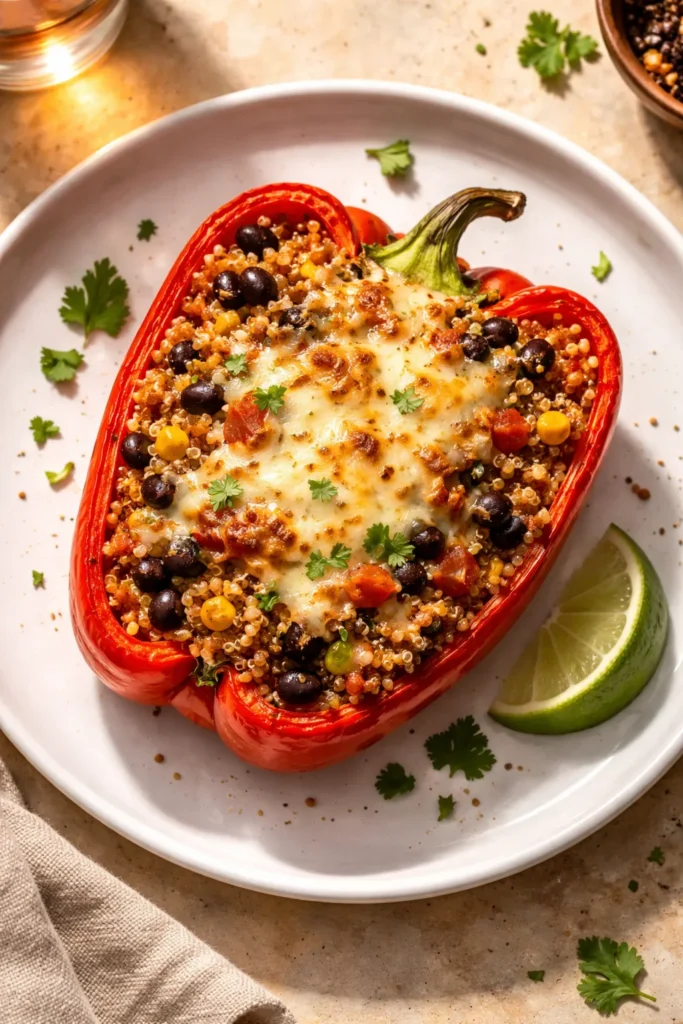
One stuffed pepper is exactly the right amount for one person, and it turns a simple ingredient list into something that feels genuinely special. The combination of quinoa, black beans, and melted cheese inside a roasted pepper hits every textural and nutritional note: chewy grain, creamy beans, crispy edges, and that satisfying ooze of melted cheese.
Choosing and Prepping the Pepper
Pick a large, firm bell pepper — red and orange peppers are sweeter and more flavorful than green when roasted. Cut the top off cleanly, remove the seeds and membrane, then roast the pepper (standing upright, propped with a piece of foil if needed) for 10 minutes at 400°F (200°C) before filling it. This par-roasting step softens the pepper slightly so the finished dish isn’t underdone inside a raw, crunchy shell.
Building the Filling
Cook 3 tablespoons of dry quinoa in half a cup of chicken or vegetable stock instead of water — the stock adds flavor that plain quinoa can’t achieve on its own. Toss the cooked quinoa with 3 tablespoons of drained canned black beans, a tablespoon of salsa, half a teaspoon of cumin, and a pinch of garlic powder. Pack it firmly into the pepper, top with 2 tablespoons of shredded Monterey Jack or cheddar, and return to the oven for 15 to 20 minutes until the cheese is bubbling.
Variations and Flexibility
- Swap quinoa for cooked brown rice or couscous if that’s what you have
- Add a tablespoon of corn kernels, diced jalapeño, or sun-dried tomatoes to the filling
- For a non-vegetarian version, mix in 2 oz of cooked ground beef or turkey
- Serve on a bed of shredded lettuce with sour cream and pickled jalapeños for a complete meal
8. Garlic Herb Steak with Pan Sauce and Roasted Baby Potatoes
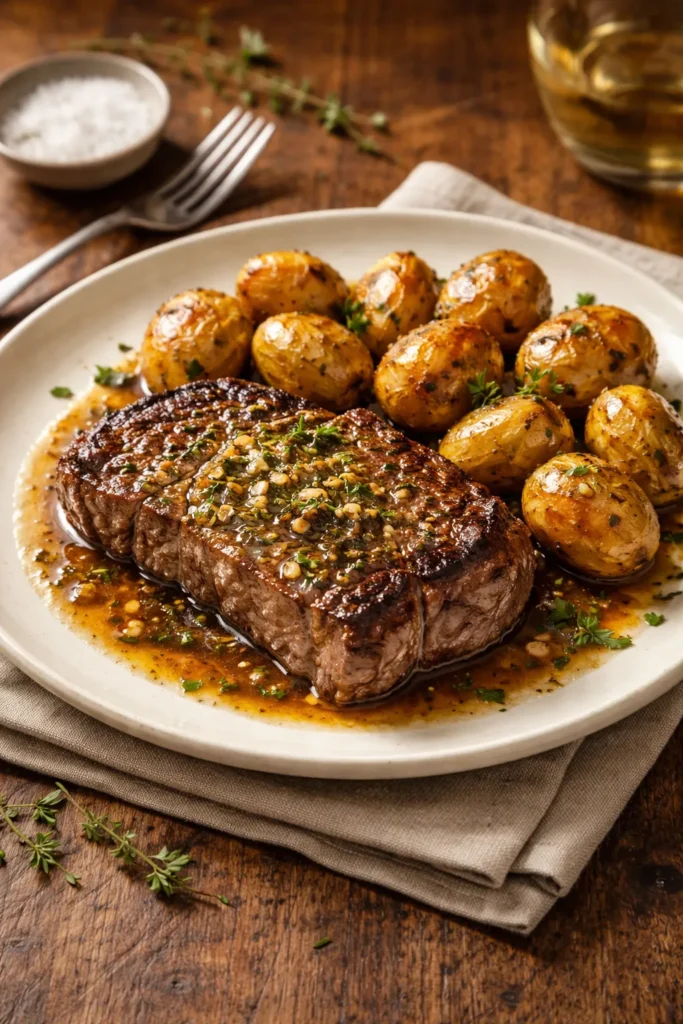
Here’s the thing about cooking steak for one: it’s actually cheaper and easier than it sounds. A single 6-ounce flat iron steak or sirloin costs less than most restaurant entrees and cooks in under 10 minutes on the stovetop. The pan sauce takes three more minutes using what’s already in the skillet. It’s the solo dinner that genuinely makes you feel like the best possible version of yourself.
Choosing the Right Cut for One
Flat iron, sirloin, and ribeye are all excellent solo steak choices. Flat iron is often the most affordable and has excellent marbling for flavor. Avoid very thick cuts (over 1.5 inches) for a weeknight stovetop cook — they’re harder to manage without a cast iron or finishing in the oven. A 6-ounce flat iron at about 1-inch thickness is the perfect solo portion and will cook to medium-rare in exactly 3.5 minutes per side over high heat in a hot, heavy pan.
The Pan Sauce That Takes It Over the Top
Don’t clean the pan after the steak rests. Drop the heat to medium and add:
- 1 tablespoon butter
- 1 minced garlic clove
- 1 sprig fresh thyme
- 2 tablespoons red wine or beef stock
- A squeeze of lemon juice
Let this bubble together for 90 seconds, scraping up any brown bits from the bottom of the pan. Pour the sauce directly over the sliced steak. Those browned bits — called fond — are concentrated beef flavor that you’d be throwing away if you skipped the sauce.
Resting Is Non-Negotiable
Rest the steak for 5 full minutes before cutting it. Cutting a steak immediately after cooking forces all the juices out onto the cutting board. A proper rest lets those juices redistribute throughout the meat, meaning every bite is equally juicy rather than the first bite being dry and the center being pink soup.
- Roast baby potatoes at 400°F (200°C) for 25 minutes before starting the steak — they’ll be done and hot by the time dinner is plated
- Season the steak with only flaky salt, black pepper, and a tiny drizzle of olive oil — the quality of the meat should do the heavy lifting
- A side of simple dressed arugula with lemon and Parmesan rounds out the plate with freshness that cuts through the richness of the steak
Tips for Getting Solo Dinners on the Table Faster
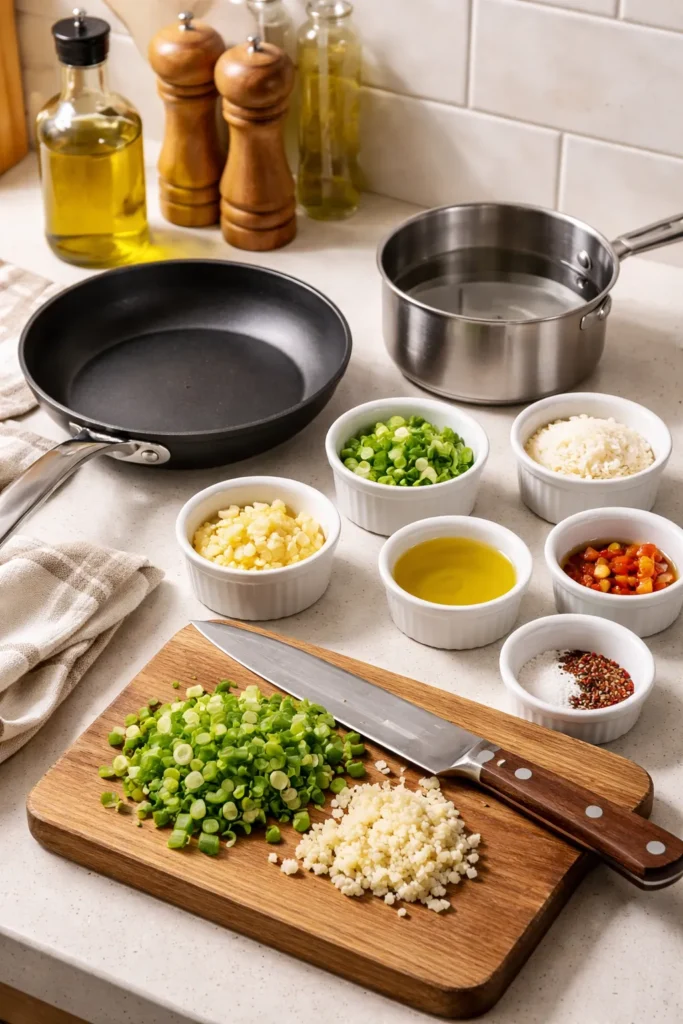
Even the best recipes can feel daunting on a tired weeknight. A few practical habits dramatically reduce the friction between hungry and eating.
Prep your aromatics in advance. Mince a small batch of garlic at the start of the week, store it covered in a teaspoon of olive oil in the fridge, and you’ve just eliminated the most repetitive step from every single recipe. The same applies to slicing scallions, washing salad greens, or portioning out spice blends into small ramekins.
Keep your single-serving recipes physically small. An 8-inch skillet, a quarter sheet pan, and a small saucepan are all you need for most of the recipes above. Cooking in oversized equipment for a small portion means the food spreads too thin, liquid evaporates too quickly, and timing goes sideways.
The “one protein, one vegetable, one starch” mental model is your friend on nights when you don’t want to follow a recipe at all. Pick a protein (shrimp, one chicken thigh, eggs), a vegetable (whatever needs to be used), and a starch (pasta, rice, a potato), apply heat and seasoning in the right order, and dinner appears. It won’t always be a masterpiece, but it’ll always be a real meal.
Building a Solo Dinner Rotation
The goal isn’t to discover 40 solo recipes and make each one once. It’s to find 6 to 8 go-to meals that you genuinely enjoy, that use overlapping pantry ingredients, and that you can make reliably without looking up the recipe. These eight dinners above are a solid starting point for that rotation — between the shrimp pasta, the shakshuka, the stir-fry, and the chili, you’ve got a weeknight covered for almost any mood or energy level.
Final Thoughts
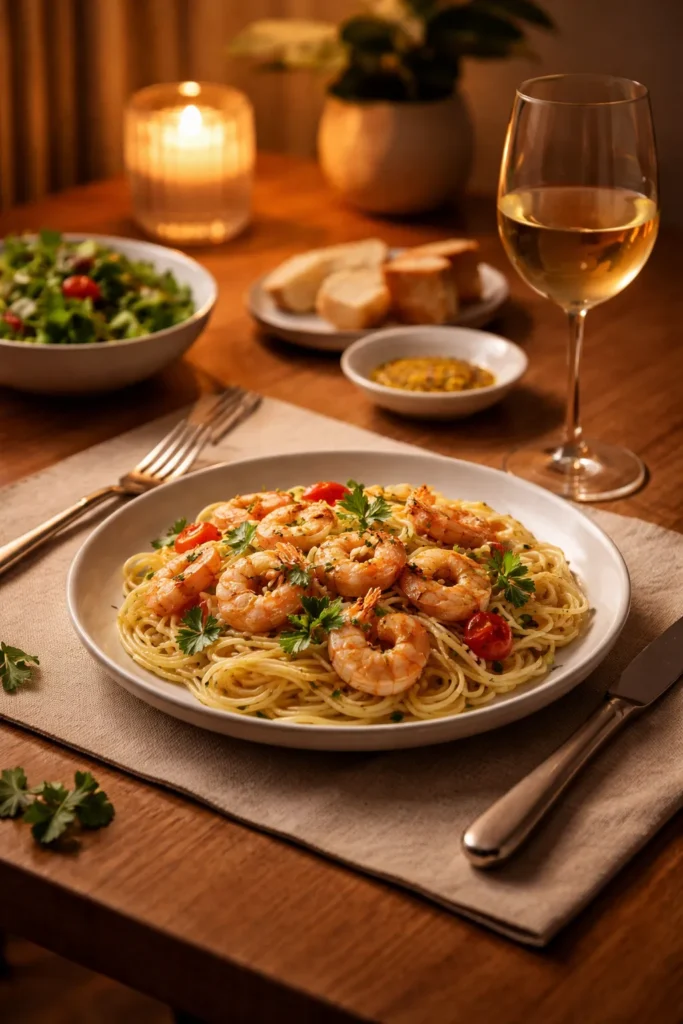
Eating alone doesn’t have to mean eating poorly or without thought. The solo dinner table is one of the few spaces in adult life where you get to be completely selfish in the best possible way — cooking exactly what you want, exactly how you want it, without compromise.
The eight dinners above aren’t just convenient. They’re genuinely good meals that are worth sitting down for, plating properly, and eating without looking at your phone. That last part is harder than it sounds, but a meal you actually made for yourself deserves a few minutes of actual attention.
Start with the recipe that sounds most like something you’d order at a restaurant right now — that’s your gut telling you what your body wants tonight. Once you’ve made it twice, it becomes part of your natural rotation, and building a week of solo dinners stops feeling like a puzzle. You’ve got this.