Somewhere between the third sad desk salad of the week and the realization that you’ve been hungry again by 7pm despite eating dinner at 6, the appeal of meatless eating starts to feel like a trap. The assumption that vegetarian food is inherently lighter — a plate of roasted vegetables, maybe some quinoa, definitely some longing — is one of the most persistent myths in home cooking. And it’s completely wrong.
The truth is that plant-based dinners can be some of the most deeply satisfying meals you’ll put on the table, provided you understand which ingredients actually deliver on fullness. Fiber, protein, complex carbohydrates, and healthy fats — these are the four pillars of a dinner that keeps you genuinely satisfied for hours, and they’re not hard to find outside of animal proteins. Legumes, tofu, whole grains, earthy mushrooms, and starchy vegetables do the heavy lifting here, and they do it with a flavor range that meat simply can’t match.
What follows are eight vegetarian dinners worth genuinely looking forward to. Not as compromises. Not as Meatless Monday obligations you’ll grimace through. As actual weeknight favorites and weekend showstoppers that happen to contain zero meat.
Table of Contents
- What Actually Makes a Vegetarian Dinner Filling
- The Mistake Most People Make With Vegetarian Cooking
- Why Texture Matters as Much as Nutrition
- 1. Mushroom Bolognese with Rigatoni
- The Technique That Changes Everything
- What to Serve It With
- 2. Crispy Tofu and Vegetable Stir-Fry with Peanut Sauce
- Building the Peanut Sauce
- The Vegetable Strategy
- 3. Spiced Chickpea and Red Lentil Dal
- The Spice Foundation
- Finishing for Depth and Creaminess
- 4. Black Bean Smash Burgers
- The Bean Mixture That Actually Works
- Building the Burger
- 5. Sweet Potato and Black Bean Enchiladas
- Making Your Own Enchilada Sauce
- Assembly and Baking
- 6. Cauliflower Parmesan with Pasta
- The Breading Process
- Serving It Right
- 7. Wild Mushroom Risotto
- The Risotto Technique, Simplified
- The Mantecatura Step Nobody Skips Twice
- 8. Vegetarian Shepherd’s Pie with Lentils and Herbed Mash
- Building the Gravy
- The Mash That Makes the Difference
- The Pantry Staples That Power All Eight Dinners
- Spices Worth Investing In
- Fresh Ingredients That Change Everything
- Final Thoughts
What Actually Makes a Vegetarian Dinner Filling
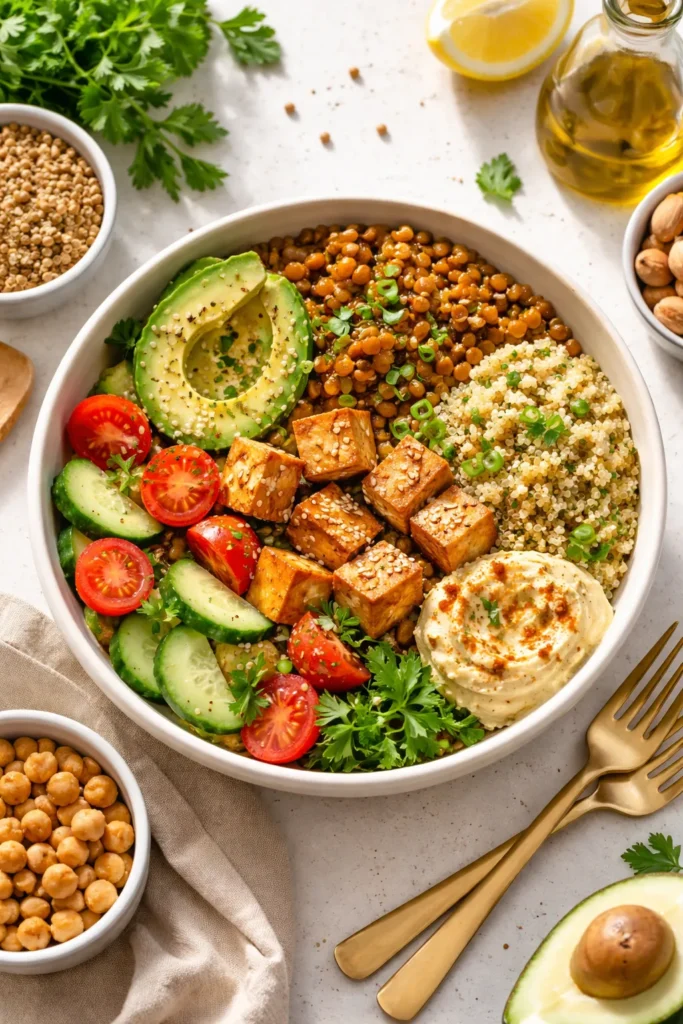
Before getting into the recipes, it’s worth spending a moment on the science of satiety — because understanding it changes how you approach meatless cooking entirely.
Protein is your anchor. Without it, even a large plate of food leaves you scanning the fridge two hours later. Legumes like lentils, chickpeas, and black beans deliver between 15 and 18 grams of protein per cooked cup. Tofu clocks in at roughly 20 grams per cup. Whole grains like farro and quinoa add another 8 grams per serving. Pair two or three of these in one dish and you’ve built a meal with a protein profile that rivals chicken.
Fiber is the other half of the equation. Soluble fiber, found in abundance in beans, oats, and root vegetables, forms a gel-like substance in your digestive tract that slows the absorption of nutrients and keeps hunger hormones suppressed for longer. A dinner built around lentils and sweet potato isn’t just nutritious — it’s mechanically more filling than a chicken breast over white rice.
Healthy fats round things out. Tahini, olive oil, avocado, and full-fat coconut milk all slow gastric emptying, which is the clinical way of saying they keep your stomach busy for longer. A drizzle of tahini over a grain bowl isn’t just delicious — it’s functional.
The Mistake Most People Make With Vegetarian Cooking
The most common error is substituting meat and replacing it with nothing — or with more vegetables alone. A plate of roasted broccoli and cauliflower, however beautifully seasoned, is not a dinner. It’s a side dish. Genuinely filling vegetarian cooking requires adding protein and fat, not simply subtracting meat.
Why Texture Matters as Much as Nutrition
Satiety is partly psychological. Food that requires chewing — al dente pasta, crispy roasted chickpeas, chewy mushrooms, caramelized tofu — registers differently in the brain than soft, mushy food. Building textural contrast into vegetarian dinners isn’t just a culinary flourish; it signals to your brain that you’ve eaten something substantial.
1. Mushroom Bolognese with Rigatoni
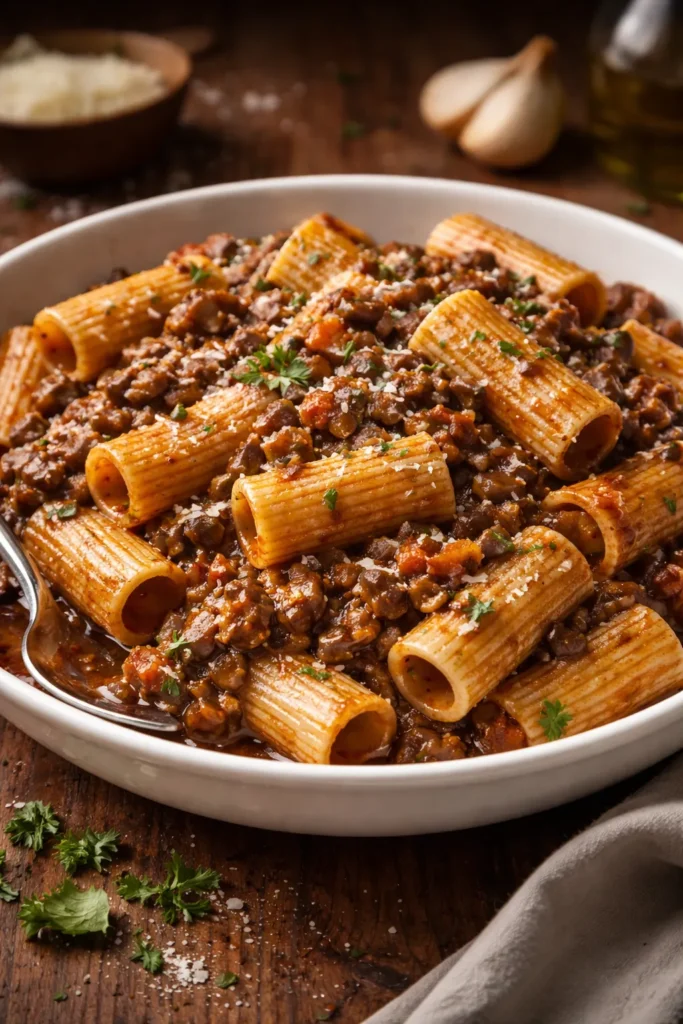
There’s a reason mushroom bolognese has become a staple in serious vegetarian kitchens: when cooked correctly, it’s indistinguishable from the meat-based original in depth and satisfaction, and it’s arguably more interesting in flavor. The key is patience and choosing the right mushrooms.
A combination of cremini, shiitake, and a small amount of dried porcini creates a layered umami base. The dried porcini, rehydrated in warm water, contributes a concentrated earthiness that no fresh mushroom can replicate on its own. The soaking liquid — strained of any grit — goes directly into the sauce, where it deepens the broth with zero wasted flavor.
The Technique That Changes Everything
Chop the mushrooms finely — almost to a mince — rather than slicing them. This creates a texture that mimics ground meat far more convincingly than large pieces ever could. Cook them in batches in a dry skillet over high heat until they’re deeply browned and reduced in volume by at least half. This step, which many recipes skip in the interest of speed, is non-negotiable for building real depth.
Add finely diced carrot, celery, and onion — the classic soffritto — after the mushrooms are browned, then deglaze with a generous pour of dry red wine. Let it reduce completely before adding crushed tomatoes and the porcini soaking liquid. A low, slow simmer of at least 45 minutes transforms this from a simple tomato sauce into something genuinely rich.
What to Serve It With
- Rigatoni or pappardelle — the ridges and wide surface area catch the chunky sauce
- A handful of freshly grated Parmigiano-Reggiano stirred in at the end for creaminess
- A drizzle of good-quality extra-virgin olive oil just before serving
- Crusty bread for clearing the plate
Pro tip: Add a tablespoon of white miso paste along with the tomatoes. It sounds unconventional, but miso contributes glutamates that amplify the savory depth of the entire sauce without being detectable as miso.
2. Crispy Tofu and Vegetable Stir-Fry with Peanut Sauce
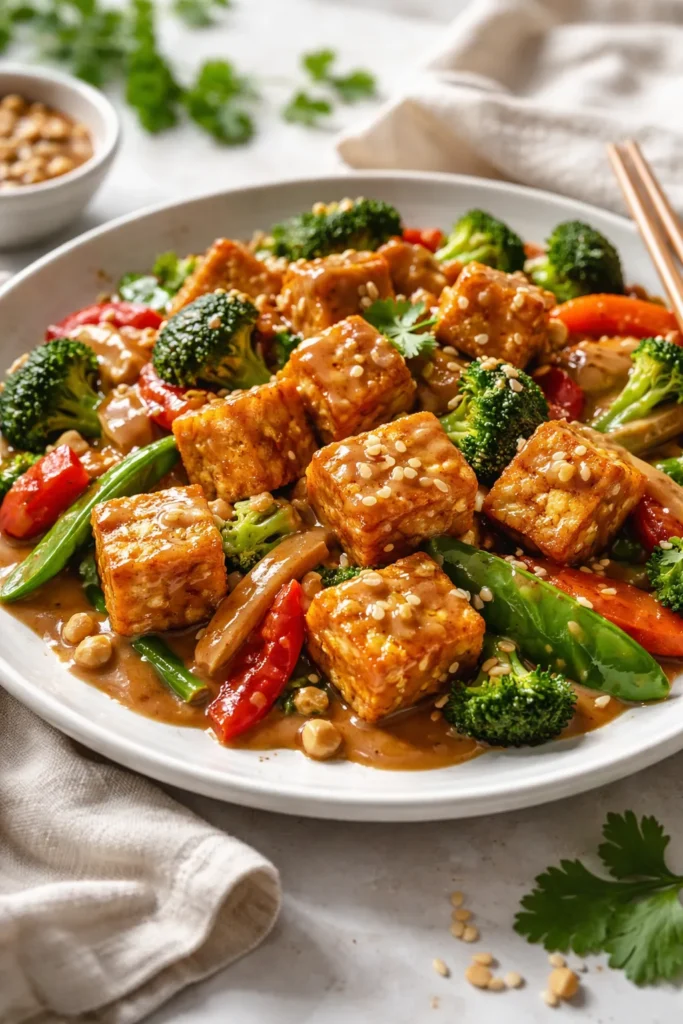
Tofu’s reputation problem is almost entirely a preparation problem. Soft, water-logged tofu that goes straight from the package to the pan will never impress anyone. But tofu that’s been properly pressed, cut into generous cubes, and pan-fried until each side is golden and crackling is a completely different food — one that absorbs whatever sauce you pair it with while maintaining a satisfying interior chew.
For a weeknight stir-fry, press a block of extra-firm tofu for at least 20 minutes using a tofu press or by weighing it down between two plates lined with paper towels. Cut it into 1-inch cubes, toss with cornstarch, and cook in a cast-iron or carbon-steel pan with a thin layer of oil over medium-high heat. Don’t touch the tofu for the first 3 to 4 minutes per side — that undisturbed contact time is what builds the crust.
Building the Peanut Sauce
The sauce is where this dish earns its reputation as genuinely filling. Combine 3 tablespoons of natural peanut butter, 2 tablespoons of soy sauce, 1 tablespoon of rice vinegar, 1 tablespoon of toasted sesame oil, 1 teaspoon of honey or maple syrup, and a thumb-sized piece of fresh ginger grated on a Microplane. Thin it with 2 to 3 tablespoons of warm water until it’s pourable. The peanut butter adds roughly 8 grams of protein and a significant hit of fat per serving — both satiety workhorses.
The Vegetable Strategy
- Bell peppers, snap peas, and broccoli cook quickly and retain a satisfying crunch
- Bok choy wilts beautifully and adds a mild sweetness
- Toss the vegetables into the pan after the tofu is removed, cook for 3 to 4 minutes, then reunite everything with the sauce off the heat
- Serve over brown rice or soba noodles for a meal that holds for hours
Worth knowing: Freezing tofu overnight and then thawing it before pressing creates a sponge-like interior that soaks up twice the sauce. It’s an extra step with a disproportionate payoff.
3. Spiced Chickpea and Red Lentil Dal
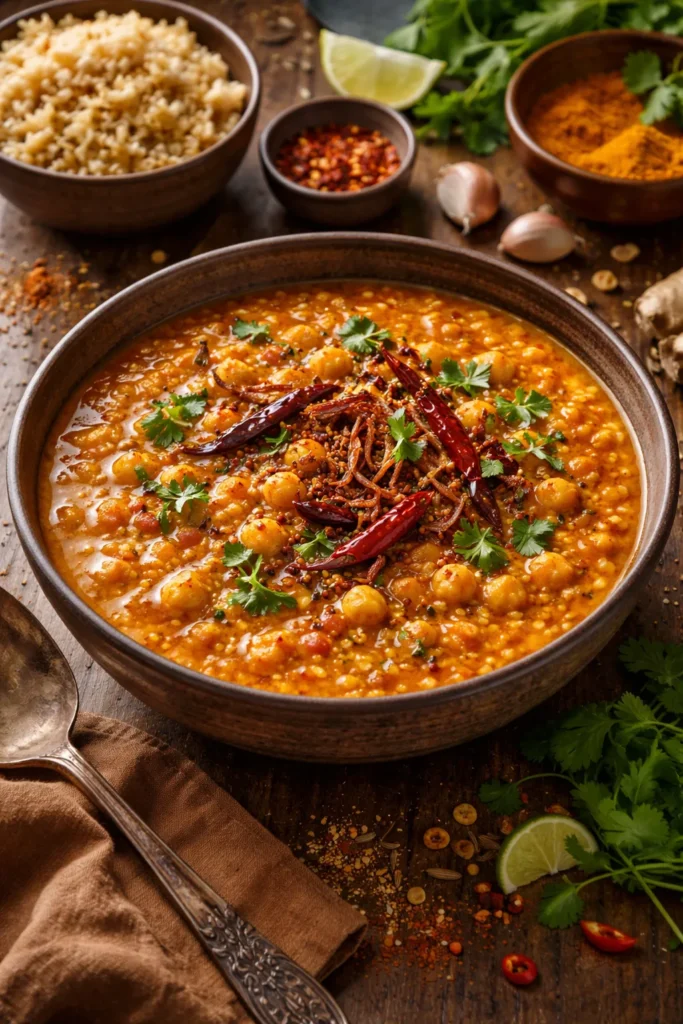
Dal is one of those dishes that reveals what vegetarian cooking is capable of at its most elemental: a handful of legumes, a careful hand with spices, and enough time for everything to meld together into something that is far greater than its ingredients suggest. Indian dal palak — lentils cooked with spinach — and chana masala — chickpeas in a deeply spiced tomato gravy — are two of the most nutritionally complete single-bowl dinners in any cuisine.
A red lentil and chickpea combination gives you a double hit of protein (roughly 25 grams per serving) while the lentils cook down into a thick, creamy base that holds the whole dish together. Red lentils don’t need soaking and become tender in about 20 minutes, which makes this an achievable weeknight meal even on the most exhausted evenings.
The Spice Foundation
Tempering spices in oil — a technique called tadka or tarka — is the step that separates a flat, boring dal from one you’ll want to eat three days in a row. Heat 2 tablespoons of neutral oil or ghee in a wide pot, then add whole cumin seeds and let them sputter for 30 seconds until fragrant. Add finely diced onion and cook until deeply golden — this takes 12 to 15 minutes and is not a step to rush. Add minced garlic, grated ginger, and a diced fresh chili, cook for 2 minutes, then stir in ground coriander, turmeric, garam masala, and a pinch of cayenne. Toast the spices in the oil for 60 seconds before adding anything liquid.
Finishing for Depth and Creaminess
- Add rinsed red lentils and drained chickpeas, then cover with water or vegetable stock — roughly 3 cups
- Simmer for 20 to 25 minutes until the lentils are fully broken down and creamy
- Stir in a large handful of baby spinach and a squeeze of lemon juice at the very end
- Top with a second tadka: whole mustard seeds, curry leaves, and dried red chili fried briefly in butter poured directly over the finished dal
Serve with warm naan or basmati rice and a spoonful of plain yogurt.
4. Black Bean Smash Burgers
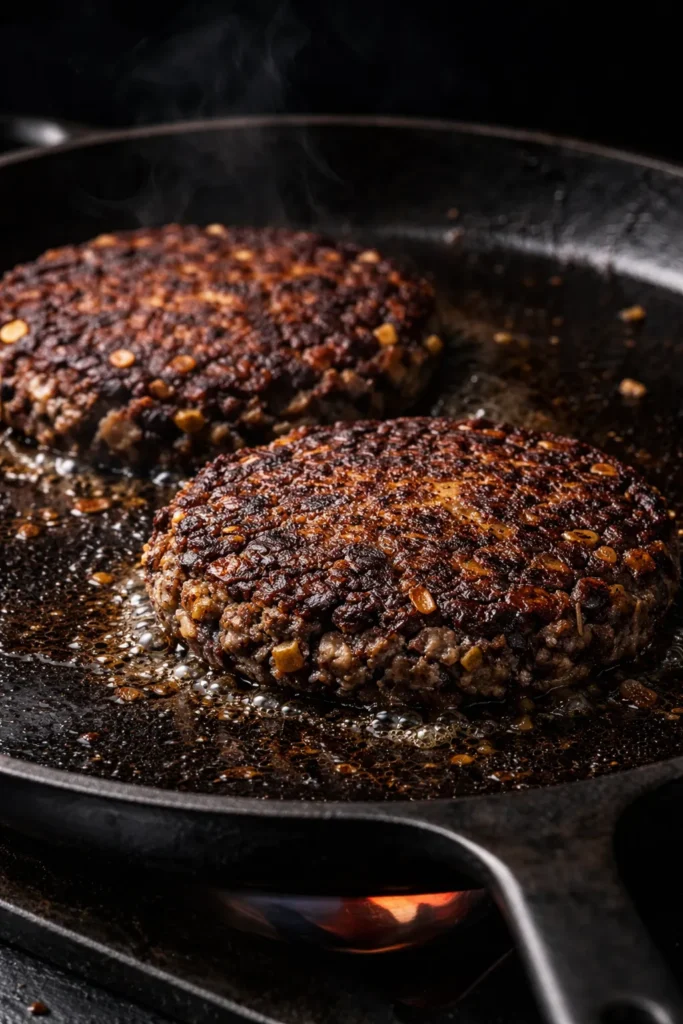
The black bean burger has had a long and unfortunate run as the vegetarian option that nobody orders by choice. Gummy, crumbling, underseasoned patties that fall apart on the grill — that’s the legacy the black bean burger is trying to live down. The smash burger technique fixes almost every single one of those problems.
Instead of forming a thick patty and hoping it holds together during cooking, form the bean mixture into loose balls and press them flat and hard against a very hot griddle or cast-iron pan. The thin, irregular patty creates dramatically more surface contact with the pan, which means more Maillard browning — and that browning is where the flavor lives.
The Bean Mixture That Actually Works
Start with two cans of black beans. Drain and rinse them, then pat them completely dry with paper towels. The biggest enemy of a good bean burger is moisture, and most failures come from beans that haven’t been dried thoroughly enough. Pulse them briefly in a food processor — you want about half the beans smashed and half still whole, creating texture variation that mimics the give of a real burger patty.
Mix in finely grated onion (grated releases less moisture than diced), a beaten egg, panko breadcrumbs, smoked paprika, garlic powder, cumin, salt, and a teaspoon of soy sauce for an umami boost. Refrigerate the mixture for at least 30 minutes before forming — cold fat and hydrated breadcrumbs help everything hold together under heat.
Building the Burger
- Press firmly on a lightly oiled cast-iron pan over high heat — smash hard enough that the patty is no more than 1/2 inch thick
- Don’t move it for 3 full minutes, then flip and immediately add a slice of sharp cheddar or pepper jack
- Serve on a toasted brioche bun with chipotle mayo, pickled jalapeños, shredded lettuce, and sliced avocado
- The whole assembly, bun included, delivers roughly 22 grams of protein per burger
Pro tip: Toast the bun cut-side down in the same pan after the patty comes off. The rendered fat left in the pan flavors the bread in a way that a separate toaster simply can’t replicate.
5. Sweet Potato and Black Bean Enchiladas
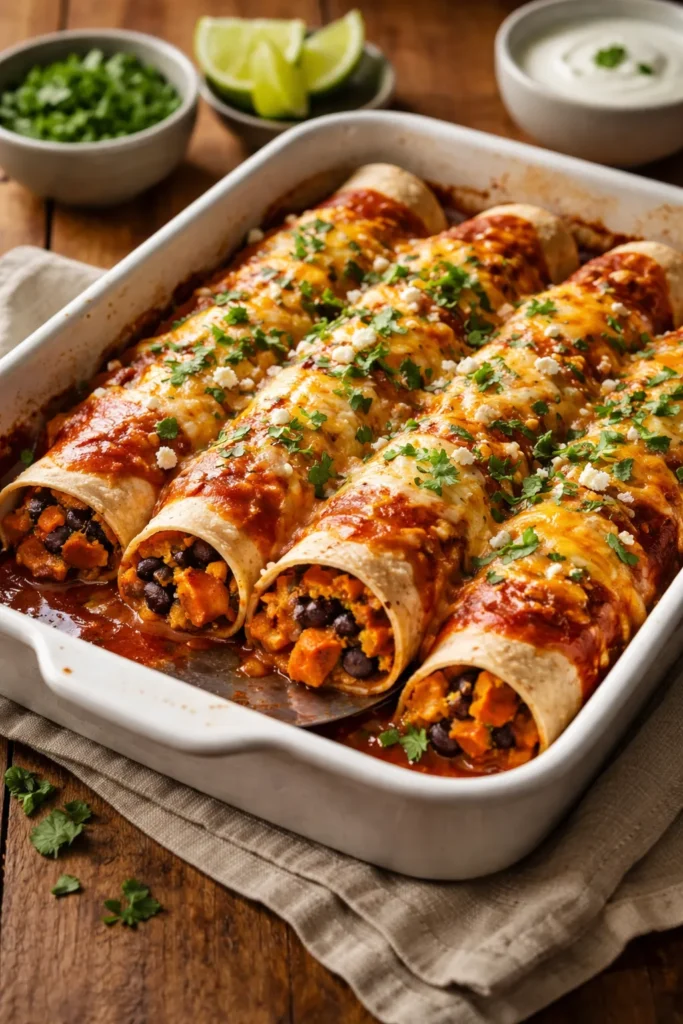
Enchiladas are one of the most naturally satisfying formats in all of vegetarian cooking — a combination of warm tortillas, melted cheese, hearty filling, and a deeply savory sauce that creates something unmistakably substantial. The sweet potato and black bean combination works particularly well here because the sweetness of the roasted potato balances the heat of the chile sauce, while the black beans add enough heft that the dish reads as genuinely filling rather than a cheese delivery mechanism.
Roast sweet potato cubes — cut to about 3/4 inch — tossed in olive oil, cumin, and chipotle powder at 425°F until the edges are caramelized and the centers are tender, about 25 minutes. Combine with drained black beans, a small amount of cream cheese (about 3 tablespoons) for creaminess, lime zest, and fresh cilantro.
Making Your Own Enchilada Sauce
Store-bought enchilada sauce works fine for a weeknight, but the scratch version takes only 15 minutes and is so much better it’s worth knowing. Toast 3 dried guajillo chiles in a dry skillet for 30 seconds per side, then rehydrate them in hot water for 15 minutes. Blend with fire-roasted canned tomatoes, garlic, a chipotle pepper in adobo, cumin, salt, and a cup of vegetable stock until completely smooth. Strain through a fine-mesh sieve and reduce by one-third in a saucepan.
Assembly and Baking
- Warm corn or flour tortillas in a dry skillet before filling so they’re pliable without cracking
- Spoon a thin layer of sauce on the bottom of a 9×13-inch baking dish
- Fill, roll tightly, and place seam-side down; cover generously with remaining sauce
- Top with a blend of Oaxacan and Monterey Jack cheese
- Bake at 375°F for 25 minutes until bubbling, then broil for 3 minutes for color
Serve with sour cream, pickled red onions, and a handful of fresh cilantro.
6. Cauliflower Parmesan with Pasta
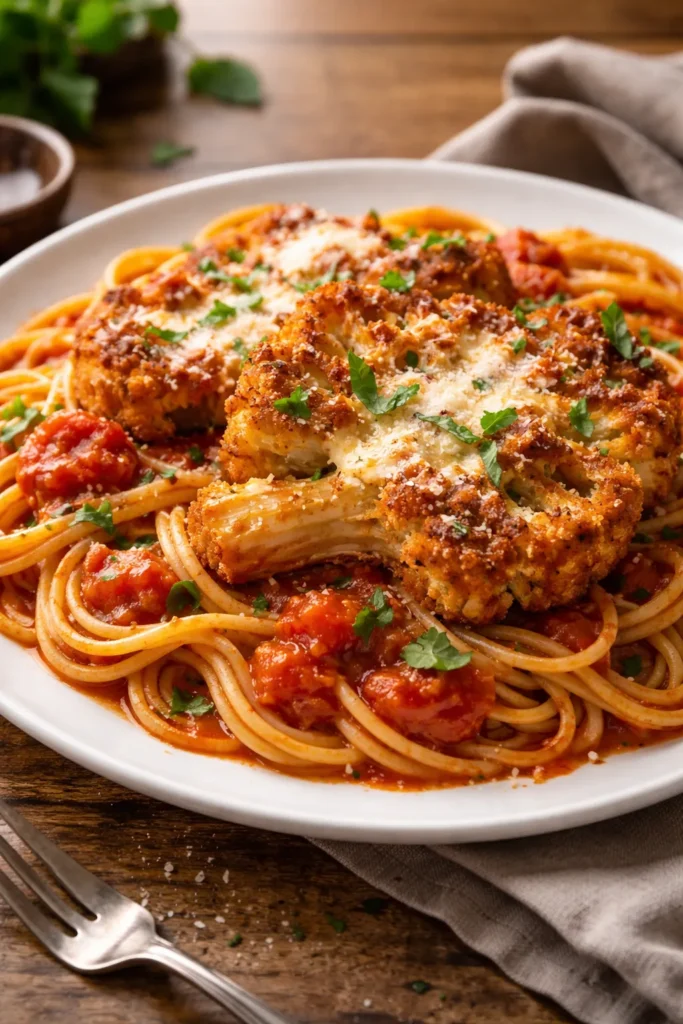
Chicken parmesan is one of the most crowd-pleasing formats in Italian-American cooking, and the cauliflower version is not trying to impersonate it — it’s doing something slightly different and arguably better. Where chicken becomes a uniform slab under the breading, cauliflower has ridges, florets, and surface area that the breadcrumb coating clings to in irregular, crackly clusters that shatter when you cut into them.
The trick is slicing the cauliflower into thick steaks — at least 1 inch — rather than breaking it into florets. This keeps everything together through the breading and cooking process while giving each piece a substantial, satisfying presence on the plate.
The Breading Process
Set up a three-stage breading station: seasoned flour in one shallow dish, beaten eggs with a splash of water in a second, and panko breadcrumbs blended with grated Parmesan, dried oregano, garlic powder, and salt in a third. Dredge each cauliflower steak in flour, shake off the excess, coat thoroughly in egg, then press firmly into the panko mixture on both sides.
Pan-fry in olive oil over medium-high heat for 3 to 4 minutes per side until deeply golden — don’t crowd the pan or the coating will steam rather than crisp. Transfer to a baking sheet, spoon marinara over each steak, cover with fresh mozzarella, and bake at 400°F for 12 to 15 minutes until the cheese is molten and starting to blister.
Serving It Right
- Place each cauliflower steak over a bowl of rigatoni or spaghetti tossed with the same marinara
- Tear fresh basil leaves over the top just before serving — the heat wilts them slightly
- A side of garlic bread completes the experience and helps scoop up the extra sauce
- Leftovers reheat surprisingly well — re-crisp in a 400°F oven for 10 minutes rather than microwaving
7. Wild Mushroom Risotto
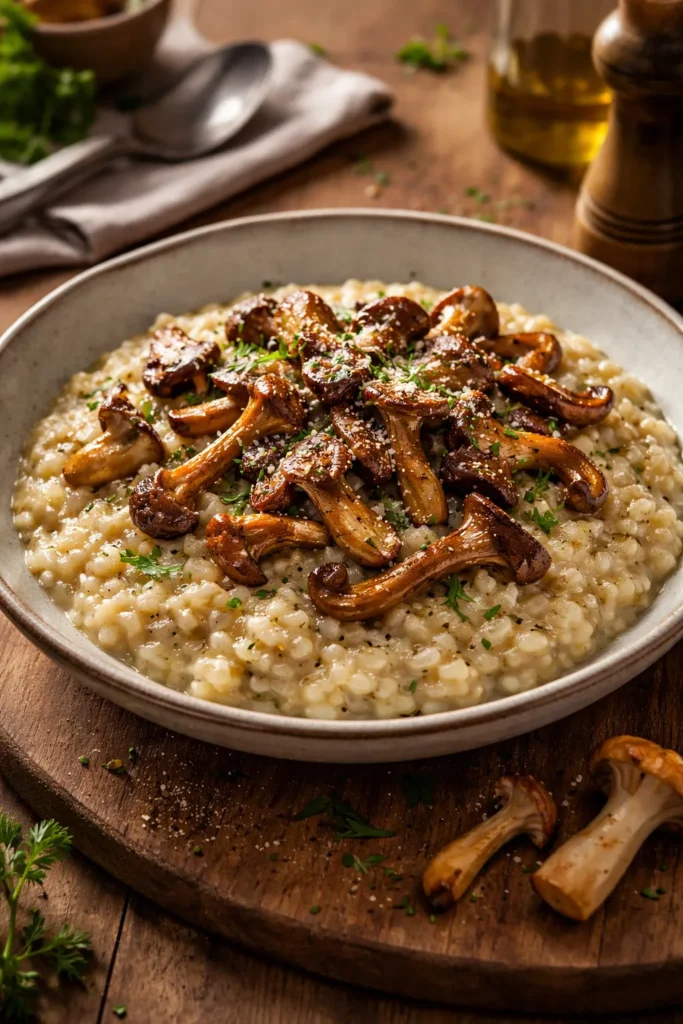
Risotto has an undeserved reputation for being difficult and finicky. The technique is genuinely simple — the only thing it requires is time and your undivided attention for about 25 minutes — but the result is a creamy, deeply flavorful dish that is as filling and luxurious as any pasta or meat-based dinner.
Wild mushrooms are the best vehicle for risotto because their flavor becomes the dish. Cremini, shiitake, oyster, and king trumpet mushrooms all work beautifully — use whatever combination is available. Sauté them separately from the risotto in butter over high heat until they’re deeply browned and have released and reabsorbed all of their moisture. Season aggressively with salt and set aside to stir in at the end rather than cooking in the risotto itself — this preserves their texture.
The Risotto Technique, Simplified
- Toast the Arborio rice dry in the pan with butter and shallot for 2 minutes before adding any liquid — the grains turn slightly translucent at the edges, which helps them absorb stock evenly
- Add dry white wine and stir until completely absorbed
- Add warm vegetable stock one ladleful at a time, stirring constantly and waiting for each addition to absorb before adding the next — this process takes about 20 minutes
- The risotto is done when a grain smashed between your fingers still has a tiny white dot at the center — al dente throughout, not chalky at the center or mushy throughout
The Mantecatura Step Nobody Skips Twice
Remove the pan from heat completely. Add 2 tablespoons of cold butter cut into cubes and a generous handful of freshly grated Parmigiano-Reggiano. Stir vigorously for 90 seconds — this emulsifies the fats into the starch-laden cooking liquid and creates the signature all’onda (“wave”) consistency: risotto that flows like thick, creamy lava when you tip the plate. Fold in the reserved mushrooms, taste for salt, and serve immediately in warmed bowls.
Worth knowing: Risotto waits for no one — serve it the moment it’s finished, not five minutes later. It continues to absorb liquid as it sits and loses that flowing consistency quickly.
8. Vegetarian Shepherd’s Pie with Lentils and Herbed Mash
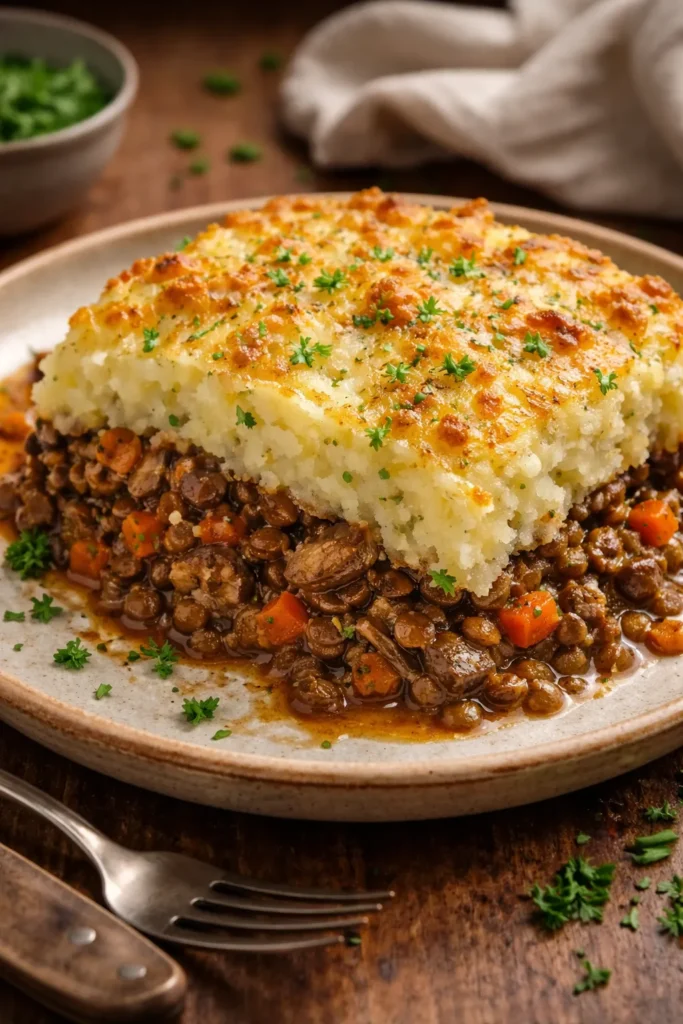
Shepherd’s pie is the kind of dish that could convert a committed carnivore without ever mentioning the word vegetarian. A proper version — built on green and brown lentils cooked down in a rich, herb-forward gravy with carrots, celery, and mushrooms, topped with a mountain of buttery mashed potato — is one of the most deeply comforting dinners in any repertoire, and it improves dramatically the next day.
The lentil base is where most vegetarian shepherd’s pies fall short: underseasoned, too thin, or lacking the textural variation that makes the filling interesting. The fix is using two types of lentils — French green (Puy) lentils, which hold their shape and provide a toothsome bite, and brown lentils, which break down partially into the gravy and add body. Start with a soffritto of onion, carrot, and celery cooked until soft, add diced mushrooms and brown them thoroughly, then add tomato paste and cook it for 2 minutes before any liquid goes in.
Building the Gravy
Add a tablespoon of flour to the cooked vegetables and stir for 60 seconds. Deglaze with a splash of red wine or a tablespoon of balsamic vinegar — either adds acidity that cuts through the richness of the filling. Add vegetable stock (about 2 cups), the rinsed lentils, Worcestershire sauce (use vegan Worcestershire if needed), fresh thyme, and a bay leaf. Simmer covered for 25 to 30 minutes until the lentils are tender and the gravy has thickened into something that holds its shape when you drag a spoon through it.
The Mash That Makes the Difference
- Use Yukon Gold potatoes — their natural butterfat content makes the mash creamier without needing as much added fat
- Rice the cooked potatoes rather than mashing them directly — this prevents overworking the starch, which causes gluey, elastic mash
- Warm the butter and cream before adding them — cold fat introduced to hot potato causes the starch to seize
- Season at every stage: salt the boiling water, season the mash, and taste again before piping
Pipe or spoon the mash over the filled baking dish, drag a fork across the surface to create ridges that will catch color in the oven, and bake at 400°F for 20 to 25 minutes until the mash has golden peaks and the filling is visibly bubbling around the edges.
The Pantry Staples That Power All Eight Dinners
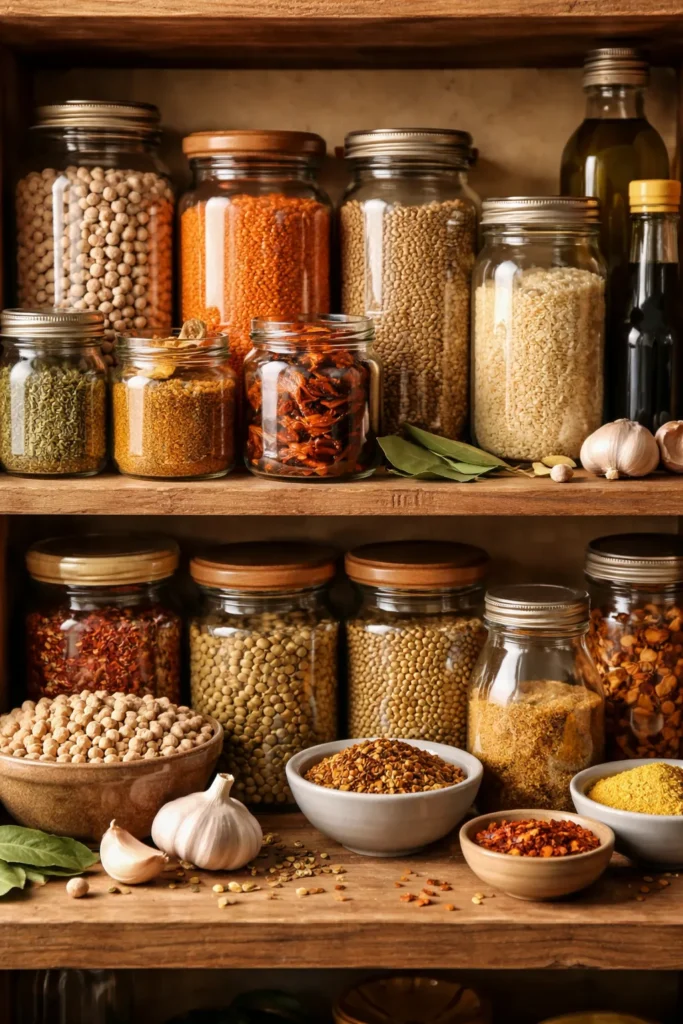
One of the most practical things about this style of vegetarian cooking is how much overlap exists between the ingredients in each recipe. Stocking a thoughtful vegetarian pantry means you can produce any of these dinners with minimal shopping.
Dried and canned legumes are the foundation. Canned chickpeas, black beans, and cannellini beans are weeknight workhorses — they’re ready in minutes and contribute both protein and fiber. Dried lentils, both red and French green, are equally important because they cook without soaking and have a long shelf life.
Aromatics and umami builders separate a flat dish from a deeply flavorful one. Tomato paste browned in oil, miso paste stirred into broths, soy sauce used as a seasoning agent rather than a condiment, dried porcini mushrooms rehydrated for their concentrated liquor — these are the tools that create the savory backbone that makes vegetarian food genuinely satisfying rather than politely acceptable.
Spices Worth Investing In
- Smoked paprika adds a woody, almost meaty depth without any heat
- Ground cumin and coriander are the backbone of every Mexican and Indian dish on this list
- Garam masala bloomed briefly in hot oil before any liquid is added rounds out lentil and chickpea dishes
- Dried chili flakes used sparingly add warmth rather than heat — a background buzz that makes every bite more interesting
Fresh Ingredients That Change Everything
Keep fresh ginger and garlic on hand always. Both are cheap, last a reasonable amount of time in the fridge, and contribute a brightness and pungency to cooked dishes that the dried versions simply can’t replicate. A Microplane grater makes incorporating them effortless — no chopping, no chunks, just evenly distributed flavor throughout the dish.
Lemons and limes, used for both zest and juice, are the finishing touch that lifts any dish that’s tasted flat. Acid is often the missing element in vegetarian cooking that makes people think the dish needs more salt when what it actually needs is a squeeze of citrus.
Final Thoughts
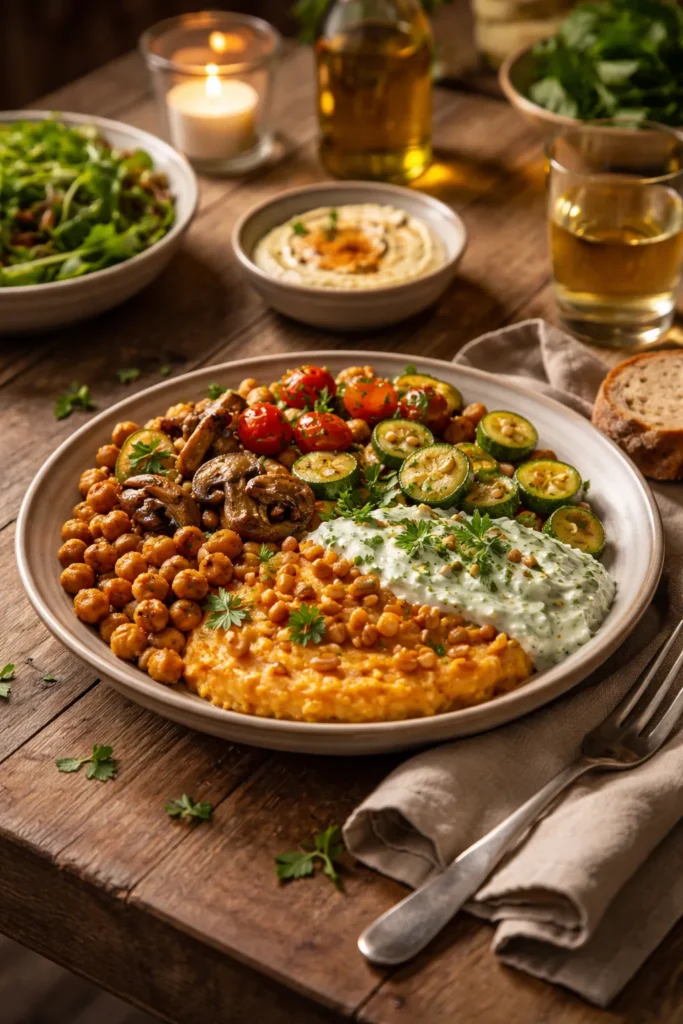
Eating meatless dinners that leave you genuinely satisfied doesn’t require expensive substitutes, complicated techniques, or an encyclopedic knowledge of plant-based nutrition. It requires understanding a few fundamental principles: build in protein from legumes or tofu, add healthy fats from nuts, cheese, or good oil, and don’t underestimate the filling power of well-cooked complex carbohydrates.
The eight dinners above span a wide range of cuisines and effort levels, but they share a common thread — each one is built around real, whole ingredients cooked with intention. That’s what makes the difference between a vegetarian dinner that leaves you reaching for snacks an hour later and one that keeps you genuinely full and satisfied until morning.
Start with whichever recipe appeals most, get comfortable with it, and then work your way through the list. You’ll find that the skills overlap — the same mushroom browning technique that elevates the bolognese applies directly to the shepherd’s pie; the spice-blooming approach from the dal makes the cauliflower curry taste more complex. Vegetarian cooking is a system of building blocks, and once you understand how they fit together, the number of genuinely satisfying meals you can produce is far larger than eight.