Walk into any Nigerian gathering — a naming ceremony, a university graduation, a wedding reception with 500 guests — and one dish will anchor the entire table. It’s orange-red, smoky, wildly fragrant, and gone within minutes of being set out. Nigerian jollof rice isn’t just food. It’s a cultural marker, a point of pride, and for many people who grew up in Nigeria or in the diaspora, one of the deepest forms of comfort they know.
What makes Nigerian jollof different from its West African cousins isn’t just the rice variety or the spice blend — it’s the cooking philosophy. The tomato base gets fried hard. The stew gets layered with seasoning before a single grain of rice touches the pot. And that bottom layer, the scorched, crispy “bottom pot” that forms from direct heat? That’s not a mistake. That’s the goal.
But jollof isn’t a single recipe. It’s a whole family of dishes — party jollof cooked over firewood, oven-baked versions for beginners, rich beef and seafood adaptations, and deeply spiced stews that transform a bowl of plain rice into something completely unforgettable. Each version has its own technique, its own personality, and its own reason to exist.
Below are eight Nigerian jollof rice and stew recipes worth mastering, from the classic party pot to bold regional stew variations that deserve a permanent spot in your cooking rotation.
Table of Contents
- 1. Classic Nigerian Party Jollof Rice
- What Makes Party Jollof Different From Everyday Jollof
- Ingredients
- Step-by-Step Instructions
- Tips for Getting It Right
- 2. Nigerian Smoky Firewood Jollof Rice
- The Role of Smoke in Nigerian Jollof
- Ingredients
- Step-by-Step Instructions
- The Smoked Paprika Shortcut
- 3. Oven-Baked Nigerian Jollof Rice
- Why the Oven Works So Well
- Ingredients
- Step-by-Step Instructions
- Key Oven Tips
- 4. Nigerian Basmati Beef Jollof Rice
- Adjusting the Technique for Basmati
- Ingredients
- Step-by-Step Instructions
- The Roasted Pepper Advantage
- 5. Nigerian Seafood Jollof Rice
- Building a Seafood-Friendly Stew Base
- Ingredients
- Step-by-Step Instructions
- Why You Don’t Cook Seafood Into the Base
- 6. Nigerian Native Jollof Rice
- Understanding Iru and Smoked Fish
- Ingredients
- Step-by-Step Instructions
- Serving Native Jollof
- 7. Nigerian Tomato and Chicken Stew
- Why the Frying Stage Makes or Breaks the Stew
- Ingredients
- Step-by-Step Instructions
- Storage and Make-Ahead
- 8. Nigerian Beef Red Stew (Party Stew)
- Choosing the Right Beef Cuts
- Ingredients
- Step-by-Step Instructions
- The Oil Separation Test
- Final Thoughts
1. Classic Nigerian Party Jollof Rice
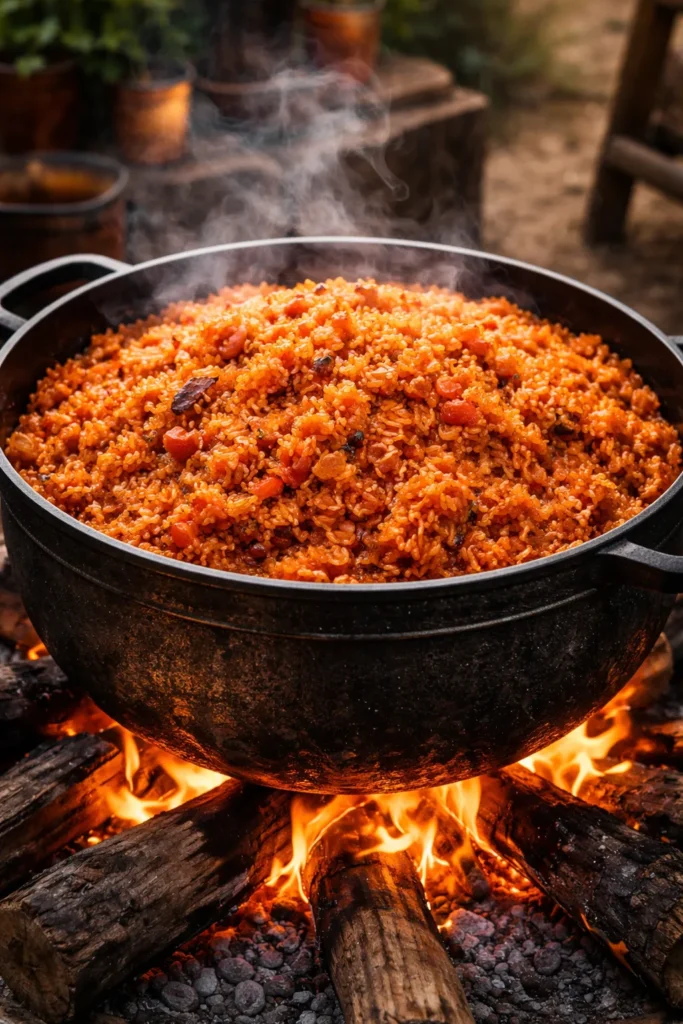
Party jollof is the gold standard. It’s the version served at every Nigerian celebration, cooked in massive pots over live fire or a roaring gas burner, and it’s the one every Nigerian cook measures their skills against. The defining characteristics are bold, well-layered seasoning, an orange-red color that runs all the way through each grain, and that smoky, slightly scorched bottom layer known as bottom pot.
What Makes Party Jollof Different From Everyday Jollof
The biggest difference isn’t the recipe — it’s the heat source and scale. Cooking over a higher, more direct flame (whether firewood or a powerful outdoor burner) allows the base of the pot to caramelize and smoke. That smoke rises through the rice as it steams, giving every grain a subtle, complex smokiness that stovetop home cooking rarely replicates perfectly. At home, you can mimic this by cranking the heat to medium-high for the final two to three minutes of cooking and resisting every urge to lift the lid.
Ingredients
For the Pepper Base:
- 3 large plum tomatoes, roughly chopped
- 2 medium red bell peppers, seeded and roughly chopped
- 1 medium red onion, roughly chopped
- 2–3 scotch bonnet peppers, seeded (adjust to heat preference)
- 1 cup chicken or beef stock
For the Jollof:
- ⅓ cup neutral cooking oil (vegetable, sunflower, or peanut)
- 1 medium red onion, thinly sliced
- 3 tablespoons tomato paste
- 3 dried bay leaves
- 2 teaspoons Caribbean-style curry powder
- 1½ teaspoons dried thyme
- 1 tablespoon chicken bouillon powder (or 2 cubes, crushed)
- Salt and white pepper to taste
- 3 cups parboiled long-grain rice, rinsed until water runs clear
- 2½ cups chicken or beef stock
- 1 large tomato, sliced into thin rounds
- 1 medium onion, sliced into thin rings
- 2 tablespoons unsalted butter
Yield: Serves 6 to 8 Prep Time: 20 minutes Cook Time: 70 minutes Total Time: 90 minutes Difficulty: Intermediate — the pepper base requires patient reduction, and heat control during rice cooking is essential.
Step-by-Step Instructions
Make the Pepper Base:
- Add the plum tomatoes, red bell peppers, red onion, scotch bonnet peppers, and stock to a blender. Blend on high until completely smooth, about 90 seconds.
- Pour the blended mixture into a wide saucepan. Bring to a boil over medium-high heat, then reduce to medium-low. Cook uncovered, stirring every 5 minutes, until the mixture reduces by roughly half and no longer smells raw — about 25 to 30 minutes. Set aside.
Build the Stew Base: 3. Heat the oil in a large, heavy-bottomed pot (at least 5 quarts) over medium heat. Add the sliced onion, bay leaves, curry powder, thyme, and a generous pinch of salt. Cook, stirring, until the onion softens and the spices bloom, about 3 minutes. 4. Add the tomato paste and stir continuously for 3 to 4 minutes, until the paste darkens from bright red to a deep rust color. This step removes the raw tin flavor and builds depth — don’t rush it. 5. Pour in the reduced pepper base. Stir everything together, partially cover the pot, and simmer over medium-low heat for 15 minutes, stirring occasionally, until the stew thickens and oil begins to separate and float on the surface. 6. Add the stock and bring to a boil over high heat. Taste the liquid — it should be boldly seasoned, almost slightly salty, because the rice will absorb and dilute that flavor as it cooks. Adjust with bouillon, salt, or white pepper.
Cook the Rice: 7. Add the rinsed rice and stir until every grain is coated in the red stew. The liquid should just barely cover the rice — not drown it. 8. Cover the pot with a layer of foil pressed tightly around the rim, then place the lid firmly on top. This double seal traps steam inside and is critical for even cooking. 9. Reduce heat to the lowest possible setting and cook for 20 minutes without lifting the lid. 10. After 20 minutes, remove the lid and foil, stir gently from the bottom up, and check the rice. It should be about 80% cooked with most liquid absorbed. Re-seal and cook for another 12 to 15 minutes. 11. Once the rice is fully cooked, stir in the sliced tomato, sliced onion rings, and butter. Turn off the heat, replace the lid, and let rest for 10 minutes. The residual steam will soften the fresh tomato and onion without cooking them to mush. 12. For party-style bottom pot: In the final 3 minutes before step 11, remove the foil and increase heat to medium-high for 2 minutes. You’ll hear a faint crackle and smell a gentle smokiness — that’s exactly what you want.
Tips for Getting It Right
Rinse the rice thoroughly — three times under cold water, until the water runs mostly clear. Excess surface starch is the main culprit behind mushy, clumped jollof. The stew base should be visibly thick and well-reduced before you add the rice; if it’s still watery, cook it longer. And never, under any circumstances, stir the rice excessively once it starts cooking — that mechanical action breaks down starch and turns your jollof into something resembling porridge.
2. Nigerian Smoky Firewood Jollof Rice
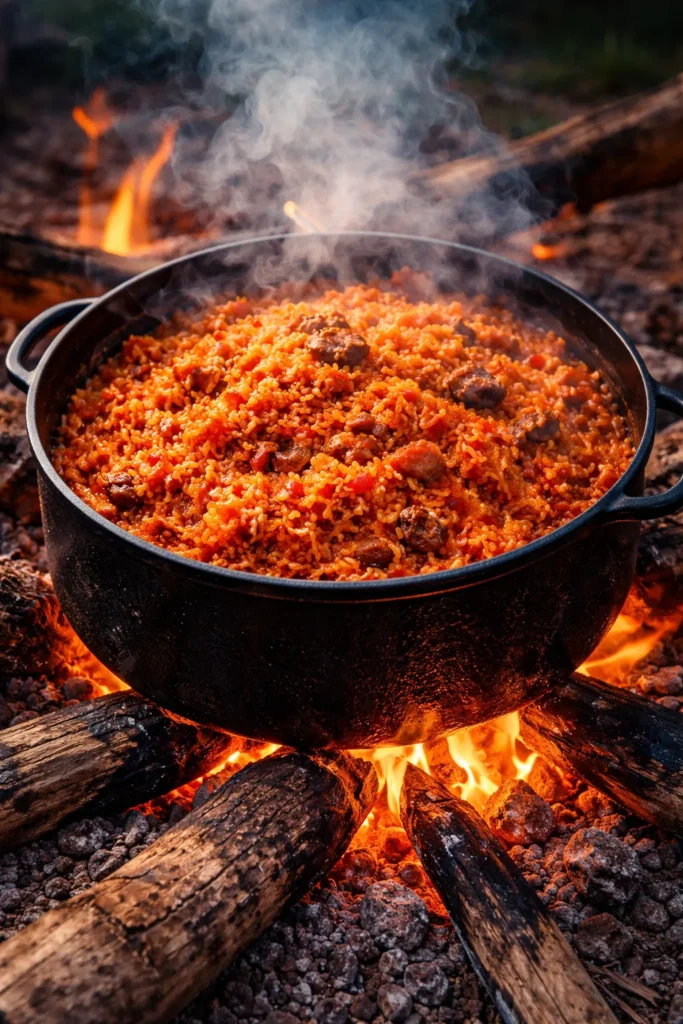
This is the version that starts arguments at parties. Firewood jollof — cooked outdoors over actual burning wood — develops a smoke profile that no indoor method quite matches. The charcoal undertone penetrates every grain during the long, slow steam, and the bottom pot forms thick and deeply caramelized. If you don’t have access to a firewood setup, a charcoal grill with a wide, heavy pot placed directly over the coals is the closest approximation.
The Role of Smoke in Nigerian Jollof
Smoke isn’t incidental to firewood jollof — it’s the point. The volatile compounds released during wood combustion (primarily guaiacol and syringol from the incomplete burning of cellulose) dissolve into the steam trapped inside the pot and season the rice from the inside out. That’s why party jollof served outdoors at a Nigerian event tastes fundamentally different from the same recipe made on a kitchen stove. You can get a reasonable facsimile indoors by using smoked paprika in your stew base and finishing the rice over maximum heat with the lid off for a couple of minutes.
Ingredients
For the Pepper Base:
- 4 large plum tomatoes, quartered
- 3 red bell peppers (or red shepherd peppers if available), roughly chopped
- 1 large red onion, quartered
- 3 scotch bonnet peppers, stems removed
- 1½ cups beef stock
For the Jollof:
- ½ cup peanut oil or vegetable oil
- 1 medium onion, sliced
- 3 tablespoons tomato paste
- 1 tablespoon smoked paprika
- 2 teaspoons curry powder
- 1½ teaspoons dried thyme
- 3 dried bay leaves
- 1 tablespoon beef bouillon powder
- Salt and white pepper to taste
- 4 cups parboiled long-grain rice, rinsed
- 3 cups beef stock
- 2 tablespoons butter
Yield: Serves 8 to 10 Prep Time: 25 minutes Cook Time: 80–90 minutes (includes base reduction) Total Time: About 2 hours Difficulty: Intermediate to Advanced — managing outdoor heat and fire requires experience and attention.
Step-by-Step Instructions
- Blend the tomatoes, peppers, onion, scotch bonnet, and stock until completely smooth. Pour into a wide pot or Dutch oven and reduce over medium fire (or medium-high heat on a stove) for 30 minutes, stirring regularly, until reduced by half and deep red-orange in color.
- In your main cooking pot (a wide, heavy-bottomed pot works best), heat the peanut oil over medium fire. Add the sliced onion, tomato paste, smoked paprika, curry powder, thyme, bay leaves, and bouillon. Fry, stirring frequently, for 5 to 6 minutes until the tomato paste darkens.
- Add the reduced pepper base. Fry together, stirring often, for another 15 minutes over medium heat. The stew should look thick, deeply colored, and the oil should visibly separate on top.
- Pour in the beef stock. Taste and season assertively with salt and white pepper. Bring to a rolling boil.
- Add the rinsed rice. Stir firmly to coat every grain.
- Seal the pot tightly with foil and then the lid. Place over low, steady heat (over glowing embers with minimal flame if using firewood). Cook for 25 minutes undisturbed.
- Uncover, stir gently, and recover. Cook for another 15 to 20 minutes until the rice is fully cooked and the liquid is absorbed.
- For authentic bottom pot, increase the heat under the pot for 3 to 4 minutes in the final stage. You should hear a soft, rhythmic crackle. Remove from heat, stir in butter, and serve directly from the pot.
The Smoked Paprika Shortcut
If cooking over firewood isn’t an option, add 1½ tablespoons of smoked paprika to the stew base during the frying stage. It won’t replicate the real thing entirely, but it adds the deep, woodsy backbone that distinguishes firewood jollof from its indoor counterpart. Some cooks also add a small piece of natural wood charcoal (food-grade) wrapped in foil with tiny holes, placed directly on the rice surface under the lid during the final steam — an old Nigerian catering trick worth knowing.
3. Oven-Baked Nigerian Jollof Rice
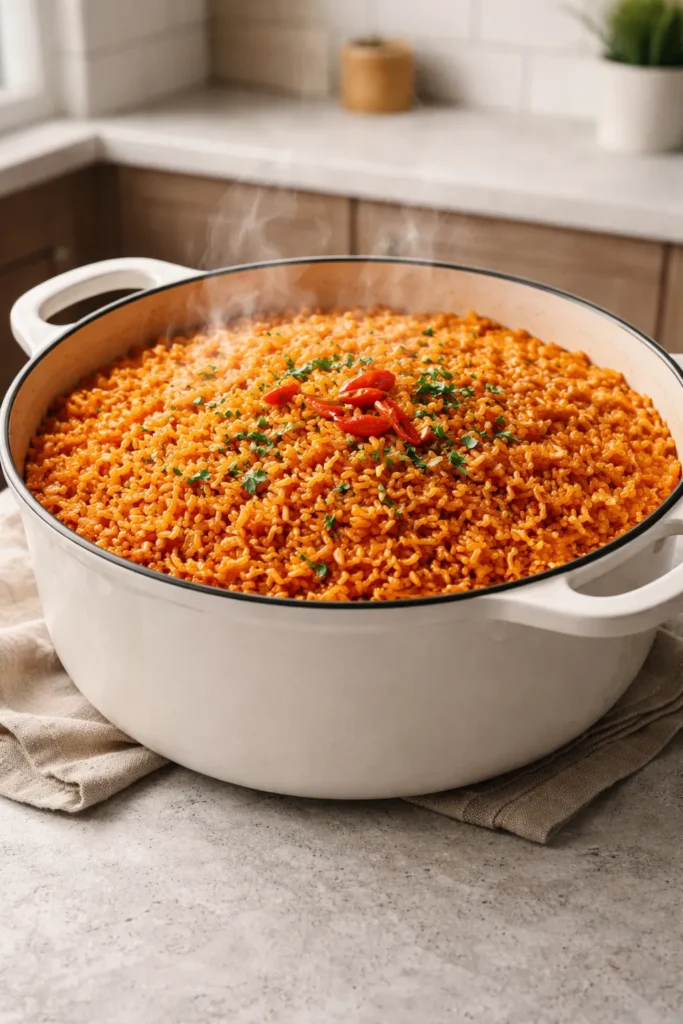
Oven jollof is the method that beginners and busy cooks reach for — and for good reason. The controlled, even heat from all sides of the oven eliminates the bottom-burning risk that trips up so many first-time jollof makers on the stovetop. The result is evenly cooked rice, beautifully orange throughout, with a slightly firmer texture that’s ideal if you prefer your grains with more distinct bite.
Why the Oven Works So Well
The oven’s enclosed environment essentially turns your Dutch oven into a miniature steam chamber. Heat radiates from all sides, not just the bottom, which means the rice cooks evenly from edge to edge without needing constant monitoring or heat adjustment. The trade-off is that you lose the smoky bottom pot effect — but what you gain is consistency, and that matters enormously when you’re cooking for a crowd and can’t afford a ruined pot.
Ingredients
For the Pepper Base:
- 3 plum tomatoes, quartered
- 2 red bell peppers, roughly chopped
- 1 large onion, quartered
- 2 scotch bonnet peppers
- 1 cup chicken stock
For the Baked Jollof:
- ¼ cup vegetable oil
- 1 medium onion, diced
- 3 tablespoons tomato paste
- 2 teaspoons curry powder
- 1½ teaspoons dried thyme
- 2 bay leaves
- 1 tablespoon chicken bouillon powder
- Salt and white pepper to taste
- 2½ cups parboiled long-grain rice, rinsed
- 2 cups chicken stock
- 1 large tomato, thinly sliced
- 2 tablespoons butter
Yield: Serves 5 to 6 Prep Time: 20 minutes Cook Time: 55 minutes (30 min stovetop base + 25 min oven) Total Time: 1 hour 15 minutes Difficulty: Beginner — controlled oven heat removes most of the guesswork.
Step-by-Step Instructions
- Preheat oven to 375°F (190°C).
- Blend tomatoes, peppers, onion, scotch bonnet, and stock until smooth. Reduce in a saucepan over medium heat for 20 to 25 minutes until thickened. Set aside.
- In an oven-safe Dutch oven, heat the oil over medium heat. Add the diced onion and cook until softened, about 3 minutes. Add tomato paste and fry for 4 minutes until it darkens.
- Add curry powder, thyme, bay leaves, and bouillon. Stir for 1 minute. Pour in the reduced pepper base and cook together for 10 minutes, stirring regularly.
- Add the chicken stock and bring to a boil. Taste and season well.
- Stir in the rinsed rice. Mix until every grain is coated.
- Cover the Dutch oven tightly with its lid (if the lid doesn’t fit snugly, press a sheet of foil over the pot first, then place the lid on top).
- Transfer to the preheated oven. Bake for 25 minutes.
- Remove from oven. Carefully lift the lid — watch for steam. Stir gently, then lay the sliced tomato and butter on top. Replace the lid and let rest out of the oven for 10 minutes before serving.
Key Oven Tips
Don’t open the oven during the 25-minute bake. Every time you open it, the temperature drops and the steam escapes. Also, check that your Dutch oven lid seals tightly — a loose-fitting lid on an oven method produces unevenly cooked rice because the steam escapes before doing its job. Foil-sealing under the lid is non-negotiable if there’s any gap.
4. Nigerian Basmati Beef Jollof Rice
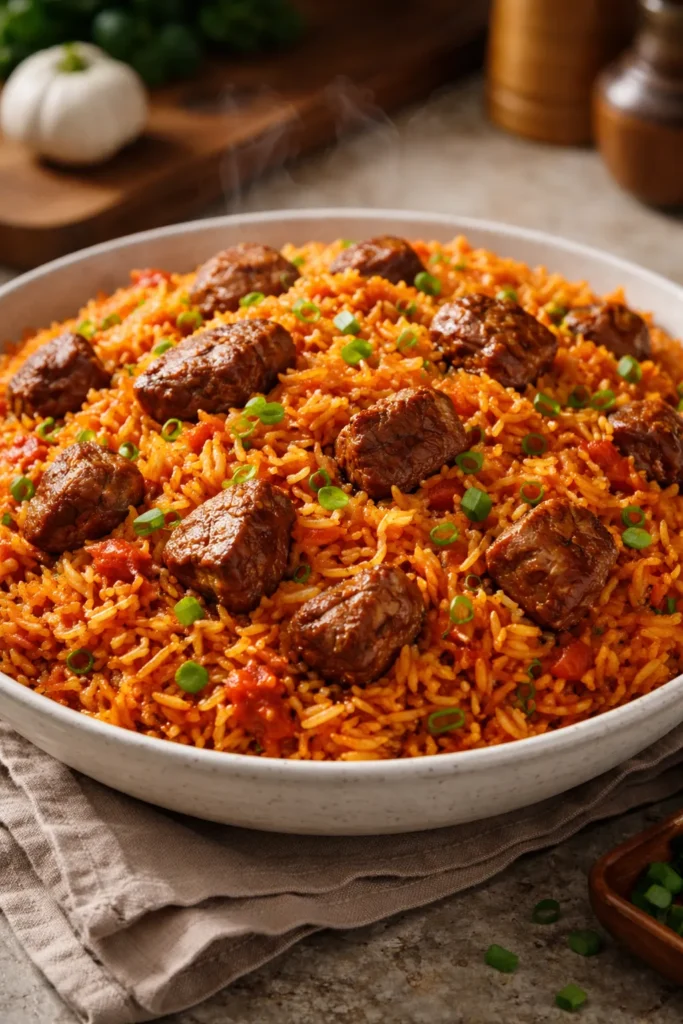
Parboiled long-grain rice is the classic Nigerian choice, but basmati jollof has earned its own devoted fanbase — and for anyone who loves that aromatic, slightly floral quality that basmati brings, it’s worth making at least once. This beef version pairs beautifully with the elongated basmati grains because beef stock adds a deep umami backbone that complements basmati’s natural fragrance without overwhelming it.
Adjusting the Technique for Basmati
Basmati absorbs liquid faster than parboiled rice and has a lower starch threshold, which means it turns mushy faster if you’re not careful. The two key adjustments: reduce your liquid ratio slightly (use a 1:1 ratio of rice to total liquid rather than the 1:1.25 used with parboiled), and shorten your cooking time. Check the rice at the 15-minute mark rather than waiting for 20.
Ingredients
For the Roasted Pepper Base:
- 3 large red bell peppers, halved and seeded
- 4 plum tomatoes, halved
- 1 large red onion, quartered
- 2 scotch bonnet peppers
- 1 cup beef stock
For the Jollof:
- ⅓ cup neutral oil
- 1 medium onion, sliced
- 4 tablespoons tomato paste
- 2 teaspoons curry powder
- 1½ teaspoons dried thyme
- 2 bay leaves
- 1 tablespoon beef bouillon powder
- 3 cloves garlic, minced
- 1 teaspoon freshly grated ginger
- Salt and white pepper to taste
- 3 cups basmati rice, soaked in cold water for 20 minutes, then rinsed
- 3 cups beef stock
- 500g cooked beef (sliced thin or shredded)
- 2 tablespoons butter
Yield: Serves 6 to 8 Prep Time: 30 minutes (includes soaking time) Cook Time: 65 minutes Total Time: 1 hour 35 minutes Difficulty: Intermediate — basmati requires more precise liquid management than parboiled rice.
Step-by-Step Instructions
- For a deeper, smokier base: arrange the halved peppers, tomatoes, and onion on a baking sheet, cut side up, and roast at 400°F (200°C) for 20 to 25 minutes until the edges blacken slightly and the skins blister. This step is optional but adds a complexity that elevates basmati jollof considerably.
- Transfer the roasted vegetables to a blender with the scotch bonnet and beef stock. Blend until completely smooth. Reduce in a saucepan over medium heat for 20 minutes. Set aside.
- Heat oil in a large pot over medium heat. Add sliced onion and cook for 3 minutes. Add garlic, ginger, and tomato paste. Fry, stirring, for 5 minutes until the paste darkens.
- Add curry powder, thyme, bay leaves, and bouillon. Stir for 1 minute, then pour in the pepper base. Cook together for 12 to 15 minutes until the stew is thick and fragrant.
- Add the beef stock. Bring to a boil. Season assertively.
- Drain the soaked basmati and add to the pot. Stir to coat every grain.
- Seal with foil and lid. Reduce heat to the lowest setting and cook for 15 minutes.
- Uncover, gently fold the cooked beef through the rice, and re-seal. Cook for another 5 to 8 minutes until the rice is fully cooked and liquid absorbed.
- Remove from heat. Stir in butter. Rest covered for 8 minutes before serving.
The Roasted Pepper Advantage
Roasting the peppers before blending is a technique borrowed from Nigerian catering practice. The blackened edges add a depth to the stew base that mimics the smokiness of firewood jollof, giving basmati jollof the complexity it needs to compete with its long-grain parboiled counterpart.
5. Nigerian Seafood Jollof Rice
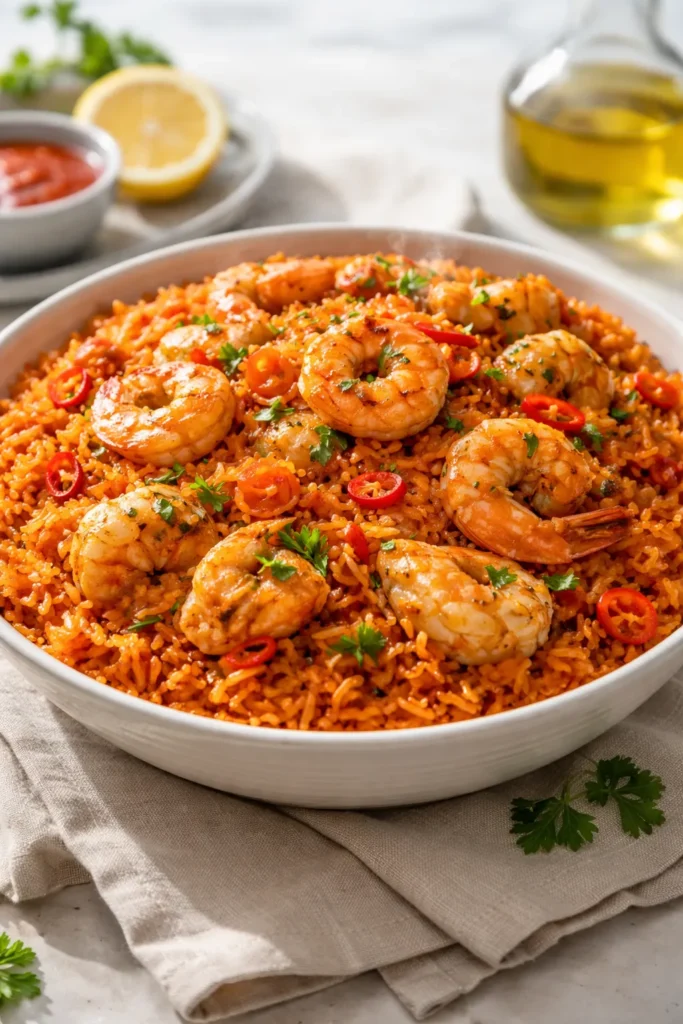
Seafood jollof is the coastal variation — rich, aromatic, and deeply satisfying in a way that differs from beef or chicken versions. Shrimp, crab, squid, and firm white fish all work beautifully here. The key is adding the seafood at the very end rather than cooking it into the stew, which preserves its texture and keeps it from turning rubbery.
Building a Seafood-Friendly Stew Base
Seafood jollof demands a lighter stew base than beef jollof. Use fish stock or a combination of fish and vegetable stock instead of chicken or beef — it keeps the oceanic flavor at the forefront rather than muddying it with meat-heavy broth. A touch of dried shrimp or crayfish (ground into powder) added to the frying stage also deepens the umami without making the dish taste “fishy.”
Ingredients
For the Pepper Base:
- 3 plum tomatoes, roughly chopped
- 2 red bell peppers, roughly chopped
- 1 red onion, roughly chopped
- 2 scotch bonnet peppers (or 1 for mild heat)
- 1 cup fish or vegetable stock
For the Jollof:
- ¼ cup neutral oil
- 1 medium onion, diced
- 3 tablespoons tomato paste
- 1 tablespoon ground crayfish or dried shrimp powder
- 1½ teaspoons curry powder
- 1 teaspoon dried thyme
- 2 bay leaves
- 1 tablespoon fish bouillon or vegetable bouillon powder
- Salt and white pepper to taste
- 2½ cups parboiled long-grain rice, rinsed
- 2 cups fish stock
- 300g large raw shrimp, peeled and deveined
- 200g firm white fish (tilapia, cod, or snapper), cut into large chunks
- 150g squid rings (optional)
- 2 tablespoons butter
- Fresh parsley or scallions for garnish
Yield: Serves 5 to 6 Prep Time: 25 minutes Cook Time: 70 minutes Total Time: 1 hour 35 minutes Difficulty: Intermediate — the main challenge is timing the seafood addition correctly.
Step-by-Step Instructions
- Blend tomatoes, peppers, onion, scotch bonnet, and stock until smooth. Reduce in a saucepan over medium heat for 20 minutes. Set aside.
- Heat oil in a large pot over medium heat. Add diced onion and cook until soft, 3 minutes. Add tomato paste and ground crayfish. Fry for 4 minutes until the paste deepens in color.
- Add curry powder, thyme, bay leaves, and bouillon. Stir for 1 minute, then pour in the reduced pepper base. Cook for 10 to 12 minutes, stirring regularly, until thick.
- Add fish stock and bring to a boil. Taste and season — the liquid should taste boldly seasoned.
- Add rinsed rice. Stir to coat. Seal tightly with foil and lid. Reduce to lowest heat and cook for 20 minutes.
- Uncover and gently stir. The rice should be about 75% cooked. Lay the shrimp, fish chunks, and squid rings across the surface of the rice. Do not stir them in — let them steam on top.
- Replace the lid without foil. Cook on low for another 8 to 10 minutes until the seafood is just cooked through (shrimp will be pink and opaque, fish will flake when pressed gently).
- Remove from heat. Gently fold the seafood through the rice with a wide spoon. Stir in butter. Garnish with chopped parsley or scallions. Rest for 5 minutes before serving.
Why You Don’t Cook Seafood Into the Base
Shrimp overcooked in a boiling stew turns rubbery and chalky within minutes. By steaming the seafood on top of the nearly-finished rice, you get perfectly cooked, tender seafood and perfectly cooked jollof at the same time. This layered approach is used by Nigerian caterers for large seafood jollof batches and produces results that cooking the seafood into the stew simply cannot match.
6. Nigerian Native Jollof Rice
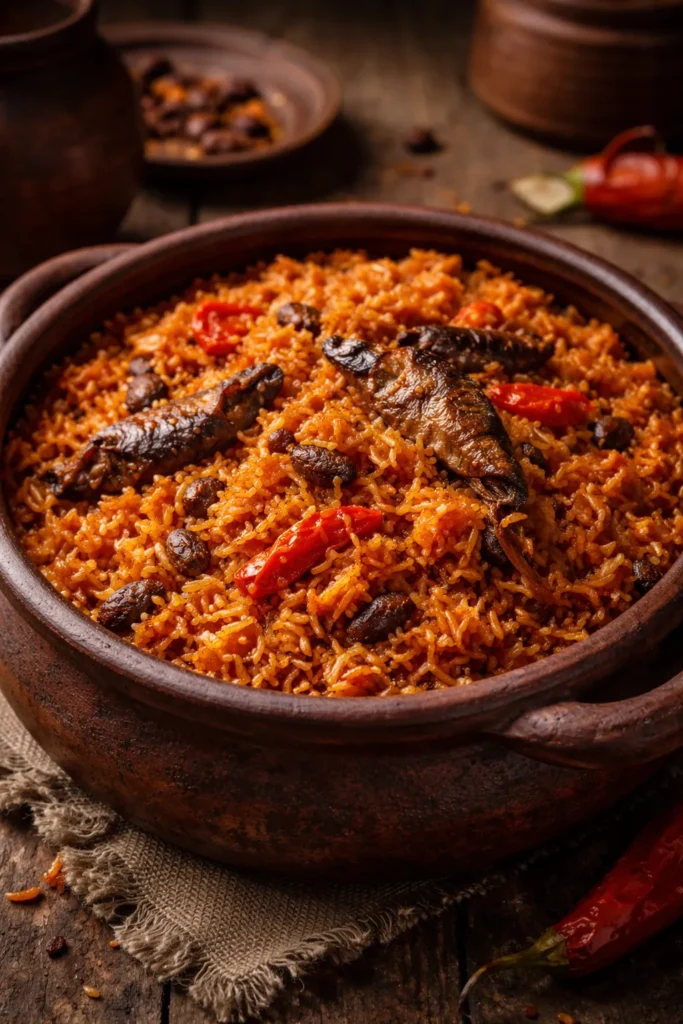
Native jollof — sometimes called ofada jollof or native stew jollof — is a different beast entirely. Where classic jollof uses neutral vegetable oil, native jollof is built on palm oil. Where classic jollof uses tomatoes and red peppers, native jollof leans on a combination of roasted red peppers, traditional fermented locust beans (iru), and dried smoked fish. It’s earthier, more pungent, and far more complex in flavor than any other variety on this list.
Understanding Iru and Smoked Fish
Iru (fermented locust beans) is one of the key flavoring agents in native jollof and several other traditional Nigerian dishes. It has a strong, funky, umami-rich smell that softens significantly during cooking and adds an almost savory depth that no other ingredient replicates. Smoked fish — typically dried catfish or smoked mackerel — adds another layer of complexity. Both are available at African and Caribbean grocery stores, and they’re non-negotiable in an authentic native jollof.
Ingredients
For the Roasted Pepper Base:
- 3 red bell peppers (or Nigerian tatashe peppers), halved
- 4 plum tomatoes, halved
- 1 red onion, quartered
- 3 scotch bonnet peppers
- No added liquid — the vegetables roast dry
For the Native Jollof:
- ⅓ cup red palm oil
- 1 medium onion, diced
- 1 tablespoon ground iru (fermented locust beans)
- 3 tablespoons tomato paste
- 1 tablespoon ground crayfish
- 2 teaspoons curry powder
- 1 teaspoon dried thyme
- 2 bay leaves
- 1 tablespoon beef bouillon powder
- Salt to taste
- 100g smoked dried fish (catfish or mackerel), rinsed and flaked
- 3 cups parboiled long-grain rice, rinsed
- 2½ cups beef or chicken stock
Yield: Serves 6 to 8 Prep Time: 30 minutes Cook Time: 80 minutes Total Time: 1 hour 50 minutes Difficulty: Intermediate — sourcing iru and smoked fish may require a specialty store, but the technique is straightforward.
Step-by-Step Instructions
- Char the peppers and tomatoes: place them cut-side down on a dry skillet over high heat, or under a broiler, for 8 to 10 minutes until the skins are blackened and blistered. Allow to cool slightly, then blend without any added liquid until smooth but slightly textured.
- Heat palm oil in a large pot over medium heat until the raw smell cooks off slightly — about 2 minutes. Add diced onion and iru. Cook for 4 minutes, stirring — the iru will smell potent at first, which is completely normal.
- Add tomato paste and ground crayfish. Fry, stirring constantly, for 5 minutes until the paste darkens and the crayfish becomes fragrant.
- Add curry powder, thyme, bay leaves, bouillon, and flaked smoked fish. Stir for 2 minutes.
- Pour in the roasted pepper blend. Cook over medium-low heat for 15 to 20 minutes, stirring regularly, until thick and deeply colored with a clear layer of palm oil floating on the surface.
- Add stock and bring to a boil. Taste — native jollof base should taste complex, smoky, and richly seasoned before the rice goes in.
- Add rinsed rice. Stir thoroughly. Seal with foil and lid. Reduce to lowest heat and cook for 25 minutes.
- Uncover, stir gently, and re-seal. Cook for another 10 to 15 minutes until the rice is fully cooked.
- Rest off heat, covered, for 10 minutes before serving.
Serving Native Jollof
Native jollof is traditionally served with Nigerian white stew (ayamase), boiled eggs, and assorted meats. The earthiness of the palm oil and iru pairs with the heat of the scotch bonnet to create something that feels genuinely different from classic jollof — not better or worse, just its own complete thing.
7. Nigerian Tomato and Chicken Stew
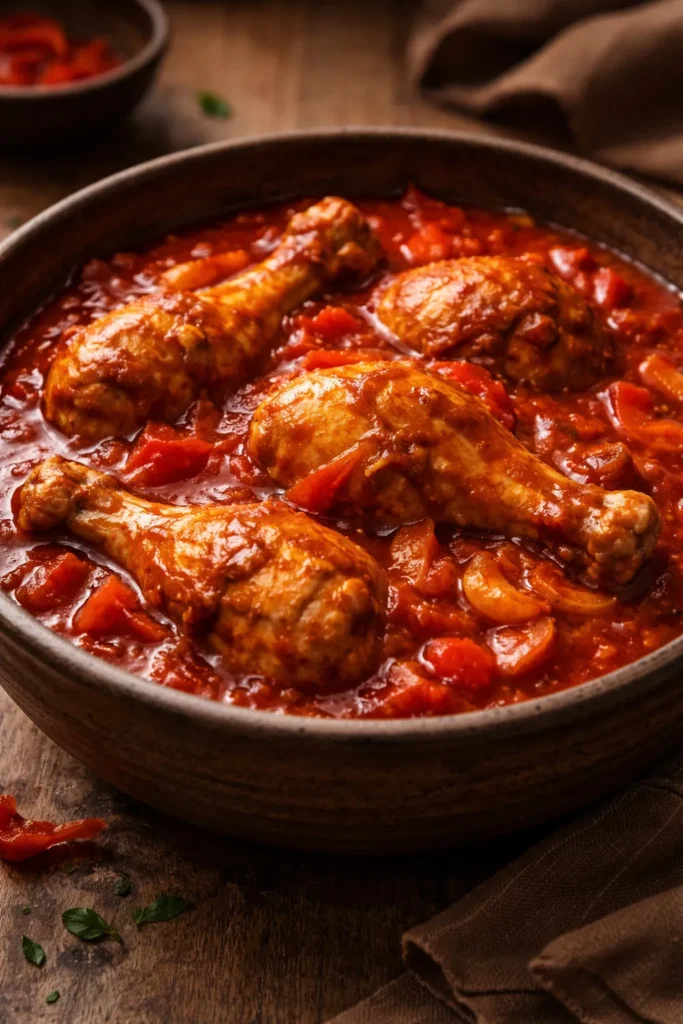
Nigerian tomato chicken stew is arguably the dish that defines everyday Nigerian home cooking. It’s served over plain white rice, jollof rice, or boiled yam, and it acts as the companion sauce to virtually every rice dish on this list. The base — blended tomatoes, peppers, and onions, fried low and slow in oil — is the same foundation that jollof rice builds on, but here it’s enriched with chicken pieces, cooked until they’re fall-off-the-bone tender.
Why the Frying Stage Makes or Breaks the Stew
The single biggest mistake home cooks make with Nigerian tomato stew is not frying the blended pepper base long enough. That initial frying stage — where the tomato and pepper blend hits hot oil and sizzles, reduces, and darkens — removes the sharp acidity of raw tomatoes and transforms the blend from a simple puree into a rich, complex stew base. It’s done when the oil visibly separates from the stew and floats in puddles on the surface. That visual cue is your signal that the base is ready.
Ingredients
For the Pepper Base:
- 4 large plum tomatoes, roughly chopped
- 2 red bell peppers, roughly chopped
- 1 large onion, roughly chopped
- 2–3 scotch bonnet peppers
For the Stew:
- ½ cup vegetable or neutral oil
- 1 large onion, diced
- 4 tablespoons tomato paste
- 3 cloves garlic, minced
- 1 tablespoon freshly grated ginger
- 2 teaspoons curry powder
- 1 teaspoon dried thyme
- 2 bay leaves
- 1 tablespoon chicken bouillon powder
- Salt and white pepper to taste
- 1.5 kg chicken (cut into pieces — thighs and drumsticks preferred for flavor)
Yield: Serves 5 to 6 Prep Time: 20 minutes Cook Time: 55 minutes Total Time: 1 hour 15 minutes Difficulty: Beginner to Intermediate — patience during the frying stage is the key skill required.
Step-by-Step Instructions
Season and Parboil the Chicken:
- Season chicken pieces with 1 teaspoon curry powder, ½ teaspoon thyme, 1 teaspoon bouillon powder, salt, pepper, and half the diced onion. Mix well, cover, and marinate for at least 20 minutes (or overnight in the fridge for deeper flavor).
- Place the seasoned chicken in a pot with ½ cup water. Cook covered over medium heat for 15 to 20 minutes until partially cooked through and the chicken has released its own juices. Reserve the stock.
Make the Stew: 3. Blend the tomatoes, peppers, onion, and scotch bonnet until smooth. Set aside. 4. Heat the oil in a wide pot over medium heat. Add the remaining diced onion and cook for 3 minutes. Add garlic and ginger, stirring for 1 minute. 5. Add tomato paste. Fry, stirring continuously, for 5 to 6 minutes until the paste changes color from bright red to deep terracotta. 6. Pour in the blended pepper base. Add curry powder, thyme, bay leaves, and bouillon. Stir well. This is the critical frying stage: cook over medium heat, stirring every 5 minutes, for 20 to 25 minutes until the oil separates visibly from the stew and the mixture is deeply reduced and fragrant. 7. Add the parboiled chicken pieces and pour in the reserved chicken stock. Stir to coat the chicken in the stew. 8. Reduce heat to medium-low, partially cover, and simmer for 15 to 20 minutes until the chicken is fully cooked through and the stew has thickened around it. 9. Taste and adjust salt. Serve over plain white rice, jollof rice, or boiled yam with a side of fried plantains.
Storage and Make-Ahead
This stew keeps well in the fridge for up to 5 days in an airtight container and freezes beautifully for up to 3 months. The flavor actually deepens overnight, making it one of those rare dishes that tastes noticeably better the next day. Reheat gently on the stovetop with a splash of water to prevent sticking.
8. Nigerian Beef Red Stew (Party Stew)
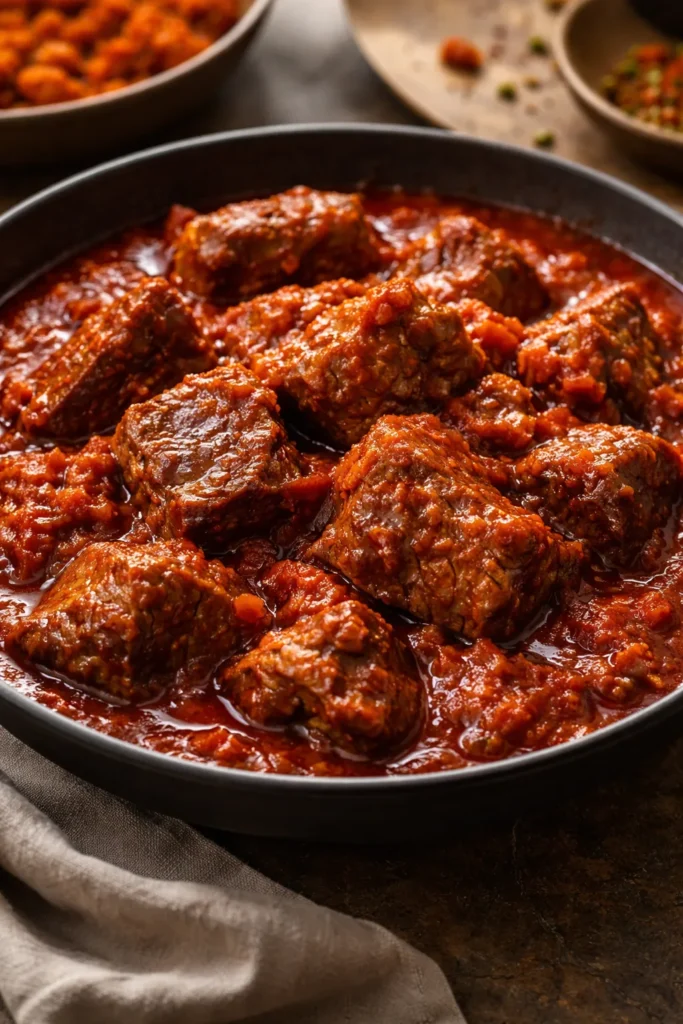
If chicken stew is everyday comfort, beef red stew is Nigerian celebration food. This is the stew you see at elaborate parties, served from vast pots alongside party jollof, fried plantains, coleslaw, and moin moin. The beef is cooked until deeply tender in its own seasoned stock, then simmered in a rich tomato-pepper sauce until every piece is coated in deep, glossy red stew.
Choosing the Right Beef Cuts
Not all beef cuts work equally well here. Go for cuts with connective tissue — short ribs, beef chuck, oxtail, or shank. These cuts release gelatin as they braise slowly, which gives the stew a silky, coating consistency that lean cuts like sirloin simply cannot produce. The fat in these cuts also carries fat-soluble flavor compounds from the spices, which is why beef party stew has a richer mouthfeel than versions made with chicken or lean beef.
Ingredients
For the Beef:
- 1.5 kg beef chuck or short ribs, cut into large chunks
- 1 medium onion, roughly chopped
- 3 cloves garlic
- 1 teaspoon curry powder
- 1 teaspoon thyme
- 1 tablespoon beef bouillon powder
- 1 teaspoon white pepper
- Salt to taste
- 1 cup water
For the Stew Base:
- 5 large plum tomatoes, roughly chopped
- 2 large red bell peppers, roughly chopped
- 1 large red onion, roughly chopped
- 3 scotch bonnet peppers
- No added liquid
For the Stew:
- ½ cup neutral cooking oil
- 1 large onion, diced
- 4 tablespoons tomato paste
- 2 teaspoons curry powder
- 1½ teaspoons dried thyme
- 2 bay leaves
- 1 tablespoon beef bouillon powder (additional)
- Salt and white pepper to taste
- Reserved beef cooking stock (about 1 to 1½ cups)
Yield: Serves 8 to 10 Prep Time: 20 minutes Cook Time: 1 hour 30 minutes (beef braising + stew cooking) Total Time: About 2 hours Difficulty: Intermediate — the beef braising stage requires time but minimal active effort.
Step-by-Step Instructions
Braise the Beef:
- Season the beef chunks with curry powder, thyme, bouillon, white pepper, and salt. Add the roughly chopped onion and garlic. Mix well. Cover and refrigerate for at least 30 minutes, or up to overnight.
- Place seasoned beef in a heavy pot. Add 1 cup of water. Cover and cook over medium heat for 45 to 60 minutes, until the beef is completely tender and pulls apart easily with a fork. Do not rush this stage — tough beef in a party stew is the most common mistake. Reserve all the cooking liquid as stock.
- Optional but worthwhile: after braising, brush the beef pieces lightly with oil and grill or broil them at 400°F (200°C) for 10 minutes, turning once, until the exterior caramelizes. This adds a slight char and texture contrast to the finished stew.
Build the Stew: 4. Blend the tomatoes, peppers, red onion, and scotch bonnet until smooth. No liquid needed — the fresh vegetables contain enough moisture. 5. Heat oil in a wide pot over medium heat. Add the diced onion and cook for 3 minutes. Add tomato paste and fry for 5 to 6 minutes, stirring continuously, until it darkens. 6. Add curry powder, thyme, bay leaves, and bouillon. Stir for 1 minute. Pour in the blended pepper base. 7. Cook over medium heat, stirring every 5 minutes, for 25 to 30 minutes. The stew is ready when the oil separates on the surface, the color is a deep brick-red, and the mixture smells cooked rather than raw. 8. Add the braised (and optionally grilled) beef. Pour in the reserved beef stock. Stir to combine. 9. Simmer covered on medium-low for 15 minutes, until the beef is heated through and the stew has thickened around each piece. 10. Taste and adjust seasoning. Serve immediately alongside party jollof, white rice, or yam, with fried plantains and coleslaw.
The Oil Separation Test
Don’t guess when your stew base is ready — use the oil separation test. When you pour blended tomatoes into hot oil and cook them down long enough, the water in the tomatoes evaporates and the stew contracts, releasing the cooking oil back to the surface in visible, glossy puddles. That’s your visual confirmation that the raw taste is gone and the stew base has developed its full flavor. If you see no oil separation after 20 minutes, lower the heat slightly and keep cooking — rushing past this point is what produces sour, underdeveloped stew.
Final Thoughts
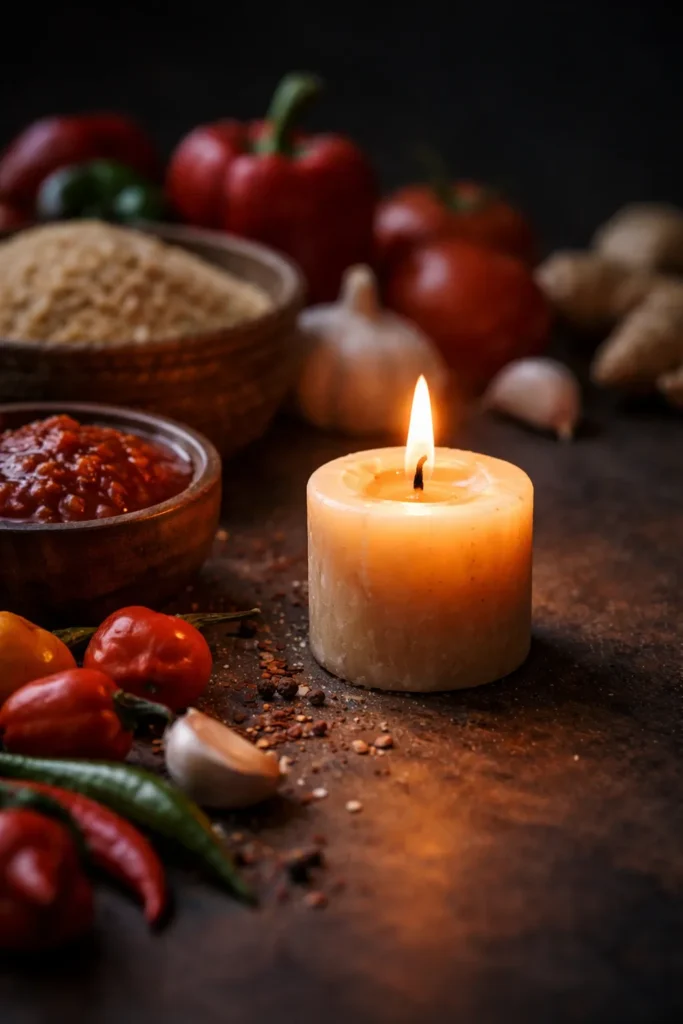
Nigerian jollof rice and stew aren’t just individual recipes — they’re a cooking system. Once you understand the pepper base reduction, the tomato paste frying stage, and the sealed steam technique, every recipe on this list becomes more intuitive. They all share the same building blocks. What changes is the rice variety, the protein, the fat source, and the finishing touches.
The best starting point for most cooks is the classic party jollof. Get that base right — the frying, the seasoning, the heat control — and every other variation becomes significantly easier. From there, the native jollof and firewood method are natural progressions for cooks who want to go deeper into traditional technique.
One honest note: don’t expect your first pot to be perfect. These recipes have been refined across generations of Nigerian cooking, and there’s genuine skill in reading the visual and sensory cues — knowing when the pepper base is truly done, feeling when the rice has absorbed enough steam, catching that moment before the bottom burns past the point of flavor and into char. It takes a few batches. Make the mistakes. Adjust the heat. Taste relentlessly. The pot you make on your fourth or fifth attempt will be something worth being genuinely proud of.