There’s a particular kind of frustration that hits when you’re thirty minutes into waiting for delivery, your stomach growling, and you already know the noodles are going to arrive lukewarm and clumped together in a soggy container. Takeout pasta is a lie we keep telling ourselves. The real thing — made in your own kitchen, with a pot of properly salted boiling water and a handful of good ingredients — takes almost the same amount of time and tastes infinitely better.
Pasta is one of those rare foods where simplicity and sophistication coexist. The most celebrated pasta dishes in Rome, Naples, and Bologna are built on four or five ingredients at most. What separates a truly great bowl from a mediocre one isn’t an elaborate ingredient list — it’s technique, timing, and understanding why each component does what it does.
What follows are twelve pasta dinners that will genuinely make you reconsider ever ordering delivery again. Some take fifteen minutes. A few take thirty. All of them are built around flavors so satisfying and techniques so solid that you’ll make them on rotation long after you’ve forgotten what your local Italian spot’s phone number is.
Table of Contents
- Why Homemade Pasta Beats Delivery Every Single Time
- The Pantry Staples That Make All of This Possible
- 1. Cacio e Pepe
- Why the Technique Is Everything Here
- What to Know Before You Make It
- 2. Pasta alla Vodka
- Building the Sauce in Stages
- How to Make It Even Better
- 3. Bucatini all’Amatriciana
- The Guanciale Question
- Key Details That Matter
- 4. Spaghetti Aglio e Olio
- The Garlic Technique That Changes Everything
- Elevating the Basic Formula
- 5. Creamy Mushroom Pasta
- Choosing the Right Mushrooms
- The Cream Sauce Method
- 6. Shrimp Scampi Pasta
- Getting the Shrimp Right
- Building the Sauce
- 7. Pasta al Limone
- The Lemon Specifics
- Why This Is Better Than It Looks on Paper
- 8. Spaghetti Puttanesca
- The Anchovy Argument
- Technique Notes for a Great Puttanesca
- 9. Real-Deal Fettuccine Alfredo
- The Original Method
- Getting the Texture Right
- 10. Burst Cherry Tomato Pasta
- Choosing the Right Tomatoes
- How to Serve It
- 11. One-Pan Sausage and Arugula Pasta
- Why One-Pan Pasta Works
- Flavor Building Tips
- 12. Creamy Garlic Pasta
- Making Garlic the Star
- Pulling It Together
- Five Techniques That Upgrade Every Pasta You Make
- Final Thoughts
Why Homemade Pasta Beats Delivery Every Single Time
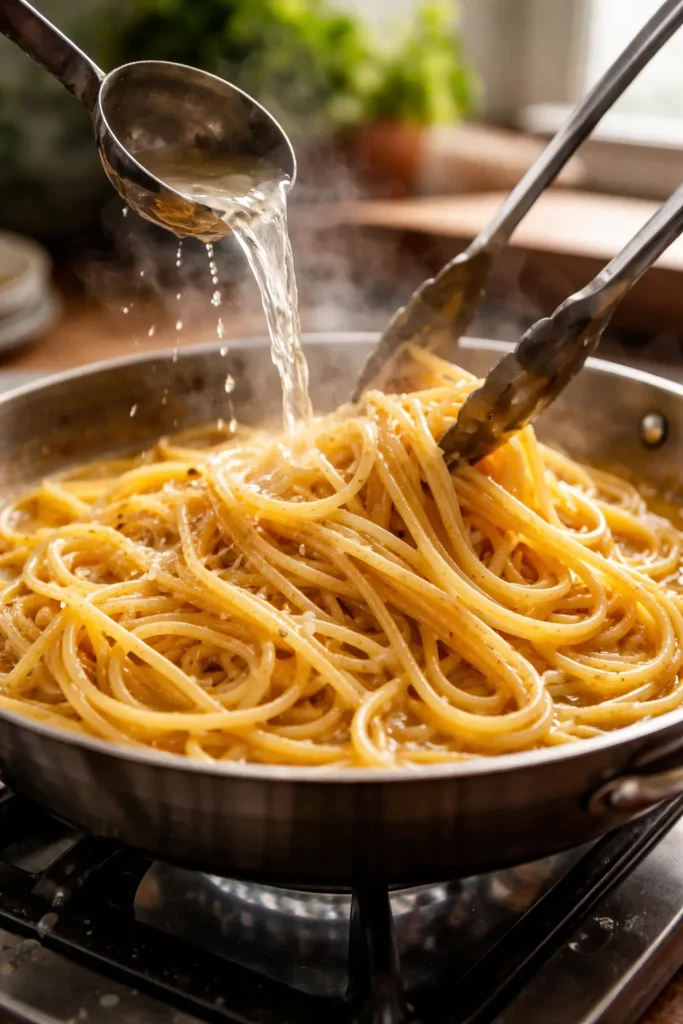
Before diving into specific dishes, it’s worth understanding the core advantage you have cooking at home: control over the pasta water.
Restaurant pasta — and especially delivery pasta — almost always sits after cooking. The pasta continues absorbing sauce, the noodles bloat and go limp, and that silky coating of starchy cooking liquid evaporates. By the time a container reaches your door, you’re eating a fundamentally different dish than what the chef intended.
When you cook at home, you eat immediately. The pasta goes from the pot into the pan, gets tossed in sauce for thirty to sixty seconds with a splash of the starchy cooking water, and hits the bowl while everything is still glossy and perfectly coated. That window — those precious two minutes between perfect and overdone — is something delivery can never replicate.
There’s also the salt question. Pasta water should be seasoned aggressively, somewhere in the range of one to two tablespoons of kosher salt per pound of pasta in a large pot of water. It should taste noticeably salty, like a light broth. Under-salted water is the single most common reason homemade pasta tastes flat and disappointing. Fix that one thing, and your cooking improves immediately.
The Pantry Staples That Make All of This Possible
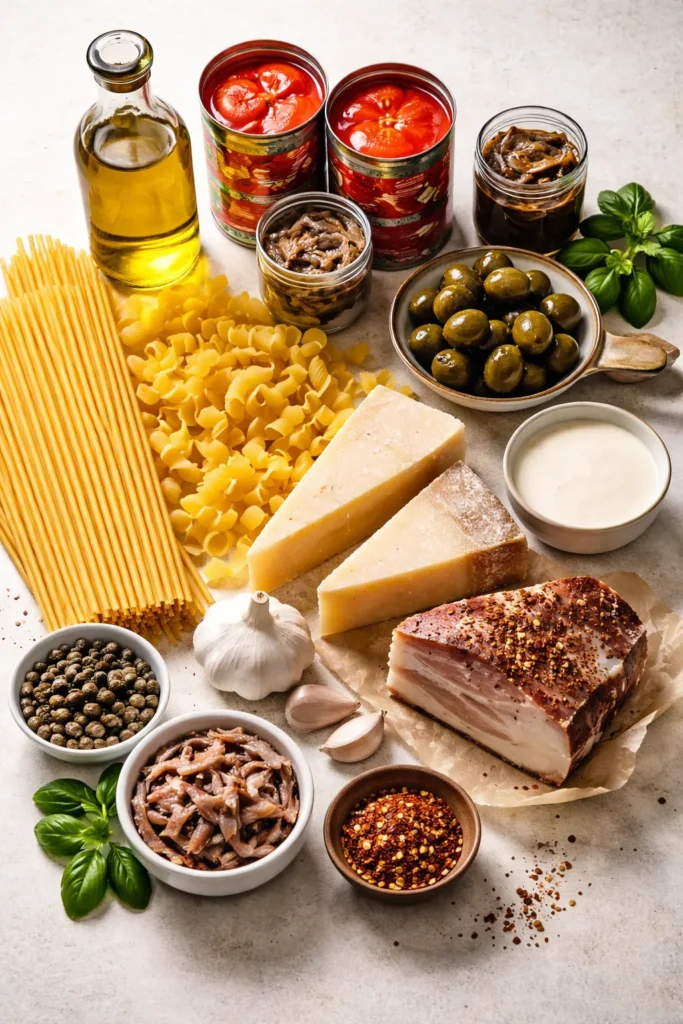
The twelve recipes below draw on a short list of ingredients worth keeping stocked at all times. With these on hand, a satisfying pasta dinner is always twenty to thirty minutes away.
- Dried pasta: spaghetti, rigatoni, bucatini, penne — at least two shapes
- Good olive oil: extra-virgin for finishing, regular for cooking
- Canned whole San Marzano tomatoes: the backbone of half a dozen sauces
- Pecorino Romano and Parmigiano-Reggiano: buy blocks, not pre-grated bags
- Garlic: a whole head, always
- Anchovies: oil-packed, in a tin or jar — they disappear into sauces and add depth
- Capers and olives: Kalamata or Castelvetrano
- Guanciale or pancetta: cured pork products that make everything better
- Heavy cream: for the handful of dishes that call for it
- Dried red pepper flakes: essential heat source for aglio e olio, puttanesca, and vodka sauce
Stock these and you’re equipped for every recipe below with minimal additional shopping.
1. Cacio e Pepe
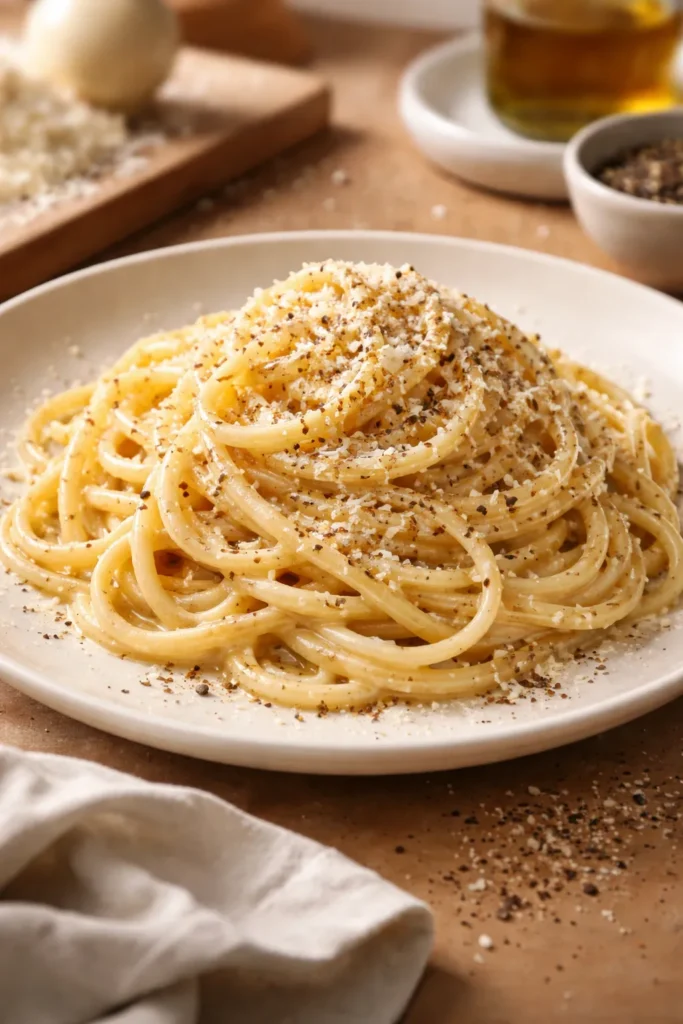
There are four ingredients in cacio e pepe — pasta, Pecorino Romano, black pepper, and pasta water — and this dish manages to be one of the most deeply satisfying things a person can eat. Butter is optional. Cream is never, ever added. The “sauce” is an emulsion created by the starch in the cooking water combining with the fat in the cheese and the warmth of the pan.
Why the Technique Is Everything Here
The biggest mistake people make with cacio e pepe is adding the cheese directly to a hot pan. The fat separates, the proteins seize, and you end up with a clumpy, grainy disaster. The correct method: remove the pan from the heat entirely, add a big splash of starchy pasta water, let it cool slightly, then add the finely grated Pecorino in a thin stream while tossing constantly. The residual heat does the work without curdling the cheese.
Black pepper deserves real attention here. Toast whole peppercorns in a dry pan for sixty seconds until fragrant, then crack them coarsely. Pre-ground black pepper from a jar is flat and musty by comparison — the difference is genuinely significant in a dish this minimal.
What to Know Before You Make It
- Use Pecorino Romano as the primary cheese — it’s sharper and saltier than Parmesan, which is what gives cacio e pepe its characteristic bite
- Tonnarelli or spaghetti are the traditional pasta shapes; the smooth surface of thinner noodles helps the sauce cling
- Reserve at least one full cup of pasta cooking water before draining — you’ll use more of it than you expect
- The dish tightens quickly as it cools, so work fast and serve immediately in warmed bowls
Pro tip: Grate your Pecorino on a Microplane grater rather than the large holes of a box grater. The finer texture melts into the sauce far more smoothly.
2. Pasta alla Vodka
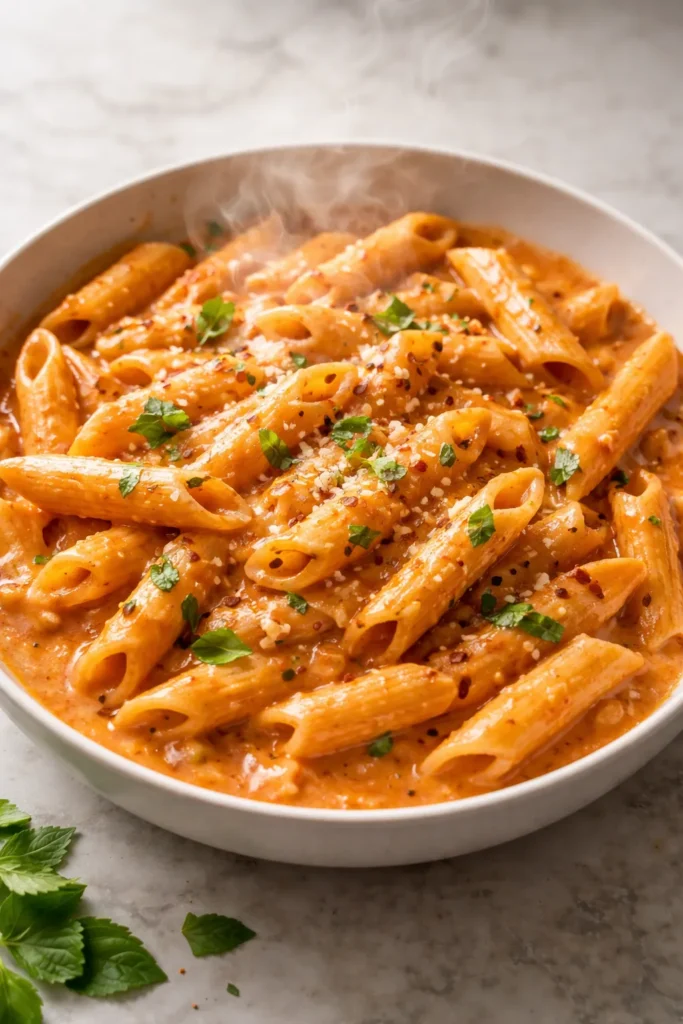
Pasta alla vodka has spent time as a dinner-party showpiece and a TikTok sensation, but stripped of the hype, it’s just an elegant, deeply savory tomato cream sauce that comes together in about twenty-five minutes. The vodka’s role isn’t flavor — it’s chemistry. Alcohol releases aromatic compounds in tomatoes that are neither fat-soluble nor water-soluble, unlocking a richer, more complex flavor that you simply can’t get without it. Cook it for a full two minutes after adding to the pan to burn off the sharp alcohol taste.
Building the Sauce in Stages
Start with a base of shallots and garlic sweated in olive oil until soft. Add tomato paste — a full two tablespoons — and cook it until it darkens slightly and smells almost sweet, about two minutes. That’s called pinching the tomato paste, and it dramatically deepens the flavor. Add vodka, reduce, then pour in whole canned tomatoes crushed by hand. Simmer for fifteen minutes, then blend or use an immersion blender to smooth the sauce before stirring in the heavy cream.
How to Make It Even Better
- Calabrian chili paste (one teaspoon) stirred in with the tomato paste adds a fruity, medium heat that standard red pepper flakes can’t match
- Finish with two tablespoons of cold butter swirled in off the heat — it adds body and gloss to the sauce
- Rigatoni is the ideal pasta shape here; the ridges and hollow centers trap the sauce beautifully
- A shower of finely grated Parmesan and fresh basil at the table rounds everything out
Pro tip: If you don’t keep vodka around, a splash of dry white wine works reasonably well — the flavor profile shifts slightly but the dish is still excellent.
3. Bucatini all’Amatriciana
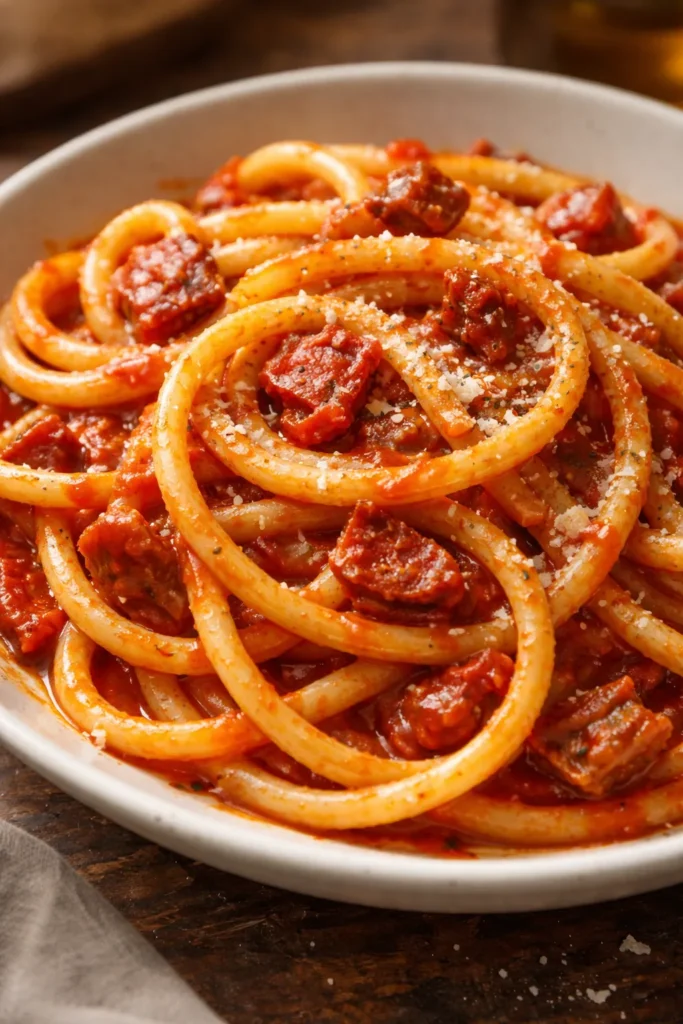
Amatriciana comes from the town of Amatrice in the Lazio region, and it’s been argued over more passionately than most political debates in Italy. The traditional version uses guanciale (cured pork cheek), Pecorino Romano, and San Marzano tomatoes. No onions. No garlic. No olive oil. The fat rendered from the guanciale is the cooking medium for everything else.
The Guanciale Question
Guanciale has a different fat-to-meat ratio than pancetta or bacon, and it renders into something almost silky when cooked properly. Cube it into half-inch pieces, cook it in a dry pan over medium heat until the fat has rendered and the edges are golden but not fully crisp — you want some chew left. Remove it from the pan, add a splash of dry white wine to deglaze, then build the tomato sauce in that rendered pork fat.
If guanciale isn’t available, pancetta is an acceptable substitute. Bacon works in a pinch but brings a smokiness that’s not traditional, so use it sparingly.
Key Details That Matter
- Bucatini — the thick, hollow spaghetti — is the classic pasta choice; its tube shape holds sauce inside while the exterior stays coated
- Add a pinch of Calabrian chili or red pepper flakes to the sauce — the original recipe calls for peperoncino
- Finish with Pecorino Romano, not Parmesan — the sharpness of the sheep’s milk cheese is non-negotiable in this dish
- The sauce can be made up to three days ahead and refrigerated, making weeknight prep even faster
4. Spaghetti Aglio e Olio
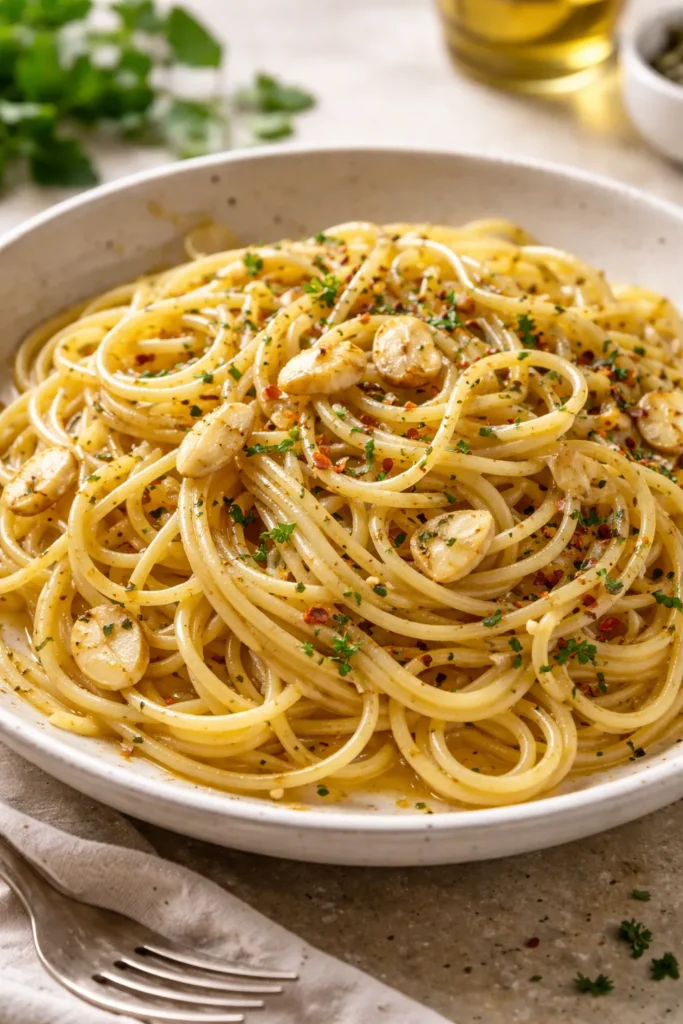
Four ingredients. Twenty minutes. One of the greatest pasta dishes ever created. Spaghetti aglio e olio is olive oil, garlic, red pepper flakes, and pasta water coaxed into a glossy, coating sauce that’s somehow both light and deeply satisfying. It’s the dish you make at midnight when there’s nothing in the fridge and you still want something that feels like a real meal.
The Garlic Technique That Changes Everything
Thin-slice the garlic — don’t mince it. Minced garlic burns before it can become golden and nutty, while thin slices have enough surface area to cook evenly. Add them to cold olive oil and bring the temperature up slowly over medium-low heat. Watch carefully: the garlic should turn pale golden and smell toasty, not brown and sharp. Pull the pan from the heat the moment the garlic reaches that color — it continues cooking from residual heat.
Add the pasta cooking water off the heat as well. The hot liquid will sizzle against the oil and garlic, and constant tossing creates the emulsification that turns two separated liquids into a cohesive sauce.
Elevating the Basic Formula
- Stir in three or four anchovy fillets with the garlic — they dissolve completely and add an umami depth most people can’t identify but everyone appreciates
- Toss in a large handful of fresh parsley off the heat for brightness and color
- Toasted breadcrumbs (pangrattato) scattered over the top add textural contrast that takes this from simple to genuinely impressive
- Finish with a squeeze of lemon juice — it lifts every other flavor in the dish
5. Creamy Mushroom Pasta
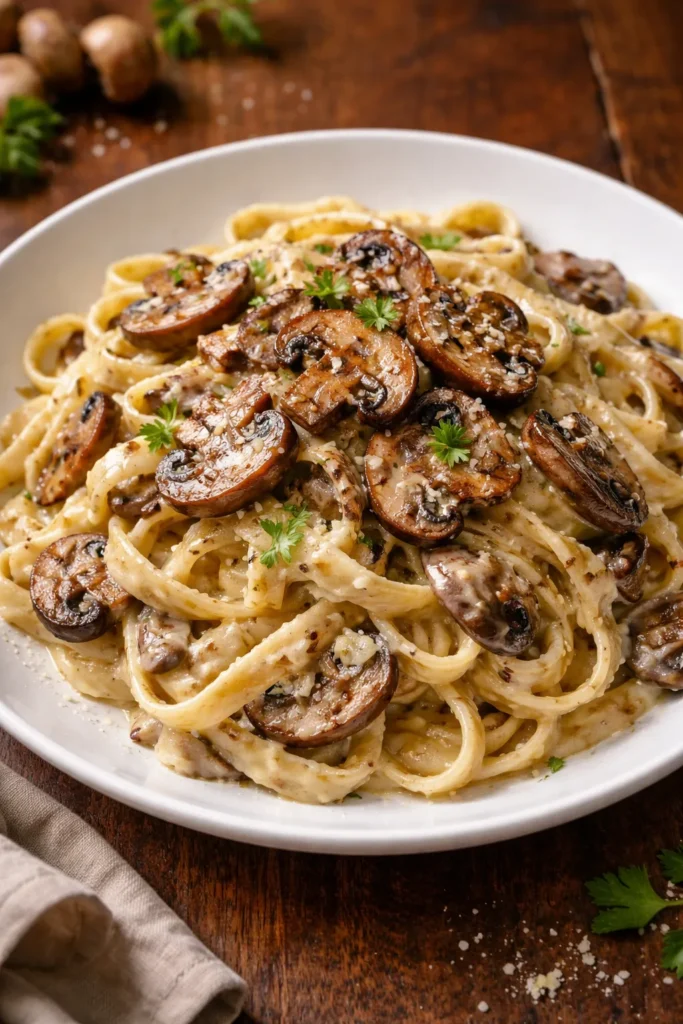
Mushrooms are one of the few vegetables that behave like meat when cooked properly. High heat, no crowding, no stirring for the first ninety seconds — that’s how you get the golden-brown, slightly crispy mushrooms that define a great mushroom pasta. When you pile them into a pan and start moving them immediately, they steam instead of sear, going pale and rubbery rather than caramelized and rich.
Choosing the Right Mushrooms
Cremini mushrooms are the workhorse here — widely available, affordable, and deeply flavored when browned well. For a more complex result, mix in shiitake, oyster, or maitake mushrooms. The varied textures (feathery maitakes go almost crispy at the edges, oyster mushrooms stay silky) make each bite different.
The technique: cook mushrooms in batches with space between them. A single layer in a hot pan, a generous amount of butter and olive oil, and patience. They’re done when they’re uniformly golden and have shrunk to roughly half their original size.
The Cream Sauce Method
Sweat shallots and garlic in the mushroom pan after the mushrooms come out. Add a splash of dry white wine or dry sherry — this deglazes all the browned bits stuck to the pan, which carry enormous flavor. Add heavy cream and let it reduce by a third. Return the mushrooms, add cooked pasta and a ladleful of pasta water, and toss everything together until the sauce clings to every noodle.
- Fresh thyme added with the shallots pairs beautifully with the earthiness of the mushrooms
- Parmesan stirred in at the end adds salt and body
- Pappardelle, tagliatelle, or rigatoni hold this sauce better than thin noodles
6. Shrimp Scampi Pasta
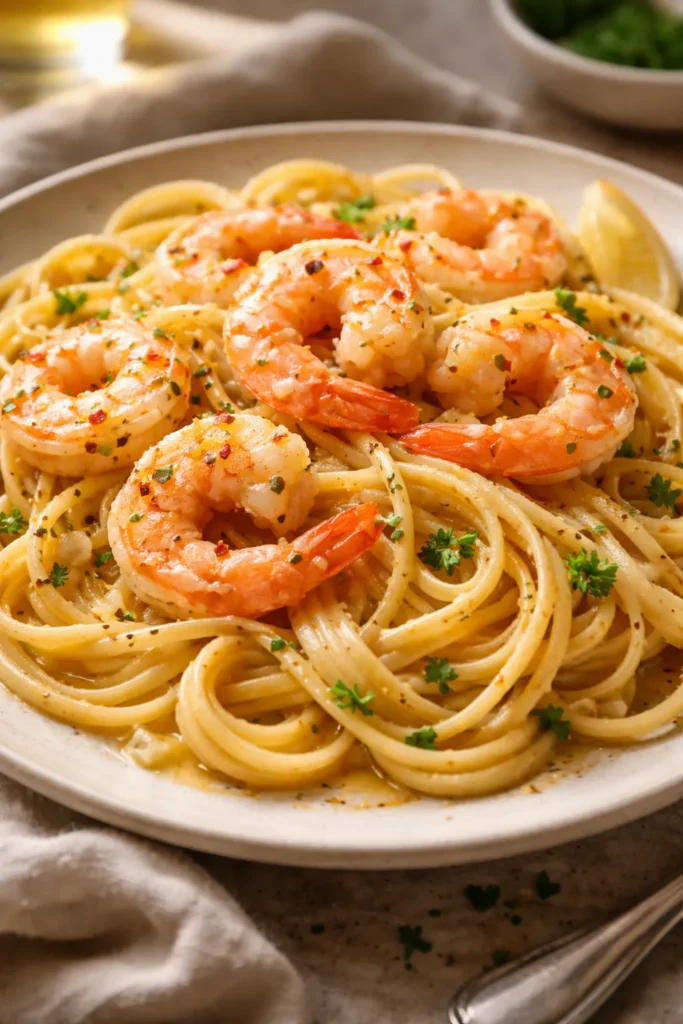
The phrase “shrimp scampi” is technically redundant — scampi are the small, lobster-like crustaceans originally used in this dish, and American Italian cuisine adapted it with shrimp. But whatever you call it, the combination of shrimp, garlic, lemon, white wine, and butter tossed with linguine is one of the most crowd-pleasing pasta dishes in existence, and it’s ready in under twenty minutes.
Getting the Shrimp Right
The biggest shrimp error is overcooking. Shrimp cook in ninety seconds per side over medium-high heat. They’re done when they turn pink and curl into a loose C shape — the moment they curl into a tight O, they’re overcooked and rubbery. Cook them in a single layer, in batches if necessary, and remove them from the pan before building the sauce.
Buy shrimp already peeled and deveined to save significant prep time. 16/20 or 21/25 count (meaning 16-20 or 21-25 shrimp per pound) gives you a size that’s substantial without being unwieldy.
Building the Sauce
After removing the shrimp, add garlic to the pan and cook for thirty seconds. Add white wine and let it reduce by half, then add a full stick of cold butter cut into cubes, whisking constantly to create an emulsified sauce. The cold butter is the key — it creates a creamy, glossy consistency that broken, oily scampi sauces lack entirely. Add lemon juice, return the shrimp, toss in cooked linguine with a splash of pasta water, and finish with fresh parsley.
Pro tip: Use the shrimp shells to make a quick two-minute stock by simmering them in a cup of water while the shrimp cook. Swap this for the pasta water in the sauce for an extra layer of shellfish flavor.
7. Pasta al Limone
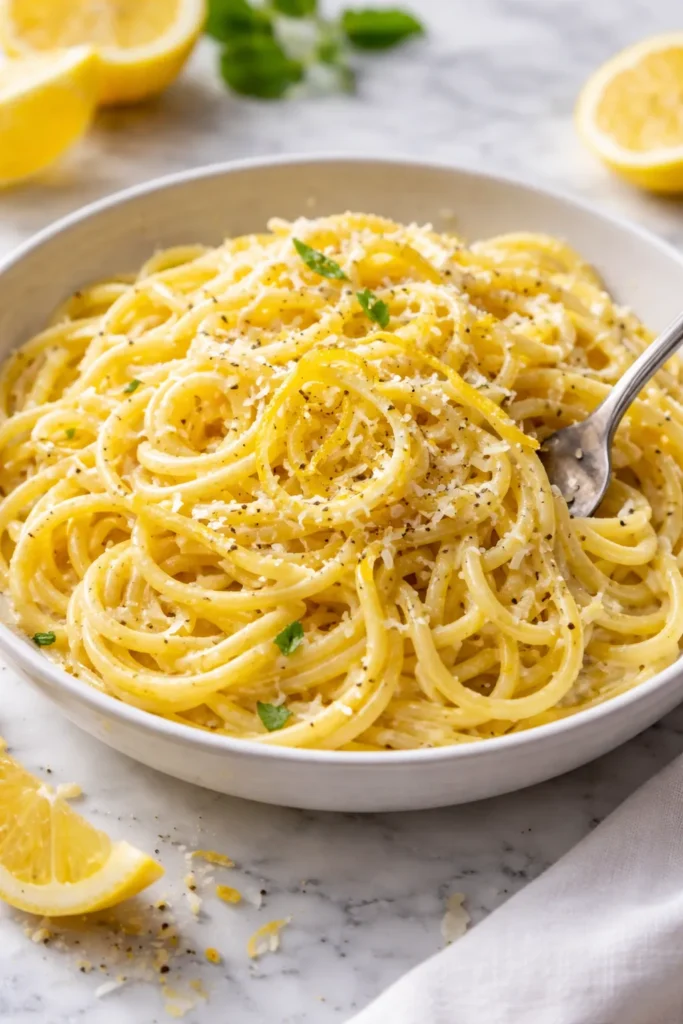
Pasta al limone is the kind of dish that sounds too simple to be as good as it is. Lemon, butter, Parmesan, pasta water, and pasta — that’s the core of it. What makes it work is the interplay between the sharp acidity of the lemon and the richness of the butter and cheese, balanced by the starchy pasta water. It’s bright without being sour, rich without being heavy.
The Lemon Specifics
Use both the zest and the juice. The zest goes in with the butter early, allowing its aromatic oils to bloom in the fat. The juice goes in at the very end, off the heat — adding it too early cooks out its brightness. For a visually striking finish, slice thin strips of lemon zest with a vegetable peeler and scatter them over each bowl.
One lemon’s worth of zest and about two tablespoons of juice is the right amount for a pound of pasta. More than that and the dish tips into aggressively sour territory; less and the lemon barely registers.
Why This Is Better Than It Looks on Paper
- The sauce is created entirely from pasta water, butter, and cheese — no cream needed, though a splash of heavy cream creates a slightly more indulgent result
- Spaghetti or linguine work best — the long noodles create a beautiful, glossy coating as they’re tossed in the sauce
- This is one of the fastest pasta dishes on this list — from boiling water to bowl in fifteen minutes flat
- Add a pinch of crushed red pepper to introduce a subtle warmth that balances the lemon perfectly
8. Spaghetti Puttanesca
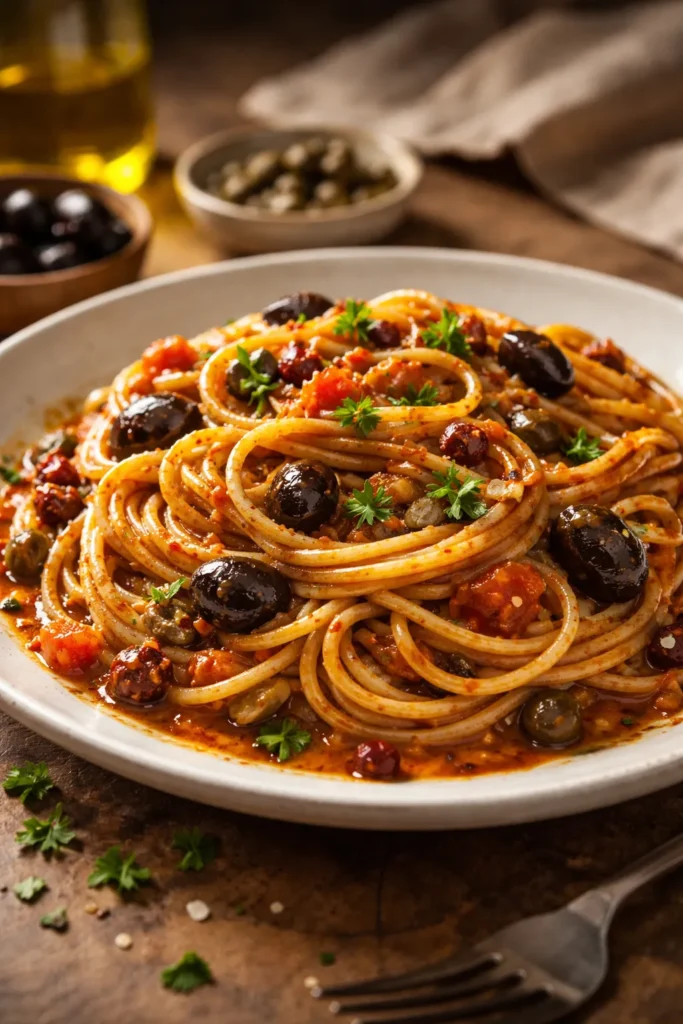
Puttanesca is the ultimate pantry pasta — every ingredient keeps indefinitely, no fresh produce required. Tomatoes, anchovies, capers, Kalamata olives, garlic, red pepper flakes, and olive oil. The combination is aggressively flavored, salty, briny, and slightly spicy. It punches well above its weight for a dish that takes twenty minutes.
The Anchovy Argument
Some recipes keep anchovies optional, but that’s a mistake. The anchovies dissolve completely in the hot olive oil, leaving no fish flavor behind — just a deep, savory background that makes every other element more complex. Think of them as seasoning, not a main ingredient. Four to six fillets for a pound of pasta is the right quantity.
Add anchovies to the garlic and oil before the tomatoes go in. Mash them with a wooden spoon as they cook — they’ll break down into the oil within sixty seconds.
Technique Notes for a Great Puttanesca
- Add capers toward the end of cooking rather than at the beginning; prolonged heat makes them mushy
- Olives should be good quality — oil-cured or Kalamata, not the mild black olives from a can
- Skip the Parmesan; puttanesca is traditionally served without cheese, and its flavors are complete as-is
- The sauce is even better made a day ahead — the flavors meld and deepen significantly overnight in the refrigerator
Worth knowing: Puttanesca also works beautifully as a no-cook sauce in warmer months. Combine chopped fresh tomatoes, olives, capers, anchovies, garlic, and olive oil and let them macerate at room temperature for an hour while you boil the pasta.
9. Real-Deal Fettuccine Alfredo
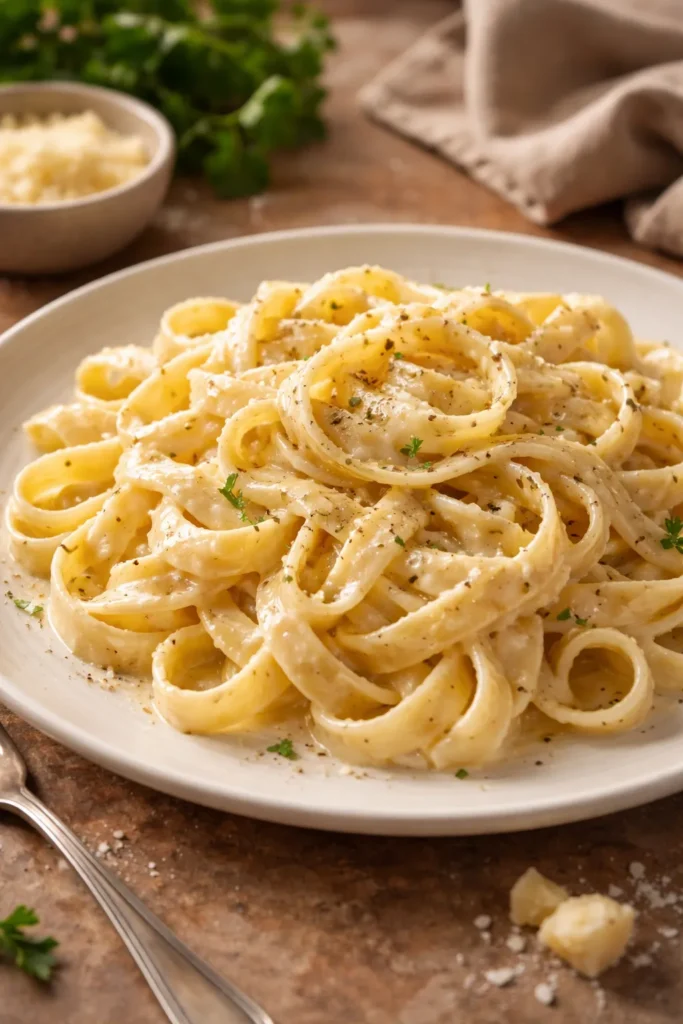
The version of Alfredo most people know — the one swimming in heavy cream — is an American invention. The original Roman recipe is nothing but fettuccine, butter, and Parmesan, and it’s extraordinary when made correctly. The sauce comes from the emulsification of the starchy pasta water, fat from the butter, and protein from the Parmesan — no cream involved.
The Original Method
Use the best butter you can find — European-style butter with a higher fat content (83-84%) makes a noticeable difference. Add a generous amount (four to six tablespoons per pound of pasta) to a warm pan along with a ladle of hot pasta water. Swirl until the butter melts and the mixture begins to look creamy. Add the freshly grated Parmesan in handfuls while tossing constantly, adding more pasta water as needed to maintain a fluid consistency.
The pasta must go straight from the pot into the pan — don’t rinse it, don’t shake off all the water. That clinging starch is part of what makes the sauce cohere.
Getting the Texture Right
- Parmesan must be finely grated on a Microplane; coarsely grated cheese seizes into lumps
- Work quickly — the sauce tightens as it cools, so have warmed bowls ready
- Serve immediately; Alfredo does not hold or reheat gracefully
- Fettuccine is traditional, though thick tagliatelle works equally well
The cream-free version is lighter, silkier, and more nuanced than the cream-based restaurant version most people are familiar with. Once you’ve had the real thing, the heavy cream version feels like a different dish entirely.
10. Burst Cherry Tomato Pasta
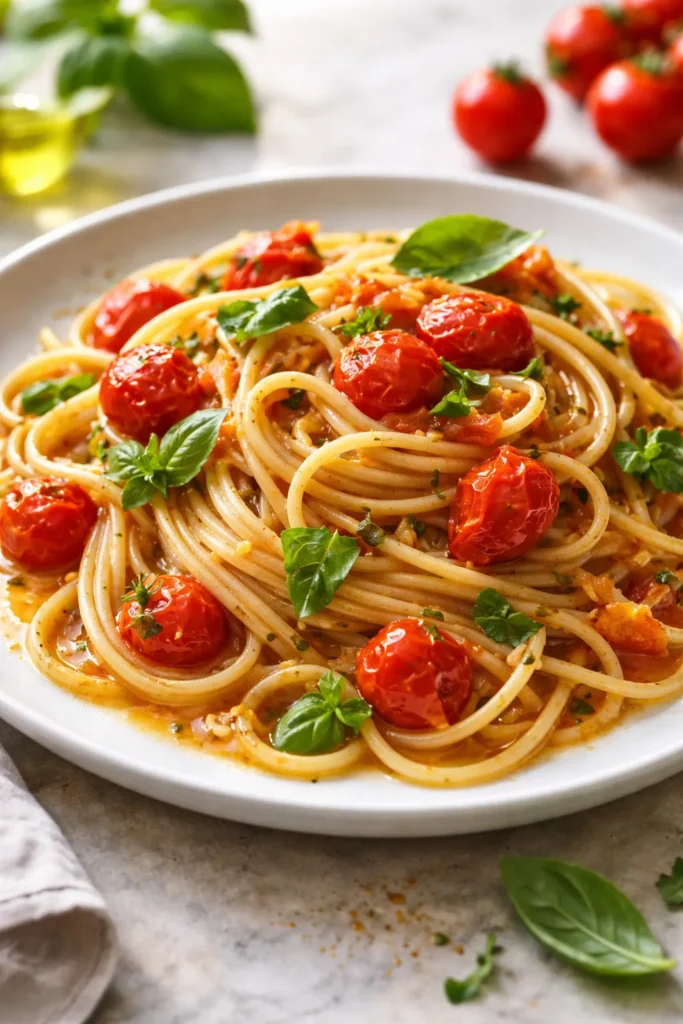
This sauce is built on one simple technique: cook cherry tomatoes in olive oil over medium-high heat until they burst, collapse, and release their liquid into the pan. What starts as whole, taut little spheres becomes a juicy, intensely flavored sauce in about twelve to fifteen minutes. It’s one of those dishes that tastes like it took far longer than it actually did.
Choosing the Right Tomatoes
Ripe cherry tomatoes are the objective here — Sungolds (the orange variety) are particularly good for this application because they’re sweeter and have thinner skins that burst more readily. Grape tomatoes have tougher skins and less liquid, making them a weaker substitute.
Don’t skimp on the olive oil. A generous pour — three to four tablespoons for a pound of pasta — creates the base that the tomato liquid emulsifies into. Garlic added at the start infuses the oil before the tomatoes go in.
How to Serve It
- Add a large handful of fresh basil torn over the top just before serving — the heat wilts it slightly and releases the oils
- Burrata placed directly on top of the finished pasta, allowed to melt slightly from the residual heat, transforms this into something genuinely impressive
- Fresh mozzarella torn into chunks and stirred through the pasta works beautifully as well
- A drizzle of good olive oil and flaky sea salt at the table makes every bowl feel finished
Pro tip: Add a small pinch of sugar if your tomatoes aren’t fully ripe — it takes the raw edge off without making the sauce taste sweet.
11. One-Pan Sausage and Arugula Pasta
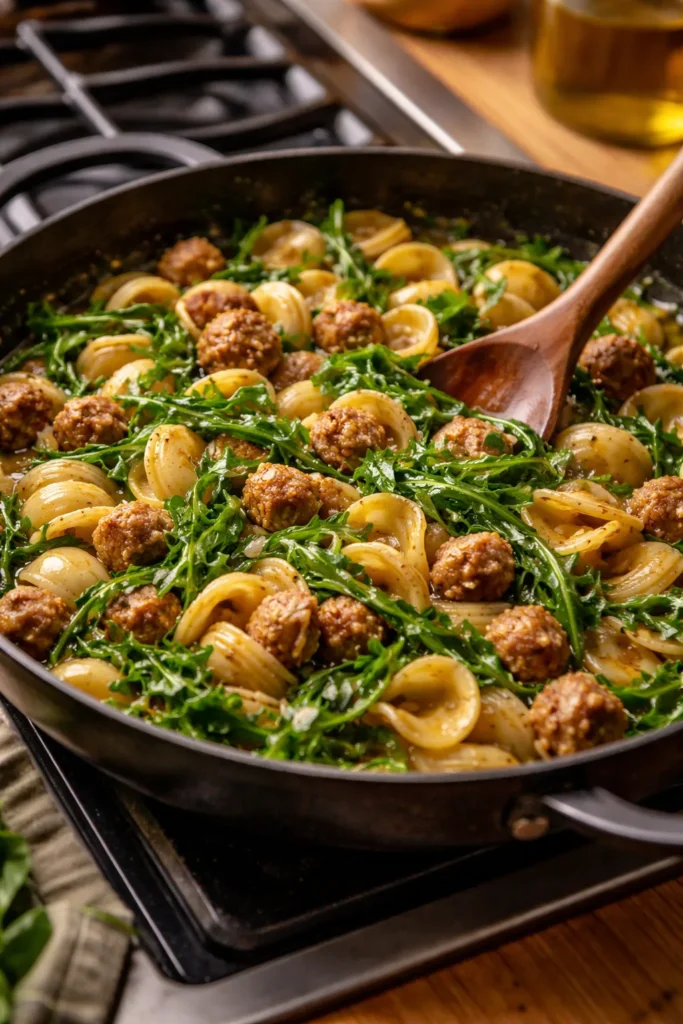
This is the formula for weeknight pasta that doesn’t require you to think too hard: brown something, cook pasta in the same pot, add something green. Italian sausage (sweet or hot) broken into small pieces and browned until crispy, then pasta cooked in the same pan with just enough liquid to cook the noodles, finished with a massive handful of peppery arugula that wilts in the residual heat.
Why One-Pan Pasta Works
The pasta releases starch as it cooks directly in the sauce liquid (usually stock, or a mix of stock and water). That starch thickens the cooking liquid naturally, creating a slightly creamy consistency without adding any cream. The finished sauce clings to the pasta rather than pooling at the bottom of the bowl.
Use enough liquid — generally one cup of liquid per ounce of pasta is a reliable starting point, adjusting as you go. The pasta should be just barely submerged and stirred frequently to prevent sticking.
Flavor Building Tips
- Fennel seeds toasted briefly in the pan before the sausage goes in amplify the natural anise notes already present in Italian sausage
- Deglaze with a splash of dry white wine after the sausage is browned — every browned bit that comes up from the bottom of the pan is concentrated flavor
- Arugula can be swapped for baby spinach or kale (torn and stems removed) depending on what’s available
- Shavings of Parmesan and a squeeze of lemon juice at the table are non-negotiable finishing touches
12. Creamy Garlic Pasta
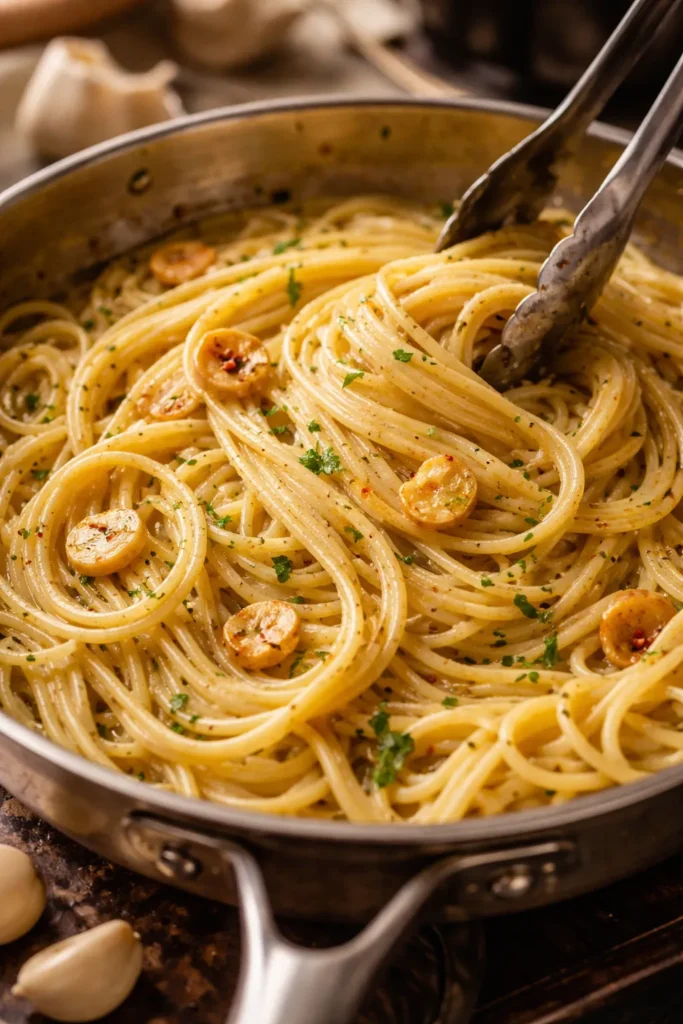
This is perhaps the most approachable recipe on this list — the kind of thing you can make when you’re genuinely exhausted and need dinner in fifteen minutes. Spaghetti, a head’s worth of garlic, good olive oil, Parmesan, and pasta water. What makes it “creamy” isn’t dairy — it’s the combination of the starchy pasta water and the olive oil emulsifying under constant tossing in a warm pan.
Making Garlic the Star
The garlic preparation determines the flavor of the entire dish. Thinly sliced garlic cooked slowly in olive oil gives a mellow, nutty, sweet result. Minced garlic cooked briefly over higher heat delivers sharper, more pungent flavor. Grated garlic dissolved into the oil almost entirely, creating a subtle background richness.
For this dish, the slow-sliced method is worth the extra few minutes. Cook six to eight cloves (yes, that many) in olive oil over medium-low heat for seven to eight minutes, until they’re golden and fragrant. The garlic becomes sweet and complex rather than sharp and raw.
Pulling It Together
Add a full ladle of pasta water to the garlic oil, toss in the cooked spaghetti, and work quickly over medium heat to build the emulsion. Parmesan goes in off the heat with constant stirring. Finish with a small squeeze of lemon or lime juice — it brightens every other flavor in the bowl without making itself known as citrus.
- A drizzle of honey (literally a quarter teaspoon) balances the sharpness of the garlic; this sounds odd and works brilliantly
- Red pepper flakes at the table allow people to control their own heat level
- This reheats surprisingly well for lunch the next day, loosened with a splash of water in a pan
Five Techniques That Upgrade Every Pasta You Make
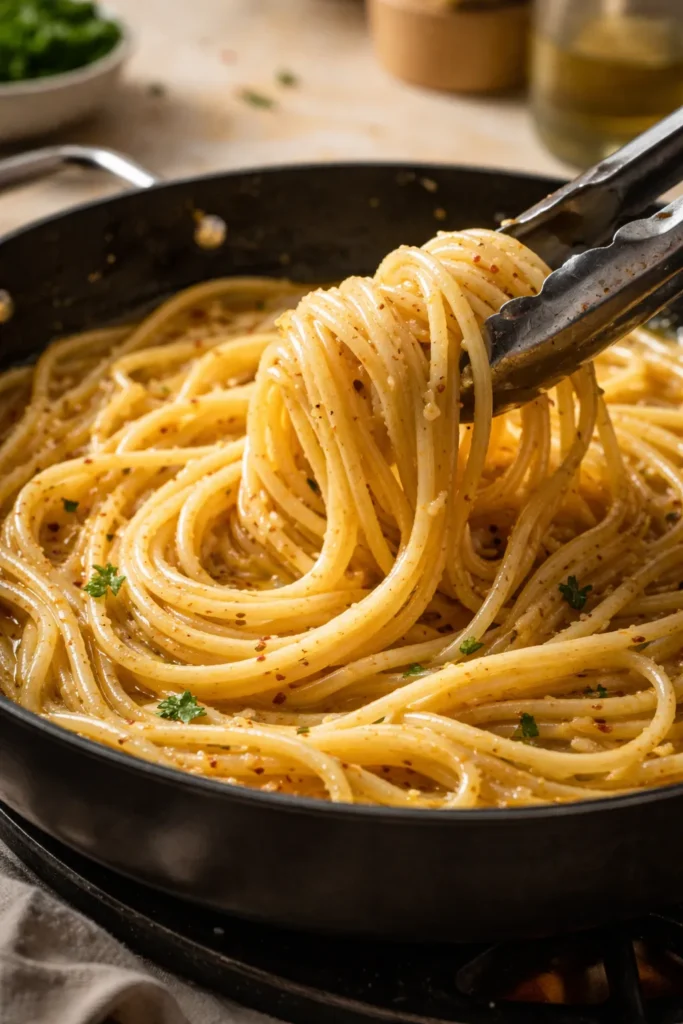
Beyond the specific recipes above, a handful of universal techniques will make every pasta you cook noticeably better.
Salt the water aggressively. It should taste salty, not just not-bland. A tablespoon and a half of kosher salt in a large pot of water is a minimum.
Save more pasta water than you think you need. A full cup, minimum, before you drain. You’ll use about a quarter of it and feel relieved the rest is there.
Cook pasta two minutes less than the package says, then finish it in the pan with the sauce for those final minutes. It absorbs sauce, finishes cooking, and arrives in the bowl at exactly al dente.
Don’t rinse the pasta. Ever. The starch that coats each noodle after draining is what makes sauce stick to it. Rinsing removes that entirely and leaves you with slippery, under-flavored noodles.
Use cold butter to finish sauces. Adding cubes of cold butter off the heat — a technique called mantecatura in Italian — creates a glossy, emulsified finish that hot butter or butter added at the start simply won’t produce.
Final Thoughts
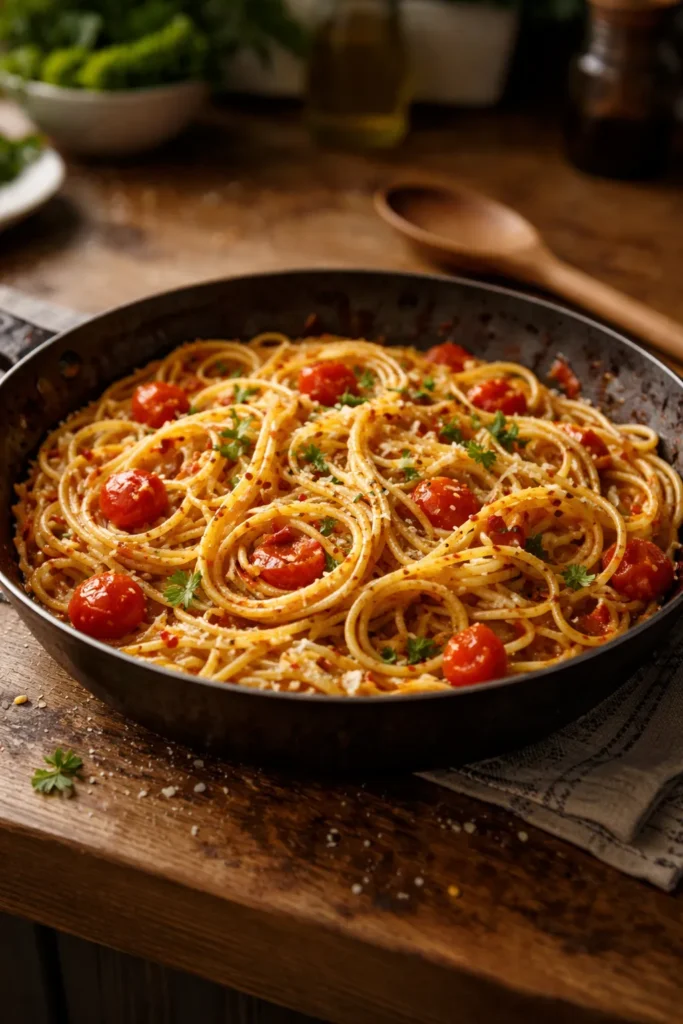
The gap between great homemade pasta and restaurant or delivery pasta is almost entirely about timing and technique — not exotic ingredients or professional equipment. A carbon steel pan, a large pot, a Microplane grater, and a wooden spoon are genuinely all you need.
Start with whichever recipe on this list sounds most appealing and get comfortable with its rhythm before moving on to the next. Aglio e olio, for instance, teaches you garlic control and sauce emulsification in a way that pays dividends in every other dish on this list. Cacio e pepe teaches cheese technique. Shrimp scampi teaches butter sauces. Each one builds your instincts.
The real reward of cooking pasta at home isn’t just the money saved or the superior taste — it’s the confidence that comes from knowing you can produce something genuinely excellent from a box of noodles and a few pantry staples on a Tuesday night. That skill compounds over time. Your fifteenth bowl of cacio e pepe will be noticeably better than your first, and you’ll know exactly why.