Few things in this world feel as immediately right as a bowl of creamy pasta at the end of a hard day. There’s no elaborate justification needed — the warmth, the silky sauce clinging to each strand or tube, the way a good forkful just fixes things. Creamy pasta is comfort food in its purest form, and it earns that title every single time.
What makes a creamy pasta recipe genuinely great, though, is more nuanced than just pouring cream into a pan. The best versions balance richness with brightness — a squeeze of lemon, a hit of white wine, a sharp grating of Parmesan that melts into the sauce rather than sitting on top of it. They’re built on layers: properly salted pasta water, garlic coaxed in butter until fragrant (never brown), cream brought to the gentlest simmer. Small details, enormous payoff.
These eight recipes cover the full range of what a cozy night in actually looks like. Some are done in 20 minutes flat. Others require a little more patience but reward it spectacularly. A few lean on pantry staples you almost certainly already have; others introduce one or two special ingredients that become instant regulars. Every single one has been written with enough detail that you can cook it confidently on the first try — and crave it again by the end of the week.
Table of Contents
- What Makes a Creamy Pasta Sauce Actually Work
- 1. Classic Garlic Parmesan Cream Pasta
- Why It’s the One to Know by Heart
- Quick Technique Notes
- 2. Creamy Mushroom Pasta with White Wine and Thyme
- Building the Sauce Around the Mushrooms
- Mushroom Selection and Pairing
- 3. Creamy Lemon Pappardelle with Mascarpone
- Why Pappardelle Is the Right Call Here
- Tips for Working with Mascarpone
- 4. Spicy Sausage and Tomato Cream Rigatoni
- The Tomato-Cream Balance
- Customizing the Heat Level
- 5. Creamy Pesto Chicken Pasta
- Building the Sauce Without Curdling the Pesto
- Pasta Shape and Serving Notes
- 6. Creamy Butternut Squash Pasta
- Blending the Sauce to Perfect Consistency
- Making It More Complex
- 7. Pancetta and Pea Orecchiette in Cream Sauce
- Rendering the Pancetta Correctly
- Variations to Keep It Fresh
- 8. Carbonara-Style Pasta with Crispy Bacon and Extra Black Pepper
- The Egg Mixture: Getting It Right Every Time
- The Pepper is Not Optional
- Tips for Silkier, More Consistent Cream Sauces
- Key Takeaways
What Makes a Creamy Pasta Sauce Actually Work
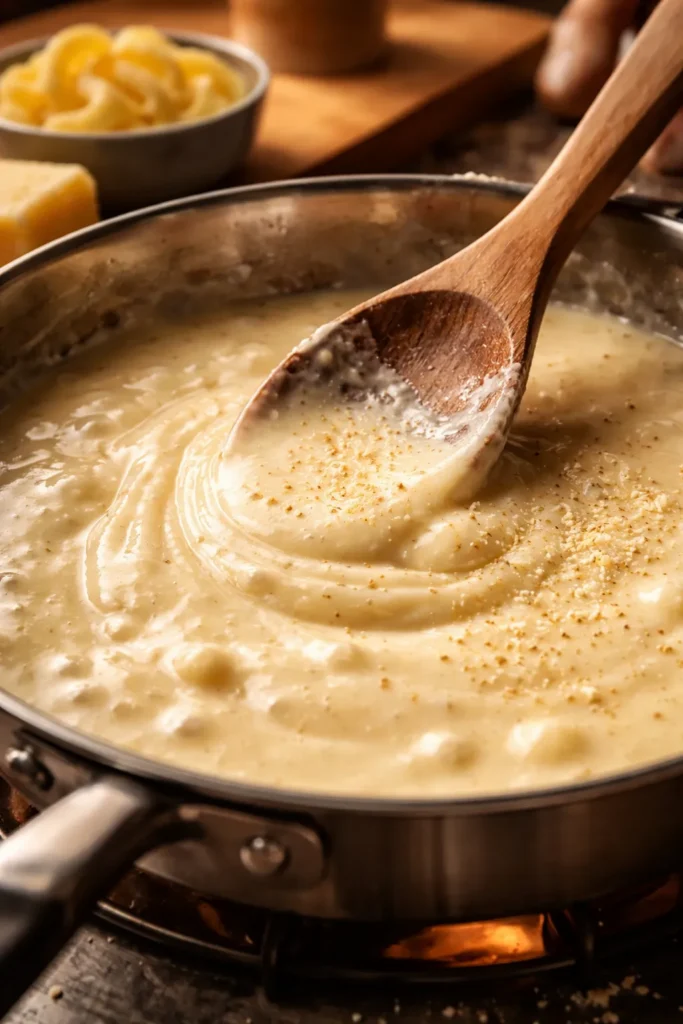
Before getting into the recipes themselves, it’s worth spending a moment on the mechanics that separate a genuinely silky sauce from one that’s either grainy, broken, or just… flat.
The most important rule: keep your heat low once the cream goes in. Cream that boils hard will reduce too fast, separate, and lose that glossy emulsified quality you’re chasing. A gentle simmer — you should see small lazy bubbles, not a rolling boil — is what gives you that restaurant-quality finish at home.
Parmesan is another place where most home cooks trip up. Pre-shredded cheese from a bag contains cellulose and anti-caking agents that prevent smooth melting. Buy a wedge, grate it yourself on the finest side of a box grater or with a Microplane, and add it in two or three separate additions rather than dumping it all in at once. Each addition should fully melt before the next goes in.
Don’t skip the pasta water. That starchy, salty liquid is essentially liquid gold for cream sauces. A quarter cup stirred in will loosen a sauce that’s thickened too aggressively and help it cling evenly to every piece of pasta. Always scoop some out before you drain — you can’t go back for it afterward.
The other habit worth building: finish the pasta in the sauce for the last minute or two of cooking rather than serving them separately. The pasta absorbs flavor, the starch it releases further thickens the sauce, and the whole dish comes together as one cohesive thing rather than pasta with sauce plopped on top.
1. Classic Garlic Parmesan Cream Pasta
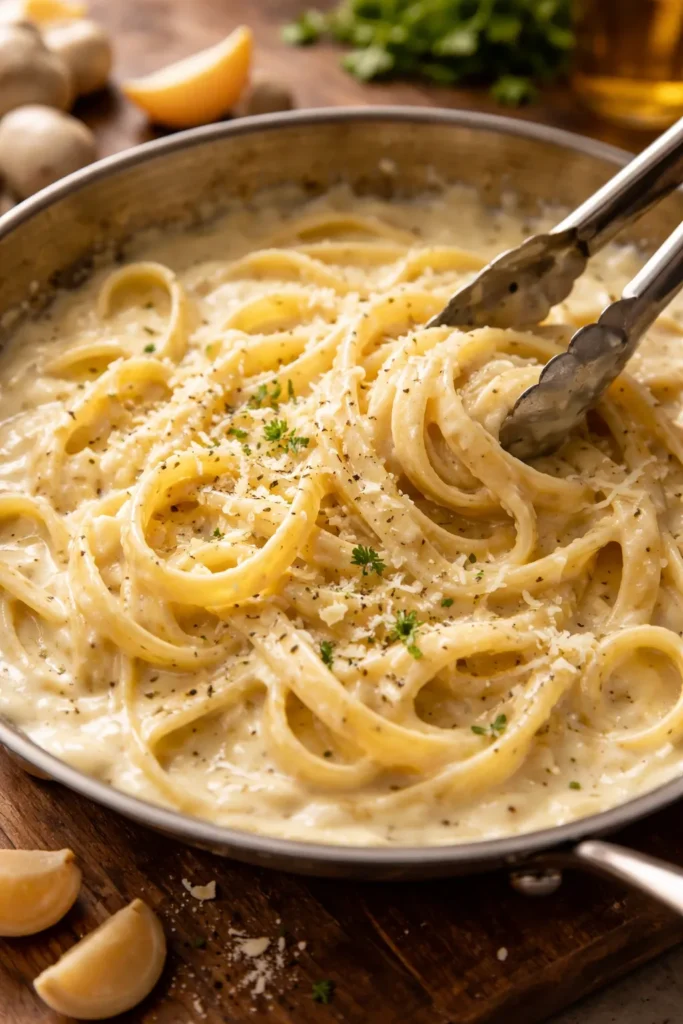
This is the recipe to have memorized. Six ingredients, one pan, twenty minutes — and the result is the kind of garlic cream pasta that people assume took twice as long and three times the effort. It’s the pasta equivalent of a perfectly worn-in sweater.
The base is simple: garlic softened in butter until fragrant and sweet, cream added and brought to a low simmer, Parmesan melted in gradually until the sauce is glossy and clings to a spoon. What lifts it from basic to brilliant is a splash of lemon juice stirred in right at the end. Just a teaspoon or two cuts through the richness without announcing itself — the sauce tastes cleaner without tasting citrusy.
Why It’s the One to Know by Heart
Long pasta shapes — fettuccine, linguine, spaghetti — work best here because the smooth, silky sauce coats each strand evenly. The ratio matters: roughly three-quarters of a cup of cream and 50 grams of finely grated Parmesan per two servings gives you a sauce that’s rich without being heavy.
Cook the pasta in aggressively salted water (it should taste properly seasoned, not faintly salty), pull it out one minute before the package says it’s done, and finish it directly in the sauce. Two minutes of gentle bubbling together and the dish practically makes itself.
Quick Technique Notes
- Grate the Parmesan as finely as possible — a Microplane gives the smoothest melt
- Add the cheese off the heat or at the lowest simmer to avoid clumping
- Season at the very end, after the cheese is in, since Parmesan adds significant salt on its own
- A small knob of cold butter stirred in just before serving adds a gloss that makes the sauce look like it came out of a professional kitchen
Worth knowing: If the sauce tightens up between the pan and the table — and it will, cream sauces always do — a splash of reserved pasta water stirred in right before serving loosens it back to the perfect consistency in seconds.
2. Creamy Mushroom Pasta with White Wine and Thyme
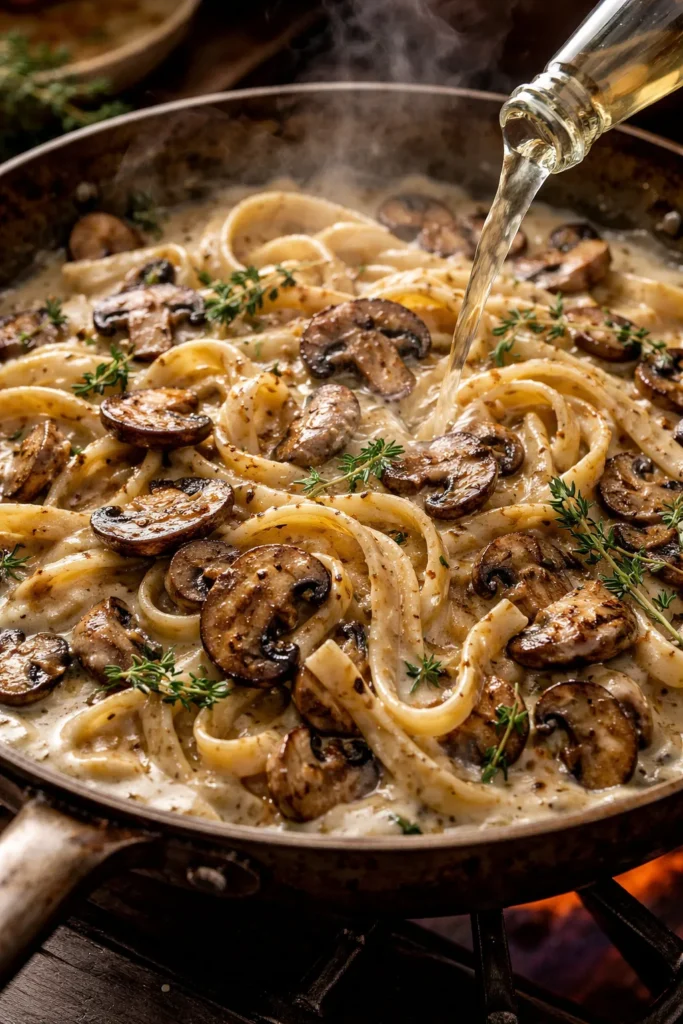
Mushrooms and cream have a relationship that borders on the mythological. The earthiness of well-cooked mushrooms — golden, slightly crisp at the edges, concentrated in flavor — is exactly the kind of thing that cream amplifies rather than muffles. This pasta is proof.
The technique matters here more than the ingredient list. Mushrooms need room in the pan and dry, high heat to caramelize properly. Crowding them causes steaming instead of browning, and steamed mushrooms in cream sauce taste vaguely of nothing in particular. Work in two batches if needed, resist the urge to stir constantly, and wait for that deep golden color before moving on.
Building the Sauce Around the Mushrooms
Once the mushrooms are properly cooked, garlic and fresh thyme go in for thirty seconds — just long enough to bloom — then a splash of dry white wine to deglaze. Scrape every browned bit from the bottom of the pan; that’s pure flavor. The wine reduces for about two minutes, then cream goes in and the heat drops immediately.
A handful of finely grated Pecorino Romano or Parmesan melts into the sauce, and then the pasta finishes right there in the pan. The mushrooms should stay intact and distributed throughout — not dissolved into the sauce but not sitting awkwardly on top either.
Mushroom Selection and Pairing
- Cremini mushrooms are the workhorse choice — affordable, widely available, reliably earthy
- Mixed wild mushrooms (shiitake, oyster, chanterelle when in season) add complexity and varying textures
- A small handful of dried porcini rehydrated in warm water, with the strained soaking liquid added to the sauce, adds deep umami that fresh mushrooms alone can’t match
- This sauce suits wider, more robust pasta shapes — pappardelle, tagliatelle, or rigatoni — that can hold their own against the earthy intensity
Pro tip: A small grating of nutmeg — less than you think, about an eighth of a teaspoon — into the cream sauce while it simmers adds warmth that rounds out the mushrooms beautifully. You won’t be able to identify it, but you’ll notice its absence if you skip it.
3. Creamy Lemon Pappardelle with Mascarpone
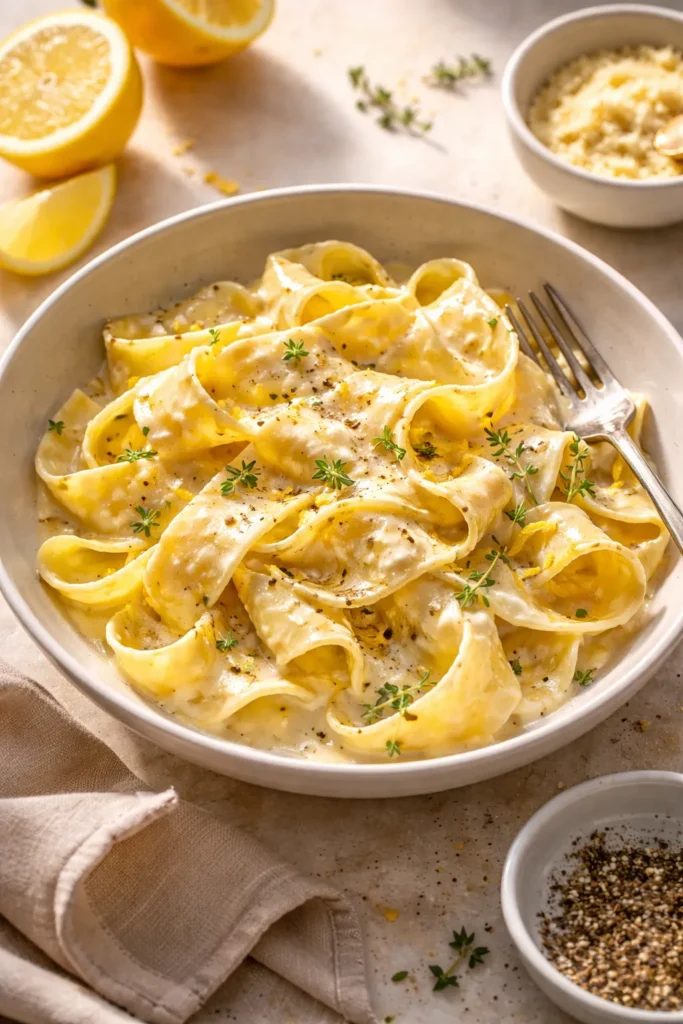
Mascarpone is one of those ingredients that completely changes what’s possible in a cream sauce. It’s richer than heavy cream, silkier than cream cheese, and has a mild, slightly sweet dairy flavor that makes sauces feel impossibly luxurious without requiring any real work. And when you pair it with lemon, something genuinely special happens.
This pasta is the answer to any night when you want something that feels indulgent but doesn’t leave you feeling heavy afterward. The lemon zest — and it must be zest, not just juice — gives the sauce a fragrant citrus lift that cuts through the mascarpone’s richness. A handful of fresh thyme and a generous amount of cracked black pepper round out the flavors.
Why Pappardelle Is the Right Call Here
Wide, flat pappardelle ribbons are the ideal partner for mascarpone sauces. They provide enough surface area for the sauce to coat generously while their slight thickness means they don’t disappear into the creaminess. Fresh pappardelle, if you can find it, cuts the cook time to two or three minutes and has a texture that’s incomparable — silky and just tender enough.
To make the sauce, mascarpone goes straight into a warm (not hot) pan with a splash of pasta water and a generous amount of lemon zest. It melts into a glossy, pourable sauce in under two minutes. Toss in the cooked pasta, add the juice of half a lemon, finish with Parmesan and thyme, and serve immediately. Dinner in fifteen minutes.
Tips for Working with Mascarpone
- Take it out of the fridge thirty minutes before cooking — cold mascarpone can seize up in a hot pan
- Never bring a mascarpone sauce to a full boil; keep it at a gentle melt over medium-low heat
- Add pasta water tablespoon by tablespoon to control the consistency — a little goes a long way
- This sauce works beautifully with cooked shrimp stirred in at the end, or with a handful of fresh basil torn over the top
4. Spicy Sausage and Tomato Cream Rigatoni
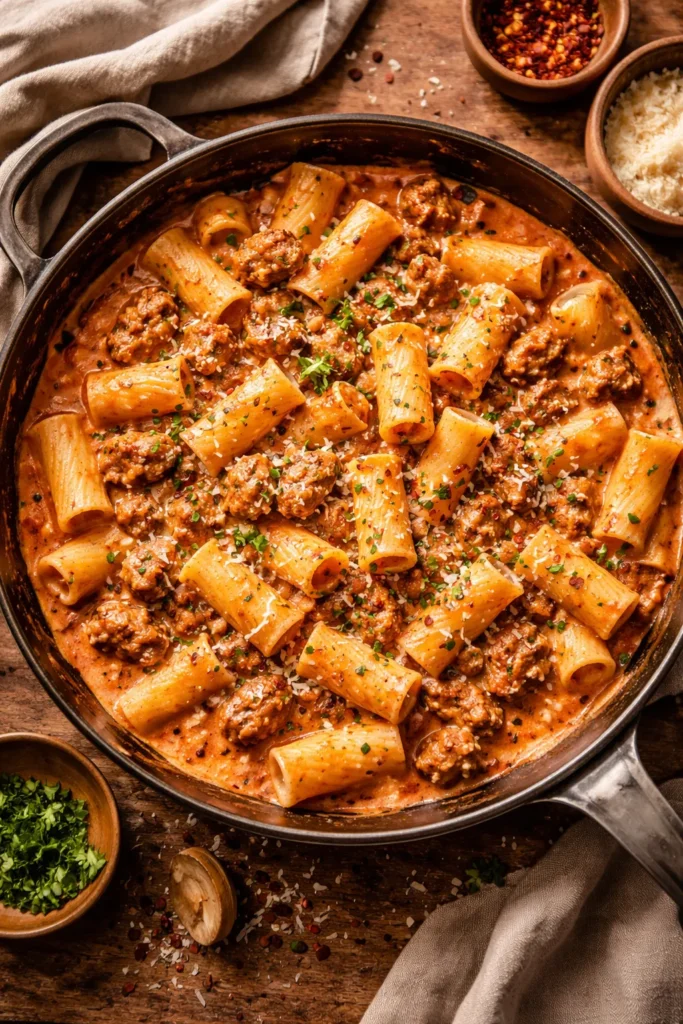
This is the recipe that converts people who think they don’t love cream sauces. The tomato component keeps it from feeling too rich, the sausage brings depth and a little heat, and the cream ties everything together into a sauce that’s bold without being one-dimensional. It’s deeply satisfying in a way that’s hard to explain until you’ve had a bowl of it.
Italian sausage — specifically the kind with fennel and spice — is the backbone here. Remove it from its casings and break it into irregular chunks in a hot pan. Those rough, jagged pieces create more surface area for caramelization, which means more flavor in the final sauce. Don’t rush this step.
The Tomato-Cream Balance
After the sausage is browned, garlic and a pinch of Calabrian chili or red pepper flakes go in briefly before a generous spoonful or two of tomato paste. Cook the paste in the fat for a full two minutes — it deepens in color and loses its raw, sharp edge, becoming something sweeter and more complex. Then cream goes in, the sauce comes together, and it turns into that gorgeous blush-pink color that signals a genuinely good vodka-adjacent sauce without the vodka.
Rigatoni is the non-negotiable choice here. The ridges grip the sauce and the hollow tubes fill with it, so every bite delivers the full flavor of the dish. Penne works in a pinch, but the wider opening of rigatoni captures more sauce per forkful.
Customizing the Heat Level
- For a milder version, skip the chili entirely and use sweet Italian sausage — the dish stays full-flavored without the heat
- For serious spice, use ‘nduja (a soft, spreadable Calabrian sausage) in place of regular sausage — it melts directly into the sauce
- A handful of wilted spinach stirred in at the end adds color and a slight bitterness that plays nicely against the rich sauce
- Finish with a heavy hand of freshly grated Parmesan and a few fresh basil leaves for brightness
5. Creamy Pesto Chicken Pasta
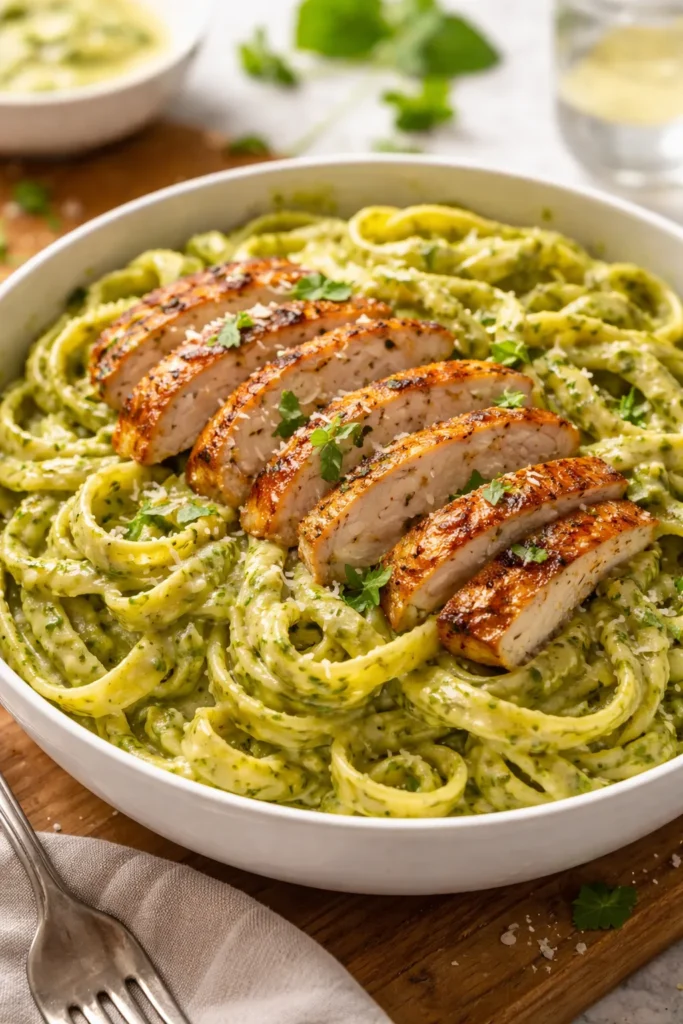
Pesto and cream shouldn’t work as well together as they do. The oil-based, herb-forward nature of basil pesto seems like it would fight against dairy rather than complement it. But when they meet in a warm pan with a handful of pasta, something harmonious happens: the cream softens the pesto’s sharpness, the pesto keeps the cream from feeling heavy, and you get a sauce that’s bright green, fragrant, and completely satisfying.
The chicken here is important to get right. A flattened chicken breast — beaten to an even thickness of about a centimeter and a half — cooks in four minutes flat over medium-high heat and stays juicy throughout. Uneven thickness means part of the breast overcooks before the thicker section is done. A rolling pin and thirty seconds of effort prevents dry chicken entirely.
Building the Sauce Without Curdling the Pesto
Heat is the enemy of pesto in a cream sauce. Add pesto to boiling cream and you’ll see it separate and look grainy. The trick is to make the cream sauce first — garlic in butter, cream added and brought to a gentle simmer, Parmesan melted through — and then stir the pesto in off the heat or at the very lowest temperature. The residual warmth loosens the pesto and incorporates it smoothly.
Sun-dried tomatoes add a sweet, concentrated tomato note that pairs brilliantly with both the cream and the herb. A tablespoon or two of the oil from the jar adds another layer of flavor to the sauce.
Pasta Shape and Serving Notes
- Linguine, fettuccine, or a short pasta like fusilli all work beautifully — the spirals of fusilli trap the pesto cream sauce in every curve
- Asparagus cut into short pieces and blanched for two minutes makes a great addition, adding color and a slight vegetal freshness
- Don’t skip the lemon zest over the top before serving — it’s a small thing that makes a noticeable difference
- Store leftovers with a splash of cream rather than water; the sauce reheats more smoothly this way
6. Creamy Butternut Squash Pasta
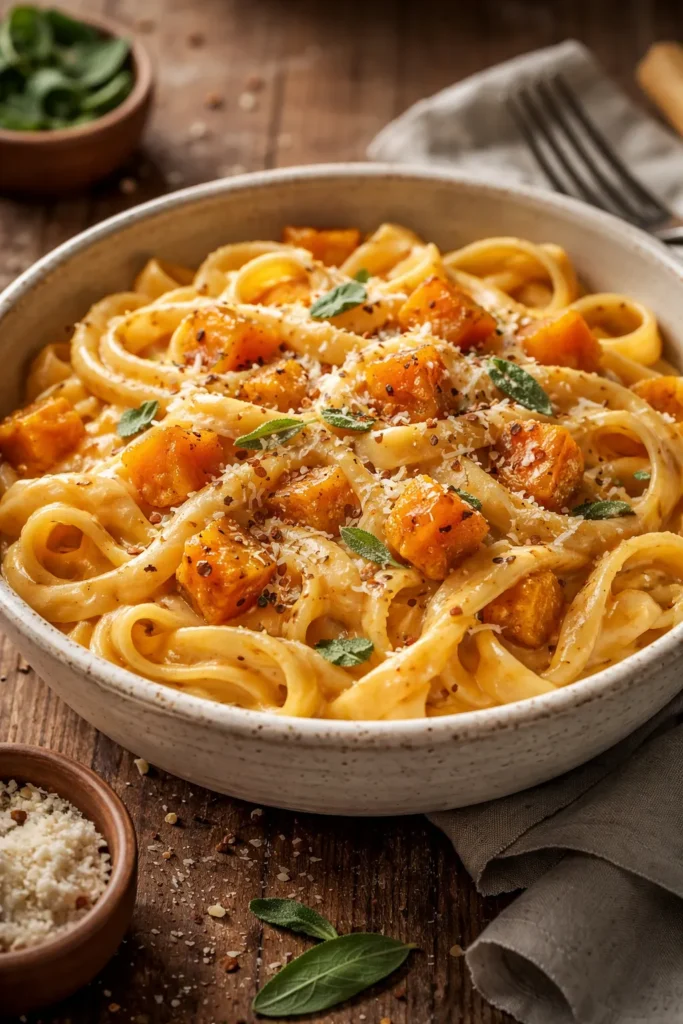
This is the pasta that earns its place on any cold-weather table — not because butternut squash is trendy or seasonal but because the flavor it produces in a sauce is genuinely extraordinary. Roasted, caramelized squash blended with garlic, cream, and a touch of nutmeg creates a sauce that’s velvety, slightly sweet, deeply savory, and colored a shade of amber that looks stunning against pale pasta.
Roasting is non-negotiable here. Boiled squash produces a watery, one-dimensional puree. Roasted squash — cut side down in a hot oven until caramelized at the edges — concentrates the sugars and creates flavor that blending and cream will amplify rather than dilute. Forty minutes in the oven at 200°C (400°F) is all it takes, and you can prepare the sauce entirely while the squash is roasting.
Blending the Sauce to Perfect Consistency
Once the squash is roasted and slightly cooled, it goes into a blender with a ladle of pasta cooking water, a generous pour of cream, two roasted garlic cloves (roast them right alongside the squash), salt, pepper, and a pinch of nutmeg. Blend until completely smooth. The texture should be pourable but thick enough to coat a spoon.
Pour the blended sauce into a warm pan, taste for seasoning, and finish the pasta directly in it. The starch from the pasta water helps thin the sauce as needed and gives it that glossy, restaurant-quality sheen.
Making It More Complex
- A crisp sage leaf fried in brown butter and laid over the finished pasta adds crunch, nutty depth, and an aromatic quality that complements the squash perfectly
- Toasted hazelnuts or walnuts add texture and earthy richness
- A handful of crumbled ricotta salata or sharp Pecorino provides a salty contrast to the sauce’s natural sweetness
- For a vegan version: replace the cream with full-fat coconut milk and the Parmesan with nutritional yeast — it works remarkably well and the coconut flavor is subtle enough that it doesn’t distract
7. Pancetta and Pea Orecchiette in Cream Sauce
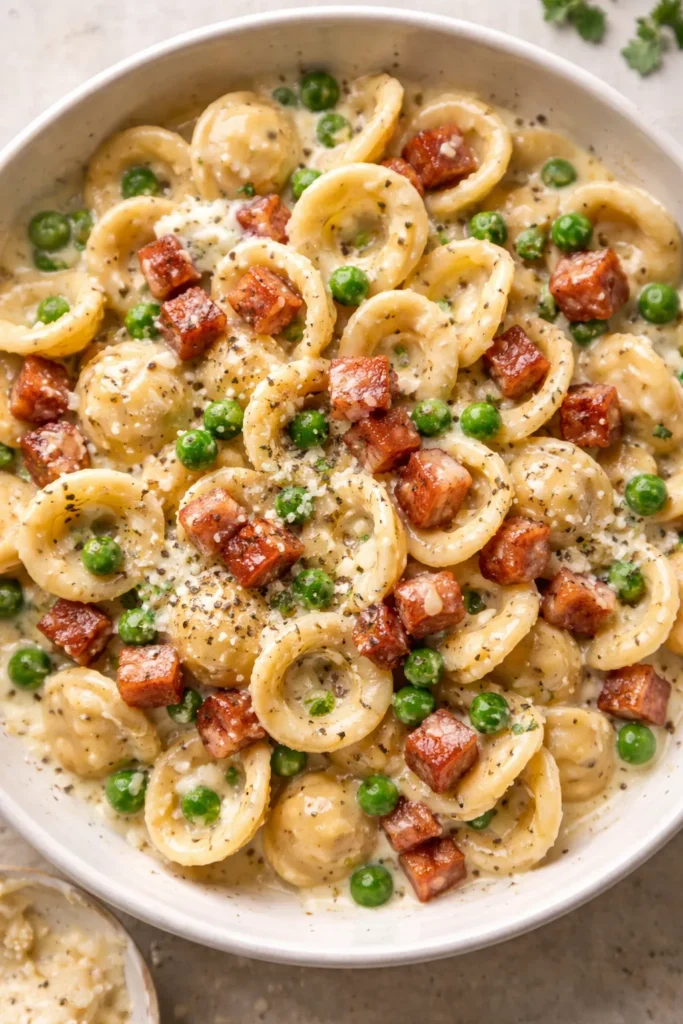
This pasta is all about contrasts: crispy against silky, salty against sweet, tiny pops of pea against a smooth cream sauce. It’s the kind of dish that looks more composed than the effort required to make it, and it comes together in under twenty-five minutes with ingredients most people have on hand or can grab at any grocery store.
Orecchiette — the small, ear-shaped pasta from Puglia — is purpose-built for this preparation. The concave shape scoops up cream sauce and catches peas and bits of pancetta in its cup, so every forkful delivers the full composition of the dish. It’s not interchangeable with a flat pasta; the shape is part of what makes this recipe work.
Rendering the Pancetta Correctly
Pancetta cut into small cubes goes into a dry, cold pan before the heat goes on. Starting cold allows the fat to render gradually, which produces more thoroughly crispy, golden cubes without burning. Once the pancetta is properly crisp and the fat is rendered, transfer it to a paper towel and cook the garlic in that same flavorful fat.
Cream goes in next over medium-low heat, followed by pasta water and finely grated Parmesan. The peas — frozen peas work perfectly well, added directly from frozen — go in right at the end and warm through in about ninety seconds without losing their bright green color. Stir the crispy pancetta back in at the very last moment so it keeps some of its crunch.
Variations to Keep It Fresh
- Swap pancetta for guanciale if you can find it — the pork jowl has a softer texture but a more complex, porky depth
- Add a small amount of lemon zest over the finished pasta for brightness
- Fresh mint leaves torn over the top add a surprising and genuinely pleasant lift that’s a traditional Southern Italian touch with peas
- For a smoke-forward version: use thick-cut smoked bacon in place of pancetta and add a teaspoon of smoked paprika to the cream as it simmers
8. Carbonara-Style Pasta with Crispy Bacon and Extra Black Pepper
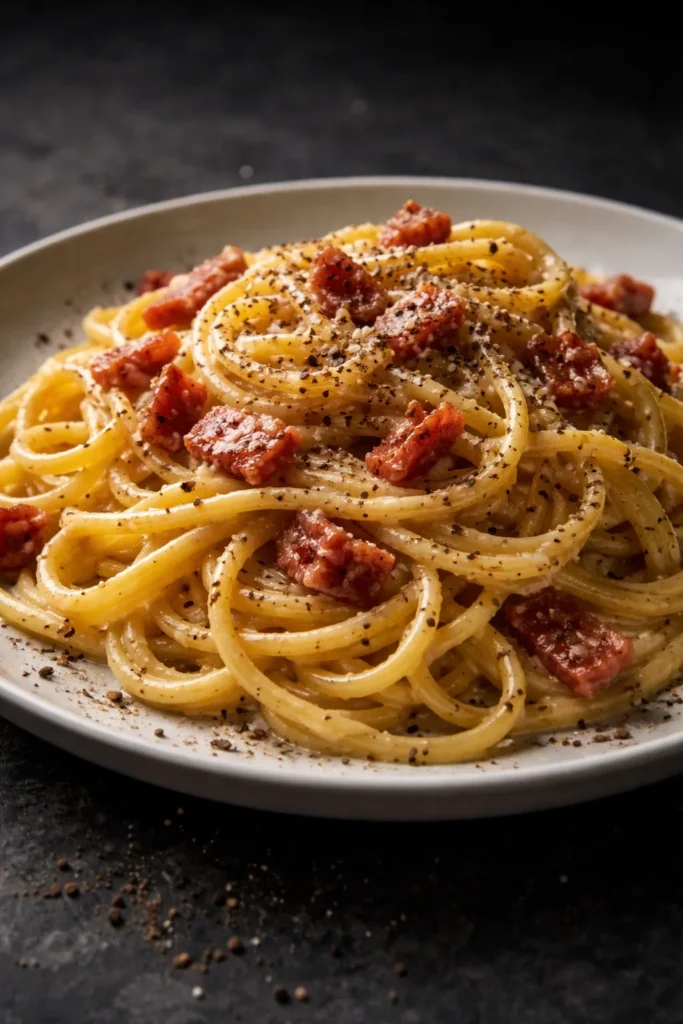
Carbonara is the pasta that demands your full attention for about three minutes — and rewards that attention with the most intensely satisfying, silky, rich sauce you can produce without a drop of actual cream. The creaminess comes entirely from emulsified eggs and cheese, which is one of the great technical magic tricks in Italian cooking.
This version stays true to the spirit of carbonara while acknowledging that guanciale isn’t always accessible and that a well-made version with thick-cut bacon is a genuinely excellent dinner rather than a compromise. The technique is what matters, not the provenance of the pork.
The Egg Mixture: Getting It Right Every Time
Two whole eggs plus two additional yolks, a generous amount of finely grated Pecorino Romano and Parmigiano-Reggiano in equal parts, and an amount of cracked black pepper that feels excessive but isn’t — mix these together in a bowl before the pasta finishes cooking. Having this ready to go before you drain anything is the whole ballgame.
The sauce only works from residual heat. After tossing the hot cooked pasta with the rendered bacon fat in the pan, remove the pan from the heat entirely before adding the egg mixture. Toss constantly and vigorously while adding pasta water a tablespoon at a time. The eggs should coat the pasta in a glossy, cohesive sauce rather than scrambling. If the pan is too hot, you get chunks. If it’s too cold, you get a soupy mess. The sweet spot — off the heat, residual warmth, constant movement — produces something extraordinary.
The Pepper is Not Optional
Authentic cacio e pepe and carbonara both treat black pepper as a primary flavor, not a garnish. Toast whole peppercorns in a dry pan for sixty seconds until fragrant, then crack them coarsely — not fine powder. The texture and the aromatic intensity of freshly cracked pepper against the rich egg sauce is one of the defining pleasures of this dish.
Critical tip: Pasta water is everything in carbonara. Reserve at least a full cup. Add it slowly and only as needed; you can always add more but you can’t take it out. The starch in the water is what gives the sauce its body and lets it coat the pasta without running off the bottom of the bowl.
Tips for Silkier, More Consistent Cream Sauces
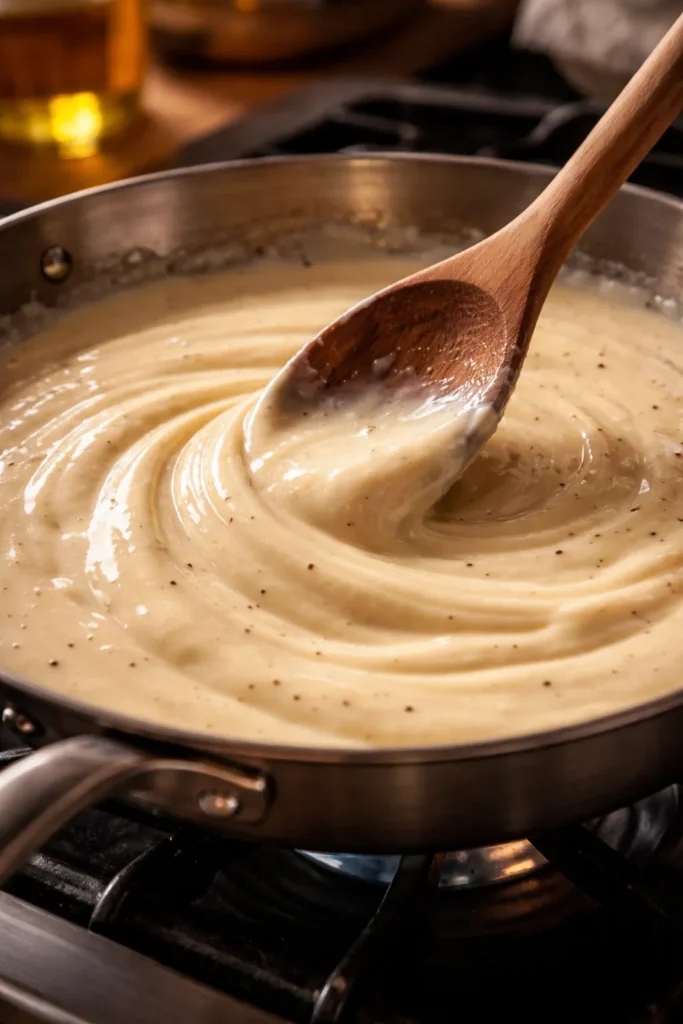
A few habits, once built, make every cream pasta better regardless of which recipe you’re making.
Salt your pasta water until it tastes like properly seasoned soup — not mildly salty, but genuinely seasoned. Pasta cooks for ten to twelve minutes in that water, and it’s the only opportunity to season the pasta itself from the inside out. Under-salted pasta water produces pasta that tastes flat no matter how good the sauce is.
Always pull your pasta one to two minutes before the package says it’s fully cooked. It finishes in the sauce and absorbs flavor while it gets to the right texture. By the time it reaches the table, it’ll be perfectly al dente — tender but with that slight resistance in the center that separates good pasta from overcooked mush.
Cream sauces thicken as they cool — sometimes dramatically. This means the sauce in the pan should look slightly looser than you want it on the plate. What looks almost too saucy in the pan will be perfect by the time the pasta is served, and any further tightening at the table can be loosened with a tablespoon of warm water or cream.
Finish every cream pasta with a drizzle of good olive oil or a small knob of cold butter. It adds gloss, richness, and that slightly restaurant-quality appearance that makes a weeknight dinner feel like it was made with intent.
Key Takeaways
The eight recipes here cover every mood a creamy pasta night might call for — from the effortless garlic Parmesan that requires nothing more than pantry staples, to the showstopping carbonara that demands focus but delivers something technically impressive. The common thread through all of them is technique over ingredients: gentle heat, well-salted water, pasta finished in the sauce, and Parmesan grated fresh.
Don’t be afraid to use these recipes as starting points rather than rigid formulas. The mushroom pasta works with whatever mushrooms look good. The butternut squash sauce is excellent with roasted pumpkin in a pinch. Pesto chicken pasta takes beautifully to whatever vegetables need using up. That flexibility is part of what makes creamy pasta so enduringly practical — the technique is transferable, the ingredients are forgiving, and the results are almost always exactly what a cozy night in actually needs.
Pick one to make this week. Make note of what you’d adjust. Then make it again, better. That’s the whole process — and it’s a genuinely enjoyable one.