There’s a particular kind of magic that happens when you set a beautiful plate in front of someone and watch their eyes light up — that split second before they even take a bite. What most experienced home cooks know, and won’t always admit, is that the most jaw-dropping dinner party dishes are rarely the most complicated ones.
The secret isn’t technique. It’s knowing which recipes do the heavy lifting for you: a slow braise that transforms a humble cut into something deeply elegant, a perfectly seared scallop that takes four minutes and looks like it came from a Michelin-starred kitchen, a side of cedar-planked salmon that fills the backyard with smoky perfume and plates up like a work of art. Presentation, bold flavors, and the right combination of textures are what make a dish feel special — not necessarily the hours spent making it.
The eight recipes here were chosen for one reason above all others: they look genuinely impressive on the table while staying completely manageable for the cook. Some need a little advance prep, which is actually a gift — it means you’re not sweating over the stove when your guests walk through the door. A few come together in under 45 minutes. All of them will prompt someone at your table to ask, mid-bite, how you possibly had time to pull this off.
Table of Contents
- 1. Seared Scallops with Pea Purée and Crispy Pancetta
- Why It Works for Entertaining
- How to Build the Plate
- Quick Technique Notes
- 2. Braised Beef Short Ribs with Creamy Smoked Gouda Grits
- The Case for Making This a Day Ahead
- Smoked Gouda Grits That Steal the Show
- Make It a Complete Plate
- 3. Cedar Plank Salmon with Stone Fruit Salsa
- Preparing the Plank and the Fish
- Building the Stone Fruit Salsa
- Grilling the Plank Salmon
- 4. Crispy-Skinned Roast Chicken with Roasted Garlic Pan Sauce
- The Spatchcock Method Changes Everything
- The Pan Sauce
- Serving Suggestions
- 5. Saffron Pasta with Parmesan, Lemon, and Fresh Basil
- Working with Saffron Correctly
- Building the Finished Dish
- Plating for Maximum Impact
- 6. Prosciutto-Wrapped Chicken Thighs with Roasted Cherry Tomatoes
- Why Thighs Beat Breasts Every Time Here
- The Roasted Tomato Base
- Finishing and Plating
- 7. Lamb Chops with Herbed Couscous and Pomegranate Molasses
- Getting the Most from the Marinade
- The Herbed Couscous
- Pomegranate Molasses: The Secret Finishing Touch
- 8. Pappardelle Bolognese with Slow-Braised Beef and Ricotta
- Why Slow-Cooking Makes All the Difference
- Building the Sauce
- Plating for Impact
- Final Thoughts
1. Seared Scallops with Pea Purée and Crispy Pancetta
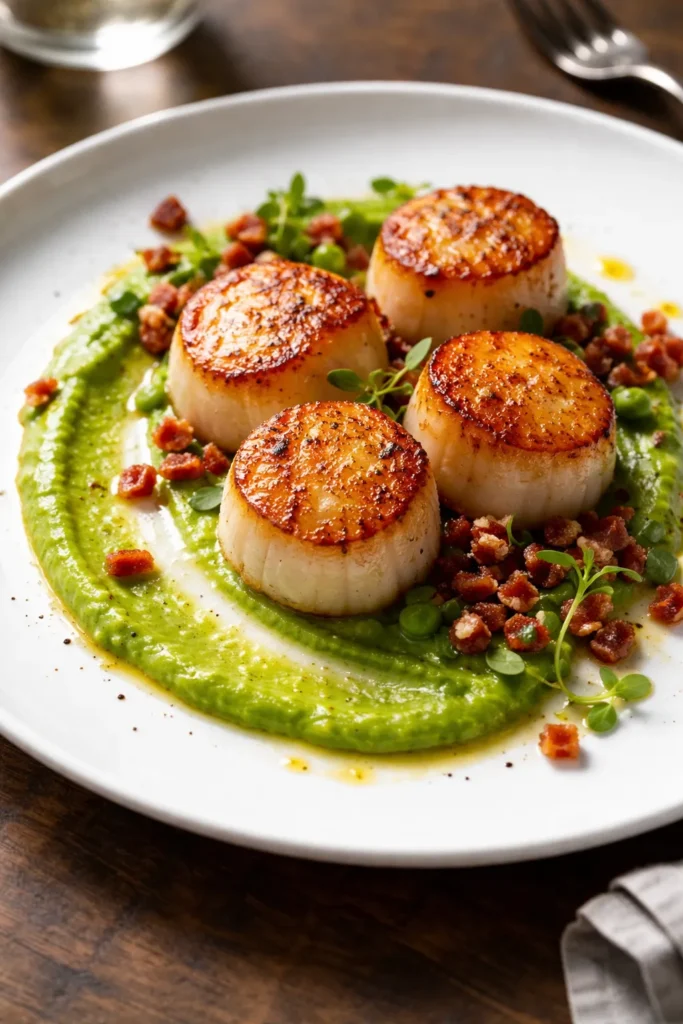
Few dishes command the room at a dinner table quite like plump, golden-seared scallops. They arrive looking like something from a fine-dining tasting menu, carrying that beautiful amber crust and a clean, oceanic sweetness that pairs with almost anything. The best part? From pan to plate, this dish takes about 15 minutes once your mise en place is ready.
Why It Works for Entertaining
The key to perfect scallops is a screaming hot pan and dry scallops — and that’s genuinely all the technique you need. Pat them completely dry with paper towels (this is non-negotiable), season generously with salt, and press them gently into a cast iron or stainless steel pan with a thin layer of neutral oil. Don’t touch them for 90 seconds. A golden crust will release naturally; if you have to pry them up, they need more time.
The pea purée is made completely in advance. Blanch frozen or fresh peas for two minutes, drain, then blend with cold butter, a clove of garlic, a squeeze of lemon, and enough pasta cooking water to get a smooth, vibrant green purée. Season aggressively and pass through a fine sieve if you want it restaurant-smooth.
How to Build the Plate
Spoon a generous swoop of pea purée onto each warm plate. Nestle two or three scallops on top. Scatter a few pieces of pancetta that you’ve crisped in the oven at 400°F for eight to ten minutes until they shatter. Finish with a few drops of good-quality olive oil and a tiny amount of lemon zest.
Quick Technique Notes
- Dry scallops, not wet: Wet-packed scallops (treated with sodium tripolyphosphate) hold water and will steam instead of sear — look for “dry-packed” at the fishmonger
- The purée can be made up to two days ahead and reheated gently with a splash of cream
- Warm your plates in a low oven before plating; cold plates cool scallops in under a minute
- One pound of large sea scallops serves four people as a starter, two as a main
Worth knowing: If scallops aren’t available, this exact plating works beautifully with thick slices of seared king oyster mushrooms for a vegetarian version that looks just as elegant.
2. Braised Beef Short Ribs with Creamy Smoked Gouda Grits
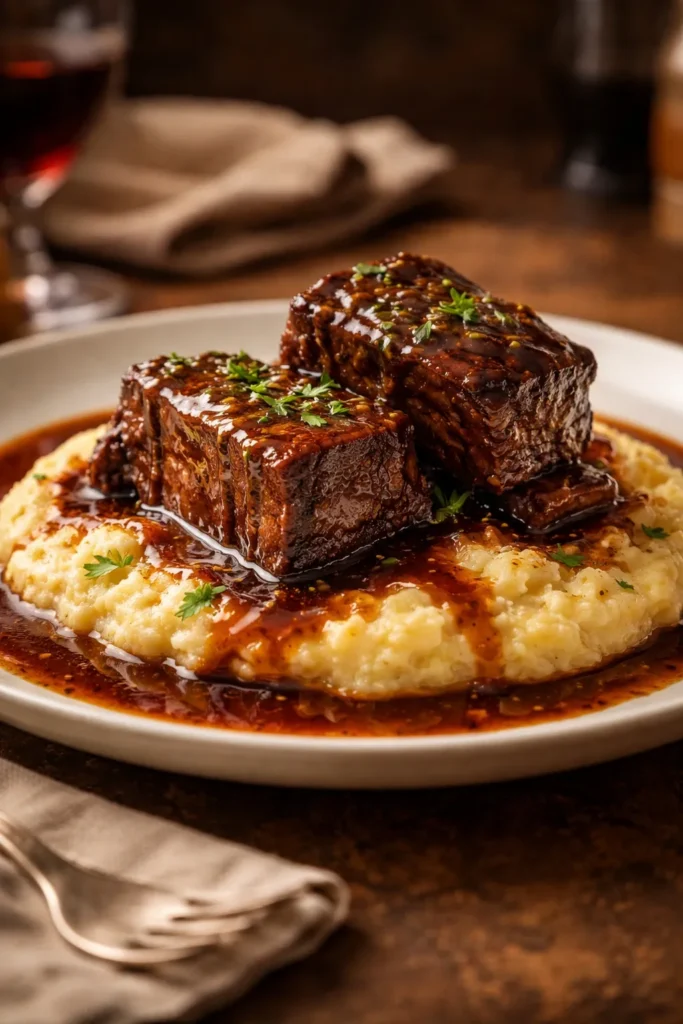
Braised short ribs sit at a genuinely rare intersection: they’re deeply, almost aggressively impressive to look at — that glossy, fall-apart beef draped over a swoosh of creamy grits — and they actually improve if you make them the day before. For a dinner party host, that make-ahead quality is as valuable as any Michelin star.
The Case for Making This a Day Ahead
Braises always taste better after an overnight rest in the refrigerator. The fat rises to the surface and solidifies, making it easy to lift off in one clean layer. The braising liquid concentrates further and the beef absorbs even more flavor. On the day of your party, you simply skim the fat, slice or pull the ribs, and gently reheat them in that gorgeous, mahogany-colored sauce — no rushing, no stress.
The short ribs themselves need about three to four hours in a 325°F oven after you brown them properly. The browning step is everything. Sear the ribs in batches, in a heavy Dutch oven with a little vegetable oil, over medium-high heat. You want deep color on every surface — this is where the depth of your braising sauce comes from. Build aromatics on top of those fond bits: onion, celery, carrot, fresh thyme, rosemary, garlic, and a whole bottle of red wine (something you’d actually drink — the quality of the wine genuinely matters here).
Smoked Gouda Grits That Steal the Show
Stone-ground grits take 45 minutes on the stovetop, stirring frequently. They’re worth every minute. Use whole milk and chicken stock in equal parts instead of water, season generously, then stir in two ounces of cold butter and a full cup of smoked Gouda — grated yourself, not pre-shredded. The result is silky, smoky, and rich enough to make guests close their eyes on the first bite.
Make It a Complete Plate
- Spoon grits into wide, shallow bowls — they need room to spread
- Place one short rib on top, bone removed for elegance if desired
- Strain and reduce the braising liquid until it coats a spoon, then spoon it generously over the top
- Finish with fresh thyme leaves and a few flakes of sea salt
Pro tip: The short ribs also work beautifully over creamy polenta, mashed Yukon Gold potatoes, or buttered pappardelle — all equally stunning presentations.
3. Cedar Plank Salmon with Stone Fruit Salsa
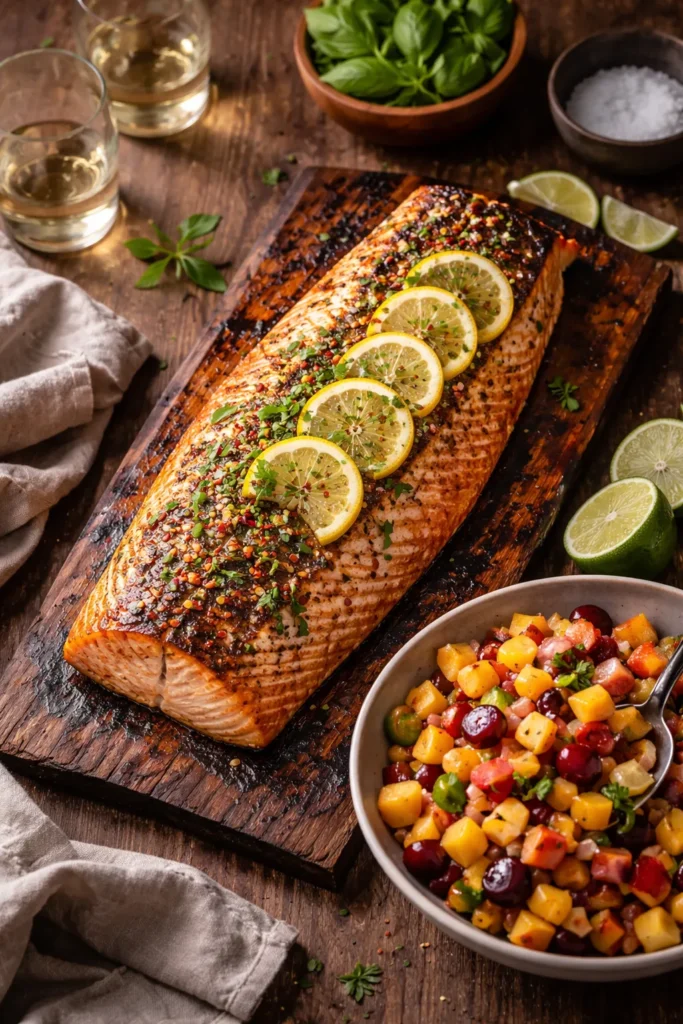
A whole side of salmon on a cedar plank is one of those dishes that announces itself before you even set it on the table. The smoke curls up, the kitchen smells like a campfire and citrus and fresh herbs, and the fish arrives as one dramatic, communal piece for everyone to share. It’s simultaneously rustic and elegant — and it’s hands-off after the first five minutes.
Preparing the Plank and the Fish
Cedar planks need to soak in water for at least one hour before going anywhere near heat — two hours is better. This prevents them from catching fire and creates the steam that gently perfumes the fish from below. A 2-pound skin-on salmon fillet will feed four to six people comfortably as a main course.
Season the salmon simply: a thin layer of olive oil, flaky sea salt, cracked pepper, and fresh dill or tarragon. The plank and the stone fruit salsa are doing the flavor work here, so don’t overcomplicate the fish itself. The skin should face down directly on the plank, which protects the flesh and peels away cleanly when serving.
Building the Stone Fruit Salsa
This is where the dish picks up its sense of occasion. Dice two ripe peaches or nectarines (or plums — any stone fruit works beautifully) and combine with half a small red onion, finely diced, one diced jalapeño with seeds removed if you prefer mild heat, the juice of one lime, two tablespoons of good olive oil, and a generous handful of fresh cilantro or mint. Salt aggressively. The salsa should taste bright, slightly sweet, and lightly spicy.
Grilling the Plank Salmon
- Preheat the grill to medium-high (around 400°F) and place the soaked plank directly on the grates for two minutes until it starts to smoke lightly
- Lay the seasoned salmon on the plank, close the lid, and cook for 12 to 18 minutes depending on thickness — the fish is done when it flakes easily at the thickest point
- Don’t flip the salmon; let the plank do the work
- Bring the entire plank to the table and spoon the stone fruit salsa generously over the top
This is the kind of dish that makes people genuinely excited before the first bite. Serve with wild rice or herbed quinoa and a crisp white wine.
4. Crispy-Skinned Roast Chicken with Roasted Garlic Pan Sauce
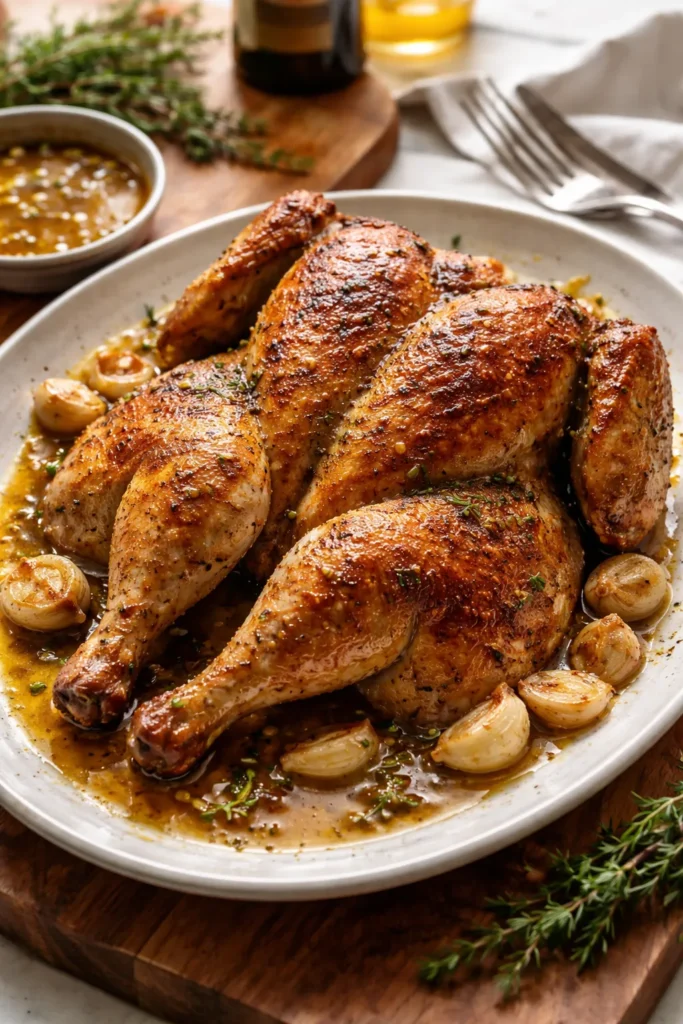
There’s an argument to be made that a properly roasted chicken — crackling skin pulling tight over bronzed flesh, the house filled with the smell of garlic and thyme — is the most satisfying dinner party dish there is. It looks almost theatrical coming out of the oven. And the pan sauce you make from the drippings afterward is the kind of thing that makes guests want to lick their plates.
The Spatchcock Method Changes Everything
Spatchcocking — removing the backbone so the chicken lies completely flat — solves the two biggest problems with roast chicken: uneven cooking and long cook time. A 4-pound bird cooked flat at 425°F is done in 45 to 50 minutes, compared to 90 minutes for a trussed bird. Every part of the chicken reaches the right temperature simultaneously, meaning no more dry breast meat next to undercooked thighs.
Use sharp kitchen shears. Cut along each side of the backbone, starting from the tail end. Pop the breastbone flat with the heel of your hand — you’ll hear and feel it crack. Dry-brine the chicken uncovered in the refrigerator for at least four hours, or overnight. Salt the skin generously from above and below. This desiccates the surface and produces skin that shatters when you cut through it.
The Pan Sauce
After the chicken rests, you have a sheet pan full of golden fat and deeply caramelized drippings — don’t touch a drop of it. Set the pan over two burners on medium heat. Squeeze the roasted garlic cloves directly into the pan (they’ll have cooked alongside the bird, turning sweet and jammy). Add half a cup of white wine and scrape up every browned bit with a wooden spoon. Pour in a cup of chicken stock, let it reduce by half, then mount with a tablespoon of cold butter.
Serving Suggestions
- Carve at the table for maximum drama — the crispy skin visible on every piece
- Scatter fresh herb leaves (tarragon, parsley, or thyme) over the carved bird just before serving
- Serve alongside roasted potatoes that cooked in the same pan fat — they’ll be the best potatoes at the table
- A simple green salad with a sharp vinaigrette cuts through the richness beautifully
5. Saffron Pasta with Parmesan, Lemon, and Fresh Basil
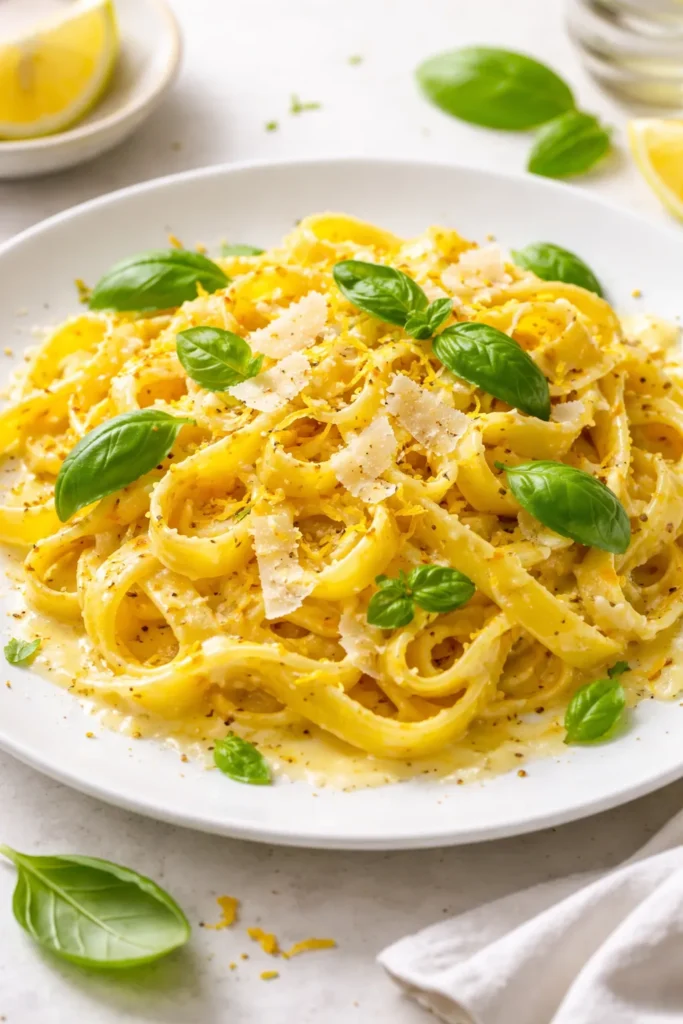
Pasta at a dinner party often gets written off as too casual — a weeknight fallback rather than a proper occasion dish. That thinking evaporates the moment you plate saffron pasta. The color alone is breathtaking: that deep, luminous gold that saffron gives to everything it touches. It looks extraordinary on a white plate, and it tastes like something you’d order at a place with a reservations-only policy.
Working with Saffron Correctly
Saffron is expensive, but a small pinch — meaning around 20 threads — is genuinely enough to perfume an entire batch of pasta sauce for four people. The key is blooming it correctly. Steep the threads in two tablespoons of warm (not boiling) water for ten minutes before adding them to anything else. This releases the compounds that give saffron its color and that distinctive honeyed, slightly metallic flavor.
The sauce itself is beautifully simple. Sweat finely diced shallots in butter until completely soft, add the bloomed saffron with its steeping liquid, pour in a splash of dry white wine, and reduce. Add heavy cream and reduce again until the sauce coats a spoon thickly. Season with salt, a generous amount of cracked pepper, and the zest of one lemon.
Building the Finished Dish
Toss the sauce with your pasta of choice — linguine works beautifully, as does bucatini or fresh tagliatelle. Add a full cup of finely grated Parmigiano-Reggiano to the warm sauce off the heat and toss vigorously. The pasta should look glossy and lightly sauced, not swimming. Reserve pasta cooking water and add it by the tablespoon if you need to loosen things up.
Plating for Maximum Impact
- Use tongs to swirl a nest of pasta into each wide, shallow bowl — this gives height and elegance to an otherwise flat dish
- Shave extra Parmigiano over the top with a vegetable peeler for dramatic curls
- Tear fresh basil leaves and scatter generously — the green against the gold is visually stunning
- A drizzle of high-quality olive oil at the very end adds a glossy finish and rounds out the flavor
Pro tip: This sauce can be made two hours ahead. Undercook the pasta by two minutes and reheat everything together in a wide pan just before serving.
6. Prosciutto-Wrapped Chicken Thighs with Roasted Cherry Tomatoes
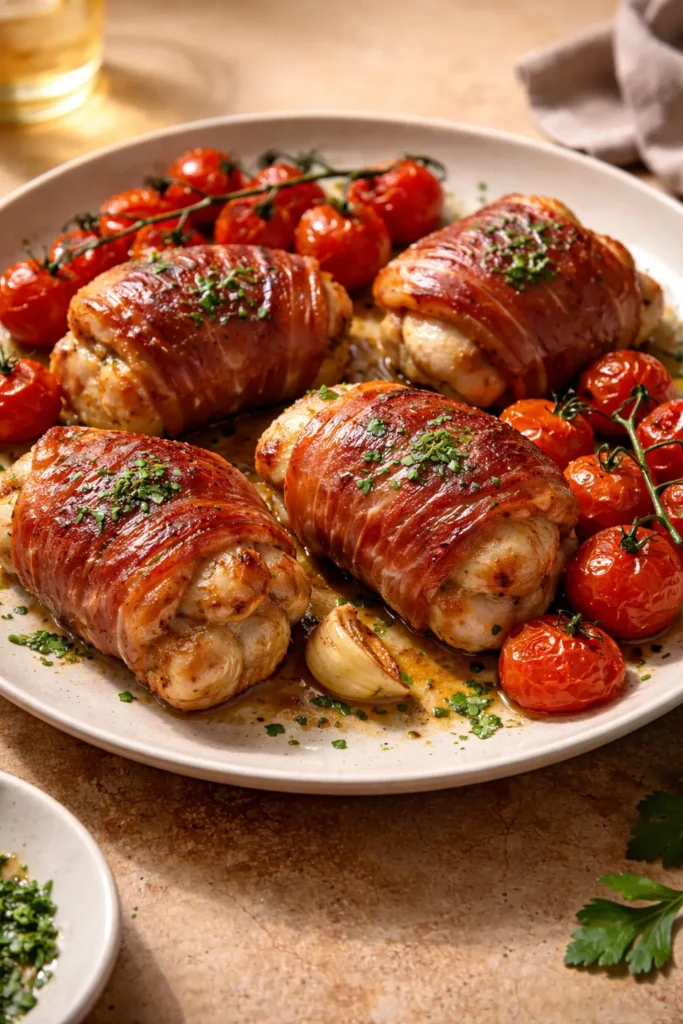
Individual portions of protein, wrapped in something salty and cured, almost always look like they belong in a restaurant. The prosciutto caramelizes and tightens around the chicken thighs as they roast, creating a shatteringly crispy exterior that protects beautifully juicy meat inside. This is one of those rare dinner party dishes where the presentation is essentially built into the cooking process.
Why Thighs Beat Breasts Every Time Here
Chicken breasts are unforgiving — a few minutes over the ideal time and they dry out completely. Thighs have enough fat running through them to stay moist and tender across a wider window of doneness, which means you’re not watching the oven clock with anxiety while your guests are arriving. Bone-in, skin-on thighs are best, though boneless work well too and cook faster.
Season the thighs under the skin with a paste of garlic, fresh thyme, lemon zest, and a small amount of softened butter. Lay two overlapping slices of prosciutto on a board, place the thigh at one end, and roll it up firmly. The prosciutto should wrap around the thigh with a slight overlap — this is what creates that gorgeous, caramelized exterior rather than dry, curled-up slices.
The Roasted Tomato Base
Roasted cherry tomatoes are a dinner party hero: they require no skill whatsoever, improve with time, and create a glossy, intensely flavored sauce that looks like it took all afternoon. Halve two pints of cherry tomatoes and arrange them in your roasting pan with olive oil, salt, a pinch of sugar, and whole garlic cloves. Roast at 400°F for 25 minutes before adding the wrapped chicken on top.
Finishing and Plating
- Roast the wrapped chicken at 400°F for 30 to 35 minutes until the prosciutto is deeply golden and crispy
- Rest the chicken for five minutes before plating — this is especially important to retain the juices
- Spoon the collapsed, jammy tomatoes generously around the chicken
- Scatter fresh basil or tarragon over the top and finish with a drizzle of good balsamic glaze
The feta cheese variation — crumbling good-quality sheep’s milk feta over the tomatoes before serving — adds a salty, creamy contrast that many guests will remember long after the party ends.
7. Lamb Chops with Herbed Couscous and Pomegranate Molasses
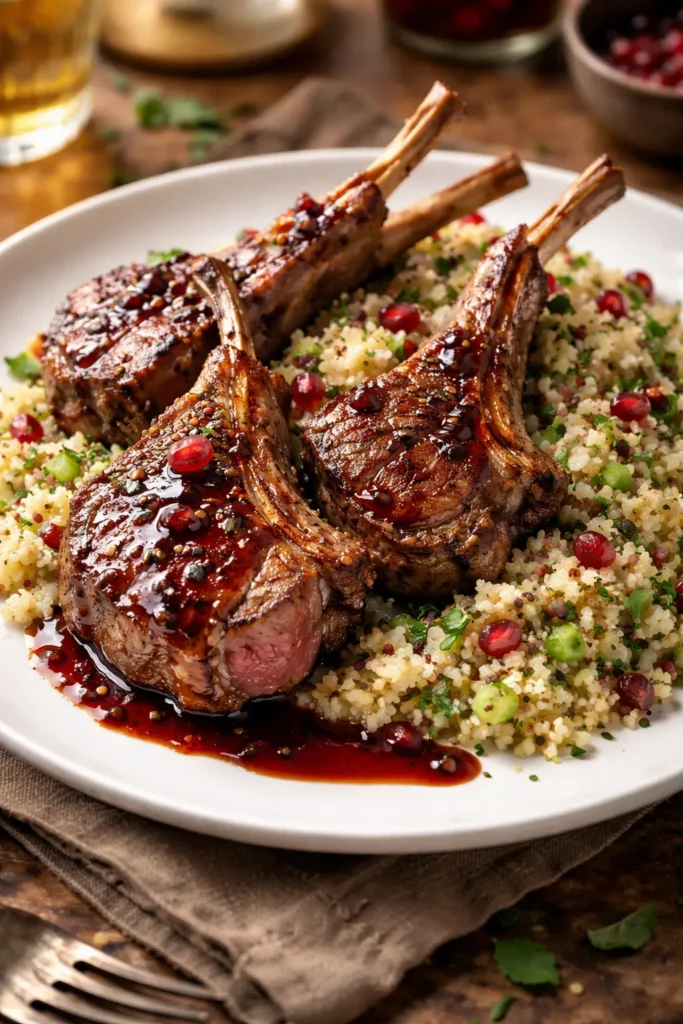
Lamb chops are dinner party shorthand for this host means business. They’re individual portions that arrive at the table looking dramatic and restaurant-polished — each small bone a natural handle, the meat blush-pink and fragrant from a quick sear. Despite that impression, they cook in under ten minutes once you’ve done the five-minute prep, making them the closest thing in the cooking world to a magic trick.
Getting the Most from the Marinade
Lamb’s natural richness responds beautifully to a marinade that leans acidic and herbaceous. Combine olive oil, minced garlic, fresh rosemary, lemon zest and juice, and a small spoonful of Dijon mustard. Coat the chops and let them sit at room temperature for at least 30 minutes — or marinate in the fridge for up to 24 hours if you’re getting ahead of yourself. Remove them from the fridge 30 minutes before cooking; cold chops hit the pan unevenly and won’t develop a proper crust.
Cook in a screaming hot cast iron pan for two to three minutes per side for medium-rare. The internal temperature should read 130 to 135°F on an instant-read thermometer. Let them rest for five minutes minimum — they’ll continue cooking slightly and the juices will redistribute.
The Herbed Couscous
Couscous is genuinely the ideal dinner party starch: it needs no actual cooking, just boiling water poured over it and a lid for five minutes. Fluff it with a fork, then toss with olive oil, toasted pine nuts, chopped dried apricots, fresh mint and flat-leaf parsley, lemon juice, and plenty of salt. It’s light and fragrant and holds at room temperature without becoming gluey, meaning you can make it an hour before guests arrive and it’ll be perfect.
Pomegranate Molasses: The Secret Finishing Touch
Pomegranate molasses — a thick, tart, deeply complex syrup made from reduced pomegranate juice — is one of those ingredients that costs five dollars and elevates a dish from good to genuinely memorable. Drizzle it over the plated chops in an abstract pattern, scatter fresh pomegranate seeds on top, and add a small pile of fresh mint leaves.
- The combination of tart molasses + bright pomegranate seeds + pink lamb = one of the most visually striking plates in home cooking
- Serves four as a main course with two chops per person
- Pairs with a medium-bodied red wine — Côtes du Rhône or Malbec both work beautifully
8. Pappardelle Bolognese with Slow-Braised Beef and Ricotta
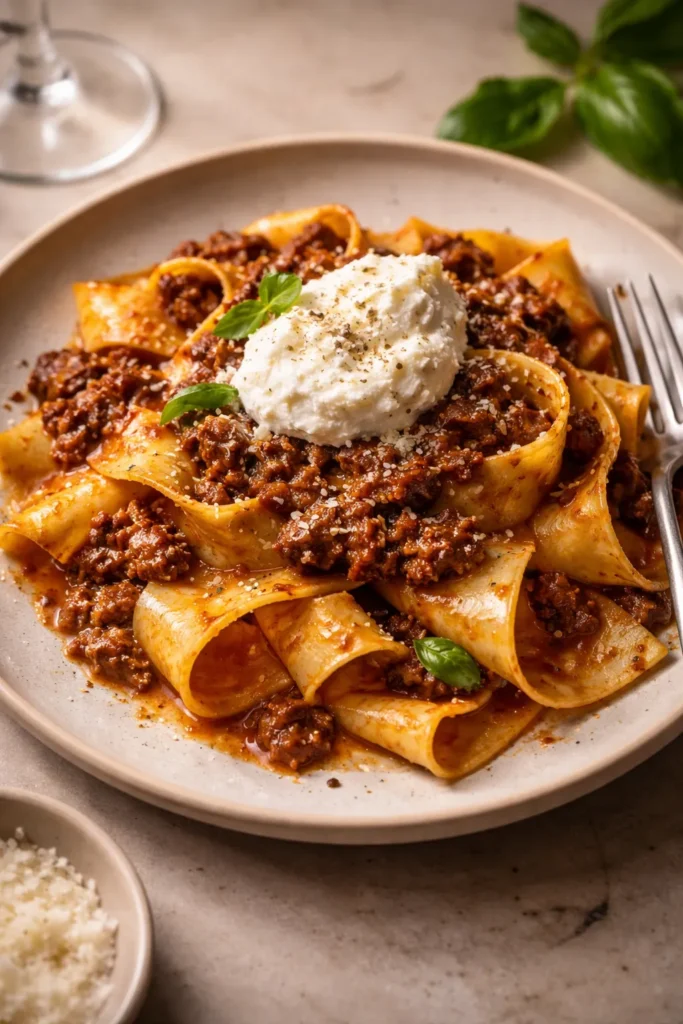
A true Bolognese — the kind that simmers low and slow for hours, building a depth of flavor that no quick version can replicate — is the dinner party equivalent of a warm embrace. It feeds a crowd effortlessly, improves dramatically when made the day before, and lands on the table looking like something a northern Italian grandmother has been working on since sunrise. Topped with fresh ricotta and a tangle of wide pappardelle ribbons, it becomes something genuinely special.
Why Slow-Cooking Makes All the Difference
A proper meat sauce needs time. The collagen in the beef slowly converts to gelatin over two to three hours of gentle simmering, giving the finished sauce a glossy, almost velvety body that coats each strand of pasta completely. This is why Bolognese made in a slow cooker — eight hours on low — is no shortcut at all, but genuinely the smartest method: it maintains a consistent, gentle heat that a stovetop can’t always guarantee.
The meat matters too. A combination of 80/20 ground beef with a quarter of the weight in ground pork (or pancetta, finely diced) gives the sauce complexity that pure beef alone can’t achieve. Brown the meat in batches and don’t rush this step — packed into a too-full pan, it steams rather than browns, and you lose the Maillard reaction that’s responsible for half the sauce’s flavor.
Building the Sauce
Soffritto first: equal volumes of onion, carrot, and celery sweated gently in butter for fifteen minutes until completely soft and lightly golden. Add the browned meat, then a full cup of whole milk — this tenderizes the meat and adds a richness that’s characteristic of Bolognese as Bologna actually makes it, rather than the tomato-heavy versions popular elsewhere. Let the milk absorb almost completely before adding white wine, then a 28-ounce can of San Marzano tomatoes, crushed by hand. From here, it’s patience.
Plating for Impact
The finishing touch separates a good Bolognese from a genuinely unforgettable one. Rather than simply spooning sauce onto pasta, toss the pappardelle in the sauce with a splash of pasta cooking water until every ribbon is glossy and coated. Mound each portion into wide bowls. Drop a generous tablespoon of cold, fresh whole-milk ricotta directly in the center — it’s both a visual focal point and a cooling, creamy contrast to the warm, rich meat sauce.
- Finish with freshly grated Parmigiano-Reggiano, cracked black pepper, and a very small drizzle of truffle oil if you have it
- Tear fresh basil over the top just before serving
- This dish reheats beautifully — make the sauce up to three days in advance and store refrigerated, then cook the pasta fresh on the night
- One batch of sauce (made with two pounds of meat) feeds eight to ten people generously — it freezes perfectly for a month
Serve with crusty bread and a bottle of Barolo, and accept the compliments that are coming your way.
Final Thoughts
The through line connecting all eight of these recipes is something worth holding onto: impressive-looking food almost never requires impressive amounts of effort. What it does require is a little strategy — knowing which dishes can be prepared ahead of time, which techniques produce the most visual impact, and how to let a single great ingredient (saffron, prosciutto, pomegranate molasses) do the storytelling.
Build your dinner party menu around one of these as the centerpiece and keep everything else simple. A beautiful main dish with two unfussy sides — roasted vegetables, a good salad, crusty bread — is far more enjoyable for everyone, including you, than six elaborate courses that leave the cook exhausted before dessert even arrives.
The best dinner parties are the ones where the host is actually present. Choose recipes that put themselves on the table, make as much as possible the day before, and spend the evening where you’re supposed to be — at the table, with the people you actually wanted to cook for.