There’s a particular kind of Monday morning dread that hits when you open the fridge and realize there’s nothing ready to eat. You meant to cook over the weekend. You really did. But it didn’t happen, and now you’re staring at raw chicken, a bag of quinoa, and three sad bell peppers while your coffee brews and your schedule fills up.
That’s where smart meal prep changes everything — not the kind where you spend six hours on a Sunday making color-coded containers of the same chicken-and-rice combo five days in a row, but the kind where you cook a handful of genuinely satisfying recipes that hold up beautifully in the fridge, reheat without losing their soul, and actually make you look forward to opening your lunch container at noon.
The recipes here were chosen with one specific criteria in mind: they have to last. Not just survive in the fridge, but thrive — meaning the flavors deepen, the texture holds, and you’re not eating a soggy shadow of what you made on Sunday by Wednesday afternoon. Each one is structured to give you at least four to five days of real, nourishing meals with minimal reheating drama.
If you’ve ever wondered why some dishes taste better on day three, or how to build a week of meals without cooking every single night, these ten recipes are your answer.
Table of Contents
- 1. Turkey and Vegetable Chili
- How to Make It
- Why It Lasts All Week
- 2. Sheet Pan Chicken Thighs with Roasted Vegetables
- The Simple Formula
- Storage and Versatility
- 3. Overnight Oats Three Ways
- Three Variations Worth Making
- Why They’re the Smartest Breakfast Prep
- 4. Lemon Herb Quinoa Salad with Chickpeas
- Building the Salad
- Week-Long Storage Notes
- 5. Slow Cooker White Bean and Sausage Soup
- What Goes In
- Why It Works for the Week
- 6. Greek Chicken Bowls with Tzatziki
- Marinating and Cooking the Chicken
- The Tzatziki That Makes It
- The Bowl Components to Prep
- 7. Baked Salmon with a Soy Ginger Glaze
- Cooking It Right
- Making It Last
- 8. Black Bean Burrito Bowls
- The Building Blocks
- Assembling All Week
- 9. Spinach and Feta Egg Muffins
- The Recipe
- Storage That Actually Works
- 10. Sesame Noodle Salad with Edamame and Cucumber
- The Dressing (The Most Important Part)
- Building the Salad
- Why It’s a Weekly Staple
- Final Thoughts
1. Turkey and Vegetable Chili
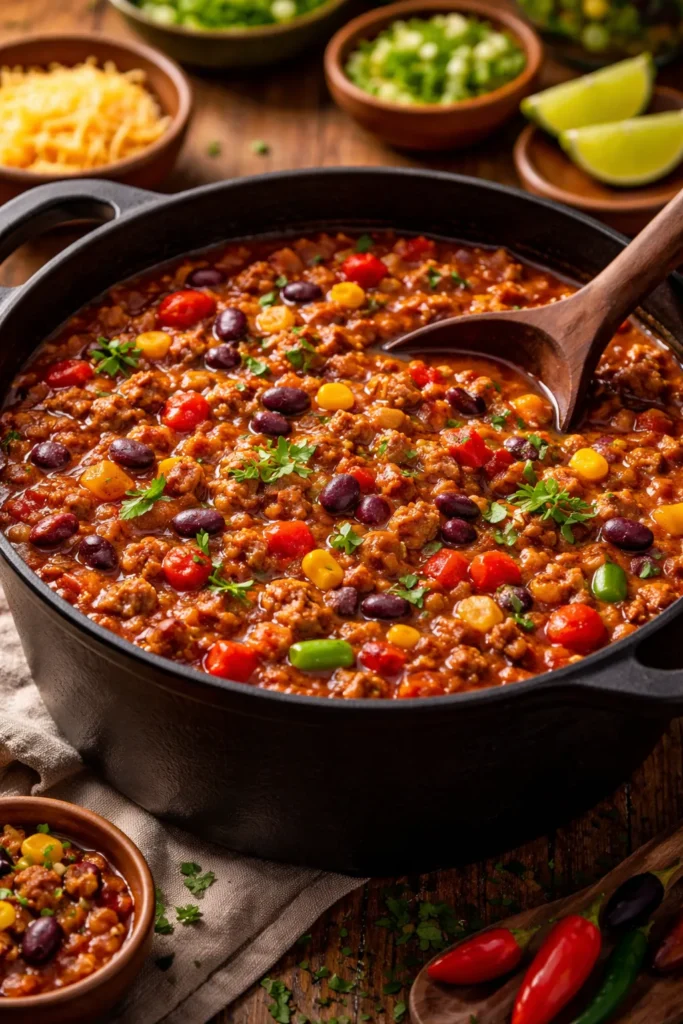
Chili might be the single greatest meal prep food ever invented. It freezes, it reheats, it feeds a crowd, and — here’s the part most people don’t expect — it tastes significantly better on day two or three than it does the moment it comes off the stove. The spices bloom, the beans absorb more flavor, and the whole thing pulls together into something deeply satisfying.
This version uses lean ground turkey instead of beef, which keeps it lighter without sacrificing the hearty feel that makes chili so comforting. The real secret is building your spice base properly before adding the liquid.
How to Make It
Brown 1 pound of ground turkey in a heavy-bottomed pot with diced onion, three garlic cloves, and a jalapeño. Once the meat is cooked through, add a tablespoon each of chili powder, cumin, and smoked paprika, and let those spices toast in the pan for about 60 seconds — that step alone doubles the depth of flavor. Add two cans of crushed tomatoes, one can each of black beans and kidney beans (drained), a cup of frozen corn, and enough chicken broth to bring it to a thick, stew-like consistency. Simmer for at least 30 minutes.
Why It Lasts All Week
- Beans absorb seasoning over time, making each serving more flavorful than the last
- The fat content from turkey is low enough that it doesn’t congeal unpleasantly when cold
- Stores in the fridge for up to 5 days, or freezes for 3 months
- One batch yields 6 generous servings — enough for a week of lunches or dinners
Serving tip: Keep toppings separate. Store shredded cheese, sliced avocado, and Greek yogurt (a great stand-in for sour cream) in their own containers and add them fresh when you eat.
2. Sheet Pan Chicken Thighs with Roasted Vegetables
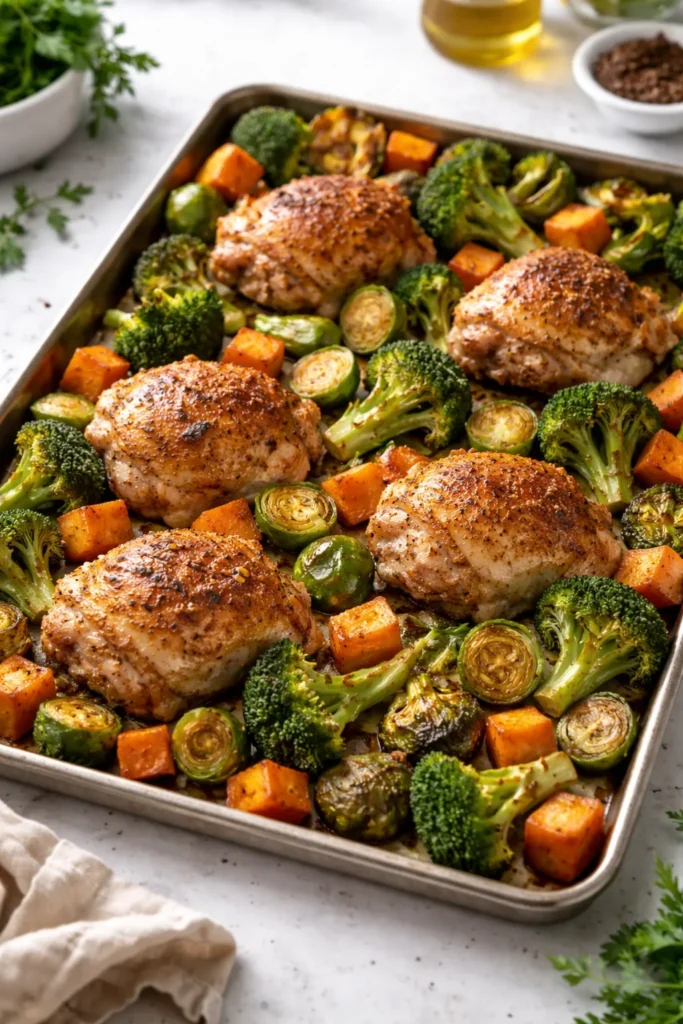
Chicken thighs are the unsung hero of meal prep, and that’s specifically because of their fat content. Where chicken breasts turn dry and chalky after a day in the fridge, bone-in, skin-on thighs stay moist and flavorful because the fat keeps them from drying out during reheating. This isn’t a coincidence — it’s food science working in your favor.
On a sheet pan, bone-in chicken thighs cook alongside whatever vegetables you have on hand: broccoli florets, cubed sweet potatoes, halved Brussels sprouts, or bell pepper strips. Everything roasts at the same temperature in the same amount of time, which means one pan in the oven and 35 minutes of hands-off cooking.
The Simple Formula
Pat six bone-in, skin-on chicken thighs dry with paper towels (dry skin = crispy skin). Rub them with olive oil, garlic powder, smoked paprika, dried oregano, salt, and black pepper. Arrange on one side of a large rimmed baking sheet. Toss your vegetables with olive oil, salt, and any seasoning you like on the other side of the pan. Roast at 425°F (218°C) for 35 to 40 minutes, until the skin is deeply golden and the internal temperature reads 165°F (74°C).
Storage and Versatility
- Keeps in the fridge for 4 to 5 days in an airtight container
- Reheat in a 375°F oven for 10 minutes to restore the crispy skin — the microwave works in a pinch but softens the skin
- Slice the chicken over a grain bowl on Monday, serve it alongside fresh salad on Wednesday, and shred any remaining pieces into a wrap by Thursday
Worth knowing: The vegetables that hold up best after multiple days in the fridge are broccoli, Brussels sprouts, sweet potato, and cauliflower. Zucchini and leafy greens break down quickly and are better added fresh.
3. Overnight Oats Three Ways
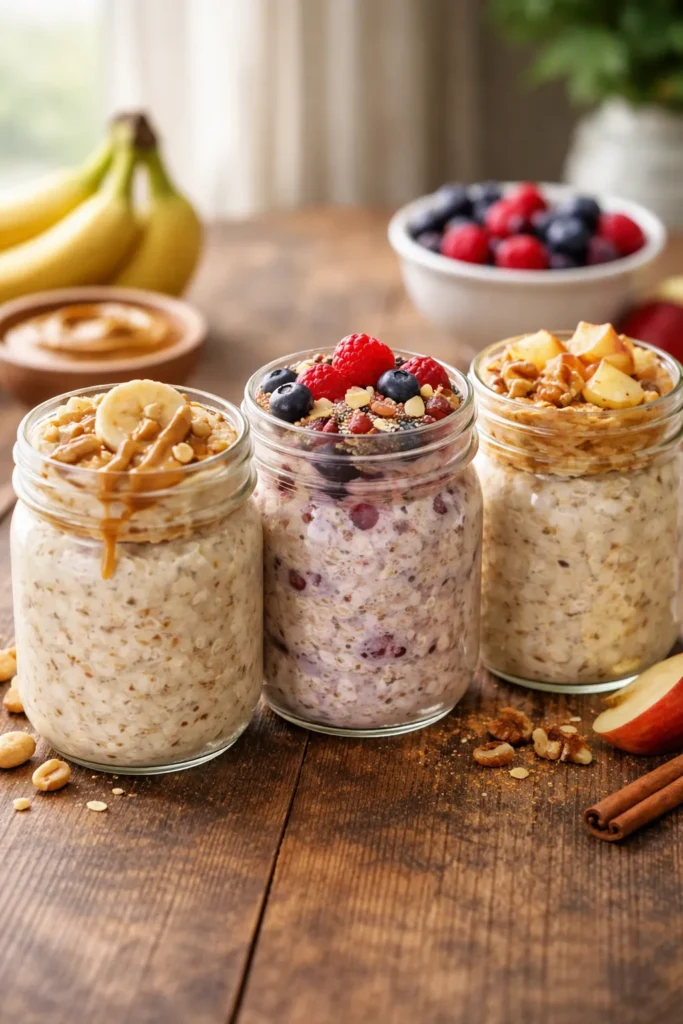
Breakfast is the meal that gets skipped most often during busy weeks, and it’s also the one most worth prepping in advance. Overnight oats solve the problem completely — five minutes of mixing the night before, and breakfast is waiting for you in the fridge when you wake up.
The base ratio is simple: equal parts rolled oats and liquid (milk, oat milk, or almond milk all work), plus a tablespoon of chia seeds for thickness, and a spoonful of Greek yogurt for protein and creaminess. From there, the flavor combinations are endless.
Three Variations Worth Making
Classic Peanut Butter Banana: Mix your base oats with a tablespoon of natural peanut butter and half a mashed ripe banana. Top with banana slices and a drizzle of honey before eating.
Berry Almond: Stir in a teaspoon of vanilla extract and a small handful of frozen berries (they thaw overnight and release juice that flavors the oats). Top with sliced almonds and fresh blueberries.
Apple Cinnamon: Grate half an apple directly into the oat mixture, add a generous pinch of cinnamon and a drizzle of maple syrup. The apple softens overnight and the flavors meld into something that tastes like oatmeal pie filling.
Why They’re the Smartest Breakfast Prep
- Prep 5 jars in under 15 minutes on Sunday evening
- Stay fresh in the fridge for up to 5 days — the chia seeds keep the texture thick without getting mushy
- High in fiber and protein, which means they keep hunger at bay through the morning
- No heating required — eat cold, or warm in the microwave for 90 seconds if you prefer
4. Lemon Herb Quinoa Salad with Chickpeas
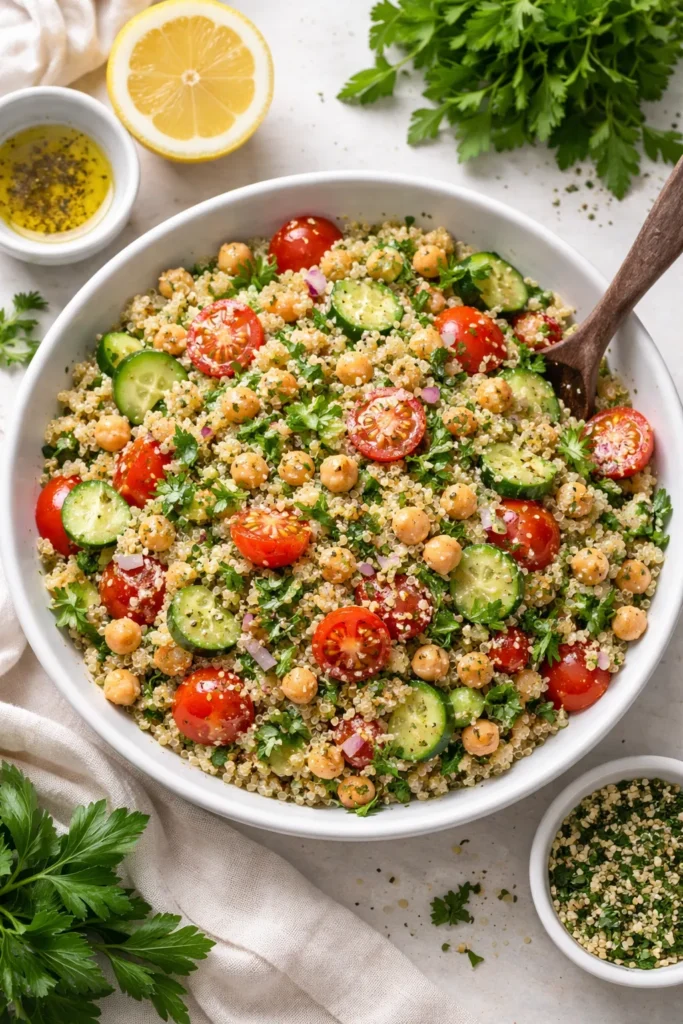
Unlike lettuce-based salads that turn into a sad, wilted mess within hours of dressing, this quinoa salad gets better the longer it sits. The grains absorb the lemon-herb dressing, the chickpeas soak up flavor, and by day two, every bite is more cohesive and satisfying than it was fresh.
Quinoa is worth understanding properly before you cook it, because most people get it wrong. Rinse it first — the outer coating called saponin has a naturally bitter, soapy taste that disappears once you rinse it under cold water for 30 seconds. Toast it dry in the pot for two minutes before adding water, and you’ll get a nuttier flavor that makes a real difference in the finished dish.
Building the Salad
Cook 1½ cups of rinsed quinoa in 3 cups of vegetable broth (not water — the broth adds flavor) until all the liquid absorbs, about 15 minutes. Fluff and let it cool completely before adding anything else. Combine cooled quinoa with one can of drained chickpeas, a full English cucumber diced small, a cup of halved cherry tomatoes, a large handful of chopped fresh parsley, and a quarter of a red onion finely diced.
For the dressing, whisk together 3 tablespoons of olive oil, the juice of one full lemon, a teaspoon of Dijon mustard, one minced garlic clove, salt, and cracked black pepper. Pour it over the salad and toss until fully coated.
Week-Long Storage Notes
- Keeps perfectly in the fridge for 5 to 6 days
- If adding feta cheese, store it separately and crumble it on just before eating — feta releases moisture that softens the salad texture faster
- Works as a standalone lunch, a side to grilled protein, or stuffed into a pita pocket with hummus
5. Slow Cooker White Bean and Sausage Soup
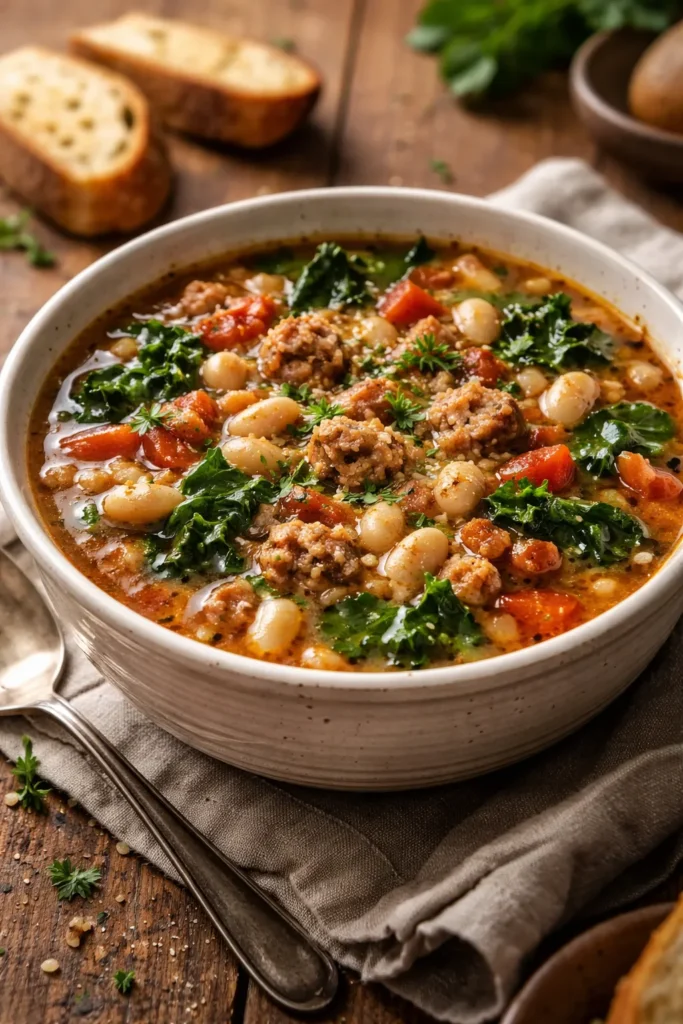
There’s a strong argument that a slow cooker soup is the most efficient form of meal prep that exists. You spend about ten minutes assembling ingredients in the morning, press a button, and come home to a kitchen that smells like you’ve been cooking all day. The soup portions out into individual containers, refrigerates or freezes flawlessly, and reheats in three minutes.
This white bean and sausage version has the kind of deep, smoky, garlicky flavor that feels like it took all day — because it did, just without any effort from you.
What Goes In
- 1 pound Italian sausage (mild or spicy), casings removed and crumbled
- 2 cans white beans (cannellini), drained and rinsed
- 1 can diced tomatoes with their juices
- 4 cups chicken broth
- 3 garlic cloves, minced
- 1 medium yellow onion, diced
- 2 cups baby spinach or chopped kale (add in the last 30 minutes)
- 1 teaspoon fennel seeds, 1 teaspoon dried Italian seasoning, red pepper flakes to taste
Why It Works for the Week
If you want an even richer base, brown the sausage in a skillet first before adding it to the slow cooker — that caramelization adds a layer of flavor that direct slow-cooking can’t replicate. The entire soup cooks on low for 6 to 8 hours or high for 3 to 4 hours.
- Stores in the fridge for 5 days, freezes for up to 3 months
- One batch makes 6 to 8 servings
- Tastes better every day as the beans break down slightly and thicken the broth naturally
Serving suggestion: Serve with crusty bread on the first night, over egg noodles on night two, or just straight from the container reheated at your desk — it holds up to all three.
6. Greek Chicken Bowls with Tzatziki
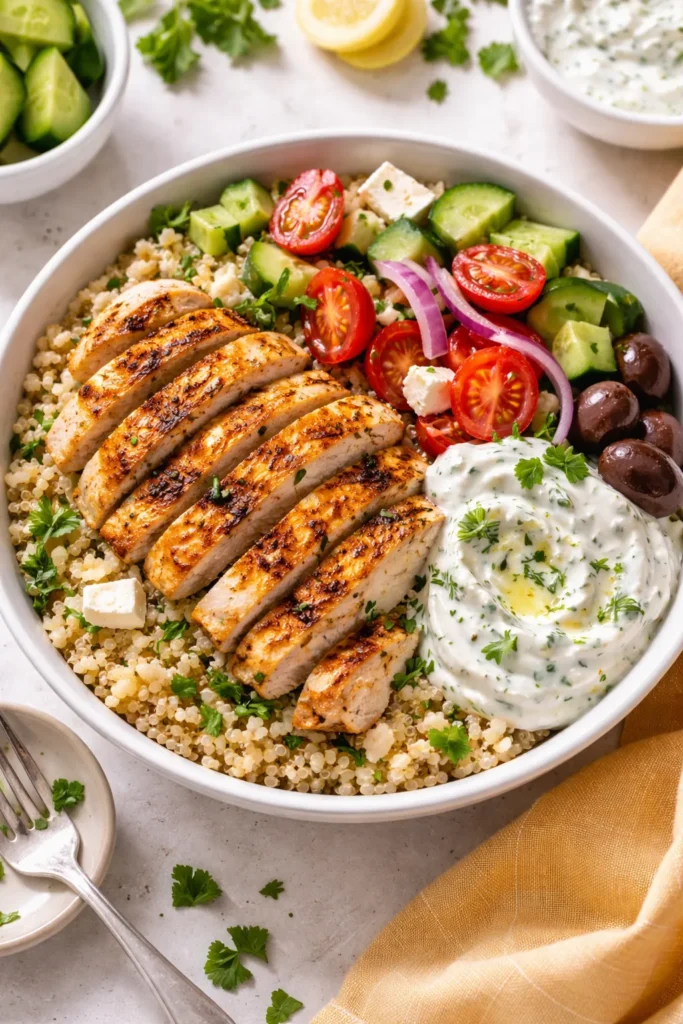
Bowl meals are the most practical format for weekly meal prep because every component stores separately and can be mixed and matched in different ways throughout the week. Greek chicken bowls in particular hit every note: high protein, bold flavor, and a freshness that doesn’t feel like you’re eating leftovers.
The chicken uses a simple marinade of olive oil, lemon juice, garlic, dried oregano, and a pinch of cinnamon — that last ingredient sounds unusual but it’s the one that gives Greek marinated chicken its distinctive warmth and depth.
Marinating and Cooking the Chicken
Combine ¼ cup olive oil, the juice of one lemon, three minced garlic cloves, 1½ teaspoons dried oregano, ½ teaspoon cinnamon, salt, and pepper. Marinate 1½ pounds of boneless chicken thighs or breasts for at least two hours, or overnight in the fridge. Cook on a hot grill pan or in a skillet over medium-high heat for 6 to 7 minutes per side, until cooked through. Let it rest for five minutes before slicing.
The Tzatziki That Makes It
Grate one English cucumber and squeeze out as much moisture as possible in a clean kitchen towel. Mix with 1 cup of full-fat Greek yogurt, one minced garlic clove, a tablespoon of fresh or dried dill, a squeeze of lemon, and salt. This keeps in the fridge for 4 days and gets better as the garlic mellows.
The Bowl Components to Prep
- Base: cooked white rice or farro
- Vegetables: sliced cucumber, halved cherry tomatoes, red onion rings, Kalamata olives
- Toppings: crumbled feta, fresh parsley, tzatziki
Store each component separately and assemble when eating. The chicken alone keeps for 4 to 5 days and works equally well sliced over a salad, tucked into a pita, or chopped into a grain bowl.
7. Baked Salmon with a Soy Ginger Glaze
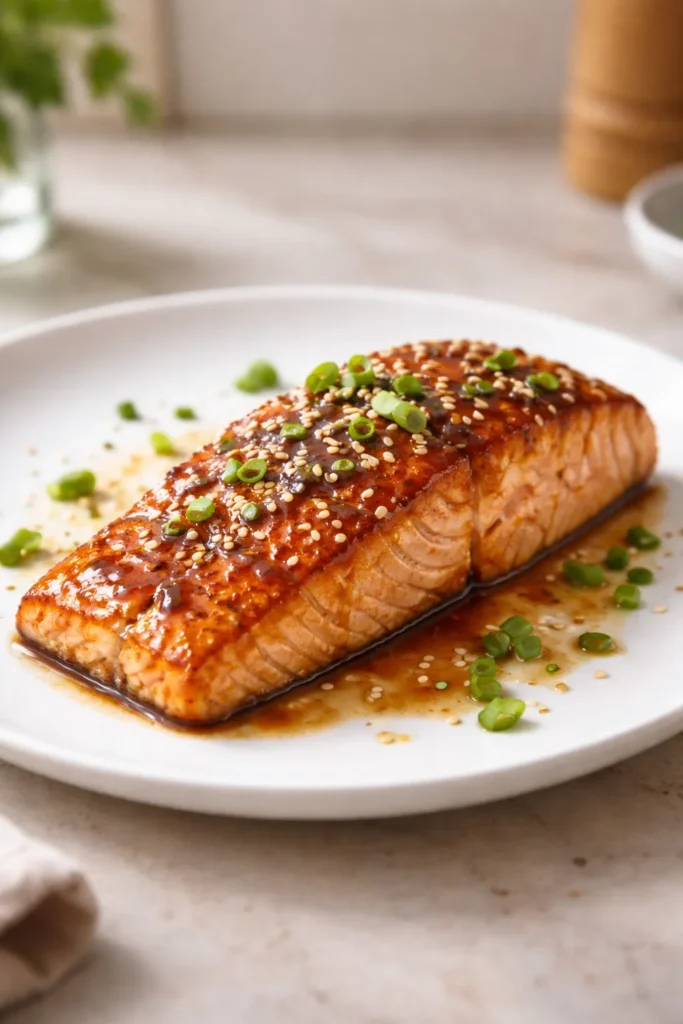
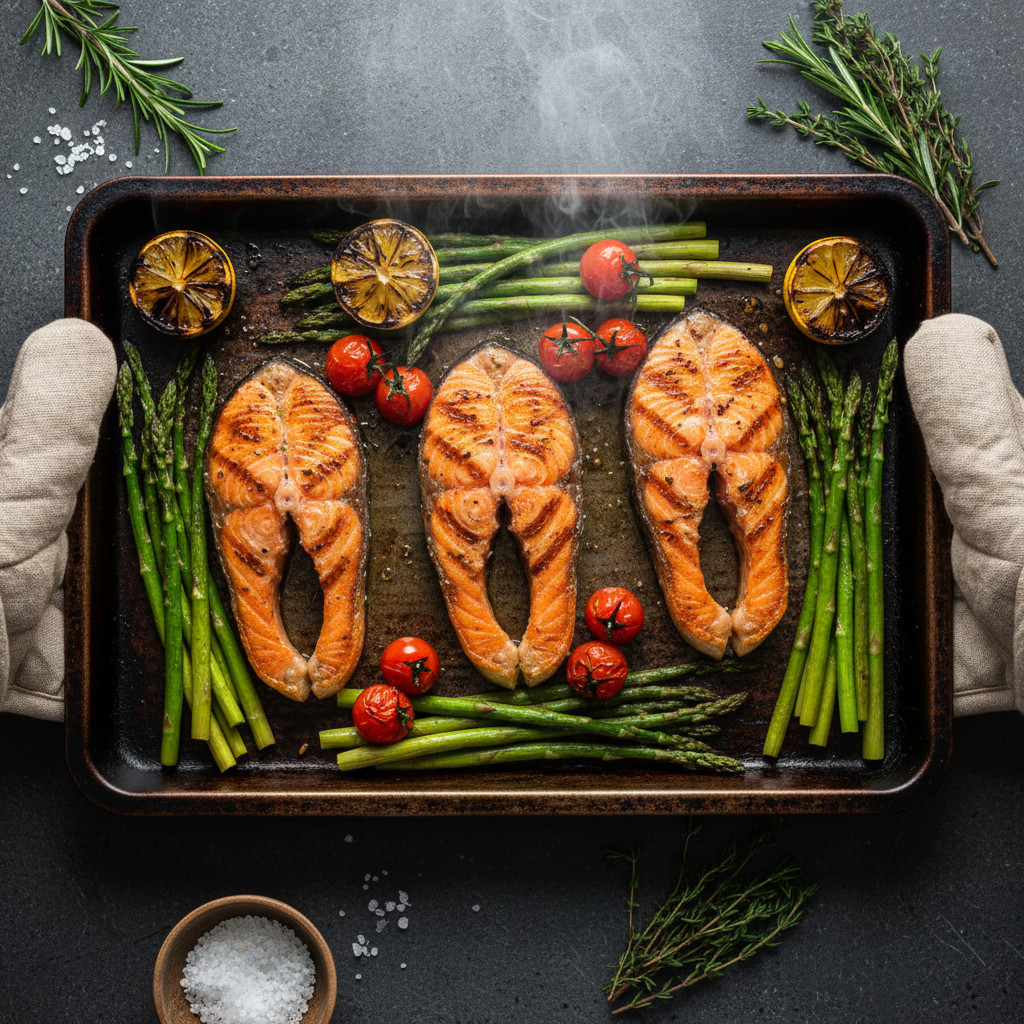
Salmon gets a reputation for being tricky to reheat — and honestly, the microwave is not its friend. But cold or room-temperature meal-prepped salmon is genuinely excellent, especially when the glaze is flavorful enough to carry the dish. This soy-ginger version coats the fish in a sweet, savory, slightly caramelized crust that makes every bite interesting whether it’s warm, cold, or room temperature.
The key is a glaze made from soy sauce, honey, fresh ginger, garlic, and a splash of sesame oil. It’s barely five ingredients, and it takes two minutes to mix.
Cooking It Right
Preheat your oven to 400°F (204°C). Line a baking sheet with foil. Place four 6-ounce salmon fillets skin-side down. Brush generously with the glaze. Bake for 12 to 14 minutes, depending on thickness, until the flesh flakes easily with a fork. In the last two minutes, switch on the broiler to caramelize the top of the glaze — watch it closely, because it can go from golden to burned in under a minute.
Making It Last
- Cooked salmon keeps in the fridge for 3 to 4 days
- Serve warm over steamed rice on day one, cold over a cucumber-avocado salad on day two, and flaked into a grain bowl with pickled vegetables on day three
- Never reheat salmon in the microwave — the smell, the uneven heat, and the rubbery texture all suffer. Room temperature or a quick warm-through in a 275°F oven for 10 minutes are both much better options
8. Black Bean Burrito Bowls
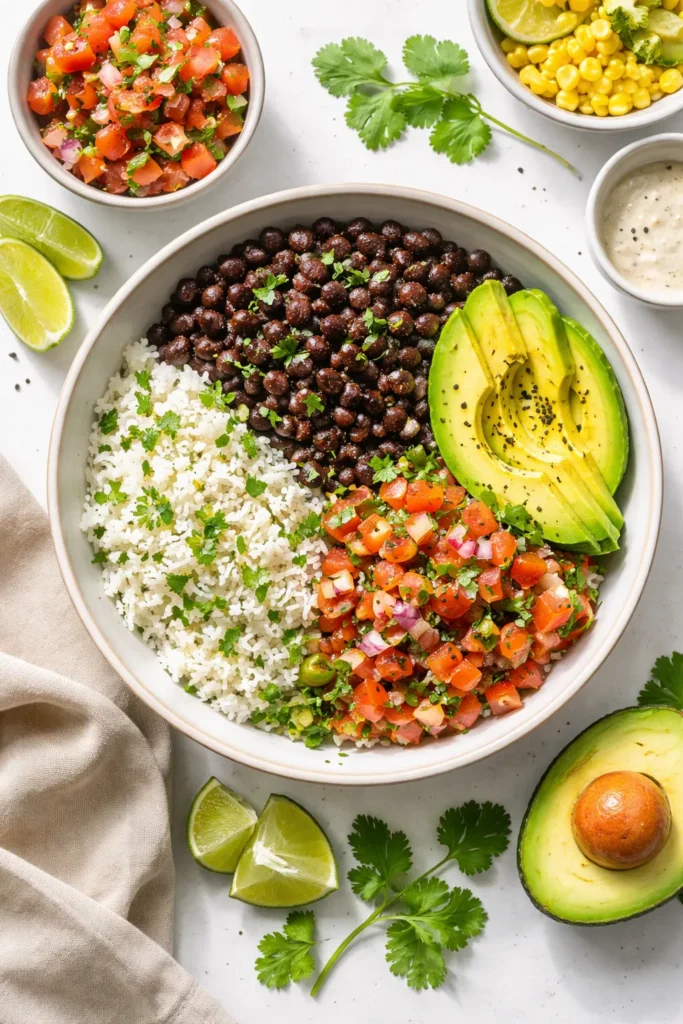
Burrito bowls are the meal prep format that requires the most upfront chopping but delivers the most flexibility throughout the week. When you have seasoned black beans, cooked cilantro-lime rice, a jar of pico de gallo, sliced avocado, and a chipotle crema all prepped and stored separately, you can build a bowl in three minutes flat — and it never gets boring because you can rearrange the ratios and toppings however you like.
This version is fully plant-based but substantial enough to keep you full through a long afternoon.
The Building Blocks
Cilantro Lime Rice: Cook 2 cups of long-grain white rice according to package directions. While still warm, stir in the juice of one lime, a handful of chopped fresh cilantro, and a pinch of salt. Keeps in the fridge for 5 days.
Seasoned Black Beans: Drain and rinse two cans of black beans. Warm them in a skillet with a teaspoon each of cumin, smoked paprika, garlic powder, and a squeeze of lime. These keep for 5 days and freeze easily.
Quick Pico de Gallo: Dice three ripe Roma tomatoes, half a white onion, one jalapeño, and a handful of cilantro. Season with lime and salt. Best within 3 to 4 days.
Chipotle Crema: Blend 1 cup of sour cream or Greek yogurt with one chipotle pepper in adobo sauce and a pinch of garlic powder. Keeps for 5 days.
Assembling All Week
Load rice, beans, pico, and crema into a bowl. Add shredded romaine, corn, diced avocado (add avocado fresh each day — it doesn’t hold well once cut), and a wedge of lime. The whole assembly takes less time than waiting for delivery.
9. Spinach and Feta Egg Muffins

Egg muffins are one of those recipes that feel almost too simple to make a difference, until you’ve had a week where they’re waiting for you in the fridge every morning and you realize exactly how much friction they remove from your mornings. Two of them with a piece of fruit is a balanced breakfast in under four minutes.
They’re also endlessly adaptable — the base is whisked eggs seasoned with salt and pepper, and from there you can add anything: diced ham and cheddar, roasted peppers and goat cheese, sun-dried tomatoes and Italian herbs. The spinach and feta version here is the one that most people keep coming back to because the flavors work together in a way that feels intentional.
The Recipe
Yield: 12 muffins | Prep Time: 10 minutes | Cook Time: 20 minutes | Total Time: 30 minutes
Preheat the oven to 350°F (175°C). Grease a 12-cup muffin tin very well — this step matters more than most people think, because egg sticks aggressively to ungreased pans. Whisk together 8 large eggs with ¼ cup of whole milk, ½ teaspoon garlic powder, salt, and cracked black pepper. Divide a large handful of fresh baby spinach (roughly chopped) and ½ cup of crumbled feta cheese evenly across the muffin cups. Pour the egg mixture over the fillings, filling each cup about three-quarters full.
Bake for 18 to 22 minutes, until the centers are puffed and set — they should not jiggle when you tap the pan. Let them cool in the pan for five minutes before running a thin knife around each muffin to release.
Storage That Actually Works
- Keeps in the fridge for 4 to 5 days in an airtight container
- Reheat two at a time in the microwave for 45 to 60 seconds
- Freeze individually wrapped in plastic wrap, then stored together in a zip-top bag, for up to 2 months — reheat from frozen in 90 seconds
10. Sesame Noodle Salad with Edamame and Cucumber
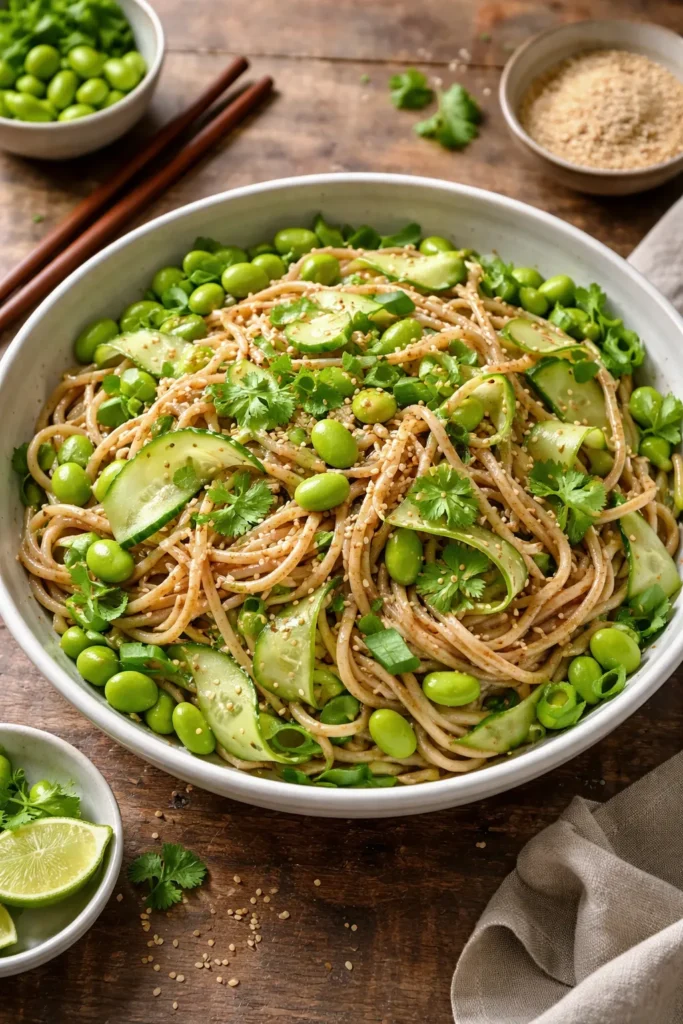
Cold noodle salads are perhaps the most underestimated category of meal prep food. People associate noodles with getting soggy and clumping together, but that happens only when you don’t dress them properly. Toss cooked noodles with a generous amount of sesame-peanut dressing while they’re still slightly warm and they’ll absorb the dressing rather than dry out, staying supple and flavorful for days.
This salad works with soba noodles, rice noodles, or even whole-wheat spaghetti. The dressing is bold enough to carry every variation.
The Dressing (The Most Important Part)
Whisk together:
- 3 tablespoons soy sauce
- 2 tablespoons natural peanut butter
- 1 tablespoon sesame oil
- 1 tablespoon rice vinegar
- 1 tablespoon honey or maple syrup
- 1 teaspoon grated fresh ginger
- 1 garlic clove, minced
- A pinch of red pepper flakes
Thin with a tablespoon of warm water if it feels too thick.
Building the Salad
Cook 8 ounces of soba noodles according to package directions — typically 4 to 5 minutes in boiling water. Drain and rinse with cold water, then toss immediately with the sesame dressing. Add one cup of shelled edamame (thawed from frozen), one English cucumber sliced into thin half-moons, two scallions sliced thin, a handful of shredded purple cabbage, and sesame seeds.
Why It’s a Weekly Staple
- Keeps in the fridge for 4 to 5 days without losing texture
- Serve as-is for a light lunch, or add sliced grilled chicken or a soft-boiled egg for a more substantial meal
- The flavors intensify over time, making it one of the rare recipes that’s better on day three than day one
- Add cucumber fresh each day if you prefer it crisp — it softens slightly after sitting in the dressing overnight
Final Thoughts
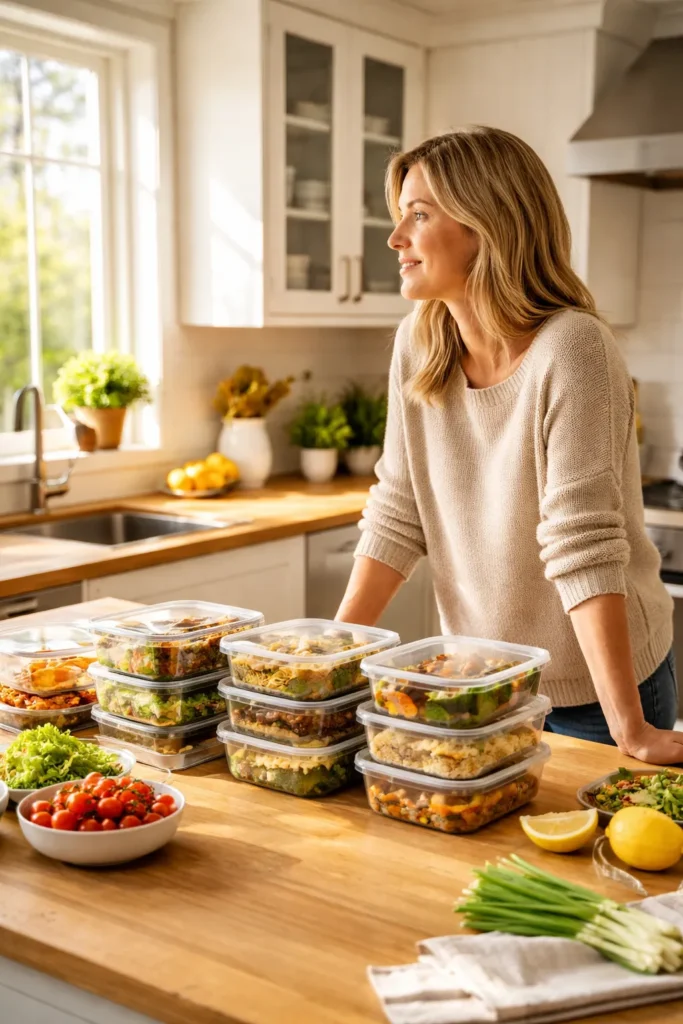
The difference between a stressful week and a manageable one often comes down to what’s already in your fridge. These ten recipes aren’t about restriction or grinding through identical containers — they’re about having real, craveable food ready when time runs short.
A few things worth remembering: store components separately whenever possible, invest in properly sealing containers, and let hot food cool fully before refrigerating (that keeps condensation from building up and making things soggy). Recipes like the chili, white bean soup, and quinoa salad actively improve over a few days, so start the week with those and save fresher items like egg muffins and overnight oats for the tail end.
Pick two or three recipes from this list for your first prep session rather than attempting all ten at once. Get comfortable with the flow of cooking in batches, and build from there. A couple of hours on a weekend afternoon can genuinely change how the rest of your week feels — and that’s worth every minute.