Picture this: you’ve said yes to hosting the baby shower, the invites are out, the decorations are sorted — and then you open a catering quote and nearly fall off your chair. Food is almost always the biggest line item at any celebration, and baby showers are no exception. But here’s what experienced hosts know that first-timers don’t: the most memorable baby shower spreads are almost never the most expensive ones. They’re the ones with thoughtful flavors, generous portions, and food that actually gets eaten — not elaborate platters that look stunning for photos and then sit untouched while guests hunt for something filling.
The good news is that feeding a crowd of happy, hungry guests doesn’t require a catering budget or a culinary degree. With the right combination of crowd-pleasing recipes, a bit of smart grocery shopping, and a few make-ahead strategies, you can put together a spread that feels genuinely impressive while spending a fraction of what most people assume is necessary. Most guests eat around three to five items at a baby shower — which means you don’t need twenty different dishes. You need eight well-chosen ones.
These eight baby shower food ideas hit every mark: budget-friendly ingredients, minimal hands-on prep time, easy transport and serving, and flavors that appeal to a wide range of guests — including the mom-to-be, who deserves food she’ll actually enjoy eating. Each recipe is designed to scale up or down depending on your guest count, and most can be fully prepped a day ahead so the day of the shower stays relaxed rather than frantic.
Table of Contents
- How to Build a Baby Shower Menu Without Overspending
- How Many People Are You Feeding? The Math That Changes Everything
- 1. Ham and Cheese Sliders
- Why These Work So Well at Baby Showers
- What You’ll Need and How to Make Them
- 2. Deviled Eggs
- The Classic Recipe That Never Fails
- Making Them Baby Shower–Ready
- 3. Mini Quiches
- The Formula That Works Every Time
- The One Step Most People Skip
- 4. Caprese Skewers
- Building the Perfect Skewer
- Scaling for a Crowd
- 5. Buffalo Chicken Dip with Chips and Crudités
- The Slow Cooker Method That Frees Up Your Hands
- What This Costs to Make
- 6. Fruit Skewers with Honey Yogurt Dip
- Choosing Your Fruit Strategically
- The Honey Yogurt Dip That Elevates Everything
- 7. Mini Pasta Salad Cups
- The Base Recipe That Works for Any Crowd
- Presentation That Looks Like You Tried Much Harder Than You Did
- 8. Chocolate-Covered Strawberries
- The Technique That Prevents Flat, Streaky Results
- Decorating Without Overspending
- Refreshing Drinks That Won’t Drain Your Budget
- Make-Ahead Tips to Keep the Day Stress-Free
- Final Thoughts
How to Build a Baby Shower Menu Without Overspending
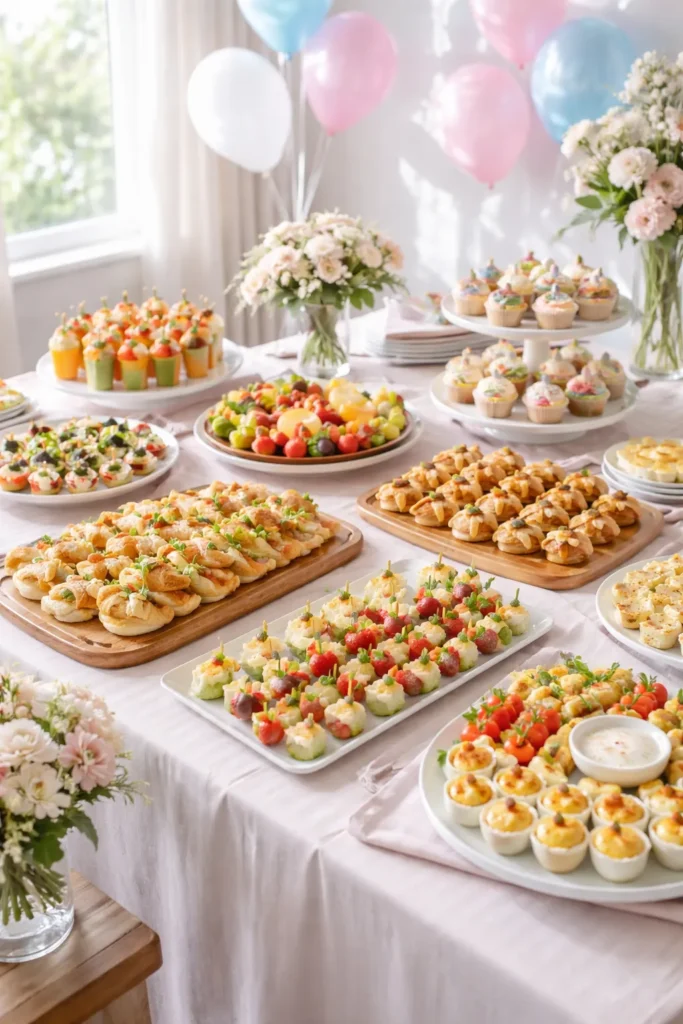
Before diving into specific recipes, it’s worth thinking strategically about when and how you serve food — because those two decisions alone can cut your food budget significantly.
Timing is everything. Hosting between mealtimes (think 2:00 p.m. or 10:30 a.m.) means guests arrive having recently eaten. You’re not expected to serve a full sit-down meal, which frees you to offer a spread of appetizers, finger foods, and desserts rather than full entrées. This single scheduling choice can cut food costs by 40% or more.
Go with a buffet-style setup rather than plating individual portions. When guests serve themselves, food gets wasted far less — people take what they actually want. It also reduces the need for serving staff or complex timing coordination between dishes. Pull the food table away from the wall so guests can access it from both sides; that small change keeps lines from forming and lets people mingle naturally.
Prioritize dishes with overlapping ingredients. If you’re making buffalo chicken dip and chicken salad sandwiches, you’re buying chicken for both — which means buying in bulk and saving. Building your menu around one or two hero proteins, one or two cheese varieties, and a consistent set of produce items keeps your grocery list focused and your spending predictable.
How Many People Are You Feeding? The Math That Changes Everything
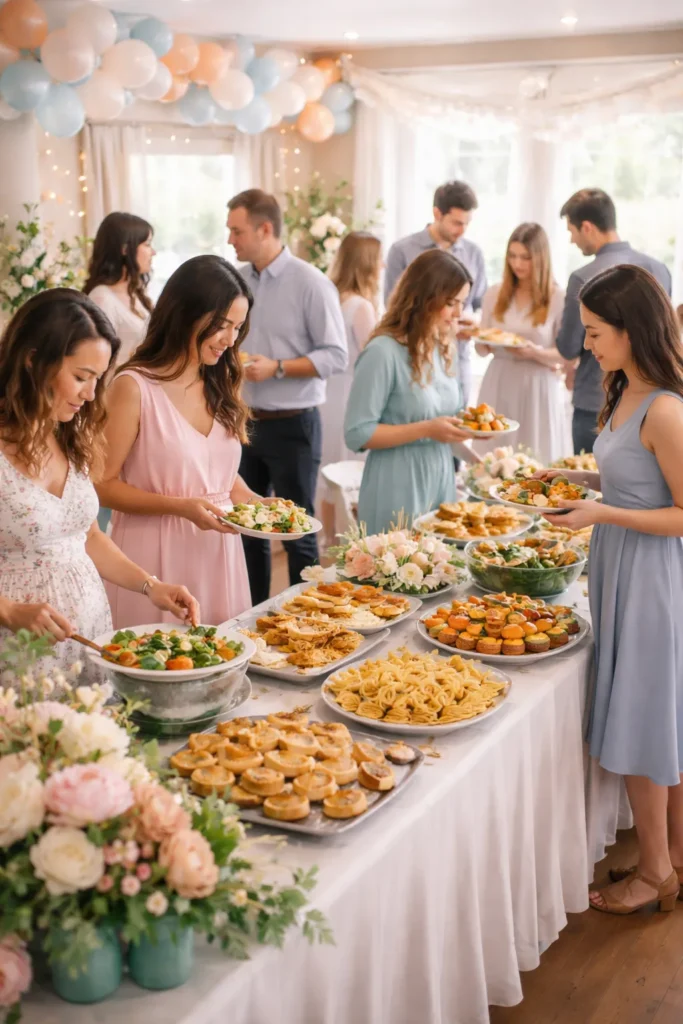
Getting your quantities right is where a lot of hosts go wrong — both by over-buying and under-buying. A reliable rule of thumb is to plan for each guest to eat four to six individual pieces or portions of food over the course of a two-hour shower. For a gathering of 20 guests, that means roughly 80 to 120 individual bites across your entire spread.
When you’re working with a tight budget, a smaller guest list is genuinely one of the most effective cost-cutting moves available. Going from 30 guests to 20 doesn’t just save you food money — it reduces the number of plates, napkins, cups, and serving vessels you need. It also makes the event feel more intimate and personal, which is often exactly what the mom-to-be wants.
If the guest list is non-negotiable, consider a potluck format where you provide two or three anchor dishes and invite guests to contribute something. Be specific in your ask — “please bring a dessert that serves 8 to 10 people” is more helpful than a vague “feel free to bring something.” You can also supplement your homemade food with a few well-chosen store-bought items (a good rotisserie chicken goes a long way, as does a bakery sheet cake) to reduce your prep load without increasing costs much.
1. Ham and Cheese Sliders
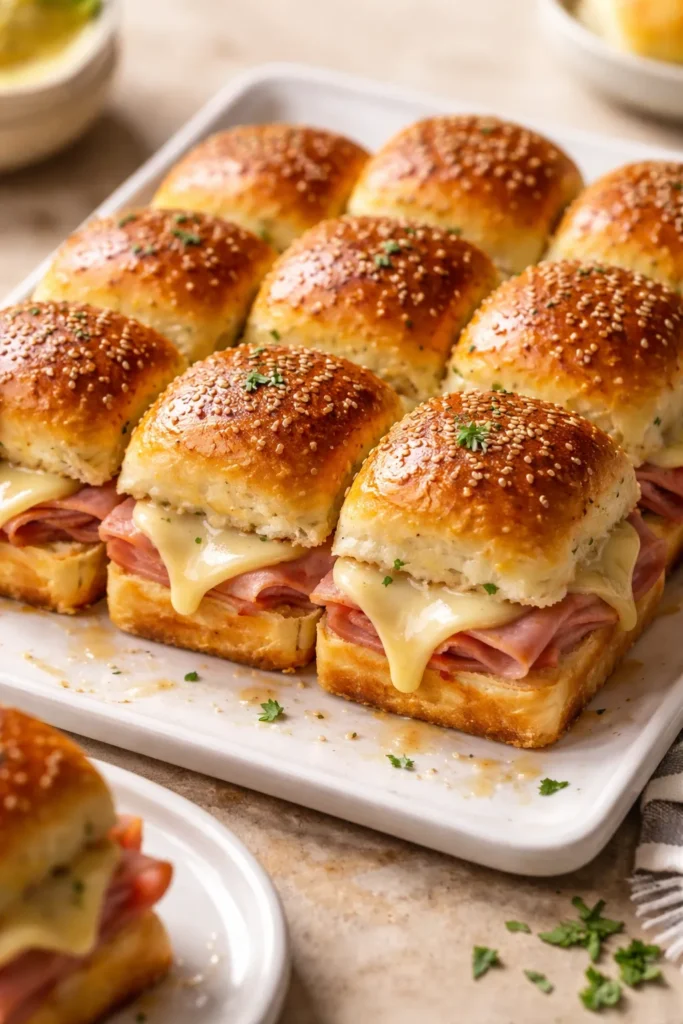
Ham and cheese sliders are the kind of food that disappears from a table within minutes — and they cost almost nothing to make. A single batch of 24 sliders, made with Hawaiian rolls, deli ham, and Swiss cheese, can feed 12 guests as a two-slider portion for under $20 total. That’s hard to beat at any celebration, let alone one you’re hosting on a budget.
Why These Work So Well at Baby Showers
The combination of soft, slightly sweet rolls with salty ham and melted cheese hits a universally satisfying flavor note that works for almost every guest. They’re finger food by design — no forks needed, no awkward balancing act — and they hold their shape well on a serving platter for an hour or more after baking.
The real magic is in the butter sauce. Brushing the tops of the rolls with a mixture of melted butter, Dijon mustard, Worcestershire sauce, garlic powder, and poppy seeds before baking transforms a simple slider into something that tastes genuinely intentional and special. It adds almost nothing to the cost but makes a dramatic difference in flavor.
What You’ll Need and How to Make Them
- 2 packages (12-count each) Hawaiian sweet rolls
- ¾ lb deli ham, thinly sliced
- 12 slices Swiss cheese (or provolone)
- 4 tablespoons unsalted butter, melted
- 1 tablespoon Dijon mustard
- 1 teaspoon Worcestershire sauce
- ½ teaspoon garlic powder
- 1 teaspoon poppy seeds
Preheat your oven to 350°F. Without separating the rolls, slice the entire package horizontally so you have a top and bottom slab. Layer ham and cheese evenly across the bottom slab, then replace the top. Whisk together the butter, mustard, Worcestershire, garlic powder, and poppy seeds and brush generously over the tops. Cover tightly with foil and bake for 15 minutes, then uncover and bake for another 5 minutes until the tops are golden and the cheese is fully melted. Slice into individual sliders before serving.
Pro tip: These can be fully assembled the night before, covered in foil in the fridge, and baked fresh the morning of the shower. The rolls actually absorb the butter sauce overnight, which makes them taste even better.
2. Deviled Eggs
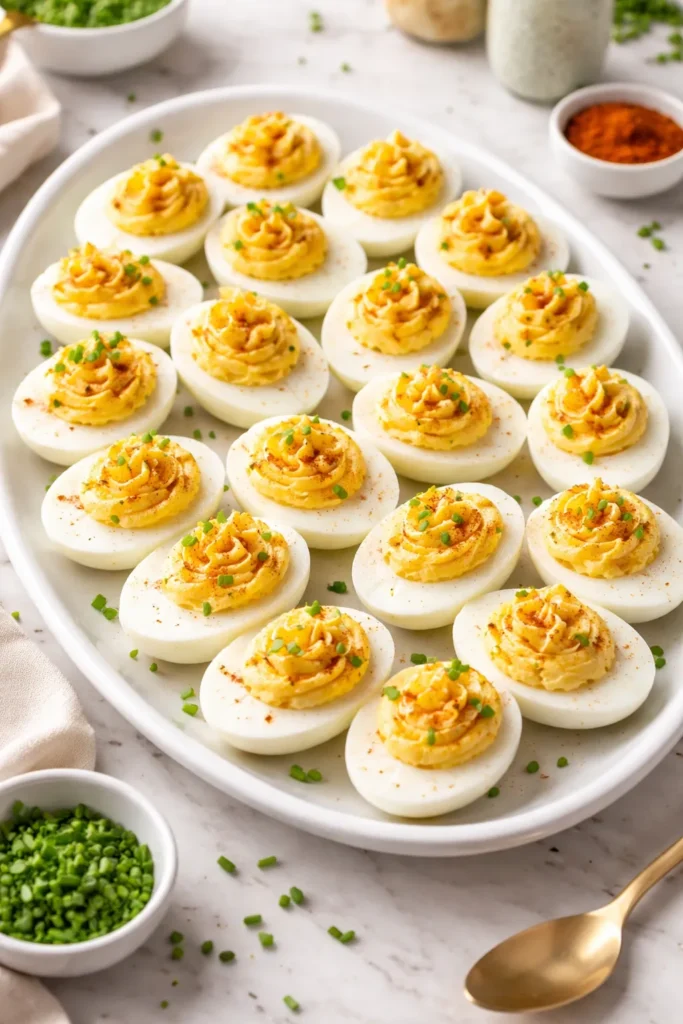
Deviled eggs have held their spot at party spreads for decades for a very simple reason: they’re cheap, easy to make in large quantities, and people genuinely love them. A dozen eggs costs very little and yields 24 individual deviled egg halves — that’s 24 bites of protein-rich, crowd-pleasing food for under $3 in ingredients. No appetizer on this list delivers more value per dollar.
The Classic Recipe That Never Fails
Hard-boil your eggs by placing them in cold water, bringing to a boil, then covering and removing from heat for exactly 12 minutes before transferring to an ice bath. This method produces consistently cooked yolks without that greenish ring that develops from overcooking.
For the filling, mash the yolks with mayonnaise, a small amount of yellow mustard, white wine vinegar, salt, and white pepper until completely smooth. A piping bag (or a zip-lock bag with one corner snipped) gives you clean, professional-looking swirls. Finish with a dusting of paprika and, if you want to get creative, a small sliver of pickled jalapeño or a tiny sprig of fresh dill on top.
Making Them Baby Shower–Ready
Because the shower is likely themed, you can lean into the presentation without spending extra money. Arrange the eggs on a platter lined with shredded lettuce so they don’t slide around. Use toothpicks with ribbon tied around them for a decorative touch. If you want the “babies in bassinets” presentation that’s popular at showers, use one filled egg half as the body and position a second sliced egg white piece as the blanket — it’s surprisingly charming and requires no additional cost.
One important note: deviled eggs should be refrigerated until about 20 minutes before serving. Don’t leave them sitting out for more than two hours, especially in warm weather.
3. Mini Quiches
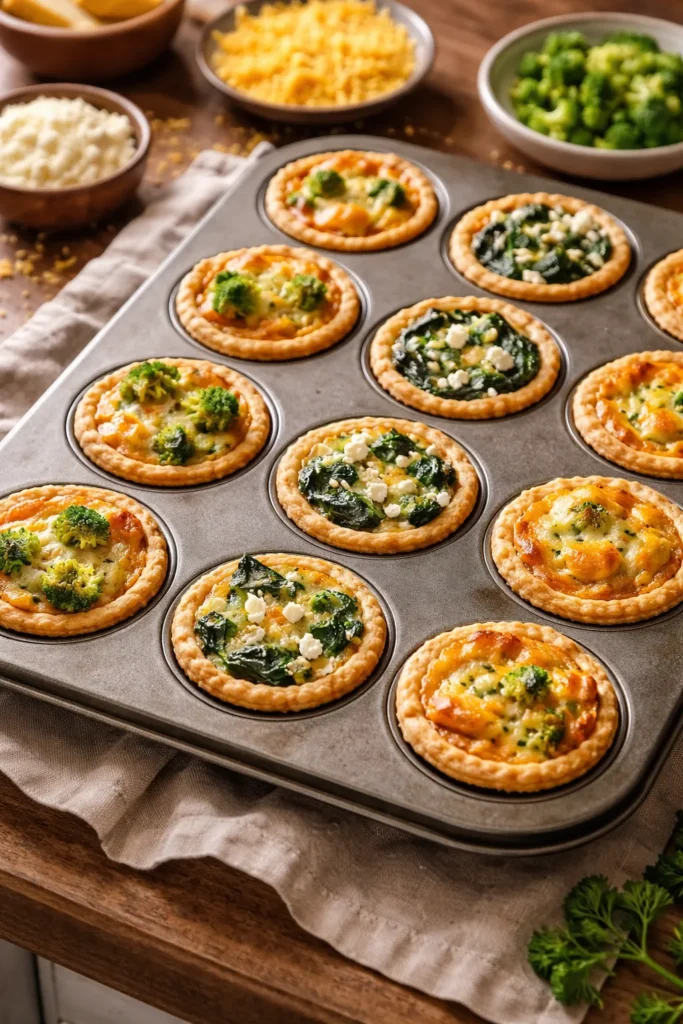
Quiches have an unfair reputation for being complicated or expensive. Done right, they’re neither. Mini quiches baked in a standard muffin tin are one of the most cost-effective hot appetizers you can serve, and they look like you spent far more time on them than you actually did.
The Formula That Works Every Time
The base of any great mini quiche is simple: eggs, milk or cream, salt, pepper, and whatever fillings you have on hand. A ratio of 4 large eggs to ¾ cup of milk or cream fills a standard 12-cup muffin tin perfectly. From there, the filling combinations are nearly endless — and you can use whatever you already have in the fridge.
For a baby shower, two crowd-pleasing combinations stand out. The first is broccoli and cheddar: finely chop raw broccoli florets, toss with shredded sharp cheddar, and divide among pre-lined or greased muffin cups before pouring the egg mixture over the top. The second is spinach and feta: sauté a handful of baby spinach until wilted, squeeze out moisture, and combine with crumbled feta and a pinch of nutmeg. Both cost under $8 for a full 12-quiche batch.
The One Step Most People Skip
Pre-cook your crust if you’re using one. Press small circles of refrigerated pie crust or crescent dough into each muffin cup and blind-bake at 375°F for 7 minutes before adding the filling. This prevents the bottom from becoming soggy — a problem that ruins the texture of even the best-tasting mini quiche.
Bake the filled quiches at 375°F for 18 to 22 minutes, until the centers are just set and the tops have a light golden color. They can be made a full day ahead and reheated at 300°F for 10 minutes without losing quality. That make-ahead flexibility makes them one of the most host-friendly items on this entire list.
4. Caprese Skewers
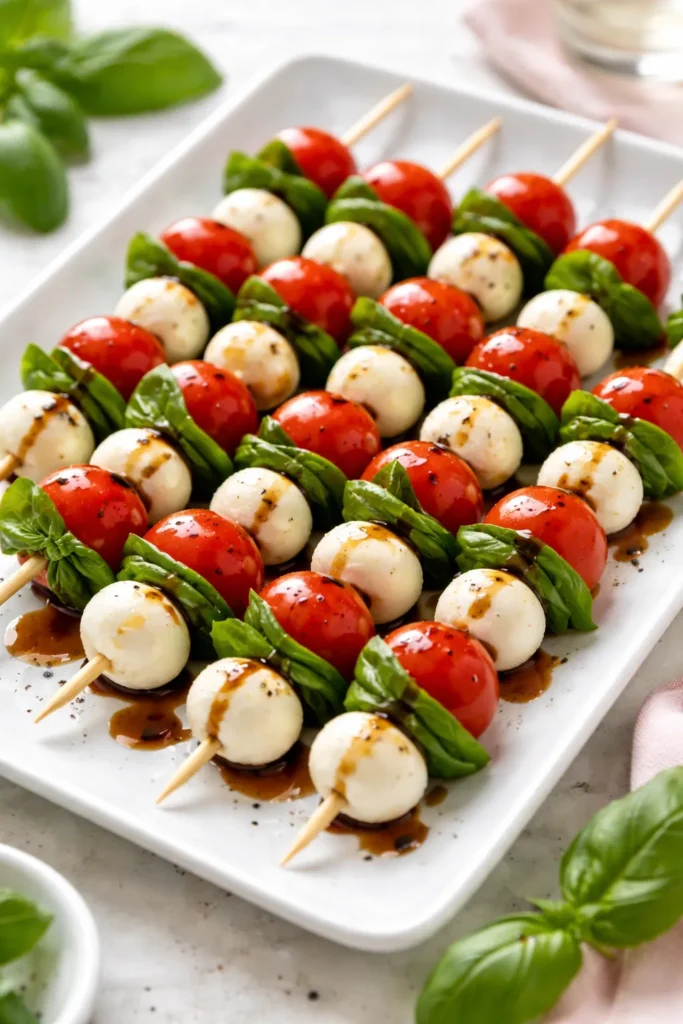
Caprese skewers require zero cooking and about 15 minutes of active assembly time. They look like something from a catering menu, they’re genuinely delicious, and the ingredients are affordable — especially if you buy fresh mozzarella balls (bocconcini) in bulk from a club store.
Building the Perfect Skewer
Thread each short wooden skewer or toothpick in this order: one cherry tomato, one fresh basil leaf (folded in half), and one bocconcini ball. The alternating colors of red, green, and white make an attractive visual without any effort. Arrange them on a platter and finish with a drizzle of good-quality balsamic glaze (not balsamic vinegar — the glaze is thicker and sweeter and clings to the cheese) and a light sprinkle of flaky sea salt.
Scaling for a Crowd
For 20 guests eating one to two skewers each, you’ll need roughly 40 cherry tomatoes, 40 bocconcini balls, and a generous amount of fresh basil. Most grocery stores sell cherry tomatoes in one-pint containers of around 25 to 30 tomatoes, and bocconcini in 8-ounce containers of roughly 20 to 24 balls. Two pints of tomatoes and two containers of bocconcini will cover you, alongside one large bunch of fresh basil.
The full spread for 20 guests costs around $15 to $18, depending on your local prices. That’s exceptional value for something that looks as polished as this does on a serving platter.
Worth knowing: Assemble these no more than two hours before serving. Basil bruises and darkens quickly once handled, and the tomatoes begin releasing moisture after a while. Keep them covered and refrigerated until you’re ready to set out the platter.
5. Buffalo Chicken Dip with Chips and Crudités
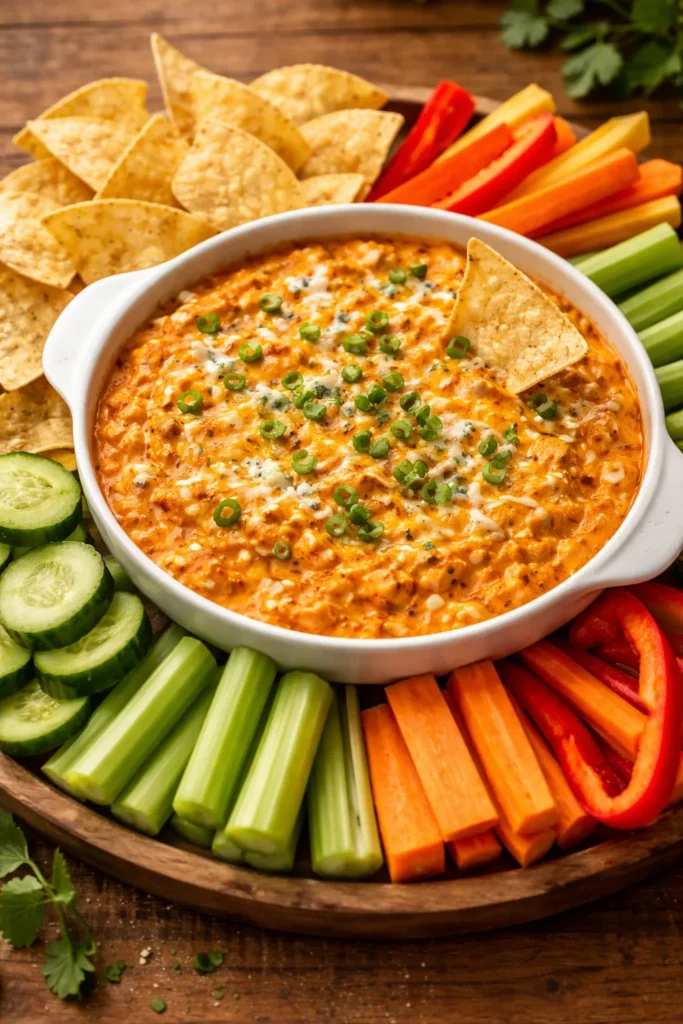
Buffalo chicken dip is one of the most beloved party foods for a reason: it’s warm, creamy, deeply flavorful, and pairs with both chips and vegetables — which means it does double duty as both a savory dip and a way to get vegetables onto your spread. The slow cooker version requires almost no active effort, which makes it ideal when you’re juggling multiple dishes on the day of the shower.
The Slow Cooker Method That Frees Up Your Hands
Add two 10-ounce cans of chunk chicken (or two shredded cooked chicken breasts) to your slow cooker along with one 8-ounce block of cream cheese, ½ cup of your favorite hot sauce, ½ cup of ranch dressing, and 1 cup of shredded cheddar. Stir, cover, and cook on low for 2 hours or high for 1 hour, stirring once halfway through. The finished dip should be thick, creamy, and evenly blended.
Serve directly from the slow cooker set on the “warm” setting so the dip stays at the right consistency throughout the party. Set out a basket of tortilla chips alongside a tray of raw vegetables — carrot sticks, celery, cucumber rounds, and bell pepper strips all work beautifully. The combination of chips and vegetables means guests have options, and the vegetable tray adds visual volume and color to your spread at a very low cost.
What This Costs to Make
A full batch that serves 12 to 16 as a dip costs roughly $12 to $15 in ingredients, including the chips and vegetable platter. That per-serving cost is difficult to match with any alternative. Double the recipe if you’re feeding more than 20 guests — the slow cooker can usually handle a double batch, or you can run two slow cookers simultaneously.
6. Fruit Skewers with Honey Yogurt Dip
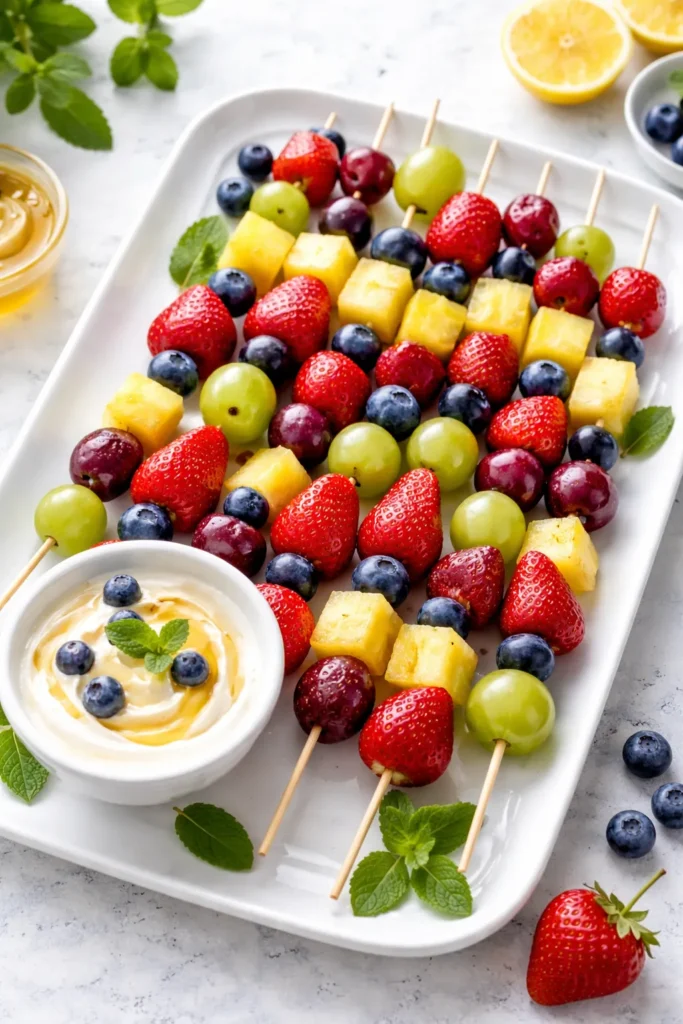
Every baby shower spread benefits from something fresh, light, and naturally sweet — especially since the mom-to-be may be navigating pregnancy cravings and dietary preferences that make heavier foods less appealing. Fruit skewers are colorful, visually striking, universally enjoyed, and cost very little when you choose fruit that’s in season and widely available.
Choosing Your Fruit Strategically
The most budget-friendly combination year-round includes strawberries, green grapes, red grapes, pineapple chunks, and blueberries. Cantaloupe and honeydew become significantly cheaper during warmer months and add beautiful color variation. Avoid pre-cut fruit at the grocery store — it costs two to three times more than whole fruit you cut yourself, and the freshness isn’t always better.
Thread each skewer with five to six pieces of fruit in a repeating color pattern. The visual effect is immediately festive without any additional decoration needed. A platter of 30 assembled skewers looks genuinely impressive and takes about 25 minutes to put together.
The Honey Yogurt Dip That Elevates Everything
The dip transforms a basic fruit platter into something that feels deliberate and thoughtful. Whisk together 1 cup of plain Greek yogurt, 2 tablespoons of honey, 1 teaspoon of vanilla extract, and a pinch of cinnamon. That’s it. The result is a lightly sweet, creamy dip that pairs with every fruit on the skewer and doubles as a topping for the fruit if guests prefer to drizzle rather than dip.
Serve in a small bowl in the center of the platter, or offer it in individual small cups alongside the skewers for a cleaner serving experience. The full dip recipe costs under $3 to make and serves 15 to 20 guests as an accompaniment.
7. Mini Pasta Salad Cups
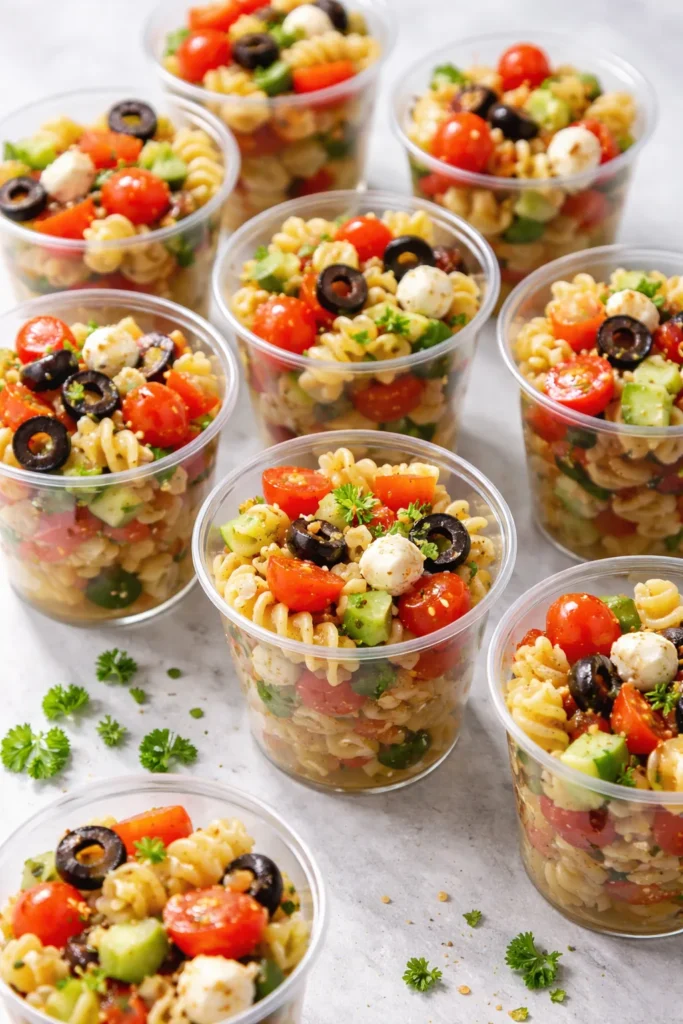
Pasta salad is one of the most underestimated party foods — filling, versatile, inexpensive to make in large quantities, and genuinely better when made a day ahead (because the pasta has time to absorb the dressing). Serving it in individual clear plastic cups rather than a large bowl makes it feel like a catered dish rather than a potluck contribution, and it eliminates the need for serving spoons and the mess that comes with them.
The Base Recipe That Works for Any Crowd
Cook 1 pound of rotini, fusilli, or farfalle pasta until just al dente, then rinse under cold water and drain thoroughly. Combine with ½ cup diced red bell pepper, ½ cup diced cucumber, ¼ cup sliced black olives, ½ cup halved cherry tomatoes, and ½ cup cubed mozzarella or crumbled feta. Dress with ¾ cup of Italian vinaigrette, toss to coat, and refrigerate for at least two hours before serving.
This base recipe serves 12 to 16 as a side portion and costs around $8 to $10 total — less if you use whatever vegetables are on sale that week. Add shredded rotisserie chicken or diced salami to make it more filling, or keep it fully vegetarian for a crowd-friendly option.
Presentation That Looks Like You Tried Much Harder Than You Did
Portion the salad into 8-ounce clear plastic cups using a large spoon or a ladle, filling each cup about two-thirds full. Stick a small fork into each cup and arrange them in rows on a tray. The individual portions eliminate serving mess, let guests grab and go without interrupting conversation, and look genuinely polished on any food table. Label each cup with a small folded card if you’ve added any ingredients that guests with allergies might need to know about.
8. Chocolate-Covered Strawberries
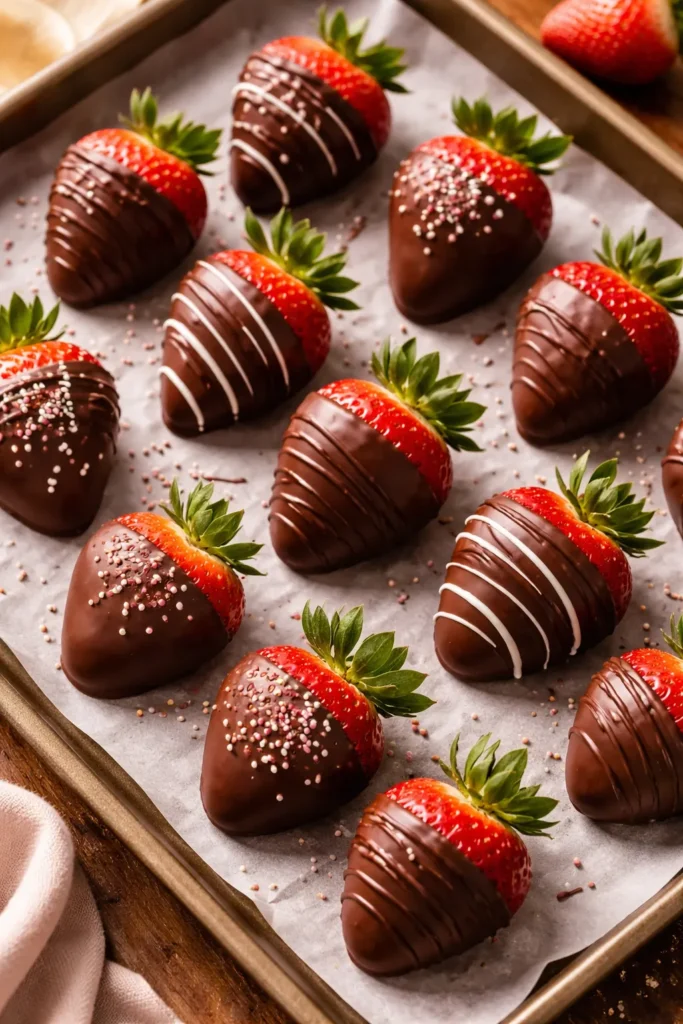
No baby shower dessert table feels complete without something that bridges the gap between fruit and indulgence, and chocolate-covered strawberries do exactly that with minimal effort and maximum visual impact. They’re naturally bite-sized, require no plates or utensils, and can be customized to match any color theme with colored candy melts or colored sprinkles.
The Technique That Prevents Flat, Streaky Results
The most common mistake with chocolate-covered strawberries is using wet strawberries. Any residual moisture on the surface of the fruit causes the melted chocolate to seize and streak rather than coating smoothly. Wash your strawberries at least two hours before dipping and let them dry completely on a paper towel-lined tray at room temperature — don’t refrigerate them wet.
Melt good-quality chocolate chips or candy melts in a microwave-safe bowl in 30-second intervals, stirring between each interval, until fully smooth. Holding each strawberry by the stem, dip it at a slight angle, let the excess drip off for a few seconds, and set it on a parchment-lined baking sheet. For a baby shower, dip half your batch in white chocolate tinted pink with a drop of red food coloring, and leave the other half in dark or milk chocolate — the two-tone presentation on a platter looks striking and festive without any extra cost.
Decorating Without Overspending
Once the chocolate has set (about 20 minutes at room temperature, or 10 minutes in the fridge), add a second decorative drizzle using a contrasting chocolate color. Load a small zip-lock bag with melted white chocolate, snip a tiny corner off, and drizzle back and forth over the already-set strawberries for an elegant striped effect. Sprinkles, edible glitter, or finely crushed freeze-dried raspberries pressed onto the wet chocolate before it sets are all affordable and effective decoration options.
A batch of 24 chocolate-covered strawberries costs around $10 to $14 depending on strawberry prices and the type of chocolate used. Store them at room temperature for up to four hours, or in the refrigerator for up to 24 hours — though bring them to room temperature for 20 minutes before serving, since cold strawberries can cause the chocolate coating to crack and separate.
Refreshing Drinks That Won’t Drain Your Budget
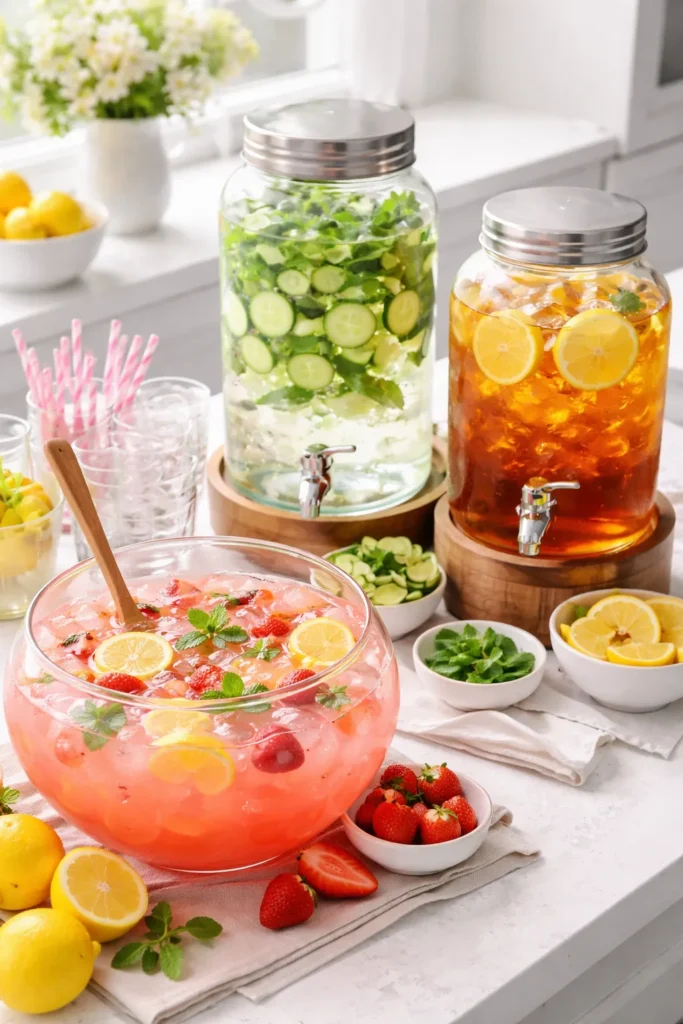
The beverage table is an area where baby shower hosts often overspend without realizing it. A few simple drink options go much further than a fully stocked bar, and non-alcoholic drinks are genuinely the right call for a shower where the guest of honor can’t drink alcohol anyway.
Pink lemonade punch is a crowd staple: combine 1 liter of pink lemonade, 1 liter of ginger ale, and 2 cups of cranberry juice in a large punch bowl. Add a frozen ring of lemonade ice (made by freezing lemonade in a bundt pan the day before) instead of ice cubes — this keeps the punch cold without diluting it. Garnish with fresh raspberries and mint. The whole batch costs around $8 and serves 15 to 20 guests.
Spa water is another excellent option that looks sophisticated and costs almost nothing. Fill a large clear dispenser with water, then add sliced cucumber, lemon rounds, and a handful of fresh mint. Let it infuse in the fridge for at least two hours before the shower. It photographs beautifully, appeals to health-conscious guests, and signals thoughtfulness without adding any meaningful cost.
For guests who want something warm, a simple iced tea station with black tea, herbal tea bags, lemon slices, honey, and a pitcher of simple syrup gives people a customizable option that costs almost nothing to set up.
Make-Ahead Tips to Keep the Day Stress-Free
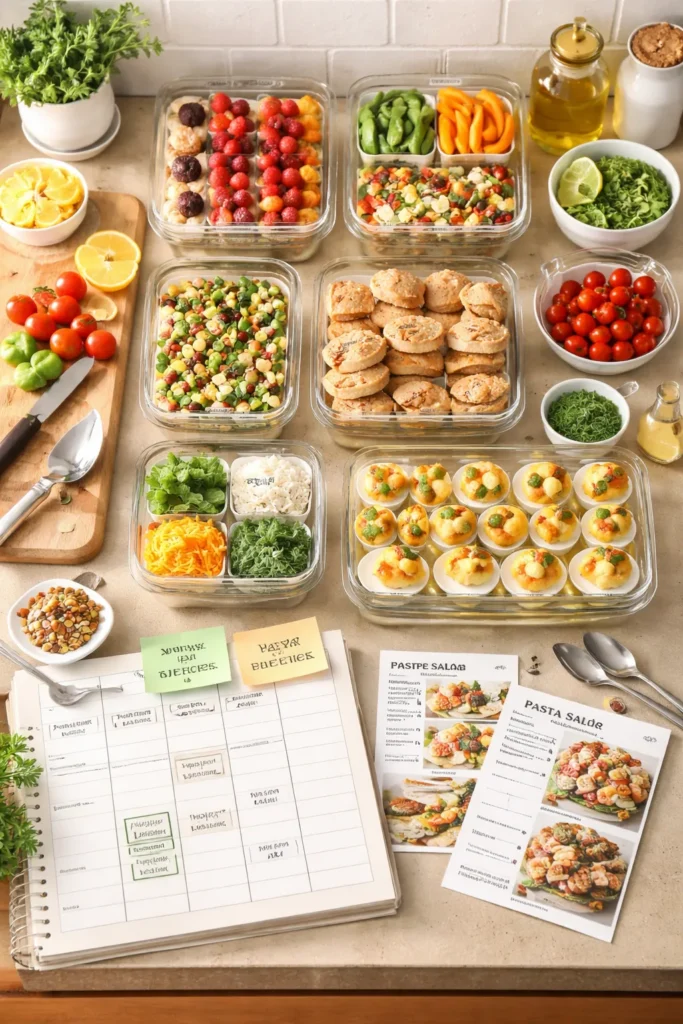
The difference between a host who actually enjoys the baby shower and one who spends the whole time stressed in the kitchen is almost always preparation — specifically, how much cooking happens before the day of the event.
Two days before: Make the chocolate-covered strawberries and refrigerate them. Mix the dry spice blend for your buffalo chicken dip and measure out ingredients so everything is ready to go into the slow cooker. Shop for all groceries so you’re not scrambling the day before.
One day before: Assemble and refrigerate the ham and cheese sliders (unbaked). Make the mini quiches and refrigerate. Prepare the pasta salad completely and refrigerate overnight so the flavors deepen. Hard-boil the eggs for deviled eggs and refrigerate them unpeeled. Make the honey yogurt dip and refrigerate.
Morning of the shower: Start the buffalo chicken dip in the slow cooker (it needs 1 to 2 hours). Assemble the deviled egg filling and pipe the eggs. Bake the sliders. Assemble fruit skewers and caprese skewers. Mix and set out the punch bowl 30 minutes before guests arrive.
With this timeline, you spend about 90 minutes spread over three days rather than four exhausting hours the morning of the event. The food is fresher, you’re calmer, and guests get to see you enjoy the celebration you put together rather than watching you run back and forth to the kitchen.
Final Thoughts

A baby shower menu doesn’t need to be expensive to feel generous and special. What guests actually remember isn’t how much money was spent — it’s whether the food tasted good, whether there was enough of it, and whether the host seemed relaxed enough to enjoy the party they’d put together.
These eight dishes cover every angle of a well-balanced spread: hot savories, a fresh dip, two kinds of salad, a fruit element, and a dessert that looks like it came from a shop window. Together, they feed 20 guests comfortably for roughly $80 to $120 total, depending on your location and where you shop — a fraction of what a caterer would charge for far less personal food.
The most underused strategy in budget entertaining is the make-ahead approach. When you’ve done 80% of your cooking before the day of the shower, you arrive at the party as a host rather than a cook — and that energy is something your guests, and especially the mom-to-be, will feel from the moment they walk in.
Choose two or three of these ideas as your anchors, fill in the gaps with a couple more, and trust that a table full of well-made food you’re proud of will always land better than an overstretched, overspent menu where nothing quite came together.