This bright and zesty lemon cake has become the signature dessert at spring brunches for good reason—it’s tender, moist, bursting with fresh citrus flavor, and elegant enough to grace any table without demanding hours in the kitchen. The key to a truly exceptional lemon cake isn’t just using quality lemons (though that matters), but understanding how to layer flavor, balance acidity with sweetness, and build a crumb structure that stays moist without becoming dense.
Over the years, lemon cake has evolved from a simple, almost austere dessert into something far more refined. What makes the difference is treating the lemon not as an afterthought, but as the hero ingredient—using fresh juice, zest, and sometimes even infused syrup to create depth and complexity that lingers on the palate. When done right, a single slice should taste bright and energetic, like spring itself captured in cake form.
The beauty of this recipe is its flexibility. It works beautifully on its own with just a whisper of powdered sugar, but it also takes beautifully to glazes, buttercreams, and creative toppings. You can serve it chilled straight from the fridge or at room temperature, make it the day before, and it actually improves overnight as the flavors meld and the crumb absorbs the lemon syrup.
Table of Contents
- Why Lemon Cake Is Perfect for Spring Gatherings
- The Sunshine Flavor Profile: What Makes Lemon Cake Spring’s Star
- Understanding Citrus Balance in Lemon Cakes
- Preparing Your Kitchen and Equipment
- Ingredients and Timing
- For the Cake:
- For the Soaking Syrup:
- For the Cream Cheese Frosting (optional but recommended):
- Instructions for Making the Lemon Cake
- Essential Techniques for Achieving the Perfect Crumb
- Common Lemon Cake Mistakes and How to Avoid Them
- Lemon Cake Variations for Every Preference
- Storage, Make-Ahead, and Serving Strategies
- Glazes, Frostings, and Topping Ideas
- Pairing Your Lemon Cake with Brunch Beverages
- Final Thoughts
Why Lemon Cake Is Perfect for Spring Gatherings
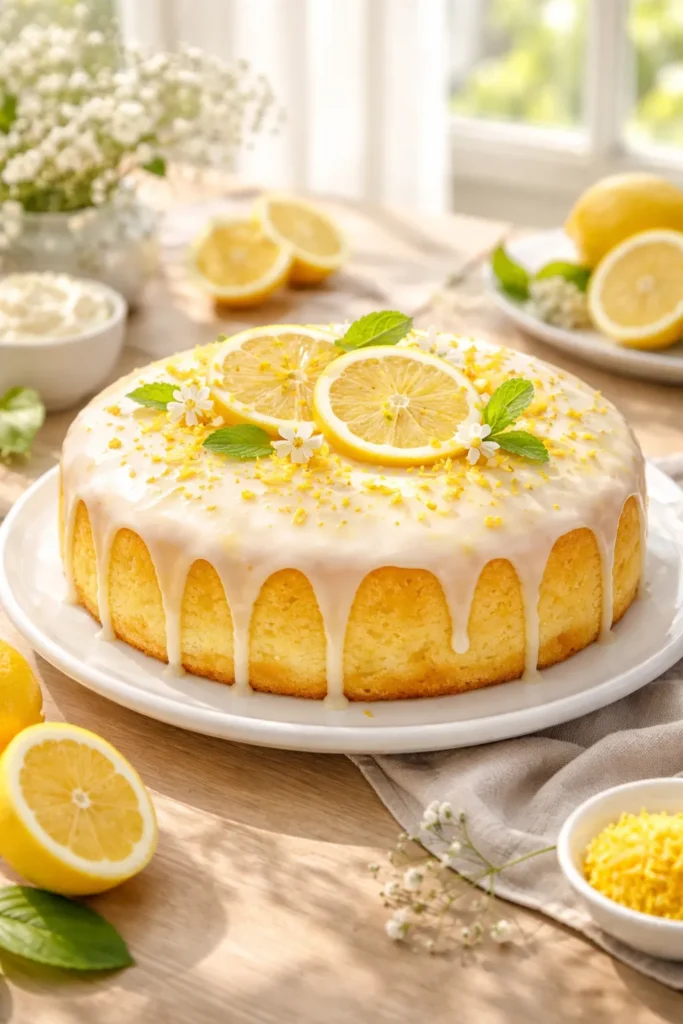
There’s something about lemon that signals freshness and renewal—flavors that feel exactly right when the weather turns warm and gardens begin to burst with life. Unlike heavier chocolate or spice cakes that anchor you to autumn and winter, lemon cake feels weightless and optimistic, the kind of dessert that leaves you feeling satisfied rather than sluggish.
Lemon’s versatility at brunch cannot be overstated. It pairs beautifully with morning coffee and afternoon tea equally well. It complements other spring flavors—fresh berries, whipped cream, edible flowers, herbs like mint and basil—without overwhelming them. Most importantly, it suits a wide range of guests, from those who avoid chocolate to those seeking something brighter and more refreshing than traditional desserts.
The acidity in lemon also serves a practical function in cake baking. It reacts with baking soda to create lift and helps activate the leavening agents, resulting in a more tender, finely-crumbed cake. This is why buttermilk and lemon juice are such frequent partners in lemon cake recipes—they create chemical reactions that improve the final texture.
Lemon cake also has the advantage of dressing up or down as needed. A simple dusting of powdered sugar works for casual outdoor gatherings, while a silky lemon curd filling and delicate frosting suits more formal affairs. This one recipe can be your go-to for everything from a Sunday morning family breakfast to an elegant spring wedding shower.
The Sunshine Flavor Profile: What Makes Lemon Cake Spring’s Star
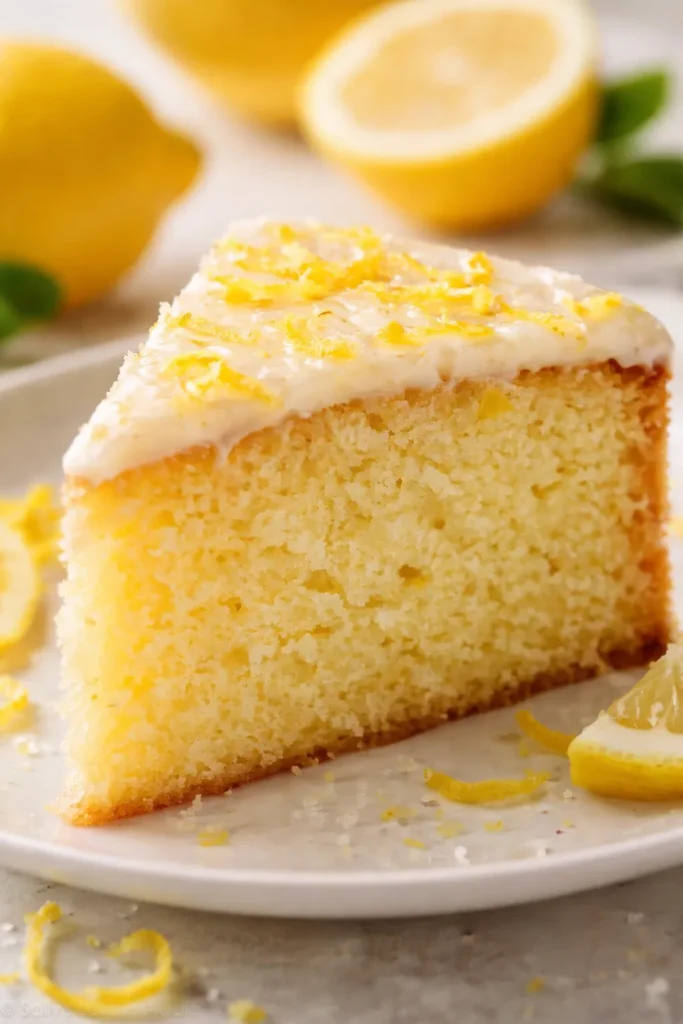
When you bite into a truly exceptional lemon cake, you’re tasting three distinct flavor components working in harmony: the brightness of fresh lemon juice, the aromatic floral notes of lemon zest, and the subtle sweetness that prevents the cake from tasting sour or one-dimensional.
Many home bakers make the mistake of relying solely on bottled lemon juice or lemon extract. Bottled juice tastes thin and sometimes bitter, missing the natural oils and delicate aromatics that make fresh lemon so compelling. Lemon zest, the colored outer layer of the peel, contains all those essential oils—that’s where the real lemon flavor lives. A generous amount of fresh zest is what transforms an ordinary cake into something that smells incredible the moment you open the oven.
The sweetness in a lemon cake needs to be approached thoughtfully. Too much sugar masks the lemon flavor and creates a cake that tastes more like candy than fruit. Too little, and the acidity becomes harsh and unpleasant. The ideal balance is one where you can taste the tartness and sweetness equally, neither dominating the other, with a warm, slightly floral quality that makes people wonder what your secret ingredient is.
This is why many excellent lemon cakes include a soaking syrup—a simple mixture of fresh lemon juice and sugar brushed or drizzled onto the warm cake immediately after baking. As the syrup absorbs into the crumb, it adds moisture, extends shelf life, and intensifies the lemon flavor without requiring more extract or powder. It’s the difference between a good lemon cake and a truly memorable one.
Understanding Citrus Balance in Lemon Cakes
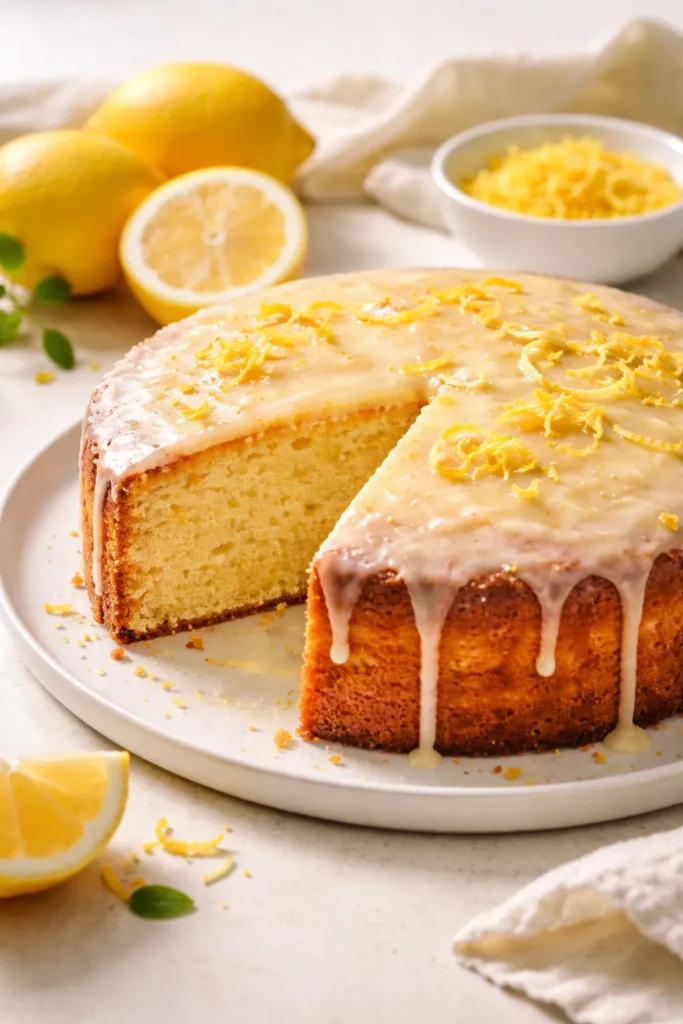
The science of lemon flavor in baking is more nuanced than most people realize. Lemon juice is roughly 6-7% citric acid, which means it can significantly affect both flavor and texture depending on how much you use. The acid denatures proteins in the cake’s crumb structure, tenderizing it—but too much acid can make the cake gummy or prevent proper rising.
This is why the technique of tempering the acid with fat and sugar matters enormously. In this recipe, the lemon juice is added to buttermilk, which has its own acidity and fat content, creating a balanced medium that tenderizes without destabilizing. The butter in the batter also creates a protective coating around the crumb structure, helping it stay moist and tender even when acidic ingredients are present.
Zest quality matters far more than quantity. A microplane or fine grater breaks down the zest into infinitesimally small pieces that distribute evenly throughout the batter, creating consistent flavor in every bite. A box grater creates larger shreds that can clump and create bitter pockets. If you’re going to zest lemons, use the right tool—it genuinely changes the result.
The timing of when you add the zest also affects the final flavor. When zest is creamed with butter at the beginning of mixing, the heat and friction helps release those essential oils, allowing them to distribute more evenly and create a deeper lemon flavor than zest added to the dry ingredients. This is a subtle point, but it’s exactly the kind of technique that separates professional-level baking from basic recipes.
Preparing Your Kitchen and Equipment
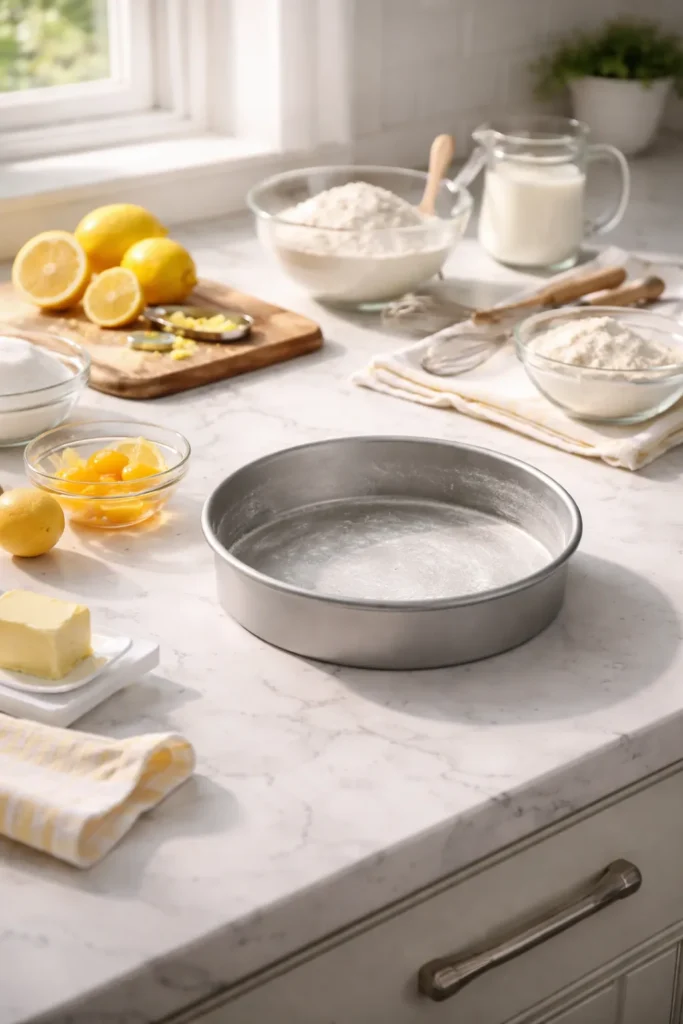
The foundation of successful cake baking starts before you open a single ingredient. Your kitchen, equipment, and mise en place—all ingredients measured and ready—determine whether you’ll have good results or frustrating ones.
Room temperature is non-negotiable for this recipe. Butter, eggs, and buttermilk should all be around 70-75°F when you begin mixing. Cold ingredients don’t combine smoothly, leading to an emulsion that breaks, resulting in a dense, possibly gritty cake. If you forget to take ingredients out ahead of time, place them in a warm water bath for 5-10 minutes—the difference is remarkable.
Your mixing bowls and mixer should be scrupulously clean and free from any grease, which is especially important if you’re whipping any egg whites separately. Even a microscopic amount of yolk or butter can prevent proper aeration. Make sure you have a stand mixer or hand mixer ready; while you technically could mix by hand, the volume of air you’d need to incorporate would be nearly impossible without electric power.
The cake pans should be prepared before mixing even begins. Grease them thoroughly with softened butter or baking spray, then dust with a light coating of flour. Tap out the excess so you have just a thin layer clinging to the greased surface. Some bakers like to line the bottoms with parchment paper as well—this is especially helpful for home bakers since it makes removing the cake foolproof.
Ingredients and Timing
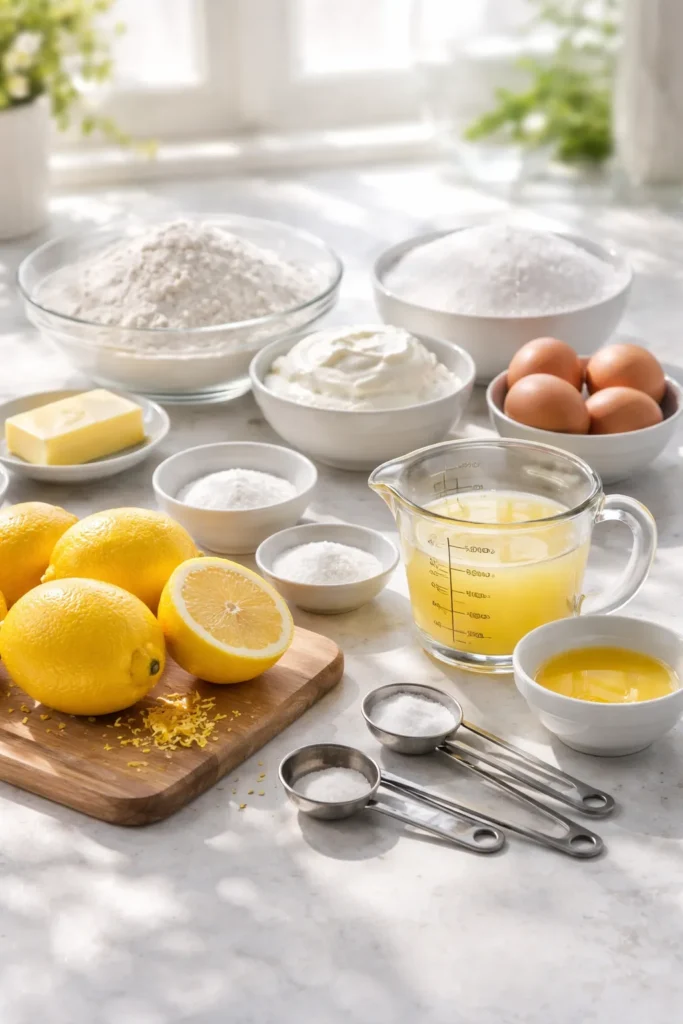
Yield: Serves 10 to 12 | Two 9-inch round cake layers
Prep Time: 25 minutes
Cook Time: 30 to 35 minutes per layer
Total Time: 1 hour 15 minutes active, plus 1 hour cooling before frosting
Difficulty: Intermediate — This recipe requires proper technique for creaming and tempering, understanding of acid reactions in baking, and careful attention to mixing, but the steps themselves are straightforward.
For the Cake:
- 2¼ cups (270 grams) all-purpose flour
- 1½ teaspoons baking powder
- ½ teaspoon baking soda
- ½ teaspoon fine sea salt
- 1 cup (2 sticks) unsalted butter, softened to room temperature
- 1¾ cups (350 grams) granulated sugar
- Zest of 4 large fresh lemons (about 3 tablespoons packed)
- 4 large eggs, room temperature
- 1 teaspoon pure vanilla extract
- ½ cup (120 milliliters) fresh-squeezed lemon juice (from about 3-4 lemons)
- ¾ cup (180 milliliters) whole buttermilk (or Greek yogurt thinned with 2 tablespoons milk)
- 2 tablespoons fresh lemon juice (reserved for syrup — see below)
For the Soaking Syrup:
- 3 tablespoons granulated sugar
- 2 tablespoons fresh-squeezed lemon juice
- 1 tablespoon water
For the Cream Cheese Frosting (optional but recommended):
- 8 ounces (226 grams) cream cheese, softened to room temperature
- ½ cup (1 stick) unsalted butter, softened to room temperature
- 2 cups (240 grams) powdered sugar, sifted
- 1 tablespoon fresh lemon juice
- 1 teaspoon pure vanilla extract
- Pinch of fine sea salt
Optional garnish: Fresh lemon zest, candied lemon slices, edible flowers, or fresh whipped cream
Instructions for Making the Lemon Cake
Prepare the Pans and Preheat:
-
Preheat your oven to 350°F (175°C) and position the rack in the center. Grease two 9-inch round cake pans with softened butter or baking spray, then dust each lightly with flour, tapping out any excess. Line the bottoms with parchment paper for easy removal.
-
Have all ingredients measured and at room temperature before you begin mixing. This is especially important for eggs and butter—cold ingredients will result in a less tender, denser cake.
Mix the Dry Ingredients:
-
In a medium bowl, whisk together the flour, baking powder, baking soda, and salt until thoroughly combined. Set aside.
-
Make sure there are no lumps in your flour mixture and that the leavening agents are evenly distributed—whisking rather than stirring ensures this. Uneven leavening is one of the most common causes of dense or sunken lemon cakes.
Cream the Butter and Sugar:
-
In the bowl of a stand mixer fitted with the paddle attachment, combine the softened butter and sugar on medium speed. Cream for 4 to 5 minutes, until the mixture is visibly pale, noticeably fluffy, and has roughly doubled in volume. This step is critical—you’re incorporating air into the fat, which will help the cake rise and achieve a tender crumb.
-
Add the lemon zest to the creamed butter and sugar, then continue mixing for 30 seconds. You’ll notice the mixture becoming fragrant and taking on a pale yellow tinge—this is the lemon oils releasing and distributing through the fat.
Add the Eggs:
-
With the mixer still on medium speed, add the eggs one at a time, beating for about 30 seconds after each addition and scraping down the sides of the bowl after the second egg. The batter may look slightly broken or curdled at this point—this is completely normal and will come together in the next step.
-
Add the vanilla extract and mix on low speed until just combined.
Temper the Acid:
- In a small bowl or measuring cup, combine the fresh lemon juice (½ cup) with the buttermilk. Let this mixture sit for about 2 minutes—you’ll see it start to thicken slightly as the acid begins to curdle the milk. This creates a more stable, balanced medium for the acid to be incorporated into the batter.
Combine the Wet and Dry Ingredients:
-
Reduce the mixer to low speed. Add the flour mixture in three additions, alternating with the lemon-buttermilk mixture in two additions, beginning and ending with flour. The pattern is: flour — lemon mixture — flour — lemon mixture — flour.
-
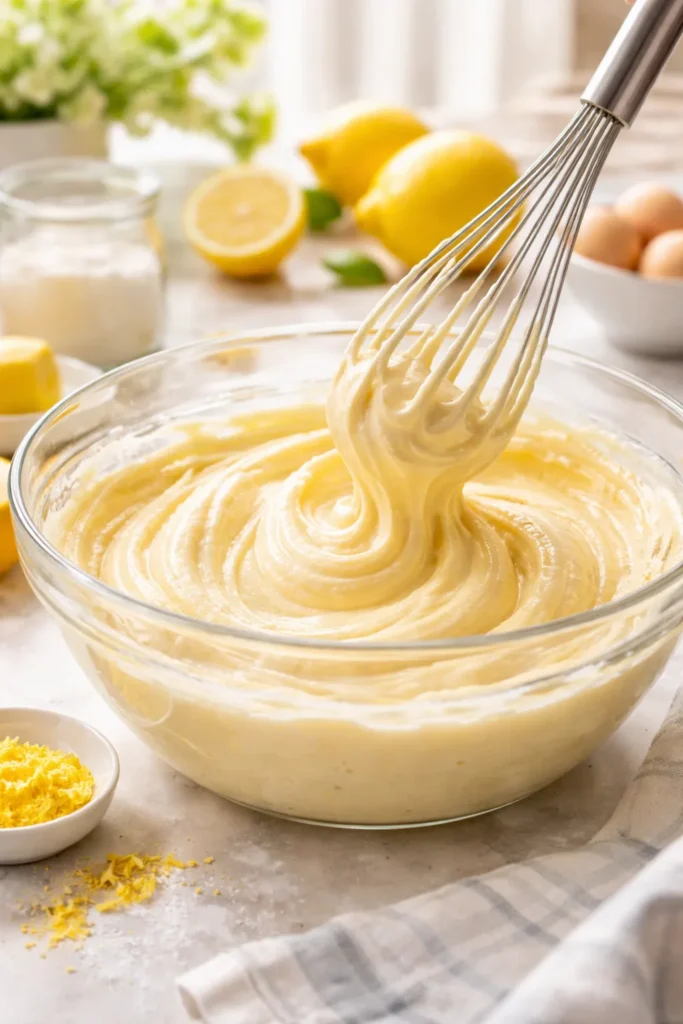
Mix only until each addition just disappears into the batter. Do not overmix—overworking the batter develops gluten and will make the cake tough and dense. The batter should look smooth and slightly thick, not runny or stiff.
-
Use a rubber spatula to give the batter a final gentle fold, scraping the bottom of the bowl to ensure all ingredients are fully incorporated.
Bake the Cake:
-
Divide the batter evenly between the prepared pans, using an offset spatula to spread it into an even layer. Tap each pan gently on the counter a few times to release large air bubbles.
-
Bake for 30 to 35 minutes, rotating the pans halfway through baking, until a toothpick inserted in the very center comes out clean or with just one or two moist crumbs clinging to it. The edges will have just started to pull away from the sides of the pans, and the tops will be pale golden and spring back when pressed lightly with a fingertip.
-
Do not overbake. A lemon cake that’s even slightly overdone becomes dry and bitter-tasting. If your oven runs hot, check at 28 minutes.
Cool and Soak:
-
Remove the pans from the oven and place them on wire cooling racks. Allow the cakes to cool in the pans for exactly 15 minutes—no longer. This allows them to set enough to be turned out without tearing, but while they’re still warm enough to absorb the soaking syrup.
-
While the cakes cool, make the soaking syrup by combining the sugar, lemon juice, and water in a small saucepan. Bring to a simmer over medium heat, stirring until the sugar dissolves completely, then remove from heat and let cool for 1 minute.
-
Run a thin knife around the edges of each cake to loosen it, then invert onto a cooling rack. Brush the warm cakes generously with the soaking syrup on both the top and sides, allowing it to absorb. The cakes will glisten and become noticeably more moist—this is exactly what you want.
-
Allow the cakes to cool completely at room temperature for at least 1 hour before frosting or serving. Never frost a warm cake; the frosting will melt and slide off, and you’ll tear the delicate crumb.
Essential Techniques for Achieving the Perfect Crumb
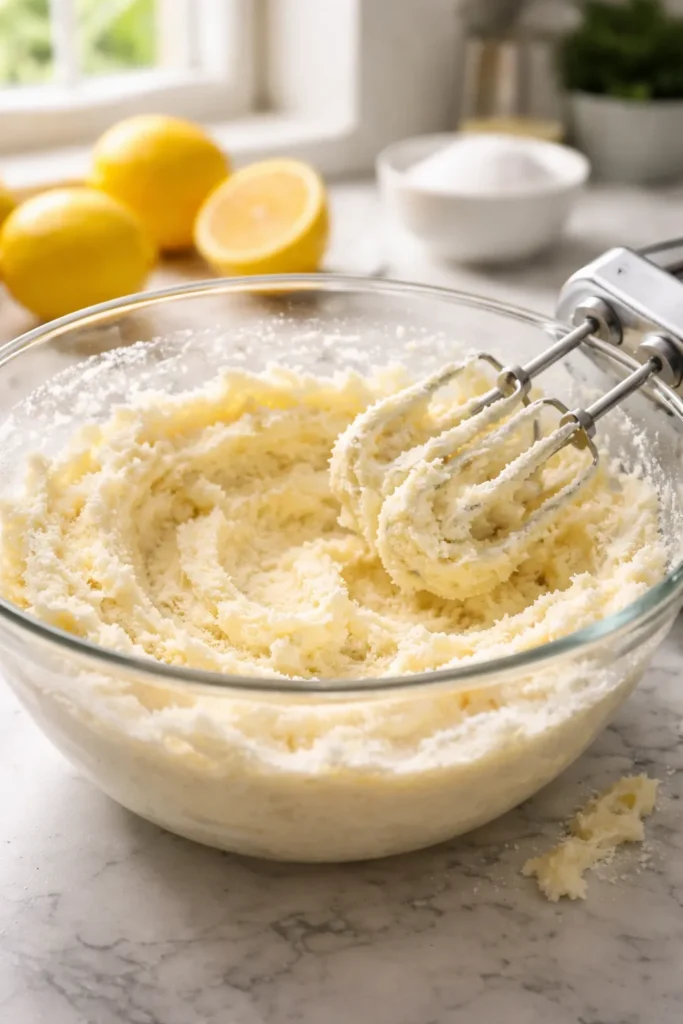
The difference between a mediocre lemon cake and an exceptional one comes down to understanding and executing a few fundamental techniques correctly. Creaming butter and sugar thoroughly is the first essential step. This isn’t just about combining ingredients—you’re deliberately incorporating tiny air bubbles into the fat, which expand during baking and create the fine, tender crumb structure lemon cake is known for.
When you cream properly, the mixture should be noticeably lighter in color and volume than when you started. If you stop too early, the cake will be dense. If you continue too long, the mixture can become grainy. Most stand mixers do this beautifully in 4-5 minutes on medium speed—trust that timeline rather than just eyeballing it.
The second critical technique is understanding how to emulsify eggs into fat. Adding eggs one at a time and allowing them to fully incorporate before adding the next one ensures a smooth batter. If you dump all the eggs in at once, the batter might break, developing a curdled, separated appearance. While the batter can sometimes come back together when you add flour, this creates a denser cake because the emulsion has been destabilized.
Alternating wet and dry ingredients is the third foundational technique. This method prevents the flour from forming tough gluten strands (which happens when dry flour meets liquid directly) while also preventing overmixing. By starting and ending with flour, you create a buffer that protects the flour from being overworked. Never skip the preliminary whisking of dry ingredients either—it ensures even distribution of leavening agents.
Finally, understanding how to recognize when the cake is done saves countless batches. A toothpick test is reliable, but you’re looking for clean or almost clean, not completely dry. A few moist crumbs clinging to the toothpick indicate proper doneness; if the toothpick comes out completely dry, you’ve overbaked by 1-2 minutes. Remove the cake and it will finish cooking with carryover heat.
Common Lemon Cake Mistakes and How to Avoid Them
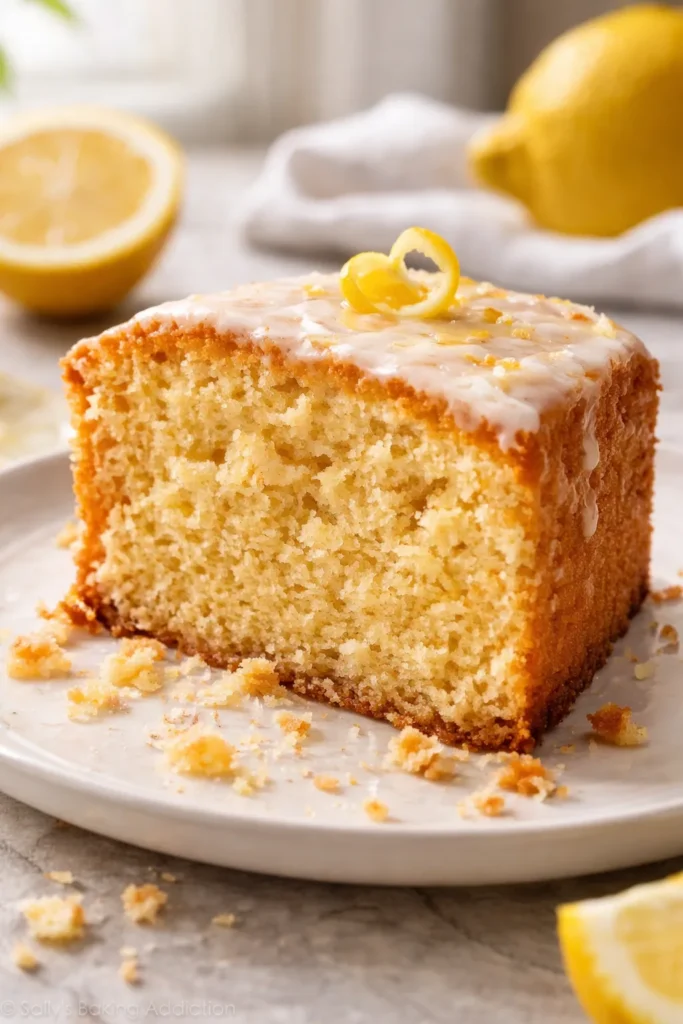
Dry, crumbly cake is the most frequent complaint, and it usually stems from one of two causes: overbaking or insufficient fat. Overbaking is easy to correct once you understand your oven’s quirks—bake a few cakes and note when they’re done, then aim for that same internal temperature or visual cue. Insufficient fat can happen if you skimp on butter, use butter that was too cold to cream properly, or don’t add the soaking syrup. The soaking syrup is not decorative—it’s essential to keeping lemon cake moist. Without it, the cake dries out noticeably within a day.
Sunken or domed top usually indicates that the oven temperature is inaccurate or the cake was underbaked in the center while overbaked at the edges. Invest in an oven thermometer (they cost about $15 and are invaluable). If your oven runs 25-50 degrees hot or cold, adjust all recipes accordingly. Also, avoid opening the oven door before the cake has been baking for at least 25 minutes—sudden temperature drops can cause the cake to collapse.
Bitter, harsh lemon flavor is often caused by using bottled lemon juice or lemon extract instead of fresh juice. Bottled juice oxidizes and tastes thin and unpleasant. If you must use bottled juice, reduce the amount called for and add another egg yolk for moisture and richness. Also, using too much zest can actually create bitterness—the white pith beneath the colored layer tastes bitter, so use a microplane to get only the colored portion.
Dense, gluey texture comes from overmixing the batter, using cold ingredients, or adding too much liquid. Remember that lemon juice is acidic and tenderizes the crumb—add the buttermilk and lemon juice mixture in its proper order and quantities, and don’t exceed the soaking syrup or the cake will become spongy and mushy rather than moist and tender.
Lemon Cake Variations for Every Preference
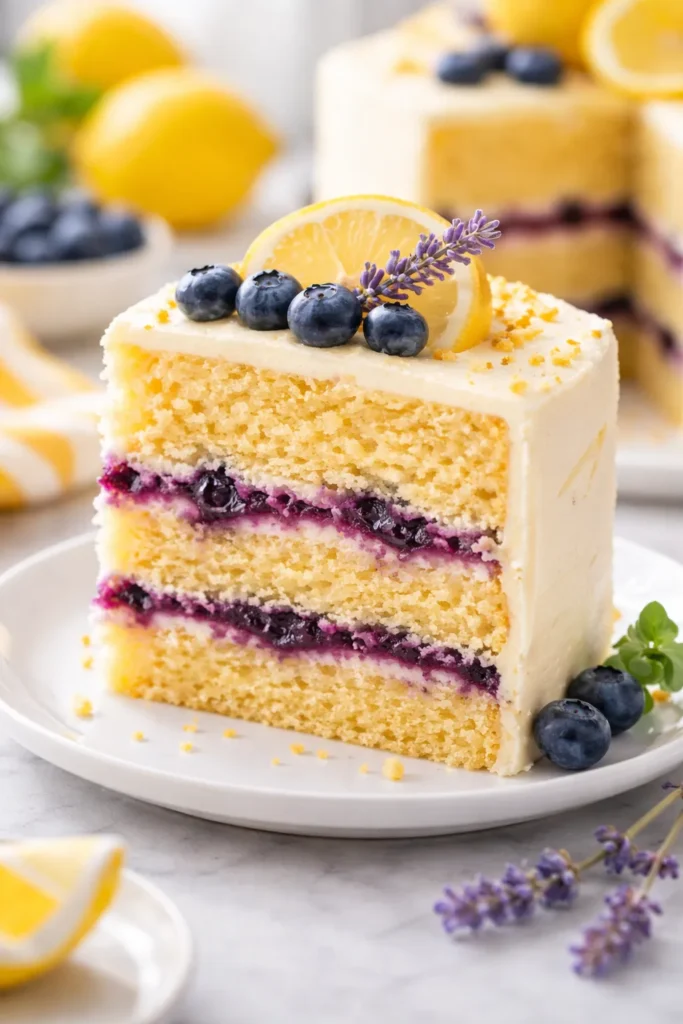
The basic lemon cake recipe is wonderfully versatile and adapts beautifully to different flavor additions and dietary approaches. For a more intensely lemony cake, add ½ teaspoon of lemon extract along with the vanilla (use extract in addition to fresh juice, not as a replacement). You could also make a lemon curd filling and layer it between the two cake layers for dramatic flavor impact.
Lavender-lemon variation: Add 1 tablespoon of culinary-grade dried lavender buds to the dry ingredients, whisked through with the flour. The floral notes complement lemon beautifully and add subtle sophistication. If you can’t find culinary lavender, skip this variation—ornamental lavender is treated with pesticides and isn’t food-safe.
Blueberry-lemon variation: Fold 1½ cups of fresh or frozen blueberries (tossed in 1 tablespoon of flour so they don’t sink) into the batter just before dividing between pans. The tartness of the blueberries echoes the lemon, and you get pockets of fruit throughout.
Gluten-free lemon cake: Substitute an all-purpose gluten-free flour blend (like King Arthur Baking Company or Bob’s Red Mill) in a 1:1 ratio for the wheat flour. Add ½ teaspoon of xanthan gum to the dry ingredients if your flour blend doesn’t already contain it. Gluten-free cakes sometimes turn out slightly more tender, which works beautifully with lemon cake. Some people prefer gluten-free versions because the crumb feels more delicate.
Dairy-free lemon cake: Replace the buttermilk with an unsweetened plant-based milk combined with 1 tablespoon of lemon juice or vinegar (let sit 5 minutes before using). Use vegan butter in place of regular butter (use the same amount—the ratio works the same way). The rest of the recipe remains unchanged. Vegan butter creams just like regular butter when it’s softened to room temperature.
Smaller batch: This recipe can easily be halved to make just one 9-inch layer or two 6-inch layers. All timing remains the same, though a single 6-inch layer might bake 5 minutes faster than the full-size version.
Storage, Make-Ahead, and Serving Strategies
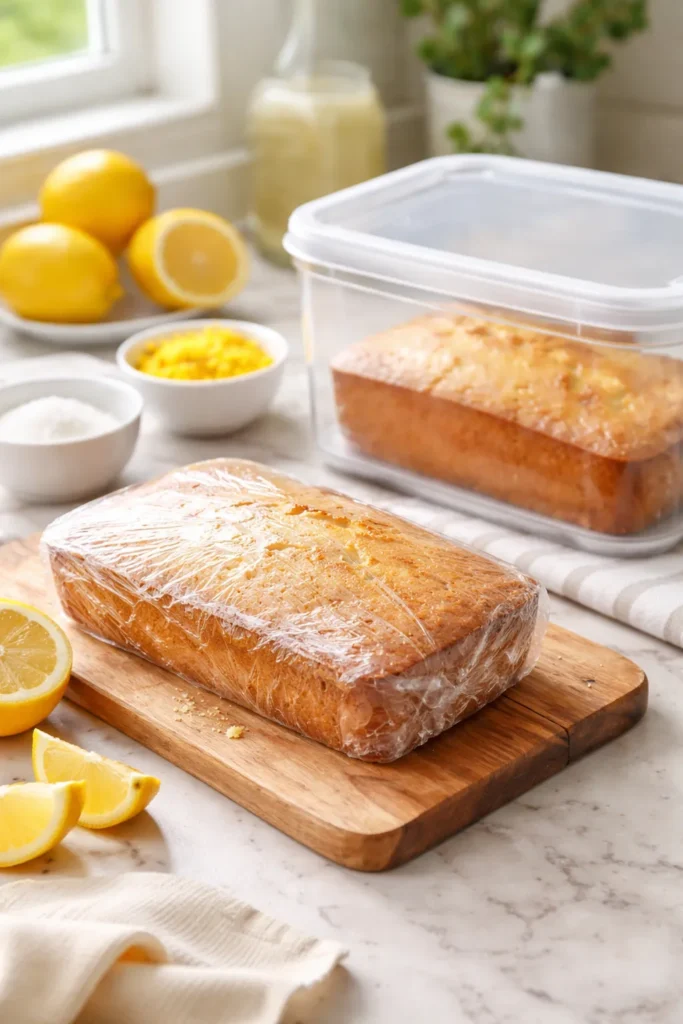
The naked (unfrosted) lemon cake keeps beautifully for 3 to 4 days at room temperature when wrapped well in plastic wrap or stored in an airtight container. The soaking syrup continues to distribute through the crumb as it sits, making the cake moister and more flavorful the next day. Many bakers prefer to make lemon cake the day before serving for exactly this reason.
For longer storage, the unfrosted cake can be frozen for up to 3 months when wrapped tightly in plastic wrap and stored in an airtight container or freezer bag. Thaw at room temperature for about 2 hours before serving. Do not freeze frosted cake unless the frosting is buttercream—cream cheese frosting doesn’t freeze well because it can become grainy when it thaws.
If you’re making this cake ahead for a brunch, assemble it no more than 6 to 8 hours before serving. Cream cheese frosting is stable at room temperature for that long, especially if your kitchen isn’t excessively warm. If you need to frost it further ahead, keep it refrigerated and remove from the fridge 30 minutes before serving so the frosting softens to a creamy consistency.
For serving, slice the cake with a long, sharp knife dipped in hot water and wiped dry between each cut. This prevents the frosting from dragging and tearing the delicate crumb. If the cake is cold from the fridge, let it sit at room temperature for 20-30 minutes before serving—the flavor is much more pronounced at room temperature, and the crumb is more tender.
Glazes, Frostings, and Topping Ideas
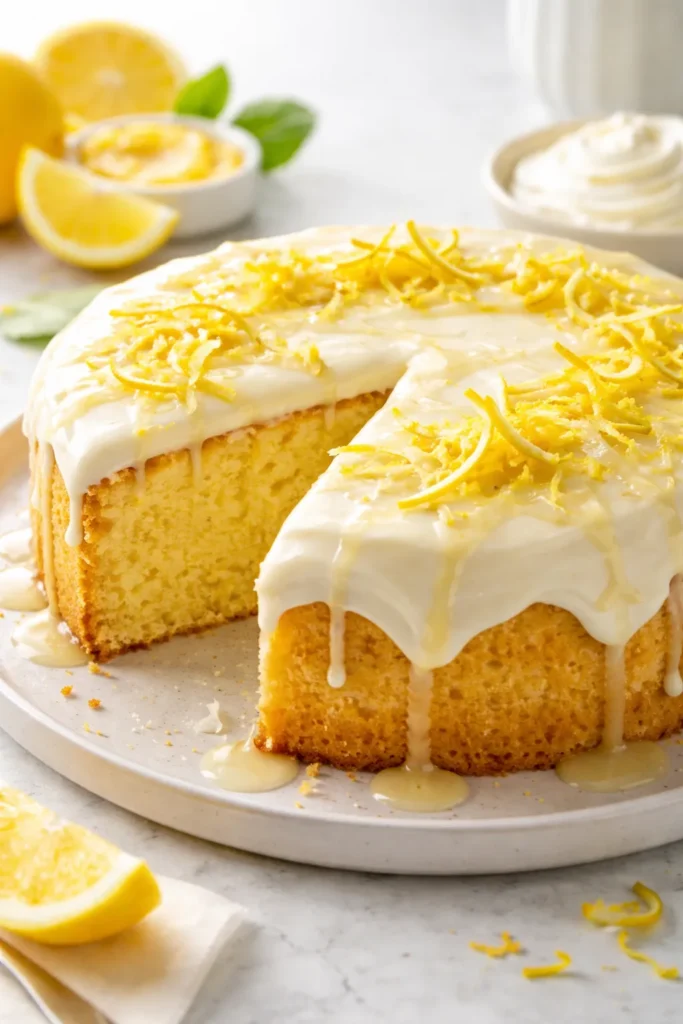
The classic cream cheese frosting (included in the ingredients above) is the most popular pairing with lemon cake, creating a beautiful contrast between the tartness of the cake and the rich, tangy frosting. Spread it between the layers and over the top and sides of the cake for a professional look.
Simple lemon glaze: Whisk together 1½ cups of powdered sugar with 2-3 tablespoons of fresh lemon juice until you reach a pourable consistency. Drizzle over the cooled cake—the glaze will set into a thin, elegant coating. This is perfect for a more casual presentation and lets the lemon flavor shine without competition.
Lemon curd frosting: Fold ½ cup of lemon curd into the cream cheese frosting for an intensely lemony version that still has the smooth frosting texture. Use high-quality curd or make your own if you have time—it transforms the frosting into something really special.
Whipped cream topping: Forget frosting entirely and serve the cake with lightly sweetened whipped cream (2 cups of heavy cream whipped with 2 tablespoons of powdered sugar and ½ teaspoon of vanilla). This is lighter and more appropriate for brunch settings, and the cake’s moisture level is perfect for this approach.
Toppings make lemon cake feel special without requiring additional baking. Fresh lemon zest strewn over the top of frosting adds visual appeal and a flavor reminder. Candied lemon slices (store-bought versions work perfectly) create an elegant, professional appearance. Fresh edible flowers like pansies or violas add color and sophistication. A sprinkle of freeze-dried berries or a few fresh raspberries bridge flavors beautifully.
Pairing Your Lemon Cake with Brunch Beverages

Lemon cake pairs exceptionally well with brunch beverages because its bright acidity and delicate crumb don’t overwhelm or compete with other flavors. With coffee, a classic pairing, the slight bitterness of coffee balances the sweetness of the cake while echoing the tartness of the lemon. Serve it with a rich espresso or a light pour-over for contrast.
Tea is actually the superior lemon cake pairing. White tea or chamomile complement the cake’s brightness beautifully, adding a gentle floral quality. Black tea is equally good if you prefer something more robust. The warmth of the tea and the tenderness of the cake create a luxurious moment in the middle of any brunch.
For champagne brunches, a dry sparkling wine cuts beautifully through the frosting (if you’re using it) while the effervescence cleanses the palate between bites. If your guest list includes non-drinkers, a sparkling lemonade or lemon-flavored sparkling water serves the same function.
Cold brew or iced coffee is ideal for warmer spring days when you’re serving the cake chilled. The bitterness of cold brew provides an excellent foil to the sweetness. Fresh-squeezed lemon water sounds obvious but truly works—it lets the cake’s lemon flavor stand alone.
Final Thoughts
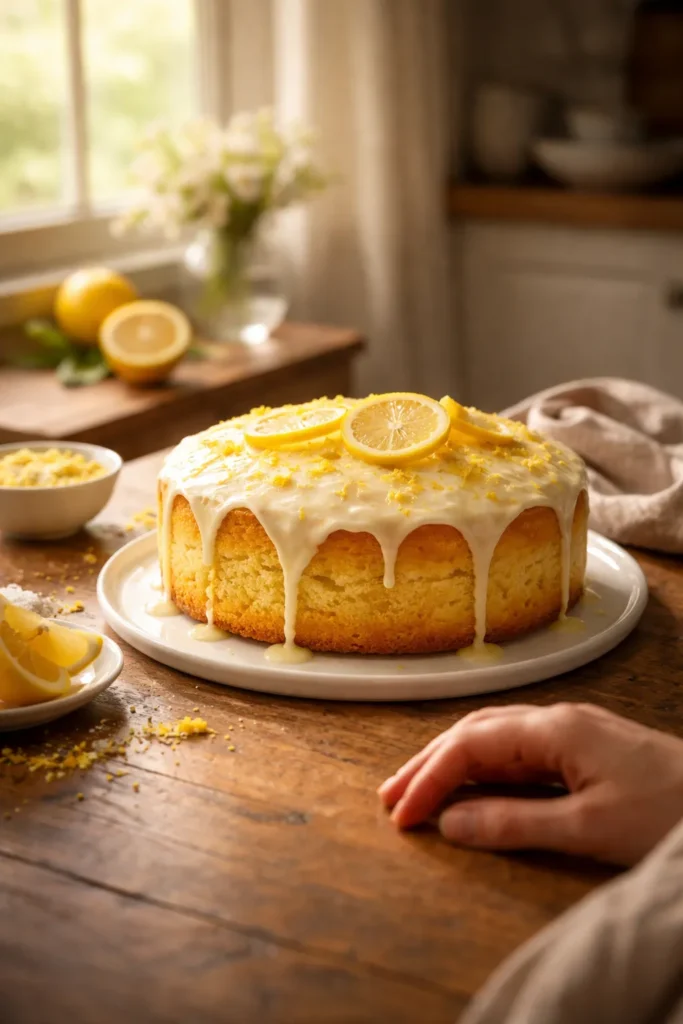
A truly excellent lemon cake doesn’t require secret ingredients or complicated techniques—it requires understanding the fundamentals of how baking actually works, treating lemon as the star it deserves to be, and refusing to rush the process or cut corners. When you take time to source fresh, fragrant lemons, cream your butter and sugar until they’re pale and fluffy, and add that crucial soaking syrup while the cake is warm, you’re not just making dessert. You’re creating a moment, a memory, something that makes your brunch feel special and intentional.
The wonderful thing about this recipe is that it rewards practice. Your first lemon cake will be delicious. Your third or fourth will be noticeably better as you understand your oven, develop a feel for proper creaming and mixing, and learn exactly how your kitchen affects the final result. Keep baking this cake into spring, adjusting for your unique circumstances, and it becomes your signature dessert—the one people specifically ask you to bring to gatherings, the one that makes them smile when they see it on the table.