Lunch often gets overlooked in the daily meal planning routine, yet it’s arguably one of the most important meals to get right. Whether you’re working from home, hosting friends, feeding your family, or simply treating yourself to something special, having a repertoire of versatile lunch recipes can transform your midday experience from mundane to memorable. The beauty of preparing lunch at home lies in the endless possibilities—you control the ingredients, customize flavors to your preference, and create dishes that match the occasion perfectly. From quick weekday meals that come together in minutes to elaborate spreads for weekend gatherings, mastering a collection of home lunch recipes empowers you to nourish yourself and others without the hassle, expense, or unpredictability of eating out. This comprehensive guide explores diverse lunch recipes suitable for every occasion, dietary preference, and skill level, ensuring you’ll never find yourself staring blankly into the refrigerator wondering what to make.
Table of Contents
- Why Preparing Lunch at Home is a Game-Changer
- Health Benefits of Home-Cooked Lunches
- Cost-Effectiveness and Budget Control
- Essential Ingredients to Keep Your Pantry Stocked
- Proteins for Quick Meal Assembly
- Versatile Vegetables and Greens
- Pantry Staples That Never Disappoint
- Quick and Easy Weekday Lunch Recipes
- 1. 15-Minute Mediterranean Chickpea Bowl
- 2. Classic Grilled Cheese with a Twist
- 3. Asian-Inspired Noodle Stir-Fry
- Impressive Lunch Recipes for Special Occasions
- 1. Gourmet Caprese Panini with Balsamic Glaze
- 2. Herb-Crusted Salmon with Quinoa Salad
- 3. Restaurant-Style Pasta Primavera
- Meal Prep Strategies for Stress-Free Lunches
- Batch Cooking Techniques
- Container Selection and Storage Tips
- Light and Healthy Lunch Options
- 1. Rainbow Buddha Bowl
- 2. Greek-Style Lettuce Wraps
- 3. Zucchini Noodle Power Bowl
- Comfort Food Lunch Recipes for Cozy Days
- 1. Creamy Tomato Soup with Artisan Bread
- 2. Loaded Baked Potato Bar
- 3. Homemade Mac and Cheese Elevated
- International Flavors to Explore at Lunch
- 1. Mexican-Inspired Burrito Bowl
- 2. Italian Panzanella Salad
- 3. Thai Coconut Curry Soup
- Tips for Adapting Recipes to Dietary Preferences
- Vegetarian and Vegan Modifications
- Gluten-Free Alternatives
- Low-Carb and Keto-Friendly Options
- Final Words
Why Preparing Lunch at Home is a Game-Changer
Shifting from ordering takeout or grabbing fast food to preparing lunch at home represents more than just a dietary change—it’s a lifestyle transformation that impacts your health, finances, and overall well-being. Understanding the compelling reasons behind this shift can motivate you to embrace home cooking as your default lunch solution.
Health Benefits of Home-Cooked Lunches
When you prepare lunch in your own kitchen, you become the architect of your nutritional intake, controlling every ingredient that goes into your meal. Restaurant and takeout meals typically contain significantly higher amounts of sodium, saturated fats, and hidden sugars compared to home-cooked alternatives. Studies consistently show that people who regularly eat home-prepared meals consume fewer calories and maintain healthier body weights than those who frequently dine out.

Beyond calorie control, home cooking allows you to incorporate fresh vegetables, lean proteins, whole grains, and healthy fats in proportions that support your specific health goals. You can accommodate food sensitivities, allergies, or dietary restrictions with precision impossible to achieve when ordering from restaurants. Additionally, preparing meals at home reduces exposure to food additives, preservatives, and artificial ingredients commonly found in processed and restaurant foods. The act of cooking itself can also provide therapeutic benefits, offering a creative outlet and mindful break from screen time or work stress.
Cost-Effectiveness and Budget Control
The financial advantages of home lunch preparation become strikingly clear when you calculate the actual numbers. A typical restaurant lunch costs anywhere from $12 to $20 per person, while the ingredients for a home-prepared meal usually range between $3 to $7 per serving. Over the course of a month, this difference translates to hundreds of dollars in savings that can be redirected toward other financial priorities or higher-quality ingredients.
Buying ingredients in bulk and utilizing leftovers strategically maximizes your grocery budget even further. A rotisserie chicken purchased for one dinner can provide protein for multiple lunch salads, sandwiches, or grain bowls throughout the week. Seasonal produce purchased when abundant and affordable can be incorporated into various lunch recipes, reducing waste while keeping costs low. Furthermore, preparing lunch at home eliminates tipping, delivery fees, and the temptation to add expensive extras to your order, providing complete transparency and control over your food spending.
Essential Ingredients to Keep Your Pantry Stocked
A well-stocked pantry, refrigerator, and freezer serve as the foundation for spontaneous and successful lunch creation. Having the right ingredients on hand eliminates the excuse of “nothing to eat” and enables you to assemble nutritious, delicious meals even when you haven’t planned ahead.
Proteins for Quick Meal Assembly
Canned and shelf-stable proteins provide convenient options that require minimal preparation while delivering essential amino acids and satiety. Keep your pantry stocked with canned tuna, salmon, chickpeas, black beans, and white beans—all of which can be transformed into satisfying lunches within minutes. These ingredients work beautifully in salads, grain bowls, sandwiches, and quick pasta dishes.
Fresh and frozen proteins expand your options considerably when you want something more substantial. Eggs remain one of the most versatile and affordable protein sources, perfect for everything from simple fried egg sandwiches to elaborate frittatas. Keep chicken breasts, ground turkey, or tofu in your refrigerator for quick cooking, and maintain a freezer stock of shrimp, individually wrapped fish fillets, or pre-cooked chicken strips that can be thawed quickly. Deli meats, though more processed, offer ultra-convenient options for sandwiches and wraps when you need something ready in under five minutes.
Versatile Vegetables and Greens
Fresh vegetables form the nutritional backbone of exceptional home lunches, providing fiber, vitamins, minerals, and visual appeal. Maintain a steady supply of leafy greens such as spinach, arugula, romaine lettuce, and mixed spring greens for salad bases, sandwich toppings, and sautéed sides. These greens typically stay fresh for about a week when properly stored in the refrigerator.
Hardy vegetables like bell peppers, cucumbers, carrots, tomatoes, and red onions serve multiple purposes across countless lunch recipes. They add crunch to sandwiches, freshness to grain bowls, and substance to pasta dishes. Keeping both fresh and frozen vegetables ensures you always have options—frozen broccoli, peas, corn, and bell pepper strips maintain excellent nutritional value while lasting for months. Pre-washed, pre-cut vegetables save valuable preparation time, though they typically cost more per pound than whole vegetables you process yourself.
Pantry Staples That Never Disappoint
Building meals becomes remarkably easier when your pantry contains fundamental staples that serve as the foundation for diverse recipes. Grains and carbohydrates including rice (white, brown, or wild), quinoa, pasta in various shapes, couscous, and bread provide energy and substance to lunch plates. These ingredients store well for extended periods and cook relatively quickly, especially if you batch-cook grains at the beginning of the week.
Flavor enhancers and condiments transform simple ingredients into memorable meals. Stock olive oil, balsamic vinegar, soy sauce, hot sauce, mustard varieties, mayonnaise, salsa, and your favorite spice blends. Having quality broths or bouillon, canned tomatoes, tomato paste, and coconut milk enables you to create flavorful soups, curries, and sauce-based dishes without special shopping trips. Nuts, seeds, dried herbs, and citrus fruits (lemons and limes) provide finishing touches that elevate ordinary lunches into restaurant-quality experiences.
Quick and Easy Weekday Lunch Recipes
Weekday lunches demand efficiency without sacrificing nutrition or flavor. These recipes come together in 30 minutes or less, making them ideal for busy schedules when time is precious but good food remains non-negotiable.
1. 15-Minute Mediterranean Chickpea Bowl
This vibrant, nutrient-dense bowl combines protein-rich chickpeas with fresh vegetables and Mediterranean flavors for a satisfying meal that requires zero cooking if you use canned chickpeas. The beauty of this recipe lies in its flexibility—you can customize the vegetables based on what’s available in your refrigerator while maintaining the essential flavor profile that makes Mediterranean cuisine so appealing.
Start by draining and rinsing one can of chickpeas, then place them in your serving bowl. Add diced cucumbers, halved cherry tomatoes, diced red onion, and chopped Kalamata olives for authentic Mediterranean flair. Crumble feta cheese over the top for tangy richness and creamy texture contrast. For the dressing, whisk together extra virgin olive oil, fresh lemon juice, minced garlic, dried oregano, salt, and black pepper. Drizzle this aromatic dressing over the bowl and toss everything together until well combined. If you have a few extra minutes, you can toast the chickpeas in a skillet with olive oil and paprika for added texture and warmth.
This bowl provides excellent nutrition with plant-based protein from chickpeas, healthy fats from olive oil and olives, and abundant vitamins and antioxidants from the fresh vegetables. The fiber content keeps you satisfied throughout the afternoon, preventing energy crashes and excessive snacking. You can prepare the components in advance—chop vegetables the night before and store them separately, then assemble the bowl when ready to eat. Add fresh herbs like parsley or mint just before serving for an extra layer of freshness and aromatic complexity.
2. Classic Grilled Cheese with a Twist
The humble grilled cheese sandwich transcends its simple reputation when you elevate it with quality ingredients and creative additions. This comfort food classic becomes a gourmet lunch experience that delivers nostalgic satisfaction while incorporating adult flavors and nutritional enhancements. The key to exceptional grilled cheese lies in using good butter, selecting flavorful cheese varieties, and achieving the perfect golden-brown crust.
Begin with quality bread—sourdough, whole grain, or artisan white bread all work beautifully. Butter the outside of both bread slices generously, ensuring coverage all the way to the edges for even browning. For the cheese layer, combine two or three varieties for complex flavor—try sharp cheddar with gruyere, or fontina with aged parmesan. This combination creates superior melting properties and taste compared to single-cheese versions. Heat your skillet or griddle over medium heat (too high and the bread burns before the cheese melts).
The “twist” comes from strategic additions between the cheese layers. Consider caramelized onions for sweet depth, sliced tomatoes and fresh basil for Caprese-inspired freshness, crispy bacon and avocado for indulgent richness, or fig jam with prosciutto for sweet-savory sophistication. Sautéed mushrooms, roasted red peppers, or baby spinach add vegetables without compromising the sandwich’s integrity. Cook the sandwich for about 3-4 minutes per side, pressing gently with a spatula to ensure good contact with the cooking surface. The sandwich is ready when the bread achieves a deep golden color and the cheese has melted completely. Let it rest for a minute before cutting to prevent cheese spillage, then slice diagonally and serve immediately with soup, salad, or crispy pickles.
3. Asian-Inspired Noodle Stir-Fry
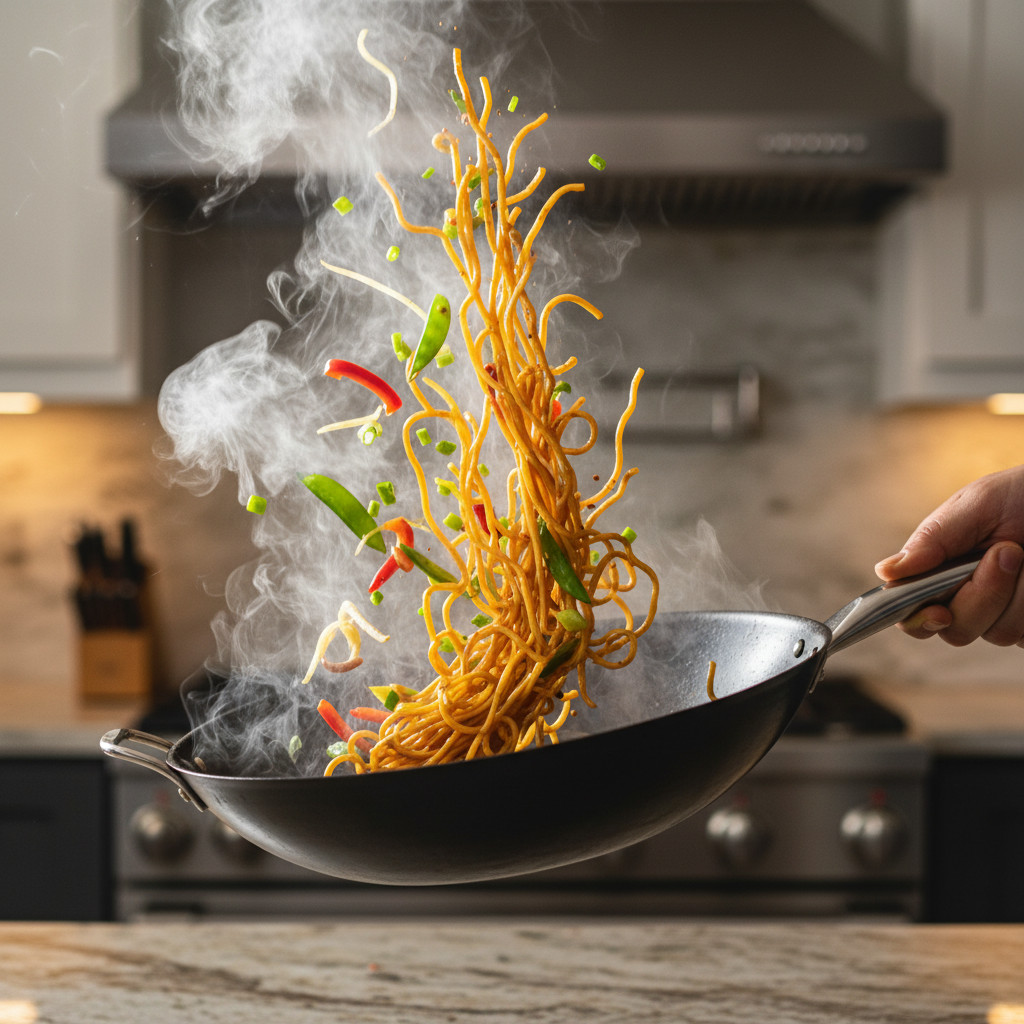
Quick noodle stir-fries deliver restaurant-quality Asian flavors in your home kitchen with minimal effort and maximum customization potential. This recipe demonstrates essential stir-fry techniques while allowing you to substitute ingredients based on availability and preference. The key to successful stir-frying involves high heat, quick cooking, and having all ingredients prepped before you begin cooking.
Cook your chosen noodles according to package directions—rice noodles, soba noodles, udon, or even spaghetti work well. Drain and toss with a small amount of sesame oil to prevent sticking, then set aside. While the noodles cook, prepare your stir-fry sauce by whisking together soy sauce, rice vinegar, honey or brown sugar, grated fresh ginger, minced garlic, and a splash of sriracha or chili garlic sauce for heat. This sauce provides the complex sweet-salty-spicy-tangy flavor profile characteristic of Asian cuisine.
Heat a large wok or skillet over high heat until very hot, then add a neutral oil with high smoke point like vegetable or peanut oil. Add your protein first (sliced chicken, shrimp, tofu, or edamame) and cook until nearly done, then remove to a plate. Add more oil if needed, then stir-fry your vegetables in order of cooking time required—start with harder vegetables like carrots and broccoli, then add softer ones like bell peppers, snap peas, and mushrooms. When vegetables are crisp-tender, return the protein to the pan, add the cooked noodles and prepared sauce, and toss everything together vigorously for 1-2 minutes until heated through and well combined. The entire cooking process should take about 10 minutes once your ingredients are prepped. Garnish with sliced green onions, sesame seeds, chopped cilantro, and lime wedges for brightness and visual appeal.
Impressive Lunch Recipes for Special Occasions
Some occasions call for lunches that demonstrate extra effort and culinary skill. These recipes look and taste restaurant-quality while remaining achievable for home cooks who want to impress guests or treat themselves to something special during weekend meals.
1. Gourmet Caprese Panini with Balsamic Glaze
The Italian Caprese combination of tomatoes, mozzarella, and basil reaches new heights when pressed into a warm, crispy panini with quality balsamic glaze. This elegant sandwich showcases how simple ingredients, when carefully selected and properly assembled, create sophisticated results that surpass complex recipes with lengthy ingredient lists. The contrast between the crispy, golden exterior and the warm, melty interior makes this panini irresistible.
Select the ripest, most flavorful tomatoes you can find—heirloom varieties during peak season provide superior taste and visual appeal. Use fresh mozzarella (the kind packed in water or whey) rather than low-moisture mozzarella for authentic Italian flavor and creamy texture. Ciabatta or focaccia bread works best for panini because their structure holds up to pressing while their texture complements the filling. Slice the bread horizontally, then layer fresh basil leaves on the bottom slice, followed by thick tomato slices, generous amounts of sliced mozzarella, more basil, and a drizzle of extra virgin olive oil. Season with salt and freshly cracked black pepper.
If you own a panini press, preheat it and cook the sandwich according to the manufacturer’s instructions, typically 3-5 minutes until the bread is golden and the cheese melts. Without a panini press, use a heavy skillet or grill pan—place the sandwich in the heated pan, then press down firmly with another heavy pan or pot. Cook for 3-4 minutes per side, maintaining pressure to create those characteristic grill marks and compress the sandwich. Before serving, drizzle with high-quality balsamic glaze (reduced balsamic vinegar that’s thick and syrupy) for tangy sweetness that ties all the flavors together. Cut diagonally to display the beautiful interior layers, and serve immediately while still warm. Pair with a simple arugula salad dressed with lemon vinaigrette for a complete, impressive lunch.
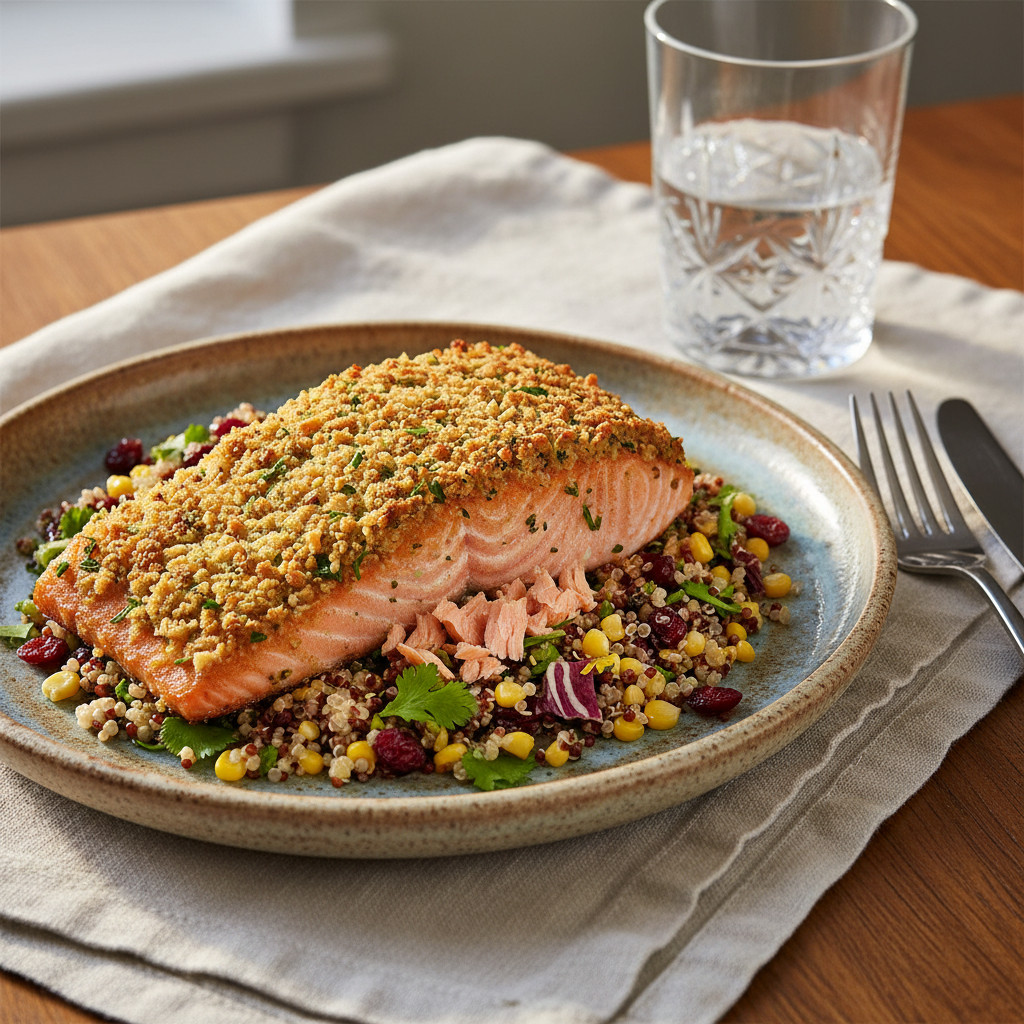
2. Herb-Crusted Salmon with Quinoa Salad
This nutritionally impressive and visually stunning lunch combines omega-3-rich salmon with protein-packed quinoa for a meal that looks as beautiful as it tastes. The herb crust adds sophisticated flavor while keeping the salmon moist during cooking, and the quinoa salad provides refreshing contrast with vegetables, nuts, and citrus notes. This recipe works wonderfully for special weekend lunches or when you want to serve something memorable to guests.
For the salmon, pat the fillets dry and season with salt and pepper. Create the herb crust by combining panko breadcrumbs with minced fresh herbs like parsley, dill, and chives, along with lemon zest, minced garlic, and olive oil—the mixture should hold together when pressed. Brush each salmon fillet with Dijon mustard (this acts as glue for the crust), then press the herb mixture firmly onto the top of each fillet. Bake at 400°F (200°C) for 12-15 minutes until the salmon flakes easily with a fork and the crust turns golden brown. The mustard adds subtle tanginess that complements the herbs beautifully, while the panko creates satisfying crunch.
While the salmon bakes, prepare the quinoa salad by combining cooked and cooled quinoa with diced cucumber, halved cherry tomatoes, crumbled feta cheese, toasted pine nuts or slivered almonds, and fresh herbs. Make a lemon vinaigrette with fresh lemon juice, olive oil, honey, Dijon mustard, salt, and pepper, then toss the salad just before serving. The quinoa salad can be made ahead and refrigerated, making this an excellent option when you want impressive results without last-minute stress. To serve, mound the quinoa salad on plates and top with the herb-crusted salmon. Garnish with lemon wedges and additional fresh herbs for a restaurant-quality presentation that showcases your culinary skills.
3. Restaurant-Style Pasta Primavera
Pasta Primavera celebrates seasonal vegetables in a light, creamy sauce that feels indulgent without being heavy. This Italian-American classic became famous in fine dining restaurants but adapts beautifully to home kitchens, especially when you want to create something special that highlights the best produce available. The key lies in cooking each vegetable properly to maintain its distinct texture and flavor while creating a harmonious dish.
Select a variety of colorful vegetables—asparagus, bell peppers, zucchini, cherry tomatoes, and snap peas create beautiful variety in both appearance and taste. Cut vegetables into similar-sized pieces for even cooking. Cook your pasta (penne, farfalle, or linguine work well) according to package directions until al dente, reserving one cup of the starchy cooking water before draining. This pasta water becomes crucial for creating the silky sauce that coats everything perfectly.
While pasta cooks, heat olive oil in a large skillet and sauté minced garlic briefly, then add vegetables in stages based on their cooking times—start with asparagus and bell peppers, then add zucchini, and finally snap peas and tomatoes. Cook until crisp-tender, maintaining bright colors and slight bite. Add the drained pasta to the vegetables along with butter, heavy cream (or half-and-half for lighter version), grated Parmesan cheese, fresh lemon juice, and pasta cooking water as needed to create a smooth sauce that clings to the pasta and vegetables. The starch in the pasta water helps emulsify the sauce while adjusting consistency. Season generously with salt, black pepper, and red pepper flakes if desired. Finish with torn fresh basil leaves and additional Parmesan. Serve immediately in warmed bowls for an impressive lunch that captures the essence of Italian cooking—simple ingredients treated with respect and combined thoughtfully.
Meal Prep Strategies for Stress-Free Lunches
Investing a few hours in meal preparation transforms your entire week, eliminating daily decision fatigue and ensuring nutritious lunches are always ready. Strategic meal prep doesn’t mean eating identical meals every day—instead, it involves preparing versatile components that can be combined in different ways throughout the week.
Batch Cooking Techniques
Batch cooking involves preparing large quantities of specific recipe components that serve as building blocks for multiple meals. Proteins prepared in advance save enormous time and energy during busy weekdays. Roast several chicken breasts or thighs simultaneously, grill multiple portions of fish or steak, or prepare a large pot of beans or lentils. These proteins stay fresh for 3-4 days when properly refrigerated and can be served cold in salads, reheated for grain bowls, tucked into sandwiches, or incorporated into pasta dishes.
Grains and starches cooked in bulk provide the foundation for countless lunch variations. Prepare a large pot of quinoa, brown rice, or farro at the beginning of the week, then portion it into individual containers. These cooked grains can be reheated with broth for warm grain bowls, served cold in salads, or used as bases for stir-fries. Similarly, roast a large baking sheet of vegetables on Sunday—bell peppers, zucchini, eggplant, cauliflower, and Brussels sprouts all roast beautifully and maintain their quality for several days. Season with olive oil, salt, pepper, and your favorite herbs before roasting at 425°F until caramelized and tender.
Sauce and dressing preparation in advance adds instant flavor to simple ingredients without daily effort. Make a large batch of vinaigrette, pesto, tahini sauce, or your favorite dressing and store it in a jar in the refrigerator. These flavor boosters last for at least a week and transform basic ingredients into exciting meals. Similarly, prepare dips like hummus, tzatziki, or guacamole early in the week for spreading on sandwiches, dipping vegetables, or adding creaminess to grain bowls.
Container Selection and Storage Tips
The right food storage containers make the difference between meal prep that works seamlessly and one that creates frustration. Glass containers with airtight lids represent the gold standard for meal prep—they don’t absorb odors or stains, can go directly from refrigerator to microwave (if they’re microwave-safe), and allow you to see contents at a glance. Invest in various sizes to accommodate different food types and portion sizes. Compartmented containers work wonderfully for lunches with multiple components you want to keep separate until eating.
Proper storage techniques extend the freshness and quality of prepped ingredients. Store leafy greens wrapped in paper towels inside containers or plastic bags to absorb excess moisture that causes wilting. Keep cut vegetables in containers with damp paper towels to maintain crispness. Store proteins and cooked grains in shallow containers so they cool quickly and evenly, reducing bacterial growth risk. Label containers with contents and prep dates using masking tape or a label maker—this simple step prevents mystery containers and helps you use ingredients while they’re still fresh.
Strategic refrigerator organization maximizes visibility and accessibility. Designate a specific refrigerator zone for your prepped lunch components so you can find everything quickly. Place items that need to be eaten first toward the front, and newer items toward the back. Keep your meal prep containers at eye level rather than in drawers where they’re easily forgotten. This organization system ensures nothing goes to waste and makes lunch assembly effortless, even during rushed mornings.
Light and Healthy Lunch Options
When you’re focused on wellness, weight management, or simply want to feel energized rather than sluggish after lunch, these nutrient-dense, lighter recipes deliver satisfaction without heaviness. These options prove that healthy eating never requires sacrificing flavor or feeling deprived.
1. Rainbow Buddha Bowl
Buddha bowls celebrate the principle of eating the rainbow—consuming a wide variety of colorful plant foods to maximize nutrient intake and antioxidant protection. This customizable bowl format allows endless variations while maintaining the essential balance of vegetables, whole grains, proteins, and healthy fats. The visual appeal of a properly assembled Buddha bowl makes healthy eating feel celebratory rather than restrictive.
Start with a base of mixed greens or cooked whole grains like quinoa, brown rice, or farro. Divide your bowl into sections, filling each with a different colorful vegetable—spiralized carrots, shredded red cabbage, roasted sweet potato cubes, steamed broccoli, sliced radishes, and cherry tomatoes create stunning visual contrast while providing diverse nutrients. Each color represents different phytonutrients and vitamins, so maximum variety delivers maximum health benefits.
Add your preferred protein source—crispy chickpeas, baked tofu, grilled chicken, hard-boiled eggs, or edamame all work beautifully. Include a healthy fat source like sliced avocado, a sprinkle of seeds (pumpkin, sunflower, or hemp), or a handful of nuts. Finally, drizzle with a flavorful dressing—tahini-lemon sauce, ginger-miso dressing, or cilantro-lime vinaigrette add moisture and tie all the components together. The key to Buddha bowl success lies in ensuring each component is seasoned properly on its own, so every bite delivers flavor rather than relying solely on the dressing.
2. Greek-Style Lettuce Wraps
Lettuce wraps provide all the satisfaction of traditional wraps or tacos while eliminating refined carbohydrates and reducing calories significantly. These Greek-inspired wraps feature Mediterranean flavors wrapped in crisp lettuce leaves for a fresh, light lunch that’s surprisingly filling thanks to protein and healthy fats. This recipe demonstrates how simple ingredient substitutions can transform the nutritional profile of familiar foods without sacrificing enjoyment.
Select sturdy lettuce varieties that can hold fillings without tearing—butter lettuce, romaine hearts, or iceberg lettuce work best. Wash and dry the leaves thoroughly, then arrange them on a plate. For the filling, combine ground turkey or lean ground beef cooked with olive oil, minced garlic, dried oregano, cinnamon, and cumin for authentic Greek seasoning. This spice combination creates complex flavor without needing heavy sauces or cheeses.
Create a refreshing cucumber-tomato salad by dicing cucumbers and tomatoes and tossing them with red onion, lemon juice, olive oil, and fresh dill. Prepare a quick tzatziki sauce by mixing Greek yogurt with grated cucumber, minced garlic, lemon juice, and fresh dill. To assemble, spoon the seasoned meat into lettuce leaves, top with the cucumber-tomato salad, add a dollop of tzatziki, and sprinkle with crumbled feta cheese. The combination of warm spiced meat, cool crisp vegetables, tangy yogurt sauce, and creamy feta creates incredible flavor and textural contrast that satisfies completely despite being light in calories. You can eat these wraps with your hands like tacos, making them fun and interactive.
3. Zucchini Noodle Power Bowl
Zucchini noodles (often called “zoodles”) offer a vegetable-based pasta alternative that dramatically reduces carbohydrates while increasing vegetable intake. This power bowl combines spiralized zucchini with protein, healthy fats, and a flavorful sauce for a lunch that energizes rather than weighs you down. The key to successful zucchini noodles involves proper preparation to avoid watery, soggy results.
Create zucchini noodles using a spiralizer, julienne peeler, or even a standard vegetable peeler. After spiralizing, place the zoodles in a colander, sprinkle with salt, and let them sit for 10-15 minutes to draw out excess moisture. Pat them dry with paper towels or a clean kitchen towel before using. This step prevents the watery texture many people dislike about zucchini noodles. You can enjoy zoodles raw for maximum crunch and nutrients, or quickly sauté them for 2-3 minutes for a texture closer to pasta.
For the power bowl assembly, start with your prepared zucchini noodles in a large bowl. Add your protein choice—grilled shrimp, baked salmon, rotisserie chicken, or pan-fried tofu all complement zoodles beautifully. Include cherry tomatoes, avocado slices, and pine nuts or walnuts for healthy fats. Create a light pesto by blending fresh basil, garlic, olive oil, lemon juice, and nutritional yeast (or Parmesan if not dairy-free), then toss everything together. The pesto coats the zoodles beautifully while adding intense herbal flavor. This bowl provides excellent nutrition—high in protein, healthy fats, fiber, vitamins, and antioxidants while remaining low in calories and carbohydrates. It demonstrates that healthy eating can be both delicious and satisfying.
Comfort Food Lunch Recipes for Cozy Days
Some days call for nostalgic, soul-warming comfort foods that provide emotional satisfaction alongside physical nourishment. These recipes deliver familiar flavors and cozy feelings while being achievable for home lunch preparation, perfect for cold weather, stressful periods, or when you simply need culinary comfort.
1. Creamy Tomato Soup with Artisan Bread
Few lunch combinations rival the classic pairing of tomato soup and bread for pure comfort and satisfaction. This homemade version surpasses canned varieties dramatically with fresh tomato flavor enhanced by aromatics and finished with cream for luxurious texture. The recipe comes together in about 30 minutes but tastes like you’ve spent hours achieving such depth of flavor.
Begin by sautéing diced onions and minced garlic in butter or olive oil until soft and fragrant. Add a can of whole peeled tomatoes (with their juice), breaking them up with a wooden spoon, along with tomato paste for concentrated tomato flavor, vegetable or chicken broth, a pinch of sugar to balance acidity, and dried basil and oregano. Simmer for 15-20 minutes to allow flavors to meld and develop. Use an immersion blender to puree the soup until smooth, or carefully transfer to a standard blender in batches.
Return the pureed soup to the pot and stir in heavy cream, half-and-half, or even coconut milk for dairy-free version. The cream transforms the soup from ordinary to extraordinary, adding richness and mellowing the tomato acidity. Season generously with salt and black pepper, adjusting until the flavors sing. Serve in warmed bowls with a drizzle of extra cream, a sprinkle of fresh basil, and artisan bread for dipping. Quality bread makes a significant difference—crusty sourdough, rustic Italian loaf, or focaccia all provide perfect vehicles for sopping up every last drop of soup. To elevate the bread, brush slices with olive oil and garlic, then toast or grill until golden and crispy. This combination provides physical warmth and emotional comfort, making it the ultimate lunch for cozy days at home.
2. Loaded Baked Potato Bar
The baked potato becomes a complete meal when loaded with delicious toppings, transforming from humble side dish to satisfying lunch centerpiece. The beauty of a baked potato bar lies in its customization potential—everyone can create their perfect combination from an array of toppings, making this an excellent option when serving multiple people with different preferences.
Prepare the potatoes by scrubbing them thoroughly, piercing with a fork several times, rubbing with olive oil and sprinkling with coarse salt. Bake at 400°F (200°C) for about an hour until the skin is crispy and the interior is fluffy and tender when squeezed. While potatoes bake, prepare your toppings. Classic options include butter, sour cream, shredded cheddar cheese, crumbled bacon, and sliced green onions. For heartier versions, prepare chili, broccoli and cheese sauce, or pulled pork.
Set up a self-serve station with the baked potatoes and all the toppings arranged in bowls, allowing everyone to build their ideal potato. Split each potato open, fluff the interior with a fork, then pile on toppings according to preference. The hot potato melts cheese and butter while the contrasting temperatures and textures—creamy sour cream, crispy bacon, sharp cheese, cool green onions—create incredibly satisfying eating experience. For lighter versions, use Greek yogurt instead of sour cream, add steamed broccoli and mushrooms, and go easy on cheese and bacon. For protein-packed versions, top with chili con carne or shredded rotisserie chicken mixed with buffalo sauce. The versatility of loaded baked potatoes makes them perfect comfort food that adapts to various dietary preferences and tastes.
3. Homemade Mac and Cheese Elevated
Macaroni and cheese represents the ultimate comfort food, evoking childhood memories while satisfying primal cravings for creamy, cheesy carbohydrates. Homemade versions surpass boxed alternatives so dramatically that once you master this recipe, you’ll never go back. Elevating classic mac and cheese with quality cheeses and thoughtful additions creates a lunch dish that comforts and impresses simultaneously.
Cook your pasta—elbow macaroni is traditional, but shells, cavatappi, or penne all work wonderfully—until just al dente since it will cook further in the sauce. While pasta cooks, prepare a proper cheese sauce using the béchamel method. Melt butter in a saucepan, whisk in flour, and cook for 1-2 minutes to eliminate raw flour taste. Gradually whisk in milk (whole milk or a combination of milk and cream for richness) and cook, stirring constantly, until the sauce thickens enough to coat the back of a spoon.
Remove from heat and stir in shredded cheese—a combination of sharp cheddar for flavor, Gruyère for nutty complexity, and a bit of cream cheese for extra creaminess creates superior results compared to single-cheese versions. Season with salt, black pepper, dry mustard powder, and a pinch of cayenne for subtle heat that enhances cheese flavor. Combine the cheese sauce with drained pasta, stirring until every piece is coated. For elevated versions, stir in crispy bacon, caramelized onions, roasted tomatoes, or sautéed mushrooms. Top with buttered breadcrumbs mixed with Parmesan and broil for 2-3 minutes until golden and crispy. The contrast between the crunchy topping and creamy interior makes each bite incredibly satisfying, proving that comfort food can be sophisticated and homemade quality always surpasses convenience versions.
International Flavors to Explore at Lunch
Expanding your lunch repertoire to include international flavors transforms everyday meals into culinary adventures without leaving your home. These globally-inspired recipes introduce authentic taste profiles while using mostly accessible ingredients, proving that world cuisine belongs in your regular lunch rotation.
1. Mexican-Inspired Burrito Bowl
Burrito bowls deliver all the flavors of traditional burritos without the tortilla, allowing you to pile on more vegetables and proteins while reducing carbohydrates. This deconstructed approach creates a more balanced meal nutritionally while providing beautiful visual presentation as each component remains distinct rather than wrapped and hidden.
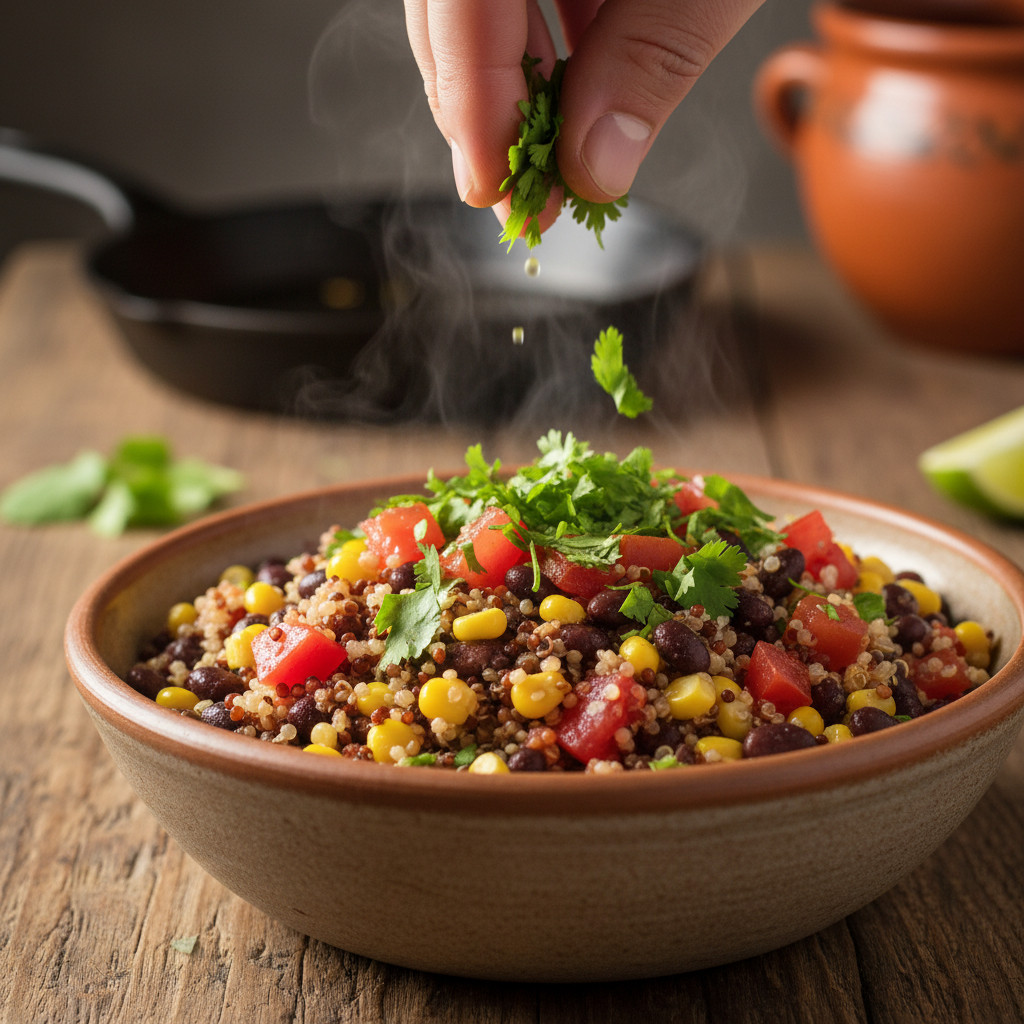
Start with a base of cilantro-lime rice—cook white or brown rice according to package directions, then fluff with fresh lime juice, lime zest, chopped cilantro, and a pinch of salt while still warm. This simple enhancement transforms plain rice into a flavorful component that tastes authentically Mexican. Layer on your protein choice: seasoned ground beef, grilled chicken, carnitas (slow-cooked pork), or spiced black beans for vegetarian version. Season proteins with cumin, chili powder, garlic powder, and oregano for traditional Mexican flavor profiles.
Arrange your toppings strategically for visual appeal—black beans, corn kernels (fresh, frozen, or canned), diced tomatoes or pico de gallo, shredded lettuce, and shredded cheese in sections around the bowl. Add sliced avocado or guacamole for creamy richness, pickled jalapeños for heat, and a dollop of sour cream. Finish with fresh cilantro, lime wedges, and your preferred salsa. Each bite can combine different components, allowing you to customize the flavor experience. Burrito bowls work excellently for meal prep—store components separately and assemble when ready to eat, keeping ingredients like avocado and lettuce fresh. This format celebrates Mexican cuisine’s vibrant flavors while offering complete nutritional balance in one bowl.
2. Italian Panzanella Salad
Panzanella represents Italian resourcefulness at its best—a bread salad that transforms stale bread into a spectacular summer lunch. This Tuscan specialty celebrates peak-season tomatoes while demonstrating how simple, quality ingredients combined thoughtfully create dishes greater than the sum of their parts. Unlike typical salads, panzanella improves slightly as it sits, allowing the bread to absorb flavorful juices from tomatoes and dressing.
Use day-old crusty Italian or French bread, cutting it into rough cubes. Toast the bread cubes in the oven with olive oil until golden and crispy—this step provides structure that prevents the salad from becoming mushy. While bread toasts, prepare the remaining ingredients: cut the ripest, most flavorful tomatoes you can find into chunks, slice cucumbers, thinly slice red onion, and tear fresh basil leaves. The quality of tomatoes makes or breaks panzanella, so prepare this dish only when tomatoes are in season and bursting with flavor.
Combine the toasted bread, tomatoes, cucumbers, red onion, and basil in a large bowl. Make a simple red wine vinaigrette by whisking together red wine vinegar, extra virgin olive oil, minced garlic, salt, and black pepper. Pour the dressing over the salad and toss well, ensuring the bread absorbs some of the tomato juices and dressing. Let the salad sit for at least 15-20 minutes before serving, allowing flavors to meld and the bread to soften slightly while maintaining some textural contrast. Add fresh mozzarella or canned tuna for protein if desired, or enjoy it as is for a lighter vegetarian lunch. Panzanella showcases how Italian cuisine transforms everyday ingredients into something memorable through proper technique and respect for seasonality.
3. Thai Coconut Curry Soup
Thai cuisine’s signature balance of sweet, salty, sour, and spicy elements creates incredibly complex and satisfying flavors. This coconut curry soup captures authentic Thai taste while remaining approachable for home cooks unfamiliar with Southeast Asian cooking. The combination of creamy coconut milk with aromatic curry paste and fresh vegetables creates warming, comforting soup with exotic flair perfect for lunch.
Begin by sautéing Thai red or yellow curry paste in a pot with a small amount of coconut oil—this blooms the spices and intensifies their flavors. Add a can of full-fat coconut milk along with vegetable or chicken broth, whisking to combine the curry paste throughout the liquid. The coconut milk provides rich, creamy base while mellowing the curry’s heat. Add fish sauce (or soy sauce for vegetarian version), brown sugar, and fresh lime juice—these three ingredients create the sweet-salty-sour balance essential to Thai cuisine.
Add your chosen vegetables and proteins—sliced bell peppers, mushrooms, bamboo shoots, and Thai basil are traditional, while proteins like shrimp, chicken, or tofu work beautifully. Simmer until vegetables are tender and proteins are cooked through, about 10-15 minutes. Adjust seasoning, adding more fish sauce for saltiness, lime juice for acidity, or sugar for sweetness until the balance tastes right. Serve over rice noodles or jasmine rice for a complete meal, garnishing with fresh cilantro, Thai basil, sliced red chili, and lime wedges. This soup introduces Thai flavors in an accessible format, proving that international cuisine can be both authentic and achievable for everyday home cooking.
Tips for Adapting Recipes to Dietary Preferences
Modern dining increasingly accommodates diverse dietary needs and preferences, whether driven by health concerns, ethical considerations, or personal wellness goals. Learning to adapt recipes ensures everyone can enjoy delicious home lunches regardless of dietary restrictions, expanding rather than limiting your cooking repertoire.
Vegetarian and Vegan Modifications
Converting meat-based recipes to vegetarian or vegan versions often requires simple substitutions while maintaining the dish’s essential character and satisfaction level. Protein replacement strategies form the foundation of successful conversions—substitute beans, lentils, chickpeas, or tofu for meat in soups, salads, and grain bowls. These plant-based proteins provide similar satiety and texture while offering excellent nutrition. Tempeh, seitan, and textured vegetable protein (TVP) mimic meat texture more closely, making them ideal for recipes where you want that specific characteristic.
Dairy substitutions have become increasingly sophisticated, with plant-based alternatives now rivaling their dairy counterparts in flavor and performance. Replace milk with oat, almond, soy, or cashew milk depending on the application—oat milk works wonderfully in creamy sauces, while cashew milk creates rich, thick textures. Substitute butter with vegan butter, coconut oil, or olive oil depending on the recipe’s requirements. Nutritional yeast provides cheesy, umami flavor in vegan dishes, while cashew cream (blended soaked cashews) creates creamy textures similar to dairy cream or cheese sauces.
Egg replacements depend on the egg’s function in the original recipe. For binding in recipes like veggie burgers or meatballs, use ground flaxseed or chia seeds mixed with water, mashed banana, or commercial egg replacers. For scrambles, use crumbled firm tofu seasoned with turmeric for color and nutritional yeast for savory flavor. These adaptations maintain recipe integrity while aligning with vegetarian and vegan dietary choices.
Gluten-Free Alternatives
Gluten-free eating, whether medically necessary or preferred for wellness reasons, no longer requires sacrificing your favorite lunch recipes. Grain and pasta substitutions provide the most obvious adaptations—replace wheat pasta with rice pasta, quinoa pasta, or chickpea pasta, all of which maintain good texture and taste when cooked properly. Substitute regular bread with gluten-free varieties, though quality varies significantly among brands, so experiment to find ones you enjoy. Rice, quinoa, buckwheat, and corn-based products naturally contain no gluten and work beautifully in numerous lunch recipes.
Thickening agent alternatives become important when adapting soups, sauces, and gravies that typically use wheat flour. Replace all-purpose flour with cornstarch, arrowroot powder, or gluten-free flour blends in equal or slightly reduced quantities. When making roux-based sauces, gluten-free flour blends designed for baking work well, though they may create slightly different textures than wheat flour. Potato starch and tapioca starch also provide excellent thickening without gluten.
Cross-contamination awareness matters significantly for those with celiac disease or severe gluten sensitivity. Even naturally gluten-free ingredients can become contaminated during processing, so read labels carefully and look for “certified gluten-free” designations on oats, spices, condiments, and processed foods. Maintain separate preparation areas and cooking utensils if preparing both gluten-containing and gluten-free foods in your kitchen to prevent accidental exposure.
Low-Carb and Keto-Friendly Options
Low-carbohydrate and ketogenic diets focus on reducing carb intake while increasing healthy fats and maintaining adequate protein. These dietary approaches can be adapted to virtually any lunch recipe with strategic substitutions. Vegetable-based carbohydrate replacements provide the foundation for low-carb adaptations—cauliflower rice substitutes for regular rice with remarkably similar appearance and acceptable texture, while zucchini noodles or shirataki noodles replace pasta effectively.
Bread and wrap alternatives allow sandwich and wrap enthusiasts to continue enjoying handheld lunches. Use large lettuce leaves, collard green leaves, or cabbage leaves as zero-carb wraps for sandwich fillings. Make “cloud bread” from eggs and cream cheese for ultra-low-carb bread-like vessels, or use portobello mushroom caps as burger “buns.” These creative substitutions maintain the eating experience while dramatically reducing carbohydrate content.
Healthy fat incorporation becomes essential in ketogenic cooking, where fat provides primary fuel source instead of carbohydrates. Add avocado, olive oil, coconut oil, nuts, seeds, full-fat dairy products, and fatty fish to boost fat content while keeping carbs minimal. Focus on nutrient-dense, fiber-rich vegetables rather than starchy ones—leafy greens, cruciferous vegetables, bell peppers, and zucchini provide volume, nutrition, and satisfaction without excessive carbohydrates. These adaptations prove that dietary restrictions need not limit culinary enjoyment when approached thoughtfully with proper ingredient knowledge.
Final Words
Creating delicious, satisfying lunches at home for any occasion represents both an achievable skill and an invaluable life practice. The recipes and strategies outlined throughout this guide demonstrate that home lunch preparation need not be complicated, time-consuming, or limited in variety. Whether you’re seeking quick weekday meals that fuel busy afternoons, impressive dishes that wow guests, comforting foods that nurture body and soul, or international flavors that transport you beyond your kitchen, countless options exist to match every preference, skill level, and dietary requirement.
The true power of mastering home lunch recipes extends beyond the immediate meal itself. You gain control over your nutrition, allowing you to make conscious choices about ingredients and portions that align with your health goals. You save substantial money compared to daily restaurant meals, freeing resources for other priorities or higher-quality ingredients. You develop valuable cooking skills that build confidence and creativity in the kitchen. Perhaps most importantly, you create opportunities to nourish yourself and others with care, attention, and love expressed through food.
Start your journey by selecting just two or three recipes from this guide that genuinely appeal to you. Master those recipes through repetition until they become second nature, requiring minimal thought or effort. Gradually expand your repertoire, experimenting with new ingredients, techniques, and flavor profiles as your confidence grows. Stock your pantry strategically with versatile staples that enable spontaneous meal creation. Consider dedicating a few hours each week to meal prep, transforming your relationship with weekday lunches from stressful to effortless.
Remember that perfection isn’t the goal—progress is. Some recipes will succeed brilliantly on first attempt while others require adjustment and practice. View each lunch you prepare as both an opportunity to nourish yourself and a chance to develop skills that will serve you for life. The kitchen is a place for creativity, experimentation, and even occasional failure—all of which ultimately lead to growth and improvement.
Your home kitchen holds unlimited potential for creating lunches that satisfy, nourish, delight, and impress. With the knowledge, recipes, and strategies you’ve gained here, you’re fully equipped to make every lunch an occasion worth celebrating, regardless of whether it’s a simple Tuesday meal or a special weekend gathering. Embrace the journey, enjoy the process, and savor the incredible meals you’ll create.