Table of Contents
- The Complete Guide to Fruit Garden Design
- Why Thoughtful Fruit Garden Design Matters
- Assessing Your Growing Environment
- Understanding Your Hardiness Zone and Chill Hours
- Evaluating Sunlight, Soil, and Drainage Conditions
- Selecting the Perfect Fruit Varieties
- Best Fruit Trees for Beginning Gardeners
- Incorporating Berry Bushes and Vines
- Dwarf Versus Standard Varieties: Making the Right Choice
- Designing Your Fruit Garden Layout
- Traditional Orchard Versus Modern Space-Saving Designs
- Mastering Espalier and Intensive Training Techniques
- Companion Planting Strategies for Fruit Gardens
- Spacing and Arrangement Best Practices
- Optimal Tree Spacing Guidelines
- Pollination Planning and Variety Grouping
- Soil Preparation and Amendment Strategies
- Building Fertile, Well-Draining Soil
- Irrigation Systems and Water Management
- Drip Irrigation Advantages
- Mulching for Moisture Conservation
- Seasonal Care and Ongoing Maintenance
- Essential Pruning Practices
- Integrated Pest and Disease Management
- Common Fruit Garden Design Mistakes to Avoid
- Final Thoughts: Creating Your Fruit Garden Legacy
The Complete Guide to Fruit Garden Design
Imagine stepping into your backyard and plucking a perfectly ripe peach straight from the tree, its sweet juice running down your chin as you savor the reward of your careful planning and hard work. This isn’t just a dream reserved for those with sprawling country estates—it’s entirely achievable in backyards, side yards, and even compact urban spaces when you approach fruit garden design with intention and knowledge. Creating a productive fruit garden goes far beyond simply digging holes and dropping in saplings; it requires understanding the delicate interplay between space, climate, plant selection, and long-term maintenance strategies that will serve you for decades to come.
Whether you’re a first-time gardener eager to grow your own organic produce or a seasoned horticulturist looking to expand your edible landscape, mastering the principles of fruit garden design will transform your outdoor space into a bountiful paradise. The decisions you make during the planning phase will determine not only your harvest quantities but also the health of your plants, the efficiency of your maintenance routines, and the overall aesthetic appeal of your garden. This comprehensive guide will walk you through every essential aspect of designing a fruit garden that thrives, from initial site assessment to advanced layout strategies and ongoing care protocols.
Why Thoughtful Fruit Garden Design Matters
A well-designed fruit garden represents a significant investment that pays dividends for years, even generations. Understanding why intentional planning matters will motivate you to approach your project with the careful consideration it deserves.
Many enthusiastic gardeners make the costly mistake of purchasing fruit trees and plants impulsively, only to discover later that their choices don’t suit their climate, their spacing is inadequate, or their layout creates maintenance nightmares. Proper fruit garden design prevents these expensive errors while maximizing your yield potential and minimizing labor requirements over time.
The benefits of thoughtful design extend across multiple dimensions:
- Increased productivity: Strategic plant placement ensures optimal pollination, sunlight exposure, and air circulation, directly impacting fruit quality and quantity
- Reduced maintenance burden: Well-planned gardens require less intervention for pest control, watering, and pruning
- Enhanced property value: A mature, productive fruit garden can add significant aesthetic and monetary value to your property
- Sustainable food production: Home-grown fruit reduces your carbon footprint and provides access to organic, pesticide-free produce
- Personal satisfaction: There’s immeasurable joy in harvesting fruit from trees you’ve nurtured from the beginning
When you invest time in proper design, you’re creating a living system that becomes more valuable and productive with each passing year. Unlike vegetable gardens that restart annually, fruit trees and perennial berry plants represent long-term commitments that reward patient, thoughtful planning with decades of harvests.
Assessing Your Growing Environment
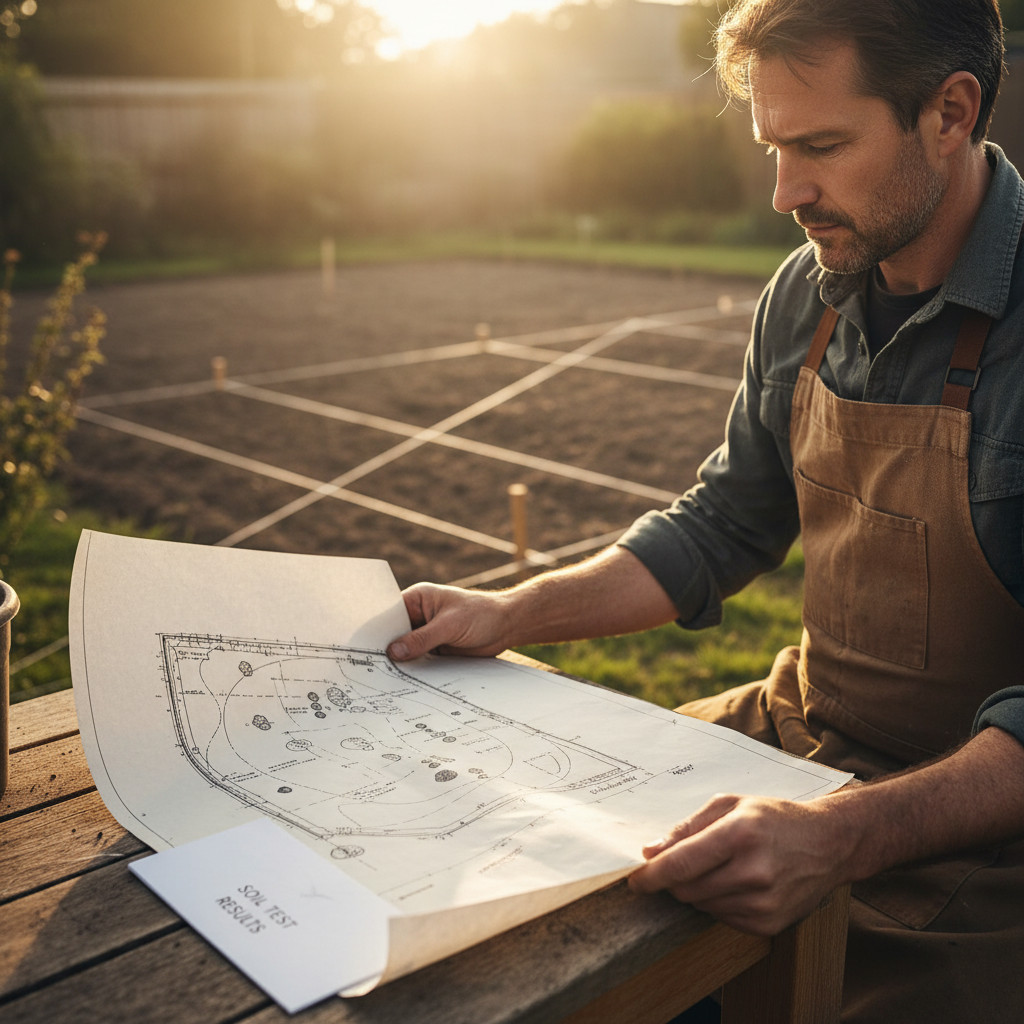
Before selecting a single plant or sketching your first layout, you must thoroughly understand the unique characteristics of your growing environment. This foundational assessment will guide every subsequent decision in your fruit garden design process.
Understanding Your Hardiness Zone and Chill Hours
Your USDA Plant Hardiness Zone determines which fruit varieties can survive your region’s minimum winter temperatures, but it’s only part of the equation. Chill hours—the cumulative time temperatures remain between 32°F and 45°F during dormancy—are equally critical for many fruit trees.
Most deciduous fruit trees require specific chill hour accumulations to break dormancy and produce fruit properly. Apples typically need 500-1,000 chill hours, while peaches require 400-1,050 hours depending on the variety. If you live in a mild climate, selecting low-chill varieties becomes essential for successful fruit production. Conversely, gardeners in colder regions must choose varieties that can withstand their temperature extremes while still receiving adequate growing season warmth.
Research your specific location’s average chill hours and cross-reference this data with variety requirements before making any purchases. Local extension offices and master gardener programs offer invaluable region-specific guidance that generic gardening resources cannot provide.
Evaluating Sunlight, Soil, and Drainage Conditions
Fruit plants are generally demanding when it comes to their growing conditions, with most requiring full sun exposure of at least six to eight hours daily for optimal production. Spend time observing your potential garden site throughout the day and across seasons to understand its sun patterns accurately.
Conduct a comprehensive soil assessment that includes:
-
Soil testing: Submit samples to your local extension service for detailed analysis of pH levels, nutrient content, and organic matter percentage. Most fruit trees prefer slightly acidic to neutral soil (pH 6.0-7.0), though blueberries require more acidic conditions (pH 4.5-5.5). This testing provides the baseline information needed to amend your soil appropriately before planting, saving you years of struggling with underperforming plants that could have thrived with proper preparation.
-
Drainage evaluation: Dig test holes 12 inches deep and fill them with water, then observe how quickly they drain. Fruit tree roots are susceptible to rot in waterlogged conditions, making drainage a non-negotiable factor. If water remains after 24 hours, you’ll need to implement raised beds, drainage systems, or select an alternative location for your fruit garden.
-
Soil texture assessment: Squeeze moist soil in your hand to determine whether it’s predominantly sandy, clay-heavy, or loamy. Sandy soils drain quickly but require more frequent watering and fertilization, while clay soils retain moisture but may need amendments to improve drainage and root penetration.
Selecting the Perfect Fruit Varieties
Choosing the right fruit plants for your garden involves balancing your personal preferences with practical considerations about your growing conditions and maintenance capabilities.
Best Fruit Trees for Beginning Gardeners
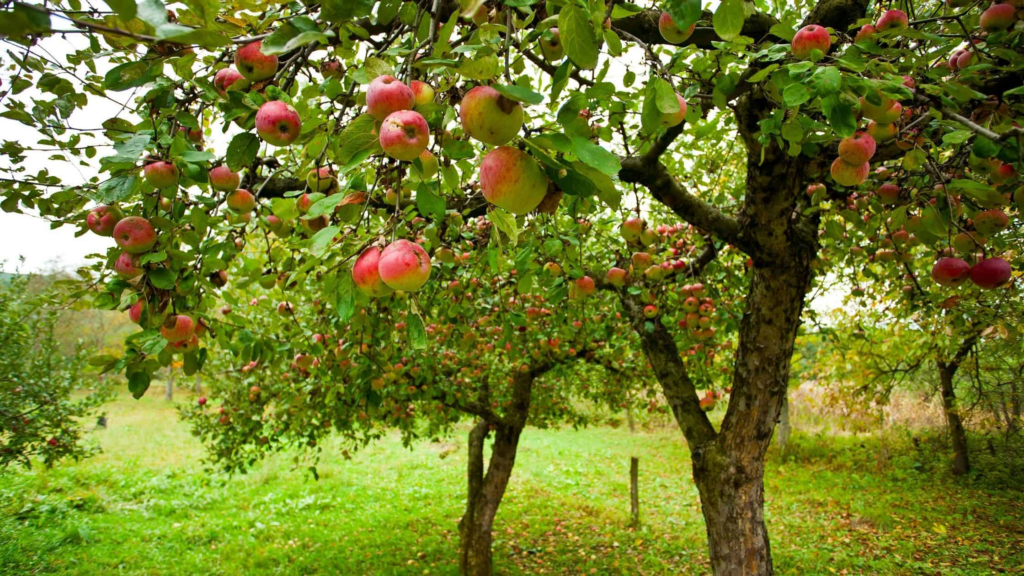
Not all fruit trees demand equal expertise. Apple and pear trees rank among the most forgiving options for newcomers, offering relatively straightforward care requirements and excellent disease resistance in many modern varieties.
Consider these beginner-friendly options:
-
Apple trees: Semi-dwarf varieties like ‘Honeycrisp,’ ‘Fuji,’ and ‘Gala’ produce manageable-sized trees that bear fruit within 3-4 years. Ensure you plant at least two compatible varieties for cross-pollination, or select self-fertile options where available.
-
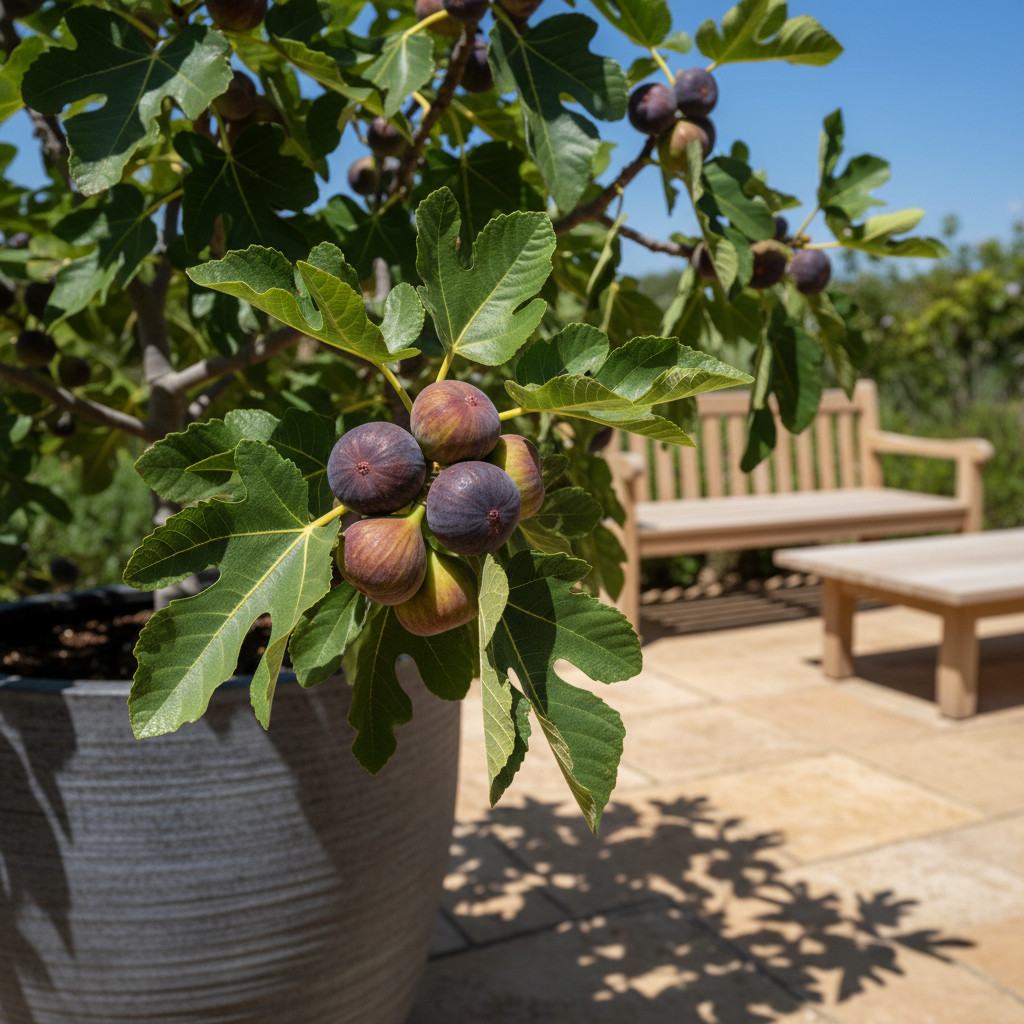
Fig trees: These Mediterranean favorites thrive in zones 7-11 and require minimal pruning, no pollination partners, and tolerate various soil conditions remarkably well. Their pest resistance makes them ideal for organic gardens.
-
Pear trees: Asian pears and European varieties like ‘Bartlett’ offer excellent productivity with moderate care requirements. Their upright growth habit makes them easier to manage than sprawling fruit trees.
-
Cherry trees: Self-fertile sweet cherry varieties eliminate pollination concerns, though birds present the primary challenge for cherry growers. Dwarf varieties make netting practical for home gardens.
Incorporating Berry Bushes and Vines
Berries provide quick returns on your gardening investment, with most plants producing fruit within one to two years of planting. Strategic berry inclusion creates layered harvests that extend your fresh fruit season from early summer through fall.
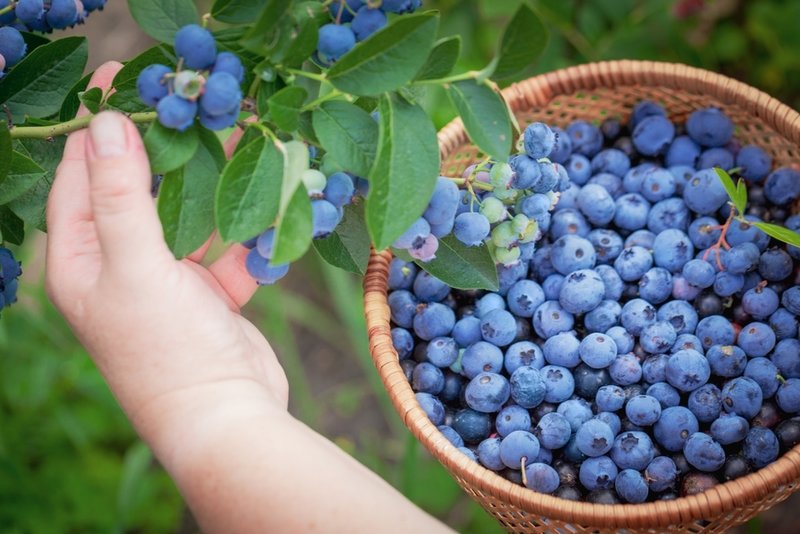
Blueberries offer exceptional nutritional value and ornamental appeal, with their fall foliage providing landscape interest beyond their fruit production. Plant at least three different varieties to ensure thorough cross-pollination and extended harvest periods. Raspberries and blackberries deliver prolific yields with minimal space requirements, though they demand regular pruning to prevent overcrowding and maintain productivity.
Grape vines require more structural planning than bush berries but reward patient gardeners with decades of production from a single planting. Their versatility—suitable for fresh eating, wine-making, jam production, and drying—makes them valuable additions to diverse fruit gardens.
Dwarf Versus Standard Varieties: Making the Right Choice
The decision between dwarf, semi-dwarf, and standard fruit tree sizes significantly impacts your garden’s design, maintenance requirements, and overall productivity.
Dwarf fruit trees mature at 8-10 feet tall, making them ideal for small spaces and gardeners who prefer harvesting and pruning without ladders. They typically produce fruit 1-2 years earlier than standard varieties but have shorter lifespans (15-20 years versus 35-50 years for standards). Their compact root systems make them suitable for container growing and tight spacing arrangements.
Standard trees require more space—often 25-35 feet between plantings—but produce significantly larger harvests once mature. They’re more cost-effective for gardeners with ample space who want maximum long-term productivity. Their deeper root systems provide better drought tolerance and stability in challenging weather conditions.
Semi-dwarf varieties offer a practical middle ground, reaching 12-18 feet at maturity while maintaining good productivity and manageable maintenance requirements. Many home fruit gardeners find semi-dwarf trees represent the optimal balance between space efficiency and harvest volume.
Designing Your Fruit Garden Layout
The physical arrangement of your fruit garden affects everything from pollination success to pest management efficiency. Strategic layout design transforms a random collection of plants into a cohesive, productive system.
Traditional Orchard Versus Modern Space-Saving Designs
Traditional orchard layouts arrange trees in grid patterns with generous spacing, allowing equipment access and promoting air circulation. This approach works well for larger properties but wastes valuable space in smaller gardens.
Modern fruit garden design embraces creative alternatives:
- High-density planting: Multiple dwarf trees planted in single holes or closely grouped create productive “fruit tree guilds” that maximize yield per square foot while simplifying pollination
- Edible hedgerows: Berry bushes and small fruit trees planted in linear arrangements serve as living fences while producing abundant harvests
- Food forest design: Layered plantings that mimic natural forest ecosystems, combining tall fruit trees, understory berry bushes, and ground-level herbs in mutually beneficial arrangements
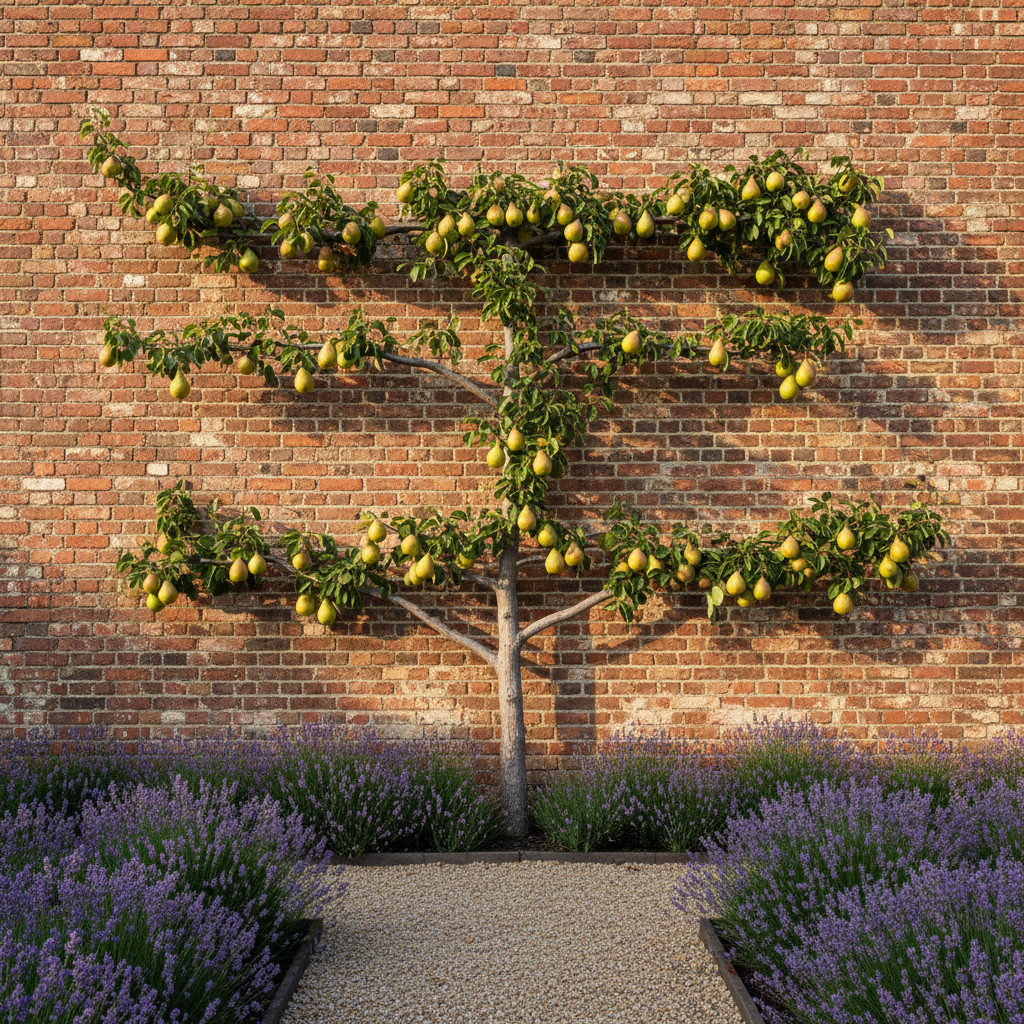
Mastering Espalier and Intensive Training Techniques
Espalier—the art of training fruit trees to grow flat against walls or fences—transforms narrow spaces into productive growing areas while creating stunning visual elements in your garden design.
This technique offers multiple advantages for space-constrained gardeners:
-
Maximized sun exposure: Flat-trained branches receive uniform sunlight, promoting even ripening and improved fruit quality. The wall or fence behind the tree also reflects additional light and heat onto developing fruit, often advancing harvest timing by one to two weeks.
-
Simplified maintenance: All branches remain within easy reach for pruning, pest inspection, and harvesting. This accessibility makes espalier ideal for gardeners with mobility limitations or those who prefer avoiding ladders.
-
Enhanced microclimate: Walls absorb heat during the day and release it slowly overnight, protecting trained trees from temperature extremes. This thermal mass effect often enables gardeners to grow varieties slightly outside their normal hardiness range.
-
Aesthetic appeal: Properly maintained espalier trees become living sculptures that add architectural interest to gardens throughout all seasons, from spring blossoms through winter branch patterns.
Companion Planting Strategies for Fruit Gardens
Strategic companion plantings improve pollination rates, attract beneficial insects, repel pests, and enhance soil health throughout your fruit garden.
Effective companion plants include:
- Nitrogen-fixing cover crops: Clover and vetch planted between fruit trees improve soil fertility naturally
- Pollinator attractors: Lavender, borage, and bee balm draw pollinators that service your fruit trees while providing additional harvests
- Pest deterrents: Nasturtiums, garlic, and tansy repel common fruit tree pests through their natural compounds
- Beneficial insect habitat: Yarrow, fennel, and dill host predatory insects that control aphid and caterpillar populations
Spacing and Arrangement Best Practices
Proper spacing prevents countless problems while maximizing your garden’s productive potential. Overcrowded fruit plants compete for resources, suffer increased disease pressure, and produce disappointing harvests.
Optimal Tree Spacing Guidelines
Different fruit tree types and sizes require specific spacing for healthy development:
| Tree Type | Minimum Spacing | Optimal Spacing |
|---|---|---|
| Standard Apple/Pear | 25 feet | 30-35 feet |
| Semi-Dwarf Apple/Pear | 12 feet | 15-18 feet |
| Dwarf Apple/Pear | 6 feet | 8-10 feet |
| Standard Peach/Nectarine | 18 feet | 20-25 feet |
| Standard Cherry | 20 feet | 25-30 feet |
| Fig Trees | 10 feet | 15-20 feet |
Row orientation significantly impacts light interception. North-south rows ensure both sides of trees receive adequate sunlight throughout the day, while east-west rows may shade northern sides excessively in higher latitudes. Consider your specific latitude and sun angles when planning row directions.
Pollination Planning and Variety Grouping
Many fruit trees require cross-pollination from compatible varieties to produce fruit. Failing to plan for pollination is among the most common fruit garden design mistakes, resulting in beautiful trees that never bear fruit.
Key pollination considerations include:
- Proximity requirements: Pollinator trees should be planted within 50-100 feet of each other, with closer spacing improving pollination rates
- Bloom time synchronization: Pollination partners must flower simultaneously, requiring careful variety selection based on bloom timing data
- Pollinator compatibility: Not all varieties within a species cross-pollinate effectively; consult pollination charts specific to your chosen fruits
- Self-fertile alternatives: When space permits only single specimens, select self-fertile varieties that don’t require pollination partners
Soil Preparation and Amendment Strategies
Investing in thorough soil preparation before planting establishes the foundation for decades of productive growth. Healthy soil biology supports healthy fruit plants through improved nutrient cycling, disease suppression, and water management.
Building Fertile, Well-Draining Soil
Transform challenging soils into productive growing media through systematic amendment:
-
Add organic matter generously: Incorporate 3-4 inches of compost into planting areas to improve both drainage in clay soils and water retention in sandy soils. Organic matter also feeds beneficial soil organisms that support plant health.
-
Adjust pH appropriately: Based on soil test results, add lime to raise pH or sulfur to lower it. Make these adjustments several months before planting when possible, as pH changes occur gradually.
-
Address nutrient deficiencies: Supplement identified deficiencies with appropriate organic or mineral amendments. Avoid over-fertilizing, which promotes excessive vegetative growth at the expense of fruit production.
-
Improve drainage if necessary: Install French drains, create raised beds, or incorporate coarse organic materials like bark chips to enhance drainage in waterlogged areas.
Irrigation Systems and Water Management
Consistent moisture delivery ranks among the most critical factors for fruit production success. Developing an efficient irrigation system during the design phase prevents countless future problems and ensures your plants receive optimal hydration.
Drip Irrigation Advantages
Drip irrigation systems deliver water directly to root zones, offering substantial benefits over overhead watering methods:
- Water efficiency: Drip systems reduce water usage by 30-50% compared to sprinklers by eliminating evaporation and runoff losses
- Disease prevention: Keeping foliage dry significantly reduces fungal disease pressure on fruit trees and berry plants
- Weed suppression: Targeted watering moistens only desired areas, reducing weed germination between plants
- Automation capability: Timer-controlled drip systems ensure consistent watering even during vacations or busy periods
Design your drip system with multiple emitters per tree, positioned at the drip line rather than against trunks. Young trees need emitters closer to trunks initially, with additional emitters added as root systems expand outward.
Mulching for Moisture Conservation
Proper mulching reduces watering needs by 25-50% while providing numerous additional benefits for fruit gardens.
Apply 3-4 inches of organic mulch—wood chips, straw, or shredded leaves—around fruit trees and berry plants, keeping mulch several inches away from trunks to prevent rot. Mulch moderates soil temperature extremes, suppresses weed competition, and gradually adds organic matter as it decomposes. Refresh mulch layers annually to maintain effectiveness throughout your garden’s development.
Seasonal Care and Ongoing Maintenance
Even perfectly designed fruit gardens require regular maintenance to achieve their productive potential. Establishing efficient care routines during the design phase ensures long-term success.
Essential Pruning Practices
Proper pruning shapes productive fruit trees while managing disease and encouraging optimal fruit development. Each fruit type requires specific pruning timing and techniques:
- Winter pruning: Perform major structural pruning during dormancy for apples, pears, and most stone fruits
- Summer pruning: Remove water sprouts and manage excessive vigor during the growing season
- Renewal pruning: Berry bushes require annual removal of spent canes and encouragement of new fruiting wood
- Training young trees: Early pruning establishes strong scaffold branches that support heavy fruit loads for decades
Integrated Pest and Disease Management
Design your fruit garden with pest management in mind by incorporating:
- Adequate spacing: Air circulation reduces fungal disease pressure significantly
- Diverse plantings: Monocultures attract pest concentrations while diverse gardens support natural pest control
- Beneficial habitat: Include flowering plants that host predatory insects throughout your fruit garden
- Sanitation practices: Design accessible layouts that facilitate fallen fruit removal and disease monitoring
Common Fruit Garden Design Mistakes to Avoid
Learning from others’ errors saves years of frustration and lost productivity. Avoid these frequent fruit garden design mistakes:
-
Overcrowding: Resist the temptation to plant more trees than your space supports. Overcrowded trees compete for resources, develop disease problems, and produce disappointing harvests despite significant maintenance investments.
-
Ignoring pollination needs: Always research pollination requirements before purchasing fruit trees. Plant compatible varieties within appropriate distances or select self-fertile options when space is limited.
-
Poor drainage planning: Waterlogged roots kill fruit trees faster than almost any other factor. Invest in drainage improvements before planting rather than attempting corrections after establishment.
-
Inadequate sun assessment: Optimistic assumptions about light availability doom fruit gardens to underperformance. Conduct thorough sun mapping before finalizing your design.
-
Neglecting deer and pest protection: Design fencing and protection systems from the beginning rather than reacting after devastating damage occurs.
Final Thoughts: Creating Your Fruit Garden Legacy
Designing a fruit garden represents an act of optimism—a commitment to nurturing living things that will reward your efforts for years, often decades, into the future. The time you invest in thoughtful planning today prevents costly mistakes while maximizing the productivity and beauty of your edible landscape.
Remember these essential principles as you begin your fruit garden journey:
- Assess your site thoroughly before making any plant selections
- Choose varieties suited to your climate, space, and maintenance capabilities
- Design for efficient pollination, adequate spacing, and manageable care routines
- Invest in soil preparation and irrigation systems before planting
- Plan for long-term growth and maintenance requirements
Your fruit garden will evolve over time, and that’s perfectly acceptable. Start with a solid design foundation, learn from your experiences, and adjust as you discover what works best in your unique situation. The harvest rewards—both literal and figurative—await those who approach fruit garden design with patience, knowledge, and genuine enthusiasm for growing their own delicious, nutritious fruit.
Begin your planning today, and within a few short years, you’ll be enjoying the incomparable satisfaction of harvesting fruit from your own thoughtfully designed garden paradise.