Table of Contents
- The Complete Guide to Fruit Gardening Tips
- Why Fruit Gardening Deserves Your Attention
- Selecting the Right Fruits for Your Growing Conditions
- Understanding Your USDA Hardiness Zone
- Space-Efficient Fruit Gardening Options
- Preparing Optimal Soil Conditions
- Soil Testing and Analysis
- Improving Soil Structure and Drainage
- Mastering Planting Techniques
- Optimal Planting Timing
- Proper Planting Procedures
- Developing Effective Watering Strategies
- Understanding Fruit Plant Water Requirements
- Irrigation Methods and Systems
- Implementing Proper Fertilization Programs
- Choosing Appropriate Fertilizers
- Timing and Application Methods
- Pruning and Training for Maximum Production
- Fundamental Pruning Principles
- Fruit-Specific Training Systems
- Managing Pests and Diseases Effectively
- Prevention as Primary Strategy
- Organic and Conventional Control Options
- Understanding Pollination Requirements
- Self-Pollinating vs. Cross-Pollinating Fruits
- Attracting and Supporting Pollinators
- Harvesting at Peak Ripeness
- Determining Harvest Readiness
- Proper Harvesting and Handling
- Final Words: Your Fruit Garden Journey Begins Now
The Complete Guide to Fruit Gardening Tips
There’s something deeply satisfying about walking into your backyard and plucking a sun-warmed peach straight from the tree, or gathering handfuls of plump blueberries for your morning smoothie. Fruit gardening transforms ordinary outdoor spaces into productive, beautiful havens that reward you season after season with nature’s sweetest bounty. Whether you’re dreaming of establishing a small orchard, growing berries along your fence line, or nurturing citrus trees in containers on your patio, the journey to becoming a successful fruit gardener begins with understanding the fundamentals and implementing proven strategies that experienced growers have refined over generations.
The beauty of fruit gardening lies in its accessibility—you don’t need acres of land or decades of experience to enjoy homegrown produce. With the right knowledge, even apartment dwellers can successfully cultivate strawberries in hanging baskets or dwarf apple trees in containers. This comprehensive guide will walk you through every essential aspect of fruit gardening, from selecting the perfect varieties for your climate to harvesting techniques that preserve flavor and extend your enjoyment. By the time you finish reading, you’ll possess the confidence and knowledge to start or improve your fruit garden, avoiding common pitfalls while maximizing your harvest potential.
Why Fruit Gardening Deserves Your Attention
Fruit gardening offers far more than just delicious produce—it provides economic, health, and environmental benefits that make it one of the most rewarding gardening endeavors you can undertake.
Growing your own fruit represents an investment that pays dividends for years, even decades, to come. Unlike vegetable gardens that require annual replanting, many fruit trees and perennial berry bushes continue producing abundantly with proper care, offering returns that compound over time. The initial effort of establishing your fruit garden transforms into a long-term asset that enhances both your property value and your quality of life.
The economic advantages of fruit gardening become apparent when you consider the rising costs of organic produce at grocery stores. A single mature apple tree can produce 400-800 pounds of fruit annually, representing hundreds of dollars in value. Berry bushes often yield 5-10 pounds per plant each season, and these perennial producers keep giving year after year with minimal ongoing investment. When you factor in the superior taste and nutritional value of tree-ripened fruit compared to store-bought alternatives picked weeks before peak ripeness, the value proposition becomes even more compelling.
Health benefits extend beyond nutrition. Studies consistently show that gardening activities reduce stress, improve mental health, and provide moderate physical exercise. The act of nurturing plants connects us to natural cycles, offering meditative moments in our increasingly screen-dominated lives. Children who participate in fruit gardening develop healthier eating habits and gain practical understanding of where food originates.
Environmental contributions from fruit gardening include:
- Carbon sequestration through tree growth and soil improvement
- Habitat creation for beneficial insects, birds, and pollinators
- Reduced transportation emissions from locally grown food
- Decreased packaging waste compared to store-bought produce
- Improved local biodiversity through diverse plantings
Selecting the Right Fruits for Your Growing Conditions
Success in fruit gardening begins with choosing varieties suited to your specific climate, available space, and personal preferences—a decision that determines your garden’s productivity for years to come.
The excitement of planning a fruit garden often leads beginners to select plants based solely on their favorite fruits to eat, overlooking crucial factors like hardiness zones, chill hour requirements, and space constraints. This approach frequently results in disappointing harvests or plant failures that could have been avoided with better initial selection.
Understanding Your USDA Hardiness Zone
Your hardiness zone indicates the average minimum winter temperature in your area, serving as the foundation for fruit selection decisions. The USDA Plant Hardiness Zone Map divides North America into 13 zones, each representing a 10-degree Fahrenheit difference in average annual minimum temperatures. Knowing your zone prevents investing time and money in plants that cannot survive your winters.
Beyond basic zone compatibility, consider chill hour requirements—the number of hours below 45°F that many fruit trees need to break dormancy and produce fruit. Apple and cherry varieties may require 500-1,000 chill hours, making them unsuitable for mild southern climates without selecting specifically bred low-chill varieties. Conversely, tropical fruits like mangoes and papayas require protection from any frost exposure, limiting their outdoor cultivation to zones 10-11 without significant infrastructure.
Research local extension office resources to identify:
- Recommended varieties for your specific microclimate
- Disease-resistant cultivars that thrive in your region’s humidity and temperature patterns
- Bloom timing to avoid late frost damage in your area
- Pollination partners commonly available at local nurseries
Space-Efficient Fruit Gardening Options
Limited space shouldn’t prevent you from enjoying homegrown fruit. Modern breeding has produced dwarf and semi-dwarf varieties of nearly every fruit tree, while creative growing techniques maximize production in minimal footprints. Container gardening opens fruit cultivation possibilities for apartment balconies and small patios where in-ground planting isn’t feasible.
Dwarf fruit trees typically reach 8-10 feet in height and can produce full-sized fruit in quantities sufficient for home use. These compact trees require less pruning, easier harvesting, and fit comfortably in small yards. Semi-dwarf varieties reach 12-15 feet and offer higher yields while remaining manageable for most gardeners.
Espalier training—growing trees flat against walls or fences—represents an elegant solution for narrow spaces while creating stunning landscape features. This centuries-old technique allows fruit production in areas just 1-2 feet deep while optimizing sun exposure for ripening.
Consider these space-efficient fruit options:
- Columnar apple trees: Grow in a narrow, upright form perfect for containers
- Strawberries: Excellent for hanging baskets, vertical gardens, or ground covers
- Blueberries: Compact bushes that double as ornamental landscape plants
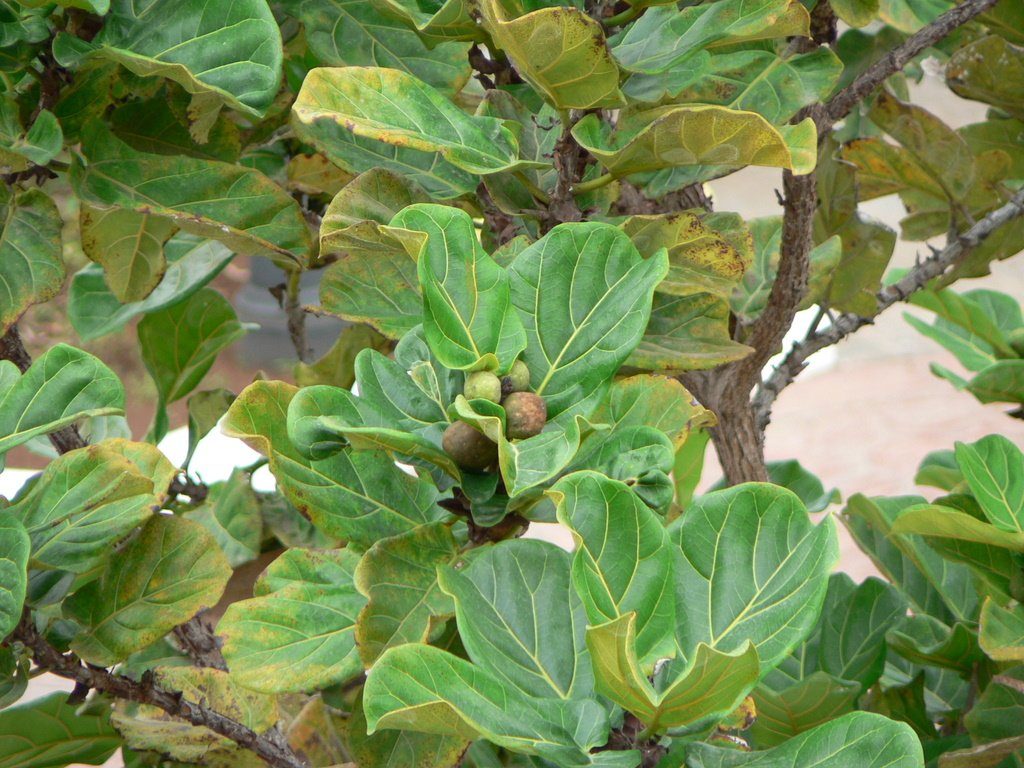
- Fig trees: Respond well to container culture and aggressive pruning
- Grape vines: Train along fences, arbors, or trellises for vertical production
Preparing Optimal Soil Conditions
Healthy soil forms the foundation of productive fruit gardens, providing essential nutrients, proper drainage, and beneficial microbial activity that support vigorous growth and abundant harvests.
The quality of your soil determines much of your success in fruit gardening. While some adjustments can be made after planting, investing time in soil preparation before you put plants in the ground pays enormous dividends in plant health and productivity. Most fruit plants prefer similar soil conditions, though specific requirements vary, making soil testing an essential first step.
Soil Testing and Analysis
Professional soil testing reveals critical information about your soil’s composition, pH level, nutrient content, and organic matter percentage. These tests, available through county extension offices or private laboratories, typically cost $15-30 and provide recommendations tailored to your specific growing goals. Home testing kits offer quick pH readings but lack the comprehensive analysis needed for optimal amendment planning.
Interpreting soil test results requires understanding that most fruits prefer slightly acidic to neutral soil with pH between 6.0-7.0. Notable exceptions include blueberries, which require strongly acidic soil (pH 4.5-5.5), and grapes, which tolerate a wider range. Your test results will indicate current pH and recommend amendments like sulfur to lower pH or lime to raise it.
Key soil parameters to evaluate include:
- Nitrogen (N): Supports leaf and stem growth
- Phosphorus (P): Promotes root development and fruit production
- Potassium (K): Enhances overall plant health and disease resistance
- Calcium and Magnesium: Essential secondary nutrients
- Organic matter percentage: Indicates soil biological activity
- Texture analysis: Determines drainage characteristics
Improving Soil Structure and Drainage
Fruit trees and bushes generally require well-draining soil to prevent root rot and other moisture-related diseases. Heavy clay soils retain water excessively, while sandy soils drain too quickly and fail to hold nutrients. Both extremes benefit from the addition of organic matter, which improves structure regardless of your starting point.
Organic amendments transform problematic soils over time. Incorporate 3-4 inches of compost, aged manure, or leaf mold into the top 12-18 inches of soil before planting. This addition improves water retention in sandy soils while breaking up clay particles to enhance drainage. Avoid fresh manure, which can burn roots and introduce weed seeds.
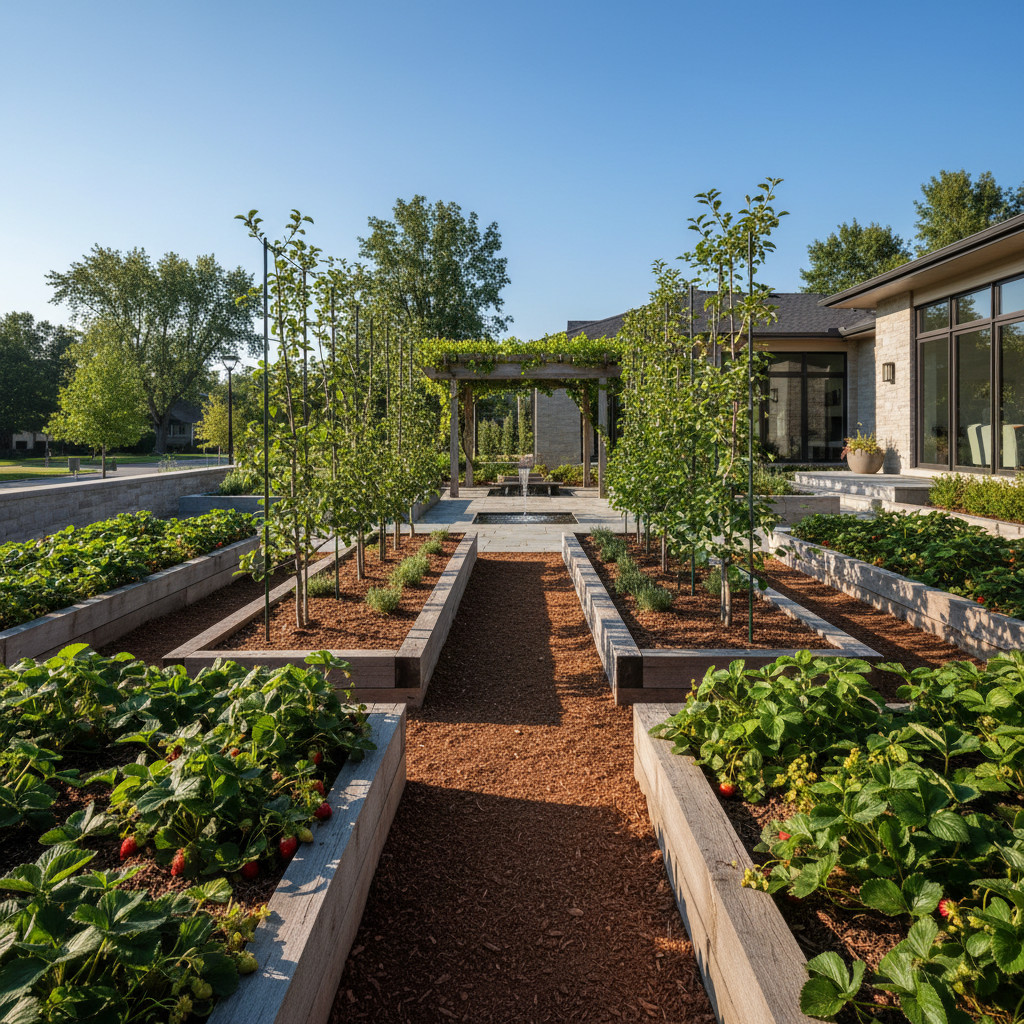
For severely compacted or poorly draining sites, consider raised bed construction for berry plants and dwarf trees. Raised beds allow complete control over soil composition while elevating roots above waterlogged native soil. Build beds at least 18 inches deep for berry bushes and 24-36 inches for dwarf fruit trees to accommodate root systems.
Mastering Planting Techniques
Proper planting establishes the foundation for decades of fruit production, making attention to timing, depth, and initial care critical for long-term success.
The moment of planting represents your opportunity to set fruit trees and bushes up for optimal growth. Mistakes made during planting—such as improper depth, inadequate root preparation, or poor timing—can compromise plant health for years or lead to premature death. Taking time to plant correctly prevents countless problems down the road.
Optimal Planting Timing
Dormant season planting during late winter to early spring remains the gold standard for bare-root trees and bushes. Plants established before spring growth begins develop root systems during cool, moist conditions before facing summer heat stress. In most regions, this window extends from late February through April, depending on your last frost date.
Container-grown plants offer more flexibility, allowing planting throughout the growing season with proper care. However, fall planting (September through October) presents distinct advantages in many climates. Roots continue growing in cool soil while top growth ceases, establishing extensive root systems before the following summer’s demands. Avoid fall planting in regions with severe winters where plants cannot establish before hard freezes.
Proper Planting Procedures
Follow these essential steps for successful fruit tree and bush planting:
-
Dig appropriately sized holes: Create holes twice the width of the root ball but only as deep as the roots extend. Wide holes allow roots to spread easily into loosened soil, while proper depth prevents settling that could bury the root flare—a common cause of tree decline and death.

-
Inspect and prepare roots: For bare-root plants, soak roots in water for 2-4 hours before planting, then trim any damaged, circling, or excessively long roots. Container plants often develop circling roots that must be loosened or cut to prevent girdling as the tree matures. This step proves essential for long-term tree stability and health.
-
Position plants correctly: Set plants so the root flare (where roots meet trunk) sits at or slightly above soil level. Grafted trees must have their graft union positioned 2-4 inches above soil to prevent scion rooting. Create a slight mound beneath the root ball to prevent settling below grade over time.
-
Backfill and eliminate air pockets: Return native soil to the hole, gently firming as you go to eliminate air pockets that dry roots. Avoid excessive compaction that restricts root growth. Water thoroughly during backfilling to settle soil naturally around roots.
-
Mulch and protect: Apply 3-4 inches of organic mulch in a wide circle around new plantings, keeping mulch several inches away from trunks to prevent rot and rodent damage. Install protective guards where rabbit or deer pressure exists, and stake only if necessary for wind protection.
Developing Effective Watering Strategies
Consistent, appropriate watering ranks among the most critical factors in fruit garden success, influencing everything from fruit size and sweetness to disease resistance and winter hardiness.
Water management challenges even experienced gardeners because requirements vary dramatically based on plant age, growth stage, weather conditions, and soil type. Understanding your plants’ water needs and developing systems to meet them reliably prevents both the stress of drought and the problems caused by overwatering.
Understanding Fruit Plant Water Requirements
Newly planted fruit trees require frequent watering to establish roots, typically 5-10 gallons every 5-7 days during the first growing season. Established trees need less frequent but deeper watering—generally 1-2 inches weekly during active growth, adjusting based on rainfall and temperature. Sandy soils require more frequent irrigation than clay soils, which hold moisture longer but present overwatering risks.
Critical watering periods demand special attention:
- Bloom time: Consistent moisture supports fruit set
- Fruit development: Water stress causes small fruit and premature drop
- Late summer/early fall: Moderate watering encourages winter hardiness
- Drought conditions: Deep watering every 10-14 days beats frequent shallow irrigation
Berry plants generally require 1-2 inches of water weekly, with increased needs during fruit development. Their shallow root systems make them more susceptible to drought stress than deep-rooted trees. Mulching berry plants conserves moisture, reduces watering frequency, and maintains the cool root conditions most berries prefer.
Irrigation Methods and Systems
Drip irrigation represents the most efficient watering method for fruit gardens, delivering water directly to root zones while keeping foliage dry. This targeted approach reduces water waste through evaporation and runoff while minimizing fungal disease problems associated with wet leaves. Install drip emitters or soaker hoses in concentric circles extending from trunks to drip lines.
Key considerations for irrigation system selection:
- Drip systems: Most water-efficient, ideal for trees and row plantings
- Soaker hoses: Budget-friendly option for berry beds and hedgerows
- Micro-sprinklers: Provide frost protection as a secondary benefit
- Overhead sprinklers: Least efficient but useful for newly seeded areas
- Automated timers: Ensure consistency, especially during vacation periods
Monitor soil moisture regularly using a moisture meter or the finger test—insert your finger 3-4 inches into soil to check dampness. Signs of water stress include wilting, leaf curl, premature fruit drop, and dull foliage color. Overwatering symptoms often mimic drought stress but typically include yellowing leaves and soft, brown root tips visible when examining plants.
Implementing Proper Fertilization Programs
Strategic fertilization provides essential nutrients for vigorous growth and abundant fruit production while avoiding the problems caused by excessive or poorly timed applications.
Fruit plants require balanced nutrition to support vegetative growth, flowering, and fruit development throughout their annual cycle. Understanding when and how to fertilize—and recognizing when fertilization causes more harm than good—distinguishes successful fruit gardeners from those who struggle with disappointing harvests or unhealthy plants.
Choosing Appropriate Fertilizers
Organic fertilizers including compost, aged manure, bone meal, and blood meal release nutrients slowly as soil organisms break them down. This gradual release matches plant uptake patterns more naturally than synthetic options while improving soil structure and biological activity over time. Organic approaches particularly benefit perennial fruit plantings established for the long term.
Synthetic fertilizers offer precise nutrient ratios and faster availability but require careful application to avoid root burn and environmental runoff. These products work well for correcting identified deficiencies quickly but contribute less to long-term soil health. Many successful fruit gardeners combine approaches, using organic matter as a foundation supplemented by targeted synthetic applications when testing indicates specific needs.
Select fertilizers based on your soil test results and plant growth stage:
- High nitrogen (first number in NPK ratio): Supports early season vegetative growth
- High phosphorus (second number): Encourages root development and fruit production
- High potassium (third number): Enhances fruit quality and disease resistance
- Balanced formulations (10-10-10): General maintenance applications
- Specialty fruit fertilizers: Formulated for specific fruit types
Timing and Application Methods
Spring fertilization as growth begins provides nutrients when plants most actively absorb them. Apply fertilizers as buds swell but before flowers open, typically late February through April depending on your location. This timing supports the demanding bloom and fruit set period without promoting excessive late-season growth that reduces winter hardiness.
Proper application techniques maximize fertilizer effectiveness:
- Broadcast method: Spread granular fertilizers evenly beneath the canopy from trunk to drip line, avoiding direct trunk contact
- Incorporation: Lightly rake granular products into soil surface or water in thoroughly
- Foliar feeding: Apply liquid fertilizers to leaves for quick correction of micronutrient deficiencies
- Fertigation: Deliver dissolved fertilizers through irrigation systems for efficient uptake
Avoid late-season fertilization (after midsummer in most regions) for woody fruit plants. Nitrogen applications after July stimulate tender new growth that fails to harden before winter, resulting in cold damage and increased disease susceptibility. Berry plants finishing their harvest may benefit from light feeding to support next year’s fruit buds, but excessive nitrogen promotes foliage over fruit.
Pruning and Training for Maximum Production
Regular pruning shapes fruit plants for optimal light penetration, air circulation, and fruit quality while managing size and removing unproductive wood.
Pruning intimidates many beginning fruit gardeners, but understanding basic principles transforms this essential maintenance task into an enjoyable annual ritual. Proper pruning increases fruit size, improves color development, reduces disease pressure, and extends productive lifespan. Neglected trees become overgrown tangles producing small, poorly colored fruit that’s difficult to harvest.
Fundamental Pruning Principles
Timing considerations vary by fruit type but generally favor dormant season pruning for major structural work. Late winter (February-March) allows you to see branch structure clearly while giving cuts time to heal before spring growth. Summer pruning controls excessive vigor and allows better light penetration for fruit coloring but should be lighter than dormant cuts.
Essential pruning objectives include:
- Removing dead, diseased, or damaged wood: Priority regardless of season
- Eliminating crossing or rubbing branches: Prevents wound sites for disease entry
- Opening the center: Improves light penetration and air circulation
- Maintaining desired size: Keeps trees manageable for harvest and care
- Encouraging fruiting wood: Different fruits bear on different aged wood
Pruning techniques must match your goals. Heading cuts (removing branch tips) stimulate branching below the cut, useful for encouraging density in young trees. Thinning cuts (removing entire branches at their origin) open structure without stimulating excessive regrowth. Heavy reliance on heading cuts creates dense, unproductive growth requiring extensive follow-up thinning.
Fruit-Specific Training Systems
Different fruits require distinct pruning approaches based on their bearing habits:
Apples and pears produce fruit on long-lived spurs, requiring minimal annual pruning once established. Remove water sprouts (vigorous vertical shoots) and maintain open centers for light penetration. These trees respond well to central leader training, developing a dominant vertical trunk with evenly spaced scaffold branches.
Stone fruits (peaches, plums, cherries) bear on previous year’s growth, requiring more aggressive annual pruning to stimulate new fruiting wood. Open center/vase training suits most stone fruits, removing central leaders in favor of 3-4 main scaffolds that create bowl-shaped trees with excellent light exposure.
Berry bushes have specific pruning requirements based on fruiting habits:
- Blueberries: Remove oldest canes and crossing branches; tip young canes to encourage branching
- Raspberries/blackberries: Remove fruited canes after harvest; thin new canes to 4-6 per foot of row
- Grapes: Various training systems (cane, spur, high cordon) depending on variety and climate
Managing Pests and Diseases Effectively
Integrated pest management combines prevention, monitoring, and targeted intervention to protect fruit crops while minimizing environmental impact and preserving beneficial organisms.
Pest and disease challenges inevitably arise in fruit gardens, but proactive management prevents most serious problems. Understanding common threats in your region and implementing preventive strategies reduces or eliminates the need for reactive treatments. When intervention becomes necessary, starting with the least toxic effective options protects both your family’s health and the beneficial insects that support productive gardens.
Prevention as Primary Strategy
Cultural practices prevent most pest and disease problems before they start. Proper spacing ensures adequate air circulation that dries foliage quickly after rain or dew, creating conditions unfavorable for fungal diseases. Appropriate watering, fertilization, and pruning maintain plant vigor that resists pest attacks and recovers quickly from damage.
Implement these preventive measures consistently:
- Sanitation: Remove fallen fruit, pruning debris, and dead plant material that harbors pests and diseases
- Variety selection: Choose disease-resistant cultivars adapted to your region
- Diverse plantings: Avoid monocultures that allow pest populations to explode
- Companion planting: Incorporate herbs and flowers that repel pests or attract beneficial insects
- Monitoring: Regular inspection catches problems early when control is easiest
Dormant sprays applied in late winter before bud break control overwintering pest eggs and fungal spores with minimal impact on beneficial insects. Horticultural oil smothers scale insects, mites, and aphid eggs, while copper or sulfur fungicides prevent early-season disease establishment. These preventive applications often eliminate the need for multiple growing-season treatments.
Organic and Conventional Control Options
When pest or disease pressure requires intervention, identify problems accurately before selecting treatments. Many gardeners misidentify issues, applying inappropriate products that waste money and may harm beneficial organisms without solving the underlying problem. Extension services, Master Gardener programs, and reputable online resources help with accurate diagnosis.
Organic control methods to consider:
- Biological controls: Beneficial insects (ladybugs, parasitic wasps) and microbial products (Bt, spinosad)
- Physical barriers: Netting for birds, row covers for insects, tree guards for rodents
- Botanical insecticides: Neem oil, pyrethrin, and insecticidal soaps for soft-bodied insects
- Organic fungicides: Copper compounds, sulfur, and biological agents like Bacillus subtilis
Conventional options may be warranted for severe infestations threatening significant crop loss. Always read and follow label directions precisely, observe pre-harvest intervals, and time applications to minimize exposure to pollinators. Even when using synthetic products, integrated approaches that combine multiple tactics prove more effective than relying solely on chemical intervention.
Understanding Pollination Requirements
Successful fruit set depends on adequate pollination, making knowledge of your plants’ specific requirements essential for planning productive gardens.
Pollination mysteries frustrate many fruit gardeners who experience abundant blooms but disappointing fruit set. Understanding whether your chosen fruits self-pollinate or require cross-pollination partners prevents this common disappointment. Even self-fertile varieties often produce larger crops with cross-pollination, making pollinator attraction valuable regardless of your fruit selection.
Self-Pollinating vs. Cross-Pollinating Fruits
Self-fertile fruits can set fruit with their own pollen, requiring only a single plant for production. These include most peaches, nectarines, apricots, sour cherries, most citrus, figs, persimmons, pomegranates, and most berry types. While convenient for small gardens, even self-fertile plants benefit from pollinator activity that moves pollen within flowers more efficiently.
Cross-pollinating fruits require pollen from a different compatible variety to set fruit. Most apples, pears, sweet cherries, plums, and blueberries fall into this category. Simply planting two of the same variety won’t work—you need genetically different varieties that bloom simultaneously. Research compatibility before purchasing to ensure your selections will pollinate each other effectively.
Key pollination considerations:
- Bloom timing: Pollinators must bloom simultaneously; early, mid, and late-season varieties may not overlap
- Compatibility groups: Some varieties are cross-incompatible despite different names
- Crabapples: Universal apple pollinators if bloom times match
- Wild pollinators: Native bees often more effective than honeybees for fruit pollination
Attracting and Supporting Pollinators
Create pollinator habitat throughout your property to ensure adequate pollination services. Plant diverse flowering plants that bloom from early spring through fall, providing continuous food sources. Native plants particularly support native bee species that often prove more effective fruit pollinators than honeybees.
Pollinator-friendly practices include:
- Eliminate pesticide use during bloom periods when pollinators actively work flowers
- Provide nesting habitat including bare ground patches, brush piles, and bee houses
- Maintain flowering plants near fruit plantings to support pollinator populations
- Avoid highly doubled flowers that offer little nectar or pollen
- Include early bloomers (willows, fruit trees) that sustain early-emerging pollinators
Harvesting at Peak Ripeness
Proper harvest timing and techniques maximize flavor, storage life, and overall enjoyment of your homegrown fruit.
The harvest represents the culmination of your fruit gardening efforts, and proper techniques ensure you enjoy maximum quality from each piece of fruit. Unlike commercial operations that harvest early for shipping durability, home gardeners can pick at peak ripeness when flavor compounds reach their fullest development. This advantage alone justifies fruit gardening efforts.
Determining Harvest Readiness
Visual and tactile indicators guide harvest timing for most fruits. Color changes from green to mature hues indicate ripening, though final color varies by variety. Slight softening—particularly near stem ends—suggests readiness, while ease of detachment from stems indicates full maturity for many fruits.
Specific harvest indicators by fruit type:
- Apples: Seeds turn brown; fruit separates easily with a slight twist and lift
- Pears: Harvest when mature but firm; ripen off-tree for best texture
- Stone fruits: Slight softening and full color development; fragrant aroma
- Berries: Full color development; berries release easily from plants
- Grapes: Taste testing remains the most reliable indicator; seeds turn brown
- Citrus: Color change and slight softening; taste testing confirms sweetness
Proper Harvesting and Handling
Gentle handling preserves quality and extends storage life. Bruised fruit deteriorates rapidly and spoils quickly in storage. Harvest into shallow containers that prevent crushing under fruit weight, and avoid piling fruit more than a few layers deep.
Follow these harvesting best practices:
- Harvest during cool morning hours after dew dries but before afternoon heat
- Handle fruit minimally to preserve protective bloom (waxy coating)
- Use proper technique—twist and lift rather than pulling straight
- Separate damaged fruit immediately for immediate use rather than storage
- Cool fruit quickly by moving to refrigeration or cool storage within hours
Storage requirements vary significantly among fruit types. Apples and pears store for months in cold (32-35°F), humid conditions. Stone fruits and berries require refrigeration and quick consumption within days. Citrus tolerates room temperature storage for weeks but keeps longer refrigerated. Understanding these differences maximizes your enjoyment of each harvest.
Final Words: Your Fruit Garden Journey Begins Now
Fruit gardening rewards patience and attention with harvests that improve year after year as plants mature and your skills develop. The comprehensive strategies outlined in this guide—from thoughtful variety selection through proper planting, maintenance, and harvest—provide the foundation for fruit garden success regardless of your experience level or available space.
Remember that every experienced fruit gardener started as a beginner, learning through both successes and setbacks. Don’t let fear of mistakes prevent you from planting that first tree or berry bush this season. Start with disease-resistant varieties appropriate for your climate, focus on soil preparation and consistent watering during establishment, and expand your plantings as confidence grows.
Your action steps to begin:
- Research your hardiness zone and identify suitable fruit varieties
- Test your soil and amend as needed before planting
- Start with 2-3 proven varieties rather than attempting everything at once
- Connect with local resources including extension services and garden clubs
- Commit to consistent basic care rather than complex interventions
The taste of a perfectly ripe peach from your own tree, the satisfaction of preserving berry jam for winter enjoyment, the beauty of fruit blossoms each spring—these rewards await every gardener willing to invest the effort. Your fruit garden journey transforms not just your landscape but your relationship with food itself, connecting you to the rhythms of nature and the profound satisfaction of growing nourishment with your own hands. The time to plant is now.