Imagine stepping onto your balcony, terrace, or small patio and picking fresh, sun-ripened strawberries, juicy blueberries, or even homegrown lemons right from your own containers. This dream is not only achievable but increasingly popular among urban dwellers, apartment residents, and anyone with limited outdoor space. Container fruit gardening has revolutionized how we think about growing our own food, breaking down the traditional barriers of large backyards and expansive garden plots. Whether you’re a seasoned gardener looking to maximize your harvest or a complete beginner eager to grow your first fruit-bearing plant, understanding the secrets to successful container cultivation can mean the difference between thriving, productive plants and disappointing failures.

The beauty of growing fruit in containers lies in its accessibility and versatility. You control virtually every aspect of your plant’s environment, from soil composition to sunlight exposure to protection from harsh weather. However, this control comes with responsibility—container-grown fruit plants have specific needs that differ significantly from their in-ground counterparts. They require more attention to watering, fertilization, and overall care, but the rewards of harvesting your own organic, pesticide-free fruit make every effort worthwhile.
In this comprehensive guide, you’ll discover the ten essential secrets that professional gardeners and horticulturists use to achieve remarkable success with container fruit gardening. These proven strategies will help you avoid common mistakes, optimize your growing conditions, and ultimately enjoy bountiful harvests season after season.
Table of Contents
- Why Container Fruit Gardening is Revolutionizing Home Growing
- The Compelling Benefits of Growing Fruit in Containers
- Secret #1: Choose the Right Container Size and Material
- Understanding Container Sizes for Different Fruits
- Best Materials for Fruit Containers
- Secret #2: Select Dwarf and Compact Fruit Varieties
- Best Dwarf Fruit Trees for Containers
- Compact Berry Varieties That Thrive in Pots
- Secret #3: Master the Art of Soil Selection
- Creating the Perfect Potting Mix
- Soil pH and Nutrient Requirements
- Secret #4: Establish Proper Drainage Systems
- Why Drainage is Critical for Container Success
- Setting Up Effective Drainage
- Secret #5: Develop a Strategic Watering Schedule
- Signs of Overwatering and Underwatering
- Best Watering Practices for Container Fruit
- Secret #6: Implement a Comprehensive Fertilization Program
- Understanding Nutrient Needs Throughout the Growing Season
- Organic vs. Synthetic Fertilizers
- Secret #7: Maximize Sunlight Exposure
- Understanding Light Requirements for Fruiting Plants
- Solutions for Limited Sunlight Situations
- Secret #8: Practice Proper Pruning and Training Techniques
- When and How to Prune Container Fruit
- Training Methods for Container Fruit
- Secret #9: Protect Your Plants from Pests and Diseases
- Common Container Fruit Pests
- Organic Pest Control Methods
- Secret #10: Plan for Seasonal Care and Overwintering
- Seasonal Maintenance Tips
- Overwintering Strategies for Container Fruit
- Bonus Tips for Maximizing Your Container Fruit Harvest
- Final Thoughts: Your Journey to Container Fruit Gardening Success
Why Container Fruit Gardening is Revolutionizing Home Growing
Container fruit gardening represents one of the fastest-growing trends in home horticulture, and for good reason. This approach democratizes fruit production, making it accessible to anyone regardless of their living situation or outdoor space limitations. Understanding why this method has gained such momentum will help you appreciate its potential and commit to the practices that ensure success.
The Compelling Benefits of Growing Fruit in Containers
The advantages of container fruit gardening extend far beyond simple space-saving solutions. Mobility stands as one of the most significant benefits—you can move your plants to follow the sun, protect them from severe weather, or simply rearrange your garden for aesthetic purposes. This flexibility proves invaluable when unexpected frost threatens or when scorching summer heat becomes too intense.
Pest and disease management becomes considerably more manageable with container gardening. Elevated containers naturally deter many ground-dwelling pests, while the ability to isolate infected plants prevents problems from spreading throughout your entire garden. Additionally, you maintain complete control over soil quality, eliminating concerns about contaminated ground soil or drainage issues common in many urban environments.
Year-round growing possibilities emerge when you can bring tender plants indoors during winter months. Citrus trees, for example, thrive when overwintered in sunny rooms, continuing to provide fresh fruit even during the coldest seasons. This extended growing season dramatically increases your overall yield and allows you to cultivate varieties that wouldn’t normally survive in your climate zone.
Secret #1: Choose the Right Container Size and Material
The foundation of successful container fruit gardening begins with selecting appropriate containers. This decision impacts everything from root development to watering frequency to your plant’s long-term health and productivity. Making informed choices about container size and material sets the stage for gardening success.
Understanding Container Sizes for Different Fruits
Different fruit plants have varying root system requirements, and matching container size to plant needs proves critical for healthy growth. Here’s a comprehensive breakdown of recommended container sizes:
-
Strawberries and compact herbs require containers of at least 8-12 inches in diameter. These shallow-rooted plants thrive in hanging baskets, window boxes, or traditional pots. The key consideration is ensuring adequate drainage and sufficient width for the plants to spread their runners naturally. Strawberry-specific containers with multiple planting pockets maximize space efficiency while providing excellent drainage for each plant.
-
Blueberries, raspberries, and currants need containers ranging from 15-20 inches in diameter with depths of at least 16-18 inches. These berry bushes develop moderate root systems that require room to expand. The larger volume also provides better moisture retention and temperature stability, which proves particularly important for blueberries that prefer consistently moist, acidic conditions.
-
Dwarf citrus trees and apple trees demand substantial containers of 20-25 inches or larger, with depths of 20-24 inches minimum. These woody plants develop extensive root systems over time and require the stability that larger containers provide. Plan to repot these trees every 2-3 years, gradually increasing container size until reaching their maximum recommended dimensions.
-
Fig trees and pomegranates flourish in half-barrel sized containers (approximately 25-30 inches in diameter). These Mediterranean natives appreciate the thermal mass that large containers provide, protecting roots from temperature extremes while offering adequate space for mature root development.
Best Materials for Fruit Containers
Container material significantly affects moisture retention, temperature regulation, and overall plant health. Each material offers distinct advantages:
-
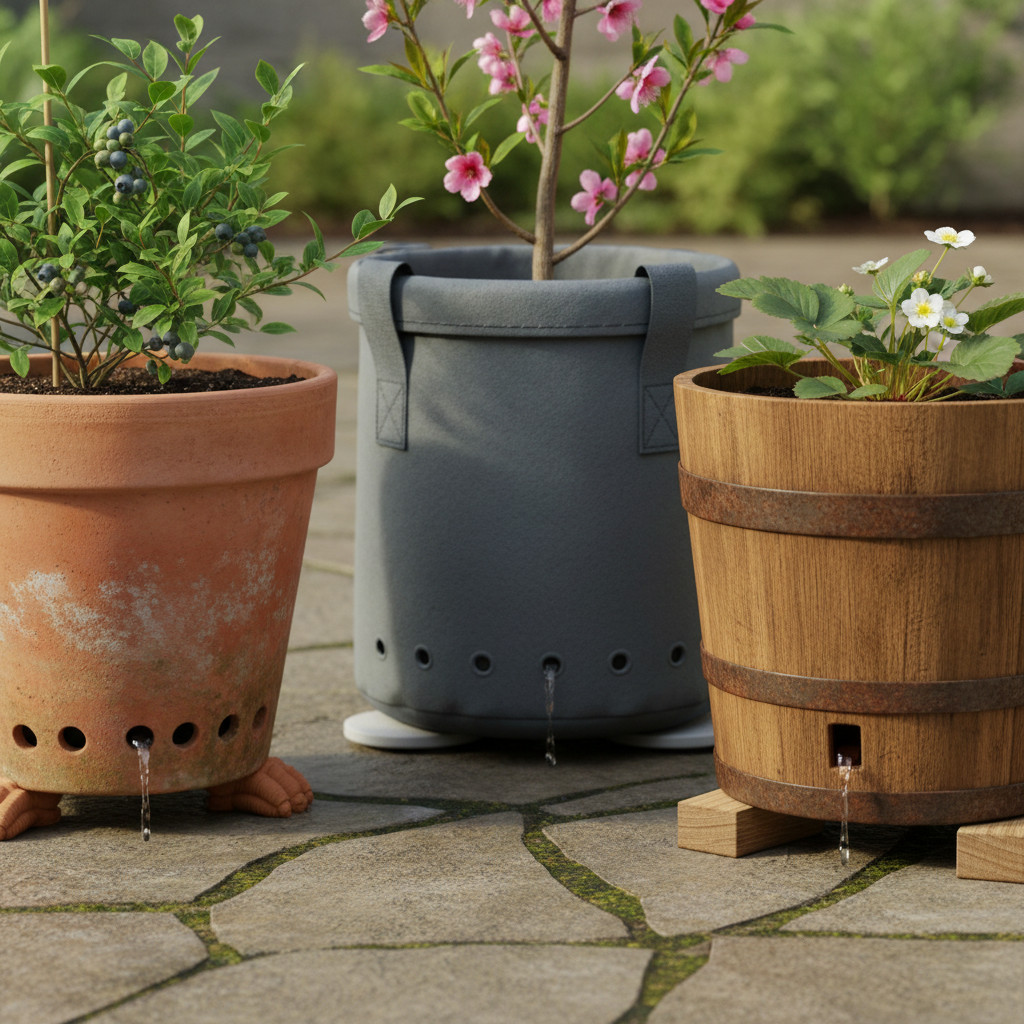
Terracotta and clay pots provide excellent breathability, allowing roots to access oxygen while naturally regulating soil moisture. However, they dry out quickly in hot weather and can crack in freezing temperatures. These classic containers work beautifully for drought-tolerant Mediterranean fruits like figs and pomegranates.
-
Plastic containers offer lightweight convenience, superior moisture retention, and affordability. Modern plastic pots come in attractive designs that mimic more expensive materials while providing practical benefits. They’re ideal for moisture-loving berries and for gardeners who need to move containers frequently.
-
Fabric grow bags represent an innovative option that promotes air pruning of roots, preventing the circling root patterns that plague traditional containers. This air pruning encourages dense, fibrous root systems that absorb nutrients more efficiently. Fabric containers also provide exceptional drainage and aeration.
-
Wooden half-barrels and planters offer natural insulation and aesthetic appeal but require food-safe liners to prevent chemicals from leaching into soil. Cedar and redwood naturally resist rot, making them excellent long-term investments for permanent fruit plantings.
Secret #2: Select Dwarf and Compact Fruit Varieties
Variety selection can make or break your container fruit gardening venture. Not all fruit trees and bushes adapt well to container life—choosing specifically bred dwarf and compact varieties ensures your plants remain proportionate to their containers while producing abundant fruit.
Best Dwarf Fruit Trees for Containers
The horticultural industry has developed numerous dwarf varieties specifically suited for container cultivation. These selections maintain manageable sizes while producing full-sized, delicious fruit:
-
Dwarf Meyer Lemon reaches only 4-6 feet in containers and produces fragrant, thin-skinned lemons year-round in appropriate conditions. This self-pollinating variety remains one of the most popular choices for container citrus cultivation.
-
Colonnade or Ballerina apple trees grow vertically with minimal branching, reaching heights of 8-10 feet while remaining only 18-24 inches wide. These unique trees produce full-sized apples on a fraction of the footprint traditional apple trees require.
-
Patio peach and nectarine varieties have been bred specifically for container growing, staying under 6 feet while producing standard-sized stone fruit. Varieties like ‘Bonfire’ and ‘Honey Babe’ offer both ornamental appeal and excellent fruit production.
-
Compact fig varieties such as ‘Little Miss Figgy’ and ‘Petite Negra’ mature at just 3-6 feet, making them perfect for patios and balconies. Figs adapt remarkably well to container culture and tolerate the root restriction that containers impose.
Compact Berry Varieties That Thrive in Pots
Berry plants offer some of the best returns for container gardeners, with many varieties producing fruit within their first or second year:
-
‘Top Hat’ and ‘Jelly Bean’ blueberries were specifically developed for container growing, staying under 2 feet while producing abundant sweet berries. These compact bushes also provide stunning fall color, serving double duty as ornamental plants.
-
Day-neutral strawberries like ‘Albion’ and ‘Seascape’ produce fruit continuously throughout the growing season rather than in a single spring flush. This extended harvest period maximizes the value of your container space.
-
Compact raspberry varieties including ‘Raspberry Shortcake’ grow without the need for trellising, reaching only 2-3 feet while producing full-sized, delicious berries. These thornless varieties simplify maintenance and harvesting.
Secret #3: Master the Art of Soil Selection
Soil represents the life support system for your container fruit plants, and standard garden soil simply won’t work in containers. Understanding soil composition and creating optimal growing media ensures your plants have access to the nutrients, moisture, and oxygen they need to thrive.
Creating the Perfect Potting Mix
Quality potting mix for container fruit should provide three essential characteristics: excellent drainage, adequate moisture retention, and sufficient aeration for root respiration. Most successful container gardeners create custom blends tailored to specific fruit requirements:
A general-purpose fruit container mix consists of:
- 40% high-quality potting soil or peat moss
- 30% perlite or pumice for drainage
- 20% compost for nutrients and moisture retention
- 10% coarse sand or fine bark for additional drainage
This blend creates a loose, well-draining medium that retains adequate moisture without becoming waterlogged. The organic matter in compost slowly releases nutrients while improving soil structure over time.
For acid-loving fruits like blueberries, modify the mix by substituting standard compost with acidic amendments:
- 40% peat moss (naturally acidic)
- 30% pine bark fines
- 20% perlite
- 10% sulfur-enriched soil acidifier
This specialized blend maintains the pH level between 4.5-5.5 that blueberries require for optimal nutrient absorption and fruit production.
Soil pH and Nutrient Requirements
Understanding pH requirements prevents one of the most common container fruit gardening failures. Different fruits have distinct pH preferences:
| Fruit Type | Optimal pH Range |
|---|---|
| Blueberries | 4.5-5.5 |
| Strawberries | 5.5-6.5 |
| Citrus | 6.0-7.0 |
| Apples/Pears | 6.0-7.0 |
| Figs | 6.0-6.5 |
Regularly test your container soil pH using inexpensive test kits or digital meters. Container soil pH can shift more rapidly than ground soil due to frequent watering and fertilization, making monitoring essential for continued success.
Secret #4: Establish Proper Drainage Systems
Without adequate drainage, even the best care practices will fail. Waterlogged soil suffocates roots, promotes fungal diseases, and creates conditions that kill fruit plants surprisingly quickly. Mastering drainage ensures your plants’ root systems remain healthy and productive.
Why Drainage is Critical for Container Success
Container-grown plants face unique challenges that ground-planted fruit never encounters. When soil becomes saturated, air spaces fill with water, depriving roots of essential oxygen. This oxygen deprivation triggers root rot, a condition that spreads rapidly and often proves fatal.
Signs of poor drainage include:
- Water pooling on the soil surface long after watering
- Yellowing leaves despite adequate fertilization
- Musty or sour odors emanating from the soil
- Wilting even when soil appears moist
- Black or brown, mushy root systems
Setting Up Effective Drainage
Creating optimal drainage involves several interconnected strategies:
-
Ensure adequate drainage holes—containers should have multiple holes in the bottom, each at least 1/2 inch in diameter. If your chosen container lacks sufficient drainage, drill additional holes before planting. For decorative containers without drainage capability, use them as cache pots, placing your planted container inside.
-
Create a drainage layer at the container bottom using 1-2 inches of coarse gravel, broken pottery shards, or specialized drainage stones. This layer prevents soil from blocking drainage holes while creating an air gap beneath the root zone. Some experts debate this practice, but for fruit containers that remain in place long-term, it provides added insurance against waterlogging.
-
Elevate containers slightly using pot feet, wooden blocks, or specialized plant stands. This elevation ensures drainage holes remain unobstructed and promotes air circulation beneath containers. Even a 1-inch elevation significantly improves drainage efficiency.
-
Choose appropriate potting mix as discussed in Secret #3—heavy, dense soils compound drainage problems while light, porous mixes allow excess water to escape freely.
Secret #5: Develop a Strategic Watering Schedule
Watering represents the single most challenging aspect of container fruit gardening. Unlike in-ground plants that can draw moisture from surrounding soil, container plants depend entirely on you for their water needs. Developing a strategic approach prevents both overwatering and underwatering disasters.
Signs of Overwatering and Underwatering
Learning to read your plants’ signals helps you adjust watering practices before problems become severe:
Overwatering symptoms:
- Consistently soggy soil that never dries
- Yellow, drooping leaves that remain soft
- Mold or algae growth on soil surface
- Root rot evidenced by black, mushy roots
- Fungal problems and increased pest susceptibility
Underwatering symptoms:
- Crispy, brown leaf edges
- Wilting that doesn’t recover after watering
- Premature fruit drop
- Stunted growth and reduced fruit production
- Soil pulling away from container edges
Best Watering Practices for Container Fruit
Implementing consistent watering practices maximizes your plants’ health and productivity:
-
Check soil moisture before watering by inserting your finger 2-3 inches into the soil. If it feels dry at that depth, water thoroughly. If it still feels moist, wait another day. This simple test prevents schedule-based overwatering that ignores actual plant needs.

-
Water deeply and thoroughly until water flows freely from drainage holes. Shallow watering encourages surface root development, making plants more susceptible to drought stress. Deep watering promotes extensive root systems that access nutrients more efficiently.
-
Water in the morning whenever possible. Morning watering allows excess moisture to evaporate from foliage before evening, reducing fungal disease risk. Plants also absorb water more efficiently during their active growth periods in morning and early afternoon.
-
Consider drip irrigation or self-watering containers for consistent moisture delivery. These systems eliminate the feast-or-famine watering cycles that stress plants and reduce fruit quality. Timer-controlled drip systems prove particularly valuable during hot summer months when containers may need daily watering.
-
Adjust watering frequency seasonally—containers dry faster during hot, windy weather and slower during cool, humid periods. Large containers retain moisture longer than small ones, and plastic containers dry slower than terracotta. Factor all these variables into your watering decisions.
Secret #6: Implement a Comprehensive Fertilization Program
Container-grown fruit plants deplete soil nutrients rapidly, requiring regular fertilization to maintain vigorous growth and abundant fruit production. Unlike garden soil that’s continuously replenished through biological processes, container soil has limited nutrient reserves that you must actively manage.
Understanding Nutrient Needs Throughout the Growing Season
Fruit plants have changing nutritional requirements throughout their growth cycle:
Spring (Active Growth Phase): Plants need nitrogen-heavy fertilization to support new leaf and branch development. Apply balanced fertilizer (10-10-10) or nitrogen-rich organic options like fish emulsion or blood meal every 2-3 weeks as new growth emerges.
Summer (Flowering and Fruit Development): Shift to phosphorus and potassium-rich fertilizers that support flowering and fruit formation. Products with NPK ratios like 5-10-10 or 4-8-8 encourage fruit development rather than excessive foliage growth.
Fall (Preparation for Dormancy): Reduce fertilization gradually, allowing plants to harden off before winter. Late fertilization stimulates tender new growth that’s vulnerable to frost damage. For evergreen container fruits like citrus, continue light feeding but reduce frequency.
Winter (Dormancy): Most deciduous fruit plants require no fertilization during dormancy. Continue feeding evergreen citrus at quarter-strength to support ongoing growth.
Organic vs. Synthetic Fertilizers
Both organic and synthetic fertilizers can produce excellent results when applied appropriately:
Organic fertilizers (compost, fish emulsion, bone meal, kelp meal) release nutrients slowly, improving soil biology while nourishing plants. They’re difficult to over-apply and improve soil structure over time. However, organic fertilizers work more slowly, making them less effective when plants show immediate deficiency symptoms.
Synthetic fertilizers provide immediately available nutrients, allowing rapid correction of deficiencies. They’re precise and easy to measure but can burn roots if over-applied. Synthetic fertilizers don’t improve soil biology and may create salt buildup requiring periodic soil flushing.
Many successful container gardeners combine both approaches, using organic amendments as a base fertilization strategy supplemented by synthetic fertilizers when plants need quick nutrient boosts.
Secret #7: Maximize Sunlight Exposure
Fruit production is an energy-intensive process that requires abundant sunlight. Without sufficient light, even well-fed, properly watered plants will produce disappointing harvests. Understanding and optimizing light exposure unlocks your container garden’s full potential.
Understanding Light Requirements for Fruiting Plants
Most fruit-bearing plants require full sun—defined as at least 6-8 hours of direct sunlight daily—to produce abundant, high-quality fruit. Here’s what different fruits need:
| Fruit Type | Minimum Sun Hours | Optimal Sun Hours |
|---|---|---|
| Citrus | 6 hours | 8-12 hours |
| Stone Fruits | 6 hours | 8+ hours |
| Berries | 6 hours | 8+ hours |
| Figs | 6 hours | 8+ hours |
| Strawberries | 6 hours | 8-10 hours |
Plants receiving insufficient light will often produce healthy-looking foliage but fail to flower or set fruit. If your plants bloom but don’t fruit, inadequate light frequently explains the problem.
Solutions for Limited Sunlight Situations
Not everyone has access to ideal sun exposure, but several strategies can maximize available light:
-
Position containers strategically to capture maximum available sunlight. South-facing locations typically receive the most sun in the Northern Hemisphere. Track sun patterns throughout the day and seasonally, as sun angles change dramatically between summer and winter.
-
Use reflective surfaces to increase light reaching your plants. White walls, aluminum reflectors, or even light-colored mulch bounce additional light onto foliage. This technique can add effective light equivalent to 1-2 additional hours of direct sunlight.
-
Choose shade-tolerant varieties if your space receives limited sun. Some fruits, including certain berry varieties and some citrus, tolerate partial shade better than others. ‘Alpine’ strawberries, for example, produce well with just 4-5 hours of sun.
-
Supplement with grow lights for indoor container gardening or to extend daylight hours during winter months. Modern LED grow lights provide full-spectrum light efficiently, allowing successful fruit production in spaces that would otherwise be too dark.
Secret #8: Practice Proper Pruning and Training Techniques
Pruning transforms unruly container fruit plants into compact, productive specimens. This essential practice removes unproductive growth, improves air circulation, shapes plants to fit their containers, and stimulates fruit-bearing wood development.
When and How to Prune Container Fruit
Timing pruning correctly maximizes benefits while minimizing stress:
Late winter (before bud break) is ideal for major pruning of deciduous fruits like apples, figs, and stone fruits. Plants are dormant, making it easy to see their structure, and pruning stimulates vigorous spring growth.
After harvest works well for berry bushes, allowing you to remove spent canes while identifying which canes to retain for next year’s production.
Throughout the growing season perform light maintenance pruning to remove suckers, water sprouts, and damaged growth. This ongoing attention prevents problems from developing and maintains plant shape.
Key pruning principles for container fruit:
- Remove dead, damaged, or diseased wood immediately whenever you notice it
- Eliminate crossing or rubbing branches that can wound bark and invite infection
- Cut back to outward-facing buds to encourage open, vase-shaped growth
- Remove interior growth that creates dense centers where air can’t circulate
- Maintain a balance between fruit-bearing wood and new vegetative growth
Training Methods for Container Fruit
Training shapes plants for maximum productivity within container constraints:

-
Central leader training works well for columnar apples and other naturally upright trees. This method maintains a single dominant trunk with shorter lateral branches arranged in tiers.
-
Espalier training flattens trees against walls or trellises, creating productive, space-efficient shapes perfect for balcony or patio growing. This technique requires consistent attention but produces stunning, productive plants.
-
Bush training suits berry plants and some dwarf fruit trees, maintaining rounded, manageable shapes that maximize light penetration and simplify harvesting.
Secret #9: Protect Your Plants from Pests and Diseases
Container gardening naturally reduces pest and disease pressure, but problems still occur. Vigilance and prompt action keep issues manageable while avoiding the toxic pesticides that make homegrown produce less appealing than store-bought alternatives.
Common Container Fruit Pests
Despite the advantages of container growing, several pests commonly attack container fruit:
-
Aphids cluster on new growth, sucking sap and excreting sticky honeydew that attracts sooty mold. These soft-bodied insects reproduce rapidly, potentially covering plants within weeks.
-
Spider mites thrive in hot, dry conditions, creating fine webbing on leaf undersides while causing stippled, bronzed foliage. Container plants near buildings often suffer spider mite infestations due to reflected heat.
-
Scale insects appear as small bumps on stems and leaves, remaining stationary while sucking plant juices. Severe infestations weaken plants significantly.
-
Fruit flies target ripening fruit, laying eggs that hatch into larvae that destroy harvests. These pests become problems as fruit approaches maturity.
Organic Pest Control Methods
Effective organic control keeps your fruit safe to eat while protecting beneficial insects:
-
Regular inspection catches problems early when they’re easiest to control. Check leaf undersides, new growth, and stem crevices weekly during the growing season.
-
Strong water sprays dislodge many soft-bodied pests like aphids and spider mites. Repeat every few days until populations decline.
-
Insecticidal soap suffocates soft-bodied insects on contact without leaving toxic residues. Apply in cool morning or evening hours to prevent leaf burn.
-
Neem oil provides both pest control and fungal disease prevention. This natural extract disrupts insect feeding and reproduction while preventing powdery mildew and other fungal problems.
-
Biological controls including ladybugs, lacewings, and predatory mites consume massive quantities of pest insects. These beneficial insects establish populations that provide ongoing control.
Secret #10: Plan for Seasonal Care and Overwintering
Successful container fruit gardening requires year-round attention, with different seasons demanding different care approaches. Planning for seasonal transitions, particularly winter protection, ensures your investments survive to produce for years or even decades.
Seasonal Maintenance Tips
Each season brings specific care requirements:
Spring: Inspect containers for damage, refresh potting mix if needed, begin fertilization as growth resumes, and gradually increase watering as temperatures rise. Prune winter-damaged growth and watch for pest emergence.
Summer: Maintain consistent watering, often daily during heat waves. Provide afternoon shade for heat-sensitive varieties. Monitor for pests and diseases, and enjoy your harvest as fruit ripens.
Fall: Reduce watering and stop fertilizing deciduous plants. Harvest remaining fruit, clean up fallen leaves and debris, and begin planning winter protection strategies.
Winter: Protect roots from freezing, maintain minimal watering for dormant plants, and keep evergreen container fruits in bright locations with reduced but continued care.
Overwintering Strategies for Container Fruit
Winter protection prevents container fruit from succumbing to freezing temperatures:
-
Move containers to protected locations such as unheated garages, basements, or covered porches. These spaces moderate temperature extremes while providing adequate dormancy conditions.
-
Insulate containers using bubble wrap, burlap, or specialized plant covers if outdoor overwintering is necessary. Root systems prove more vulnerable than aboveground growth, making container insulation critical.
-
Group containers together in sheltered areas—clustered plants create microclimates that moderate temperature extremes and protect each other from drying winds.
-
Bury containers in garden beds or mulch piles for natural insulation. This technique keeps root temperatures close to ground soil temperatures, which remain much warmer than air temperatures.
Bonus Tips for Maximizing Your Container Fruit Harvest
Beyond the ten core secrets, several additional practices enhance your container fruit gardening success:
Consider pollination requirements before selecting varieties. Many fruit trees require cross-pollination from compatible varieties to produce fruit. For limited space, choose self-pollinating varieties or plan to hand-pollinate using a small brush.
Practice companion planting within large containers by adding herbs or flowers that attract pollinators and deter pests. Marigolds, nasturtiums, and herbs like basil and oregano make excellent companions for container fruit.
Rotate container positions periodically to ensure even growth and prevent plants from leaning toward light sources. Quarter turns every few weeks maintain balanced development.
Keep detailed records of planting dates, varieties, fertilization schedules, and pest treatments. This information proves invaluable for troubleshooting problems and replicating successes.
Final Thoughts: Your Journey to Container Fruit Gardening Success
Container fruit gardening opens a world of possibilities for anyone dreaming of homegrown fruit, regardless of space limitations. The ten secrets revealed in this guide—from proper container selection through seasonal care planning—provide the foundation for years of productive, rewarding gardening.
Success requires patience, observation, and willingness to learn from both triumphs and setbacks. Your first season may bring challenges, but each year your understanding deepens and your harvests improve. The satisfaction of picking sun-warmed berries from your balcony or serving homemade citrus from trees you’ve nurtured makes every effort worthwhile.
Start small if you’re new to container fruit gardening—perhaps with a single strawberry planter or compact blueberry bush. As you gain confidence and experience, expand your collection to include more challenging fruits. Before long, you’ll have created a productive mini-orchard in whatever space you have available.
The journey toward food self-sufficiency and the pure joy of growing your own fruit begins with a single container. Armed with these ten secrets and your commitment to learning, you’re ready to transform any space into a thriving, productive fruit garden that provides fresh, delicious harvests for years to come.