Growing apple trees that produce abundant, high-quality fruit is a dream for many home gardeners and orchard enthusiasts alike. However, there’s one critical factor that determines whether your apple trees will bear fruit or simply produce beautiful blossoms year after year: cross-pollination. Understanding the intricate dance between apple tree varieties, pollinators, and bloom times can mean the difference between a bountiful harvest and disappointing yields. Apple trees have been cultivated for thousands of years, with over 7,000 varieties developed for purposes ranging from fresh eating to cider making. What many aspiring apple growers don’t realize is that most apple trees cannot produce fruit on their own—they require pollen from a different compatible variety to set fruit successfully. This comprehensive guide will walk you through everything you need to know about apple tree cross-pollination, from selecting compatible varieties and understanding flowering groups to creating the ideal orchard environment and supporting pollinator health. Whether you’re planting your first apple tree or expanding an established orchard, mastering these principles will set you on the path to growing delicious, homegrown apples for years to come.
Table of Contents
- Understanding Apple Tree Pollination Fundamentals
- How Apple Tree Pollination Works
- The Role of Pollinators in Apple Production
- Self-Pollinating vs. Cross-Pollinating Apple Trees
- Apple Tree Flowering Groups and Bloom Times
- Early Season Bloomers (Flowering Group 1)
- Mid-Season Bloomers (Flowering Groups 2-3)
- Late Season Bloomers (Flowering Group 4)
- Why Bloom Time Synchronization Matters
- Factors Affecting Apple Pollination Compatibility
- Bloom Overlap Requirements
- Pollen Viability and Genetic Compatibility
- Understanding Triploid Apple Varieties
- Choosing the Best Pollination Partners for Your Apple Trees
- Compatible Apple Variety Pairings
- Using Crabapple Trees as Pollinators
- Varieties That Cannot Be Used as Pollinizers
- Optimal Spacing and Orchard Design for Pollination
- How Close Apple Trees Need to Be
- Orchard Layout Strategies
- Solutions for Small Gardens and Limited Spaces
- Supporting Pollinator Health in Your Orchard
- Attracting and Managing Bees
- Creating a Pollinator-Friendly Environment
- Best Practices for Pesticide Use
- Overcoming Common Pollination Challenges
- Weather-Related Pollination Problems
- Dealing with Sterile Pollen Varieties
- Hand Pollination Techniques
- Essential Care Tips for Healthy Apple Trees
- Watering and Fertilization Requirements
- Pruning for Optimal Fruit Production
- Common Pests and Diseases to Watch For
- Key Takeaways
Understanding Apple Tree Pollination Fundamentals
Before diving into variety selection and orchard planning, it’s essential to understand the basic mechanics of how apple trees reproduce and why cross-pollination is so critical to fruit production.
How Apple Tree Pollination Works
Pollination is the transfer of pollen grains from the anthers (male floral part) to the stigma (female floral part) of a flower. When pollen grains land on the sticky surface of the stigma, they germinate and produce a tube that grows down the style and unites with the female cell in the ovary. This union is called fertilization, and after it occurs, seeds develop and the fruit enlarges.
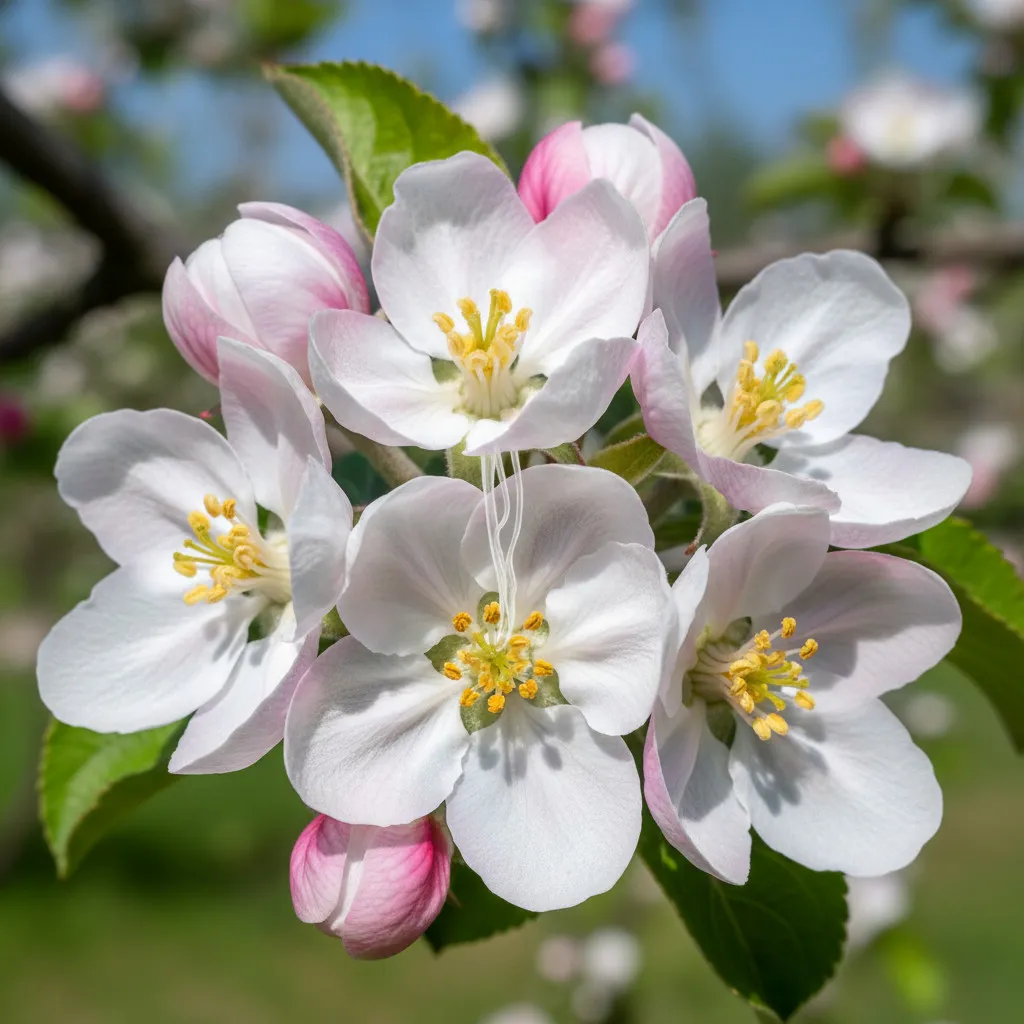
Apple ovaries are typically divided into five chambers, each containing two ovules available for pollination. A fully pollinated apple will contain 10 seeds; however, a minimum of 6 to 7 seeds per apple is needed for good fruit development. Apples that do not receive adequate pollination can become malformed as they develop or result in early fruit drop, significantly reducing your harvest quality and quantity.
The average blossoming period for apples when pollination can take place is approximately 9 days. Cool weather during bloom will extend this period, whereas warmer weather will shorten it. Understanding this timing is crucial for planning your orchard and ensuring successful pollination.
The Role of Pollinators in Apple Production
Cross-pollination between apple trees primarily occurs with the help of industrious honeybees and other beneficial insects. While wind can assist in pollen transfer, bees are by far the most important natural carriers of pollen for apple trees.
Key pollinators for apple trees include:
- Honeybees – The most significant and commonly managed pollinators for apple trees
- Bumblebees – Effective pollinators that can work in cooler temperatures
- Mason bees – Solitary bees that nest in aggregations and are excellent orchard pollinators
- Other insects – Flies, beetles, butterflies, moths, and wasps also contribute to pollination
Honeybees do their best work in balmy temperatures of about 65 degrees Fahrenheit. A single honeybee may visit 5,000 flowers a day, making them incredibly efficient at transferring pollen between trees. However, chilly weather, rain, or strong winds may keep bees inside their hives, resulting in poor apple tree pollination during critical bloom periods.
Home plantings of fruit crops generally have enough wild bees for adequate pollination. In commercial orchards, however, beehives are typically placed in the orchard when trees are in bloom to enhance pollination and fruit set, with at least one hive per acre recommended for semidwarf trees.
Self-Pollinating vs. Cross-Pollinating Apple Trees
One of the most common misconceptions about apple trees is that they can produce fruit on their own. The truth is more nuanced and understanding the distinction between self-pollinating and cross-pollinating varieties is essential for orchard success.
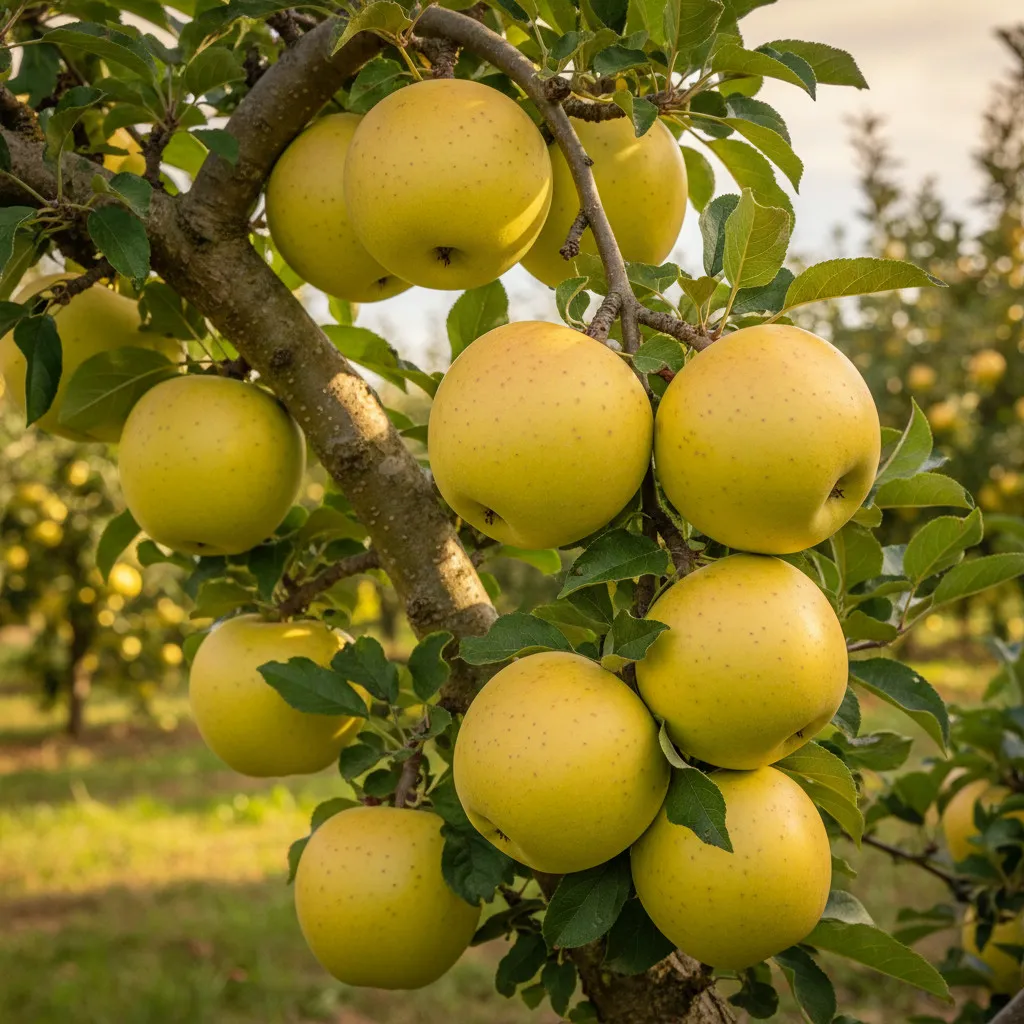
Self-pollinating apple trees, such as Golden Delicious, are capable of producing some fruit on their own. These varieties can pollinate themselves, which is beneficial for smaller spaces or gardens with room for only one tree. However, even self-pollinating varieties benefit significantly from cross-pollination, resulting in improved fruit set, larger apples, and better overall quality.
Cross-pollinating varieties require pollen from a different apple tree variety to produce fruit. This represents the vast majority of apple trees available. Effective cross-pollination requires compatible varieties that bloom around the same time. For instance, Gala apples can be effectively pollinated by varieties like Fuji, Granny Smith, or Honeycrisp.
Important Note: Apple trees are often incompatible with their direct relatives. The cross-pollination of closely related varieties, or parent-offspring pairs, is generally unsuccessful. When selecting varieties for cross-pollination, choose trees that are not closely genetically related to maximize your chances of successful fruit set.
Apple Tree Flowering Groups and Bloom Times
Different apple varieties bloom at different times during the spring season, and matching these bloom times is one of the most critical factors in achieving successful cross-pollination.
Early Season Bloomers (Flowering Group 1)
Early season bloomers are the first apple trees to flower in spring, typically opening their blossoms before other varieties. These trees require pairing with other early bloomers or early-mid season varieties for effective cross-pollination.
Popular early season blooming varieties include:
- Anna – An excellent low-chill variety ideal for warmer climates
- Ein Shemer – Another low-chill option that pairs well with Anna
- Dorsett Golden – Early blooming with sweet, yellow fruit
- Yellow Transparent – A heritage variety known for early ripening
- Gravenstein – Note: This is a triploid variety requiring special consideration
Early bloomers are particularly vulnerable to late spring frosts, which can damage blossoms and reduce fruit set. If your garden is prone to snap frosts late in spring, consider opting for varieties that bloom later to reduce the risk of frost damage to your prospects.
When planning for early bloomers, ensure you have at least two compatible varieties that flower simultaneously. These varieties work best when planted within 50-100 feet of each other to allow pollinators easy access between trees.
Mid-Season Bloomers (Flowering Groups 2-3)
Mid-season bloomers offer the most flexibility for cross-pollination because they can overlap with both early and late flowering varieties. This makes them excellent choices for orchards with diverse variety selections.
Early-Mid Season Bloomers (Group 2) include:
- McIntosh – Classic apple with excellent flavor
- Liberty – Disease-resistant variety ideal for organic growing
- Cortland – Great for both fresh eating and cooking
- Honeycrisp – Popular variety known for exceptional crunch and sweetness
Late-Mid Season Bloomers (Group 3) include:
- Fuji – Sweet, crisp apples with excellent storage qualities
- Freedom – Disease-resistant variety with good flavor
- Arkansas Black – Note: This is a triploid variety
- Wolf River – Large cooking apple
- Granny Smith – Tart, green apples perfect for baking
Mid-season varieties are often the backbone of home orchards because they provide reliable overlap with multiple flowering groups. A Honeycrisp apple tree, for example, can be effectively pollinated by McIntosh, Golden Delicious, Granny Smith, Empire, or Jonathan varieties, giving you numerous options for companion planting.
Late Season Bloomers (Flowering Group 4)
Late season bloomers are among the last apple trees to flower in spring. They require other late blooming varieties or late-mid season partners for effective pollination.
Common late season blooming varieties include:
- Enterprise – Excellent disease resistance
- Gala – Sweet, mild flavor popular for fresh eating
- Golden Delicious – Versatile, self-fertile but benefits from partners
- Sansa – Early ripening with good flavor
- Stayman Winesap – Note: This is a triploid variety
Late bloomers have the advantage of often escaping late spring frosts, but they must be carefully matched with compatible partners. Using the wrong combination—such as pairing a late bloomer with an early variety—will result in no fruit production because the flowers won’t be open at the same time for pollen transfer.
Why Bloom Time Synchronization Matters
Successful pollination absolutely requires bloom time synchronization between different apple tree varieties. If one tree’s blossoms are already gone before another tree’s pollen is ready, there’s no chance for fruit set. This is why using a pollination chart or bloom time guide is essential when planning your orchard.
Here’s how bloom time overlap works for pollination:
| Bloom Time | Compatible Pollination Partners |
|---|---|
| Early | Early to Early-Mid Varieties |
| Early-Mid | Early, Early-Mid, and Mid Varieties |
| Mid | Early-Mid, Mid, and Mid-Late Varieties |
| Mid-Late | Mid and Late Varieties |
| Late | Mid-Late and Late Varieties |
Exceptionally warm springs can cause many apple varieties to bloom closer together than usual, which can actually improve pollination success in some cases. However, planning for typical conditions ensures reliable results year after year.
Factors Affecting Apple Pollination Compatibility
Beyond bloom timing, several other factors influence whether two apple varieties can successfully cross-pollinate. Understanding these elements helps you make informed decisions when selecting trees for your orchard.
Bloom Overlap Requirements
For effective pollination, the bloom times of different varieties must overlap sufficiently to allow pollen transfer while flowers are receptive. Apple varieties are categorized into flowering groups (typically 1-6, depending on the classification system used), and varieties in the same flowering group will have full overlap.
Key considerations for bloom overlap:
- Same group varieties – Provide complete bloom overlap and reliable pollination
- Adjacent group varieties – Offer partial overlap, which is usually sufficient for pollination
- Non-adjacent groups – May have little to no overlap and should not be relied upon as sole pollination partners
The king blossom—the largest and first flower to open in each cluster—is the most important for fruit set. To attain the best fruit set on apple trees, this king blossom must be pollinated. Therefore, ensuring that pollinizer varieties are blooming when these crucial flowers open is essential for maximum harvest.
In backyard plantings, two semidwarf apple varieties that bloom at the same time should be planted within 50 feet of each other. Two dwarf apple varieties with similar bloom periods should be spaced less than 20 feet apart to ensure the transfer of pollen between trees.
Pollen Viability and Genetic Compatibility
Not all apple pollen is created equal. Some varieties produce sterile pollen, while others are genetically incompatible with certain partners, making variety selection more complex than simply matching bloom times.
Factors affecting pollen viability and compatibility:
- Sterile pollen producers – Some varieties simply cannot provide viable pollen for other trees
- Genetic incompatibility groups – Even unrelated varieties may belong to the same incompatibility group
- Close family relationships – Parent-offspring pairs and close relatives often fail to cross-pollinate effectively
- Pollen quantity – Some varieties produce lower amounts of pollen, making them less effective pollinizers
For example, Honeycrisp, which is a hybrid variety, should not be cross-pollinated with its parent varieties due to genetic similarities that reduce pollination success. When using pollination compatibility charts, look for notes about genetic relationships and incompatibility groups to avoid pairing varieties that won’t work together.
Varieties known to produce sterile or poor-quality pollen include:
- Baldwin
- King
- Gravenstein
- Mutsu
- Jonagold
- Winesap
These varieties should never be used as the primary pollinizer in your orchard, though they can still produce excellent fruit when properly pollinated by compatible varieties.
Understanding Triploid Apple Varieties
Triploid apple varieties present a unique challenge for orchard planning. These varieties have three sets of chromosomes instead of the usual two, which makes their pollen sterile. They cannot pollinate other apple trees, nor can they be pollinated by their own pollen.
Common triploid apple varieties include:
- Gravenstein – Excellent cooking apple with unique flavor
- Jonagold – Popular variety combining Jonathan and Golden Delicious traits
- Arkansas Black – Deep red, almost purple apple
- Ashmead’s Kernel – Heritage variety prized by apple enthusiasts
- Baldwin – Traditional New England variety
- Belle de Boskoop – European variety with complex flavor
- Mutsu (Crispin) – Large, sweet-tart apples
- Stayman Winesap – Deep red with wine-like flavor
- Spigold – Cross between Spy and Golden Delicious
If you want to grow triploid varieties, follow these guidelines:
- Plant at least two other non-triploid apple varieties nearby
- Ensure both companion varieties bloom at the same time as the triploid
- The two companion varieties should also be able to pollinate each other
- Consider using a crabapple tree as one of the pollinizers
Despite their pollination challenges, triploid varieties are often valued for their unique and exceptional fruit qualities. With proper planning in orchard design—ensuring that two compatible diploid varieties are planted nearby—you can successfully grow these premium apples.
Choosing the Best Pollination Partners for Your Apple Trees
Selecting the right pollination partners is perhaps the most important decision you’ll make when planning your apple orchard. The right combinations ensure abundant harvests, while poor choices can leave you with beautiful trees but no fruit.
Compatible Apple Variety Pairings
When selecting apple trees to plant together, consider both bloom timing and genetic compatibility. Here are proven combinations that work well together:
Reliable pollination partnerships:
- Granny Smith + Gala – Complementary bloom times with excellent results
- Fuji + Gravenstein – Fuji works well with early bloomers
- Golden Delicious + Honeycrisp – Classic pairing for home orchards
- Honeycrisp + Red Delicious – Both produce high-quality fruit
- McIntosh + Cortland – Traditional New England combination
- Jonathan + Golden Delicious – Long-established successful pairing
When selecting pollination partners, consider these factors:
- Bloom time overlap – Choose varieties from the same or adjacent flowering groups
- Climate suitability – Both varieties should thrive in your USDA hardiness zone
- Purpose – Consider whether you want eating apples, cooking apples, cider apples, or a mix
- Disease resistance – Pairing disease-resistant varieties reduces maintenance needs
- Harvest timing – Selecting varieties that ripen at different times extends your harvest season
For home orchards with limited space, prioritize varieties that serve as good universal pollinizers—those that produce abundant, high-quality pollen and have extended bloom periods. Golden Delicious, despite being partially self-fertile, is an excellent pollinizer for many other varieties.
Using Crabapple Trees as Pollinators
Crabapple trees are exceptional pollinators for apple orchards and deserve special consideration in your planning. They have become popular pollen donors because they generally have longer bloom times than standard apples and are easily cared for.
Benefits of crabapple pollinizers:
- Extended bloom period – Increases the window for successful pollination
- Abundant pollen production – Provides reliable pollen for multiple varieties
- Ornamental value – Beautiful spring blossoms add aesthetic appeal
- Wildlife attraction – Small fruit provides food for birds and beneficial insects
- Disease resistance – Many varieties offer excellent resistance to common apple diseases
Recommended crabapple varieties for pollination:
| Variety | Bloom Time | Special Notes |
|---|---|---|
| Dolgo | Early-Mid | Reliable pollinator, good for jelly |
| Whitney | Mid | Excellent pollen producer |
| Manchurian | Early-Mid | Note: Linked to certain postharvest rots |
| Wickson | Mid | Classic orchard crabapple |
| Snowdrift | Mid-Late | Good for late-blooming varieties |
| Mt. Evereste™ | Early-Mid | Scab resistant |
| Crimson Gold | Mid-Late | Beautiful ornamental qualities |
Professional apple growers routinely plant crabapples systematically throughout their orchards to ensure complete pollination coverage. For home gardeners, adding even a single well-chosen crabapple can dramatically improve pollination success across multiple apple varieties.
Varieties That Cannot Be Used as Pollinizers
Just as important as knowing good pollinizers is understanding which varieties should not be relied upon for pollination duties. These trees can still produce excellent fruit when properly pollinated, but they cannot serve as the pollen source for other trees.
Apple varieties that make poor or unusable pollinizers:
- Baldwin – Triploid with sterile pollen
- Gravenstein – Triploid variety
- Jonagold – Triploid with sterile pollen
- King – Poor pollen viability
- Mutsu (Crispin) – Triploid variety
- Winesap – Triploid with sterile pollen
- Stayman – Triploid variety
- Rhode Island Greening – Some reports of poor pollen production
Additionally, closely related cultivars such as McIntosh, Early McIntosh, Cortland, and Macoun do not cross-pollinate well with each other. Spur-type varieties also do not effectively pollinate their parent varieties.
If you’re growing any of these varieties, ensure you have:
- At least two other compatible diploid varieties planted nearby
- Varieties that bloom at the same time
- The two pollinizers should also be compatible with each other
Optimal Spacing and Orchard Design for Pollination
Proper tree placement and orchard layout significantly impact pollination efficiency. Even with perfectly compatible varieties, poor spacing can result in disappointing fruit set.
How Close Apple Trees Need to Be
Apple trees should ideally be planted within 50 to 100 feet of each other for effective cross-pollination. This distance ensures that bees and other pollinators can easily transfer pollen between trees without traveling too far from their normal foraging patterns.
Recommended spacing by tree size:
| Tree Type | Spacing Between Trees | Mature Height |
|---|---|---|
| Standard | 35 x 35 feet | 20-25 feet |
| Semi-Dwarf | 12 x 12 feet | 12-15 feet |
| Dwarf | 10 x 10 feet | 8-10 feet |
Critical spacing considerations:
- Maximum pollination distance – Trees placed more than 100 feet away may not receive adequate pollination
- Bee foraging patterns – Honeybees tend to stay within a smaller radius of their hive when foraging
- Line of sight – Ensure no major obstructions block pollinator flight paths between trees
- Wind patterns – Consider how local wind affects pollen movement
For urban and suburban gardens, you may benefit from neighboring apple or crabapple trees. Within city limits, most apple and pear trees will be pollinated by insects carrying pollen from neighbors’ trees, effectively extending your pollination network beyond your property boundaries.
Orchard Layout Strategies
The design and layout of an orchard significantly influence pollination efficiency. Strategic planning ensures every tree has access to compatible pollen.
Commercial orchard strategies that work for home growers:
- Row planning – Plant a row of pollinizer trees for every four rows of your main variety
- Staggered placement – If pollinizers are within rows, offset them in adjacent rows to distribute pollen evenly
- Cluster planting – Group compatible varieties together rather than scattering them across your property
Alternative layout approaches:
- Mixed rows – Alternate varieties within each row for maximum cross-pollination potential
- Central pollinizer – Place a crabapple or universal pollinizer in the center of your orchard
- Border planting – Use pollinizers as border trees surrounding your main varieties
For high-density plantings of dwarf trees (5-6 feet between trees within the row), apple or crabapple pollinizers may be planted between eight to ten trees of another variety in the row. This ensures that every tree is within easy pollinator access of compatible pollen.
Solutions for Small Gardens and Limited Spaces
Limited space shouldn’t prevent you from enjoying homegrown apples. Several innovative solutions allow successful apple growing in compact areas.
Space-saving pollination solutions:
-
Combination or “family” trees – Multiple varieties grafted onto one rootstock provide internal cross-pollination on a single tree. These clever solutions save space and guarantee pollination.
-
Blossom bouquets – For solitary trees lacking nearby pollinators, hang branches of fresh, open blossoms from another apple variety in buckets of water from the tree’s branches. Replace branches regularly to ensure fresh pollen throughout the blooming period.
-
Grafting additional varieties – Top-work or graft another apple variety onto your existing tree by cleft-grafting 6-8 inch sections of branches from one variety onto terminal branches of another.
-
Columnar apple trees – These narrow, upright trees allow planting multiple varieties in minimal space while maintaining adequate pollination.
-
Container growing – Dwarf and mini-dwarf varieties can be grown in containers and moved close together during bloom time.
When choosing compact solutions, remember:
- Combination trees should have varieties with similar vigor to prevent one from dominating
- Grafted branches take time to establish and produce sufficient pollen
- Container trees require more attention to watering and fertilization
- Even small trees benefit from pollinator-attracting companion plants
Supporting Pollinator Health in Your Orchard
Effective pollination relies heavily on healthy, active pollinators. Creating an environment that attracts and supports bees and other beneficial insects is as important as selecting the right tree varieties.
Attracting and Managing Bees
Bees are the workhorses of apple pollination, and fostering their presence should be a priority for any orchard owner.
Strategies for attracting bees:
- Plant native flowering plants – Provide food sources throughout the growing season
- Add pollinator-friendly companion plants – Lavender, borage, clover, and wildflowers attract pollinators and support better fruit set
- Avoid pesticide use during bloom – This is critical for pollinator survival
- Provide water sources – Shallow water with landing stones helps bees stay hydrated
- Create nesting habitats – Mason bee houses, well-drained soil areas, and rotting logs support native bee populations
For serious orchardists, consider managed pollination:
-
Honeybee hives – In commercial orchards, a minimum of one hive per acre of growing apple trees is recommended. For home gardens, local wild bees usually suffice.
-
Mason bees – These solitary bees nest in pre-drilled wood blocks or paper straws and are excellent apple pollinators. You can build up populations by providing nesting materials each season.
-
Bumblebees – Available from commercial suppliers, bumblebees are particularly effective in cooler weather when honeybees are less active.
Timing for managed hives:
Beehives should be placed in orchards as the king flowers (the first and largest blossoms in each cluster) open. If hives arrive before this time, bees may forage on other plants instead of apple blossoms. Remove hives after flowering ends to prevent exposure to post-bloom pesticide applications.
Creating a Pollinator-Friendly Environment
Beyond attracting bees, your orchard environment should support their long-term health and activity.
Environmental enhancements for pollinators:
- Diverse plantings – Mix flowering plants that bloom before, during, and after apple blossoms
- Windbreaks – Natural hedgerows protect both trees and pollinators from damaging winds
- Minimal lawn areas – Replace grass with flowering ground covers when possible
- Leave some wild areas – Undisturbed patches provide nesting sites for native bees
- Mow dandelions before bloom – This encourages bees to focus on apple blossoms instead
Companion plants that benefit apple tree pollination:
| Plant | Benefit |
|---|---|
| Comfrey | Attracts pollinators, improves soil |
| Borage | Excellent bee magnet |
| Lavender | Long bloom period, attracts many pollinators |
| Wildflower mixes | Diverse food sources |
| Clover | Nitrogen-fixing ground cover |
| Marigolds | Bloom coincides with many fruit trees |
| Yarrow | Attracts beneficial insects |
Avoid planting apple trees near black walnut trees, as their roots release juglone, a substance toxic to apples. This also protects the beneficial insects that support pollination.
Best Practices for Pesticide Use
Pesticides, particularly insecticides, can be harmful to pollinators. Responsible management protects both your trees and the bees that pollinate them.
Guidelines for pollinator-safe pesticide use:
- Never spray during bloom – Most pesticide labels advise against use when flowers are open
- Choose less toxic options – Select pesticides that are less harmful to bees when treatment is necessary
- Time applications carefully – Apply pesticides at dusk or during the night when bees are least active
- Allow drying time – Ensure products dry completely before bees return to flowers
- Consider drift – Be aware that pesticides can drift onto non-crop flowering plants in adjacent habitat
Alternative pest management strategies:
- Integrated Pest Management (IPM) – Use natural predators, mechanical controls, and targeted treatments
- Organic approved products – Many organic options are less harmful to beneficial insects
- Cultural practices – Good pruning, sanitation, and variety selection reduce pest pressure
- Monitoring – Regular scouting helps catch problems early when less intervention is needed
Carbaryl (Sevin) and similar broad-spectrum insecticides are particularly toxic to bees and should never be used during the bloom period. If treatments are necessary, choose products with shorter residual activity and apply them when pollinators are inactive.
Overcoming Common Pollination Challenges
Even well-planned orchards can face pollination challenges. Understanding potential problems and their solutions helps ensure consistent harvests.
Weather-Related Pollination Problems
Weather during bloom significantly impacts pollination success. Learning to work with weather patterns improves your chances of good fruit set.
Common weather challenges:
- Cold temperatures – Bees work best above 65°F and become inactive in cold weather
- Rain during bloom – Wet conditions can wash away pollen and keep bees in their hives
- High winds – Strong winds prevent bees from flying and can damage delicate blossoms
- Late frosts – Frost damage to open flowers eliminates pollination opportunities
Strategies for weather-related challenges:
- Select appropriate varieties – Choose varieties suited to your climate that bloom after typical last frost dates
- Create microclimate protections – Windbreaks, south-facing slopes, and protective structures moderate temperature extremes
- Extend bloom windows – Plant varieties with overlapping but slightly staggered bloom times to catch favorable weather
- Consider supplemental heating – In commercial settings, some growers use wind machines or heaters to protect against frost
Unfortunately, when weather conditions are poor during flowering, there’s often little to be done except hope for better luck next year. However, having multiple varieties with overlapping bloom times increases your chances of catching a window of favorable pollinating weather.
Dealing with Sterile Pollen Varieties
If you’re committed to growing triploid or other sterile-pollen varieties, strategic planning ensures successful pollination despite their limitations.
Management strategies for triploid varieties:
- Plant three compatible varieties – The triploid plus two diploid varieties that can pollinate each other
- Position strategically – Place the triploid between the two pollinizers for optimal pollen access
- Use crabapples – A flowering crabapple can serve as one of your two pollinizers
- Ensure bloom overlap – All three varieties must flower simultaneously
Example planting plan for Jonagold (triploid):
- Jonagold (your desired variety – cannot pollinate others)
- Golden Delicious (diploid – pollinates Jonagold and McIntosh)
- McIntosh (diploid – pollinates Jonagold and Golden Delicious)
This arrangement ensures Jonagold receives pollen while the two diploid varieties successfully pollinate each other, giving you three productive trees with diverse fruit.
Hand Pollination Techniques
When natural pollinators are scarce or environmental conditions are unfavorable, hand pollination provides a reliable backup method.
Hand pollination methods:
-
Paintbrush or cotton swab technique:
- Gently collect pollen from the anthers of one flower
- Transfer the pollen to the stigma of flowers on a different variety
- Work during mid-morning on dry, sunny days when flowers are fully open
- Visit multiple flowers to maximize pollination success
-
Flower cluster transfer:
- Pick entire flower clusters from a compatible variety
- Gently touch the anthers to the stigmas of target flowers
- This method is faster for covering more flowers
-
Blossom branch technique (for solitary trees):
- Cut branches with fresh, open blossoms from a compatible variety
- Place branches in buckets of water
- Hang buckets in your tree’s canopy
- Replace branches every few days to ensure fresh pollen
Best timing for hand pollination:
- Pollinate when flowers are fully open (typically mid-morning)
- Choose dry, sunny days when possible
- Target the king blossom (largest, first-opening flower) in each cluster
- Continue for several days to catch flowers as they open
Hand pollination requires careful attention and time but can significantly improve fruit set in challenging conditions. This technique is particularly valuable for home gardeners with limited trees or those growing in areas with depleted pollinator populations.
Essential Care Tips for Healthy Apple Trees
Healthy trees produce better flowers and more successful pollination. Proper care throughout the growing season supports robust bloom and fruit production.
Watering and Fertilization Requirements
Adequate water and nutrients fuel the flower production that makes pollination possible.
Watering guidelines:
- Provide consistent moisture – Apple trees need approximately one inch of water per week over the root zone
- Water deeply, not frequently – Deep watering encourages deep root growth and drought tolerance
- Focus on the root zone – Water at the drip line and beyond where feeder roots grow
- Mulch to retain moisture – A 2-4 inch layer of organic mulch conserves water and improves soil
- Avoid waterlogging – Well-drained soil prevents root rot and other moisture-related problems
Fertilization best practices:
- Use balanced fertilizer – Apply an all-purpose or fruit tree-specific fertilizer
- Time applications correctly – Fertilize from late winter through early summer; avoid late-season fertilization
- Monitor tree growth – If your tree produces about one foot of new growth annually with healthy foliage, additional fertilization may be unnecessary
- Add organic matter – A couple inches of well-rotted compost on the root zone provides steady nutrients
- Avoid over-fertilization – Excess nitrogen can reduce flowering and increase disease susceptibility
Apple trees in optimal health produce more abundant flowers with higher-quality pollen, directly improving pollination success and fruit set.
Pruning for Optimal Fruit Production
Proper pruning maintains tree health, improves air circulation, and encourages the development of quality fruit-producing wood.
Pruning fundamentals:
- Prune during dormancy – Late winter pruning while trees are dormant reduces stress and disease transmission
- Remove dead and diseased wood – This improves overall tree health and reduces pest pressure
- Thin crowded branches – Good air circulation reduces disease and allows sunlight penetration
- Maintain tree structure – Open centers or modified central leader forms work well for most apple varieties
- Balance vegetative and fruiting growth – Excessive vegetative growth can reduce flowering
Pruning impacts on pollination:
- Well-pruned trees produce more accessible flowers for pollinators
- Improved air circulation helps pollen movement
- Healthy flowering wood results from proper pruning practices
- Thinning allows light penetration that stimulates flower bud formation
Avoid heavy pruning in a single season, as this can trigger excessive vegetative growth at the expense of fruit production. Instead, make moderate corrections annually to maintain tree form and productivity.
Common Pests and Diseases to Watch For
Pest and disease pressure can reduce flowering, damage pollinator populations, and decrease fruit set. Proactive management protects both your trees and your harvest.
Common apple tree problems:
| Problem | Symptoms | Control Methods |
|---|---|---|
| Apple Scab | Black-brown blotches on leaves and fruit | Disease-resistant varieties, fungicides, sanitation |
| Powdery Mildew | White powdery coating on leaves and shoots | Pruning for airflow, fungicides, resistant varieties |
| Fire Blight | Shoots wilt and turn black, leaves remain attached | Prune infected wood, copper sprays, resistant varieties |
| Codling Moth | Worms in fruit with tunnels and frass | Organic insecticides, pheromone traps, sanitation |
| Apple Maggot | Tunneled fruit with small maggots | Sticky traps, control bags, fall cleanup |
| Aphids | Distorted leaves, sticky honeydew | Beneficial insects, water sprays, insecticidal soap |
Integrated management approach:
- Choose disease-resistant varieties – Liberty, Enterprise, and Freedom offer excellent disease resistance
- Practice good sanitation – Remove fallen fruit and leaves to break disease cycles
- Monitor regularly – Early detection allows intervention before problems spread
- Protect pollinators – Time any necessary treatments to avoid harming bees
- Maintain tree health – Healthy trees better resist pest and disease pressure
Remember that many pest control measures can harm beneficial insects. Always prioritize pollinator safety, especially during bloom periods when bees are most active in your orchard.
Key Takeaways
Successfully growing apple trees that produce abundant, high-quality fruit requires understanding and implementing proper cross-pollination practices. Here’s a summary of the essential principles covered in this guide:
Pollination fundamentals:
- Most apple trees require cross-pollination from a different compatible variety
- Bees are the primary pollinators—support their health and presence in your orchard
- Even self-fertile varieties benefit from cross-pollination with improved fruit set and quality
Variety selection principles:
- Match varieties by bloom time (flowering group) for effective pollination
- Avoid pairing closely related varieties or those in the same genetic incompatibility group
- Triploid varieties require two other compatible diploid trees for pollination
- Crabapples make excellent universal pollinizers for diverse orchards
Spacing and design essentials:
- Plant compatible varieties within 50-100 feet of each other
- Consider combination trees or grafting for limited spaces
- Strategic orchard layout maximizes pollinator efficiency
Pollinator support strategies:
- Create a pollinator-friendly environment with diverse flowering plants
- Never apply pesticides during bloom
- Consider managed pollinators for large plantings
Ongoing care requirements:
- Maintain tree health through proper watering, fertilization, and pruning
- Monitor for pests and diseases that can reduce flowering
- Practice integrated pest management that protects beneficial insects
By applying these principles, you’ll create the conditions necessary for successful apple tree cross-pollination and enjoy bountiful harvests for years to come. Whether you’re planting your first dwarf apple tree on a small patio or designing a full-scale home orchard, understanding pollination is the foundation of fruit-growing success.
Start by assessing your space and selecting compatible varieties that suit your climate and taste preferences. Plant with proper spacing, support pollinator populations, and provide consistent care throughout the growing season. With patience and attention to these fundamentals, you’ll soon be enjoying the incomparable satisfaction of biting into crisp, flavorful apples grown in your own backyard.