Table of Contents
- How Cold Can Orange Trees Tolerate: Complete Growing and Care Guide
- Understanding Orange Tree Cold Tolerance
- Cold Hardiness by Orange Variety
- Critical Temperature Thresholds: What You Need to Know
- Factors That Affect Orange Tree Cold Tolerance
- Protecting Orange Trees from Cold Weather
- Optimal Growing Conditions for Orange Trees
- Essential Orange Tree Care Practices
- Site Selection and Planting Orange Trees
- Final Words: Growing Oranges Successfully in Your Climate
How Cold Can Orange Trees Tolerate: Complete Growing and Care Guide
Picture this: You’re standing in your backyard on a crisp winter morning, admiring your orange tree laden with bright, sun-kissed fruit. But then the weather forecast predicts temperatures dropping into the 20s tonight. Your heart sinks. Will your tree survive? Will you lose your fruit? These questions haunt citrus growers across temperate regions every winter.
The truth is, orange trees are more resilient than many people think, but they’re also more vulnerable than others realize. Understanding exactly how cold your orange tree can tolerate—and what you can do to protect it—makes the difference between harvesting homegrown oranges for years to come and watching your investment wither after a single cold snap.
Whether you’re a seasoned citrus grower in California, a hopeful gardener in a borderline climate zone, or someone who dreams of growing oranges in containers that can be moved indoors, this comprehensive guide will give you everything you need to know about orange tree cold tolerance and successful cultivation. The good news? With proper knowledge and preparation, you can grow these magnificent trees in more places than you might imagine.
Understanding Orange Tree Cold Tolerance
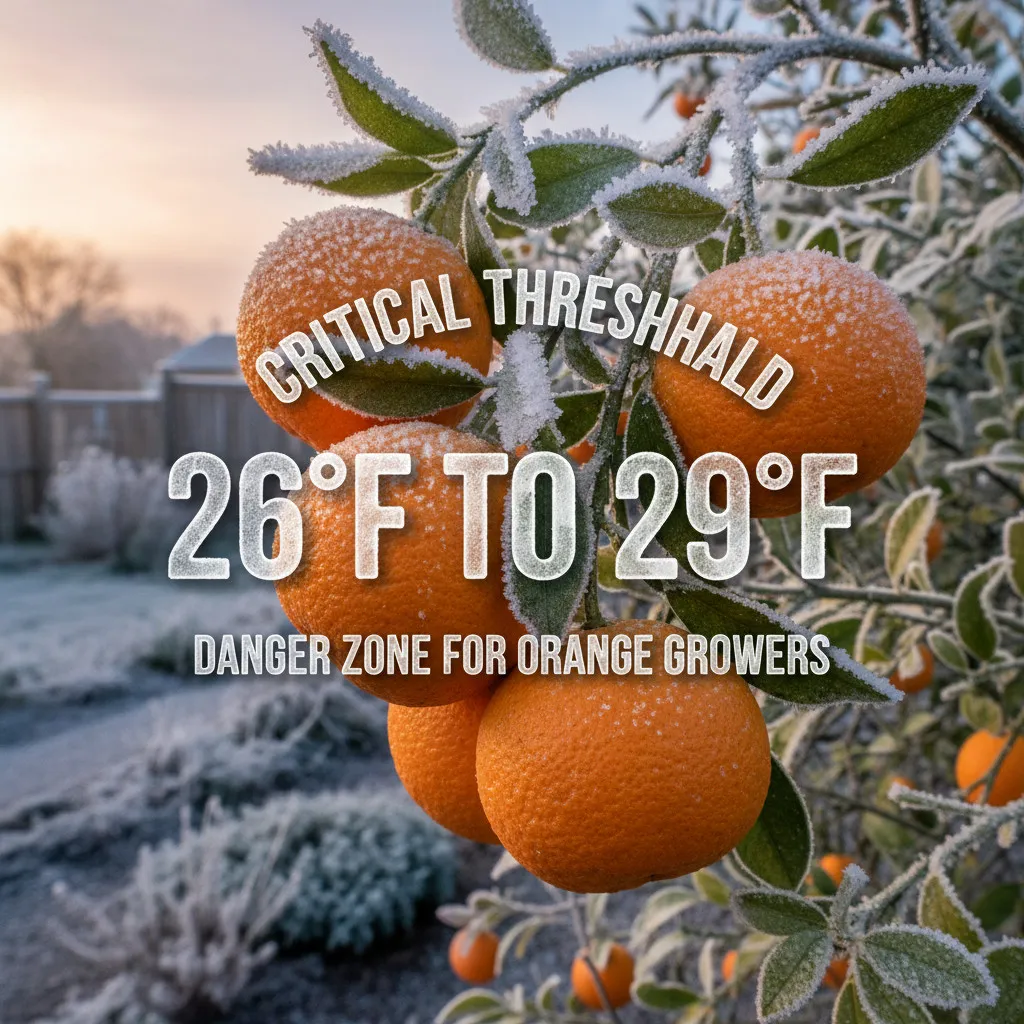
Orange trees have specific temperature thresholds that determine their survival, with tolerance varying based on tree maturity, variety, and exposure duration.
Orange trees (Citrus sinensis) are subtropical plants that thrive in warmth but possess surprising cold hardiness when properly managed. The question “how cold can orange trees tolerate?” doesn’t have a simple one-number answer because multiple variables affect a tree’s ability to withstand freezing temperatures.
Most orange trees can withstand temperatures between 35°F and 55°F without significant issues. The optimal temperature range for growth hovers between 60°F and 90°F, where trees actively photosynthesize, flower, and develop fruit. However, when temperatures drop below these comfort zones, the situation becomes more complex and potentially dangerous for your trees.
The critical threshold that every orange grower must understand is 26°F to 29°F. This temperature range represents the danger zone where fruit damage begins to occur. Green, unripe oranges start experiencing damage at approximately 28.5°F to 29.5°F, while fully ripe oranges can tolerate slightly lower temperatures, down to about 27°F to 28°F, before freezing occurs. Exposure to these temperatures for more than two hours typically results in fruit quality deterioration, including loss of vitamin C content and development of bitter flavors.
For the tree itself, the damage threshold is different. Orange trees can generally survive brief exposure to temperatures as low as 20°F, though this will likely result in significant leaf drop and potential wood damage. Extended exposure—defined as 24 to 36 hours below freezing—can cause severe structural damage to branches and the trunk. If temperatures plummet to 10°F and remain there for 10 hours or more, even mature orange trees face life-threatening conditions that can kill them entirely.
What makes cold tolerance even more complicated is that it’s not just about the minimum temperature reached. The duration of exposure, the tree’s health and age, previous cold conditioning, wind speed, humidity levels, and even the time of year all play crucial roles in determining whether your orange tree survives a cold event relatively unscathed or suffers catastrophic damage.
Cold Hardiness by Orange Variety
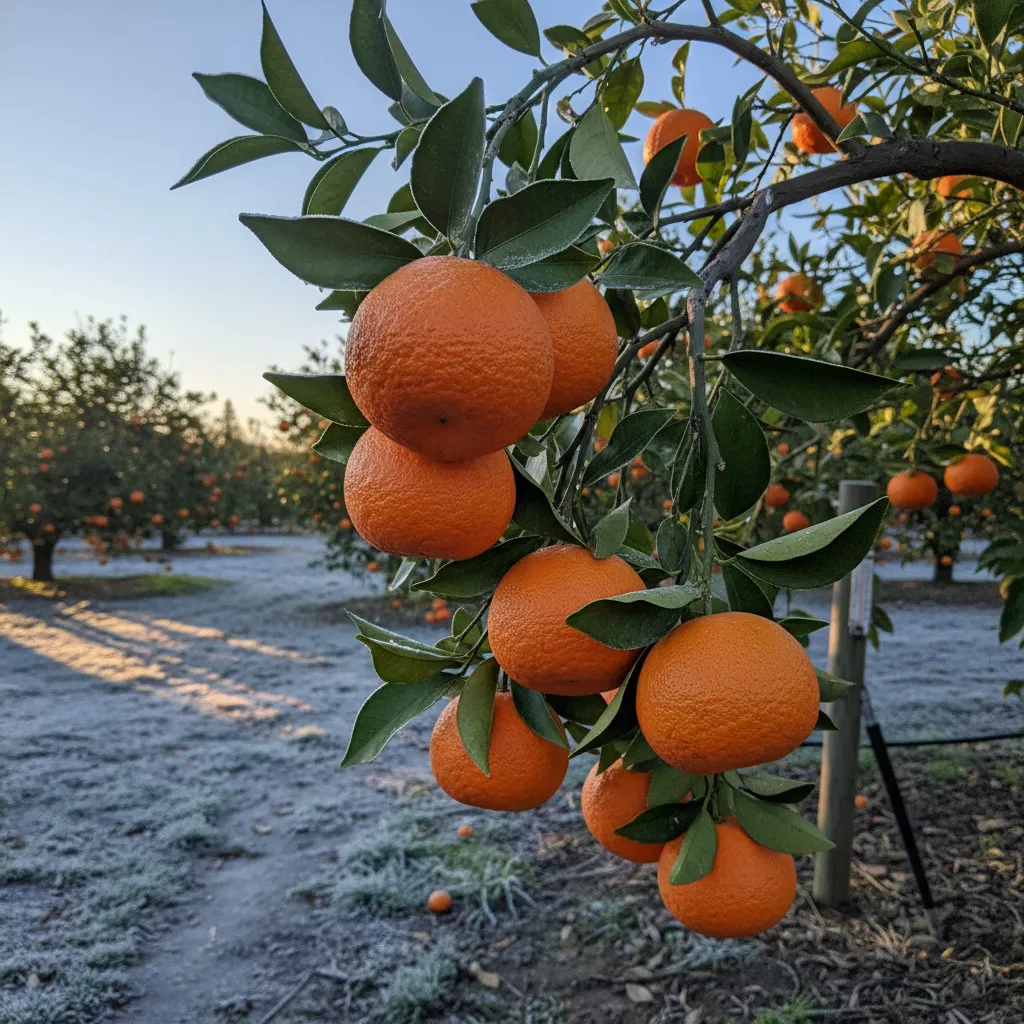
Different orange varieties exhibit varying levels of cold tolerance, with some types capable of surviving much colder conditions than others.
Not all orange trees are created equal when it comes to cold hardiness. Understanding the cold tolerance of different varieties helps you select the right tree for your climate and set realistic expectations for winter protection needs.
Most Cold-Hardy Orange Varieties:
Satsuma mandarins top the list as the most cold-tolerant citrus commonly grown. These remarkable trees can endure temperatures down to 15°F when fully mature without sustaining fatal damage. The ‘Owari Satsuma’ is particularly prized in borderline citrus-growing regions because of this exceptional cold hardiness. Satsumas ripen in winter, and their fruit can withstand cold better than most other citrus varieties, making them ideal for regions where early winter freezes are common.
Kumquats follow closely behind satsumas with cold tolerance down to approximately 15°F to 16°F. Both Nagami and Meiwa kumquat varieties demonstrate impressive resilience. The Calamondin orange, a hybrid popular for indoor growing, can tolerate temperatures around 16°F, making it another excellent choice for cooler climates.
Among true sweet oranges, Navel oranges demonstrate relatively good cold hardiness compared to other varieties. Washington Navel oranges, the most common commercial variety, can tolerate brief periods at 28°F without tree damage, though fruit may be affected. Their thick skin provides some insulation for the flesh inside.
Moderately Cold-Hardy Varieties:
Valencia oranges occupy the middle ground in cold tolerance. These juice oranges can handle temperatures down to approximately 26°F to 28°F for short periods. Valencia trees are slightly more cold-hardy than the fruit they produce, which is fortunate since Valencia oranges ripen in late spring to summer, typically after the danger of hard freezes has passed.
Blood oranges (particularly the Moro variety) show moderate cold tolerance, generally withstanding temperatures around 26°F before experiencing damage. Their unique pigmentation doesn’t significantly affect their cold hardiness compared to standard sweet oranges.
Cara Cara Navel oranges, with their distinctive pink flesh, have cold tolerance similar to standard Navel varieties, making them suitable for USDA hardiness zones 9 through 11.
Least Cold-Hardy Varieties:
Unfortunately, some of the most beloved orange varieties are also the most susceptible to cold damage. Lemons are among the least cold-tolerant citrus, with damage occurring at temperatures around 28°F to 32°F. The popular Meyer Lemon hybrid can tolerate brief exposure to 32°F, but prolonged cold causes significant damage.
Limes are even more sensitive, with Key limes sustaining damage at 32°F and most lime varieties unable to tolerate anything below 30°F to 32°F. This extreme sensitivity makes limes challenging to grow anywhere frost occurs.
Grapefruit trees also rank low on the cold-hardiness scale, with damage beginning around 26°F to 30°F. These trees require consistently warm conditions to produce the sweet, high-quality fruit for which they’re famous.
Critical Temperature Thresholds: What You Need to Know
Understanding the difference between tree damage and fruit damage, and how tree age affects cold tolerance, is essential for effective winter protection strategies.
One of the most important distinctions in orange tree cold tolerance is the difference between fruit damage and tree damage. Many growers make protection decisions based solely on saving the fruit, but understanding both thresholds helps you make informed choices about when and how intensively to protect your trees.
Fruit Damage Thresholds:
Orange fruit is more sensitive to cold than the tree itself. For Navel oranges and most sweet orange varieties, fruit damage begins when temperatures drop to 29°F to 30°F and remain there for two or more hours. The damage manifests as ice crystal formation within the fruit cells, which ruptures cell walls and causes the fruit to become mushy, lose juice quality, and develop off-flavors.
Interestingly, ripe fruit can withstand slightly colder temperatures than green fruit. Fully mature Navel oranges may survive brief exposure to 27°F to 28°F, while half-ripe fruit on the same tree might suffer damage at 28°F to 29°F. This occurs because the sugar content in ripe fruit acts as a natural antifreeze, slightly lowering the freezing point.
Valencia oranges, which typically hang on trees longer than Navels, can tolerate temperatures down to approximately 26°F for brief periods before fruit quality deteriorates. However, commercial growers generally harvest before temperatures reach this level to ensure premium quality.
Tree Damage Thresholds:
The tree structure itself—including leaves, branches, and trunk—can typically tolerate temperatures 1.6°F to 2.2°F lower than those that damage fruit. For most sweet orange varieties, significant leaf damage occurs when temperatures drop to 26°F and remain there for extended periods.
At 20°F to 25°F, expect substantial leaf drop, though the tree may survive if the cold duration is limited. Branches and twigs may experience dieback, but the main trunk and scaffold branches often remain viable. Young, tender growth is most vulnerable and will be the first to show damage.
When temperatures plunge to 10°F to 15°F and stay there for several hours, even mature orange trees face potentially fatal damage. The cambium layer (the growing tissue just under the bark) can freeze, killing portions of the tree or even the entire plant. At these extreme temperatures, the most critical part to protect is the graft union—where the fruiting variety joins the rootstock—because if this area dies, only the rootstock will regrow, leaving you with an undesirable tree.
Age and Tree Maturity:
Young orange trees are significantly more vulnerable to cold than mature specimens. A newly planted orange tree may suffer severe damage at 28°F to 30°F, while a 10-year-old tree in the same location might sail through that temperature with minimal impact. This increased hardiness develops as the tree matures, its wood hardens, and its root system becomes more established and robust.
Trees younger than three years should receive protection whenever temperatures threaten to drop below 32°F. As trees age beyond five years, their cold tolerance increases substantially, and protection becomes necessary only when temperatures approach the critical 26°F to 28°F range.
Dormancy vs. Active Growth:
Orange trees demonstrate greater cold tolerance when dormant. During winter dormancy, which occurs when temperatures consistently stay below 60°F, trees slow their metabolic processes and can withstand colder temperatures. A dormant orange tree might survive 20°F for several hours, while the same tree experiencing those temperatures during active spring growth would suffer catastrophic damage.
This is why late-season frosts (in early spring) and early-season freezes (before trees have fully hardened off in fall) cause more damage than mid-winter cold events. Trees caught with new, tender growth are far more vulnerable than fully dormant specimens.
Factors That Affect Orange Tree Cold Tolerance
Multiple interrelated factors beyond just temperature determine whether an orange tree survives a freeze event, including health status, rootstock genetics, and environmental conditions.
Understanding cold tolerance requires looking beyond the thermometer to consider the complex interplay of factors that determine your tree’s resilience.
Tree Health and Vigor:
A healthy, well-nourished orange tree can withstand cold temperatures that would devastate a stressed or diseased tree. Trees suffering from nutrient deficiencies, drought stress, pest infestations, or disease are significantly more susceptible to cold damage. This is why maintaining optimal tree health throughout the growing season is actually a cold-protection strategy.
Paradoxically, however, excessive vigor can also increase cold sensitivity. Trees that have been over-fertilized, particularly with nitrogen late in the season, tend to produce succulent new growth that’s extremely frost-sensitive. The ideal is a tree that’s healthy but not pushing excessive vegetative growth as winter approaches.
Rootstock Selection:
The rootstock onto which your orange variety is grafted plays a crucial role in cold tolerance. Generally, more vigorous rootstocks produce trees that are more susceptible to freeze damage. Rough lemon, Volkamer lemon, and Carrizo citrange rootstocks are vigorous growers but also more cold-sensitive.
Conversely, slower-growing rootstocks like Cleopatra mandarin, Swingle citrumelo, and especially trifoliate orange provide enhanced cold hardiness. During the devastating freezes of the 1980s in Florida, groves on rough lemon rootstock were killed while adjacent groves on sour orange rootstock recovered from the same temperature exposure.
Trifoliate orange rootstock, in particular, offers the greatest cold protection and is widely used in marginally cold citrus-growing regions. Trees grafted onto trifoliate rootstock can tolerate temperatures several degrees colder than the same variety on other rootstocks.
Acclimation and Cold Hardening:
Orange trees that experience gradual temperature decreases develop significantly better cold tolerance than trees exposed to sudden freezes. This process, called cold acclimation or hardening, allows the tree to adjust its cellular chemistry, reducing water content in tissues and concentrating sugars and other compounds that act as natural antifreeze.
Proper acclimation requires exposure to temperatures in the 40°F to 50°F range for several weeks before hard freezes arrive. Trees grown in regions with gradual seasonal transitions develop better cold hardiness than those in areas with abrupt weather changes. This is one reason why orange trees in northern Florida, where fall arrives gradually, often survive cold better than trees in southern Texas, where “blue norther” cold fronts can drop temperatures 40 degrees in a few hours.
Geographic and Microclimate Factors:
Location makes an enormous difference in cold tolerance outcomes. Orange trees planted on south-facing slopes receive more winter sunlight and stay warmer than those on north-facing slopes. Trees positioned near large bodies of water benefit from the moderating effect of the water, which releases stored heat on cold nights.
Elevation also matters. Cold air is denser than warm air and flows downhill like water, settling in low-lying areas called “frost pockets.” Orange trees planted at higher elevations or on slopes where cold air can drain away suffer less cold damage than trees in valleys or depressions.
Wind speed and humidity further complicate the equation. Cold, dry winds increase evaporative cooling and can make effective temperatures feel much colder than the thermometer indicates. High humidity, conversely, can actually provide some protection by releasing latent heat when moisture in the air condenses on tree surfaces.
Protecting Orange Trees from Cold Weather
Successful cold protection combines passive strategies implemented before winter arrives with active measures deployed when freezes threaten, offering multiple layers of defense.
Protecting orange trees from cold involves both passive methods—decisions and preparations made before winter—and active methods deployed during actual freeze events.
Passive Cold Protection Methods:
1. Strategic Site Selection (200+ words)
The most effective cold protection begins before you even plant your orange tree. Selecting the optimal planting location can mean the difference between a thriving tree and one that struggles to survive each winter.
Choose the warmest microclimates on your property. South-facing locations receive maximum winter sunlight and stay warmer throughout the day, allowing more heat to be stored in the soil and radiated back at night. Southwest-facing sites are particularly advantageous because they capture afternoon sun when temperatures are highest. Plant orange trees near south or southwest-facing walls of buildings, which absorb heat during the day and radiate it back at night, creating a protective heat bubble around your tree. Brick and stone walls are particularly effective heat reservoirs.
Avoid planting in low-lying areas where cold air settles. Even a few feet of elevation difference can result in temperature variations of 5°F to 10°F on cold nights. If your property has slopes, plant citrus on the upper portions where cold air drainage keeps temperatures higher. Position trees where natural windbreaks—such as buildings, fences, or evergreen hedges—provide protection from cold winter winds without creating excessive shade.
Consider proximity to large bodies of water if available. The moderating influence of water can raise temperatures by several crucial degrees during freeze events. Finally, ensure the planting area has excellent air circulation to prevent cold air from becoming trapped around your trees while still providing wind protection—a delicate balance that requires careful observation of your property’s airflow patterns.
2. Soil Management and Preparation
The soil surrounding your orange tree plays a surprising role in cold protection. Well-drained soil is essential, as waterlogged soil conducts heat away from roots and increases freeze damage risk. However, adequately moist soil before a freeze event is beneficial because wet soil conducts and stores more heat than dry soil.
Maintain bare soil in a 4- to 6-foot circle around your tree trunk. While mulch is beneficial for moisture retention and weed suppression during most of the year, it should be removed or pulled back from the tree during winter in freeze-prone areas. Mulch insulates the soil, preventing it from absorbing daytime heat that would otherwise radiate back to the tree canopy at night. Bare, dark soil absorbs maximum solar radiation and releases that stored heat during cold nights.
Keep row middles low or bare. Tall weeds and ground cover reduce solar heat absorption by the soil and can create “cold air dams” that prevent the natural drainage of cold air from your grove or garden.
3. Proper Tree Nutrition
Maintaining optimal tree nutrition throughout the growing season enhances cold tolerance, but timing is crucial. Avoid nitrogen fertilization after August, as nitrogen stimulates new growth that’s extremely frost-sensitive. This tender growth hasn’t had time to harden before cold weather arrives, making it—and potentially the entire tree—more vulnerable to freeze damage.
Instead, focus on balanced nutrition earlier in the season, ensuring trees receive adequate potassium, phosphorus, and micronutrients. Healthy, well-nourished trees with mature, hardened wood demonstrate significantly better cold tolerance than nutrient-deficient or over-fertilized specimens. No single nutrient element makes trees “cold hardy,” but overall nutritional balance is essential for maximum resilience.
Active Cold Protection Methods:
1. Irrigation for Freeze Protection (250+ words)
Low-volume microsprinkler irrigation has become the most widely used active cold-protection method for commercial and home citrus growers. This method works on several principles that create a warmer microclimate around your trees.
First, water itself provides sensible heat. Well water typically emerges at approximately 68°F, and when this relatively warm water contacts cold tree tissues and soil, it transfers heat directly to the tree. Second, and more importantly, when water freezes, it releases latent heat of fusion—approximately 144 BTUs per pound of ice formed. This heat release can maintain tree temperatures above critical thresholds even when air temperatures drop dangerously low.
For effective freeze protection, apply water at rates of approximately 2,000 gallons per acre per hour (or about 0.5 gallons per hour for individual trees). Position microsprinklers 2 to 3 feet from young tree trunks on the north or northwest side so prevailing winds blow water toward the tree. Use 90° or 180° fan-pattern emitters that create uniform water distribution rather than 360° patterns that waste water.
Start irrigation before ice begins forming—typically when temperatures drop to 34°F and are forecast to continue falling. If ice forms in irrigation lines before you start, the system may become plugged and ineffective. Continue irrigation until temperatures rise above 32°F and ice begins melting in the morning.
Critical considerations for irrigation protection include knowing your dew point temperature. When dew points are low (below 20°F), evaporative cooling can actually make trees colder rather than protecting them. Under these conditions, overhead irrigation may cause more harm than good. Additionally, if you rely on electric pumps, have a backup power source, as electrical outages during peak heating demand have caused many freeze-protection failures. Finally, understand that irrigation works best during radiation freezes (calm, clear nights) and may be less effective or even counterproductive during advective freezes (windy, cloudy conditions with arctic air masses).
2. Physical Coverings and Wraps
For young trees and potted specimens, physical coverings provide excellent protection. Frost blankets, old bed sheets, burlap, or even cardboard boxes can be draped over trees when freezes threaten. The key is ensuring covers extend all the way to the ground, creating a tent that traps the heat radiating from the soil.
Never let plastic touch foliage directly, as condensation under plastic can freeze and cause more damage than no protection at all. Use a frame or stakes to keep coverings off leaves and branches. Install coverings in the late afternoon before temperatures drop, and remove them the next day once temperatures rise above freezing to prevent excessive heat buildup.
Tree trunk wraps specifically protect the most critical part of young trees—the graft union and lower trunk. Quality insulating wraps reduce the rate of temperature fall around the trunk, allowing critical areas to stay warmer longer. Research has shown that poorly designed wraps with inadequate insulation can actually make trunk temperatures lower than unprotected trees, so choose wraps with proven insulating properties. Tree wraps are most effective for trees under three years old; older trees typically have sufficiently hardened bark to withstand moderate freezes without trunk protection.
3. Supplemental Heat Sources
While commercial grove heaters burning fossil fuels are rarely used today due to expense and environmental concerns, small-scale growers can use strategically placed outdoor heaters, heat lamps, or even strands of old-fashioned incandescent Christmas lights (not LEDs, which produce minimal heat) to protect individual trees. These methods work best in enclosed or semi-enclosed spaces and for container trees moved to protected locations.
4. Container Growing Advantage
Perhaps the most reliable cold-protection method is growing orange trees in large containers that can be moved to protected locations when freezes threaten. Dwarf and semi-dwarf varieties adapt well to container culture and can be wheeled into garages, greenhouses, sunrooms, or even indoors during cold snaps. This method completely eliminates freeze risk and extends citrus growing into USDA zones 7 and 8, far beyond traditional citrus territory.
Optimal Growing Conditions for Orange Trees
Beyond cold tolerance, orange trees require specific light, soil, water, and humidity conditions to thrive and produce abundant, high-quality fruit.
Climate and Temperature Requirements:
Orange trees grow best in USDA hardiness zones 9 through 11, though container-grown specimens can be cultivated in zone 8 with winter protection. The ideal temperature range for optimal growth and fruit production is 60°F to 90°F. Trees can tolerate brief periods outside this range, but prolonged exposure to temperatures below 50°F or above 100°F stresses them and reduces productivity.
Flower initiation occurs most reliably around 68°F, making stable spring temperatures crucial for good fruit set. Interestingly, some cold exposure actually benefits orange quality—cool winter temperatures intensify the orange color of the rind and increase sugar concentration in the fruit, producing sweeter, more vibrant oranges than those grown in consistently hot climates. This is why Florida and California oranges, grown in regions with distinct but moderate winters, are prized for their superior flavor and appearance.
Light Requirements:
Orange trees are sun-worshippers that require 6 to 8 hours of direct sunlight daily for optimal growth and fruit production. Insufficient light results in weak, spindly growth; reduced flowering and fruiting; smaller fruit; and increased susceptibility to pests and diseases. The more sun your tree receives, the sweeter and more abundant your oranges will be.
For container trees grown indoors or in greenhouses, position them in the sunniest available location—typically a south-facing window. If natural light is inadequate, supplement with full-spectrum LED grow lights positioned 12 to 24 inches above the canopy and operated 12 to 14 hours daily during winter months. The light source should provide at least 2,000 lumens per square foot for adequate fruit production.
Soil Requirements:
Orange trees demand well-draining soil above all else. Standing water and waterlogged soil cause root rot, the number one killer of citrus trees. Ideal soil is loamy or sandy loam with excellent drainage—water should percolate through quickly without pooling.
The soil pH should be slightly acidic to neutral, between 6.0 and 7.0. Trees can tolerate a broader range from 4.5 to 8.0, but nutrient availability is optimized in the 6.0-7.0 range. Highly acidic soils (below pH 5.0) can cause calcium and magnesium deficiencies, while alkaline soils (above pH 8.0) often result in iron chlorosis, evidenced by yellowing leaves with green veins.
For container growing, never use traditional potting mix made from decomposing pine bark. Instead, use mineral-based soil blends containing sand, perlite or rice hulls for drainage, and coco coir or peat moss for moisture retention. Quality citrus soil should also include biochar for nutrient storage and beneficial microbes that protect roots and enhance nutrient uptake. This type of soil provides permanent structure that never decomposes, ensuring long-term root health.
Avoid planting orange trees in locations previously used for citrus, as soil-borne pathogens and toxic compound accumulation can severely impact new trees.
Water and Humidity Requirements:
Orange trees need consistent moisture but absolutely cannot tolerate soggy soil. The watering mantra is “deep and infrequent” rather than “shallow and frequent.” Water when the top 2 inches of soil feel dry to the touch, then water thoroughly until moisture runs from drainage holes.
Established outdoor trees typically need about 1 inch of water per week from rainfall and irrigation combined. During hot weather, this may increase to twice weekly or more. In winter when growth slows, watering frequency should decrease significantly—often to once weekly or even less.
Indoor trees and those in containers require more careful monitoring. Check soil moisture every few days by inserting your finger 2 inches deep. The specific schedule depends on temperature and humidity: in cool conditions (below 60°F), water once weekly; in moderate temperatures (60°F to 90°F) with low humidity, water two to three times weekly; in hot conditions (above 90°F), you may need to water daily, especially for containerized trees.
Orange trees prefer humidity levels between 40% and 60%. Most homes, particularly during winter heating, maintain only 20% to 30% humidity, which stresses trees and encourages spider mite infestations. Increase humidity by placing trees on pebble-filled trays with water (ensuring pots don’t sit in water), misting leaves with room-temperature water (avoid misting during direct sun to prevent leaf burn), grouping plants together, or using room humidifiers near citrus trees.
Essential Orange Tree Care Practices
Proper fertilization, pruning, and ongoing maintenance ensure healthy trees that produce abundant fruit and withstand environmental stresses, including cold weather.
Fertilization:
Orange trees are heavy feeders requiring all 12 essential plant nutrients: nitrogen, phosphorus, potassium, calcium, magnesium, sulfur, iron, zinc, manganese, copper, boron, and molybdenum. Synthetic fertilizers may provide NPK (nitrogen, phosphorus, potassium) but often lack secondary nutrients and micronutrients. Worse, the salts in synthetic fertilizers can kill beneficial soil microbes and burn roots.
Use complete organic fertilizers specifically formulated for citrus, which provide balanced nutrition without harmful salts. Apply fertilizer monthly during the active growing season (spring through early fall) but stop fertilizing when temperatures drop below 40°F or after August in cold-prone regions to avoid stimulating tender growth before winter.
For young trees, start with diluted or half-strength applications, gradually increasing to full strength as trees mature. Apply fertilizer evenly throughout the root zone, extending to the tree’s drip line (the outer edge of the canopy), where feeder roots are most active.
Signs of nitrogen deficiency include overall yellowing of leaves, while yellowing between leaf veins indicates iron deficiency, common in alkaline soils. Adjust your fertilization program based on what your tree tells you through its foliage appearance.
Pruning:
Orange trees require relatively minimal pruning compared to many fruit trees, but strategic pruning improves tree health, manages size, and enhances fruit production. The best time to prune is late winter to early spring, just before new growth begins but after the danger of hard freezes has passed.
Remove dead, damaged, or diseased branches first—the “three D’s” of pruning. These branches waste tree energy and can harbor pests and diseases. Cut crossing or rubbing branches that create wounds where pathogens can enter. Remove water sprouts (vigorous vertical shoots from main branches) and suckers (growth from below the graft union), as these divert energy from fruit production.
For young trees, prune branches less than 12 inches above the ground to create adequate clearance and improve air circulation. Shape trees to develop strong scaffold branches with wide crotch angles that can support heavy fruit loads.
Never remove more than one-third of the canopy in a single pruning session, as excessive pruning stresses trees. For indoor or container trees, light pruning can be done throughout the year to maintain desired size and shape, but major pruning should still occur in late winter.
Always use clean, sharp pruning tools disinfected with rubbing alcohol between cuts to prevent disease transmission.
Pest and Disease Management:
Healthy orange trees with strong root systems naturally resist most pest problems, but vigilance is important. Common pests include aphids, scale insects, spider mites, Asian citrus psyllids, and citrus leafminers.
For soft-bodied insects like aphids, use insecticidal soap or Castile soap spray (2 oz per gallon of water), coating all leaf surfaces including undersides. For scale and mites, micronized sulfur applications (2-3 oz per gallon) effectively control populations while also preventing fungal diseases.
Spider mites thrive in hot, dry conditions, so maintaining adequate humidity for indoor trees helps prevent infestations. Inspect leaves regularly, particularly the undersides, for early pest detection.
Common diseases include citrus canker (small blistering brown spots on leaves and fruit), citrus greening (yellowing leaves, transmitted by psyllids), and various fungal issues. Good cultural practices—proper spacing for air circulation, avoiding overhead watering, removing infected plant parts, and maintaining tree health—prevent most disease problems. Copper-based fungicides treat canker and many fungal issues when applied preventively or at early symptom appearance.
Site Selection and Planting Orange Trees
Proper planting techniques and site selection establish the foundation for healthy, productive orange trees that can better withstand environmental stresses throughout their 30- to 50-year lifespan.
Choosing the Right Variety:
Before planting, select an orange variety appropriate for your climate zone and intended use. For coldest areas (USDA zone 8 with protection, zone 9), choose Satsuma mandarins or kumquats. For zones 9-10, Navel and Valencia oranges perform well. Zone 11 and warmer can support all varieties, including cold-sensitive types like blood oranges and specialty varieties.
Consider whether you want fruit for fresh eating (Navel, Cara Cara, blood oranges) or juicing (Valencia), when you want fruit to ripen (Navels in winter, Valencias in late spring/summer), and how much space you have. Standard trees reach 20-30 feet tall and wide, while dwarf varieties stay under 8-12 feet, making them suitable for containers and small spaces.
When to Plant:
In warm climates (zones 10-11), orange trees can be planted year-round, though spring and fall are ideal. In cooler regions (zones 8-9), plant in spring after the last frost or in early fall (September-October) at least 6 weeks before the first expected freeze. Spring planting allows trees maximum time to establish before their first winter, reducing cold-damage risk.
Container trees can be planted anytime, as they can be moved to protection when needed.
Planting Technique:
Select a planting site with full sun (6-8 hours daily), excellent drainage, and protection from strong winds. Dig a hole twice as wide as the root ball but no deeper—the top of the root ball should sit slightly above ground level (1-2 inches higher) to promote drainage and prevent root rot.
Remove the tree from its container and gently loosen circling roots. Place the tree in the hole, ensuring the graft union (visible as a swollen area on the trunk, usually 4-6 inches above roots) sits several inches above the soil line. If the graft union becomes buried, the scion variety may develop its own roots, negating the rootstock’s benefits, or soil-borne diseases may attack the graft area.
Backfill with native soil (amendments are generally unnecessary and can create drainage issues) and water thoroughly to eliminate air pockets. Create a watering basin around the tree by mounding soil in a 3-foot diameter circle to direct water to the root zone.
Do not mulch immediately after planting. While mulch benefits established trees during most of the year, it should be kept away from the trunk to prevent rot and, in freeze-prone areas, pulled back during winter to allow soil heat absorption.
Space multiple trees 10 feet apart for dwarf varieties, 20 feet apart for standard-size trees. Orange trees are self-fertile and don’t require cross-pollination, but planting multiple trees attracts more pollinators and can increase fruit set.
Container Planting:
For container growing, choose pots at least 16-18 inches wide and deep for young trees, planning to repot into larger containers (eventually 20-30 gallons for mature trees) every 2-4 years. Containers must have multiple drainage holes to prevent waterlogging.
Use mineral-based citrus potting mix rather than standard potting soil. Fill the container, plant at the same depth as for ground planting (graft union above soil), and water thoroughly. Position containers on wheeled plant caddies for easy movement to protected locations during cold weather.
Final Words: Growing Oranges Successfully in Your Climate
Growing orange trees successfully in regions where cold threatens isn’t about fighting nature—it’s about understanding it. When you know exactly how cold your specific variety can tolerate, what factors influence that tolerance, and which protection methods work best for your situation, you transform from a worried gardener checking the forecast every night to a confident grower making informed decisions.
The most important takeaway is this: cold tolerance isn’t just a number on a thermometer. It’s the combination of your tree’s age, health, and variety; your rootstock selection; how well your tree has acclimated to cooling temperatures; the duration of cold exposure; and the protection strategies you’ve implemented both before winter arrives and when freezes threaten.
Yes, orange trees have temperature limits. Yes, a hard enough freeze for long enough will damage or kill them. But with proper site selection, appropriate variety choice, excellent cultural care that maintains tree health, and smart use of protection methods when needed, you can successfully grow these magnificent trees—and enjoy homegrown oranges—in far more places than conventional wisdom suggests.
Whether you’re growing a Satsuma in zone 8, a Valencia in zone 10, or a container Navel you wheel indoors when temperatures drop, the principles remain the same: give your tree the best possible growing conditions, keep it healthy and strong, understand its specific temperature thresholds, and be prepared to act when the forecast turns cold.
The reward for this knowledge and effort? Walking into your backyard on a sunny winter morning, picking a fresh orange still cool with dew, peeling it to release that incredible citrus fragrance, and tasting sweetness you simply cannot buy in any store. That’s worth every degree of preparation, every night of frost-cloth draping, and every winter of watchful care.
Your orange-growing journey starts with understanding cold tolerance. Where it leads—to decades of homegrown fruit and the deep satisfaction of growing something beautiful and delicious—depends on putting that knowledge into practice. The trees are waiting, and now you know exactly what they need to thrive.
![What Is the National Fruit of Korea And Why? [ANSWERED]](https://fruitonix.com/wp-content/uploads/2023/04/What-Is-the-National-Fruit-of-Korea-And-Why-1024x683.jpg)