Table of Contents
- How Do You Fertilize a Palm Tree: Essential Maintenance Guide
- Why Palm Trees Need Special Fertilization
- Understanding Palm Tree Nutritional Requirements
- Choosing the Right Palm Tree Fertilizer
- When to Fertilize Your Palm Trees
- How to Apply Palm Tree Fertilizer: Step-by-Step Guide
- Common Palm Tree Nutrient Deficiencies and Their Signs
- Essential Do’s and Don’ts of Palm Tree Fertilization
- Special Considerations for Newly Planted Palms
- Wrapping Up
How Do You Fertilize a Palm Tree: Essential Maintenance Guide
Picture this: you’re relaxing in your backyard, gazing up at your majestic palm tree swaying gently in the breeze. Its vibrant green fronds create the perfect tropical paradise right at home. But suddenly, you notice those once-lush leaves are turning yellow, spotted, or even brown. Your palm isn’t just tired—it’s actually “hangry!” Just like you get irritable when you haven’t eaten, your palm tree can become distressed when it’s starving for essential nutrients. The good news? Proper fertilization can transform your struggling palm back into the stunning landscape specimen it’s meant to be.
Palm trees are often called the princes of the plant kingdom, and like royalty, they come with specific demands. While these iconic trees might seem carefree and low-maintenance, the reality is quite different. Most palms grow in nutrient-poor sandy soils that simply cannot provide the balanced diet these trees require to thrive. Without proper fertilization, even the hardiest palm can develop serious deficiencies that compromise its health, appearance, and longevity. Whether you’re a seasoned gardener or a first-time palm owner, understanding how to fertilize your palm tree correctly is absolutely essential for maintaining its beauty and vitality for years to come.
Why Palm Trees Need Special Fertilization
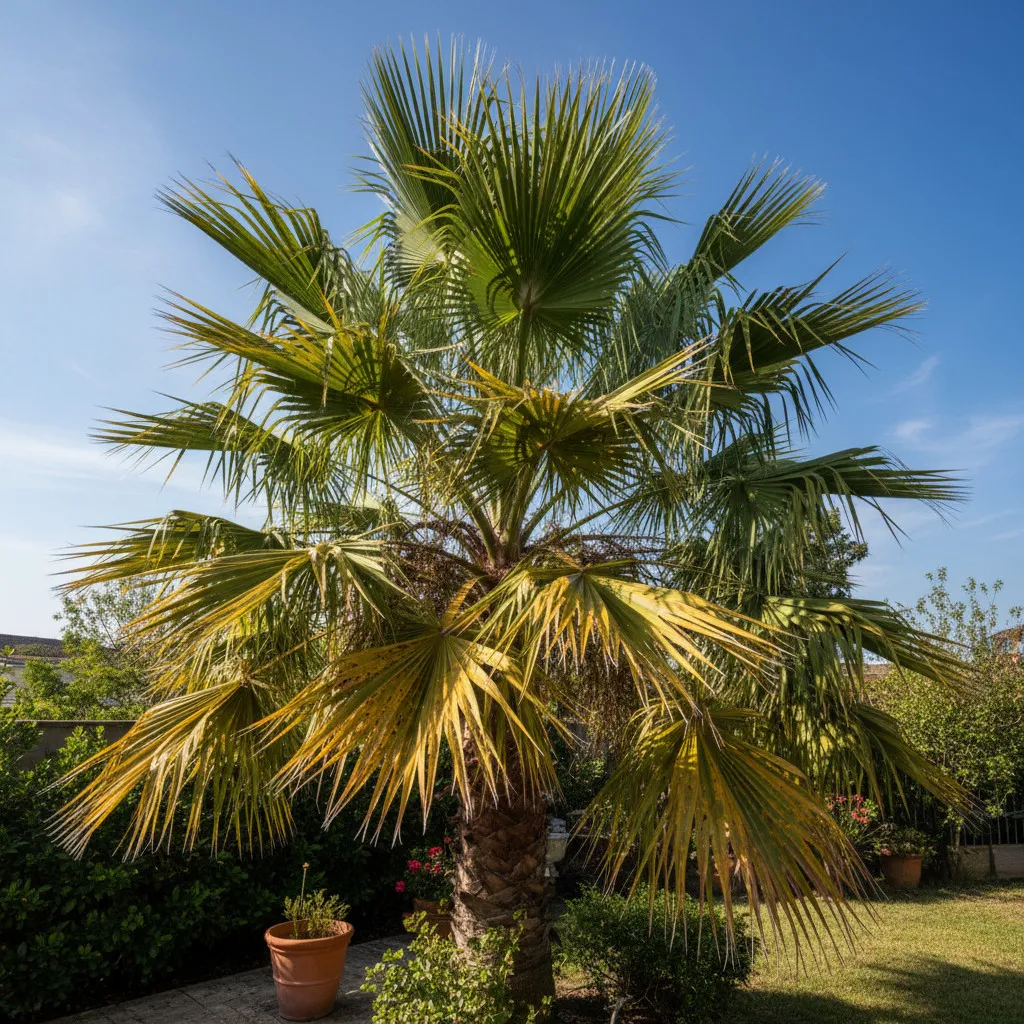
This section explains the unique nutritional challenges palm trees face and why standard fertilizers simply won’t cut it for these tropical beauties.
Palm trees have evolved in environments vastly different from typical suburban landscapes, which creates some unique challenges when we transplant them into our yards. Unlike deciduous trees that can adapt to a wider range of soil conditions, palms have very specific nutritional requirements that must be met consistently throughout the growing season. Florida’s sandy soils, for instance, are notorious for their inability to retain nutrients. These soils drain incredibly quickly, and when combined with heavy seasonal rains common in tropical and subtropical regions, essential nutrients leach away almost as fast as you can apply them. This creates a constant state of nutritional deficit that can seriously compromise your palm’s health.
Understanding why palms need specialized care starts with recognizing their native habitats. Many popular landscape palms originate from tropical regions where they’ve adapted to specific soil chemistry and nutrient availability. When we plant these trees in urban landscapes with compacted, altered, or poor-quality soil, we’re essentially asking them to survive in conditions they were never designed to handle. Even Florida’s twelve native palm species can struggle when transplanted from their natural sandy coastal environments into residential yards with different pH levels and soil compositions. The result is that maintaining good fertility becomes not just beneficial, but absolutely critical for your palm’s survival and appearance.
What makes palm fertilization even more complex is that these trees cannot simply “make do” with generic lawn fertilizers. In fact, using standard turfgrass fertilizer near your palms is one of the worst mistakes you can make. Turf fertilizers typically contain high levels of nitrogen but lack the proper ratios of potassium, magnesium, and essential micronutrients that palms desperately need. When you apply lawn fertilizer around your palm, you force the tree to push new growth without having adequate nutrients available in the soil to support that growth. The palm then has no choice but to cannibalize its own older leaves, stealing nutrients from them to feed the new fronds. This creates a self-induced nutrient deficiency that makes your palm look ratty and unhealthy, with discolored lower leaves that homeowners often mistakenly prune off, further weakening the tree.
The scientific community has spent considerable time and resources determining exactly what palms need to thrive. University of Florida scientists, for example, have conducted extensive research to identify the optimal nutrient balance for landscape palms in various conditions. Their findings have led to specialized palm fertilizer formulations that address the specific deficiencies common in different regions. These formulations take into account not just the major nutrients (nitrogen, phosphorus, and potassium), but also critical micronutrients like manganese, magnesium, and iron that palms require in precise amounts. Without these specialized fertilizers, palm trees face an uphill battle against nutrient deficiencies that can take years to correct—if they can be corrected at all.
Understanding Palm Tree Nutritional Requirements
Palm trees require a complex blend of macronutrients and micronutrients in specific ratios to maintain their health, vigor, and that coveted tropical appearance that makes them landscape showstoppers.
The foundation of proper palm fertilization begins with understanding what nutrients your tree actually needs and in what proportions. Unlike many other trees and shrubs that can tolerate imbalanced nutrition, palms are remarkably sensitive to both deficiencies and excesses of specific elements. The three primary macronutrients—nitrogen, phosphorus, and potassium—form the backbone of any fertilization program, but for palms, the story doesn’t end there. These trees have evolved to require substantial amounts of certain nutrients that other plants need only in trace quantities, making the selection of the right fertilizer absolutely critical to their success in your landscape.
Nitrogen (N) serves as the engine of growth for your palm tree, directly influencing the production of new fronds and the overall green color of the foliage. This essential element is a key component of chlorophyll, the pigment that gives plants their green color and enables photosynthesis. When palms lack sufficient nitrogen, you’ll notice older leaves gradually turning light green, eventually progressing to a pale yellow-green color throughout the entire canopy. However, it’s crucial that nitrogen be delivered in a slow-release form rather than quick-release formulations. Slow-release nitrogen prevents the boom-and-bust cycle that can stress your palm, providing a steady supply of this nutrient over an extended period, typically ranging from six weeks to several months depending on the product formulation.
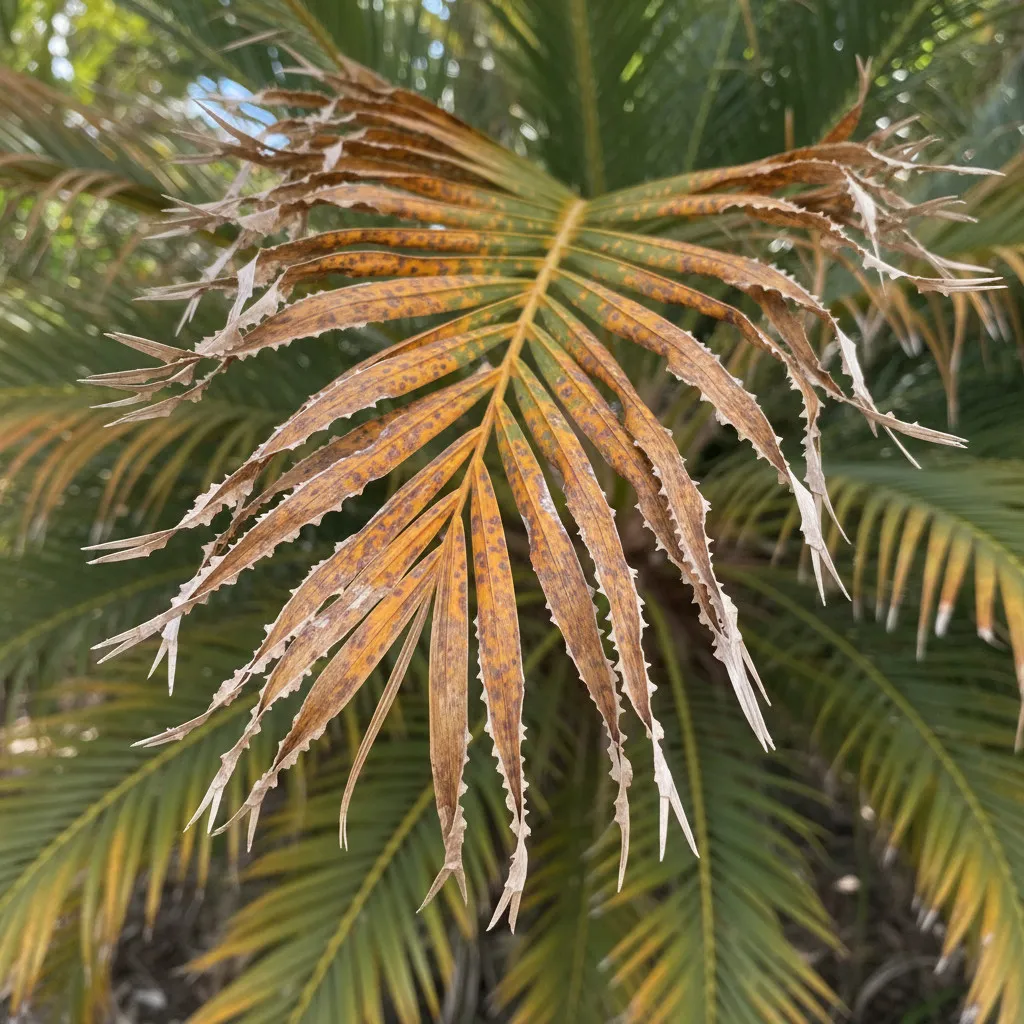
Potassium (K), often called potash, actually takes center stage as the most critical element for palm tree health. While many plants need moderate amounts of potassium, palms are voracious consumers of this nutrient, requiring it in amounts equal to or even greater than nitrogen. Potassium deficiency ranks as the most common nutritional problem affecting landscape palms, particularly in Florida and other coastal regions. This nutrient plays vital roles in water regulation, disease resistance, and overall tree vigor. When palms don’t receive adequate potassium, you’ll observe characteristic symptoms: yellow, orange, or brown flecks appearing first on the oldest leaves, followed by necrotic (dead) margins and tips. In severe cases, the leaves develop a withered, frizzled appearance, and if left untreated, the deficiency will eventually affect even the newest growth, potentially killing the tree. The ideal palm fertilizer should contain potassium in a slow-release form to ensure continuous availability throughout the growing season.
Magnesium (Mg) represents another critical nutrient that palms demand in relatively large quantities. This element sits at the heart of the chlorophyll molecule and is essential for photosynthesis and overall plant metabolism. Magnesium deficiency manifests as a distinctive yellowing along the edges of older fronds while the central band remains green—a pattern that helps distinguish it from other nutrient deficiencies. Date palms are particularly susceptible to magnesium deficiency, though most palm species can develop this problem when grown in sandy or highly leached soils. Without adequate magnesium, your palm’s ability to produce energy through photosynthesis becomes severely compromised, leading to stunted growth and poor overall health. Quality palm fertilizers should include magnesium, often in the form of kieserite, which provides this nutrient in a form that palms can readily absorb and utilize.
Beyond these major nutrients, palms require several micronutrients that, while needed in smaller quantities, are absolutely essential for proper growth and development. Manganese (Mn) deficiency causes one of the most serious and visually striking problems in palms: frizzle top. This condition affects new emerging leaves, causing them to appear stunted, deformed, and withered, with yellowing between the veins and reduced leaf size. If not promptly treated with manganese supplements, frizzle top can be fatal to the palm. Iron (Fe) is essential for chlorophyll formation, and deficiency shows up as uniform chlorosis (absence of green color) in young leaves, which can eventually spread to older foliage. Fortunately, many organic fertilizers like Milorganite contain organically complex, non-staining iron that helps prevent and correct iron deficiencies. Other important micronutrients include boron (B), calcium (Ca), copper (Cu), zinc (Zn), and sulfur (S), each playing specific roles in your palm’s metabolism and structural development.
Choosing the Right Palm Tree Fertilizer
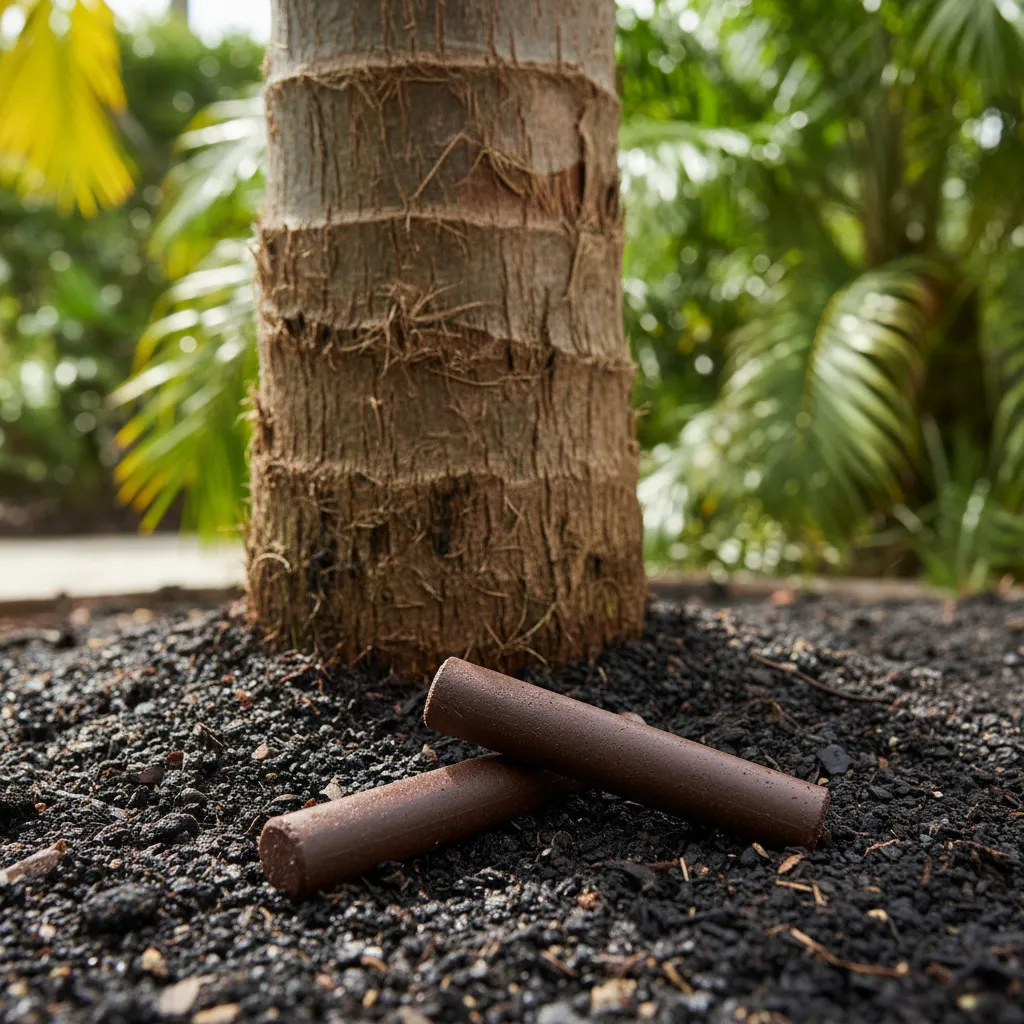
Selecting the appropriate fertilizer product is perhaps the most important decision you’ll make in your palm care program, as not all fertilizers are created equal—especially when it comes to these picky princes of the plant kingdom.
The fertilizer industry offers hundreds of products, but when it comes to palms, you need to be highly selective. The ideal palm fertilizer should carry a label that reads “palm special” or “specially formulated for palms,” indicating that it contains the specific nutrient ratios and micronutrients these trees require. University research has determined that the optimal NPK ratio for most landscape palms is 8-2-12 or similar proportions (such as 8-0-12 or 12-4-12). Notice that these formulations contain relatively low phosphorus (the middle number) because most soils already contain adequate phosphorus, and palms don’t require large amounts of this nutrient. The equal or higher potassium content (the third number) reflects palms’ extraordinary demand for this essential element.
When examining fertilizer labels, you need to look beyond just the NPK numbers. The label should clearly indicate that 100% of the nitrogen, potassium, and magnesium are in slow-release or controlled-release form. This is absolutely critical because quick-release fertilizers, while cheaper, release their nutrients too rapidly for palm roots to absorb efficiently. In sandy soils or areas with high rainfall, quick-release fertilizers can wash away after just a few rain events, providing little benefit to your tree while potentially polluting nearby waterways. Slow-release fertilizers, by contrast, use special coating technologies or organic compounds that break down gradually over time, delivering nutrients to your palm’s root system consistently for anywhere from six weeks to several months, depending on the specific formulation.
The micronutrient content deserves equally careful attention. Quality palm fertilizers should contain manganese, magnesium, iron, boron, copper, and zinc, with most of these micronutrients in water-soluble form (the exception being boron). One quick indicator of a quality palm fertilizer is whether it uses kieserite as the magnesium source. Kieserite is a mineral form of magnesium sulfate that provides both magnesium and sulfur in forms readily available to palm roots. Additionally, look for products that specify the actual amounts of these micronutrients on the label—vague claims of “contains micronutrients” without specific percentages should raise red flags about the product’s quality and effectiveness.
Several excellent commercial products have proven themselves in both research trials and real-world applications. Jobe’s Palm Outdoor Fertilizer Spikes offer a convenient application method with a 10-5-10 formula that includes all essential micronutrients. These spikes are inserted into the soil near the palm’s feeder roots, where they slowly dissolve and release nutrients for up to six months. Miracle-Gro Palm Tree Food features an 8-4-8 slow-release formula with added magnesium, iron, and manganese, providing complete nutrition with each application lasting up to six weeks. Carl Pool Palm Food delivers a 12-4-12 ratio with 5% magnesium and 2% manganese, utilizing three different nitrogen sources for both immediate and extended feeding. For those preferring organic options, Dr. Earth Exotic Blend Palm, Tropical & Hibiscus Fertilizer offers a 5-4-6 ratio made from feed-grade organic ingredients, proteins, and minerals, certified as Non-GMO Project Verified.
Another reputable option is Milorganite, an organic slow-release fertilizer that, when supplemented with potassium and micronutrients, can form the basis of a complete palm fertilization program. While Milorganite alone doesn’t provide all the potassium palms need, its 2.5% organically complex iron content and slow-release nitrogen make it an excellent foundation that you can augment with potassium supplements. The organic matter in Milorganite also helps condition sandy soils, improving their ability to retain moisture and nutrients—a significant benefit in regions with poor soil quality. Whatever product you choose, resist the temptation to save money by purchasing cheap, high-concentration quick-release fertilizers like ammonium nitrate (30-0-0) lawn fertilizers. These products can cause severe plant burn, nutrient imbalances, and ultimately do more harm than good to your valuable palm trees.
When to Fertilize Your Palm Trees
Timing your fertilizer applications correctly ensures your palm receives nutrients when it can actually use them, maximizing the benefits while minimizing waste and potential problems.
The fertilization schedule for palm trees varies depending on your geographic location, climate conditions, and the specific product you’re using. In regions where temperatures remain above freezing year-round, such as South Florida and coastal Southern California, palms continue growing throughout the year, though at varying rates depending on the season. For these warm-climate areas, plan to fertilize your palms three to four times per year, spacing applications evenly throughout the growing season. A typical schedule might include applications in early spring (March), late spring or early summer (May or June), midsummer (July or August), and early fall (September or early October). This frequent fertilization compensates for the rapid nutrient leaching that occurs in sandy soils subject to heavy rainfall and maintains consistent nutrient levels throughout the year.
In regions where temperatures occasionally drop below freezing—such as North Florida, coastal Georgia and South Carolina, or parts of Texas and Arizona—your fertilization schedule needs to account for the palm’s dormant period. During cold weather, palm trees essentially shut down their growth processes and enter a state of dormancy. Applying fertilizer during this period accomplishes nothing beneficial and can actually harm your tree. The fertilizer encourages tender new growth just as cold weather arrives, making that growth susceptible to freeze damage. Additionally, the palm’s roots aren’t actively absorbing nutrients during dormancy, so the fertilizer simply leaches away unused. For these cooler regions, limit fertilization to two or three applications during the active growing season only. Make your first application in spring after all danger of frost has passed and soil temperatures have warmed to around 65°F, typically in late March or April. Apply a second dose in early to midsummer (June or July), and if your fertilizer requires three annual applications, make the third in early fall, but cease all fertilization at least two months before your area’s average first frost date.
The specific product you choose will also influence your fertilization schedule. Products labeled as “feeds for up to 3 months” require more frequent applications—typically four times per year—to maintain consistent nutrition. Fertilizers that “feed for up to 6 months” need only two to three applications annually. Always read and follow the manufacturer’s instructions regarding application frequency, as different formulations release their nutrients at different rates. Some specialized palm fertilizer spikes, for instance, are designed to last for six months with just two applications per year, while granular formulations might require quarterly applications for optimal results. Following the label instructions ensures you’re neither over-fertilizing (which can cause nutrient imbalances and environmental harm) nor under-fertilizing (which leaves your palm nutritionally deficient).
Newly planted palms require a completely different approach to fertilization timing. When you first transplant a palm, whether it’s field-grown or container-grown, its root system has been disturbed or severed. The tree needs time to develop new feeder roots and overcome transplant shock before it can effectively absorb and utilize fertilizer nutrients. Applying fertilizer too early can actually damage these developing roots, potentially killing your new palm. The golden rule for new palms is simple: do not fertilize until the palm produces a new spear (the emerging center frond). This typically takes anywhere from two to six months after planting, depending on the season, palm species, and growing conditions. The emergence of that new spear signals that the root system has recovered sufficiently to support active growth. Only then should you begin your regular fertilization schedule. During this establishment period, focus instead on proper watering—keeping the root ball consistently moist but not waterlogged—which is far more critical to the palm’s survival than fertilization.
How to Apply Palm Tree Fertilizer: Step-by-Step Guide
Proper application technique is just as important as choosing the right fertilizer product and timing, ensuring nutrients reach your palm’s roots where they’re needed most while avoiding damage to the sensitive trunk.
Applying palm fertilizer correctly involves more than simply scattering granules around the base of your tree. The process requires careful attention to placement, quantity, and watering to maximize nutrient uptake while minimizing the risk of trunk damage or root burn. Follow these detailed steps to fertilize your palm tree like a professional arborist, giving it the nutrition it needs to thrive in your landscape.
1. Calculate the Correct Amount of Fertilizer
Begin by determining how much fertilizer your specific palm requires. The amount varies based on the tree’s size, with larger palms naturally requiring more nutrition than smaller specimens. For granular palm fertilizers, the general recommendation is approximately 1.5 pounds of product per 100 square feet of the area beneath the palm’s canopy. However, a more precise method measures the trunk diameter at chest height (about 4.5 feet above ground). Many professional formulations recommend about 1.5 pounds of fertilizer per inch of trunk diameter. For example, a palm with an 8-inch diameter trunk would receive approximately 12 pounds of fertilizer per application. If you’re using fertilizer spikes, the product packaging typically provides charts indicating how many spikes to use based on trunk diameter or tree height. Always follow the specific product’s label instructions, as different formulations have different concentrations and therefore require different application rates.
2. Water the Soil Thoroughly Before Fertilizing
This step is absolutely critical yet frequently overlooked by homeowners. Never apply fertilizer to dry soil, as doing so can cause severe root burn and potentially kill your palm tree. Dry roots are sensitive and can be damaged by direct contact with concentrated fertilizer salts. Thoroughly irrigate the entire root zone the day before or morning of your fertilizer application, ensuring the soil is evenly moist to a depth of at least 6-8 inches. This pre-watering accomplishes several important goals: it protects roots from fertilizer burn, helps the soil retain the fertilizer nutrients rather than allowing them to immediately leach away, and ensures the fertilizer can dissolve and distribute properly through the root zone. If you’re fertilizing during a rainy period when the soil is already moist, you can skip this step, but during dry weather, this pre-watering is non-negotiable for safe fertilizer application.
3. Determine the Correct Application Area
Understanding where to apply your fertilizer makes the difference between effective feeding and wasted product. Palm tree roots, particularly the small feeder roots responsible for absorbing water and nutrients, extend outward from the trunk in a broad pattern, spreading nearly as far as the canopy reaches. The most effective application area is a circle extending from about 2 feet away from the trunk outward to the edge of the canopy (the drip line). Never pile fertilizer directly against the palm’s trunk, as the trunk is remarkably sensitive and can suffer from chemical burns or necrosis (tissue death) when exposed to concentrated fertilizer. Maintaining that 2-foot buffer zone around the trunk protects this vulnerable area while still placing nutrients within easy reach of the feeder roots. For palms growing in lawn areas, you’ll essentially be broadcasting fertilizer across the grass within this zone, which will benefit both the palm and the surrounding turf.
4. Apply the Fertilizer Evenly Across the Root Zone
Once you’ve calculated the amount and identified the application area, it’s time to distribute your fertilizer. Scatter the granules or pellets evenly across the entire root zone rather than dumping them in one or two concentrated piles. Even distribution ensures all parts of the root system receive nutrition and prevents localized areas of over-fertilization that can damage roots. If you’re working with granular fertilizer, you can broadcast it by hand (wearing gloves) or use a hand-held spreader for more uniform coverage. For larger landscape palms or multiple trees, a push-type broadcast spreader makes the job easier and ensures even distribution. If mulch covers the application area, you have two options: either scratch the fertilizer into the mulch layer so it reaches the soil surface, or temporarily pull back the mulch, apply the fertilizer directly to the soil, and then replace the mulch. Either method works, though direct soil contact allows slightly faster nutrient availability.
5. Lightly Incorporate the Fertilizer (Optional but Beneficial)
If your soil isn’t severely compacted and you can do so without damaging surface roots, gently work the fertilizer into the top 1-3 inches of soil using a cultivating fork or the back of a rake. This light incorporation helps the fertilizer make better contact with the soil and reduces the risk of it being blown or washed away before it dissolves. However, be careful not to dig too deeply or aggressively, as you could damage the palm’s shallow feeder roots. If you encounter significant root resistance or if your soil is very hard and compacted, skip this step and proceed directly to watering—the irrigation will help move the fertilizer into the soil profile without requiring mechanical incorporation.
6. Water Thoroughly After Application
The final and perhaps most important step is to water the fertilized area deeply and thoroughly immediately after applying the product. This post-application irrigation serves multiple critical purposes: it washes any fertilizer granules off the mulch and into the soil where roots can access them, it begins the process of dissolving the fertilizer coating so nutrients can start becoming available, it helps move nutrients down into the root zone where they’re needed, and it further protects roots from potential fertilizer burn by diluting the fertilizer concentration. Apply enough water to moisten the soil to a depth of at least 6-8 inches throughout the entire application area. A slow, deep soaking using a garden hose on a low trickle, a soaker hose, or a drip irrigation system works better than a quick spray from a sprinkler, as slow application gives the water time to penetrate deeply rather than running off the surface.
7. Remove Any Fertilizer from Fronds or Trunk
As you complete your fertilization, take a moment to inspect the palm’s trunk and fronds. If any fertilizer granules have landed on the trunk or gotten stuck in the fronds, rinse them off immediately with a strong spray of water from your hose. Fertilizer left in contact with the trunk can cause scars or burns that create entry points for diseases. Similarly, fertilizer sitting on fronds can cause unsightly burn spots on the foliage. A quick rinse takes only a minute but prevents these cosmetic and health problems from developing.
Common Palm Tree Nutrient Deficiencies and Their Signs
Learning to recognize the visual symptoms of nutrient deficiencies empowers you to diagnose problems early and take corrective action before permanent damage occurs to your valuable palm trees.
Palm trees have a remarkable ability to communicate their nutritional status through visual symptoms that appear on their fronds. Unlike some plants that show only vague signs of distress, palms display characteristic, identifiable patterns for different nutrient deficiencies. Understanding these symptoms is like learning to read your palm tree’s language—it tells you exactly what the tree needs to return to optimal health. However, it’s crucial to understand that once symptoms appear, the deficiency is already quite advanced, making prevention through proper fertilization far superior to attempting to correct established deficiencies, which can take months or even years.
Potassium Deficiency: The Most Common Problem
Potassium deficiency stands as the most frequently encountered nutritional problem in landscape palms, affecting trees across all regions but particularly in areas with sandy soils and high rainfall. The symptoms follow a characteristic progression that makes this deficiency relatively easy to identify. The problem always begins on the oldest (lowest) fronds in the canopy and gradually progresses upward toward younger leaves as the deficiency worsens. Initial symptoms appear as translucent yellow, orange, or bright orange spots scattered across the leaf surface, particularly near the edges. These spots, when backlit by the sun, often show a distinctive speckled or freckled appearance. As the deficiency advances, the leaf margins develop necrotic (dead) areas that appear brown or tan, and the entire frond may take on a withered, frizzled look. In severe cases, the tips of the leaflets curl downward, and the fronds may actually break off at their base. If potassium deficiency remains uncorrected, it will eventually affect even the newest growth, at which point the palm’s survival becomes questionable. Different palm species show varying susceptibility to potassium deficiency, but virtually all landscape palms can develop this problem when grown in nutrient-poor soils without proper fertilization.
Magnesium Deficiency: The Yellow Stripe Signature
Magnesium deficiency creates one of the most visually distinctive patterns of all palm nutritional problems, making it relatively easy to diagnose once you know what to look for. This deficiency affects the oldest fronds first, just like potassium deficiency, but the symptom pattern is quite different. The characteristic sign is a broad yellow or orange band running along the outer edges of the frond while the center portion remains green. This creates a striking contrast between the bright yellow margins and the green central stripe. The yellowing typically begins at the leaf tips and progresses toward the leaf base as the deficiency worsens. In advanced cases, the yellow areas may develop necrotic spots or the entire margin may turn brown and die. Some palm species are particularly prone to magnesium deficiency—Canary Island date palms and date palms top this list—though most palms can develop the problem in soils naturally low in magnesium or when excessive potassium fertilization creates a nutritional imbalance. Interestingly, treating potassium deficiency aggressively without also supplementing magnesium can actually induce magnesium deficiency, as these two nutrients compete for uptake by the roots.
Manganese Deficiency: The Dreaded Frizzle Top
Manganese deficiency causes one of the most alarming and potentially fatal conditions in palm trees: frizzle top. Unlike potassium and magnesium deficiencies that start with the oldest leaves, manganese deficiency affects the newest emerging fronds at the center of the crown. New leaves emerge stunted, with shortened and often twisted leaflets that give the frond a deformed, withered appearance. The leaflets show yellowing and necrosis between the veins while the veins themselves may remain somewhat green, creating a striped pattern. In severe cases, the new spear fails to emerge properly or emerges already dead and brown. The fronds may also be reduced significantly in size compared to normal growth. If frizzle top is not caught and treated early, the palm’s growing point can be permanently damaged, resulting in the tree’s death. Queen palms, paurotis palms, and royal palms are particularly susceptible to manganese deficiency, though it can affect many other species as well. This deficiency often occurs in soils with high pH (alkaline conditions) where manganese, though present in the soil, is locked into forms that palm roots cannot absorb.
Iron Deficiency: Uniform Yellowing of New Growth
Iron deficiency shares one characteristic with manganese deficiency: it primarily affects the newest, youngest fronds in the palm’s canopy. However, the symptom pattern differs distinctly. Iron-deficient palms display uniform chlorosis (yellowing) across the entire new frond without the striped pattern seen with manganese deficiency. The newest leaves emerge pale yellow or almost white, lacking the rich green color of healthy fronds. As the leaves age, they may remain somewhat yellowed rather than developing normal green coloration. In severe cases, this pale color eventually spreads to older fronds as well, giving the entire canopy a washed-out appearance. Iron deficiency is most common in palms growing in alkaline soils (pH above 7.0) or in areas with poor soil aeration—waterlogged, compacted soils create conditions where iron becomes unavailable to roots even when present in adequate amounts. Additionally, iron deficiency may indicate poor soil drainage that’s preventing proper root function. Palms need iron for chlorophyll formation and various metabolic processes, so this deficiency, if left uncorrected, will significantly weaken the tree over time.
Nitrogen Deficiency: Overall Pale, Yellowish Appearance
While less common than the other deficiencies discussed, nitrogen deficiency can occur in palms, particularly those that haven’t been fertilized in several years or those growing in extremely poor soils. Nitrogen deficiency creates a general overall yellowing that begins with the oldest fronds and gradually affects the entire canopy if the deficiency continues. Unlike the distinctive patterns of other deficiencies, nitrogen-deficient palms simply look pale, washed-out, and lackluster, with a uniform light green to yellow-green color throughout. The palm’s growth slows noticeably, with new fronds emerging smaller than normal and at a reduced rate. The good news is that nitrogen deficiency responds quickly to proper fertilization—regular applications of nitrogen-rich, slow-release fertilizer like Milorganite or a complete palm fertilizer will reverse this deficiency within weeks to a few months, as nitrogen is highly mobile within the plant and can be transported quickly to where it’s needed.
Essential Do’s and Don’ts of Palm Tree Fertilization
Following these critical guidelines helps you avoid the most common and damaging fertilization mistakes while adopting the best practices that professional arborists use to maintain healthy, beautiful palms.
Learning what not to do can be just as valuable as knowing the proper techniques when it comes to palm tree care. Many well-intentioned homeowners inadvertently harm their palms by making avoidable mistakes during the fertilization process. Let’s explore the most important do’s and don’ts to ensure your fertilization efforts enhance rather than endanger your palm’s health.
Critical DO’s for Palm Fertilization Success
DO use a specialized palm fertilizer rather than generic garden or lawn fertilizer products. As we’ve discussed extensively, palms have unique nutritional requirements that standard fertilizers cannot meet. Invest in a product specifically formulated for palms with the proper 8-2-12 or similar ratio and complete micronutrient package. This investment pays dividends in the form of a healthier, more attractive palm that adds value to your property.
DO apply fertilizer to moist soil both before and after spreading the product. Water the application area thoroughly the day before fertilizing, apply your fertilizer, and then water deeply again after application. This three-step process—water, fertilize, water—protects roots from burn while ensuring nutrients penetrate into the root zone where they’re needed. Make this your fertilization mantra and you’ll avoid one of the most common causes of fertilizer-related palm damage.
DO spread fertilizer evenly over the entire root zone rather than concentrating it in one or two spots. The palm’s feeder roots spread widely beneath the canopy, and even distribution ensures all parts of the root system receive nutrition. Use a broadcast spreader for large areas or scatter by hand for smaller applications, but always aim for uniform coverage.
DO fertilize at the right frequency for your location and product. In warm, frost-free climates with sandy soils and high rainfall, three to four applications per year maintain adequate nutrition. In cooler regions or with longer-lasting slow-release formulas, two to three applications suffice. Always read and follow the product label instructions regarding application frequency.
DO wait for new growth before fertilizing newly planted palms. Patience is crucial here—resist the urge to fertilize your new palm immediately after planting. Wait until the tree produces a new spear, indicating that the root system has recovered from transplant shock and is ready to absorb and utilize nutrients. This typically takes two to six months depending on planting time and conditions.
DO consider your soil pH when selecting and planting palms. Soil pH affects nutrient availability, and if your pH is extremely high (above 7.6-8.0), even the best fertilization program cannot fully compensate for nutrients locked in unavailable forms. Test your soil before planting and select palm species known to tolerate your specific soil conditions.
Critical DON’Ts That Can Damage or Kill Your Palm
DON’T fertilize on dry soil under any circumstances. This single mistake causes more fertilizer-related palm damage than any other error. Fertilizer salts in direct contact with dry roots cause chemical burns that can kill sections of the root system or even the entire tree. Always pre-water before applying any fertilizer product.
DON’T pile fertilizer against the palm’s trunk or dump it in one concentrated spot. The trunk is remarkably sensitive and can suffer permanent scarring, necrosis, or disease entry points when exposed to concentrated fertilizer. Always maintain at least a 2-foot buffer zone around the trunk and distribute fertilizer evenly over the application area.
DON’T throw fertilizer granules down into the crown (the center growing point where new fronds emerge). Fertilizer trapped in the crown can burn sensitive growing tissues and create entry points for lethal diseases like fusarium wilt. If granules accidentally land in the crown, immediately flush them out with a strong stream of water.
DON’T use cheap, quick-release fertilizers like straight ammonium nitrate (30-0-0) or other high-concentration synthetic products designed for lawns. These products release nutrients too rapidly, wasting most of the fertilizer to leaching while risking serious root burn. They also lack the micronutrients palms desperately need. Invest in quality slow-release formulations designed specifically for palms.
DON’T over-fertilize thinking more is better. Excessive fertilization creates nutrient imbalances that can be more detrimental than not fertilizing at all. Too much nitrogen without balanced potassium forces weak, rapid growth. Excess potassium can induce magnesium deficiency. Always apply the recommended amount based on your tree’s size and the product’s label instructions—never more.
DON’T apply turf fertilizer near your palms or within their root zones. Lawn fertilizers are formulated for grass, with high nitrogen and low or no potassium. Using these products around palms creates severe nutritional imbalances that force the palm to cannibalize its own older fronds, creating ugly, self-induced deficiencies that take years to correct.
DON’T fertilize during winter dormancy in regions where temperatures drop below freezing. Fertilizer applied during the dormant season provides no benefit, wastes money, potentially pollutes waterways, and encourages tender new growth just before cold weather arrives. Cease fertilization at least two months before your average first frost date and resume only after all danger of frost has passed in spring.
DON’T put concentrated fertilizer in direct contact with roots when transplanting or repotting palms. The temptation to add fertilizer to the planting hole seems logical but can backfire spectacularly. Quick-release fertilizers in particular can burn newly disturbed roots. If you must add fertilizer at planting time, use only slow-release organic products like composted manure in small amounts mixed thoroughly with backfill soil, or better yet, wait until the palm establishes before beginning fertilization.
DON’T rely solely on Epsom salt as a complete fertilizer program. While Epsom salt (magnesium sulfate) can help correct magnesium deficiencies and provides a valuable supplement to complete fertilization programs, it contains only magnesium and sulfur. Palms also desperately need nitrogen, potassium, iron, manganese, and other nutrients that Epsom salt doesn’t provide. Use Epsom salt as a supplement to, not a replacement for, proper palm fertilization with complete formulations.
Special Considerations for Newly Planted Palms
Newly transplanted palms face unique challenges and require modified care practices during their critical establishment period to ensure long-term success in your landscape.
The first year after transplanting represents the most vulnerable period in a landscape palm’s life. Whether your palm came from a container or was field-dug with a root ball, the transplanting process severs many of the fine feeder roots responsible for absorbing water and nutrients. During the establishment period, your palm must generate an entirely new root system while simultaneously coping with the stress of its new environment. Understanding how to care for newly planted palms—particularly regarding fertilization and watering—makes the difference between a thriving tree and one that languishes or dies.
The Critical Rule: Wait for New Growth
The most important guideline for newly planted palms is remarkably simple yet frequently violated: do not fertilize until the palm produces a new spear (the emerging central frond). This rule cannot be overstated or over-emphasized. When a palm is first transplanted, a significant portion of its root system has been damaged or removed. The remaining roots are stressed and vulnerable. Applying fertilizer during this period accomplishes nothing beneficial because the damaged root system cannot effectively absorb the nutrients. Worse, fertilizer salts can actually burn the stressed roots, potentially killing the palm or significantly delaying its establishment.
The emergence of a new spear serves as the palm’s signal that it has overcome transplant shock and successfully regenerated enough root mass to support new growth. This milestone typically occurs two to six months after planting, depending on the time of year, the palm species, and local growing conditions. Palms planted during the warm growing season (late spring and summer) generally establish faster and produce new spears more quickly than those planted during cooler months. Once you observe that new spear unfurling from the center of the crown, you can begin your regular fertilization schedule, starting with a light application of a complete palm fertilizer and gradually increasing to the standard rate.
Watering Takes Priority Over Fertilization
During the establishment period, proper watering is exponentially more important than fertilization. In fact, consistent moisture management is the single most critical factor determining whether your newly planted palm survives or perishes. Without an established root system, your palm cannot seek out moisture in the surrounding soil and depends entirely on the water you provide to the root ball area.
For the first week after planting, water deeply every single day, thoroughly saturating the root ball and the soil immediately surrounding it. Apply enough water that the entire root ball becomes moist—not soggy or waterlogged, but evenly damp throughout. During the second week, transition to watering every other day, continuing with the same deep irrigation technique. From weeks three through eight, water three to four times per week depending on weather conditions, adjusting frequency based on rainfall and temperature. Hot, dry, windy conditions require more frequent watering, while cool, cloudy, or rainy periods need less. After two to three months, you can gradually reduce watering frequency as the palm develops its new root system, eventually transitioning to the normal schedule for established palms.
The Planting Process Matters
Proper planting technique sets your palm up for success or failure from day one. When preparing the planting hole, dig it no deeper than the root ball and only slightly wider—perhaps 6-12 inches beyond the root ball diameter. If you’re planting in heavy clay soil, actually dig the hole slightly shallower than the root ball depth and set the palm so the top of the root ball sits an inch or two above the surrounding grade. This prevents the common problem of the palm settling too deep after planting, which can lead to root rot and crown rot that kill the tree.
If you want to amend the backfill soil, use a conservative approach: mix one part compost or aged manure with two parts native soil. This provides some organic matter to improve soil structure without creating a dramatically different soil environment that discourages roots from growing beyond the planting hole. Never add fresh manure directly to the planting hole, as the heat generated during decomposition can literally cook your palm’s roots. Similarly, avoid adding fertilizer to the hole itself, especially quick-release formulations that can burn stressed roots.
After positioning the palm at the correct depth, backfill around the root ball with your soil mixture, using a shovel handle or your foot to gently tamp down the soil and eliminate large air pockets. Don’t compact the soil heavily—you want it firm enough to support the palm but loose enough that new roots can penetrate easily. Create a water basin or berm around the perimeter of the planting area by mounding soil in a 4-6 inch tall ring. This basin helps retain irrigation water over the root ball during those critical first weeks, ensuring the water soaks in rather than running off.
Mulch Provides Multiple Benefits
After planting and initial watering, apply a 2-3 inch layer of organic mulch over the entire planting area, extending from about 6 inches away from the trunk outward to the edge of the root ball and beyond. Organic mulches like shredded bark, wood chips, or pine straw provide numerous benefits to newly planted palms: they conserve soil moisture by reducing evaporation, moderate soil temperature extremes, suppress weed growth that would compete with the palm for water and nutrients, and gradually decompose to add organic matter to the soil.
Keep the mulch pulled back several inches from the actual trunk to prevent moisture accumulation against the bark, which can encourage fungal diseases and rot. Never pile mulch up against the trunk in the “volcano” fashion sometimes seen in landscapes—this practice causes more harm than good and can literally kill your palm by creating a constantly moist environment around the sensitive trunk area.
Staking and Support (When Necessary)
Larger palms or those planted in windy locations may benefit from temporary staking to prevent the trunk from rocking in the wind. Root movement during the establishment period breaks the delicate new feeder roots as they form, delaying establishment and potentially leading to failure. However, staking should be done correctly using proper materials and techniques.
Use soft, wide straps rather than wire or rope that can cut into the trunk. Position supports so they hold the root ball stable while allowing the top of the palm to move slightly—some movement actually encourages stronger trunk development. Remove all staking materials after six to twelve months once the palm has established sufficiently to stand on its own. Stakes left in place too long can girdle the trunk as it grows, causing permanent damage.
Wrapping Up
Growing healthy, vibrant palm trees in your landscape is entirely achievable when you understand and implement proper fertilization practices. These magnificent trees, while sometimes perceived as low-maintenance, actually require thoughtful nutrition management to overcome the challenges of nutrient-poor soils, leaching rainfall, and urban landscape conditions. By choosing specialized palm fertilizers with the correct 8-2-12 or similar NPK ratio plus essential micronutrients, timing your applications to match your climate and the palm’s growing season, and using proper application techniques that distribute nutrients evenly throughout the root zone, you provide your palms with everything they need to thrive.
Remember the critical fundamentals: always fertilize on moist soil to prevent root burn, never pile fertilizer against the sensitive trunk, wait for new growth before fertilizing newly planted palms, and use slow-release formulations that provide consistent nutrition over extended periods. Avoid the common pitfalls of using lawn fertilizer near palms, over-fertilizing in the mistaken belief that more is better, or fertilizing during winter dormancy in frost-prone regions. Learn to recognize the characteristic symptoms of common nutrient deficiencies—potassium deficiency with its yellow-orange spots and frizzled older fronds, magnesium deficiency with distinctive yellow margins surrounding green centers, manganese deficiency’s devastating frizzle top on new growth, and iron deficiency’s uniform yellowing of young leaves.
Most importantly, understand that prevention through proper fertilization is far superior to attempting to correct established deficiencies, which can take months or years to reverse. By investing in quality palm-specific fertilizers, following a consistent application schedule appropriate for your location, and combining proper nutrition with adequate water and good cultural practices, you’ll enjoy the tropical beauty and dramatic landscape presence that only healthy palm trees can provide.
Your palms don’t have to be “hangry”—give them the balanced diet they crave, and they’ll reward you with lush green fronds, vigorous growth, and that iconic tropical appearance that makes these remarkable trees so beloved. Whether you’re maintaining established specimens or nurturing newly planted palms through their critical establishment period, the knowledge and techniques you’ve gained here will serve you well for years to come. Now get out there and feed those palms—they’re counting on you!


![Can Chickens Eat Blueberries? [Yes or No]](https://fruitonix.com/wp-content/uploads/2023/06/Screenshot-2023-06-22-7.25.29-PM.png)