Fish has a reputation for being tricky to cook — one minute you’re excited about dinner, the next you’ve got something rubbery and sad sitting in a pan. But here’s the thing: that reputation is wildly overblown. Most fish dinners come together faster than any chicken recipe you’ve ever made, and the margin for error is far smaller than people assume. White fish fillets cook through in 3 minutes per side. Salmon actually tastes better when it’s slightly underdone in the center. Even a total kitchen novice can pull off a genuinely impressive fish dinner with the right method behind them.
What holds most people back isn’t skill — it’s not knowing where to start. So these 12 dinners are built specifically around that problem. Each one uses a handful of straightforward ingredients, relies on a simple cooking technique, and delivers results that taste like you put in way more effort than you actually did. No special equipment, no obscure sauces, no cooking school required.
Whether you’re working with salmon, cod, tilapia, halibut, or whatever looks good at the fish counter that day, there’s something on this list that’ll work for you. Start with one or two that feel least intimidating. Once you get a feel for how fish behaves in a hot pan or oven, you’ll find yourself improvising naturally — swapping spices, changing sauces, experimenting with different fish varieties. That’s the point. These are your starting recipes, not your ceiling.
Table of Contents
- 1. Lemon Butter White Fish
- Why It Works for Beginners
- What to Know
- 2. Parmesan Garlic Crumbed Fish
- Why It Works for Beginners
- What to Know
- 3. Baked Cod with Lemon and Garlic
- Why It Works for Beginners
- What to Know
- 4. Sheet Pan Shrimp with Garlic and Lemon
- Why It Works for Beginners
- What to Know
- 5. Easy Fish Tacos with Creamy Slaw
- Why It Works for Beginners
- What to Know
- 6. Pan-Seared Salmon with a Simple Pan Sauce
- Why It Works for Beginners
- What to Know
- 7. Mediterranean Baked White Fish with Tomatoes and Olives
- Why It Works for Beginners
- What to Know
- 8. Salmon in Parchment Paper
- Why It Works for Beginners
- What to Know
- 9. Easy Brown Sugar Glazed Salmon
- Why It Works for Beginners
- What to Know
- 10. Fish Piccata with Capers and Lemon
- Why It Works for Beginners
- What to Know
- 11. Moroccan Fish in Spiced Tomato Sauce
- Why It Works for Beginners
- What to Know
- 12. Zucchini Pasta with Canned Tuna and Chile
- Why It Works for Beginners
- What to Know
- Final Thoughts
1. Lemon Butter White Fish
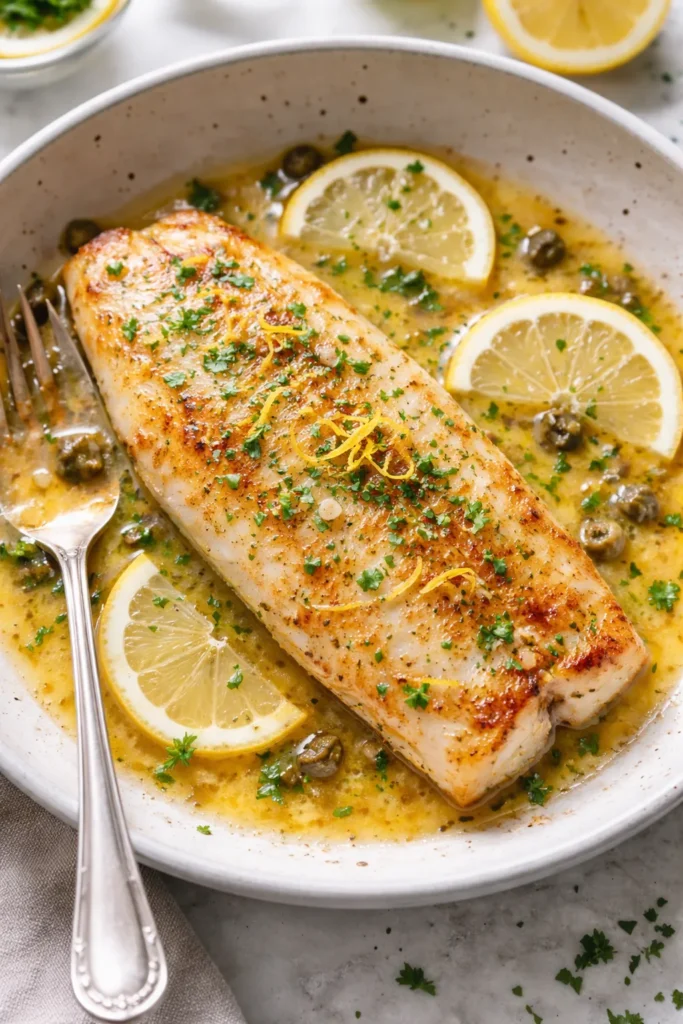
If there’s one recipe that belongs in every beginner’s back pocket, this is it. A quick sear in a hot skillet, a splash of butter and lemon juice, and you’ve got something that tastes like it came from a proper restaurant kitchen. The whole thing takes about 20 minutes from start to finish, and the cleanup is minimal.
Why It Works for Beginners
Cod, halibut, mahi mahi, or snapper all work beautifully here — the technique is the same regardless of which fish you grab. The key is patting the fillets completely dry with paper towels before they hit the pan. Skip this step and the fish steams instead of browning, which kills the flavor. Once you’ve got dry fillets seasoned with salt, paprika, garlic powder, and onion powder, heat olive oil over medium-high until it shimmers, then cook 2 to 3 minutes per side.
The lemon butter sauce is as simple as melted butter mixed with fresh lemon juice and zest. Pour it over just before serving.
What to Know
- Use fillets that are about 1 inch thick throughout so everything cooks at the same rate
- Cook 2 fillets at a time to avoid crowding, which causes steaming rather than searing
- The fish is done when the center feels slightly firm and the flesh is opaque all the way through
- Fresh lemon is non-negotiable here — bottled juice tastes flat against the butter
One tip: Add a handful of freshly chopped parsley or basil right at the end. It makes the whole dish look polished with zero extra effort.
2. Parmesan Garlic Crumbed Fish
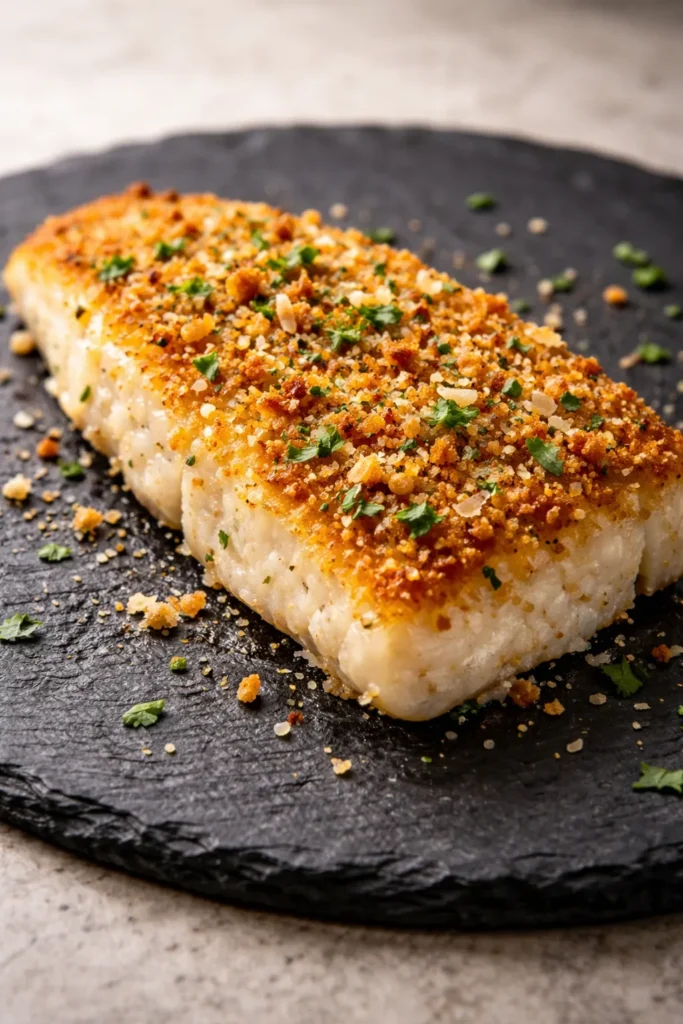
This one’s a weeknight hero for a specific reason: there’s no messy egg dredging involved. Instead of the usual flour-egg-breadcrumb routine, you smear Dijon mustard on the fish like you’re buttering toast, then press the fillet into a parmesan-garlic crumb mixture. The mustard acts as glue, and it adds a quiet, background flavor that works brilliantly with the nutty parmesan.
Why It Works for Beginners
The crumb mixture is just panko breadcrumbs, finely grated parmesan, minced garlic, a drizzle of olive oil, and a pinch of salt. Mix it in a bowl, press the mustard-coated fish face-down into it, then place it in a preheated oven-safe skillet and broil for 5 to 6 minutes. The hot skillet cooks the fish from underneath while the broiler crisps the crumb from above. You end up with golden, crunchy coating and perfectly cooked fish without flipping once.
Any firm white fish fillets work — perch, cod, tilapia, snapper — as long as they’re around 2 cm thick.
What to Know
- Preheat the skillet before placing the fish in it — this is what creates browning on the bottom side
- Spray the crumb lightly with olive oil before it goes under the broiler for an extra-golden finish
- Don’t overcrowd the pan — two fillets per skillet maximum
- Fillets thicker than 1 inch should go in the oven at 220°C/390°F for 10 to 12 minutes rather than under the broiler
Serve with a big handful of dressed greens and some crusty bread, and dinner is done in under 15 minutes.
3. Baked Cod with Lemon and Garlic
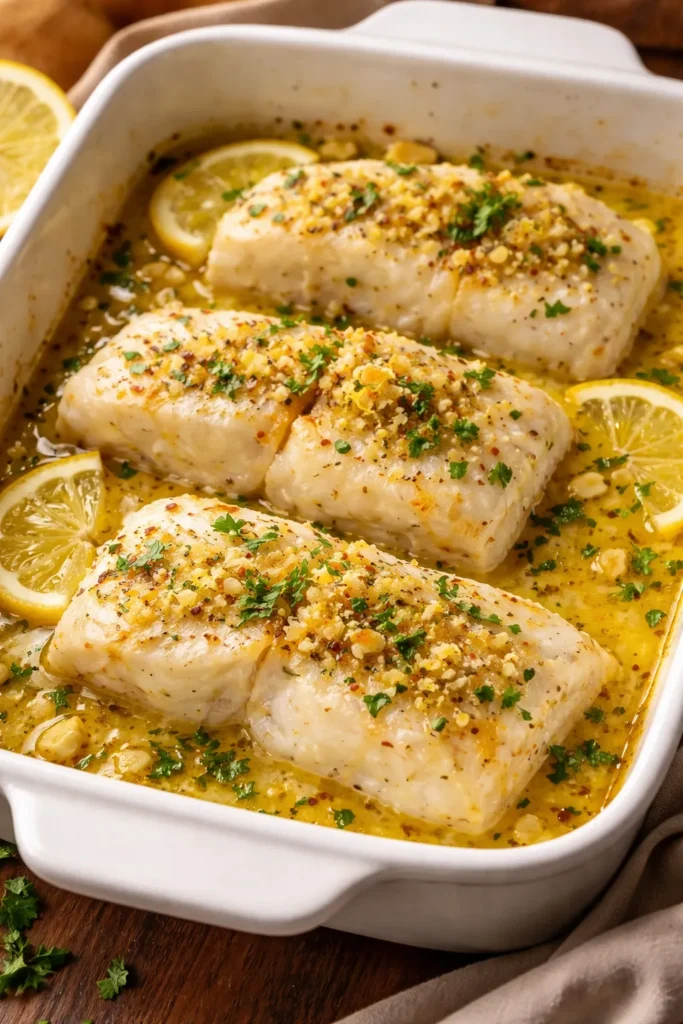
Baked cod is one of the most forgiving fish dinners you can make. Cod has a mild, clean flavor that pairs with almost anything, and the oven does all the heavy lifting. This version relies on a simple lemon-garlic sauce — olive oil, fresh garlic, lemon juice, lemon zest, and a little salt — poured over the fillets before they roast.
Why It Works for Beginners
Baking at high heat for a short amount of time is the move with delicate white fish. A temperature around 200°C/400°F for 12 to 15 minutes gives you fish that stays moist rather than drying out into an overcooked, chalky slab. The garlic softens and mellows in the oven, the lemon brightens everything up, and the fish flakes apart at the touch of a fork when it’s done right.
Red snapper, halibut, and grouper can all stand in for cod using the exact same method and timing.
What to Know
- Bring the fillets to room temperature for 10 minutes before baking for more even cooking
- Flakiness is your doneness cue — the fish should separate easily when pressed with a fork
- A drizzle of olive oil over the top before the tray goes in keeps the surface from drying out
- Crispy broccoli, oven fries, or a simple green salad all pair well alongside
4. Sheet Pan Shrimp with Garlic and Lemon
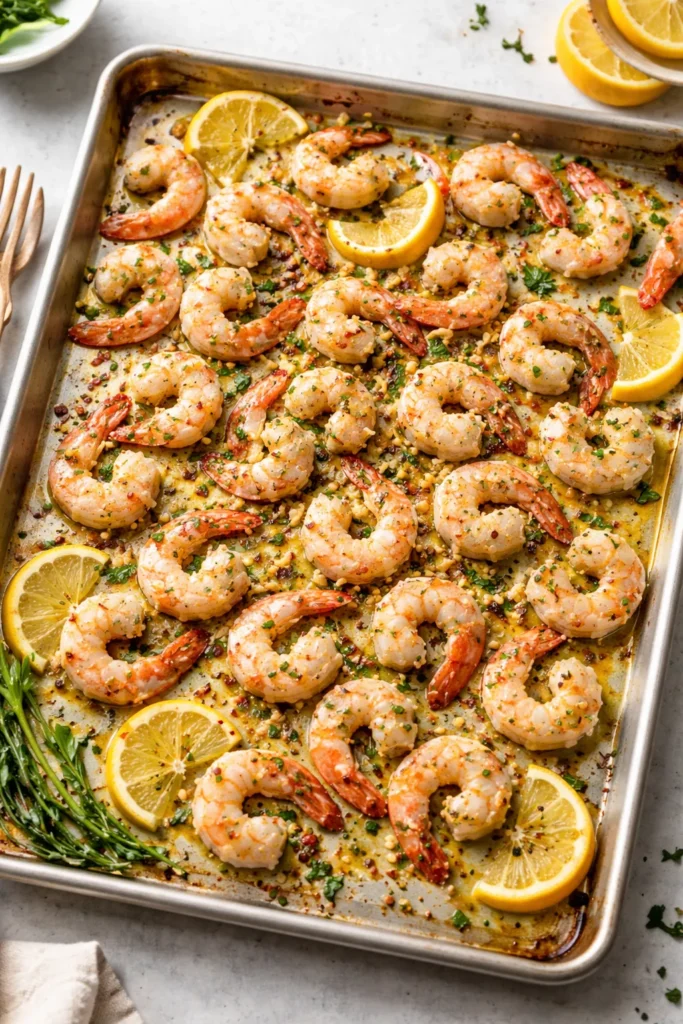
Shrimp cooks faster than any other seafood, which makes it a brilliant entry point for beginner cooks who feel nervous about timing. Season shrimp with lemon, garlic, olive oil, and a pinch of red pepper flakes, scatter them on a sheet pan, and they’re ready in 8 to 10 minutes flat. The oven’s even heat means you don’t have to stand over them or flip each one individually.
Why It Works for Beginners
Unlike fish fillets, shrimp are very forgiving when it comes to crowding. You can spread a full pound of them across one sheet pan and still get good results. The visual cue for doneness is unmistakable — shrimp turn from grey and translucent to pink and opaque, and they curl into a “C” shape when cooked through. An “O” shape means overcooked; a “C” shape means cooked just right.
What to Know
- Thaw frozen shrimp in cold water for 15 minutes before seasoning — they’ll cook more evenly
- Aleppo pepper flakes add a fruity, mild heat that works beautifully here if you can find them
- Fresh garlic can burn at high oven temperatures, so garlic powder is actually a smarter choice for this recipe
- Sautéed asparagus and couscous are the two fastest sides to pair with this — both are done in the same time the shrimp takes
5. Easy Fish Tacos with Creamy Slaw
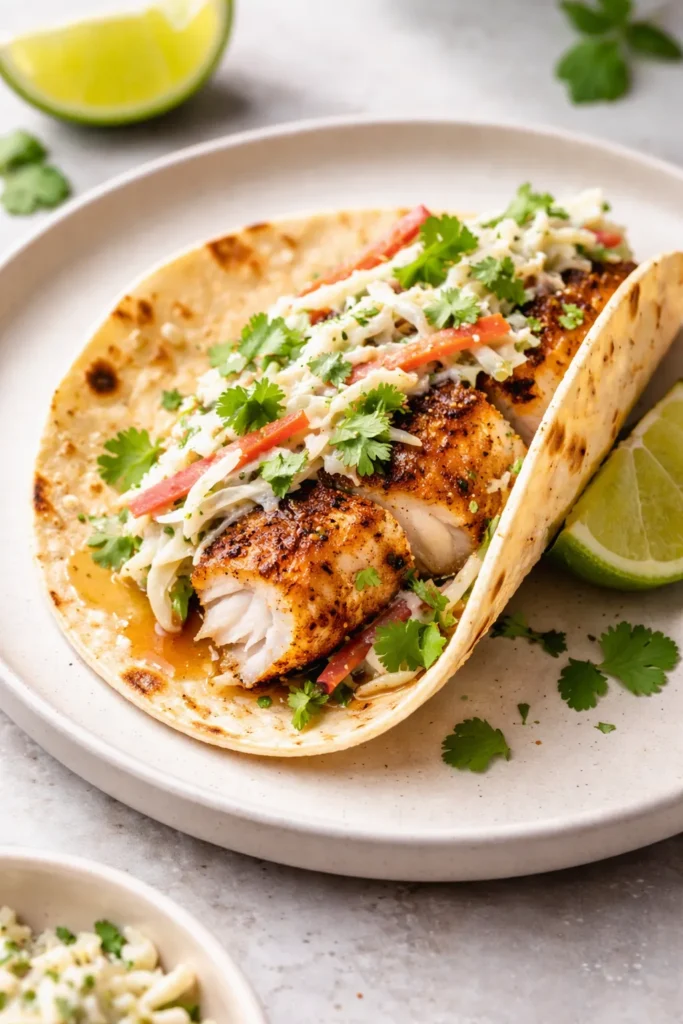
Fish tacos are endlessly customizable and genuinely fun to put together. Bake or pan-sear any mild white fish — cod, tilapia, mahi mahi — with a dry spice rub of cumin, smoked paprika, garlic powder, and a pinch of cayenne. While the fish cooks, toss together a quick slaw of shredded cabbage, lime juice, a spoonful of mayo or sour cream, and some chopped cilantro.
Why It Works for Beginners
There’s built-in flexibility here that makes this recipe nearly impossible to mess up. If the fish flakes slightly more than intended, it just gets tucked into the tortilla and nobody notices. If the slaw is a little underdressed, an extra squeeze of lime fixes it immediately. And the whole meal — fish, slaw, warm tortillas, and whatever toppings you like — is on the table in under 30 minutes.
What to Know
- Corn tortillas are traditional and hold up better to the fish’s moisture than flour tortillas
- Warm your tortillas directly over a gas flame or in a dry skillet for about 30 seconds per side
- Jalapeño and chipotle peppers add real heat — leave them out if you’re serving people who can’t handle spice
- Toppings to consider: sliced avocado, pickled red onions, hot sauce, fresh mango salsa
6. Pan-Seared Salmon with a Simple Pan Sauce
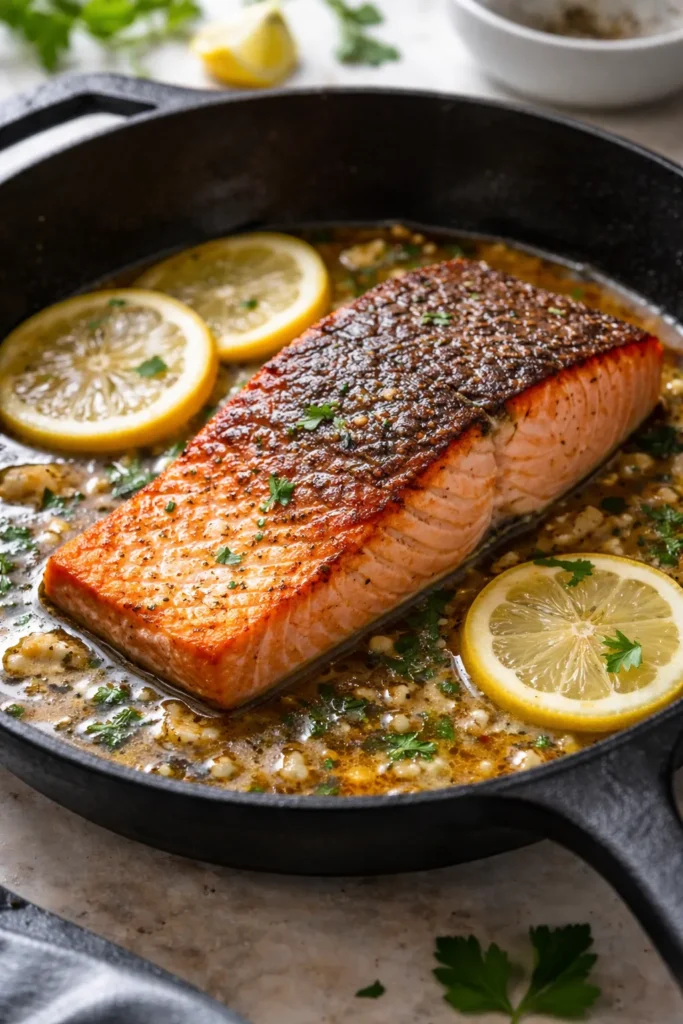
Salmon is probably the fish most home cooks feel least confident about, yet it’s one of the most forgiving once you understand a few basics. The goal with pan-searing is crispy skin and a slightly translucent center — salmon tastes far better at medium than fully cooked through. Heat your skillet until it’s genuinely hot before the fish goes in. Don’t touch it for at least 3 minutes. Then flip once.
Why It Works for Beginners
The beauty of pan-seared salmon is that the fish itself is rich enough to carry a very simple sauce. Once the fillets come out of the pan, drop in a knob of butter, some minced garlic, and a squeeze of lemon — it all sizzles together in about 30 seconds, picking up all the flavorful bits stuck to the bottom of the pan. Pour that over the fish and you’ve got something that looks restaurant-worthy.
What to Know
- Place the salmon skin-side down first and press it gently with a spatula for the first 30 seconds to prevent curling
- Season only the flesh side, not the skin — salting the skin too early draws moisture and makes it steam rather than crisp
- Salmon is done when it flakes at the thickest part and the sides have turned from dark pink to lighter pink
- Serve over Greek lemon rice, pasta, or a simple arugula salad with lemon vinaigrette
7. Mediterranean Baked White Fish with Tomatoes and Olives
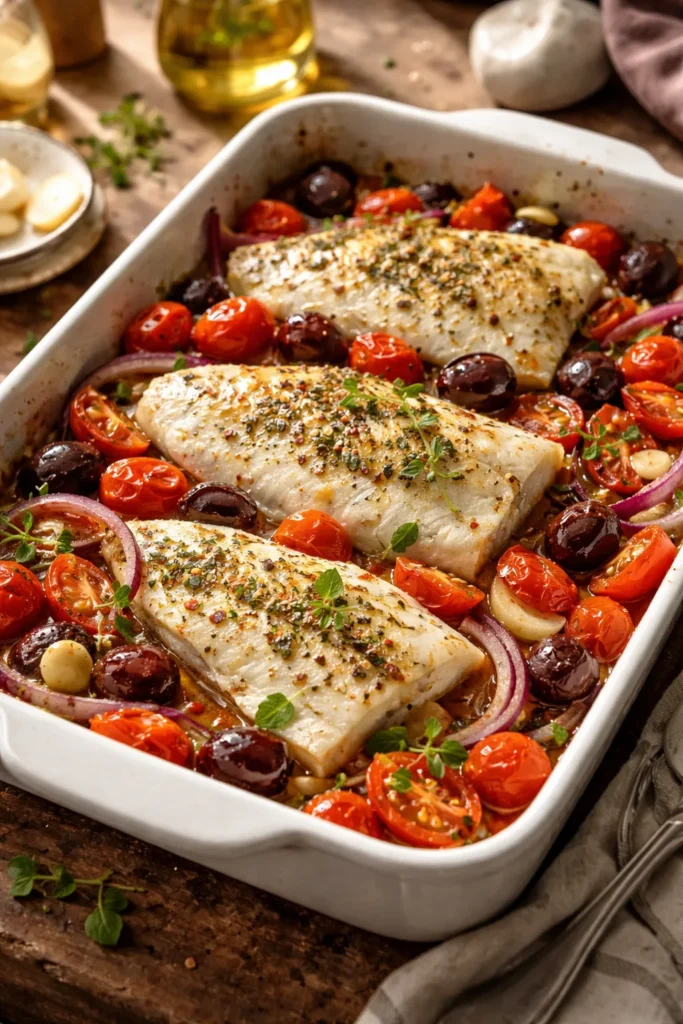
This is one of those dinners that looks far more impressive than the effort involved. White fish fillets go into a baking dish surrounded by halved cherry tomatoes, kalamata olives, thinly sliced red onion, garlic, oregano, and a generous pour of olive oil. The tomatoes burst and mingle with the olive oil as everything roasts together, creating a built-in sauce that’s bright, savory, and full of depth.
Why It Works for Beginners
Everything goes into one dish. There’s no sauce-making, no searing, no timing two things at once. You prep the vegetables, nestle the fish among them, season with salt and herbs, drizzle with olive oil, and let the oven handle it. The tomatoes and olives essentially baste the fish as they cook, keeping it moist even if you go a few minutes over.
What to Know
- Cod, halibut, grouper, and sea bass all work equally well here
- Score thicker fillets with a sharp knife across the flesh before baking to help the seasoning penetrate
- The dish is done when the tomatoes have burst, the onions have softened, and the fish flakes cleanly
- A scoop of lemon rice or some warm pita to soak up the tomato-olive sauce makes this a full, satisfying dinner
8. Salmon in Parchment Paper
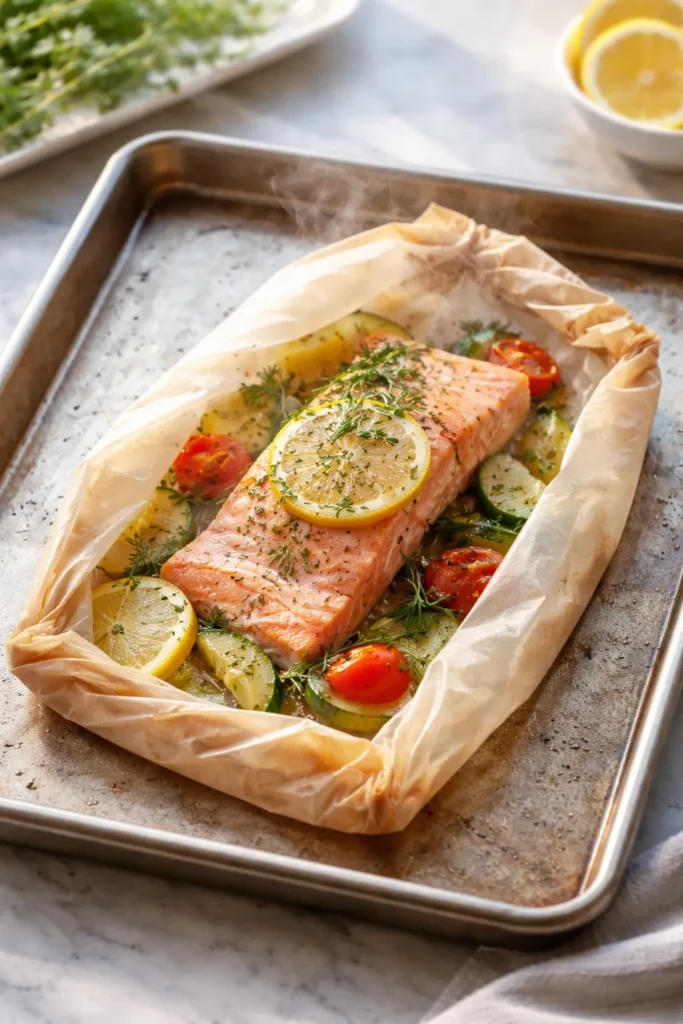
Cooking fish in a parchment paper packet — known as en papillote in French culinary tradition — is one of the most foolproof methods in existence. You seal the fish inside a folded parchment parcel with vegetables, herbs, and a splash of white wine or lemon juice. The steam trapped inside gently cooks everything together, and the result is fish so tender and moist it almost melts.
Why It Works for Beginners
There’s essentially no way to overcook salmon using this method. The steam inside the packet keeps the temperature regulated, and the fish won’t dry out the way it can in a hot oven or pan. Each packet is its own portion, which means dinner for four is just four parcels on a sheet tray. Serve each person their sealed packet and let them open it at the table — the burst of fragrant steam when the parchment tears open is genuinely dramatic in the best way.
What to Know
- Slice all vegetables thinly so they cook at the same rate as the fish — zucchini, asparagus, cherry tomatoes, and thin-sliced fennel all work well
- Don’t overfill the packet — you need enough space for steam to circulate inside
- Seal the edges tightly by folding them over in small pleats, or the steam escapes and the fish loses its cooking environment
- 12 to 15 minutes at 200°C/400°F is the sweet spot for a standard salmon fillet about 1 inch thick
9. Easy Brown Sugar Glazed Salmon
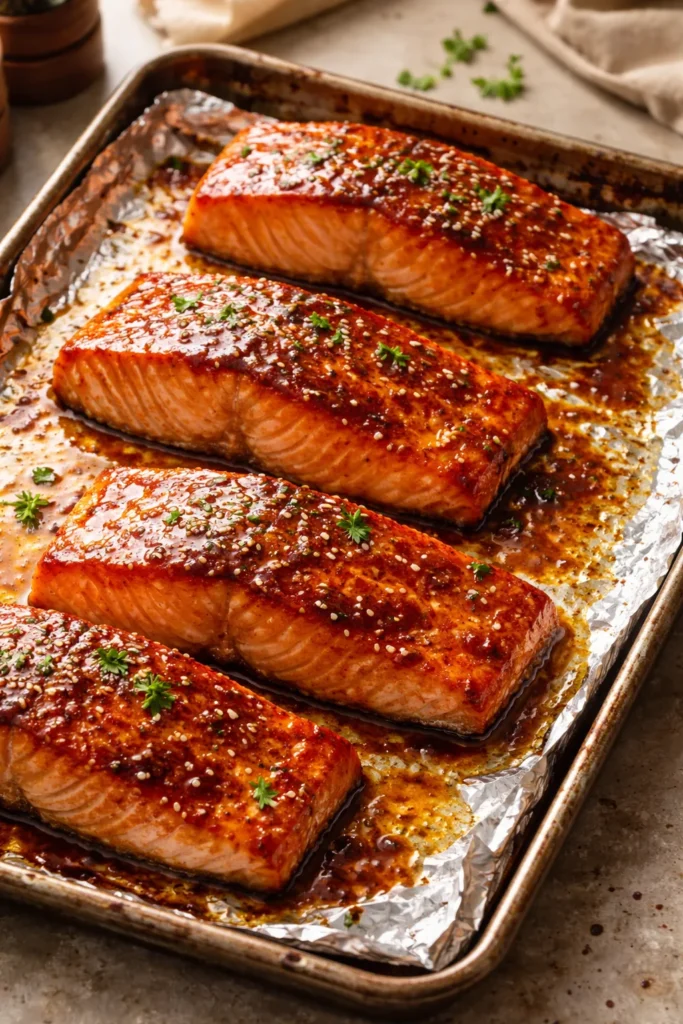
This might be the single best recipe for converting someone who thinks they don’t like fish. The brown sugar caramelizes against the salmon’s natural fat during baking, creating a sticky, slightly sweet crust on top that contrasts with the rich, savory flesh underneath. It sounds indulgent — and it is — but the whole thing takes about 25 minutes and involves almost no technique.
Why It Works for Beginners
The glaze is a simple mix of brown sugar, soy sauce, garlic powder, and smoked paprika. Brush it on top of the salmon fillets, pop them under the broiler or into a hot oven, and the sugar does its thing. No marinating time required. No flipping. The caramelization happens fast — usually within 10 to 12 minutes — so keep an eye on it toward the end to make sure it doesn’t tip from caramelized into burnt.
What to Know
- Line your baking tray with foil — the sugar in the glaze can stick aggressively and make cleanup miserable otherwise
- Smoked paprika adds a subtle depth that plain paprika doesn’t — it’s worth seeking out
- The salmon is done when it’s opaque on the sides and still slightly translucent in the very center
- This recipe pairs naturally with steamed rice and something green and simple, like sautéed spinach or snap peas
10. Fish Piccata with Capers and Lemon
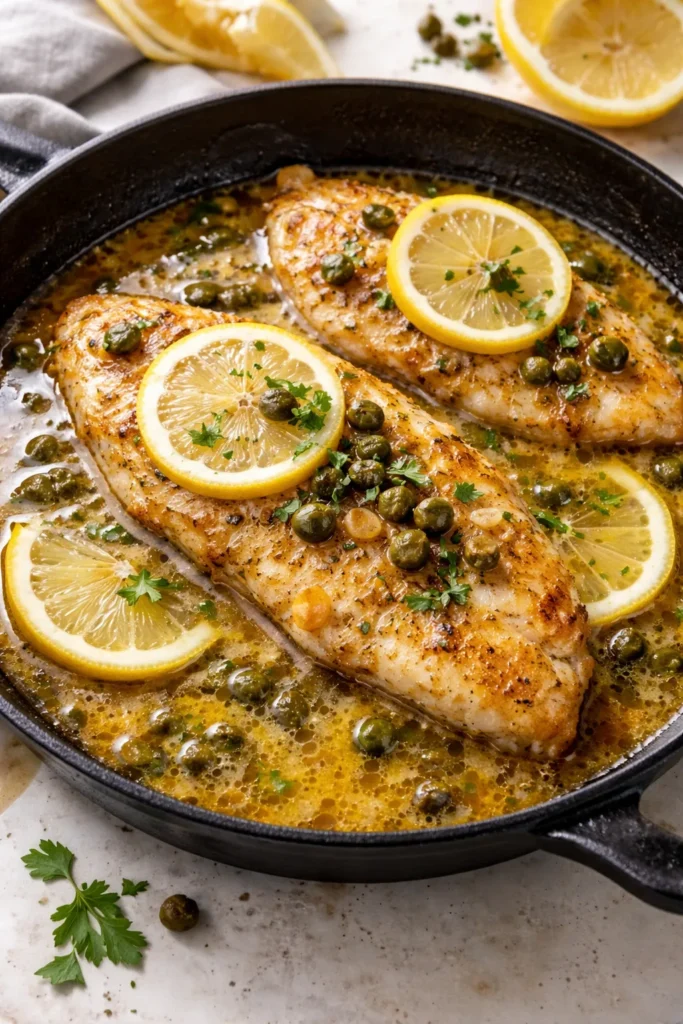
Most people know piccata from chicken, but the sauce — butter, fresh lemon juice, capers, and white wine — is actually made for fish. Trout is a particularly good match because the tangy brightness of the sauce balances the fish’s mild richness perfectly. Pan-sear the fillets for 3 minutes per side, pull them out, and build the sauce in the same pan using the flavorful brown bits left behind.
Why It Works for Beginners
This is a crash course in the most useful basic cooking technique there is: building a pan sauce. Once you understand the method — sear the protein, remove it, add liquid to deglaze, swirl in butter — you can apply it to almost any fish or protein you cook for the rest of your life. The sauce comes together in about 2 minutes, and the capers and lemon do the heavy flavor lifting so you don’t need much else.
What to Know
- Use fresh lemon juice only — bottled juice tastes flat and can make the sauce bitter
- Rinse the capers before adding them if you find their flavor too sharp straight from the jar
- Angel hair pasta tossed in the sauce is an outstanding accompaniment if you want a heartier meal
- Any flaky white fish can stand in for trout: cod, sole, tilapia, or flounder all work beautifully
11. Moroccan Fish in Spiced Tomato Sauce
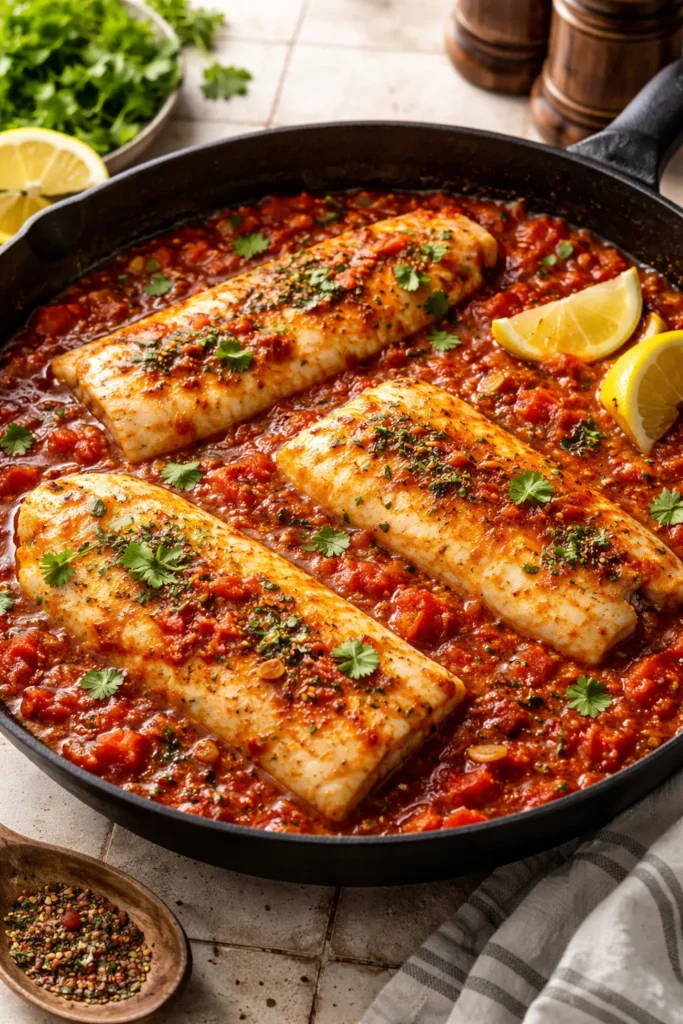
Known in North African cooking as Chraime, this dish involves gently simmering fish fillets in a richly spiced tomato sauce fragrant with cumin, coriander, paprika, garlic, and a hit of harissa or fresh chili. It sounds elaborate, but the sauce comes together in one pan in about 10 minutes, and the fish poaches gently in it for another 8 to 10 minutes. Dinner is ready before most people even find a parking spot.
Why It Works for Beginners
Poaching fish in sauce is actually more forgiving than pan-searing because the liquid keeps the temperature moderate and prevents the fish from drying out. If the fish needs another minute or two, the sauce protects it. The bold spices mask any slight imperfections in texture, and the whole dish tastes like you’ve been cooking for hours when you genuinely haven’t.
What to Know
- Rockfish, tilapia, halibut, sea bass, and cod all work — use whatever is freshest and most affordable
- Taste the sauce before adding the fish and adjust salt and heat to your preference — the fish won’t add much seasoning
- Once the fish goes into the sauce, put the lid on and resist the urge to stir — you’ll break the fillets apart
- Serve with couscous, rice, or flatbread to soak up the sauce, and a wedge of lemon on the side
12. Zucchini Pasta with Canned Tuna and Chile
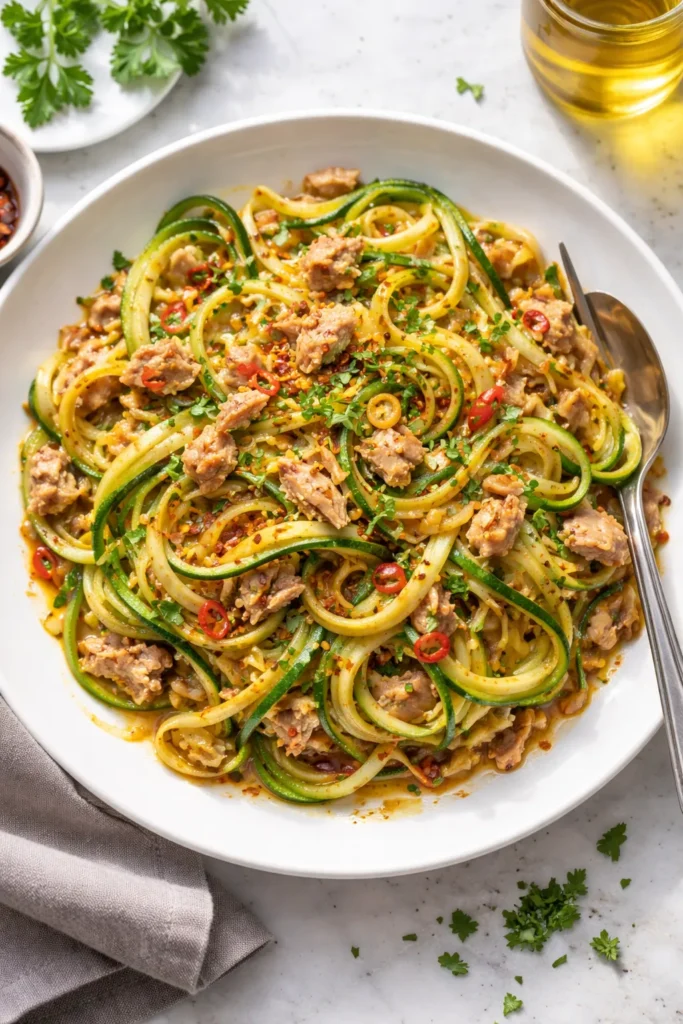
Canned fish deserves far more respect than it gets. Olive oil-packed tuna is rich, flavorful, and genuinely pantry-ready, and it comes together with pasta in about 20 minutes in a way that feels nothing like a tin-from-the-cabinet shortcut. This version uses zucchini, garlic, and a spoonful of your favorite chile paste — harissa, gochujang, Calabrian chili — to build a sauce around the tuna rather than just plopping it on top.
Why It Works for Beginners
The formula here is dead simple and completely adaptable: sauté an allium (garlic, onion, or shallot), add a vegetable (zucchini, peppers, eggplant), stir in a spoonful of chile paste, and toss with cooked pasta. The tuna goes in last, off the heat, so it stays tender and intact rather than getting tough and grainy from overcooking. Once you understand this framework, you can swap in different vegetables and chile pastes every single week and never make exactly the same thing twice.
What to Know
- Oil-packed tuna has a completely different texture and flavor from water-packed — it’s worth the extra cost
- Don’t drain all the oil from the can before adding the tuna; that oil carries flavor and helps coat the pasta
- Angel hair or linguine works best here because they cling to the light sauce; thicker pasta shapes feel heavy against delicate tuna
- A handful of torn fresh basil and a squeeze of lemon at the end makes this taste fresh rather than pantry-heavy
Final Thoughts
Fish is fast, nutritious, and genuinely delicious when you approach it with the right recipe and a little confidence. The 12 dinners above span everything from a 10-minute broiled crumbed fish to a richly spiced Moroccan tomato sauce — and every single one of them is achievable on a weeknight without any special training.
Start with whichever one feels least intimidating. Master the technique behind it. Then move to the next. Before long, you’ll have a mental library of approaches — searing, baking, broiling, poaching in sauce, cooking en papillote — that you can apply to any fish that catches your eye at the market.
The most important rule of all: don’t overcook it. Fish asks for very little time and very little fuss. Give it that, and it almost always delivers.