



There’s a particular kind of disappointment that comes with biting into cornbread that’s grainy, crumbly, and about as appetizing as sawdust. You’ve probably experienced it—that dry, mealy texture that makes you reach for butter or syrup just to get through a slice. The frustrating part is that cornbread should be moist, tender, and deeply satisfying, with that perfect balance between crumble and creaminess. The reality is that most cornbread recipes miss the mark because they treat cornbread like quick bread when it actually behaves more like a cake. This creamy cornbread casserole fixes that problem entirely by building moisture into every layer, using a custard-like base that bakes right into the cornbread itself.
What you’re looking at here isn’t a dry, crumbly quick bread—it’s a hybrid between traditional cornbread and a corn pudding, yielding something that’s simultaneously fluffy on top and creamy underneath. The magic happens because fresh corn kernels release their natural moisture and sweetness during baking, while a simple cream custard (made from whole milk, heavy cream, and eggs) permeates the entire casserole. You end up with cornbread that stays moist for days, slices cleanly, and actually improves in flavor and texture by the next day. This is the cornbread you make for Thanksgiving or potlucks, the kind people ask for seconds of, the kind that tastes like it came from a proper bakery or restaurant kitchen instead of a box mix hack.
The real secret isn’t complicated—it’s just a matter of understanding how moisture moves through cornmeal during baking and designing a recipe that guarantees enough of it reaches every bite. This casserole has converted countless people who thought they simply didn’t like cornbread, because suddenly they’re eating cornbread that actually tastes good.
What Makes This Cornbread Casserole Different
Most traditional cornbread recipes rely on the creaming method (butter and sugar beaten together) to incorporate air and create a tender crumb. That works reasonably well for cakes and muffins, but cornmeal is coarser and drier than wheat flour, so it needs more help staying moist. Standard recipes often produce cornbread that dries out rapidly because there’s no moisture reserve to keep feeding the crumb as it cools and sits.
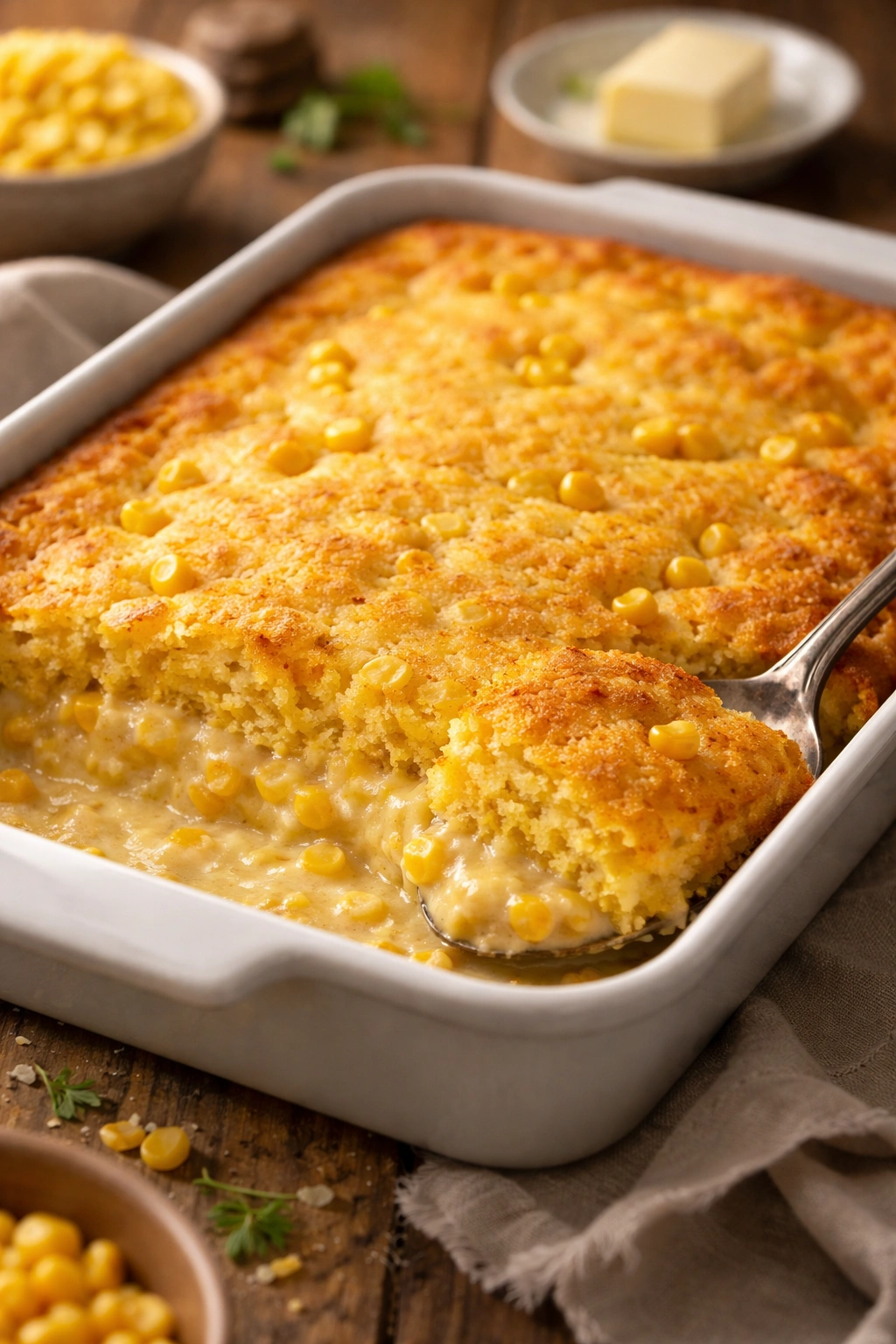
This casserole approach solves that by layering in two distinct sources of moisture. The first is a custard base—a simple mixture of milk, heavy cream, and eggs that you pour directly into the baking dish before the cornbread batter goes on top. As the casserole bakes, this custard rises up and becomes partially absorbed into the cornbread while remaining creamy underneath, creating that perfect texture separation. The second source is fresh corn kernels stirred directly into the batter, which release their natural moisture and a subtle sweetness that amplifies the corn flavor throughout.
The structural difference matters too. Rather than baking cornbread in a standard 9-inch pan (which can lead to dense, thick slices), this recipe uses a 9×13-inch casserole dish. The increased surface area means thinner baking time and more even heat distribution, preventing the dry, overcooked edges that plague traditional cornbread. The result is a casserole that bakes through perfectly, with a light, tender crumb and a moist, custard-like layer underneath that never, ever turns grainy or dry.
The Science Behind Creamy, Never-Dry Cornbread
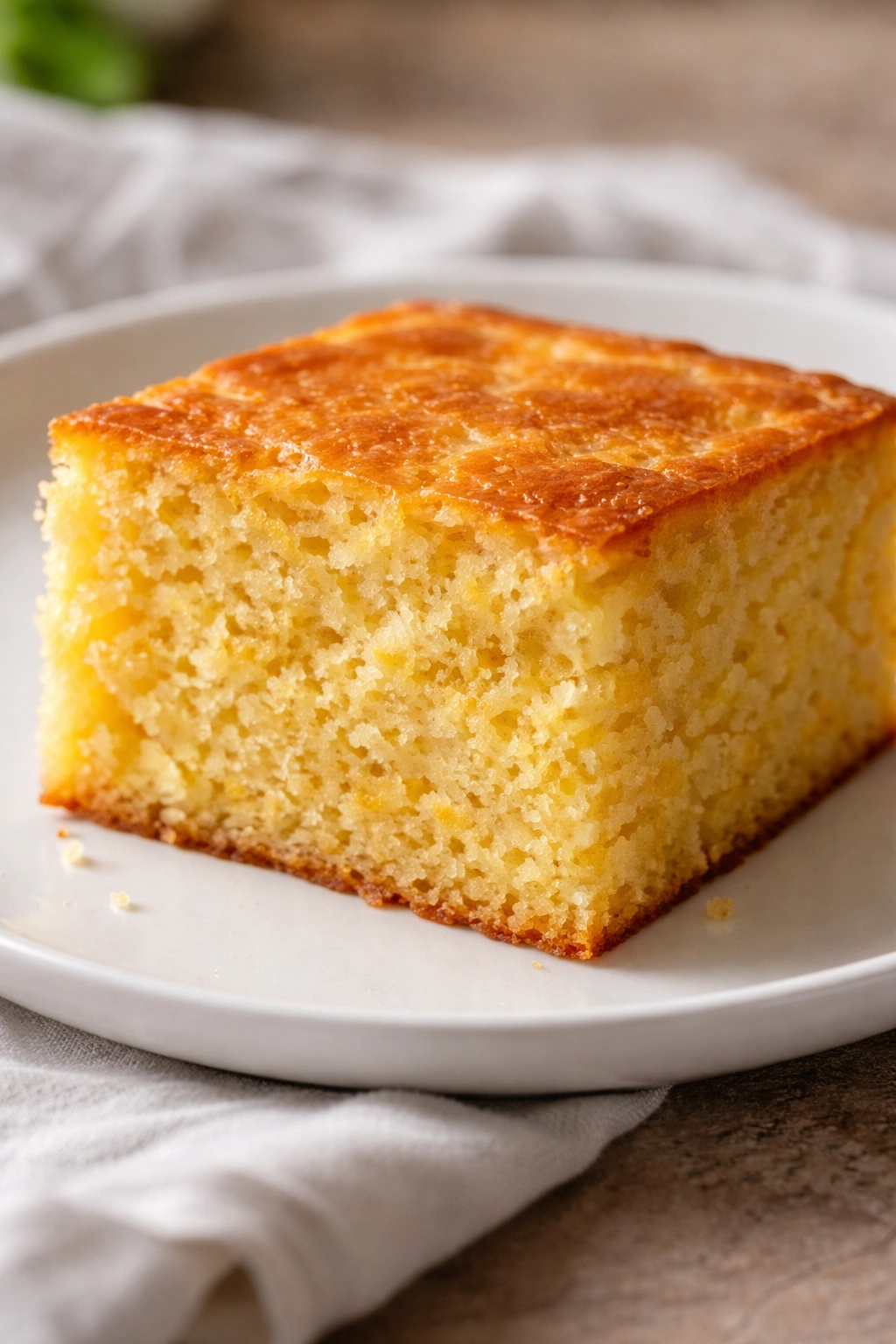
Understanding what makes cornbread dry helps explain why this method works so well. Cornmeal, unlike wheat flour, is primarily starch with very little gluten development. This means cornbread relies almost entirely on moisture to create a tender, pleasant texture. When moisture evaporates during and after baking—as it inevitably does—the cornmeal starches are left exposed and the crumb becomes grainy and crumbly. Traditional recipes often skimp on fat and moisture relative to cornmeal volume, which is why store-bought cornbread is notoriously dry.
The custard base addresses this at a chemical level. When eggs, milk, and cream are mixed together and poured into a baking dish, they form a matrix that can absorb the heat gradually. As the bottom of the casserole bakes, the custard sets partially but remains creamy. The cornbread batter, when poured on top or stirred partially together with the custard (depending on your preferred final texture), sits in this humid environment. The moisture from the custard migrates upward into the cornbread batter, hydrating the cornmeal granules and preventing the starch from over-drying. This is the same principle that keeps bread pudding tender—you’re creating a custard-based environment that naturally maintains moisture over time.
Fresh corn kernels add another moisture advantage. Corn is roughly 73% water by weight, and those kernels release that moisture during baking, creating a humid microclimate around each kernel. The natural sugars in corn also caramelize slightly during baking, contributing a deeper, more complex flavor than dried cornmeal alone can achieve. The combination of these two moisture sources means the casserole doesn’t just stay moist on baking day—it continues to reabsorb moisture evenly as it cools, actually becoming more uniformly moist by the next day.
Cornbread Casserole with Creamy Custard Base
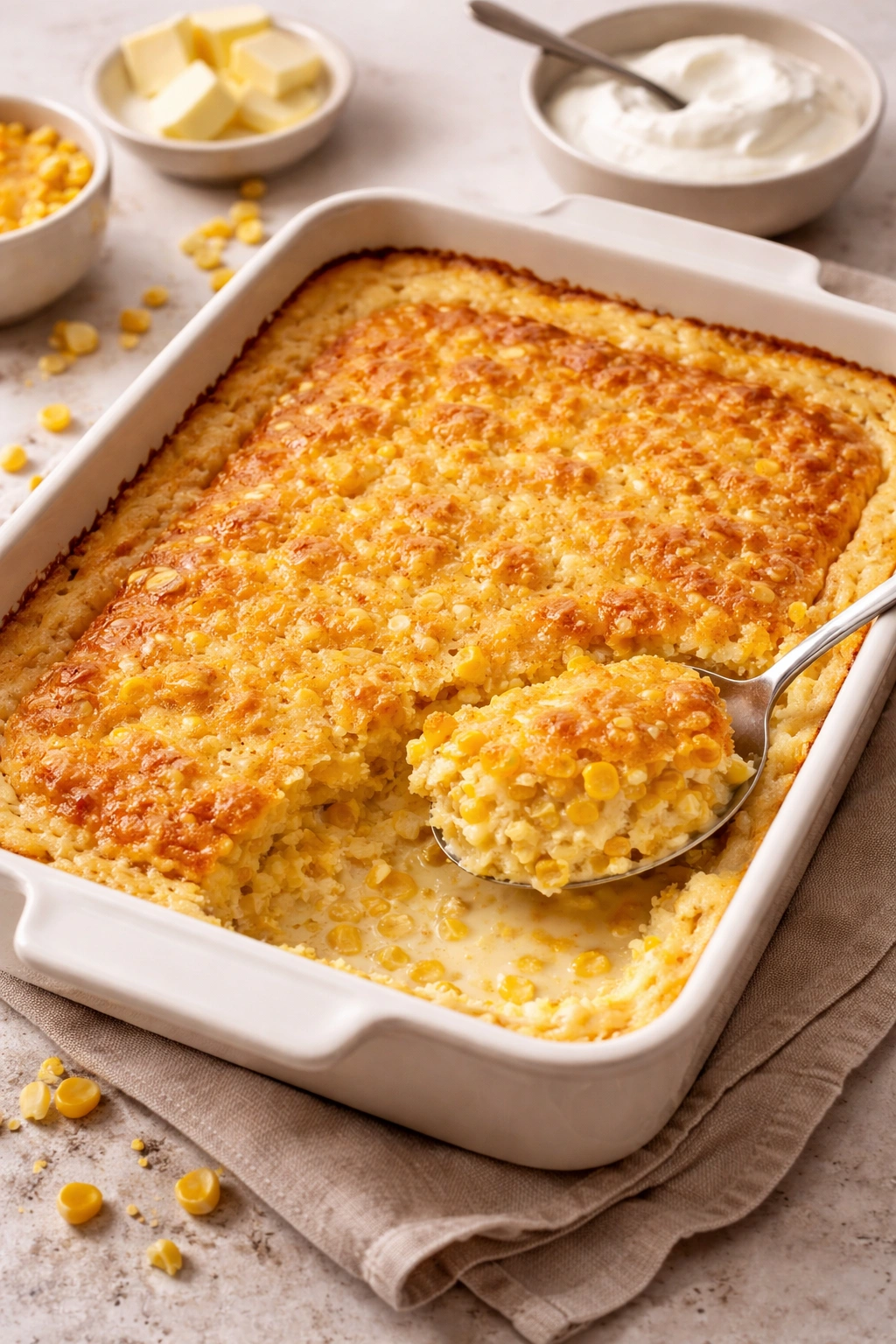
Yield: Serves 8 to 10 | Cuts into 8 generous portions
Prep Time: 20 minutes
Cook Time: 45 to 50 minutes
Total Time: 1 hour 10 minutes
Difficulty: Intermediate — The recipe involves standard mixing techniques and straightforward baking, but requires attention to the custard consistency and proper oven temperature for best results.
For the Custard Base:
- 1 cup whole milk, room temperature
- 1 cup heavy cream, room temperature
- 4 large eggs, room temperature
- 3 tablespoons granulated sugar
- 1 teaspoon fine sea salt
- ½ teaspoon freshly ground black pepper (white pepper for a more refined look)
- ¼ teaspoon ground cayenne pepper (optional, adds subtle depth)
For the Cornbread:
- 1 cup yellow cornmeal (polenta)
- 1 cup all-purpose flour
- ¼ cup granulated sugar
- 1 tablespoon baking powder
- 1 teaspoon fine sea salt
- ½ teaspoon baking soda
- 8 tablespoons (1 stick) unsalted butter, melted and cooled slightly
- 2 cups fresh corn kernels (about 4 medium ears, or frozen corn thawed and drained)
- 1 cup shredded sharp cheddar cheese (optional, but genuinely recommended)
- 3 tablespoons finely chopped fresh scallions or chives (green parts only, for garnish and subtle onion flavor)
- 1 tablespoon fresh thyme leaves (optional, complements corn beautifully)
Prepare the Pan and Oven:
-
Preheat your oven to 375°F (190°C) and position the rack in the center of the oven. Allow the oven at least 15 minutes to reach the proper temperature — using an oven thermometer is genuinely helpful here, as many ovens run hotter or cooler than displayed.
-
Generously butter a 9×13-inch baking dish, coating the bottom and all sides with softened butter. This prevents sticking and creates a golden, slightly crispy edge that contrasts beautifully with the creamy interior. If you prefer an extra-easy release, line the bottom with parchment paper, allowing a 1-inch overhang on each short side.
Make the Custard Base:
- In a medium bowl, whisk together the milk, heavy cream, eggs, sugar, salt, pepper, and cayenne pepper (if using) until the mixture is completely smooth and homogeneous. Do not overwhisk — you want a custard, not foam. Whisk just until the eggs are fully incorporated and the sugar has dissolved. Pour this custard into the prepared baking dish and set it aside. This is your moisture foundation, so don’t skip it even though it seems unconventional.
Prepare the Cornbread Batter:
-
In a large bowl, whisk together the cornmeal, all-purpose flour, sugar, baking powder, salt, and baking soda until completely combined and no lumps of baking powder remain. The dry mix should have a uniform yellow color with no streaks of white.
-
Pour the melted butter into a small bowl and let it cool for 2-3 minutes if it’s still steaming. This prevents the butter from scrambling the eggs when you add the wet ingredients. In a separate medium bowl, whisk together 1 cup whole milk and 1 large egg until completely combined, then stir in the melted butter until fully incorporated.
-
Pour the milk-egg-butter mixture into the dry ingredients and fold gently with a rubber spatula, stirring just until the batter comes together. Do not overmix — small lumps are completely fine and actually preferable. Overmixing develops gluten and makes cornbread tough. The batter should resemble thick pancake batter with visible streaks of dry mix just barely disappearing.
-
Fold in the corn kernels, cheddar cheese (if using), scallions, and thyme until evenly distributed throughout the batter. Use 8-10 gentle folds — don’t stir vigorously or you’ll overdevelop the batter’s gluten structure.
Bake the Casserole:
-
Pour the cornbread batter evenly over the custard base in the prepared baking dish. You can let the batter sit on top of the custard, or use a spatula to gently swirl them together slightly — this creates a more uniform creamy texture throughout rather than distinct custard and cornbread layers. Either approach works perfectly, so choose based on your preference.
-
Bake for 45 to 50 minutes, rotating the baking dish halfway through baking (around 22-23 minutes). The casserole is done when the top is deep golden brown, a toothpick inserted in the very center comes out with just a few moist crumbs clinging to it, and the edges have pulled away very slightly from the sides of the baking dish. If the top is browning too quickly but the center is still jiggly, loosely tent the casserole with aluminum foil for the remaining baking time.
-
Set the casserole on a wire cooling rack and allow it to rest for 10 minutes before serving. This resting period is crucial — it allows the custard to set slightly and firms up the crumb just enough for clean slicing, while maintaining the creamy texture underneath. Do not skip this rest or cut too early, or you’ll end up with a casserole that slumps when plated.
Pro Tips for Perfect Results Every Time
The most critical detail for creamy cornbread is maintaining proper oven temperature throughout baking. Even though you’ve preheated the oven, place an oven thermometer inside and verify that it’s actually at 375°F when you slide the casserole in. Many home ovens run 15-25 degrees off their displayed temperature, which directly affects baking time and texture. If your oven runs hot, lower the temperature to 365°F and bake a few minutes longer. If it runs cool, increase to 385°F. The goal is even, gentle baking that hydrates the cornmeal without crisping the edges excessively.
Using room-temperature eggs, milk, and cream matters more than most recipes acknowledge. Cold ingredients take longer to incorporate and heat through during baking, which can result in an uneven texture with slightly raw-tasting pockets of flour. Warm ingredients blend together smoothly and bake more evenly, creating uniform moisture distribution. Simply let your eggs, milk, and cream sit on the counter for 15-20 minutes before mixing.
Fresh corn kernels genuinely make a difference in flavor and texture compared to canned or frozen corn. If you’re using fresh corn, cut the kernels from the cob by standing the cob upright on a cutting board and running a sharp knife downward, working around the cob. If frozen corn is your only option, thaw it completely and drain away any excess liquid before adding it to the batter—extra moisture from frozen corn can make the casserole soggy.
Don’t skip the gentle folding technique when combining wet and dry ingredients. Overmixing cornbread batter is the primary reason it turns out tough and dense. Mix just until the dry ingredients are moistened and a few small lumps remain visible. Those tiny lumps will hydrate during baking and disappear without toughening the final crumb.
Common Mistakes and How to Avoid Them
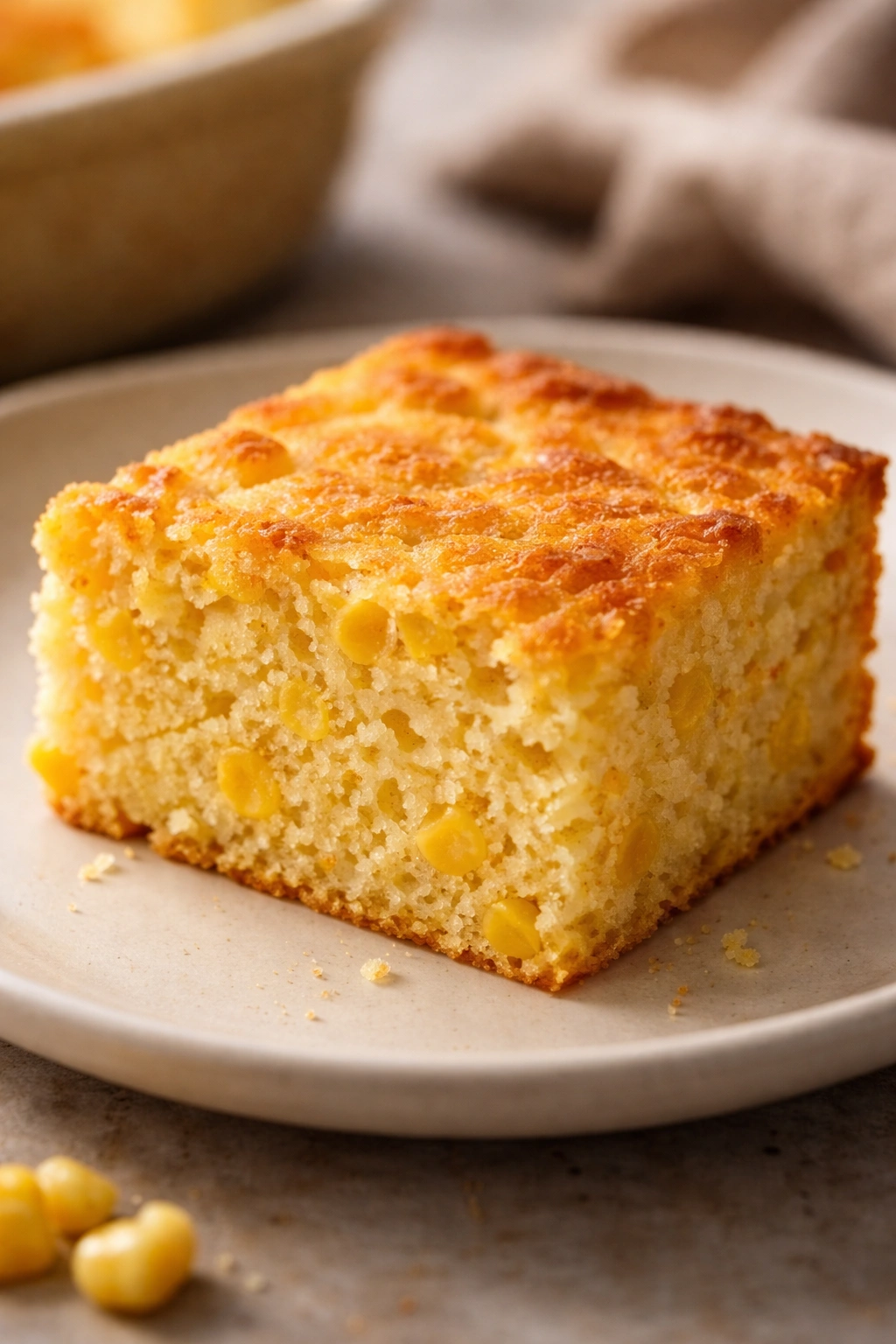
The most common mistake is skipping or reducing the custard base. Many cooks see that step and think it’s an extra complication, but that custard is what makes this casserole different from dry, traditional cornbread. Without it, you’ll end up with standard cornbread that’s only marginally better than a box mix. Commit to the custard—it takes 5 minutes to prepare and transforms the entire outcome.
Another frequent error is not letting the casserole rest after baking. If you cut into it immediately while it’s steaming hot, you’ll disrupt the custard layer before it’s set, resulting in a pooling, unstable casserole that slides around on the plate. The 10-minute rest is non-negotiable. Set a timer if you tend to forget.
Overmixing the cornbread batter happens when cooks treat it like regular quick bread batter. Cornmeal requires a lighter touch than wheat flour because it has no gluten development. Mix until you see just a few small lumps of flour still visible, then stop. Those lumps will fully hydrate in the oven without creating a tough texture.
Using very old cornmeal creates grainy, poor-flavored cornbread. Cornmeal oxidizes quickly and tastes unpleasantly musty after sitting in the pantry for months. Buy cornmeal in smaller quantities from a source with good turnover—many grocery stores sell it in the baking aisle, and specialty or bulk food stores often have fresher stock. If your cornmeal tastes slightly musty when you smell it, don’t use it.
Baking at too high a temperature causes the edges to crisp and brown excessively while the center remains underbaked. This creates a casserole that’s burnt-tasting on the edges and wet in the middle, since you remove it from the oven before it’s fully set. Using an oven thermometer prevents this entirely.
Variations to Customize Your Casserole
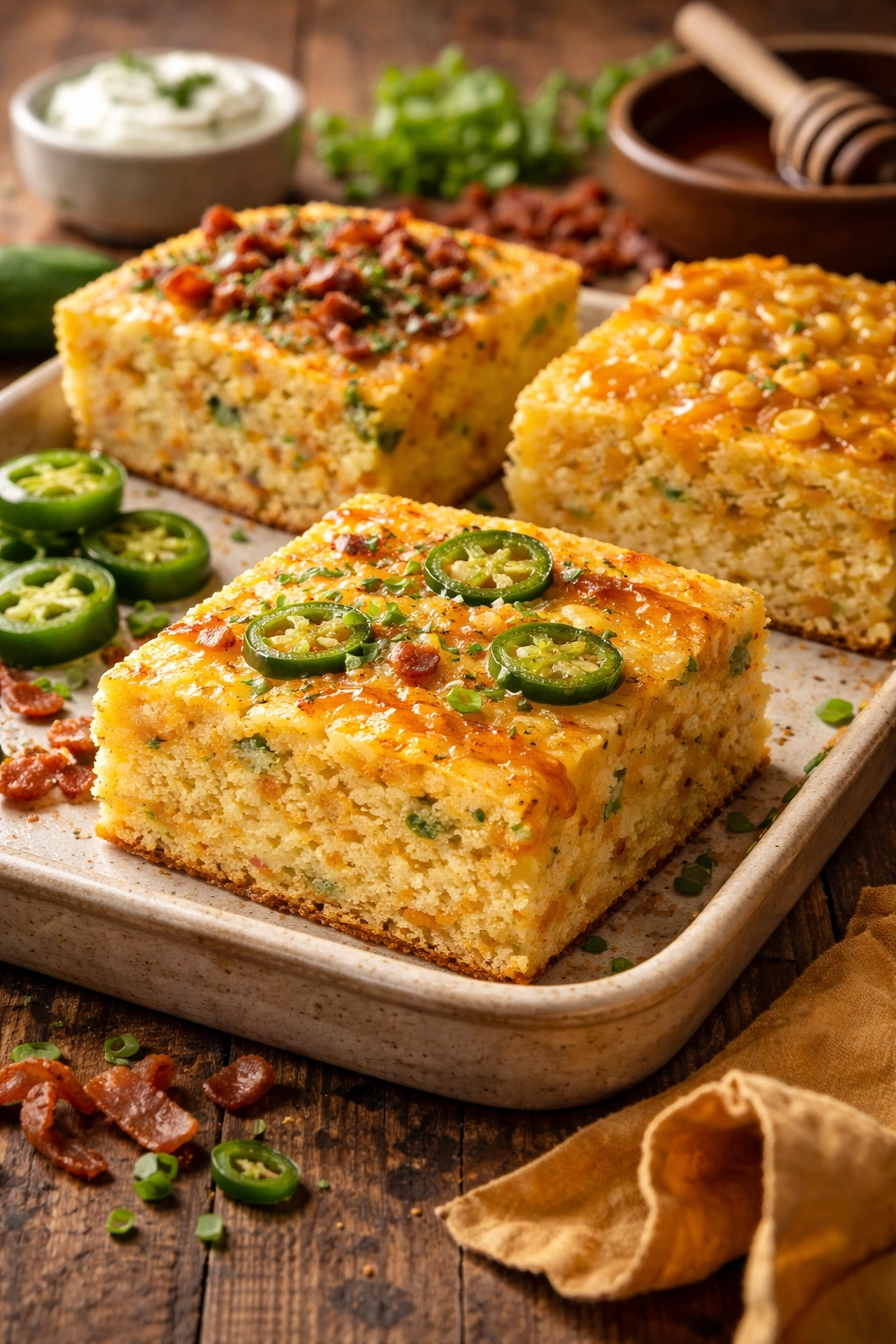
Jalapeño and Cheese Cornbread: Add 2-3 diced fresh jalapeños (seeds removed for less heat, seeds included for more) and replace the sharp cheddar with a combination of cheddar and pepper jack cheese. This creates a slightly spicy version that pairs beautifully with chili or pulled pork.
Bacon and Herb Cornbread: Crisp 6 strips of bacon, crumble them, and fold into the batter along with the corn and an additional tablespoon of fresh thyme or sage. The bacon fat adds richness and a savory depth that makes this version perfect alongside roasted vegetables or grilled fish.
Southern Creamed Corn Casserole: Reduce the fresh corn to 1 cup and add 1 cup of high-quality canned or frozen creamed corn (drained if using canned). This creates a slightly more custardy, corn-forward version that’s even creamier and more luxurious.
Honey-Butter Cornbread: Add an extra tablespoon of honey to the custard base and brush the baked casserole immediately after removal from the oven with a mixture of 2 tablespoons melted butter mixed with 1 tablespoon honey. This creates a subtle sweetness and glossy finish that works especially well for breakfast or brunch.
Vegetable-Studded Cornbread: Replace 1 cup of the fresh corn with a combination of finely diced roasted bell peppers (red, yellow, or orange), roasted zucchini, and caramelized onions. This adds complexity and works well alongside lighter spring or summer meals.
Gluten-Free Cornbread: Substitute the all-purpose flour with a 1:1 gluten-free flour blend that includes xanthan gum. The rest of the recipe remains exactly the same. The texture will be nearly identical because the custard base provides so much moisture that the cornmeal is the primary structure-builder anyway.
Vegan Cornbread Casserole: Replace the dairy custard base with a plant-based version: 1 cup unsweetened oat milk + ½ cup canned full-fat coconut cream + ½ cup aquafaba (the liquid from a can of chickpeas) + 3 tablespoons cornstarch whisked together until smooth, plus the sugar, salt, pepper, and cayenne. Replace the milk in the batter with oat milk and add 2 tablespoons of ground flaxseed mixed with 6 tablespoons water (let sit 5 minutes to thicken) as an egg replacement. Use vegan butter instead of regular butter. The result is shockingly close to the original.
Make-Ahead and Storage Guide
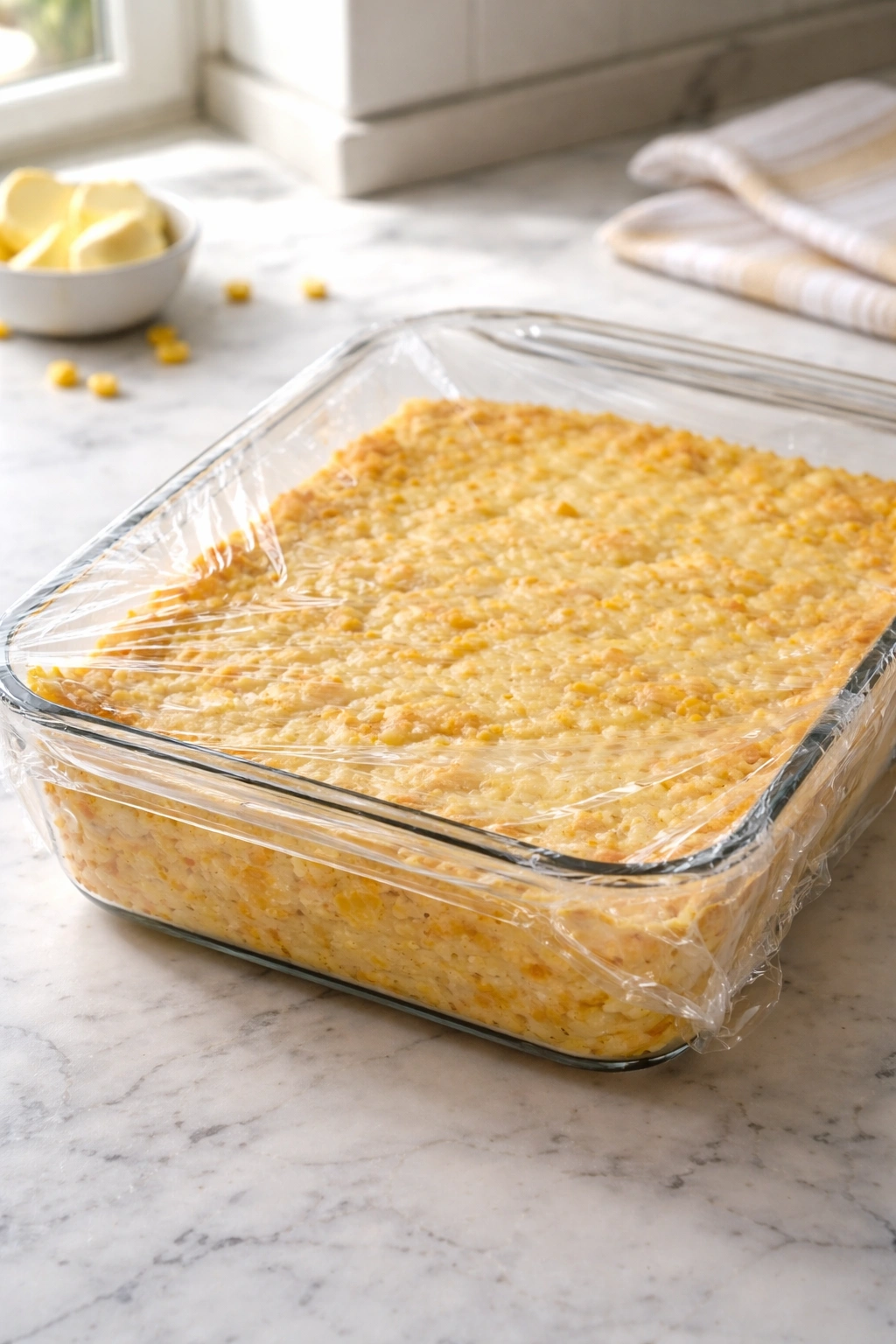
This casserole is genuinely better the day after baking. As it cools completely and sits overnight, the cornbread continues to absorb moisture from the custard layer, becoming more uniformly moist throughout. If you’re serving it at a potluck or gathering, bake it a full day in advance, cover it, and reheat it gently before serving.
Store the cooled casserole covered with plastic wrap or in an airtight container at room temperature for up to 2 days. It will remain perfectly moist and delicious. If your kitchen is very warm (above 75°F), move it to the refrigerator after 8 hours to prevent any potential food safety issues.
To refrigerate the casserole for longer storage (up to 4 days), cover it tightly with plastic wrap and then aluminum foil to prevent the top from drying out. The moisture in the custard base keeps the cornbread from becoming dry even after several days in the cold.
Freezing works beautifully if you want to make this casserole well in advance. Cool it completely, then wrap the entire baking dish (or cut portions) tightly with plastic wrap, followed by aluminum foil, and freeze for up to 2 months. To thaw and reheat, transfer it to the refrigerator to thaw overnight, then reheat gently in a 325°F oven, covered with foil, for about 20-25 minutes until warmed through. This prevents the top from drying out while the interior warms.
Individual portions can be frozen separately in airtight containers—wrap each slice tightly in plastic wrap and then foil. Thaw overnight in the refrigerator and reheat for 10-15 minutes in a 325°F oven, covered with foil.
The casserole also reheats beautifully in the microwave if you’re short on time. Cut a portion, place it on a microwave-safe plate, cover it loosely with a damp paper towel, and microwave at 50% power for 1-2 minutes until warmed through. The damp paper towel prevents excessive drying during reheating.
Best Ways to Serve and Pair
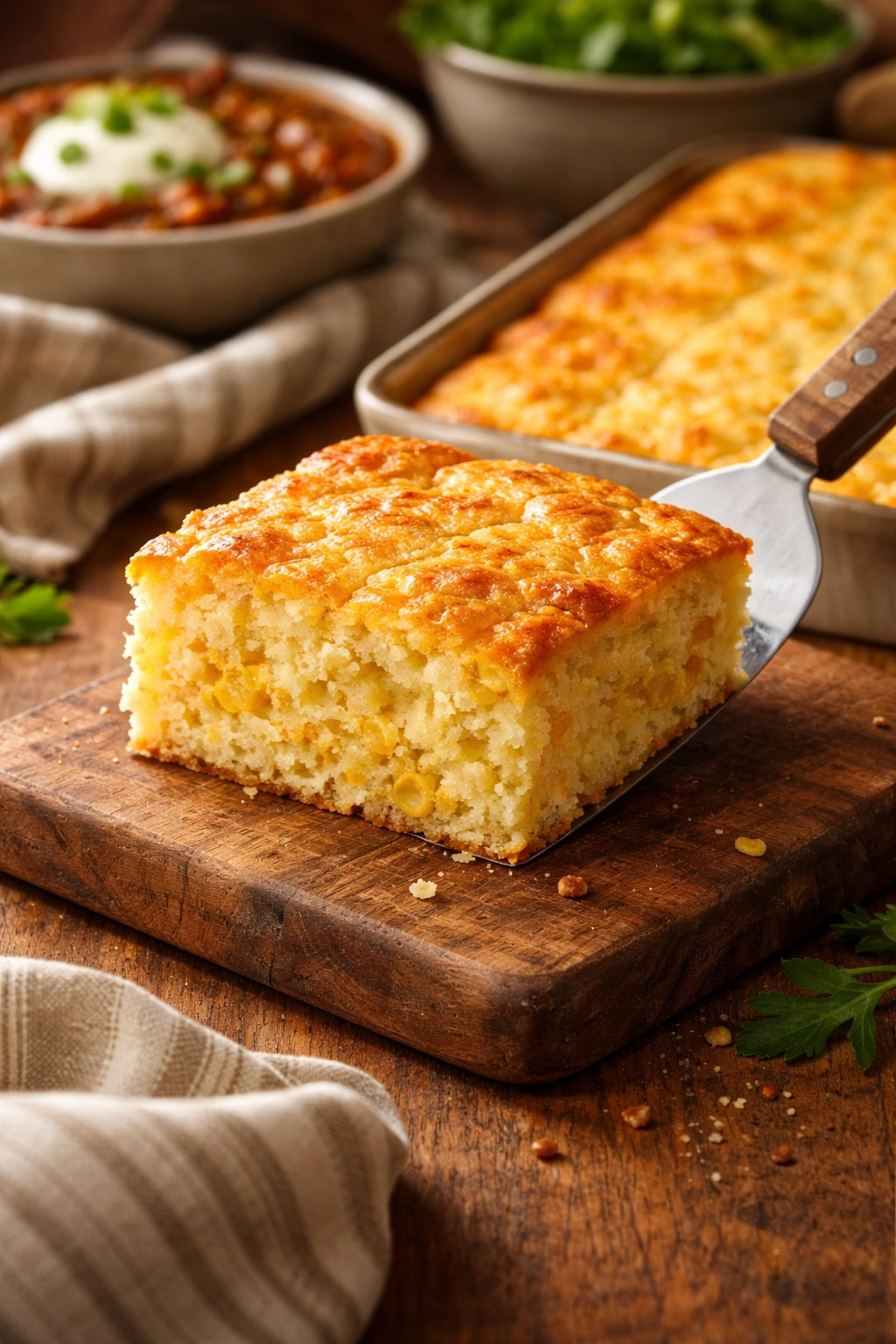
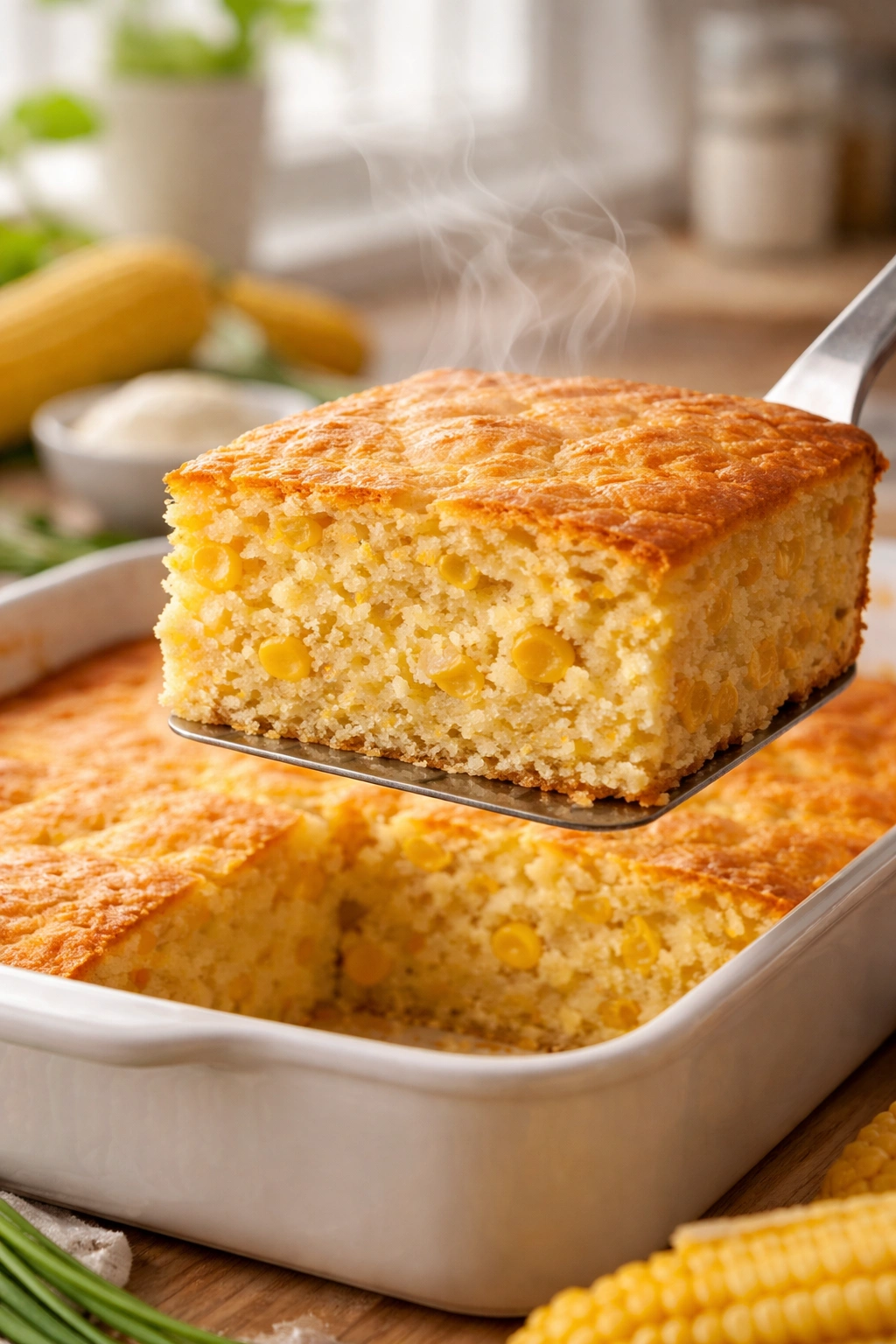
Serve this cornbread casserole warm or at room temperature—it’s genuinely delicious at any temperature. Cut it directly in the baking dish using a sharp knife, or turn the entire casserole out onto a cutting board for more dramatic presentation. A server or sturdy offset spatula lifts each slice cleanly without falling apart.
For casual family dinners, serve generous squares alongside chili, hearty soups, or slow-cooked stews. The creamy interior complements the richness of beef chili or white chicken chili perfectly. A simple green salad tossed with vinaigrette cuts through the richness and makes a balanced meal.
At holiday dinners, this casserole is a natural alongside roasted turkey, ham, or prime rib. Offer it alongside traditional sides like cranberry sauce, roasted vegetables, and gravy. Guests often return to this more eagerly than to traditional dressing or stuffing because the texture is so different and genuinely craveable.
For brunch or breakfast service, pair it with scrambled eggs, smoked salmon, or a simple green salad. The honey-butter variation works especially well for morning meals. Serve it with hot sauce on the side—fresh jalapeño sauce or a classic hot sauce adds a brightness that wakes up the palate.
A simple compound butter elevates every slice. Mix softened butter with fresh herbs (cilantro, sage, or thyme), a squeeze of lime juice, and a pinch of salt. Slather a portion on a warm slice right before eating and let it melt into the cornbread.
Hot sauce is the ultimate companion. Keep fresh salsa, sriracha, hot honey, or a classic Louisiana-style hot sauce nearby for guests to add to taste. The creamy cornbread provides a perfect neutral base for any heat level.
Fresh corn salsa (corn kernels tossed with lime juice, diced jalapeño, red onion, cilantro, and salt) makes a brilliant accompaniment that doubles down on corn flavor without being repetitive.
Troubleshooting Dry or Dense Cornbread
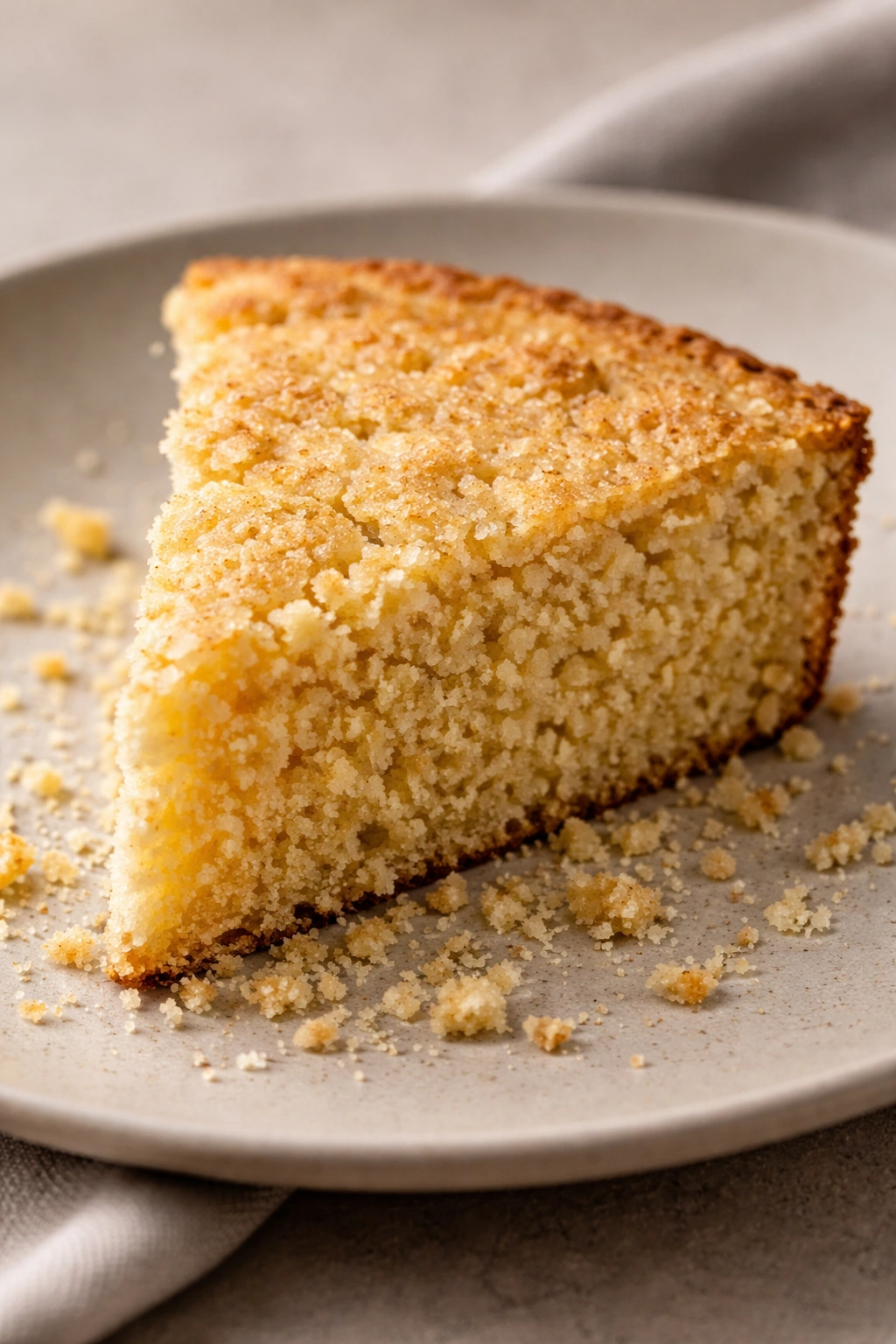
If your finished casserole is dry despite following the recipe exactly, the most likely culprit is old cornmeal or insufficient oven moisture. Purchase fresh cornmeal from a source you trust, and verify that your oven temperature is accurate with a thermometer. If your oven runs hot, it may be baking the casserole faster than the custard can penetrate the cornbread.
If the texture is dense and gummy rather than creamy, you likely overmixed the cornbread batter. Next time, use the folding method instead of stirring, and stop mixing as soon as the dry ingredients are barely moistened. Overmixing develops gluten in cornmeal-based recipes, creating a tough, dense crumb.
If the top browns too quickly while the center remains underbaked, your oven temperature is running hot. Lower the temperature by 10-15 degrees and tent the casserole loosely with aluminum foil partway through baking to prevent excessive browning.
If the custard base hasn’t set and the casserole feels soupy in the middle, it’s underbaked. This sometimes happens if your oven temperature was low or your oven doesn’t heat evenly. A toothpick should come out with just a few moist crumbs, not wet batter. Return the casserole to a 375°F oven for an additional 5-10 minutes and test again.
If the casserole has separated (liquid pooling at the bottom with dry cornbread on top), you’ve cut into it before it fully rested. Next time, let it rest for the full 10 minutes before cutting. This allows the structure to set enough to hold its moisture without becoming overcooked.
Final Thoughts
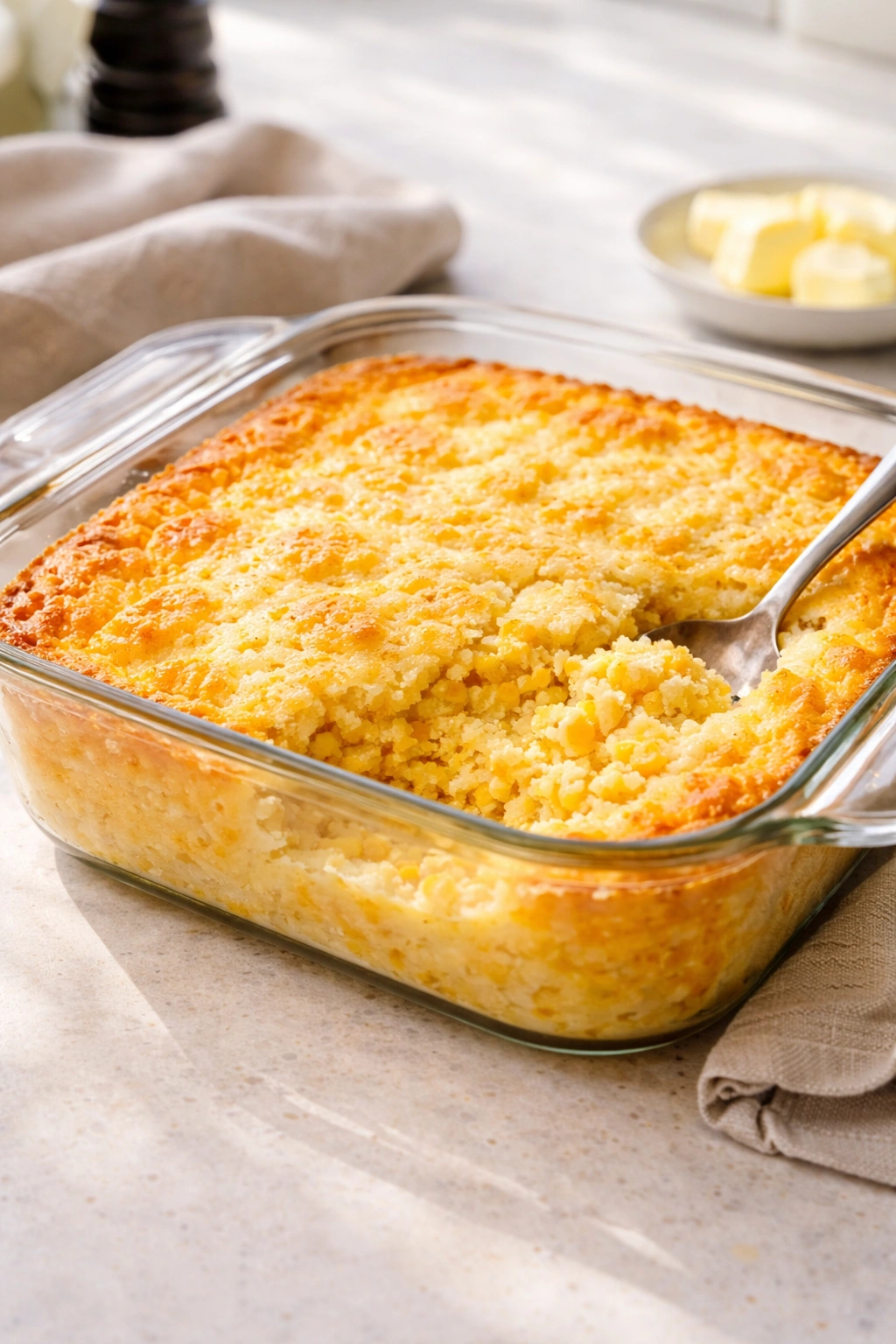
A truly great cornbread casserole changes how you think about cornbread entirely. Once you’ve experienced creamy, moist, tender cornbread that improves with time rather than drying out, it’s hard to go back to the dry crumbles of traditional recipes. This casserole delivers exactly that—reliable, delicious results that make you look like a confident home cook every single time you make it.
The custard base is the secret, but it’s also the simplest part of the recipe. Five minutes of whisking together milk, cream, and eggs gives you the moisture insurance policy that guarantees success. Pair that with fresh corn, gentle mixing, and proper oven temperature, and you’ve got a casserole that works whether you’re feeding your family or bringing it to a holiday gathering.
Make this once and you’ll understand why it becomes a recipe people request by name. Make it twice and you’ll develop your own variations and preferences. Serve it once and you’ll be shocked by how eagerly people eat it and ask for the recipe. That’s the mark of truly good food—it’s simple enough to execute reliably, but good enough to make people wonder what your secret is.
