



Nothing quite captures the spirit of a potluck like a warm, bubbling casserole pulled straight from the oven. But here’s the thing — not all casseroles are created equal, and a mediocre side dish at a gathering can disappear unnoticed (or worse, come home half-full). Creamy corn casserole, on the other hand, is the kind of dish that people actually wait for. It’s comforting, crowd-pleasing, and somehow elegant enough for holiday dinners while still feeling casual enough for a church social. The magic isn’t just in the corn itself — it’s in building layers of flavor and texture that transform something simple into something genuinely craveable.
What makes this particular version so special is the balance between creamy and textured, rich without being heavy, and flavorful without any pretension. You’re not dealing with a soupy mess or a dry, grainy disappointment. Instead, you get a casserole with a custard-like creaminess, a golden crusty top, pockets of melted cheese, and actual corn flavor that isn’t buried under mayo or cream of this-and-that. It’s the kind of dish that arrives at the potluck in a pretty baking dish, gets complemented by everyone, and comes home mostly empty.
The real beauty of this casserole is that it’s genuinely foolproof if you follow the right steps. You don’t need special equipment, rare ingredients, or advanced cooking skills. What you need is an understanding of what makes corn casserole work, a few quality ingredients, and about 75 minutes from your kitchen to the table. Whether this is your first time making it or you’re reviving a family recipe, you’ll find everything you need to succeed right here.
Why Creamy Corn Casserole Is the Perfect Potluck Move
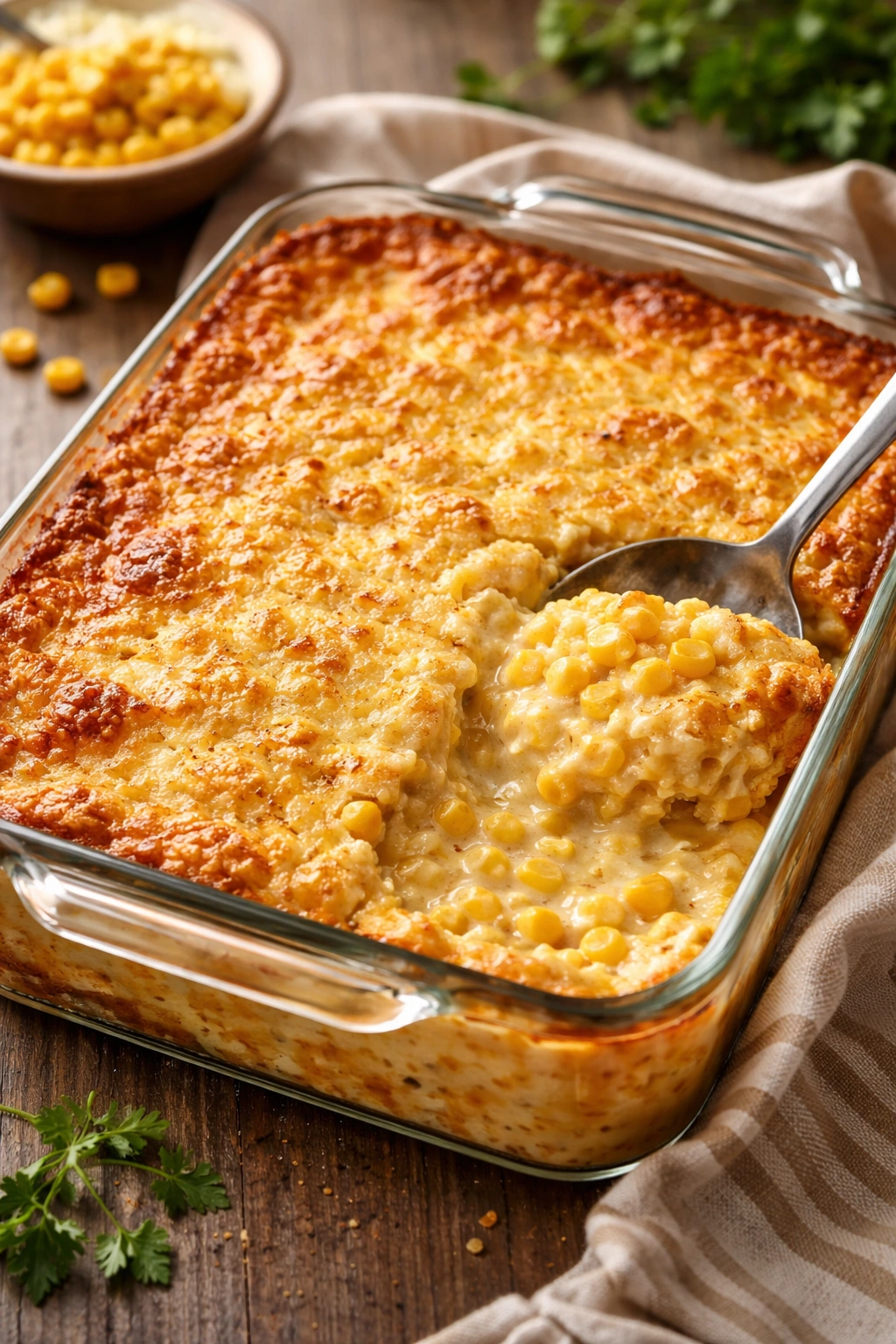
A great potluck dish walks a delicate line. It has to taste genuinely good, obviously, but it also needs to be sturdy enough to handle the logistics of being transported to someone else’s kitchen, held warm in someone else’s oven (possibly alongside six other casseroles), and reheated if necessary. Creamy corn casserole checks every single one of these boxes, which is exactly why it’s been a potluck staple for generations.
Unlike delicate dishes that suffer from reheating or casseroles that dry out if they sit for more than ten minutes, corn casserole actually improves when it sits briefly. The custard-like base sets more firmly, the flavors knit together, and the top develops a deeper golden-brown color. You can prepare it at home, transport it in the baking dish you plan to cook it in, and it’ll be absolutely fine traveling in a car. You can also make it completely ahead of time, refrigerate it overnight, and bake it the morning of the potluck — or even bring it unbaked and ask to use the host’s oven for the last hour of setup time.
People genuinely love corn casserole too, which matters more than you’d think. You’re not bringing an intimidating or trendy dish that makes people nervous about whether they’ll like it. Corn, cream, cheese, and butter are flavors that almost everyone gravitates toward, and a homemade version tastes noticeably better than anything from a can. Guests will eat it, ask for the recipe, and remember your casserole next time they’re thinking about what would be perfect at a gathering.
Serving and Timing Info
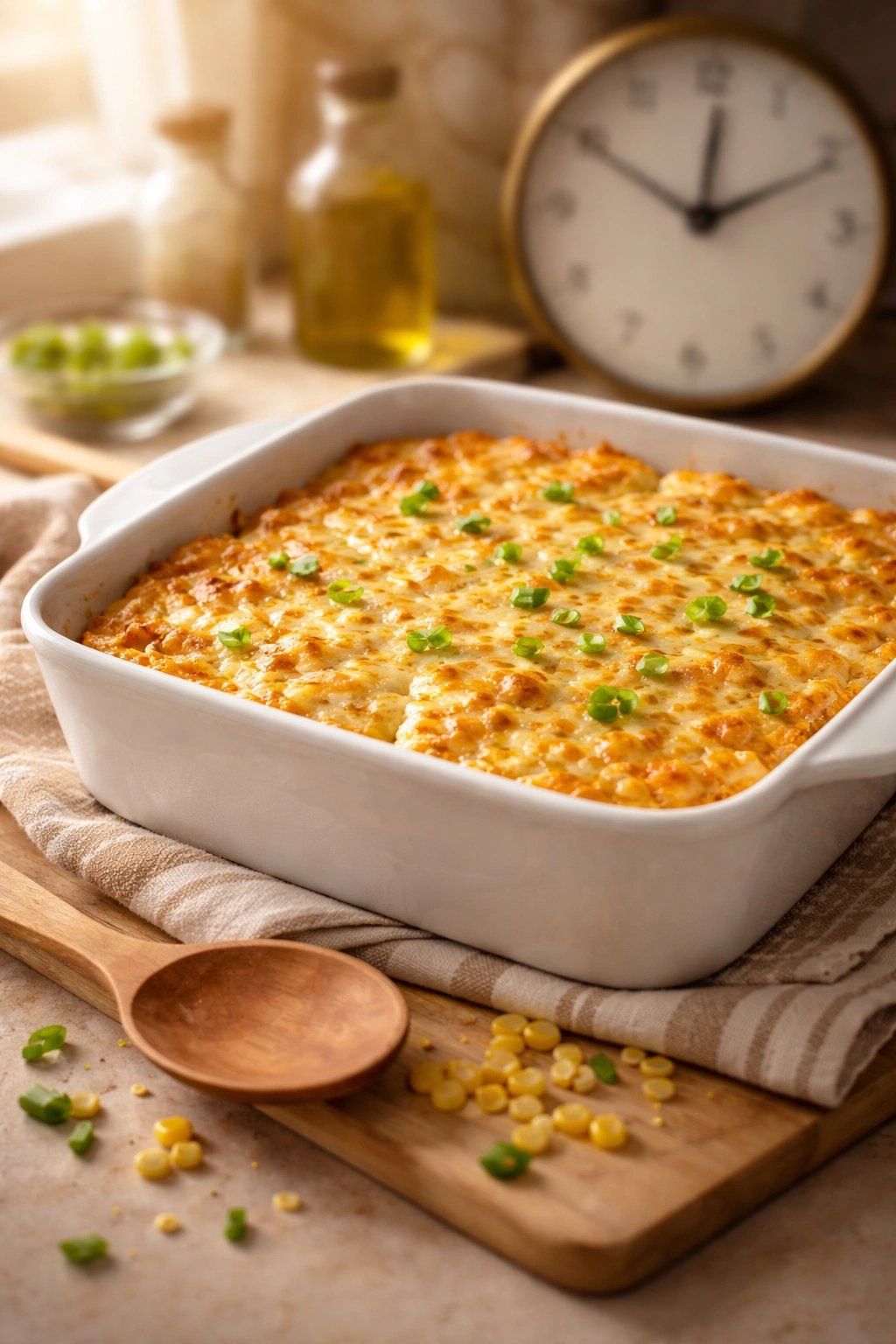
Yield: Serves 8 to 10 as a side dish
Prep Time: 15 minutes
Cook Time: 55 to 60 minutes
Total Time: 70 to 75 minutes (includes cooling time)
Difficulty: Beginner — no special equipment needed, straightforward assembly, and the instructions are simple enough for a first-time casserole maker to follow with confidence.
The Magic Behind a Silky Corn Casserole
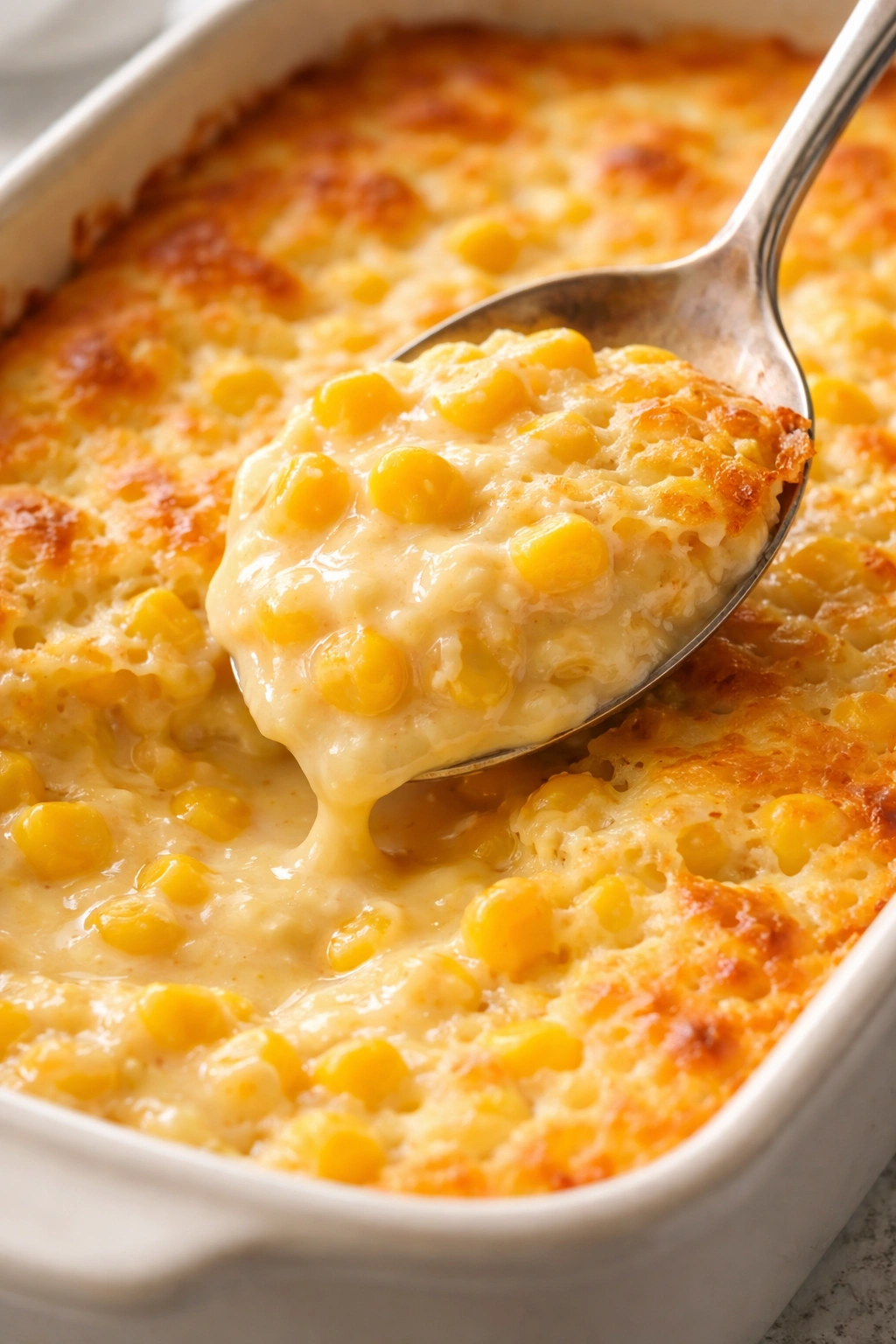
The secret to an exceptional creamy corn casserole isn’t actually a secret at all — it’s understanding the science of what happens when you combine corn, eggs, dairy, and heat in just the right proportions. Most people think they’re making a simple baked corn dish, but what’s actually happening is more sophisticated than that.
The eggs are doing the real work here. They’re emulsifiers, which means they’re binding the liquid (milk and cream) with the fat (butter and cheese) into a smooth, unified custard rather than creating a split, greasy mess. When you bake the casserole, the eggs set and create a silky texture that’s neither rubbery nor soupy. This is the exact same technique used in quiches and savory custards — it just happens to involve corn instead of broccoli.
The corn itself should be tender enough that it doesn’t require additional cooking but fresh enough that it tastes like actual corn, not the metallic taste of frozen corn that’s been sitting in your freezer for two years. The starch in the corn contributes subtle thickening power, so you’re not relying entirely on the eggs to create structure. Add cream cheese to the mix and you’re building even more richness and stability without making the casserole feel heavy or dense.
The topping is equally important. A crispy, golden crust provides textural contrast to the creamy interior and gives the casserole an elegant finish that looks like you spent hours on it. This crust comes from either crushed cornbread or cornmeal mixed with melted butter and a little cheese — it adds flavor and visual appeal without being complicated.
Ingredients You’ll Need
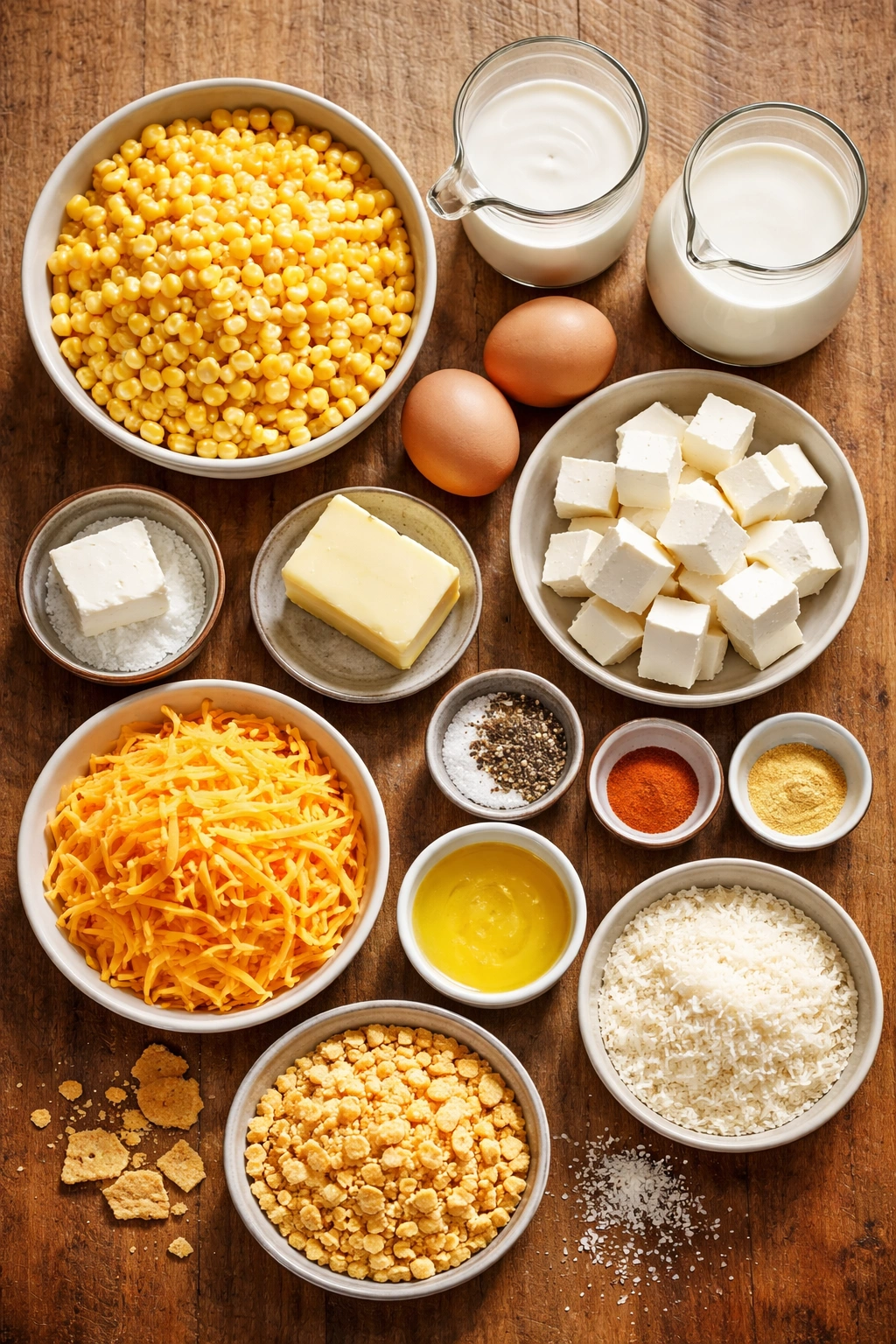
For the Casserole:
- 4 cups fresh or frozen corn kernels (if frozen, thaw and drain completely)
- 1 block (8 ounces) cream cheese, softened to room temperature and cut into small cubes
- 4 large eggs, room temperature
- 1 cup heavy cream
- ¾ cup whole milk
- 4 tablespoons (½ stick) unsalted butter, melted
- 1 cup sharp cheddar cheese, shredded
- ½ cup freshly grated Parmesan cheese
- 2 teaspoons fine sea salt
- ½ teaspoon freshly ground black pepper
- ¼ teaspoon cayenne pepper (optional but highly recommended — it adds warmth without heat)
- ½ teaspoon dry mustard powder (enhances the corn and cheese flavor without adding mustard taste)
For the Topping:
- 1 cup crushed cornbread or cornmeal crackers (or a combination of both)
- 3 tablespoons unsalted butter, melted
- ¼ cup freshly grated Parmesan cheese
- ¼ teaspoon fine sea salt
- Pinch of freshly ground black pepper
Step-by-Step Instructions
Prepare the Pan and Preheat:
-
Preheat the oven to 375°F (190°C) and position the rack in the center of the oven.
-
Butter a 9×13-inch baking dish thoroughly, coating the bottom and all sides. Set it aside. A well-buttered dish prevents sticking and creates a golden crust around the edges of the casserole.
Advertisements
Make the Casserole Base:
-
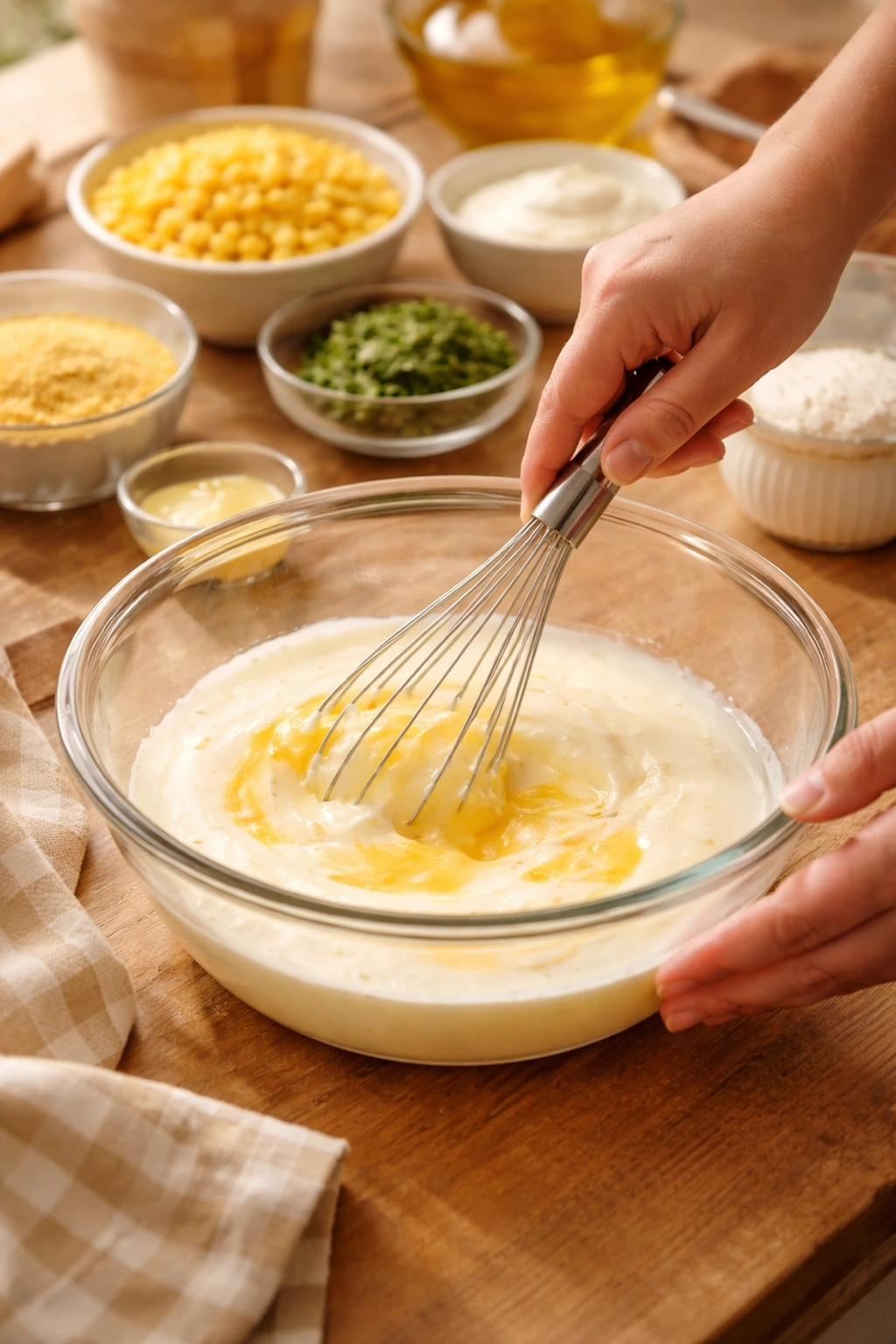
In a large bowl, whisk together the eggs, heavy cream, and whole milk until fully combined and smooth — about 30 seconds of whisking. The mixture should be uniform with no visible streaks of just-egg.
-
Add the cream cheese cubes to the egg mixture and whisk for another 45 seconds to 1 minute, breaking down the cream cheese and incorporating it into the liquid. It’s okay if tiny flecks of cream cheese remain — they’ll melt completely during baking — but the mixture should look fairly uniform and pale.
-
Add the melted butter, cheddar cheese, Parmesan cheese, salt, black pepper, cayenne pepper, and dry mustard powder. Whisk until the cheese is fully incorporated and the mixture is smooth and homogeneous, about 1 minute. Taste the mixture — it should taste rich, a little salty (more salty than you might expect for an unbaked mixture, since the baking will concentrate flavors), and pleasantly cheesy with a whisper of warmth from the cayenne.
-
Gently fold in the corn kernels using a rubber spatula, folding just until the corn is evenly distributed throughout the custard base. Don’t overstir — this isn’t where you develop gluten, and you want the corn to stay intact rather than getting crushed. Do not add the corn until the very last moment before you assemble the casserole, as the corn’s natural moisture can start to seep into the custard and make it watery.
-
Pour the corn mixture into the prepared baking dish and spread it into an even, level layer. If the mixture seems too liquid at this point, don’t panic — the eggs will set during baking and it will transform into a beautiful custard.
Make the Topping:
-
In a small bowl, combine the crushed cornbread (or cornmeal crackers), melted butter, Parmesan cheese, salt, and pepper. Toss with a fork until the mixture resembles coarse sand and the butter is evenly distributed. The topping should clump slightly when pressed but fall apart easily when you release it — not a wet paste, but not completely dry either.
-
Scatter the topping evenly over the surface of the corn casserole, covering the entire top but not pressing it down. The topping will settle and brown as it bakes — don’t pack it tightly or it’ll turn into a hard crust instead of a crispy, buttery crown.
Bake:
-
Bake for 55 to 60 minutes, rotating the dish halfway through (at the 27- to 30-minute mark). The casserole is done when the top is deep golden brown and a toothpick inserted into the center of the casserole (not through the topping, but into the custard base underneath) comes out clean or with just a tiny bit of custard clinging to it.
-
Remove from the oven and let the casserole rest on a cooling rack for at least 10 minutes before serving. This resting time allows the custard to set slightly and makes the casserole easier to scoop and serve without it collapsing into a puddle.
The Most Common Mistakes (and How to Fix Them)
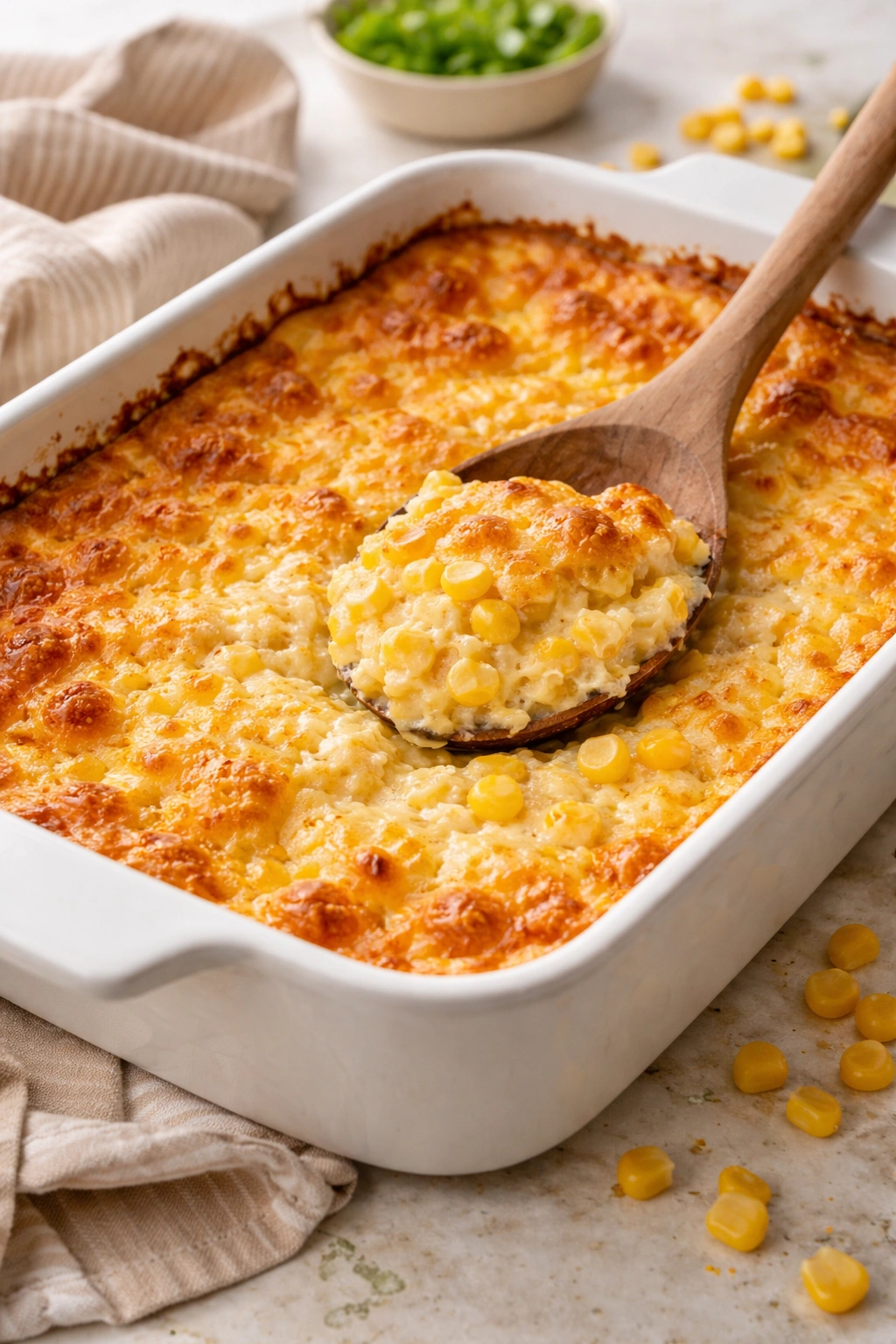
The number one mistake people make with creamy corn casserole is using frozen corn without thawing and draining it properly. Frozen corn contains a lot of liquid — when it thaws, that moisture leaches into your custard and creates a watery, soupy casserole instead of the creamy texture you’re aiming for. The fix is simple: thaw your frozen corn in the refrigerator overnight, or if you’re short on time, place it in a colander, run cool water over it, and then spread it on a clean kitchen towel and gently pat it dry. This one step makes a massive difference.
Another common problem is using cold cream cheese straight from the package. Cold cream cheese doesn’t incorporate smoothly into the egg mixture — it creates small lumps that don’t melt evenly during baking and you’ll end up with cottage cheese-like pockets in your casserole. Soften your cream cheese at room temperature for at least 30 minutes before you start. If you’re in a hurry, cut it into small cubes (they warm up faster than a whole block) and let them sit while you gather the other ingredients.
Overmixing the corn is also surprisingly common. People assume that if a little folding is good, a lot of folding is better — but you’re actually breaking down the corn kernels and creating mush. Fold the corn in gently, only until it’s evenly distributed. This takes maybe 10-15 gentle folds with a spatula, not vigorous mixing.
The topping burning before the casserole finishes baking happens sometimes, especially if your oven runs hot. If you notice the top browning too quickly (by the 30-minute mark), loosely tent a piece of aluminum foil over the top of the dish. The foil won’t stop all heat but it’ll slow down the browning. Remove the foil for the last 10 minutes of baking so the topping can get properly crispy.
Finally, not seasoning aggressively enough creates a bland casserole. The eggs and corn need salt — more than you might think appropriate for an unbaked mixture. Remember that baking concentrates flavors, and you want the finished casserole to taste rich and seasoned, not mild and subtle. Taste the raw custard before baking and adjust the salt if needed.
Easy Variations to Make It Your Own

The beauty of this casserole is its flexibility. The foundation is solid, but the toppings and mix-ins adapt easily to your preferences or what’s available in your kitchen.
Jalapeño and Cotija Cheese Version: Add 2-3 diced jalapeños (seeds removed for less heat, left in for more) to the custard base along with the corn. Replace half of the cheddar with crumbled cotija cheese for a briny, slightly tangy edge. Keep the topping the same but sprinkle a few fresh cilantro leaves over the top right after it comes out of the oven.
Roasted Red Pepper and Feta Variation: Substitute 1 cup of the corn with 1 cup of diced roasted red peppers (jarred is fine, just drain and pat dry). Use crumbled feta cheese instead of the cheddar for a Mediterranean twist. Use the same cream cheese and Parmesan for richness. The topping works as written.
Bacon, Corn, and Cheddar Deluxe: Add 6-8 slices of crispy bacon, crumbled, to the custard base along with the corn. Increase the cheddar to 1.5 cups for extra richness. Consider adding a tablespoon of maple syrup to the custard base for a subtle sweet-savory note that works beautifully with bacon. The topping is excellent as written, but you can sprinkle a bit of crumbled bacon on top of the crust topping before baking.
Creamed Corn with Herb Version: Reduce the corn by half a cup and add 1 cup of a combination of fresh herbs (dill, parsley, chives, or tarragon work beautifully) finely chopped. Use a sharp white cheddar instead of regular cheddar. Add the zest of one lemon to the custard base for brightness.
Elote-Inspired Casserole: Keep the corn and cheese the same but add 2 tablespoons of fresh lime juice and the zest of 1 lime to the custard. Mix 1 tablespoon of chili powder and 1 teaspoon of cumin into the topping along with the Parmesan. After the casserole comes out of the oven and cools slightly, crumble fresh cotija cheese over the top and drizzle with a little crema or sour cream mixed with lime juice.
You can also swap out the topping entirely. Instead of cornbread, try crushed tortilla chips, panko breadcrumbs mixed with melted butter, or crushed crackers (Ritz or similar). Each creates a slightly different texture and flavor.
Storing and Reheating Your Casserole
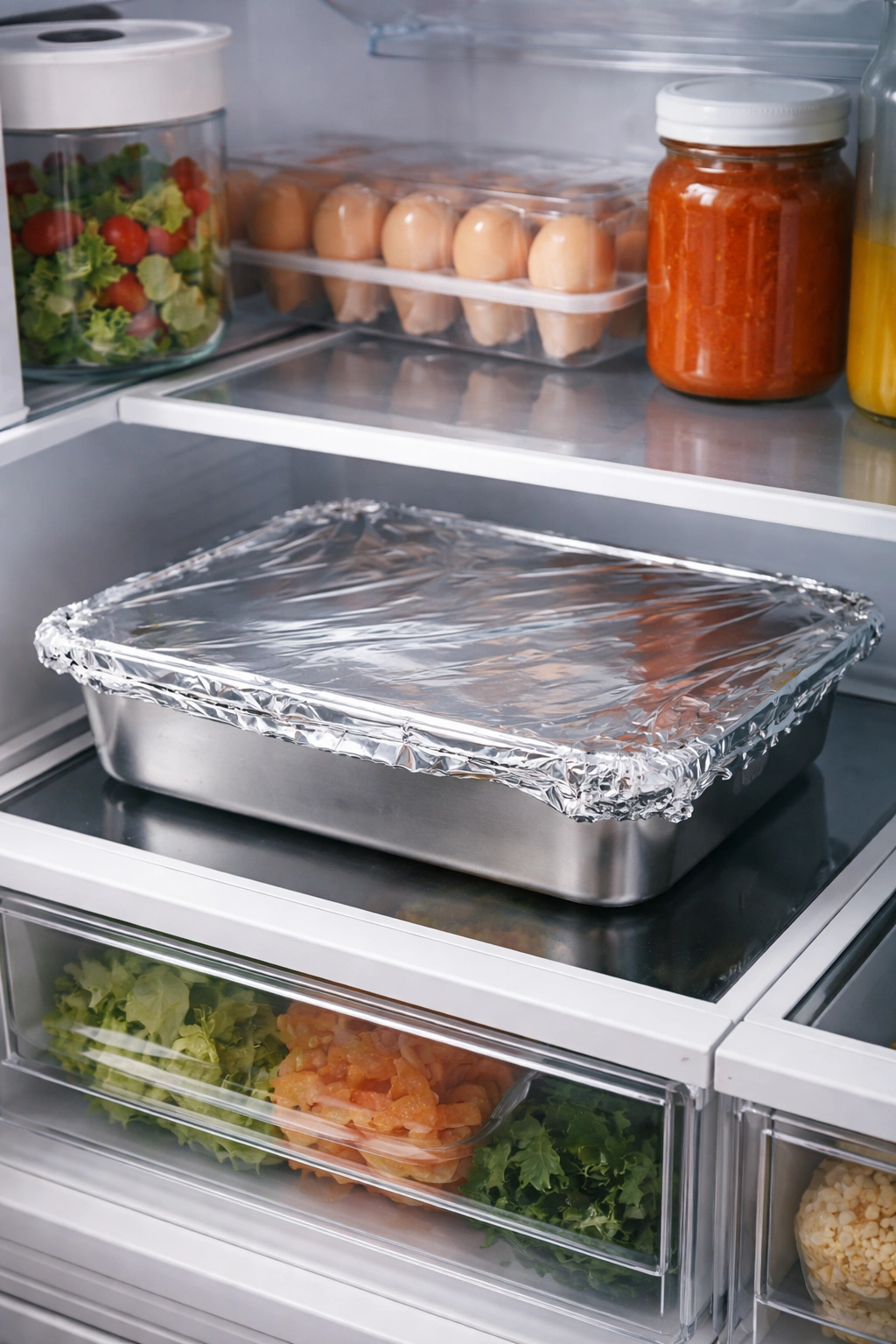
Creamy corn casserole keeps beautifully in the refrigerator for up to 4 days when stored in an airtight container or covered tightly with plastic wrap. The texture doesn’t degrade the way some casseroles do — if anything, the flavors become even more integrated and delicious the next day.
To reheat, cover the casserole loosely with aluminum foil (foil prevents the top from drying out and browning further, which you don’t want) and bake in a 350°F (175°C) oven for 20-25 minutes, until it’s heated through and warm to the center. You can test this by inserting a fork or small knife into the center — if it feels hot when you pull it out, you’re good to go. If you prefer a crisper top, remove the foil for the last 5 minutes of reheating.
The casserole also freezes well for up to 3 months. Bake it completely first, let it cool to room temperature, then cover it tightly with plastic wrap and aluminum foil before freezing. To reheat from frozen, remove the plastic wrap, tent it loosely with foil, and bake in a 350°F oven for about 45-50 minutes until heated through.
You can also freeze the unbaked casserole. Assemble it completely in your baking dish, cover it tightly with plastic wrap and foil, and freeze it for up to 2 months. When you’re ready to bake, add 15-20 minutes to the baking time (you’re starting from a very cold temperature). There’s no need to thaw it first — just pop it straight from the freezer into a preheated oven.
What to Serve Alongside Creamy Corn Casserole

Creamy corn casserole works as a standalone side dish, but it shines when paired thoughtfully with the rest of your menu. Because the casserole is rich and creamy, it pairs beautifully with proteins that have clear flavors and textures that won’t compete — grilled chicken, pulled pork, brisket, or fish all work wonderfully.
At a potluck, corn casserole typically sits alongside other sides, and that’s where you want to think about balance. If there are other creamy sides (like mashed potatoes or a creamy green bean casserole), you’re in good company. If you’re the only creamy dish, that’s even better — it’ll stand out. Lighter sides like a crisp coleslaw, a bright vinegary salad, or a fresh green vegetable dish all provide textural and flavor contrast that makes the whole meal feel more balanced.
Cornbread or corn muffins are natural partners, though some people might say they’re too close to the casserole in flavor. If you go that route, I’d suggest a slightly different cornbread — maybe one with jalapeños or a touch of honey — so there’s enough variety between them.
Pickled vegetables, chutneys, or anything with bright acidity are excellent counterpoints to the richness of this casserole. Think pickled onions, a sharp salsa, or even just a fresh corn salad with lime and cilantro if you want to play with the corn theme in a different direction.
For beverages, this casserole isn’t particularly wine-friendly, but it does pair well with cold sweet tea, lemonade, or a crisp light beer. At a holiday potluck, it’s not trying to be fancy — it’s trying to be delicious and comforting, so don’t overthink the pairings.
Pro Tips From Potluck Veterans
Real potluck experience teaches you things that recipes can’t quite capture. First, make your casserole the morning of the potluck if possible. You’ll have peace of mind knowing exactly how it turned out, and warm casserole always tastes better than reheated casserole (though reheated is still very good). If you have to make it the day before, take it out of the fridge an hour before baking so it comes closer to room temperature — this means it’ll bake more evenly and require less total time in the oven.
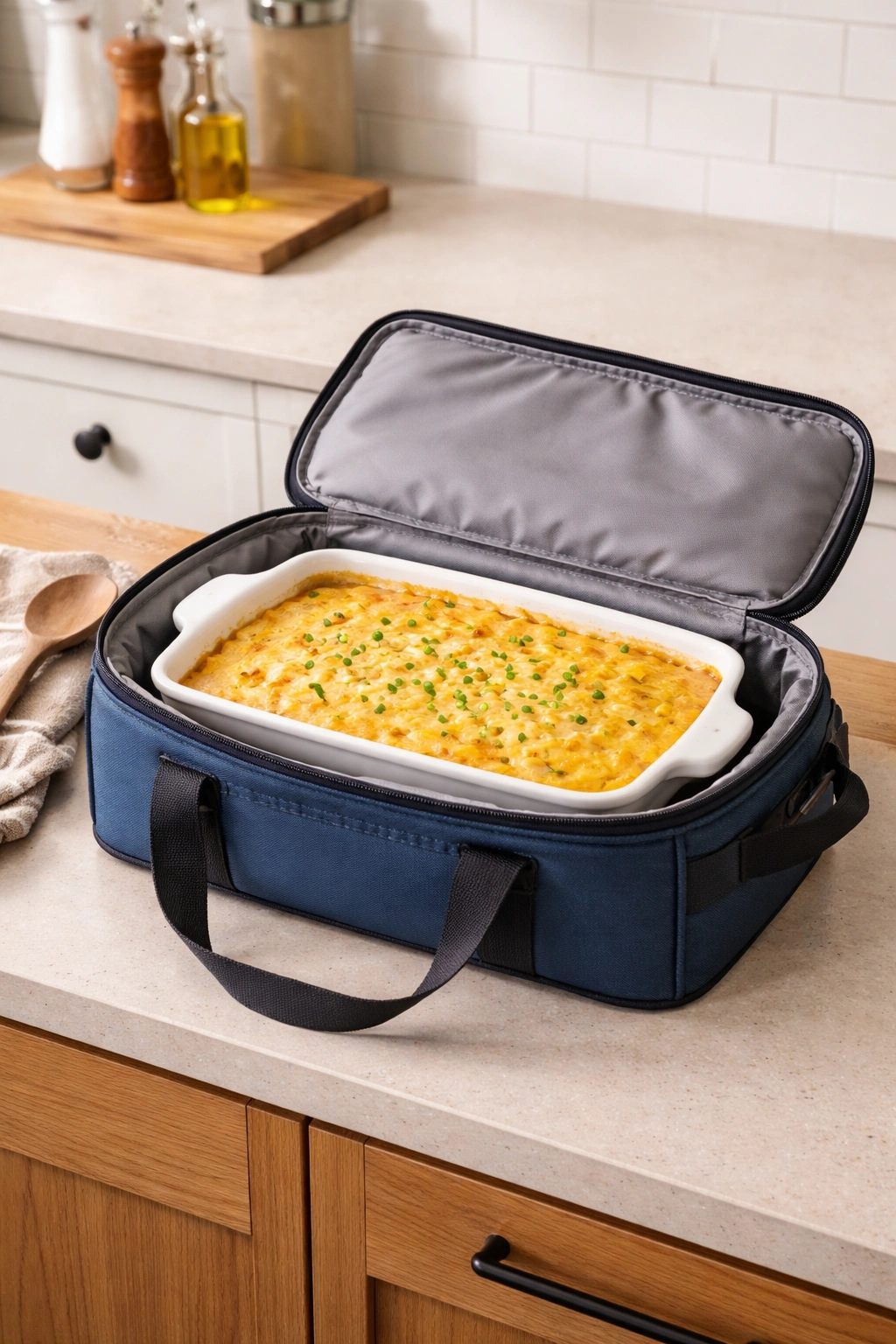
Second, invest in a casserole dish carrier if you’re a frequent potluck contributor. These are $10-15 pieces of equipment that insulate your hot casserole and prevent spills in your car. They’re not glamorous, but they’ve saved countless dishes from disaster. If you don’t have one, wrap your casserole in several kitchen towels and place it in a stable box or bag where it won’t tip over.
Third, always bring a serving spoon. Seriously. So many potlucks have people digging into casseroles with soup spoons or forks or their fingers, and a proper casserole spoon makes a huge difference in how neatly the dish can be served. Include a small label or card identifying what’s in your casserole too (especially if it contains any common allergens like dairy or eggs) — it takes 30 seconds and it’s genuinely thoughtful.
Fourth, make slightly more than the casserole recipe. A 9×13 pan is standard, but people will eat more of a casserole they love than they expect to. If you’re making this for a potluck of 15 or more people, consider making a double batch in two separate dishes, or make the standard batch and also prepare a smaller 8×8 casserole alongside it.
Finally, don’t apologize for bringing a casserole. Casseroles have gotten a reputation for being old-fashioned or unsophisticated, but a really good creamy corn casserole is sophisticated comfort food. Own it. People will ask for your recipe, and that’s when you know you brought something special.
Should You Make It Ahead?
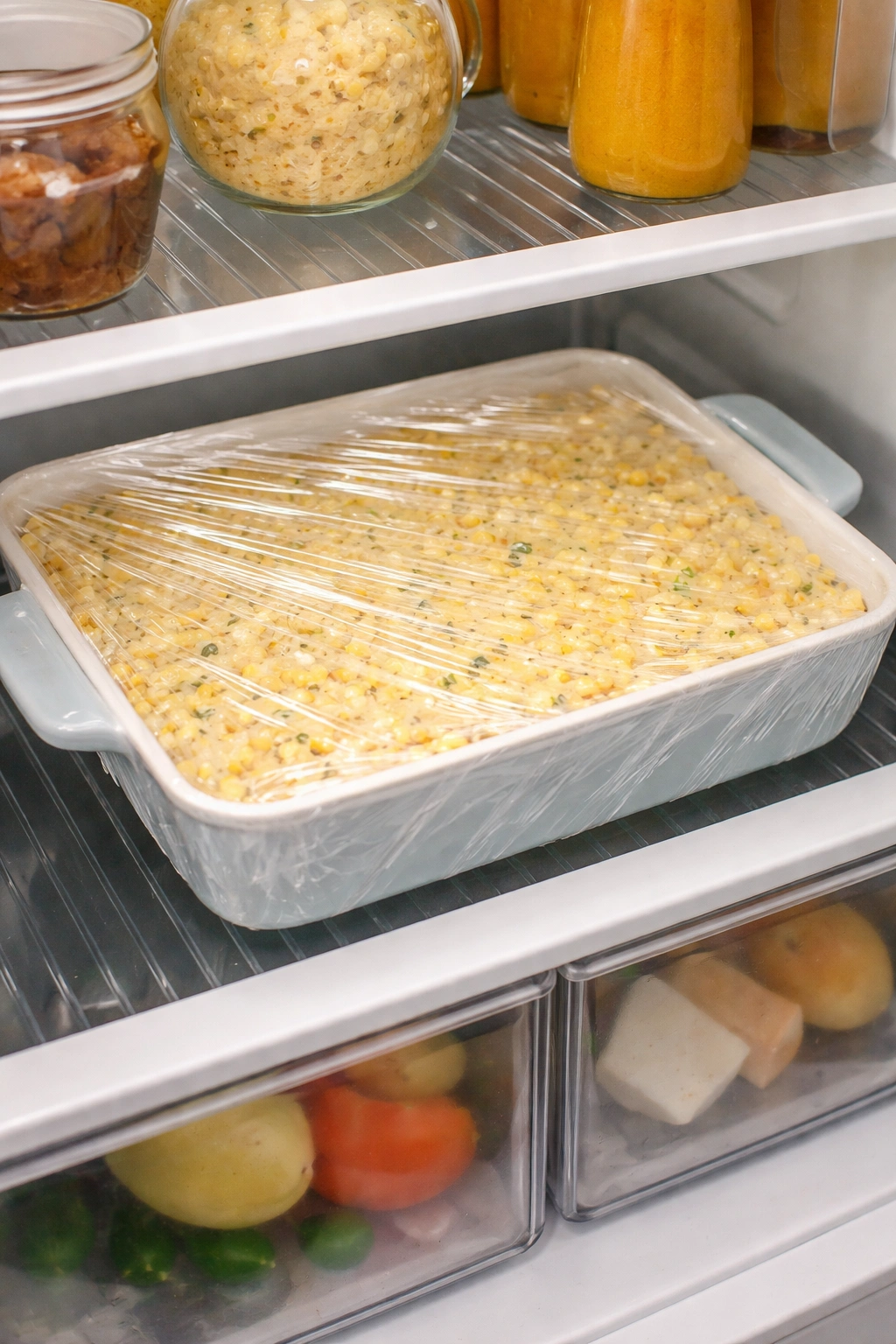
Yes, absolutely. This is one of the greatest strengths of this particular casserole — it’s genuinely better when you prepare it ahead. You can make the entire casserole up to 24 hours in advance, cover it tightly with plastic wrap, refrigerate it, and then bake it the next day. The flavors have time to meld and become deeper and more integrated. The corn absorbs the custard flavors instead of sitting in a fresh mixture of liquid and solids.
If you’re making it the day before, assemble it as described in the instructions, cover it tightly with plastic wrap (press the wrap directly onto the surface to prevent a skin from forming), and refrigerate. When you’re ready to bake, remove it from the fridge about 30-45 minutes before you plan to put it in the oven. A cold casserole bakes less evenly — the edges set while the center is still liquid — so bringing it closer to room temperature helps. It’ll bake in the same 55-60 minutes, maybe a few minutes longer if it’s still quite cold.
You can also prepare just the custard base the day before, refrigerate it separately from the topping, and then gently fold in the corn and assemble the casserole the morning you’re baking it. This gives you flexibility if your timing is tight. The custard base will keep for 24 hours refrigerated without any degradation in quality.
If you’re bringing it to a potluck and you want to arrive with it warm, bake it at home, let it rest for 10 minutes, wrap it in foil, and then wrap that in several kitchen towels to insulate it. It’ll stay warm for 45 minutes to an hour with this treatment, which is usually enough time to get to a potluck location. If you’re going to be driving longer than that, it’s worth asking the host if you can use their oven for the final baking, or go the freezer route and bake it there.
Final Thoughts
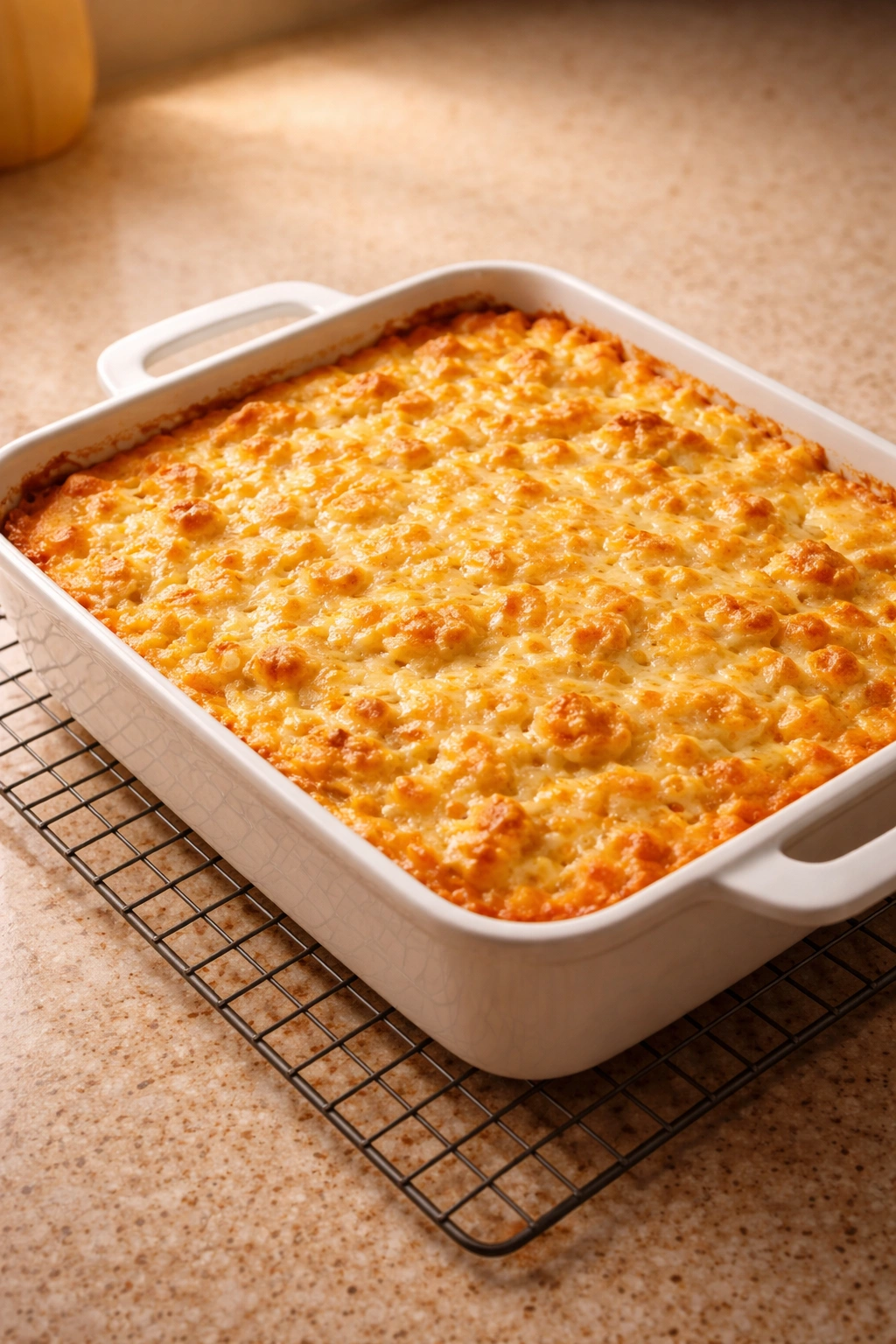
Creamy corn casserole occupies a special place in the potluck universe. It’s not trendy or complicated or trying to reinvent anything. It’s just genuinely good food that comes from understanding a few basic principles and executing them well. The eggs create creaminess, the corn provides substance and flavor, the cheese adds richness, and the topping creates textural contrast. Nothing fancy, everything purposeful.
What makes this particular version worth making is attention to detail in every step. Thawing your corn properly, softening your cream cheese, tasting your custard base before baking, and not overworking the corn — these aren’t complicated techniques, but they separate a really good casserole from a mediocre one. They’re the difference between people asking for your recipe and leaving half the dish behind.
The fact that you can make it ahead, transport it safely, reheat it without degradation, and customize it a dozen different ways makes it an absolute MVP of potluck season. It’s the dish people actually want at a gathering — not something to fill the table and not something they’ll pick at politely. They’ll eat it, come back for seconds, and ask you to bring it again next time. That’s the casserole that earns its place on the potluck table every single time.
