



There’s something genuinely satisfying about eating lighter during the warmer months — not because you’re restricting yourself, but because fresh, seasonal ingredients naturally make meals feel brighter and more energizing. A really good summer salad isn’t just lettuce and a dressing bottle. It’s a combination of crisp textures, bright flavors, and often a protein that turns what could be a side dish into a complete, craveable meal. The best part? These salads come together quickly, taste better the more you customize them, and don’t leave you feeling like you’ve sacrificed anything at all.
Summer is when salads finally get the respect they deserve. When tomatoes actually taste like tomatoes and basil smells like summer itself, suddenly a bowl of vegetables becomes something you genuinely look forward to eating. Whether you’re hosting a casual dinner, packing lunch for the week ahead, or just tired of heavy cooking in warm weather, the five salads below work for virtually any situation. Each one builds on simple, accessible ingredients — the kind you’ll find at farmers markets or any grocery store — and comes together in about 15 to 20 minutes of hands-on time.
The recipes here range from a protein-forward grilled chicken salad that’s substantial enough for dinner, to lighter vegetable-focused salads that work perfectly as a side or as part of a meal prep rotation. I’ve included detailed tips for each one because the difference between a mediocre salad and one you’ll make constantly often comes down to small techniques — how you dress it, when you add certain ingredients, what textures you’re balancing. These aren’t restaurant recipes that require specialty items you can’t find — they’re designed for home cooks who want real food that tastes amazing without hours at the stove.
Why Fresh Garden Salads Are Perfect for Summer
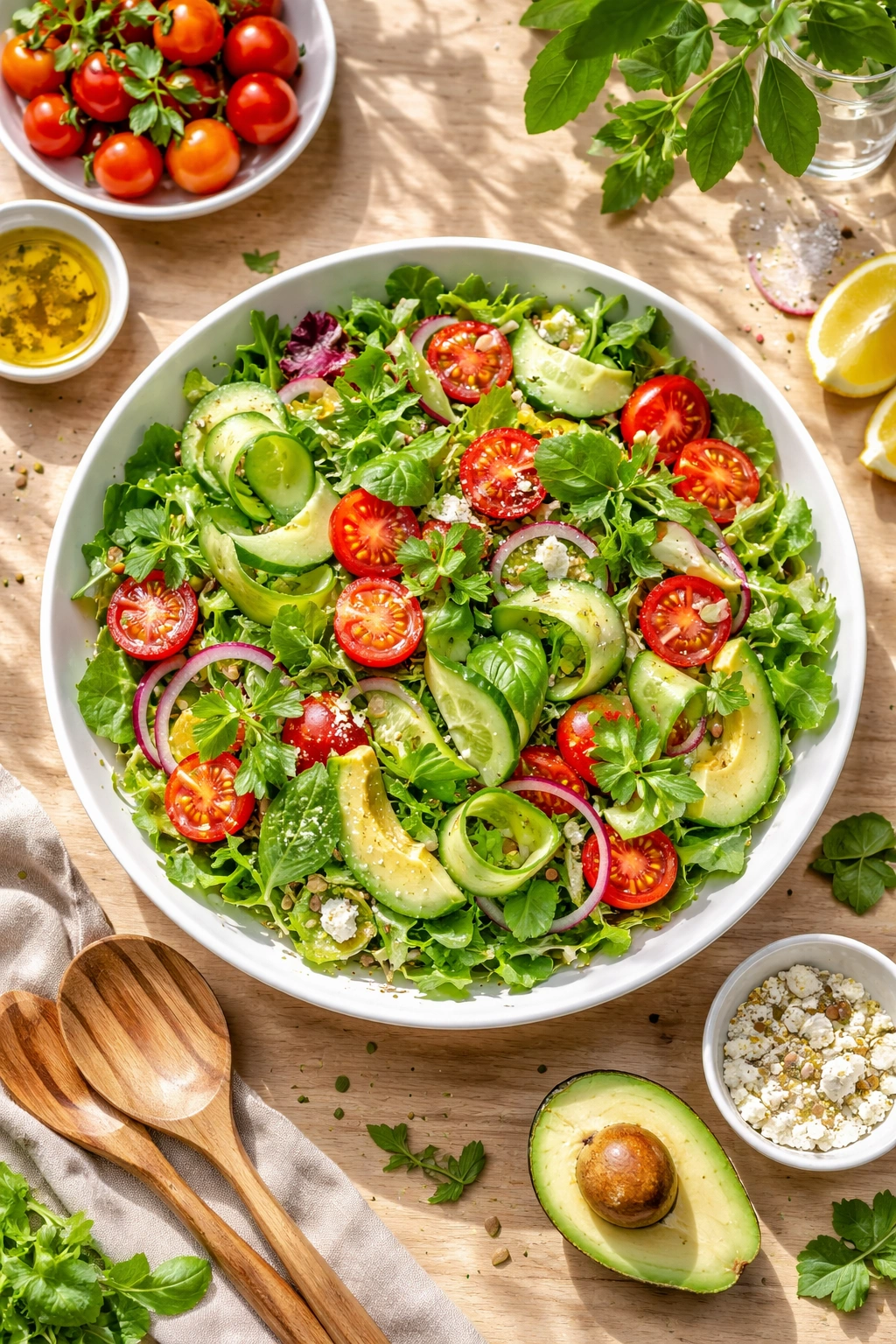
Summer’s heat makes you naturally crave lighter meals, and salads deliver exactly that without leaving you hungry an hour later. The key is building them thoughtfully — pairing vegetables with enough protein and healthy fat so they actually sustain you. A salad with just greens and dressing won’t keep you satisfied, but one with grilled chicken, cheese, nuts, or legumes becomes a complete meal that happens to be refreshing.
Seasonality matters tremendously here. Summer vegetables — ripe tomatoes, crisp cucumbers, tender zucchini, fresh herbs — are at peak flavor right now, which means they need less work to taste exceptional. You’re not fighting against pale, mealy tomatoes shipped from somewhere cold. Instead, you’re working with produce that’s actually meant to shine, which makes the whole process easier and the results incomparably better.
There’s also a mental shift that happens when you eat salads regularly in summer. You stop thinking of them as “the healthy thing I should eat” and start thinking of them as “the thing I genuinely want to eat.” That happens because warm-weather salads taste good — not in a virtuous way, but in a “this is delicious and I’m choosing to eat it” way. That’s when healthy eating stops feeling like a chore.
1. Crisp Lemon Herb Salad with Grilled Chicken
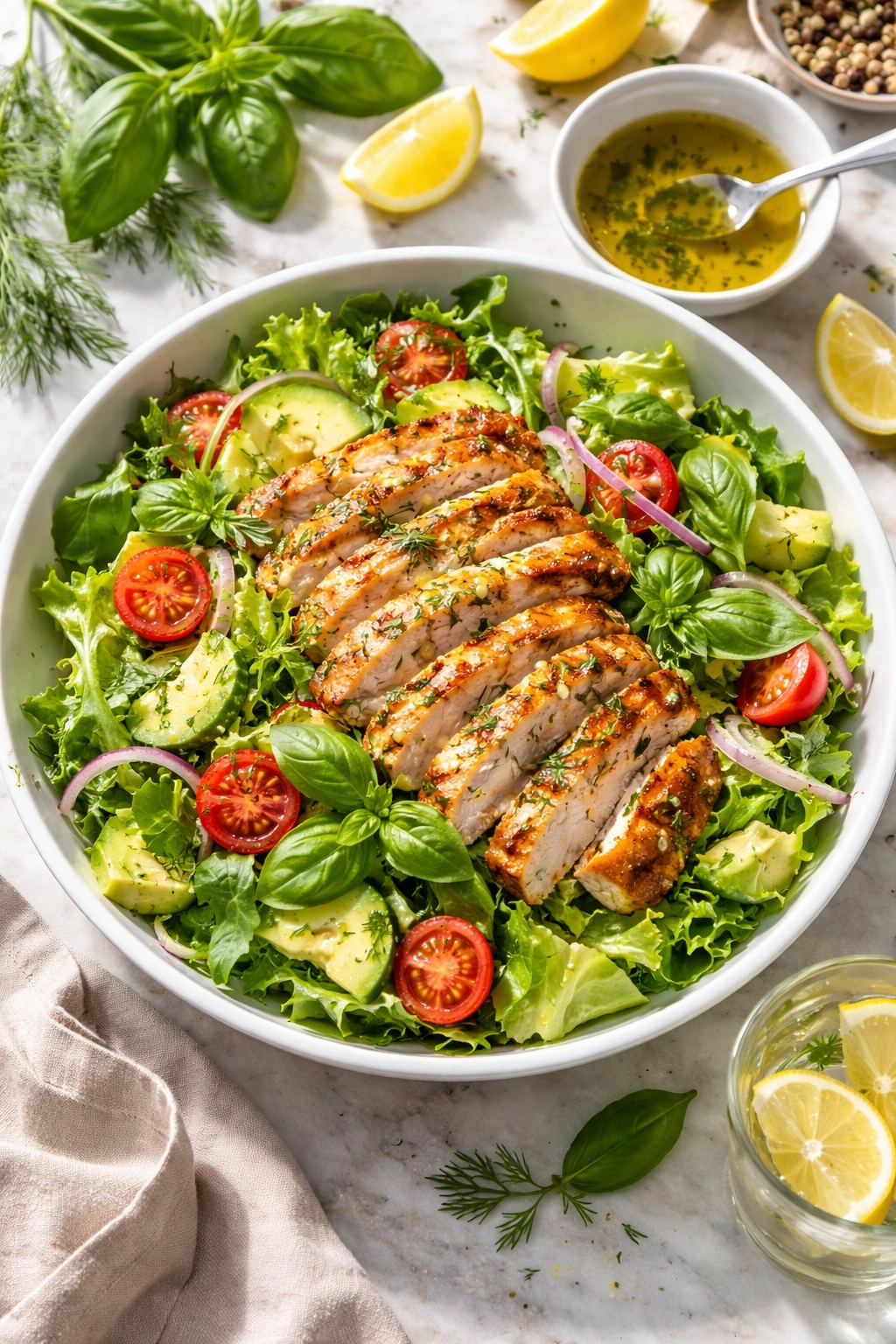
This is the salad you make when you want something that feels substantial enough for dinner but doesn’t weigh you down afterward. The combination of grilled chicken, crisp romaine, and a bright lemon dressing creates something that tastes restaurant-quality but comes together at home in less time than it takes to order delivery. The herbs — fresh basil and dill — are what elevate this from a standard salad to something memorable.
The chicken gets a quick sear in a hot pan or grill, developing a golden crust that contrasts beautifully with the tender, juicy interior. The dressing is nothing fancy — just lemon juice, olive oil, garlic, and a touch of honey — but it’s balanced perfectly and coats the greens without making them soggy. The crunch comes from fresh vegetables and, if you want it, toasted pine nuts or almonds, which add richness without heaviness.
Yield: Serves 4 as a main course
Prep Time: 20 minutes
Cook Time: 12 minutes
Total Time: 32 minutes
Difficulty: Beginner — The steps are straightforward, and even if your chicken isn’t perfectly cooked, it’ll still taste good.
For the Salad:
- 1½ pounds boneless, skinless chicken breasts (about 2 large breasts)
- 2 tablespoons extra-virgin olive oil, divided
- ½ teaspoon fine sea salt
- ¼ teaspoon freshly ground black pepper
- 1 large head of romaine lettuce, washed and chopped into bite-sized pieces
- 1 large cucumber, cut into half-moons
- ½ cup fresh cherry tomatoes, halved
- ¼ red onion, sliced very thin
- ½ cup fresh basil leaves, roughly torn
- ¼ cup fresh dill, roughly chopped
- ⅓ cup shaved Parmesan cheese
- ¼ cup toasted sliced almonds or pine nuts (optional but recommended)
For the Lemon Herb Dressing:
- ⅓ cup fresh lemon juice (about 2 large lemons)
- ¼ cup extra-virgin olive oil
- 2 cloves garlic, minced
- 1 tablespoon Dijon mustard
- 1 teaspoon honey
- ¼ teaspoon fine sea salt
- Pinch of freshly ground black pepper
Prepare the Chicken:
-
Pat the chicken breasts completely dry with paper towels — this helps them develop a nice golden crust. If the breasts are thicker than ¾ inch, gently pound them to an even thickness using a meat mallet or the bottom of a heavy pan.
-
Heat 1 tablespoon of olive oil in a large skillet over medium-high heat. The oil should shimmer and move freely across the pan when you tilt it — that’s how you know it’s hot enough. Do not skip this step; a properly hot pan is what creates the golden crust that makes this chicken taste so good.
-
Season both sides of the chicken generously with salt and pepper. Once the oil is shimmering, carefully place the chicken in the pan. Resist the urge to move it around; let it sit undisturbed for 5 to 6 minutes so it can develop a golden-brown crust on the bottom.
-
Flip the chicken and cook on the second side for 4 to 5 minutes, until the internal temperature reaches 165°F (74°C) when measured with a meat thermometer in the thickest part. The chicken should feel firm to the touch and the juices should run clear.
-
Transfer the cooked chicken to a cutting board and let it rest for 5 minutes before slicing. This resting period allows the juices to redistribute throughout the meat, keeping it tender and moist rather than dry.
-
Slice the chicken into ½-inch-thick strips, cutting against the grain (this makes each bite more tender).
Make the Lemon Herb Dressing:
- While the chicken rests, whisk together the lemon juice, olive oil, minced garlic, Dijon mustard, honey, salt, and pepper in a small bowl until the mixture is emulsified and the dressing comes together. Taste it and adjust — if it’s too acidic, add another drizzle of olive oil; if it’s too oily, add another squeeze of lemon juice.
Assemble the Salad:
-
In a large bowl, combine the chopped romaine, cucumber, cherry tomatoes, and red onion. Pour about two-thirds of the dressing over the vegetables and toss until everything is coated evenly.
-
Divide the greens among four bowls or plates. Top each portion with sliced chicken, fresh basil, fresh dill, shaved Parmesan, and toasted nuts if you’re using them.
-
Drizzle the remaining dressing over the top of each salad, or serve it on the side so each person can control the amount.
Tips for Perfect Results
The chicken stays juicier if you don’t overcook it — use a meat thermometer and pull it off the heat at exactly 165°F rather than waiting until it looks completely cooked. It’ll continue cooking slightly as it rests.
Toss the greens with dressing just before serving, not earlier. If you dress them too far in advance, they’ll begin to wilt and become soggy rather than crisp.
Fresh herbs make a genuine difference here — if you only have dried dill, use about one-third the amount since dried herbs are more concentrated. But fresh is really worth seeking out for this salad.
Make-Ahead and Storage
The chicken can be grilled or cooked up to 2 days ahead and stored in an airtight container in the refrigerator. You can also prep the dressing ahead — it keeps well in a covered container for up to 4 days.
Assemble the salad just before eating to keep the greens at their crispest, though you can chop all the vegetables and store them in the fridge for up to 6 hours ahead of time.
Variations
Swap the protein: Grilled shrimp works beautifully here instead of chicken — cook large shrimp just 2 to 3 minutes per side, or use canned chickpeas for a vegetarian version.
Make it Mediterranean: Add kalamata olives, crumbled feta, and sun-dried tomatoes instead of cherry tomatoes.
Add more texture: Scatter crispy croutons over the top, or use a mix of romaine and arugula for a slightly peppery bite.
2. Heirloom Tomato and Burrata Salad
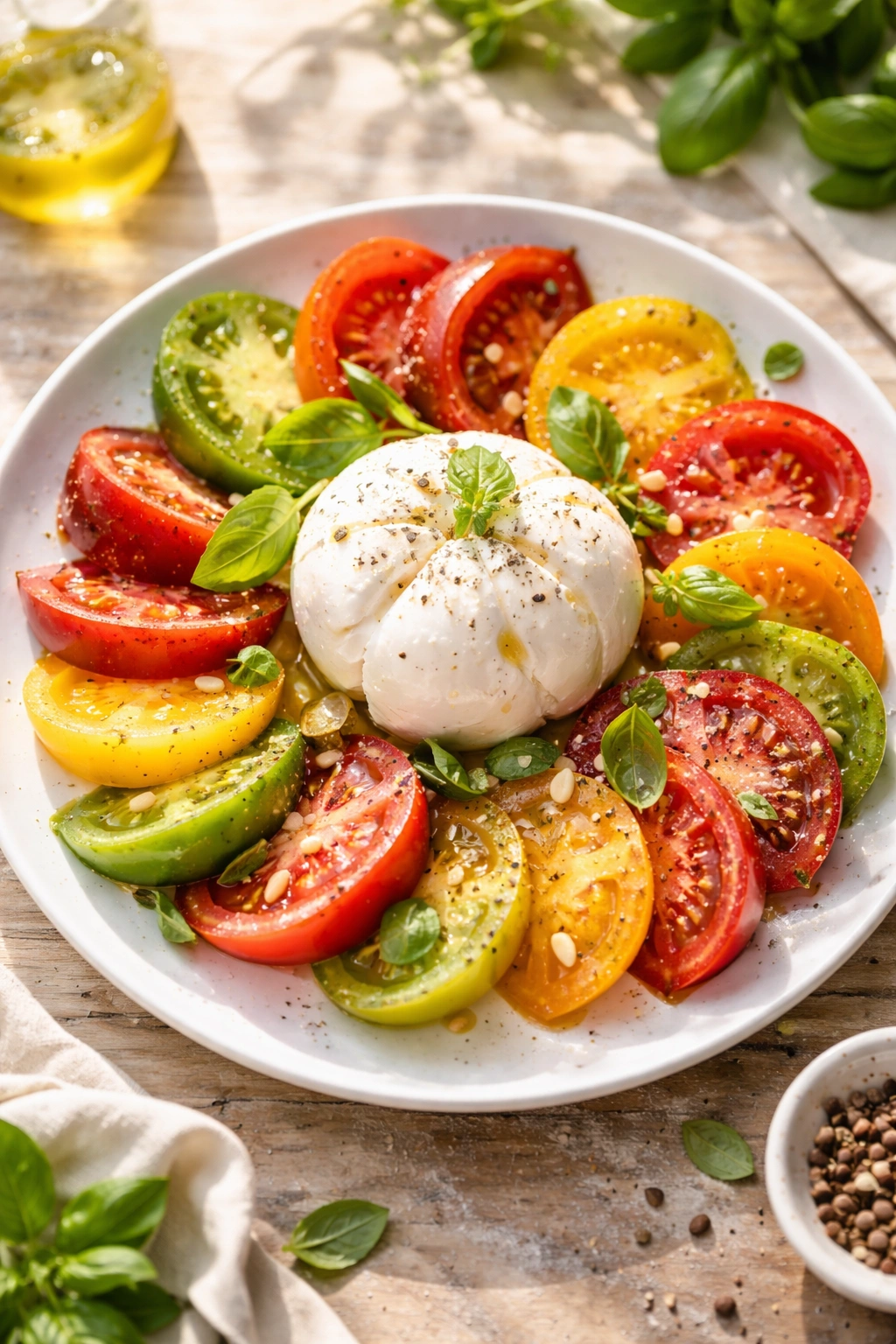
This is the salad that justifies summer’s existence. When ripe heirloom tomatoes are at their peak — that brief window when they actually taste like tomatoes and not like a water-filled sponge — this simple combination becomes pure joy. Burrata cheese is the secret ingredient here — it’s mozzarella’s creamier, more luxurious cousin, with a center filled with soft curds and cream that melts slightly when it sits against warm tomatoes.
This salad challenges the idea that more ingredients equal better. There are almost no ingredients here, which means each one has to be excellent. You can’t hide inferior tomatoes behind a complicated dressing. This is a salad that demands quality and repays that effort with something genuinely special.
Yield: Serves 4 as a light main course or 6 as a side
Prep Time: 15 minutes
Cook Time: 0 minutes
Total Time: 15 minutes
Difficulty: Beginner — The only skill required is slicing tomatoes evenly and assembling the salad.
For the Salad:
- 2 pounds mixed heirloom tomatoes (use as many varieties as you can find — colors and sizes add visual appeal), cored and sliced ½-inch thick
- 8 ounces burrata cheese (about 2 balls), at room temperature
- 3 cups fresh basil leaves, a mix of different basil varieties if possible
- ¼ cup extra-virgin olive oil, preferably a high-quality cold-pressed variety
- 2 tablespoons aged balsamic vinegar (not the cheap stuff — it makes a real difference)
- Fine sea salt to taste
- Freshly ground black pepper to taste
- Fleur de sel or another finishing salt (optional but creates a beautiful final touch)
Assemble the Salad:
-
Arrange the tomato slices on a large serving platter or on individual plates, overlapping them slightly. Don’t crowd the plate too much — you want the beauty of the individual slices to show through, not a solid wall of tomato.
-
Scatter fresh basil leaves (mostly whole, though tearing a few adds nice texture and releases more aroma) over the tomatoes in an organic, scattered pattern rather than in neat rows.
-
Tear each burrata ball gently with your hands and distribute the pieces across the platter. The burrata should settle into the spaces between the tomato slices. Handle the burrata gently — it’s delicate and part of its appeal is that creamy center that spills out slightly when you tear it.
-
Drizzle the cold-pressed olive oil over everything in a thin, even stream. Then drizzle the balsamic vinegar in the same way.
Advertisements -
Season generously with fine sea salt and freshly ground black pepper. Taste one of the tomatoes with some burrata and cheese, and adjust the seasoning if needed — don’t hold back on salt; quality tomatoes need salt to fully express their flavor.
-
If using finishing salt, sprinkle a small amount over the top just before serving for a subtle textural contrast.
-
Let the salad sit for 5 minutes before serving — this allows the juices to redistribute and flavors to meld slightly, but you want to serve it while the tomatoes are still warm and the burrata is still creamy.
The Quality Matters Here
This salad is only as good as its tomatoes. If you’re shopping early in the season when tomatoes aren’t fully ripe, skip this salad and make something else. Come back to it when tomatoes actually taste like something. You can taste the difference between a tomato picked ripe and one that was picked green and ripened during shipping — don’t compromise.
The same goes for the burrata. If your grocery store doesn’t carry fresh burrata, check at specialty food shops or farmers markets. Burrata stored in water at room temperature tastes completely different from burrata that’s been refrigerated in plastic — it’s silkier and more delicate. Buy it the day you plan to use it.
Storage and Make-Ahead
This salad is best made right before serving. Don’t dress it ahead of time — the tomatoes will release their liquid and the plate will become a puddly mess. The components themselves will keep: tomatoes at room temperature for a few days, basil wrapped in a damp paper towel in a container for up to a week, and burrata in its original packaging for about 3 days.
If you have leftovers, save the tomato liquid and any burrata that’s left over — they make a delicious simple pasta sauce the next day.
Variations
Add protein: Place grilled or canned white beans on the plate, or top with a grilled shrimp or slice of prosciutto.
Make it more substantial: Toss some arugula or other greens into the mix, and add crispy toasted bread for texture.
Different herbs: Mint is surprisingly delicious with tomatoes, as is oregano — use it as an alternative to or in combination with basil.
Raw garlic option: Rub a cut garlic clove around the inside of the serving bowl before plating — you’ll get a subtle garlic note without overpowering the tomatoes.
3. Crunchy Cucumber and Dill Salad with Greek Cheese
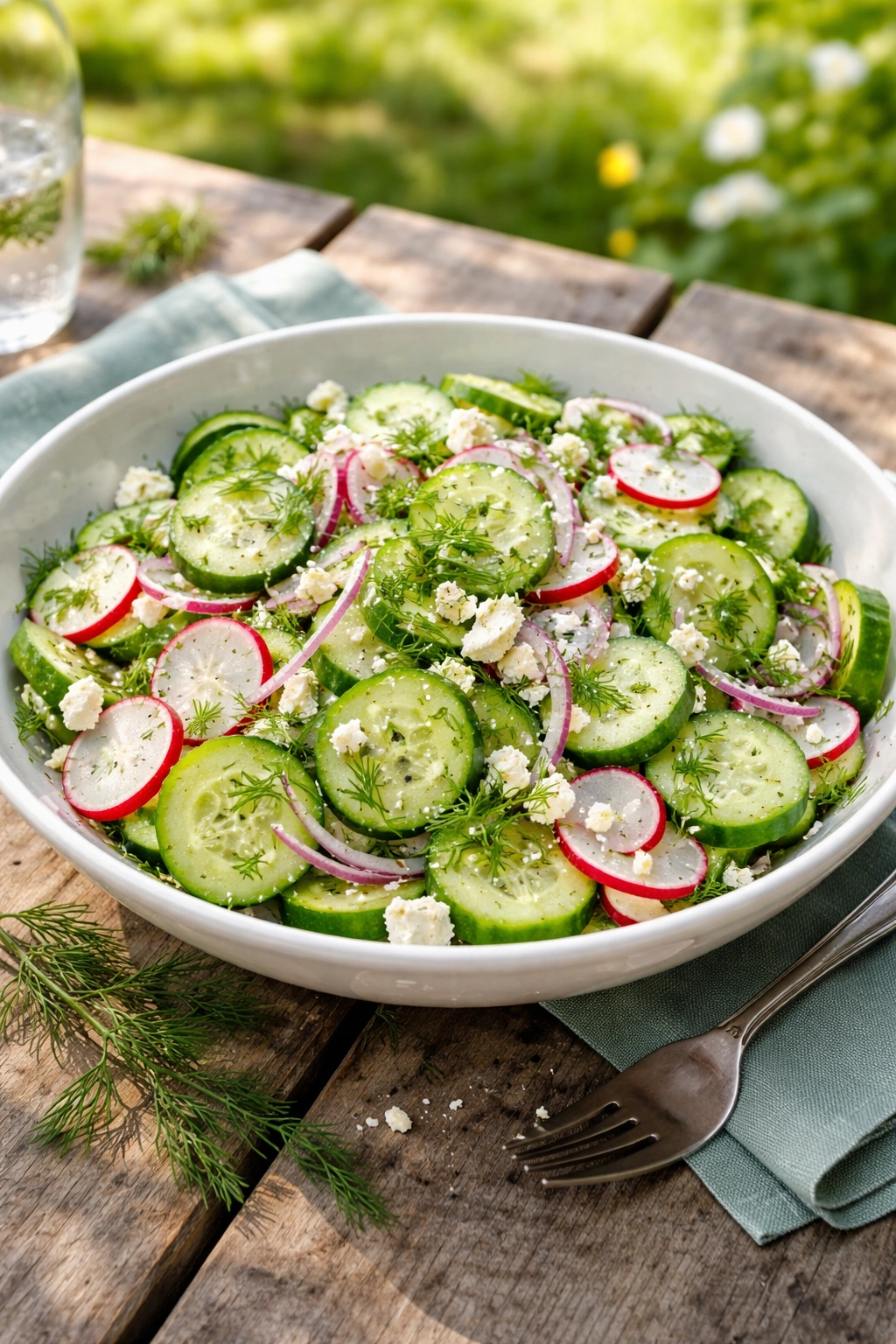
This salad exists for those scorching hot days when you want something so cool and refreshing it feels almost medicinal. It’s built entirely on fresh, crunchy vegetables and cooling herbs, with feta providing a tangy, salty counterpoint. The magic is in the dressing — a simple combination of white wine vinegar, dill, and olive oil that tastes herbaceous and bright without any heaviness.
This is also a salad that works beautifully at a picnic or potluck because it actually holds up to sitting out for a while. The vegetables stay crisp longer than delicate greens would, and it tastes just as good at room temperature as it does fresh from the fridge.
Yield: Serves 4 to 6 as a side dish
Prep Time: 20 minutes
Cook Time: 0 minutes
Total Time: 20 minutes, plus 15 minutes chilling (optional)
Difficulty: Beginner — The only technique required is slicing vegetables and whisking a simple dressing.
For the Salad:
- 3 large English cucumbers (sometimes labeled as hothouse or seedless cucumbers), cut into half-moons about ¼-inch thick
- 1 pound radishes, trimmed and sliced into thin rounds (aim for about ⅛-inch thick)
- ½ red onion, sliced very thin (soak in cold water for 5 minutes if you prefer milder onion flavor)
- 1 cup cherry tomatoes, halved
- ¾ cup crumbled feta cheese (about 4 ounces)
- ⅓ cup fresh dill, roughly chopped
- 2 tablespoons fresh mint leaves, roughly torn (optional but adds nice complexity)
- ¼ cup Kalamata olives, pitted and halved (optional)
For the White Wine Dill Dressing:
- ¼ cup white wine vinegar
- 2 tablespoons fresh lemon juice
- ⅓ cup extra-virgin olive oil
- 2 tablespoons fresh dill (in addition to what’s in the salad)
- 1 clove garlic, minced very fine
- ½ teaspoon Dijon mustard
- ¼ teaspoon fine sea salt
- Pinch of freshly ground black pepper
- ⅛ teaspoon sugar (balances the acidity slightly)
Prepare the Vegetables:
-
Slice the cucumbers and radishes into uniform thickness — aim for about ¼-inch for cucumbers and ⅛-inch for radishes, which are more delicate. Uniform slicing isn’t just about aesthetics; thinner radishes cook down slightly and become less peppery and harsh.
-
If you’re using red onion, slice it thin and drop the slices into ice water to sit for about 5 minutes. This mellows their sharp bite considerably and keeps them from overwhelming the other flavors. Drain well before adding to the salad.
-
Halve the cherry tomatoes lengthwise rather than horizontally — they’ll hold their shape better during tossing.
Advertisements -
Pit and halve the Kalamata olives if using. (You can buy pre-pitted olives to save time, though they’re slightly less flavorful than whole olives you pit yourself.)
Make the Dressing:
-
In a small bowl, whisk together the white wine vinegar, lemon juice, garlic, Dijon mustard, salt, pepper, and sugar until the sugar is dissolved.
-
While whisking, slowly drizzle in the olive oil until the dressing comes together and becomes slightly emulsified. The whisking motion is important — it helps the oil and vinegar blend rather than staying separate.
-
Stir in the fresh dill. Taste the dressing and adjust — if it’s too sharp, add another drizzle of oil; if it’s too mild, add a bit more vinegar.
Assemble the Salad:
-
In a large bowl, combine the sliced cucumbers, radishes, drained onion, cherry tomatoes, and olives if using.
-
Pour the dressing over the vegetables and toss until everything is evenly coated. Let the salad sit for 15 minutes at room temperature or refrigerate for up to 2 hours — the vegetables will release a little liquid and the flavors will meld together.
-
Just before serving, add the crumbled feta, fresh dill, and fresh mint (if using). Toss gently to combine, being careful not to break apart the cheese too much.
Why This Works on Hot Days
Cucumbers are about 95 percent water, which makes them incredibly hydrating. Radishes are sharp and peppery in a way that feels refreshing rather than heavy. The dill and mint add cooling herbal notes. Together, they create something that feels genuinely refreshing rather than just cold — there’s an actual flavor profile here that your palate perceives as cooling.
The feta adds saltiness and creaminess without any cooking or heaviness, which is exactly what you want when it’s hot outside.
Storage and Make-Ahead
This salad keeps well for up to 3 days in an airtight container in the refrigerator. The vegetables stay crisp, and if anything, the flavors deepen as it sits. Don’t add the feta until just before serving, though, or it’ll absorb moisture and become mushy rather than crumbly.
The dressing keeps separately for up to 5 days, so you can make it ahead and dress the salad whenever you’re ready to eat.
Variations
Add grains: Toss in cooked farro, quinoa, or barley to make it more substantial — about ¾ cup cooked grains per batch.
Add protein: Top with grilled shrimp, chickpeas, or lentils to turn it into a complete meal.
Different cheese: Ricotta salata, queso fresco, or even mozzarella works in place of feta.
Make it creamy: Stir a few spoonfuls of Greek yogurt into the dressing to create something richer while keeping it cool and refreshing.
4. Green Garden Salad with Fresh Berries and Honey Vinaigrette
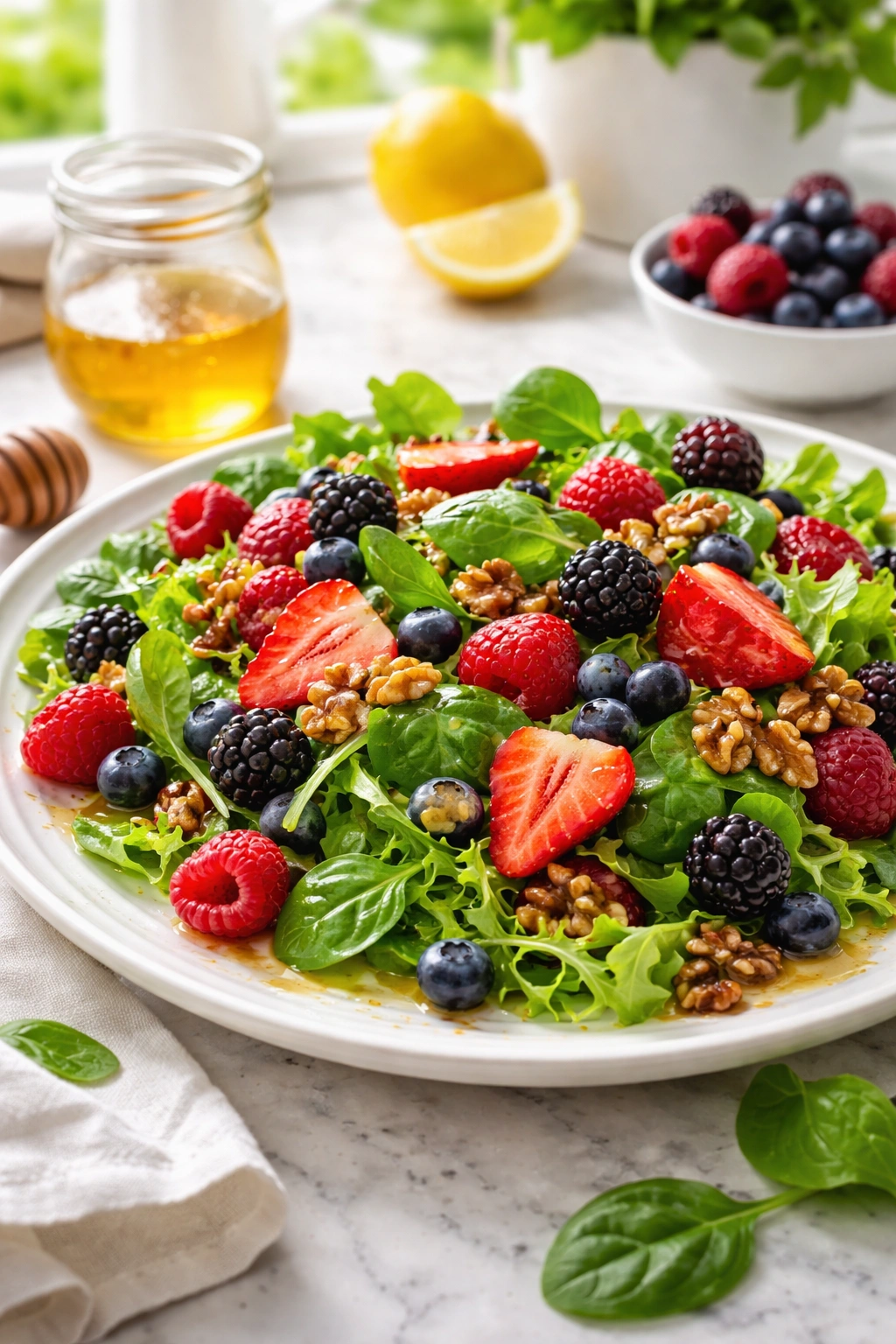
This is the salad that proves greens don’t have to be boring. The combination of mixed tender greens with fresh berries, nuts, and a subtle honey vinaigrette creates something sophisticated that tastes surprisingly good. The berries add a burst of sweetness that balances the slight bitterness of certain greens, while the honey in the dressing ties everything together without making the salad cloyingly sweet.
This salad works as a side for grilled fish or chicken, or you can bulk it up with a protein to make it a full lunch. It’s also the kind of salad that looks beautiful when plated, making it perfect for when you’re hosting even casual dinners.
Yield: Serves 4 to 6 as a side salad
Prep Time: 15 minutes
Cook Time: 0 minutes (10 minutes if toasting nuts)
Total Time: 15 minutes
Difficulty: Beginner — Mostly combining ingredients and whisking dressing.
For the Salad:
- 6 cups mixed tender greens (a combination of baby spinach, baby arugula, butter lettuce, and/or mesclun mix), washed and dried
- 1½ cups fresh berries (a mix of raspberries, blueberries, and/or blackberries), left whole or halved if they’re very large
- ½ cup raw or toasted walnuts (or sliced almonds), roughly chopped
- ¼ cup crumbled goat cheese or feta cheese
- 2 tablespoons thinly sliced fresh mint leaves
- 1 tablespoon chopped fresh tarragon (optional but adds sophisticated flavor)
For the Honey Vinaigrette:
- 2 tablespoons white wine vinegar (or champagne vinegar for a milder flavor)
- 1 tablespoon honey
- 1 teaspoon Dijon mustard
- ½ clove garlic, minced very fine
- 3 tablespoons extra-virgin olive oil
- Fine sea salt to taste
- Pinch of freshly ground black pepper
Toast the Nuts (if using raw):
-
Heat a dry skillet over medium heat. Once it’s hot, add the chopped walnuts and toast them, stirring frequently, for about 3 to 4 minutes until fragrant and lightly golden. Transfer to a plate to cool — they’ll continue cooking slightly from residual heat.
-
Don’t skip this step if using raw nuts. Toasting brings out their natural oils and creates a deeper, more complex flavor. The difference is noticeable.
Make the Honey Vinaigrette:
-
In a small bowl, whisk together the white wine vinegar, honey, Dijon mustard, and minced garlic. Let it sit for a minute so the flavors start to meld.
-
While whisking constantly, slowly drizzle in the olive oil until the dressing emulsifies and becomes slightly creamy. The slow addition of oil while whisking is what creates the emulsion — if you dump it all in at once, you’ll end up with separated oil and vinegar.
-
Season with fine sea salt and a pinch of black pepper. Taste and adjust — honey vinaigrettes should taste balanced between sweet and acidic, with neither dominating.
Assemble the Salad:
-
In a large bowl, combine the mixed greens, toasted walnuts, and fresh herbs (mint and tarragon if using).
-
Pour just enough dressing over the greens to coat them lightly — you don’t want a heavy layer of dressing because it’ll weigh down the delicate leaves. Toss gently until everything is evenly coated.
-
Divide the dressed greens among serving bowls or plates. Top each portion with fresh berries and crumbled goat cheese.
-
Drizzle a bit more vinaigrette over the top if desired, or serve additional dressing on the side so people can add more to their preference.
Why Berry and Green Works
The natural sugars in berries complement the slight bitterness of certain greens like arugula and radicchio. The honey in the dressing amplifies this sweetness subtly without making the salad taste dessert-like. The nuts add textural contrast and healthy fats that help your body absorb the fat-soluble vitamins in the greens.
This combination feels lighter than a traditional salad with cheese and heavy proteins, but it’s still satisfying because of the nuts and cheese.
Storage and Make-Ahead
The dressing keeps refrigerated for up to a week. The greens and nuts can be prepped separately and stored for a day — keep greens in a sealed container and nuts in an airtight container.
Assemble the salad just before serving. Don’t dress it ahead of time, and don’t add the berries until you’re ready to plate — they’ll release liquid and make the salad soggy if left sitting.
Variations
Add protein: Grilled chicken breast, salmon, or shrimp transforms this into a complete meal.
Use different berries: Strawberries, blackberries, or even pomegranate arils work beautifully.
Change the cheese: Crumbled blue cheese or sheep’s milk cheese creates interesting flavor combinations.
Add crunch: Top with crispy croutons or a few seeds like pumpkin or sunflower seeds.
Make a warm version: Wilt the greens slightly by pouring warm vinaigrette over them — this works especially well if you’re adding a warm protein like grilled chicken.
5. Zucchini Noodle Salad with Basil Pesto
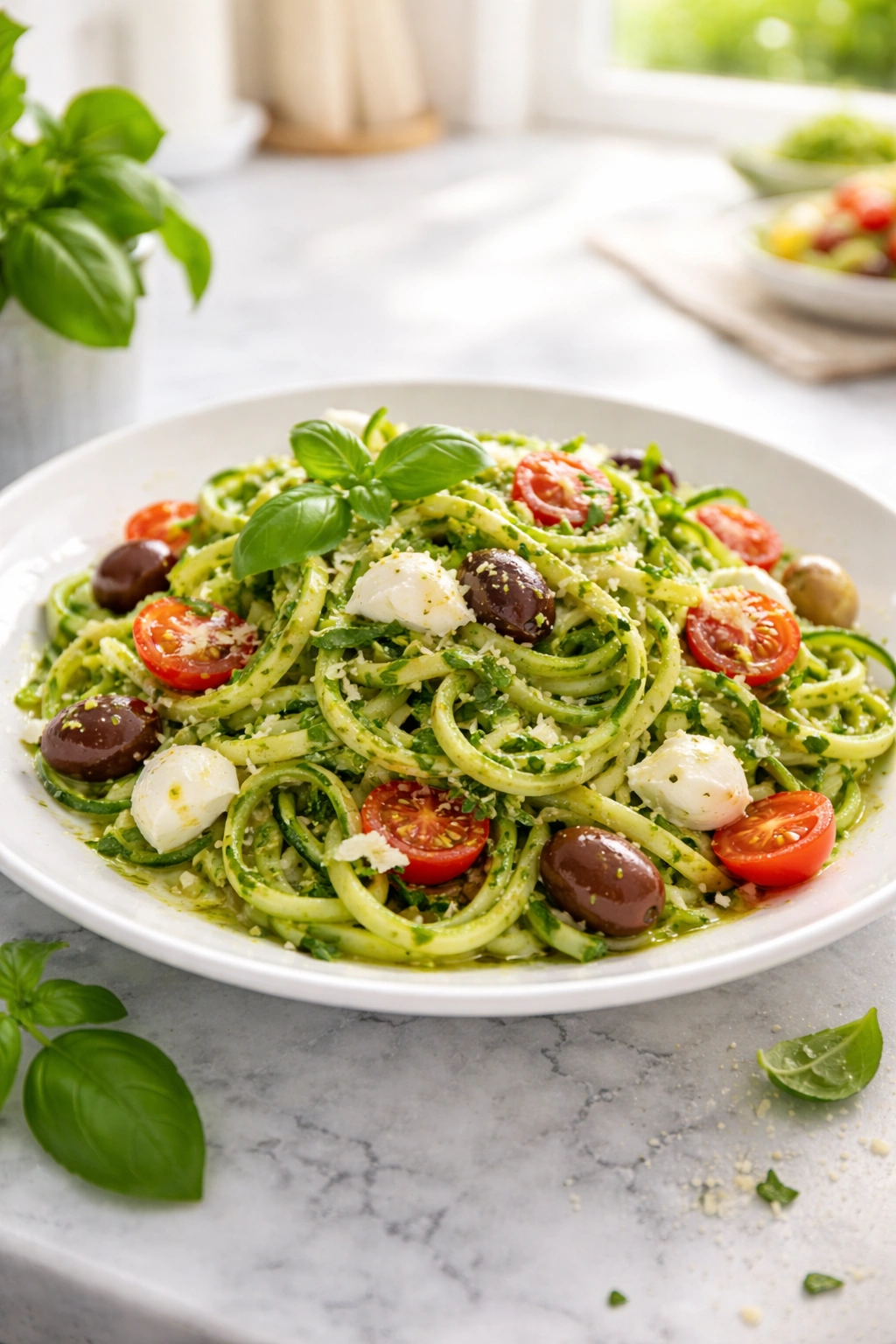
This salad answers the question of what to do with all the zucchini that appears in gardens around this time of year. Zucchini noodles — sometimes called “zoodles” — are ribbons or thin strands of raw zucchini that serve as a lighter alternative to pasta. They’re crisp, fresh-tasting, and pair beautifully with bright flavors like basil pesto, lemon, and fresh herbs.
The pesto here is made fresh and tossed gently with the zucchini noodles rather than cooked, which keeps everything light and fresh. It’s the kind of salad that tastes like summer, comes together in under 20 minutes, and is substantial enough to be a complete meal on its own.
Yield: Serves 4 as a main course
Prep Time: 20 minutes
Cook Time: 0 minutes
Total Time: 20 minutes
Difficulty: Intermediate — Spiralizing zucchini is straightforward, but making fresh pesto requires some knife work if you don’t have a food processor.
For the Salad:
- 1 pound medium zucchini (about 4 medium zucchini), ends trimmed
- 1 cup cherry tomatoes, halved
- ½ cup Kalamata olives, pitted
- ⅓ cup pine nuts (or walnuts as a budget-friendly substitute), lightly toasted
- 4 ounces fresh mozzarella (approximately 1 cup), torn into bite-sized pieces, or ½ cup crumbled feta
- 2 tablespoons thinly sliced fresh basil (save some for garnish)
- 2 tablespoons shaved Parmesan cheese
- Fine sea salt to taste
- Freshly ground black pepper to taste
- Juice of ½ lemon
For the Fresh Basil Pesto:
- 3 cups fresh basil leaves, loosely packed
- ⅓ cup pine nuts (or walnuts)
- 2 cloves garlic, minced
- ¼ cup freshly grated Parmesan cheese
- ⅓ cup extra-virgin olive oil
- 2 tablespoons fresh lemon juice
- ½ teaspoon fine sea salt
- Pinch of freshly ground black pepper
Make the Fresh Basil Pesto:
-
If using a food processor: Add the basil, pine nuts, and garlic to the processor and pulse until roughly combined — you want a slightly chunky texture, not a smooth paste. Add the Parmesan and pulse again. With the processor running on low, slowly drizzle in the olive oil until the pesto comes together and reaches your desired consistency. Add the lemon juice and season with salt and pepper. Pulse once more to combine.
Advertisements -
If making by hand: Finely mince the garlic and transfer to a large bowl. Add the basil and pine nuts and mash them together with the back of a wooden spoon, grinding them against the sides of the bowl until you have a coarse paste. Stir in the Parmesan. Slowly whisk in the olive oil until the pesto reaches your desired consistency. Stir in the lemon juice and season with salt and pepper.
-
Taste the pesto and adjust the seasoning. It should taste bright and herbaceous with a balance of garlic and lemon — not overpowering in any one direction.
Spiralize the Zucchini:
-
Using a vegetable spiralizer or mandoline with a julienne blade, create thin noodle-like strands from the zucchini. If you don’t have a spiralizer, use a vegetable peeler to create thin ribbon-like strips instead — they won’t be quite as noodle-like, but they’ll work beautifully.
-
Place the zucchini noodles in a colander and sprinkle lightly with fine sea salt. Let them sit for about 10 minutes — this draws out excess moisture so the salad doesn’t become watery. After 10 minutes, gently squeeze the zucchini noodles in a clean kitchen towel to remove as much liquid as possible.
Assemble the Salad:
-
In a large bowl, combine the prepared zucchini noodles with the fresh basil pesto, tossing gently until the noodles are evenly coated.
-
Add the halved cherry tomatoes, Kalamata olives, and torn mozzarella or crumbled feta. Toss again gently, being careful not to break apart the cheese.
-
Season to taste with fine sea salt, freshly ground black pepper, and a squeeze of fresh lemon juice.
-
Divide among serving bowls or plates. Top each portion with toasted pine nuts, sliced basil, and shaved Parmesan cheese.
Advertisements -
Serve immediately or at room temperature.
Why Raw Zucchini Works Here
Raw zucchini has a mild, slightly sweet flavor that doesn’t compete with bright toppings like pesto. It’s also incredibly hydrating and light compared to cooked pasta, making this salad perfect for warm days when you want something satisfying but not heavy. The key is removing excess moisture — that’s what prevents the salad from becoming a watery mess.
Storage and Make-Ahead
The pesto can be made up to 3 days ahead and stored in an airtight container in the refrigerator. Cover the pesto with a thin layer of olive oil to prevent browning — this keeps it fresh and vibrant.
The zucchini can be spiralized up to a few hours ahead, then salted and squeezed dry just before serving. Don’t dress it with pesto until you’re ready to eat — while zucchini noodles don’t wilt the way greens do, the pesto will break down slightly if left sitting for more than a few hours.
Variations
Add protein: Top with grilled chicken, shrimp, or white beans to turn this into a more substantial meal.
Different pesto: Cilantro pesto, spinach pesto, or even arugula pesto work beautifully as alternatives to basil.
Make it creamy: Stir a few spoonfuls of Greek yogurt or ricotta into the pesto for a richer version.
Raw vs. cooked: If you prefer cooked zucchini, lightly sauté the noodles in olive oil for 2 to 3 minutes before tossing with pesto — they’ll be warmer and slightly softer.
Add more vegetables: Mix in diced bell peppers, cucumber, or fresh corn kernels for additional crunch and variety.
Tips for Building Perfect Summer Salads
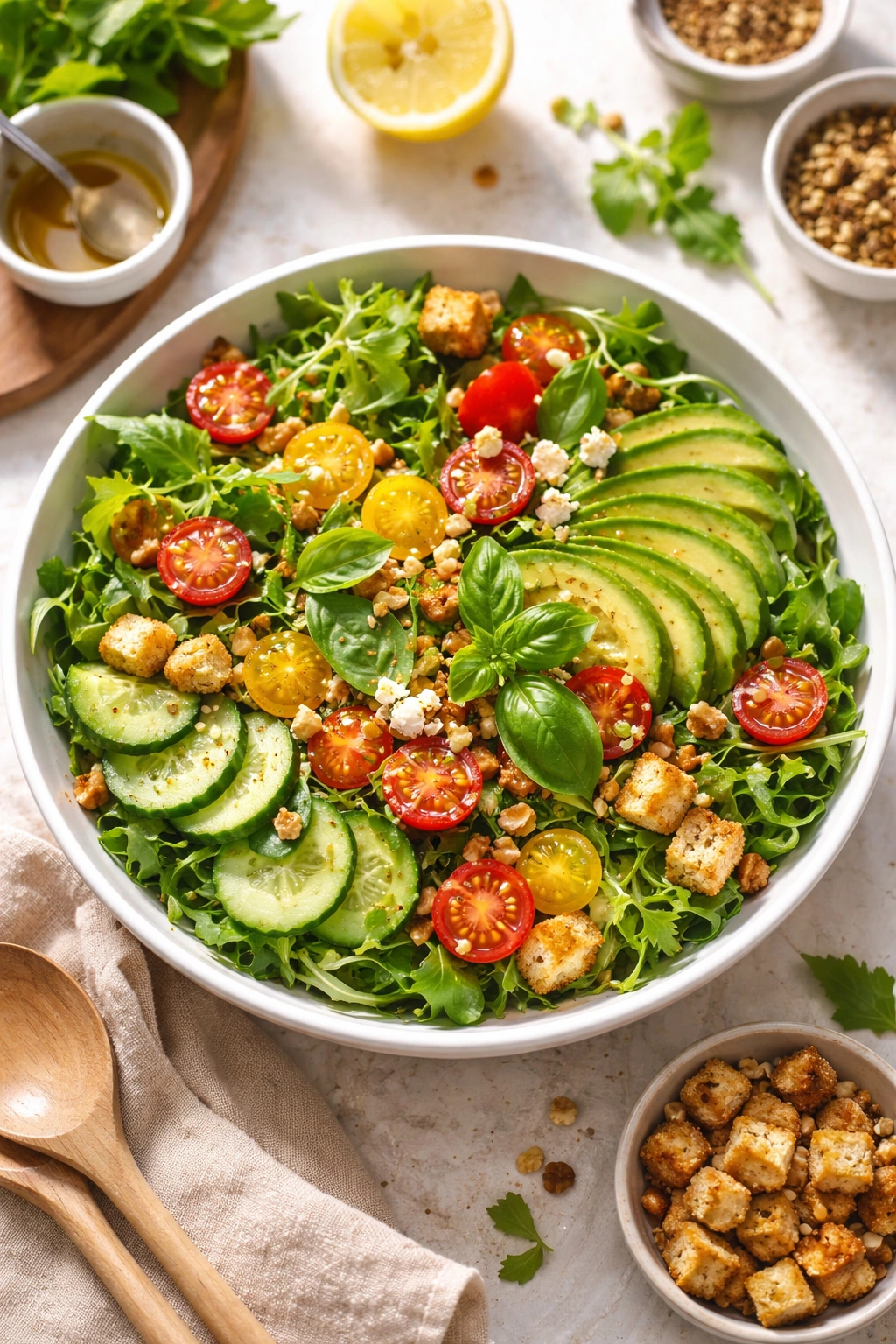
The difference between a salad that tastes good and one that tastes genuinely exceptional often comes down to technique and timing rather than fancy ingredients. Taste as you build. Start with under-seasoning and add more salt and acid (from vinegar or lemon juice) as you go — it’s much easier to add than to remove. A squeeze of lemon juice or a splash of vinegar often wakes up flavors in a way that nothing else can.
Balance texture intentionally. Every salad needs something crisp (raw vegetables, nuts, croutons), something creamy (cheese, avocado, nuts, a creamy dressing), something juicy (tomatoes, berries), and something substantial (a protein, beans, or grains). If your salad is all soft textures, it’ll feel mushy. All hard textures and it’ll feel aggressive. Aim for a mix.
Don’t dress everything all at once, especially if you’re using delicate greens. Dress the sturdy vegetables first, then add the greens at the last moment and toss them in just enough dressing to coat lightly. This keeps the greens crisp rather than soggy.
Fresh herbs make a genuinely noticeable difference. A salad with no fresh herbs tastes flat compared to one with basil, dill, cilantro, or mint. Even a small handful of torn basil changes everything.
Temperature matters too. Room temperature salads feel more flavorful than cold ones (the flavors in cold food register less on your palate), but some people prefer them chilled. Make salads according to your preference, but taste them and adjust seasoning if they’ve been refrigerated — cold dulls perception of salt and acid, so chilled salads usually need a bit more of both.
Use good olive oil and vinegar. These ingredients show up in every single salad, so quality matters. A cheap vinegar will taste harsh and thin. A good vinegar — whether balsamic, red wine, or white wine — adds depth and complexity that transforms dressing from acceptable to delicious.
Final Thoughts
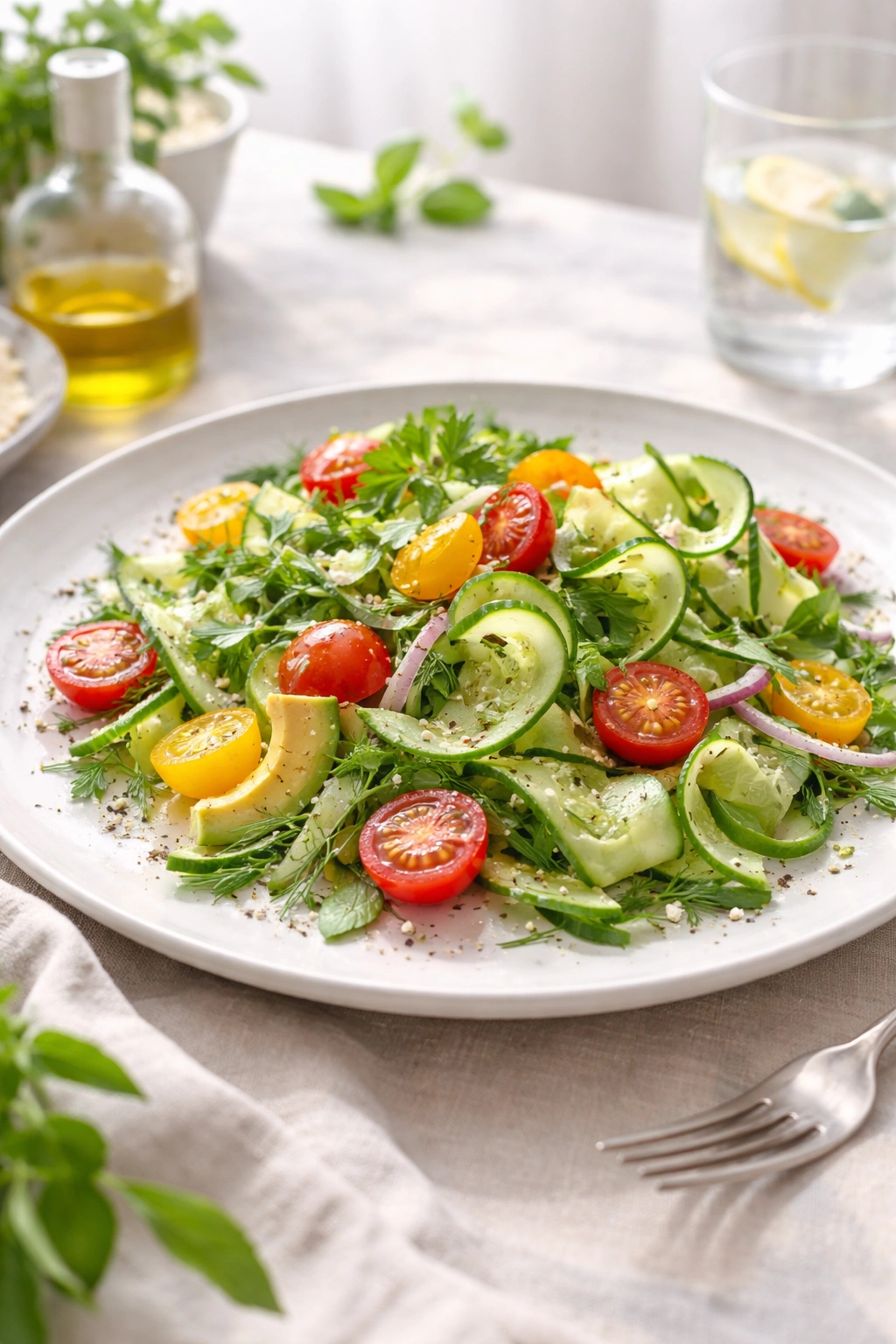
Summer salads don’t require complicated techniques or hard-to-find ingredients. They require good-quality vegetables at their peak, thoughtful combinations, and the confidence to keep them simple when simplicity is what they’re calling for. Whether you’re making the light and refreshing Cucumber and Dill Salad on a scorching afternoon, or the more substantial Grilled Chicken and Lemon Herb version for dinner, these salads work because they respect the season and what grows during it.
The beauty of building a salad isn’t actually in the eating part — it’s in knowing that you can throw together something delicious and nutritious without spending hours in the kitchen or making things complicated. Start with one of these five recipes, make it a couple of times, and then feel confident modifying it based on what looks good at your market or what you have in your garden. That’s when salads stop being something you force yourself to eat and start being something you genuinely crave.
