



Cottage cheese gets a bad rap. Most people think of it as a breakfast protein toss or a salad topping, something functional and frankly a bit boring. But there’s a completely different side to cottage cheese that deserves attention — one that transforms it into something creamy, rich, and genuinely delicious when you know exactly how to use it.
Enter: no-bake cottage cheese cookie dough. This isn’t a workaround or a health-conscious compromise. It’s a legitimately craveable dessert that tastes like indulgence while delivering something your body actually needs. The cottage cheese base creates a texture that’s simultaneously creamy and slightly fluffy, nothing like the grainy disappointment you might be imagining. When you blend it properly and pair it with the right mix of butter, brown sugar, and vanilla, you get something that tastes shockingly close to the real thing — that warm, buttery cookie dough flavor — except it’s ready to eat straight away, no baking required, no raw eggs to worry about.
What makes this version worth trying specifically is that it doesn’t try to hide the cottage cheese or pretend to be something it’s not. Instead, it leans into what cottage cheese does best: creates an incredibly smooth, protein-rich base that you can actually load with chocolate chips and cookie mix-ins while keeping everything stable and scoopable. The result is a dessert that’s satisfying in just a small portion, keeps beautifully in the refrigerator, and tastes genuinely good — not like a “better for you” substitute, but like a dessert you’d want to make again and again.
What Makes This Cottage Cheese Cookie Dough Special
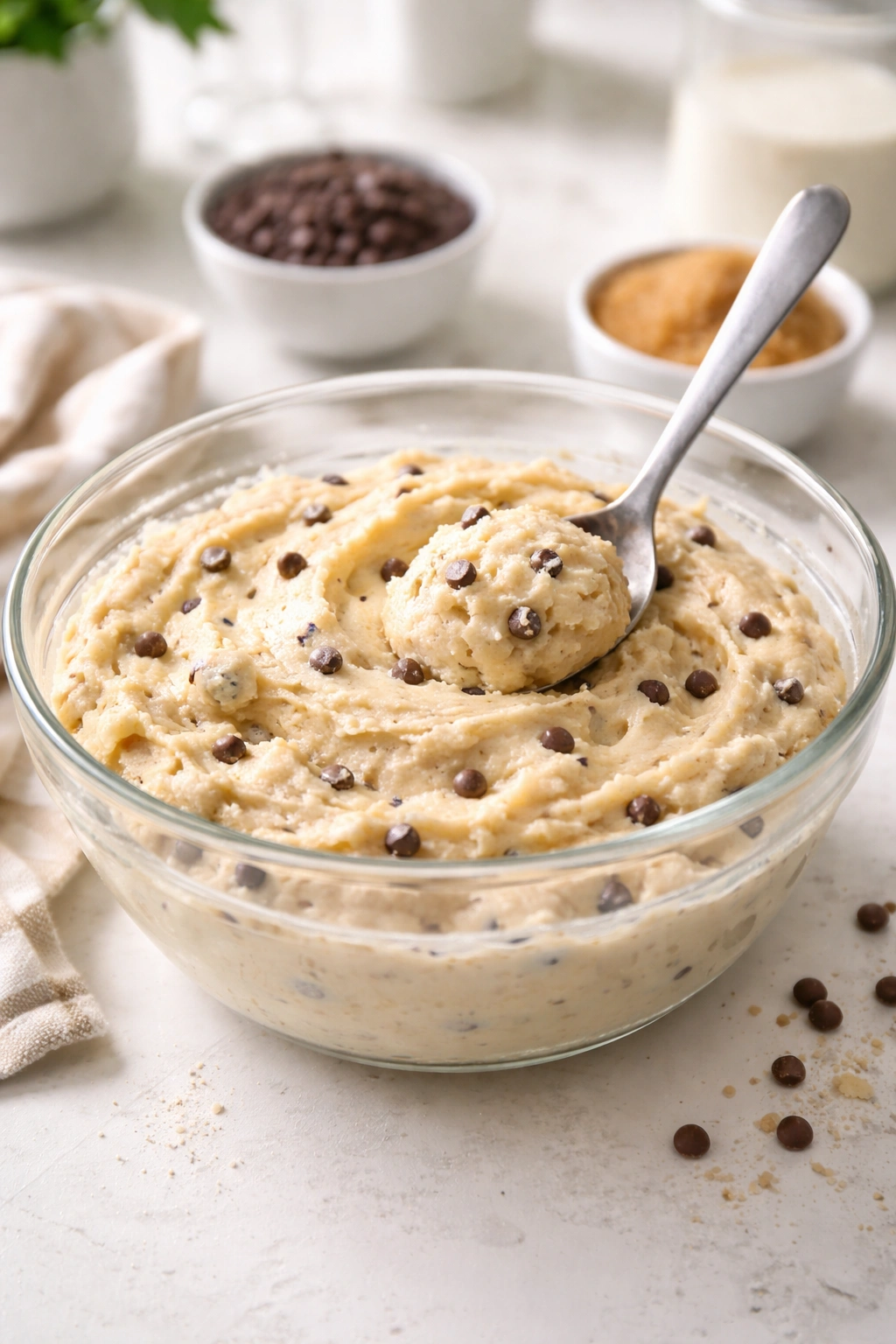
The magic here comes from a few specific things working together. First, cottage cheese is roughly 28 grams of protein per cup, which means this dessert keeps you satisfied longer than traditional cookie dough. You’re not crashing thirty minutes later — you’re genuinely nourished.
Second, cottage cheese has a naturally mild, slightly tangy flavor that pairs beautifully with vanilla and brown sugar. It doesn’t announce itself; instead, it creates a flavor background that makes the vanilla deeper and the sweetness more complex. Brown sugar contributes its molasses notes, and together they create that cookie dough flavor profile without needing heavy cream or cream cheese.
Third, the texture is where cottage cheese really shines. When blended smoothly, it creates something creamy without being heavy, and it holds its shape at room temperature in a way that cream cheese simply cannot. You can scoop it, roll it into balls, or serve it as a dip, and it maintains its form.
The no-bake aspect is the final advantage. There’s zero food-safety concern with raw eggs because this recipe contains none. You can eat it immediately, store it for days, and never worry about the safety questions that come with traditional cookie dough made with uncooked eggs.
Understanding the Role of Cottage Cheese in Raw Cookie Dough
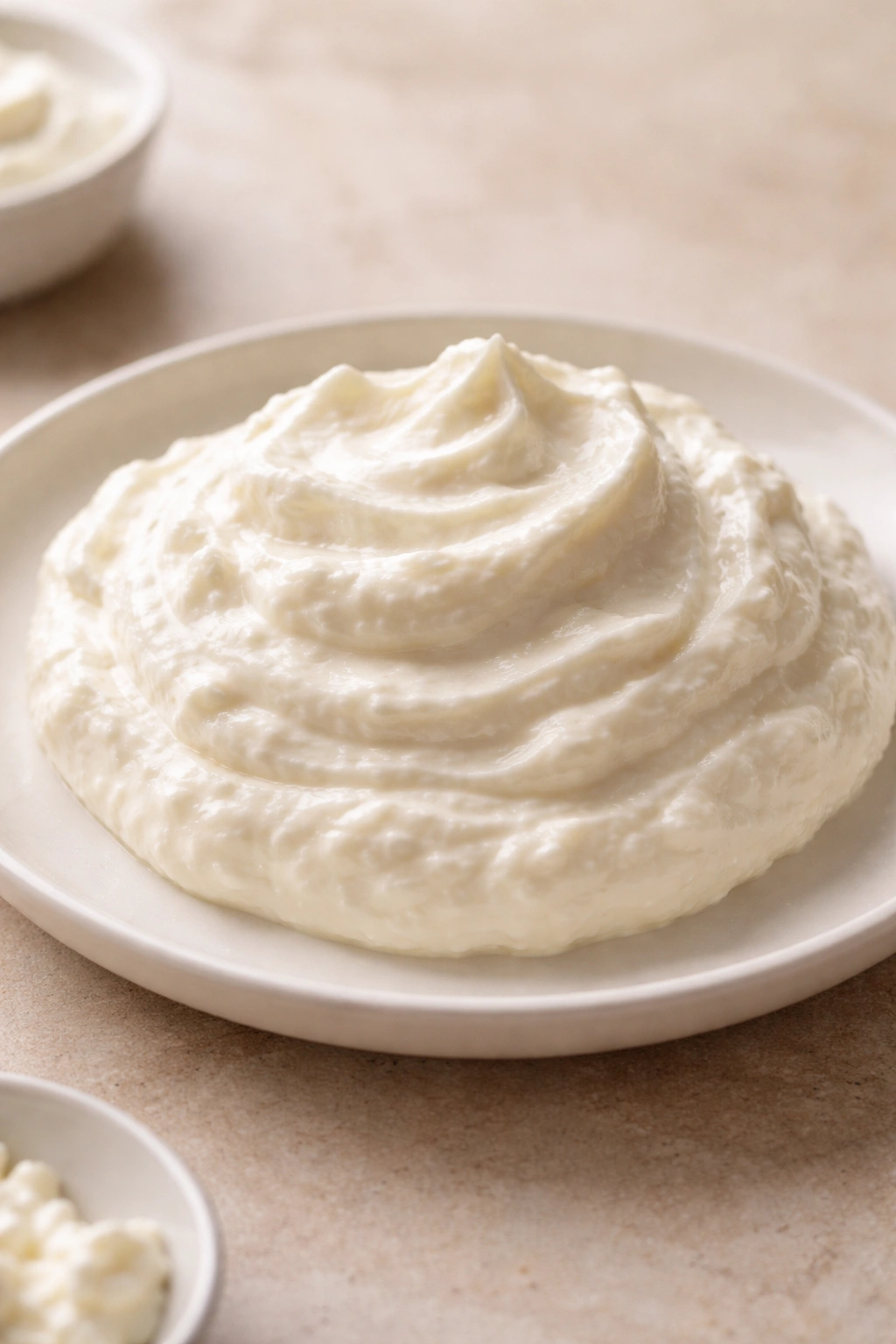
Cottage cheese works fundamentally differently than cream cheese or ricotta in this application, and understanding why matters if you want your cookie dough to turn out right.
Cream cheese is dense and high in fat, which makes it rich but also makes it slump and split when you try to load it with other ingredients. Ricotta is too grainy and doesn’t create that smooth, unified texture. Cottage cheese, especially when blended until completely smooth, creates a curd structure that’s incredibly stable. The curds disperse evenly, creating a creamy base without grittiness.
The protein network in cottage cheese also gives it structure that allows it to hold up under sweeteners and add-ins. When you add brown sugar, butter, and chocolate chips, the cottage cheese stays cohesive rather than separating into a greasy, soupy mess. This is why it’s actually the ideal base for no-bake cookie dough.
One important note: you’ll want to use full-fat cottage cheese for this recipe, not low-fat or nonfat varieties. The fat content is what creates the richness and mouthfeel that makes this taste like indulgent cookie dough rather than a protein snack. Low-fat versions tend to taste slightly chalky and don’t blend as smoothly.
Ingredient Selection for Best Flavor and Texture
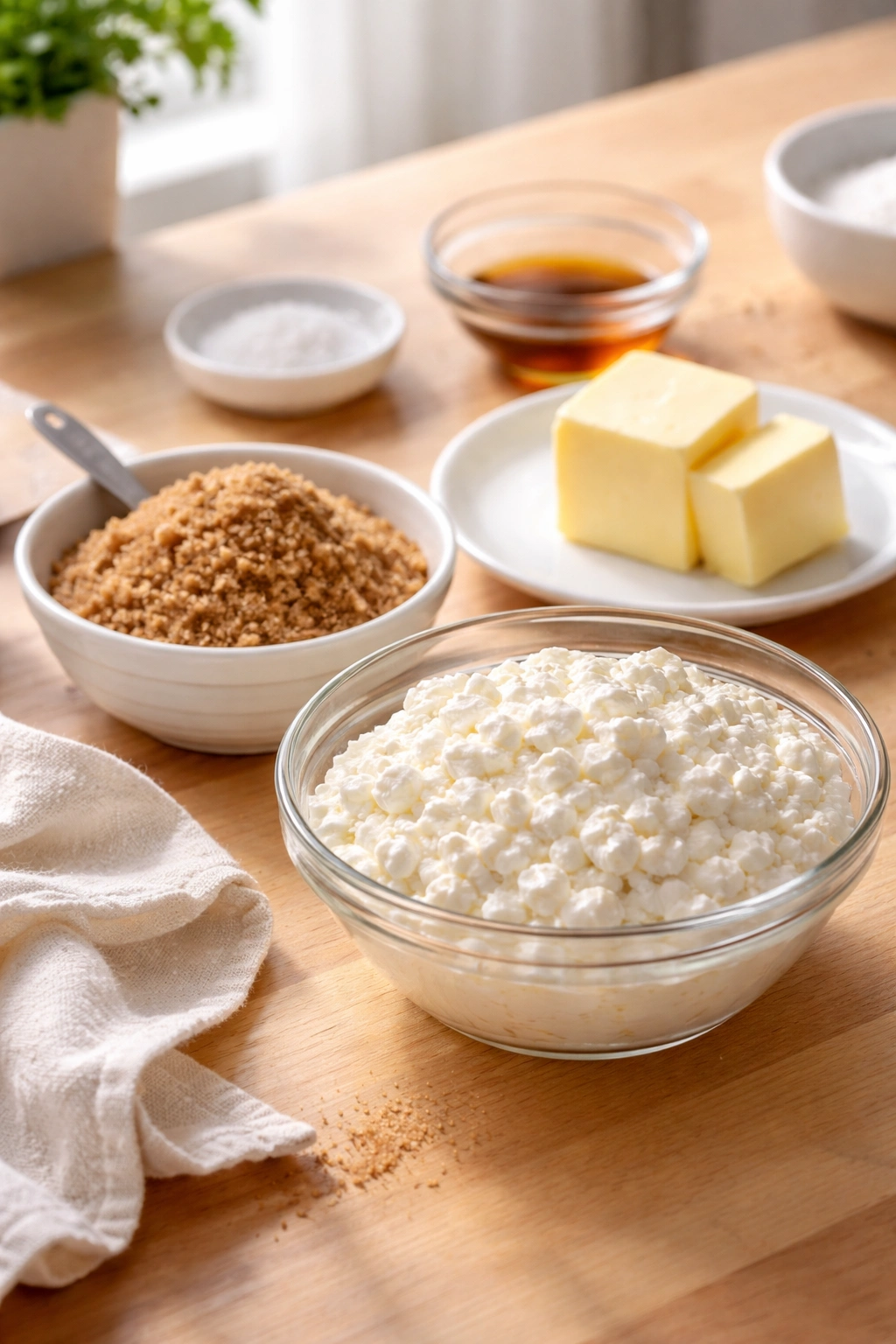
Every ingredient in this recipe has a specific job, and swapping things randomly usually leads to disappointment. Here’s what actually matters when you’re choosing your components.
For the cottage cheese itself: Full-fat, small-curd varieties tend to blend more smoothly than large-curd types. If your grocery store carries different options, the small-curd versions are your best bet. The brand matters less than the texture — you want curds that are uniform and consistent, not visibly chunky even before blending.
For butter: Use unsalted butter and let it come to room temperature before mixing. Cold butter won’t incorporate smoothly, and you’ll end up with little flecks throughout your dough rather than a uniform mixture. Room temperature means it should be soft enough to press your finger into easily, but not greasy or melting.
For brown sugar: Light or dark brown sugar both work, though dark brown sugar creates a deeper, more molasses-forward flavor if that appeals to you. Make sure your brown sugar isn’t hardened or clumpy — if it is, break those clumps apart with the back of a spoon before adding it to your mixture, or it won’t incorporate smoothly. Some people keep brown sugar in an airtight container with a piece of bread to prevent it from hardening; that’s a smart move if you use brown sugar frequently.
For vanilla extract: Pure vanilla extract makes a noticeable difference in flavor compared to imitation vanilla. This is one place where the quality upgrade is actually worth it, because vanilla is doing substantial flavor work in a dessert this simple.
For chocolate chips or mix-ins: Use good chocolate that you actually enjoy eating. Those chocolate chips will be the most prominent element once they’re mixed in, so don’t settle for waxy, mediocre chocolate. The same goes for any other add-ins — if you’re adding crushed cookies, cookie crumbles, or sprinkles, make sure they’re things you’d genuinely want to eat on their own.
The Cottage Cheese Base and How to Prepare It
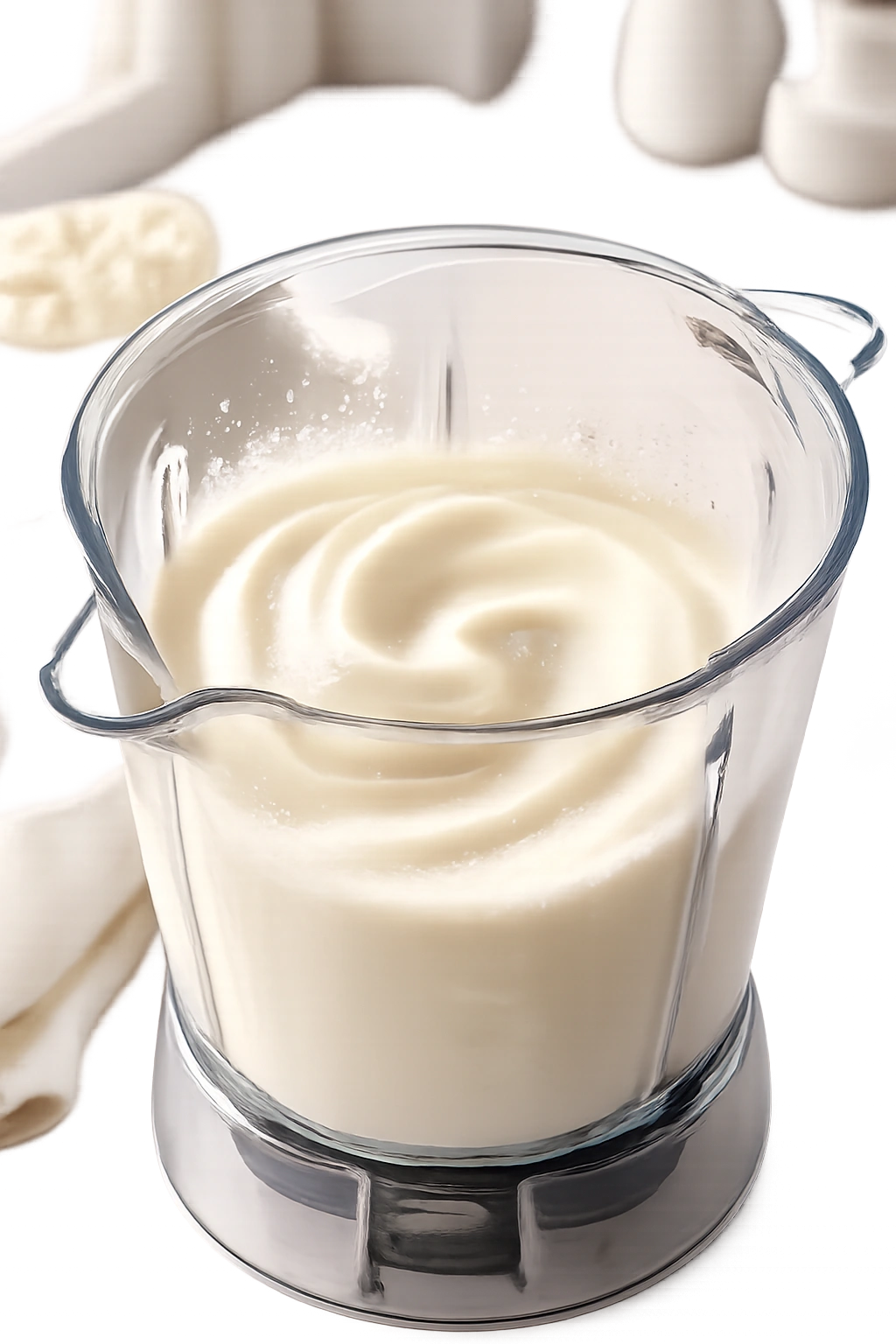
How you prepare and blend your cottage cheese makes a massive difference in the final texture. This is the most important step in the entire process, and it’s worth taking time to do it right.
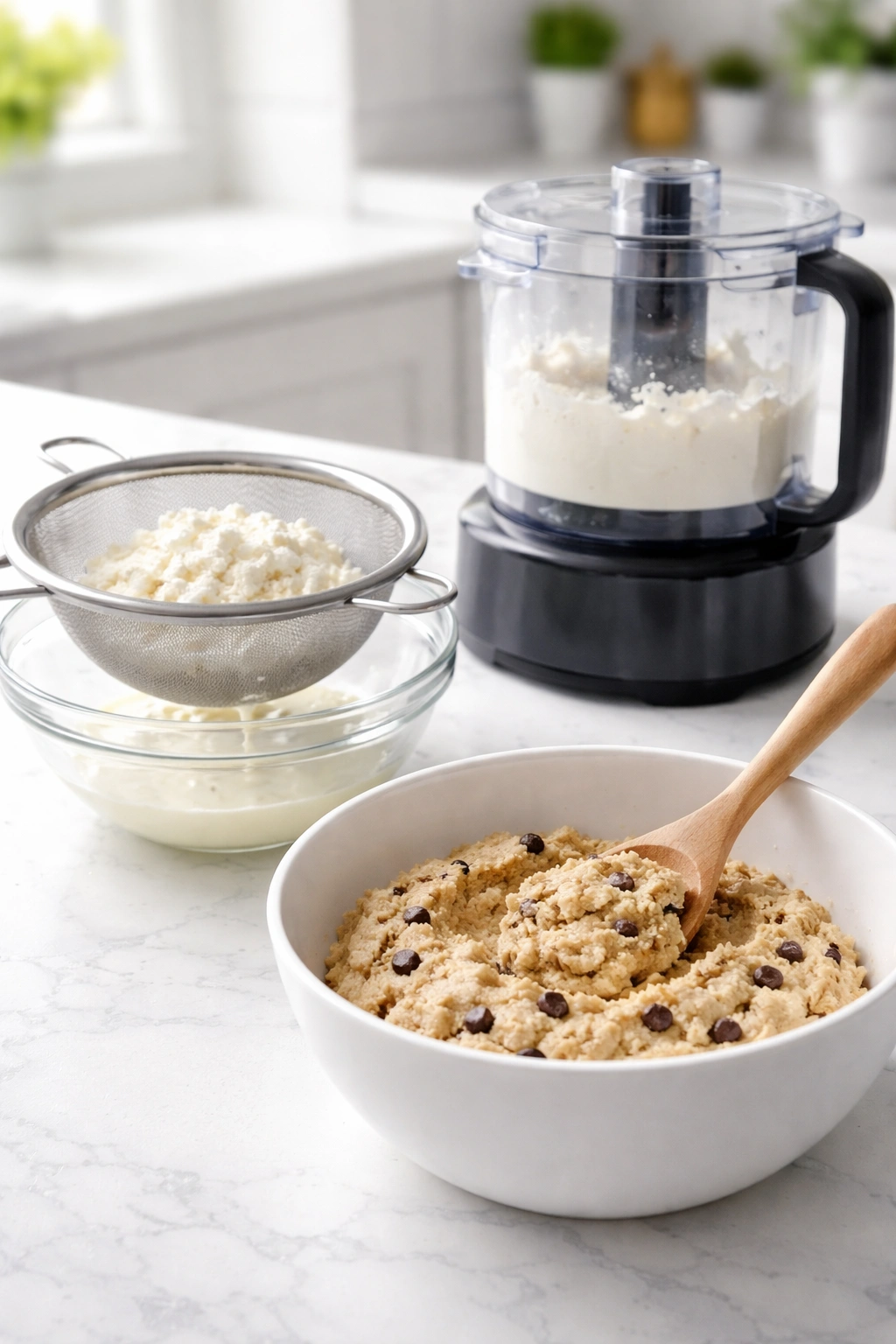
Start by draining any excess liquid from your cottage cheese. Depending on the brand and how long it’s been opened, there may be some whey pooling at the top. Pour it carefully into a fine-mesh strainer and let it sit for a minute or two — you’ll be surprised how much liquid drains out. This step prevents your cookie dough from being watery or overly soft.
Next, transfer the drained cottage cheese to a food processor or blender. If you’re using a food processor, pulse it first rather than running it continuously — you want to avoid turning it into a paste. Pulse 10 to 15 times until the mixture begins to look smooth and creamy. Then switch to running the processor continuously for about 30 to 45 seconds, scraping down the sides once halfway through.
What you’re looking for is a texture that’s completely smooth with no visible curds. Run your finger along the inside of the processor bowl — if you feel any graininess, blend it a bit longer. This smooth texture is what creates that creamy mouthfeel that makes the final cookie dough taste indulgent.
The whole blending process should take about a minute total. You don’t want to overblend cottage cheese, which can happen if you use a high-speed blender and let it go too long — this causes the mixture to become watery and separate. A standard food processor gives you more control and is actually the ideal tool for this task.
Serving and Timing Information
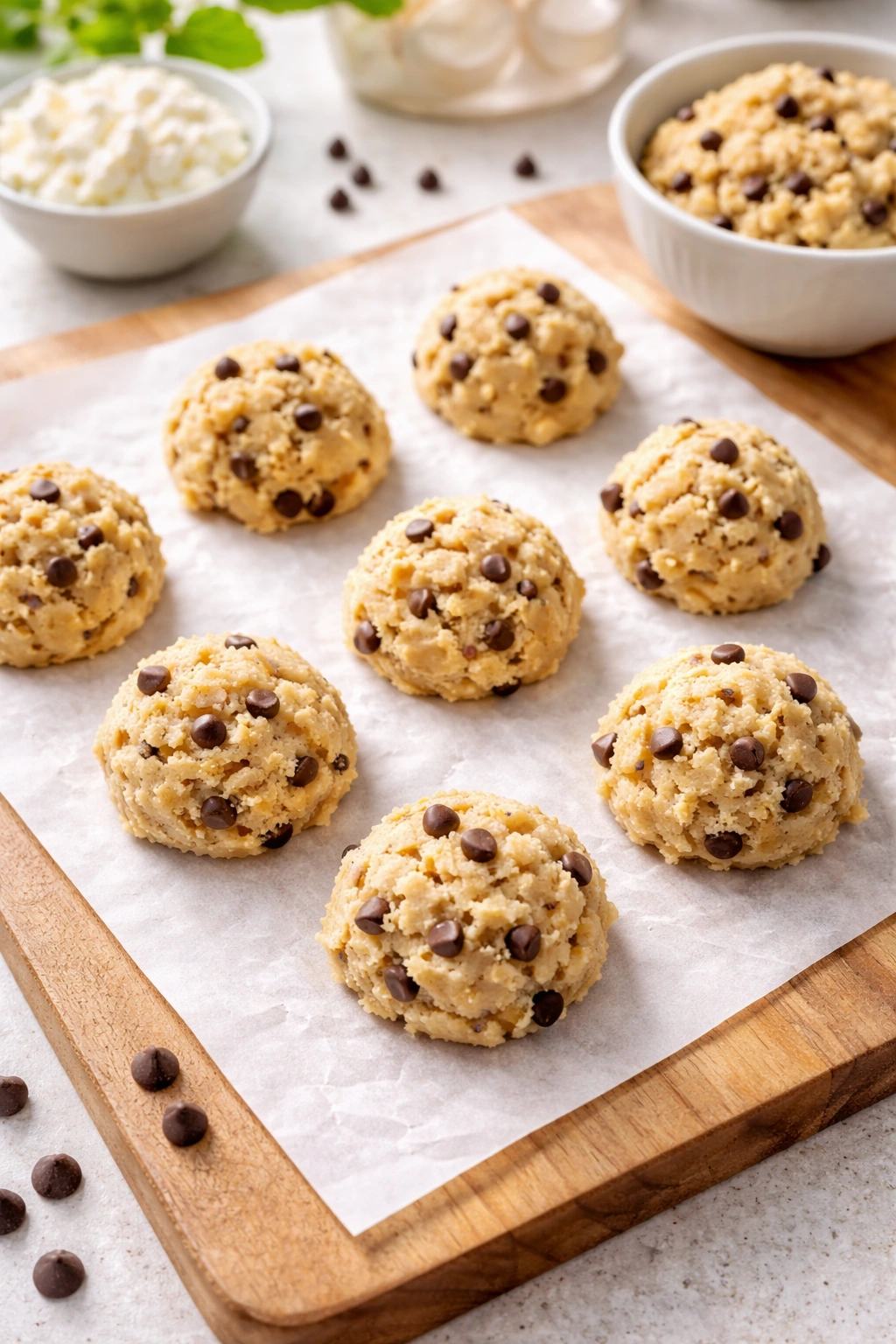
Yield: Makes about 2 cups of cookie dough (approximately 8 to 10 servings of ¼ cup each)
Prep Time: 15 minutes (hands-on mixing and blending)
Chill Time: 30 minutes (optional but recommended for easier scooping)
Total Time: 45 minutes (including chilling time)
Difficulty: Beginner — This requires no baking skills whatsoever, just basic mixing and a food processor. If you can drain and blend cottage cheese and mix ingredients together, you can make this successfully.
No-Bake Cottage Cheese Cookie Dough
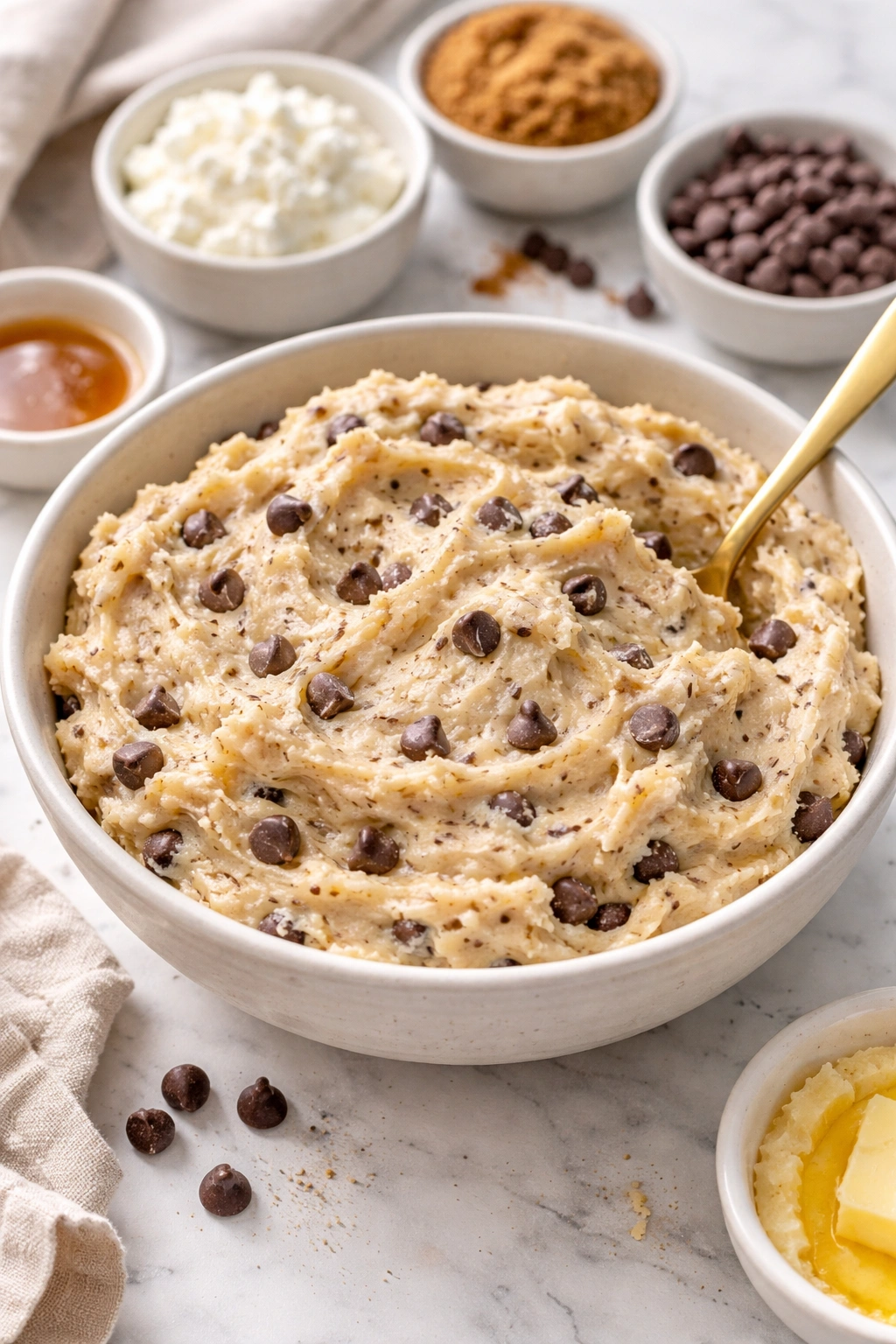
For the Cookie Dough Base:
- 2 cups full-fat cottage cheese, small-curd (drained of excess liquid)
- ½ cup (1 stick) unsalted butter, softened to room temperature
- 1 cup packed light or dark brown sugar
- 2 teaspoons pure vanilla extract
- ¼ teaspoon fine sea salt
- ½ teaspoon ground cinnamon (optional but adds warmth and depth)
For the Mix-Ins:
- 1 cup chocolate chips (semi-sweet, dark, or a combination)
- ½ cup all-purpose flour (adds texture and helps bind the mix-ins)
- 2 tablespoons granulated sugar (optional, for extra sweetness)
Step-by-Step Instructions
Prepare Your Base:
-
Drain the cottage cheese by pouring it into a fine-mesh strainer and letting it sit for 1 to 2 minutes, allowing excess whey to drip away. Transfer the drained cottage cheese to a food processor.
-
Pulse the cottage cheese 10 to 15 times until it begins to look creamy, then run the processor continuously for 30 to 45 seconds, scraping down the sides halfway through. The texture should be completely smooth with no visible curds remaining. If you see any graininess when you run your finger inside the processor bowl, blend for an additional 15 to 20 seconds.
Mix the Dough:
-
Add the softened butter to the blended cottage cheese and pulse 5 to 6 times until the mixture is mostly combined. The texture will still look a bit streaky, and that’s fine — you’re about to mix everything together by hand, which is easier to control than a food processor.
-
Transfer the mixture to a large mixing bowl. Add the brown sugar, vanilla extract, salt, and cinnamon (if using). Using a rubber spatula or wooden spoon, fold everything together gently but thoroughly. Stir until the mixture is uniform in color and the brown sugar is completely incorporated — you shouldn’t see any streaks of sugar or pockets of butter remaining.
Add the Add-Ins:
- In a separate small bowl, combine the flour, chocolate chips, and granulated sugar (if using). Fold this mixture into the cookie dough base until everything is evenly distributed. Don’t overstir here — fold just until the chocolate chips and flour are evenly mixed throughout, so they don’t end up clumping in one area.
Chill and Serve:
- Transfer the finished cookie dough to an airtight container or divide it into portions. If you plan to scoop it into balls, refrigerate it for at least 30 minutes — this makes it much easier to handle and keeps it from smearing everywhere. If you’re serving it as a dip, you can use it immediately, though chilling does improve the texture.
Why Your Cottage Cheese Cookie Dough Might Feel Different
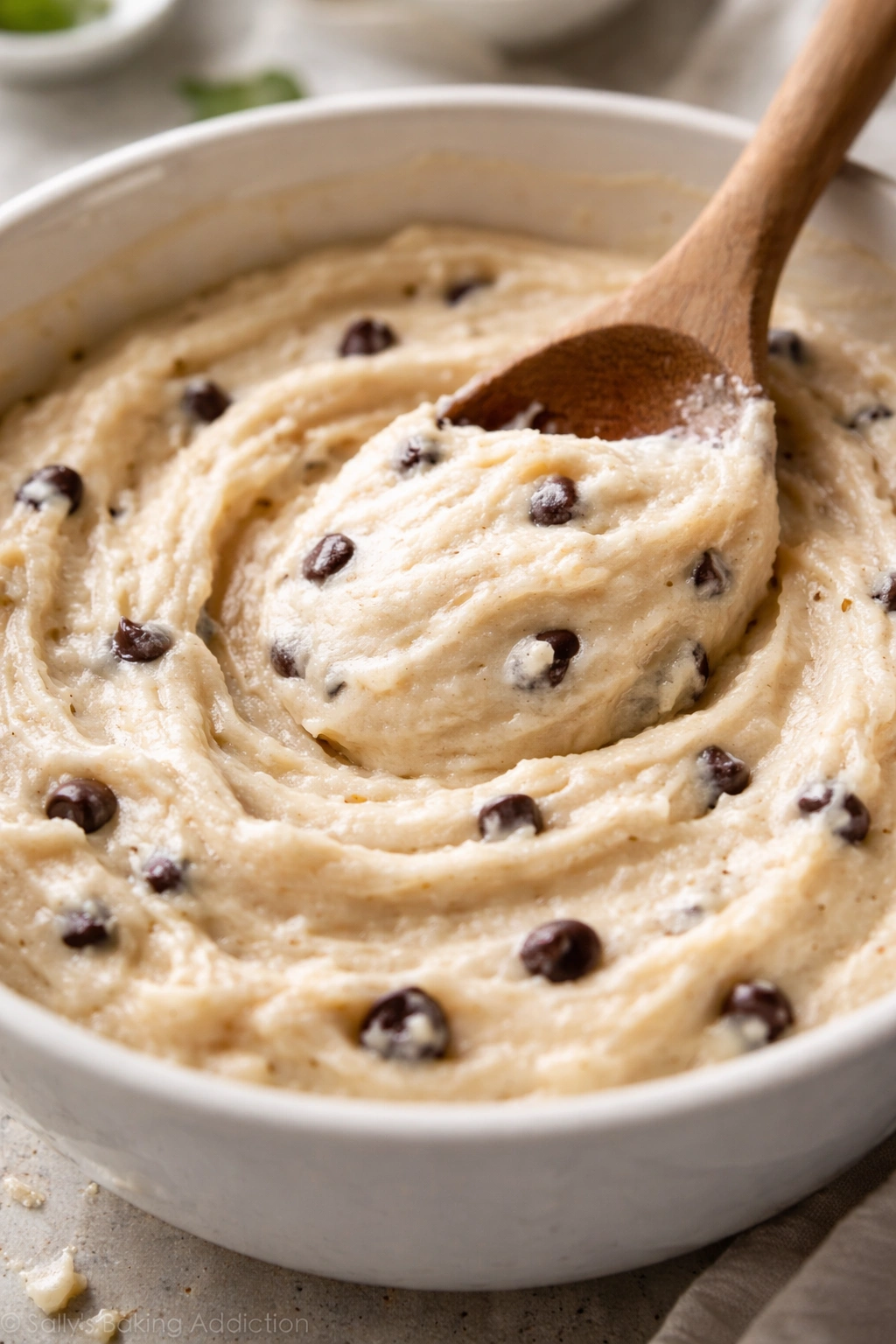
When you first taste this, you might notice it’s different from what you expected — and that’s actually the sign you’ve made it correctly. Let me explain what you should be looking for and what might go wrong.
The mouthfeel should be creamy and smooth, not grainy. If you taste graininess, your cottage cheese didn’t blend smoothly enough — that usually means either you used a brand with very large curds, or you didn’t blend it long enough in the processor. Both are fixable next time.
The flavor should taste like brown sugar and vanilla with chocolate throughout, with a subtle savory note in the background. That savory note is the cottage cheese doing its job — it deepens the sweetness and prevents the dough from tasting cloying. It shouldn’t taste tangy or sour. If it does, your cottage cheese may have been old or your batch expired — always check the date before mixing.
The texture should be scoopable and hold its shape, not slumpy or overly soft. If it’s too soft, it means either your butter wasn’t firm enough before mixing, your kitchen is quite warm, or you skipped the chilling step. All of these are fixable by refrigerating for 30 minutes to an hour.
Common mistakes to avoid: The biggest one is skipping the draining step or blending the cottage cheese insufficiently. Both of these lead to a watery, grainy dough that nobody wants to eat. The second mistake is using cold butter straight from the refrigerator — this prevents it from mixing in smoothly and creates visible butter flecks instead of a uniform base. The third mistake is overstuffing it with mix-ins. Stick to the cup of chocolate chips suggested; more than that and the dough becomes unmanageable and gritty from too much chocolate.
Flavor Variations You Can Make
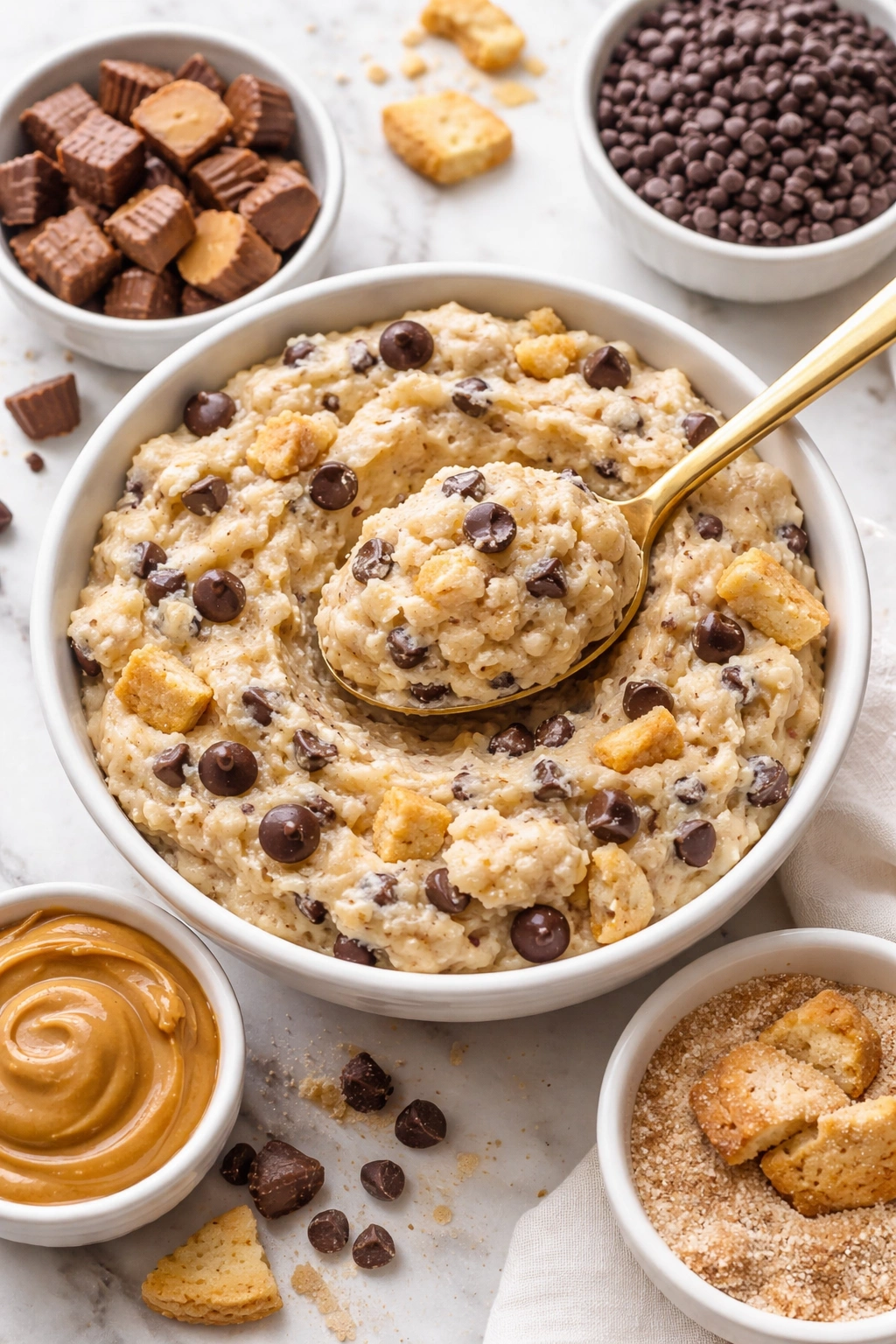
Once you’ve made the basic version a few times and feel confident with the process, these variations are all straightforward and genuinely delicious.
Chocolate-Forward Version
Add ¼ cup unsweetened cocoa powder to the base mixture alongside the flour in the add-ins step. This creates a chocolate-brown-sugar base rather than vanilla-focused. Use a mix of dark and semi-sweet chocolate chips, and consider adding ½ cup crushed chocolate sandwich cookies (like Oreos) for textural contrast. The cocoa adds richness and bitterness that balances the sweetness beautifully.
Peanut Butter Cup Variation
Replace ¼ cup of the chocolate chips with ¼ cup natural peanut butter blended into the base mixture before adding the add-ins. Then add the remaining chocolate chips plus ½ cup roughly chopped peanuts or peanut butter chips. This creates a legitimate PB-cup flavor without tasting artificial or overly sweet.
Snickerdoodle Style
Add an extra ½ teaspoon ground cinnamon to the base (so 1 teaspoon total), then reduce the chocolate chips to ½ cup and add ½ cup crushed vanilla wafers or shortbread cookies. Sprinkle a pinch of cinnamon-sugar mix on top just before serving. This leans into warm spices and creates a completely different flavor profile from the original.
Mint Chocolate Version
Skip the vanilla extract and use ½ teaspoon peppermint extract instead (mint extract is intense, so use sparingly). Add ½ cup semi-sweet chocolate chips and ½ cup dark chocolate chips, then fold in 1 teaspoon finely grated dark chocolate mixed with the flour. The mint should be subtle, not overwhelming — it should taste like chocolate with a whisper of mint, not mint-forward.
Cookie Dough Supreme
This one leans all the way into what people love about eating cookie dough straight from the bowl. Use a mix of chocolate chips (½ cup), white chocolate chips (½ cup), crushed chocolate chip cookie pieces (½ cup), and a splash of vanilla. Everything is going to look incredible and taste intensely cookie-focused. This is the version to make when you want maximum indulgence and texture contrast.
Each of these variations follows the exact same method — you’re just swapping out some of the base ingredients or the mix-ins. None of them changes the technique, so if you can make the original, you can make any of these.
Storage and Make-Ahead Tips
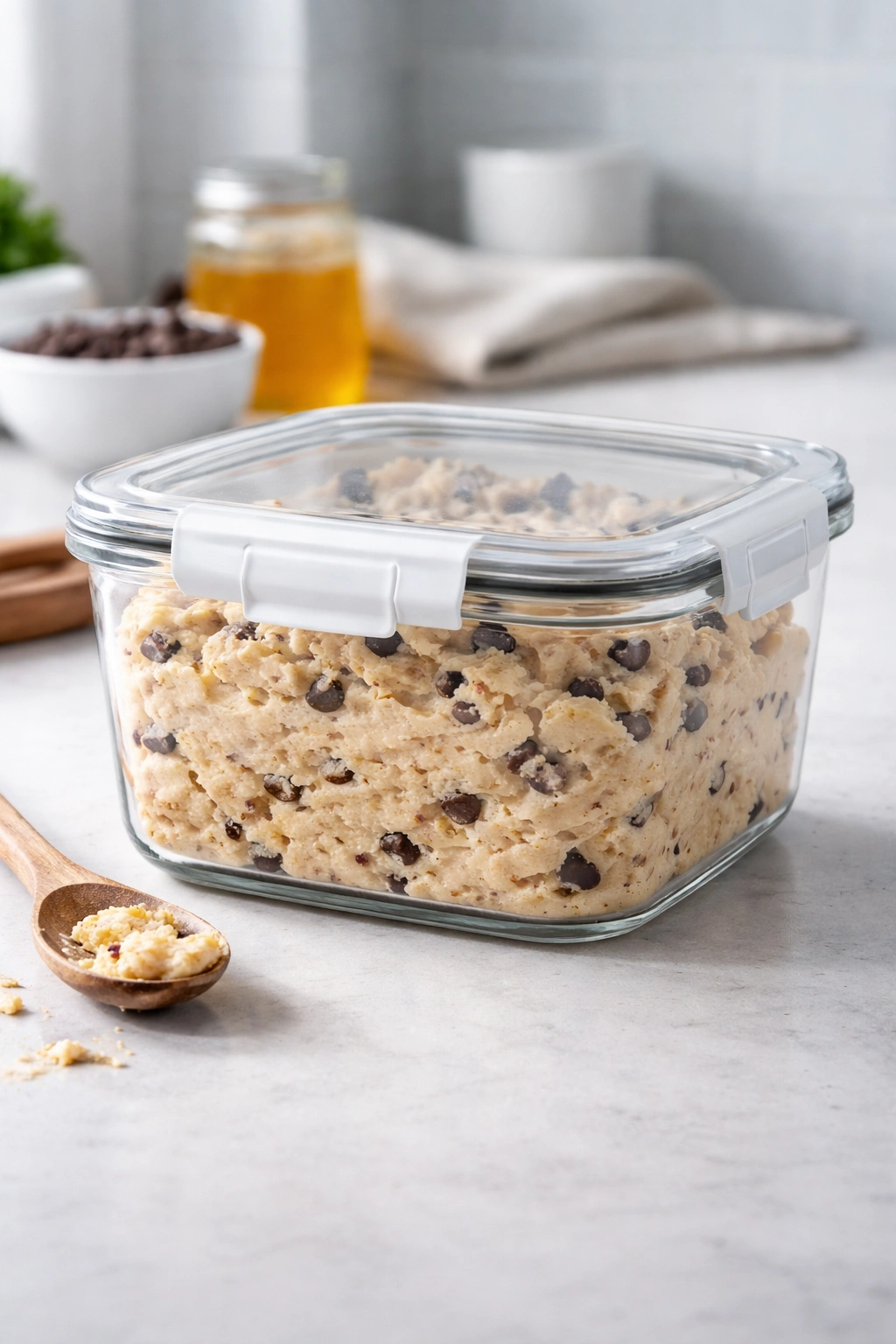
This cookie dough is one of the best desserts for make-ahead preparation. It keeps beautifully and actually improves slightly as the flavors meld.
Room temperature storage: If you’re planning to eat it within a few hours, you can leave it out, covered, on the counter. It’ll stay scoopable and soft, which many people prefer. Don’t leave it out longer than about 4 hours, though, since the butter will continue to soften.
Refrigerator storage: In an airtight container, this keeps for up to 5 days in the refrigerator. After about 2 days, it firms up slightly, which actually makes it easier to scoop into perfect little balls. The flavor becomes more integrated and actually tastes better than it does on day one.
Freezer storage: You can freeze this for up to 3 months in an airtight container or even scooped into portions on a baking sheet, then transferred to a freezer bag once frozen. When you want to eat some, thaw it in the refrigerator for about 2 hours until it reaches that soft, scoopable consistency. You can eat it straight from the freezer if you like it firmer and denser, almost like ice cream.
Making it ahead: The smartest move is to make the full batch and portion it. Scoop the dough into ¼-cup portions onto a baking sheet, freeze them for a few hours until firm, then transfer them to a freezer-safe container. Now you can grab one portion whenever you want a quick dessert without dealing with a whole container. Pop one in the fridge to thaw 30 minutes before you want it, or eat it straight from the freezer if you prefer that texture.
Batch-making the mix-ins separately: If you’re planning to make multiple batches with different mix-ins, you can prepare just the base (the cottage cheese, butter, brown sugar, vanilla, and salt) and freeze portions of that in ice cube trays or small containers. Then when you’re ready to make a batch, thaw the base and fold in whichever mix-ins sound good. This is a clever way to have vanilla, chocolate, and peanut butter versions all ready to go without making three separate full batches.
Best Ways to Serve and Enjoy This Cookie Dough
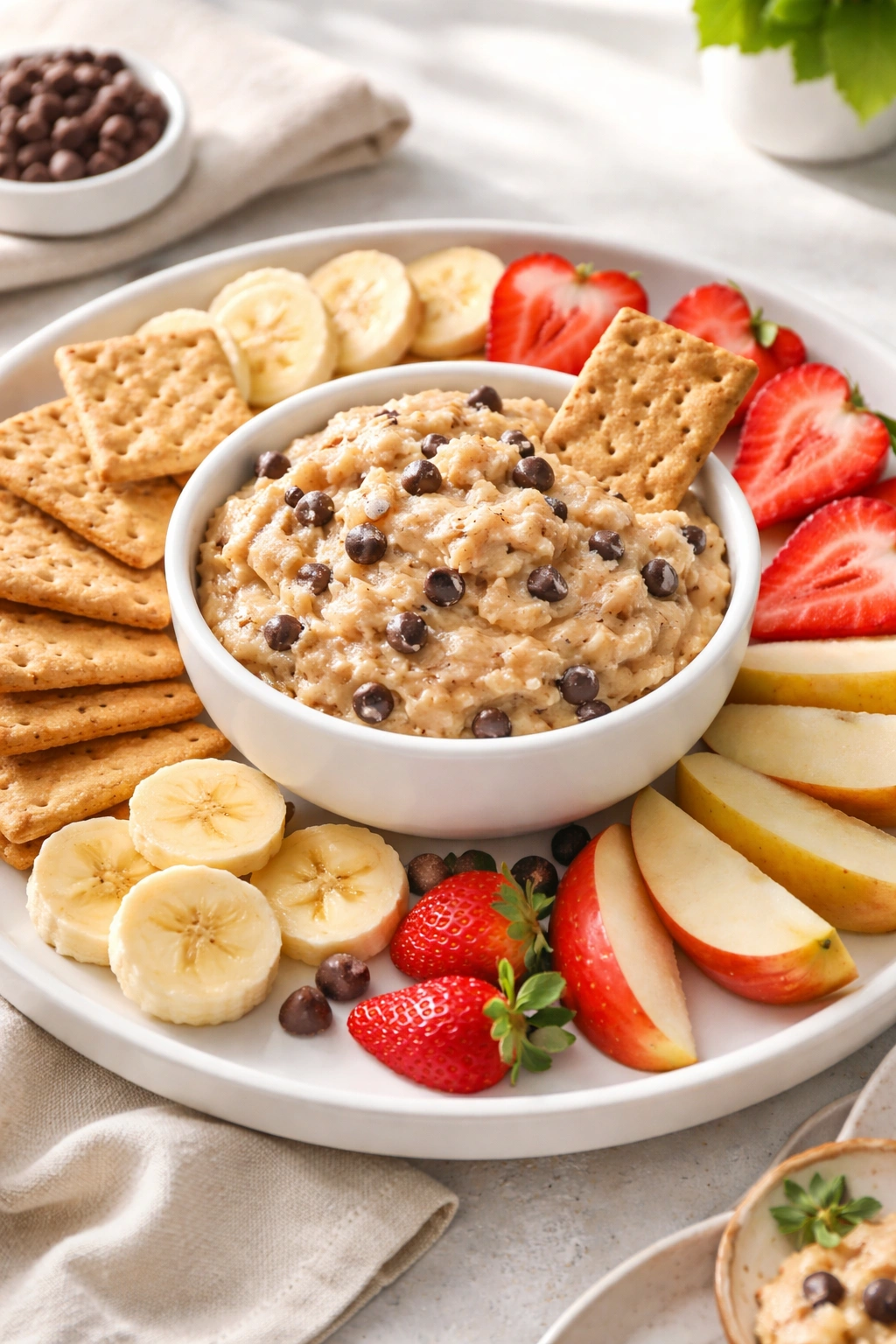
Raw cookie dough is often eaten straight from a spoon, and this version definitely supports that approach. But there are other ways to present it that make it feel more intentional and special.
As a dip: Serve it in a small bowl surrounded by graham crackers, vanilla wafers, apple slices, or pretzel rods. The contrasting textures — crispy and creamy — make this a genuinely satisfying way to eat it. The slight saltiness of pretzels against the sweet dough is particularly brilliant.
Scooped into portions: Form it into rough balls or use a small ice cream scoop to create uniform portions, then chill them on a plate. Serve with small dessert forks or toothpicks, and people can eat them elegantly without using their hands. This works beautifully at parties or when you want something more refined than eating straight from a bowl.
Layered in a parfait: Alternate layers of cookie dough with crushed cookies, whipped cream, or Greek yogurt in a small glass. Top with chocolate shavings or a drizzle of melted chocolate. This transforms it into something that looks fancy enough to serve to guests while taking literally two minutes to assemble.
On top of brownies: Warm up a fudgy brownie and top it with a scoop of this cookie dough while the brownie is still warm — the heat softens the dough slightly and creates an incredible textural contrast. This combination tastes like cookie dough brownies without any baking involved.
Mixed into ice cream: Fold small portions of this cookie dough into softened vanilla ice cream, then refreeze. It’s like homemade cookie dough ice cream but with the advantage of being completely safe to eat. The cottage cheese base actually creates incredibly smooth, creamy ice cream.
With hot chocolate or coffee: Serve a small portion alongside a warm mug of coffee or hot chocolate. The warmth of the beverage contrasts beautifully with the cool, creamy dough, and it’s genuinely comforting in a way that feels more indulgent than it actually is.
The serving style you choose depends on the occasion and your mood, but every single approach works because the dough itself is that good.
Texture and Consistency Secrets
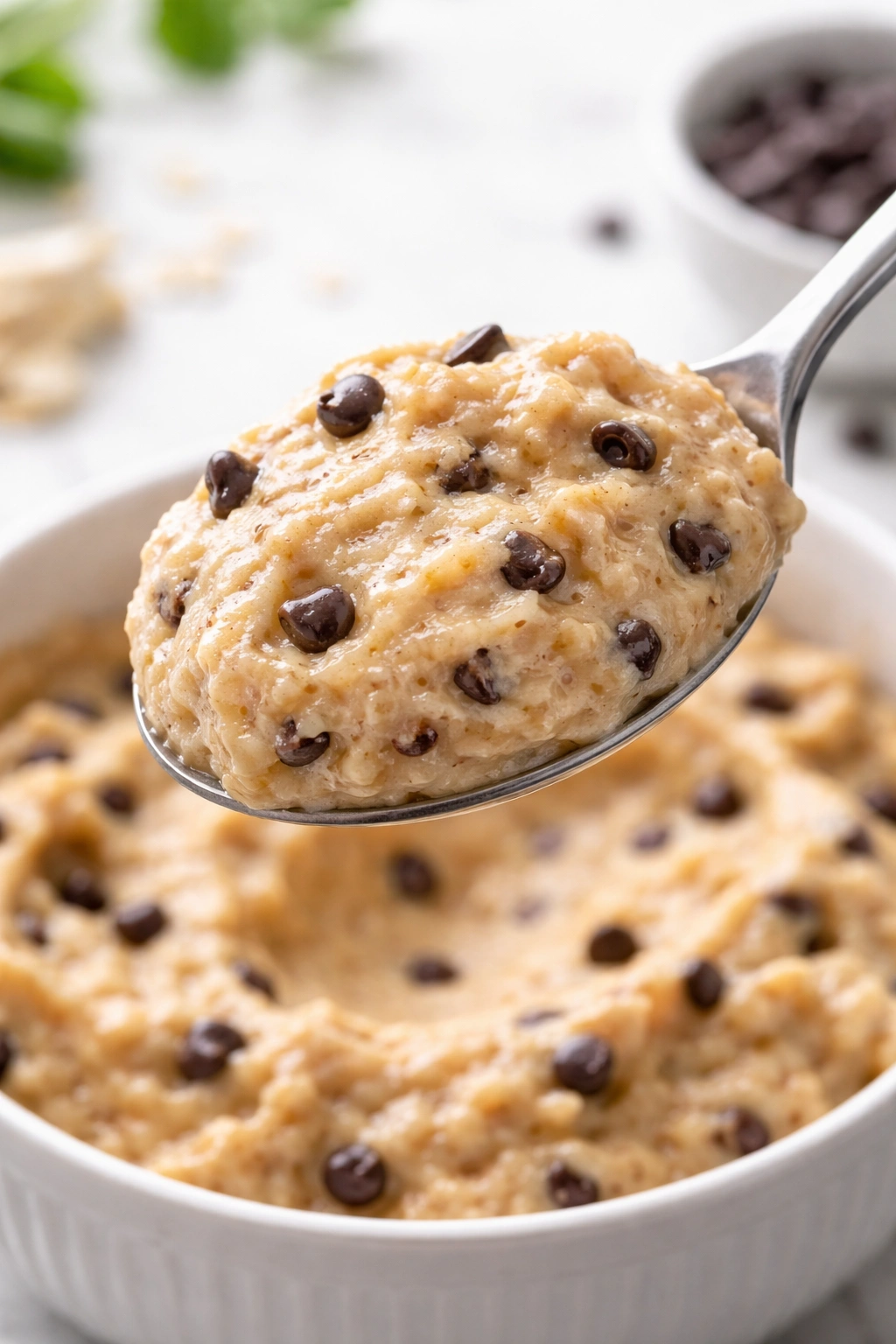
Getting the texture exactly right requires understanding a few specific principles that apply every time you make this.
The blending step is where most texture mistakes happen. If your cottage cheese doesn’t blend to complete smoothness, you’ll taste graininess no matter what else you do. Use the technique described earlier — pulse first, then run continuously while checking progress. This takes patience but creates an irreversible smooth base that everything else builds on.
The ratio of fat to protein matters more than most home cooks realize. The brown sugar and butter provide the fat and richness that makes this taste indulgent. The blended cottage cheese provides the structure and protein that keeps it all together. If you reduce the butter to try to make it “lighter,” it becomes grainy and loses that creamy mouthfeel. If you reduce the cottage cheese to reduce protein, it becomes too soft and greasy. These proportions are balanced specifically for texture, not just nutrition.
Chilling is optional but genuinely changes the experience. Room-temperature cookie dough is soft, almost melting, which some people love. Chilled cookie dough is firmer, holds its shape when scooped, and has a more substantial mouthfeel. Neither is wrong — it’s preference. But if you find your batch too soft, chilling is always the answer before you assume you made a mistake.
The flour in the add-ins serves two purposes: it adds a subtle dough-like texture that makes this taste more authentic, and it absorbs excess moisture from the chocolate chips so the mixture stays stable and doesn’t separate. Don’t skip it thinking you’ll get more chocolate flavor — you actually get better overall texture with it included.
Nutritional Reality Check
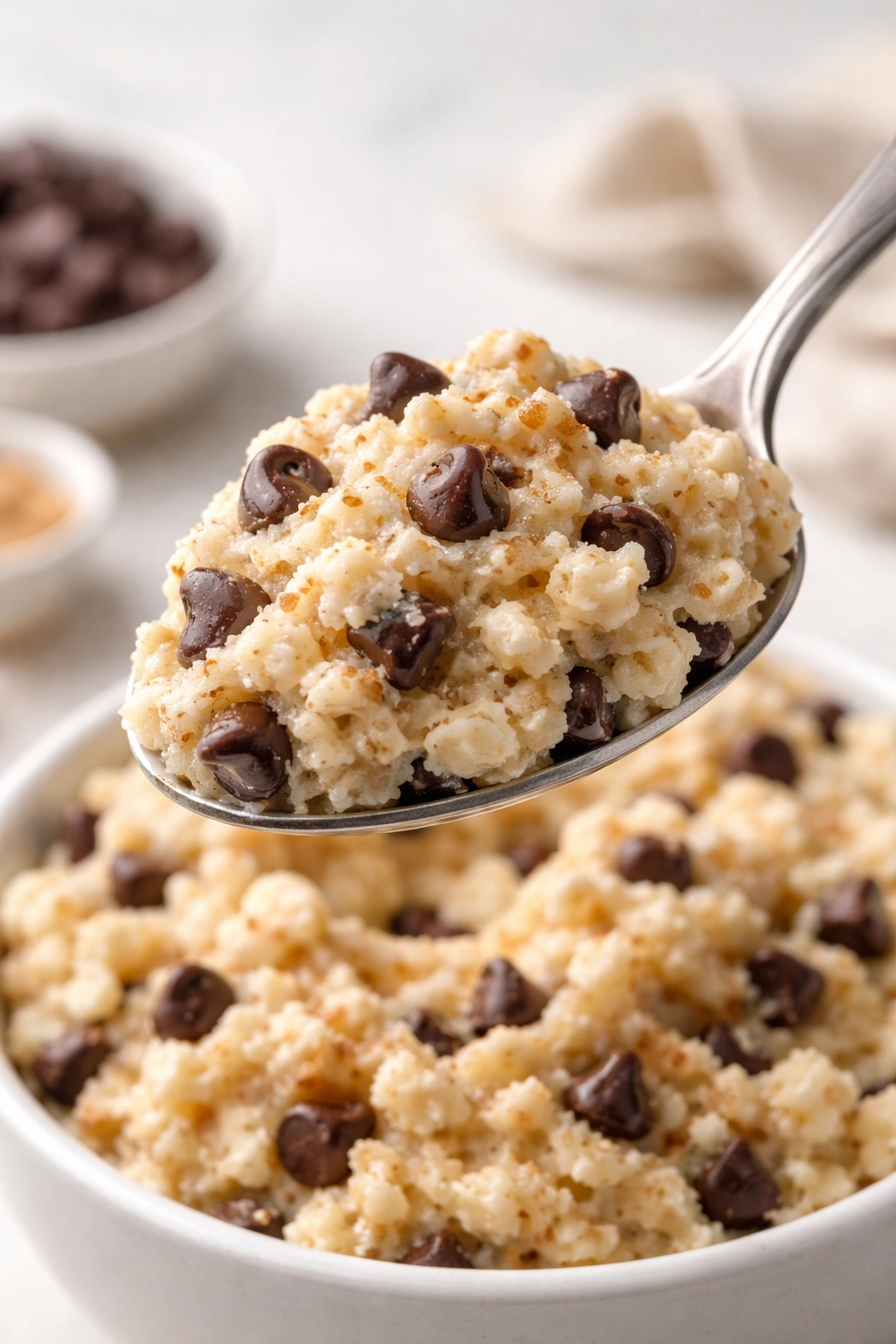
This is a dessert. Let’s be honest about that first. It contains brown sugar and butter and chocolate chips because it’s supposed to taste like indulgence. The nutrition information is not designed to pretend otherwise.
That said, it does have real nutritional merit compared to traditional cookie dough or most other desserts. A single ¼-cup serving contains roughly 8 to 10 grams of protein from the cottage cheese alone, which is substantial for a dessert. This protein, combined with the small portion size, means it actually keeps you satisfied longer than you’d expect.
It’s lower in sugar than it tastes, partly because the brown sugar is less sweet than granulated sugar by weight, and partly because the cottage cheese’s subtle flavor depth means you don’t need as much sweetness to feel satisfied. One serving is genuinely satisfying — most people don’t eat two.
The main nutritional advantage is that it requires no eggs, which means zero salmonella risk. If you’ve ever avoided regular cookie dough for food safety reasons, this removes that concern entirely.
None of this should position this as a “health dessert” or a diet food. It’s a treat. It just happens to be a more nourishing treat than most alternatives, and a smaller portion goes further because of the protein content and rich flavor.
Final Thoughts
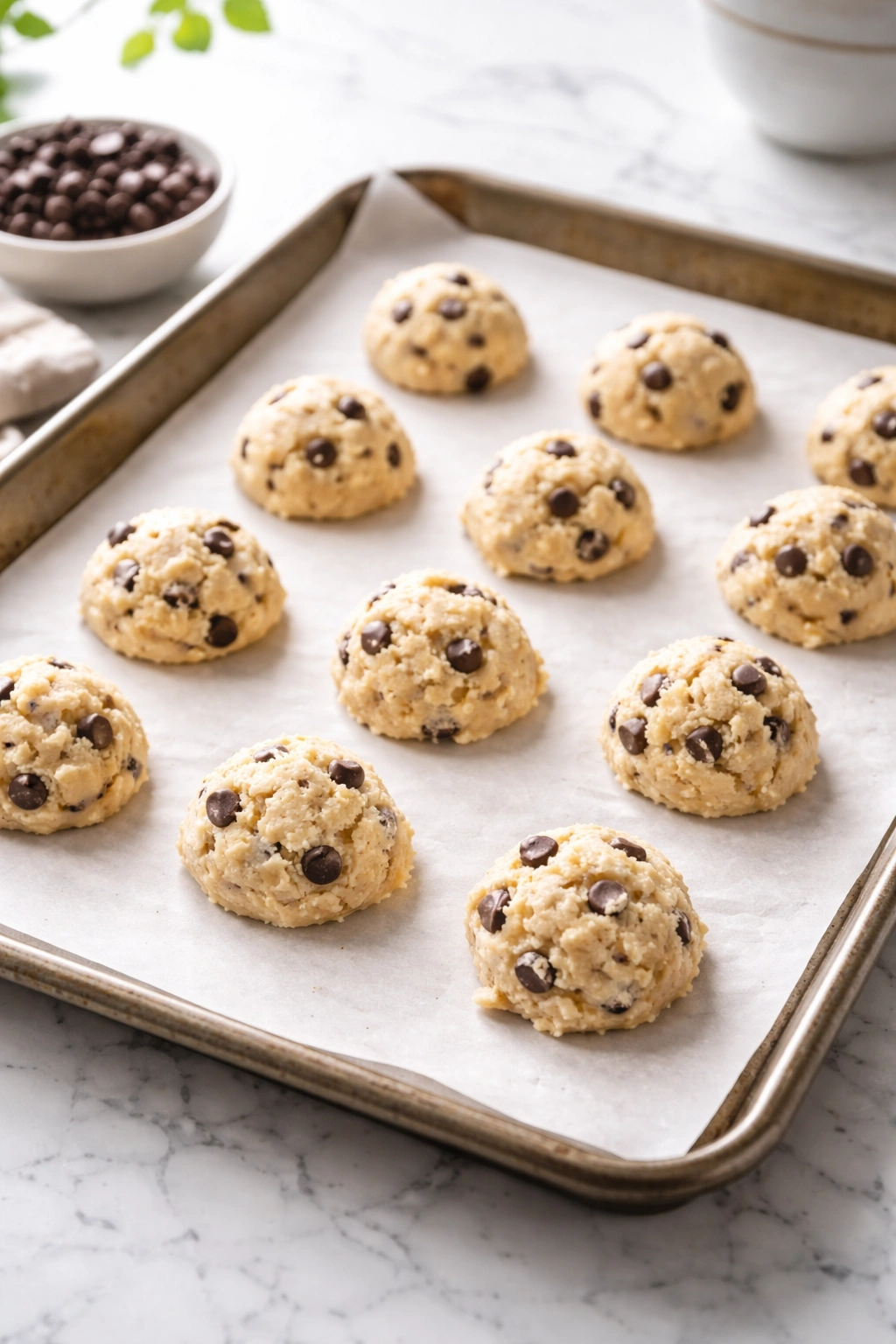
Cottage cheese cookie dough might sound like an odd combination the first time you hear about it, but it’s genuinely one of those recipes where the final result bears no resemblance to what you’d expect from the ingredient list. You’re not making a compromise or a substitute — you’re making something that stands on its own as a delicious dessert that happens to contain an unexpected ingredient.
The beauty of this recipe is that it works every single time if you follow the technique. Blend the cottage cheese until it’s completely smooth, let your butter soften properly, and fold everything together gently. That’s actually all you need to remember. After that, feel free to experiment with mix-ins and flavors and serving styles.
Make a batch this week and keep it in the refrigerator. Eat a small portion straight from the bowl, and you’ll understand why this is worth trying. Then make it again with a flavor variation, scoop it into portions, freeze them, and have ready-to-go dessert portions available whenever you need something sweet. It’s that simple, and it genuinely tastes that good.
