



If there’s one cocktail that practically screams summer, it’s the mojito — but not just any mojito. A coconut pineapple mojito takes everything people love about the original and amplifies it with tropical brightness, creamy richness, and the kind of refreshing vitality that makes you forget it’s 95 degrees outside. This isn’t a basic rum-mint-lime situation. The interplay between the sweetness of fresh pineapple, the subtle coconut undertone, the sharp cleanse of lime, and the herbaceous whisper of muddled mint creates something genuinely special — a drink that tastes more like a vacation than a recipe.
The best part? You can make these for a crowd. Whether you’re hosting an intimate dinner party on a back patio or throwing a full summer bash, coconut pineapple mojitos scale beautifully, impress guests without requiring technical bartending skills, and solve the eternal host dilemma of what drink will satisfy absolutely everyone. They’re impressive enough to feel special, approachable enough that people aren’t intimidated, and delicious enough that someone will probably ask for the recipe.
The Story Behind the Coconut Pineapple Mojito
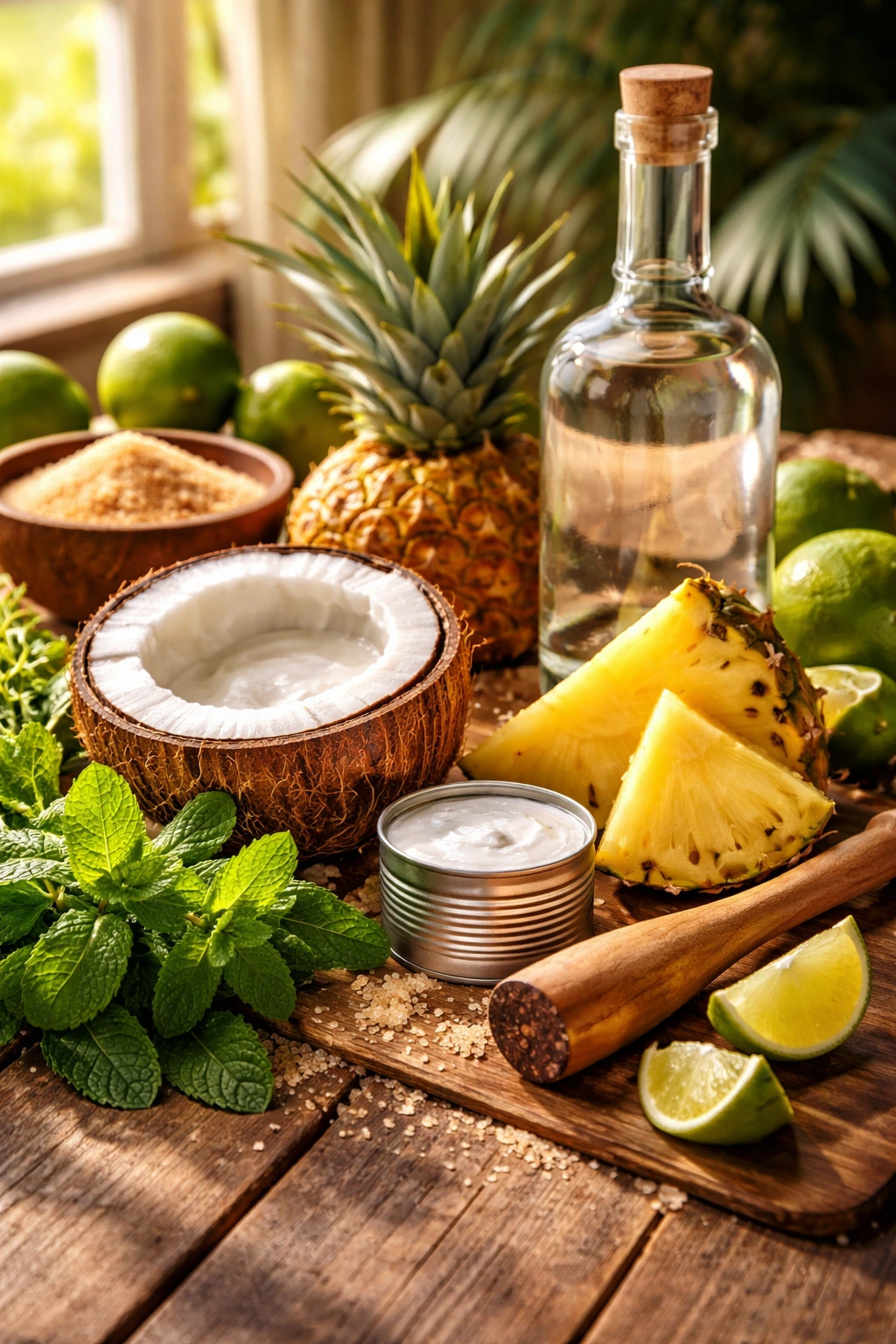
The mojito itself is Cuban in origin, dating back centuries as a drink born of necessity and island bounty. The original combined the rum that the Caribbean had in abundance, fresh mint for flavor and medicinal purposes, lime for preservation and brightness, sugar for energy, and water or soda to extend it all. It’s a drink built on the foundation of what grows there and what tastes good when it’s hot.
The coconut pineapple variation is a more modern evolution, one that emerged as bartenders began playing with tropical fruits and the global availability of quality coconut cream and fresh pineapple year-round. It’s still unmistakably a mojito — the mint muddling technique, the balance of sour and sweet, the dependency on high-quality rum — but it’s been reimagined through a tropical lens.
What makes this particular combination work so well is the chemistry between the ingredients. Coconut cream (not milk, cream) adds a silky body and subtle sweetness without tasting artificial. Fresh pineapple juice brings acid, brightness, and genuine fruit character. The mint grounds everything and prevents the drink from tasting cloying or one-note. And the rum — preferably something light and slightly aged, not overproof — ties it all together with warmth and complexity.
Why This Drink Is Perfect for Summer Entertaining
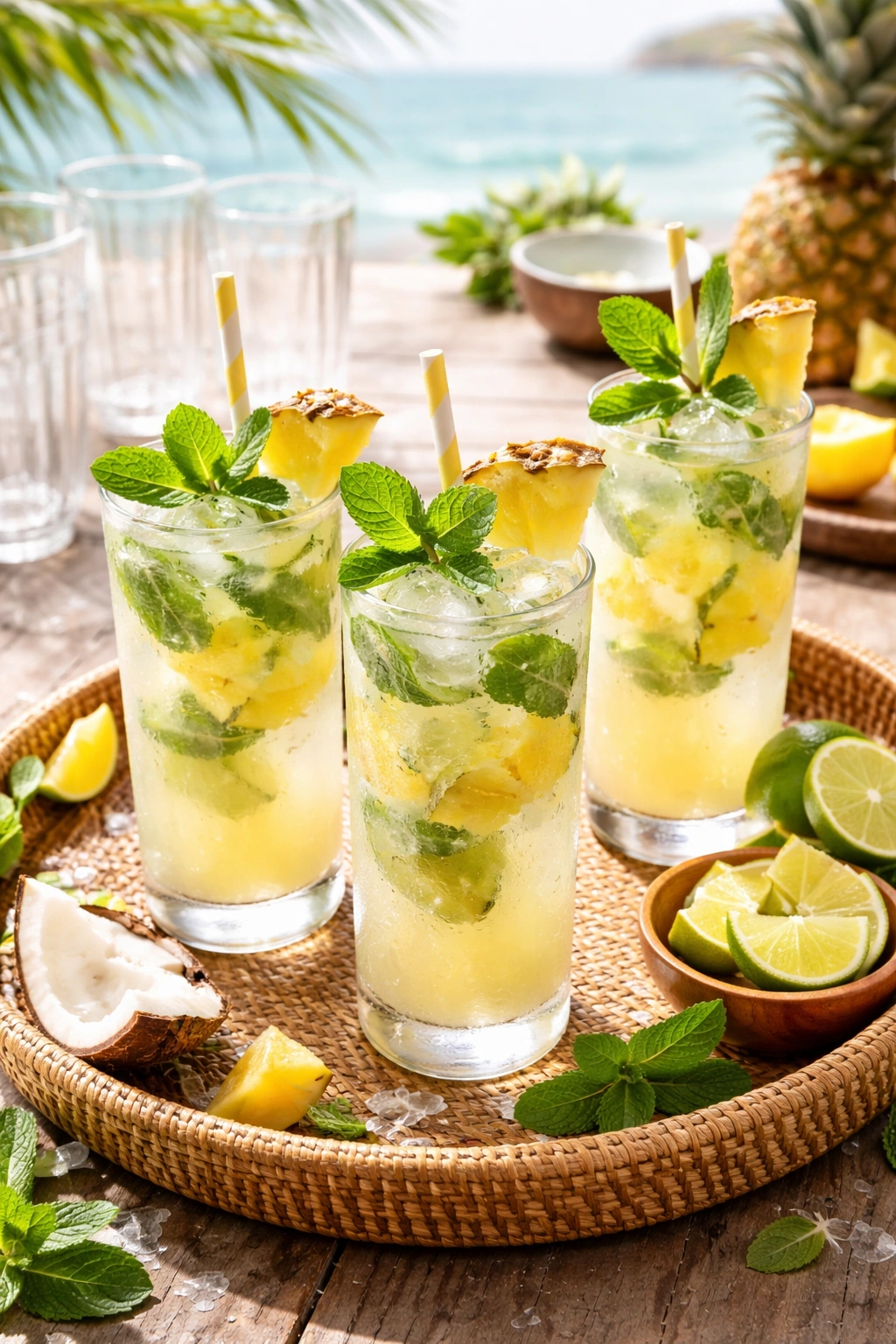
Let’s be honest: not every cocktail is meant for entertaining a group. Some require precision that only someone with bartending training can deliver. Others need obscure ingredients or complicated techniques. The coconut pineapple mojito isn’t one of those. It’s a drink that people recognize (so they’re not suspicious), that tastes sophisticated (so you get credit for the effort), and that’s actually simple to scale up (so you’re not stuck behind the bar all evening).
There’s also something psychologically brilliant about mojitos at summer parties. The mint, the fresh fruit, the cold glass sweating with condensation — it all reads as “special occasion” and “I put thought into this,” even though you’re honestly not doing anything complicated. You’re muddling mint, adding rum and juice, and topping with soda. The presentation and the flavor do most of the work for you.
People also tend to drink mojitos a bit more slowly than they do other cocktails, which is genuinely helpful when you’re trying to manage a party. The muddled mint and the dilution from ice means the drink is less likely to lead to people getting unexpectedly drunk. And because mojitos are naturally refreshing rather than heavy, guests can typically drink a couple without feeling overstuffed or tired — which keeps the party energy alive.
Essential Tools and Glassware for Making Mojitos
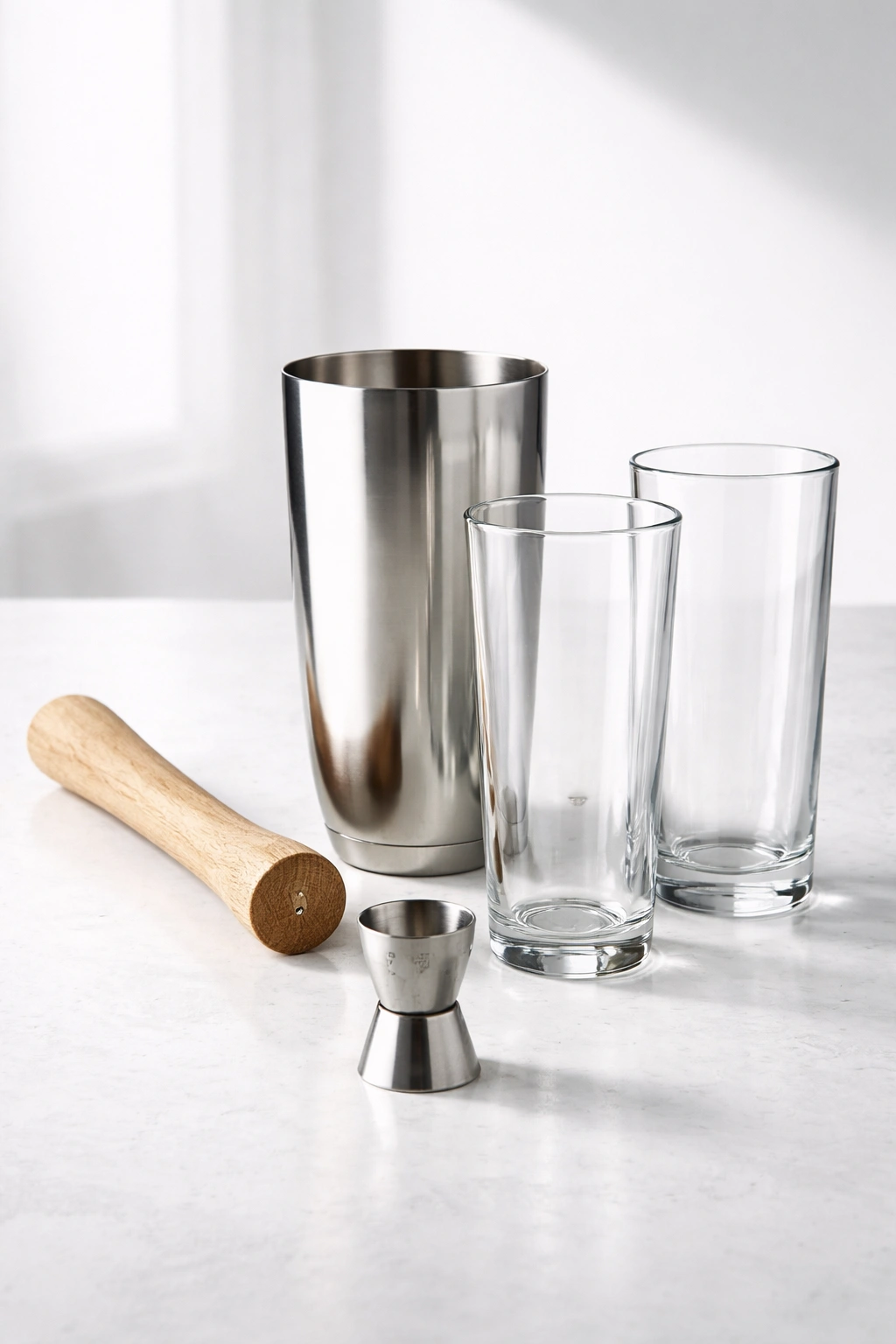
You don’t need much to make a great mojito, but the few tools you do need matter. Start with a muddler — and before you panic, this doesn’t need to be fancy. A wooden muddler (the kind that looks like a wooden spoon without the spoon part) is classic and works beautifully. You can also use the handle of a wooden spoon in a pinch, though you want something heavy enough to crush the mint without grinding or bruising it so violently that it releases harsh oils.
A cocktail shaker is helpful if you’re making multiple drinks, but honestly, for a mojito you can also prep everything in the glass and stir well. If you do shake, you’ll want a Boston shaker (the two-part stainless steel kind) or even a mason jar with a tight-fitting lid. The point is to chill the drink and combine the ingredients thoroughly.
Glassware-wise, mojitos are traditionally served in a tall highball glass or a Collins glass — basically anything that holds 12-16 ounces and is taller than it is wide. The height lets you fill it with ice, which keeps the drink cold as people sip slowly. Clear glass is preferable so you can see the beautiful layers and the muddled mint.
You’ll also want a jigger for measuring (a two-sided measuring cup with different volumes on each end), a bar spoon for stirring (the long-handled kind with a twisted shaft), and a citrus juicer or reamer for squeezing fresh lime juice. Fresh juice matters more for mojitos than it does for almost any other cocktail — bottled lime juice tastes noticeably off in this drink.
Understanding the Flavor Balance in Tropical Cocktails
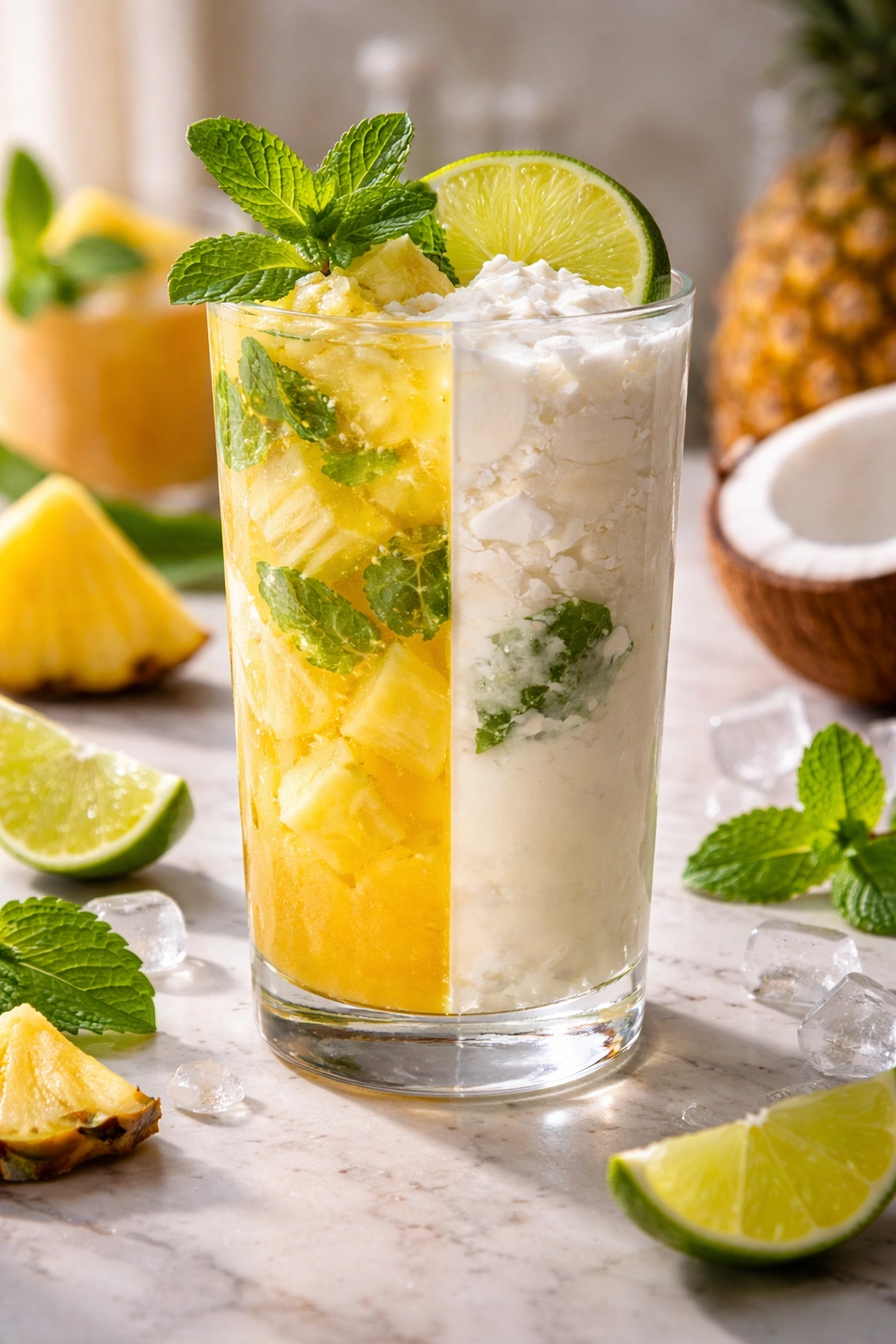
The reason a lot of homemade tropical cocktails taste off is because people don’t understand the balance. They think “tropical” means “sweet” and dump in too much juice or syrup, creating something that tastes like liquefied candy rather than a sophisticated drink. The truth is more nuanced.
A properly balanced tropical cocktail sits at an intersection of several flavors working together. You need sweetness (from the juice or simple syrup or liqueur), but it should be grounded by acidity. The lime juice in a mojito serves this purpose beautifully — the acid cuts through the sweetness of the pineapple and the richness of the coconut cream, making the drink feel bright and refreshing rather than cloying.
You also need something to build texture and body. In a coconut pineapple mojito, the coconut cream does this. It coats your mouth with a subtle richness that makes the drink feel substantial and luxurious, not watery and thin. But because it’s balanced by the acid and the mint, it doesn’t make the drink feel heavy.
And then there’s the spirit — the rum. In tropical cocktails, the rum is doing more than just providing alcohol. It’s adding warmth, complexity, and a subtle vanilla or caramel note that ties everything together. This is why cheap rum shows up immediately in a mojito. You’re not hiding it behind complicated flavors; you’re drinking a cocktail where the rum is a starring ingredient.
Choosing Quality Ingredients That Make the Difference
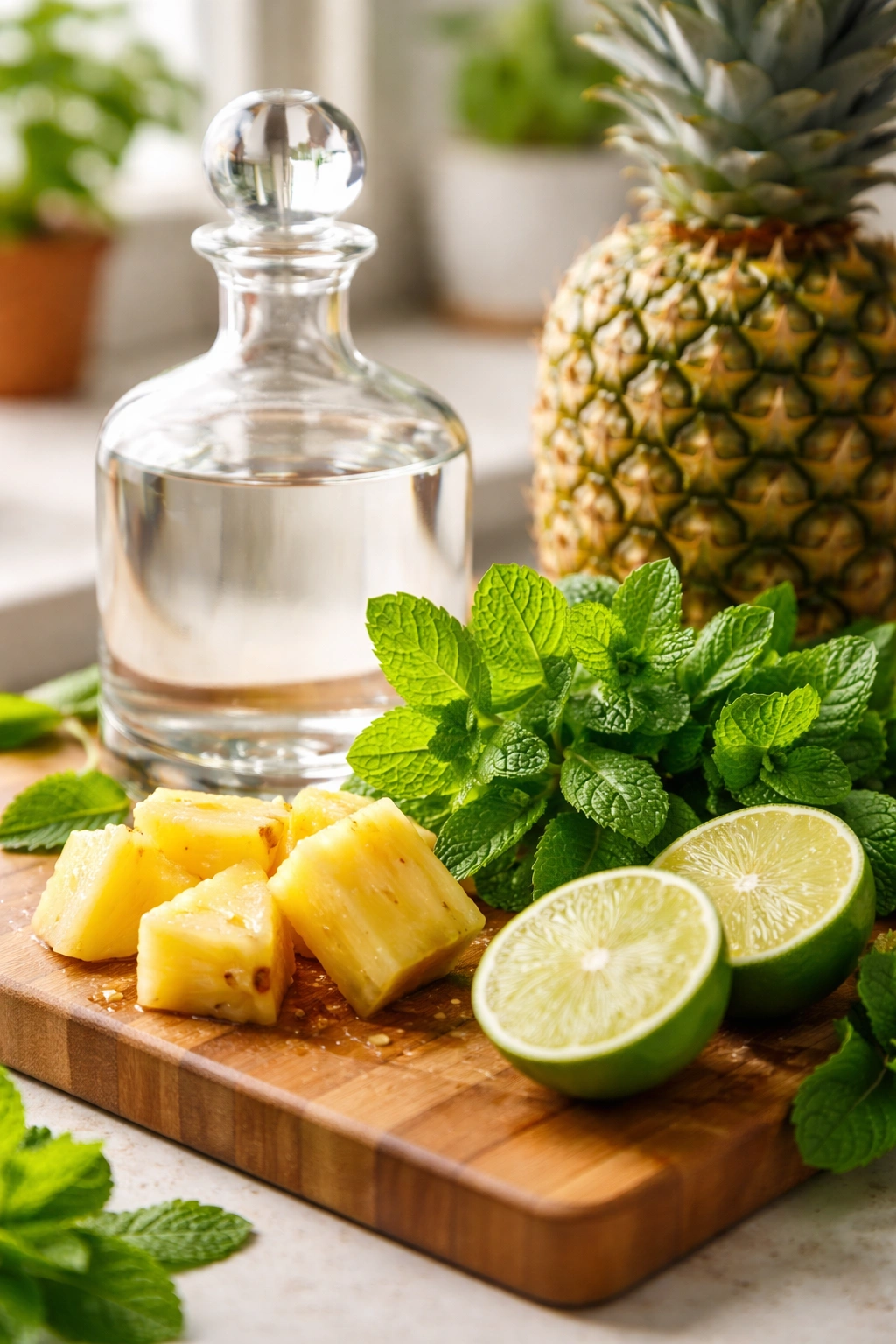
If you’re going to make mojitos for a party, invest in better ingredients. This isn’t a drink where you can hide subpar components behind technique or flavorings. Everything shows up clearly in the glass.
Start with the rum. You don’t need top-shelf stuff, but you do need something decent. Light rum from a respected brand (like Bacardi or Havana Club) is a solid baseline. A little bit aged or golden rum (like Mount Gay or Appleton) adds complexity and warmth without overwhelming the other flavors. Avoid cheap, harsh rums and anything labeled “spiced” — you want the rum to taste good on its own, not like it’s hiding something.
Fresh mint is non-negotiable. Don’t even consider dried mint for this drink — it tastes like medicine and completely changes the character. Use spearmint if you can find it (it’s slightly sweeter and less peppery than peppermint), but regular mint from the grocery store’s produce section works fine. Look for leaves that are bright green, fragrant, and still perky. Wilted mint won’t perform well.
Fresh pineapple is worth the effort of preparing it yourself, though a genuinely good-quality bottled pineapple juice (100% juice, not a pineapple juice blend) can work in a pinch. If you’re using fresh pineapple, aim for one that smells fragrant and sweet, not those massive woody ones that sit under fluorescent lights. The smaller, denser pineapples tend to have better flavor.
Coconut cream is the ingredient people most often mess up. They buy coconut milk (which is thin and watery) or they use something from a can that’s meant for cooking. What you want is cream of coconut — the kind that’s typically stored with the cocktail mixers or in the Latin foods aisle. Coco Lopez is the most recognizable brand, but any cream of coconut works. This is different from coconut milk and has a very different consistency and flavor profile.
Finally, fresh lime juice. Literally squeeze limes. The difference between fresh and bottled is night and day in a mojito, where the acid is doing critical work. You’ll need maybe half a lime per drink, so it’s not a huge volume even for a party of eight.
Preparing Your Fresh Mint and Citrus
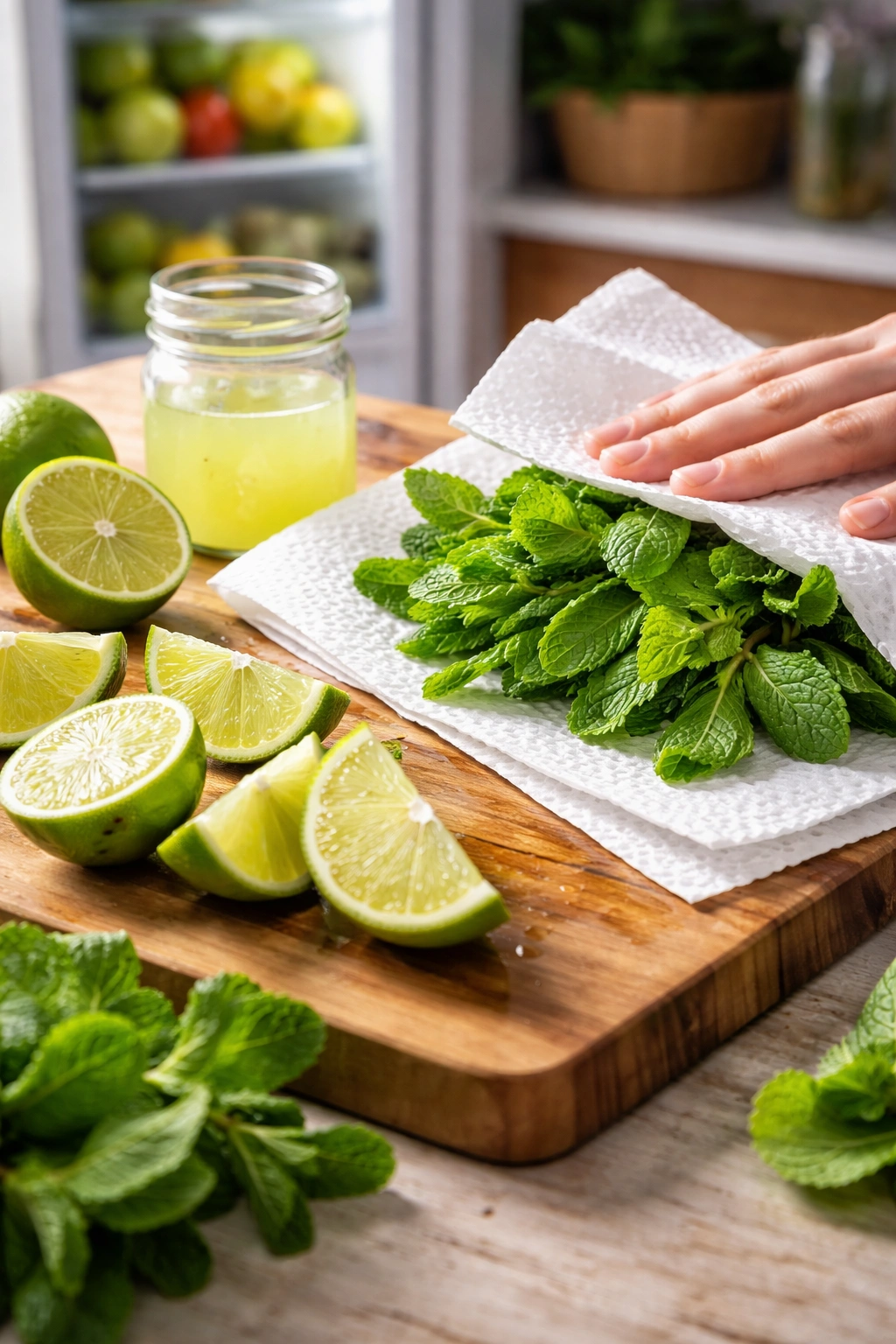
The way you prepare your ingredients before you start making drinks makes a real difference in how smoothly the party flows and how consistent the drinks taste. Prep work for mojitos is minimal, but doing it right means you’re not scrambling behind the bar.
For the mint, pick off the leaves while still at the market, if you can. Once you get home, place the leaves gently in a salad spinner (don’t wash them; the water disrupts the oils) or pat them dry with a paper towel. Store them between damp paper towels in a sealed container in the fridge. Do this up to 6 hours before you’re making drinks. If you do it further in advance, the mint starts to lose its brightness.
For the pineapple, cut it fresh an hour or two before serving if you’re making fresh juice, or have it juiced and strained into a bottle in the fridge. The flavors stay fresher this way. If you’re using bottled juice, just chill it.
For the limes, cut them in half and juice them about 30 minutes to an hour before serving. Fresh lime juice oxidizes quickly, so you don’t want to do this too far in advance. Store the juice in a small container in the fridge. Having the juice pre-measured in a jigger or small bowl means you can work faster when you’re actually making drinks.
Prep your simple syrup (if you’re making one) in advance. A basic coconut simple syrup is just equal parts sugar and water heated together with a splash of coconut extract or a tablespoon of cream of coconut, then cooled completely. You can make this up to three days ahead.
The Complete Coconut Pineapple Mojito Recipe
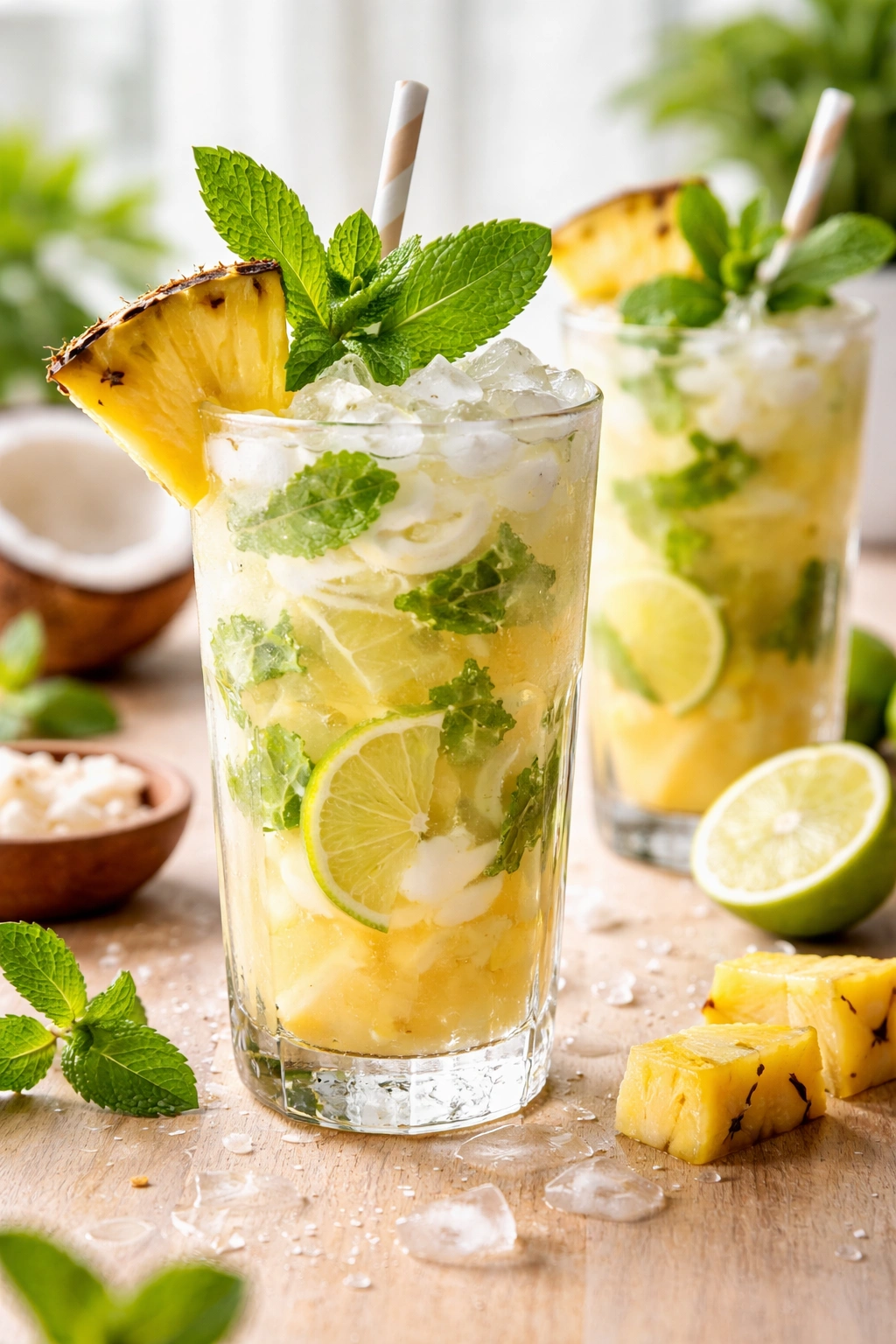
Yield: Serves 1 (easily multiplied for parties)
Prep Time: 5 minutes
Cook Time: 0 minutes (all chilling and mixing)
Total Time: 5 minutes active + 10 minutes chilling if making in advance
Difficulty: Beginner — muddling requires minimal technique, and there are no special bartending skills required. Even if you’ve never made a cocktail before, you’ll nail this one.
Best Served: Immediately after mixing, while thoroughly chilled and the mint is still fragrant
Ingredients
For the Drink:
- 10-12 fresh mint leaves (spearmint or regular mint, packed fresh)
- ½ fresh lime, cut into two quarters
- ½ ounce simple syrup or coconut simple syrup (see note below)
- 2 ounces light rum (Bacardi, Mount Gay, or Havana Club)
- 2 ounces fresh pineapple juice (freshly juiced or 100% juice, strained)
- ¾ ounce coconut cream (such as Coco Lopez)
- ½ ounce fresh lime juice (from about ⅛ of a lime)
- 4-5 ounces soda water or club soda, chilled
- Crushed ice or large cubes for filling the glass
- Fresh mint sprig and pineapple wedge for garnish
For Simple Syrup (if making your own):
- ½ cup granulated sugar
- ½ cup water
- ¼ teaspoon vanilla extract or ½ tablespoon cream of coconut (optional, adds richness)
Instructions
Prepare Your Glass and Chill It:
- Fill a tall highball or Collins glass (12-16 ounces) with ice and add a splash of water, then set it aside while you prepare the drink. This will chill the glass. When you’re ready to build the drink, discard the water and ice, and fill with fresh crushed ice or large ice cubes.
Muddle and Build the Base:
-
In the empty highball glass, place the 10-12 fresh mint leaves and the two lime quarters. Using a wooden muddler, gently press and twist the mint and lime together 4-6 times — you want to release the mint’s oils and the lime’s juice, but not pulverize or grind the mint violently. Overmuddle and the mint will release harsh, bitter oils that overpower the drink. You’ll hear a soft cracking sound and smell the bright mint; that’s when you know you’re done.
-
Add the simple syrup to the glass and stir to combine with the muddled mint and lime. Let it sit for 10 seconds to allow the flavors to meld slightly.
-
Pour in the rum, fresh pineapple juice, and coconut cream. Stir well — the coconut cream is thick and needs good stirring to incorporate fully. You should see a creamy swirl through the drink, not clumps of coconut separated at the bottom.
Advertisements
Add Ice and Top:
-
Fill the glass almost to the top with crushed ice or large cubes. Stir again for about 10 seconds to chill the entire drink thoroughly.
-
Carefully pour the fresh lime juice down the side of the glass (this keeps the fresh citrus flavor bright on top). Top with 4-5 ounces of cold soda water or club soda, filling the glass almost to the rim.
-
Stir gently one final time to combine the soda water with the rest of the drink without dissipating the bubbles.
Garnish and Serve:
- Garnish with a fresh sprig of mint (place it on top so it’s visible and fragrant) and a small wedge or wheel of fresh pineapple tucked into the ice or placed on the rim. A small straw helps guests reach the drink without disturbing the garnish too much, and it’s traditional for mojitos.
Note on Sweetness: The coconut cream itself adds sweetness, so you don’t need much additional sweetener. If you like your cocktails a touch sweeter, use the full ½ ounce of simple syrup. If you prefer them drier and more refreshing, use just ¼ ounce. Taste after stirring and adjust with a splash of juice or soda depending on your preference.
Common Mistakes When Making Mojitos and How to Avoid Them
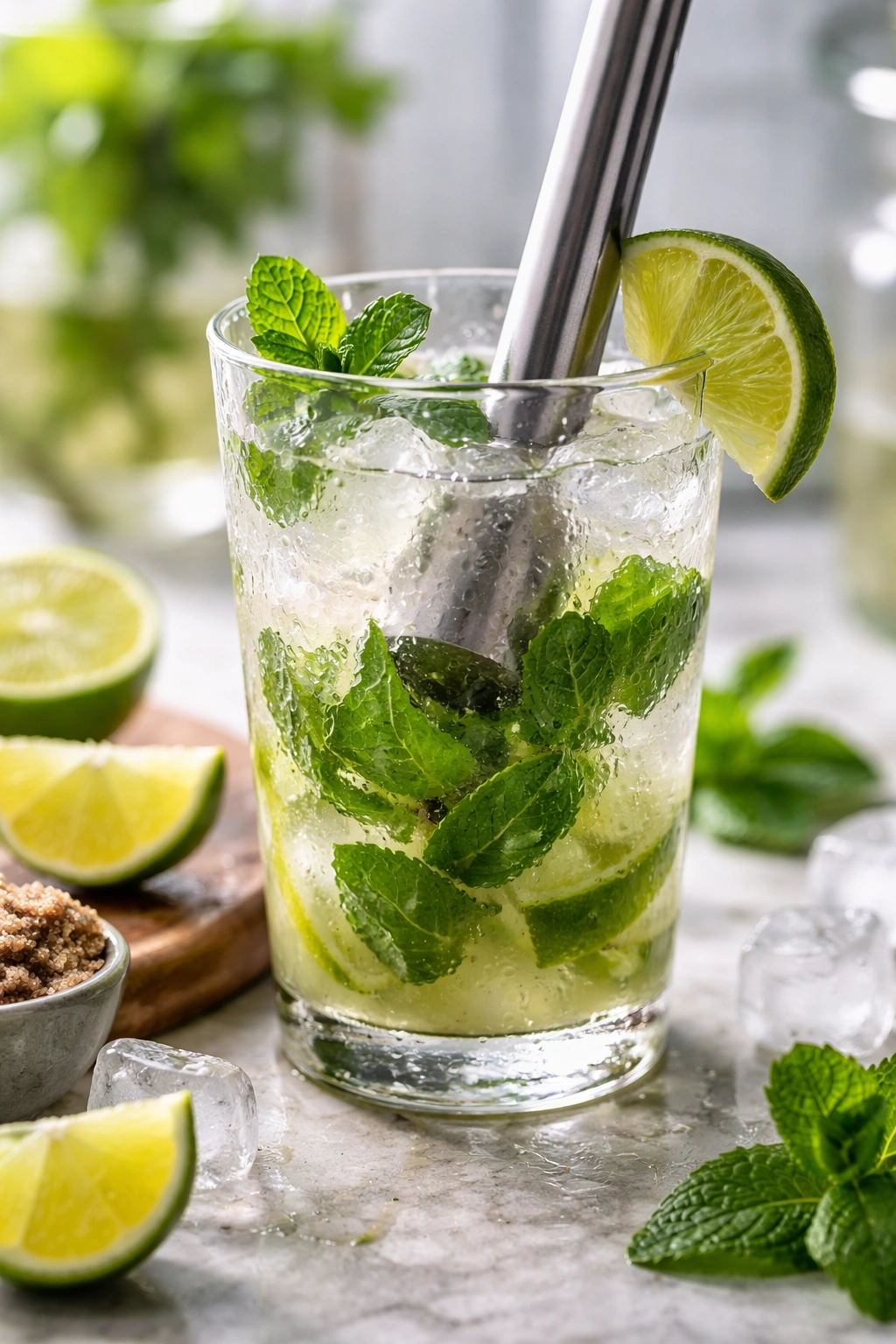
The most widespread mistake people make is over-muddling the mint. They see other cocktails that are muddled and they think “I need to really go to town on this mint,” pressing and grinding until the leaves are pulverized and bitter-tasting. Stop yourself before you get there. Gentle pressure, a few twists — that’s all you need. The mint’s oils are fragile and will turn aggressive and herbaceous if you rough them up too much.
The second mistake is using bottled lime juice. Seriously, just squeeze fresh limes. It takes 30 seconds per drink and makes a genuine difference. Bottled lime juice tastes thin and chemical by comparison, and in a mojito (where the acid is one of the main flavor components), that gap is noticeable.
Another common problem is not chilling the glass first or working slowly enough. Mojitos should be cold — like, aggressively cold. If you don’t chill your glass, the drink will be at best chilly and at worst lukewarm by the time your guest takes the first sip. Fill the glass with ice and cold water while you prep the drink, then swap it out for fresh ice when you build the drink. And work at a decent pace; the longer the ice sits and melts, the more diluted and watered-down the drink becomes.
People also sometimes use the wrong kind of mint, grabbing something labeled “mint” that turns out to be peppermint tea leaves or dried mint from the spice aisle. Fresh spearmint or fresh mint from the produce section is what you want. The leaves should be fragrant, flexible, not wilted or browning.
Another mistake is skimping on the rum. A good coconut pineapple mojito should taste like a rum drink — the rum should be noticeable and pleasant, not invisible. If you use cheap, harsh rum, the whole drink suffers. You don’t need expensive rum, just decent rum.
Finally, watch the proportions of pineapple juice to coconut cream. Too much pineapple and the drink is watery and one-note. Too much coconut and it tastes like tropical sunscreen. The balance in this recipe — 2 ounces pineapple juice and ¾ ounce coconut cream — is calibrated so each flavor supports the others without any one overwhelming.
Pro Tips for Batch Preparation at Summer Parties
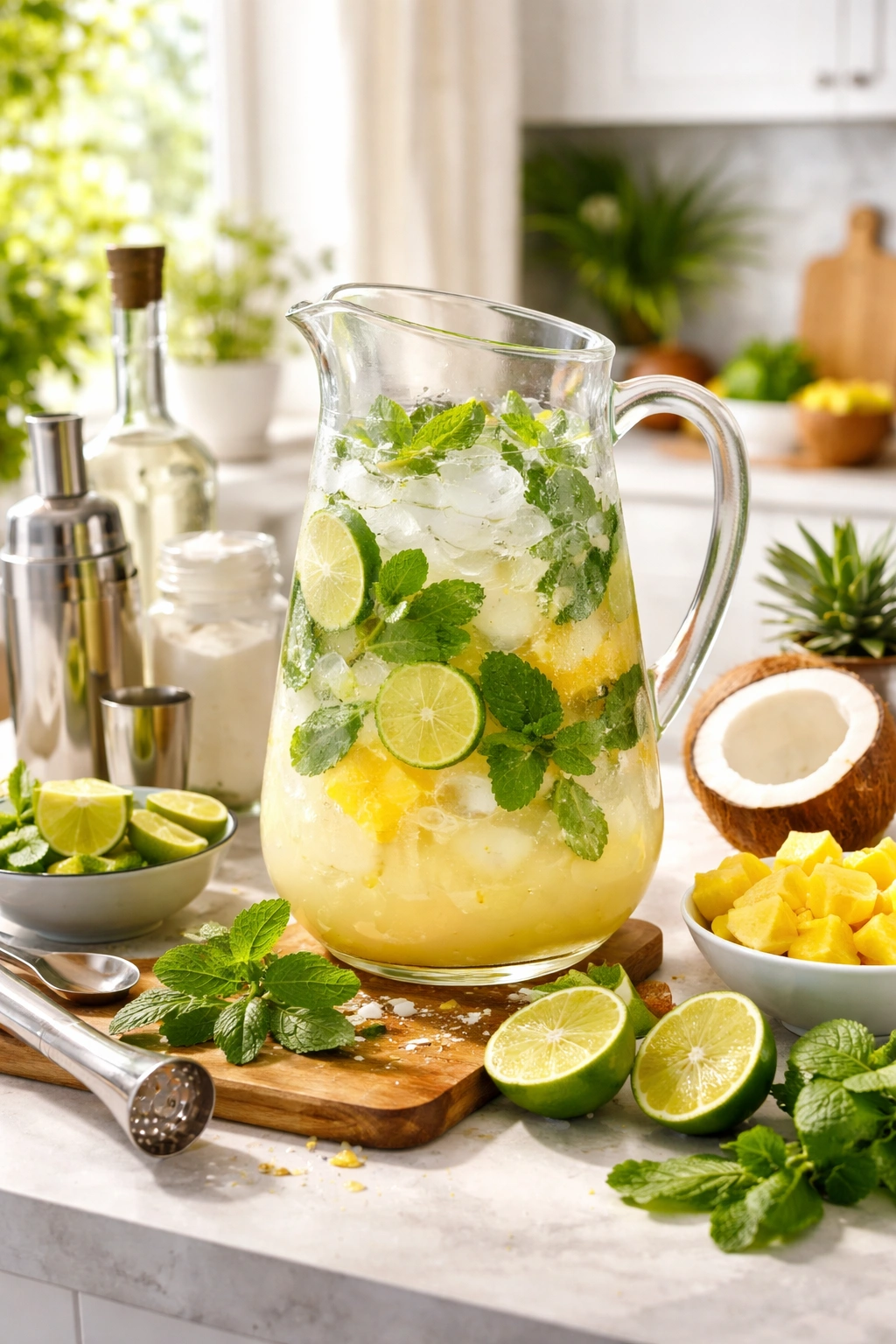
If you’re making mojitos for more than four people, batch preparation will save you sanity and serve better drinks. You can’t really batch-make mojitos in the traditional sense (they’re best made to order), but you can absolutely batch-prep the components, which means assembly goes fast and smooth.
Make your simple syrup the morning of, if you’re using one, or even the day before. Store it in a lidded bottle in the fridge. Prep your mint leaves, juice your limes, and juice your pineapple (or open your bottled juice) an hour before people arrive. Have bottles of rum, soda water, and coconut cream chilled and ready to go.
Set up a small bar station with everything organized. This doesn’t need to be fancy — a small table with all your ingredients, a jigger, your muddler, a bar spoon, and your glasses arranged in a line is all you need. Having everything in one place means you move efficiently and don’t waste time hunting for ingredients.
Here’s a pro move: pre-batch the rum, pineapple juice, and coconut cream in a cocktail pitcher, keeping it in the fridge. When someone orders a mojito, you muddle the mint and lime with syrup in the glass, add a pour of the pre-batched mixture from the pitcher, top with ice and soda water, and serve. This cuts your per-drink prep time in half and ensures consistency — every drink has the same proportion of rum and juice.
Another time-saver is making a big batch of muddled mint syrup ahead of time. Muddle mint with simple syrup (just like you’re doing in the glass), let it infuse for 30 minutes, then strain out the solids. You can store this in a bottle and add a pre-measured amount to each drink. It’s not quite as fresh as muddling to order, but for a big party, it’s a legitimate shortcut that still tastes excellent.
For really large gatherings (10+ people), you can also pre-make a pitcher of mojito “base” — everything except the soda water and garnish. Fill glasses with this base and ice, top with soda, and garnish right before serving. The trade-off is that mojitos are best consumed quickly, so you’d only want to do this if you’re serving them all at once rather than throughout an evening.
Creative Variations and Flavor Twists
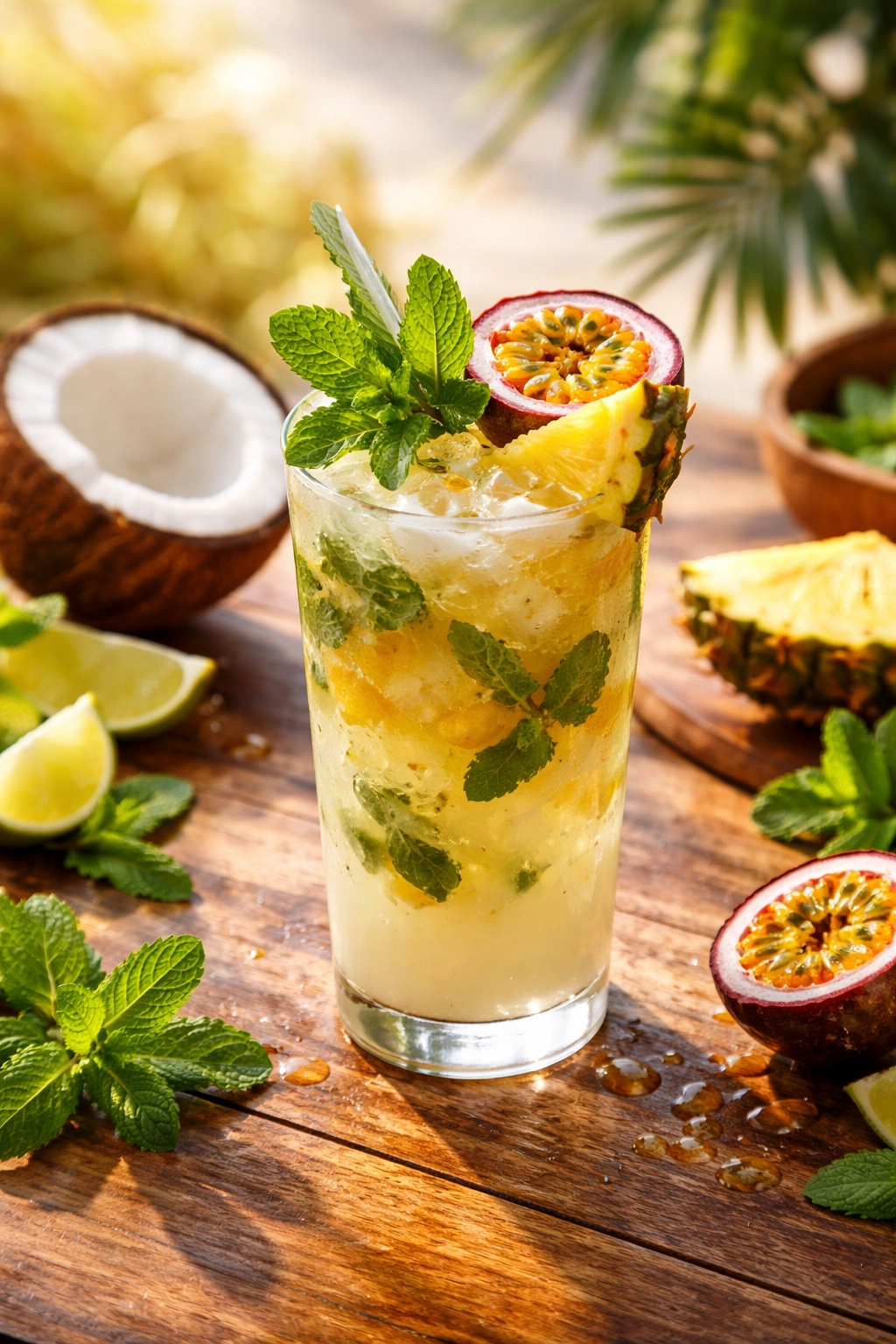
The beauty of a coconut pineapple mojito template is that you can riff on it in fun directions without losing the essential mojito character. Here are some variations that genuinely work.
Spiced Coconut Pineapple Mojito: Add a small pinch (just a whisper) of ground ginger and a tiny pinch of cayenne to your simple syrup, then make the drink as usual. The spice adds warmth and makes the pineapple taste brighter. This version is fantastic in the later afternoon when the sun is starting to move.
Coconut Pineapple Mojito with Passionfruit: Replace half the pineapple juice with fresh passionfruit juice or a high-quality passionfruit syrup. The tart, floral notes of passion fruit play beautifully with coconut and mint. This version feels a touch more elegant and sophisticated.
Rum-Free Mocktail Version: Make it exactly the same way but skip the rum and add an extra ounce of pineapple juice and a quarter ounce of lime juice to amp up the flavor depth without alcohol. This is brilliant for guests who don’t drink or who want a lighter option. It tastes just as considered and special as the full cocktail.
Coconut Pineapple Mojito with Dark Rum: Use aged rum instead of light rum. A good aged rum adds vanilla, caramel, and warmth that play beautifully with the tropical fruits. The drink becomes a touch more complex and less “beach party” and more “sunset on the patio.” Use good stuff — a rum aged at least five years.
Strawberry-Coconut-Pineapple Mojito: Muddle a few fresh strawberries along with the mint and lime, then proceed as normal. The strawberry adds a subtle berry note and a pretty pink color. Use berries that are ripe and fragrant for best results.
Grilled Pineapple Version: For a fancier take, grill fresh pineapple chunks beforehand and then juice them, or muddle a small piece of grilled pineapple directly in the glass with the mint. Grilling caramelizes the sugars and adds a subtle smokiness that’s unexpected and excellent.
Herb Twist with Basil or Cilantro: Replace some of the mint with fresh basil or cilantro. A coconut pineapple mojito with a whisper of basil tastes luxurious and a touch unexpected. Cilantro adds a slightly more savory, complex note. Go subtle here — you want the mint to still be the primary herb.
Storage and Make-Ahead Strategies
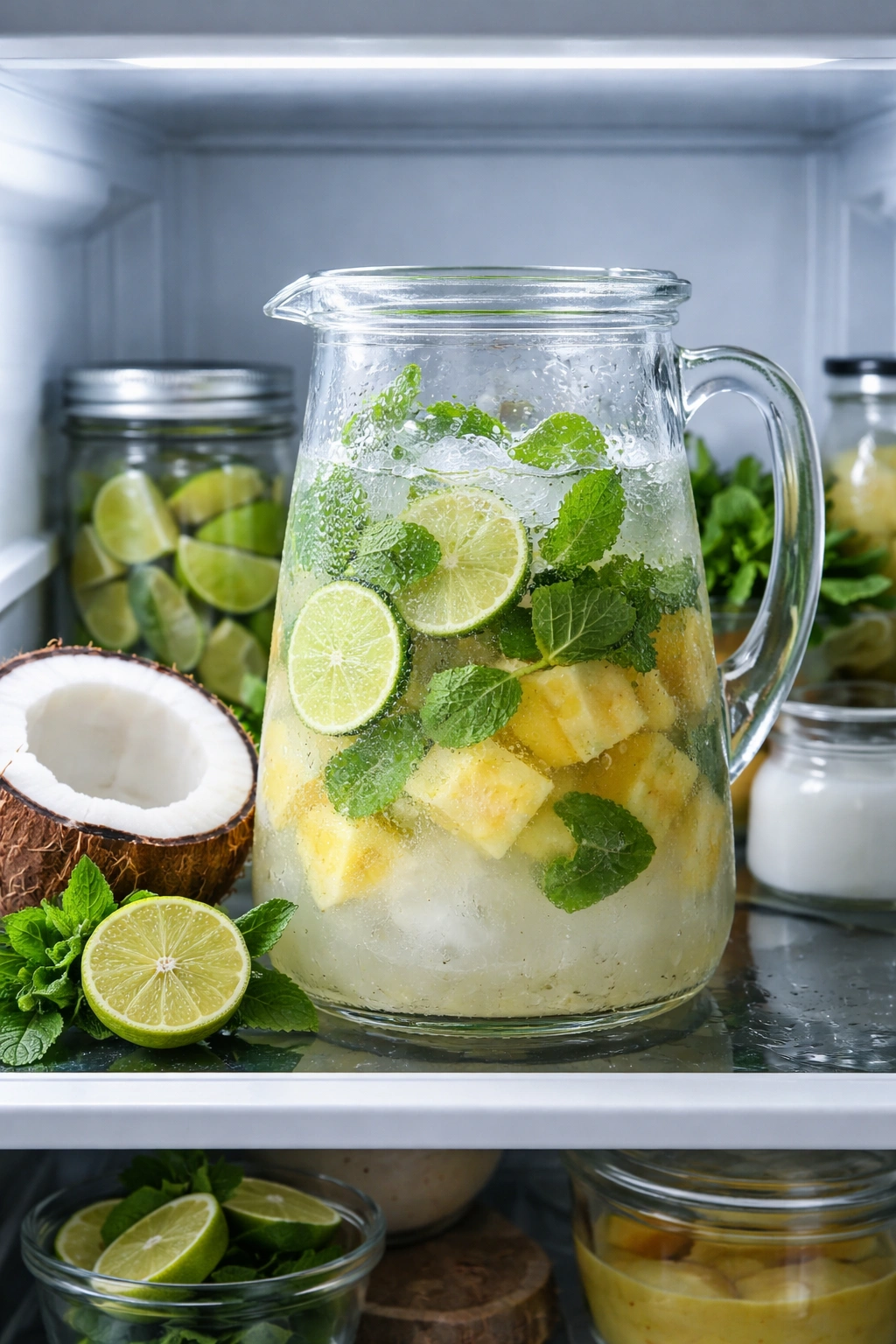
The honest answer is that mojitos are best made fresh and consumed right away. The ice melts, the mint loses its brightness, and the soda goes flat if you let them sit. But I also understand that sometimes you’re prepping for a party and want to get ahead.
Here’s what you can do: make the base of the mojito (everything except soda water and garnish) up to 2 hours in advance. Store it in a pitcher in the fridge, stirring well before pouring. When you’re ready to serve, pour into fresh ice, top with soda water, and garnish. The drink won’t taste quite as fresh as one made to order, but it’s still very good, and the time savings are real.
You can also prep all your components (juices, simple syrup, rum measured out, mint in water) up to 4-6 hours ahead. Having everything ready to go means that when you’re in party mode, you’re genuinely just assembling, not doing any prep work at all.
If you’ve made mojitos and have leftovers (which shouldn’t happen if you’re a good host, but life happens), drink them within a few hours. Don’t refrigerate the finished drink; it will dilute further as the ice melts. You can reheat the simple syrup if any was made, and you can obviously reuse the rum and juices for the next batch.
Perfect Pairings and Serving Suggestions
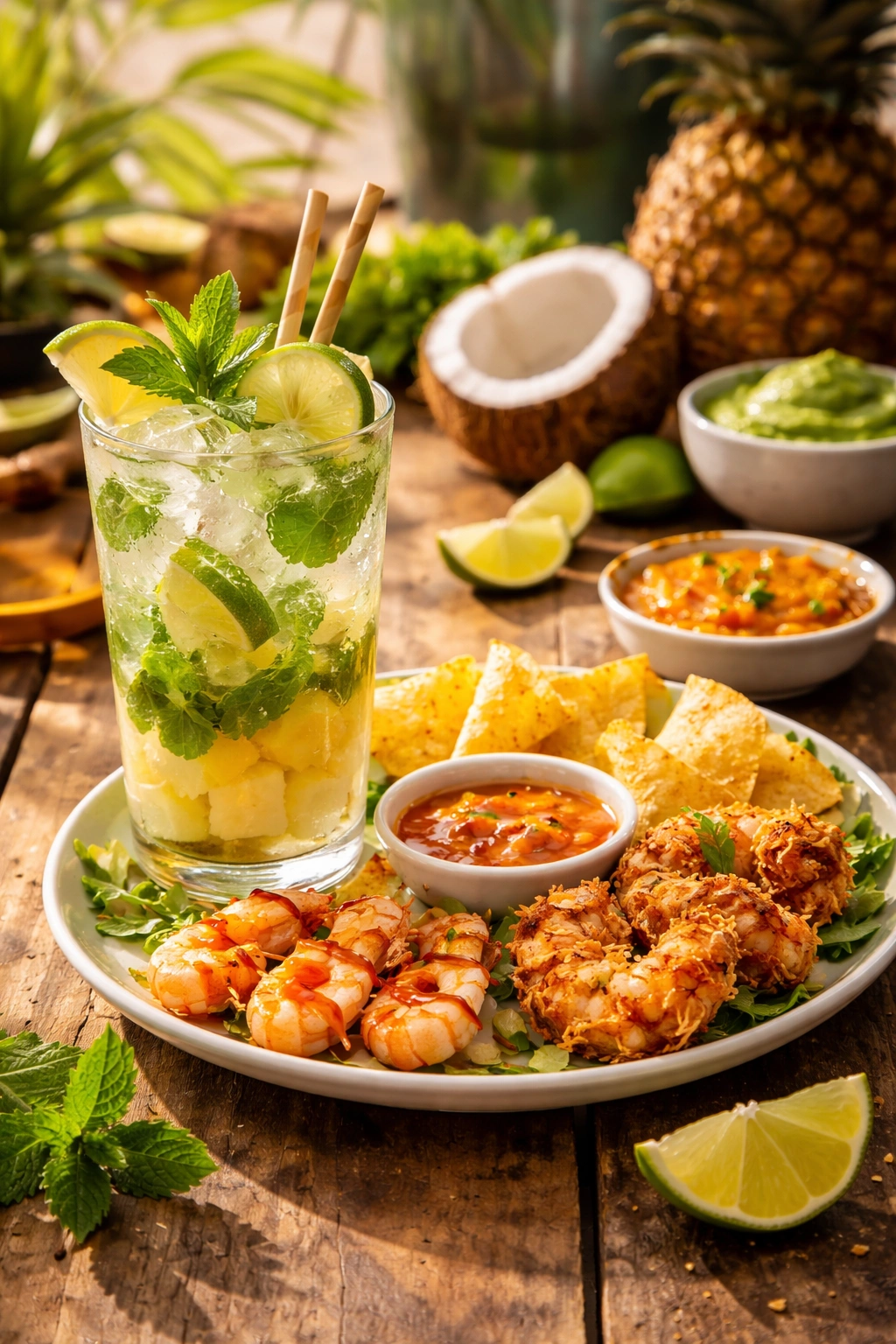
A coconut pineapple mojito is inherently tropical and refreshing, which means it pairs best with foods that are either light and fresh or bold and spiced enough to stand up to the drink’s tropical character.
Light appetizers that pair beautifully: Fresh shrimp ceviche, coconut-crusted shrimp, fresh summer salads with citrus dressing, grilled vegetables with chimichurri, fresh crab cakes, or delicate fish tacos. The drink’s acidity and freshness don’t overpower these foods — they complement them.
Spiced or bold foods that work: Jerk-spiced chicken, Thai-influenced dishes with coconut milk and chiles, blackened fish, Caribbean-inspired rice and beans, or anything with a lime-cilantro component. The rum and mint in the mojito have enough backbone to keep up with these bolder flavors.
Desserts that work: Coconut cake, pineapple upside-down cake, lime-forward desserts, or even tropical fruit sorbets between courses. Skip heavy chocolate desserts — they clash with the drink’s tropical vibe.
Timing: Mojitos are best served as a summer afternoon drink (think 2 PM to 6 PM) or as an aperitif at the start of an evening, not as an all-night cocktail. People tend to drink them relatively quickly because they’re refreshing, so plan on one per person if it’s the opening drink, two to three if they’re available throughout a longer event.
Glassware presentation matters: The visual appeal of a well-made mojito — the clear glass, the ice, the green muddled mint, the pineapple wedge — is part of what makes it special. Serve in proper glassware, not plastic cups. If you’re at someone’s home and don’t have highball glasses, use any tall glass that’s roughly 12-16 ounces. The presentation contributes to the experience.
Temperature is everything: Serve mojitos genuinely cold. A lukewarm or even just “chilled” mojito is disappointing. Use crushed ice if you have it — it cools the drink faster and stays cold longer than large cubes. If you only have large cubes, break them smaller or fill the glass completely full of ice.
Final Thoughts

A coconut pineapple mojito is one of those cocktails that delivers on every front. It tastes bright and tropical without being cloying, it impresses people even though you’re not doing anything complicated, it scales beautifully for entertaining, and it’s genuinely refreshing when the weather is warm and you want something that feels like a vacation in a glass.
The key is respecting the fundamentals: fresh mint that you don’t over-muddle, real lime juice squeezed fresh, quality rum that tastes good, and a balance between the pineapple and coconut so neither overwhelms the other. Do those things right, and you’ll make mojitos that people actually remember and ask about weeks later.
Start with the recipe as written. Once you’ve made it a handful of times and understand how the components work together, you’ll naturally gravitate toward small adjustments — a touch more lime if you like things zesty, a bit less simple syrup if you prefer drier drinks, or swaps toward spiced rum or variations with other fruits. But the foundation is solid and will reliably produce excellent drinks.
And honestly, there’s something special about serving a thoughtfully made cocktail to people you care about on a warm summer day. It says “I put intention into making your experience better,” and mojitos do that effortlessly. Make these for your next summer gathering and watch them become the drink everyone’s talking about.
