



There’s something magical about the pasta salad that shows up at every potluck, backyard barbecue, and summer gathering—the one people actually want to eat and always ask for the recipe. It’s not fancy or complicated, yet it somehow tastes better than the dozen other versions sitting on the table. The secret isn’t some obscure ingredient or professional technique. It’s understanding a few key things about how pasta absorbs flavor, why dressing timing matters, and which combinations of vegetables, herbs, and additions actually taste good together instead of like a sad salad kit.
Most pasta salad recipes either fall flat because they’re underseasoned, or they become soupy and congealed by the time you serve them. The balance is real, and once you crack it, you’ll find yourself making this same salad repeatedly because it’s genuinely that good. People won’t just eat it—they’ll specifically ask for your recipe, request it at gatherings, and text you asking how you made it.
This version is refreshing without being heavy, flavorful without overshadowing the individual ingredients, and it actually improves as it sits for a few hours because the pasta continues to absorb the dressing. It travels beautifully to picnics and parties, it holds up in warm weather better than most side dishes, and the ingredient list is simple enough that you probably have everything on hand already.
Why This Pasta Salad Works Better Than Others
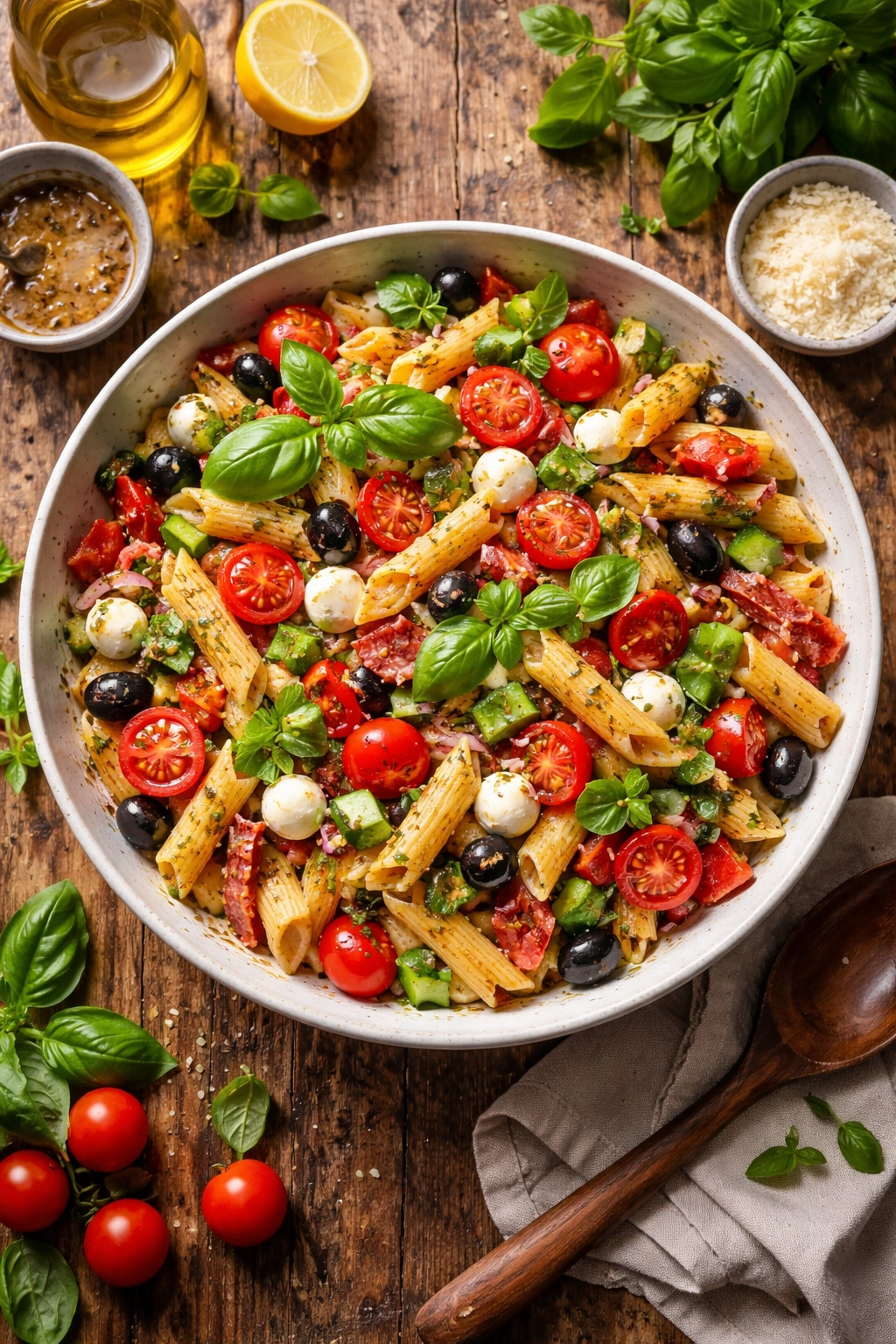
There’s genuine food science happening when you make a pasta salad correctly, and understanding it changes how you approach the whole dish. Most recipes treat pasta salad like a warm-weather disposal bin—just toss in whatever vegetables looked good at the store and drown it in dressing. That approach leads to watery, flavorless results where the vegetables dominate and the pasta becomes an afterthought.
The best pasta salads work with the pasta rather than against it. Hot pasta absorbs flavor best, which means you want to toss your warm pasta with a significant portion of the dressing while it’s still steaming. The warm starch opens up and accepts the oil, vinegar, and seasonings in a way that cold pasta never will. By the time everything cools down, the pasta has locked in that flavor, creating a cohesive dish instead of separate components.
The dressing itself should be bold. You’re not dressing a delicate green salad here—you’re seasoning pasta, which is a fairly neutral canvas. A light vinaigrette will disappear entirely after a couple hours of sitting. A well-balanced, assertive dressing of good olive oil, acid, garlic, and herbs is what makes people ask for your recipe.
Vegetable selection matters more than most people realize. You’re not looking for the crunchiest vegetables or the ones that photograph best. You want vegetables that maintain their texture through sitting, don’t release excessive water, and won’t dominate the bite. Cherry tomatoes are ideal. Raw red onion works better than yellow onion because it’s sharper and more flavorful. Cucumbers provide crunch, fresh herbs provide brightness, and Parmesan adds umami depth without being heavy.
The Serving and Timing Block
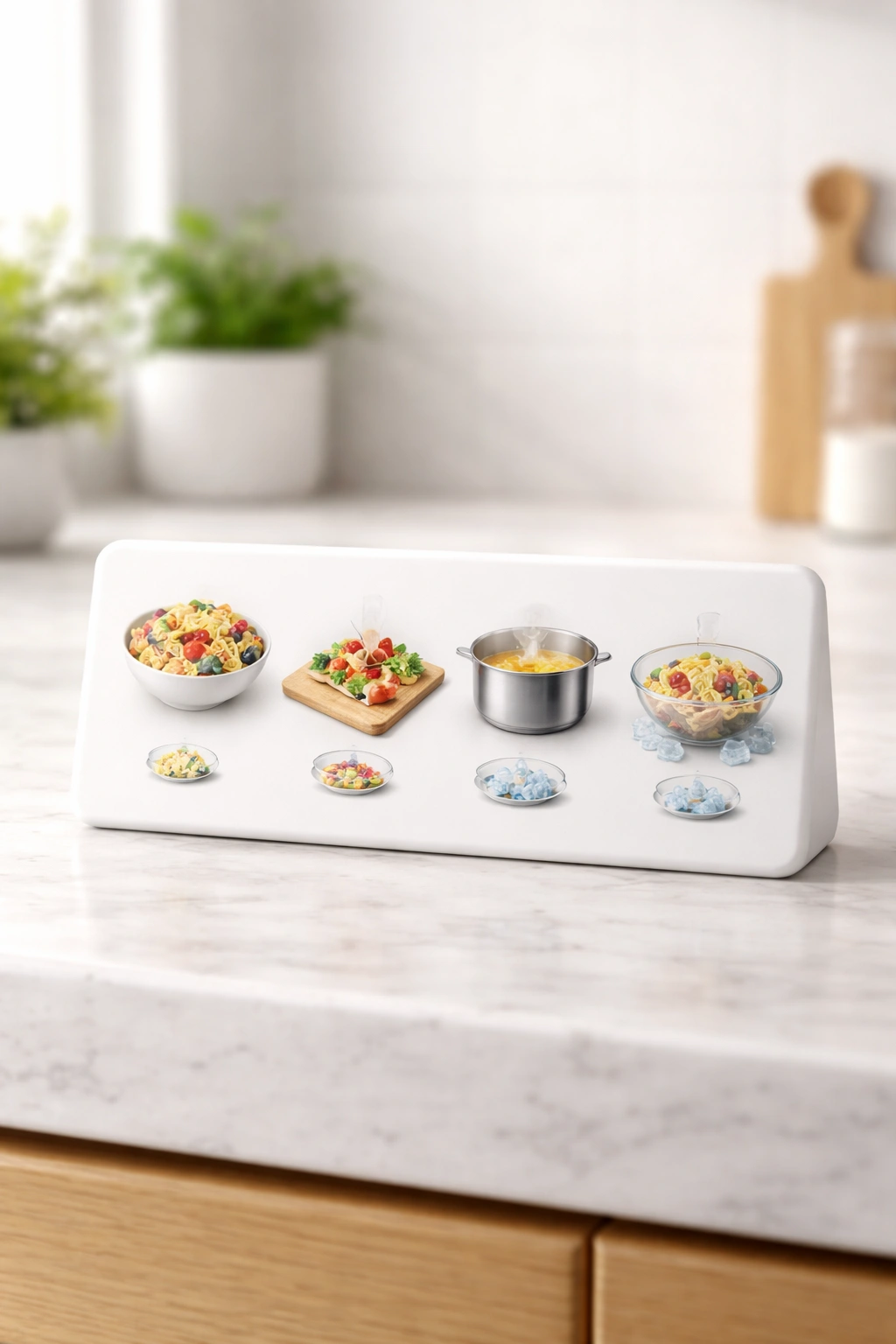
Yield: Serves 8 to 10 as a side dish | Makes about 10 cups
Prep Time: 20 minutes
Cook Time: 12 minutes (pasta cooking)
Total Time: 32 minutes, plus 1 to 2 hours chilling for best flavor development
Difficulty: Beginner — All components are straightforward to prepare, the technique is simply mixing, and there’s no special equipment needed. Even first-time cooks will succeed on the first attempt.
Best Served: At cool room temperature or lightly chilled, 1 to 4 hours after making. The salad improves over the first 2 hours as the pasta continues absorbing the dressing.
The Complete Ingredient List
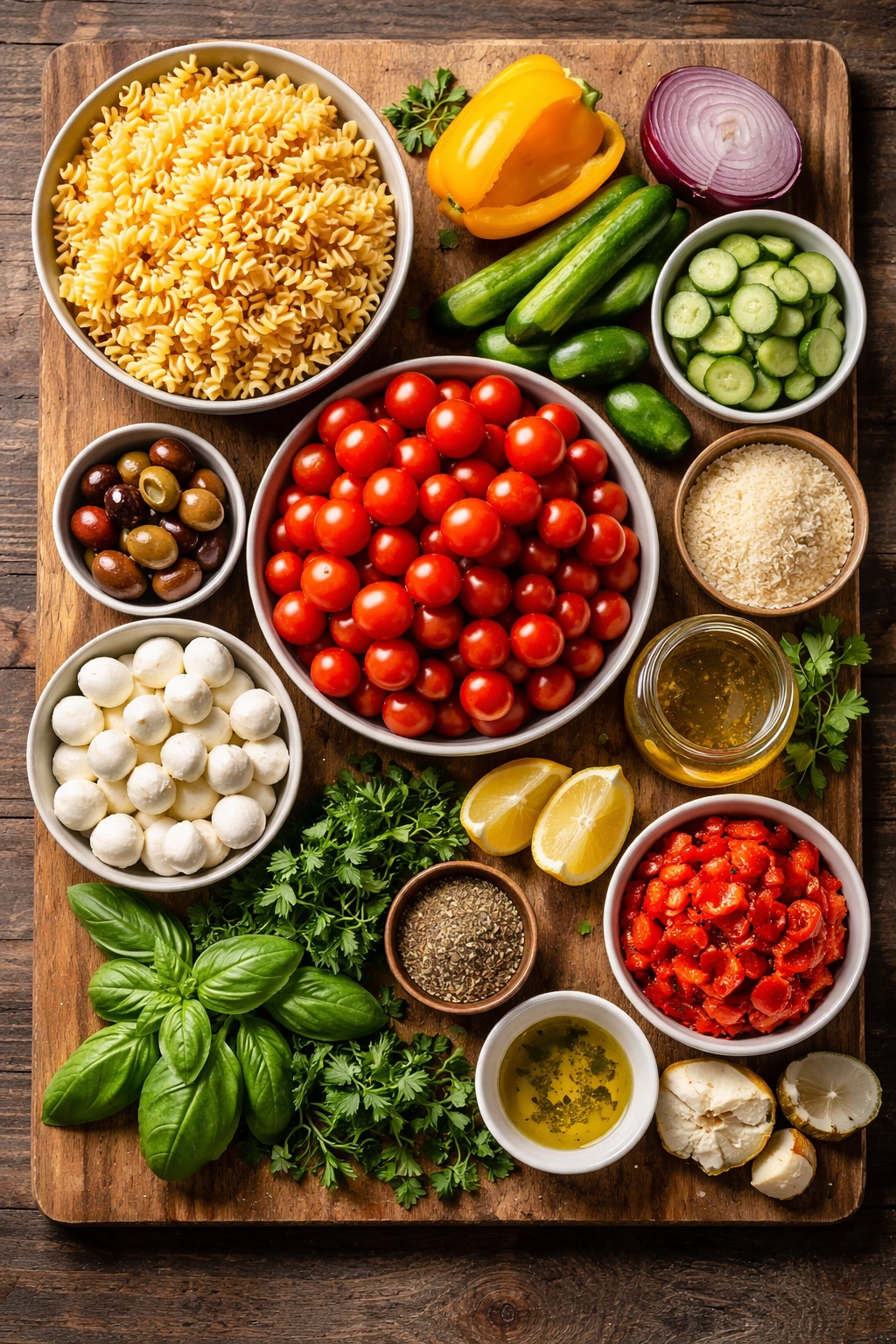
For the Pasta and Base:
- 1 pound (450 grams) short pasta shapes like penne, rotelle, or farfalle
- 3 tablespoons kosher salt (for pasta water)
- ¼ cup extra-virgin olive oil
- 3 tablespoons red wine vinegar or white wine vinegar
- 2 tablespoons fresh lemon juice
- 3 cloves garlic, minced very fine or pressed through a garlic press
- 1½ teaspoons Dijon mustard
- ½ teaspoon dried Italian seasoning (or 1 teaspoon fresh mixed herbs like basil and oregano)
- ¼ teaspoon red pepper flakes
- ¾ teaspoon fine sea salt
- ¼ teaspoon freshly ground black pepper
For the Vegetables and Mix-Ins:
- 1 pint (about 12 ounces) cherry tomatoes, halved
- 1 large cucumber, seeded and cut into ¾-inch dice
- 1 red or yellow bell pepper, cut into ¾-inch dice
- ½ medium red onion, finely diced (about ½ cup)
- 1 cup fresh mozzarella balls (bocconcini), or 1½ cups diced fresh mozzarella
- 1 cup pitted black olives, roughly chopped
- ½ cup fresh basil leaves, torn (not cut with a knife)
- ¼ cup fresh parsley, finely chopped
- ½ cup freshly grated Parmesan cheese
- ½ cup roasted red peppers (from a jar), roughly chopped (optional, but excellent)
For Serving:
- Extra Parmesan cheese
- Fresh basil or parsley for garnish (optional)
- Red pepper flakes
Step-by-Step Instructions
Prepare the Dressing:
-
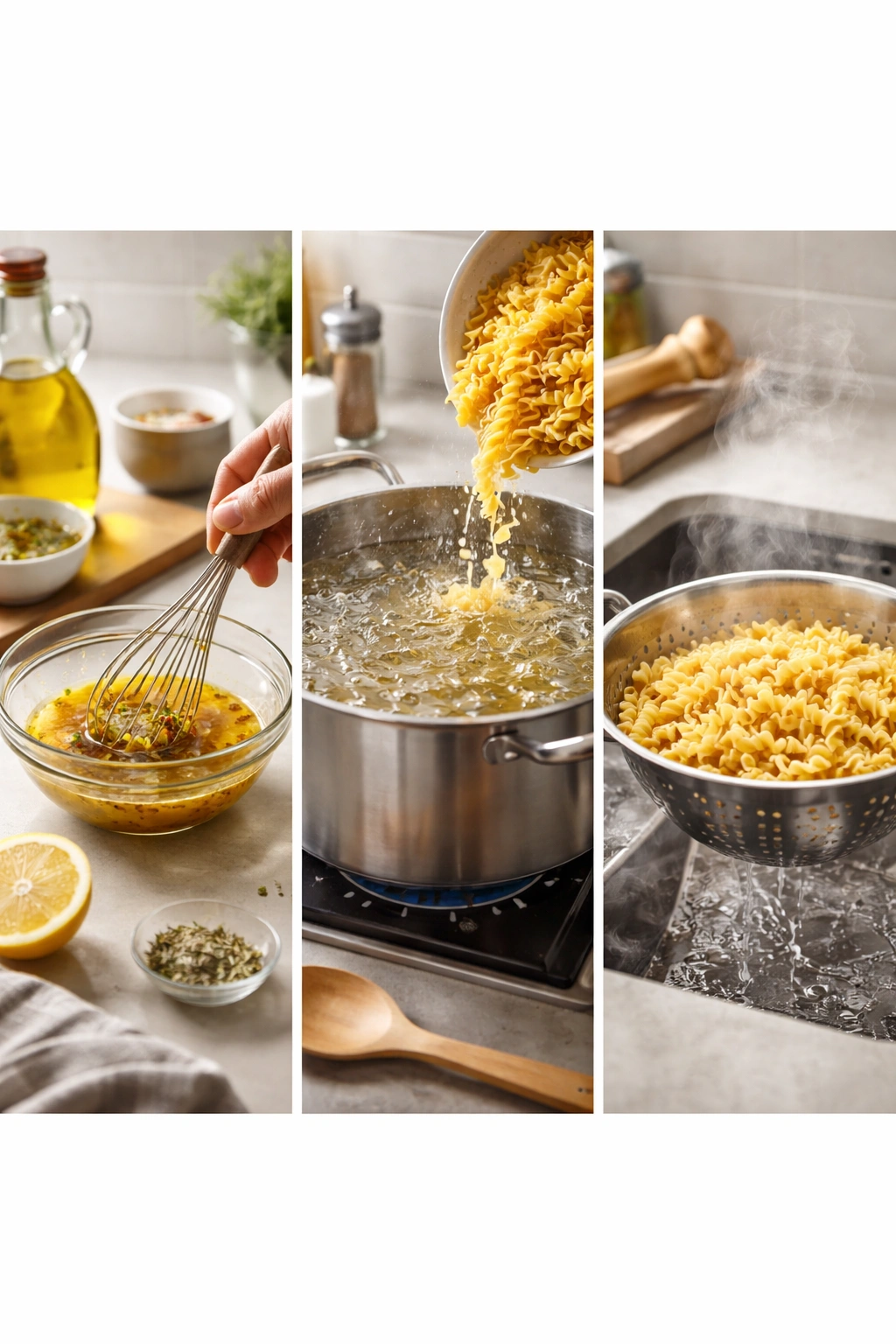
In a small bowl or measuring cup, whisk together the olive oil, red wine vinegar, lemon juice, minced garlic, Dijon mustard, Italian seasoning, red pepper flakes, salt, and black pepper until combined. Taste the dressing on its own—it should be noticeably tangy with bold garlic flavor, because the pasta will dilute it slightly. If it tastes too sharp, it’s actually correct; the pasta will mellow it out to perfect. Set the dressing aside at room temperature.
-
Fill a large pot with at least 4 quarts of water and bring it to a rolling boil over high heat. Add the kosher salt—the water should taste noticeably salty, like sea water.
Cook and Dress the Pasta:
-
Add the pasta to the boiling water and stir immediately to prevent sticking. Cook according to the package directions until al dente (usually 8 to 12 minutes depending on the shape), which means it should have a slight firmness when you bite it but should not be hard or chalky. Do not overcook—the pasta will continue to soften as it sits in the dressing.
-
Drain the pasta in a colander, but do NOT rinse it with cold water. You want the starch on the pasta to help it absorb the dressing. Reserve ½ cup of the pasta cooking water in case you need to thin the dressing later.
-
Immediately transfer the hot drained pasta to a large mixing bowl. Pour about three-quarters of the dressing over the hot pasta and stir thoroughly with a wooden spoon or sturdy spatula, making sure every piece of pasta gets coated. The pasta will continue to absorb the dressing as it cools. This step is where the real flavor development happens—the hot pasta is like a sponge right now.
-
Allow the pasta to cool to room temperature, stirring occasionally (about 10 minutes). As it cools, you’ll notice it absorbs more and more of the dressing.
Add the Vegetables and Final Touches:
-
Once the pasta is cool or only slightly warm, add the diced cucumber, cherry tomato halves, bell pepper, and red onion. Gently fold everything together using a large rubber spatula or spoon, being careful not to crush the vegetables or mozzarella.
-
Add the fresh mozzarella balls, black olives, torn basil, chopped parsley, and Parmesan cheese. Fold gently to combine everything without breaking up the mozzarella.
-
Taste the salad carefully. Add the remaining dressing if it seems dry, or add a splash of the reserved pasta water if the dressing is too concentrated (remember, it will taste more concentrated cold than it did warm). The pasta should taste flavorful, not bland, and should have enough dressing to coat it lightly but not look soupy or pooled with oil.
-
Cover the bowl with plastic wrap or transfer to a serving container, and refrigerate for at least 1 hour before serving. The salad reaches peak flavor after 2 to 4 hours of sitting in the dressing. Stir gently once more before serving, and top with extra Parmesan and fresh basil if desired.
The Critical Mistakes to Avoid
You can follow every step perfectly and still end up with mediocre pasta salad if you make certain common mistakes. Don’t rinse the hot pasta with cold water. This is the most frequent error, and it absolutely destroys the salad. The starch on the pasta is your friend—it helps the dressing cling and get absorbed. Rinsing washes away that starch and leaves you with slippery pasta that won’t hold seasoning.
Don’t add the vegetables too early, especially the tomatoes and cucumber. These vegetables release water, and if they’ve been sitting in the salad for more than an hour, that water will dilute and separate your dressing. Add them just before serving, or at most 30 minutes beforehand. The pasta and flavorful mix-ins can sit together safely for hours, but fresh vegetables should join the party closer to serving time.
Avoid underestimating the dressing’s importance. The single most common complaint about homemade pasta salad is that it’s bland or tastes like nothing. The dressing needs to be assertive enough to season a pound of pasta. If you’re tasting the dressing by itself and thinking it seems strong, you’re on the right track. It will mellow out when combined with pasta and vegetables.
Don’t skip the garlic or use pre-minced garlic from a jar. Fresh garlic, minced fine or pressed, makes a noticeable difference in flavor. Jarred garlic tastes flat and sometimes off. The few seconds it takes to mince fresh garlic is worth it.
Be careful with fresh herbs. If you’re adding them raw (like basil and parsley), add them only 30 to 45 minutes before serving. Fresh herbs will darken and lose flavor if they sit in acidic dressing for hours. If you want herbs present earlier, use the dried herbs in the dressing itself—they’ll continue to bloom and infuse the liquid.
Delicious Variations Worth Trying
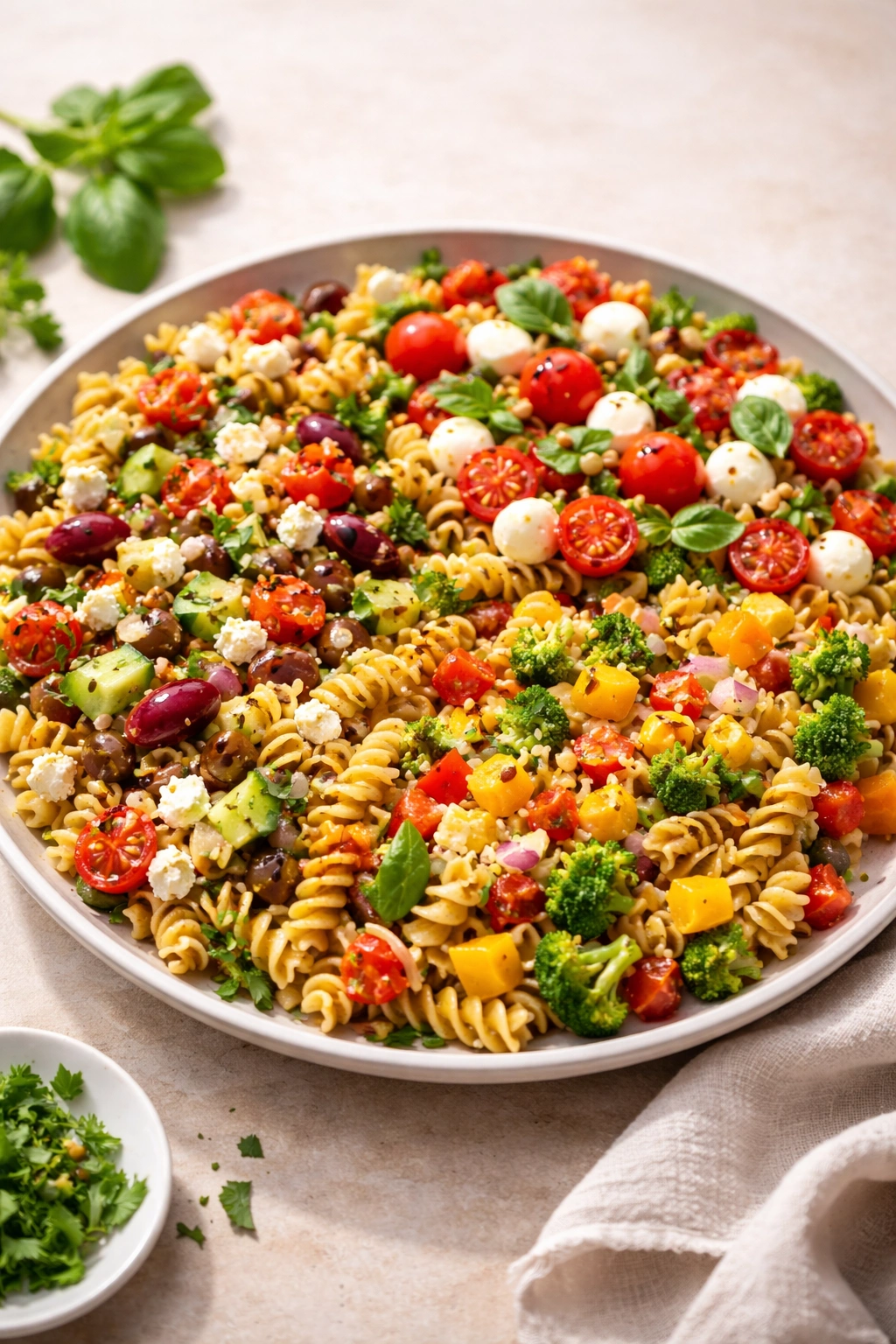
Once you’ve mastered the basic version, you have endless ways to make this salad uniquely yours. Each variation follows the same core technique: hot pasta, bold dressing, cool-down period, fresh vegetables added close to serving.
The Mediterranean Version swaps in sun-dried tomatoes, kalamata olives, roasted red peppers, fresh spinach, and crumbled feta cheese instead of mozzarella. Use the same dressing but add a pinch of oregano and reduce the Italian seasoning slightly. This version has more depth and works especially well for warm-weather entertaining.
The Caprese Variation highlights the simplicity of the original by using heirloom tomatoes, fresh mozzarella, a basil-forward dressing, and minimal other additions. Think quality over quantity—just tomatoes, mozzarella, pasta, fresh basil, a little red onion, and a lemon-forward dressing. This is sophisticated enough to serve at an elegant gathering.
The Garden Vegetable Version uses whatever is fresh and in season—sugar snap peas, broccoli florets (blanched briefly), zucchini ribbons, fresh corn kernels, diced carrots, or thinly sliced radishes. Add more fresh dill or tarragon to the dressing to complement the lighter vegetables. This works wonderfully in spring and early summer.
The Protein-Rich Option adds chickpeas, white beans, grilled chicken breast cut into bite-sized pieces, or crispy bacon. The dressing stays the same, but you now have a substantially heartier side that works as a light main course. If you’re adding beans, rinse them well and pat dry to prevent excess moisture.
The Italian Salad Style includes salami or pepperoni, cubed provolone or white cheddar, artichoke hearts, roasted red peppers, and Italian parsley. Use the same vinaigrette but add a little more garlic. This version feels like a loaded antipasto platter.
The Asian-Inspired Twist uses sesame oil, rice vinegar, soy sauce, and ginger in the dressing instead of the red wine vinegar and Italian seasonings. Toss in edamame, shredded carrots, thinly sliced scallions, sliced red bell pepper, and cilantro. Garnish with sesame seeds and crushed peanuts. This completely different flavor profile still follows the same salad-building method.
How to Store and Transport This Salad
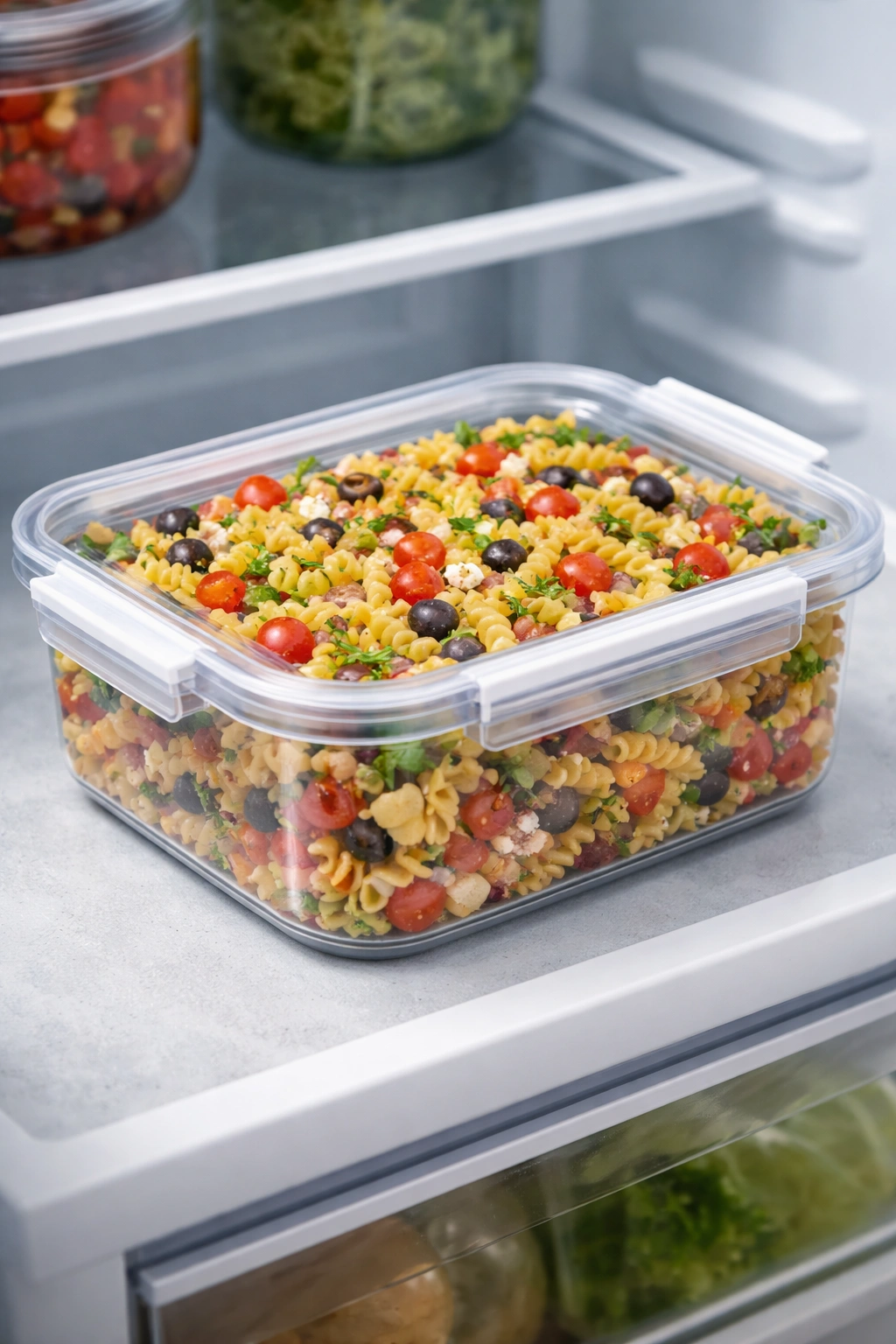
Pasta salad travels beautifully, making it the perfect dish for potlucks, picnics, and outdoor events. Store it in an airtight container in the refrigerator for up to 3 days. The flavor actually improves for the first two days as the pasta continues absorbing the dressing and the flavors meld together. After that, it starts to become watery and the vegetables begin to soften more than is ideal.
If you’re transporting the salad, keep it in a well-sealed container or covered bowl. It’s fine to serve it at room temperature or lightly chilled; you don’t need to keep it on ice unless the outdoor temperature is particularly hot. Cold salad actually tastes less seasoned than cool room-temperature salad, so if you’re eating it cold, you might want to add an extra tablespoon of dressing before serving to brighten the flavors.
For longer storage, keep the dressed pasta separate from the fresh vegetables if you can. Store the pasta and its dressing in one container and the fresh vegetables in another. When you’re ready to serve (or about 30 minutes before), combine everything. This keeps the vegetables from releasing water into the pasta and keeps the salad from becoming watery.
You can make this salad up to two days ahead—just leave off the basil and parsley. Add those fresh herbs about an hour before serving so they maintain their color and fresh flavor. The Parmesan cheese can go in ahead of time; it won’t suffer from sitting.
Why People Always Ask for the Recipe
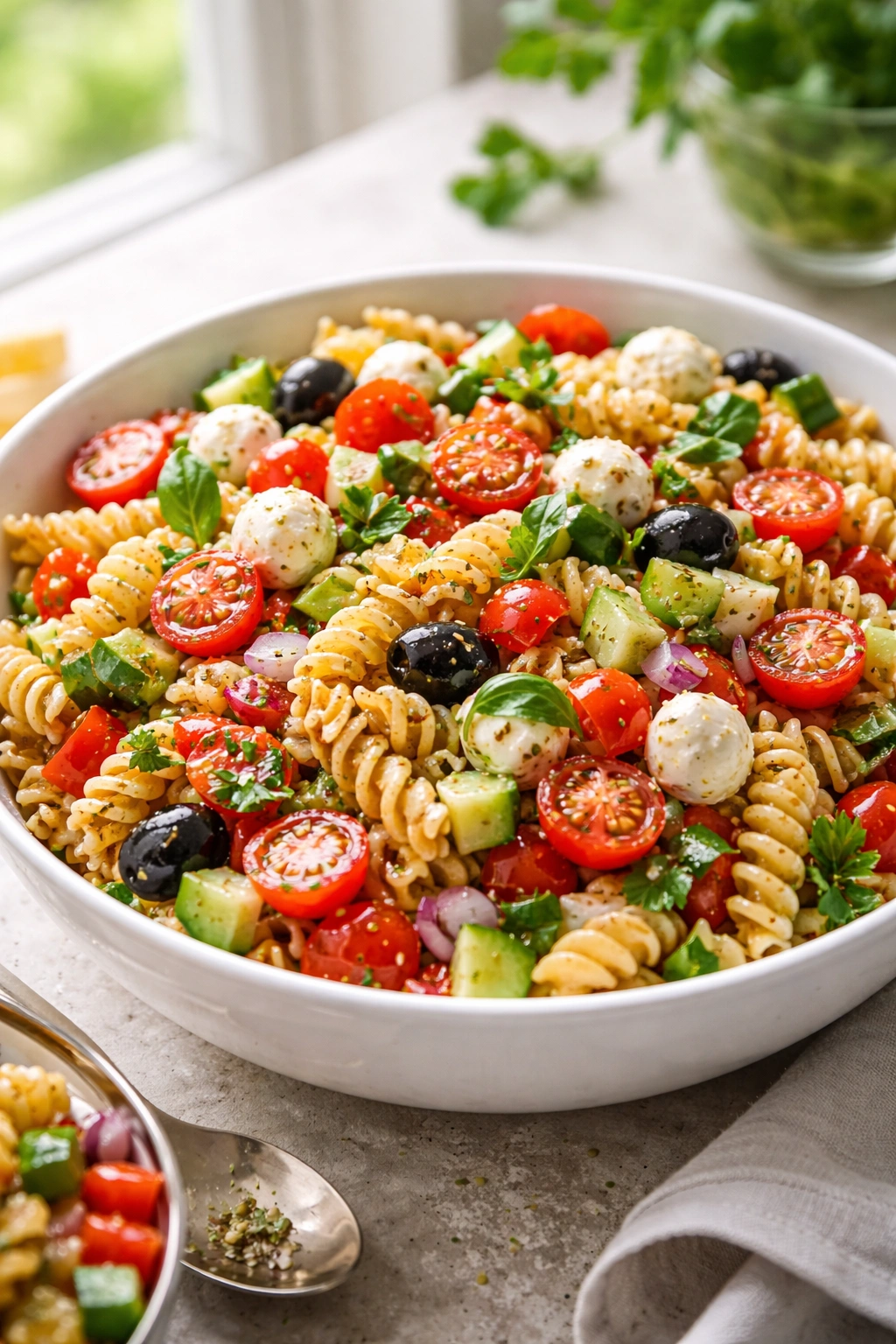
There’s a psychological reason this pasta salad generates so many recipe requests. It tastes like someone who really knows how to cook made it, even though the techniques are straightforward. People taste the distinct flavors—the garlic, the tang of vinegar, the brightness of fresh herbs—and think the recipe must be complicated. When you tell them it’s just good olive oil, vinegar, garlic, and fresh ingredients, they’re often surprised.
The other reason people ask for the recipe is that it actually satisfies them. Many pasta salads feel like filler—something to fill the space on a plate between main courses. This version is intentional and flavorful enough that people seek it out specifically. It works as a side dish, but it’s substantial enough to be the main thing someone comes back for at the buffet.
It also photographs beautifully without being fussy. The colors are vibrant naturally—the green herbs, the red tomatoes, the white mozzarella balls, the pink-tinted pasta. You don’t need to do anything special for it to look restaurant-quality. This is the kind of salad that shows up in people’s social media photos, which inevitably leads to them asking about the recipe.
Customizing It for Your Guests’ Preferences
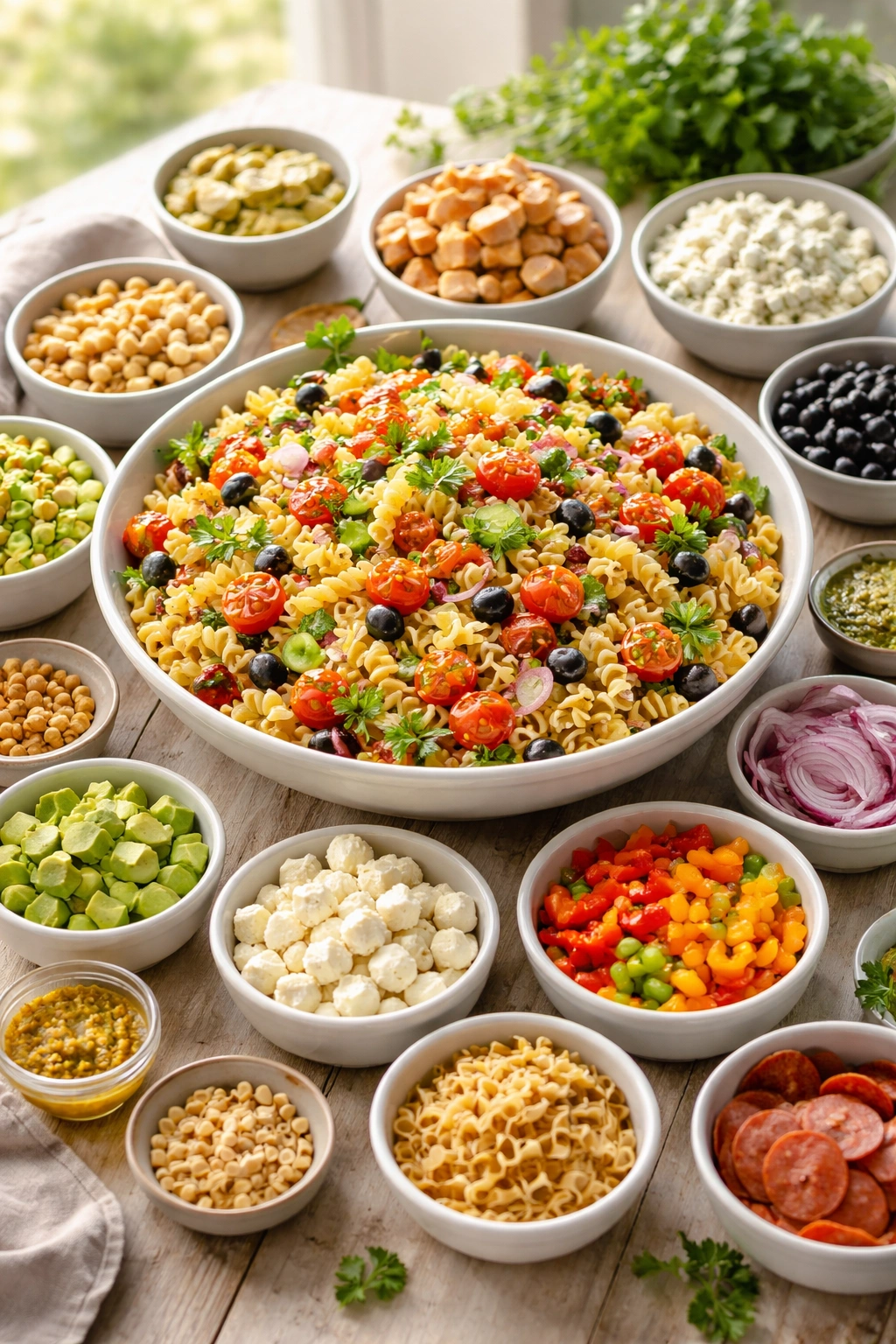
Part of what makes this salad special is how easily it adapts to dietary preferences and restrictions. If you have vegan guests, swap the mozzarella for marinated artichoke hearts or extra roasted red peppers, and omit the Parmesan (or offer nutritional yeast on the side). The pasta and dressing are naturally vegan, so the swap is seamless.
For gluten-free guests, use gluten-free pasta instead of regular pasta. The cooking time might be slightly different (check the package), but the method stays identical. Gluten-free pasta works equally well in this salad.
If anyone dislikes a particular ingredient, the salad is forgiving. Don’t like olives? Leave them out and add more roasted peppers. Don’t eat cheese? Add more fresh herbs and crispy chickpeas for texture. Hate tomatoes? Use extra cucumber and bell pepper. The core dressing and pasta base are so flavorful that you can swap vegetables around without losing quality.
For kids, you might make the dressing slightly less acidic (reduce the vinegar by half a tablespoon and add an extra half-tablespoon of olive oil) and skip the red pepper flakes and red onion. Keep the garlic but soften the overall flavor. Kids often become lifelong pasta salad fans if they encounter it at the right age with mild seasonings—then they graduate to the adult version as their palate develops.
Serving Suggestions and Occasions
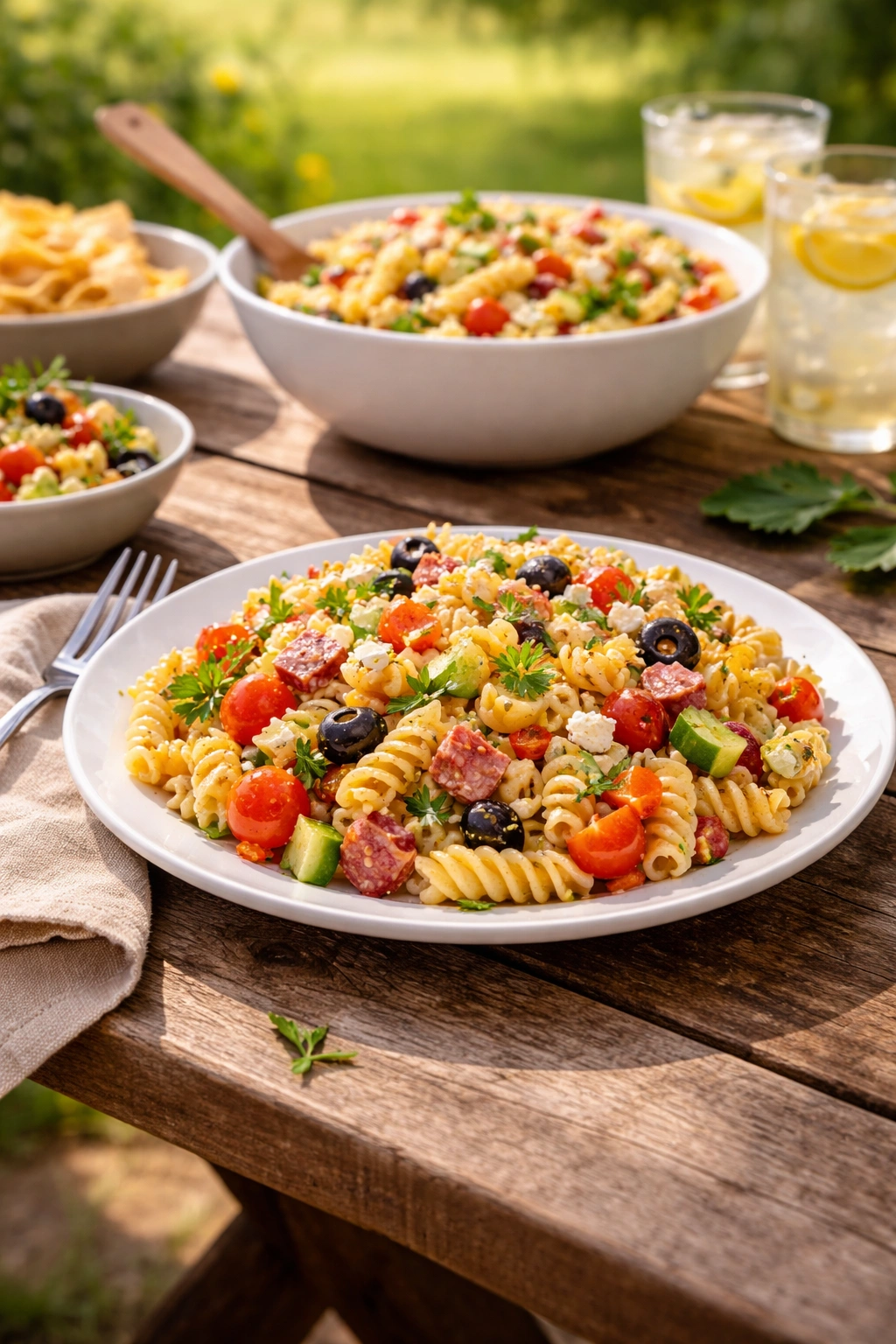
This pasta salad works for almost any outdoor or casual gathering. It’s the first thing to go at potlucks, especially in warm weather when people want something refreshing but substantial. Serve it alongside grilled chicken, burgers, or fish at a backyard barbecue. It pairs beautifully with both red and white wines, and it doesn’t overpower other dishes on the table.
For a more elegant gathering, serve it as a first course in small bowls or on salad plates, perhaps with a side of crusty bread. The simple elegance of good ingredients comes through when it’s plated carefully.
It works as a light lunch on its own—the fresh vegetables and mozzarella make it feel complete without additional sides. Pack individual portions into containers for grab-and-go lunches throughout the week.
This salad is excellent at summer dinners, garden parties, weddings, reunions, company picnics, and any situation where you need to feed people outdoors. It’s also appropriate for office potlucks and school events because it’s not spicy enough to bother anyone and it appeals to almost all palates.
Final Thoughts
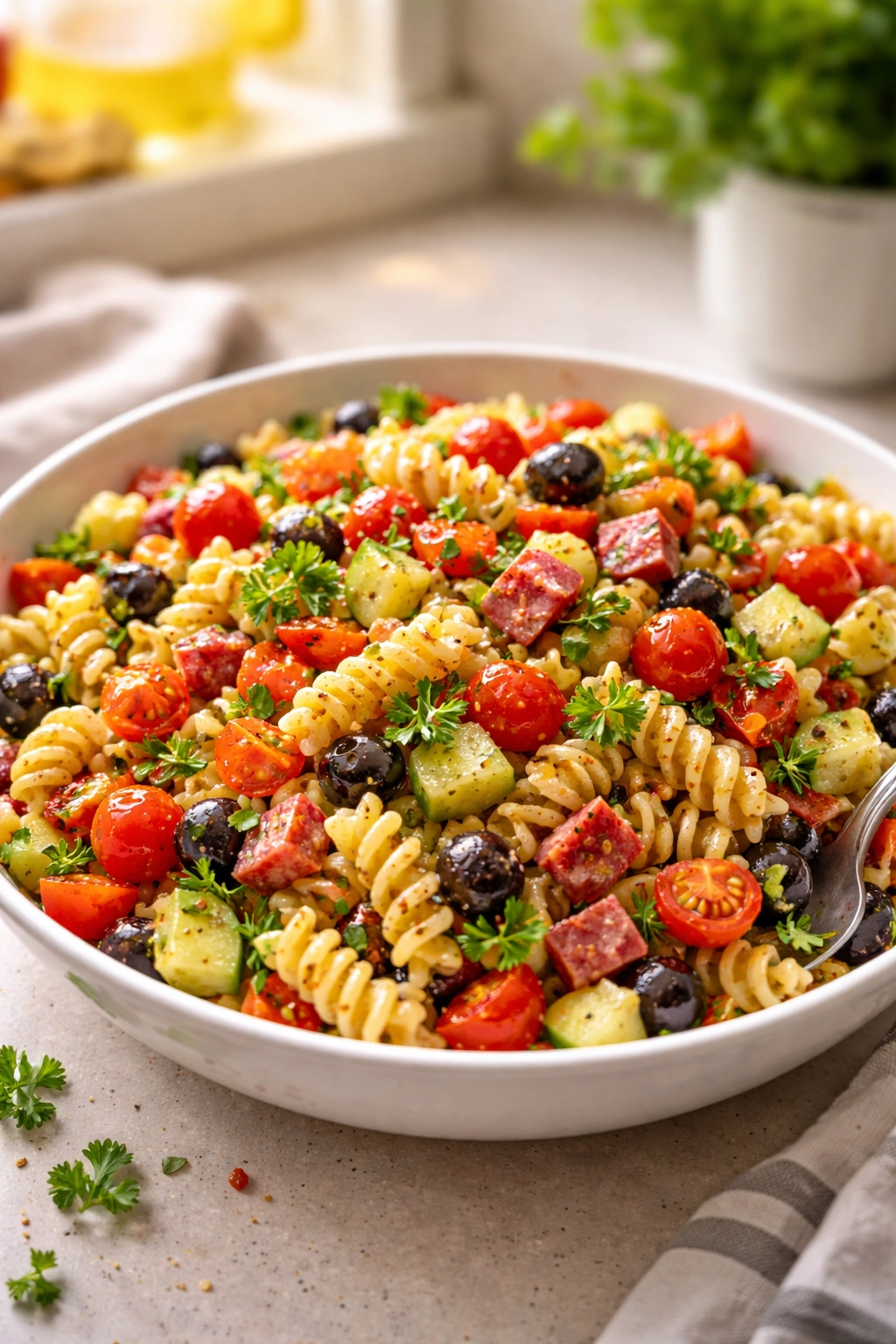
The beauty of this pasta salad is that it feels gourmet while being genuinely simple. You’re not making fancy techniques or hunting down obscure ingredients—you’re just understanding how flavors work together and respecting basic food science. Hot pasta absorbs seasoning better than cold pasta. Fresh, quality ingredients taste better than tired pantry staples. A bold dressing transforms plain vegetables into something memorable.
Make this salad once and you’ll understand why people keep asking for the recipe. Make it twice and you’ll feel confident enough to adjust it for your own preferences and favorite ingredients. By the third time, you won’t need to check the measurements—you’ll know the feel and the taste, and you’ll have a go-to dish that works for any casual occasion.
The next time someone asks for your recipe, you’ll smile knowing you’re about to pass along not just a list of ingredients, but a genuinely good way to make one of the most requested summer dishes that actually lives up to its reputation.
