



A great lunch isn’t just about filling your stomach until dinner — it’s about eating something nourishing enough to fuel your afternoon, satisfying enough that you’re not hunting for snacks by 3 p.m., and genuinely delicious enough that you actually look forward to lunchtime. This kale and sweet potato salad checks all three boxes. It’s hearty without being heavy, packed with vegetables and protein, and complex enough in flavor that it tastes less like “health food” and more like something you’d order at a good restaurant.
What makes this salad work so well for lunch is the combination of tender massaged kale, crispy-roasted sweet potato, creamy avocado, crunchy pepitas, and a warm honey-lime dressing that brings everything together. The sweet potatoes caramelize in the oven until the edges are almost burnt and the insides are soft and slightly sweet. The kale becomes silky and mild when massaged properly, losing that tough, bitter quality that stops most people from eating it raw. Add tart citrus, rich nuts, and a balanced dressing, and you’ve got a salad that’s genuinely craveable.
This isn’t a sad desk lunch situation. It’s the kind of salad you’ll want to make extra of so you have leftovers. It holds up beautifully in the fridge for several days, tastes even better the next day as the flavors meld, and can be assembled fresh each morning or prepped almost entirely ahead of time. Whether you’re meal-prepping for the week, looking for something to bring to work, or just want a substantial, delicious lunch to enjoy at home, this is the salad you’ll return to again and again.
The Case for Kale and Sweet Potato as a Lunch Power Duo
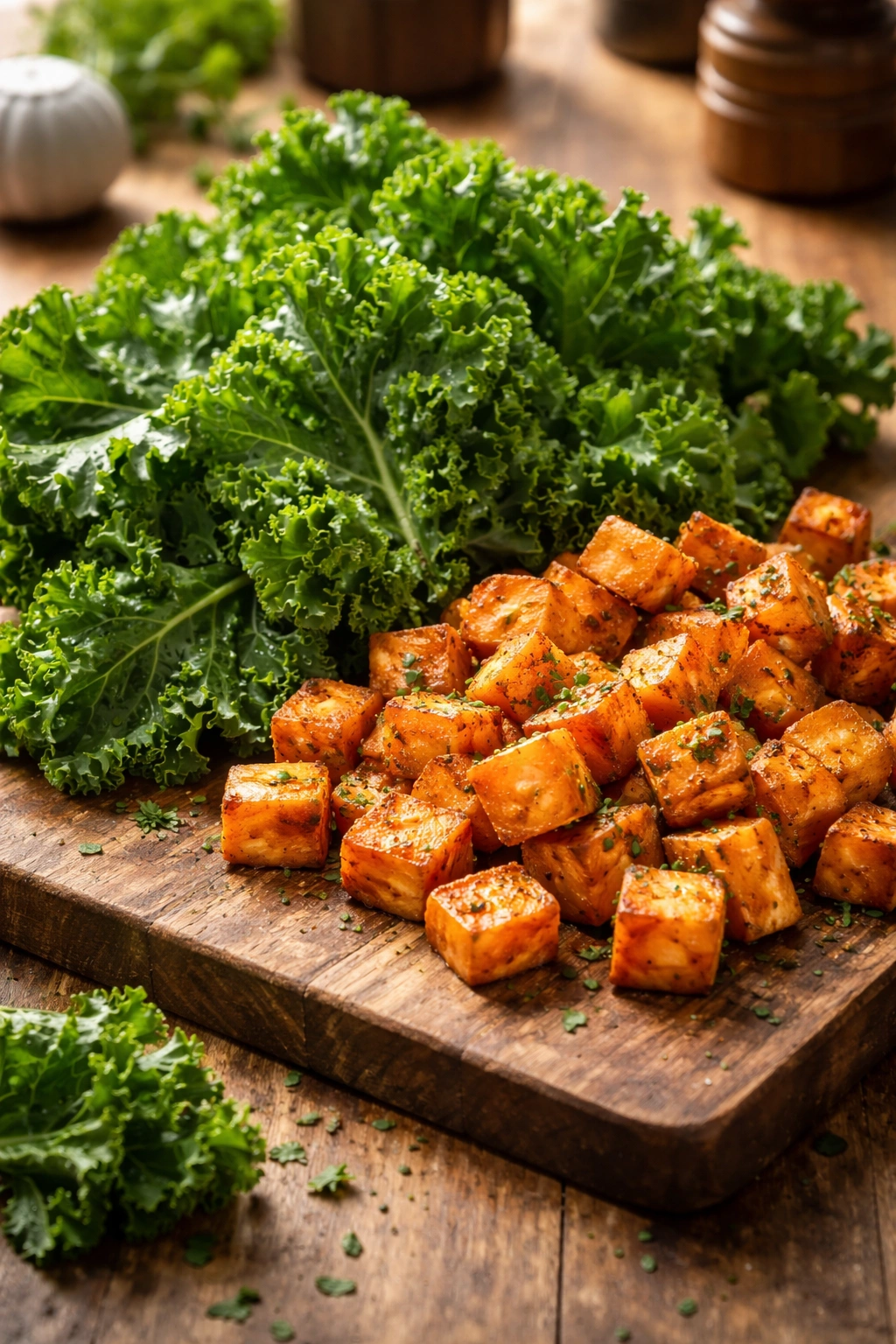
Kale and sweet potato might seem like an obvious pairing now, but there’s actually a really solid reason why this combination shows up on so many lunch menus and meal-prep guides — they genuinely complement each other in almost every way. The sweetness of roasted sweet potato balances kale’s natural bitterness and peppery edge. The creamy, starchy texture of the potato contrasts beautifully with kale’s slightly chewy bite. Nutritionally, they cover different nutritional bases, so together they create a more complete meal than either would alone.
Sweet potatoes bring natural sweetness without being cloying, plus they’re loaded with beta-carotene, fiber, and potassium. They become almost silky when roasted low and slow, and they caramelize at the edges when you crank up the heat, creating little crispy, sweet bits that feel indulgent but are completely wholesome. Kale, especially when treated properly, becomes a vehicle for other flavors rather than a bitter lectern. The massage technique transforms the raw leaves into something tender and almost creamy that actually tastes good without apology.
Together, these two vegetables create structural and nutritional variety in a single salad. You get different textures, different flavor notes, and different nutritional profiles that combine into something more interesting than either ingredient could be alone. Add protein and fat (like pepitas, avocado, or cheese), a bright acid, and you have the formula for a salad that’s complete, balanced, and genuinely satisfying to eat.
Why This Salad Actually Keeps You Full
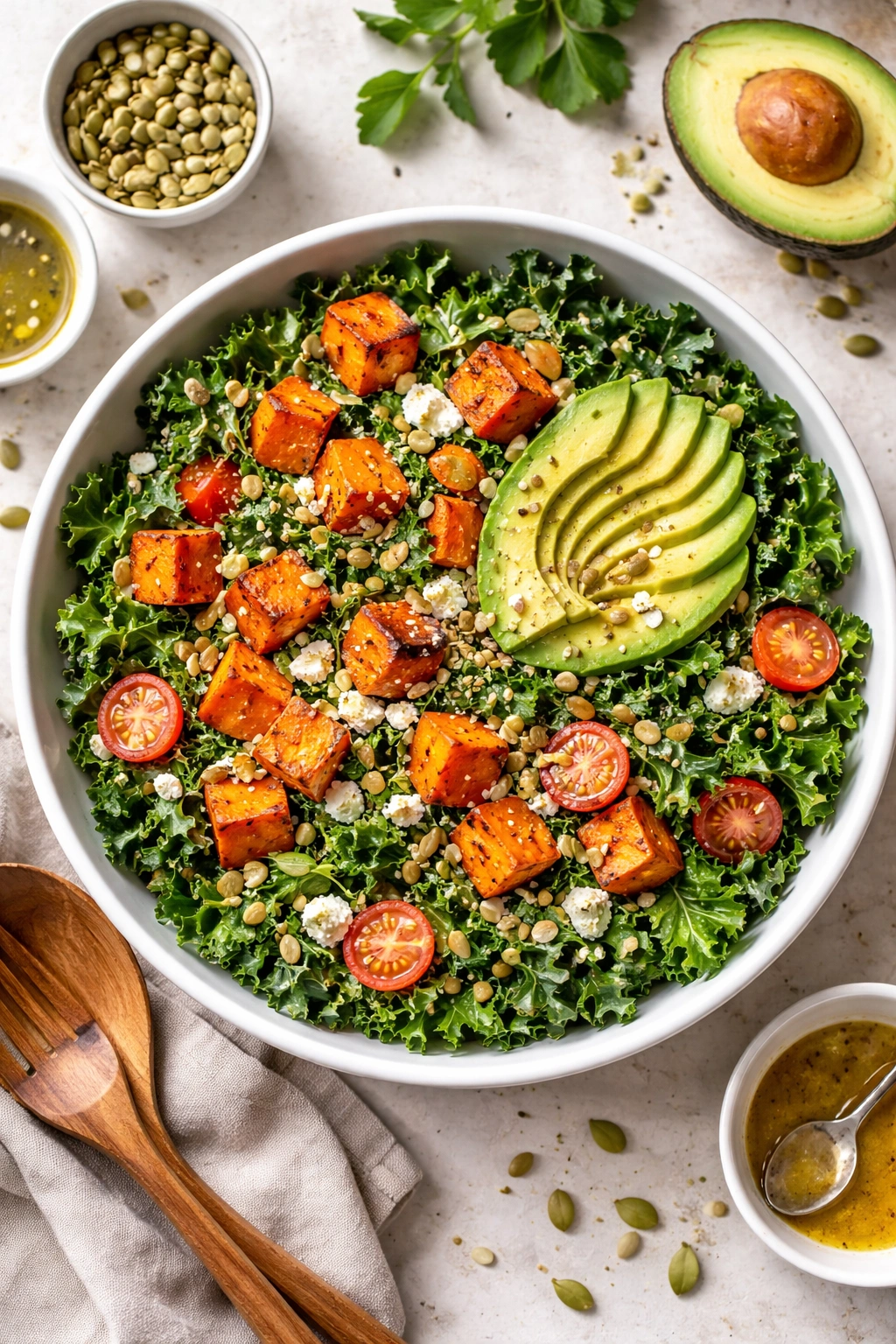
The key to a lunch salad that actually sustains you through the afternoon isn’t just adding “protein” in abstract terms — it’s understanding the specific combination of components that creates lasting satiety. This salad works because it hits multiple fullness mechanisms at once, so your body and brain both register that you’ve had a real meal.
Fiber is the first piece. Both kale and sweet potato are high in dietary fiber, which slows digestion and keeps you feeling full for longer. The fiber also helps regulate blood sugar, which means you don’t get the energy crash that comes from refined carbohydrates. This is why a salad with sweet potato keeps you satisfied in a way that a salad with regular pasta or white bread doesn’t.
Fat is equally important for satiety, and this salad delivers it through pepitas (pumpkin seeds), which are rich in both fat and protein, plus avocado, which adds creaminess and additional healthy fat. Fat doesn’t just make food taste better — it actually signals to your brain that you’re satisfied, and it slows digestion further, extending that fullness feeling. The nuts or seeds also add a texture element that makes the salad feel more substantial, which is partly psychological but partly physiological too.
Protein rounds out the satiety equation. The pepitas contribute protein, and if you add a poached egg, grilled chicken, chickpeas, or feta cheese to the salad, you’re adding even more. Protein is the most satiating macronutrient — it requires more energy to digest than carbs or fat, and it triggers the release of hormones that signal fullness to your brain. A salad with adequate protein keeps hunger hormones at bay much more effectively than a salad that’s primarily vegetables.
The combination of all three — fiber, fat, and protein — creates a meal that doesn’t just fill your stomach temporarily. It actually nourishes your body in a way that keeps blood sugar stable, energy steady, and hunger at bay until dinner. This is why you can eat this salad for lunch and not find yourself raiding the office snack drawer two hours later.
Choosing the Best Kale and Sweet Potato Varieties
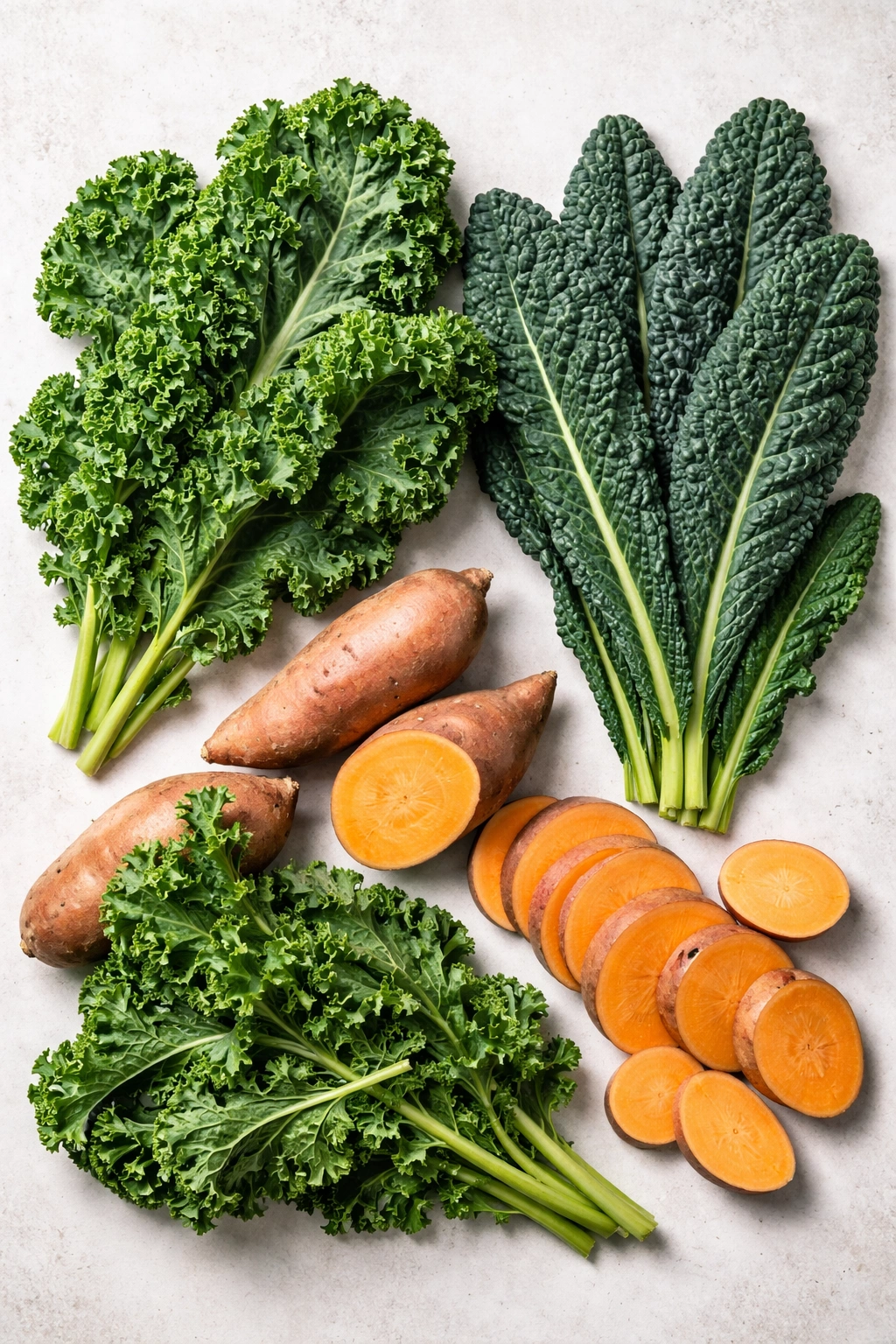
Not all kale is created equal, and the same goes for sweet potatoes. The variety you choose will actually affect how the salad tastes and feels in your mouth, so it’s worth being intentional about it.
For kale, curly kale and lacinato kale are the two best options for this salad. Curly kale has those frilly, ruffled leaves and a slightly more peppery, mineral flavor. It’s the kale most people recognize, and it’s widely available year-round. When you massage it, those frilly edges break down beautifully, creating a tender leaf that still has some structural integrity. Lacinato kale — also called dinosaur kale or cavolo nero — has longer, flatter leaves with a bumpy texture and a slightly milder, almost nutty flavor. It tends to be a bit more tender even before massaging, which some people prefer. Both work brilliantly in this salad. The flavor difference is subtle enough that you should choose whichever looks freshest at your market.
What you want to avoid is using red kale (which is more mild and sweet, better for different applications) or any kale that’s browning, wilted, or showing serious damage. Fresh, vibrant kale will taste better and massage more easily. Look for bunches with intact leaves and a deep, rich color.
For sweet potatoes, you have two main choices: the orange varieties (sometimes labeled “yams” in the US, though they’re not true yams) and the white or purple varieties. The orange varieties are sweeter and more familiar to most people. They caramelize beautifully when roasted and have a richer, almost candy-like sweetness. They’re also more widely available. White sweet potatoes are starchier and less sweet, with a flavor closer to a regular potato. They’re less commonly available but worth seeking out if you want a salad that’s less sweet overall. For this particular salad, orange sweet potatoes work best because their sweetness creates a more balanced contrast with the kale and the bright dressing.
Choose medium-sized sweet potatoes rather than huge ones — they’ll cook more evenly. Look for firm skin with no soft spots or sprouting. Avoid any that feel lightweight or wrinkled, which indicates they’ve been stored too long.
Serving and Timing Information
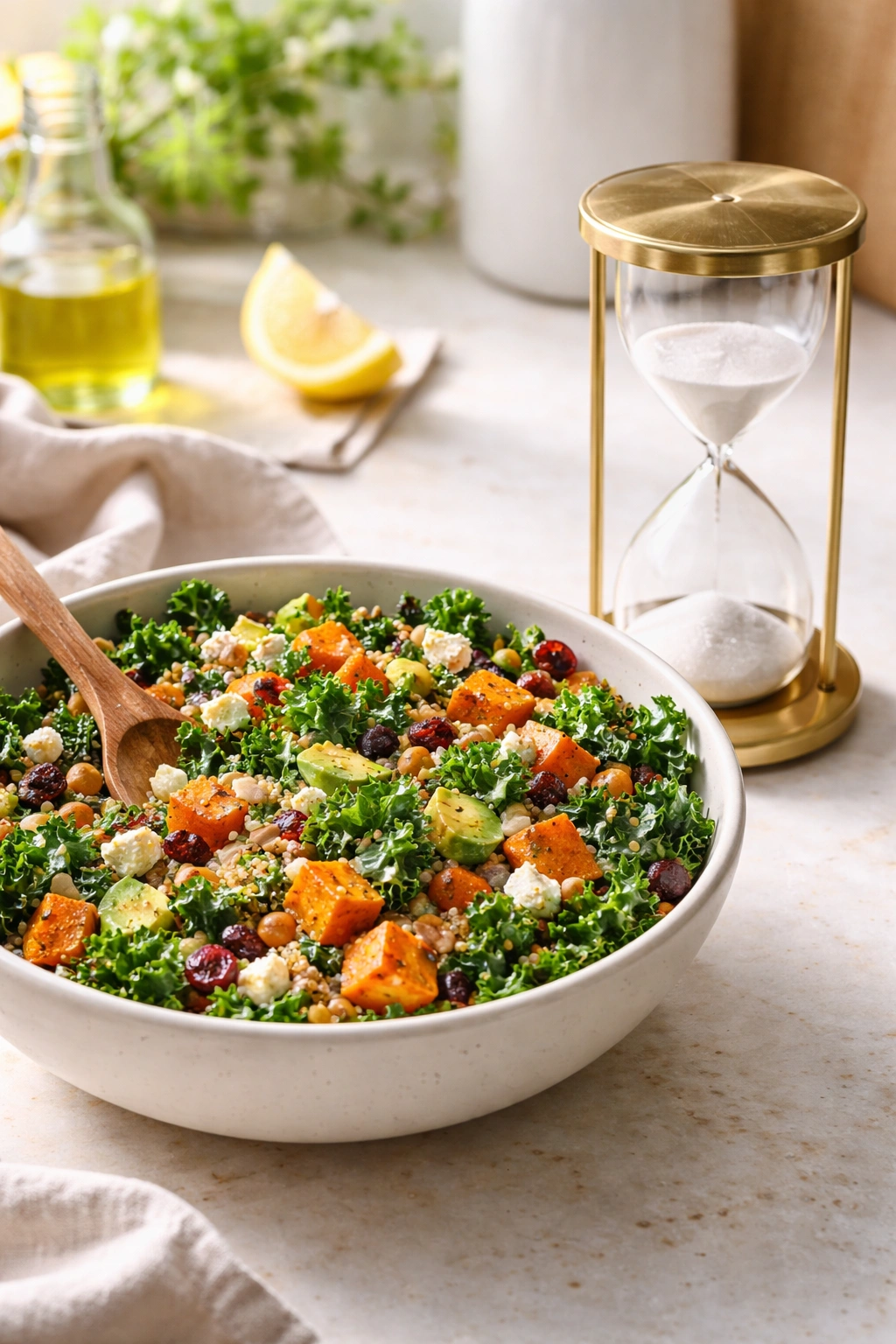
Yield: Serves 4 as a hearty lunch or 6 as a side
Prep Time: 20 minutes (chopping vegetables, gathering ingredients, massaging kale)
Cook Time: 30 minutes (roasting sweet potatoes)
Total Time: 50 minutes active time
Difficulty: Beginner to Intermediate — No special equipment or techniques required; the longest part is roasting the sweet potatoes, which is essentially hands-off. If you’ve made a salad before, you can make this.
Best Served: Warm, right after assembly, though it’s delicious at room temperature the next day. The kale continues to soften slightly overnight, which many people prefer.
Complete Ingredient List
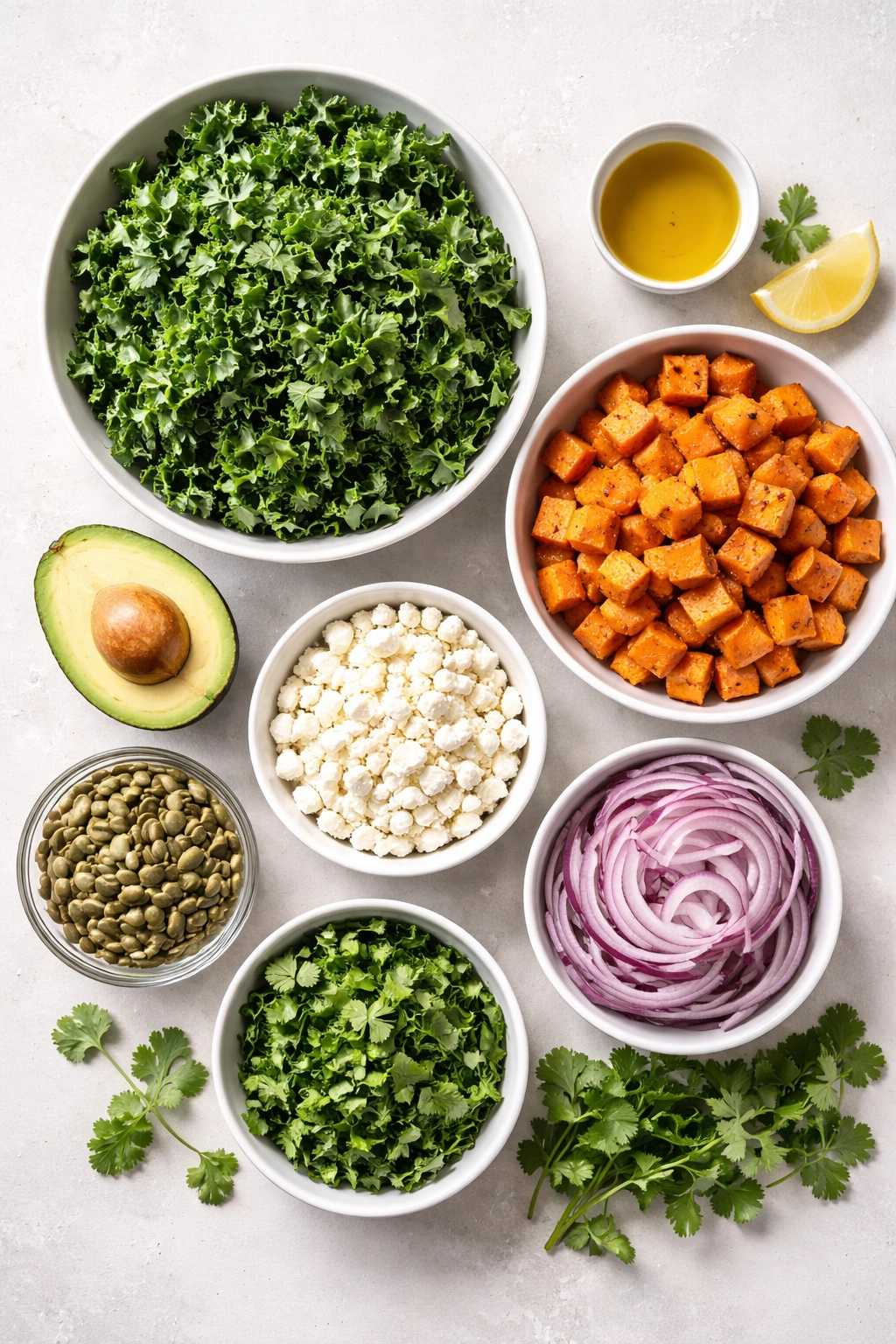
For the Salad:
- 1 large bunch fresh kale (curly or lacinato), about 8 ounces
- 2 medium orange sweet potatoes, peeled and cut into ½-inch cubes (about 3 cups)
- 2 tablespoons olive oil, for roasting
- 1 teaspoon kosher salt, for roasting
- ½ teaspoon freshly ground black pepper, for roasting
- ¼ teaspoon cayenne pepper or smoked paprika (optional, but adds depth)
- 1 ripe avocado, pit removed, flesh sliced
- ⅓ cup raw pepitas (pumpkin seeds)
- ⅓ cup crumbled feta cheese (or cotija cheese, or omit for dairy-free)
- ¼ cup thinly sliced red onion
- 2 tablespoons fresh cilantro or flat-leaf parsley, roughly chopped
For the Warm Honey-Lime Dressing:
- 3 tablespoons extra-virgin olive oil
- 2 tablespoons fresh lime juice (about 1 large lime)
- 1 tablespoon raw honey (or maple syrup for vegan)
- 1 clove garlic, minced very fine
- ½ teaspoon Dijon mustard
- ¼ teaspoon kosher salt
- Pinch of freshly ground black pepper
- Small pinch of red pepper flakes (optional)
How to Prepare and Roast Sweet Potatoes to Crispy-Tender Perfection
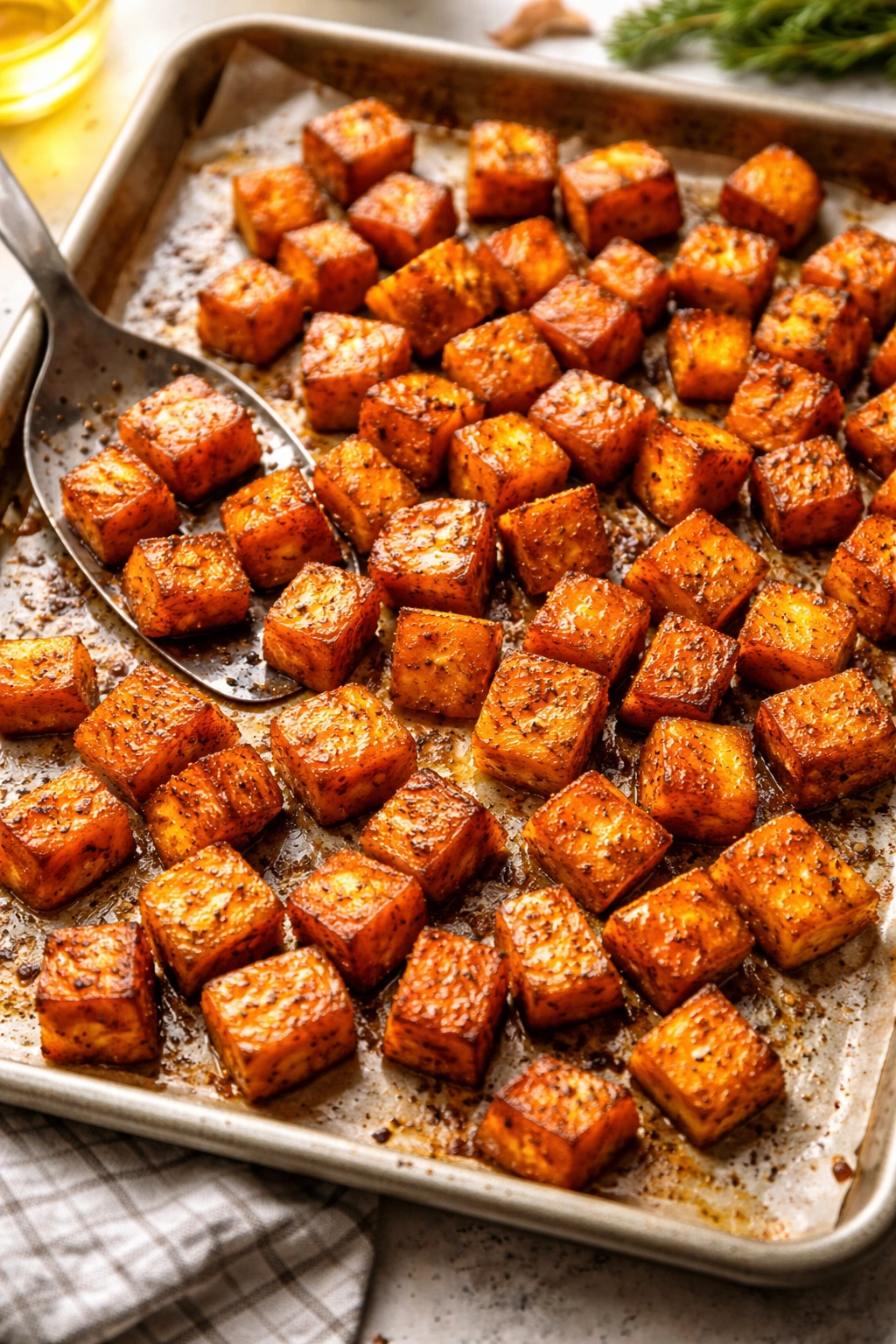
The way you roast the sweet potatoes determines whether they’ll be mealy and bland or caramelized and delicious. The secret is high heat and a patient hand — you want them cooked through but with crispy, slightly charred edges that add visual interest and concentrated sweetness.
Peel the sweet potatoes under running water using a vegetable peeler or a sharp paring knife, removing all the thin tan skin. (Some people roast sweet potatoes with the skin on, which works too, but peeling first makes them easier to cut and more uniform in cooking.) Cut the peeled potatoes into ½-inch cubes — this size is important because larger pieces won’t get crispy at the edges while smaller pieces might dry out. Aim for relatively uniform pieces so they cook at the same rate.
Toss the cut sweet potatoes in a bowl with 2 tablespoons of olive oil, 1 teaspoon of kosher salt, ½ teaspoon of black pepper, and ¼ teaspoon of cayenne or smoked paprika if you’re using it. The cayenne isn’t traditional, but it adds a subtle depth that makes the sweet potato flavor more interesting. Make sure every piece is coated with a thin film of oil — this is what creates the crispy exterior.
Spread the potatoes in a single layer on a rimmed baking sheet, leaving space between pieces so they roast rather than steam. Crowded potatoes will release moisture and become soft rather than caramelized. Pop the sheet into a 425°F (220°C) oven for about 25 to 30 minutes, stirring halfway through. The potatoes are done when they’re soft inside when pierced with a fork and the edges have darkened and caramelized, with some pieces showing light char marks. The pieces that look almost burnt around the edges are actually the best ones — that’s where the concentrated sweetness lives.
Remove the baking sheet from the oven and let the sweet potatoes cool for 5 to 10 minutes while you prepare the kale. This cooling time also lets the exterior firm up slightly, so they maintain their texture in the salad rather than getting mushy when mixed with the dressing.
Massaging and Preparing the Kale for Tender, Flavorful Leaves
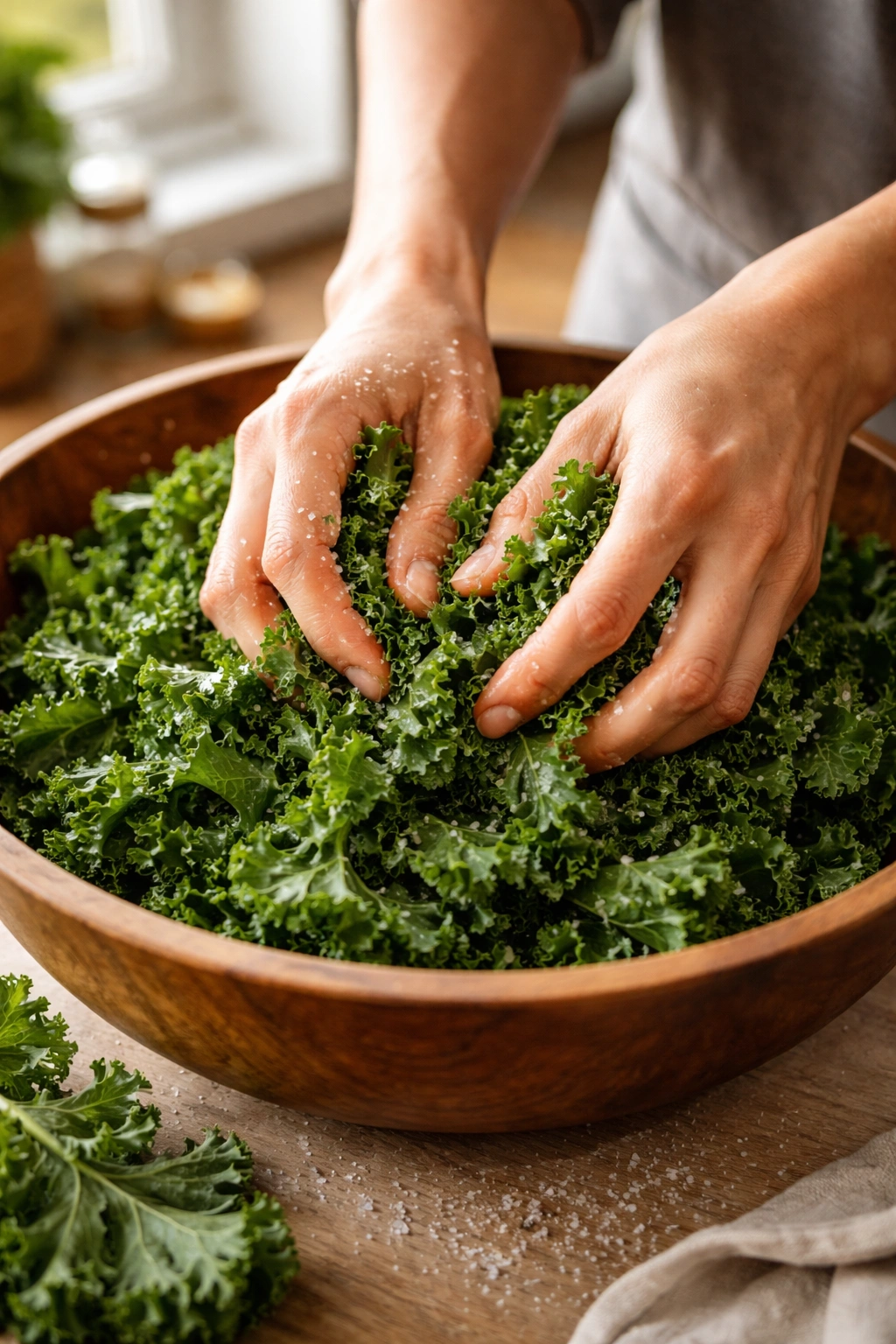
Massaging kale sounds like you’re being precious, but it’s actually transforming the texture and flavor of the leaf in a very real, chemical way. Raw kale is tough and bitter because its cell walls are thick and it contains compounds called glucosinolates that taste astringent. When you massage the kale, you’re breaking down the cell walls, which softens the leaf and also breaks down some of those bitter compounds, making the kale sweeter and milder.
Rinse the kale bunch under cool running water and pat it completely dry with paper towels. Wet kale won’t massage properly, and excess water will also dilute the dressing. Remove the thick central rib from each leaf by laying the leaf flat and slicing along both sides of the rib, or by holding the stem end and stripping the leaf away from it with your hand. Discard the ribs (or save them for vegetable stock if you’re being resourceful). Tear or roughly chop the leaves into bite-sized pieces — you want them small enough that they’re easy to eat but not so small that they become mushy.
Place the torn kale in a large bowl and sprinkle it with ¼ teaspoon of kosher salt. (The salt draws out moisture and helps break down the cell walls, making the massage more effective.) Using your hands, massage the kale for about 2 to 3 minutes. Grab handfuls of kale and squeeze firmly, working it between your palms. You’ll see the leaves darken and wilt, releasing some liquid. They should feel noticeably softer and more pliable than when you started. Don’t be shy — the more you massage, the better the texture.
Once the kale is properly massaged, it’s ready to use. If you’re preparing the salad in advance, you can massage the kale up to a few hours ahead, cover it, and refrigerate. The leaves will continue to soften slightly as they sit, which is actually fine for this salad.
Step-by-Step Recipe Instructions
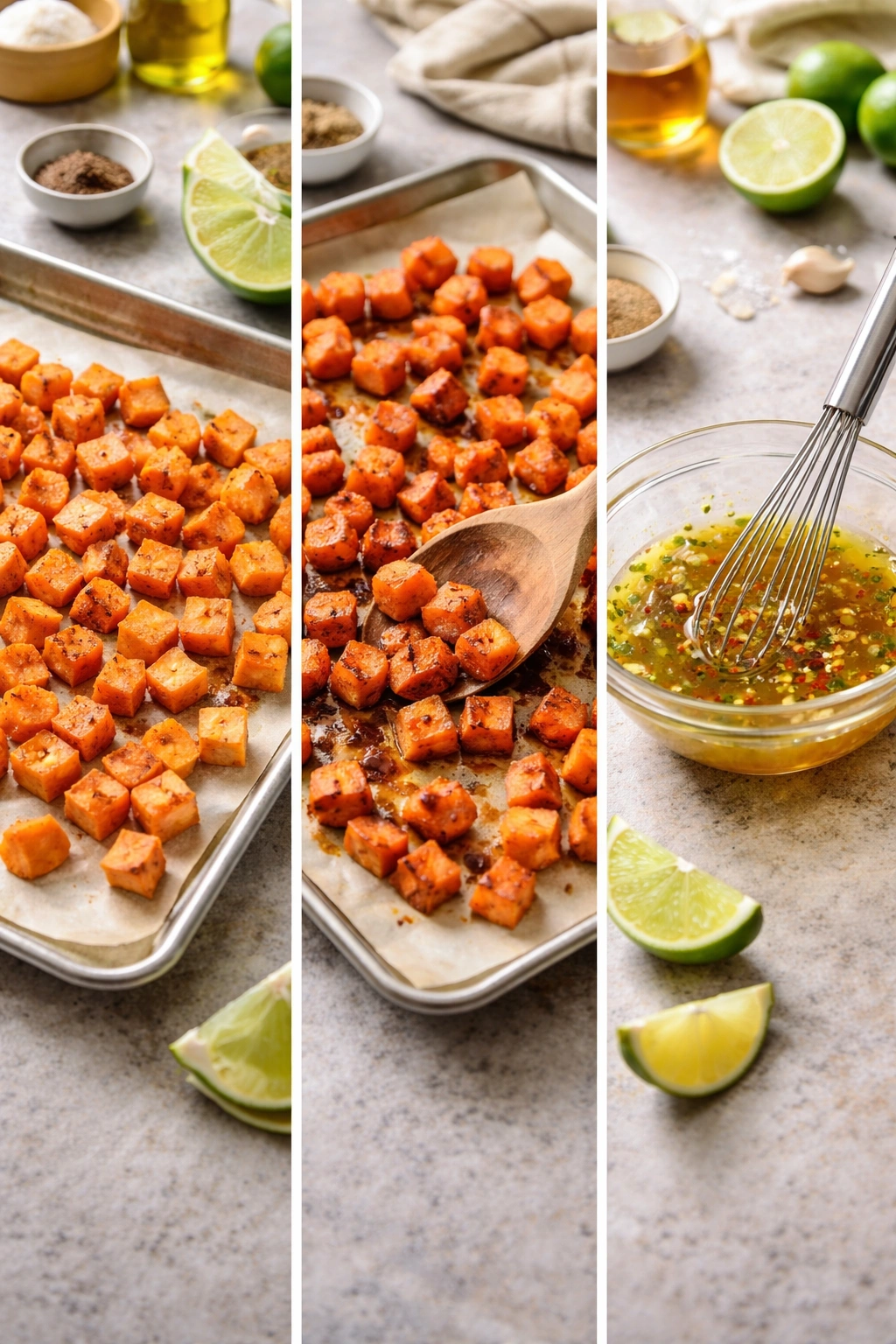
Prepare the Vegetables and Dressing:
-
Preheat the oven to 425°F (220°C) and position the rack in the center of the oven. Line a rimmed baking sheet with parchment paper if you like (optional, but it makes cleanup easier).
-
Peel the sweet potatoes and cut them into ½-inch cubes. You should have about 3 cups of cut potato. In a medium bowl, toss the cubes with 2 tablespoons of olive oil, 1 teaspoon of kosher salt, ½ teaspoon of black pepper, and ¼ teaspoon of cayenne or smoked paprika if using. Make sure every piece is coated with oil.
-
Spread the sweet potatoes on the prepared baking sheet in a single layer, leaving space between the pieces. Do not crowd the pan — crowded potatoes will steam rather than roast and won’t develop the crispy, caramelized edges that make them delicious.
-
Roast for 25 to 30 minutes, stirring halfway through the cooking time, until the potatoes are completely tender when pierced with a fork and the edges have darkened and caramelized, with some pieces showing light char marks. The potatoes are done when the edges look almost burnt — this is where the flavor is most concentrated.
-
While the potatoes are roasting, prepare the warm honey-lime dressing. In a small bowl or measuring cup, whisk together 3 tablespoons of extra-virgin olive oil, 2 tablespoons of fresh lime juice, 1 tablespoon of honey, 1 minced garlic clove, ½ teaspoon of Dijon mustard, ¼ teaspoon of kosher salt, and a pinch of black pepper. Taste and adjust the seasoning — you want a balance of tangy, sweet, and savory. The dressing should taste slightly too acidic and too salty when tasted alone because it will balance with the mild, tender kale. Set aside.
Prepare the Kale:
-
While the sweet potatoes are roasting, rinse the kale thoroughly under cool running water and pat it completely dry with paper towels. Wet kale won’t massage properly and will dilute the dressing.
-
Remove the tough central rib from each kale leaf by laying the leaf flat and slicing along both sides of the rib, or by holding the stem end and stripping the leaf away from it with your hand. Discard the ribs (or save for stock). Tear or chop the leaves into bite-sized pieces.
-
Place the torn kale in a large bowl and sprinkle with ¼ teaspoon of kosher salt. Using your hands, massage the kale firmly for 2 to 3 minutes, squeezing handfuls and working the leaves between your palms. You’ll see the leaves darken, wilt, and release some liquid. They should feel noticeably softer and more tender than when you started. The kale is ready when it’s significantly softened and released enough moisture that the leaves look damp.
Assemble the Salad:
-
Remove the roasted sweet potatoes from the oven and let them cool for 5 to 10 minutes. While they cool, add the sliced avocado, pepitas, crumbled feta cheese, sliced red onion, and fresh cilantro or parsley to the bowl with the massaged kale. Toss gently to combine.
-
Pour the warm honey-lime dressing over the kale mixture and toss until all the components are evenly coated. The warm dressing will slightly soften the kale further and meld the flavors together.
-
Add the cooled roasted sweet potatoes to the bowl and toss very gently — you want to mix everything together without breaking apart the avocado or crumbling the sweet potato pieces unnecessarily. Taste and adjust the seasoning with additional salt and pepper if needed.
-
Serve immediately while the sweet potatoes are still slightly warm and the contrast between warm and cool elements is most pronounced. The salad is delicious warm, at room temperature, or chilled.
Practical Tips and Common Mistakes to Avoid
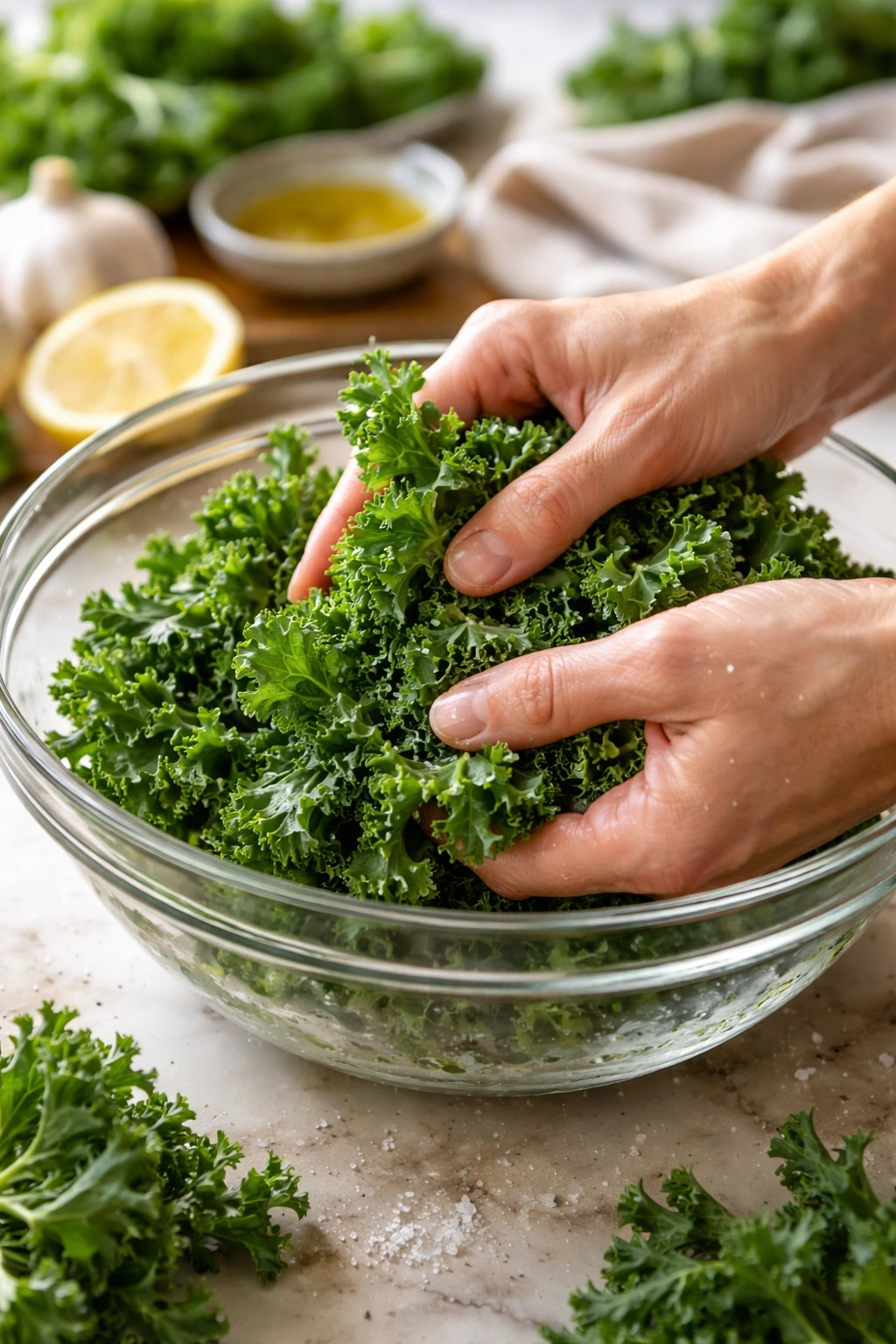
Don’t Skip the Kale Massage. Raw kale that hasn’t been massaged is tough and bitter in a way that most people don’t enjoy eating. The massaging step isn’t optional or fancy — it’s essential for a salad that’s actually pleasant to eat. Spend the full 2 to 3 minutes working the kale. Your hands will get tired before the kale is done.
Use Fresh Garlic in the Dressing. Powdered or jarred garlic is fine in many applications, but in a simple dressing like this, the garlic is one of the main flavor notes. Fresh garlic mashed into a paste works better than garlic powder, which can taste dusty. If you’re sensitive to raw garlic’s intensity, mince it very fine and let it sit in the lime juice for a few minutes before adding the oil — the acid will mellow it out slightly.
Don’t Slice the Avocado Too Far in Advance. Avocado oxidizes and turns brown when exposed to air, which looks unappetizing. Slice it right before you assemble the salad. If you need to prep in advance, cut the avocado in half, leave the pit in one half, wrap both halves tightly in plastic wrap, and refrigerate. Slice just before serving.
Get Creative with the Warm Dressing. The honey-lime dressing is warm because you’re using it while the sweet potatoes are still slightly warm from the oven. If the dressing has cooled by the time you’re ready to toss the salad, you can warm it gently in a small saucepan or microwave it for 10 to 15 seconds. It doesn’t need to be hot — just pleasantly warm. The warmth helps the flavors bloom and slightly wilts the kale even more, which is the whole appeal.
Don’t Overdress the Salad. This recipe makes enough dressing to coat the salad without it being soupy or pooling at the bottom of the bowl. If you like a saucier salad, you can add a bit more, but start with what’s here. You can always add more dressing, but you can’t take it out.
Roast the Sweet Potatoes with Enough Space. If the pieces are too close together on the pan, they release steam and become soft and mealy rather than crispy and caramelized. Use a large baking sheet and don’t overcrowd. If you’re making a larger batch, use two sheets.
Toast the Pepitas If They’ve Been Sitting. Store-bought pepitas are already dried, but toasting them briefly in a dry skillet over medium heat for 3 to 4 minutes brings out their nutty flavor and makes them crunchier. This step is optional but noticeably improves the salad. Watch them carefully so they don’t burn.
Add Protein If You Need More Staying Power. This salad is filling as written because of the fiber, fat, and natural sweetness. But if you want even more satiety, add a poached or fried egg on top, some grilled chicken, roasted chickpeas, or crumbled tempeh. A poached egg is my favorite addition — the warm yolk becomes a rich sauce for the whole salad.
Delicious Variations and Flavor Twists
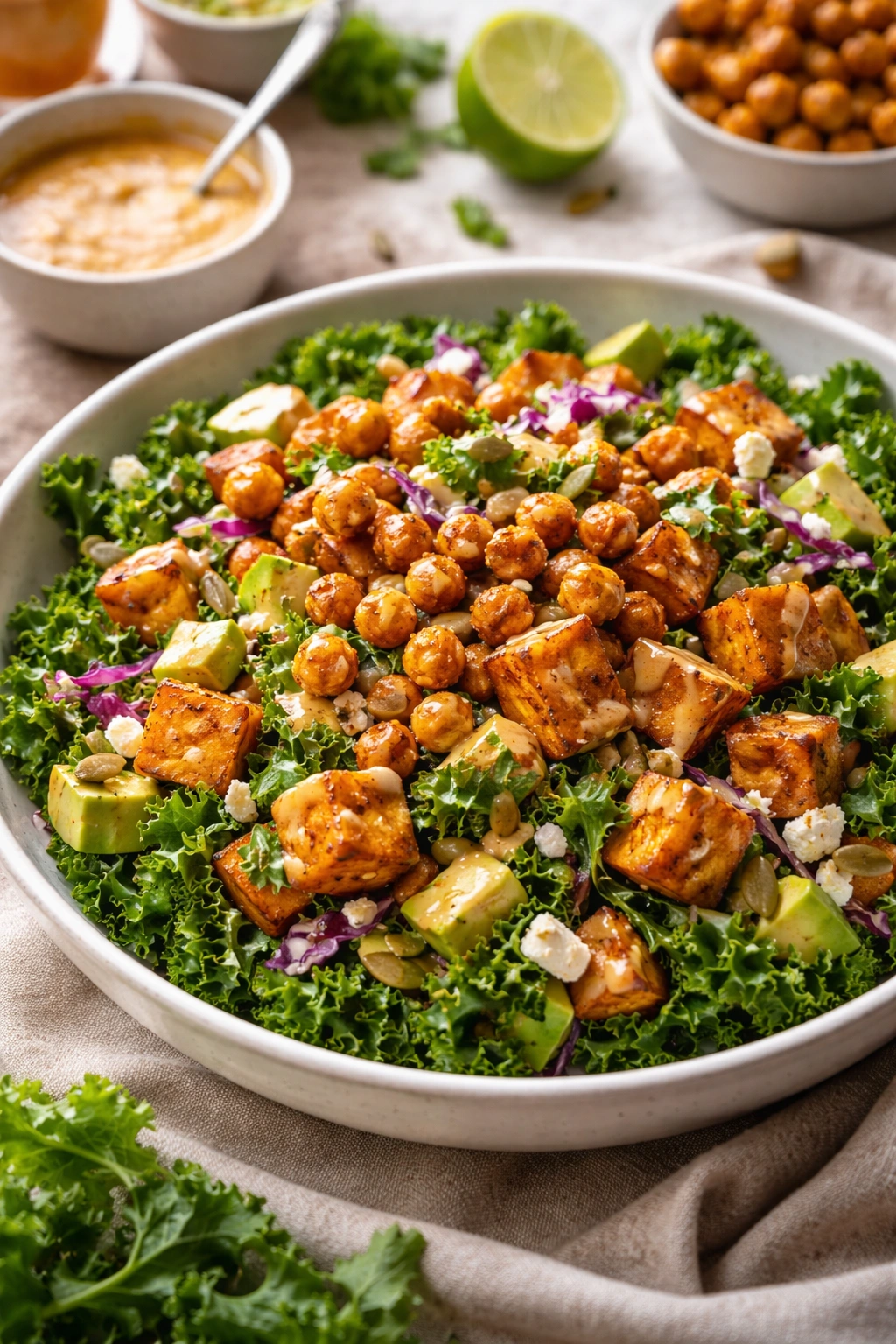
Spicy Version with Chipotle. Replace the honey-lime dressing with a chipotle-lime dressing by pulsing one canned chipotle in adobo sauce with ¼ cup of the plain dressing, then stirring it back into the rest of the dressing. Add a squeeze of lime juice and a touch more honey to balance the heat. This version is especially good with black beans mixed in instead of (or in addition to) the pepitas.
Roasted Chickpea Addition. Toss 1½ cups of cooked chickpeas with olive oil, smoked paprika, cumin, and a pinch of cayenne, then roast alongside the sweet potatoes for the last 20 minutes of cooking. The roasted chickpeas add crunch and protein and make the salad even more substantial. This takes it from a vegetable salad to a complete, protein-forward meal.
Warm Mustard Version. Swap the honey-lime dressing for a warm mustard vinaigrette by whisking together 3 tablespoons of olive oil, 2 tablespoons of apple cider vinegar, 1 tablespoon of whole grain mustard, ½ tablespoon of Dijon mustard, 1 minced garlic clove, ½ teaspoon of maple syrup, salt, and pepper. This version tastes earthier and less bright, which works especially well if you add roasted mushrooms and walnuts to the salad.
Sesame-Ginger Variation. Make a sesame-ginger dressing with 3 tablespoons of toasted sesame oil, 2 tablespoons of rice vinegar, 1 tablespoon of honey, 1 tablespoon of freshly grated ginger, 1 minced garlic clove, 1 teaspoon of Dijon mustard, and a pinch of red pepper flakes. Toss the salad with the dressing and top with sesame seeds, sliced green onions, and crispy chow mein noodles for crunch. Serve with sriracha on the side.
Roasted Beet and Walnut Version. Add roasted beets (tossed with the sweet potatoes, then removed before serving so they don’t stain everything) and substitute walnuts for the pepitas. Use a balsamic-maple dressing instead of the honey-lime version. The earthiness of roasted beets and walnuts creates a completely different flavor profile that feels more autumnal.
Mexican-Inspired Version with Black Beans and Cotija. Add 1 cup of cooked black beans (seasoned with cumin and a pinch of chili powder), use cotija cheese instead of feta, add ½ cup of corn kernels (fresh or frozen, thawed), and make a cilantro-lime dressing with cilantro instead of the fresh herb garnish. Top with a crispy tortilla strip or tortilla chip for crunch.
Storage, Make-Ahead, and Meal Prep Strategy
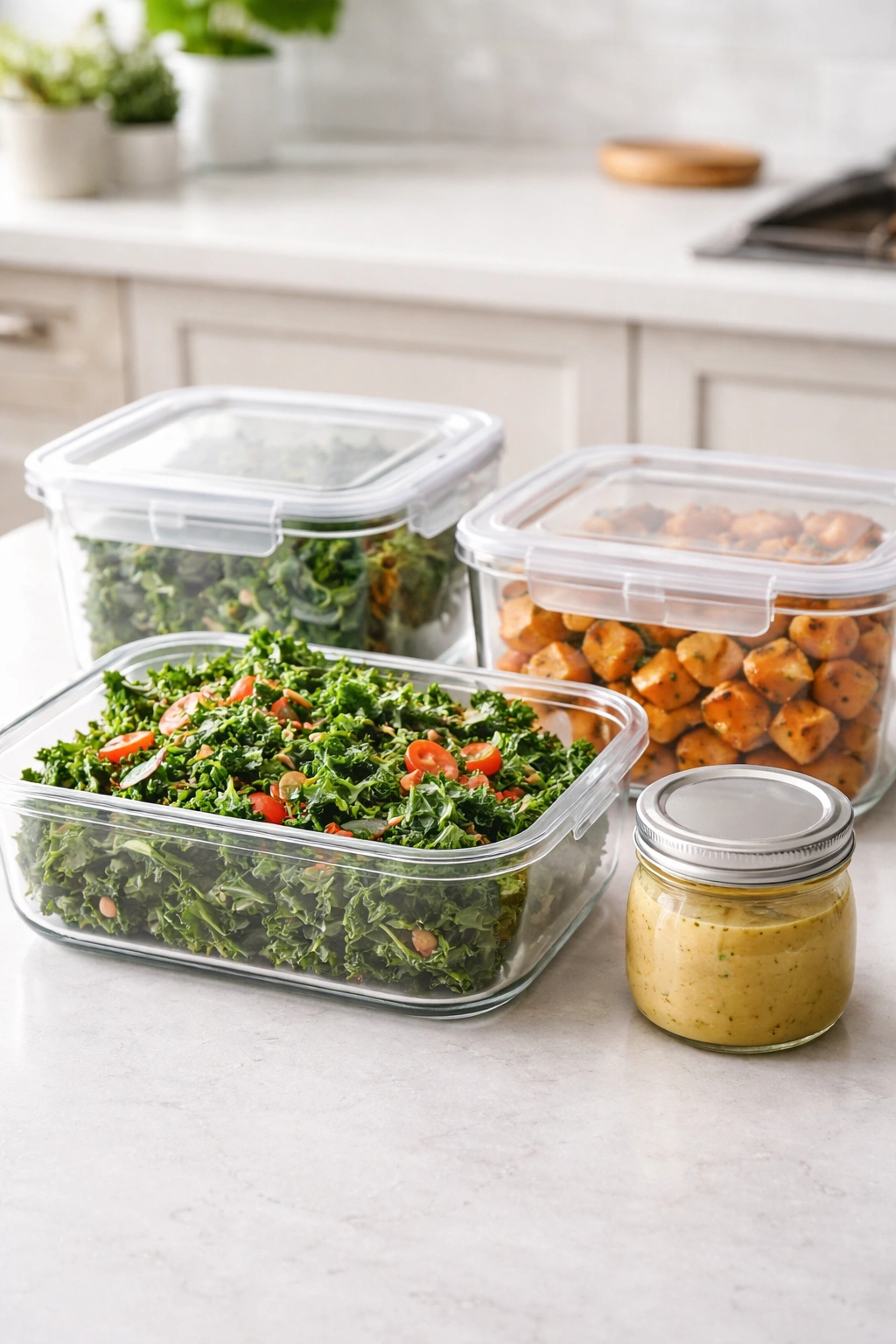
How to Store the Salad. If you have leftovers, store the components separately rather than mixed together. Keep the massaged kale in a sealed container, the roasted sweet potatoes in another, the avocado separate (wrapped in plastic wrap), and the dressing in a small jar. Stored this way, the salad will keep for 3 to 4 days. The kale will continue to soften and actually develops deeper flavor overnight, which many people prefer. When you’re ready to eat, assemble fresh and add the dressing just before serving.
If you must store the salad already assembled (which isn’t ideal but happens), use an airtight container and keep it refrigerated. It will last about 2 days before the kale becomes too soft and the avocado oxidizes. The dressing will soak into the kale, making it wetter but not necessarily less delicious.
Make-Ahead Strategy for Busy Weeks. This salad is excellent for meal prep because most components hold up beautifully in the fridge. On Sunday or whenever you have time, roast a big batch of sweet potatoes, wash and massage the kale, and store both separately. You can keep roasted pepitas in an airtight container for up to a week. The dressing can be made a few days ahead and stored in a jar in the fridge — just shake it before using because the oil and vinegar separate.
Each morning, assemble a portion by combining the kale, roasted sweet potatoes, pepitas, red onion, and cilantro. Add the avocado just before eating (or just before leaving for work if you’re eating at your desk — it will be fine for a few hours). Dress the salad and you have a fresh, delicious lunch in minutes.
Freezing Option (Limited). The roasted sweet potatoes freeze beautifully. Cool them completely, spread them on a baking sheet to freeze individually, then transfer to a freezer bag. They’ll keep for 2 to 3 months. Thaw overnight in the fridge or reheat gently on a baking sheet in a 350°F (175°C) oven for 10 to 15 minutes until warm. Don’t freeze the raw kale (it becomes a sad mush when thawed) or the avocado (same issue). The pepitas don’t need freezing because they last weeks at room temperature.
How to Reheat. If the salad has been refrigerated, you can eat it cold as-is, or reheat the sweet potato component by spreading it on a baking sheet and warming it in a 350°F (175°C) oven for about 10 minutes. The contrast between warm sweet potato and cool kale is actually the most pleasant way to eat this salad.
Serving Suggestions and Pairing Ideas
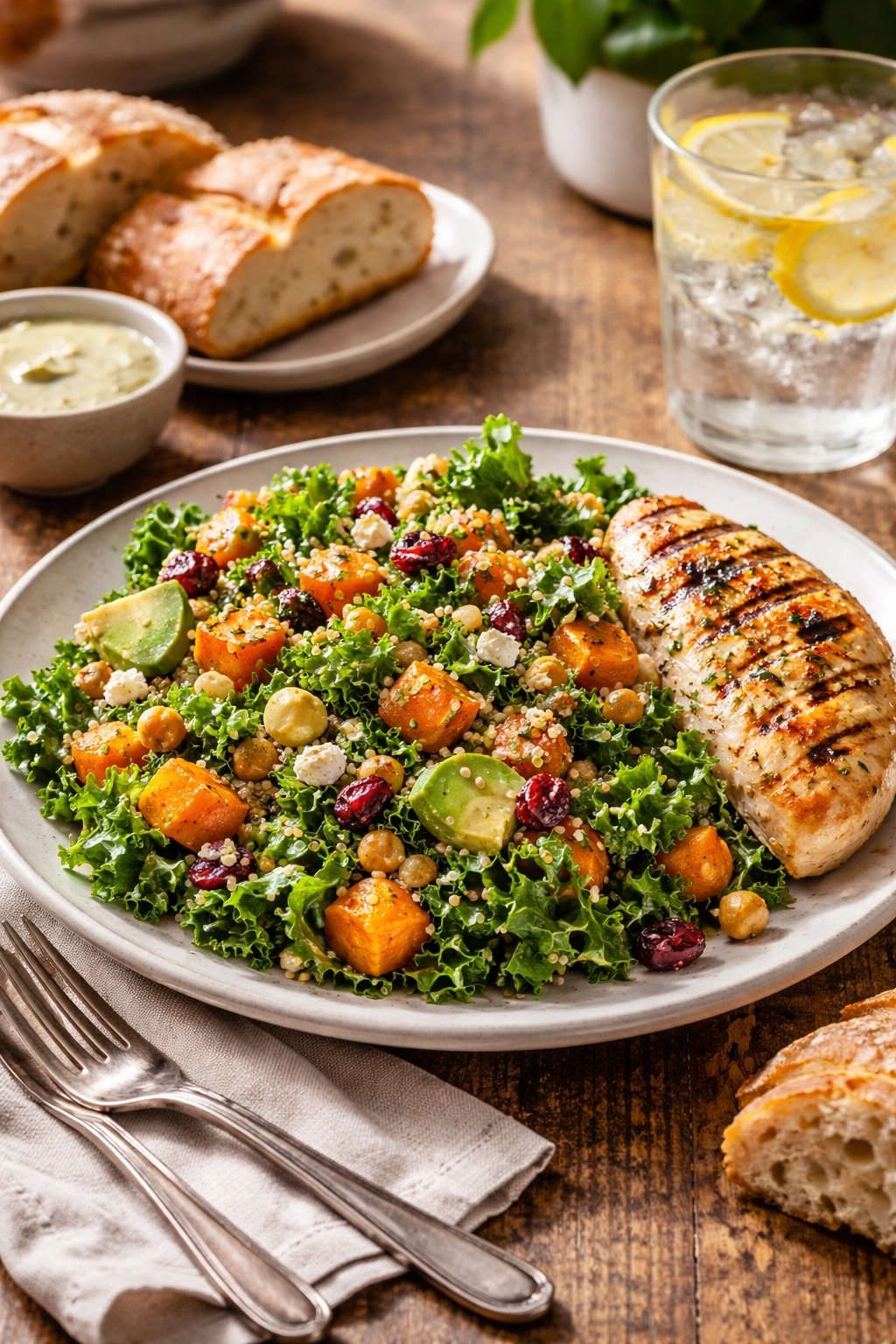
This salad works beautifully as a standalone lunch — it’s complete enough to need nothing else. But if you want to build a whole meal around it, here are some pairings that work well.
As a Side to Grilled Protein. Serve this salad alongside grilled chicken breast, roasted salmon, or a grilled steak. The bright, acidic dressing cuts through the richness of the protein, and the tender kale and roasted sweet potato add substance and color to the plate. This combination makes an impressive dinner, not just a lunch.
With Warm Bread. A slice of crusty sourdough or whole grain bread alongside the salad is perfect for soaking up the dregs of the dressing at the bottom of the bowl. Some people crumble the bread into the salad itself for added texture and substance.
With a Tangy Beverage. The slight sweetness of the sweet potato and the warm, rounded flavors of the dressing pair well with drinks that have acidity or bitterness. Iced tea with lemon or lime works beautifully. If you’re having this for dinner, try a crisp white wine (like a Sauvignon Blanc) or a light, hoppy beer.
With a Creamy Dairy Addition. A dollop of Greek yogurt, a poached egg, or a handful of crumbled goat cheese on top adds creaminess and makes the salad feel more decadent. If you want something warm and comforting, try a fried egg with a crispy yolk that becomes a sauce.
Cold, as a Picnic Salad. This salad travels beautifully. Pack it in a container with the components separate and dress it just before eating. It’s hearty enough to be the main event at a picnic, and the flavors are complex enough that it doesn’t feel boring even as a packed lunch.
Topped with Crispy Elements. Croutons, toasted nuts, crispy chickpeas, tortilla strips, or fried onions on top add crunch and make the salad feel more restaurant-quality. Toss them on just before eating so they stay crispy.
Final Thoughts
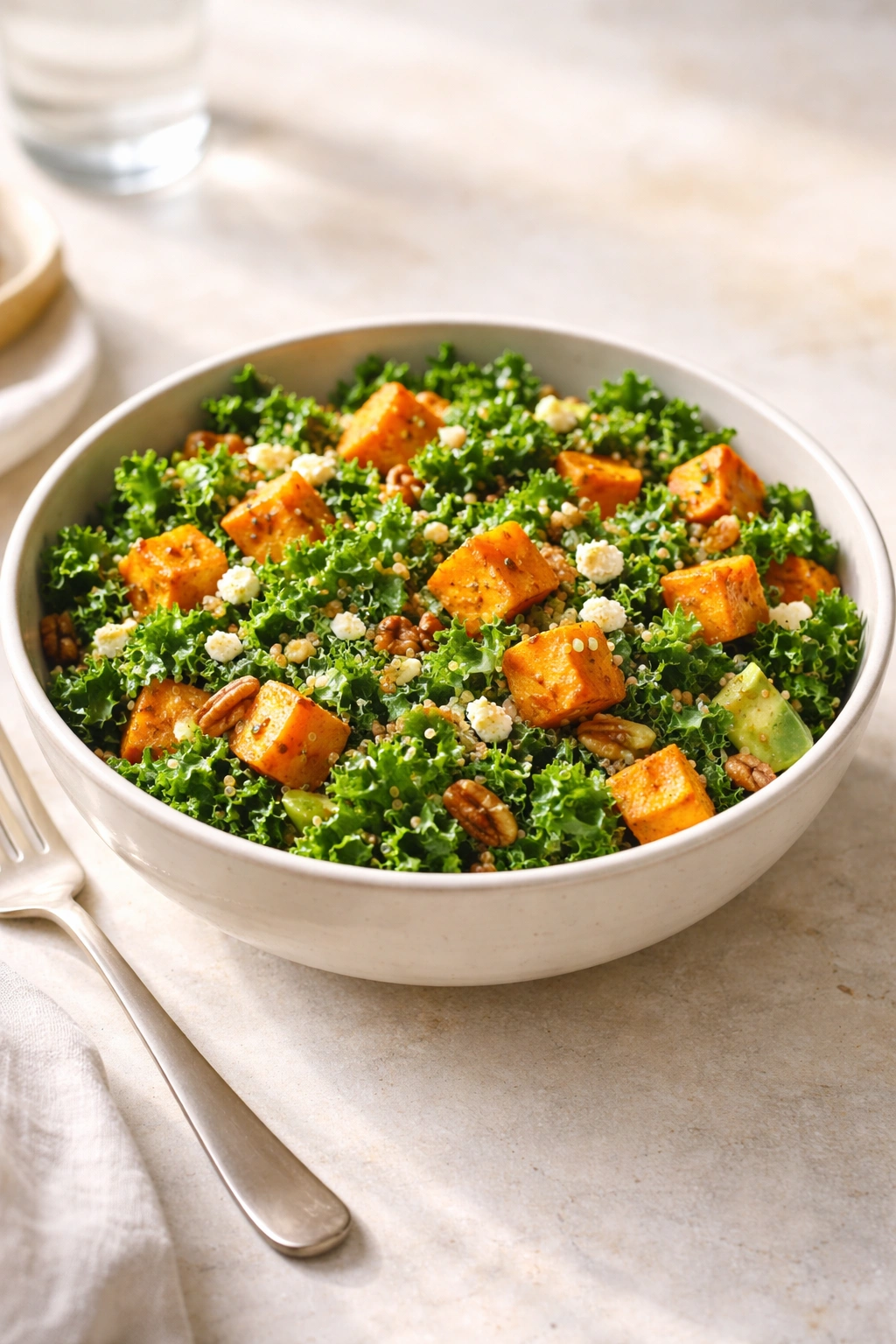
A great lunch salad does what this one does — it satisfies you completely without making you feel heavy, it tastes delicious enough that you actually enjoy eating it, and it’s sturdy enough to hold together whether you’re eating it fresh or from a container hours later. The kale and sweet potato combination is forgiving, flexible, and endlessly adaptable. You can add protein, swap in different vegetables, change the dressing, and the core recipe still works beautifully every single time.
The most important part of making this salad successfully is not overthinking it. Massage the kale until it’s tender, roast the sweet potatoes until they’re caramelized, make the dressing with fresh garlic and lime juice, and assemble the whole thing while the potatoes are still slightly warm. The rest is just vegetables and good judgment. Once you’ve made it once, you’ll have the confidence to make it exactly the way you prefer, adding more of what you love and adjusting what you don’t. This is the kind of salad that becomes a signature lunch, the one you make over and over because it just works.
