



If you’ve ever wondered why restaurant tzatziki tastes so bright, cool, and impossibly creamy while the homemade version sometimes falls flat or separates awkwardly, the answer usually comes down to one thing: technique, not time. This Greek yogurt-and-cucumber sauce shouldn’t need complicated steps or fancy equipment to come together beautifully, and honestly, it doesn’t. You can have restaurant-quality tzatziki ready in under 15 minutes—but only if you know exactly what matters and what doesn’t.
The secret isn’t rushing through the process carelessly. It’s understanding which shortcuts actually work and which ones sabotage the final result. Most people either over-complicate tzatziki by sweating cucumbers for an hour or dial it back so far that the sauce turns watery and bland within hours. The middle path—where this sauce comes together quickly and stays creamy and flavorful—is where the real magic lives.
What you’re about to learn is how to nail tzatziki every single time with minimal fuss. You’ll understand why certain steps matter and others are optional, how to fix it if something goes wrong, and how to make it taste even better with just a tiny tweak here and there. By the time you’ve made this a few times, you won’t need a recipe anymore—you’ll just understand tzatziki deeply enough to improvise with confidence.
Why This Version Comes Together So Quickly
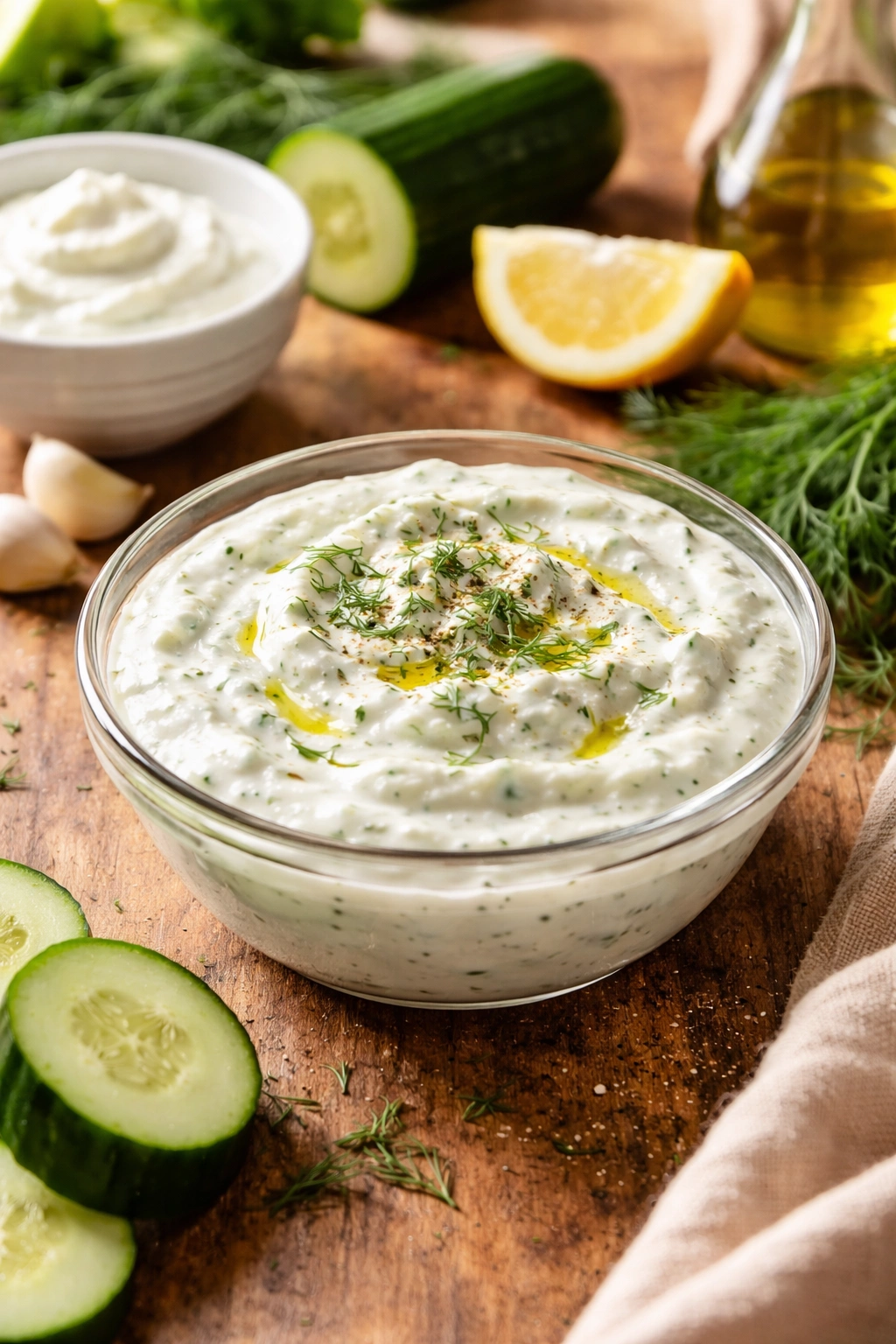
Traditional tzatziki recipes often call for salting cucumber slices and letting them sit for 30 to 60 minutes to release their liquid. The logic makes sense: remove excess moisture, and the sauce won’t get watery. But here’s what restaurants know that home cooks sometimes miss: salting and draining cucumber does help, but you don’t need to treat it like a meditation practice. A quick salt-and-drain method cuts the time to just five minutes without sacrificing any of the structural integrity of the final sauce.
The speed comes from three deliberate choices working together. First, you’re selecting the right type of cucumber—English cucumbers or hothouse varieties are naturally drier and have fewer seeds than regular slicing cucumbers, which means less liquid to deal with. Second, you’re using Greek yogurt that’s already thick and creamy, so you don’t need to drain it first. And third, you’re seasoning generously with salt and acid (lemon juice and vinegar), which means the sauce tastes bold and complex even when made fast.
Most home cooks assume tzatziki needs to sit overnight to taste good. The truth is, properly made tzatziki tastes excellent immediately, though it does deepen slightly after a few hours in the fridge. You can absolutely serve it right away and get all the flavor you’re after.
The Ingredient Story Behind Perfect Tzatziki
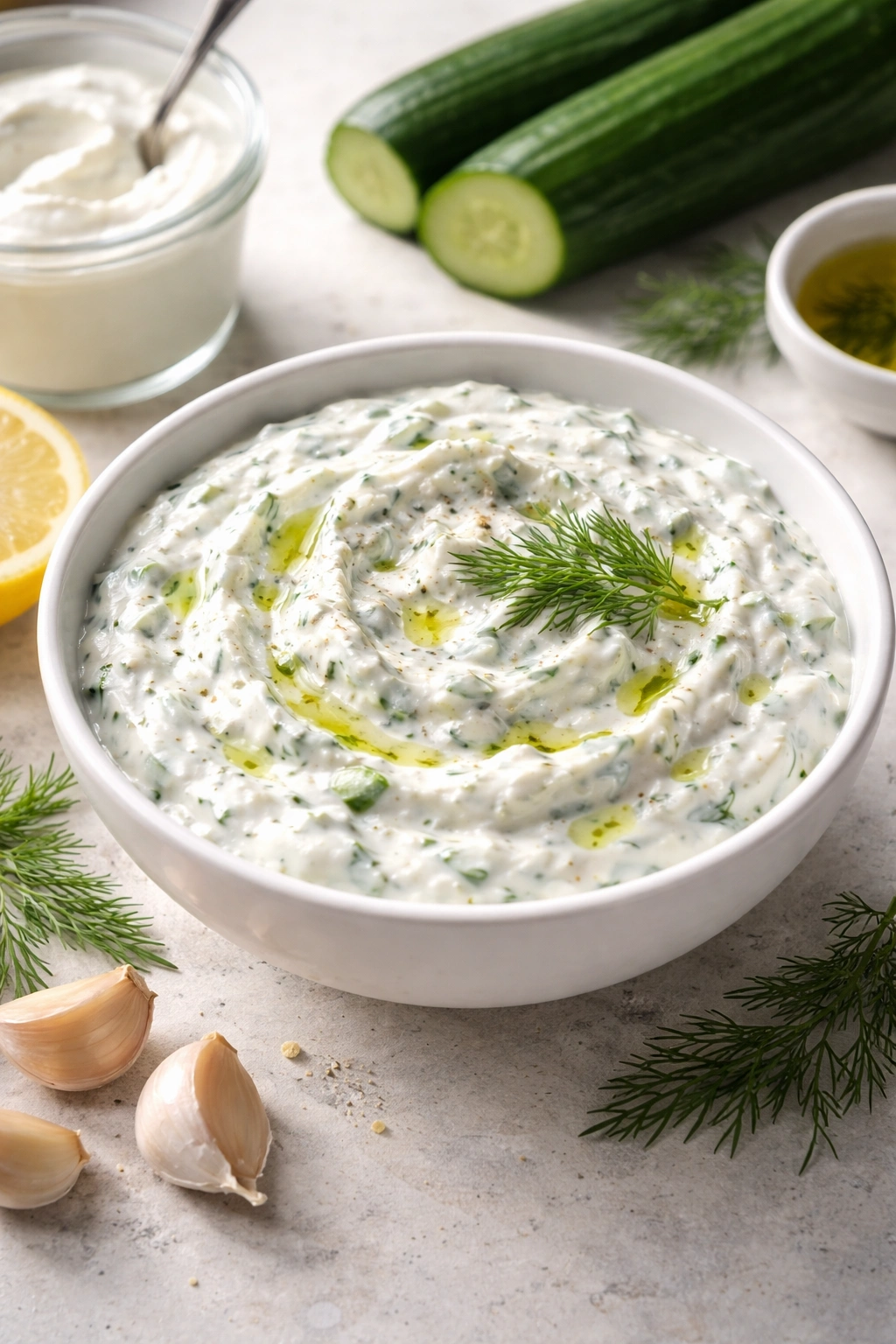
Greek yogurt is the foundation of this sauce, and it deserves respect. Not all Greek yogurt is created equal—and this matters more than you might think. Full-fat Greek yogurt tastes richer, stays creamier, and holds together better than non-fat or even low-fat versions. If you’re using non-fat yogurt, the sauce will taste sour and thin, and you’ll spend extra time trying to save it with more seasoning. Full-fat yogurt is actually the easier choice, not the indulgent one.
The cucumber choice makes a real difference in how quickly you can get to the table. English cucumbers, sometimes called hothouse cucumbers, are long and thin with very thin skin and tiny seeds. Regular slicing cucumbers are chunkier and contain way more liquid-filled seeds. If you can only find regular cucumbers, just use them—they’ll work fine—but expect the sauce to be slightly more watery unless you drain the cucumber a bit longer. It’s a trade-off in convenience, not quality.
Garlic brings sharpness and depth. Fresh garlic tastes brighter than jarred, but jarred works in a pinch if the garlic cloves are still soft inside the jar. Never use garlic powder in tzatziki—it tastes stale and one-dimensional, nothing like fresh garlic’s living complexity. If you’re making this for a crowd and don’t want garlic breath on everyone, you can reduce the garlic amount, but don’t skip it entirely. It’s what prevents the sauce from tasting like plain yogurt with cucumber in it.
Dill is the herb that makes tzatziki distinctly Greek. Fresh dill, absolutely. Dried dill can work in an emergency, but the flavor is muted and dusty compared to fresh. If you have fresh dill, this sauce transforms into something special. The bright, slightly licorice-forward notes of fresh dill are what people remember when they eat tzatziki.
Lemon juice and white vinegar together create the acid that balances the richness of yogurt and brings out all the subtle flavors. Lemon alone tastes sharp and citrusy. Vinegar alone tastes a bit harsh. Together, they create a rounded acidity that feels sophisticated. This combination is also why the sauce tastes good immediately—the acid does heavy lifting on flavor.
Yield, Prep Time, and Difficulty Level
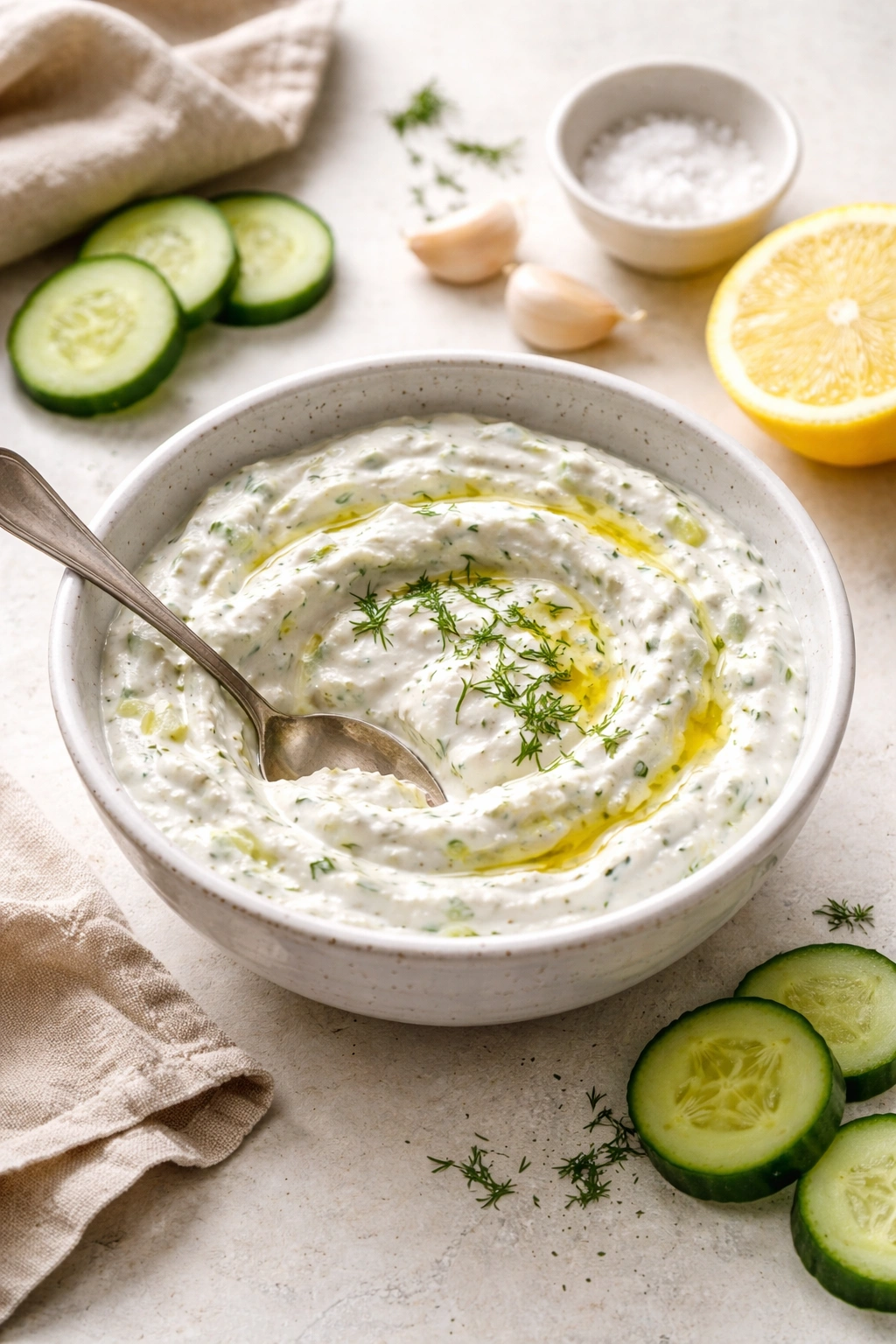
Yield: Makes about 2 cups (serves 6 to 8 as a condiment or appetizer sauce)
Prep Time: 10 minutes (hands-on active time only—no waiting required)
Cook Time: 0 minutes (this is a no-cook sauce)
Total Time: 10 minutes
Difficulty: Beginner — This sauce requires no cooking skills, no special equipment beyond what most kitchens have, and forgives small measurement mistakes. Even if you’ve never made tzatziki before, you’ll succeed on the first try.
Best Served: Immediately at room temperature, or chilled for at least 30 minutes for a cooler, more refreshing sauce. The flavor actually deepens and mellows slightly if made 4 to 6 hours ahead, which makes this perfect for meal prep.
Complete Ingredient List
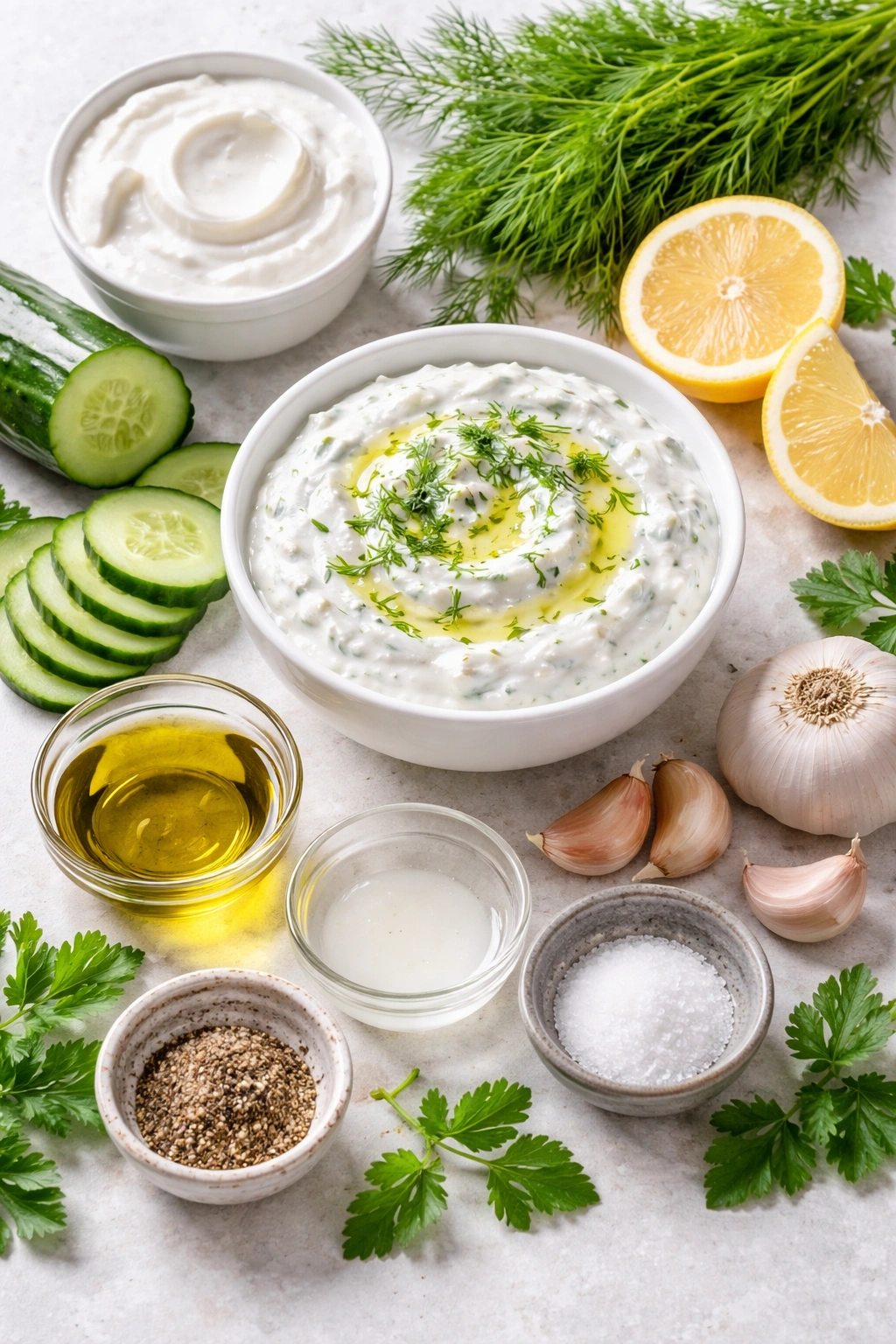
For the Sauce:
- 2 cups (16 ounces) full-fat Greek yogurt, at room temperature
- 1 English cucumber (about 12 inches long), or 1½ regular slicing cucumbers
- ½ teaspoon fine sea salt (for salting the cucumber)
- 3 cloves fresh garlic, minced very finely
- 3 tablespoons fresh dill, finely chopped (or 1½ teaspoons dried dill if fresh is unavailable)
- 2 tablespoons fresh lemon juice (from about ½ a lemon)
- 1 tablespoon white vinegar (distilled white vinegar works perfectly)
- ¼ teaspoon black pepper, freshly ground if possible
- ⅛ teaspoon cayenne pepper (optional, for a subtle warmth — omit if you prefer no heat)
- Pinch of fine sea salt, to taste (for final seasoning)
Optional Add-Ins for Extra Flavor:
- 1 tablespoon extra-virgin olive oil (drizzled on top before serving, for richness)
- 1 teaspoon fresh mint, finely chopped (adds brightness and complexity)
- ¼ teaspoon ground cumin (a pinch of this adds an earthy warmth that’s very Greek)
Step-by-Step Instructions
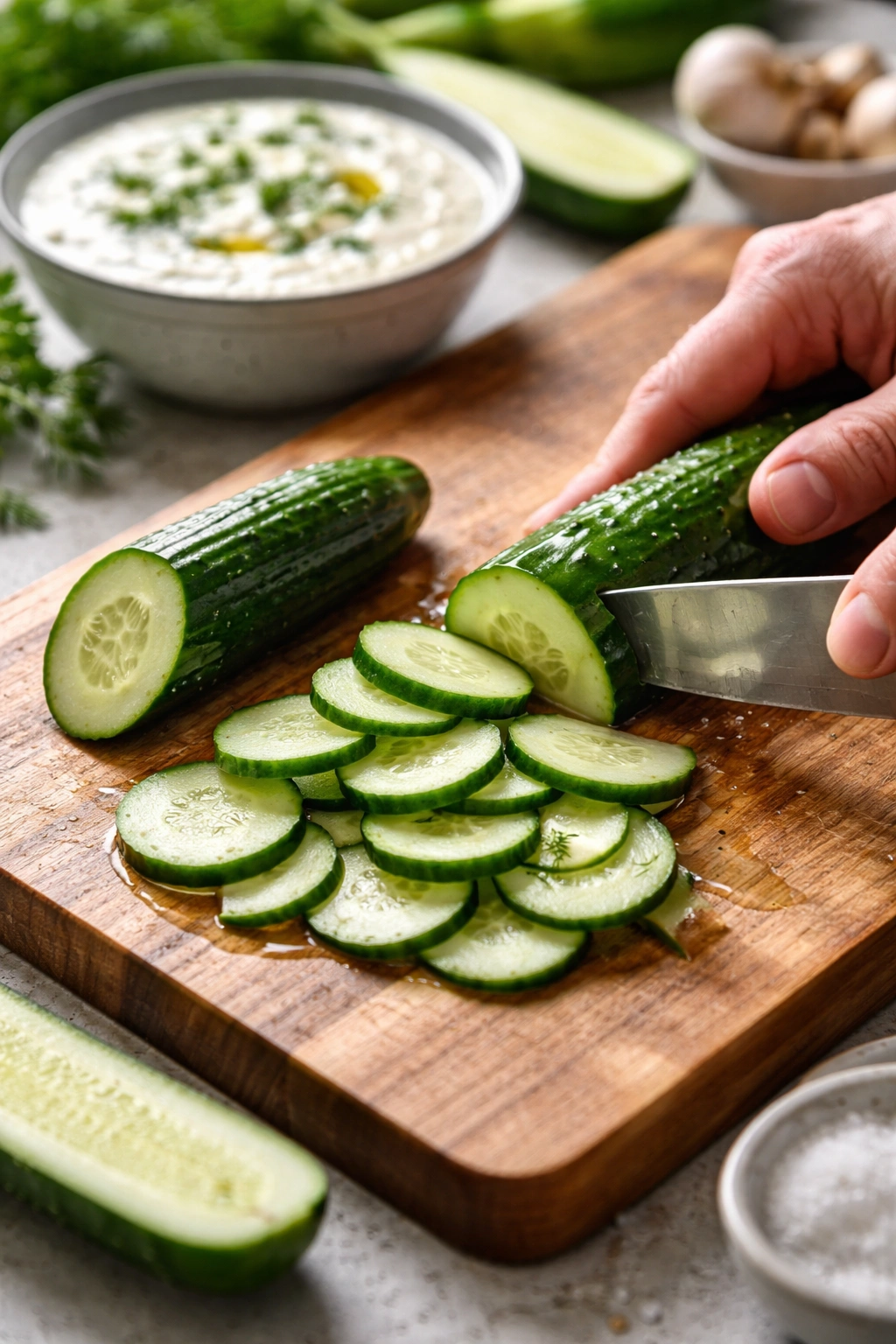
Prepare the Cucumber:
-
Wash the English cucumber under cool running water and pat it completely dry with a clean kitchen towel. If you’re using regular slicing cucumbers, wash and dry them the same way. Dry cucumber is essential—water on the surface gets trapped in the sauce.
-
Cut the cucumber in half lengthwise, then use a small spoon to scrape out the seedy center core if you’re using a regular slicing cucumber (this step matters only for regular cucumbers, which have large watery seed pockets). English cucumbers have such tiny seeds that you can skip this step entirely.
-
Cut the cucumber into chunks roughly 1 inch across, then transfer them to a fine-mesh strainer or colander placed over a bowl. Sprinkle with the ½ teaspoon of salt and toss gently to distribute. Let this sit for exactly 5 minutes—this draws out excess moisture without making the cucumber limp.
-
After 5 minutes, use the back of a wooden spoon to press the cucumber gently against the sides of the strainer, releasing the accumulated liquid. You’ll see a small pool of cucumber liquid in the bowl below. Discard this liquid. Do not skip the pressing step—this is where you remove the moisture that would otherwise water down your sauce.
Make the Sauce:
-
Transfer the drained cucumber to a cutting board and chop it finely. You want it in small pieces roughly ¼ inch across, not in a fine mush. Some light texture in the final sauce is part of its appeal.
-
Pour the Greek yogurt into a medium bowl. Stir it briefly with a spoon to loosen it slightly—Greek yogurt straight from the container is sometimes quite thick and needs a moment to become spoonable.
-
Add the minced garlic to the yogurt. Stir it in thoroughly so the garlic is evenly distributed. At this point, you can smell the raw garlic—don’t worry, it mellows and integrates as the sauce sits.
-
Add the chopped dill, lemon juice, white vinegar, black pepper, and cayenne (if using) to the yogurt. Stir everything together until the sauce is smooth and evenly combined. The sauce should look creamy and uniform in color, with just flecks of green dill throughout.
-
Gently fold the drained cucumber pieces into the yogurt mixture using a rubber spatula, folding just until the cucumber is evenly distributed. Do not overmix or vigorously stir—you want to keep the sauce creamy and smooth, not break it down into a chunky mess.
Advertisements -
Taste the sauce and adjust the seasoning. Add a pinch more salt if it tastes flat, a squeeze more lemon juice if it needs brightness, or a pinch more dill if the herb flavor isn’t singing. Taste as you go, adding small amounts. You’re aiming for a sauce that tastes bold and balanced, not bland or aggressively salty.
Finishing Touches:
-
If you’re serving immediately, transfer to a serving bowl. If you prefer chilled tzatziki, cover the bowl with plastic wrap and refrigerate for at least 30 minutes before serving. The sauce will thicken slightly as it chills.
-
Just before serving, drizzle with a small amount of extra-virgin olive oil and scatter a tiny pinch of dried oregano or paprika on top if you’d like a restaurant-style presentation. This is optional—the sauce is perfect without it—but it does add a beautiful visual touch.
Common Mistakes That Ruin Tzatziki and How to Fix Them
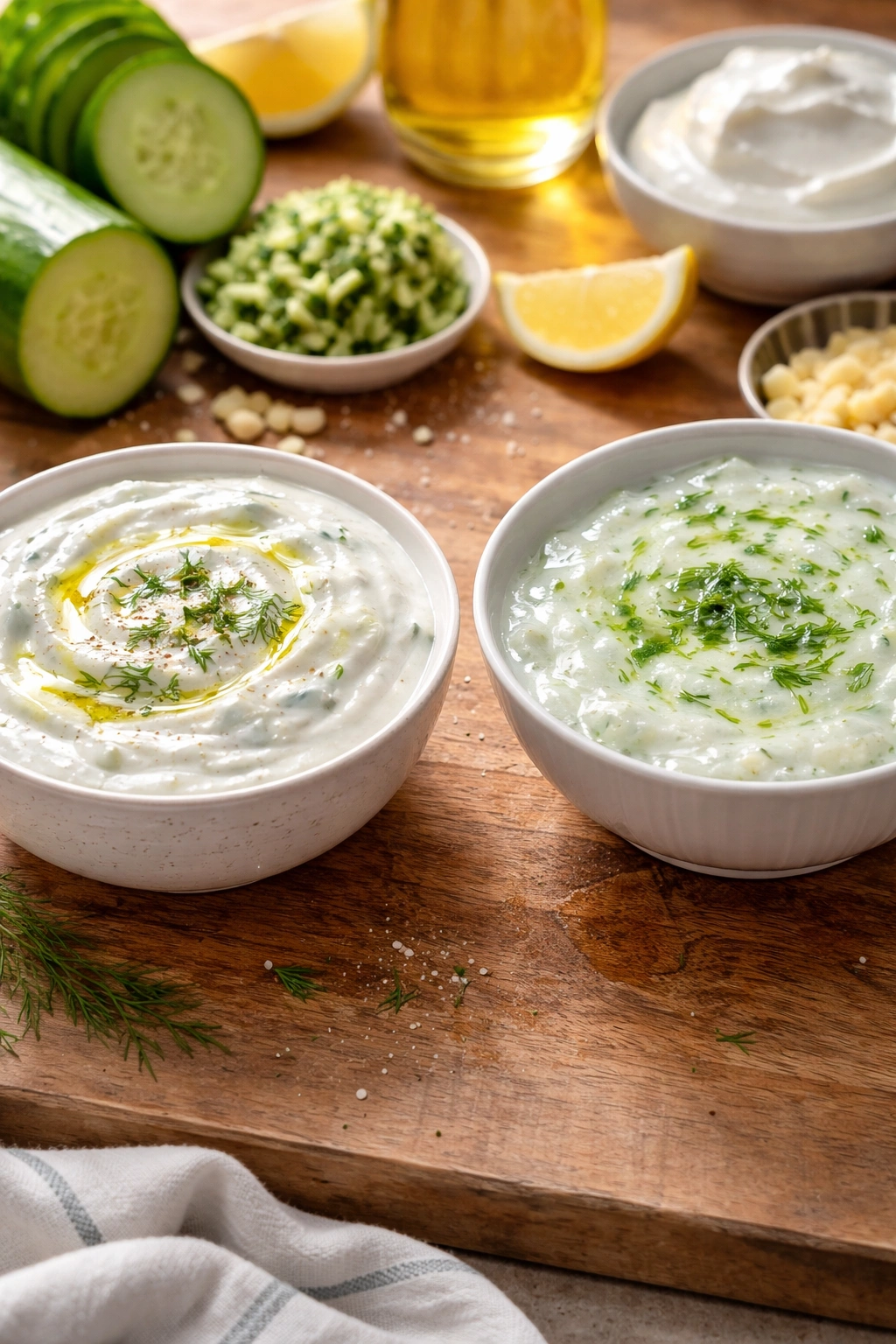
The most frequent mistake is using non-fat or low-fat yogurt, which makes the sauce taste sour and thin. The second most frequent is not draining the cucumber adequately, which results in a watery sauce that gets thinner over time. Both of these are easy to prevent—just follow the recipe as written. If you find yourself with watery tzatziki, the fix is simple: stir in a few extra spoonfuls of Greek yogurt to thicken it back up.
Over-mincing the garlic is another common problem. When garlic is reduced to a paste or juice, it becomes aggressively sharp and overpowering. The solution is to mince it into small but distinct pieces. When you chew a piece of properly minced garlic, it should taste peppery and warming, not raw and harsh. If you’ve already made the sauce and the garlic is overwhelming, a squeeze of lemon juice or a spoonful more of yogurt helps mellow it out.
Some people make the mistake of using dried dill straight from a container that’s been sitting in the cupboard for two years. Old dried dill tastes like grass clippings, not like the green freshness of dill. If you’re using dried dill, buy a fresh container—it should still be bright green and fragrant when you open it. Fresh dill from the produce section is always worth the extra dollar or two.
Adding the ingredients and then blending or food-processing the sauce turns it into a thin, smooth puree that lacks texture. Tzatziki should have some body to it—tiny pieces of cucumber and visible flecks of dill—not look like you ran it through a blender. Keep the texture slightly chunky by hand-mixing and hand-chopping all the ingredients.
Finally, some people make the mistake of over-seasoning too early. Salt intensifies in the fridge as things sit, so if your sauce tastes perfect when you make it, it might taste salty after a few hours. Taste it before serving, not right after making it, and adjust the salt then if needed.
Pro Tips for Perfect Tzatziki Every Time
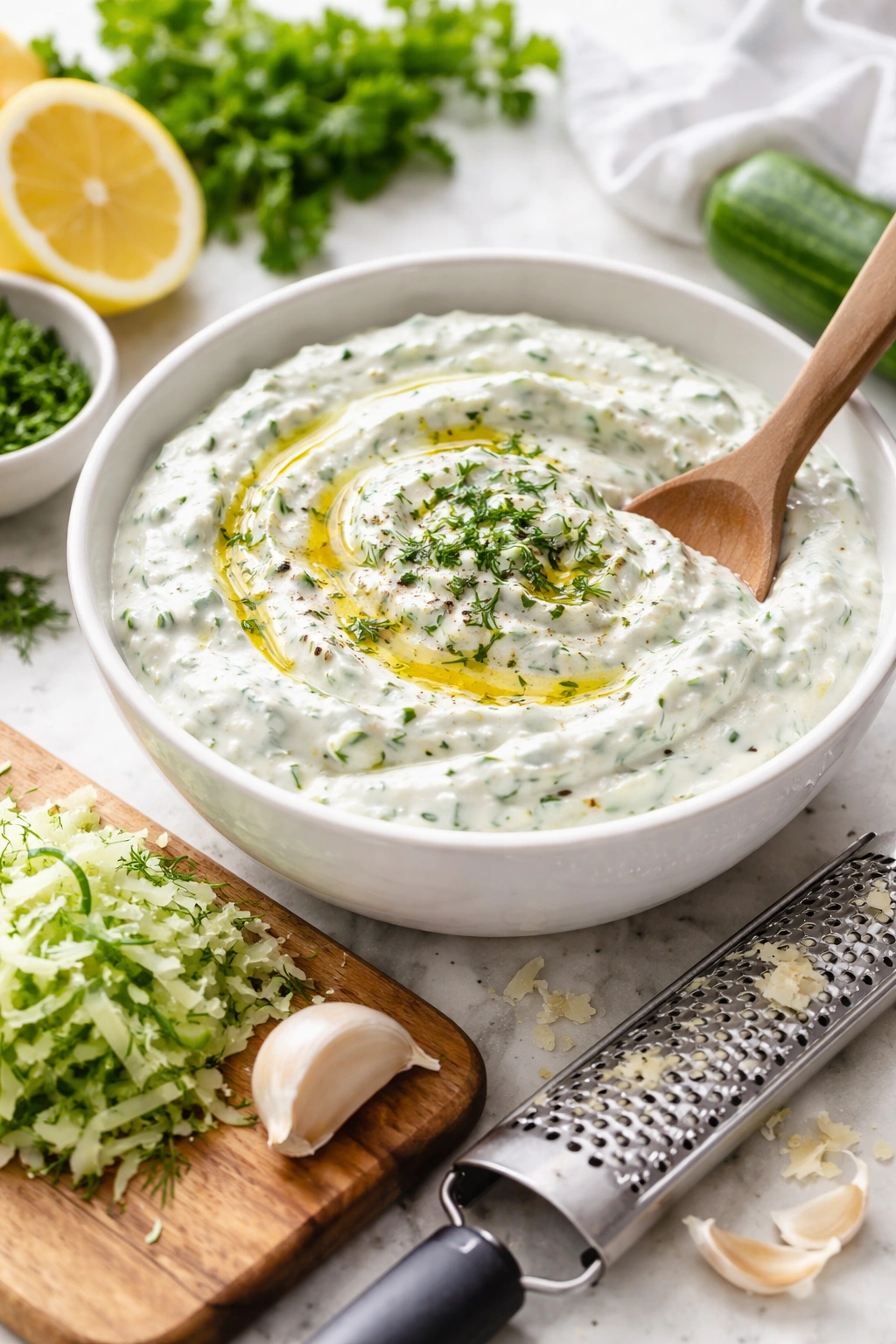
Temperature matters more than people realize. Greek yogurt straight from the fridge feels thick and cold, which can make it harder to stir smoothly. Letting the yogurt sit on the counter for 15 to 20 minutes before you start (while you’re prepping the cucumber) makes it looser and easier to work with. You don’t need to warm it—just take the chill off slightly.
If you want the sauce to taste more prominent and less subtly flavored, make it with hot-climate herbs and spices. Add a pinch of ground cumin, a whisper of paprika, and maybe a few torn leaves of fresh mint. These ingredients are very Greek and take the sauce from simple to restaurant-quality in seconds. You’re not adding much—just enough to create depth and complexity.
The garlic flavor intensifies as the sauce sits, so when you’re first tasting and adjusting, dial back the garlic slightly compared to what you think you want. After an hour in the fridge, it will taste more garlicky than when you made it. This is especially true if you’re making tzatziki several hours ahead.
Using a microplane grater instead of mincing garlic creates something between minced and paste—the garlic disperses more evenly through the sauce, and the flavor is less aggressive. If you have a microplane, try grating the garlic directly into the yogurt. The result is a sauce with more subtle, integrated garlic flavor.
Lemon juice’s flavor fades slightly over time, so if you’re making tzatziki several hours ahead, you might want to add the lemon juice about 30 minutes before serving rather than when you make it. This keeps the sauce tasting bright right up until you serve it. Alternatively, just taste it before serving and add a squeeze more if the lemon flavor has faded.
Flavor Variations You Can Make
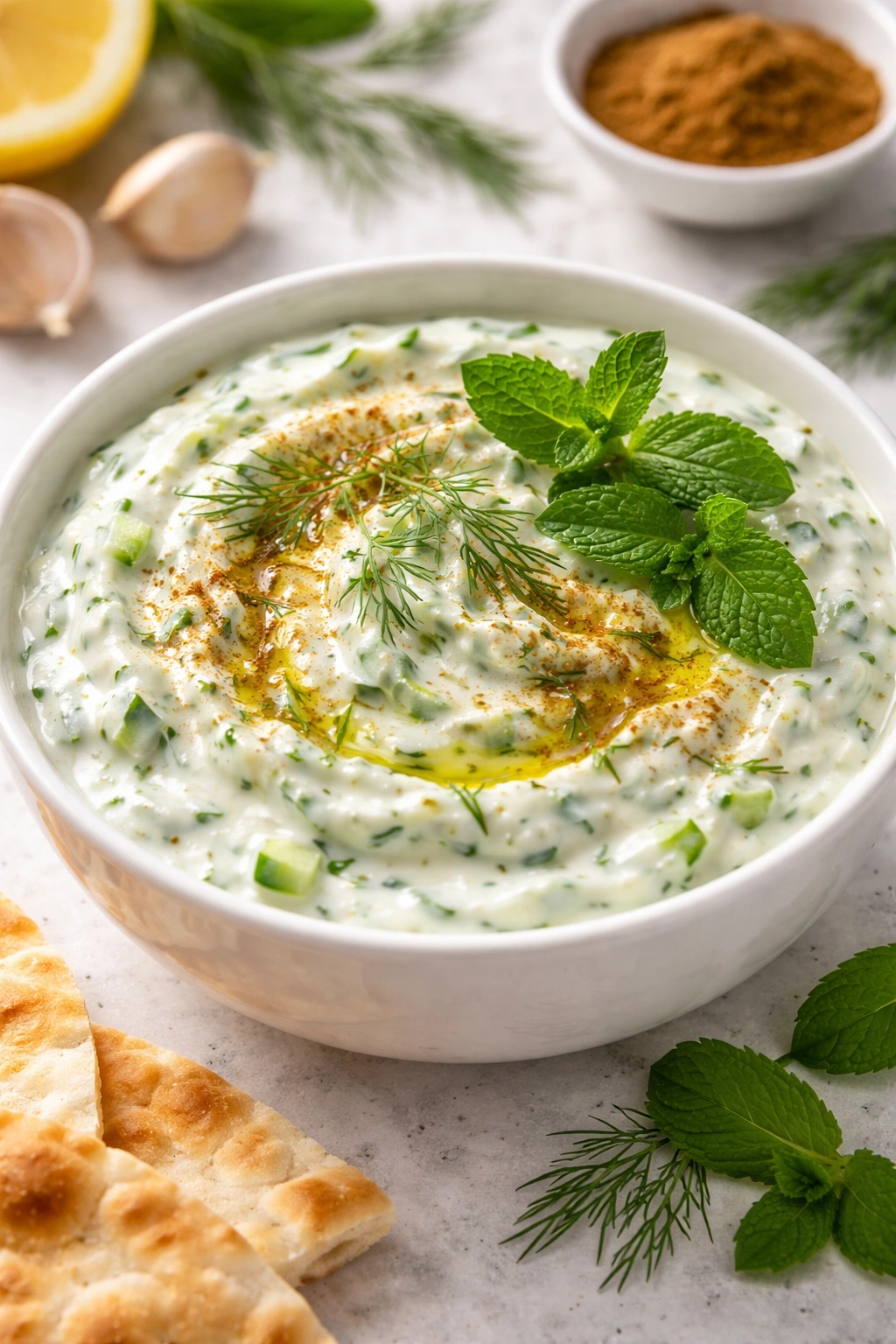
Tzatziki with Mint and Cumin: Follow the base recipe, but add 1 teaspoon of ground cumin and 1 tablespoon of fresh mint chopped fine along with the dill. The cumin adds an earthy warmth while the mint brings brightness. This version is spectacular with grilled meats and roasted vegetables.
Spicy Tzatziki: Increase the cayenne pepper from ⅛ teaspoon to ¼ teaspoon, or add a pinch of red pepper flakes. You can also mince a fresh jalapeño (seeds removed if you don’t want intense heat) and add it along with the garlic. This version wakes up sandwiches and works beautifully with crispy fried vegetables.
Herb-Forward Tzatziki: If you love fresh herbs, increase the dill to 4 tablespoons and add 1 tablespoon of fresh parsley and ½ teaspoon of fresh tarragon. The result is herbier and more complex, with subtle anise notes from the tarragon that are surprisingly sophisticated.
Cucumber and Fennel Tzatziki: Along with the cucumber, add ½ cup of finely minced fresh fennel bulb. The fennel adds a subtle licorice sweetness that’s delicate and unexpected. This version is beautiful with seafood and light summer meals.
Smoky Tzatziki: Reduce the cayenne and add ¼ teaspoon of smoked paprika instead. The smoke flavor is subtle but distinctive, adding depth without heat. This version pairs beautifully with grilled chicken and vegetables.
Make-Ahead Tip: All of these variations work well if made 4 to 6 hours ahead. The flavors mellow and integrate as the sauce sits. If you’re making it more than a day ahead, cover it tightly so it doesn’t absorb flavors from the fridge.
Storage and Make-Ahead Guidance
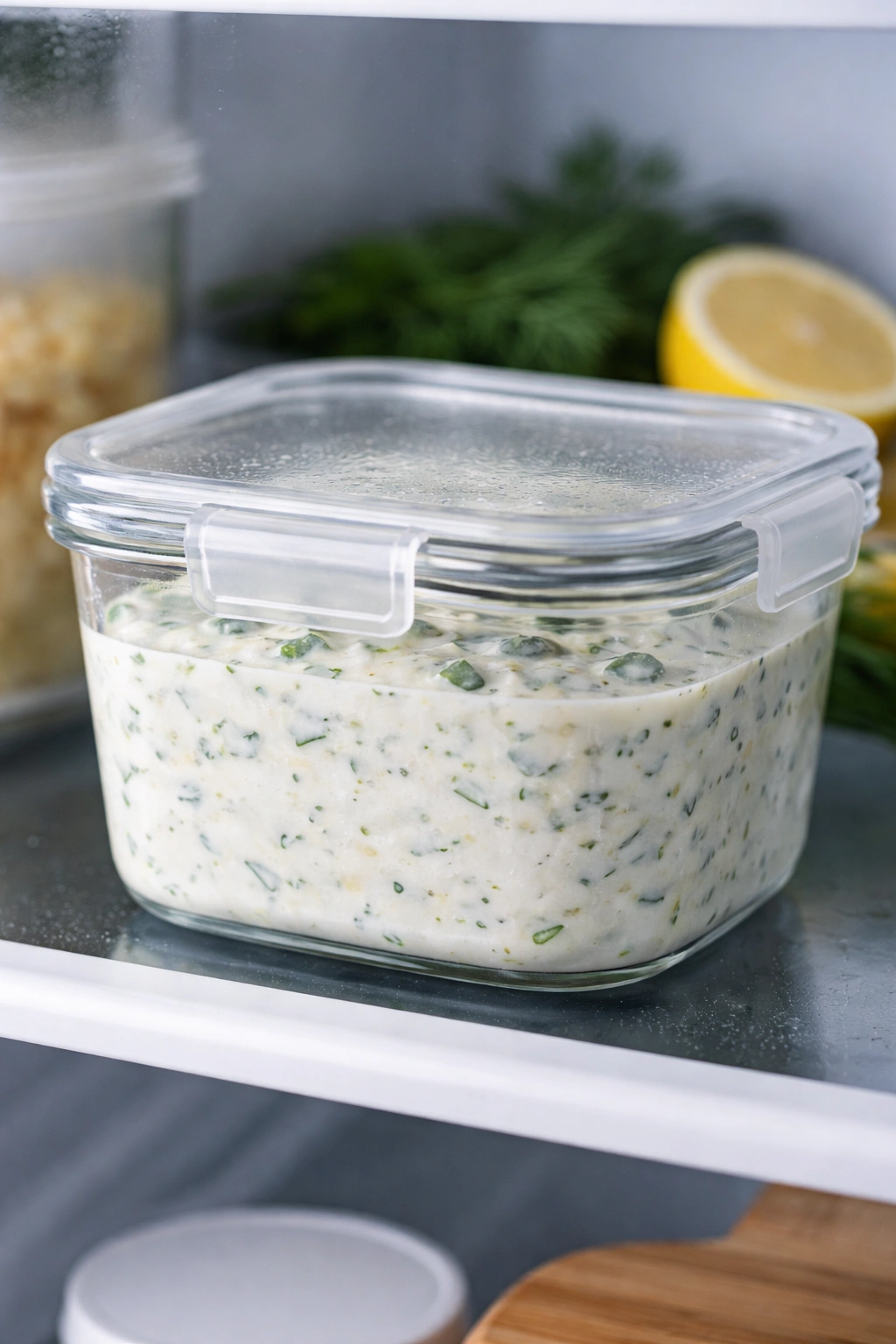
Properly made tzatziki keeps well in the refrigerator for up to five days in an airtight container. The sauce will thicken slightly as it sits, which is normal—the Greek yogurt firms up as it settles. If you prefer a thinner consistency when serving, stir in a tablespoon of water or olive oil to loosen it back up.
The flavor is brightest on the day you make it, though it’s still excellent for the next two days. By day three or four, the garlic flavor becomes more prominent (this is why you want to under-season slightly if you’re making ahead), and the herb flavors fade a touch. It’s still tasty, just slightly different from fresh.
You can make tzatziki up to a day ahead without any issues. Just make it, cover it, and let it refrigerate. The sauce actually tastes smoother and more integrated after sitting overnight, so you might find you prefer it this way.
Tzatziki doesn’t freeze well because the yogurt separates when thawed, and the texture turns grainy and unpleasant. Don’t freeze it. Make it fresh or make it a few hours ahead—both work beautifully.
If you’re using jarred garlic or other prepared ingredients, the sauce keeps for only three to four days because jarred products tend to speed up spoilage. Always check that your Greek yogurt hasn’t passed its date before using it.
How to Serve and What Pairs Best
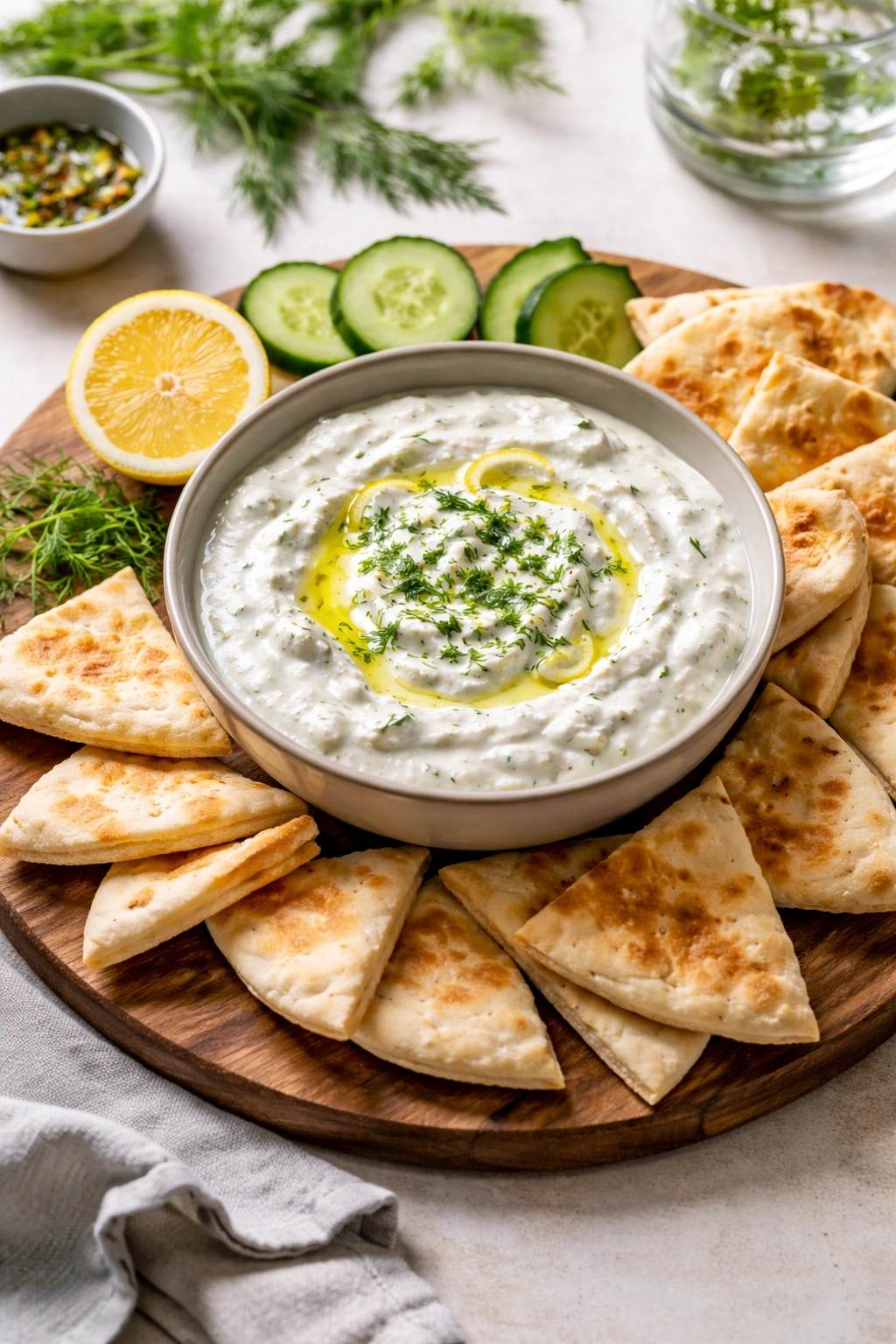
Serve tzatziki as a dip with warm pita bread torn into wedges, crispy vegetables like bell peppers and cucumber slices, or fried halloumi cheese. It’s the traditional approach and never gets old. The cool, creamy sauce is perfect with anything warm and crispy—bread, fried cheese, roasted vegetables.
Use it as a sauce on grilled meat and seafood. Tzatziki is stunning spooned over grilled chicken breasts, lamb kebabs, grilled shrimp, or even grilled fish. The acid and cool creaminess cut through rich meat flavors and balance everything beautifully.
Spread it in sandwiches and wraps. A generous dollop of tzatziki in a chicken wrap, a falafel sandwich, or a lamb pita takes these simple sandwiches into restaurant territory. The sauce adds moisture, flavor, and elegance without overpowering the other ingredients.
Top roasted vegetables with a spoonful of tzatziki. Grilled zucchini, roasted eggplant, roasted tomatoes, or charred peppers all benefit from a cool, creamy dollop of this sauce. Serve the vegetables warm and the tzatziki cold for a beautiful temperature contrast.
Use it as a cooling agent in spicy meals. If you’re making something with heat—a spicy curry, a chili-heavy dish, or a fiery dip—serving it alongside tzatziki lets people control the heat level and cool down when needed.
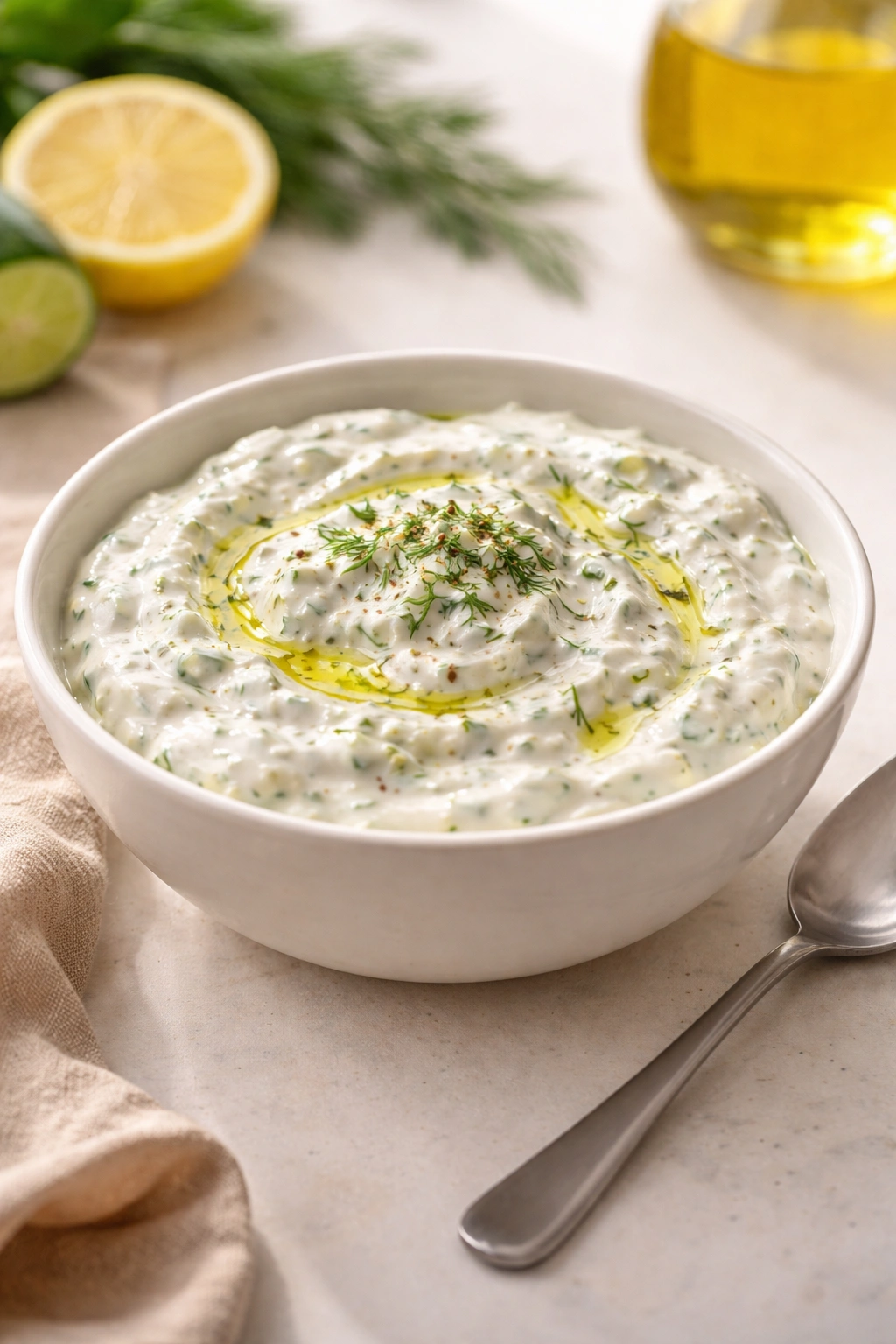
Serving Presentation: For a beautiful presentation, transfer tzatziki to a shallow bowl, use the back of a spoon to create a slight indent in the center, drizzle with a thin thread of olive oil, and scatter a tiny pinch of paprika or dried oregano on top. It looks like you spent hours on it, and it took you about 10 minutes.
The sauce tastes best when it’s not ice-cold straight from the fridge. If you’re serving it within a couple of hours of making it, you can serve it at room temperature. If it’s been refrigerated for several hours, pull it out 10 to 15 minutes before serving to take the chill off slightly. This brings out all the flavors more clearly.
Final Thoughts
Tzatziki shouldn’t be complicated or time-consuming, and with the right approach, it absolutely doesn’t need to be. The sauce that takes restaurants hours to perfect—balancing cream, acid, herbs, and vegetables into something greater than the sum of its parts—comes together in your kitchen in under 15 minutes. You’ll actually make it more often than restaurants do, because you know now that speed and quality aren’t in opposition here.
Every time you make this sauce, you’ll get slightly better at reading when it needs more salt, when it needs more acid, when the dill flavor is singing at just the right level. You’ll develop the kind of intuition that means you don’t need a recipe anymore—you just know what goes in and how it should taste. That’s when this sauce stops being something you follow steps for and becomes something you can make without thinking, which is the highest compliment you can give any recipe.
Keep the basic recipe in your back pocket for nights when you need something elegant and delicious with zero cooking involved. Make the variations when you want to show off or when you’ve got specific ingredients that need using. And taste it before serving every single time—every batch of yogurt, every cucumber, every garlic bulb is slightly different, and a moment of tasting and tiny adjusting is all it takes to make it exactly right.
