



People taking Ozempic for weight management often discover that their relationship with food shifts dramatically—and not always in convenient ways. Nausea, a reduced appetite, and food aversions hit many users hard, especially in those early weeks when the medication is doing its job. The last thing you need when you’re managing these side effects is to spend an hour in the kitchen making something you can barely stomach.
The challenge isn’t just about eating less; it’s about eating smart. Your body still needs protein to preserve muscle mass, fiber to support digestion, and nutrients to keep you functioning well. But conventional dinner options—heavy pasta dishes, rich sauces, large portions—can feel impossible when your appetite has shrunk and your stomach feels touchy. The answer isn’t to skip meals or reach for whatever’s easy; it’s to choose dinners that work with your body, not against it.
Ozempic-friendly dinners share some key characteristics: they’re protein-forward (which keeps you satisfied despite smaller portions), light enough not to trigger nausea, easy to digest, and simple enough to prepare even when you’re not feeling your best. Most importantly, they’re not depressing “diet food”—they’re genuinely delicious meals that just happen to align perfectly with what your body can handle right now. Below are ten dinner ideas that work beautifully for people navigating Ozempic side effects, along with exactly how to make them and how to adapt them to your preferences.
1. Protein-Rich Broiled Salmon with Roasted Vegetables
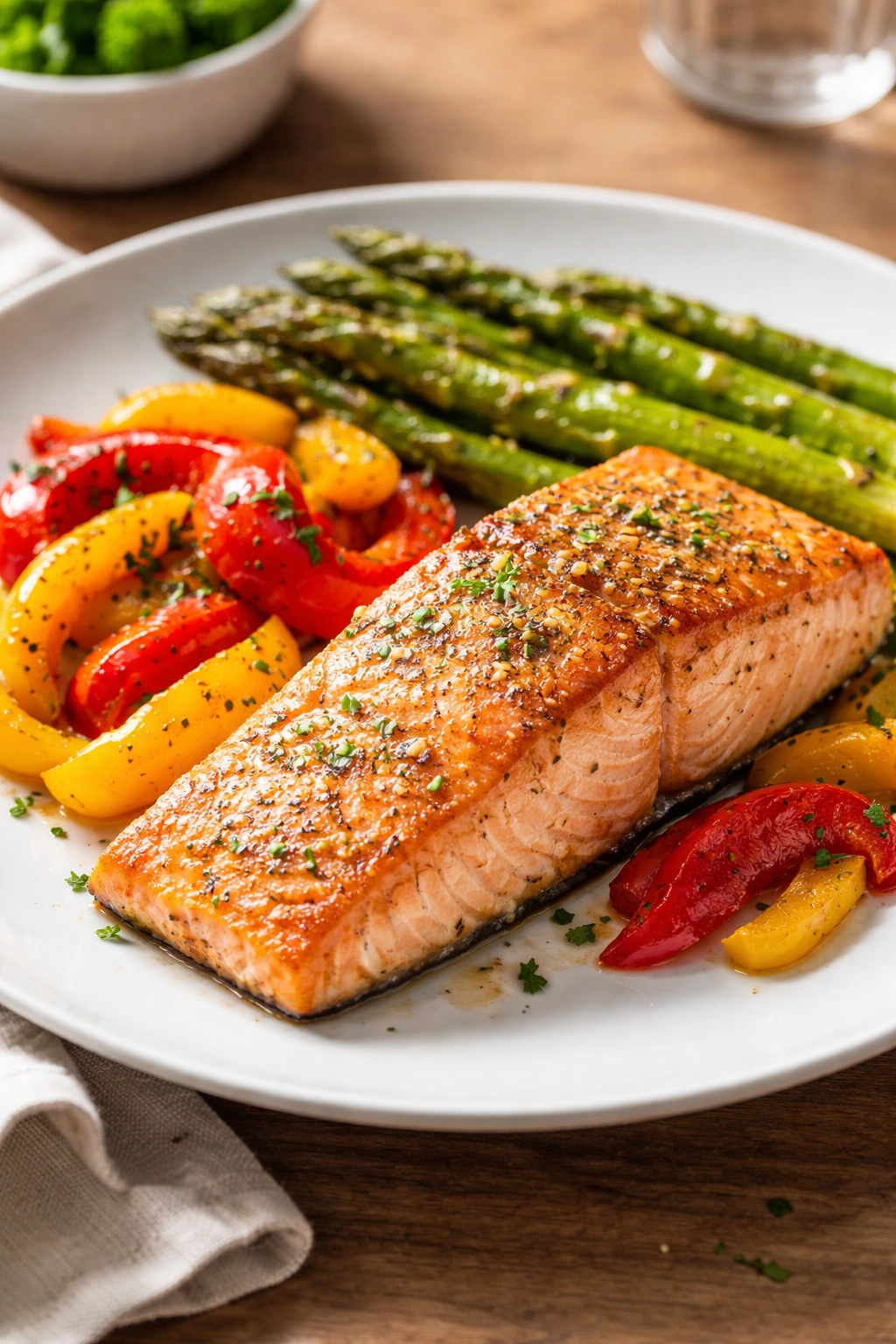
Salmon is one of the most forgiving proteins for people on Ozempic because it’s naturally moist, cooks quickly, and contains omega-3 fatty acids that support overall wellness. The gentle cooking method means the salmon stays tender without becoming rubbery, and you can eat a small portion and feel genuinely satisfied.
Why Salmon Works Perfectly
Broiling creates a light, delicate crust while the interior stays buttery and moist—no heavy oil or sauce required. Salmon’s richness means you truly don’t need much; a 3-4 ounce portion provides substantial protein and keeps you full for hours. The omega-3 content also supports heart health and may help reduce inflammation, which some people on Ozempic appreciate as a secondary benefit.
How to Prepare It Simply
Pat a salmon fillet dry and place it skin-side down on a parchment-lined broiler pan. Season with just salt, pepper, and fresh lemon juice. Broil 6-7 inches from the heat for 8-10 minutes until the flesh is opaque and flakes easily at the thickest part. Simultaneously, toss your choice of vegetables (asparagus, broccoli, green beans, or bell peppers) with a drizzle of olive oil, salt, and pepper, and roast them at 400°F for the same 8-10 minutes.
Pro tip: Cook the vegetables first, then start the salmon five minutes in—they’ll finish at exactly the same time. Leftovers reheat beautifully, and you can eat this cold the next day if warm food sounds unappealing.
2. Slow-Cooker Chicken and Vegetable Soup
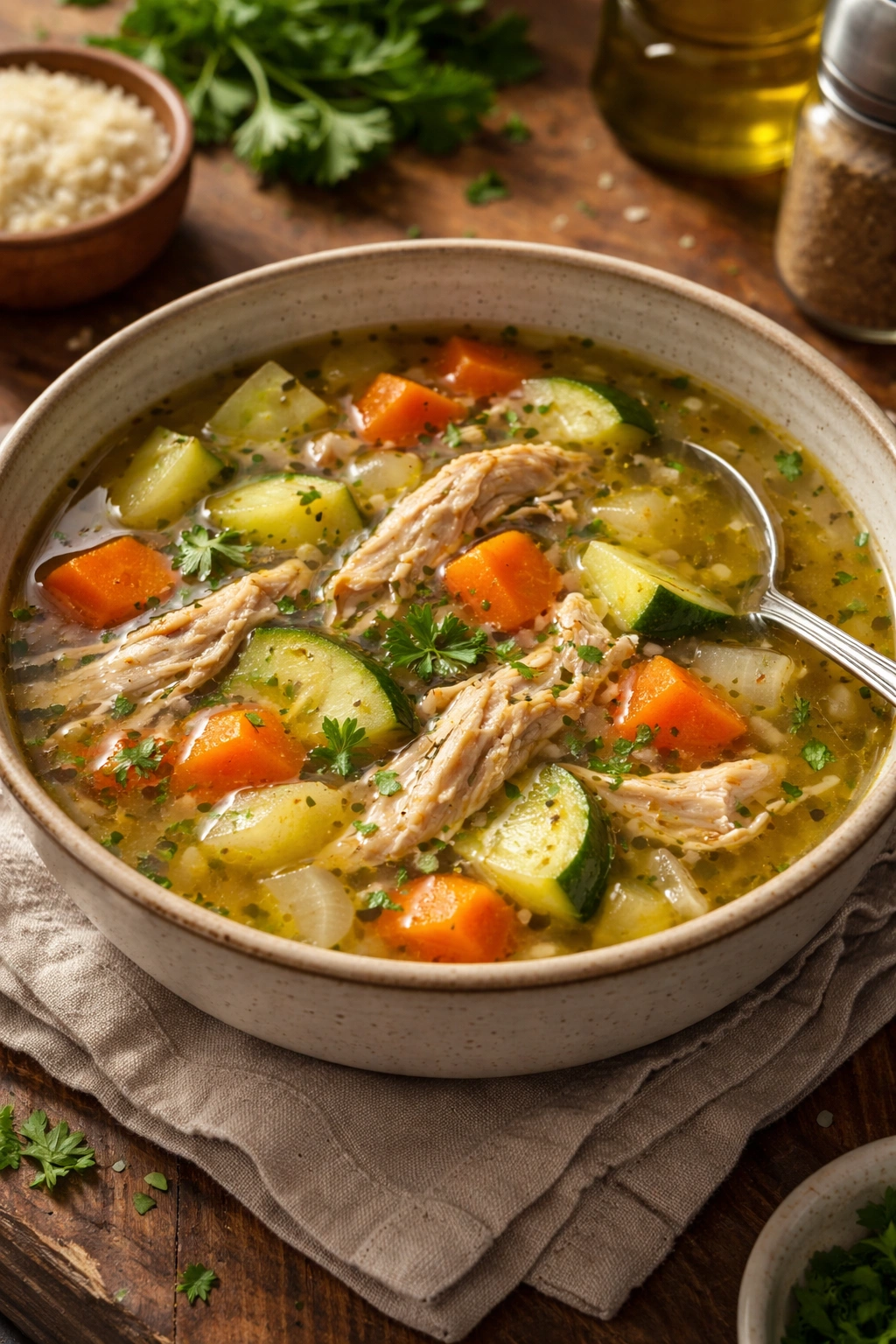
Soup is genuinely one of the easiest foods for an unsettled stomach, and slow-cooker versions require almost no active cooking. You literally put ingredients in, turn it on, and eight hours later you have a soothing, protein-rich meal that’s hard to mess up.
Why Broth-Based Soups Are Ozempic-Friendly
The warm liquid soothes nausea for many people, while the soft vegetables and tender chicken are gentle on the digestive system. Because you’re making it from scratch with real chicken broth (not bouillon cubes), you control the sodium and can keep flavoring simple and clean. The smaller portion you’ll actually eat means you can make a big batch and have leftovers all week.
Building Your Slow-Cooker Base
Add 4 cups of low-sodium chicken broth and 1 pound of boneless, skinless chicken breasts to your slow cooker along with roughly chopped carrots, celery, and diced zucchini or green beans. Season with just salt, pepper, and a bay leaf. Cook on low for 6-8 hours or high for 3-4 hours. Remove the chicken, shred it with two forks, and return it to the pot. Taste and adjust seasoning.
If broth tastes too plain, add a squeeze of fresh lemon juice or a touch of fresh thyme at the end—fresh herbs add brightness without overwhelming flavor. Skip cream, coconut milk, or heavy thickeners that might sit uncomfortably in your stomach.
3. Turkey Meatballs with Marinara and Zucchini Noodles
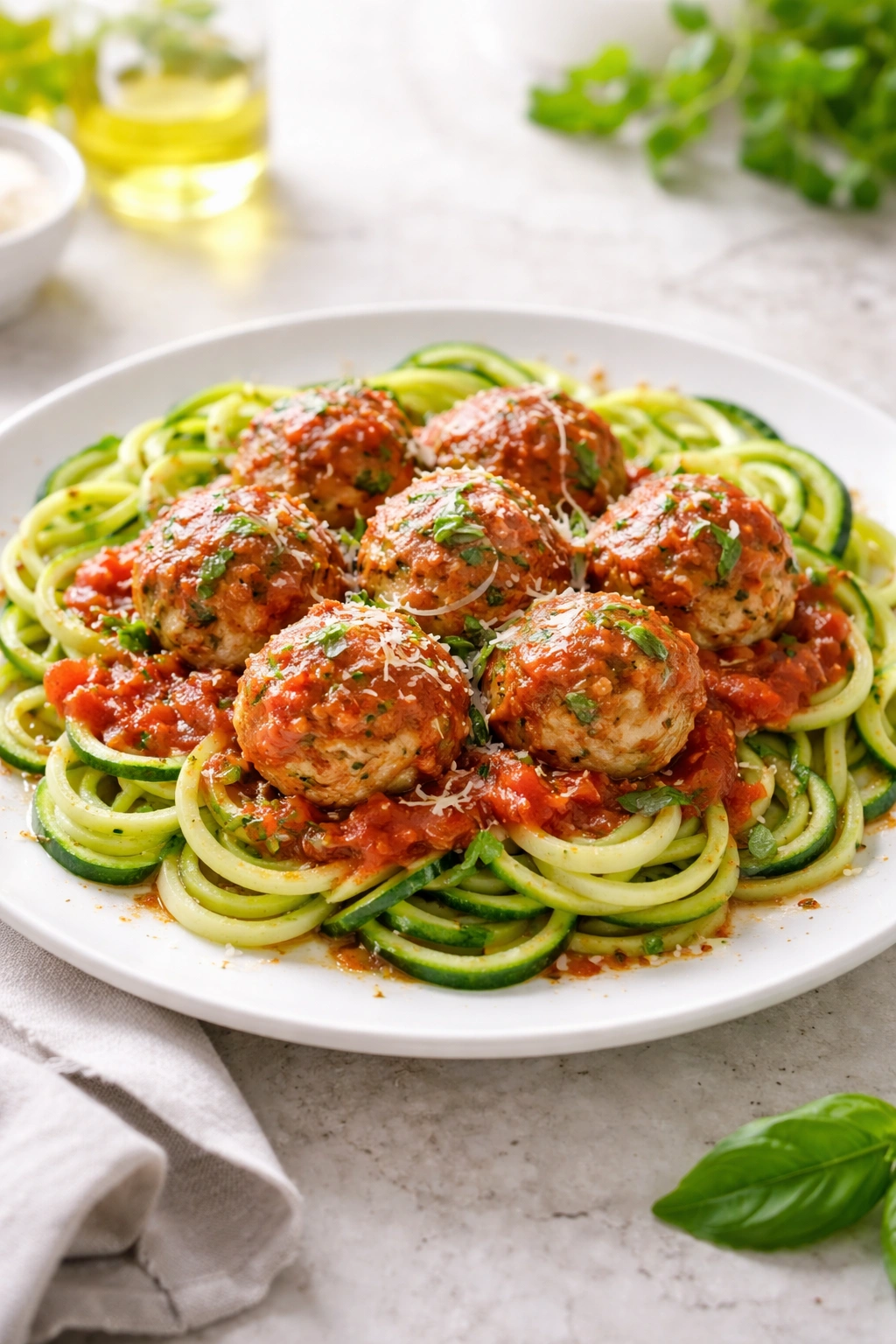
Ground turkey is significantly leaner than ground beef, making it gentler on sensitive stomachs. When you shape it into meatballs and pair it with zucchini noodles instead of pasta, you get a satisfying “comfort food” dinner that actually feels good to eat.
What Makes This Easier to Digest
Ground turkey’s lower fat content means less greasiness and faster digestion. Zucchini noodles provide volume and fiber without the heaviness of wheat pasta, so you can enjoy a full-looking plate without overwhelming your reduced appetite. A good-quality marinara sauce (without added sugar) adds flavor with minimal additives.
Step-by-Step Preparation
Mix 1 pound of ground turkey with ½ cup of panko breadcrumbs (or almond flour for lower carbs), one egg, minced garlic, salt, and pepper. Form into 12-16 meatballs and place on a parchment-lined baking sheet. Bake at 400°F for 15-18 minutes until cooked through. Meanwhile, spiralize 2-3 medium zucchini into noodles and heat 1½ cups of marinara sauce in a pan. When the meatballs finish, toss the zucchini noodles in the warm sauce gently (don’t overcook them—you want a slight bite), top with meatballs, and add fresh basil.
Store meatballs separately from sauce if you’re making ahead—they keep for up to four days in the refrigerator and can be reheated gently or eaten at room temperature.
4. Grilled Tilapia with Lemon and Asparagus
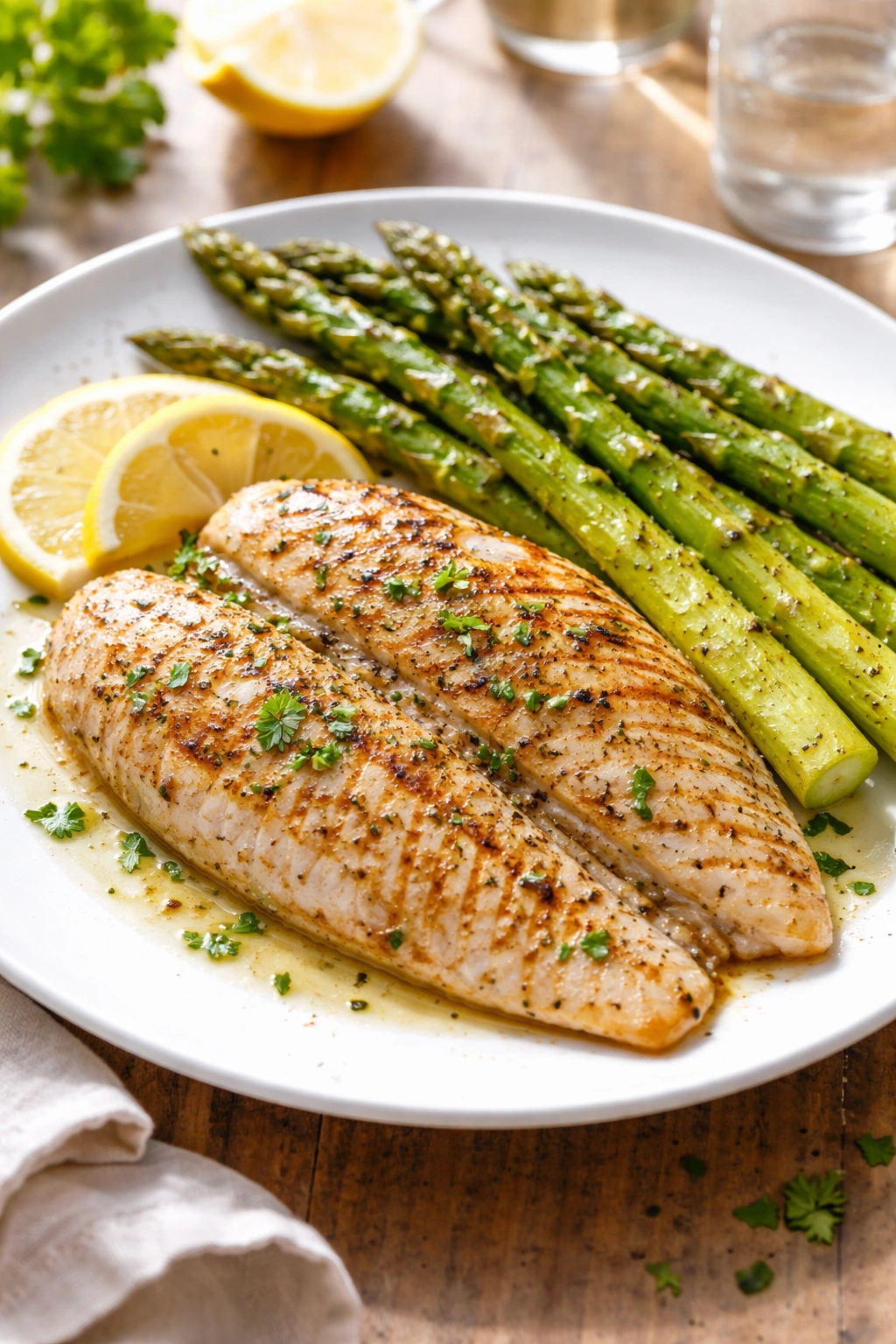
Tilapia is a white fish that cooks incredibly fast and has a mild, delicate flavor that won’t trigger food aversions. It’s also nearly impossible to mess up, which is valuable when you’re cooking for yourself while managing nausea.
Why White Fish Is Ideal Right Now
Tilapia is lean and cooks in minutes, meaning minimal active cooking time and a gentle protein source. Its mild flavor is less likely to trigger nausea or aversions than stronger fish varieties, and the quick cooking prevents the dry, overcooked texture that can feel unpleasant. It’s also affordable and widely available.
Quick Grill-Pan Method
Heat a grill pan or skillet over medium-high heat and lightly oil it. Season tilapia fillets with salt, pepper, and a squeeze of fresh lemon juice. Cook for 3-4 minutes per side until opaque and flaky. During the same time, trim fresh asparagus spears, toss with a touch of olive oil and salt, and grill alongside the fish for the same 3-4 minutes—just until tender and lightly charred.
Plate the fillet, arrange asparagus alongside, and add a final squeeze of fresh lemon and perhaps a pinch of fresh dill. The whole meal takes 10 minutes from pan to plate.
5. Egg White Scramble with Spinach and Cheese
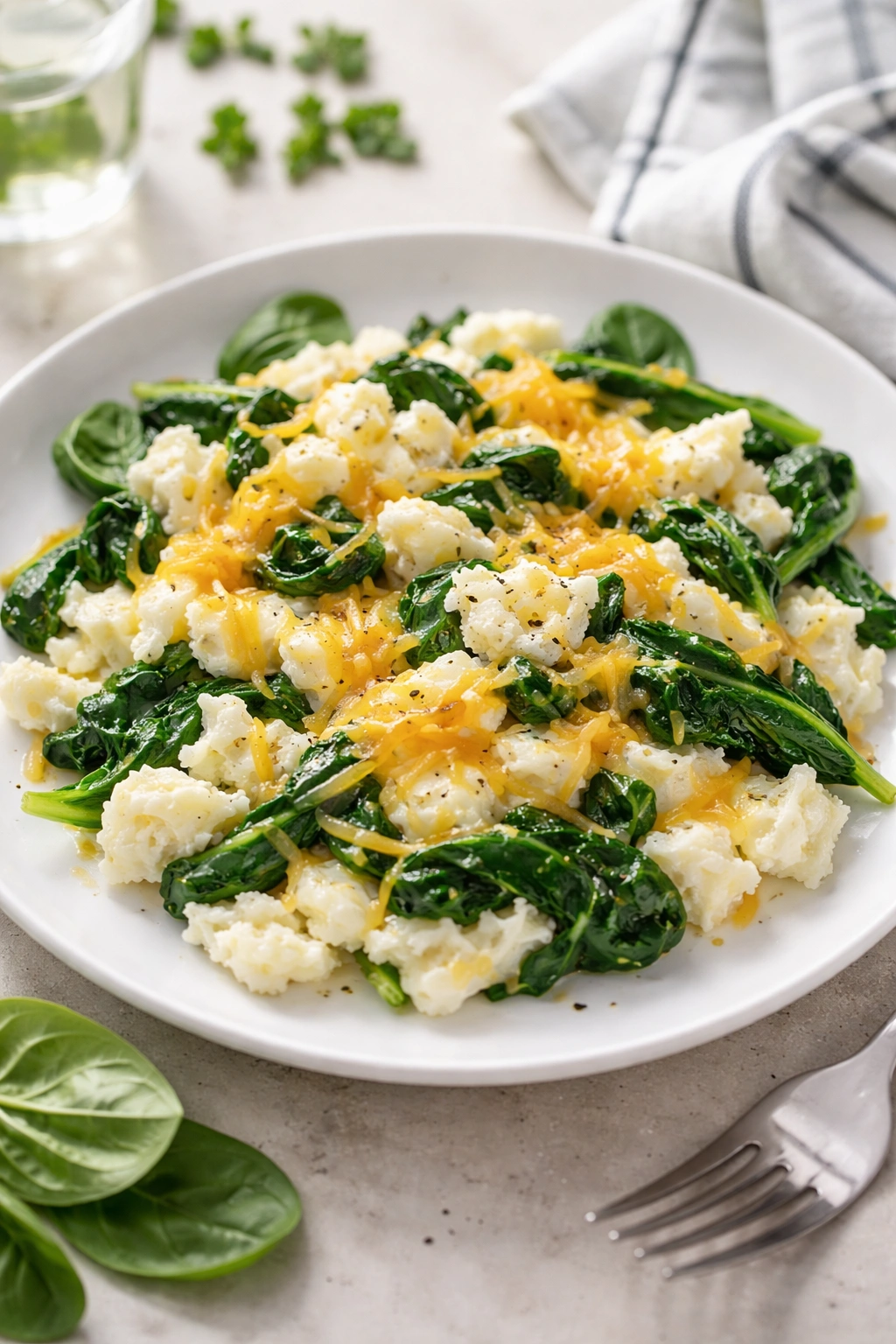
Eggs are one of the most protein-dense, affordable, versatile foods you can reach for, and egg white scrambles are exceptionally light. They work equally well for breakfast or dinner—there’s no rule against it, and sometimes dinner needs to be simple.
Why Eggs Make Sense for Ozempic Users
A three-egg-white scramble provides 10 grams of protein in under 100 calories, with negligible fat and zero bloating potential. Eggs are naturally gentle on the stomach, and the protein is extremely bioavailable, meaning your body uses it efficiently. Spinach adds volume, fiber, and micronutrients without adding calories or digestive burden.
Making It Taste Like Real Food
Separate eggs and discard yolks (or keep one yolk for richness—it’s entirely up to you and what your stomach tolerates). Whisk egg whites briefly with a pinch of salt and pepper. Heat a nonstick pan over medium heat with a tiny touch of butter or cooking spray. Add a large handful of fresh spinach and sauté until just wilted, then pour in the egg whites. Cook gently, stirring slowly, until softly scrambled—don’t overcook or they’ll become rubbery.
Just before serving, stir in a small handful of sharp cheddar or feta cheese. A sliced tomato or handful of diced cucumber on the side adds freshness and crunch. This entire meal takes 5 minutes and requires basically no ingredients.
6. Lean Ground Turkey Taco Lettuce Wraps
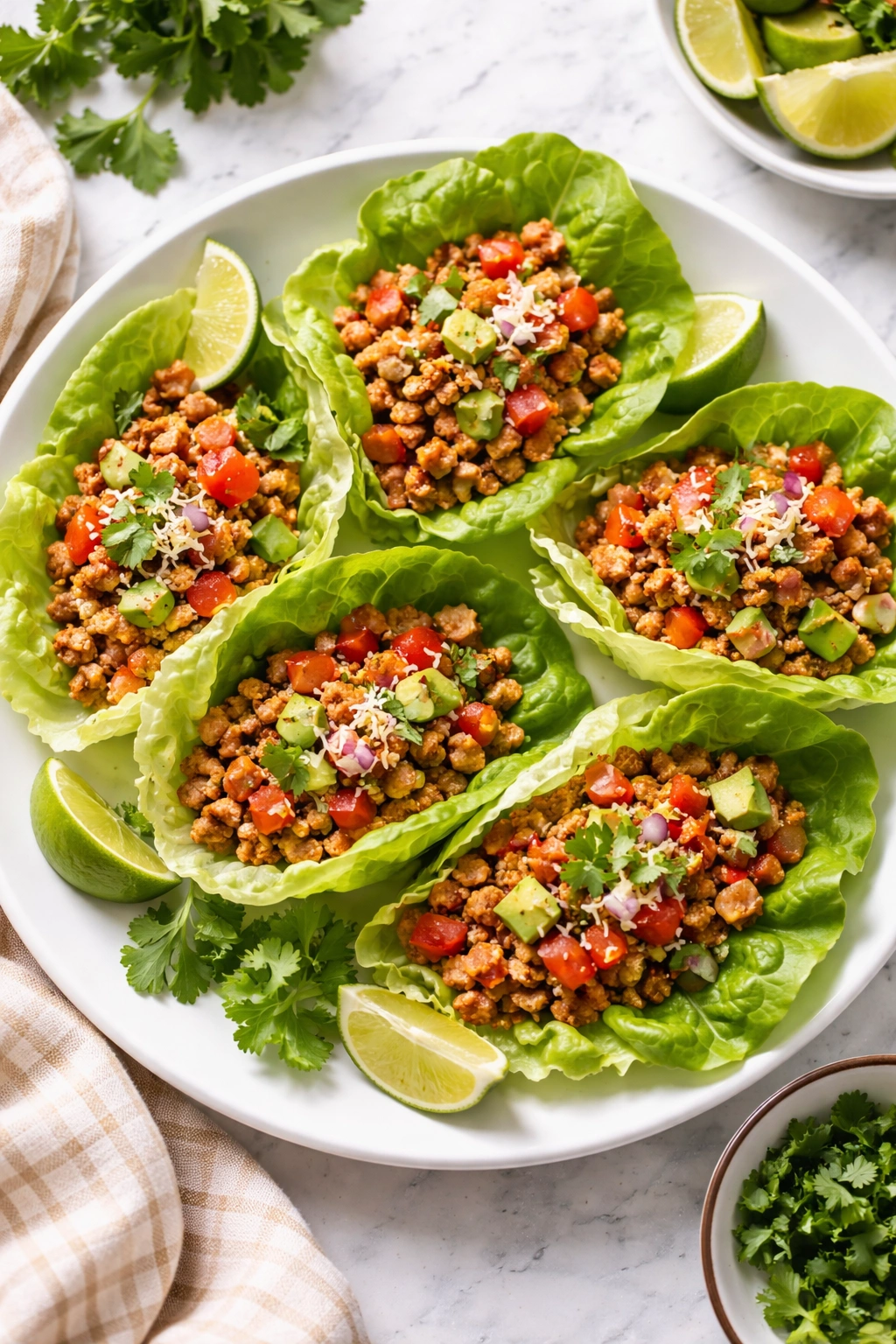
Tacos are inherently satisfying because of the flavors and textures involved, but regular taco shells or tortillas can feel heavy. Swapping the shell for crisp lettuce leaves gives you all the satisfaction with none of the bloat.
What Makes Lettuce Wraps Perfect
Lettuce provides structural integrity and crunch without any of the density or inflammation that some people experience from bread or tortillas. Because the wrap itself is basically calorie-free and fat-free, you’re tasting pure filling—the seasoned turkey, fresh toppings, and any mild salsa you choose. It’s one of the rare “diet-friendly” swaps that doesn’t taste like you’re missing something.
Seasoning and Assembly
Brown 1 pound of ground turkey in a skillet over medium-high heat, breaking it into small pieces as it cooks. Once cooked through, add 2-3 tablespoons of taco seasoning (or make your own with cumin, chili powder, garlic powder, salt, and pepper) and about 2 tablespoons of water. Simmer for 2-3 minutes until the mixture is fragrant and coats the meat evenly.
Peel large lettuce leaves from a head of butter lettuce or iceberg lettuce (keeping them intact), pat dry, and lay them on a plate. Spoon the warm turkey mixture into each leaf, then add toppings: diced tomato, shredded cheese, a dollop of plain Greek yogurt (instead of sour cream), fresh cilantro, and a small amount of salsa if you tolerate it. Eat with your hands—it’s part of the appeal.
7. Baked Cod with Herb Crust and Green Beans
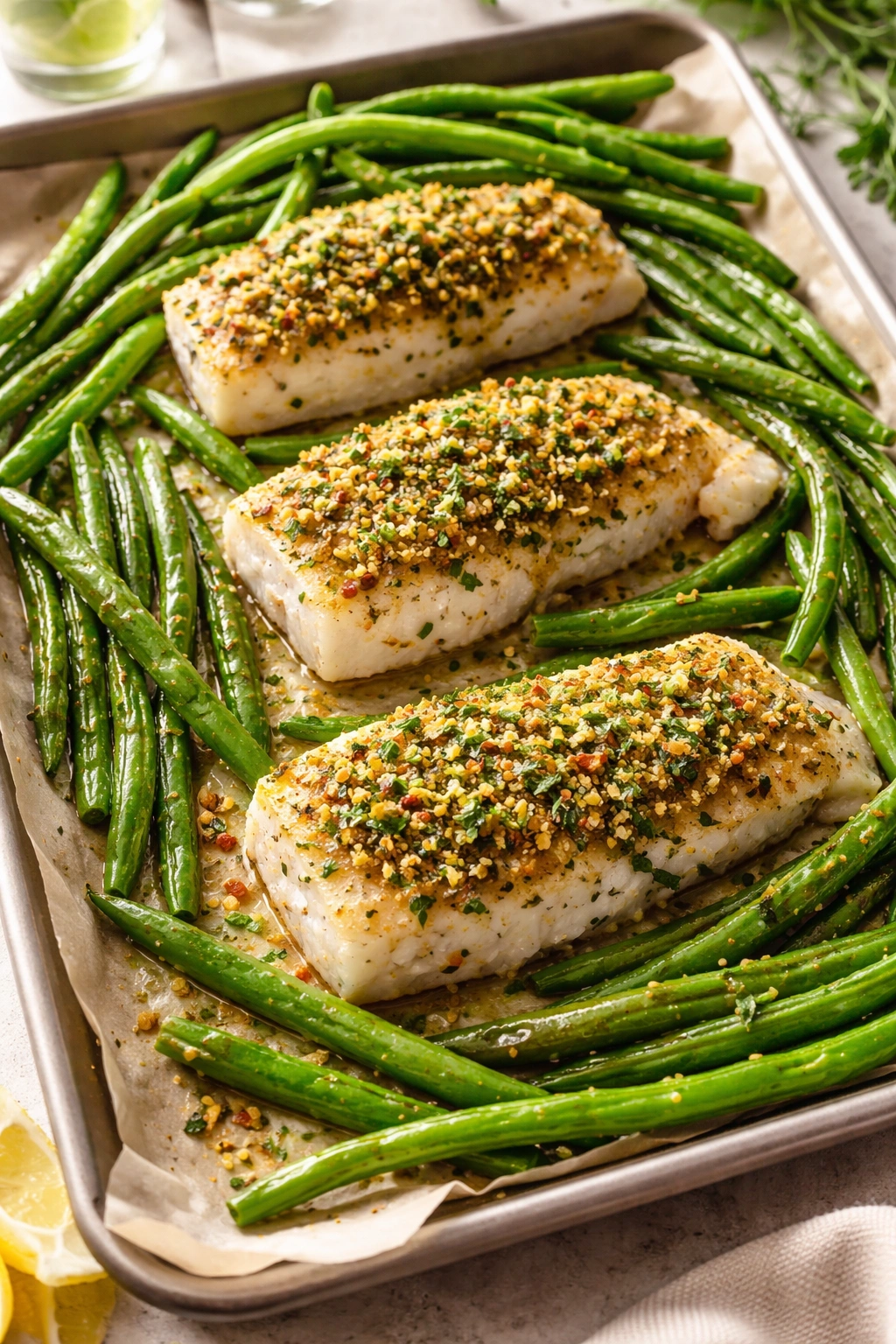
Cod is another exceptional white fish, and coating it with a light herb crust adds texture and flavor without adding heaviness. The green beans provide satisfying bulk and fiber to your plate while staying gentle on digestion.
Why This Combination Works
Cod is even milder than tilapia for people with strong food aversions, and the herb crust keeps it moist during cooking while adding complex flavor that doesn’t come across as heavy. Green beans provide volume and take up space on your plate, helping you feel satisfied with a smaller total portion.
Creating the Herb Crust
Mix together ½ cup of panko breadcrumbs, fresh or dried herbs (parsley, dill, and thyme work beautifully), minced garlic, salt, and pepper. Wet the mixture slightly with just enough olive oil that it becomes crumbly but not wet. Pat cod fillets dry and press the herb mixture gently onto the top of each fillet.
Place on a parchment-lined baking sheet alongside fresh green beans that you’ve tossed with a touch of olive oil and salt. Bake at 400°F for 12-15 minutes until the cod flakes easily and the green beans are tender. The herb crust becomes golden and crispy while the interior stays moist.
8. Chicken Breast with Sweet Potato Mash
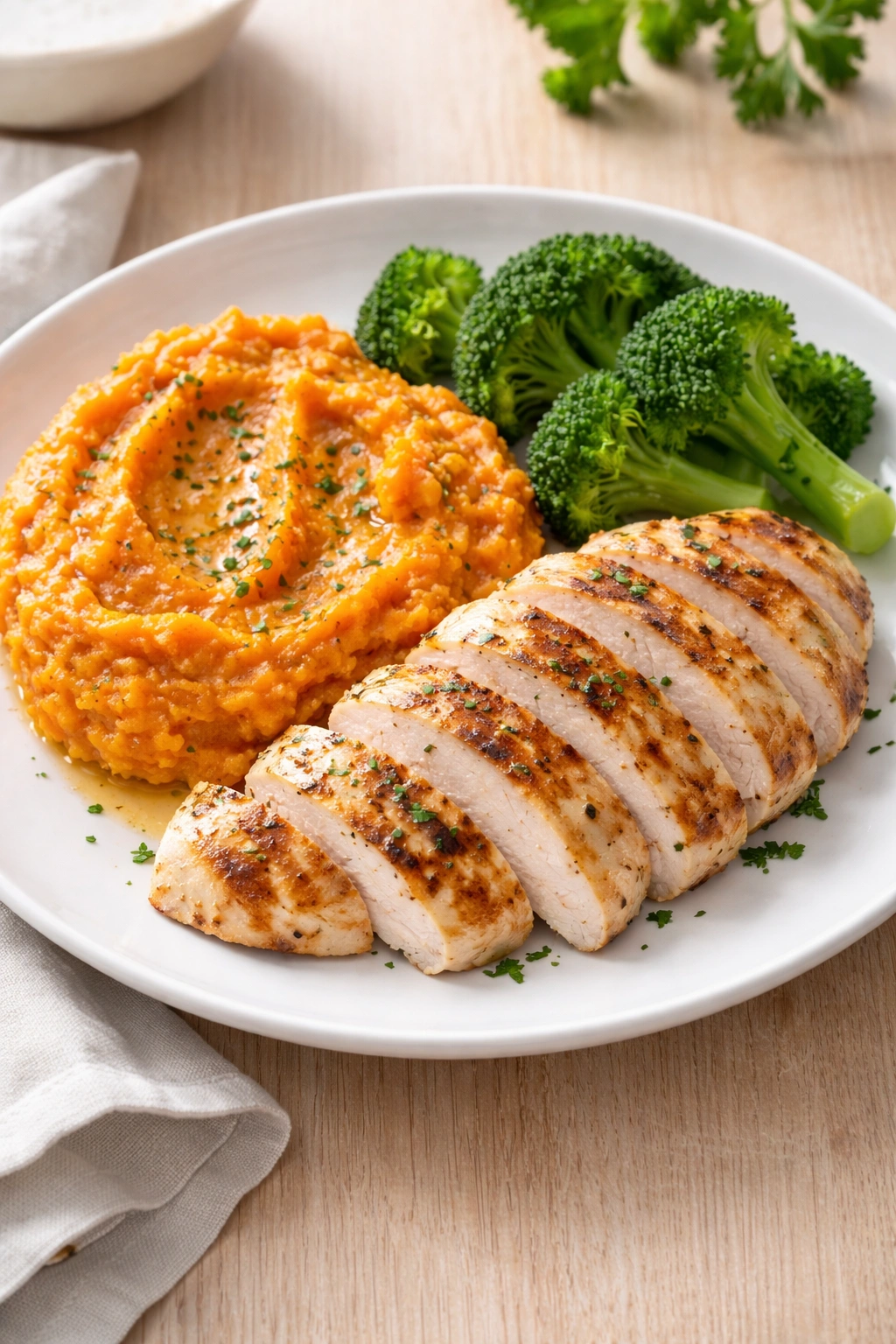
Lean chicken breast and sweet potato mash might sound simple, but it’s genuinely comforting and hits a sweet spot for people navigating appetite suppression. You get protein, complex carbs, and genuine satisfaction without feeling like you’re eating “diet food.”
Why This Combination Succeeds
Chicken breast is about as lean as poultry gets, while sweet potato provides slow-digesting carbs and natural sweetness that appeals to people whose taste preferences sometimes shift on Ozempic. Together, they create a balanced meal that feels complete despite being relatively light.
Preparation Without Fuss
Pound chicken breasts to a consistent thickness (about ¾ inch), season generously with salt and pepper, and pan-sear in a hot skillet with a touch of olive oil for 5-6 minutes per side until golden and cooked through. Simultaneously, peel and chop a large sweet potato into chunks, boil until very tender (about 12-15 minutes), and mash with just a splash of milk or broth, a pinch of cinnamon, and salt to taste.
Serve the chicken alongside the sweet potato mash with a simple green vegetable (steamed broccoli or sautéed spinach). A touch of Dijon mustard on the side adds brightness without heaviness.
9. Shrimp Stir-Fry with Broccoli Over Cauliflower Rice
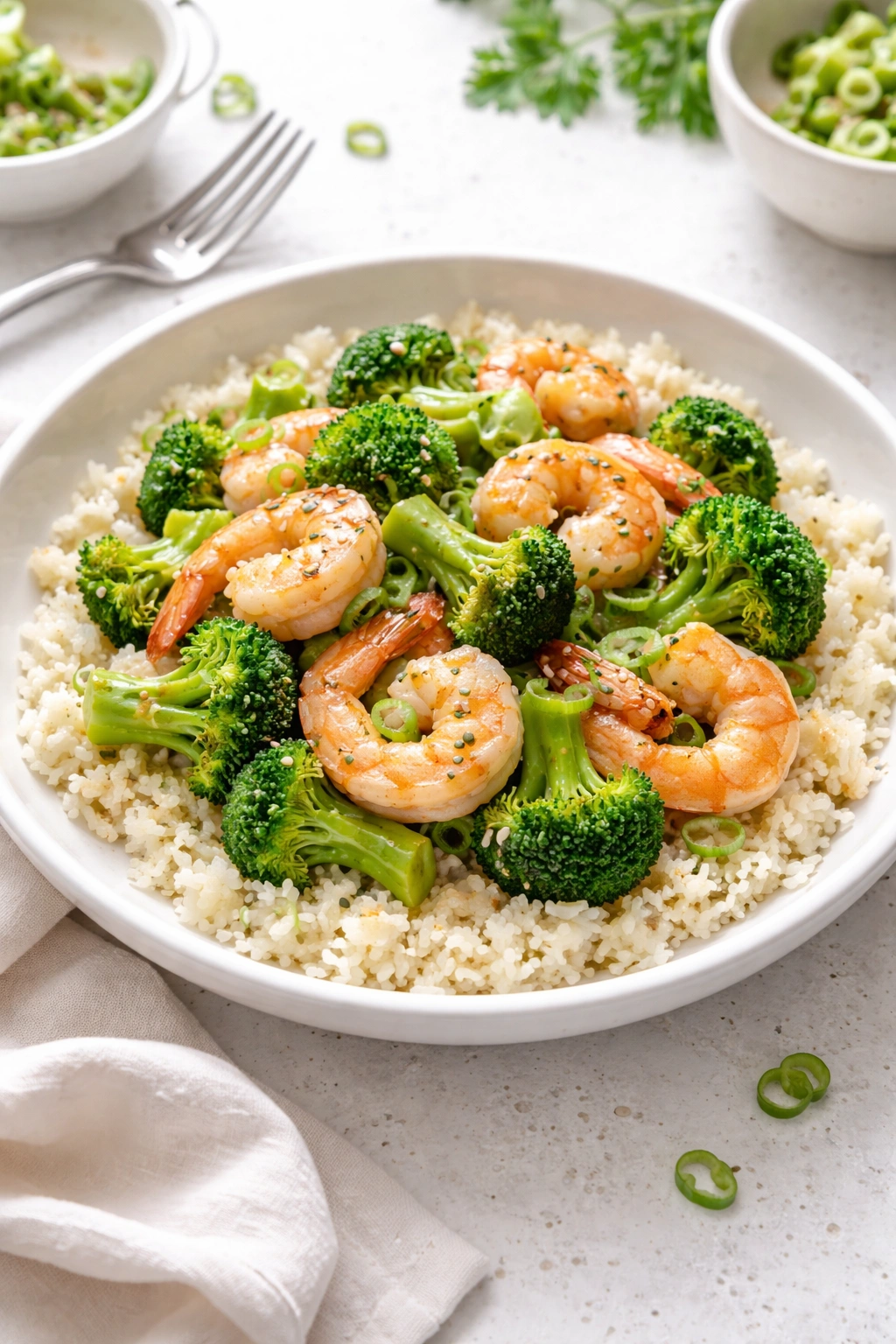
Shrimp is one of the fastest-cooking proteins available, making it perfect for nights when you want dinner ready in minutes. A vegetable-heavy stir-fry with cauliflower rice instead of regular rice keeps the meal light while still feeling complete.
Why Shrimp Is Remarkably Easy on Your System
Shrimp is extremely lean, cooks in just 2-3 minutes, and provides complete protein. The quick cooking time means there’s less chance of creating a texture that triggers food aversion. Cauliflower rice adds volume and fiber while being much gentler on digestion than grain-based rice.
Quick Stir-Fry Technique
Heat a large skillet or wok over high heat with just a touch of neutral oil. Add minced garlic and ginger, let it bloom for 15 seconds, then add broccoli florets and cook for 3-4 minutes until starting to soften. Push to the side, add the shrimp to the empty side of the pan, and cook for 2-3 minutes per side until pink and opaque throughout.
Toss everything together with a splash of low-sodium soy sauce and a squeeze of lime juice. Serve over cauliflower rice that you’ve warmed in a separate pan. The entire meal, from unwrapped shrimp to plated dinner, takes 12-15 minutes.
Pro tip: Buy pre-riced cauliflower to eliminate active prep work. Frozen shrimp also works perfectly—just thaw it first.
10. Grilled Chicken Thighs with Roasted Brussels Sprouts
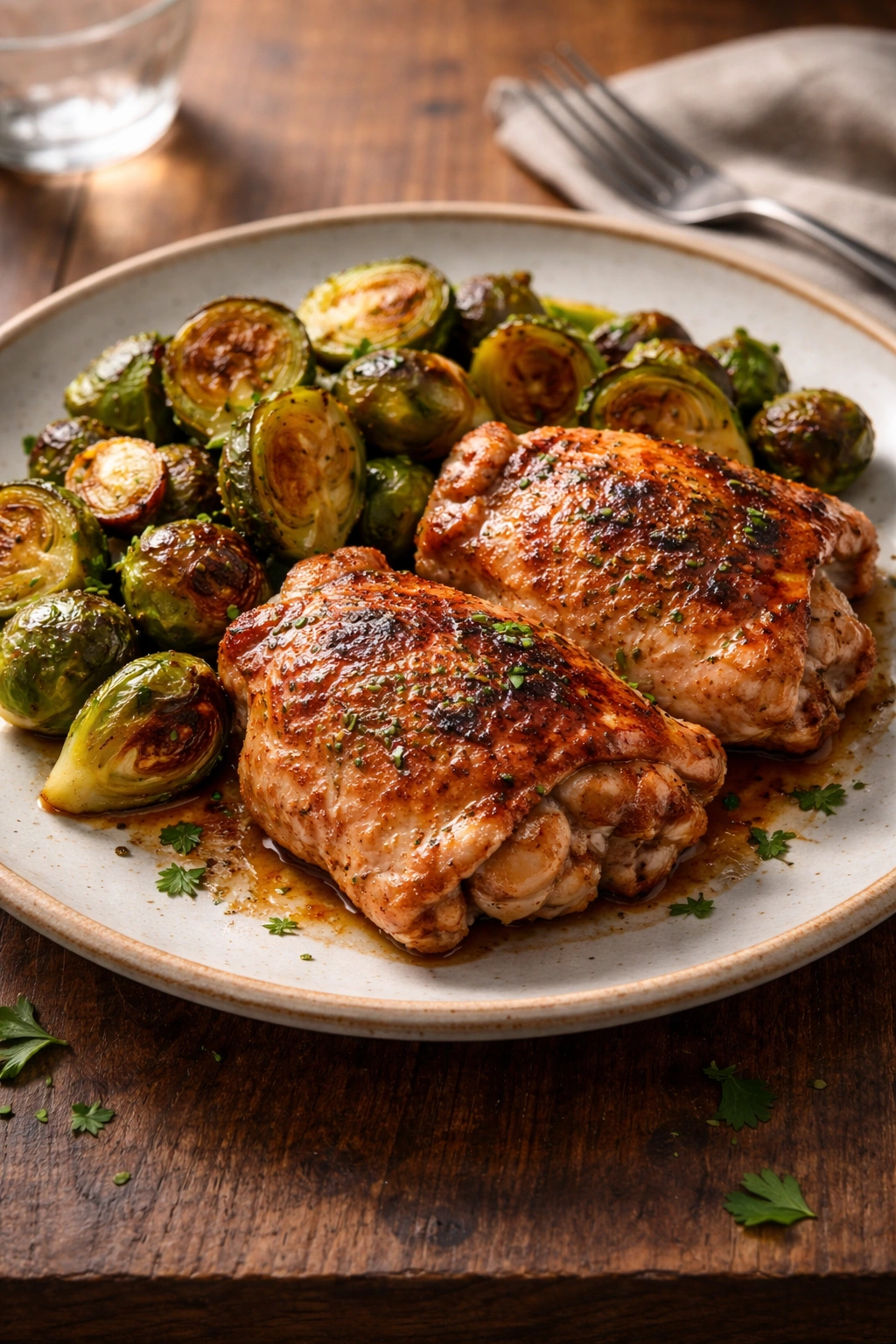
Chicken thighs are more forgiving than breasts because they contain slightly more fat, keeping them moist even if cooked slightly longer. Paired with crispy roasted brussels sprouts, you get a dinner that tastes indulgent while remaining Ozempic-friendly.
Why Dark Meat Chicken Works Here
Thighs have a richer flavor and higher fat content than breast meat, which some people on Ozempic find easier to tolerate in small portions. The fat also slows gastric emptying, which can feel more satisfying despite eating less. The juiciness means you’re less likely to end up with dry, unpleasant chicken.
Simple Preparation
Remove skin from chicken thighs (or leave it on—that’s your preference), season with salt, pepper, and any herbs you enjoy. Grill over medium-high heat for 5-6 minutes per side until cooked through. Simultaneously, halve brussels sprouts, toss with olive oil and salt, and roast cut-side down at 425°F for about 15-20 minutes until the cut sides are golden and crispy and the outer leaves are charred.
The charring on brussels sprouts provides caramelized depth and makes them taste far more interesting than steamed vegetable side dishes. Serve one thigh alongside a generous portion of sprouts.
Final Takeaway
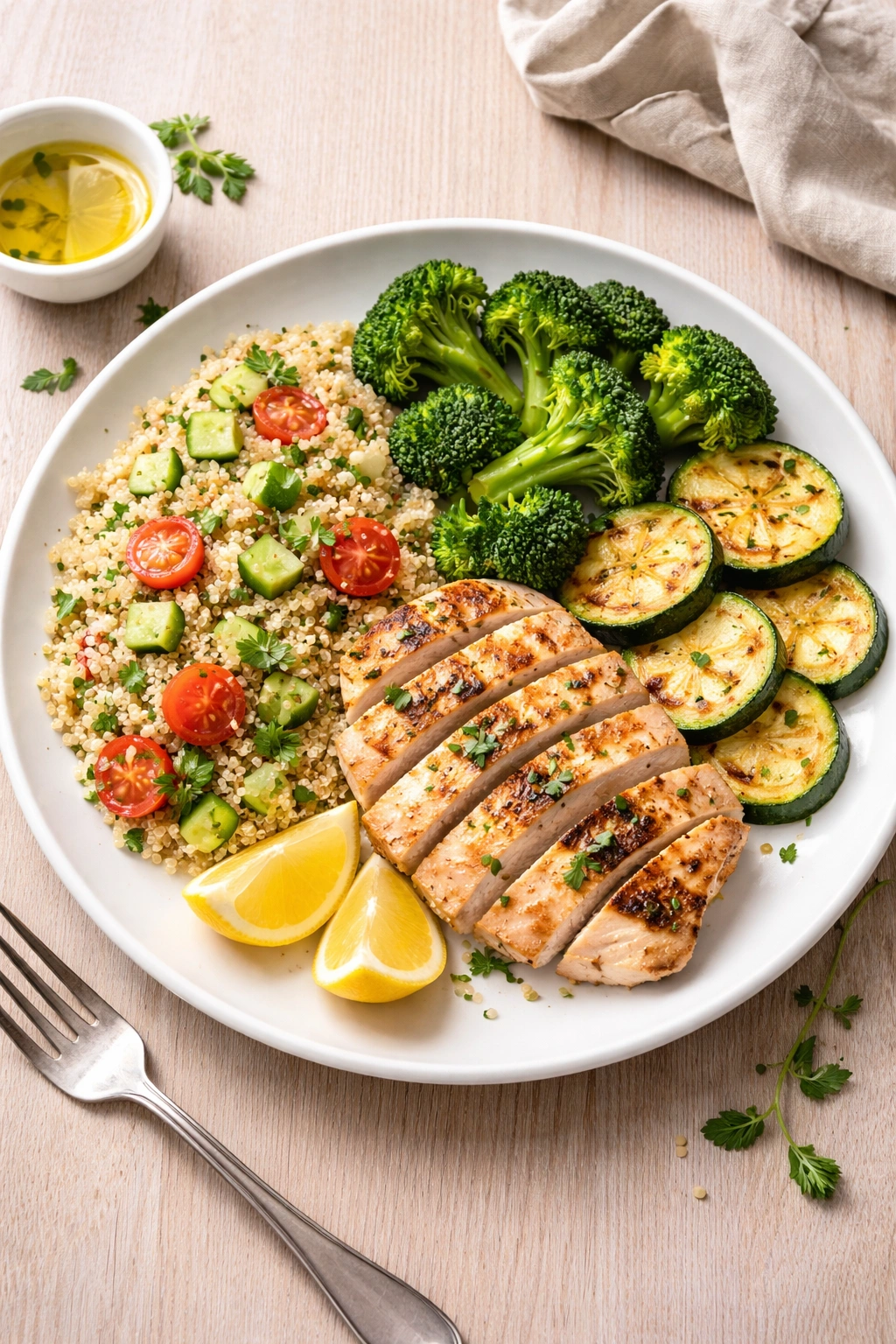
Eating well while taking Ozempic means releasing the idea that dinner has to be complicated or time-consuming. The dinners above all share a common thread: they’re genuinely nourishing, require minimal cooking skill, use ingredients you can find anywhere, and taste good enough that you’re not eating them out of obligation. Your job right now is to eat enough protein, stay hydrated, choose foods that your individual stomach tolerates, and trust that simplicity isn’t settling.
Pick two or three of these meals and rotate them weekly until you find your favorites. Notice which preparations your body handles best and which ones leave you feeling better hours afterward. As your tolerance improves and your Ozempic dose potentially adjusts, you’ll naturally add complexity back into your cooking. But for now, these ten dinners are more than sufficient—they’re exactly what you need.
