



That rich, peppery sausage gravy pooling over warm biscuits is one of those diner staples that seems impossibly simple until you try to recreate it at home and discover you’ve missed something crucial. The difference between good homemade gravy and that transcendent diner version comes down to a few counterintuitive choices — the type of sausage you choose, the way you build the roux, and how long you actually let it simmer. Most home cooks rush this gravy, treating it like a side dish that can be knocked out in five minutes. Diners don’t work that way. They understand that sausage gravy deserves patience, attention, and a specific technique that transforms ground sausage, milk, and flour into something with real depth and soul.
The real secret is that diner-quality sausage gravy isn’t just about stirring things together — it’s about understanding how to coax maximum flavor from the sausage itself, building a roux that won’t break or separate, and knowing exactly when the gravy has reached that perfect creamy texture that clings to biscuits without being gluey. Once you nail this technique, you’ll make this gravy regularly, and it becomes one of those dishes where homemade genuinely tastes better than what you’d get anywhere else.
This isn’t a difficult recipe, but it does require presence and attention. You can’t step away while it’s cooking. The payoff is a gravy so good that you’ll find yourself making it just to have on hand — slathering it over biscuits at breakfast, using it as a base for biscuits and gravy bowls, or spooning it over hash browns and eggs. Let me walk you through exactly how to make this.
Why Diner Sausage Gravy Tastes Different From Home Versions
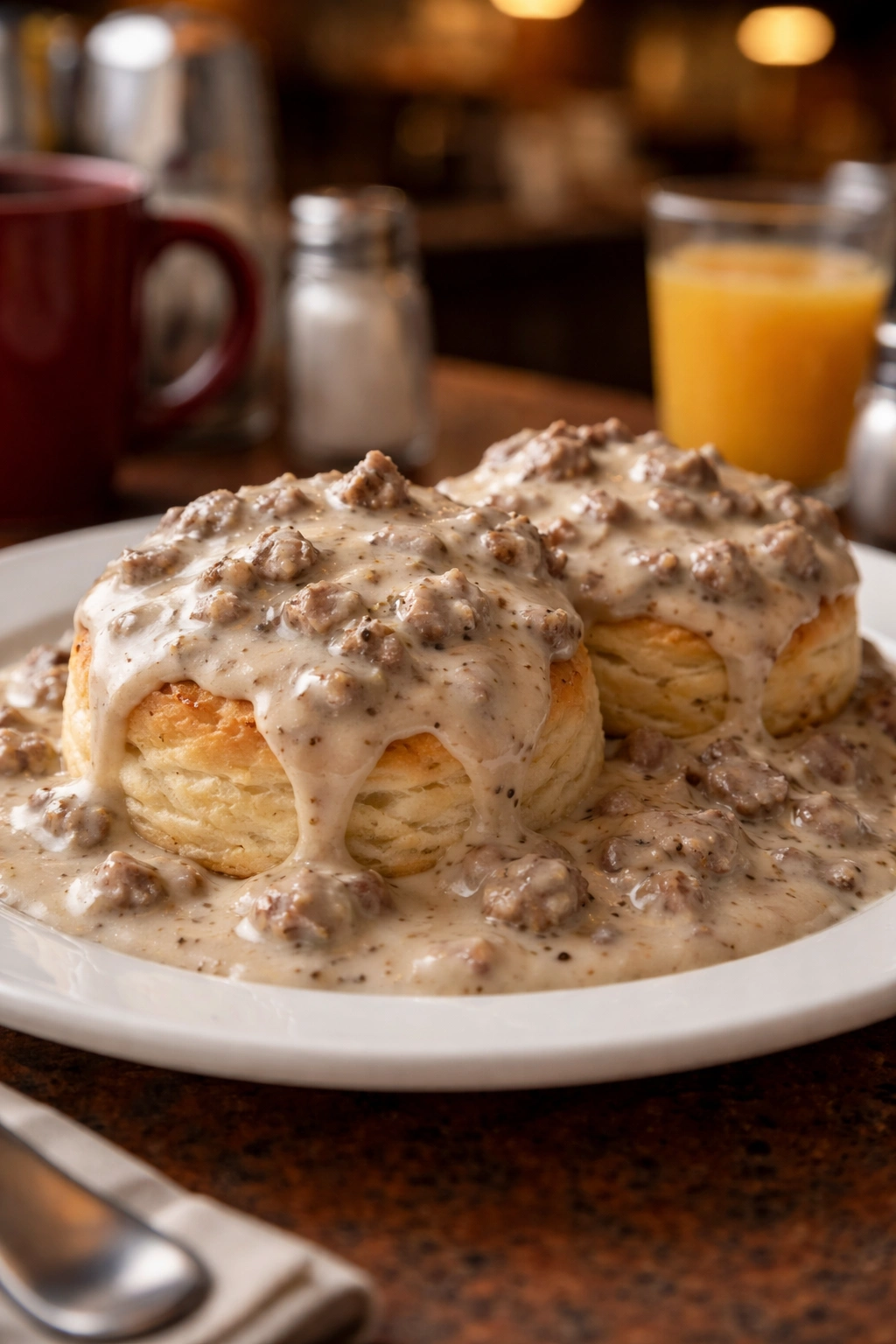
Most home cooks make gravy that’s either too thin and tasteless or too thick and pasty, with a floury aftertaste that screams “homemade mistake.” Diner gravy hits a completely different note. It’s luxuriously creamy, deeply savory, and rich without being heavy — with a subtle pepper warmth that lingers after each bite.
The first reason it tastes different is the sausage itself. Diners use bulk breakfast sausage (the loose kind, not links) that’s specifically seasoned with sage, pepper, and sometimes a touch of garlic. That seasoning is already dialed in, so you’re not fighting a bland base ingredient. The second reason is time. Diner cooks brown the sausage properly, rendering out its fat and developing its color, which takes longer than most home cooks think it should.
The third reason is the roux-to-liquid ratio and the technique. Diners make a proper roux with sausage fat and flour, cook that roux to just the right color (not too pale, not burned), and then add cold or room-temperature milk slowly while whisking constantly to prevent lumps. They also let the gravy simmer gently for a solid 10-15 minutes, which allows the flour to fully cook out and lose that raw, starchy taste that ruins so many batches.
Serving and Timing Information
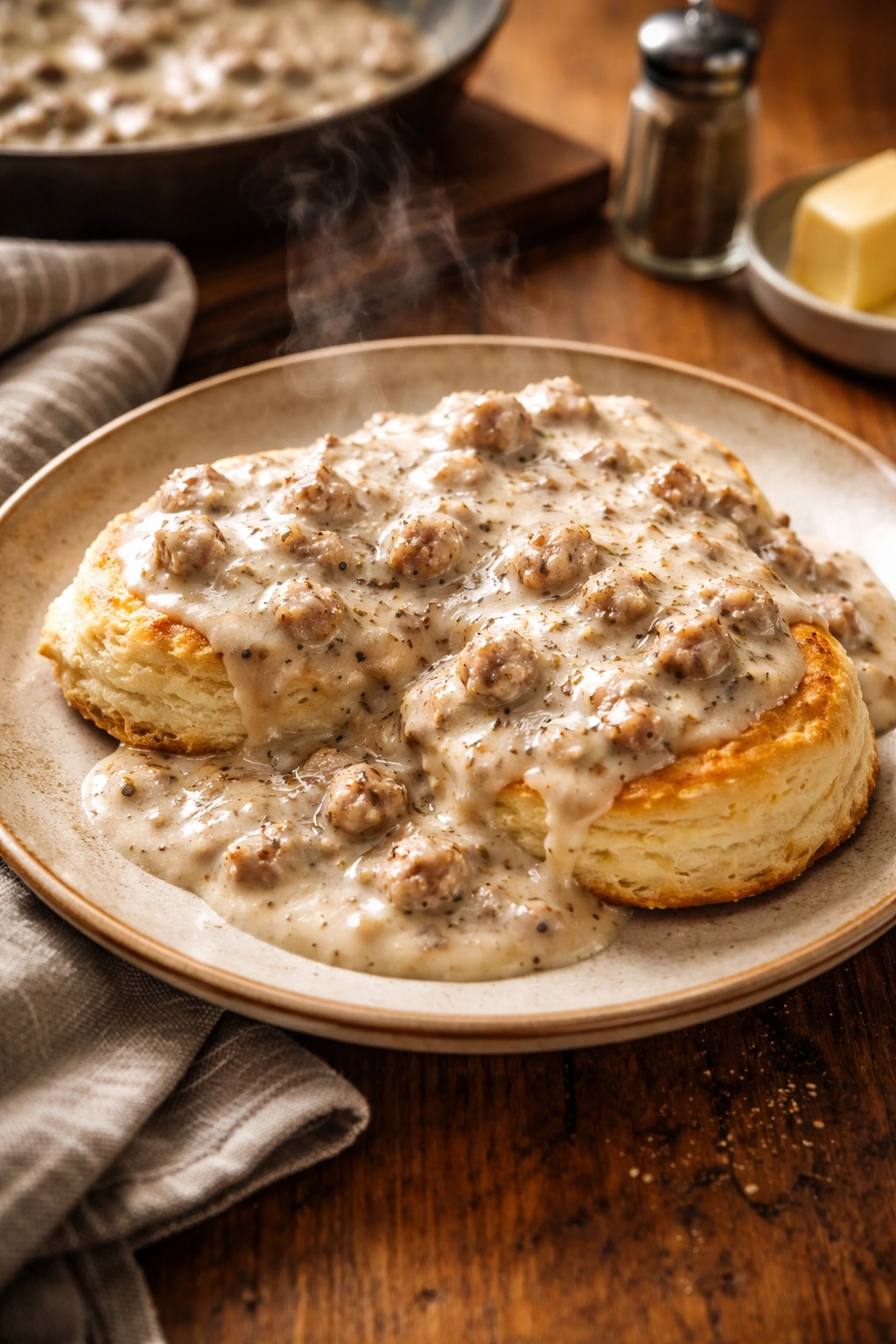
Yield: Serves 4 to 6 | Makes about 2 cups of gravy
Prep Time: 5 minutes
Cook Time: 20 minutes
Total Time: 25 minutes
Difficulty: Beginner — No special equipment required; this is straightforward even for a first-time gravy maker. The main skill is whisking smoothly and paying attention while it cooks.
Best Served: Immediately while still hot and steaming, poured generously over fresh, warm biscuits.
Ingredients You’ll Need
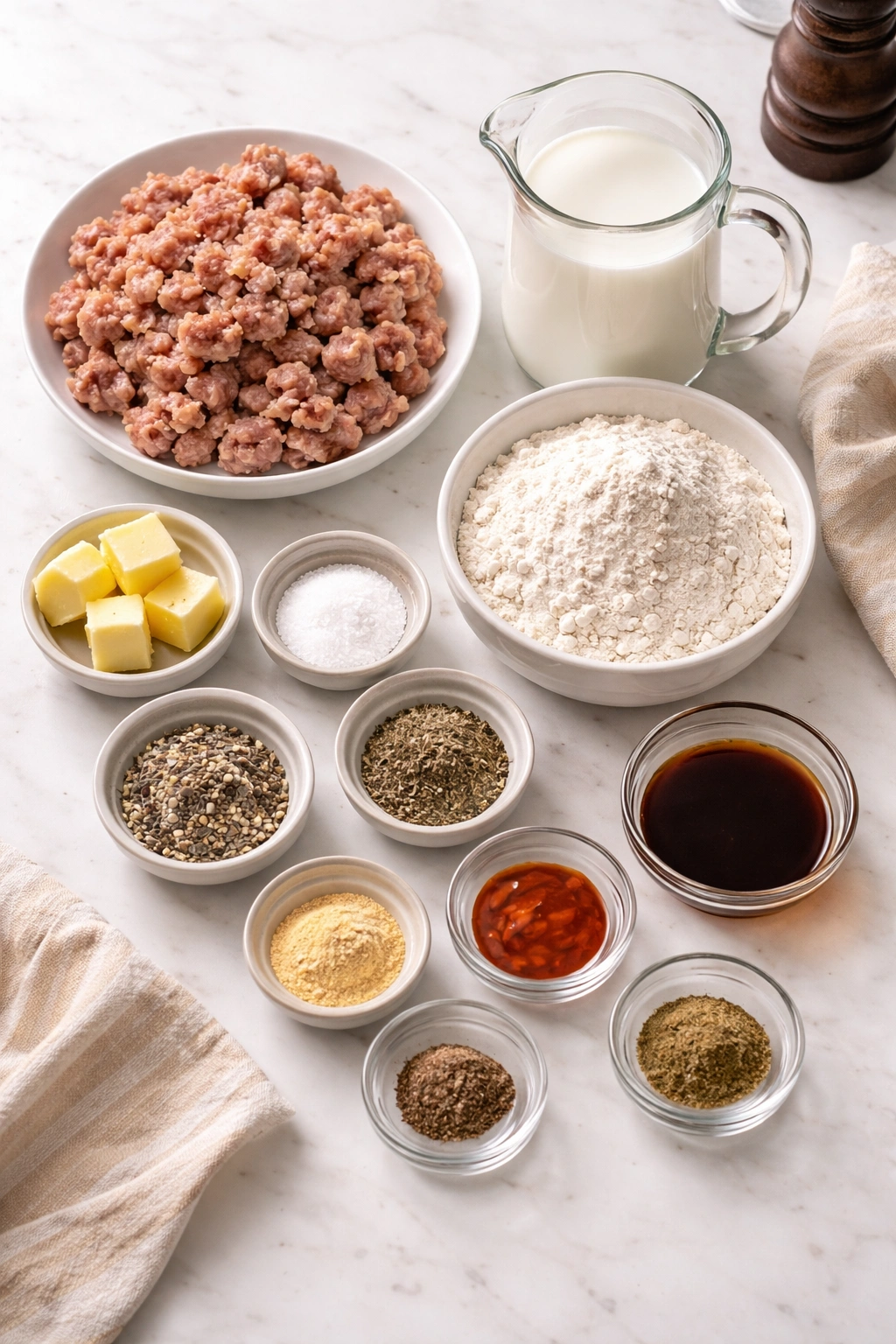
For the Gravy:
- 1 pound bulk breakfast sausage (the loose, raw kind — look for brands specifically labeled “breakfast sausage”)
- 4 tablespoons all-purpose flour
- 2½ cups whole milk (or 2 cups milk + ½ cup heavy cream for extra richness)
- ½ teaspoon fine sea salt (adjust to taste — sausage is already seasoned)
- ¼ teaspoon ground black pepper, preferably freshly cracked
- Pinch of garlic powder (optional but recommended)
- Pinch of cayenne pepper (optional — adds a subtle warmth without heat)
Optional Add-ins for Extra Depth:
- 2 tablespoons unsalted butter (if your sausage is very lean)
- 1 tablespoon finely minced fresh sage (if you prefer a more herbaceous flavor)
- ¼ teaspoon smoked paprika (for subtle smokiness)
- Dash of Worcestershire sauce (adds savory depth)
How to Make Diner Sausage Gravy
Brown the Sausage and Build the Roux:
-
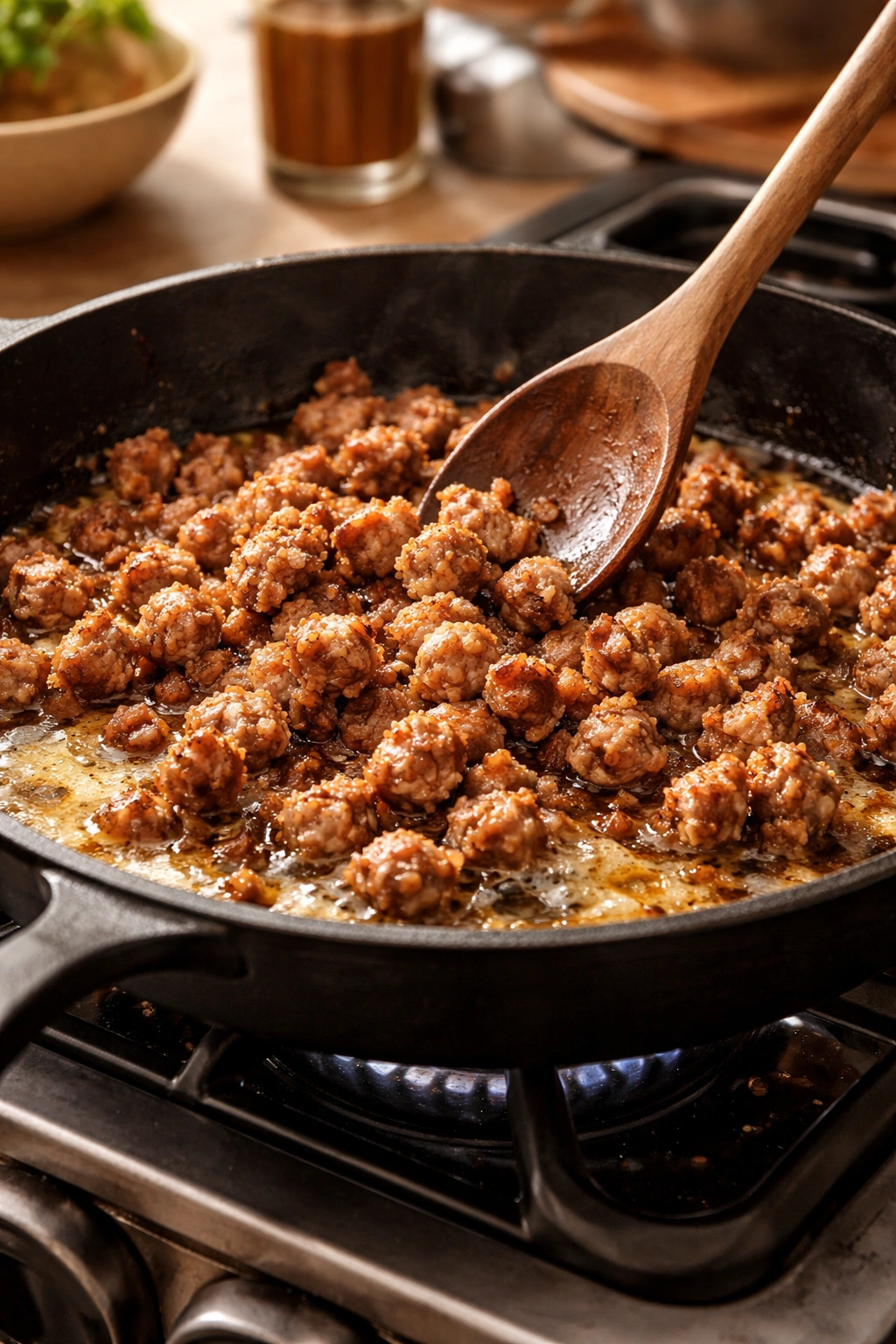
Add the bulk breakfast sausage to a large skillet (preferably 12 inches) set over medium-high heat. Do not break it up immediately. Let it sit undisturbed for 1-2 minutes so the bottom surface makes contact with the hot pan and begins to brown and render fat.
-
Using a wooden spoon or sturdy spatula, break the sausage into small, bite-sized pieces (about the size of a marble or slightly smaller). Stir frequently as it cooks, breaking up any large clumps that form. Continue cooking for 5-7 minutes, until the sausage is completely browned on all sides and cooked through with no raw, pink meat remaining. The sausage should look deeply golden and slightly crispy at the edges — this is where the flavor lives.
-
Once the sausage is fully cooked, check how much fat is rendered in the pan. You should have roughly 3-4 tablespoons of sausage fat pooling at the bottom. If your sausage was very lean and you don’t have enough fat, add 1-2 tablespoons of unsalted butter to the pan now. If it’s very fatty and you have more than 4 tablespoons pooled, you can carefully drain off a tablespoon or two, but keep most of it — this fat is where the gravy gets its rich flavor.
-
Reduce the heat to medium. Sprinkle the 4 tablespoons of flour evenly over the sausage and fat. Using a wooden spoon, stir constantly for 1-2 minutes, coating all the sausage pieces with flour and combining everything into a thick, paste-like mixture. This is your roux. During this cooking time, the flour will smell slightly toasted and lose its raw, starchy smell — this is the exact moment you want to stop, before it browns further.
Add the Milk and Cook the Gravy:
-
Pour the milk into a separate measuring cup or bowl beforehand so it’s easy to pour steadily into the pan. The temperature of the milk matters less than pouring it slowly and whisking constantly — room-temperature or cold milk both work fine, but avoid boiling milk straight from the stove, as it’s harder to control.
-
While whisking constantly with a wire whisk (or a fork in a pinch), slowly pour the milk into the sausage-flour mixture, starting with just a splash. Whisk vigorously for 10-15 seconds until that splash is fully incorporated and smooth, then continue pouring in a thin, steady stream while whisking constantly. This slow, deliberate process prevents lumps from forming. The mixture will go from thick paste to thick slurry to thick liquid as the milk incorporates.
-
Once all the milk has been added and the gravy looks uniformly thick and creamy (it should coat the back of a spoon but still pour), add the salt, pepper, and optional garlic powder. Stir to combine. At this point, do NOT walk away — the gravy is still vulnerable to burning on the bottom of the pan.
-
Increase the heat to medium-high and bring the gravy to a gentle simmer, stirring frequently (every 20-30 seconds). You should see small bubbles breaking the surface. Continue simmering for 10-12 minutes, stirring every 30 seconds. During this time, the gravy will thicken further as the flour fully cooks and the flavors meld. The gravy will also lose any raw, starchy taste and develop a richer, more cohesive flavor.
-
Test the thickness by dipping a spoon in and tilting it — the gravy should coat the spoon and slowly drip off, not pour off immediately and not cling stiffly. If it’s too thin, simmer for another 2-3 minutes and retest. If it’s too thick, whisk in an additional splash of milk (1-2 tablespoons at a time) until you reach the consistency you want.
-
Taste the gravy and adjust the seasonings. Most sausage is already well-seasoned, so you may not need much salt, but taste and add more if needed. A pinch of cayenne pepper at the end adds subtle warmth without noticeable heat. If you’re using optional add-ins like Worcestershire sauce or smoked paprika, stir them in now and let them cook together for 30 seconds.
Finish and Serve:
- Pour the sausage gravy into a serving bowl or directly over warm, split biscuits. The gravy will continue to thicken slightly as it sits, so if you’re holding it for a few minutes, whisk in a splash of milk to loosen it slightly and maintain the pourable consistency.
Tips for Achieving Perfect Diner-Quality Results
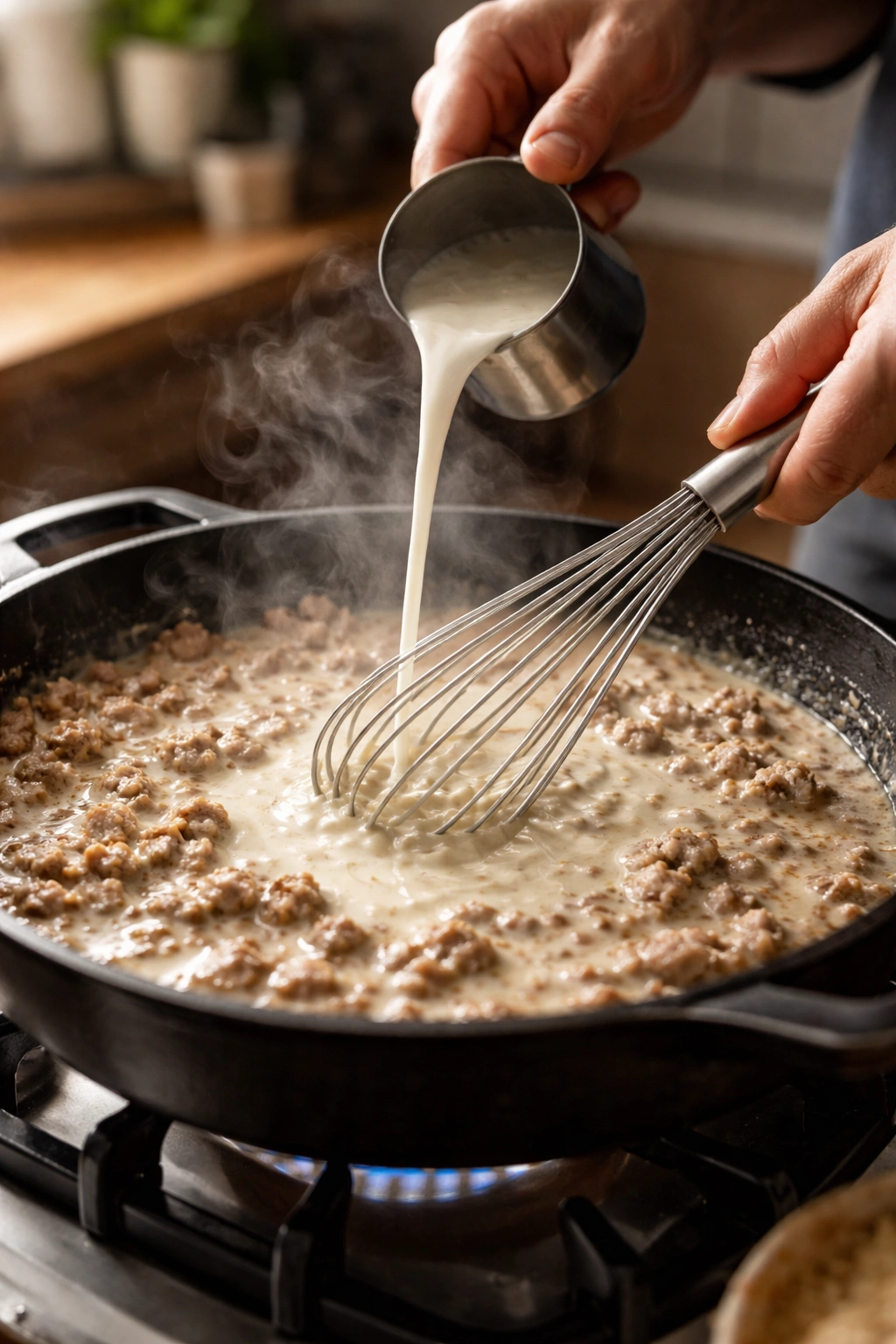
The most critical mistake home cooks make is rushing the browning phase. Spend the full 5-7 minutes browning your sausage. When you take that time, the sausage develops a golden color and a slightly crispy surface that tastes savory and rich. Rush this step and your gravy tastes bland and one-dimensional.
The second critical mistake is adding milk too quickly. Yes, you can add it faster than the first splash, but pouring it in while whisking constantly prevents lumps from forming. If you dump all the milk in at once or stop whisking, you’re almost guaranteed to end up with a lumpy gravy. If this happens, you can save it by pouring the gravy through a fine-mesh sieve, but it’s so much easier to whisk as you pour.
Pay attention to the roux color before adding milk. If it smells burnt or looks dark brown, you’ve cooked it too long and your gravy will have a burnt undertone. If it barely smells toasted and looks light brown, that’s the sweet spot. The roux should cook for just 1-2 minutes before milk gets added.
Use a whisk, not a spoon. A spoon works okay, but a whisk does a dramatically better job of breaking up lumps and creating a smooth, creamy texture. It’s worth the extra 30 seconds of cleanup to get noticeably better results.
The simmering phase after the milk is added is not optional — it’s essential. During those 10-12 minutes, the raw flour taste cooks away, the gravy thickens as the flour fully hydrates, and all the flavors come together into something cohesive and rich. Gravy made without this simmering time tastes thin, floury, and one-note.
Don’t drain off all the sausage fat. That’s where the flavor comes from. You need enough fat to make a thick roux and to season the gravy throughout. If your sausage was extremely fatty and you’re concerned, drain off just a tablespoon or two, but keep the rest.
Common Mistakes That Ruin Sausage Gravy
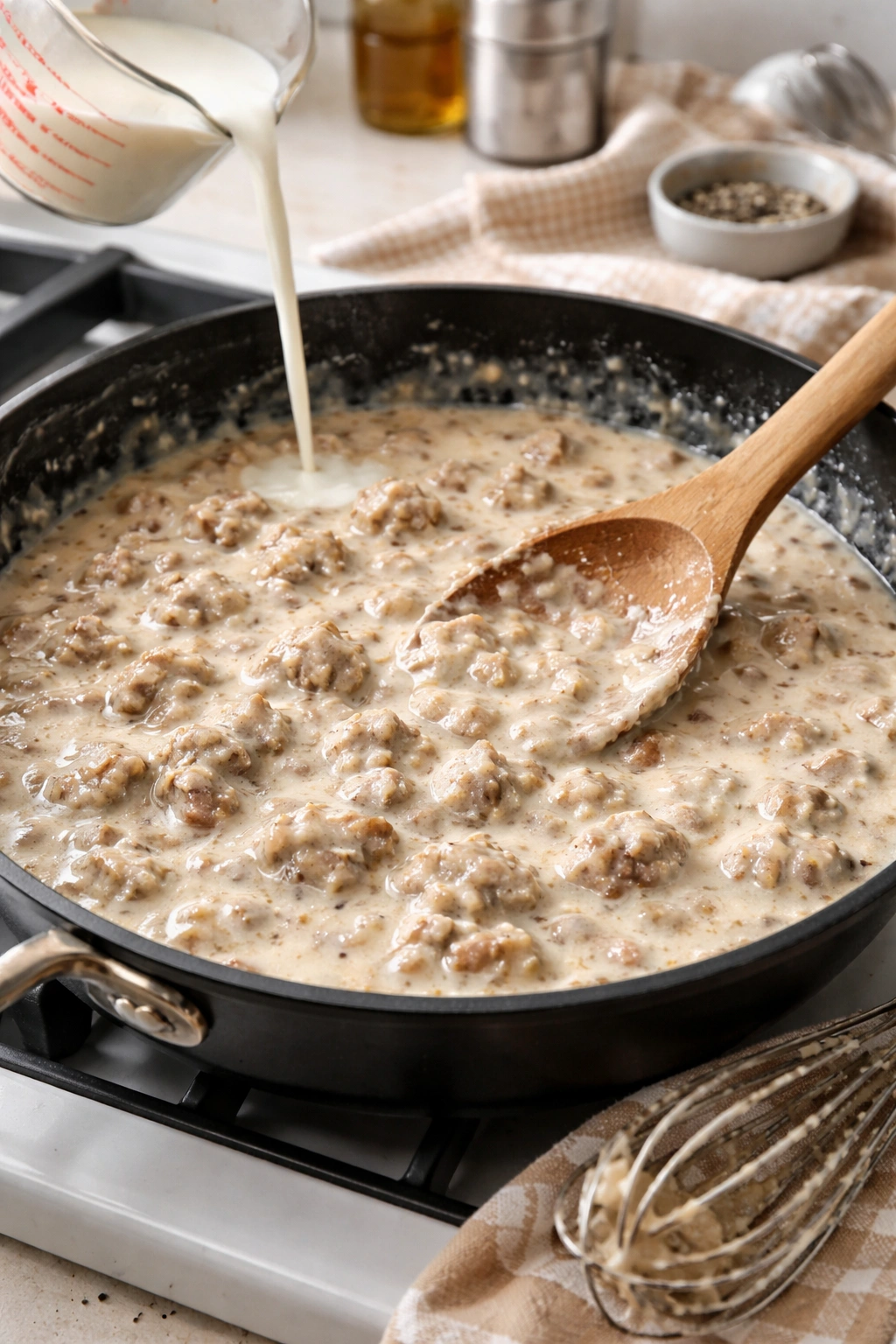
Lumpy gravy is the number-one complaint, and it’s always caused by adding milk too quickly or not whisking hard enough. The fix is prevention: whisk as you pour, pour slowly, and whisk constantly. If you end up with lumps anyway, pour the gravy through a fine-mesh sieve placed over a bowl, pressing gently with the back of a spoon to push the smooth gravy through while leaving lumps behind. It’s not ideal, but it saves the batch.
Gravy that breaks or separates (looks oily and thin with clumps of curdled milk) usually happens when you’ve cooked it at too high a temperature or added the milk too hot. The fix is to reduce heat to low, whisk in a splash of cold milk, and whisk constantly until it comes back together. Prevent this by using room-temperature or cold milk and keeping the heat at a gentle simmer, not a rolling boil.
Floury, starchy-tasting gravy means you didn’t simmer it long enough after adding the milk. The flour particles need 10-12 minutes to fully cook and lose that raw taste. If your gravy tastes starchy, just keep simmering. It’ll improve with each passing minute.
Gravy that’s too thin usually means either the milk was added too quickly before the roux was ready, or you’re testing it before it’s finished thickening. The milk-to-flour ratio is fairly forgiving — if it looks too thin after the full simmering time, simply whisk in a flour slurry (1 tablespoon flour whisked with 2 tablespoons cold milk) and simmer for another minute until it thickens.
Gravy that’s too thick means you either cooked it too long or started with too little milk. Whisk in milk one tablespoon at a time until the consistency is right. Remember that gravy thickens as it cools, so if it looks perfect while hot, it’ll be thicker once it sits in a serving bowl for a few minutes.
Bland-tasting gravy usually comes from using sausage with very little seasoning, cooking the sausage at too low a temperature so it doesn’t brown properly, or from simmering it at such a low heat that the flavors never develop. Make sure your sausage is a brand with noticeable seasoning (check the ingredient label for sage, black pepper, and spices), brown it at medium-high heat until deeply golden, and simmer at a gentle but active bubble once the milk is added.
Making Your Gravy Richer and More Luxurious

If you want gravy that tastes even more decadent and diner-like, use a combination of milk and heavy cream. Replace the 2½ cups whole milk with 2 cups whole milk and ½ cup heavy cream. The cream adds richness and body that feels more luxurious on the tongue. This is what many upscale diners use for their gravy.
Adding a tablespoon of unsalted butter at the very end (after you’ve tasted it and adjusted seasonings) adds silky richness without changing the flavor. Just whisk it in off the heat and let it melt into the hot gravy.
A pinch of smoked paprika (just ⅛ teaspoon) adds subtle smokiness that makes the gravy taste deeper and more complex, like it’s been simmering in a proper diner kitchen for hours. Add it near the end so you can taste and adjust.
Fresh sage is a traditional flavor in breakfast sausage seasoning. If you want to emphasize it, finely mince about 1 tablespoon of fresh sage leaves and add it when you start browning the sausage, or stir it in at the very end for fresh herb brightness. This adds a subtle herbal note that people often can’t identify but always notice.
Variations and Flavor Adaptations

If you prefer a more herbaceous, New England-style gravy, add a full tablespoon of finely minced fresh sage when you brown the sausage, and reduce other seasonings slightly so the sage shines. This creates a gravy with real herbal character.
For a spicier version, increase the black pepper to ½ teaspoon, add ⅛ teaspoon of cayenne, and use a sausage that’s labeled “spicy” or “hot.” This is closer to what you’d find in the South and Southwest.
A breakfast sausage gravy with fennel seed creates an Italian-inspired twist. Toast ¼ teaspoon of fennel seed in a dry pan for 30 seconds until fragrant, then crush it with the side of a knife and add it when you brown the sausage. It’s subtle but interesting.
If you want to use the gravy over something other than biscuits, it works beautifully over hash browns, fried potatoes, eggs, and even mashed potatoes. The flavor stays the same, but you’ve got more flexible serving options.
Making it with half-and-half instead of whole milk creates a slightly lighter version that’s still creamy but feels less heavy. It’ll be a bit thinner, so you might need to increase the flour slightly or simmer it a bit longer to reach the right thickness.
A smoked sausage gravy uses smoked breakfast sausage instead of regular breakfast sausage. The gravy will have a subtle smoky note that’s delicious over biscuits and eggs or on top of polenta.
Storage, Make-Ahead, and Reheating Instructions
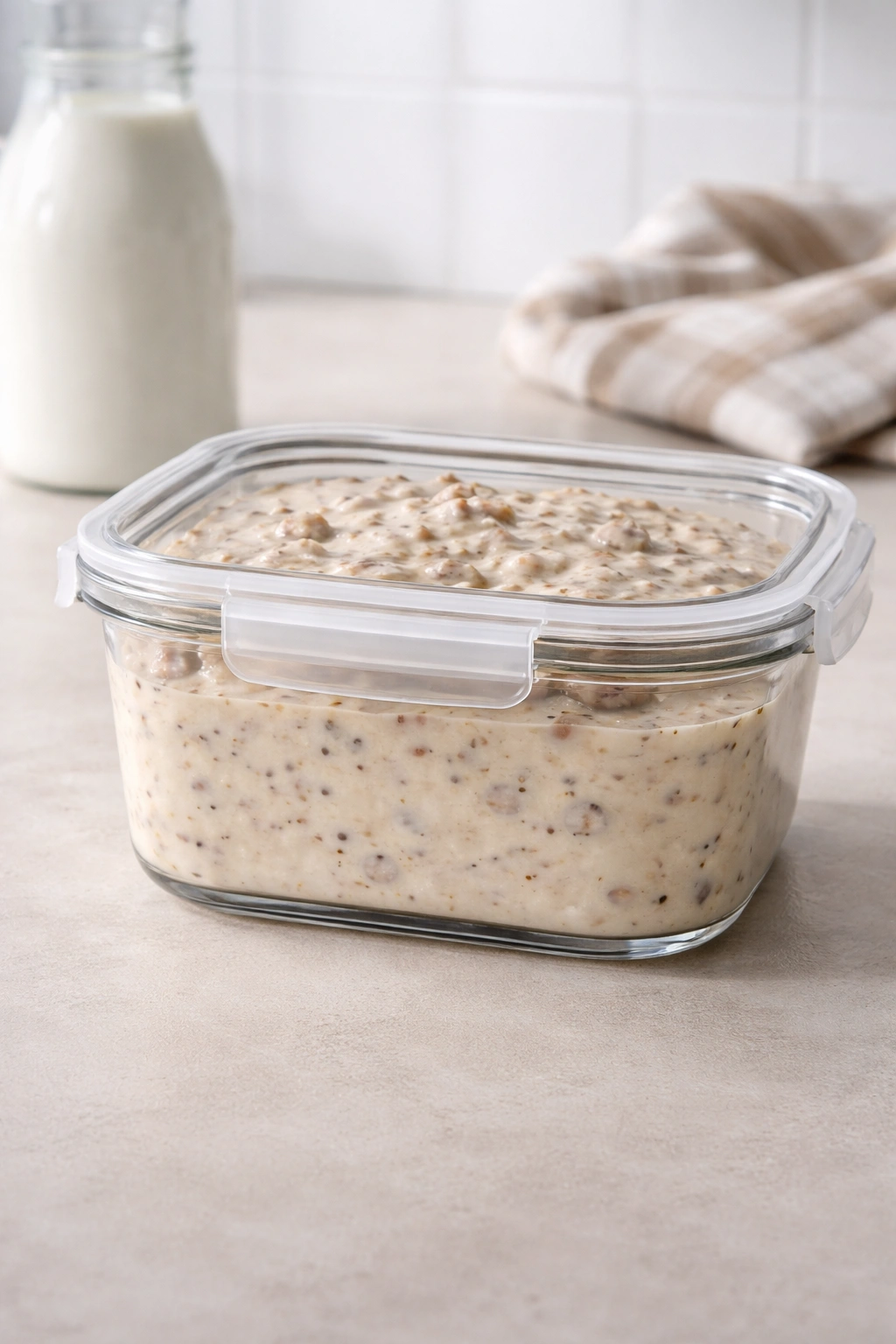
Sausage gravy keeps in an airtight container in the refrigerator for 3-4 days. The gravy will thicken quite a bit as it cools — this is normal. To reheat it, scoop the gravy into a saucepan and warm it over medium-low heat, whisking in a splash of milk as it heats to restore the pourable consistency. It should come back to life and taste nearly as good as freshly made.
You can also freeze sausage gravy for up to 2-3 months. Let it cool completely, then pour it into a freezer-safe container or even a zip-top freezer bag (lay it flat for space-efficient storage). Thaw overnight in the refrigerator, then reheat in a saucepan over medium-low heat, whisking in a splash of milk to restore the texture.
The gravy can be made up to 2 hours ahead of time. Make it, pour it into a serving bowl, and cover it with plastic wrap. Keep it at room temperature (not hot, not cold). When you’re ready to serve, reheat it gently over low heat while whisking in a splash of milk to restore the consistency.
Don’t try to make the gravy completely ahead and freeze the biscuits — they won’t be the same. Instead, make the gravy earlier in the day, store it in the fridge, and make fresh biscuits right before serving. Fresh biscuits paired with reheated gravy tastes best.
What to Serve Alongside This Gravy

Warm, fresh buttermilk biscuits are the obvious choice, and it’s the right choice. Split them in half, pile them on a plate, and pour the sausage gravy generously over the top. This is the classic combination.
Hash browns or crispy home fries work beautifully, especially if you’re making a breakfast plate. Pour the gravy over the potatoes and serve alongside eggs, bacon, and toast.
Buttered toast (white, wheat, or sourdough) is a simple, satisfying platform for sausage gravy. It’s more casual than biscuits but absolutely works.
Biscuits and gravy bowls are popular in some regions — thick, hearty bowls where the biscuits are broken up and mixed into the gravy, almost like a bread pudding but savory. If you like this style, just spoon the broken biscuits into a bowl, pour the gravy over the top, and serve with a spoon.
Creamed corn, stewed tomatoes, or simple steamed greens on the side round out the meal and add vegetable nutrition to what’s otherwise a very rich, meaty breakfast.
For drinking, strong coffee is traditional. The slight bitterness of coffee pairs beautifully with the rich, savory gravy. Fresh-squeezed orange juice also works if you prefer something sweeter or less acidic.
Troubleshooting Common Gravy Problems
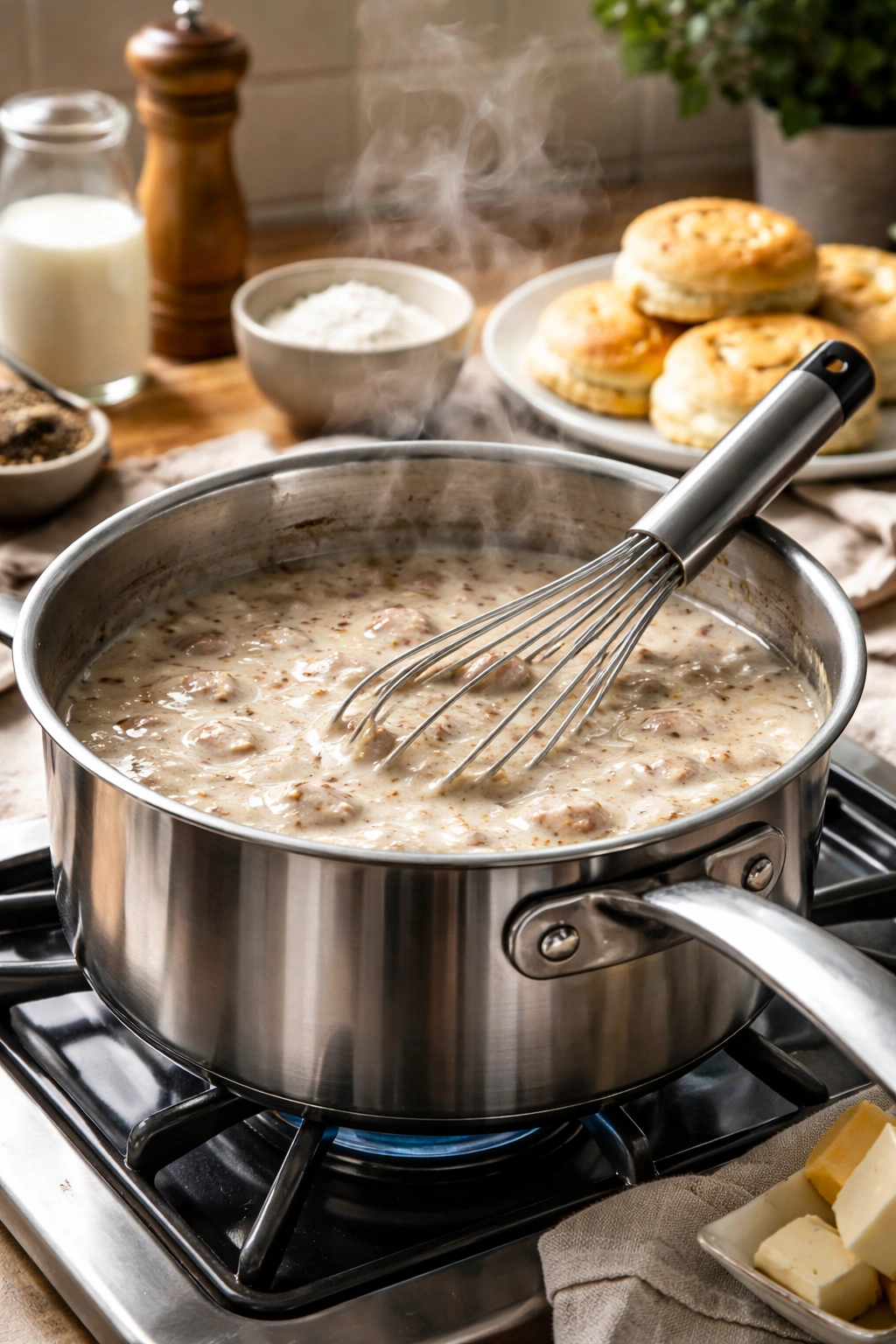
If your gravy separates or breaks (looking oily with curdled bits), it got too hot. Remove it from heat immediately, whisk in a splash of cold milk, and whisk vigorously. Keep whisking off the heat for a full minute — the gravy usually comes back together. If it doesn’t, strain it through a fine-mesh sieve and start fresh with better heat control next time.
If the gravy is lumpy but not separated, strain it through a fine-mesh sieve. The smooth part goes into your serving dish, and you discard the lumps. It’s not as good as getting it right the first time, but it’s better than serving a lumpy gravy.
If the gravy tastes floury or starchy, it didn’t simmer long enough. Put it back on the stove over medium heat and simmer for another 5-10 minutes, whisking occasionally. Taste it periodically — the starchy flavor will fade.
If the gravy is too thick and pasty, whisk in milk one tablespoon at a time until it’s pourable. If you want to thicken it back up, don’t reach for more flour — just simmer it longer, which naturally reduces moisture and increases thickness.
If the gravy is too thin and doesn’t coat a spoon, make a slurry by whisking 1 tablespoon of flour with 2-3 tablespoons of cold milk until smooth, then whisk it into the hot gravy. Simmer for 1-2 minutes until it thickens.
If the sausage pieces are very large and chewy, you either didn’t break them up enough when browning, or your sausage is a coarser blend. Next time, break the sausage into smaller pieces as it cooks. If this has already happened, you can mash the cooked sausage against the side of the pan with your wooden spoon to break the pieces smaller before adding the flour.
If the gravy tastes bland, your sausage might not be seasoned. Check the brand you’re using and look for one that lists sage, pepper, and spices in the ingredient label. Alternatively, add an extra pinch of black pepper, a small pinch of garlic powder, and a dash of smoked paprika at the end to boost the flavor.
Final Thoughts

The beauty of this recipe is that it genuinely gets better with practice. The first time you make it, you’re learning the technique. By the third time, your hands know the rhythm and you stop thinking so hard about the whisking and pouring. By the time you’ve made it half a dozen times, you’re making diner-quality gravy without even thinking about it — and you’re making it better than what you can buy anywhere else.
What separates this gravy from mediocre versions is patience during the browning phase and attention during the milk addition and simmering. These aren’t complicated steps; they just require you to be present. That’s it. Brown the sausage properly, whisk the milk in slowly, and let it simmer long enough for the flour to cook through. Those three things are the difference between gravy that tastes like a mistake and gravy that tastes like it came from a diner kitchen that’s been perfecting this for decades.
Make this alongside fresh, warm biscuits and you’ve got a breakfast or brunch that holds up against anything a restaurant can serve. And honestly, once you’ve tasted truly great homemade sausage gravy, the convenience-store version starts to seem pretty thin.
