



Building a grain bowl from scratch might seem intimidating if you’ve only ever ordered them at restaurants, but the truth is they’re one of the easiest, most forgiving meals you can make at home. The beauty of a grain bowl isn’t just that it looks impressive on Instagram — it’s that once you understand the simple framework, you can throw together something delicious using whatever ingredients are already in your kitchen. No two bowls need to be identical, and that flexibility is exactly why so many people have made grain bowls their go-to for meal prep, weeknight dinners, and satisfying lunch breaks.
The real secret isn’t a hidden technique or some gourmet ingredient. It’s knowing how to balance five fundamental components: a hearty grain base, a protein layer, fresh vegetables, healthy fats, and a dressing that ties everything together. Get those proportions right, and you’ll create something that’s filling, nutritious, and genuinely crave-worthy. Most of the work is actually just chopping and arranging — there’s almost no cooking skill required, which is why grain bowls work for everyone from college students eating their first meal outside the dorm to experienced home cooks looking for something quick and healthy.
What makes a grain bowl different from a salad or a simple side dish is that it’s designed to be a complete, balanced meal. You’re not just eating vegetables or grains in isolation. You’re creating a composition where each layer contributes something essential: sustained energy from the grain, muscle-building protein, nutrient density from the vegetables, satiety from fat, and flavor from the dressing. When you build one thoughtfully, you end up with something that’s simultaneously light and satisfying — the kind of meal that leaves you energized instead of sluggish, even though you’re completely full.
Choosing Your Grain Base
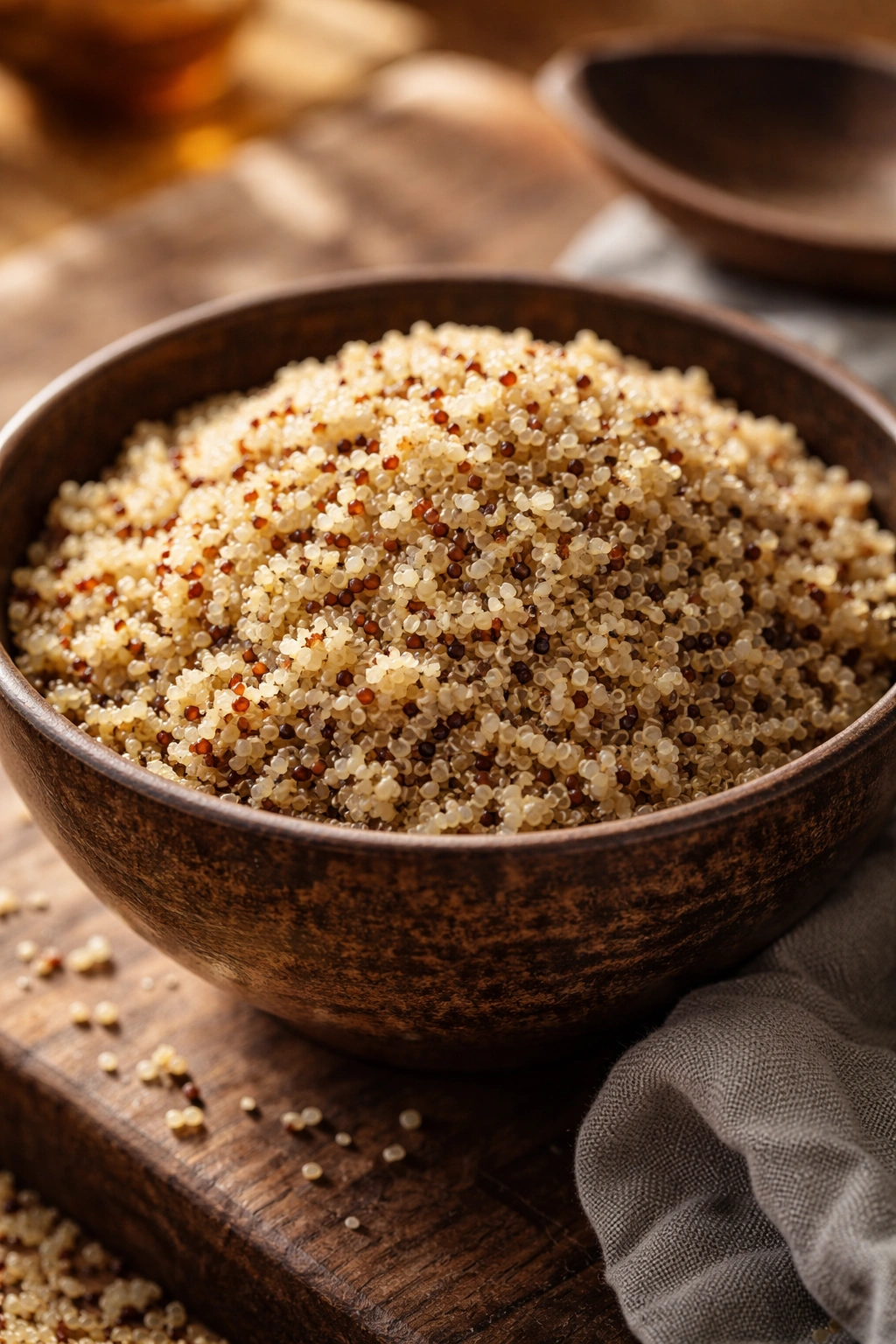
The grain is the foundation that everything else builds on, so it deserves real thought. This isn’t just about what you like — it’s about what works structurally in a bowl. You want something substantial enough to hold up under the weight of toppings and dressing, flavorful enough to taste like more than filler, and neutral enough to work with virtually any protein or vegetable combination you choose.
Quinoa has become the default grain bowl base for good reason. It’s complete protein on its own (containing all nine essential amino acids), has a slightly nutty flavor that complements almost everything, and holds its texture without getting mushy even when dressed hours in advance. Cook it according to package directions — usually a 2:1 water-to-quinoa ratio, brought to a boil then simmered for about 15 minutes until the little tails flip out and the water is completely absorbed. The texture should be light and individual, not gummy or clumped.
Brown rice is heartier and more filling than white rice, with a chewier bite that adds real textural interest to a bowl. It takes longer to cook (about 45 minutes versus 20 for white rice), so it’s not great for last-minute meals, but it’s incredibly forgiving and works with basically any flavor profile. The key is using the right water ratio — too much and you get mushy rice, too little and it stays crunchy. A 2.5:1 water-to-rice ratio gives you perfect fluffy brown rice that won’t turn to paste when you dress it.
Farro is the grain for people who want something with real personality. It’s got a chewy, substantial bite and a subtle nutty flavor that feels more interesting than plain rice or quinoa. Farro can taste faintly of whole grain or even popcorn depending on the brand, which means it actually contributes something to the flavor profile instead of just serving as a neutral backdrop. Pearl farro (hulled) cooks faster than whole grain farro and has a slightly softer texture — around 30 minutes versus 45 for whole grain.
Millet is smaller and fluffier than other grains, almost like a tiny seed, which gives grain bowls a lighter texture. It’s naturally slightly sweet and has a clean, mild flavor that pairs particularly well with Asian-inspired bowls. Cooked millet should be fluffy and individual, not clumped together. Use a 2:1 water ratio and cook for about 20 minutes until the liquid is absorbed.
Here’s the thing many people miss: cook extra grain and store it. Keep cooked grains in the refrigerator for up to five days in airtight containers. This transforms grain bowl assembly from a 45-minute project into a 15-minute one. When you’re ready to build a bowl, you simply reheat a portion (either microwaved or tossed briefly in a hot pan) and you’ve got your base ready.
Seasoning Your Grain Before Assembly
Don’t build your entire bowl on a bland, unseasoned grain base. Most people make this mistake and then compensate by drowning everything in dressing. Instead, season the grain while it’s still warm — a pinch of salt, maybe a small splash of acid (lemon juice or rice vinegar), and potentially a light drizzle of a flavorful oil. This gives the grain its own distinct flavor, so when the dressing is added, it’s enhancing rather than fixing a problem.
If you’re making an Asian-inspired bowl, add a teaspoon of sesame oil and a splash of rice vinegar to warm millet or short-grain brown rice. For Mediterranean-style bowls, dress the grain lightly with olive oil, lemon juice, and a tiny pinch of dried oregano. For Mexican-influenced bowls, a squeeze of lime and a bit of cilantro stirred into warm rice or farro creates a flavor foundation that works with almost any topping combination.
Building Your Protein Layer
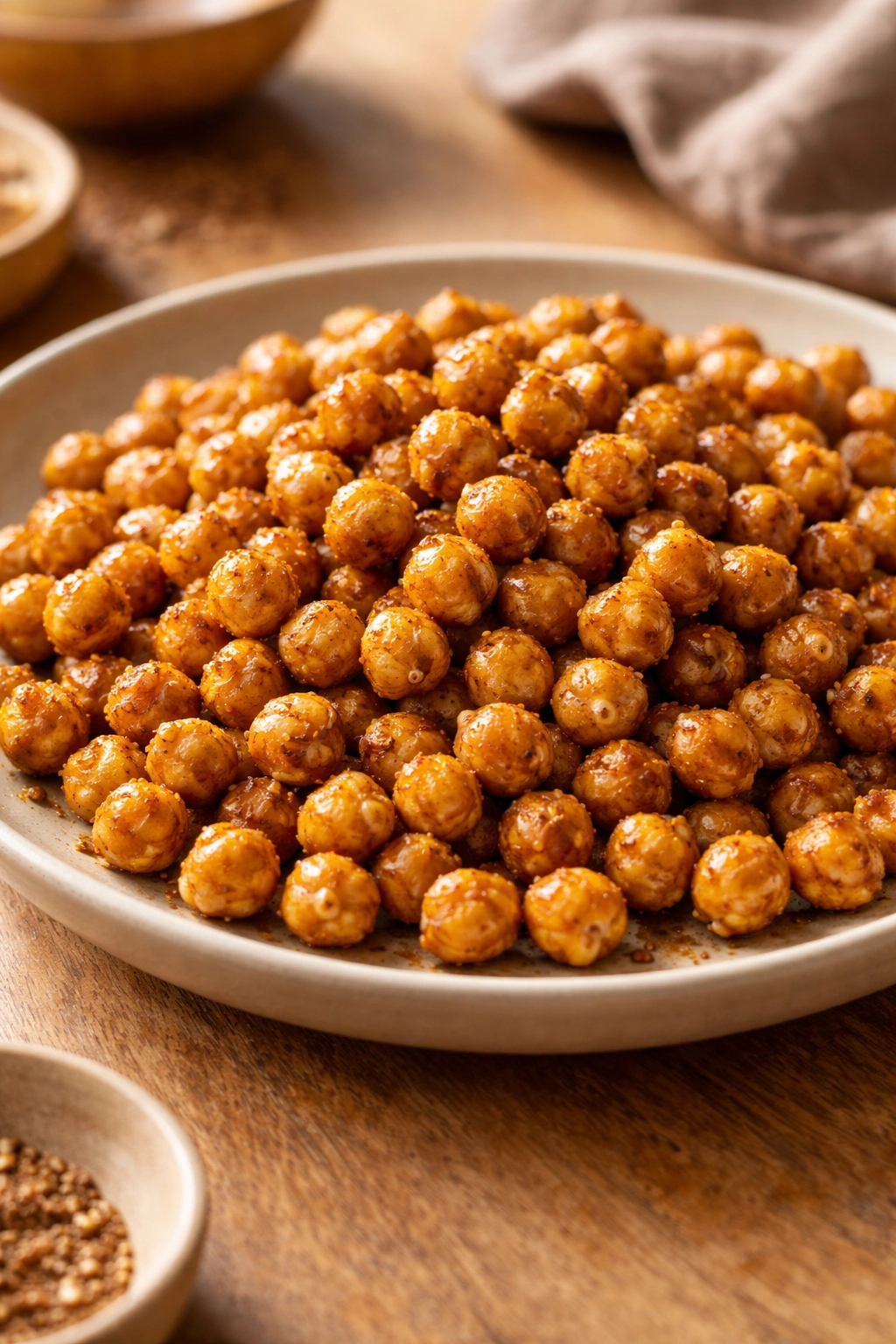
Protein turns a grain side dish into an actual meal that will keep you satisfied for hours. The amount matters — aim for a palm-sized portion (roughly 3-4 ounces for most people), which is the baseline for a satisfying, balanced bowl. You’re not trying to create a protein-dominant plate; you’re building something where each component plays an equal role.
Roasted chickpeas are probably the easiest plant-based protein to add. Drain canned chickpeas, pat them dry with a paper towel (this step matters — any moisture will create steam and prevent crisping), toss with a small amount of olive oil and whatever spices you’re using in the bowl (cumin and paprika for Mediterranean, garlic and chili powder for more global applications, or just salt and pepper for versatility). Spread them on a sheet pan and roast at 400°F for 25-30 minutes, shaking the pan halfway through. They should be golden and crispy on the outside with a slight creamy interior. The texture contrast is what makes them so satisfying.
Grilled or baked chicken breast is the go-to protein for people who want something neutral in flavor. The key is not overcooking it, which makes it dry and unpleasant. Pound the breast to an even thickness (about three-quarters of an inch), season generously with salt and pepper, and either grill it over medium-high heat for 6-7 minutes per side or bake it at 400°F for 15-18 minutes. Let it rest for five minutes before slicing — this allows the juices to redistribute so it stays moist. Slice against the grain into strips that are easy to eat in a bowl without requiring a knife.
Hard-boiled eggs are protein and fat all in one, which is why they’re so effective in a grain bowl. The yolk becomes a silky sauce when you break it into warm grain, adding richness and helping to coat everything you eat afterward. Boil eggs for 10-12 minutes depending on how firm you want the yolk (10 minutes gives you a set white with a barely-set yolk, 12 minutes gives you a completely firm yolk). Immediately transfer them to an ice bath to stop the cooking process. Peel under cool running water for the cleanest results.
Roasted tofu is where most people go wrong — they undercook it or don’t season it properly. Drain extra-firm tofu, wrap it in clean kitchen towels (not paper towels, which will stick), and press it under something heavy for 15-20 minutes to remove excess moisture. Cut it into cubes, toss with a mix of cornstarch (which helps it get crispy), oil, and bold seasonings (soy sauce, garlic, a pinch of ginger), and spread on a sheet pan. Roast at 425°F for 35-40 minutes, stirring halfway through. It should be golden and crispy on the outside, with a slightly firmer exterior and softer interior.
Salmon, whether roasted or pan-seared, adds richness and omega-3 fatty acids that make you feel genuinely nourished. A four-ounce fillet needs only 10-12 minutes at 400°F in the oven, skin-side down on a sheet pan, with just salt, pepper, and a light drizzle of oil. It’s done when it flakes easily with a fork. The skin gets crispy and it becomes one of the most delicious proteins in any bowl.
Ground meat — turkey, beef, or lamb — cooked with spices creates something more complex than a plain protein. Brown a quarter-pound of ground meat in a pan over medium-high heat, breaking it into small pieces as it cooks. Once it’s mostly cooked, drain any excess fat (or leave a small amount if you want richness) and add aromatics like diced onion, garlic, or ginger depending on your bowl’s flavor direction. Finish with spices and a small splash of sauce — soy sauce for Asian bowls, lime juice and cilantro for Mexican-inspired bowls, or simply salt and pepper for Mediterranean styles.
Layering Fresh Vegetables
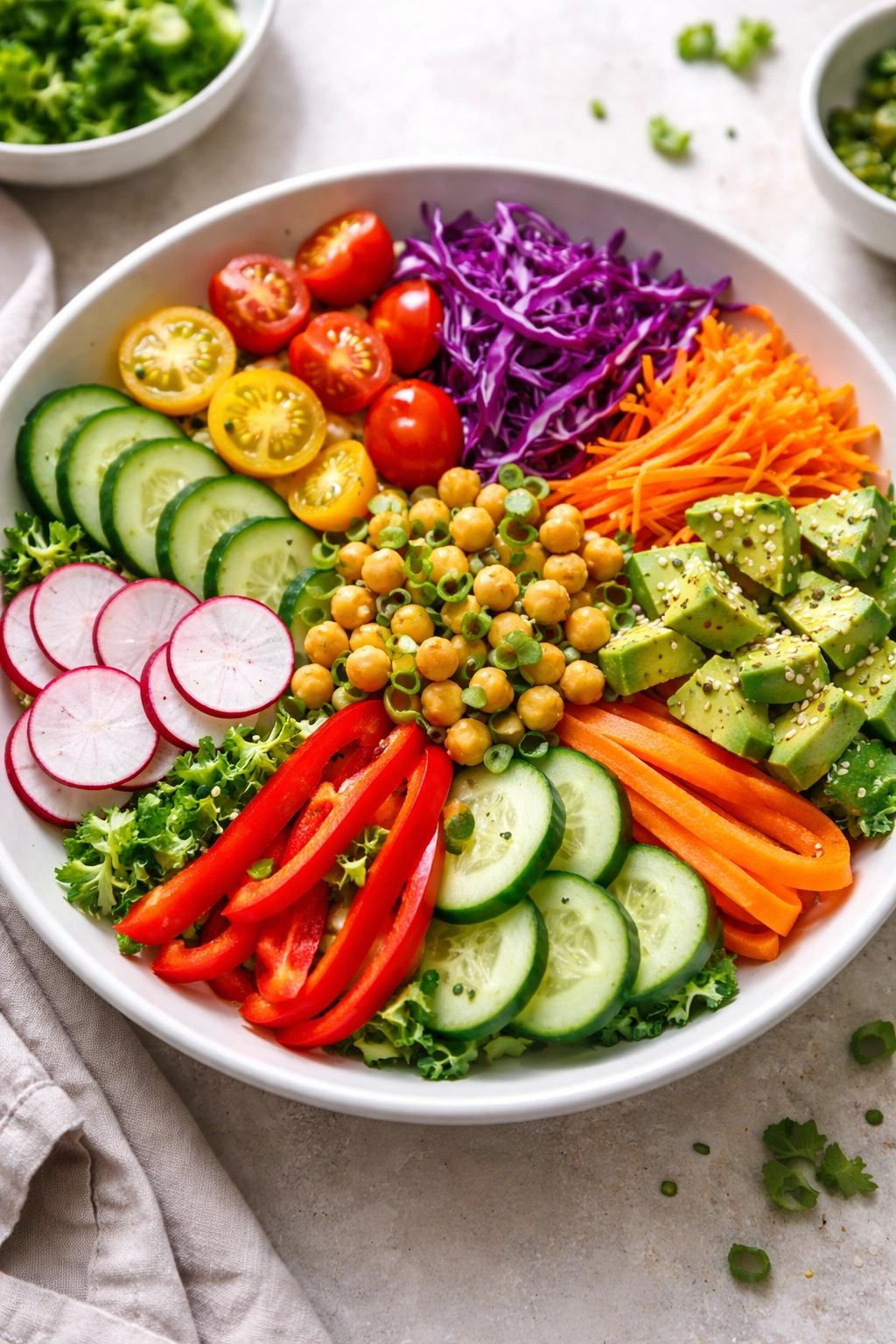
Vegetables provide crunch, brightness, and nutrition without adding calories that make you feel heavy. The key is using vegetables with different textures and color — not just for aesthetic reasons, but because varied textures and colors generally indicate varied nutrients. A combination of raw and cooked vegetables also creates more interest and a more satisfying eating experience.
Raw crunchy vegetables are your textural anchor. Shredded or thinly sliced raw vegetables like carrots, bell peppers, radishes, or jicama stay crisp even when dressed hours ahead of time. The key is cutting them thin enough to be pleasant to eat without being so thin they become fragile. Use a vegetable peeler to create ribbons, a mandoline for paper-thin slices, or just a sharp knife to cut thin matchsticks. The thinner you cut raw vegetables, the more surface area is exposed, which means better absorption of dressing flavors and a more pleasant texture when you bite into them.
Leafy greens add nutritional density and volume without heaviness. Spinach, arugula, or mixed lettuces work if you want something mild and tender. Kale, when massaged with a tiny bit of oil and salt, becomes tender and absorbs dressing flavors beautifully. Massaging kale means literally using your fingers to rub the leaves, breaking down the cell walls slightly so it becomes softer. This takes about a minute and completely transforms the texture — raw kale can feel tough and unpleasant, but massaged kale is actually delicious.
Roasted vegetables add depth and sweetness that raw vegetables can’t provide. Almost any vegetable benefits from roasting: broccoli, cauliflower, Brussels sprouts, carrots, beets, squash, or mushrooms. Cut them into bite-sized pieces, toss with oil, salt, and pepper (or more specific seasonings if you want), and spread on a sheet pan. Roast at 400-425°F for 25-35 minutes depending on the vegetable, stirring halfway through. They should be caramelized on the outside and tender inside. Roasted vegetables actually taste better the next day, so they’re perfect for meal prep.
Pickled or quick-marinated vegetables add acid and brightness that cuts through richer elements in the bowl. Quick-pickle carrots or radishes by thinly slicing them and covering them with a mixture of equal parts vinegar and water, a pinch of sugar, and some salt. Let them sit for at least 30 minutes before using — they’ll taste better and better as they sit. Marinated cucumber with rice vinegar, a touch of sugar, a pinch of red pepper flakes, and some sesame oil becomes a flavor bomb that transforms the entire bowl.
Avocado is technically a fruit but it functions as the fat component in plant-based bowls. Cut the avocado in half lengthwise, remove the pit, and scoop out the flesh in one piece if possible, then slice it lengthwise into thin, attractive slices. Add avocado at the last moment before eating — it oxidizes and browns if exposed to air, and it becomes mushy if it sits in dressing. Alternatively, you can leave the avocado halved and add a squeeze of lime juice, a pinch of salt, and a drizzle of olive oil directly to the pit cavity, then scoop out portions as you eat.
Timing Vegetables for Maximum Freshness
Here’s a practical strategy: assemble greens and roasted vegetables immediately; add crunchy raw vegetables just before eating if possible, or no more than 15 minutes before. This prevents sogginess and maintains textural contrast. If you’re meal prepping and need to keep everything together, put dressing in a separate small container and dress the bowl right before eating.
Adding Healthy Fats
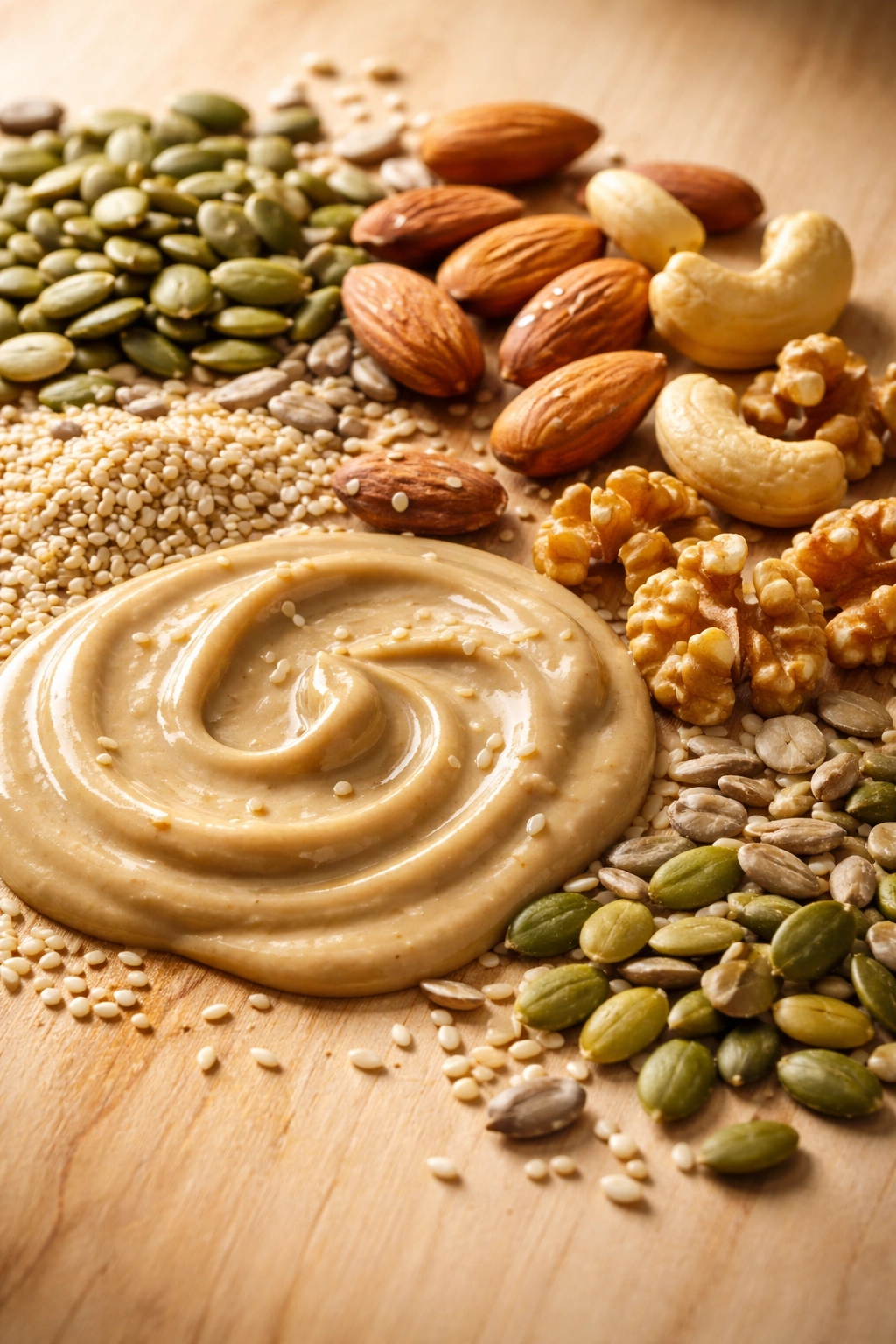
Fat is absolutely essential in a satisfying grain bowl — it’s what makes you feel full long after you finish eating, and it carries flavors that make everything taste better. Don’t skip or minimize this component. The healthiest, most satisfying bowls have fat deliberately included, not apologetically squeezed in.
Nuts and seeds are the easiest way to add fat and crunch simultaneously. A quarter-cup of almonds, walnuts, or cashews adds richness and texture. Seeds like sunflower, pumpkin, sesame, or hemp seeds contribute healthy fats, minerals, and a pleasant tiny crunch. Toast them lightly in a dry pan before adding them to the bowl — toasting brings out their flavor and makes them taste more intentional than raw. Be generous here. A small handful of nuts or seeds isn’t just a garnish; it’s a structural component that affects how satisfying the bowl feels.
Tahini, nut butters, or coconut cream stirred into your dressing or drizzled directly into the bowl adds both fat and a nutty or creamy richness. A tablespoon of tahini mixed into a lemon-vinaigrette makes it creamy and luxurious. Almond butter swirled into a bowl with roasted vegetables and grain creates something almost dessert-like in its comfort.
Olive oil, sesame oil, or coconut oil can be drizzled over the finished bowl for additional richness. This seems simple, but many people either skip this step entirely or feel guilty about it. The oil is where much of the flavor lives. A generous glug of good olive oil over a Mediterranean bowl or a teaspoon of toasted sesame oil over an Asian-inspired bowl elevates everything.
Fatty fish like salmon or mackerel brings its own oils, so if that’s your protein, you might need less additional fat. Eggs contribute yolk fat, which is why an egg-topped bowl feels more satisfying than one topped with egg whites. Avocado is almost entirely fat, so if that’s your fat source, you don’t need nuts or additional oil on top — just another source of fat from the dressing.
Crafting the Perfect Dressing
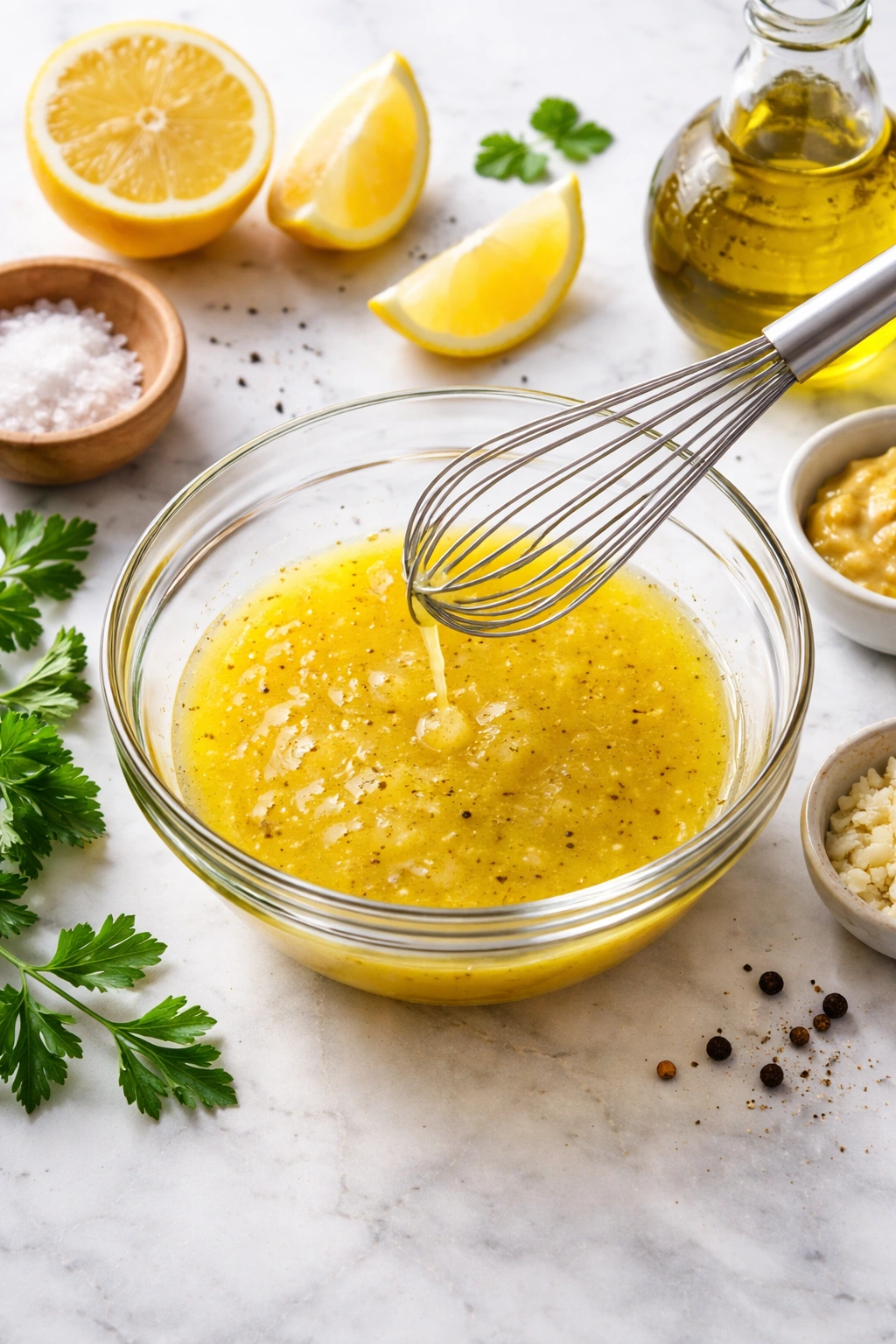
The dressing is what ties all the separate components into something cohesive. Too little dressing and your bowl tastes dry and disjointed. Too much and you’re eating a salad-soup hybrid. The goal is enough dressing that every component tastes like it belongs together, but not so much that it’s sloppy or overwhelming.
The basic formula for any vinaigrette is three parts fat (oil) to one part acid (vinegar or citrus juice), plus seasonings. This 3:1 ratio creates an emulsion that’s balanced — not too sharp, not too oily. From there, you customize based on the bowl’s flavor direction.
A classic lemon-olive oil dressing is the most versatile option. Whisk together three tablespoons of good extra-virgin olive oil, one tablespoon of fresh lemon juice, one small minced garlic clove, a pinch of salt, and a crack of black pepper. Taste it and adjust — if it’s too sharp, add another half-tablespoon of oil; if it’s too oily, add another half-teaspoon of lemon juice. This dressing works on virtually every type of grain bowl. The key is using fresh lemon juice, not bottled lemon juice, which tastes flat and metallic by comparison.
An Asian-inspired dressing balances soy sauce, rice vinegar, and sesame oil. Whisk together two tablespoons of neutral oil (not sesame oil, which would be too strong), one tablespoon of rice vinegar, one tablespoon of soy sauce, one teaspoon of sesame oil, and a tiny piece of grated ginger or a quarter teaspoon of ginger powder. This dressing adds salty, sweet, sour, and umami notes all at once — it’s why Asian grain bowls taste so complete and crave-worthy.
A Mediterranean dressing combines olive oil with red wine vinegar and adds dried herbs. Whisk three tablespoons of olive oil, one tablespoon of red wine vinegar, one tablespoon of red wine, half a teaspoon of dried oregano, a pinch of salt, and a crack of pepper. The small amount of red wine adds body and complexity that makes it more interesting than plain vinegar.
A Mexican-inspired dressing uses lime and cilantro for brightness. Whisk together three tablespoons of oil, one tablespoon of fresh lime juice, one tablespoon of fresh cilantro (finely chopped), one small minced garlic clove, a pinch of cumin, and salt and pepper to taste. Lime juice is more delicate than lemon, so use it more sparingly to avoid overpowering the dressing.
A tahini dressing creates something creamy without dairy. Whisk together two tablespoons of tahini, one tablespoon of lemon juice, two tablespoons of water (add more if it’s too thick), one small minced garlic clove, a pinch of salt, and a crack of pepper. If it’s too thick, whisk in more water a teaspoon at a time. This dressing is thick and luxurious, so you need less of it per bowl.
The Assembly Process: Building Your Bowl
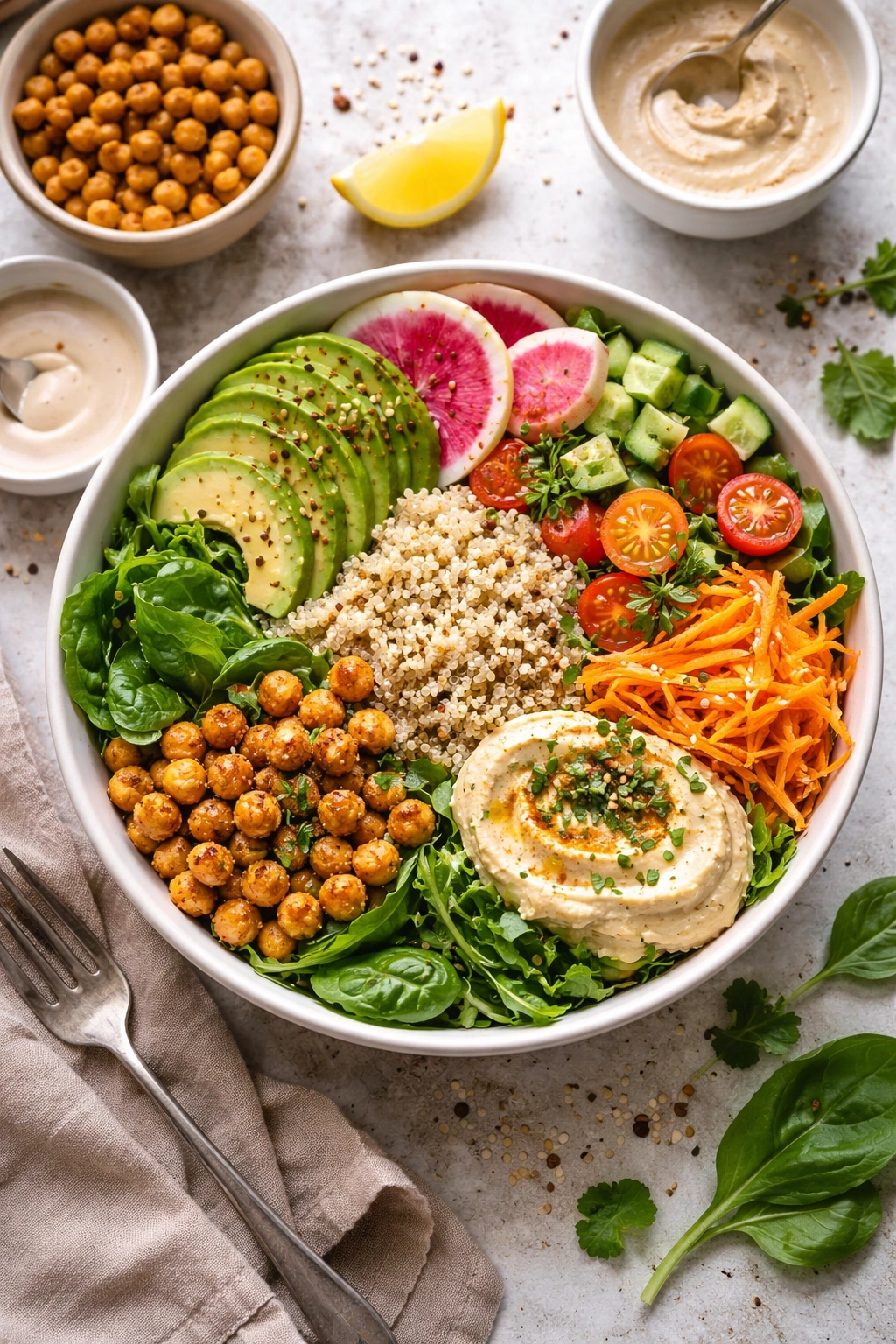
Now that you have all your components prepared, it’s time to put them together in a way that’s visually appealing, texturally interesting, and easy to eat. This isn’t just about making it look pretty (though that’s a nice bonus) — it’s about arranging things so you get a balanced bite of everything with each spoonful.
Start with the grain base. Pour your cooked, seasoned grain into the bottom of your bowl — aim for about a cup, which is filling without being overwhelming. If the grain is cold from the fridge, you can microwave it for 60-90 seconds to make it warm and more pleasant. Warm grain also does a better job of absorbing dressing flavors.
Layer in the greens next. A loose handful of raw leafy greens or massaged kale goes in next, positioned around and slightly on top of the grain so that some of it touches the warm grain (which will slightly wilt the leaves in a pleasant way). The greens take up volume without adding significant calories, so you can be generous.
Add your protein. Position the sliced chicken, roasted chickpeas, hard-boiled eggs, or flaked salmon on one side or in a cluster in the center. Protein should be prominent and easy to see — it’s the hero of the meal, not hidden under other ingredients. Aim for that palm-sized portion that makes the bowl a complete meal.
Arrange the roasted vegetables. These typically go in a cluster or section, creating visible color contrast with the grain. Roasted vegetables benefit from being somewhat prominent so people can see what’s in the bowl and intentionally eat a good mix of everything.
Add raw crunchy vegetables. Put these on top of or next to the roasted vegetables — shredded carrots, sliced radishes, thinly sliced bell peppers, or pickled vegetables add crunch and brightness. These should look fresh and vibrant, so position them where they’re immediately visible.
Top with nuts, seeds, and avocado. Scatter a small handful of toasted nuts or seeds over the top for crunch and visual interest. If using avocado, arrange the slices on one side of the bowl so they look intentional and attractive.
Drizzle with dressing. Add just enough dressing to flavor everything without making it soggy — about two to three tablespoons, depending on the size of your bowl and how much you like dressing. If you’re eating immediately, drizzle it in a spiral pattern over the top. If you’re meal prepping and eating later, either keep the dressing separate or lightly dress the bowl so you can add more right before eating.
The Visual Organization System
Arrange your bowl into sections instead of mixing everything together. Create distinct zones: grain in the bottom, a section of greens, a cluster of protein, a group of roasted vegetables, a section of raw vegetables, and a top garnish of nuts or seeds. This accomplishes two things. First, it looks intentional and appealing — a well-organized bowl photographs beautifully and looks more like something from a restaurant. Second, it ensures that each bite has a balance of components because you’re eating across the sections, not just from one area.
Building Common Grain Bowl Combinations
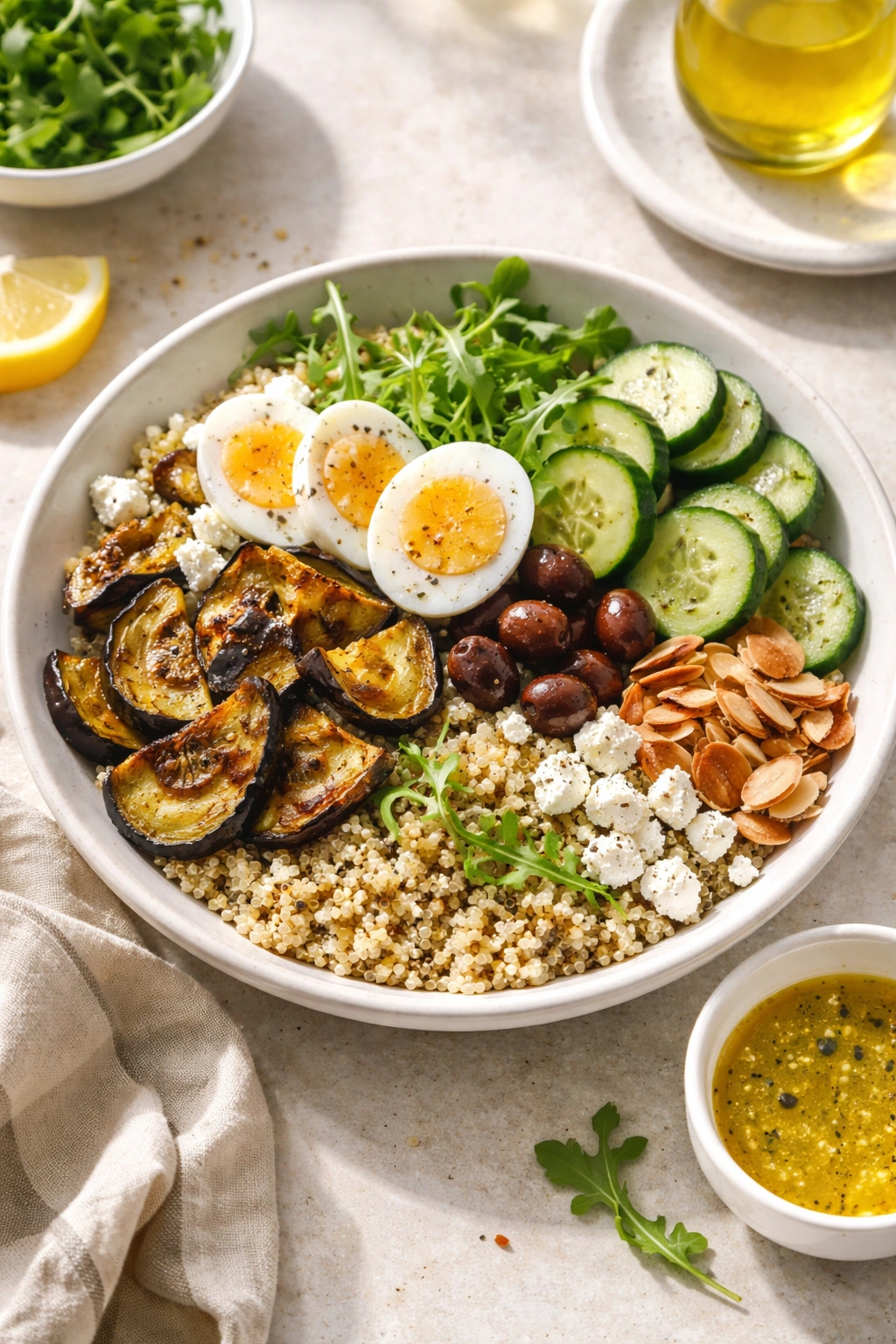
Once you understand the framework, you can build virtually any grain bowl combination. Here are some reliable combinations that work because they balance all the components and flavors intentionally.
Mediterranean Grain Bowl
Start with warm farro or quinoa dressed lightly with olive oil and lemon juice. Add a generous handful of arugula or spinach. Top with crumbled feta cheese (which serves as both flavor and fat), a hard-boiled egg for additional protein and richness, roasted vegetables like eggplant and zucchini or roasted cherry tomatoes, fresh raw cucumber, a small handful of Kalamata olives, and toasted almonds. Finish with the lemon-olive oil dressing. This bowl is hearty, bright, and tastes like a Greek vacation.
Asian-Inspired Grain Bowl
Use sesame oil and rice vinegar to dress cooked jasmine or short-grain brown rice while warm. Layer in massaged kale or spinach, add pan-seared salmon or crispy roasted tofu, top with roasted broccoli or snap peas, add shredded carrots and thin-sliced radishes, scatter sesame seeds and peanuts on top, and finish with the soy-ginger dressing. Add a poached or soft-boiled egg if you want additional richness. The egg yolk becomes a silky sauce when stirred into the warm rice.
Mexican-Inspired Grain Bowl
Start with cilantro-lime rice (brown or short-grain white rice, still warm, dressed with fresh lime juice and chopped cilantro). Add seasoned black beans or refried beans for creaminess and protein. Roast some sweet potato cubes and bell peppers with cumin and chili powder. Add shredded raw cabbage, fresh cilantro, diced avocado, and a squeeze of lime. Top with roasted chickpeas seasoned with cumin, paprika, and chili powder, plus a small handful of sunflower seeds. Drizzle with the cilantro-lime dressing. This bowl is warm, bright, and deeply satisfying.
Buddha Bowl (Plant-Based)
Layer quinoa with roasted chickpeas or crumbled baked tofu, roasted sweet potato and cauliflower, raw massaged kale, shredded purple cabbage, sliced radishes, and a generous handful of nuts (cashews or walnuts work well). Top with avocado slices and pumpkin seeds. Dress with tahini dressing or the lemon-olive oil dressing. This bowl is complete protein from the quinoa and chickpeas, rich from the nuts and avocado, and bright from the raw vegetables.
Troubleshooting Common Grain Bowl Problems
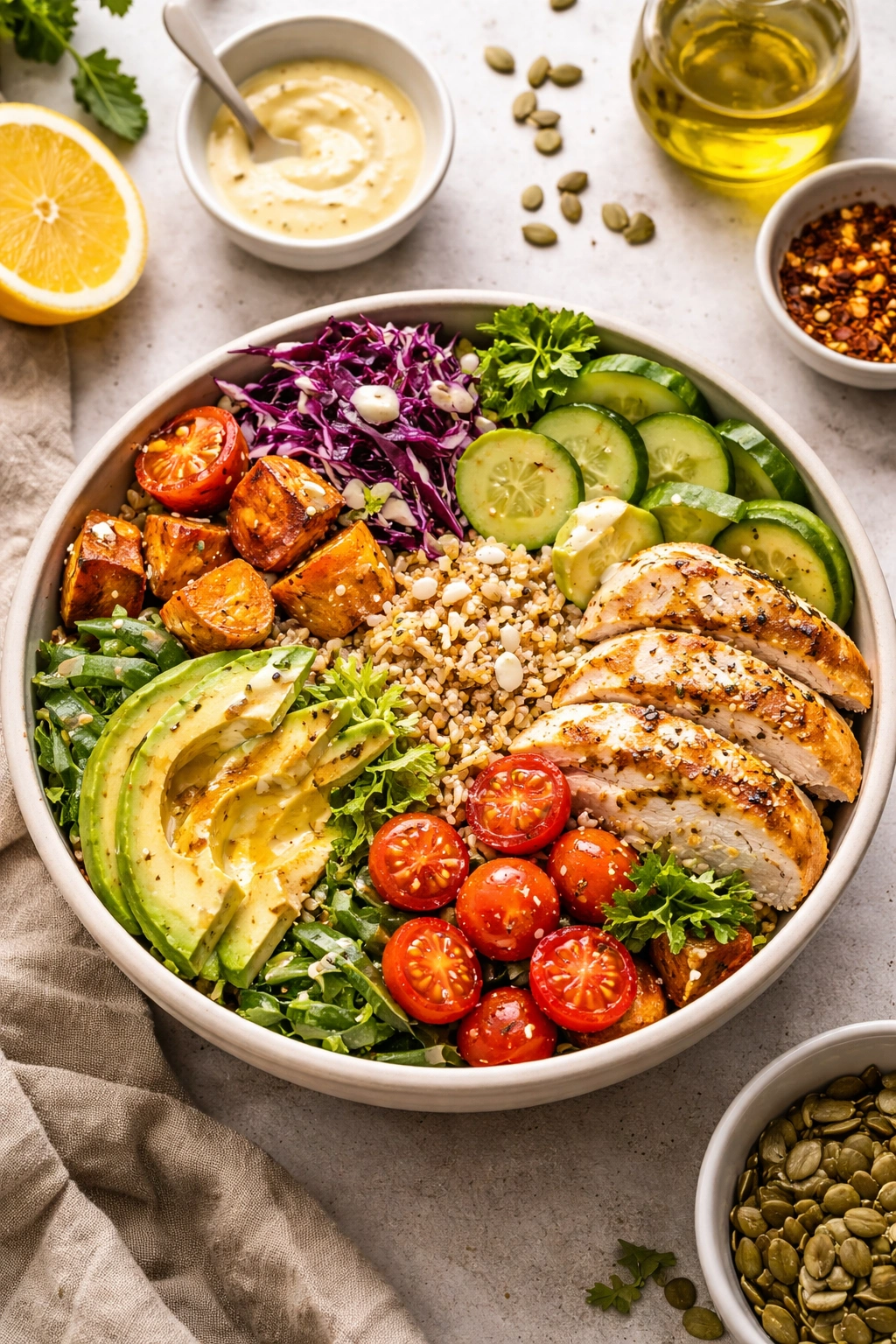
Even with the best framework, things can go wrong. Here’s what to do when they do.
If your bowl tastes bland, you’ve probably under-dressed it or under-seasoned your grain. Taste the grain on its own — it should be flavorful and seasoned, not plain. Then taste the dressing separately — it should be tangy and interesting. If both are flat, add more acid (lemon juice or vinegar) to the dressing, not more oil. Oil makes bland dressing richer, not more flavorful.
If your bowl is soggy, you’ve probably assembled it too far ahead of time or you’ve over-dressed it. The grain itself will be fine — it’s the raw vegetables that wilt when they sit in dressing. If you need to meal prep, keep raw vegetables and dressing separate until you’re ready to eat. The roasted vegetables and grain should stay fresh in the fridge for up to four days in a sealed container.
If you’re still hungry shortly after eating, you’ve probably skimped on protein or fat. A satisfying bowl needs both. Aim for a full palm-sized portion of protein and make sure there’s visible fat in the form of nuts, seeds, or oil. These are the components that trigger satiety signals in your brain, so don’t hold back on them.
If your bowl is too heavy or makes you feel sluggish, you might have too much starch or not enough vegetable volume. Increase the greens and raw vegetables, reduce the grain slightly, and make sure your protein source is lean. A Mediterranean or Asian-inspired bowl typically feels lighter than a heavily oil-dressed bowl, so the type of dressing and fat you choose matters.
Meal Prep Strategy for Grain Bowls
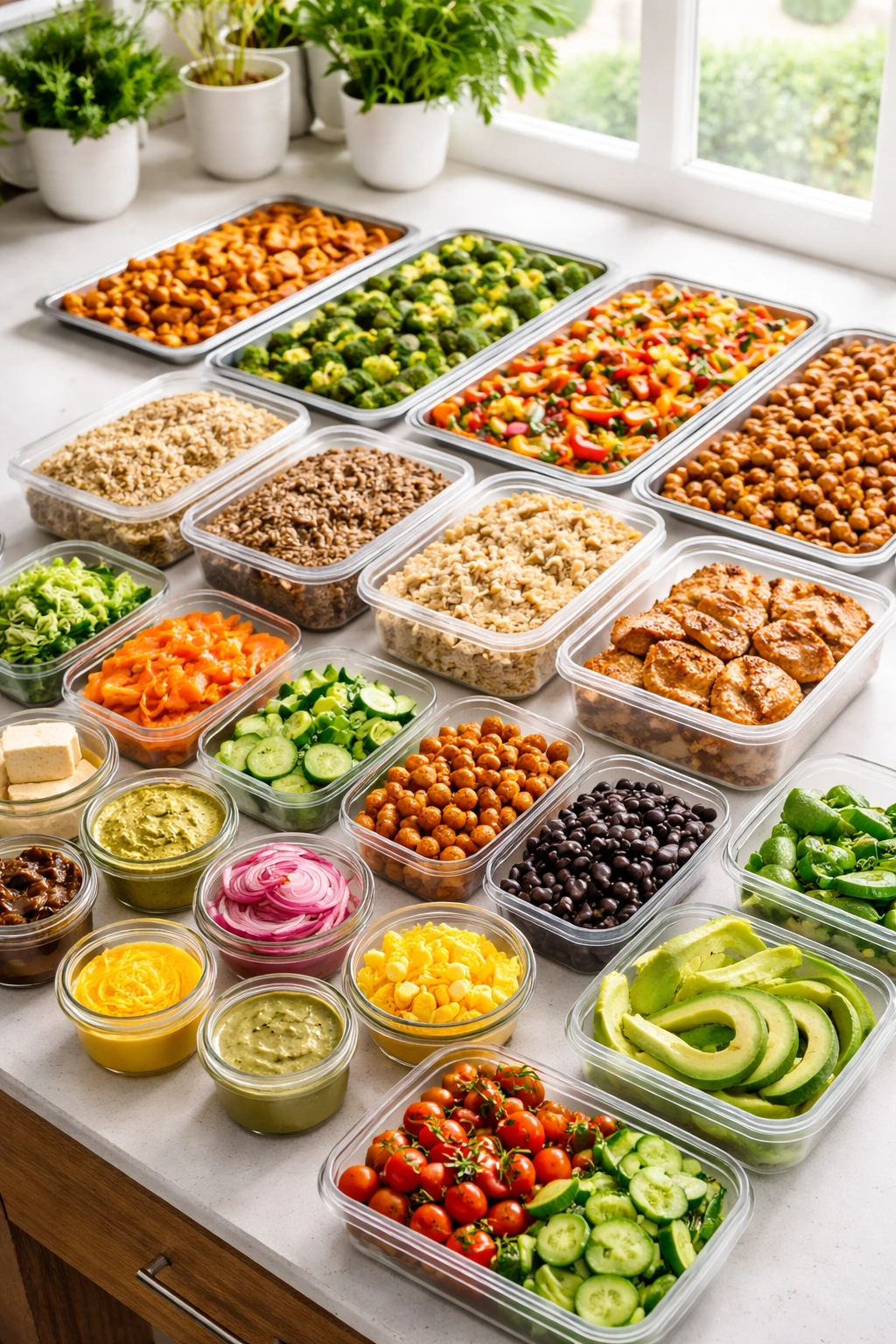
Grain bowls are perfect for meal prep because most components hold up well for several days. Here’s the strategic way to prepare them.
Cook all your grains at the beginning of the week and store them in airtight containers in the fridge. Roast your vegetables in large batches — multiple sheet pans if needed. These two steps account for most of the cooking work. Prep your protein — whether that’s making a batch of roasted chickpeas, cooking several chicken breasts, hard-boiling a dozen eggs, or marinating tofu.
Wash and cut your raw vegetables the day before, storing them in containers with a barely-damp paper towel to keep them fresh. Massage your kale with a light coating of oil and salt a few hours before eating — it will taste better and won’t wilt further.
Here’s the key strategy: Assemble the grains, greens, and roasted vegetables in containers, but keep dressing, raw vegetables, nuts, and avocado separate. When you’re ready to eat, add the raw components, nuts, and dressing to the prepped base. This five-minute assembly task transforms four separate containers into a fresh, crunchy bowl that tastes like you made it just that moment, because the crunchy components haven’t had time to soften.
Dressing in a sealed container keeps for up to a week, and lasts longer if you store it without raw garlic (add minced garlic fresh when you make the dressing for eating immediately). Raw vegetables prepped and stored properly keep for three to four days. Roasted vegetables hold up for four to five days. Cooked grains last up to five days.
Creating Your Own Grain Bowl Formula
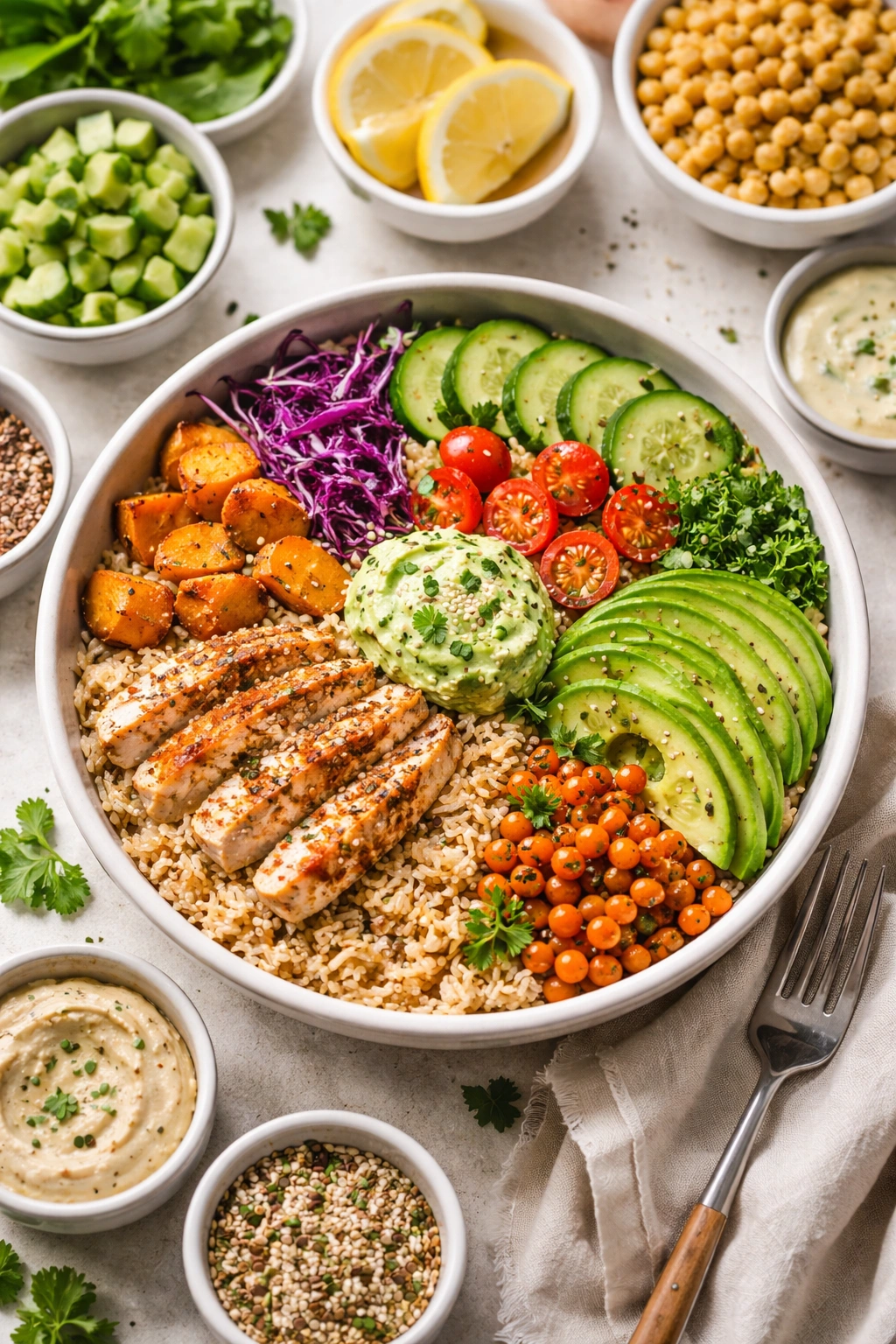
The best grain bowls aren’t replications of recipes you’ve seen — they’re combinations that make sense based on your taste preferences and whatever ingredients are in your kitchen. Here’s how to build your own formula.
Choose a grain that you actually enjoy eating on its own. If you don’t like the grain when it’s plain, you won’t like it in a bowl no matter how good the toppings are. Spend some time identifying whether you prefer something light and fluffy (quinoa or millet), chewy and substantial (brown rice or farro), or creamy (short-grain white rice).
Choose a protein that you’ll actually eat consistently. This is the barrier to keeping the habit going. If you hate roasted tofu, don’t force it just because it’s trendy. If you love hard-boiled eggs but find them boring on their own, pile the rest of the bowl with interesting vegetables and dressings so the whole thing feels exciting.
Pick a flavor direction and commit to it. Instead of mixing Mediterranean olives with Asian sesame oil, choose one direction and lean into it fully. The dressing, the vegetables, the seasonings on the grain, and the garnishes should all point toward the same flavor profile. This creates something that tastes intentional and cohesive.
Make sure you have one raw, crunchy component and one cooked component beyond the grain. The raw component provides crunch and brightness; the cooked component adds depth and complexity. Between these two things and your grain and protein, you have the foundation of a satisfying bowl.
Don’t overthink it. A perfectly fine grain bowl is just warm grain, good protein, some vegetables, something crunchy, and dressing. You don’t need seven components or a fancy presentation. You need balance and ingredients you like.
Final Thoughts
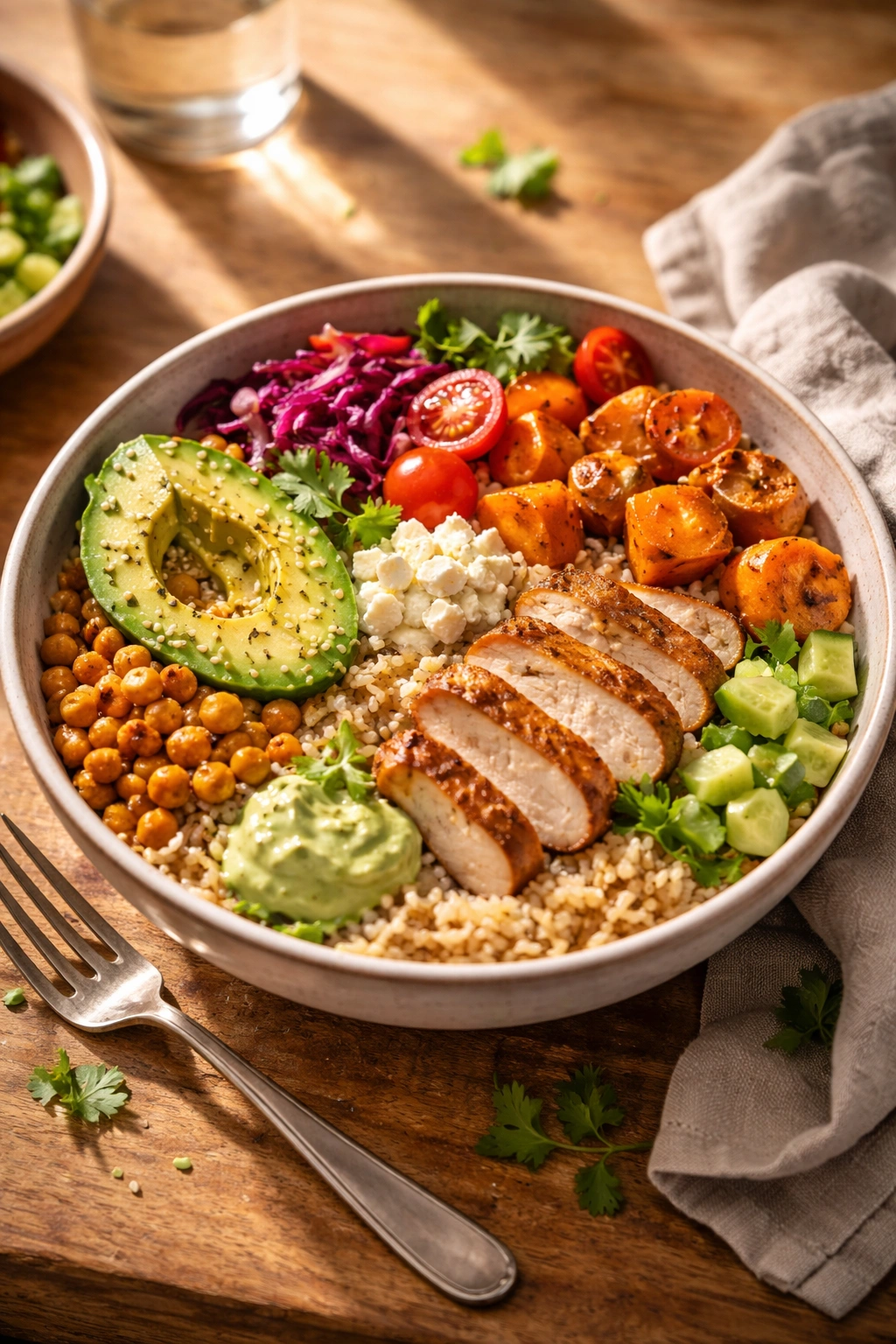
Building a grain bowl isn’t complicated, but it’s easy to miss crucial elements that make the difference between a forgettable lunch and something you actually crave. The real skill isn’t in learning some secret technique — it’s in understanding that every component matters, that balance is essential, and that the whole thing works because each part is doing its job.
The beauty of grain bowls is that they’re infinitely adaptable. You can build something completely different every single time using the same basic formula, depending on what’s in your kitchen and what sounds good that day. Once you understand how the pieces fit together, you’ll never need a recipe again. You’ll just grab what’s on hand, arrange it thoughtfully, add dressing, and end up with something satisfying and delicious every single time.
