



When you’re staring down another hectic weeknight with hungry people waiting to eat, the last thing you want to do is spend hours cooking or face a mountain of dishes afterward. That’s where one-pot chicken enchilada rice becomes your secret weapon—a single skillet or Dutch oven that delivers all the bold, satisfying flavors of your favorite Tex-Mex restaurant in about 45 minutes flat. Better yet, you’ll have just one pot to wash when dinner is done, which might be the most underrated benefit of all.
This dish is a brilliant mashup that solves multiple dinner dilemmas at once. You get the comforting warmth of creamy enchilada sauce, tender rice that soaks up every bit of flavor, seasoned shredded chicken, and melted cheese—all without the fuss of rolling tortillas or managing multiple pans. It’s the kind of meal that looks impressive enough to serve to guests but easy enough to throw together on a Tuesday when everyone’s exhausted. The beauty of one-pot chicken enchilada rice is that it’s genuinely difficult to mess up once you understand the fundamentals, and it adapts beautifully to whatever ingredients you have on hand.
What makes this recipe particularly brilliant for weeknight cooking is its flexibility. You can use rotisserie chicken to cut prep time in half, swap in whatever cheese you have in the fridge, add extra vegetables based on what’s wilting in your crisper drawer, or adjust the heat level to match your family’s preferences. The core technique remains rock-solid, which means you’ll find yourself making this again and again because it’s reliable, delicious, and genuinely quick enough for a Tuesday night when you haven’t even started dinner planning yet.
Why One-Pot Meals Are Perfect for Weeknight Stress Relief
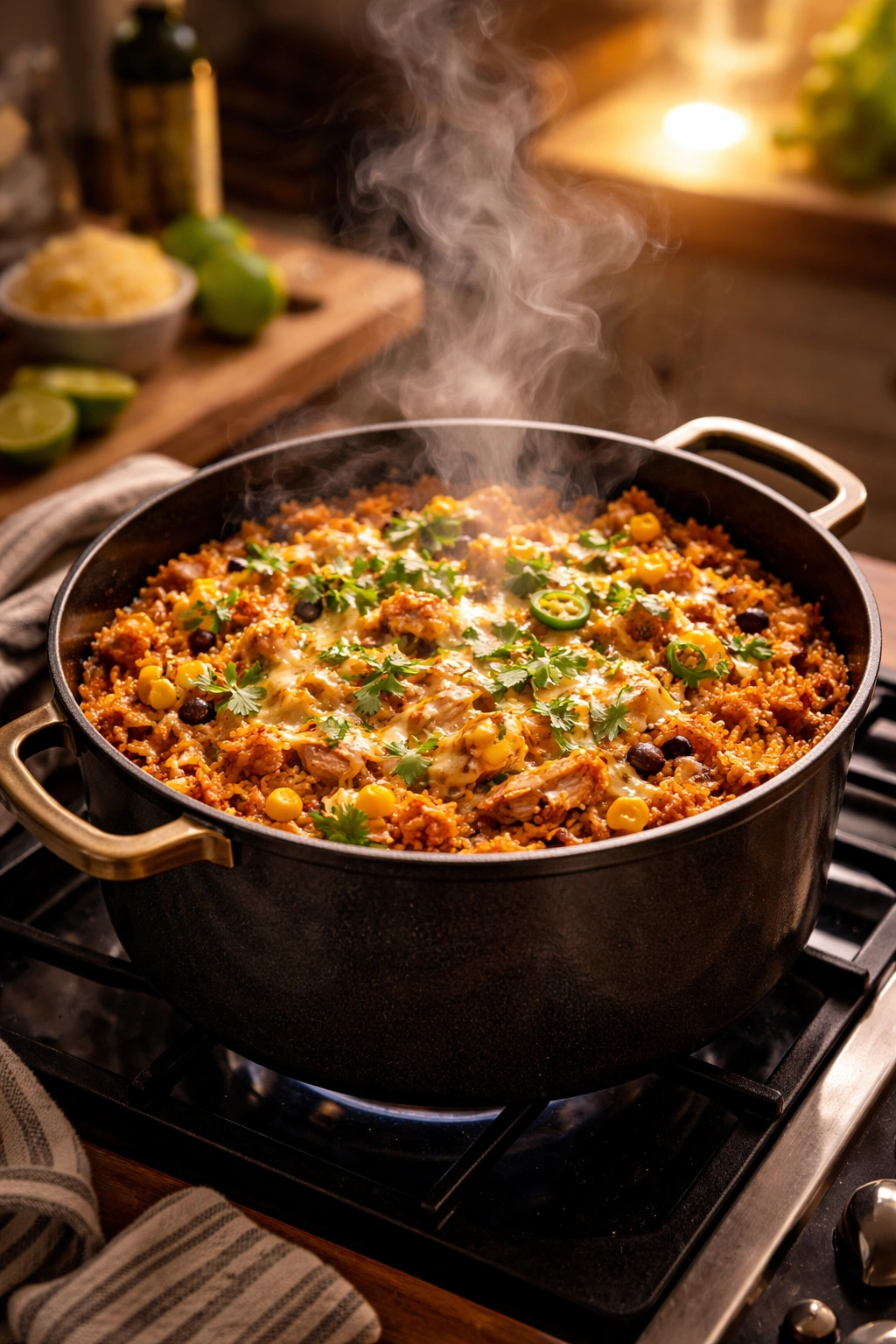
There’s genuine psychology behind why one-pot dinners feel so much easier, even beyond the obvious cleanup advantage. When you consolidate all your cooking into a single vessel, you reduce decision fatigue—no juggling multiple burner temperatures, no timing different components to finish at exactly the right moment, no coordinating what goes in which pan. Everything happens in sequence within the same pot, which means fewer variables and fewer things that can go wrong.
Weeknight cooking is fundamentally about efficiency and mental bandwidth. After work, school runs, emails, and everything else that fills a typical day, your brain is already exhausted from making decisions. A one-pot meal removes friction from the dinner equation because it follows a logical, linear progression: sauté aromatics and chicken, build the sauce base, add rice and liquid, let it simmer undisturbed. That simplicity is actually liberating—you’re not constantly multitasking or pivoting between different cooking methods.
Beyond practicality, one-pot meals also deliver on the satisfaction front. There’s something deeply comforting about a single steaming pot of cheesy, saucy rice studded with chicken and vegetables. It’s the definition of comfort food that doesn’t feel like you’ve been cooking all afternoon, which is exactly what weeknight dinners should accomplish.
The Magic of Enchilada Flavors in Rice Form
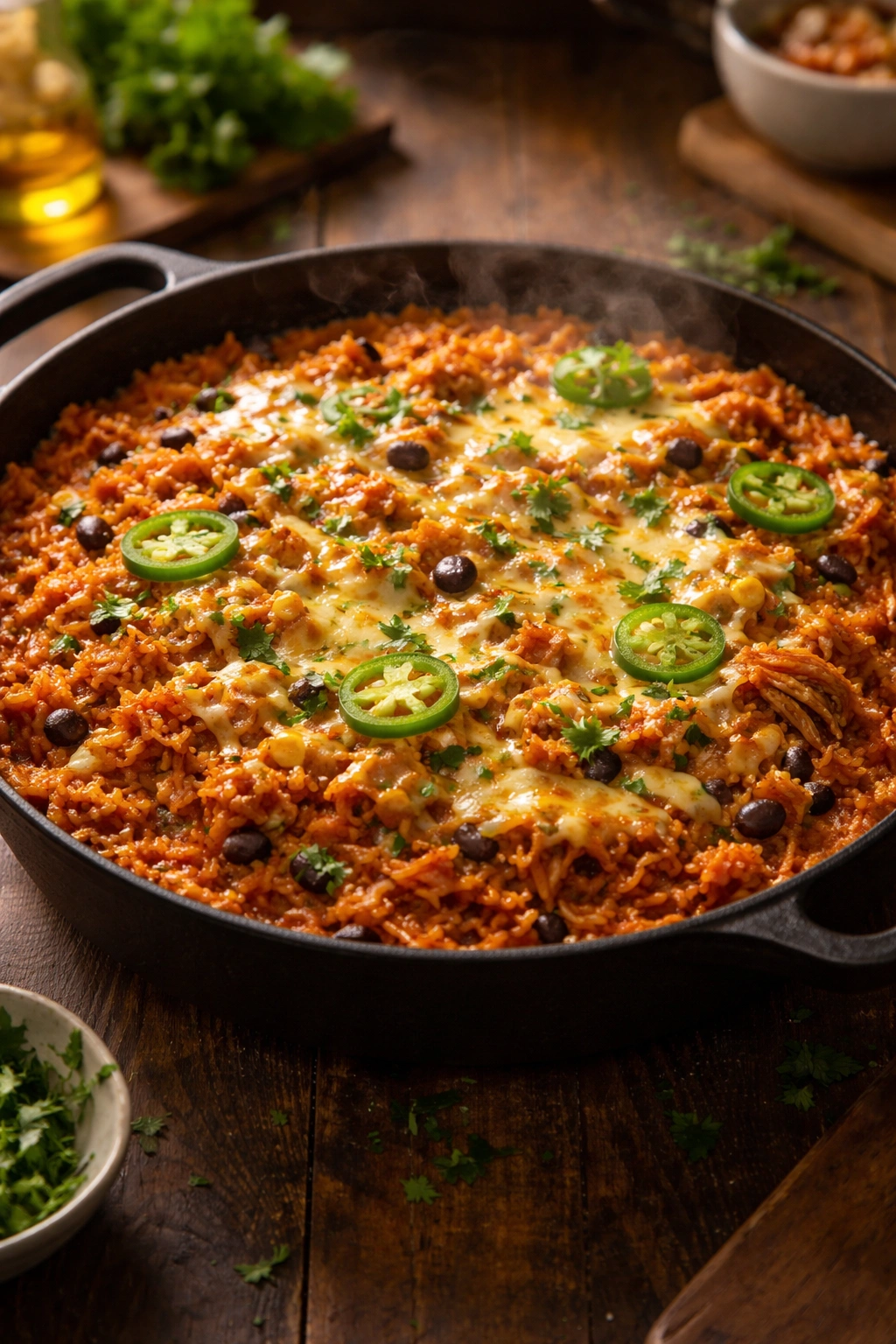
Understanding what makes enchilada sauce so irresistible is the key to appreciating why this one-pot version works so beautifully. Traditional enchilada sauce combines chiles, tomatoes, garlic, cumin, and other warming spices into a cohesive base that’s simultaneously earthy, slightly smoky, and deeply savory. When you cook rice directly in that sauce-based liquid instead of plain broth, every grain absorbs those complex flavors, transforming ordinary white rice into something genuinely crave-worthy.
The genius of this recipe is that it eliminates the tortilla wrapper entirely but keeps everything that makes enchiladas so beloved: the tender protein, the creamy sauce, the melted cheese, the layers of complementary flavors. By swapping tortillas for rice, you actually create a dish that’s easier to eat, faster to assemble, and arguably more satisfying. There’s no precision rolling required, no worrying whether your tortillas will hold together, no careful layering—just a pot that you stir and let do its thing.
The enchilada sauce is really the character of this dish, so it’s worth thinking intentionally about whether you’ll use store-bought or make your own. Store-bought enchilada sauce is genuinely convenient and widely available in both red and green varieties. The quality varies by brand, so it’s worth trying a couple to find one you genuinely enjoy, because it’s not a background ingredient here—it’s the main flavor vehicle. If you prefer homemade sauce or want more control over the spice level, many of the best versions are just a quick combination of tomato sauce, chiles, garlic, cumin, and a few other pantry staples simmered together for 10 minutes.
Choosing Your Ingredients for Maximum Flavor
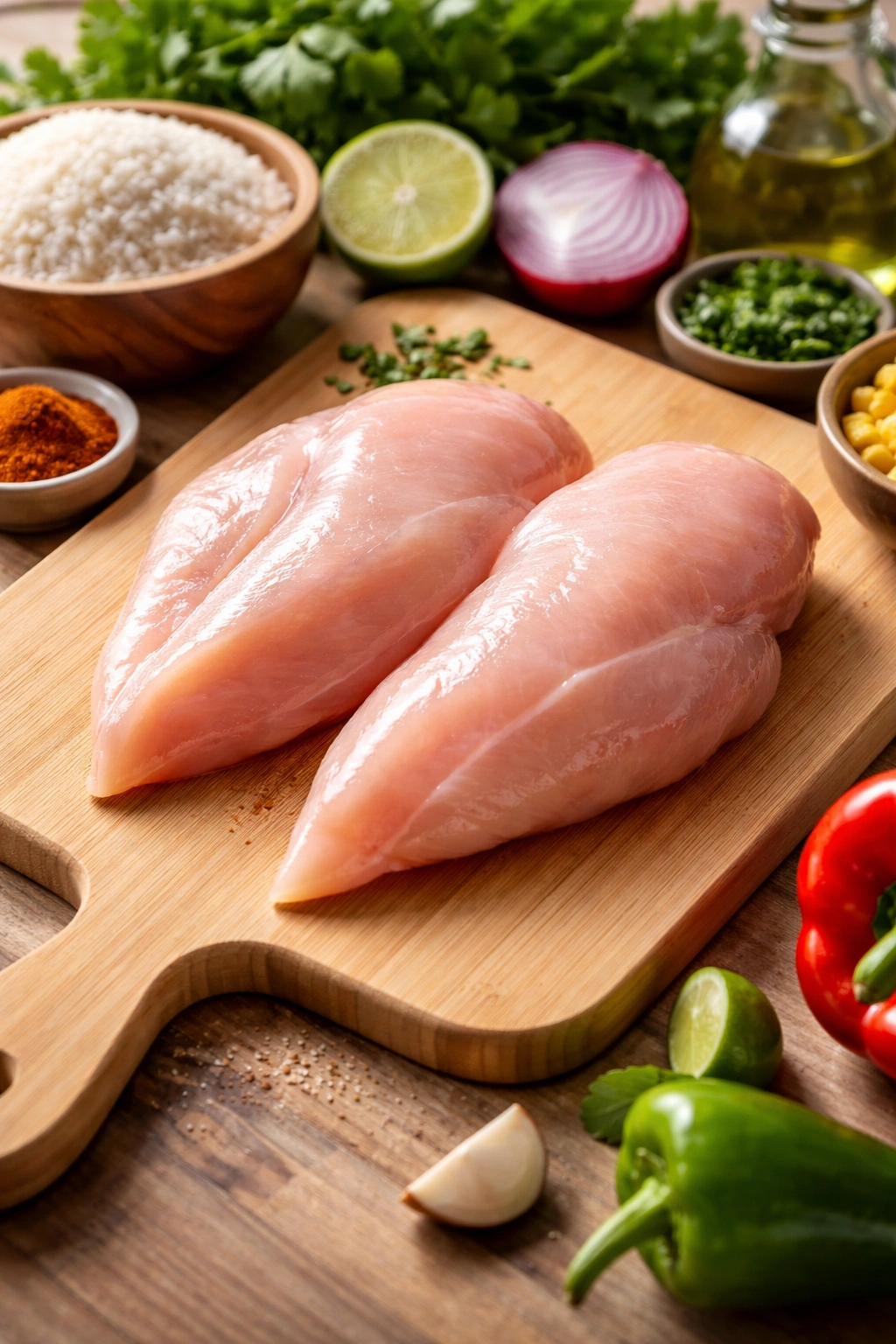
The foundation of great one-pot chicken enchilada rice starts with thoughtful ingredient selection. Each component matters because they’re all cooking together in the same pot, sharing flavors and building on each other.
Chicken is your protein anchor, and you have multiple approaches depending on your time and preference. Fresh chicken breasts cut into bite-sized pieces will cook in about 5-7 minutes at the start, giving you supremely tender chicken that takes on flavors throughout the cooking process. Rotisserie chicken, which you can shred or chop and add partway through cooking, saves serious prep time and works beautifully if you’re in a real pinch on a hectic evening. Some recipes even use ground chicken or ground turkey, which cooks even faster and distributes throughout the dish for more even flavor in every spoonful. Choose whichever approach fits your schedule and preference—they all work.
Rice quality matters more than you’d think in a one-pot meal where every grain is absorbing sauce directly. Long-grain white rice like jasmine or basmati will stay relatively separate and fluffy, even when cooked in liquid with sauce. Brown rice will work but requires additional cooking time and more liquid, so you’ll need to adjust your ratios. Avoid arborio or risotto rice, which are meant to release their starches and create a creamy consistency—that’s not the texture you’re after here. Short-grain or medium-grain white rice falls somewhere in the middle. The absolute key is using uncooked rice, not pre-cooked rice, so it can properly absorb the flavorful liquid as it cooks.
Your enchilada sauce choice will ripple through the entire dish, so pick one you’d happily eat straight from the can or pot. Red enchilada sauce tends to be slightly deeper and more tomato-forward, while green enchilada sauce made with tomatillos is brighter and often tangier. Many cooks use a blend of both for complexity. The canned varieties work beautifully here, and there’s genuinely no shame in that choice—you’re making a delicious weeknight dinner, not proving your cooking prowess through homemade sauces.
Cheese is your final flavor layer and textural contrast, so choose something with enough personality to stand up to the bold sauce flavors. Sharp cheddar has distinctive tang, Mexican blend brings familiarity and meltability, Monterey Jack is mild and creamy, and white cheddar adds subtle complexity. Some recipes use a combination, which gives you the best of multiple flavors. Freshly shredded cheese melts more smoothly than pre-shredded varieties (which contain anti-caking agents that can make them gloppy), but pre-shredded is perfectly fine if that’s what’s in your kitchen.
The supporting vegetables—onions, bell peppers, garlic—build aromatic depth and add texture and nutrition. They’re not negotiable if you want genuine flavor development, but they are flexible. Yellow or white onions provide sweetness, bell peppers add subtle flavor and nutrition, and garlic is your flavor amplifier. Some recipes add corn for sweetness and fiber, black beans for heartiness and protein, or diced tomatoes for brightness. These are all valuable additions, but they’re also optional based on what you have available and what your family prefers.
Equipment That Makes This Dish Easier
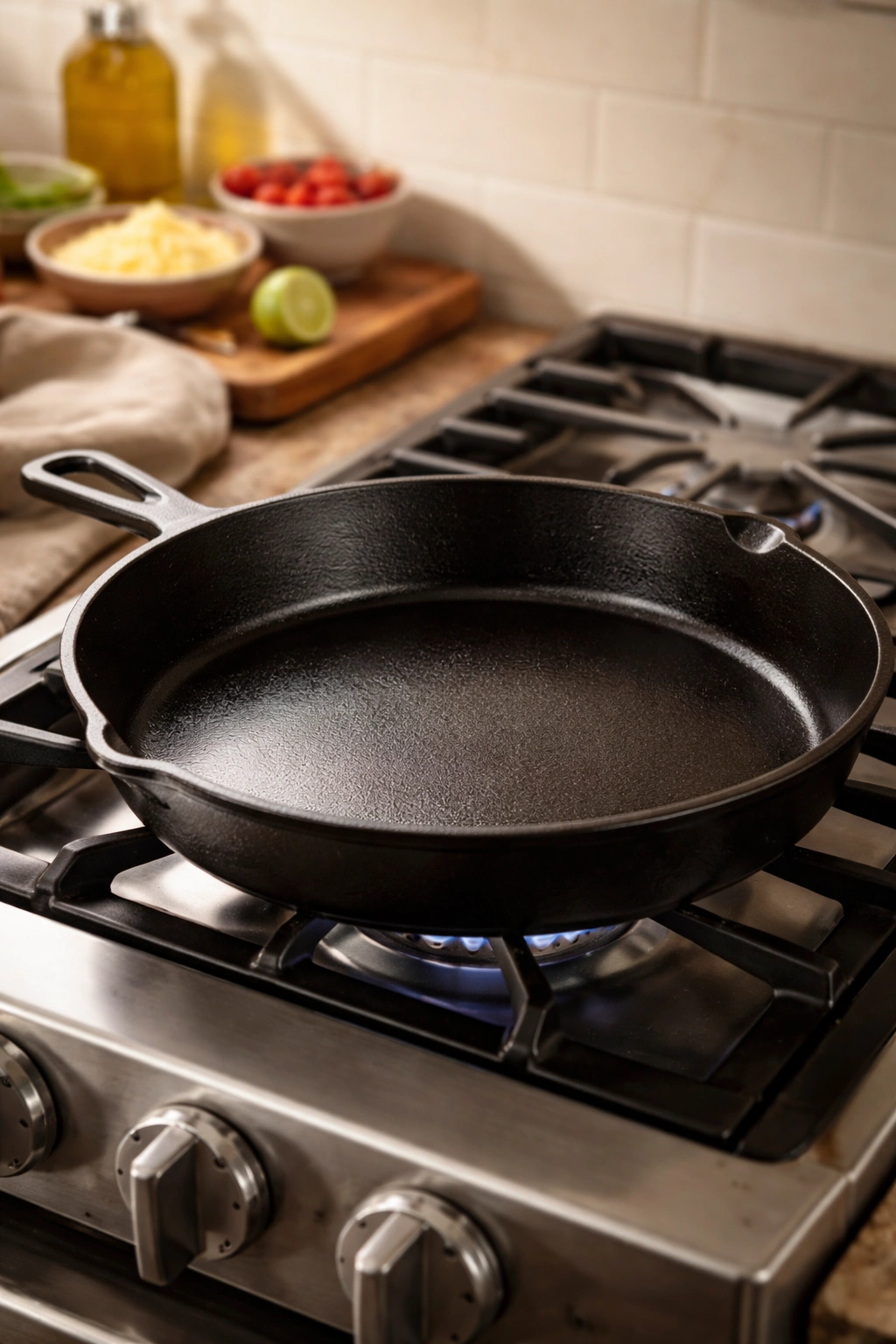
You need surprisingly little equipment to make one-pot chicken enchilada rice successfully. The name of the game is having one pot that can handle both stovetop cooking and oven finishing.
A large cast-iron skillet works beautifully because cast iron heats evenly, develops flavor through browning, and transitions seamlessly from stovetop to oven for the final cheese-melting step. Cast iron also has the practical advantage of retaining heat really well, so your food stays hot while you’re serving and eating. If you don’t have cast iron, any heavy-bottomed, oven-safe skillet or Dutch oven works perfectly. You need it to be oven-safe because you’ll likely finish with a broil step to get that cheese golden and bubbly.
Beyond the main pot, you’ll want:
- A cutting board and sharp knife for prepping vegetables and chicken
- A wooden spoon or spatula for stirring
- A measuring cup for liquids
- An oven-safe lid or aluminum foil to cover the pot during simmering
That’s genuinely it. The beauty of one-pot cooking is the minimal equipment list, which also means minimal cleanup.
How to Build Layers of Flavor from Start to Finish
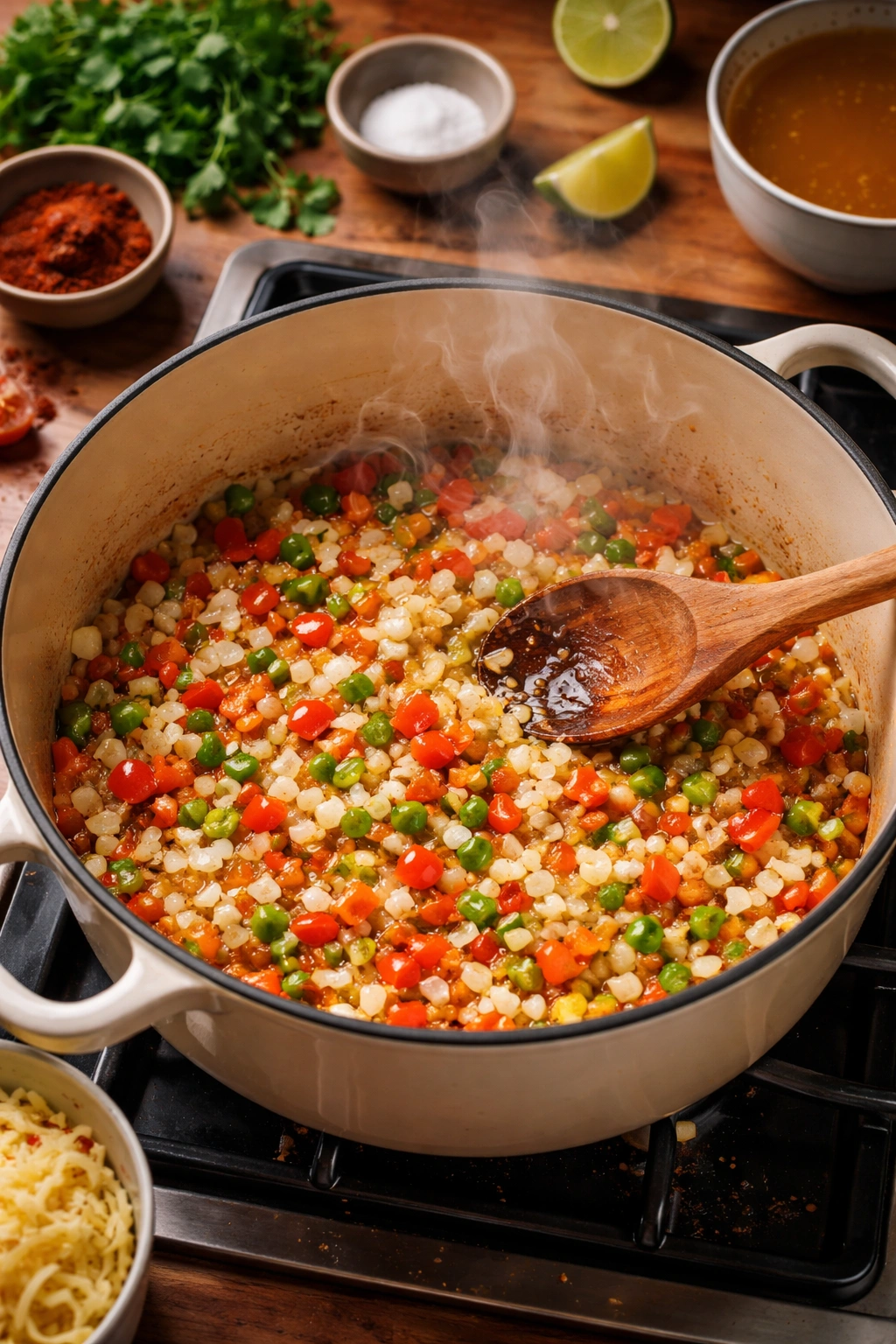
The technique matters more than perfection in this recipe. You’re building a dish through sequential steps, each one contributing to the final result.
Step one is blooming your aromatics—sautéing onion, garlic, and bell pepper in a bit of oil over medium heat for several minutes until they soften and release their essential oils. This is when the kitchen starts smelling amazing, and it’s a critical flavor-building moment. Don’t skip this or rush it; those vegetables need 4-6 minutes to genuinely soften and become fragrant.
Step two is browning your chicken (if using raw chicken). Cut it into bite-sized pieces so it cooks quickly and evenly, then cook it in the same pot, letting the meat develop color and flavor while sitting in contact with the hot pan. This only takes 5-7 minutes—you’re not cooking it all the way through, just building initial flavor and removing it from the pot temporarily.
Step three is building your liquid base by adding your enchilada sauce, chicken broth or water, diced tomatoes if you’re using them, and any other liquid components. This is where the flavor composition really takes shape. Stir this together, let it come to a simmer, and you’re creating the medium in which your rice will cook and absorb all those beautiful flavors.
Step four is adding your rice and bringing everything together. Uncooked rice goes directly into the simmering liquid, gets stirred to make sure each grain is surrounded by liquid, and then the pot gets covered with a lid. This is when you reduce the heat to low and let time and gentle heat do the work for about 15-20 minutes, depending on your rice type.
Step five is the final flavor integration, where you add back your cooked chicken, any vegetables like corn or beans that you’re using, and half of your cheese. You stir everything together gently—the goal is to combine flavors and textures without breaking apart the rice grains. Then you cover the surface with remaining cheese and either let it melt with the residual heat or transfer the whole pot to a hot broiler for 2-3 minutes until the cheese is golden and bubbly.
Serving and Timing Information
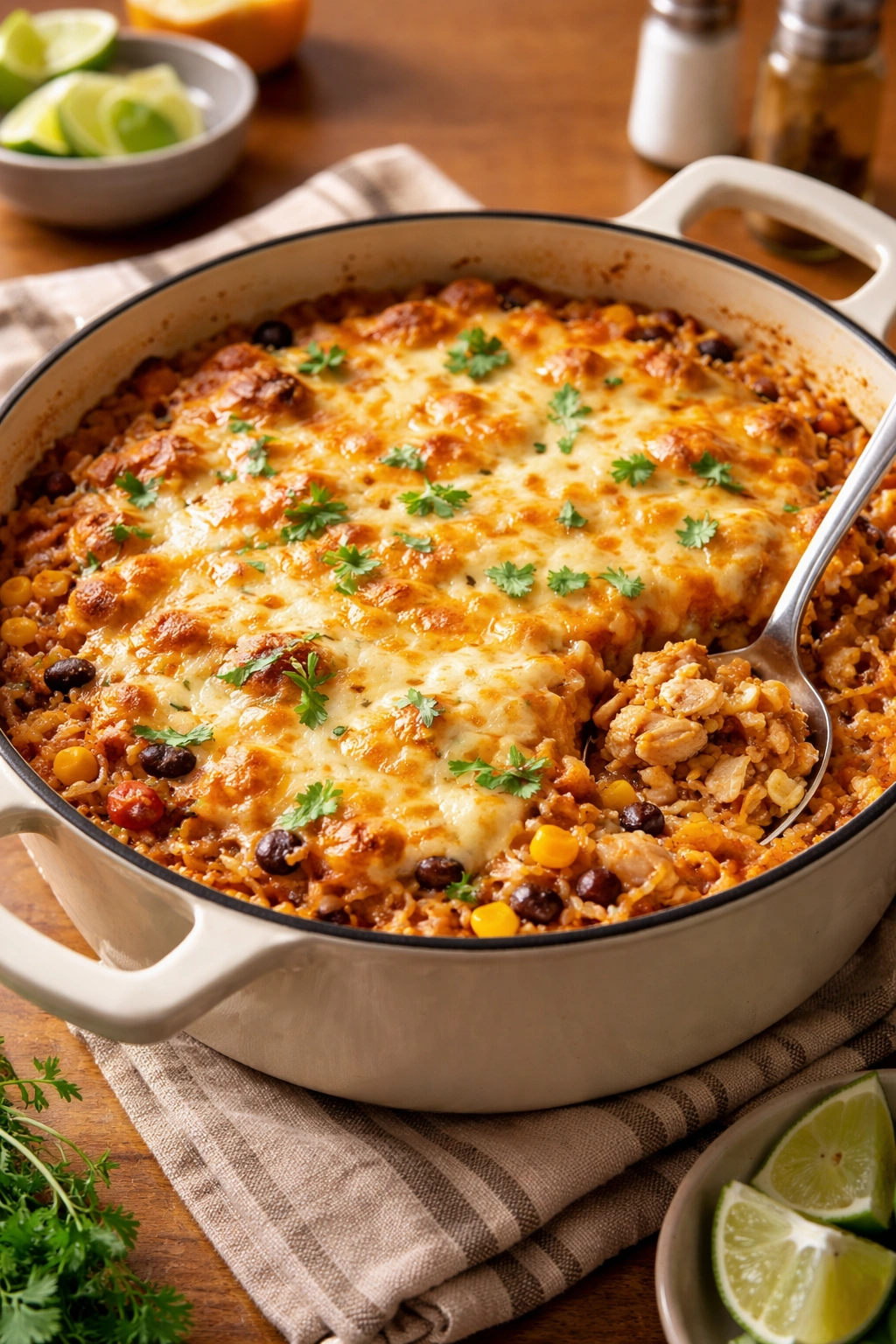
Yield: Serves 6 to 8 | Makes one 9×13-inch casserole-style pot
Prep Time: 20 minutes
Cook Time: 35 minutes
Total Time: 55 minutes
Difficulty: Intermediate — The technique is straightforward, but you’re managing both stovetop and oven components, and timing matters for the rice to cook properly without becoming mushy. This is well within reach for most home cooks.
Complete Ingredient List
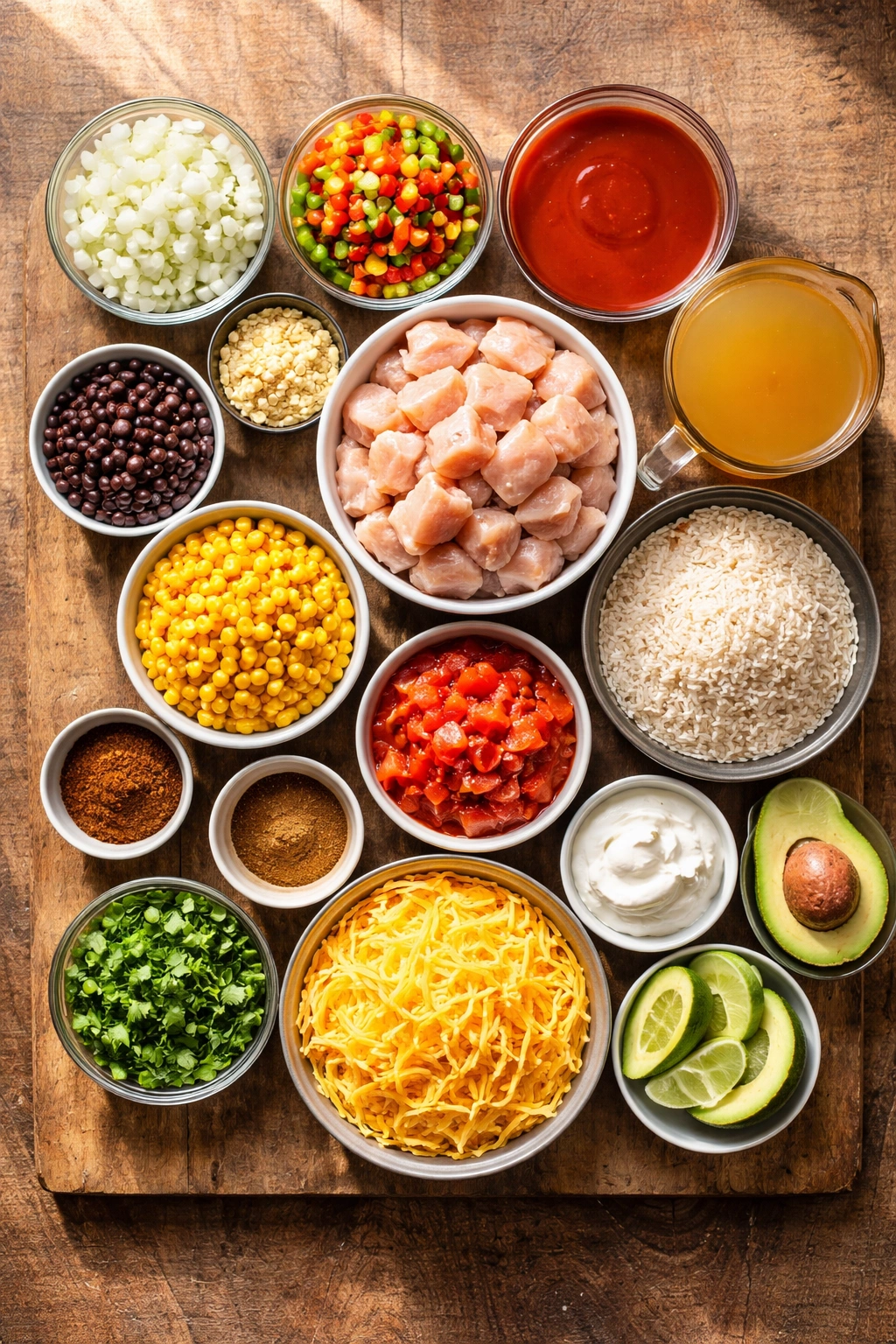
For the Rice Base:
- 2 tablespoons olive oil or vegetable oil
- 1 medium yellow or white onion, diced
- 1 medium green or red bell pepper, diced
- 3 cloves garlic, minced
- 1½ pounds boneless, skinless chicken breasts, cut into bite-sized pieces (or 3 cups shredded rotisserie chicken)
- 1½ cups uncooked long-grain white rice (jasmine or basmati)
- 2½ cups red or green enchilada sauce (one 19-20 ounce can or homemade equivalent)
- 2 cups chicken broth or water
- 1 (14.5-ounce) can diced tomatoes, drained (optional but recommended)
For the Filling and Toppings:
- 1 (15-ounce) can black beans, rinsed and drained (optional)
- 1 cup frozen or canned corn kernels, drained (optional)
- 1 (4-ounce) can diced green chiles (optional)
- 2 teaspoons ground cumin (optional, for extra depth)
- 1 teaspoon chili powder (optional)
- Salt and pepper to taste
For Finishing:
- 2 cups shredded cheese (sharp cheddar, Monterey Jack, Mexican blend, or a combination), divided
- ¼ cup fresh cilantro, chopped (optional for garnish)
- Lime wedges (optional, for serving)
- Sour cream, avocado slices, or pico de gallo (optional toppings)
Step-by-Step Cooking Instructions
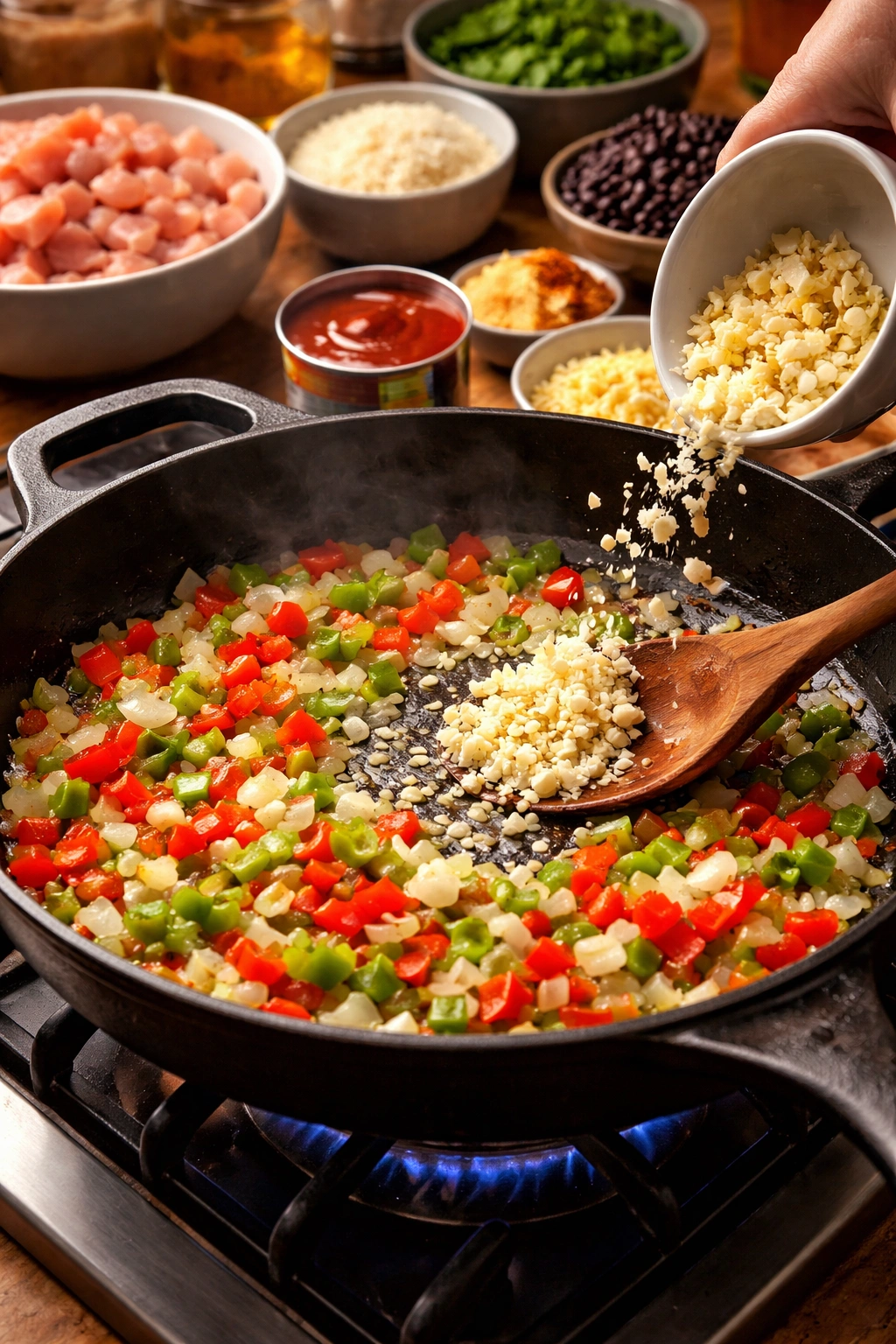
Prepare Your Ingredients:
-
Cut your chicken breasts into approximately ¾-inch pieces so they cook evenly and quickly throughout the recipe. If using rotisserie chicken, shred or chop it into bite-sized pieces and set aside separately.
-
Dice your onion and bell pepper into roughly equal-sized pieces—this ensures they cook at the same rate and distribute evenly through the dish.
-
Mince your garlic or use pre-minced garlic from a jar if you prefer; both work beautifully.
-
Measure out your rice, enchilada sauce, chicken broth, canned tomatoes, beans, and corn so everything is ready to add in sequence.
Build the Aromatic Base:
-
Heat your olive oil in a large, oven-safe skillet over medium heat until the oil shimmers and moves easily around the pan.
Advertisements -
Add your diced onion and bell pepper to the hot oil and cook for 5 to 6 minutes, stirring occasionally, until the vegetables are soft and fragrant. The onion should be translucent and the edges of the pepper should be slightly softened. This is the moment the kitchen should smell genuinely amazing.
-
Add your minced garlic and cook for 1 minute more, stirring constantly, until the garlic is fragrant but not browned. Do not let garlic burn—burned garlic tastes bitter and will affect the entire dish. If you’re concerned about heat, you can lower it to medium-low.
Cook the Chicken:
- Add your chicken pieces to the aromatic vegetables. If you’re using raw chicken, cook it for 5 to 7 minutes, stirring occasionally, until the outside is no longer pink and the chicken has a light golden color. You are not cooking the chicken all the way through at this stage—it will finish cooking when simmered in the sauce. If using rotisserie chicken, skip this step and add it later.
Build Your Liquid Base:
-
Pour in your enchilada sauce, chicken broth, diced tomatoes, cumin, and chili powder if using. Stir everything together thoroughly, breaking up any clumps of sauce and making sure the liquid is evenly distributed. Taste the liquid at this point—it should taste bold and flavorful, almost like a soup you’d happily eat on its own.
-
Bring the liquid to a gentle boil over medium heat, stirring occasionally. You’ll see bubbles breaking the surface and steam rising from the pot. Let this bubble gently for 2 to 3 minutes to allow flavors to meld.
Cook the Rice:
-
Add your uncooked rice directly to the boiling liquid and stir well, making sure each grain is surrounded by liquid and there are no dry pockets of rice sitting above the sauce level. This stirring is important because it prevents the rice from sticking to the bottom of the pot.
-
Once the rice is mixed in, cover the pot with a fitted lid or a layer of aluminum foil if you don’t have a lid. Immediately reduce the heat to low—this is crucial because you want the liquid to simmer gently, not boil vigorously.
-
Let the pot sit undisturbed on low heat for 15 to 20 minutes. Do not lift the lid to stir or peek—every time you do, you release steam and affect the cooking time. Set a timer if you tend to forget about food on the stove.
Advertisements -
At 15 minutes, carefully lift the lid and check the rice. It should be mostly tender and most of the liquid should be absorbed. If there’s still visible liquid and the rice seems crunchy, cover it again and cook for another 3 to 5 minutes.
Bring It All Together:
-
Remove the pot from heat. If you used raw chicken earlier, this step is already complete. If you’re using rotisserie or pre-cooked chicken, add it now along with the black beans and corn if using.
-
Stir in half of your shredded cheese (about 1 cup) and mix gently with a fork, trying not to break the rice grains. The residual heat will start melting the cheese into the rice.
-
Spread the remaining cheese evenly over the top surface of the entire pot. Cover with the lid and let it sit undisturbed for 2 to 3 minutes so the heat melts the cheese.
-
Optional but recommended: If you want deeply melted, lightly golden, bubbly cheese, place the entire pot under a preheated broiler for 2 to 3 minutes, watching closely so the cheese melts without burning. The cheese should bubble at the edges and develop light golden spots.
Finish and Serve:
-
Remove the pot from heat and let it rest for 5 minutes before serving. This allows everything to set slightly and makes it easier to serve without the rice being too soupy.
-
Taste a spoonful and adjust seasoning with additional salt and pepper if needed. Garnish with fresh cilantro, lime wedges, sour cream, avocado slices, or pico de gallo as desired.
-
Serve directly from the pot for casual weeknight dining, or spoon into bowls for a more formal presentation.
Advertisements
Tips for Achieving Perfect Results Every Single Time
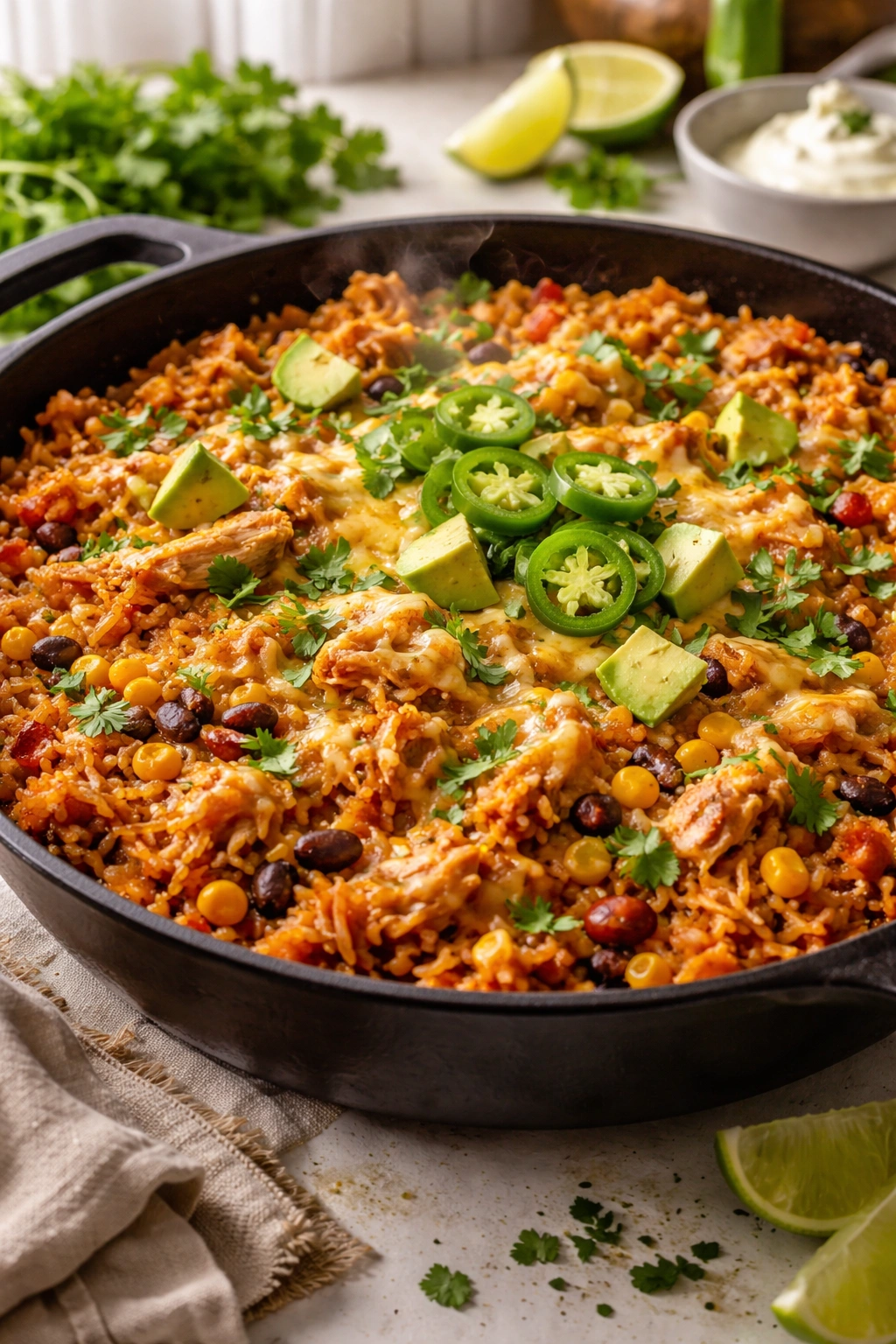
Rice Texture is Everything: The most common complaint with one-pot rice dishes is mushy rice, which happens when the rice cooks too long or absorbs too much liquid. Start checking at 15 minutes—the rice should be tender but individual grains should still have slight definition. You want rice that’s cooked through but hasn’t collapsed into mush. This is a quick-cooking recipe, not a situation where longer cooking equals better results.
Don’t Skip the Initial Vegetable Sauté: Those 5-6 minutes of cooking onion and bell pepper before adding rice might seem optional, but this is where you build the foundation of your entire dish. You’re developing sweetness in the onion, softening the peppers, and creating a flavorful base. Rushing this step means your finished dish will taste more one-dimensional.
Use the Liquid-to-Rice Ratio from the Recipe: The amounts are carefully balanced so your rice cooks properly and the final dish has the right texture—not too wet, not too dry. If you’re using brown rice instead of white, increase the liquid by ½ cup and cook time by 10-15 minutes. If using a different rice variety, check the package instructions for the liquid ratio and apply that instead.
Cheese Goes in Two Stages for Best Results: Stirring half the cheese into the rice while it’s still hot creates creaminess throughout the dish. Topping with the remaining cheese and either letting it melt or broiling it creates a slightly crispy top layer with deep melted flavor. Both textures together are better than either alone.
Taste and Adjust as You Go: The beauty of homemade cooking is making it exactly how you like it. If your enchilada sauce is very mild and you want more flavor, add an extra ½ teaspoon of cumin, chili powder, or even a pinch of cayenne. If it’s too spicy for your family, dial it back next time or add more cheese and sour cream to cool things down.
Rotisserie Chicken is Your Time-Saving Secret: If you’re making this on a genuinely hectic weeknight, buying a rotisserie chicken from the grocery store and shredding it yourself saves 10-15 minutes of prep and cooking time. The quality is genuinely good, and you’ll still get all the flavor and satisfaction of the dish.
Common Mistakes That Trip People Up
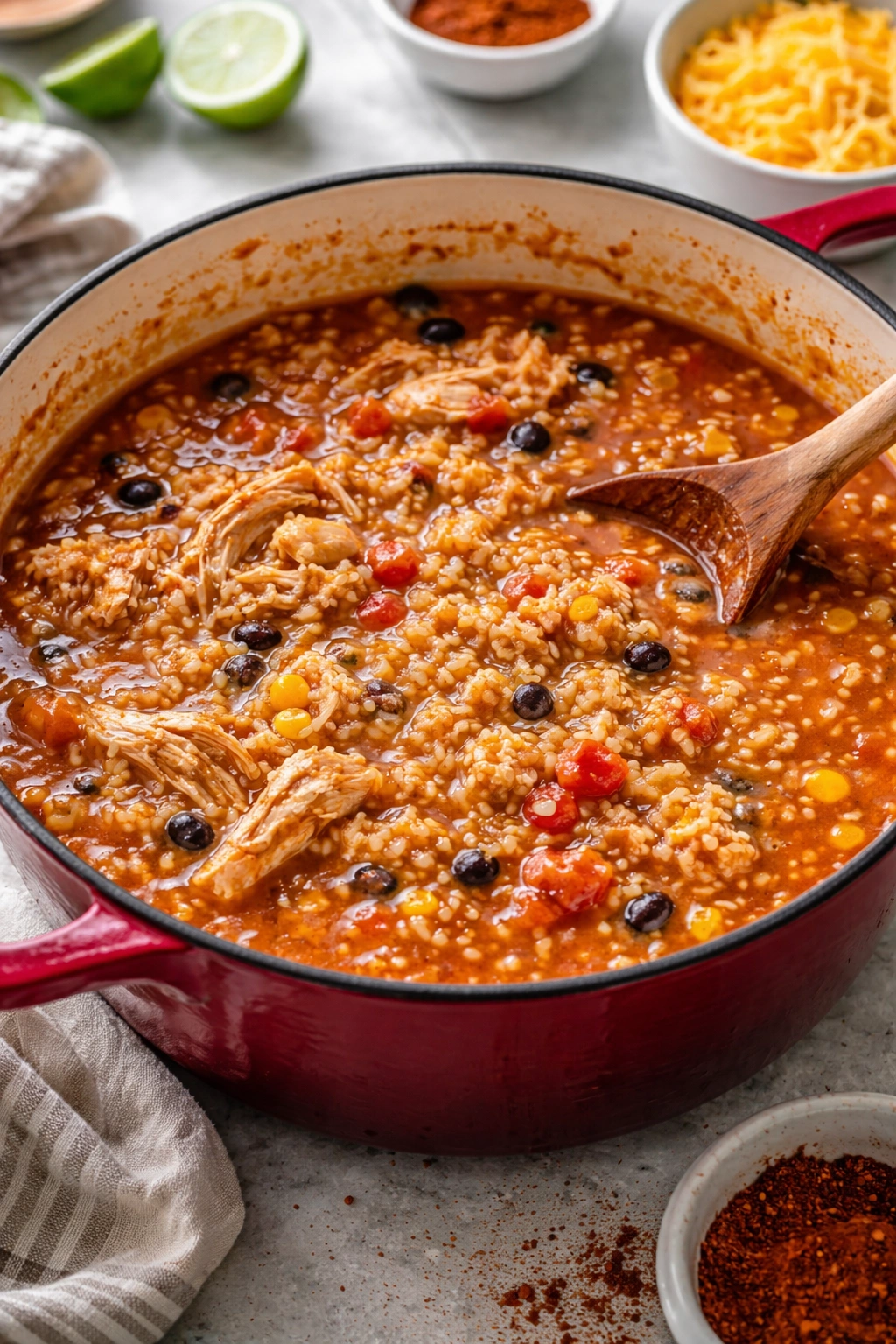
Overfilling the Pot with Liquid: This is the quickest path to mushy, porridge-like rice. The liquid amounts in this recipe are calibrated to cook the rice properly and leave you with a saucy—but not soupy—final dish. If you find the rice isn’t cooking despite adequate liquid, your heat might be too low. If it’s cooking too fast, your heat might be too high. Medium-low to medium heat is the sweet spot.
Using Pre-Cooked Rice or Instant Rice: These products won’t work in this recipe because they’ve already been partially hydrated. They’ll become overcooked mush when simmered in liquid. You need uncooked, raw rice that can properly absorb the enchilada sauce and broth.
Peeking Under the Lid Constantly: Every time you lift the lid, you release steam and interrupt the cooking process. This extends your cooking time and can result in unevenly cooked rice. Trust the process and let the pot do its work without interference.
Forgetting Salt and Pepper: These fundamentals truly matter, especially because you’re cooking rice that would otherwise be relatively neutral. Taste as you go and adjust seasoning. The enchilada sauce brings saltiness, but you may still need additional salt to enhance the overall flavors.
Using Old Cheese or Low-Quality Cheese: If your cheese doesn’t melt smoothly or tastes oddly sharp or unpleasant, it’s time for fresh cheese. Cheese that’s been in your fridge for months won’t perform well here.
Delicious Variations to Make This Recipe Your Own
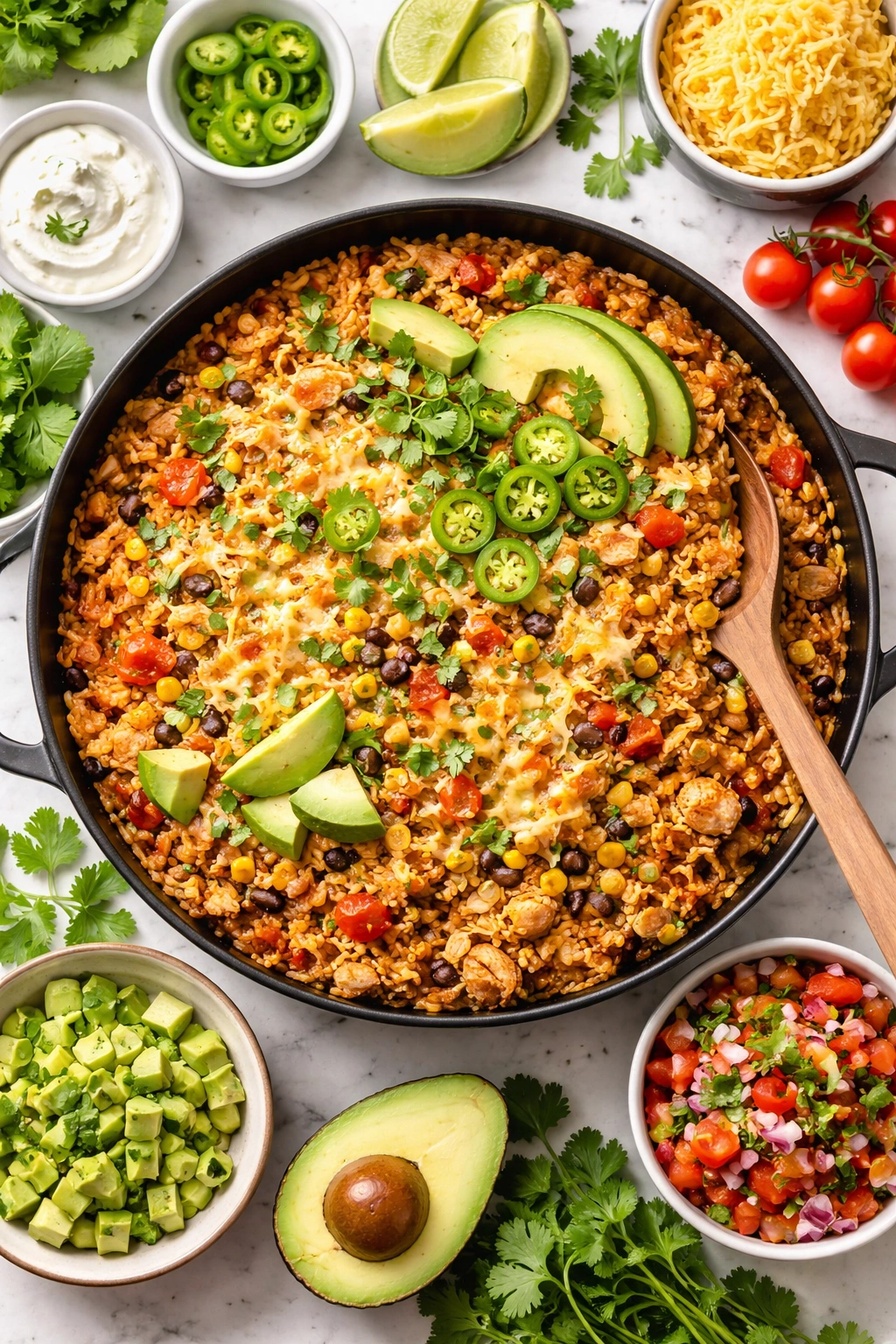
The beauty of one-pot chicken enchilada rice is how genuinely adaptable it is to your preferences, dietary needs, and what’s available in your kitchen.
For Heat Lovers: Add diced jalapeños or serranos directly to the aromatics, include a chipotle chili in adobo sauce (chopped) for smokiness and heat, or stir in ¼ teaspoon of cayenne pepper. You can also use green enchilada sauce instead of red for a brighter, tangier flavor that some people find spicier.
For Vegetarians and Vegans: Skip the chicken entirely and add an extra can of beans, extra vegetables like zucchini or mushrooms, or a combination of both. Use vegetable broth instead of chicken broth. For vegans, use a plant-based cheese alternative in place of dairy cheese—some brands melt beautifully while others don’t, so choose one you’ve had good results with previously.
For Extra Vegetables: Bell peppers, zucchini, mushrooms, spinach, and broccoli all work beautifully mixed into the rice during cooking. Add sturdier vegetables like zucchini at the same time as the rice, and delicate ones like spinach in the last 2 minutes so they don’t overcook into mush.
For a Creamy Version: Stir in ¼ to ½ cup of heavy cream or cream cheese along with the first batch of cheese. This creates a richer, more luxurious texture that some people adore for special occasions.
For Protein Boost: Add an extra cup of black beans, kidney beans, or pinto beans for more fiber and plant-based protein. You can also use ground beef or ground turkey instead of chicken—brown the ground meat first, then proceed with the recipe.
For Lighter Options: Use brown rice for more fiber and whole grains, increase the vegetable quantity, and reduce the cheese to 1½ cups total. Add extra lime juice and cilantro for brightness without adding calories.
Storage, Reheating, and Make-Ahead Strategy
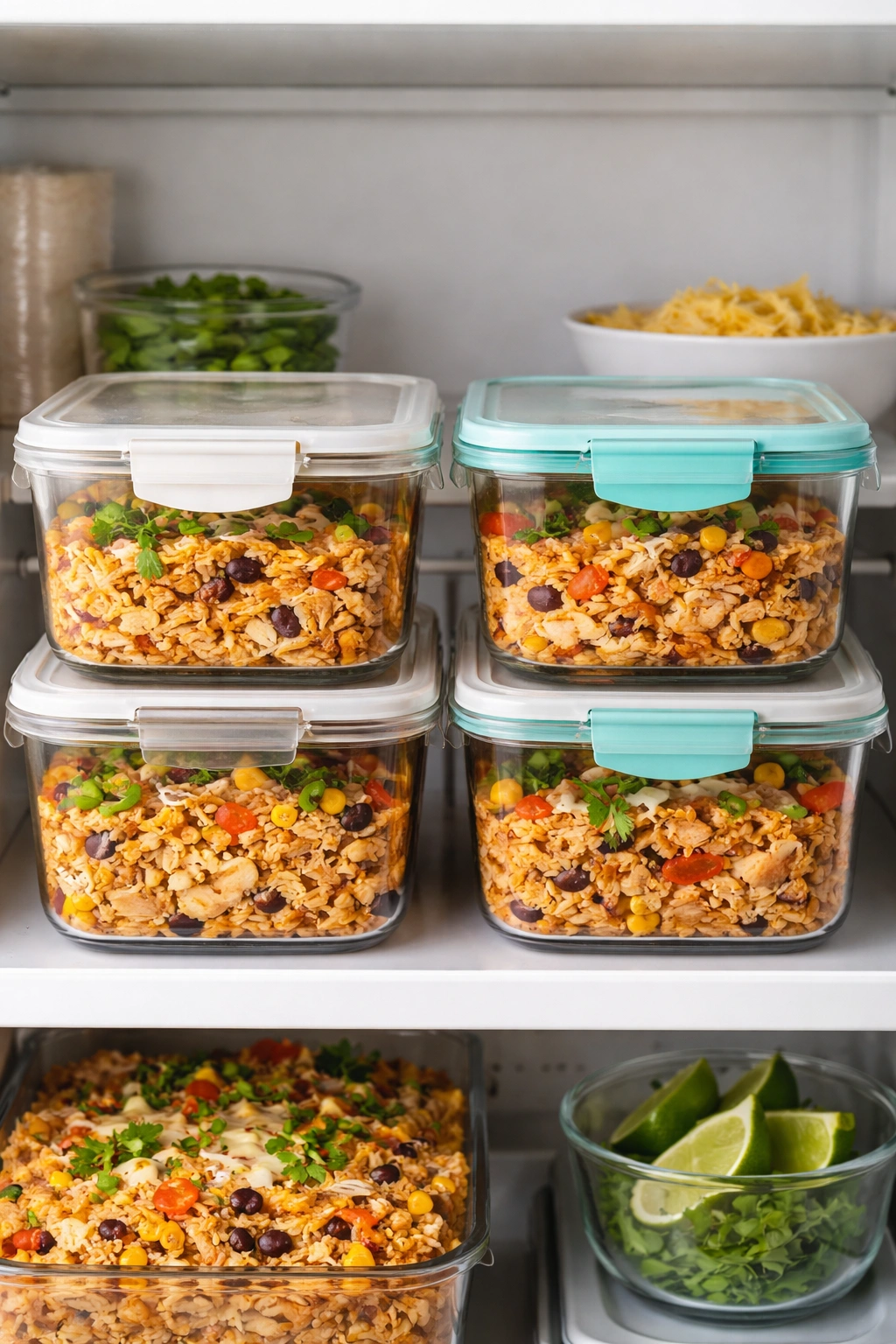
One-pot chicken enchilada rice reheats beautifully and stores well, which makes it excellent for meal prep or feeding leftovers to busy people throughout the week.
Refrigerator Storage: Let the dish cool to room temperature, then transfer it to an airtight container. Refrigerate for up to 3 to 4 days. The flavors actually deepen slightly as it sits, making day-two servings sometimes even better than day-one.
Freezer Storage: This dish freezes excellently for up to 3 months. Cool it completely, transfer to a freezer-safe container or freezer-safe casserole dish with an airtight lid, label with the date, and freeze flat. Thaw overnight in the refrigerator before reheating.
Reheating Methods: For microwave reheating, place a portion on a microwave-safe plate, cover loosely with a paper towel, and heat in 1-minute intervals, stirring halfway through, until hot throughout. For stovetop reheating, transfer the desired portion to a skillet over medium-low heat, stirring gently, until heated through—about 5 to 8 minutes depending on quantity. You may need to add a splash of water or broth if the rice seems dry.
Make-Ahead Preparation: You can prep all the ingredients—cut vegetables, measure spices, shred cheese—several hours ahead of cooking time. Store the prepped ingredients in separate containers and assemble them all at dinnertime. This doesn’t save dramatic amounts of time but does reduce stress if you know cooking will be hectic.
Serving Suggestions and Perfect Pairings
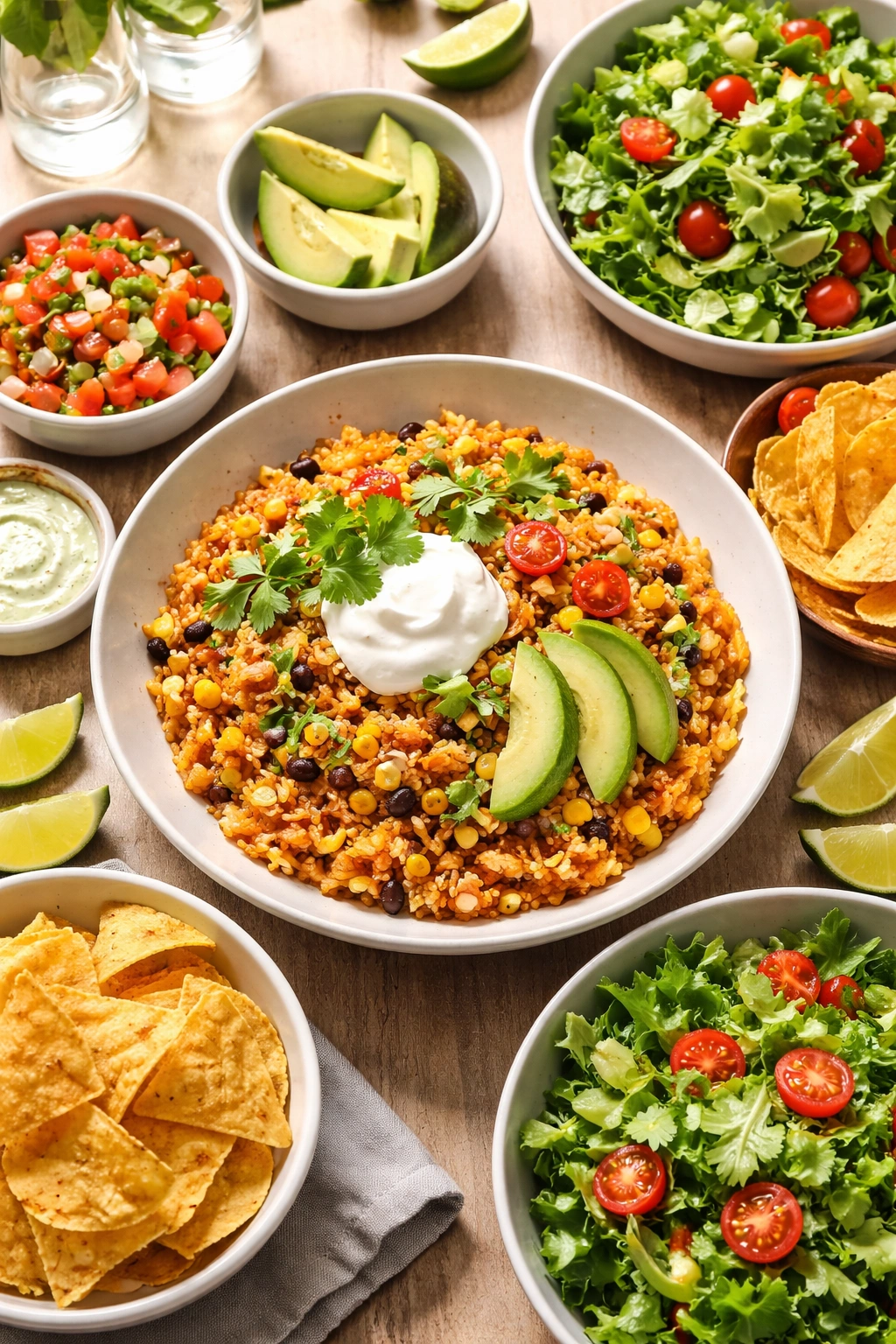
One-pot chicken enchilada rice is a complete meal in itself, but it pairs beautifully with complementary sides and toppings that add freshness, crunch, or cooling elements.
Fresh Toppings That Brighten Everything: A dollop of cool sour cream or Mexican crema tempers the richness of the cheese and enchilada sauce. Fresh cilantro adds herbal brightness, lime wedges provide acidity and brightness, diced avocado or guacamole adds creamy richness and mild flavor, and pico de gallo or fresh salsa brings fresh vegetable flavor and textural contrast.
Crunchy Accompaniments: Tortilla chips or warm flour tortillas add a textural element that plays beautifully against the soft rice and creamy cheese. Many people love building little tacos with the rice as the filling, or simply scooping it up with chips.
Cool Sides for Balance: A simple green salad dressed with lime vinaigrette provides freshness and balance against the richness of the dish. Mexican street corn salad or Mexican coleslaw adds crunch and brightness. A simple cucumber salad with lime dressing works beautifully as well.
Beverage Pairings: Margaritas (virgin or spirited) pair beautifully with the flavors here—the lime and tequila complement the enchilada sauce and cheese perfectly. Mexican beer, agua fresca, or simply cold limeade all work wonderfully.
Final Thoughts
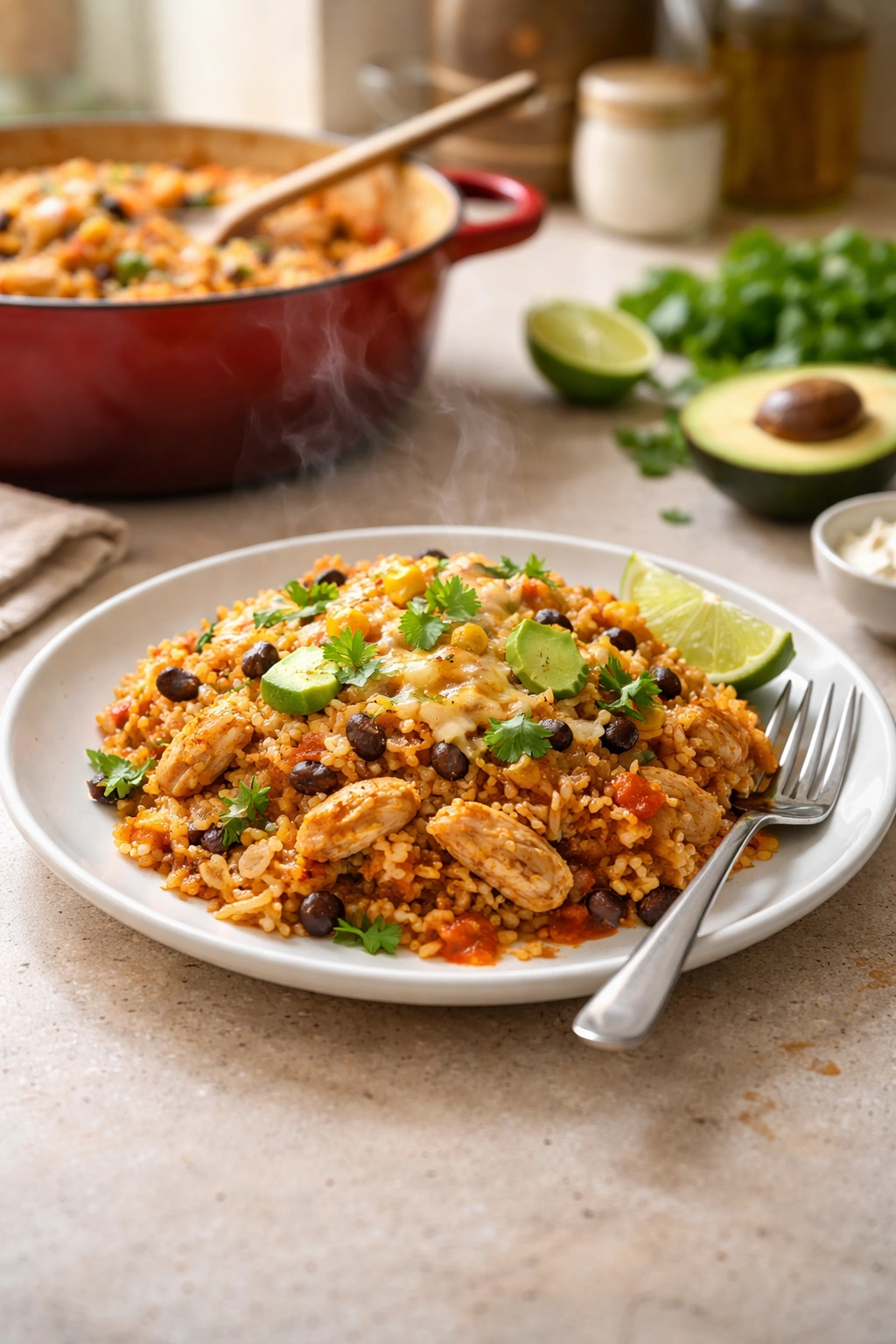
One-pot chicken enchilada rice has become a weeknight staple in countless kitchens because it delivers what people actually need on a Tuesday evening: genuine flavor in minimal time with almost no cleanup stress. It’s the kind of dish you can throw together half-asleep, and it will still taste impressively good. It satisfies everyone from picky eaters (just cheese and rice with chicken) to adventurous cooks (add jalapeños, cilantro, and all the toppings). It stretches a budget while tasting like you’ve spent far more effort than you actually have.
The secret is understanding that cooking doesn’t have to be complicated to be delicious. This recipe proves that simple technique, quality ingredients, and thoughtful sequencing creates something genuinely worthwhile. Make it this week, then make it again next month, and you’ll find yourself in a comfortable routine where a satisfying, impressive dinner is genuinely within reach even on your most chaotic evenings. That’s the real weeknight victory.
